Chapter 9: The Path of Sovereign Wisdom and Sovereign Mystery
Shri Krishna said, “O Arjuna! You do not carp, so I will tell you this profound knowledge with its practical aspect of realization, by knowing which, you will be free of all the sorrows of life.
This is sovereign knowledge, sovereign mystery, and the supreme purifier. It is righteous, eternal, gives tangible results, and is easy to practice.
People who do not have faith in these teachings do not attain Me (Brahman) and they go through the cycle of birth and death in this world.
The whole world is pervaded by My un-manifested form (Brahman). All beings are in Me, but I am not in them.
(Note: The whole world is projected on Brahman. In particular, all beings are projections of names and forms on Brahman.)
Actually, all beings do not dwell in Me (meaning they are just the projections of names and forms). However, behold My Divine Power (Maya) that I am the Creator (cause) and the Nourisher (support) of all beings, yet I do not dwell in them.
As the mighty wind—created from the sky, which moves everywhere within the sky, and still remains in the sky—all beings dwell in Me.
O Arjuna! At the end of a Kalpa (a period of 4.32 billion years), all beings merge into My Divine Power (Prakruti), and at the beginning of the next Kalpa, I create them with My Divine Power.
With My Divine Power I create all beings again and again. They are helpless because of their worldly desires and past actions.
Since I am the Witness Consciousness and unattached to their actions, their actions do not bind Me.
With My consent, My Divine Power creates the whole universe of living and non-living and makes it move around.
When I take human form, deluded people do not recognize Me as the Lord of the Universe and they disregard Me. Being that their intellect is covered by delusion, they remain engaged in useless hopes, actions, and knowledge. Thus, they remain possessed by demonic qualities.
On the other hand, the great souls, filled with divine qualities, know that I am Imperishable and the cause of the whole universe, and they constantly think of Me with focused mind.
(Note: For the demonic and divine qualities, read Chapter 16 of The Bhagavad Gita.)
These great souls remain firm in their vows to realize Me. They constantly sing My names and glories, make efforts to realize Me, remember Me, salute Me, and thus, worship Me with great devotion.
The followers of “Jnana Yoga”, worship Me as being one with them as Brahman. Some worship Me as being distinct from them, and others worship My Virata Form (Me as the whole universe) in various ways.
If you think of this whole universe as a “Yajna”, then know that I am the Vedi (in which fire of the Yajna is invoked), I am the fire in it, I am the mantras recited, I am the ingredients offered in the fire, and I am the whole worship of the Yajna.
Also, know that I am the father, the mother, the grandsire, and the sustainer of the universe. I am the one that has to be known. I am the Purifier, the Omkar (one syllable Brahman), and I am three Vedas, namely the Rig Veda, the Sama Veda, and the Yajur Veda.
I am the nourisher, the goal of life, the Lord of the Universe, the Witness Consciousness, the abode, the refuge, and the true friend. I am the cause of creation and the dissolution of the universe, and I am its support. Know that I am the imperishable seed of the universe.
I shine through the sun, create clouds, and bring rain. I am the nectar (immortality) and I am death. I am the being and the non-being.
Those who are devoid of sins and who wish to attain heaven by worshipping Me, through the performance of the “Yajnas” described in the three Vedas, attain heaven by their own merits. In heaven they enjoy various worldly pleasures until their merits are exhausted. Then, they come back to the earth and start their lives all over again. Thus, people who perform rituals described in the Vedas to fulfill their worldly desires go back and forth between earth and heaven. (They do not get the benefits of spiritual life.)
On the other hand, to those devotees who are ever devoted to Me, thinking of Me only and worship Me without any selfish reasons, I provide them what they lack in their spiritual practices and preserve what they have attained. (Thus, God helps these devotees attain their goal of God Realization.)
Those devotees who worship other gods (for worldly pleasures) also worship Me (Brahman), but they do this unknowingly and improperly.
I (as Brahman) am the Recipient and the Lord of all the worships and sacrifices of the devotees. But, not knowing Me, in essence, they fall from their spiritual path and become slaves of their senses.
Those who worship gods (limited forms of Brahman) go to the gods. Those who worship their ancestors go to their ancestors. Those who worship spirits go to the spirits. Those who worship Me (Brahman) come to Me.
If a devotee, out of love, offers Me a leaf, flower, fruit, water, or any simple thing, I accept such an offering made by the pure in heart.
O Arjuna! Offer to me any action you perform (Karma), anything you intake (Food), anything you offer in your spiritual practice (Yajna), anything you give in charity (Dana), and whatever austerity (Tapa) you perform.
(Note: In Chapter 17 of The Bhagavad Gita, Shri Krishna describes three kinds of food, Yajna, Dana, and Tapa, and in Chapter 18, he describes three kinds of actions and performers.)
By offering everything to Me, you follow “Sanyasa Yoga” (The Yoga of Renunciation) and, thus, become free from the bondage of all the results of your actions, whether they are pleasant or unpleasant. Then, being free from all bondages, you will come to Me (become one with Brahman).
I am the same towards all beings. I do not favor anyone and do not deny anyone. But, those who worship Me with love, they are in Me and I am in them.
Even a great sinner worships Me with one-pointed devotion (with repentance of sins and with a vow not to commit any sin again) must be regarded as a righteous person who has made the right resolve. Such a person (with devotion and the right resolve) soon becomes a righteous person and attains eternal peace within. O Kaunteya! Know that My devotee never perishes.
Taking refuge in Me, even women, Vaishyas, Shudras, and sinners attain the Supreme State.
(Note: This was the bold statement of Shri Krishna at the time when women, Vaishyas, Shudras were looked down upon compared to men, Brahmins and Kshatriyas.)
Definitely, when Brahmins or Kshatriyas, being free of sins, worship Me, they attain the Supreme State. Therefore, having attained this temporary human life filled with sufferings, worship Me with great devotion.
Focus your mind on Me, be devoted to Me, worship Me, offer everything to Me, and surrender to Me. Thus, keeping Me as the goal of your life and making efforts to realize Me, you will definitely attain Me (the Supreme State).
Thus, in the Bhagavad Gita— the essence of the Upanishads, the science of Brahman, the scripture of Yoga, and the dialogue between Shri Krishna and Arjuna— ends the Ninth Chapter, entitled “The Path of Sovereign Wisdom and Sovereign Mystery.”
Arjuna asked Shri Krishna the following seven questions:
(1) “What is Brahman?”
(2) “What is Adhyatma (the individual soul)?”
(3) “What is Karma (actions)?”
(4) “What is Adhibhuta (something that is said to underlie all the elements)?”
(5) “What is Adhidaiva (something that is said to underlie all the gods)?”
(6) “Who is Adhiyajna (one who sustains all the sacrifices in the body) and how does it reside in the body?”
and
(7) “How does a self-controlled person realize You at the time of death?”
Shri Krishna answered these questions as follows:
(1) “The Imperishable is the Supreme Brahman.”
(2) “Swabhava (Brahman dwelling in a person which is covered by name and form of the person, known as Jiva) is called Adhyatma.”
(3) “Karma (action) is the offering of the oblation (in a Yajna) which brings into existence all living beings and supports them.”
(4) “Adhibhuta refers to all the objects which are perishable.”
(5) “Adhidaiva is the Purusha (the Cosmic Spirit) which underlies all the gods. It is also refers to as the “Hiranya-garbha”.
(6) “Adhiyajna” is Me, the All-Pervading Spirit which sustains all the sacrifices.”
(7) “A person who remembers Me (Atman or Brahman) at his/her last breath becomes one with Me. There is no doubt about this.”
“A person, whose mind is attached with whatever desire or an object or a being in life, at the time of death he/she remembers that desire or the object or the being, and ultimately he/she attains that desire or an object or the being in the next life.
Therefore, remember Me all the time, and fight (perform your responsibility; for Arjuna it was to fight in the battlefield). If you always focus your mind and intellect on Me, then without any doubt, you will become one with Me.
One who constantly practices focusing his/her mind on Me and not letting it wander around on other things, eventually becomes one with the Supreme Purusha (Brahman).
One, who during his/her lifetime, constantly thinks about Brahman (Sat-Chit-Ananda, Existence-Knowledge-Bliss Absolute) who is the Omniscient, Ancient, Controller of everything, most subtle, Nourisher of all, whose form is beyond comprehension, who shines like the sun, and who is beyond all darkness, and at the time of death with firm mind filled with devotion, with the power of Yoga, establishes his/her vital forces between his/her eyebrows and meditates on the Supreme Purusha (Brahman) becomes one with the Supreme Divine Purusha (Brahman).
I will tell you briefly about the Supreme State whom the well-versed in the Vedas called ‘the Imperishable’, which is attained by the Sages who are free from desires and have complete self-control, and to attain which seekers practice celibacy.
One who controls all the senses by the mind, confines the mind within the heart and draws the vital forces in the head, then remains established in the Atman through the practice of meditation and uttering the word “Om,” the one syllable symbol of Brahman, leaves the body thinking of Me (Brahman), attains the Supreme State.
I (Brahman) can be easily attained by the ever steadfast Yogi who constantly meditates on Me with a focused mind giving no thought of anything else.
The Great souls, having attained Me, have attained the Supreme State. They do not take rebirth into this temporary world which is filled with sorrows.
From an ordinary being to the creator of the universe, everything is subject to rebirth. But, one who attains Me (becomes one with Me) will not be born again.
Brahma is the creator of the universe. One who knows that Brahma’s day and night each last a thousand eons knows the essence of the Time.
(Note: A day of brahma is of 1000 Mahā-Yugas. Thus a day of Brahma, a Kalpa, is 4.32 billion years in duration. Two Kalpas constitute a day and night.)
In the beginning of Brahma’s day, the whole universe manifests from the un-manifested and at the end of the day (beginning of the night) it merges into the un-manifested.
The same multitude of beings is born by the law of nature in the beginning of the day of Brahma and merges into the un-manifested at the night of Brahma. Thus, this cycle goes on.
But beyond this un-manifested, there is yet another Un-manifested Eternal Being which does not perish when all beings perish.
This Un-manifested Eternal Being is called the Imperishable (The Supreme Purusha or Brahman). This Imperishable is called the Ultimate Goal of all beings. One who reaches that goal does not come back. That is My Supreme Abode.
The Supreme Purusha pervades the whole universe, and all beings reside in It. This Supreme Purusha can be realized through one-pointed devotion.
The Two Paths of re-birth and no re-birth:
Now, I will tell you the paths which decide whether or not the yogis are reborn
When the knowers of Brahman follow the path of light, fire, day, bright fortnight, and the northern path of the sun, then they become one with Brahman and are never reborn.
When the yogis follow the path of smoke, night, dark fortnight, and the southern path of the sun, then they reach to the light of the Moon and then returned to the earth to take re-births.
The Path of Light and The Path of Darkness are two eternal paths. Following the Path of Light the yogis are not reborn, while following the Path of Darkness yogis come back and are reborn.
The yogi who understands these two paths does not get deluded. Therefore, O Arjuna! Be steadfast in yoga all the time.
The yogi who really understands the essence of these teachings, surpasses the merits acquired by studying the Vedas, performing the Yajnas (rituals), practicing austerities or giving in charity, and he/she attains the Eternal Supreme Abode.
Thus, in the Bhagavad Gita— the essence of the Upanishads, the science of Brahman, the scripture of Yoga, and the dialogue between Shri Krishna and Arjuna— ends the Eighth Chapter, entitled “The Path to Imperishable Brahman.”
Om Tat Sat.
(Thanks to Sheela Krishnan for editing this post.)
The steps to realize the Ultimate Truth: (Chhandogya Upanishad, Chapter 8.7 – 8.12)
Chhandogya Upanishad
Prajapati (The Lord of people) said, “One has to search and realize the Atman. The Atman is pure, free from hunger, thirst, old age, and death. Its desires and vows come true. If one searches the Atman following the scriptures and the guidance of a competent teacher and realizes It, then all his desires are fulfilled and he attains everything.”
The devas and demons heard Prajapati’s declaration. The realization of Atman, they thought, would fulfill all their desires and allow them to attain everything they ever dreamed of. They decided to pursue this quest for the Atman.
Devas asked their king, Indra, and the demons asked their king, Virochana, to go to Prajapati to learn about Atman.
Both Indra and Virochana went to Prajapati’s ashram with offerings in their hands. Jealous of one another, they vowed to themselves, I will learn about Atman first.
Prajapati asked them to stay in the ashram, live an ascetic life, and take the vow of celibacy. They lived there for 32 years.
After 32 years Prajapati asked them, “What is it that you desire? What has motivated you to stay here?” Both said that they had heard the Revered Prajapati’s declaration, “One has to search and realize the Atman. The Atman is pure, free from hunger, thirst, old age, and death. Its desires and vows come true. If one searches the Atman following the scriptures and the guidance of a competent teacher and realizes It, then all his desires are fulfilled and he attains everything.” They too wanted to know and realize the Atman.
Prajapati said, “The Person that is seen in the eyes,-that is Atman. That is the immortal and fearless Brahman.”
The Person thst is seen in the eyes
Indra and Virochana asked, “Between these two, one which is perceived in the water and the one which is perceived in the mirror, which one is Atman?” Prajapati said, “The same one, indeed, is perceived in all of these.”
Reflection in mirror
Reflection in water
Prajapati said, “Both of you go and look at yourselves in a pot filled with water.” They both looked at their reflections in the water. Prajapati asked, “What do you see?” Both said, “O Lord! We see Atman from head to toe, along with hair and nails.”
Then, Prajapati asked both of them to wear their best clothes and ornaments. Indra and Virochana did as they were told and returned in their finest clothing and ornaments. Prajapati told them to look at themselves in the water. He then asked, “What do you see?” Both Indra and Virochana said, “O Lord! We see that the reflection is dressed as we are dressed up. Prajapati said, “That is Atman. That is the immortal and fearless Brahman.” Satisfied with that answer, Indra and Virochana left the ashram.
Watching them leave, Prajapati mumbled, “Both of them are leaving without knowing and realizing Atman. Devas or demons, those who do not truly know Atman will perish.”
Virochana, the king of the demons, was satisfied with what he had learned. He went to the demons and started to teach them that the body is Atman. It is this Atman (body) that has to be worshiped and nurtured. One who takes care of this Atman (body) fulfills all desires and attains everything.”
Therefore, even today people say that a person is of demonic nature if he/she has no faith in something higher than his/her body, and sees no purpose in charity and spiritual development. People of demonic nature adorn even dead bodies with make-up, nice clothing, and ornaments thinking that these things will help the dead person attain everything.
Indra too was on his way to see the Devas. Yet, a thought kept disturbing him. Something was definitely wrong with his understanding of Atman. He started thinking, ‘when a body is adorned with nice clothes and ornaments, its reflection too is adorned with nice clothes and ornaments. Similarly, if a person becomes blind, then its reflection becomes blind; if a person is hurt, then its reflection is hurt, and when a person dies, then its reflection also dies. Something was awry. How could there be anything beneficial in this knowledge of Atman?’
Indra went back to Prajapati with offerings in his hands. Upon seeing Indra, Prajapati asked “O Indra! I saw that you and Virochana were satisfied with the knowledge of Atman and had left. Why did you come back again? What do you want?” Indra replied, “O Lord! I do not see any benefit in my understanding that the reflection of the body, which I see through my eyes, is Atman. If I put on nice clothes and ornaments, my reflection puts on nice clothes and ornaments. If I am clean, my reflection is clean. But, if I become blind, my reflection becomes blind. If I am hurt, my reflection is hurt and if I die, my reflection dies.” Prajapati said, “O Maghavan (Indra)! Yes, it is like that. Live here for another 32 years observing celibacy. After 32 years, I will explain it to you more.”
After 32 years, Prajapati said, “TheOne who moves about, exalted, in our dreams is Atman. It is the immortal, fearless Brahman.” Indra was satisfied and left.
But, before he reached the Devas, he thought, there is something wrong with his understanding of Atman. If one becomes blind, his dream-self does not become blind; if one gets hurt, his dream-self does not get hurt; and if one dies, perhaps his dream-self does not die. Thus, the limitations and changes of the body do not apply to the dream-self. But, if in one’s dream, someone beats the dream-self, the dream-self feels the pain, if someone treats the dream-self badly, then it gets upset, and if danger approaches the dream-self shows fear. Thus, one’s dream-self cannot be Atman and there is no benefit in this knowledge of Atman.
Indra came back to Prajapati with offerings in his hand. Prajapati asked, “O Indra! You had left satisfied with your understanding. Then, why did you come back? What do you want?”
Indra answered, “O Lord Prajapati! It is true that my dream-self does not get affected by whatever happens to my body. For examples, it does not become blind if my body does, it does not get hurt even if my body gets hurt, and it does not die even if my body dies. But, if someone beats my dream-self, then this dream-self feels pain, if someone treats my dream-self badly, then it gets upset, and if some danger comes to my dream-self, then it shows fear. Thus, I do not see any benefit in knowing that my dream-self is Atman.”
Prajapati said, “O Maghavan! It is like that. Live here for another 32 years observing celibacy. After 32 years, I will explain it to you more.”
After 32 years, Prajapati said, “When a person is in deep sleep, he sees no dreams and is happy – that is Atman. It is the immortal and fearless Brahman.” Indra was satisfied and left.
But, before he reached the Devas, he thought to himself, in deep sleep one is not even aware of his own self and other people. In deep sleep one is not aware that “I am Atman.” What is good about this deep sleep state? It is as good as being a dead person. Indra did not see anything good about this knowledge of Atman.
Indra came back to Prajapati with offerings in his hands. Prajapti asked, “O Indra! Satisfied with your understanding of Atman, you had left. Then, why did you come back? What do you want?”
Indra replied, “O Lord Prajapati! In deep sleep I am not aware that “I am Atman” and I am not aware of all people and things around me. It is like I have died. I do not see anything good in this knowledge.”
Prajapati said, “O Maghavan! It is like that. This time, live here for another 5 years observing celibacy. After 5 years, I will explain it to you more.”
Indra lived with Prajapati for another 5 years observing celibacy. Thus, they say that Indra had lived with Prajapati for 101 years observing celibacy.
After 5 years, Prajapati told Indra, “O Indra! The body is mortal. It dies. But, this mortal body is the abode of the immortal, body-less Atman. As long as one has body-consciousness, one has likes and dislikes. But, likes and dislikes do not touch a person who is aware of the body-less Atman lying within.”
“Wind, cloud, lightning, and thunder are body-less. All these arise from the space and, through the light of the sun, go back to their original forms. Similarly this Atman arises from the body and through the Supreme Knowledge of Itself, goes back to Its original form.
In that state, the Atman moves about–laughing, playing, and rejoicing–without thinking of the body. But, this very Atman remains attached to the body as an animal remains attached to a cart.
The Atman is the cause of seeing and the eyes are Its instruments to see. When one is aware of this fact, that person realizes that the Atman is the “Seer” and the eyes are Its instruments.
– When one is aware that the Atman is the cause of smelling, the “Smeller” is the Atman and the nose is Its instrument.
– When one is aware that the Atman is the cause of speaking, the “Speaker” is the Atman and the mouth is Its instrument.
– When one is aware that the Atman is the cause of listening, the “Listener” is the Atman and the ears are Its instruments.
– One who is aware that the Atman is the cause of thinking, the “Thinker” is the Atman and the mind is Its instrument. The mind is called the divine eyes of the Atman. The Atman sees all the desires in the world through the divine eye of the mind.
After learning this Truth, the Devas meditated on this Atman. As a result, all their desires were fulfilled and they attained everything.” “Thus,” Prajapati declared, “One who understands the teachings about Atman from the scriptures and from a competent teacher and realizes It fulfills all his desires and attains everything.”
Reflections:
Four States:
This story beautifully describes the four states of a human being: Jagrata (physically awake state), Swapna (dream state), Sushupti (dreamless sleep state) and Turiya (state of awareness of Atman).
Jagrata (physically awake state): Most people remain in the physically awakened state for most of their time. Also, most people think that this is the only real state of a human being. Whatever we perceive in this physically awakened state is real and all other things are imaginary or delusion. Most of us consciously or unconsciously believe that what we perceive through our senses are the only useful things in life. We try to understand the world with what we perceive through our senses. All our physical knowledge lies on these grounds, on sense perception.
We perceive most parts of our bodies through our eyes. We also perceive our bodies through their reflections in the mirror or water or through our photographs. All our joys and sorrows are based on this sense perception.
Indra thought that the physically awaken state was the only reality. But, then he realized that what we perceive through our senses is limited. The body undergoes changes. It is subject to disease, old age, and death. Indra realized that Prajapati wanted him to reflect further; the body was not the Ultimate Reality. Human beings are more than their body. One cannot be really happy by nurturing the body alone and constantly thinking about the pleasures of the body.
Swapna (dream state): Prajapati drew Indra’s attention to another state of a human being– the dream state. When a person is in the dream state, his/her mind creates an entire universe. In this state, the outer world, the world perceived through the senses, disappears. In a dream a person can create the Yankee Stadium filled with thousands of people watching a ball game. That person can even create themselves in the dream, enjoying the game. For the dreamer it is all real. Many a times, in one’s dreams, a person fulfills all of the unfulfilled desires of his Jagrata (physically awakened) state.
Indra realized that the limitations of the Jagrata state do not follow in the dream state. Even when one is poor in the physically awakened state, he may become rich in his dreams. However, unpleasant things may happen. A rich person may become poor in his dream. A hungry tiger may chase the dreamer, in an attempt to devour him. It is good that we do not remain in the dream state all the time and we wake up in the middle of unpleasant dreams.
Indra realized that the dream state was not what he wanted. He wanted all his desires to be fulfilled and wanted to be happy and free from the fear of death. He found that dream state too has sufferings and limitations. So, he came back to know more.
Sushupti (state of deep sleep): When a person is going to sleep, one turns off all the lights of the house, goes to the bedroom, turns the light off in bedroom, keeps a night-lamp on and sleeps on the bed. Similarly, when a person is going to sleep, slowly all the senses are withdrawn and get cut off from the physically awakened state. Then, he enters in the dream state. At one point, all the dreams go away and he falls into deep sleep. Like that night-lamp which remains on in the bedroom, in deep sleep the vital forces keep one alive. The senses have merged into mind and mind has merged into Atman. If a person has good dreamless sleep, he feels very happy. However, as soon as he wakes up, within a fraction of a nano second all of the things connected to the physical-self come rushing back: all work, all the plans and desires, all associations, joys and sorrows, likes and dislikes and more. The person does not find any change or a transformation within oneself, all that has happened is that the body and mind have had a good rest.
Indra realized that this state of dreamless sleep was as good as being lifeless or dead. There is no awareness of the Atman. He did not see anything deeper in this state beyond having achieved physical rest. He recognized that the awareness of Atman could not be this state. Prajapati agreed with him. Prajapati acknowledged that Indra was finally ready to understand the Atman after thoughtfully ruling out the other three states.
Turiya (state of awareness of Atman): Prajapati gave excellent analogies of body-less entities. When we think of Atman as body-less, we have difficulty grasping this concept. But, Prajapati points to the wind, cloud, lightning and thunder which are also body-less. They come from space and disappear into space. Thus, through these analogies, we get a little glimpse of what Prajapati was trying to explain. We can see that something can come from an infinite source; it reveals itself after becoming tangible or graspable by the senses and again it can merge into the infinite. Sound and light are waves. These waves are graspable to humans at certain frequencies, and they can exist beyond our comprehension. The body-less infinite unchangeable Ultimate Reality or Ultimate Power creates bodies and things of the universe that are comprehensible by our human senses, which eventually merge back into that Ultimate Reality or Power. That Ultimate Reality or Power is called Brahman and it is called Atman with reference to an individual. This body-less Atman is our true identity. It resides in our finite body. This Atman is the cause of our capacity to touch, taste, smell, speak, hear, and think. This Atman has created its instruments to perceive the world of senses.
A person can attain this Turiya state where there is only awareness of Atman and it is not a state of dreamless sleep. People have witnessed such states of awareness. It is called a Nirvikalpa Samadhi. One example I know is that of Sri Ramakrishna. He used to be in such a state often. Atheists, critics and medical doctors have examined this state and accepted that physically there was no sign of life, but it was not death or a deep sleep. The face of Sri Ramakrishna was beaming with joy even in the intense painful physical state of throat cancer. He was oblivious of the pain and pleasures of the body.
Swami Vivekananda said that the difference between a person going into dreamless deep sleep and the Nirvikalpa Samadhi is this: a dull minded person remains dull minded after going into deep sleep, but a dull minded becomes a wise person after coming back from Nirvikalpa Samadhi. After attaining this state one experience so much bliss that all the joy of fulfilling all the possible worldly desires becomes an insignificant small fraction of that bliss. After realizing Atman, no desires remain to be fulfilled and one feels that one has attained everything that a human being can attain.
This Turiya state is possible by any person who follows the guidance described by the scriptures and competent teachers. Even if one does not attain Nirvikalpa Samadhi, going towards this state of awareness of Atman brings fulfillment, knowledge, and fills the heart with unselfish love and unlimited bliss.
Swami Vivekananda
Swami Vivekananda says, “There is something behind this world of senses, this world of eternal eating and drinking and talking nonsense, this world of false shadows and selfishness. There is something beyond all books, beyond all creeds, beyond vanities of the world-and that something is the realization of God within yourself.”
A Dispute among the Senses and Faculties of a Human Being
Once there was a dispute between all the senses and several faculties of a human being. Each one, the eyes, the ears, the hands, the legs, the mind and others started to claim, “I am the best.”
The eyes said that if one cannot see, one could not do anything. The ears said that without listening one would face many problems in life; the legs said that without being able to move, one’s life was doomed.
The question was raised, who could decide which one of these senses was superior to the rest?
They all went to their creator Brahma. Lord Brahma listened to them and thought about a solution. He advised that each one of the senses and the faculties of the body, one at a time, go on vacation for a year. In whose absence the body becomes most crippled, that sense or a faculty is the best among all.
First, speech went on vacation for a year.
Speech going to vacation
Then, speech came back and asked all the senses and the faculties of the body how they lived their life without talking.
In reply, all the senses and faculties of the body said that they lived life as a mute person lives. Mute people can see with their eyes, listen with their ears, think with their minds and thus they lived.
After that, the eyes went on vacation for a year.
Eyes going on vacation
Then, the eyes came back and asked all the senses and the faculties of the body how they lived their life without the ability to see.
In reply, all the senses and the faculties of the body said that they lived as a blind person lives. Blind people can speak with their mouths, listen with their ears, think with their minds, and thus they live their life.
Next, the ears went on vacation for a year.
Ears going on vacation
Then, the ears came back and asked all the senses and the faculties of the body how they lived without the ability to hear.
In reply, all the senses and the faculties of the body said that they lived as a deaf person lives. Deaf people can speak with their mouths, see with their eyes, think with their minds, and thus they lived their life.
Then, the mind went on vacation for a year.
Mind going on vacation
The mind came back and asked all the senses and the faculties of the body how they lived without thinking.
In reply, all the senses and the faculties of the body said that they lived as babies live whose minds have not been fully developed. Babies speak with their mouths, see with their eyes and listen with their ears.
Finally, Prana (the vital forces including breathing) started going on vacation.
As soon as the Prana started leaving the body, all the sense started losing their power. All felt as if a powerful wild horse was pulling out all the nails that have tied it with ropes.
Then, all the senses went to the Prana and said, “Please do not leave. You are the best among all of us.” The eyes, the ears, speech, and the mind said to the Prana that they are all powerful because of the Prana. That is why, in the scriptures all the senses are referred to as Prana.
– Chhandogya Upanishad: Chapter 5, section 1
(Thanks to Sneha Shah for illustrations and Nisha Parikh for editing the post.)
It is simply amazing how 5000 years ago, teachers and students of the Upanishads tried to find the answers of fundamental questions of life and the universe through simple available means. It is more amazing that the answers they had found become more and more relevant with the advancement of science.
The following story from the sixth chapter of the Chhandogya Upanishad is one such example. Its teachings are profound but have been expressed them in a very simple and appealing way. This is not an English translation of the chapter. I tried simply to bring out its essential teachings.
The following books provide the original Sanskrit text of the chapter and its English translation by Swami Nikhilananda respectively.
Chhandogya Upanishad – Sanskrit
A great Rishi named Aruna had a son named Uddalaka who was also known as Aaruni. Uddalaka was also a great Rishi. (A rishi is one who has attained the highest knowledge of life a human being can attain.)
Rishi Uddalaka had a son named Swetaketu. When Swetaketu was twelve years old, his father, Uddalaka, told him that no one in the family had attained the highest knowledge without studying the scriptures. So, Uddalaka sent Swetaketu to an ashrama where students learned the scriptures.
After twelve years of study, Swetaketu returned home. Uddalaka found him arrogant, having a superiority complex and considering himself a great orator of and an expert on the scriptures.
Uddalaka asked Swetaketu,
“Did you acquire the knowledge by which one can hear what cannot be heard, think what is unthinkable, and know what is unknowable?
Did you acquire the knowledge that would allow you, by knowing a lump of clay, to know all things made out of clay and to know that the differences among things made from clay are only in their names and forms? And that these names and forms are but modifications of speech? Did you acquire the knowledge to understand that the clay is the only truth?
Clay images
Did you acquire the knowledge that would allow you, by knowing a nugget of gold, to know all of things made out of gold and to know that the differences among things made from gold are only in their names and forms? And that these names and forms are but modifications of speech? Did you acquire the knowledge to understand that the gold is the only truth?
various ornaments of Gold
Did you acquire the knowledge that would allow you, by knowing a steel nail-clipper, to know all things made out of steel and to know that the differences among things made of steel are only in their names and forms which are but modifications of speech? Did you acquire the knowledge to understand that the steel is the only truth?”
Things made out of steel
Swetaketu answered, “Revered Father! My teacher definitely did not know about this. Otherwise, he would have taught me. Please teach me.”
Rishi Uddalaka said, “My son! In the beginning of the universe there was only one life force called “Sat” (Brahman). From Sat, the whole universe came.
A group of people think that there was nothing before the universe. But, how does ‘something’ come from ‘nothing’? It is not possible. Therefore, there was a unique life force called Sat before the universe.
That Sat thought that it should become many and create a universe. Sat therefore created light / fire (Teja). Light/fire then thought to become many and it created water (Aapa). We see that when a person feels warm, he/she perspires. Thus, we can conclude that the light/fire is the source of water. After water was created, it (Aapa) thought to become many and in turn created food (Anna – this includes everything related to food like land and earth). We see that when it rains a lot, lots of vegetation grows. This shows that rain is the source of food.
All beings can be born from one of three things: (i) from eggs, (ii) from species of their kind or (iii) from seeds.
Andaja – born from eggJivaja – born from species of the same kindUdbhijja – born from seeds
Light/fire, water and food/earth, decided to enter into these beings in various proportions and thus created a world of names and forms.
In everything that we see, that which is reddish comes from light/fire, that which is white comes from water, and that which has darker colors comes from food/earth.
The SunThe MoonLightening
One can see these three colors in the sun, moon, and lightening. These three exist even in fire. If you separate the fire-part, water-part and the food/earth-part from the fire, then the qualities of fire disappear. (The same applies to water and food/earth.)
Let us see what roles light/fire, water, and food/earth have in human beings:
There are three parts of food: the gross part, the semi-gross part and the subtle part. When a person eats food, the gross part of the food comes out as feces (solid waste comes out from human body), the semi-subtle part of the food becomes the meat, and the subtle part of the food makes mind.
Similarly, when a person drinks water, the gross part comes out as urine, the semi-gross part makes the blood, and the subtle part produces the vital forces (prana), including breathing.
When a person eats especially nourishing food (teja), the gross part of it makes the bones, the semi-subtle part of it makes the bone marrow, and the subtle part of it makes the speech.
Thus, the mind is made out of food, vital forces and breath are made out of water, and speech is made out of teja.
How do we see that the subtle parts of food, water, and teja make up the mind, vital forces/breath and speech respectively?
Butter from buttermilk
When we churn buttermilk, the subtle part of the butter rises to the surface. Similarly, the subtle part of food makes the mind, the subtle part of water makes the vital forces/breath, and the subtle part of teja makes the speech.
Swetaketu said, “Father! Please explain further.” Uddalaka responded, “My son! Sure, I will explain further.”
How do we see that the mind is made out of food?
Rishi Uddalaka told Swetaketu, “Do not eat for fifteen days. You can drink water. Since you will be drinking water, you will remain alive. Come to me after fifteen days.”
Swetaketu responded, “Okay father!”
Swetaketu returned to his father after fifteen days. Uddalaka said, “You had learned the Vedas. Now recite something from the Vedas.” Swetaketu answered, “Father! My mind is not functioning. I cannot recite anything.” Uddalaka said, “Go and eat something.” Swetaketu had a good meal and came back. Uddalaka then asked him again to recite from the Vedas. Swetaketu recited many verses from the Vedas. Father Uddalaka said, “See Swetaketu, when a blazing fire is put off and only a little fire remains, it cannot cook anything. But, if we put dry branches of trees into the little fire, we can ignite it into a blazing fire and then cook anything in it. In the beginning, your mind could not function without food, but after you ate food, it functioned very well. Know that the mind is made out of food, that vital forces/breath are made out of water, and that speech is made out of teja.
How do you feel your true self?
Uddalaka told Swetaketu that when a person is in a dreamless sleep, his awareness of the world associated with his name and form go away. A little “prana” (vital force/breath) keeps one alive, but one is not aware of all the joys, sorrows, and problems associated with one’s body and mind. This is an indirect experience of the true self in which the awareness of one’s own external identity disappears.
(When we go to bed, first various thoughts come to our minds, then we enter a dream state, and then finally we come to the state of deep sleep without dreams. In that state we forget all about our gender, age, color, culture, plans, positions, problems, and everything related to our body and mind. At that time we are almost one with our true identity “Sat” or Atman. But, as soon as we wake up, within a fraction of a second, our body-form identity and everything related to it comes rushing back.
To experience our true identity “Sat” or Atman in our awakened state is realization of Truth or God.)
Searching our true identity:
By following the root of ourselves, we can find our true identity.
(i) Prana is the support of the mind: Our mind needs our body. Rishi Uddalaka told Swetaketu to imagine a person with an eagle as a pet. The owner ties a string to the bird and keeps the other end of the string in his/her hand. The bird will fly all around and then come back to the hands of the owner. Similarly, our mind will go around, but will eventually come back to the living body. Thus, the mind needs “prana” to keep the body alive. Food keeps the body alive.
(ii) Water leads to food: Uddlaka continued, “Swetaketu! How does a person get hungry? When a person eats food, the food mixes with water and becomes digested. All of the nourishment of the digested food goes in the body and the person becomes hungry again. Thus, water leads to a need for food.”
(iii) Teja leads to water: “How does a person become thirsty? When body heat evaporates the water inside the body, a person becomes thirsty. Thus, teja/fire leads to a need for water.
(iv) “Sat” (Brahman) leads teja: Teja/fire came from Sat. Thus, Sat leads teja/fire.
Search for the root or the cause:
When a person is dying, he/she stops talking. People first say, “Oh! He/she is not talking.” They then find that “he/she is not moving.” Finally, they find that “his/her body is cold.” Thus, when a person stops talking, the mind of the person merges into “prana” (vitality). When, a person stops moving, the “prana” merges into “teja/fire”. Finally, when the person’s body is cold, his/her teja merges into Sat (Brahman).
Rishi Uddalaka told Swetaketu, “My son! Search for the cause or root of each one (food, water, and teja) and you will realize your true identity. The cause of body is food, the cause of food is water, the cause of water is light/fire, and the cause of light/fire is the one life force Sat (Brahman) which created the whole universe and which is the whole universe.
That Sat is subtle and has manifested as the universe. That is the Truth (behind the universe of names and forms). That is Brahman. That is Atman, and Thou art That (Sat) (Tatvamasi-Tat Tvam Asi).
Thus, our true identity is divine. It is the support of our existence. We call this unique life force (Sat) God and worship It in various forms. The goal of human existence is to realize our true identity.
Swetaketu said, “Father! Please explain further.” Father said, “My son! Sure, I will explain further.”
Example of bees:
Bees and Honeycomb
Honey
Rishi Uddalaka said, “O Swetaketu! Bees collect juices from various flowers and other sources and make honey. In the honey, one cannot separate the juices by their sources. Similarly, the individuality of all things of the universe will disappear when they merge with the original unique life force Sat.”
Example of Rivers:
River meeting ocean
“O Swetaketu! All rivers empty their water into the ocean. In the ocean one cannot separate the waters by their source rivers. Similarly, the individuality of all things of the universe will disappear when they merge with the original unique life force Sat.”
That Sat is subtle and has manifested as the universe. That is the Truth (behind the universe of names and forms). That is Brahman. That is Atman, and Thou art That (Sat) (Tatvamasi-Tat Tvam Asi).
Now, as in the dreamless sleep, a person momentarily loses his/her external identity of name and form and becomes one with the Sat. After waking up, however, the person immediately returns to his/her name-form identity. Similarly, all beings, because of their worldly desires, come back to their separate name-form identities even after being merged with Sat.
Swetaketu said, “Father! Please explain further.” Father said, “My son! Sure, I will explain further.”
“Sat” or Atman does not die:
Living Tree
Rishi Uddalaka said, “Swetaketu! If you struck a living tree at its roots, it would bleed. If struck it in the middle, it would bleed. If you struck it at the top, it would bleed. Similarly, when the life force is in the body, it spreads everywhere and is all pervading like the sap of the tree.
Dead Tree
But, if the life force leaves a branch of the tree, then that branch falls off. If it leaves another branch, that will also fall off. If it leaves the whole tree, then the whole tree dries up and falls. Remember, the life force does not die. When the life force (Atman) leaves a body, then only does the body die.
That Sat is subtle and has manifested as the universe. That is the Truth (behind the universe of names and forms). That is Brahman. That is Atman, and Thou art That (Sat) (Tatvamasi-Tat Tvam Asi).
Swetaketu said, “Father! Please explain further.” Father said, “My son! Sure, I will explain further.”
Have faith in the existence of “Sat” (Atman):
Banyan Tree
Rishi Uddalaka asked, “Swetaketu! Please bring me a fruit from this banyan tree.”
Swetaketu said, “O Father! Here is a fruit of the banyan tree.”
Rishi Uddalaka said, “Break this fruit.”
Swetaketu said, “I broke it.”
Seed of Banyan Tree
Rishi Uddalaka said, “What do you see in it?”
Swetaketu said, “I see very small seeds.”
Rishi Uddalaka said, “Break one seed.”
Swetaketu said, “I broke it, father.”
Rishi Uddlaka said, “What do you see inside?”
Swetaketu said, “Father! I don’t see anything inside.”
Rishi Uddalaka said, “You do not see anything inside this seed, but from such a seed this big banyana tree came. The subtle part of the seed has made this huge banyan tree. My son! Have faith.That Sat is subtle and has manifested as the universe. That is the Truth (behind the universe of names and forms). That is Brahman. That is Atman, and Thou art That (Sat) (Tatvamasi-Tat Tvam Asi).
Swetaketu said, “Father! Please explain further.” Father said, “My son! Sure, I will explain further.”
“Sat” (Brahman or Atman) is everywhere in the universe:
Glass of waterSalt
Rishi Uddalaka asked, “Swetaketu! Please bring a glass of water and some salt.”
Swetaketu said, “Father! Here is a glass of water and some salt.”
Rishi Uddalaka said, “Put salt into the water and stir.”
Swetaketu said, “I stirred it.”
Rishi Uddalaka said, “Now it is night. Go to bed and in the morning bring this glass to me.”
Swetaketu came in the morning with a glass.
Rishi Uddalaka said, “Please give me the salt which you put it in the glass of water.”
Swetaketu said, “I do not see any salt in the water.”
Rishi Uddalaka said, “Take a spoon and drink water from the top of the mixture. What do you taste?”
Swetaketu said, “I taste salt.”
Rishi Uddalaka said, “Now take a spoonful of mixture from the middle. What do you taste?”
Swetaketu said, “I taste salt.”
Rishi Uddalaka said, “Now take a spoonful of mixture from the bottom. What do you taste?”
Swetaketu said, “I taste salt, father.”
Rishi Uddalaka said, “My son! You do not see salt in the mixture, but you tasted the salt everywhere. Similarly, “Sat” (Brahman) is always there in the universe. You cannot see It, but It is there. That Sat is subtle and has manifested as the universe. That is the Truth (behind the universe of names and forms). That is Brahman. That is Atman, and Thou art That (Sat) (Tatvamasi-Tat Tvam Asi).”
Swetaketu said, “Father! Please explain further.” Father said, “My son! Sure, I will explain further.”
How does one realize “Sat” or “Brahman”?
Rishi Uddalaka said, “Suppose a thief blindfolds a person, ties his hands, takes him out of the city Gandhar and into the woods and leaves him there. The blindfolded person will scream, ‘I cannot see. I am blindfolded! Please untie my hands and remove my blindfold!’
Suppose a passerby has compassion for this victim. He frees the person’s hands and removes his blindfold. The free person says to the passerby ‘I am from the City Gandhar. Please tell me how to go to the city.’
The passerby points out the direction of Gandhar. Then, the free person, asking people from village to village, reaches the city of Gandhar. Like the passerby, there are wise people who know “Sat” (Brahman). Through their guidance we can be free from our ignorance. Following their directions, we can realize the “Sat” (Brahman) from which we had come.
The “Sat” that we are seeking is subtle and has manifested as the universe. That is the Truth (behind the universe of names and forms). That is Brahman. That is Atman, and Thou art That (Sat) (Tatvamasi-Tat Tvam Asi).”
Swetaketu said, “Father! Please explain further.” Father said, “My son! Sure, I will explain further.”
Who attains freedom?
Rishi Uddalaka said, “Suppose a king’s guards bring a suspect to the king and say, ‘O King! This person has stolen money.’ The king will ask the servants to bring a hot axe, which serves as a lie-detector test.
Axe
The suspect will have to hold the hot axe. If he is a liar, then he will get burned and die. If he is not a liar, nothing will happen to him and the king will relieve him immediately.
Thus, a wise person who has realized the “Sat” (Brahman), the Ultimate Reality, will become free from all bondage and sufferings, but an ignorant person will, like the liar, suffer in the universe.
Therefore, realize “Sat” (Brahman), the Ultimate Reality and be free from all bondage and sufferings of the world.
Realize That Sat is subtle and has manifested as the universe. That is the Truth (behind the universe of names and forms). That is Brahman. That is Atman, and Thou art That (Sat) (Tatvamasi-Tat Tvam Asi).”
Swetaketu said, “Now, I understand. Now, I understand. Thank you father!”
Om Peace! Peace be unto us! Peace be unto all beings!
(Thanks to Ronak and Nisha Parikh for editing this post.)
May the year 2015 brings peace, prosperity, and progress to all of you.
Kalpataru Day:
Sri Ramakrishna
To the devotees of Sri Ramakrishna, January 1st is considered to be a Kalpataru Day, meaning a day which fulfills all desires, especially spiritual desires. Spiritual progress brings inner peace, true happiness, wealth of knowledge, and fulfillment.
On January 1, 1886, Sri Ramakrishna, in the midst of intense pain of throat cancer and physical weakness, came down from his second floor room, walked to the devotees and blessed them. At that time the desires of all the devotees who were present were fulfilled. That is why it is called a Kalpataru Day.
Eat mangoes!
People were asking Sri Ramakrishna whether there is life after death or what happens after a person dies or other similar questions. Sri Ramakrishna used to tell them to eat mangoes and not to bother their heads with the details of how many branches, leaves, or mangoes the mango tree has.
Where are mangoes? Where is the tree?
Once a famous painter Nanda Basu asked Sri Ramakrishna where the mango tree is and where are the mangoes. Sri Ramakrishna said that God is infinite, but God is also a Wish-fulfilling Tree, called a Kalpataru Tree. All our wishes would be fulfill if we go closer to God. Then, we will find that four fruits called Dharma (Rightousness), Artha (Wealth), Kama (Worldly Desires), and Moksha (Freedom from all Bondages) are lying under the tree.
Worldly minded people ask God for Artha and Kama, Jnani (Those who seek Knowledge) ask God for Dharma and Moksha, while devotees of God ask God for only devotion or love for God.
Devotees enjoy taking name of God, constantly thinking of God, serving devotees of God, and loving unselfishly the children of God.
(The information of this post is based upon the biography “Nareshwarana Rang Avadhoot” written in Gujarati by Shri Dhirubhai Joshi. This book is published by “Shri Avadhoot Sahitya Prakashan Trust, Nareshwar,” August 22, 2011).
Shri Rang Avadhootji was always engaged in spiritual practices. Once he thought of reading “Datta Purana” 108 times and also to do japa. He then wanted to celebrate this completion of his reading. But, he did not have any money and he would never ask anyone for money. As a celebration he decided to complete Parikrama (meaning walking around the whole Narmada River) in 108 days.
Narmada Parikrama:
Though it is possible to walk around the Narmada River, it is a difficult task. Thousands of people do this “Parikrama.” The rule is to start at any place on the bank of the Narmada River, walk around the river and come back to the same place. Only at Vimaleshwar where Narmada River meets the ocean, one can take a boat and go to the other side of the river. Many people die doing this “Parikrama.”
Narmada River
My paternal grandfather had also tried this “Parikrama”, when I was very young. I remember that he prepared himself with all the things needed for this Parikrama and took only few things which he could carry himself. The day he left, we were proud of him, but were also sad and concerned about his health and his life. After he left, we used to recite “Narmadshtakam” every day in our family evening prayer to remember the Narmada River and to pray for him. He walked for more than a month (I don’t remember the exact timing), but his health could not let him finish it and he came back with a heavy heart.
Shri Rang Avadhoot Maharaj started his “Parikrama” from a place called Mortakka. On an average, he used to walk 25 miles per day, and sometimes he even walked 50 miles in a day. He walked every day except when he was sick or if a sincere devotee requested him to stay. In those cases, he would stay for a day or two. If people offered him food he would eat, otherwise he would melt jaggery (brown sugar) in water and drink it in place of a meal. He had amazing experiences of people’s kindliness and good heartedness. Many strangers gave him meals and even jaggery when he had used up all his supplies.
Someone asked Shri Avadhootji: “We are doing “Parikrama” to remove our worldly suffering. You do not have any worldly suffering, then why are you going through these difficulties?” Shri Rang Avadhootaji said, “I am in search of suffering, but I am not finding any. In all circumstances, I always feel joy within.” Shri Avadhootji often said that, if one had any doubt about the existence of God, one should go on a Parikrama of the Narmada River where he/she would have many experiences which would remove all doubts about God’s existence.
Narmada River
Shri Rang Avadhootji met a devotee who was singing bhajans with a “tamburo” (a string instrument which gives a scale for singing,) while doing Parikrama. One night, some robbers confronted them and demanded all the money and the precious things they have. Everyone gave what they had, but the devotee with the “tamburo” did not give his “tamburo.” He told the robbers that he needed the “tamburo” to sing bhajans. But, the robbers snatched his “tamburo” and smashed it on the ground. The hollow bottom of the “tamburo” broke and several coins fell out of it. Everyone realized why he did not want to give away his “tamburo,” besides wanting it for singing. Later when Shri Avadhootji found that the devotee was really missing his “tamburo” to sing bhajans, he requested some kind-hearted person to buy him another “tamburo.”
Shri Rang Avadhootji’s spiritual personality used to attract many people and they felt blessed to provide him food. Witnessing this, some people tried to accompany him in his walk. But, Shri Rang Avadhootji liked to walk alone, and think of God. Hence, he had to find ways to be alone.
Narmada River
On his way, notable people at a couple of places, asked him to be the head of their religious institutions, but he denied those requests. He said that he just wanted to be free from all bondages. At Vimaleshwar, Shri Rang Avadhootji and some other people were crossing the Narmada River by boat. All of a sudden, a big storm came and it started rocking the boat. People thought they were going to die soon. Some started crying and some were screaming. Shri Rang Avadhootji sat quietly. People asked him to pray to the Narmada River for his life. Shri Avadhootji said, “Look, if I die, I will be dying in the lap of Mother Narmada. If we survive, then we would have made it to the opposite bank of the river.” The storm subsided and everyone landed safely on the other side of the river. After that incident, Shri Rang Avadhootji wrote “Vande Narmadam.” Upon completion of the Parikrama, Shri Avadhootji came back to Nareshwar. He came to be known as “Nareshwar Nivasi Shri Rang Avadhoot Maharaj.”
Shri Rang Avadhoot Maharaj’s writings:
In a dream, Shri Rang Avadhootji received a command from his Guru Shri Vasudevananda Saraswati, to write about the life of Lord Dattatreya. Following the command of his Guru, he wrote a book about it.
He also wrote “Shri Guru Lilamruta.” When the first part was published, a critic for a leading Gujarati magazine “Buddhi Prakash”, wrote that “Shri Guru Lilamruta” was going to be well-received by many people.
Shri Avadhootji wrote many hymns and bhajans. A collection of his bhajans was published in the book “Avadhooti Ananda”. His book “Rang Hridayam, consists of some of his Sanskrit hymns and poems. One of his popular books “Datta Nama Smaran,” is a collection of 108 shlokas. He also wrote “Sangit Gita,” a book containing all the shlokas of the Bhagavad Gita written in Gujarati and in the same meters as the Sanskrit Shlokas. He wrote a book titled, “Atma Chintan”, exploring the teachings of Vedanta and a book called, “Shri Datta Panchapadi”, consisting of bhajans to be sung at night. Even now many people sing these bhajans at night. He wrote about the significance of the pilgrimage place Nareshwar in a book titled “Nareshwara Mahatmya.”
Shri Rang Avadhootji wrote the famous “Datta Bavani” while he was staying at Siddhanath Mahadev Temple in Saija Village near Kalol- Sheratha. This was written to remove fear of his devotee’s wife. Even today, “Datta Bavani” (a 52 line hymn) is being sung regularly in many houses, especially on Thursdays. As I mentioned it in a previous post, this hymn was sung in my family every Thursday during the evening prayers. My mother knew it by heart and often recited it.
Shri Rang Avadhootji’s letters were published in two volumes. These letters reveal his various thoughts and his state of mind in Nareshwar.
Shri Rang Avadhoot Maharaj
Shri Datta Jayanti Celebrations:
Shri Rang Avadhootji mostly observed silence. When one devotee used to bring or send food on Thursdays and Sundays through another devotee, Shri Avadhootji used to speak to them. Later on, people found out that Shri Avadhootji spoke on Thursdays and Sundays. Then, more people started coming on Thursdays and Sundays to salute Shri Avadhootji and to ask him their questions. Since Shri Avadhootji sang glories of Lord Datta, people decided to celebrate Shri Datta Jayanti in his presence. Every year for two days devotees celebrated Shri Datta Jayanti by reciting “Shri Guru Lilamruta,” singing bhajans and dhoons, and offering special worship to Lord Dattatrey. During the celebration, everything was well organized and people were self-disciplined which kept the dignity of the celebration and of the place. Within a few years, thousands of people started attending the Datta Jayanti celebration. Word spread that Shri Rang Avadhoot Maharaj had created an inspiring place of pilgrimage at Nareshwar. Great Gujarati poet and patriot Shri Jhaverchand Meghani wrote admiringly about the Datta Jayanti celebration at Nareshwar. Since the number of participants became very large, Shri Rang Avadhootji told them that they should celebrate Shri Datta Jayanti in their own villages and that he would visit the villages in rotation.
Love for his Mother & Rang Jayanti:
Shri Rang Avadhootji’s younger brother Narayana was taking care of their mother in Mumbai. But, Narayana became very sick. Shri Avadhootji brought his mother and Narayana to Nareshwar. Shri Rang Avadhoot Maharaj realized that Narayana was worrying about their mother’s well-being in the event that Narayana died. Shri Rang Avadhootji told Narayana that he should not be worrying about their mother. He assured Narayana that in order to take care of their mother if he had to work and earn money he would do it. With this assurance, Narayana peacefully passed away. Mother Rukmamba cried profusely at the demise of her son Narayana. Shri Rang Avadhootji took good care of their mother. Mother Rukmamba’s grief slowly subsided and she started getting acquainted to Nareshwar.
Every day Shri Rang Avadhootji made sure that his mother was doing well. Whenever he went out of town, he asked his mother’s permission. If he was away and found that his mother was not feeling well he would return to Nareshwar immediately. He chose to travel to places close to Nareshwar. People who came to pay respects to Shri Rang Avadhootji also paid respects to his mother Rukmamba. They found out from her the exact birthdate of Shri Rang Avadhoot Maharaj. Then, with the support of Rukmamba, people received permission form Shri Rang Avadhoot Maharaj to celebrate his birthday as “Rang Jayanti.” Thus, “Rang Jayanti Celebration” started.
Shri Rang Avadhootji’s 60th birthday was celebrated in Nareshwar in the presence of his mother. About 100,000 people gathered at Nareshwar to celebrate this special birthday. During Rang Jayanti Celebrations Shri Rang Avadhootji gave lectures at various places. All these lectures were compiled in a book called “Amar Adesh.” Mother Rukmamba lived happily at Nareshwar until her last breath.
Shri Rang Avadhootji in Africa:
A devotee had invited Shri Rang Avadhoot Maharaj to visit Africa. But, Shri Avadhootji wanted to be around his mother, so he could not accept that invitation. After his mother passed away, when the devotee requested his visit to Africa again, Shri Rang Avadhootji could not deny the invitation. In Africa, Shri Datta Jayanti was celebrated in his presence and Shri Avadhootji himself led a few bhajans and dhoons.
The Zambia Times reporter was very impressed by Shri Avadhootji’s presence. He felt as if a Messiah had come to visit Africa. An African lady who was planning to visit India met Shri Avadhootji and told him that she was scared to visit India. Shri Avadhootji gave her his picture and told her that she need not worry because God would be with her in India. The lady said that she had not seen God. Shri Avadhootji replied that he had seen God, so not to worry. This assured her and she overcame her fear. One British person saw St. Paul in Shri Avadhootji, another British man requested Shri Avadhootji to touch his handkerchief and bless it so that he could take it back home to his family members for them to touch the kerchief and be blessed. Shri Avadhootji kindly fulfilled that request.
Shri Rang Avadhootji enjoyed the Victoria Falls of Africa. The fall reminded him of the holy river Ganga emerging out of Lord Shiva’s head. He wrote a Sanskrit hymn describing this experience.
In Africa, Shri Avadhootji gave a lecture to a group of students. To motivate the students to achieve something in life, Shri Avadhootji told them that if a person in young age did not acquire knowledge, did not earn money as an adult, and did not do any good work, then what was the purpose of his/her life. He advised the students to put in a lot of effort in studying and build up a strong academic foundation. Shri Avadhootji then led one of his songs which said, “O Beloved God! Let a day come when I see you everywhere.” Students sang after him. Then, he asked everyone to meditate for a couple of minutes. It was a very inspiring occasion.
Shri Rang Avadhootji travelled in five states of Africa and then returned to India. He was pleased with this trip. The following link has a small video capturing few glimpses of his Africa trip. Click the link, then click “YouTube”, and then click on “Avadhoot Dekh Lo..”
In July and August 1968, Shri Rang Avadhoot Maharaj first stayed at Kujarav and later at Vallabh Vidyanagar. There he met Shri Ravishankar Maharj, Rev. Shri Mota, Bhaikaka, Shri H. M. Patel and others. In Vadodara he delivered a lecture in Sanskrit. After a few days, someone requested him for the script of his Sanskrit lecture. He had gotten rid of the script but at the person’s request, he wrote down the whole lecture word for word from his memory. People were amazed by his mental capacity. He visited several places in Gujarat, and at Kapadvanj he told his devotees that Kapadvanj was his last station. Indeed it was his last station in Gujarat.
Shri Rang Avadhootji then went to Jaipur where devotees celebrated Rang Jayanti in his presence. He blessed everyone and encouraged them to do Japa Yoga to experience divine bliss within and to be free from all bondages. From Jaipur, he went to Haradwar. Someone asked him when he would return from Haradwar. Shri Avadhootji replied that anyone who had gone to Haradwar never returned back. On November 19, 1968 he repeated Om three times and left his body in Haradwar. On his birthday, November 21, 1968, his body was cremated in Nareshwar.
A Few Teachings and Sayings of Shri Rang Avadhoot Maharaj:
– One of his advertisement-writing is amusing:
“Wanted, Wanted, Wanted”
Who?
Spiritual Teachers
What kind of Teachers?
Those who
– are not just orators, but practice what they teach
– do not teach by words, but set-up examples from their own life and inspire
– are not eager to advise others, but eager to teach themselves first before teaching
– are not eager to become Gurus, but ready to be disciples of all
– do not steal money of their students, but remove their sufferings
– are not just idealistic, but very pragmatic
– do not remain in dream-land, but are always conscious of everything
What is the salary?
Inner Satisfaction, Eternal Bliss, and Unbroken Inner peace
Where to Apply?
Within your hearts
When to Start Working?
At the very moment you make a firm decision
Where to Join?
Join at the place wherever you are.
How do you know your application was accepted?
When you feel joy within for working.
Whom to send your application?
To your own inner Self – which is Avadhoot.
By “The Friend of the World – Rang Avadhoot”
——————————————————–
Other Teachings:
– “Mata Mataiva Kevalam” – There is nothing like Mother
– “Paraspara Devo Bhava” – May you consider each other as divine.
– “Swayam Ashishah Tu Satkarma” – Good action is blessing itself.
– “Shreyah Prayaso Vishishyate” – Shreya (preferable) is better than Preya (pleasurable)
– “Bhaktir Danbhah Vina Bhavam” – Devotion without love is hypocrisy.
– “Jena Dilama Deenani Daj Nathi Eva Durijananu Ahi Kama Nathi” – We do not need such a bad person here who does not have love and compassion for poor people.
– One Formless is hidden in the infinitely many forms (that we see).
– The World and God do not care for a beggar.
– Share joys and sorrows of your fellow beings.
– Where there is Oneness, there one finds Prosperity, and Joy.
– Dharma (religion or righteousness) is the one which takes us from animal-life to compassion-filled human life.
– Do not criticize any person, society, institution, or a religion.
– Listen good things even though it is little, think more (on what you had heard), let it go through the testing of discrimination (Viveka), and then practice in life.
– Keep God with you in your every action.
– Past has gone from your hands, so do not brood over it. Future is not in your hands, so don’t dream about it. Take maximum advantage of the presence and filled your mind with joy.
– People want benefit without working – how can that happen?
– Unpracticed Knowledge is as useless as wealth buried in the ground.
– One who ignores the responsibilities given by God and simply repeats God’s name is an enemy of God.
– Dharma (Righteousness) should be the foundation of the temple of progress of society and Moksha (Freedom from all bondages) should be its roof.
– The foundation of Joy is the repetition of God’s name.
– “Hinena Duyate Iti Hindu” – One who feels pain within by any harmful action is a Hindu.
– Speak less and do more.
– Bring unity in your thoughts, speech, and actions.
– Keep your head cool, and keep your hands and feet warm (meaning be active in doing good work).
– If you want to improve my health, please keep me with youngsters.
—————————————————-
The following link has an MP3 audio of Shri Rang Avadhoot Maharaj’s speeches (in Gujarati) compiled as “Amara Adesh.” There are four parts. The last part includes bhajans.
I have selected the following six small pieces from these audios to have a glimpse of Shri Rang Avadhoot Maharaj’s singing, and his powerful and inspiring speeches, his knowledge of scriptures, his choices of words and a natural flow of expression coming from within:
(1) Speech telling that “I am not a Dharma Pracharak”:
(2) Talk on Lord Dattatreya:
(3) Lecture on“God is One”:
(4) The Upanishad’s Story about “DA, DA, DA” (Daman, Dan, and Daya):
(5) Shri Avadhootji singing Lord Dattaterys Hymn (I have taken only couple of stanzas):
(6) Shri Avadhootji’s Reva Hymn sung by artists (I do not know their names):
(Thanks to Jyoti Champanerkar for editing this post.)
I keep the “congratulations to 2014 graduates” as a part of the post because I decided to write these four posts for the graduates. Of course, others can also enjoy reading and practicing these ideas.
I shared my thoughts on Jnana Yoga and Karma Yoga in the first part and Raja Yoga in the second part of this series.
In this post, I am going to share my thoughts on Bhakti Yoga. Bhakti Yoga is a path to attain the highest Knowledge or State or God-realization through love.
One can read more about Bhakti Yoga from the following books.
Some people can reason well and can realize that “I am the divine soul and not body and mind.” They can align their thoughts, speech, and action to this conviction. These are Jnana Yogis.
Some people can easily become unselfish in one’s thoughts, speech, and actions, and live life serving all without any worldly motive. These are Karma Yogis.
Some people can control their senses and minds easily and can focus their minds on the inner divinity. These are Raja Yogis.
But there are many people who have difficulties in reasoning, becoming unselfish, and controlling the senses and the mind, and focusing the mind on an object of meditation. Such activities are not natural to them. What is the way for these people? The ancient teachers found that it is natural for most people to love. Most of us have experienced love between parents and children, teachers and students, between friends, and between spouses. The ancient teachers found that for most people it is easier to attain the highest knowledge through loving God. The Bhagavad Gita says that as long as we have body-consciousness, it is extremely difficult to think of God as formless (12.5). Thus this love of God comes in the relationship with a form of God . Swami Vivekananda says that if a fish thinks of God, it will think of a huge mighty fish. Similarly, when a human being thinks of God, he/she thinks of a super-human being.
How to develop love for a form of God?
Many people have this question: How can one believe an imaginary form as God and love this God? It is a genuine question.
For an answer to this question, we can look at this from different points of view. When we read a novel or watch a movie, we know very well that the hero and heroine are imaginary. But, we get attached to them. We think they are real and we become happy and sad with them. For sincere readers, these characters are real to them. Similarly, Sri Rama and Mother Sita from Ramayana and Shri Krishna from Mahabharata are real to many people. Not only that these forms are real to them, but by following the virtues of Sri Rama and Sita as exhibited by them in the Ramayana, and the teachings of Shri Krishna described in Srimad Bhagavad Gita and Srimad Bhagavatam, people can improve their lives and become good citizens in the society. This is exactly the reason why the Shiva Purana, Vishnu Purana, Devi Puarana and other Puranas were written. In each Purana, life incidents of a form of God or Goddess have been described. Devotees read them, get attached to them, follow their teachings, and improve their lives spiritually. If we look deeper, we find that the Ramayana, Mahabharata, and other Puranas have built up the Hindu culture. The Upanishads and Brahma Sutras provide the essential philosophy of life, but the great epics and the Puranas showed people how to put the essential teachings of the Upanishads and the Brahma Sutras into practical life.
In a way, everything is an imagination. A picture of our friend or relative in our mind is also imaginary. Yes, we see them and we talk to them, but we also carry an image of each person in our mind. If we already live our lives with these imaginary pictures, then what is wrong with having an imaginary picture of God that helps us to improve our life? However, for the devotees, the form of God is real and not imaginary. It is as real as the picture of our friend and relative in our mind.
Swami Vivekananda says, “Some imaginations help to break the bondage of the rest. The whole universe is imagination, but one set of imaginations will cure another set…. The highest imagination that can break all the links of the chain is that of Personal God. ‘Om tat sat’ is the only thing beyond Maya, but God exists eternally. As long as the Niagara Falls exists, the rainbow will exist; but the water continually flows away. The falls are the universe, and the rainbow is personal God; and both are eternal.”
Some people still may not be convinced to develop an attachment to a form of God. For many of them, an incarnation of God or a great saintly personality who was actually born, lived in this world like any other person, and in whose presence people felt the presence of God, could be a form of God to love and to help one grow spiritually. Buddha, Ramanuja, Shankaracharya, Sri Ramakrishna, Holy Mother Sri Sarada Devi, Swami Vivekananda, Sri Arobindo, and Sri Raman Maharshi are but a few such examples.
Is God limited to a form?
We have to remember that a bhakta (devotee) begins with loving a form of God, but does not limit God to this form. Bhakta has to go beyond the form of God. He/she ultimately realizes that the Ultimate God is infinite, formless, and omnipresent, and He/She still lies within each one of us as our inner divinity. It is our divinity which makes us run around to find God. Swami Vivekananda, in one of his poems, says that he searched for God in temples, mountains, and caves, but he could not find God anywhere. Ultimately, when he was desperate to see God, he realized that God was present in him the whole time as his inner divinity, and this divinity made him look for God outside.
A great devotee, Hanuman, gave us a deeper understanding about the perception of God. When Lord Rama asked him, “How do you look at me?”, Hanuman replied, “When I am aware of my body (Deha-buddhya) I see you as my Master and I am your servant. When I am aware of my individual soul (Jiva-buddhya), I see that you are Infinite and I am a part of you. But when I am aware of my inner divinity, which is Atman (Atma-buudhya), then I see there is no difference between You and I.”
Thus, a devotee looks at God in different ways according to his/her state of mind. Each form of God is true in that mental state.
The Essential points of Bhakti Yoga:
– As a mother is happy to love her child, a devotee is happy and satisfied to love God. He/she does not want anything from God. The beginning, middle, or end of Bhakti Yoga is nothing but love for God. By loving God, a devotee finds complete fulfillment of life.
– As a true mother is ready to sacrifice anything for her child, a devotee is always ready to sacrifice anything for God.
– Love does not have fear. Where there is fear, there is no love. A devotee is fearless. He/she has completely surrendered to the wish of his/her beloved God. When a devotee goes through a painful situation, he/she holds on to God knowing very well that there is no other alternative. When a mother punishes her child for wrongdoing, a child holds on the cloth of the mother knowing that there is no alternative.
– A devotee has full faith in God’s words: “Na me bhaktah pranashyati (My devotee never perish.)” (Gita 9.31)
– When true love for God comes, then all the states of the other three Yogas come naturally to a devotee. He/she can realize that God is Real and everything else is unreal, he/she can become unselfish, become ready to serve all as God’s children, easily have self-control, and focus the mind completely on his/her beloved God.
– Devotees’ lives become filled with bliss and satisfaction. A devotee thinks that he/she has attained everything in life that can be achieved and there is nothing left to attain. No joy or sorrow can throws off a devotee from this blissful state.
– A devotee does not have to reason for God or to prove anything to others.
– A devotee has a positive outlook of life. Everything is created by his/her beloved God, so he/she accepts all lovingly and hates no one. A devotee always encourages all to remove weaknesses and he/she helps others manifest their inner divinity. A devotee’s world is real and not imaginary.
– A devotee is always active to fulfill the responsibilities given to him/her by his/her beloved God. When a mountain asked Hanumanji to take some rest, he said, “Rama Kaju kihne binu mohi kahan bishrama (Until I finish Lord Rama’s work, how can I take rest?).”
– A devotee does not want to become one with God. He/she wants to remain as a devotee so that he/she can enjoy taking name of God and enjoy loving God. He/she does not want to become sugar, but wants to enjoy sugar.
Practices of Bhakti Yoga:
The following are few practices to develop love for God.
1. Japa: Constantly repeating name of God.
2. Kirtana: Singing glories of God through hymns, bhajans, and dhoons.
3. Puja: Doing worship of God through various means like washing feet of God, offering water for bath, offering sandal paste, flowers, cloth, food, and other things.
4. Reading scriptures: Reading the life and teachings of the form of God that one is worshiping.
5. Lila-smarana: Thinking and remembering the life incidents and/or teachings of the form of God that one is worshiping.
6. Holy Company: Seeking the company of Saints and devotees that increases love for God. The company of people who sincerely love God, have realized God, or are trying to realize God, is extremely important.
7. Prayer: God listens to our sincere prayer. A devotee regularly and constantly prays to God for devotion.
8. Serving Devotees: Sri Ramakrishna used to say, “Bhagavata, Bhakta, and Bhagava are same.” Since a devotee loves God, he/she loves anything associated to God, especially people who love God. Serving devotees is like serving God.
9. Build up a relationship with God: A devotee has to establish some form of relationship with God. There are various examples of such relationship. Hanuman had a relationship with God as a servant. Prahlada had relationship with God as a son. The cowherd boys had a relationship with Sri Krishna as a friend. Yashoda, Kaushlya, and King Dasharatha had a relationship with God as His parents. Sri Radha and the Gopis considered Sri Krishna as their beloved. Sri Ramakrishna had a relationship with Mother Kali as her son. Sri Ramakrishna said that the servant-Master and the child-parent relationships are the best relationships Bhakti Yogis can have with God. Only when mind becomes completely free from thoughts of lust can one understand the relationship of Sri Radha and the Gopies with Sri Krishna.
10. Combine three attractions: In order to realize God or develop intense love for God, one needs to combine the intensities of three attractions – a greedy person’s for wealth, a lustful person’s for lust, and a mother’s attraction for child.
11. Turn the faces toward God: For a devotee, nothing is bad. A devotee turns everything towards God. For example, he/she gets angry for not making spiritual progress, has an intense desire to realize God, and becomes greedy for God-realization.
Two kinds of Bhakti:
There are two kinds of Bhakti (devotion): preliminary Bhakti and matured Bhakti.
Preliminary Bhakti consists of ritualistic worship, going to temples, doing a certain number of japa, doing regular prayers, and practicing values. The practicing of values includes keeping holy company and avoiding unholy company, controlling passions, keeping external and internal purity, being truthful, having sincerity, giving compassion to all, not hurting anyone through thoughts, speech and actions, not stealing, not indulging in vain thoughts, and not brooding over injuries received from others. One must acquire inner strength and remain cheerful in taking the name of God, but avoid indulging in excessive worldly pleasures. People who get overjoyed easily also get depressed easily. A devotee’s mind must be steady, peaceful, and well balanced.
Preliminary Bhakti is good in the beginning to develop love for God. But one must advance in the path and acquire mature Bhakti. In this state, love for God intensifies. Now, a devotee feels that without God, there is nothing important in the world. He/she does all the work of the world, but his/her mind constantly thinks of God. A devotee does not like any other talk except of God. When a devotee’s mind goes away from God, he/she becomes as restless as a fish out of the water. By taking the name of God, the voice chokes out of love, the skin gets goose-bumps, tears of love and joy flow, and the mind becomes absorbed in the thoughts of his/her beloved God. Everything else drops off from the mind except the thought of God. At this stage, the form of God envelops the whole universe and one sees God everywhere and in everyone.
Thus when Bhakti matures or deepens, the mind becomes absorbed in the thought of God. This is called Bhava. This Bhava matures into Mahabhava and it matures into Samadhi, the complete absorption of the mind into God. In this state, one is not aware of space and time. The body-consciousness goes away completely. Sri Chaitanya Mahaprabhu and Sri Ramakrishna had this state. The state of matured devotion and matured knowledge is the same. There remains only Bliss, Bliss, and Bliss.
Who is a true devotee of God?
In the Bhagavad Gita (12.13-19), a list of characteristics of a most beloved devotee of God has been given by Lord Krishna himself.
It says that a most beloved devotee of God is one who
hates none
is a friend of all
is merciful to all
is unselfish (has gone beyond thinking of “Me” and “Mine”)
is egoless
remains the same in pain and pleasure
is forgiving
is ever-satisfied
is constantly devoted to God
has total self-control
has firm conviction that God is the Truth
has given the mind and intellect to God
does not afflict the world
cannot be afflicted by the world
is free from excessive joy, jealousy, fear, and anxiety
is totally self-dependent (God-dependent)
is pure
is skillful
is unbiased
is free from all anxieties
does not get indulged into any selfish activity
rejoices not (by worldly gain), hates not, grieves not, and desires not
has gone beyond the idea of auspicious and inauspicious
is filled with devotion
is fair with a friend and a foe
remains balanced in honor and insults, heat and cold, and pain and pleasure
is unattached (completely attached to God)
considers praise and blame as equal (to learn)
speaks when needed
accepts everything that comes to him as a “Prasad” (gift) from God
considers whole world as his/her home and
has steady intellect.
These virtues are inter-connected. If one establishes one virtue, then the other virtues follow. Sri Ramakrishna says that when a devotee sincerely loves God, then by the grace of God these virtues manifest in the devotee. At that time, we know that the God-realization is very near for the devotee.
Sant Narsimha Mehta has inter-woven these virtues into his famous bhajan “Vaishnava jana to tene re kahiye..” which was a favorite to Mahatma Gandhi.
Dangers:
A devotee should be aware of the following things.
– Devotion is not easy. There is a big difference between emotion and devotion. Most of the time, a devotee gets confused between the two. A temporary uplifting of the mind may be caused by the external environment and it vanishes in the absence of that environment. A devotee considers this falsely as a genuine inspiration. One should know that a genuine inspiration must come from one’s own spiritual practices and deeper understanding. It should not depend on any external thing. All tears may not be of devotion. Tears may come due to several reasons. For example, tears may come due to anger, helplessness, and jealousy, or memory of past sad experiences or unfulfilled desires.
– A devotee becomes a victim of fanaticism. If I like one form of God that does not mean that others also should like it. I love my mother, but I cannot tell others to love my mother and not theirs. The Motherhood is important. The forms of mothers may be different. Fanaticism has killed more people on earth than for any other reason. People become blind with fanaticism. This attitude is not spiritual at all. It is anti-spiritual. It is better not to believe in God than to become fanatic in the name of God. Because of fanaticism, many people hate religion and spirituality or anything related to God.
– A devotee doing regular prayer and other ritualistic worships may wrongly believe that he/she has become a true advanced devotee and that he/she has nothing to do anything more for progress. In this case, one gets stuck at one place in the spiritual path. Ultimately, such a devotee remains deprived of all spiritual benefits. This may lead a devotee to quit spiritual practices thinking that the practices are useless.
– A devotee loves a form of God and worships God with many ingredients, but remains unaware of the sufferings of fellow human beings. This is why we see huge temples being built and tons of money being spent in the worship of God while outside those same temples, millions of human beings (the living God) are dying without food and basic necessities. Devotees may become insensitive to the sufferings of others. Such attitude is not a genuine devotion.
– Kirtan (singing name of God or God’s glories) raises the mind very quickly. If a devotee has not developed self-control and discrimination, then after the kirtan the mind takes a big fall into the sense-pleasures.Eventually, instead of progressing in spirituality, a person becomes worldlier. Kirtan is a great spiritual practice, but it has to be supported by strict self-control and discrimination. Also, without discrimination, a devotee cannot separate the joy of music and the joy of devotion. Such a devotee gets bored by frequently singing the same dhoons, bhajans, or hymns. He/she needs newer and newer dhoons, bhajans, or hymns to satisfy his/her musical enjoyment. Sri Ramakrishna gives the example of a person who was playing tabla in kirtan, but after sometime began playing for money and name-fame. To prevent this, one should be aware of this fact. Then, each time one sings any dhoons, bhajans, or hymns one has to focus one’s mind on the meaning of this singing and feel the presence of God. One should always sing to please one’s God and not people.
– Knowledge and Devotion: We have to remember that “Knowledge without devotion is dry and devotion without knowledge may become futile sentiments.” Thus, we always have to think and remember why we are praying to God, who we are praying to, and what should be the outcome of our prayers.
– Grace of God: Devotion (true love for God) comes only by grace of God. We have to sincerely try and pray for this grace.
In the first part, I briefly talked about the philosophies of Jnana Yoga and Karma Yoga before describing simple but effective spiritual practices of the yogas. In this part, I would like to share with you briefly what I understood the practical major points of Raja Yoga.
One can learn more about Raja Yoga by reading the Bhagavad Gita (especially chapter 6), Swami Vivekananda’s book “Raja Yoga” and Swami Adiswaranandaji’s book “The Four Yogas”.
Raja Yoga Book of Swami VivekanandaThe Four Yogas – Swami AdiswaranandaShrimad Bhagavad Gita
Raja Yoga: Raja Yoga is a path to realize the Ultimate Reality or Brahman or God that is lying within through self-control and focusing the mind. As sun-rays gathered by a magnifying-glass creates fire, similarly the mind, gathered by self-control and focused on our inner divine Self (Atman), reveals our true identity. This is God realization.
Raja Yoga logically and scientifically describes the stages of progress from the beginning to the last stage of realizing the Ultimate Reality. These steps are different states of our mind. Once we go through all of these stages, we understand all the aspects of our mind. These are the famous eight steps of Raja Yoga.
Seven Steps of Raja Yoga & Eighth step of Vedanta:
(1)Yama: Yama constitutes of five practices to help attain self-control:
(i) Ahimsa (Non-violence): One should not hurt anyone physically, verbally, and mentally. Any thought, or word, or an action which harms any person keeps our mind in an agitated or reactionary mood. With such a mood, a person cannot focus one’s mind completely. We can focus our mind partially on the Self along with harmful thoughts. But such partial focus cannot help us to attain the highest knowledge. A person with idea of revenge or harming others cannot be a decent human being, not to talk about a Yogi. Therefore, 100% focus of our mind is necessary.
(ii) Satya (Truthfulness): In order to be a Raja Yogi, one has to practice to be truthful in thoughts, speech, and actions. Hypocrites and dishonest people cannot progress in any Yoga. Being truthful prepares a ground to begin our journey to realize the highest knowledge.
(iii) Asteya (Not to Steal): Respecting the property of other people and not stealing builds up self-control. These properties of others could be in any form.
(iv) Brahmacharya (Practicing Celibacy): Sri Ramakrishna said that lust and greed tie mind of a human being to the lower planes and will not let it think anything higher. Brahmacharya is to control lustful thoughts, speech, and actions. There is a short story that encapsulates this point. Someone once had a mongoose as a pet and he had a small ground for it to go around. The ground was surrounded by a wall. To stop mongoose from running away, the owner tied a brick to its tail with a string. Each time mongoose tried to climb the wall to go away, the weight of the brick brought it down. Lust and greed are these weights.
Lust is a natural instinct in all beings to continue the creation of the universe. But, it is a small part of human life. Human beings are not born just to produce more human beings and die. There is much more to life. People forget this and orient their whole lives around this lust-oriented joy. Therefore, they miss a lot of uplifting joy of life which the scriptures describe. The Upanishads say that the sum total of all worldly joys is lesser than one-billionth of the bliss one gets by realizing Atman.
Those who try to fulfill lustful desires are either not aware of or forget the fact that these desires are like fire and attempts to fulfill them are like adding ghee into it. The more we put ghee into the fire, the more it intensifies. It is like the Myth of Sisyphus. Each time one rolls a stone up, it rolls down. Sri Shankaracharya says that trying to fulfill all worldly desires and simultaneously get the highest knowledge is like trying to cross a river holding a crocodile.
What can be done? Not all people can live a life of celibacy. It is true that only 1% of human beings truly renounce everything and fully dedicate their lives for God-realization and service to humanity. In Bhagavad Gita, Sri Krishna says, “All legitimate desires come from Me (God)” (Gita 7.11). That is why in the Hindu system there are four parts of life: Brahmacharya, Gruhastha, Vanprastha and Sanyas. In the younger ages (up to 25 years), students should practice celibacy and devote all their time and energy to acquire moral and spiritual knowledge, learning various skills to make a living in the future and to build their character. Then, there are two choices. One path is to renounce everything for God-realization and service to humanity. The second path is to get married, raise a family properly, and get control over lust and greed. And then, after having experienced the world, they can renounce everything for God-realization and service to humanity. This is Vanaprastha and Sanyasa. Sri Ramakrishna said that after one or two children, the husband and wife should live like brother and sister and should help each other in their spiritual progress. This is possible if they understand the importance of spiritual practices and the bliss, peace, knowledge, and fulfillment that follow. This has to be done very carefully without damaging an individual’s mind and his/her relationship with the spouse.
Controlling and focusing the mind on God or Self is not an easy task for it needs tremendous will-power. This will-power comes from controlling the lustful thoughts and other desires through which our energy runs out. This is where spiritual practice becomes difficult and we need help from the All Mighty. We have to sincerely pray and try. If we are sincere, at right moment help comes from the All Mighty. Actually, devotees feel that only by God’s grace can we do spiritual practices.
(v) Aparigraha (Living with minimum belongings and not receiving any gift or favors from others): Those who have a higher goal of God realization or attaining the highest knowledge need all of the possible time and resources to make progress on achieving this goal. They cannot waste their time maintaining lots of unnecessary material things. That is why they select a “simple life,” meaning to live on minimum number of worldly things. For example, they question to themselves: How many minimum numbers of clothes, shoes, toiletries and other things are needed for me to live? They will find out what the minimum liabilities they should go into are. They chose bare necessities over luxury.
Receiving gifts or favors from others creates a sense of guilt to pay back in some form or other. The giver may have some form of expectation that may result in guilt if we cannot fulfill them. A question comes: “In house-holders life how can we avoid not receiving gift or favors?” The answer is, “We should receive gifts or favors only in unavoidable situations. And whenever we receive any gift or favor, we must try to give back more than what we have received. This way no guilt will be left and mind remains free.”
(2)Niyama: Niyama constitutes the following five observances:
(i) Saucha(External and internal purity):Cleanliness of the body and mind is very important. Cleanliness of body is easy to maintain, but cleanliness of mind takes a long time. When mind is clean, only then does the divinity manifest from within. Thus, cleanliness of mind is the ultimate goal. A Raja Yogi should have this goal of purification in mind and constantly work for it. As mind gets purified, one advances towards one’s true identity, The Divine Self or Atman. One develops a sense of purity, and consequently impurity will make one uncomfortable. We have to remember that whatever takes us away from our divine Self is impure.
(ii) Santosh(Contentment): A student of Raja Yoga develops a sense of contentment. Being in the world, it is natural that we have desires. We need to fulfill legitimate desires. But, we have to realize the following facts: (1) We cannot fully satisfy all the worldly desires. The more we try to fulfill these desires, the more they grow in intensity. (2) The fulfillment of worldly desires gives us little pleasure initially, but then we have to pay a high price for our energy, time, and resources. At the end, the consequences make us suffer more than the pleasure. (3) Worldly desires make us slaves of worldly objects and people. We cannot think and act independently. (4) It is always good to have desires which help us grow spiritually and give us better understanding of our lives. Thus, we have to keep our legitimate desires minimum, be happy with what we have and what we get, and continue striving for spiritual development. Scriptures say that “contentment is the greatest wealth one can have.”
(iii) Tapas(Austerity): We have to learn to bear the pain that comes when we make efforts for spiritual development. People suffer so much to attain a worldly thing which eventually gives them very little joy and still they do not complain. Why then should a spiritual seeker complain in bearing a little suffering which will give infinite joy? If we are forced to remain hungry, it is painful. But, if we willingly fast, then it is an austerity.
(iv) Swadhyaya (Study of Scriptures): A study of the scriptures is important. In the beginning, it is good to listen to the experts who had practiced what the scriptures say and had developed spiritually. Listening to intellectuals who do not practice the essence of scriptures will not help much. Through the God-realized people, we can learn essence of scriptures and practice them. This way we avoid spending our time understanding useless and unnecessary things. We will also avoid misinterpretations of the scriptures. Furthermore, we have to learn what is applicable to us at this given point. Many inessential things of the scriptures are necessary to preserve the essential things. For example, a banana skin is necessary to have banana. But, we have to remove the skin and eat only the banana.
(v) Ishwar Pranidhana (Worship of God): Some form of worship of God is necessary to develop love for God. Also, for a person with body-consciousness, it is important to think God with a form. It will be easier to focus on God with form than God without form.
(3)Asana: We have to master a sitting posture that is comfortable and will help us focus our minds on God. We have mastered a posture if by sitting in that posture we can forget our body and comfortably think of God for an hour or more. Usually, this posture consists of sitting on the floor with crossed legs. For a normal healthy person, the mastery of this posture can be developed through regular spiritual practice. Those who have been advanced in the spiritual path say that sitting crossed-legged while keeping the spinal column, neck and head in straight line, helps focus our minds on God or our spiritual ideal. The Bhagavad Gita also describes the same posture in the shlokas 6.13.
(4)Pranayama: Our breathing is connected with our state of mind. If we are calm, then our breathing is slow, smooth, even from both the nostrils, and has fewer inhale-exhale units per minute. If our mind is excited, agitated, angry, or scared, then our breathing will be faster, shorter, and will have more units of inhale-exhale per minute. Also, we do not need to breathe from both of our nostrils all the time. This depends on our state of mind. Naturally our mind is calm when night meets day and in the evening when day meets night. These are the best times to pray, do japa, or meditate.
Raja Yoga also teaches how to do the opposite – to control the mind by controlling breathing. This has to be done systematically and in the presence of an expert. Otherwise, one may damage one’s mind. Along with this breathing exercise (Pranayama), one has to do all the practices described above for self-control.
(5)Pratyahara: We must get control over the mind’s power of attaching and detaching to our sense-organs. This can be done with 3 things. (1) One must observe how various thoughts come and how the mind gets attached or detached from the sense-organs and their objects. Mostly, the mind gets attached to the sense-organs and their objects through desires, causing the mind to wander around. By observing the mind and having desire to get control over the mind, the desires and thoughts get reduced over a period of time. (2) One must have the will-power to withdraw the mind from the sense-organs and their useless desires. Using too much force is not good. This has to be done cleverly without breaking the mind’s ability to function. (3) One must explain to his/her mind how useless it is to run after every desire that comes to the mind. By discrimination, from all desires, we have to separate the favorable and legitimate desires and the harmful illegitimate desires. Then, tell the mind to get rid of the latter desires and focus on the favorable and legitimate desires.
(6)Dharana: Practice to focus the mind on God or Self (Atman; our True Identity) and keep it focused as long as possible. The mind has to be focused and must remain steady like the flame of an oil-lamp or the candle in a windless environment. If we can focus our mind continuously on God or Self for twelve seconds then it is called Dharana. Imagine, we have to focus continuously for only twelve seconds! But, the mind’s activities are very fast and can in fact be measured in nanoseconds. However, yogis can still control and focus their mind on God or Self. Many people focus their mind unconsciously on the worldly object they love. We have to use this ability in the spiritual path in order to obtain the unlimited bliss, deeper knowledge of ourselves, unselfish love for all, and fulfillment of life.
(7)Dhyana(Meditation): When the focus of our mind becomes steady, then we can go into meditation. Twelve seconds of continuous focus of our mind on God or Self makes one unit of Dharana and twelve such units of Dharana makes one unit of Dhyana or meditation. When people say that they are meditating, then they are actually NOT meditating. Because, when one is aware that ‘I am meditating,’ that is a distraction of the mind. In meditation, there is no awareness of anything except the form of God or Self. One only becomes aware of the meditation after the actual meditation happened. Trying to meditate is different than meditation. In meditation, there is no awareness of body, time and space.
(8)Samadhi: This is the final stage of consciousness in which the meditator, the object of meditation, and the meditation become one. Twelve units of meditation lead one into Samadhi. It is very difficult to attain Samadhi. However, it is not impossible. People have witnessed Sri Ramakrishna attaining Samadhi often. Any thought of God or any uplifting thought would take his mind to either God (Mother Kali) or further into Infinite Atman or Brahman. Doctors have even checked his physical state during Samadhi and found that all the activities of body have stopped, though his face continued beaming with divine bliss. In Samadhi, Sri Ramakrishna was oblivious of the space, time, and environment. Only towards the end of his Samadhi would his mind slowly become aware of space, time, and environment. Regaining consciousness, his words would become very powerful, filled with inspiration and wisdom. Being one with the Universal Mother in Samadhi, he used to say, “The Universal Mother speaks through me.” By a mere look and touch, he transformed many people’s lives for good. These people (his direct disciples) inspired millions of people all over the world. Following Sri Ramakrishna’s guidance, they uplifted themselves, removed their sufferings, experienced infinite bliss, and served humanity with their unselfish service. This is the outcome of Samadhi. A person experiencing Samadhi can improve lives of millions of people.
Six Centers of Spiritual Consciousness: Raja Yoga also includes six centers of consciousness.
These centers are in the spinal column and match with the nervous-system of a human being. According to Raja Yoga, the consciousness of a person moves along three subtle nerve channels called Ida, Pingala, and Sushumna. If we take a horizontal figure eight ( or the infinity symbol and pile up several of these symbols one on top of the other, that would resemble what prepares the nerve channels of Ida, Pingala, and Sushumna. The left circle represents Ida, the right circle represents Pingala, and the middle hollow part is Sushumna. This column goes from sacral plexus to the top of the brain. The different plexuses that have centers in the spinal column do match with the centers of Raja Yoga. Usually, the messages between brain and other nerve centers travel through Ida and Pingala. Yet, a Raja Yogi, through control on the senses and mind, develops a faster communication between brain and the senses through Sushumna. The signals travel through air like wireless communication. It is amazing that when Swami Vivekananda explained the work of Sushumna, the wireless communication was not even invented.
These six centers of Raja Yoga range from the lowest plane of gross impulses to the highest plane of pure bliss.
(i) Muladhara (Center symbolized with a four-petal lotus): This is the first state of consciousness. When mind is at this level, a person thinks only of food, guided by gross subconscious desires.
(ii) Swadhisthan (symbolized with a six-petal lotus): At this level of consciousness, a person is constantly swayed by gross impulses, imaginations, and animalistic propensities.
(iii) Manipur (symbolized with a ten-petal lotus): This is situated at the naval level of an individual. At this level, one feels that as clouds obstruct the vision of sun, the clouds of gross urges and impulses are obstructing the Truth.
(iv) Anahata (symbolized with a twelve-petal lotus): This is situated at the level of heart. When consciousness rises at this level, an individual starts getting a glimpse of the Ultimate Truth or God or Self. Every now and then the clouds of the gross urges go away and one has spiritual vision of God or Self.
(v) Vishuddha (symbolized with a sixteen-petal lotus): When mind rises to this level of consciousness and stays there most of the time, then all impurities of the mind goes away.
(vi) Ajna (symbolized with a two-petal lotus): This center lies between eyebrows. At this level of consciousness, one has clear vision of God or Self. However, it is as if an extremely clear and thin glass surrounds this God or Self. This clear glass is the thin ego of a person who wants to enjoy the vision of God or Self.
Vedanta talks about seventh stage of consciousness.
(vii) Sahastrara (symbolized with a thousand-petal lotus): It is located at the crown of the head. When the consciousness rises to this level, an individual becomes one with God or Self. All the ideas of identification of an individual with body and mind vanish. An individual’s consciousness merges with the Universal Consciousness. Now a person feels Oneness with all. One feels that everything is manifestation of consciousness (Brahman). One directly sees that consciousness (Brahman) has become everything. There is no matter.
With above mentioned practices of Raja Yoga, one can raise one’s consciousness from the lowest level to the highest level.
Dangers:
(1) Usually people think that Yoga refers to just a few physical exercises to live a healthy life and get some mental peace. This wrong impression prevents them to get something higher. It is like people seeing few pictures of Himalayas and thinking that they have seen Himalayas. By just seeing a picture, they cannot get thrilling experience of the grandeur and beauty of Himalayas.
(2) People look at the requirements to be a Raja Yogi and become afraid that they can never be such a yogi. The steps of Raja Yoga are so clearly described that people get overwhelmed. But, with determination and practice, one can become a true Raja Yogi.
(3) In Raja Yoga, “Laya” is a great obstacle. When people travel in a car or a train or a plane, they fall in sleep by the rhythm. Similarly, in Raja Yoga when people try to meditate, most of the time “Laya” comes and people cannot separate this lazy state of mind from the actual meditative state. People spend years remaining at this stage believing that they have attained meditative state. A highly meditative state and a state of inertness look alike. Swami Vivekananda clearly stated the difference between a person in Samadhi and a person in deep sleep. He said that an ignorant person feels physically good after falling in deep sleep, but remains ignorant. On the other hand, when an ignorant person goes into Samadhi, he becomes wise.
The following are two stories from the Chhandogya Upanishad.
Story – 1:
Prajapati (the Creator) had children called Devas and Asuras. For some reason they started fighting (as siblings do).
(The Sanskrit word “Deva” comes from the root “Div” meaning illumined or say divine. Asuras are usually referred to as Demons in English. But, if we keep the Sanskrit word Asura, then it means “not Deva.”
Devas can be understood as the force that leads us to our inner divine nature which brings knowledge, fearlessness, inner peace and bliss. On the other hand, Asuras can be understood as the force which leads us towards senses and sense-pleasures, which brings temporary happiness, but eventually brings suffering, ignorance, restlessness, and fear. These two forces constantly fight in us.)
Devas wanted to defeat Asuras. They thought to hold on to “Udgitha,” that which cannot be destroyed or damaged or polluted.
(“Udgitha” is Om which is the symbol of Brahman, the Ultimate Reality. It is referred to as Atman with respect to an individual.)
(But, where is Udgitha?). Devas first decided to meditate on Udgitha as the breath which we take through our nostrils. But, Asuras attacked the breathing with evil and the nostrils started breathing both good and bad smells. Devas gave up meditating on breathing.
Then, Devas meditated on Udgitha as speech. Asuras attacked speech with evil. The speech got polluted and the mouth started speaking both truth and untruth. Devas gave up meditating on speech.
Then, Devas meditated on Udgitha as eyes. Asuras attacked eyes with evil. The eyes got polluted and they started seeing both good and bad things. Devas gave up meditating on the eyes.
Then, Devas meditated on Udgitha as the ears. Asuras attacked ears with evil. The ears got polluted and the ears started listening to both useful and worthless things. Devas gave up meditating on the ears.
Then, Devas meditated on Udgitha as the mind. Asuras attacked the mind with evil. The mind got polluted and it started making both helpful and harmful resolves. Devas gave up meditating on the mind.
Then, Devas meditated on Udgitha as the Mukhya Prana (the fundamental life force). Asuras attacked Mukhya Prana. But, as a clay-ball breaks to several pieces when thrown to a solid unbreakable rock, Asuras were destroyed to pieces.
(Mukhya Prana is our true identity called Atman. Its nature is divine. Nothing can damage that divinity. When person realizes one’s divine nature, then one sees divinity in all. One realizes that each one is basically divine and the bad things are just outside covers. When these covers are gone, the inner divinity manifests through all.)
As a clay-ball shatters to several pieces when thrown to an unbreakable stone, similarly a person shatters to pieces who try to do harm to an individual who had realized the Udgitha as Atman, the support of our being. (Meaning, the realized one has become the immortal Atman.)
Om
Story – 2
Once, the Devas were scared by death. They entered into three-fold knowledge (knowledge of three Vedas – Rig, Yajur, and Sama) and covered themselves with the hymns. That is why hymns are called ‘chhandas.’
(This means that the Devas thought to do ritualistic worships of performing yajnas reciting hymns to save themselves from death.)
As a fisherman finds fish in the water, death saw the Devas engaged in ritualistic worships described in the three Vedas Rig, Yajur, and Sama.
The Devas also found out that death had seen them. They then left the ritualistic worships of the Vedas and entered into Om. (Devas realized that ritualistic worships cannot make them free from the fear of death.)
When a person masters Rig Veda he loudly utters Om. He does same when he masters Sama Veda and Yajur Veda. Om is immortal and fearless. The Devas entering into Om became immortal and fearless.
One, who knows this, sings the glories of Om and enters into the immortal and fearless Om, becomes immortal and fearless as the Devas became immortal and fearless.
* * *
Notes: There are more than 108 Upanishads. Among them eleven Upanishads are considered major ones as Shri Shankaracharya had written commentaries on them.
These eleven Upanishads are Ishopanishad, Kathopanishad, Kenopanishad, Prashnopanishad, Mundakopanishad, Mandukya Upanishad, Aitareya Upanishad, Taittiriya Upanishad, Shvetashvatar Upanishad, Chhandogya Upanishad, and Brihadaranyaka Upanishad.
The teachings of Upanishads, the Brahma Sutras, and the Bhagavad Gita constitute Vedanta, the essence or the culmination of the teachings of the Vedas. Vedanta provides a complete guideline to any spiritual seeker or a seeker of the Ultimate Reality or Truth.
Reflections:
Fisherman’s Net: Sri Ramakrishna says that a fisherman throws the net in the water. Some fish are very smart that they remain much deeper and away from the shore. Fisherman cannot reach them. Couple of fish struggle to get out of the net and they succeed. Looking at them the fisherman says, ‘Ah! Those fish are gone.’ Few fish struggle to get out of the net, but they cannot succeed. While most of the fish take the net in the mouth, go deeper into the mud and think they are fine. But, the fish which were caught in the net, they panic when the fisherman start pulling the net. They cannot do anything at that time. The fisherman is death. Those fish who are free represent people who had conquered the fear of death by realizing their True Identity, their Divine Self or Atman. They had attained immortality in their Self and they enjoy the unlimited Bliss.
Freedom: Swami Vivekananda’s one of the messages was to be free from all bondages. He wants us all to be free from our weaknesses. He wanted us to be free from our slavery of senses, dependence on matter and people, fear, and finally ignorance. Realizing our true divine identity makes us free from all bondages.
Two ways: The fisherman’s net is also considered as the net of ignorance of Mahamaya. The great Bengali drama-writer Girish Chandra Ghosh has said that ‘Mahamaya cannot catch two people – Narendra (Swami Vivekananda) and Nag Mahashay. Each time Mahamaya threw net, Narendra became so huge that the net was always falls short. In the case of Nag Mahashay, each time Mahamaya threw net, he became so small that he could get out of the net. ‘ What he meant that not to get caught in the net of ignorance either one should make one’s ‘ego’ so huge by becoming one with the universe or one should become so small by becoming most humble person. Only a free person understands the joy of freedom.
More than 2700 years ago, a student asked his/her teacher the following important questions:
– By whose inspiration (or power) my mind thinks many things?
– By whose power my vital forces (including breathing) function?
– By whose power I can speak? and
– By whose power my eyes can see and my ears can hear?
The teacher gave the following answer:
“It is the Ear of the ears, Mind of the minds, Speech of the speeches, Vital Force of all vital forces, and the Eye of the eyes. By knowing It wise people become immortal.
Eyes cannot see It, speech cannot describe It, and mind cannot comprehend It fully.
I don’t know how to teach about It. No one showed me how to teach about It.
Wise people have told us that It is different from what we know and above the unknown.
We call It as Brahman.
Brahman is the One, whom
– speech cannot describe, but because of whom we can speak,
– mind cannot comprehend It, but because of whom mind can comprehend,
– eyes cannot see It, but because of whom eyes can see,
– ears cannot listen to It, but because of whom ears can listen and
– vital forces cannot move It around, but because of whom vital forces function.
Whom people worship is only a symbol of Brahman.
Now the teacher talks about “knowing Brahman.”
– If you think that you have known Brahman fully, then definitely you have understood very little about Brahman.
– If you think that ‘Brahman is a part in me and in all others,’ then you have to rethink about Brahman.
– I cannot say that “I have known Brahman fully” and I cannot say that “I do not know Brahman at all” because I know Brahman. Among us, those who have known Brahman know why I say, “I don’t know Brahman and I know Brahman.”
– In the case of Brahman, one who realizes that “I cannot know Brahman fully” knows It and one who thinks that “I have understood Brahman fully” does not know It.
– Brahman is known when It is realized in every state of mind. One who realizes Brahman attains immortality. Through Brahman one gets mental strength to know Brahman and through that knowledge one attains immortality.
– If you know Brahman in this life, then your life becomes meaningful and blessed. If you do not know Brahman, then you face Brahman in Its terrible form such as obstacles, suffering, frustration, helplessness, stress, old age, disease, and death.
– Wise people see that Brahman has become everything and with that knowledge they acquire infinite inner power to face all the challenges of life including death and become immortal.
Teacher tells a story to enhance his teachings about Brahman:
Once demons (human weaknesses) and devas (angles or stronger people among humans) had a fight and the devas won the battle. They were all proud of themselves and boasting about their strength. They probably had a party to celebrate their victory.
At that time, a stranger appeared at a distance. No one could recognize the stranger. They probably were suspicious and worried. All asked the fire god to go and find out who the stranger was.
The fire god ran to the stranger. The stranger asked, “Who are you? The fire god was surprised to find out that the stranger did not know him. He said, “I am Agni! (The fire god) and I am also known in the world as “Jataveda.”
The stranger asked, “What is your power?” The fire god said, “I can burn everything on this earth.”
The stranger threw a little piece of straw and asked the fire god to burn it. The fire god tried with all its power, but could not burn the piece of straw. He was embarrassed. He looked down and with a heavy heart returned to the devas and said, “I could not find out who that stranger was.”
All the devas then asked the wind god to find out who the stranger was. The wind god ran to the stranger. The stranger asked, “Who are you? The wind god was surprised to find out that the stranger did not know him. He said, “I am Vayu! (The wind god) and I am also known in the world as “Matarishwa.”
The stranger asked, “What is your power?” The wind god said, “I can blow everything that exist on this earth.”
The stranger threw a little piece of straw and asked the wind god to blow it. The wind god tried with all its power, but could not blow the piece of straw. He was embarrassed. He looked down and with a heavy heart returned to the devas and said, “I could not find out who that stranger was.”
(One can relate to the sholkas of Kathopanishad and Bhagavd Gita: Fire cannot burn Atman (individual soul), wind cannot blow it up, water cannot drown it, and weapons cannot destroy it.)
All the devas asked their leader Indra to find out who the stranger was. As Indra approached the stranger, the stranger disappeared. Then, Indra saw in the sky the Goddess of the Universe, Mother Uma with all her glories. Indra asked, “Mother! Who was the stranger?” Mother Uma said, “It was Brahman by whose power you have become victorious.”
Thus, Indra understood that everything is happening because of the power of Brahman.
Since the fire god, the wind god and Indra were in close proximity of Brahman, they attained more respect than other gods. Among these three Indra is considered superior because he understood that It was Brahman.
Concluding remarks and a peace chant:
The realization of Brahman happens like a flash of a lightening or within a blink of an eye.
When our mind starts understanding Brahman, then it gets attracted to It and makes a resolve to realize It.
Brahman is a great attractor. It is blissful. One who realizes Brahman becomes blissful and all beings adore such a person.
After listening to these teachings, a student requested the teacher, “Please tell us what Upanishad is.” The teacher said, “This is what Upanishad is. It is the knowledge of Brahman. What I said is this profound knowledge of Brahman.”
The knowledge of Brahman is supported by three pillars: austerity (joyfully bearing all the suffering and facing the difficulties that come to realize Brahman), control of the senses and mind, and performing one’s responsibilities as an offering to Brahman.
Brahman is the abode of the Truth (the Ultimate Reality). One who realizes Brahman attains the highest state in this life.
Peace chant of Kenopanishad:
Om! May my speech, vital forces, eyes, ears, and all senses get fully nourished (so, I become fit to realize Brahman)! May I do not deny Brahman which has been described in the Upanishad! May Brahman does not deny me! May my relationship with Brahman remains unbroken! I am committed to realize Brahman. May I acquire all the virtues which have been described in the Upanishads (which are needed to realize Brahman)!
“A man is but the product of his thoughts. What he thinks he becomes.”
– Mahatma Gandhi
Two waysWhich way to go?
Each person has a philosophy of life based on which he/she makes major decisions and invest his/her resources including time of life. A person may have a philosophy like ‘money makes me happy,’ or ‘sense-pleasures are the goal of life,’ or ‘academic achievements are glories of life,’ or ‘power makes a person happy,’ or ‘doing nothing is the best thing to do,’ or ‘going to heaven is the goal of life,’ or ‘gaining respect at job or in society is the highest thing to achieve in life,’ or something else.
Many times people are not aware of their philosophy of life. If they introspect about the reasons why they make decisions in certain ways or react to the situations in certain ways, then they find this basic philosophy of their life. People develop such philosophy from their family , friends, society, religion, environment, or their inherited nature based on their physical and mental chemistry. As a person gains experience in life, one may modify or change one’s philosophy. Some stubborn people do not change their philosophy of life even though it harms them and others and brings so much suffering.
I think the life-philosophy should be able to do the following:
1. It withstands all challenges and situations of life
2. As we go through various situations in life, the philosophy should make us stronger and wiser. It also gives us happiness and fulfillment.
3. It gives a meaning to our life and the universe. This meaning is uplifting and not degrading.
4. It unites everything and not divides. It should unite our various facets of life and should unite us with all people irrespective of their color, culture, country, religion, social and economic status or any other differences.
5. It helps us performing our day-to-day life’s responsibilities and gives us fulfillment.
6. It makes us fearless; makes us free from all kinds of fear including the fear of death.
7. It does not contradict with reason and science; it may surpass reason and science.
8. It is applicable to all human beings and not just selected few.
9. It enhances varieties of people’s mental chemistry like tastes, talents, interests, abilities, etc. it does not make people like clones – only of one kind.
10. It helps us develop unselfish love for all and encourages us to serve all.


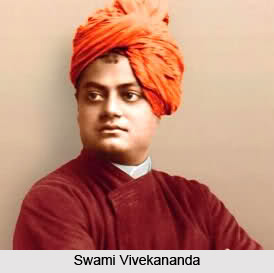











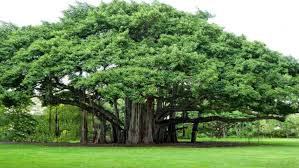




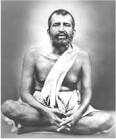




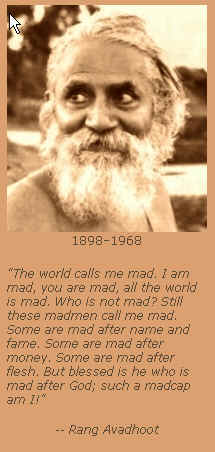


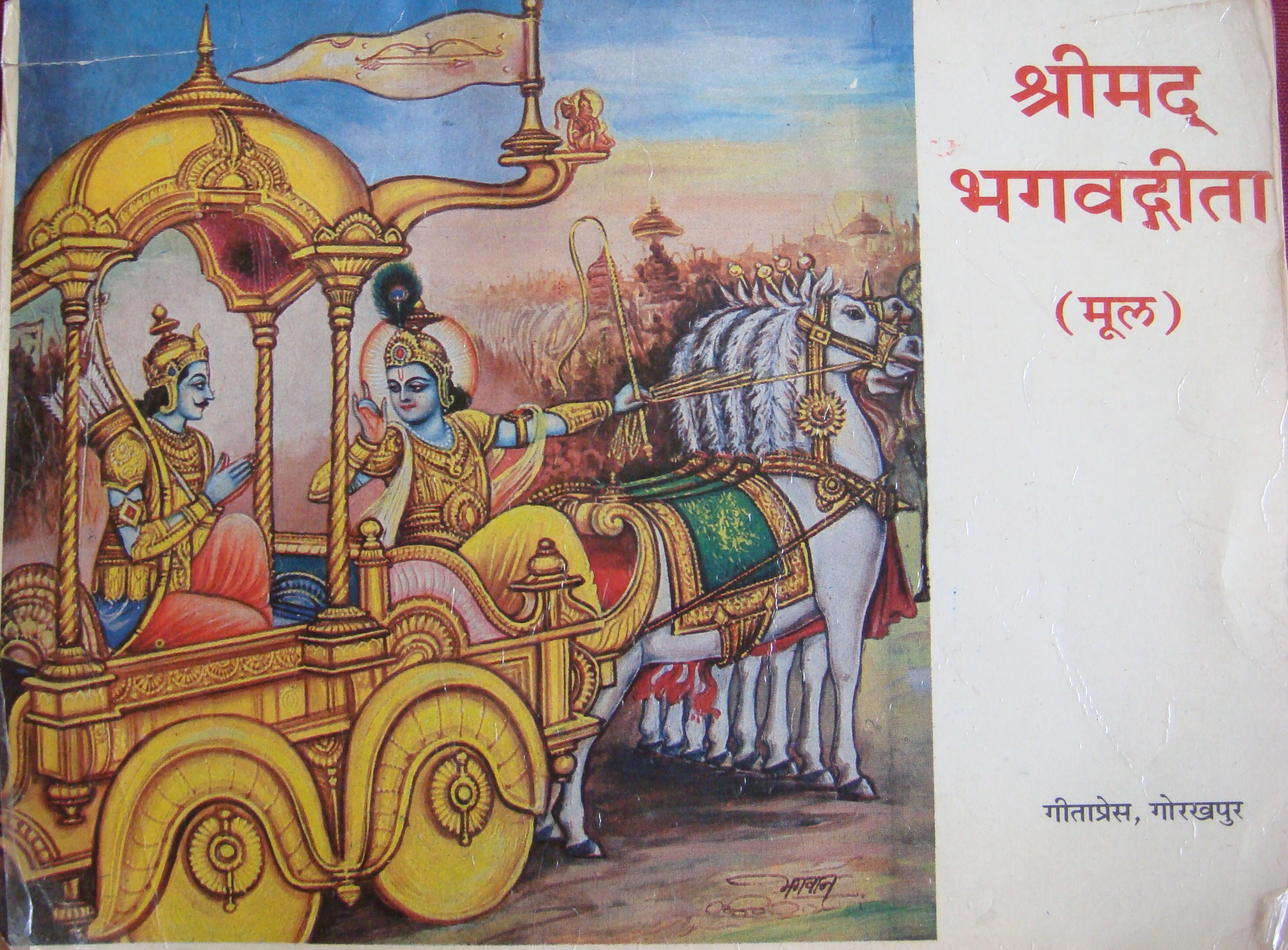




 mahendrajani