(The following post is based on a talk I have given at Vivekananda Vidyapith’s Youth Day Celebration, January 4, 2020.)
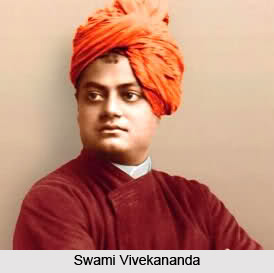
Dear Students, teachers, parents, helpers, and friends:
We are very happy to celebrate Swami Vivekananda’s birthday as “A Month-Long Youth Day Celebration”.
In India, from 1985, January 12th, Swami Vivekananda’s birthday, is being celebrated as “National Youth Day”. On this day, all over India, the Government and other organizations hold various programs celebrating Swamiji’s birthday. In fact, all over the world people celebrate Swami Vivekananda’s birthday remembering his life and teachings. Swami Vivekananda lived only for 39 years (1863-1902), but his positive impact will continue to inspire people in India and all over the world for years to come.
Who was Swami Vivekananda? He was a Saint, Prophet, Philosopher, Devotee, Karma Yogi, Jnana Yogi, Raja Yogi, Patriot, World Teacher, Musician, Orator, Poet, Visionary, Reformer, and many others. Swami Vivekananda said about himself that he was “A Voice Without A Form”. He was a voice of the infinite which is lying within all of us as our conscience. He was the voice of all the scriptures.
Swami Vivekanand’s main message is: “Each soul is potentially divine. The goal is to manifest this divinity within by controlling nature, external and internal. Do this either by work (Karma Yoga), or worship (Bhakti Yoga), or psychic control (Raja Yoga), or philosophy (Jnana Yoga) – by one, or more, or all of these – and be free. This is the whole of religion. Doctrines, or dogmas, or rituals, or books, or temples, or forms, are but secondary details.”
His lectures given in the USA and UK on the four Yogas, namely Raja Yoga, Karma Yoga, Bhakti Yoga, and Jnana Yogas, give us the essence and practical guidelines based on the teachings of the Upanishads and Bhagavad Gita. Everyone should read these lectures. This is one of his unique contributions to the world.
Swami Vivekananda had realized and manifested the divinity in his thoughts, speech, and actions. Recently, I heard from Swami Sarvapriyananda, Minister and Spiritual Leader of the Vedanta Society of New York, that there are two kinds of realizations of our own divine identity (Atman or Brahman): One described by Shri Shankaracharya – realize that “I am Brahman.” and second described by Swami Vivekananda – “The manifestation of the inner divinity in our thoughts, speech, and actions.” Swami Vivekananda’s manifestation of the divinity includes Shri Shankaracharya’s realization. In order to manifest the divinity, one has to realize first that “I am Atman” or “My True Nature is Divine.”
Swami Vivekananda has said, “It may be that I shall find it good to get outside my body – to cast it off like a worn-out garment. But I shall not cease to work. I shall inspire people everywhere until the world shall know that it is one with God.” He has inspired millions of people in the past and will continue to inspire people to realize their divinity lying within and manifest it through unselfish service to humanity.
Today, I would like to share the thoughts which come to mind when I sing the bhajan, “Jaya Vireshwara Viveka Bhaskar…” in honor of Swami Vivekananda.
Jaya Vireshwara – victory to Vireshwara.
Swami Vivekananda’s childhood name was “Vireshwara” from which the adorable name “Biley” came. His mother Bhuvaneshwari Devi felt that Lord Vireshwara Shiva gave her a son and therefore she and her husband Vishwanatha Datta named the boy Vireshwara. As a young boy, he was fully energetic and naughty. He used to run around and play lots of mischiefs. Four people needed to catch him and control him. Finally, to calm him down his mother used to pour cold water on his head saying “Shiva, Shiva, Shiva’. He knew the stories of Ramayana and Mahabharata. He loved to meditate. He used to meditate for a while and used to check if he had developed a ‘Jata’ (long matted hair) like Lord Shiva. He had his own gym and a drama company of young boys. He loved to read. Swami Vivekananda’s other childhood’s name was Narendra or Naren. We can learn many things from his childhood.
Viveka Bhashkara – Swami Vivekananda’s “Viveka” was like a blazing sun. Viveka means the power of discrimination between ‘truth’ and ‘untruth’, or ‘right’ and ‘wrong’, or ‘helpful’ and ‘harmful’. He was very sharp and analytical. Sri Ramakrishna said that he was like an open sword. Not a single bad or harmful thought can come closer to him. In Viveka Chudamani, Shri Shankaracharya says that in the spiritual path the first thing needed is “Viveka’.
In Kathopanishad Lord Yama says that in life at every step a person has to make a choice between Shreya (preferable) and Preya (pleasurable). Shreya helps a person to make spiritual progress and leads to the Highest Knowledge, peace, and bliss while Preya fulfills the worldly desires of the body and mind and leads to ignorance, suffering, and restlessness. One who has ‘Viveka’ selects always Shreya while deluded people select Preya.
Jaya Jaya Sri Vivekananda: Victory to Vivekananda – one who enjoys having sharp Viveka. Before Sri Ramakrishna passed away, he had given symbolic ‘Sanyas’ to the young disciples by giving them ocher cloths.
After Sri Ramakrishna passed away, under the leadership of Narendra, all brother disciples took monastic vows and changed their names to the monastic names. I have heard that Narendra wanted to keep his monastic name as Swami Ramakrishnananda, but he found that his brother disciple Shashi Maharaj wanted to have that name. Narendra told him that his (Shashi Maharaj’s) devotion for Sri Ramakrishna is very deep, so he can keep that name. Then, Narendra kept his monastic name as Swami Vivekananda.
Indu Nibhanann Sundara lochan: Swami Vivekananda as a young man Narendra was very handsome. He had beautiful eyes. Once when he asked Devendranath Tagore (Ravindranath Tagore’s father), “Sir! Have you seen God?” Then, Devendranath said to Narendra that he has the eyes of a Yogi, and he should practice meditation.
Vishwa – Manava Chira Vandya: Swami Vivekananda saw God in all human beings and in everything. He taught all to see Unity in Variety, the One God residing in people with various colors, cultures, and countries. He was a “Universal Man.” He cannot be confined to one country. Those who understand his life and teachings will revere him eternally.
Prema Avirala: Swami Vivekananda loved all; especially he loved people who were poor, miserable, weak, neglected and crushed by society. As a young child, he used to give away precious things to poor people including his mother’s expensive saris to satisfy their hunger and basic needs. He told his brother disciples that for a while put away all gods and goddesses and serve poor and miserable people seeing God in them.
Usually, spiritual seekers want to attain “Moksha” and be free from the cycle of births and deaths. But, out of his love for humanity, Swami Vivekananda said, “May I be born again and again, and suffer thousands of miseries, so that I may worship the only God that exists, the only God I believe in, the sum total of all souls.”
Kanti Suvimala: He was pure in mind. The purity was shining from his personality. He was simply majestic.
Adhigata Veda Vedanta: Swami Vivekananda had studied all the Vedas and Vedanta, has realized the truths of them and he taught these truths to the people in the scientific language of the time. We find that in the Baranagar Math Swami Vivekananda and his brother disciples were studying scriptures. As a wandering monk, when he was traveling all over India, he was eager to meet people who were experts in the scriptures and to discuss with them about various topics. When he came to the USA, he brought with him many scriptural books and later he was requesting people residing in India to send him the books he needed.
Tyaga, Titiksha, Tapasya Ujjvala: His sacrifice, forbearance, and austerity were unparalleled. His father passed away and his mother and siblings had no money to acquire daily meals. The family was dependent on Narendra. On the other hand, he had the goal of God-realization and service to humanity. He loved his family dearly, but his goal was calling him. Finally, he put a stone on his heart and renounced the world to achieve his goal of ‘God Realization and Service to Humanity’. In the Baranagar Math and during his wandering period he did severe austerity to keep his mind in constant communion with Brahman, the Ultimate Reality. He bore patiently all the hardships and sufferings during this time. Even in the USA he had to go through many hardships to continue his work of explaining the principles of Vedanta and guiding people for their spiritual upliftment. His book on Raja Yoga is considered a standard guideline for the Yoga Practices.
Chitta Nirmal Shanta: Swami Vivekananda was a perfect person as described in the Bhagavad Gita – he was clam within in the intense activity and when surrounded by a whirlpool of problems.
Karma Bhakti Jnana Trishula Dharana: Swami Vivekanand was an incarnation of Shiva. His trident was made out of three yogas – Karma, Bhakti and Jnana Yoga. His lectures given on these yogas are an excellent guide to realizing our inner divinity.
Chhedana Jiva Moha Bhandha: With that trident, he destroys the delusion and bondages of people.
Brahma Parayana Namo Narayana: He was “Sat-Chit-Sukha Swarupaya” always one with Brahman. Someone asked him how one should sit in meditation. He was showing the posture of sitting and then he was absorbed in deep meditation becoming one with Brahman. There are several noted incidents in which Swami Vivekananda was completely merged with Brahman during his meditation.
When he met Sri Ramakrishna first time, Sri Ramakrishna said to him, “O Lord! I know that you are the ancient sage Nara – the incarnation of Narayana – born on earth to remove the miseries of mankind.”
Dehi, dehi, charanarvinda: On this day we salute to Swami Vivekananda and pray that we learn from his life and teachings, build up our character, realize that our true identity is divine and serve all unselfishly.
 mahendrajani
Uncle, thank you for reminding us about Swamiji’s teachings on this special day. I am sure this tremendous character building education will have great positive effect on the one that strives to put it into action.
Regards, Neirah
Thank you Neirah for your comments. It is true, the impact of Swami Vivekananda’s teachings will help many to uplift their lives.
superb
Thank you for your “superb” comment. I am very happy that you liked this post.