Tag Archives: Belur Math Pilgrimage

Belur Math Pilgrimage – 2015, Day – 5 Morning at Baranagore Math

August 7, 2015

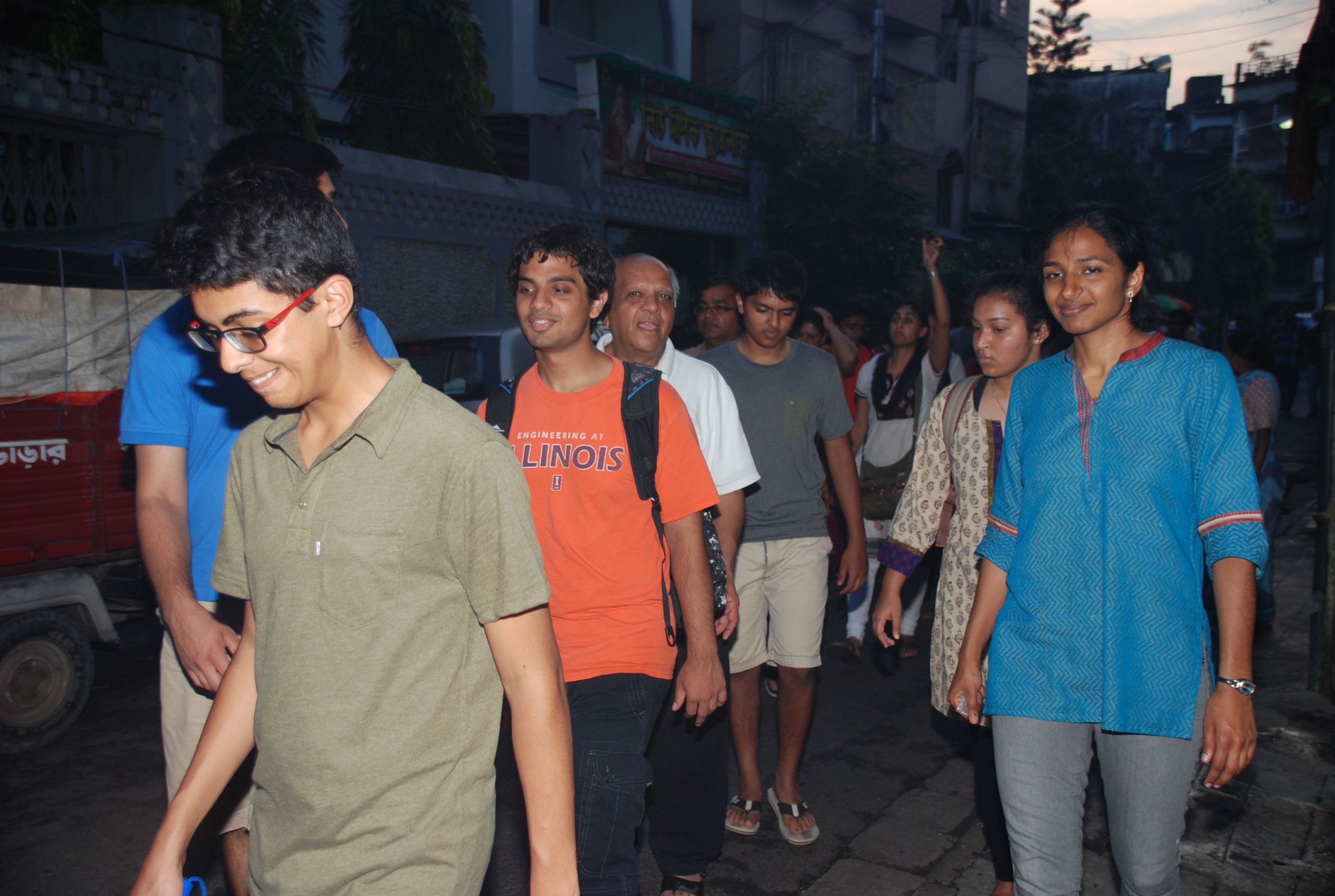
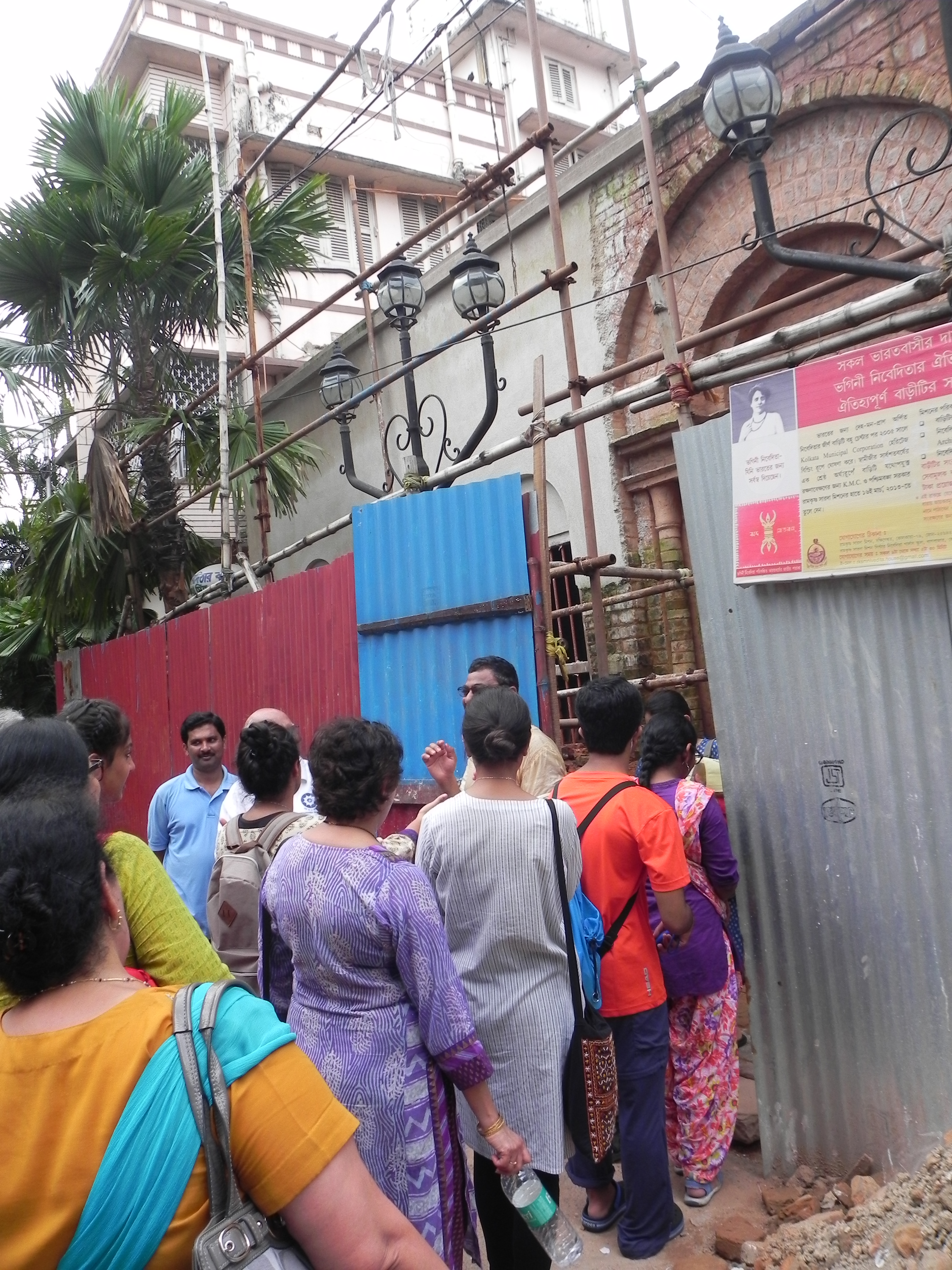
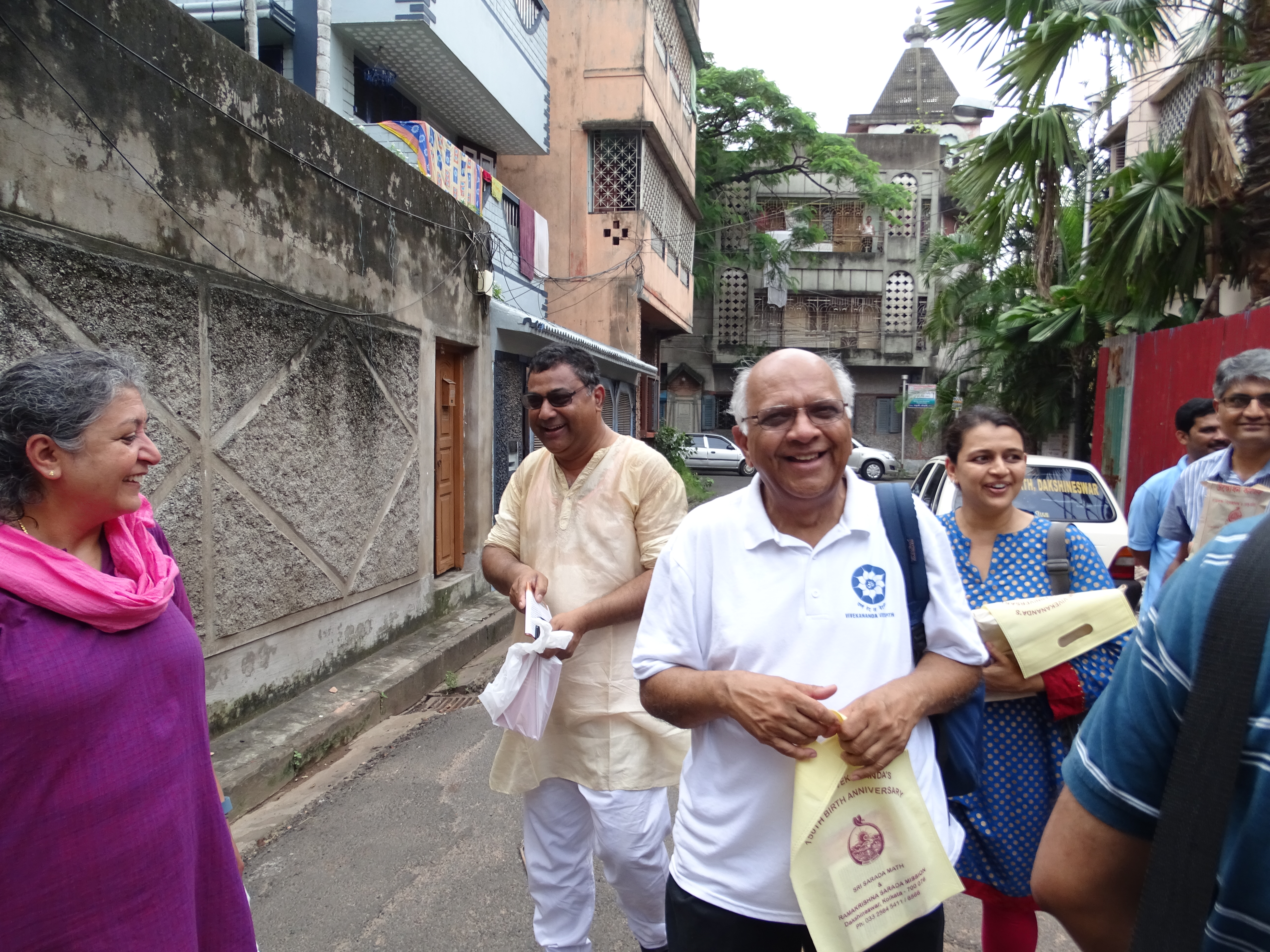
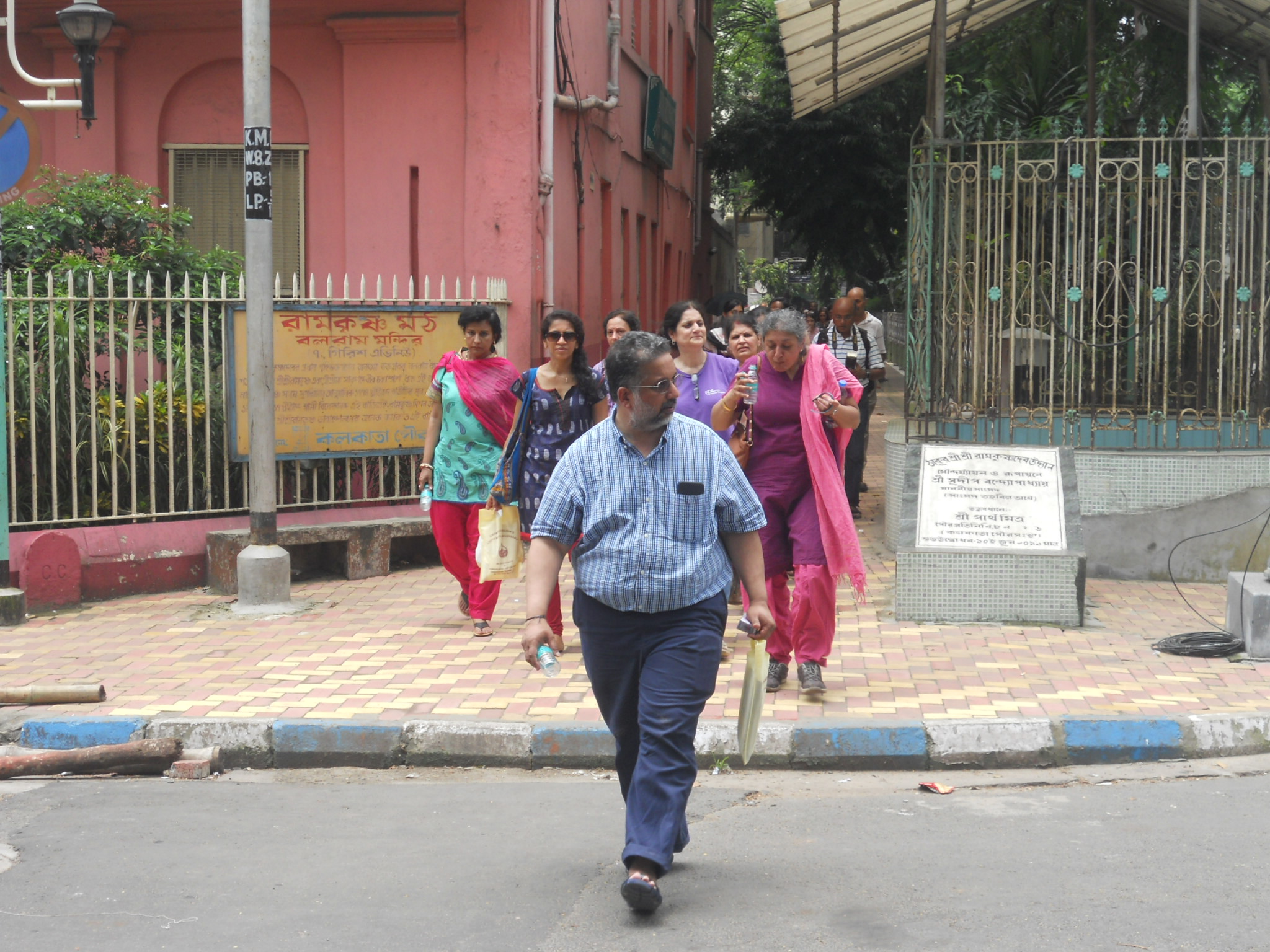
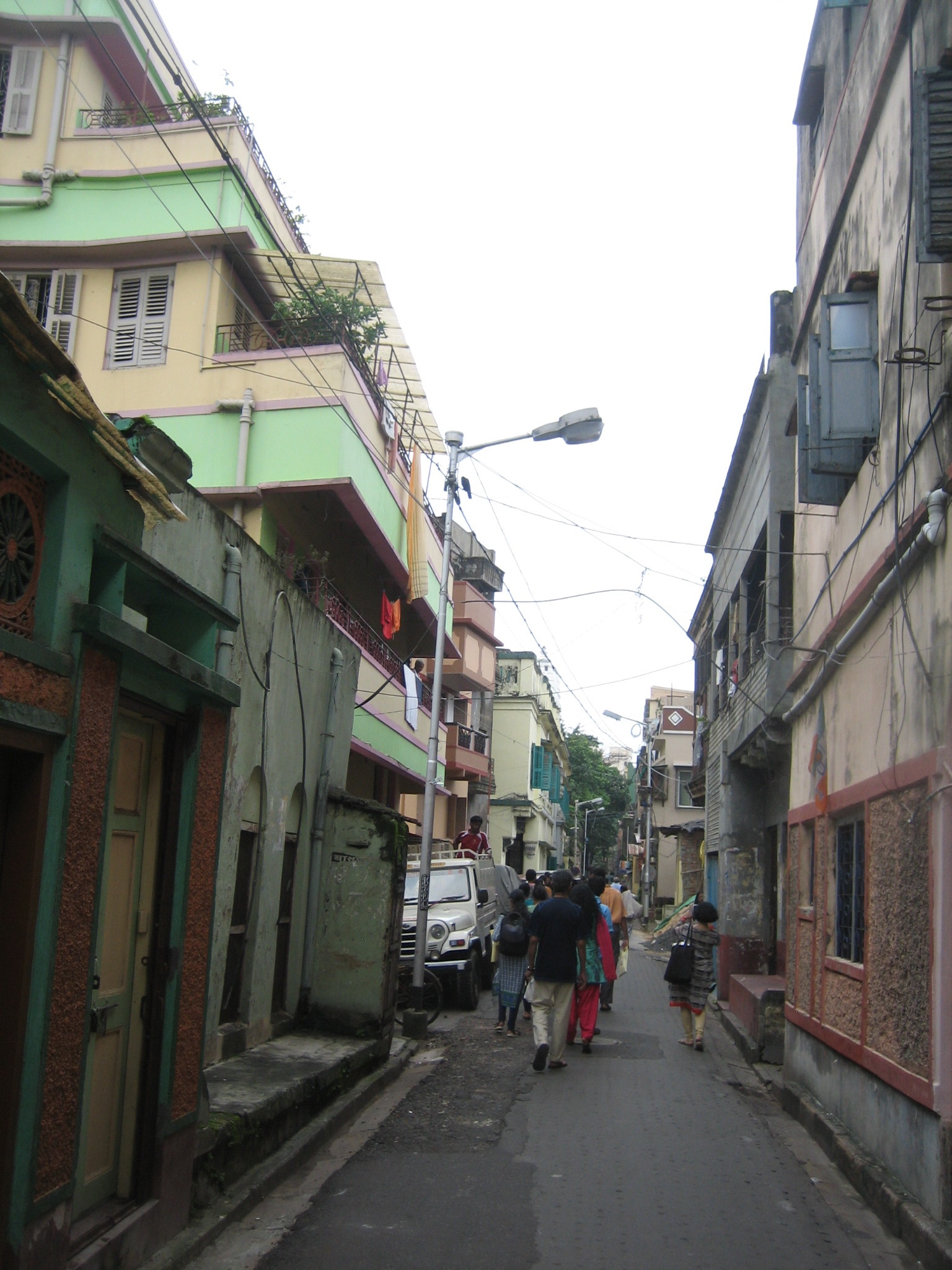
Going to Baranagore Math

On Friday, all the pilgrims woke up around 5:30 am, got ready and went downstairs for a lovely breakfast at the Gucchi. Breakfast consisted of a vast array of foods from “dosas” to cereals.  Over the breakfast table, everyone was happily talking about the inspiring pilgrimage they had experience thus far.  With the grace of Mother Nature and God, we had nice weather and were able to carry out the pilgrimage without many problems.  After having a good breakfast everyone gathered at the entrance of the Hyatt Hotel, ready to board our buses.  After getting onto buses according to our groups, the buses left around 7am.  Today, we had planned to visit the Baranagore Math and the Cossipore Garden House in the morning, and after lunch we were going to visit Jorasanko.  While coming back from Jorasanko we had planned a bus tour of Kolkata.  Everyone was excited about the scheduled program.

As usual in each bus, after “five Jai’s” everyone did the Morning Prayer including the “Sri Ramakrishna Suprabhatam.”

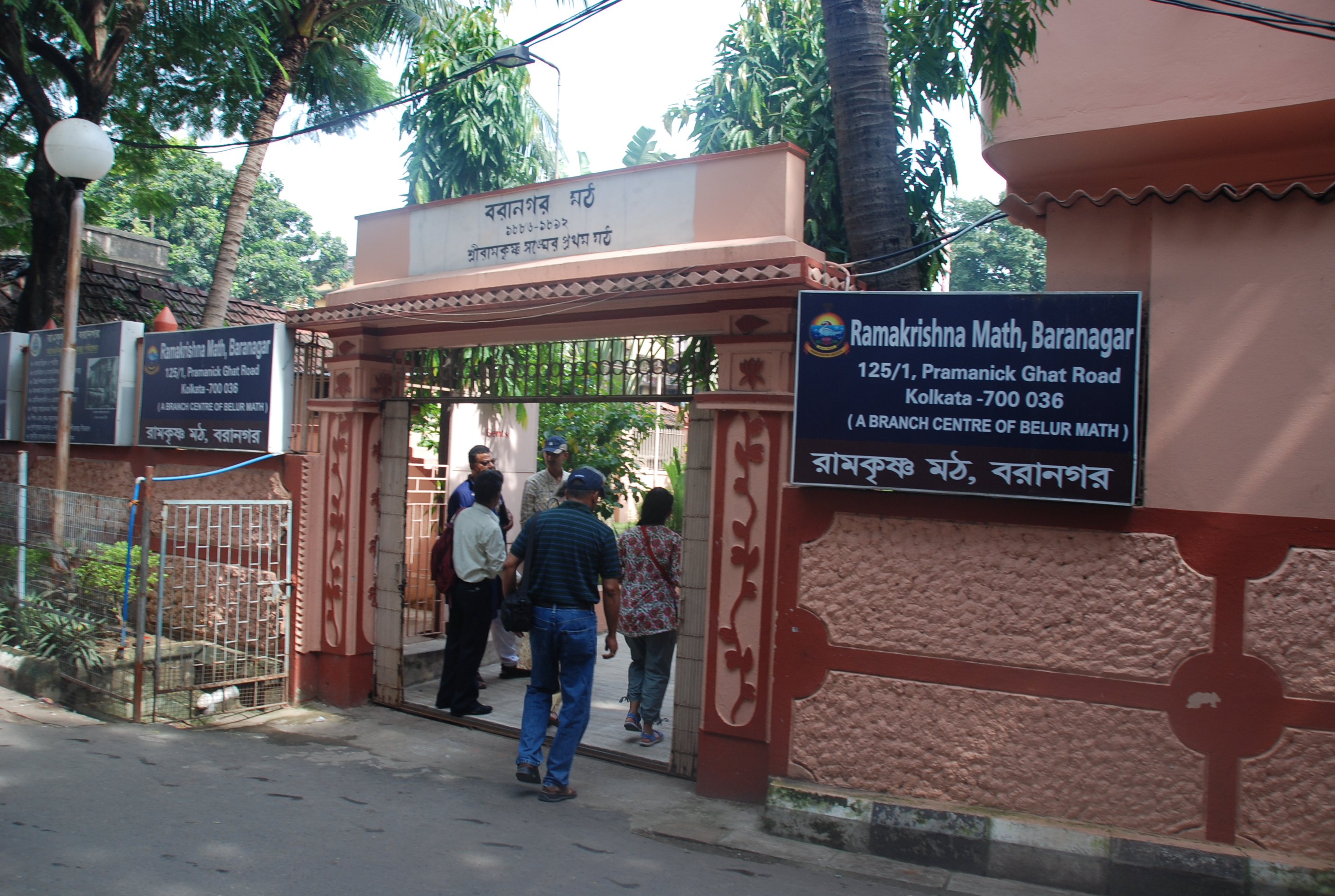
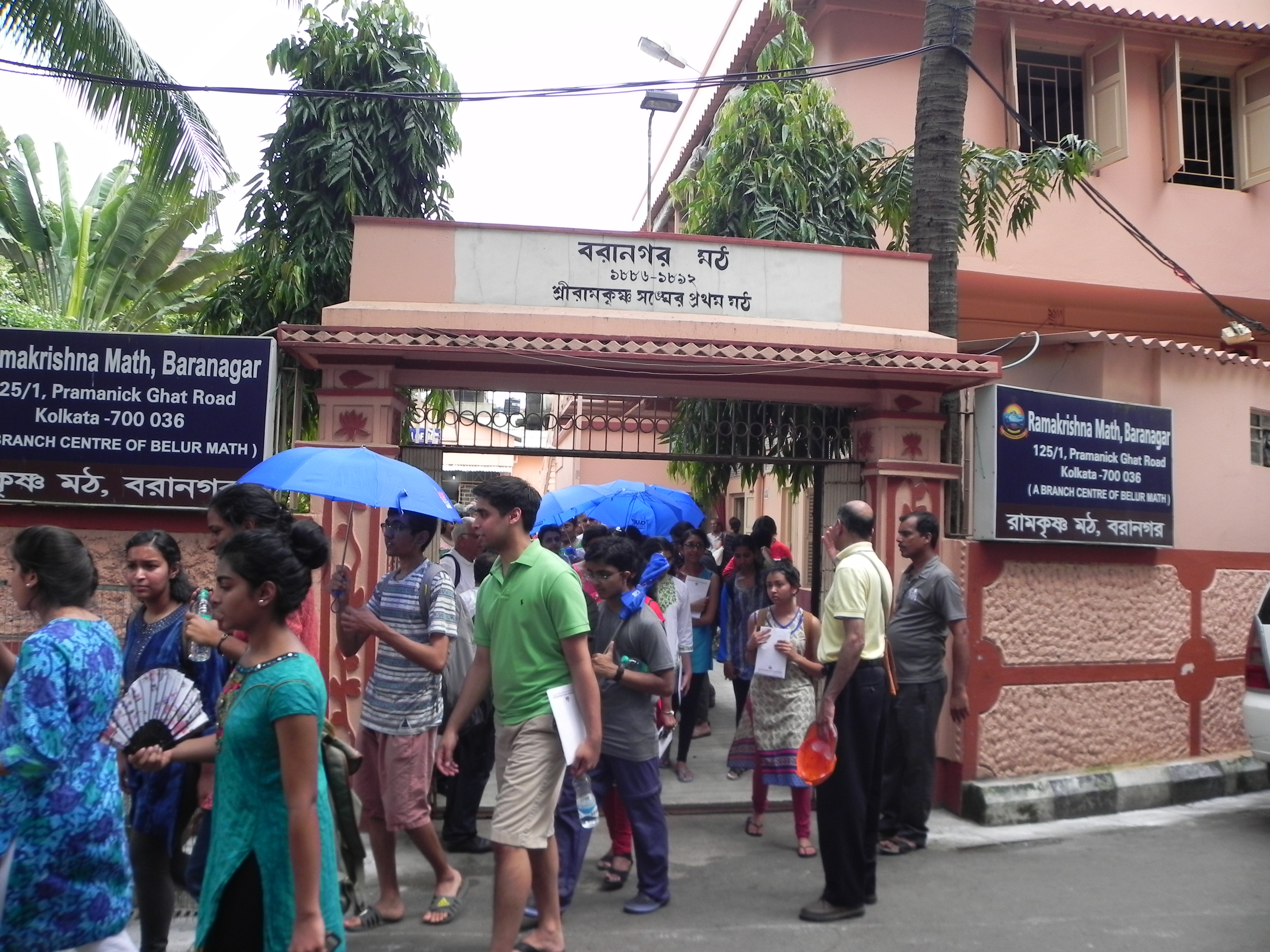
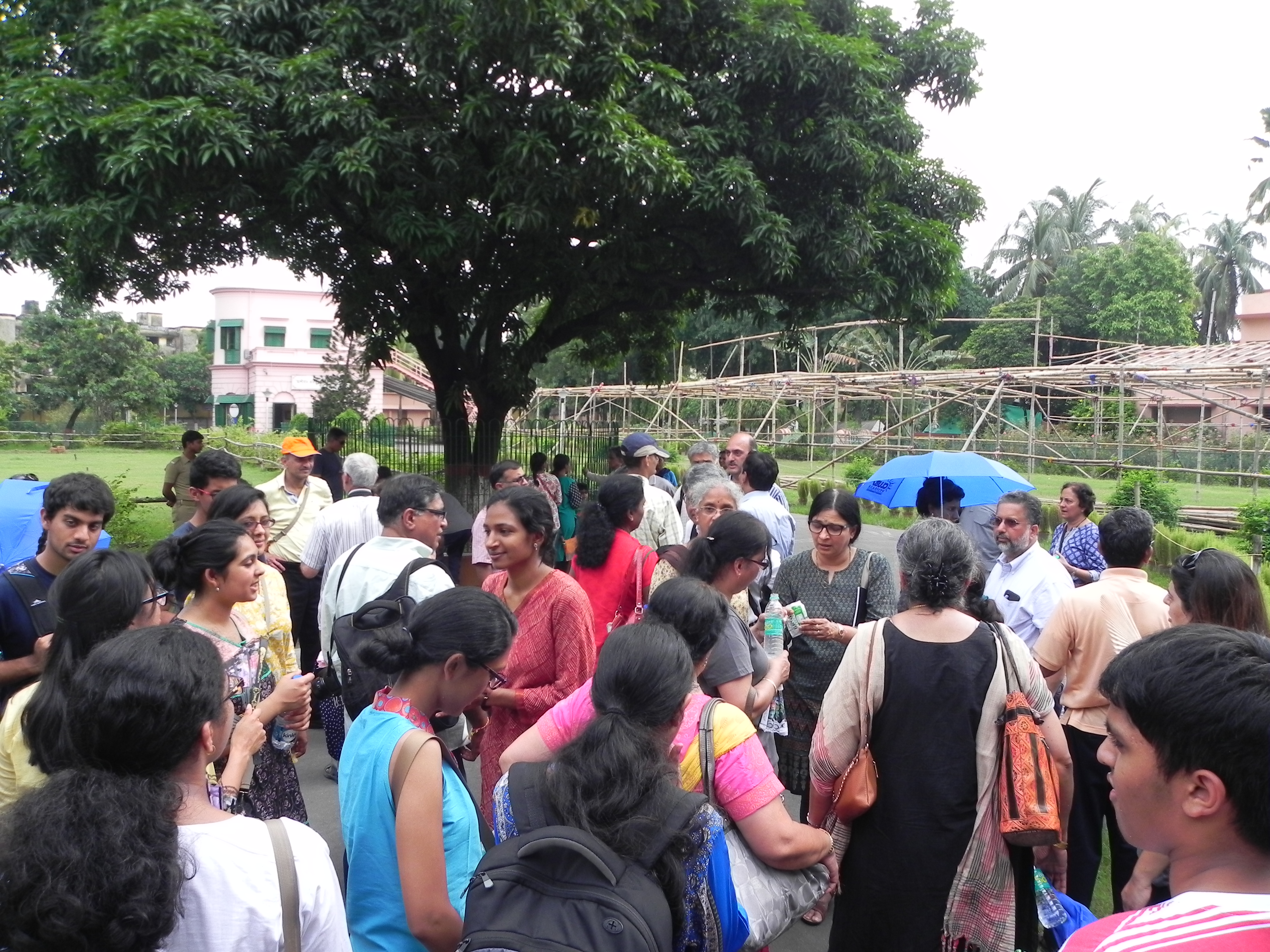
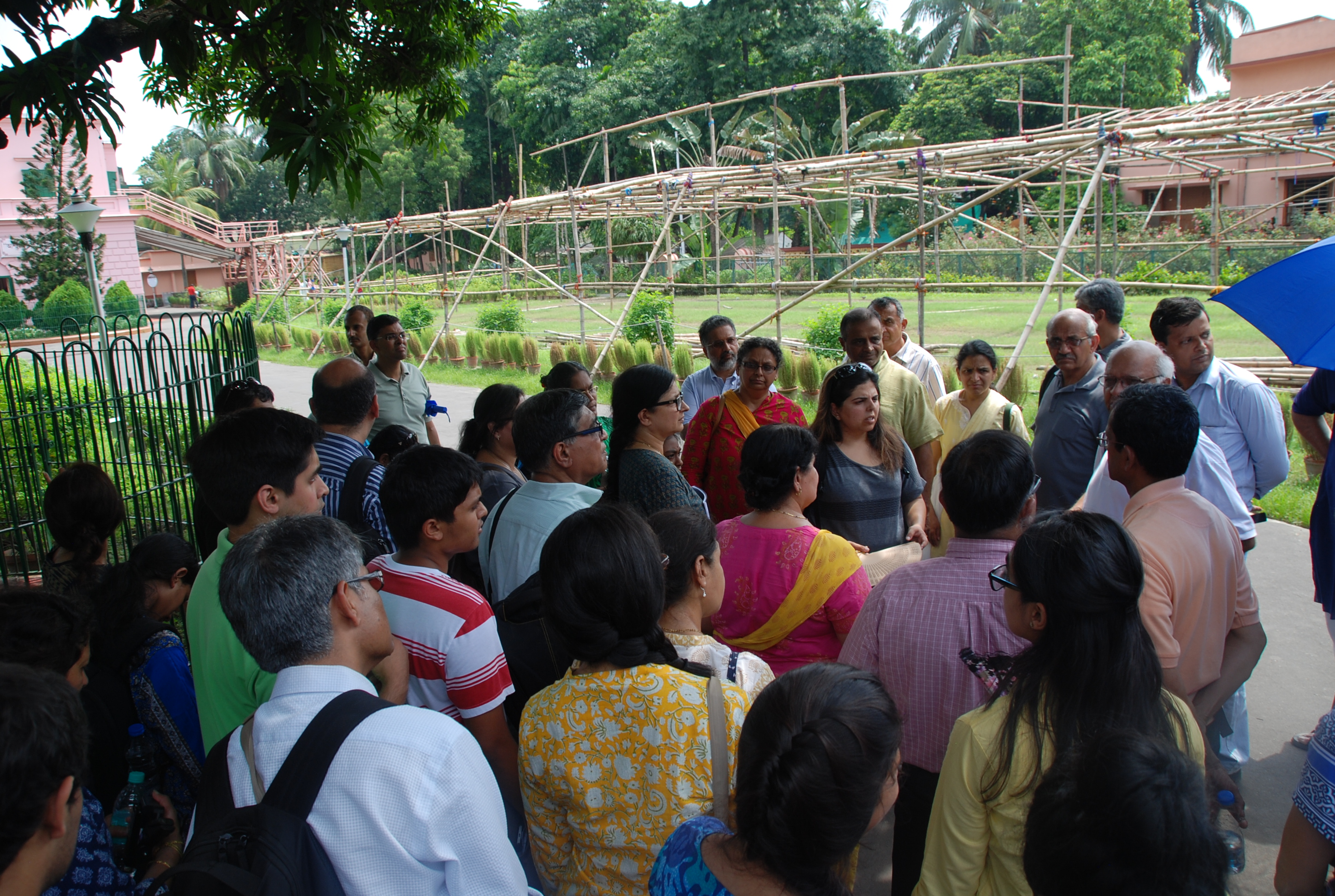
After about an hour, we arrived at the Baranagore Math.  It was a bright morning.

1 on the road 2 going to Math 3 Near te entrance 4 Entrance -2
7 before going up8 Going upstaris - 1

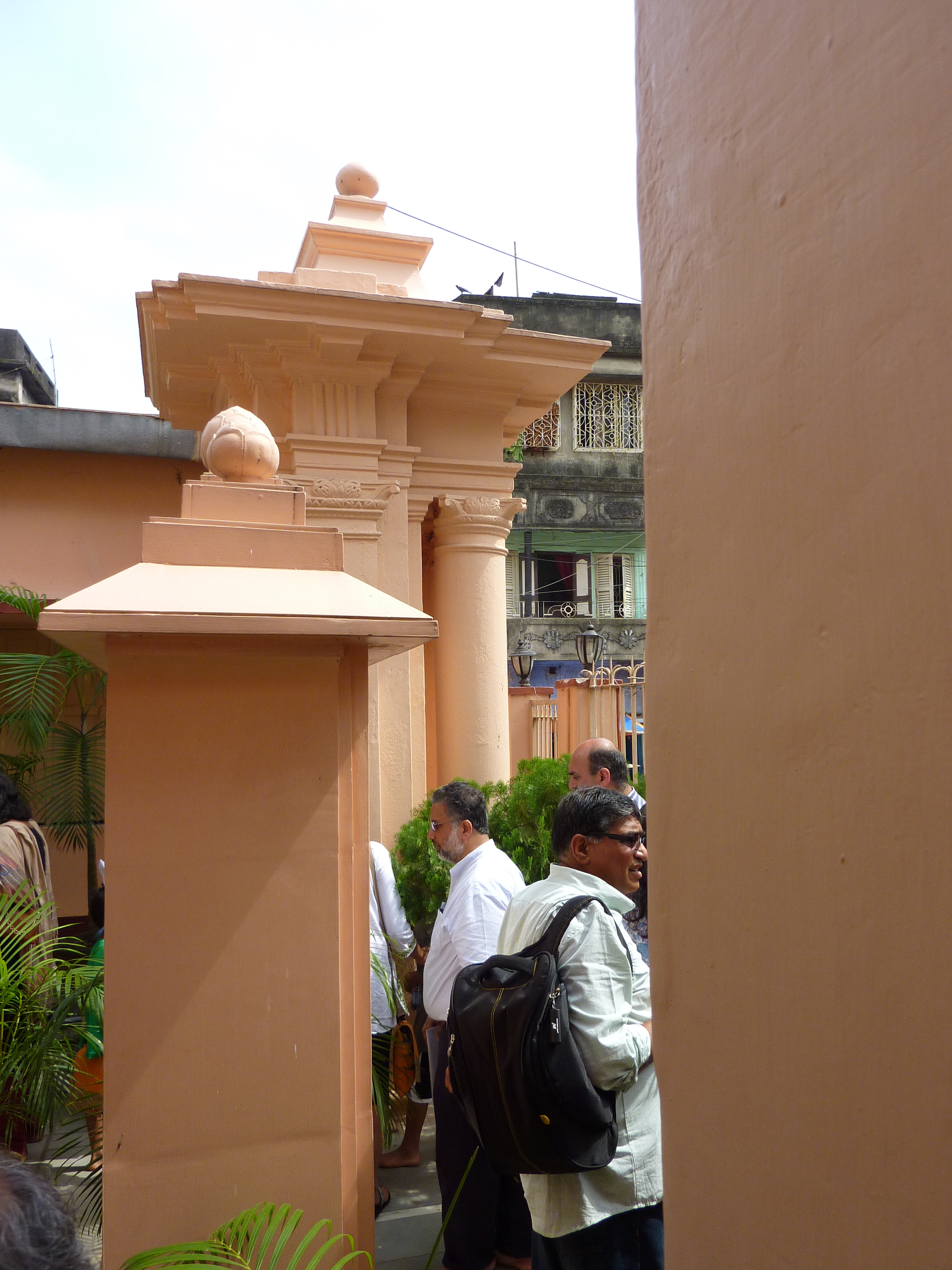
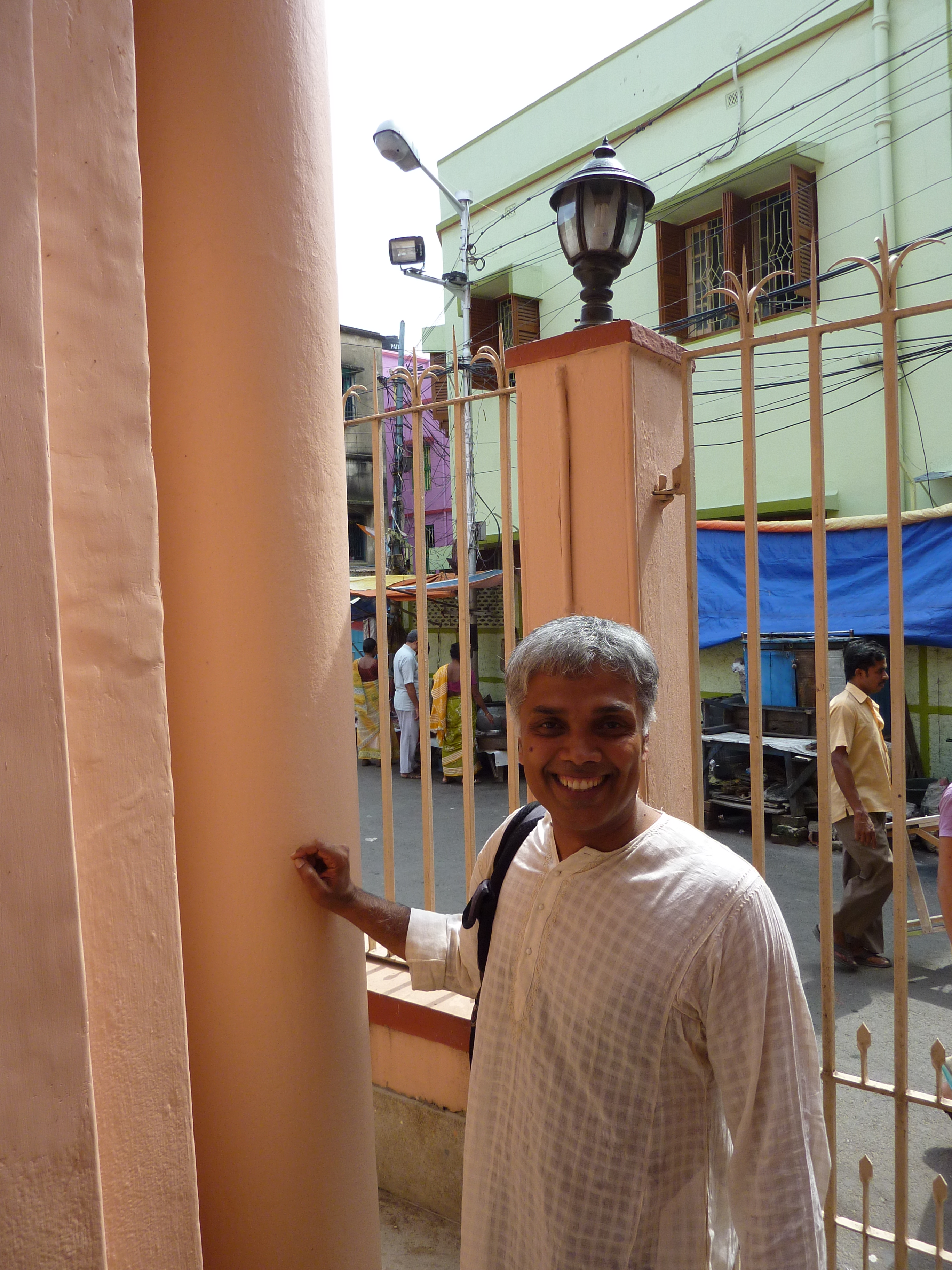
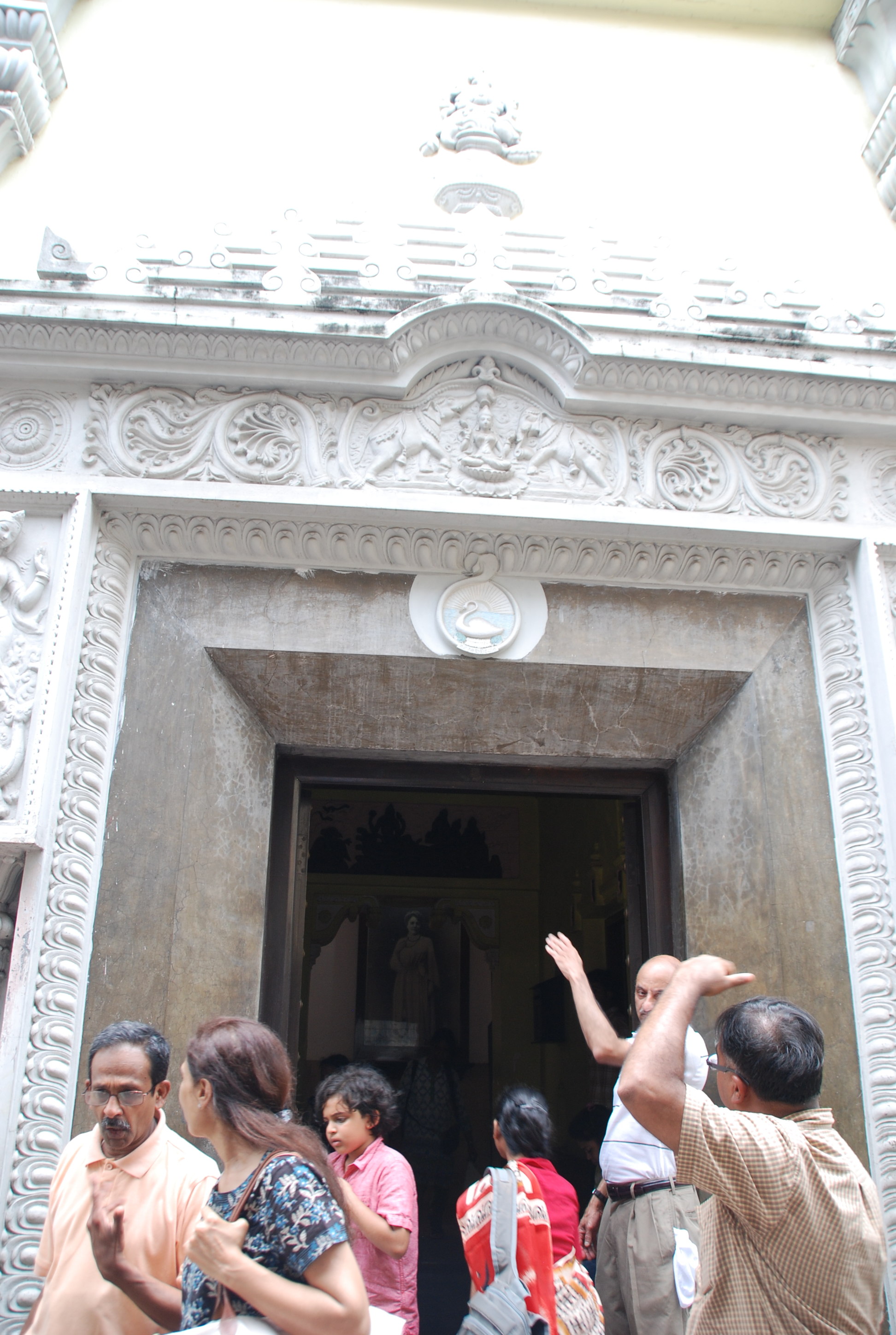
As we entered the Math, we saw two pillars on the two sides of the gate.

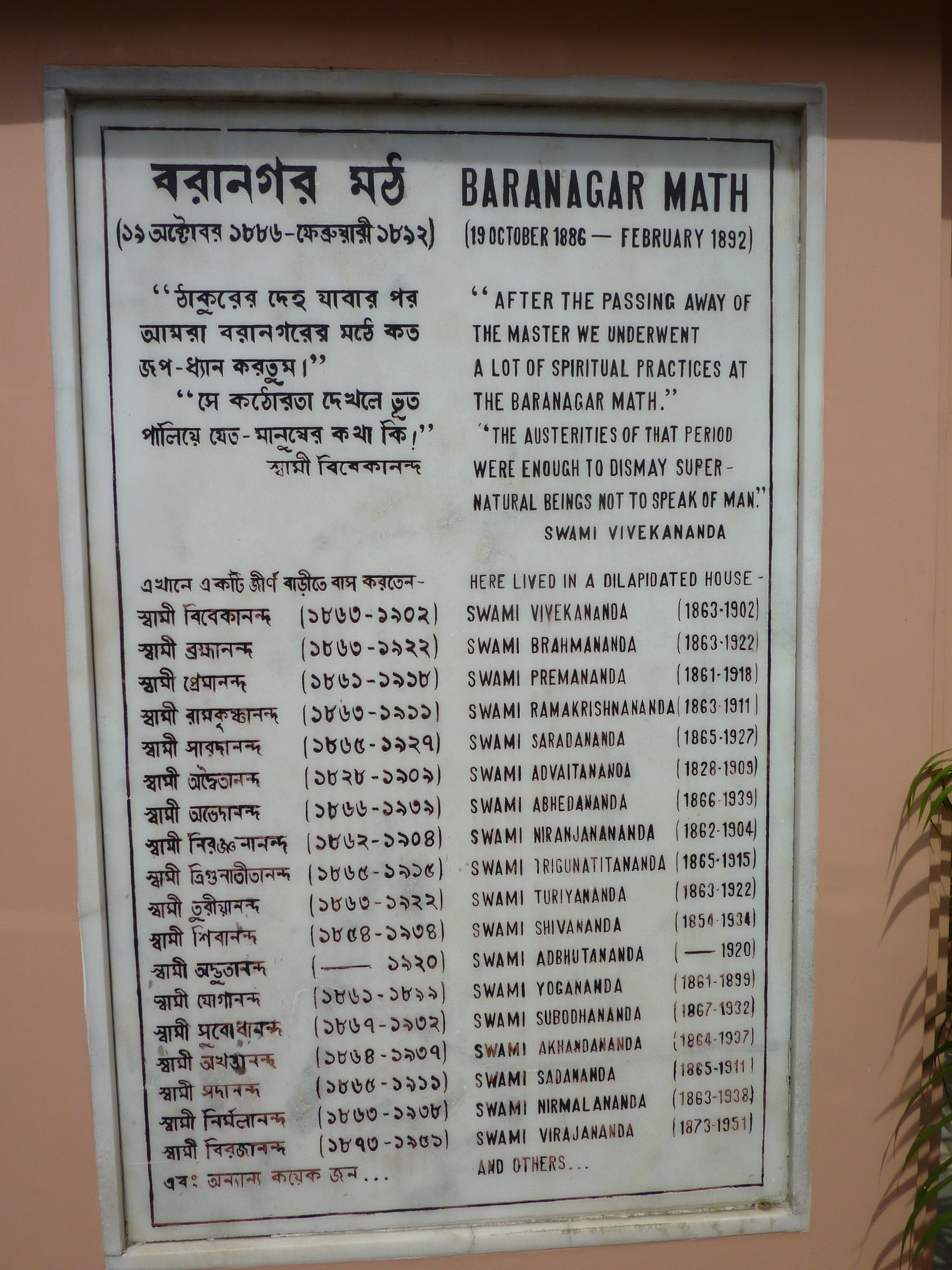
4 ppt 39 1 names of disciples - 2

6 going upstairs Original Pillar

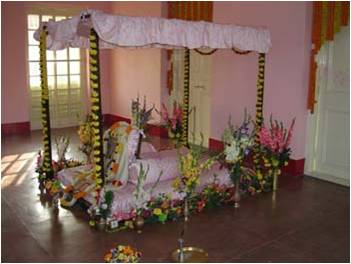
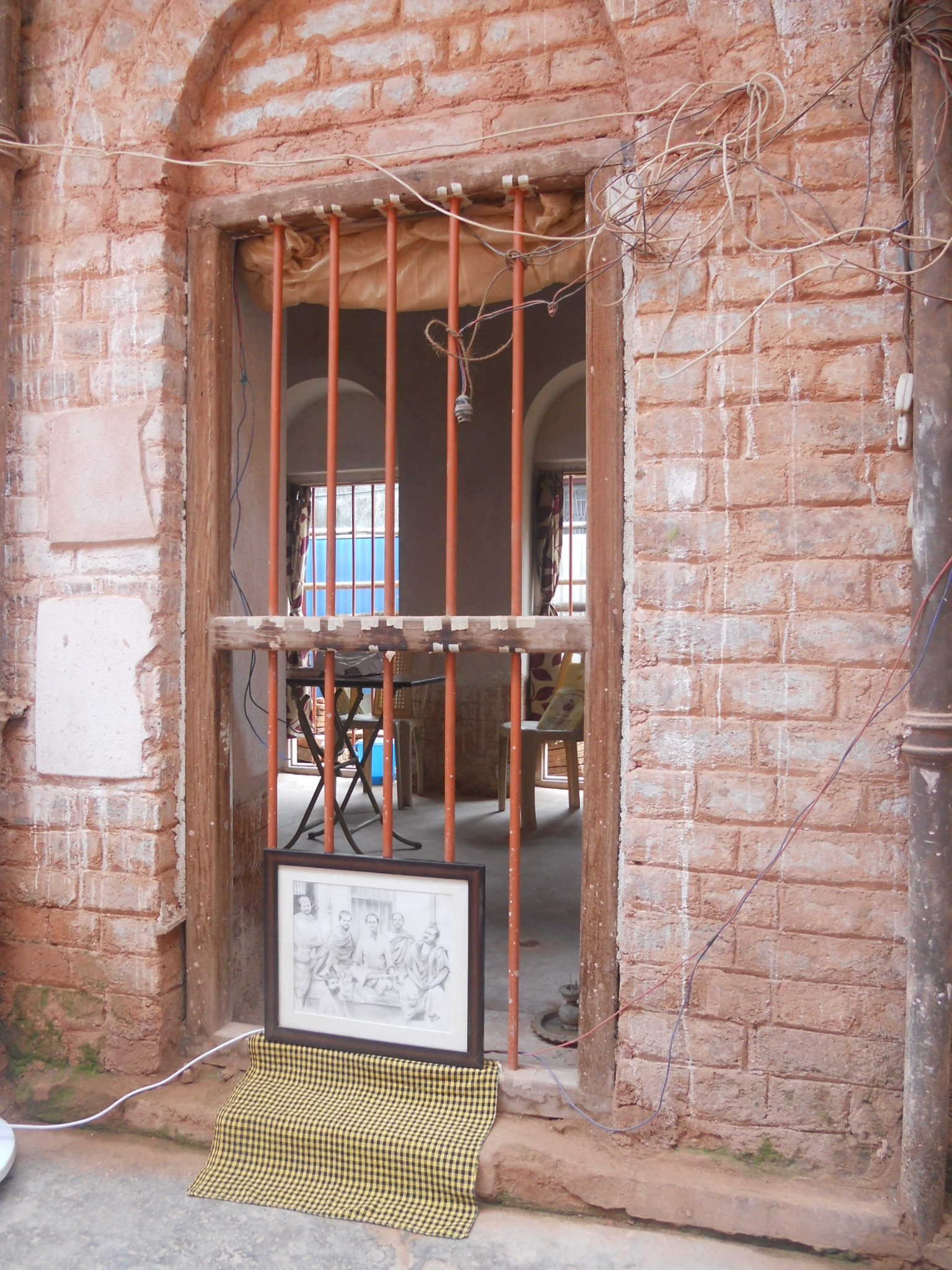
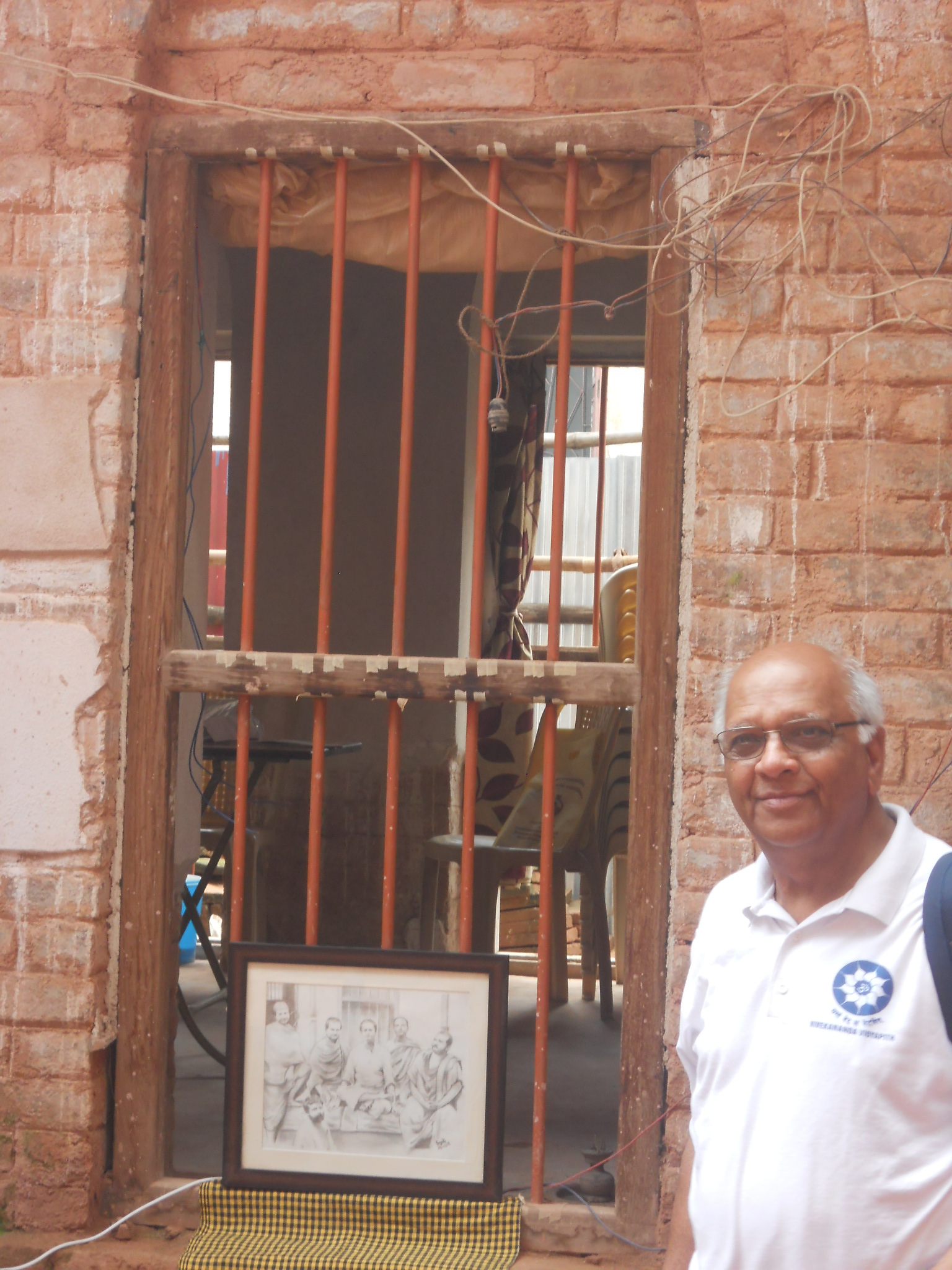
We were told that these were the last of the remaining historic pillars from the old Baranagore Math building. As we entered, we were told to go upstairs to the shrine room to offer our salutations.

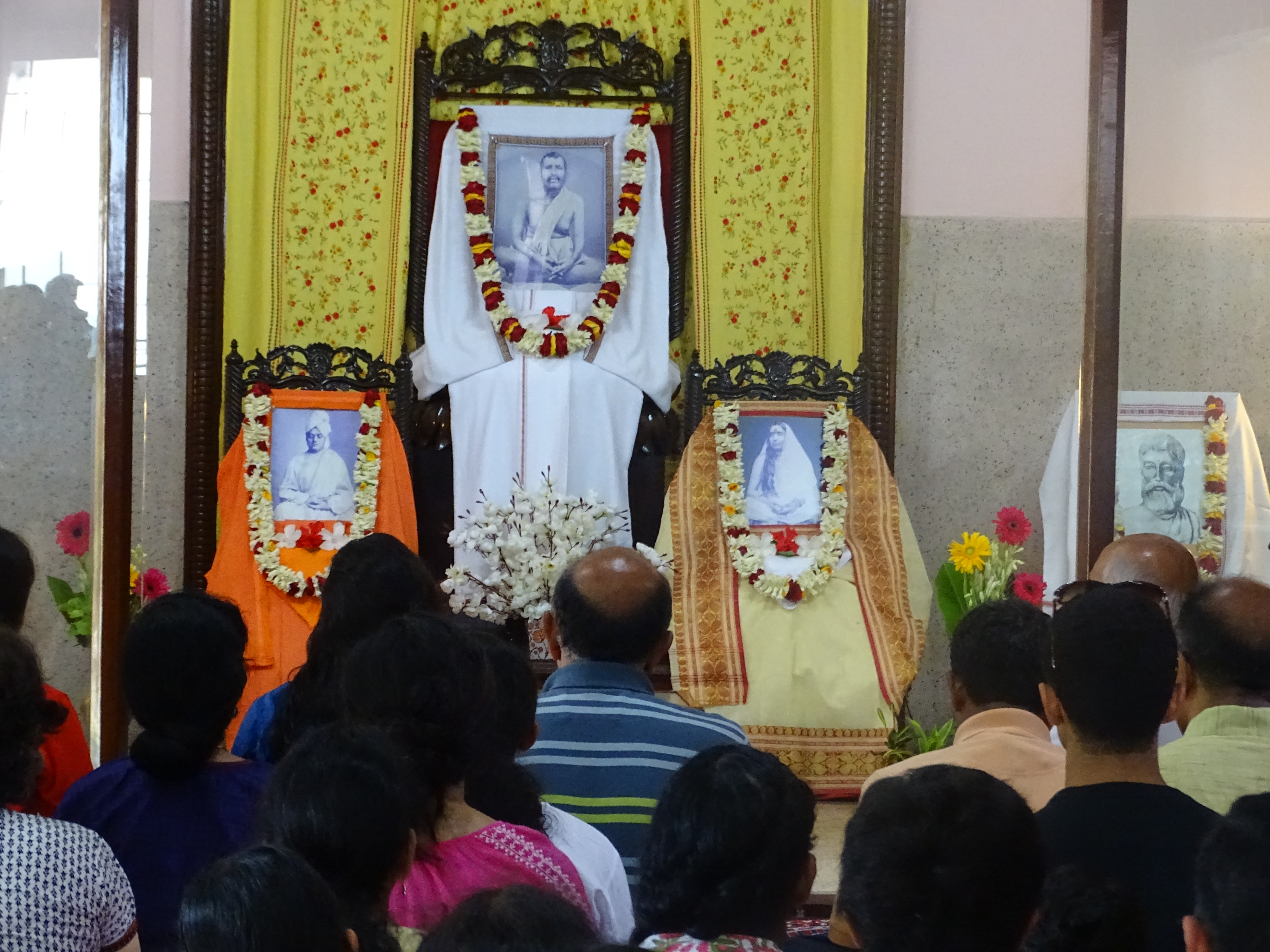
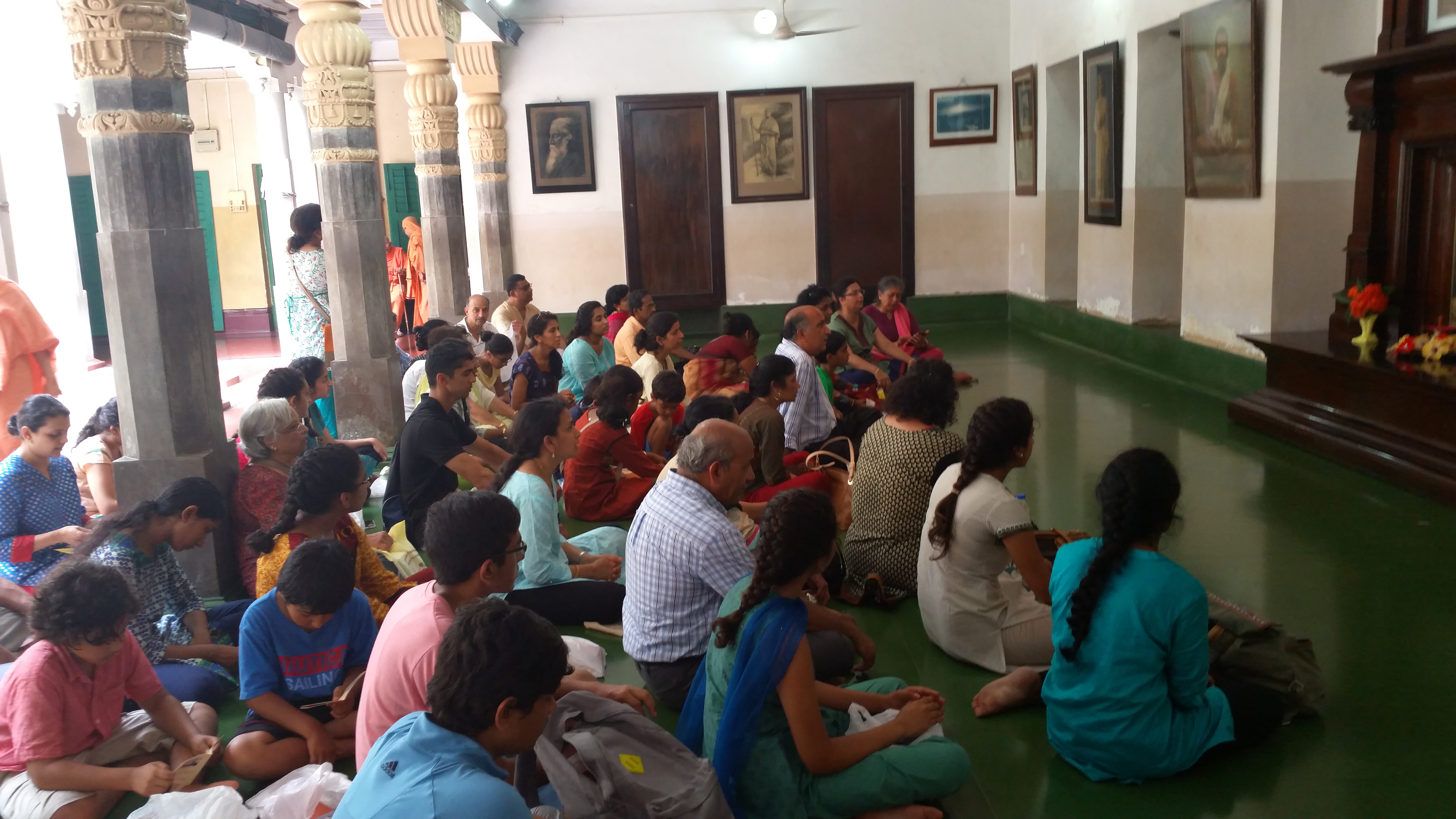
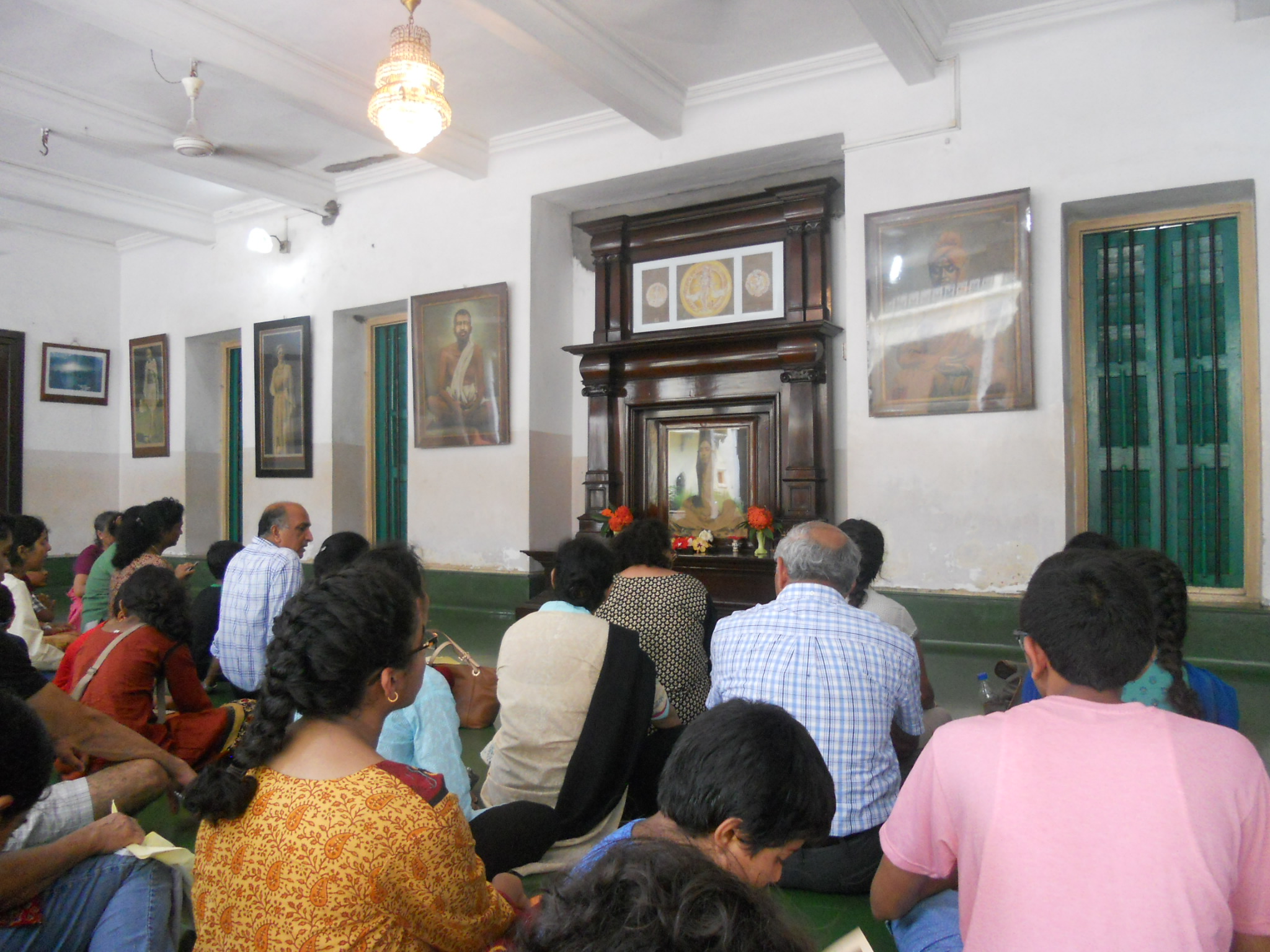
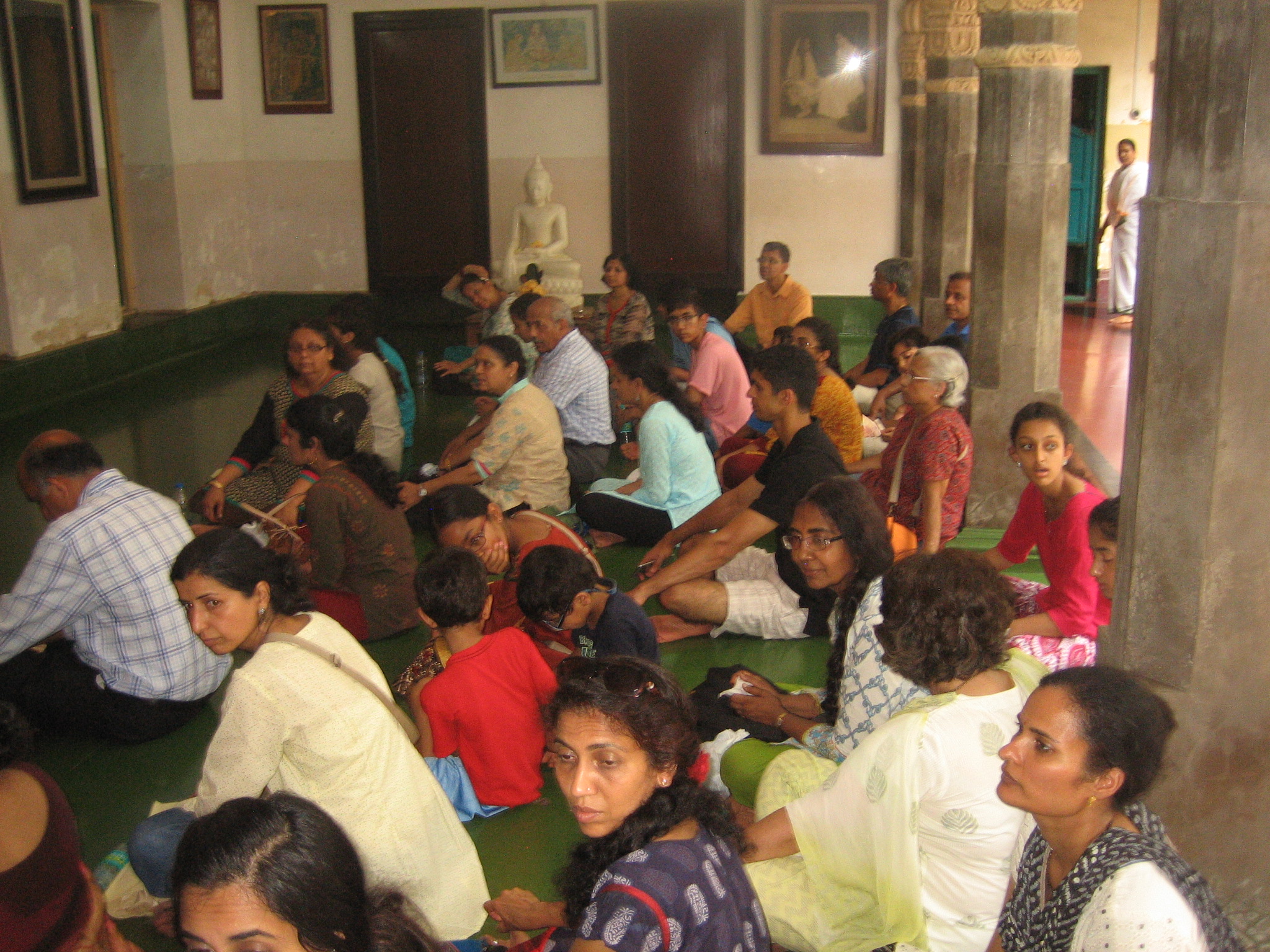
We placed our shoes on a rack, went upstairs, and quietly sat in the prayer hall.

27a 27a1 27a2 27d  28a3 302928a

The environment was very serene. We were thinking of Sri Ramakrishna’s young disciples who had observed intense spiritual practices in this Math. It was this important period that established the foundation of the Ramakrishna Math and Mission. We were very happy to learn that it was Shri Nag Mahashay’s birthday on the day of our visit.  Shri Nag Mahashay was a great household devotee of Sri Ramakrishna. He was a living example of a householder who had absolutely no ego.  He had inspired many people, and all the disciples of Sri Ramakrishna had great reverence for him.

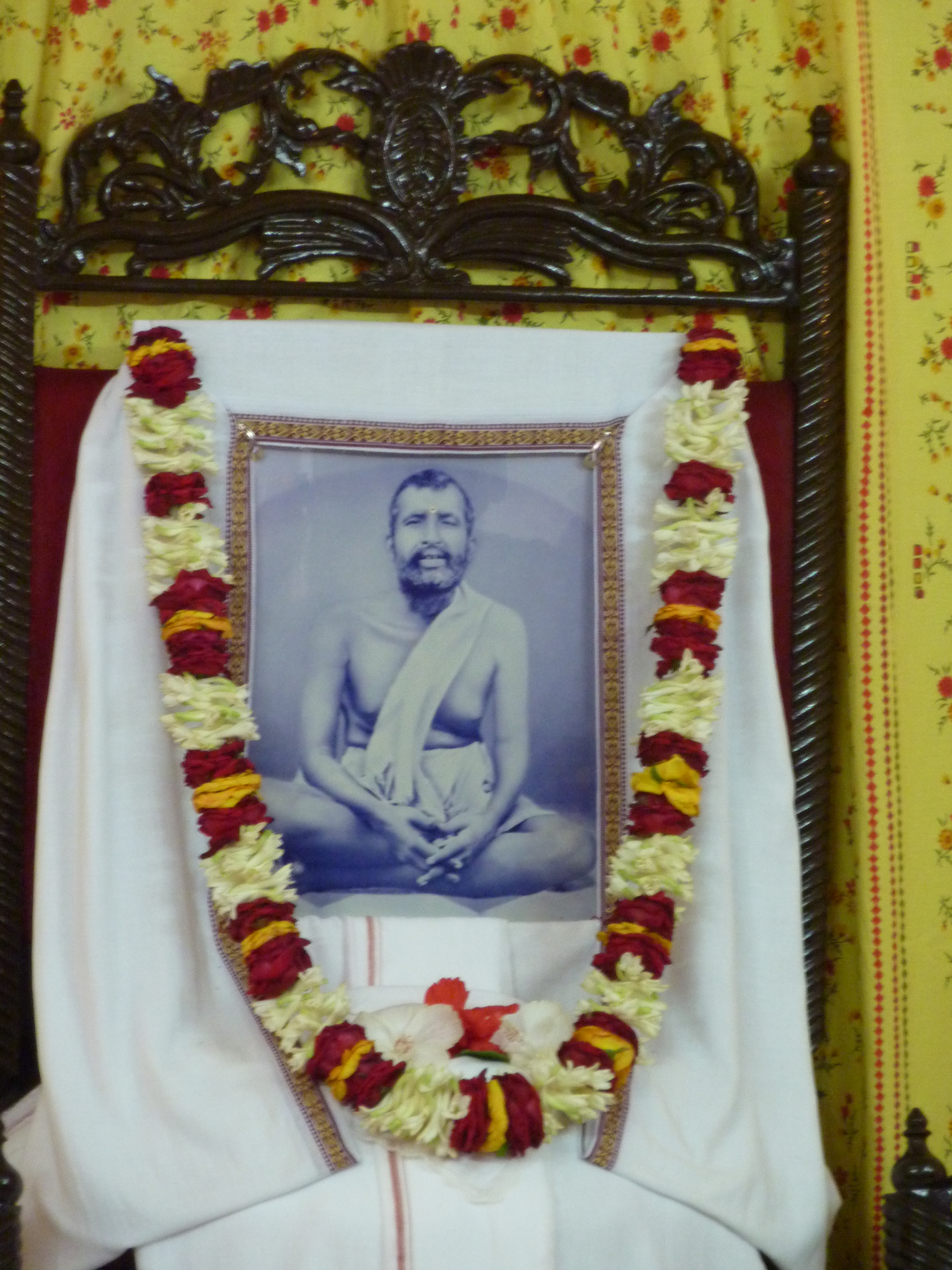
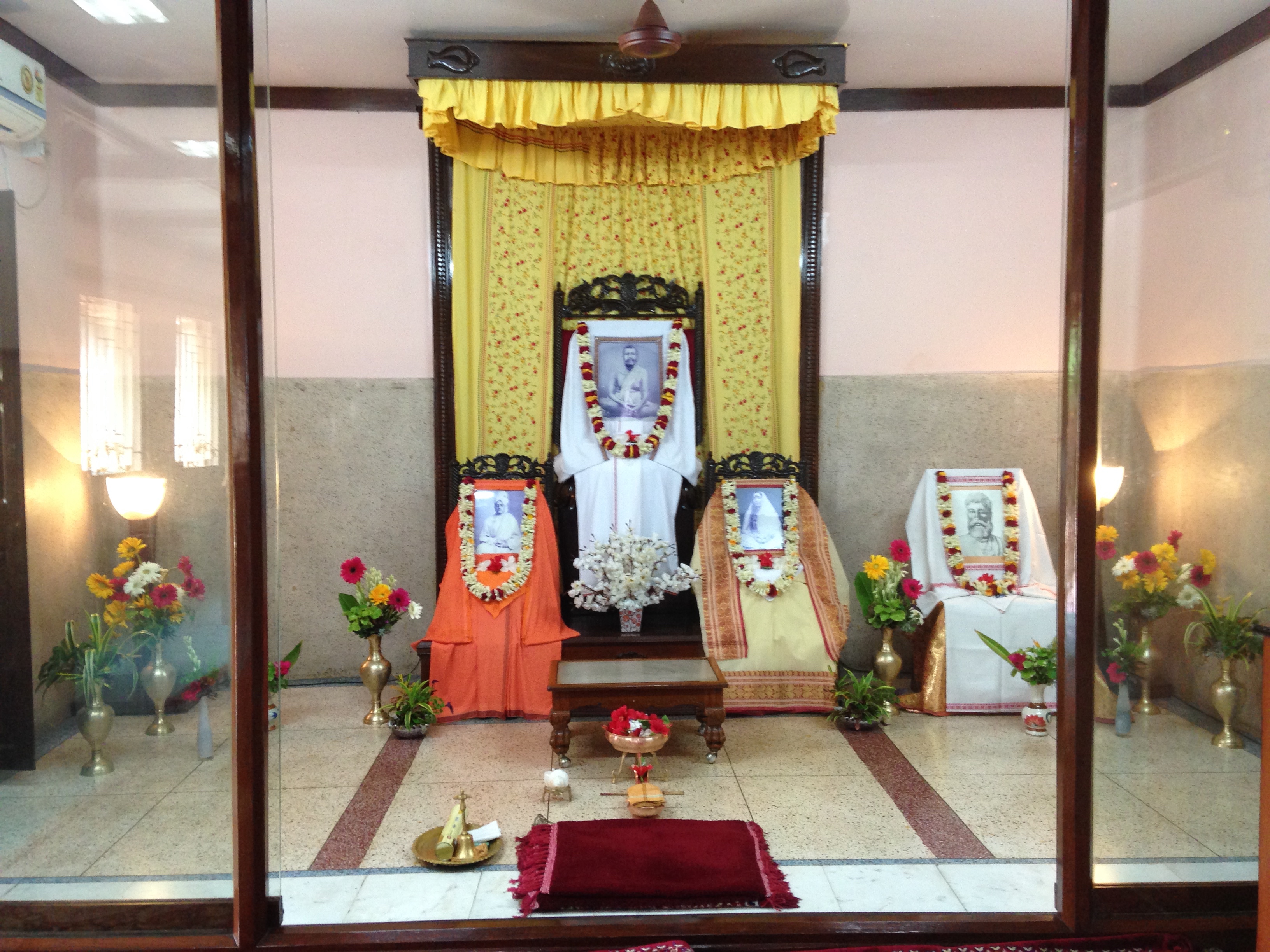
After our salutations, we recited the pranam manras, offering our salutations to Sri Ramakrishna, Holy Mother Sri Sarada Devi and Swami Vivekananda.  Then we sang “Jaya Vireshwara Vivekabhaskar..,” as an offering to Swami Vivekananda.  After singing, we spent a few minutes doing japa.

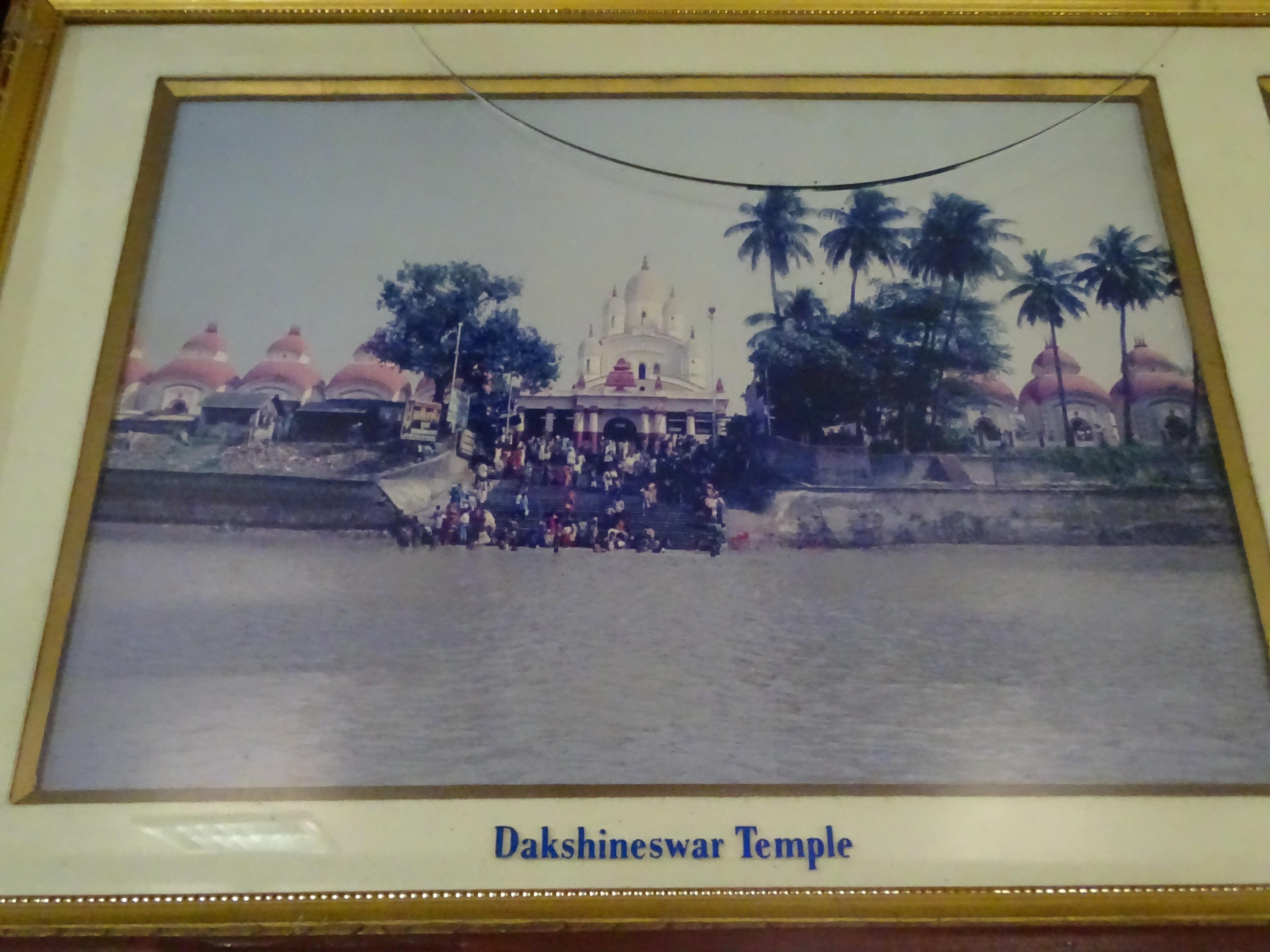
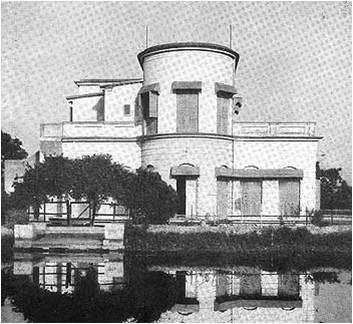
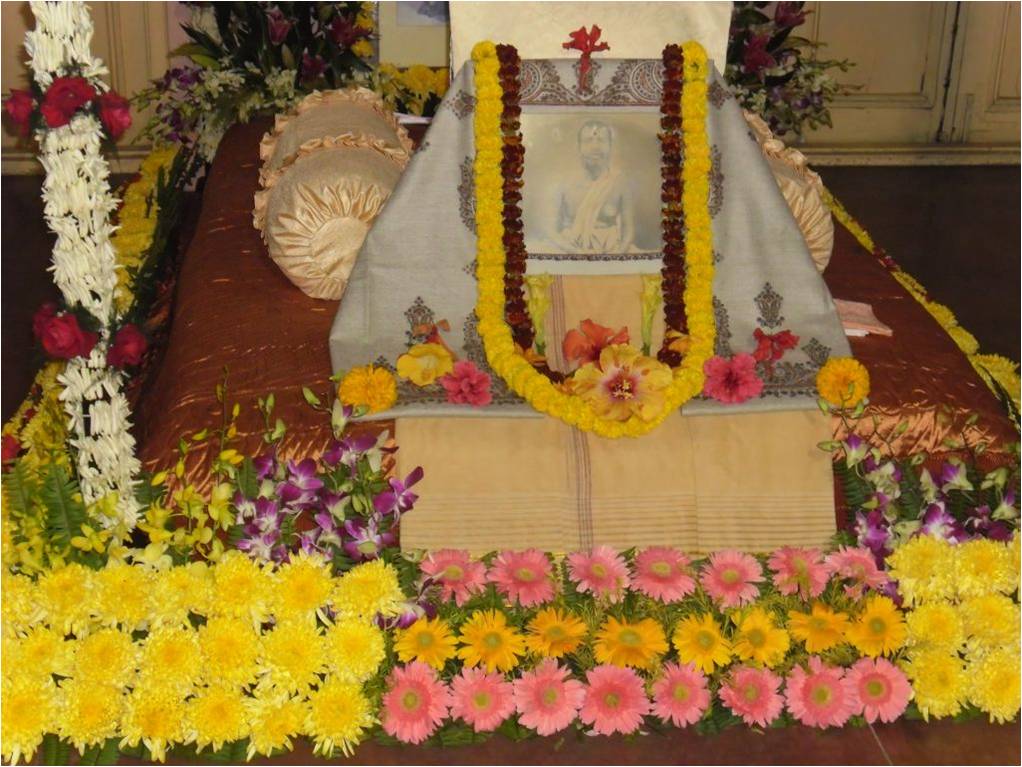
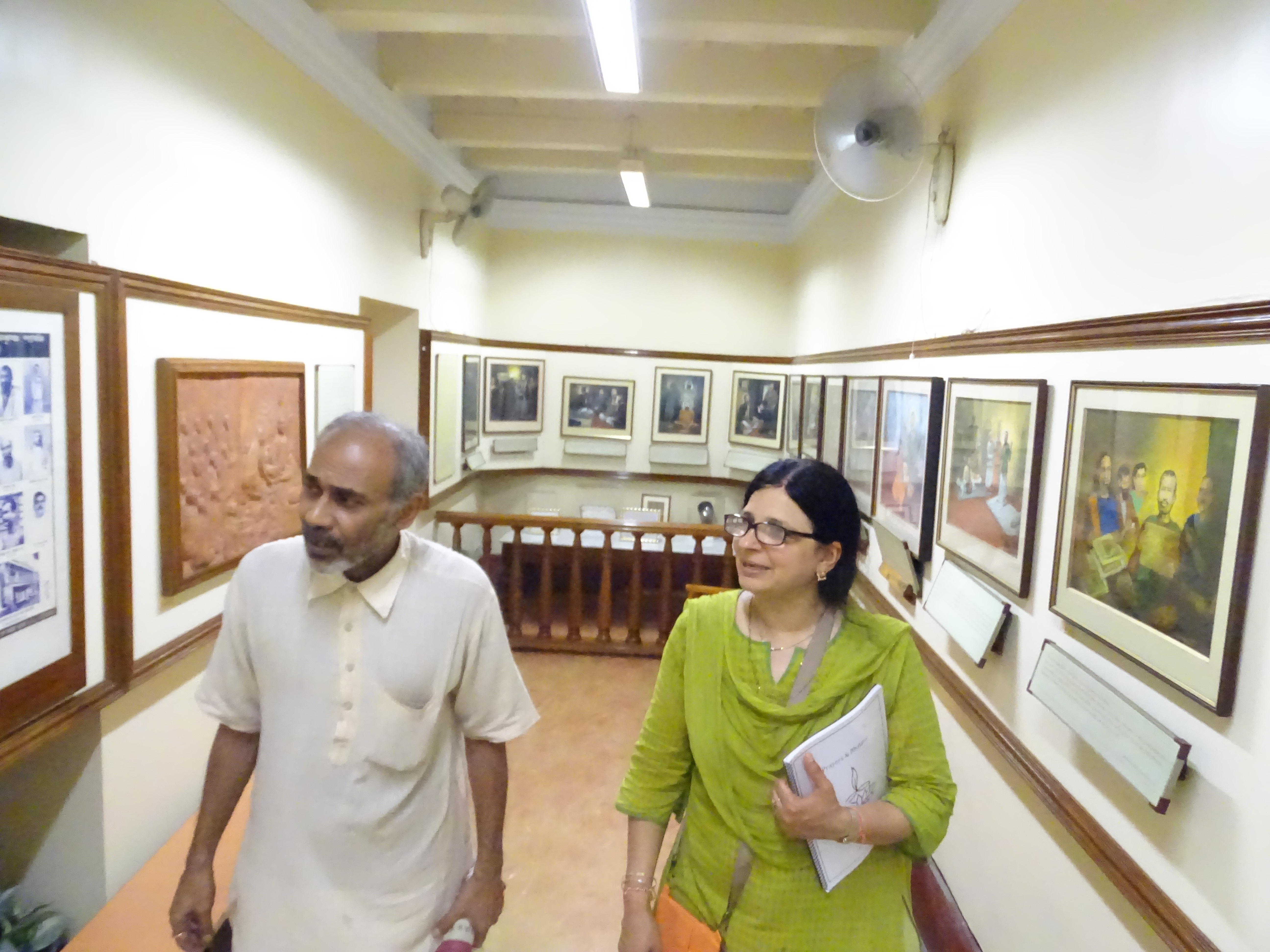
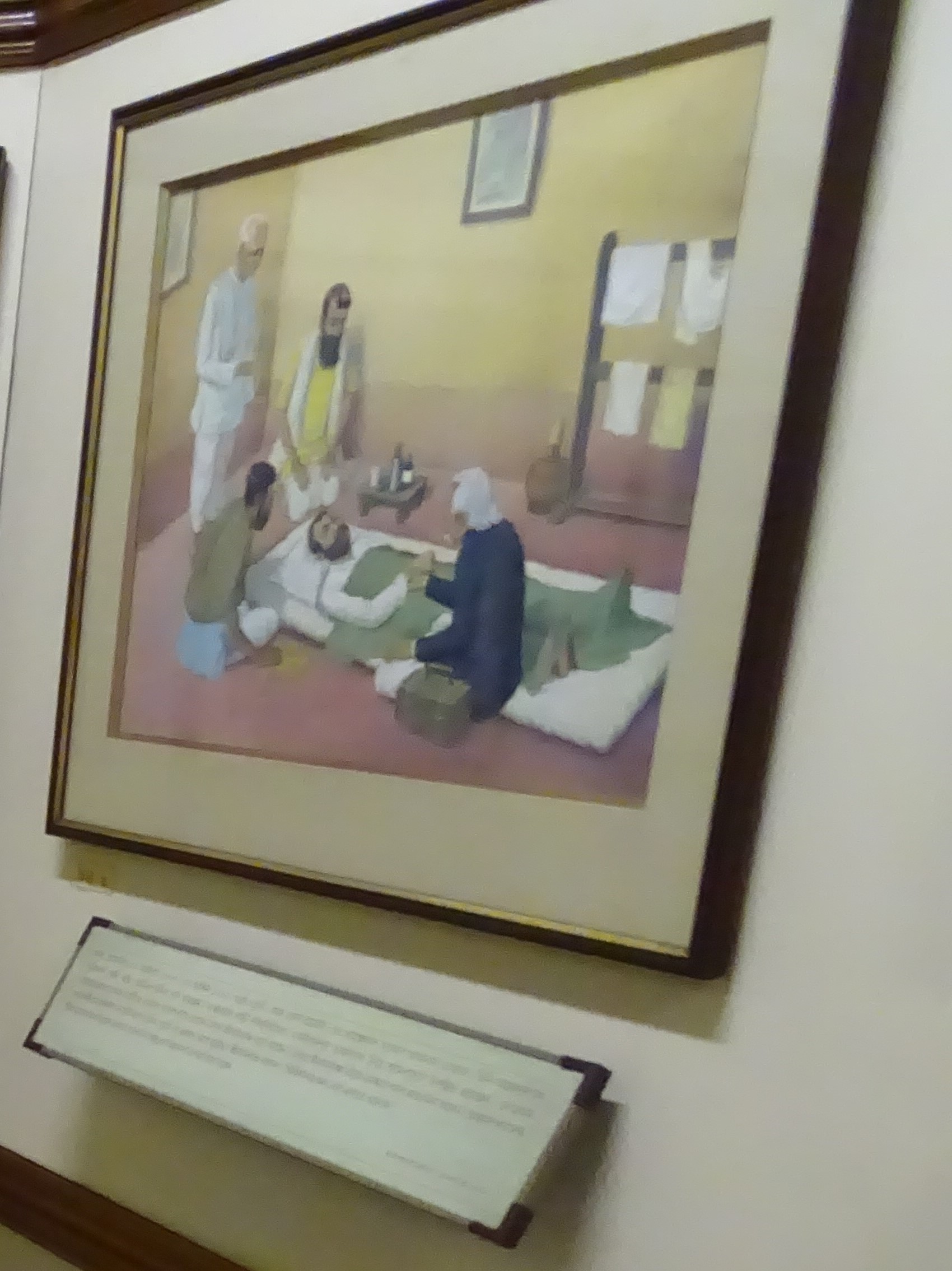
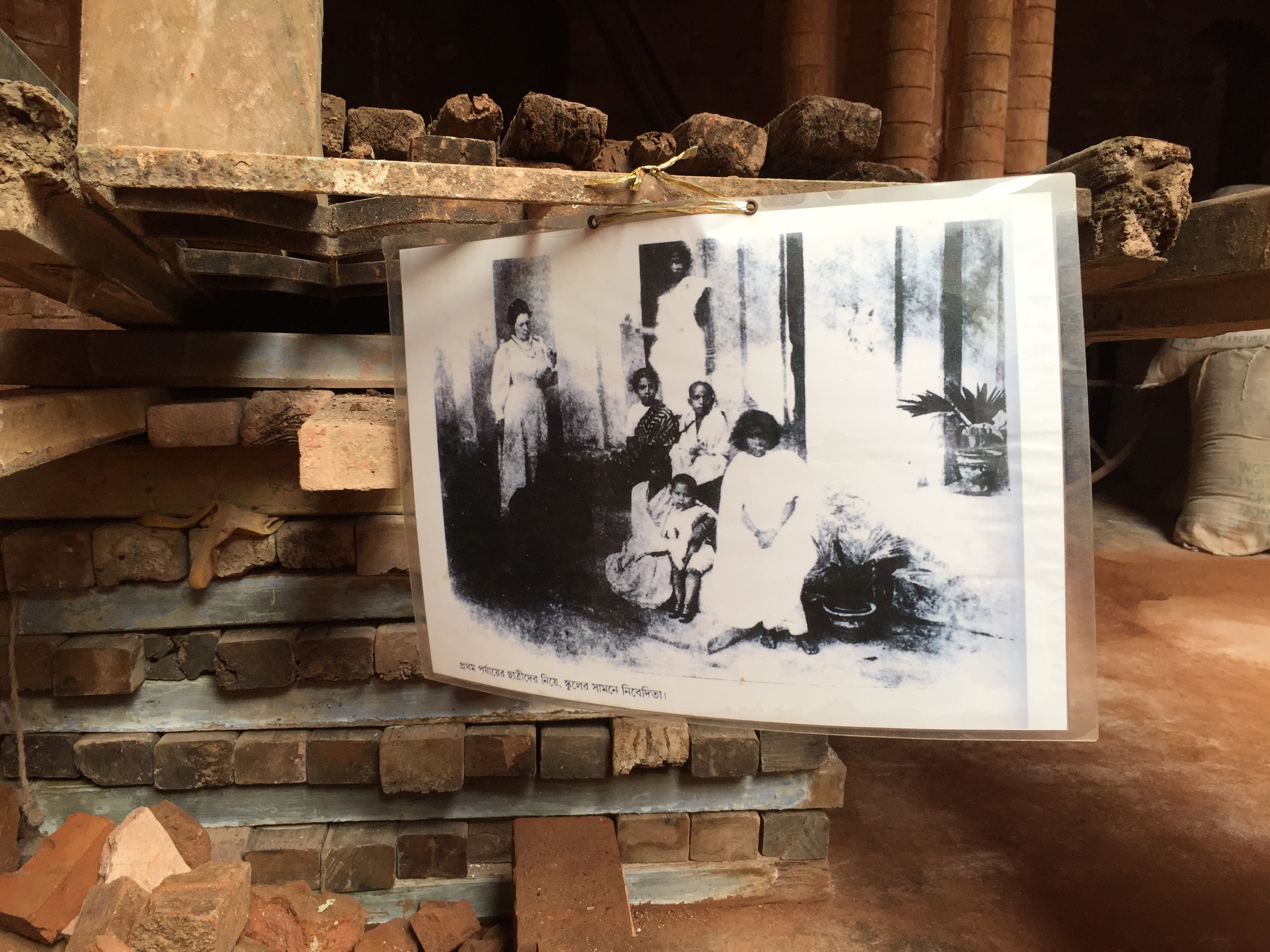
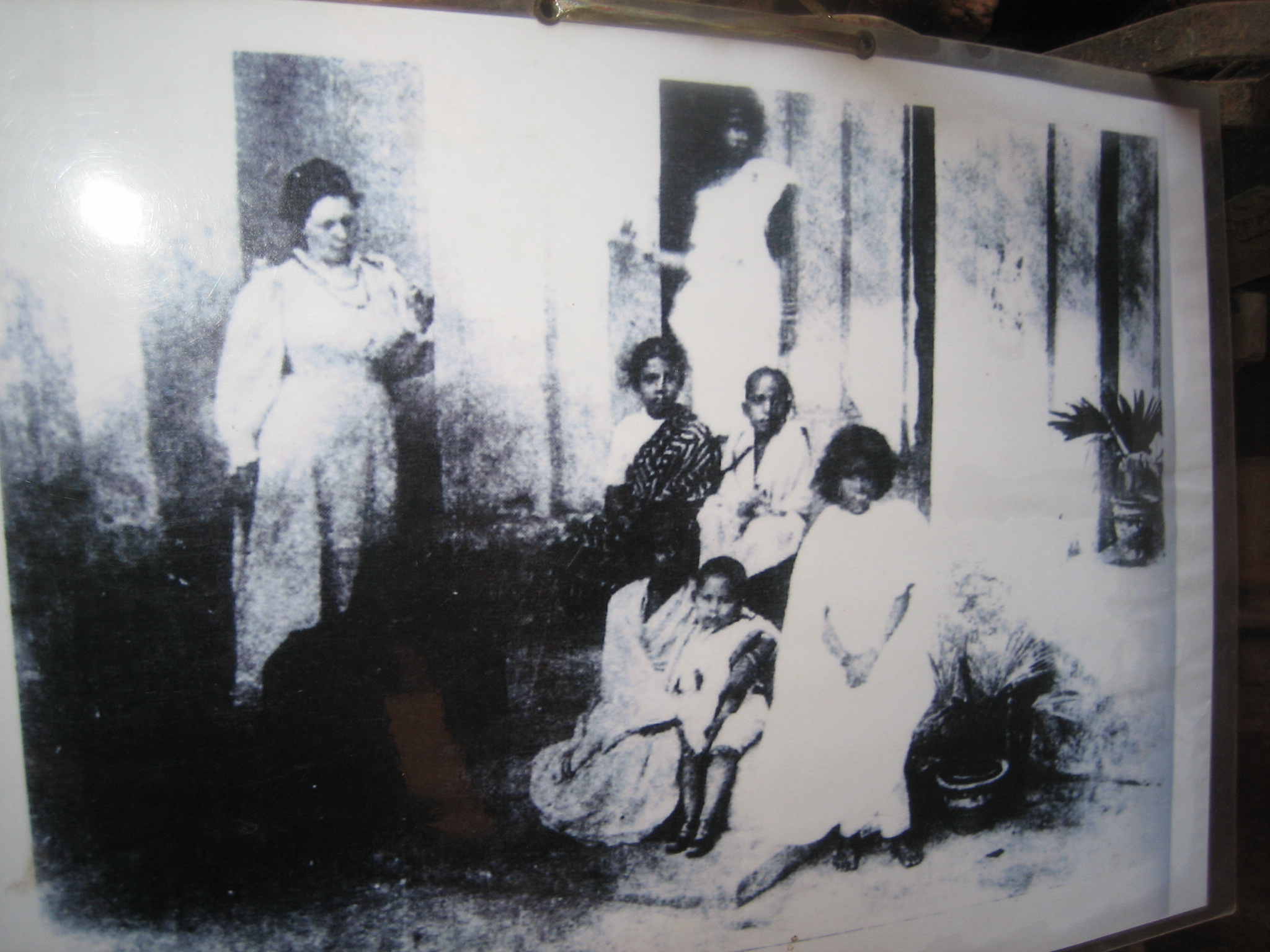
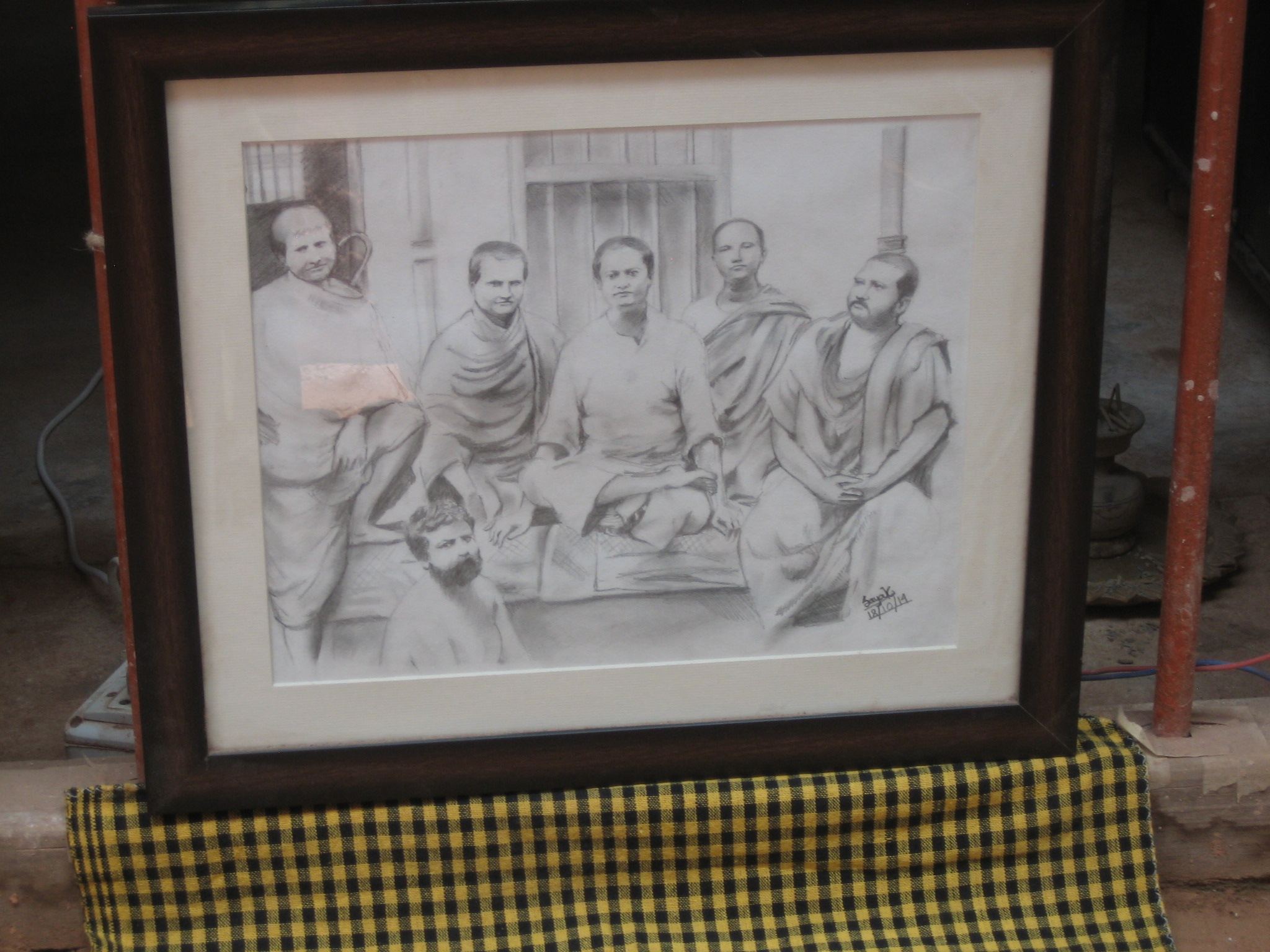
Around the perimeter of the prayer hall, there were photographs of all the original disciples and the original Baranagore Math as well as quotes of Swami Vivekananda .

31 M. Old math- disciples-writing Dakshniswar Temple - 2 Panchvati Quote - 3 Quote - 2 Quote - 1 Buddha

While looking at all the pictures, we thought of the disciples’ days at the Baranagore Monastery. We were given some Prasad. After looking all the pictures, we came downstairs and went into the backyard.

33 36e 36h1 36a 36b 36g 36l2 36h2 36n3 38 39

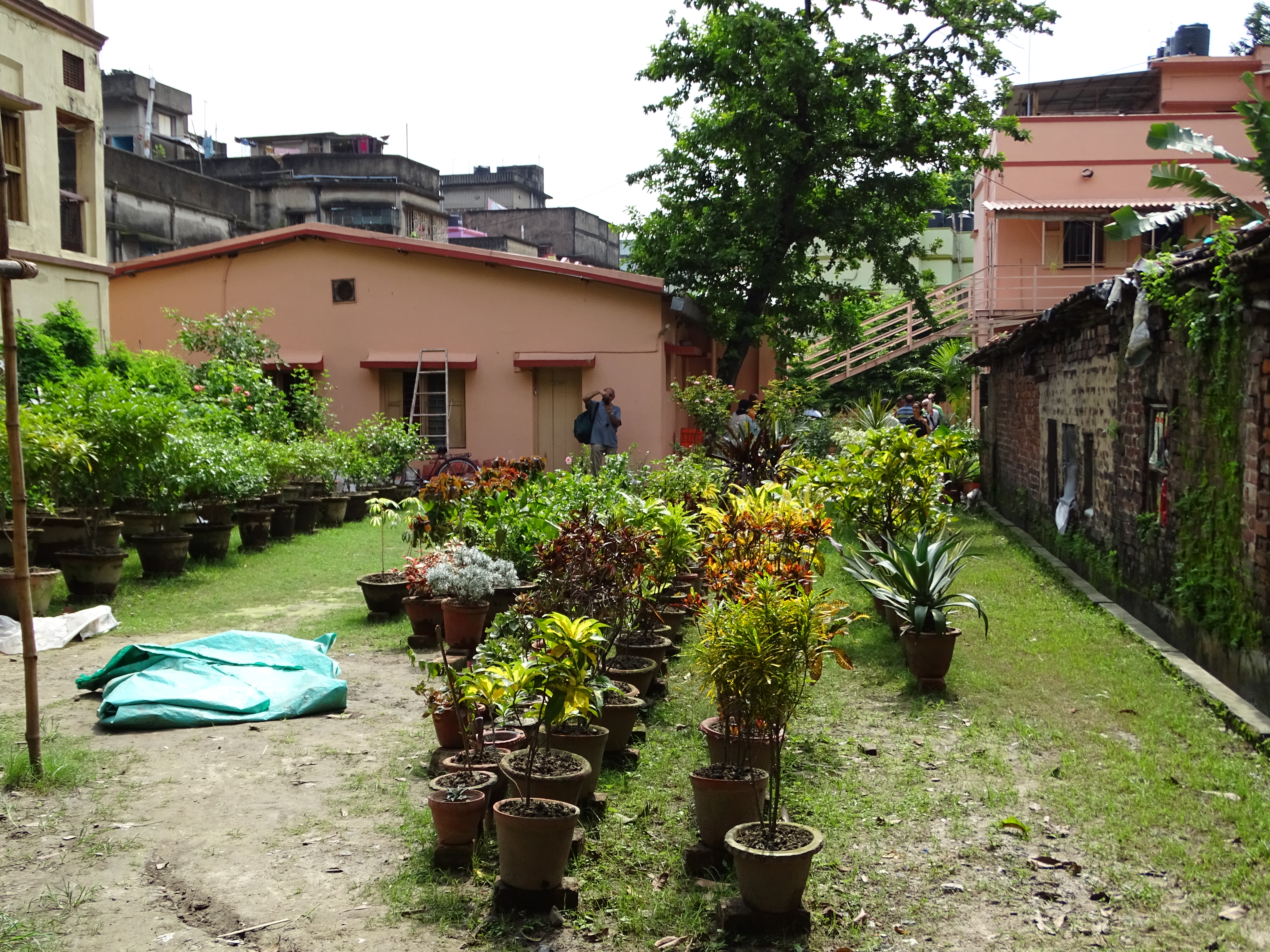
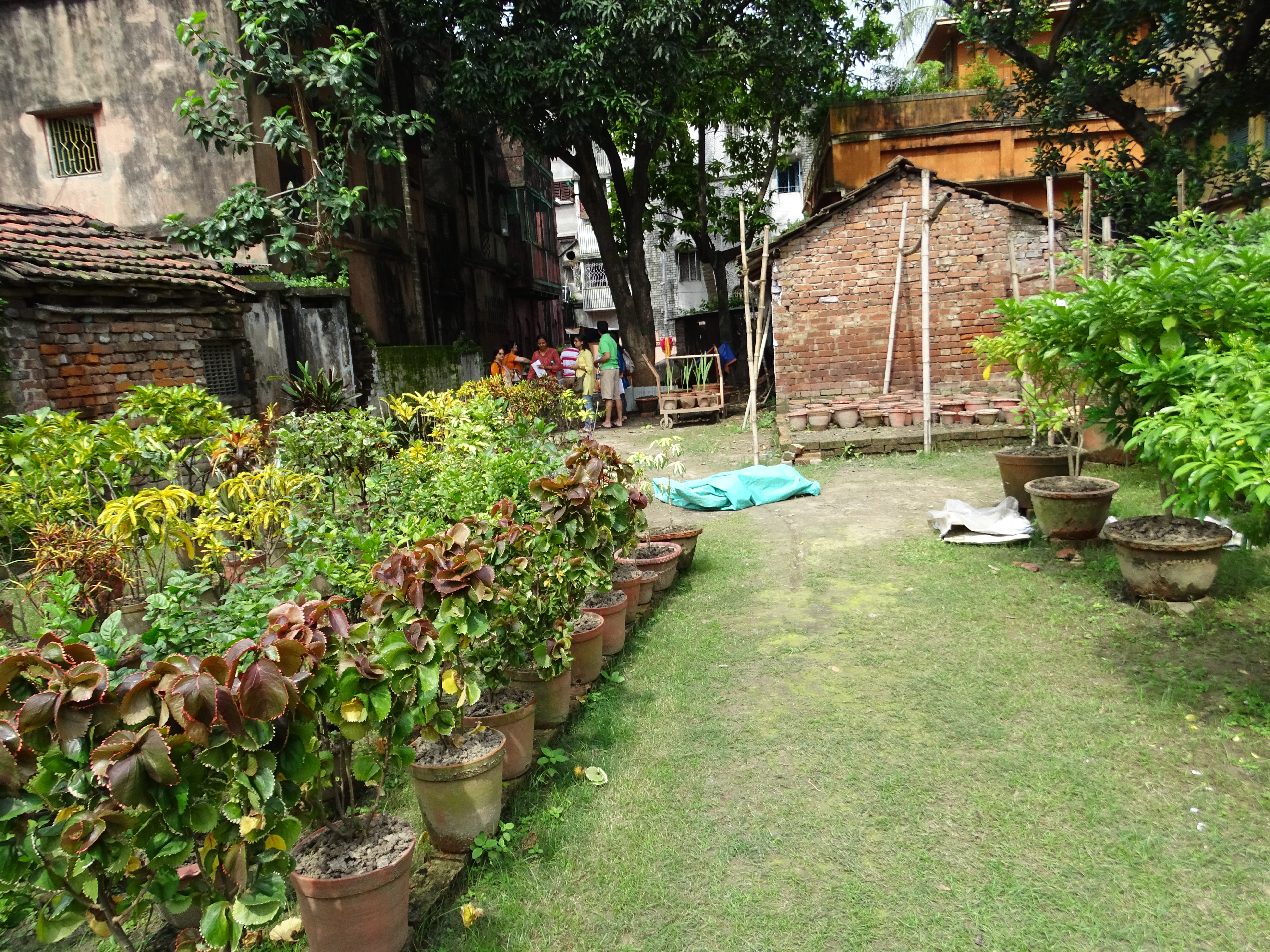
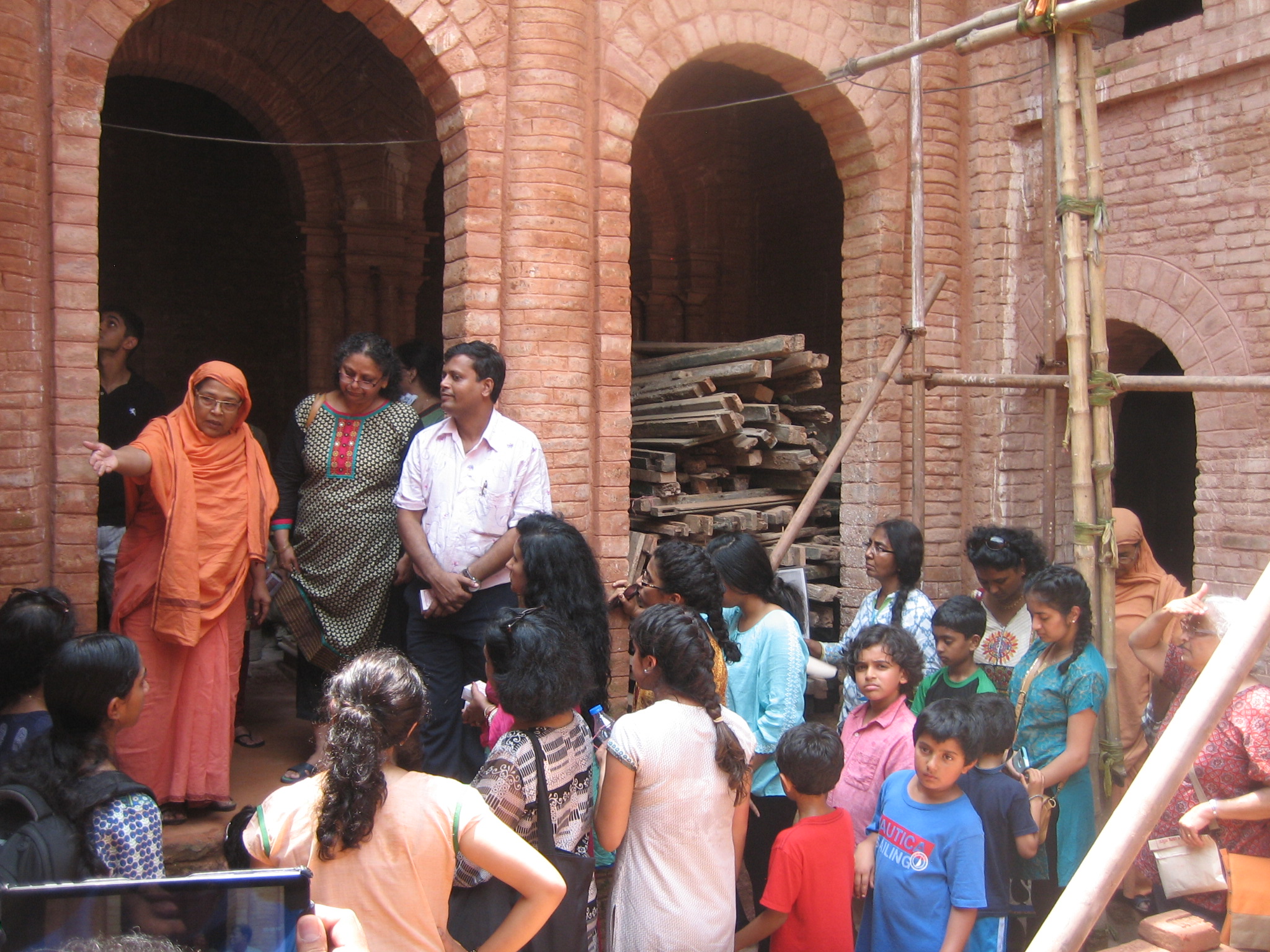
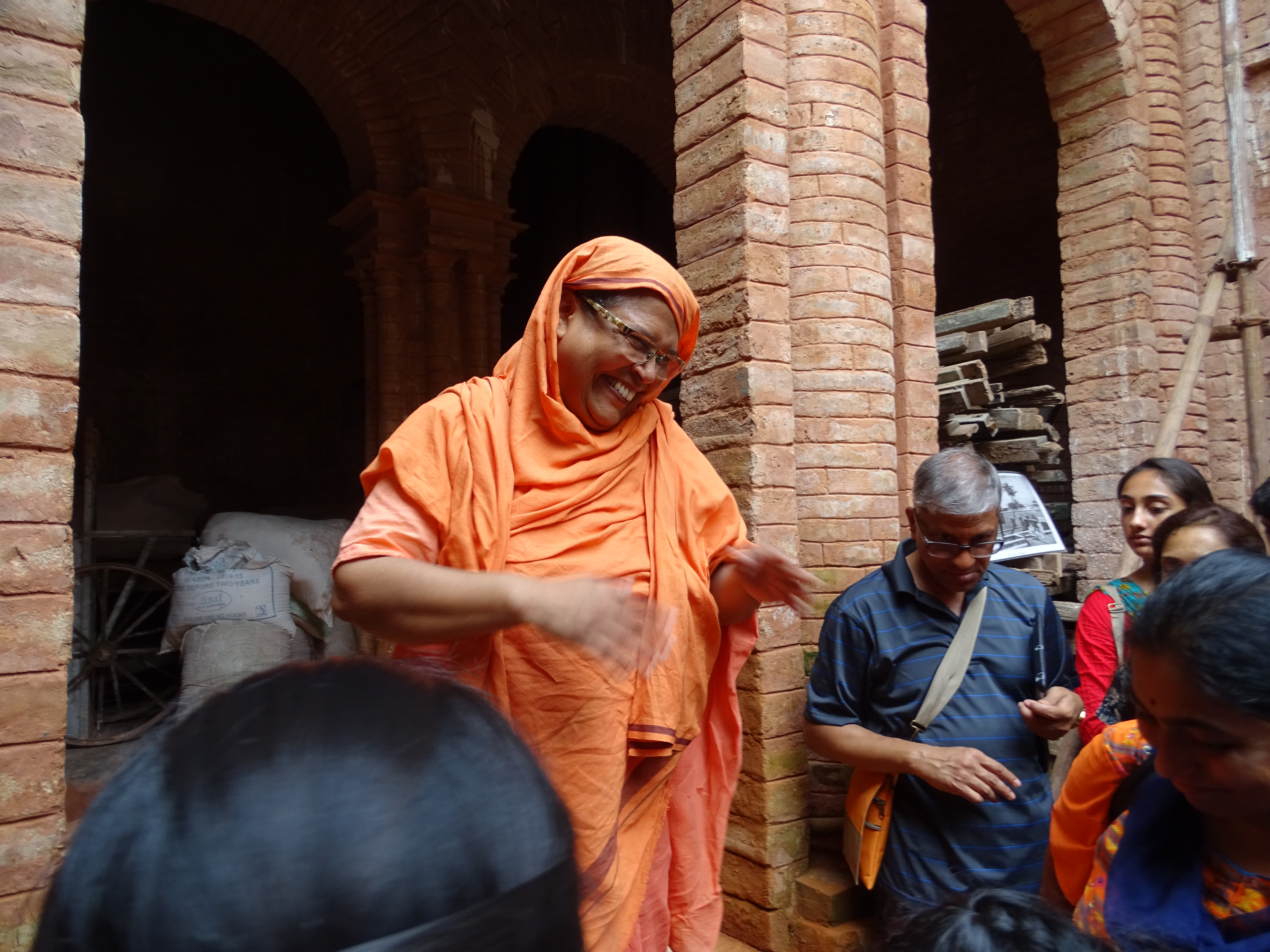
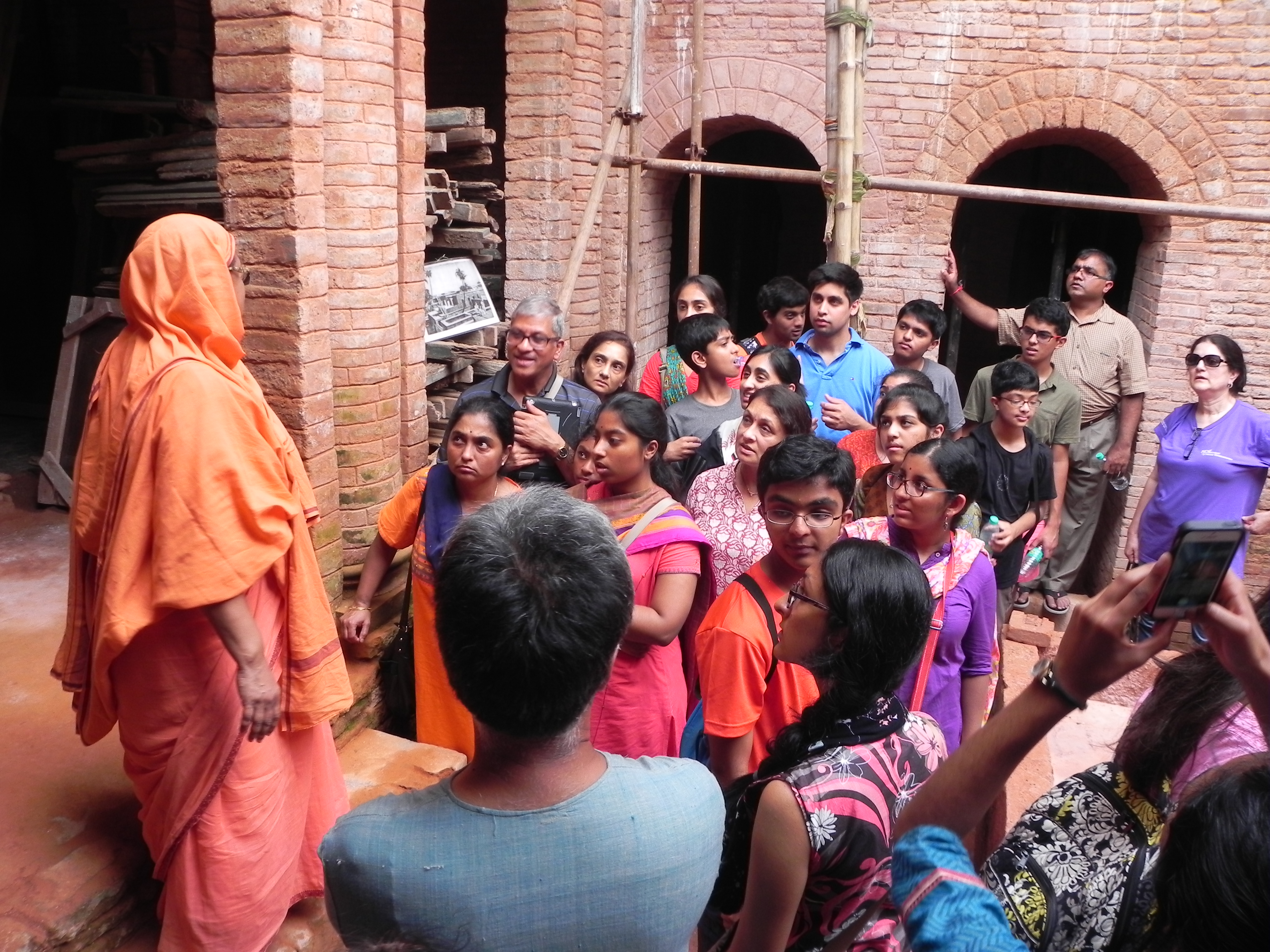
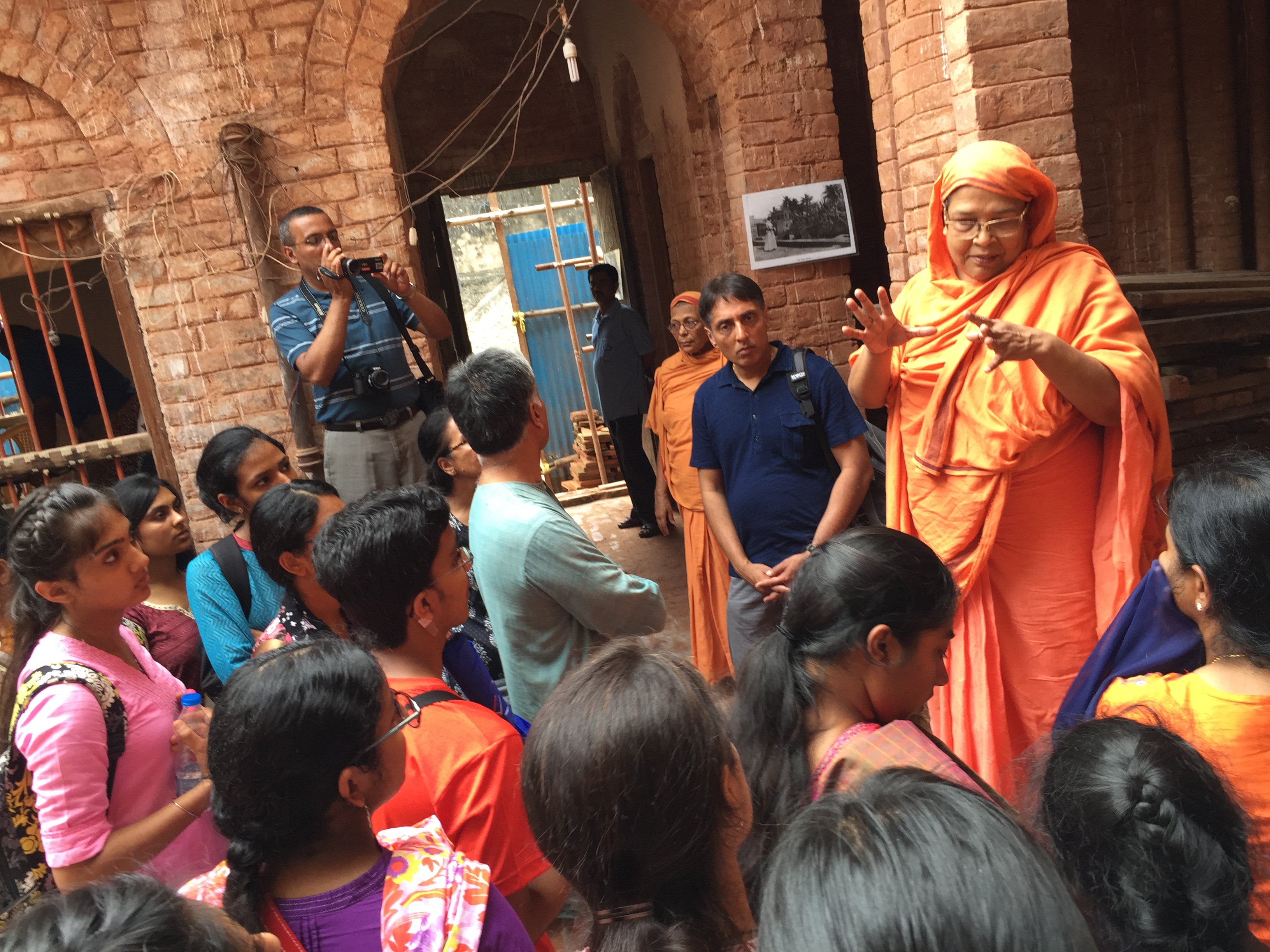
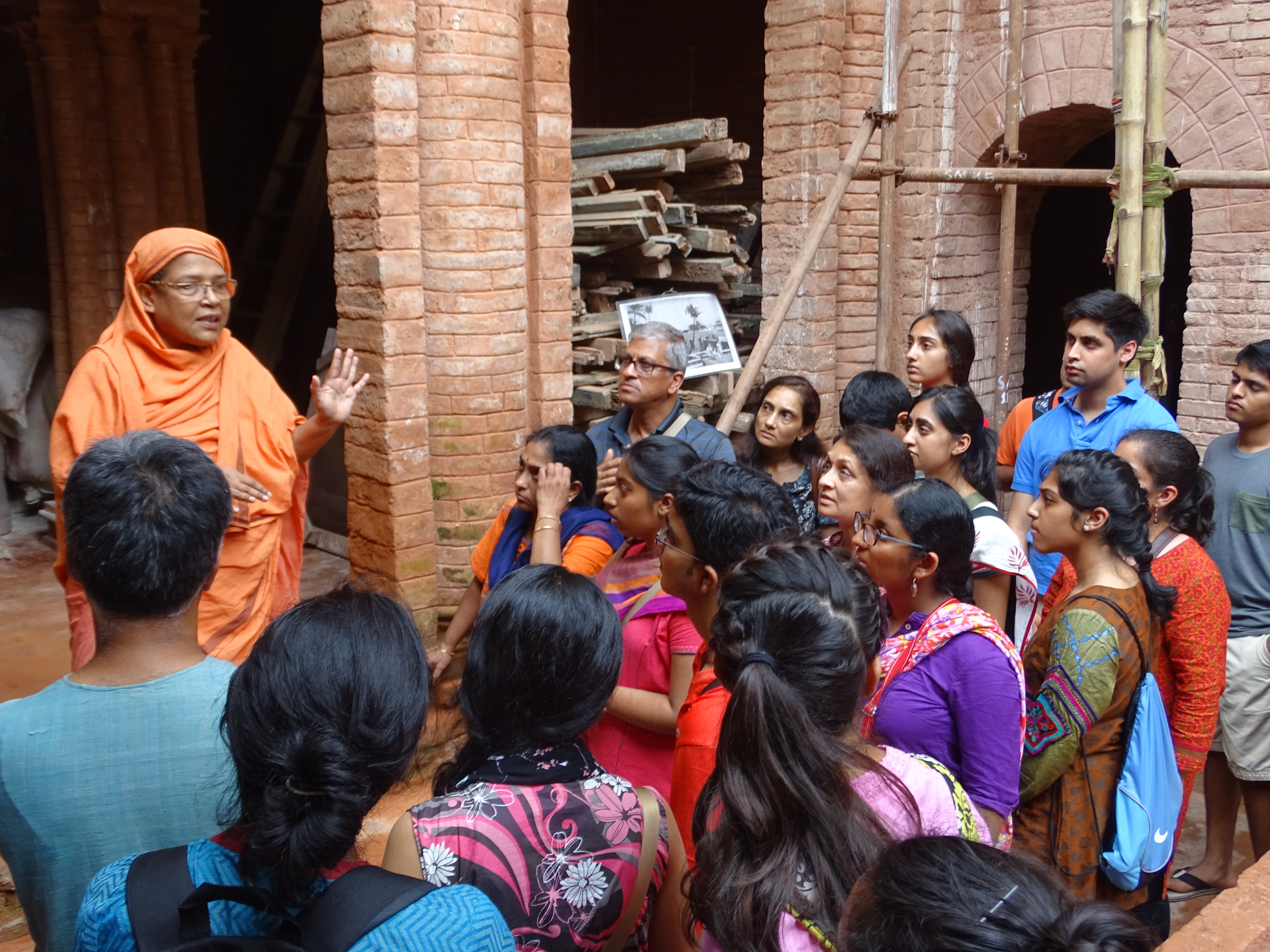
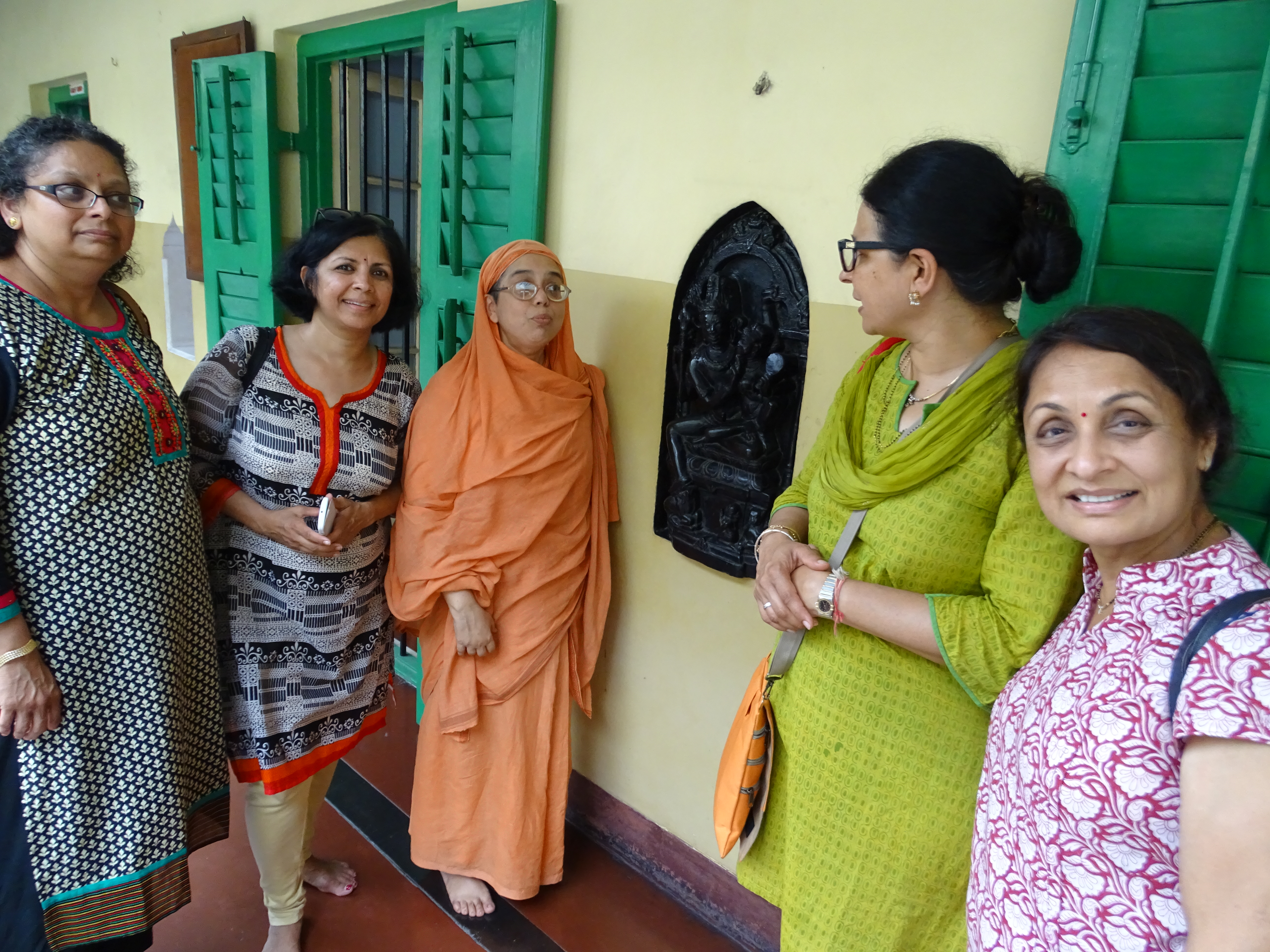
Swami Snehamayananda pointed to the grounds that marked the location of the original Baranagore Math.  We took in the sight of the old grounds, paid our respects, and enjoyed the beautiful garden.  The weather was great and environment was serene and peaceful. It filled our minds and hearts with joy and uplifting power. We were given refreshments arranged by the Swamis of the Math.

36 18 20 40 3

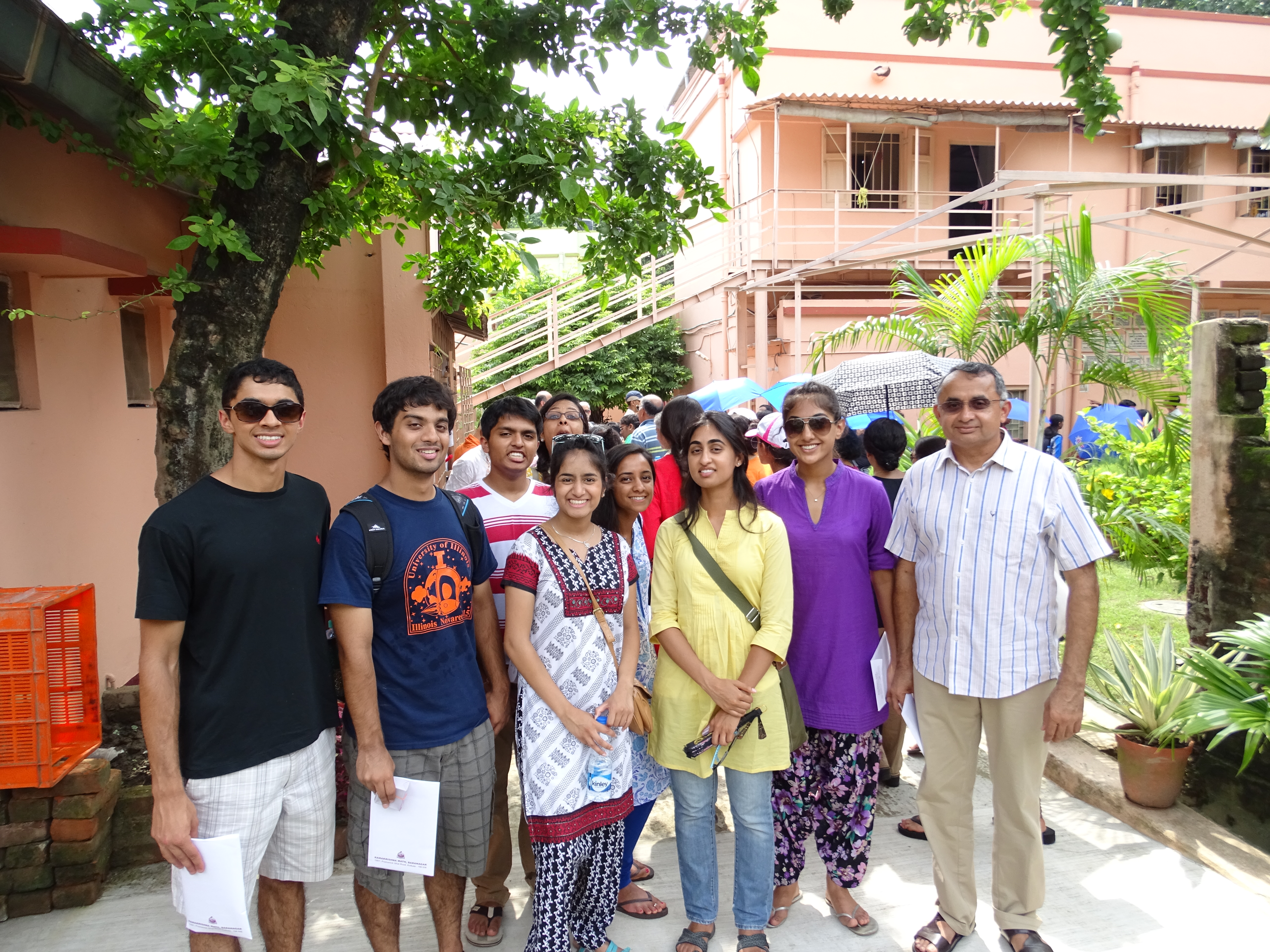
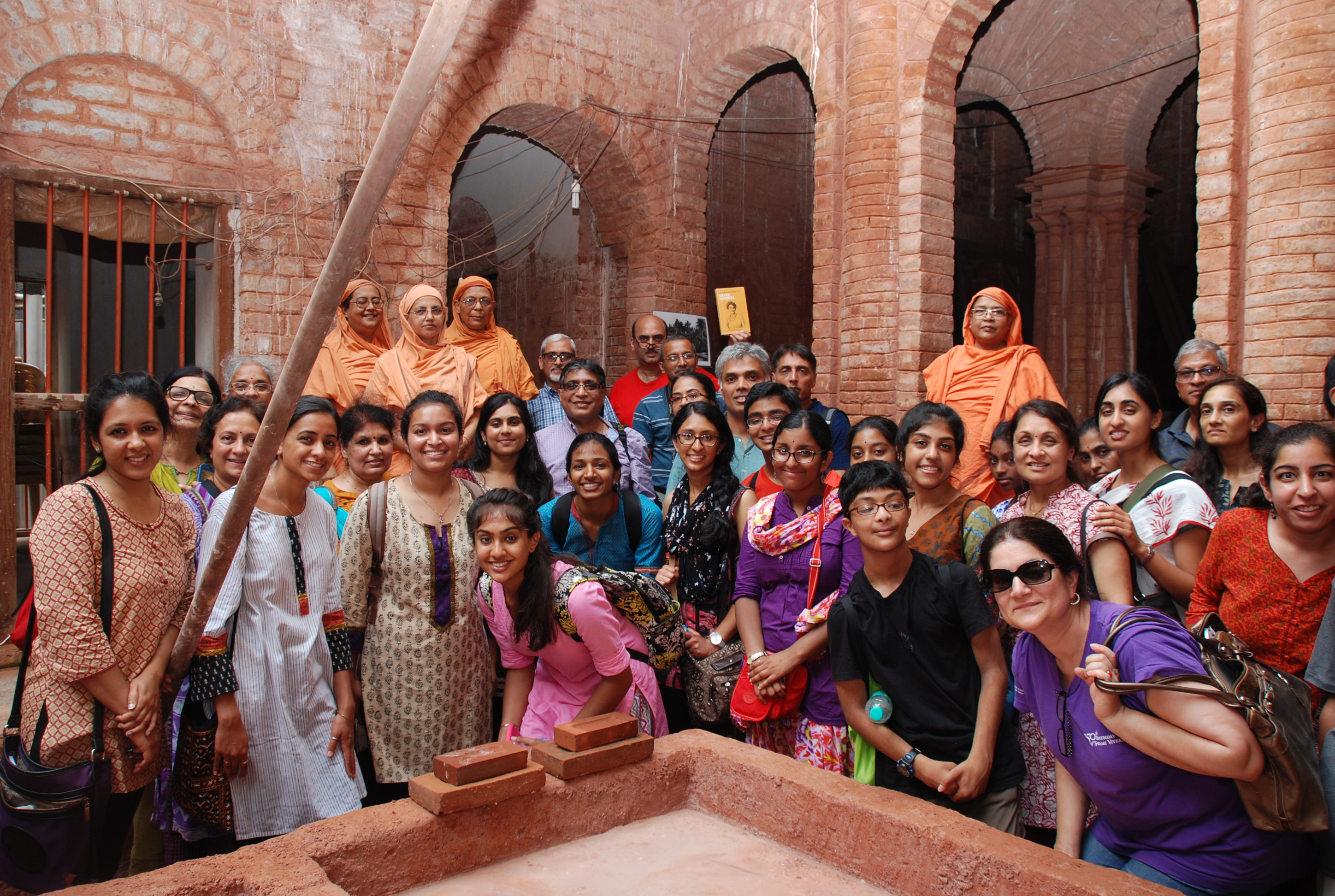
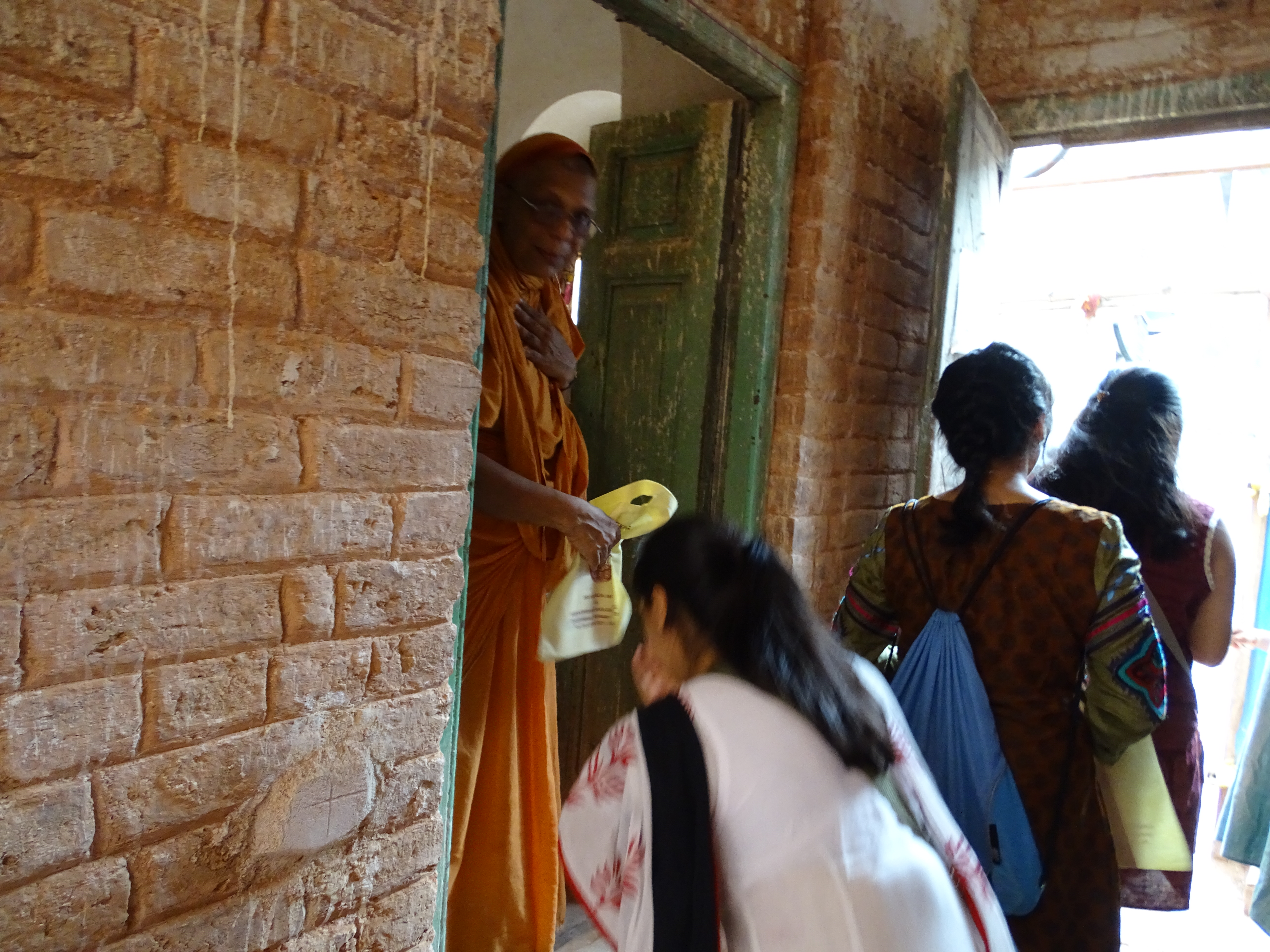
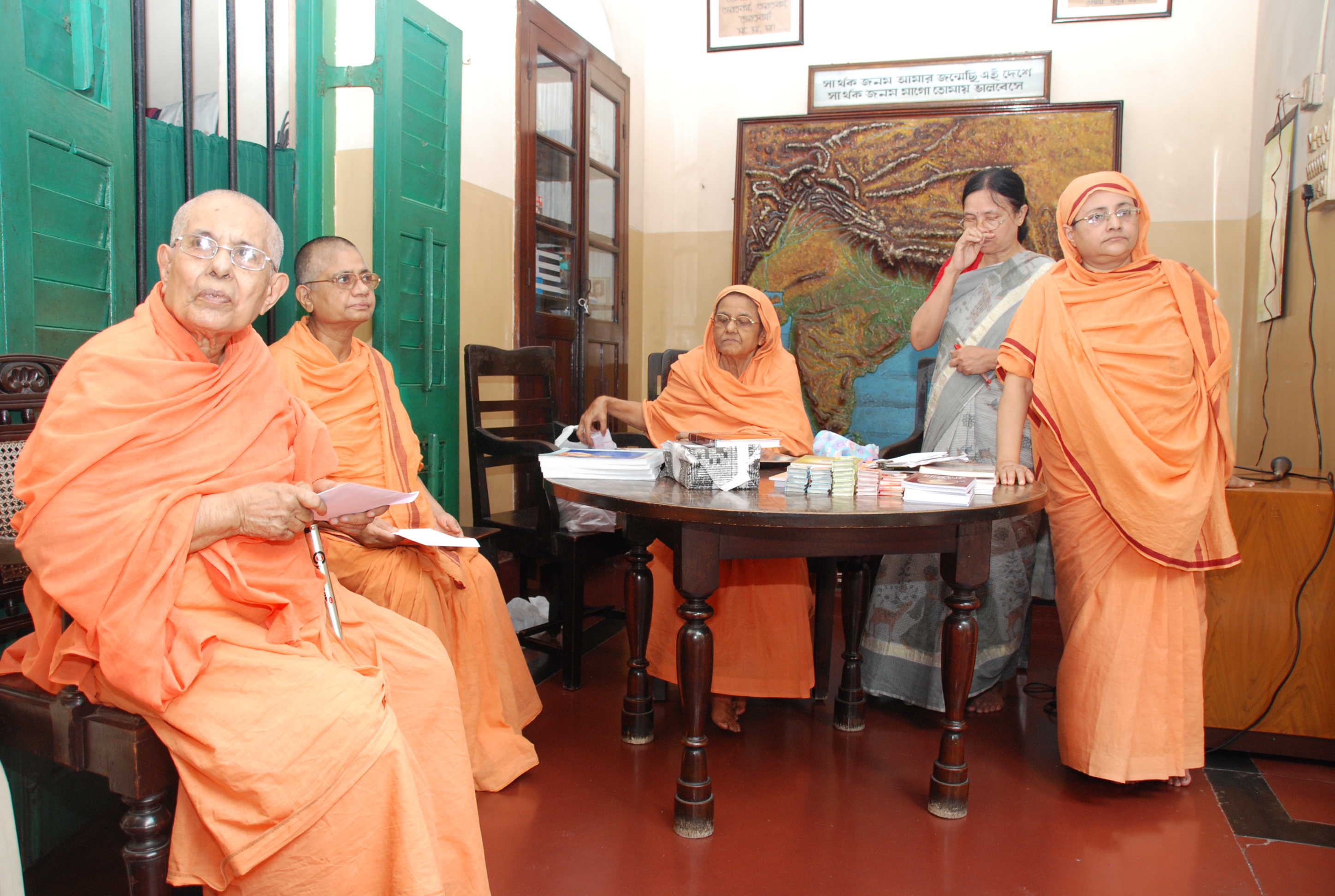
We were greeted by three Swamis, Swami Bamanananda, Secretary Maharaj, Swami Snehamayananda and Swami Devatattowananda, who were very happy to see all of us. As we prepared to leave, they lovingly stood at the gates to see us off. Before boarding our buses, we saluted the Swamis and took their blessings. As we sat on the bus, we remembered the hardships and austerities of the direct disciples of Sri Ramakrishna. Soon we were off to another important place, the Cossipore Garden House, where Sri Ramakrishna spent his last eight months.

Getting into bus

The following information and incidents show us the real importance of the Baranagore Math. They truly inspire us to better ourselves in our spiritual path.

Baranagore Math:

The Baranagore Math was established in October 1886 and then the Math was moved to the Alambazar Math in February 1892.  The Baranagore Math is a very important place for the Ramakrishna Math and Mission and for its activities.  It was the first headquarter for the monks of the Ramakrishna Order.

Sri Ramakrishna passed away on August 16, 1886 at the Cossipore Garden House.  Several youngsters had given up their homes and studies to serve their Master (Sri Ramakrishna).  Tarak, Latu, and Elder Gopal (Budho Gopal) had renounced their homes and family-life.  After Sri Ramakrishna passed away, most of the youngsters had to go home because the lease of the Cossipore Garden house was ending in August.  Narendra was worried about the spiritual future of all the youngsters, including him.  Sri Ramakrishna had told him to take care of his young disciples and to make sure that their spiritual urge to realize God and to serve humanity continued.

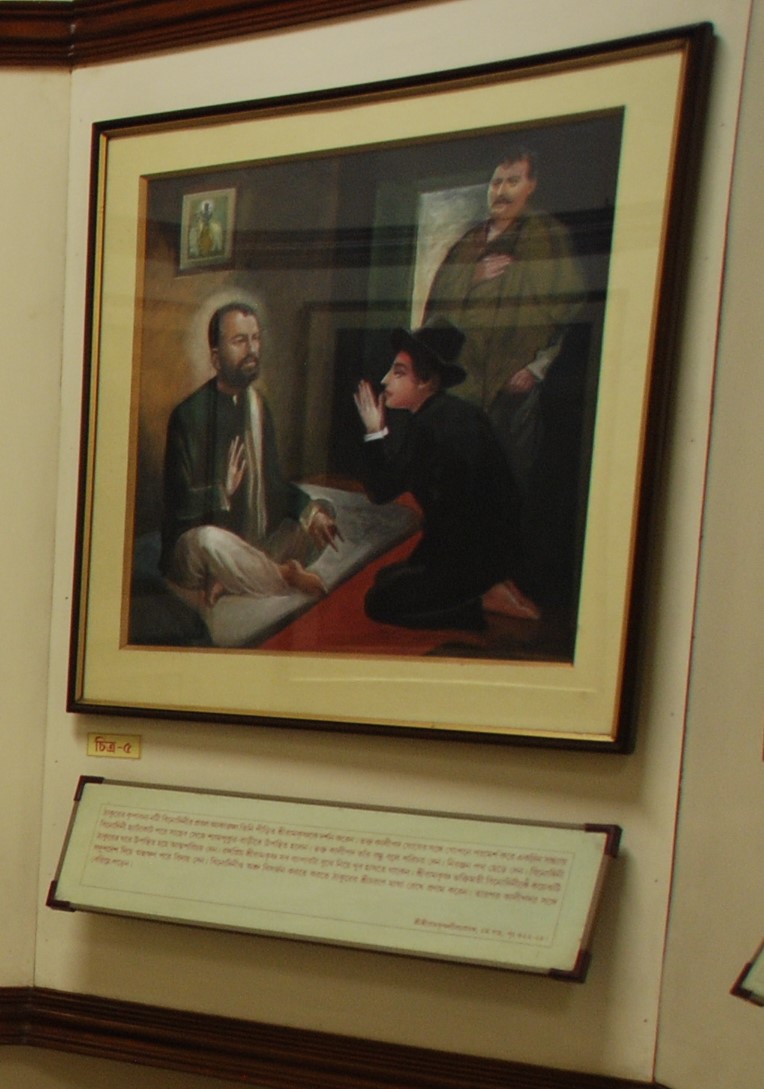
One evening, early in September 1886, while Surendra Mitra was meditating in front of his shrine, he had a vision of Sri Ramakrishna who told him, “What are you doing here?  My boys are roaming about without a place to live.  Attend to that before anything else.”  Immediately, Surendra rushed to Narendra’s house and asked him and other young disciples to rent a house.  Surendra said that he would pay the rent of the house.

Surendranath Mitra

Narendra and the other disciples rented a house in Baranagore at eleven rupees per month.  This was the first Ramakrishna monastery.  Tarak, Kali, Shashi, and Elder Gopal lived in the Baranagore Math.  Narendra used to come in the evening, and other disciples visited whenever they could.

The Baranagore Monastery was an abandoned, dilapidated two-story building, infested with snakes and said to be haunted by ghosts.  The rooms on the ground floor were dark, damp, and unfit for habitation, so they were used as kitchen and for storage.  Shashi was once bitten by a snake in one of those dark rooms.
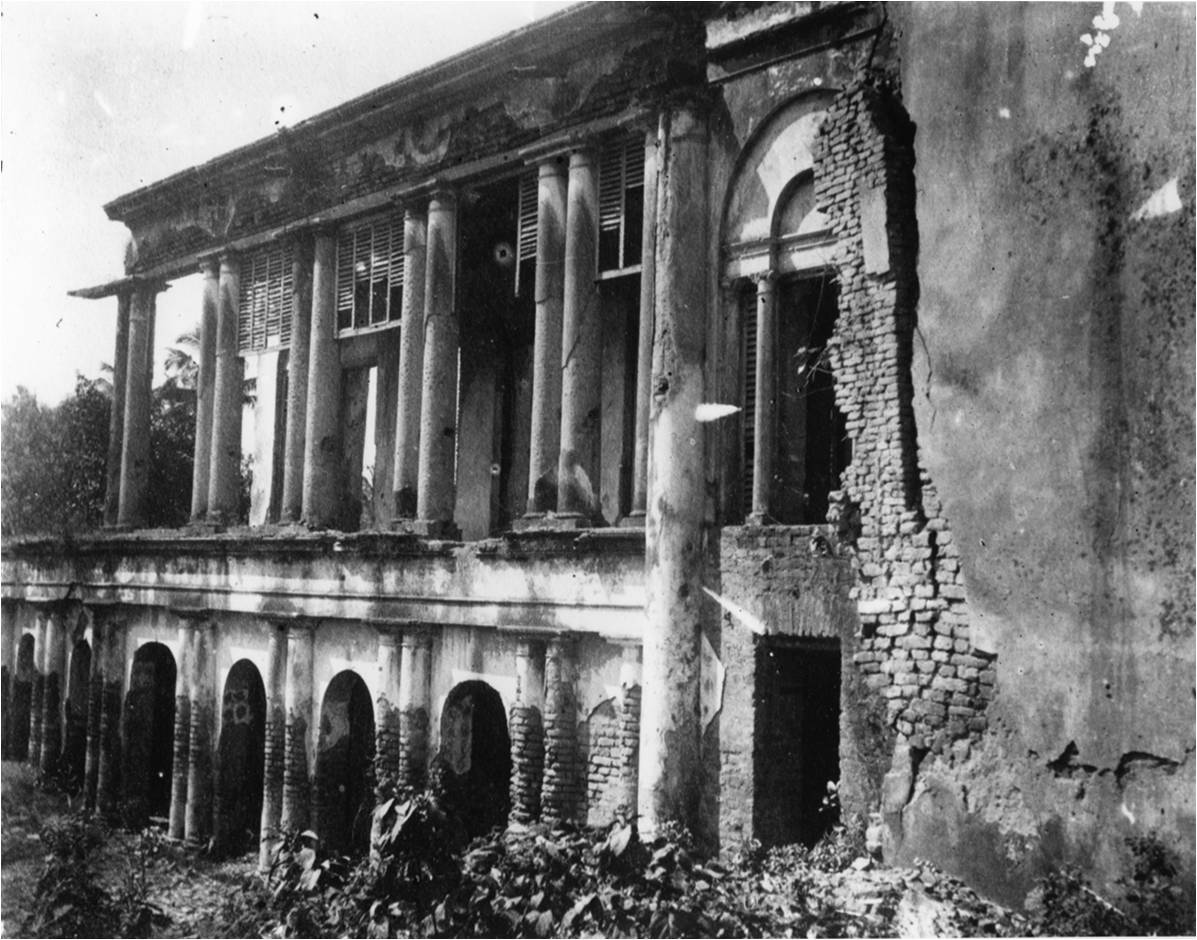
Old math

The monks set up a shrine in an upstairs room. The relics of the Master were brought from Balaram’s house, and a picture of Sri Ramakrishna was placed on the altar.  The articles that the Master had used at Cossipore were also preserved in the shrine room.  Shashi kept the memory of the Master ablaze in the Monastery with his wholehearted dedication and devout service to the Master.  His scrupulous precision and regularity of service made everybody feel the living presence of the Master.

Narendra devoted himself–heart and soul–to the training of the young brother disciples. He spent the daytime at home, supervising a lawsuit that was pending in court and looked after other family affairs.  Since his father had passed away, he was responsible for taking care of his mother and siblings.  During evenings and nights, he was always with his brother disciples at the monastery, encouraging them to practice spiritual disciplines.  His presence at the monastery was a source of unfailing delight and inspiration to all.

The following incident played an important role in shaping the future of the young disciples.

Antapur Incident:

Baburam’s mother, Matangini Devi, invited–through her eldest son Tulsiram–all the youngsters to her house in Antpur towards the end of December.  Narendra and the other youngsters decided to go to Antpur.  From Howrah nine youngsters, namely, Narendra, Baburam, Sarat, Shashi, Tarak, Kali, Niranjan, Gangadhar and Saradacharan, boarded a train going to Tarkeshwar.  They had a tanpura and tabla with them.  In the train they sang “Shiva Shankar Bum Bum Bhola” and other songs. They got off the train at the Haripal station and with horse carriages travelled eight miles to Antpur.  Matangini Devi was extremely happy to receive them and made all arrangements for their stay and meals.

In the quiet and green natural surroundings, they all spent their time singing bhajans, doing prayer, japa, and meditation, discussing the teachings of Sri Ramakrishna, and remembering his infinite love.

One day, all the youngsters were discussing spirituality until late in the evening under the open bright starlit sky.  Upon Narendra’s suggestion, they lit a “dhoony” (a friendly fire) which Sadhus (renounced people) light before meditation.  Around the fire, they meditated for a while.  At that time, Narendra was inspired to talk about the life of Jesus Christ and about his penances and sacrifices.  His moving speech was filled with the fire of renunciation; it touched everyone’s hearts.  He then talked about the sacrifices made by St. Paul and other disciples of Jesus Christ. Narendra concluded his speech saying that they had learned so much from their Master. Following the Master’s teachings, they must renounce the world for God realization and the service to humanity.  Narendra’s speech infused everoyone’s spirit with burning renunciation. They all touched the fire and took a solemn vow to renounce the world for the goal of “God-realization and service to humanity.”  As they took their vow in front of the fire, their faces glowed even brighter.  When their minds came down to a normal plane, they were astonished to realize that it was “Christmas eve”.

Later recalling the incident Swami Shivananda said, “It was at Antpur that our resolve to become a group grew more intense.”

If we look into the lives of great personalities, we find that they have built the foundation for their lives’ goals from a young age.  These youngsters also prepared themselves for the great, positive, historical, and everlasting impact they had left in the world. In 1886 Narendra’s age was 23, Kali was 20, Sarat and Sarada Prasanna were 21, Gangadhar was 22, Shashi was 23, Niranjan was 24, Baburam was 25 and Tarak was 32.

After spending a week in Antpur, all the brother disciples came back to Kolkata.  In 1887 Rakhal and Elder Gopal went to Antpur with Narendra.  In January 1887 at the Baranagore Math, these eleven people (10 youngsters and Elder Gopal) took “Sanyas” (renouncing the world for God-realization and service to humanity) by performing the “Viraja Homa.”

Monastic Names of Sri Ramakrishna’s Disciples:

With the “Viraja Homa” completed, all of the disciples of Sri Ramakrishna renounced everything and took monastic names.  Narendra took the name Swami Vividishananda.  During his pilgrimages to different places in India, he assumed the name Swami Satchidananda. It was before going to America, that he assumed the name Swami Vivekananda, upon the request of Raja Ajit Singh of Khetri.

The other disciples took the following names:

Rakhal….Swami Brahmananda                                   Hari……Swami Turiyananda

Jogin……Swami Yogananda                                         Sarat…..Swami Saradananda

Niranjan…..Swami Niranjanananda                            Shashi….Swami Ramakrishnananda

Latu……Swami Adbhutananda                                    Kali…….Swami Abhedananda

Baburam…..Swami Premananda                                Gangadhar….Swami Akhandananda

Tarak……Swami Shivananda                                       Elder Gopal….Swami Advaitananda

Sarada Prasanna…Swami Trigunatitananda              Subodh……Swami Subodhananda

Life at Baranagore Math:

The young brother disciples lived an intense austere life at the Baranagore math.  They spent day and night in japa, meditation, worship, studying scriptures, and devotional music.  They used to forget to eat their meals.  At such times, Shashi, who had constituted himself as their caretaker, literally dragged them to the dining room.  Often, there was no food at all in the monastery.  At that time without complaining, they would simply spend their time in prayer and meditation.  They lived for months on boiled rice, salt, and bitter herbs.  Sometimes they had only rice and no salt at all.  But, no one cared about these inconveniences.  At night, they slept on straw mats spread on the hard floor.

Narendra studied with them. They would study world history and various philosophical systems.  They had a library that contained about a hundred books.  They discussed and compared the philosophies of Aristotle, Plato, Kant, Hegel, Shankaracharya, Ramanujacharya, Madhavacharya, Chaitanya, Nimbark, Buddha and many.  They also studied the Upanishads, Bhagavad Gita, and the four yogas. They could reconcile many apparent contradictions in light of Sri Ramakrishna’s life and teachings.  The dryness of the discussions was removed by devotional music.  There were many light moments, sometimes indulging in innocent laughter.  Among all these activities, Narendra kept reminding them that their goal was to have complete control of their lower nature and God realization.

Some of the household disciples of Sri Ramakrishna did not approve of the austerities of the young men.  One of them teasingly asked whether they had realized God by renouncing their homes.  At that Narendra said sharply, “What do you mean?  Suppose we have not realized God; must then we go back to the life of senses and deprave our higher nature?”

Swami Vivekananda’s reminiscences of Baranagore Monastery:

“After the passing away of Sri Ramakrishna, we underwent a lot of religious practices at the Baranagore Math. We used to get up at 3:00 a.m. and after washing our faces etc. we would sit in the shrine and become absorbed in japa and meditation.  What a strong spirit of dispassion we had in those days! We had no thought of even as to whether the world exists or not…There were days when the japa and meditation continued from morning till four and five in the afternoon.  Ramakrishnananda waited and waited with our meals ready, till at last he would come and snatch us from our meditation by sheer force….There were days when the monastery was without a grain of food.  If some rice was collected by begging, there was no salt to take it with! On some days there would be only rice and salt, but nobody cared for it in the least.  We were then being carried away by a tidal wave of spiritual practices.  Oh, we had those wonderful days!”

Description of Baranagore Math in “The Gospel of Sri Ramakrishna” by M:

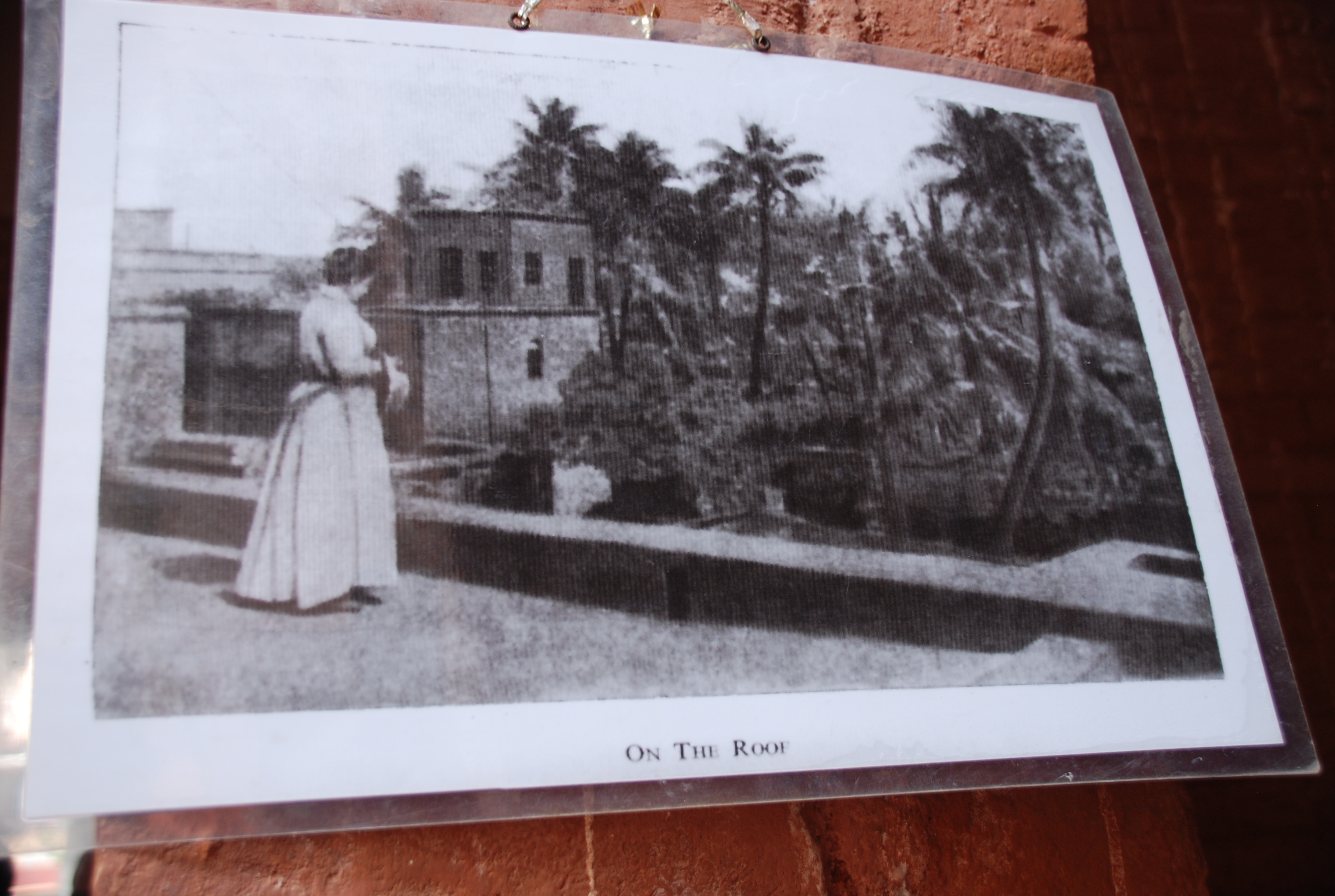
“The members of the (Baranagar) Math called themselves the ‘danas’ or ‘daityas,’ which means the ‘ghosts’ and the ‘demons,’ the companions of Shiva.  They took these names because their indifference to worldly pleasures and relationships….Narendra and other members of the Math often spent their evenings on the roof.  There they devoted a great deal of their time to discussions of the teachings of Sri Ramakrishna, Shankaracharya, Ramanuja, and Jesus Christ, and of Hindu Philosophy, European Philosophy, the Vedas, the Puranas, and the Tantras.”

(I believe M. visited the monastery mainly in the evenings.)

Interesting Incidents at Baranagore Math:

(1) Swami Advaitananda (Elder Gopal Maharaj):

At the Baranagore Math, Swami Advaitananda helped his brother monks with household work and played the tabla when Swami Vivekananda sang.

Sometimes the young monks would tease him or make him subject of practical jokes.  Most of the disciples slept in one large room as they did not have many rooms.  One night when Advaitananda went to the bathroom, Akhanadananda replaced his pillow with a brick.  When Advaitananda returned, he discovered his brick-pillow.  He smiled and said to Akhanadananda: “Ganga (Akhanadananda), I know you have done this mischief.  Brother, I shall use your precious gift tonight as my pillow.”  Akhandananda was touched by these words.  He immediately threw away the brick and brought back his pillow.  With an apology, Akhandananda said, “Brother, you are a real monk – free from anger and ego.”

(2) Swami Abhedananda (Kali ‘Tapasvi’ Maharaj):

The southernmost room of the second floor was used for meditation and study.  Kali secluded himself in this room for most of the day and that is why this room was known as ‘Kali Tapasvi’s Room.’  ‘Tapasvi’ means one who performs severe austerities. He was an ascetic by nature.  He ate vegetarian food, did not wear shoes, and shunned the company of people.  He spent his time in meditation, studying scriptures and composing hymns on Sri Ramakrishna and Holy Mother.

He composed the famous hymn of Holy Mother, namely “Prakrutim Paramambhayam Varadam…” One day Kali visited Holy Mother at her residence at Nilambar Babu’s house in Belur and read this hymn to Holy Mother.  After listening this hymn, Holy Mother blessed him saying, “May, Saraswati, the goddess of knowledge, reside on your tongue.”

When someone in the Baranagore Monastery complained that Kali was not taking any responsibility for the household work, Vivekananda said, “Let one of the brothers be a scholar and I will do the dishes myself.”

One day, Mahendranath Datta, one of Vivekananda’s brothers, was shocked when he saw Kali lying like a dead person in the sun on the dusty floor of the veranda.  Jogin told him with a smile, “He is not dead.  The rascal meditates that way.”  The young disciples used to tease and make fun of each other.  Ramakrishna gave a taste of true spirituality to these young disciples and made their spiritual practices filled with joy.  Poverty and hardship could not dampen their spirit.

The brother disciples had deep love for each other.  One night, Kali was shivering with cold and could not sleep; none of them had warm clothing or sufficient blankets.  They were sleeping on the floor of a large room under a single mosquito net.  When Kali told Narendra about his suffering, Narendra got up at 2:00 a.m. and made hot tea for his brother.  He told Kali, “Enjoy this hot cup of tea and get rid of the cold.”  He also teased Kali saying, “This hot cup of tea seems to me more concrete than your blessed theory of Advaita, don’t you think so?”

Kali was well versed in both Eastern and Western philosophies and enjoyed discussions with Narendra.

(3) Swami Adbhutananda (Latu Maharaj):

Latu Maharaj’s story is one of the miracles stories of Sri Ramakrishna.  Latu was a servant of Ramachandra Datta.  Sri Ramakrishna saw him when Latu came for some work.  Sri Ramakrishna liked him and asked Ramachandra to keep him at Dakshineswar.  Ramachandra agreed to it.  Sri Ramakrishna made Latu a saint out of a servant.  That is why Swami Vivekananda suggested the name Swami Adbhutananda for him.  “Adbhuta” means wonder of wonders.

When Latu Maharaj came to the Baranagore Monastery some disciples had already taken monastic vows.  Narendra Asked Latu Maharaj to do the same.  Latu Maharj agreed immediately.  During the “Sanyas ceremony” Latu Maharaj offered his own unconventional simple prayers instead of Sanskrit mantras. After he became Sanyasi, he stayed at the Baranagore Monastery for a year and a half.  In later years he told many stories about the early days at the monastery.

Love of brother disciples:

Latu Maharaj said, “Shashi’s performance of the vesper service was something worth seeing. Everyone could palpably feel the Master’s presence….In those days we loved each other so dearly that if perchance someone got angry with someone else, that anger did not last long. Very often our topic of conversation would be the Master’s transcendent love. If one person said, “He used to love me most,” another would contradict him and say, “No, he loved me most.” One day during such a discussion I told them: ‘The Master did not leave any property behind and still your squabbling seems unending.  The Lord alone knows whether you would have gone to court if he had left any property.’ There was outburst laughter at my remark.”

Why study scriptures?

Latu Maharaj said, “I noticed that everyone at the (Baranagore) Math was studying hard.  One day I asked Brother Sharat (Swami Saradananda): ‘Why do you read so many books? All of you are finished with school, yet you study so hard! Are you to appear for an examination?’ Sharat replied, ‘Brother, without serious study how are we to understand the subtle matters of religion?’ I rejoined that the Master had talked so much about these subtle matters, and I had never seen him reading books.  Sharat said: ‘His case was completely different. He himself said that the Divine Mother used to provide him with heaps of knowledge. Have we reached that stage, or can we hope to reach it? We have to read in order to acquire such knowledge.’

I (Latu Maharaj) did not leave the matter there, but replied, ‘The Master said that we get one conception of the truth through studying books and quite another by spiritual experience.’ Then Sharat said: ‘But didn’t he say that those who would be teachers will have to study the scriptures as well?’ Then I realized that men understand differently according to their mental constitutions and that the Master taught each one according to his own nature. From then on I kept quiet.”

Swami Ramakrishnananda on Latu Maharaj at Baranagore:

“We often had to call Latu back to normal consciousness and virtually force him to take food. There were many days when we called him again and again but no response, so we would place his food in his room and leave. The rest of the day passed. When we went to call him for supper, we would find the noon meal still there where it was placed, untouched and stale. We found Latu lying down in same straight posture as before, completely covered with a thick cotton chadar. We had to resort to many tricks just to force a little food down his throat.”

Swami Saradananda on Latu Maharaj at Baranagore:

Swami Saradananda jokingly said, “You see, at night that rascal Leto (Latu) dos not sleep at all. During the first part of the night he pretends to be asleep and even snores; but he keeps his rosary with him, and when the others are asleep he sits up and starts counting his beads (doing japa). One night I heard the ticking of beads and thought a mouse might have come in the room. When I gave a rap the sound stopped. A little later the ticks began again. This went on for a while, and I began to suspect that it might not be a mouse. The next night I stayed awake and was very watchful. The moment I heard the first tick, I struck a match and found Leto sitting up, counting his beads. Then I laughed: ‘Ah, you mean to surpass us all! While we are sleeping you are counting your beads!’”

Swami Turiyananda on Latu Maharaj at Baranagore:

Swami Turiyananda said, “Many of the brother monks were leaving the monastery at Baranagore to practice austerity. I too felt an urge to meet holy men in other places of India. As I was thinking this over, a voice said from within me, ‘Where will you find such a sadhu as he (meaning latu)?’ Startled, I turned my gaze and saw Latu Maharaj lying down covered with a thick cloth, deep in meditation….The very same moment Latu Maharaj spoke out: ‘Where will you go? It is better to engage yourself in tapasya (austerity) here.’ That time I stayed at the monastery.”

(4) Swami Turiyananda (Hari Maharaj):

At the Baranagore math, after taking the monastic vows Swami Vivekananda read and explain to his brother disciples two chapters from the Brihadaranyaka Upanishad, namely Antaryami Brahman 3.7 and Maitreyi Brahman 4.5.  In these chapters renunciation and the greatest truths of Vedanta are discussed.  They all plunged into achieving the highest goal of human life, realizing the Supreme.

After joining the monastery Swami Turiyananda passed through a dry spell. He described it later on: “When I was young and living in the Baranagore math, once I had a very despondent mood. I could not meditate. I was then pacing back and forth on the roof. Then suddenly there was a rift in the cloud, and out came the full moon in all its majesty. All darknesswas dispelled, and the whole landscape was flooded with light. As soon as I saw that I thought: ‘See, the moon was there all the time but I could not see it. So the Atman is also ever present, shining in its own glory, but I did not see it. The cloud of ignorance stood between the Atman and me.  My intellect overshadowed my mind. And at once I felt strong again, my doubts were all gone.’”

In 1889 Swami Turiyananda left the Baranagore Math and went to Rishikesh and in summer of 1890 he went to Gangotri with Swami Saradananda.

(5) Swami Saradananda (Sharat maharaj):

After Sri Ramakrishna’s passing away on August 16, 1886, Sharat returned to his home.  Sharat’s parents were happy to have him back, but his mind was not at peace.  He could not concentrate his mind in his studies.  Every now and then the blissful form of his Master would appear to him and he would cry.

When the Baranagore Monastery was established, Sharat started visiting it whenever he got a chance.  Sometimes he stayed overnight at the monastery.  Sharat’s father was alarmed that he would quit his studies and would go to the monastery, so he locked Sharat in a room.  Sharat was waiting for the right moment.  One day his brother Prakash unlocked the room and Sharat quietly walked out of the house and went to the monastery and stayed there.  Later when Sharat’s parents found that their son was determined to dedicate his life to realize God and service to humanity, they went to the monastery and gave their blessings to him.

After the “Viraja Homa,” Swami Vivekananda gave the name Swami Saradananda to Sharat. At the Baranagore Math, Sharat Maharaj became absorbed in spiritual discipline. Sometimes Vivekananda and Saradananda would go to the Cossipore cremation ground where the Master’s body was cremated and spend the whole night in japam and meditation.  Sometimes, they used to go to Dakshineswar and meditate at the Panchavati Grove.  On April 9, 1887 Vivekananda said to M.: “The Master has given me charge of Sharat. He is now yearning for God. His kundalini has been awakened.”

At the monastery, Saradananda used to help with the household duties like cleaning the rooms, washing dishes, and so on.  Saradananda learned from Vivekananda how to sing and play tabla.  He had a sweet melodious voice, which from a distance could be mistaken to be a female voice. One night, while Saradananda was singing, some neighbors thought that a woman was singing.  To find out what was going on, they scaled the wall and entered the monastery.  After finding out that Swami Saradananda was singing they were ashamed of themselves and sincerely apologized to the monks. His singing and recitations of Chandi were very inspiring.

After Sri Ramakrishna’s birthday celebration, Saradananda went on a pilgrimage to Puri with Swami Premananda and Swami Abhedananda.  When he returned to the monastery his body was emaciated but his face was a glow with devotion.  He became more indrawn.

(6) Swami Premananda (Baburam maharaj):

Baburam’s mother had invited all young brother disciples to her house in Antpur. After the “Viraja Homa,” Swami Vivekananda gave the name Swami Premananda to Baburam Maharaj. Swami Vivekananda said that according to Sri Ramakrishna, a part of Srimati Radha had incarnated in Baburam since he was very pure and filled with unselfish love.

At the Baranagore Math, Premananda used to help with the household work as well as the Master’s worship.  One day he fell from a tree while picking flowers for the master’s worship. He fractured his right wrist.

Later Premananda told a touching episode. He said, “After the passing away of Sri Ramakrishna Swami Vivekananda used to cry secretly at night remembering him. He used to cry so much that his pillow would get fully wet and I would put it in the sun in the morning to dry.”

During his stay at the monastery Premananda went on several pilgrimages with his brother disciples.

(7) Swami Brahmananda (Rakhal Maharaj):

After the “Viraja Homa,” Swami Vivekananda gave the name Swami Brahmananda to Rakhal Maharaj. Shortly after this, Rakhal Maharaj’s father went to the monastery to persuade him to return home. But, he calmly and firmly said to his father: “Why do you take so much trouble to come to me? I am quite happy here. Now bless me that I may forget you and you may forget me.”

At the Baranagore Math, Brahmananda became so absorbed in japa and meditation the he almost forgot the world.

In the Gospel of Sri Ramakrishna M. recorded his conversation with Rakhal Maharaj in the Baranagore Monastery:

Rakhal (earnestly): “M., let us practice spiritual discipline. We have renounced home for good. When someone says, ‘you have not realized God by renouncing home; then why this fuss?’ Narendra gives a good retort. He says, ‘Because we could not attain Rama, must we live with Shyama and beget children?’ Ah! Every now and then Narendra says nice things.”

M.: “What you say is right. I see that you too have become restless for God.”

Rakhal: “M., how can I describe the state of my mind? Today, at noontime I felt great yearning for the Narmada (a holy river in Central India).

During his stay at the Baranagore Math, Brahmananda went on pilgrimages of places like Puri, Kamarpukur, Jayrambati, Varanasi, and Omkarnath situated on the bank of Narmada.

(8) Swami Shivananda (Tarak Maharaj):

Tarak Maharaj was one of the three youngesters who started staying in the Baranagore Monastery from the first day. After the “Viraja Homa,” looking at his Shiva-like nature, Swami Vivekananda gave the name Swami Shivananda to Tarak Maharaj.

Swami Shivananda remarked during their stay at the Baranagore Monastery: “We had so much deep love for each other (among the brother disciples) that we were ready to sacrifice our lives for each other.”

Swami Shivananda lived at Baranagore for about two and a half years, developing his own spiritual life and helping to consolidate the new monastery. He nursed monks who fell ill, and did household work, such as cutting vegetables for cooking, carrying water from the Ganga, sweeping and dusting the rooms, and even cleaning the toilets.

(9) Swami Trigunatitananda (Sarada Prasanna Maharaj):

When the Baranagore Math started, Sarada Prasanna started visiting his brother disciples at the Math. His parents strongly did not approve of these visits.  When Narendra and other brother disciples decided to go to Antpur, he secretly sent a message of this trip to Sarada Prasanna.  Sarada immediately left home and joined the group.

One day in Antpur, Sarada went to take bath in a pond. He did not know how to swim. Suddenly he slipped from a step and fell in deep water. Immediately Niranjan dove into the water and rescued him.

When they returned to the Baranagore Math, Sarada went with the brother disciples instead of going home.  Sarada’s elder brother Binay secretly arranged a sacrificial ceremony to try to change the mind of Sarada.  Twelve brahmins performed the ceremony for one month and twelve days. Binay had spent four thousand rupees for the ceremony. After the ceremony the brahmins said that it was not possible for them to change the mind of Sarada as his desire was very intense to realize God. Then, Binay went to the Baranagore Monatery and asked the brother disciples to send Sarada home, but the brother disciples refused to do that.  They said let Sarada himself decide what he wants to do. Sarada became disgusted with all these attempts and he stopped visiting home completely.

With the “Viraja Homa,” Sarada took the monastic vows and Swami Vivekananda gave him the name Swami Trigunatitananda.  Swami Vivekananda used to tease him saying that his name was too long, so he would call him “Tirgunatita.”

One day, Swami Vivekananda asked Saradananda to visit Navadwip, the birthplace of Sri Chaitanya, on foot.  Saradananda immediately prepared to walk sixty miles to Navadwip without any money. Swamis Shivananda and Trigunatitananda found out about it and they went along with him.

An amusing incident happened. Trigunatita’s eating habits were unusual! Once he had stomach ache. Swami Brahmananda sent him to Dr. Bepin Ghosh, a cousin of Swami Premananda, for a treatment. The doctor was a devotee and knew Trigunatita very well.  He wanted to serve him before proceeding for the examination. He asked Trigunatita, “Please tell me what you would like to eat?” Swami said, “Rasagoollas,” (an Indian sweet – cheese balls soaked in syrup). Dr. Ghosh offered him two rupees’ worth of “Rasagollas,” more than two dozen.  Trigunatita ate them all. Then, Dr, Ghosh asked, “Please tell me your trouble for which you had come to me?” Trigunatita replied, “I have a stomach problem.” Dr. Ghosh was shocked and asked, “My goodness! Why then did you eat these rasagollas?” Swami said that he offered him with love, so he ate them. The doctor than gave a medicine.  Swami Trigunatitananda had tremendous self-control.  He could eat an enormous amount of food and he could also fast for few days at a stretch.

During his spiritual practices at the Baranagore Math, Trigunatita had a great desire to perform some tantric rituals at midnight on the cremation grounds. He knew Vivekananda would not give him permission to do this. One night, when all brother disciples slept, he prepared to leave for the cremation ground. To his utter astonishment, he heard Swami Vivekananda, “Where are you going?” Trigunatita stood speechless. Vivekananda said, “Sri Ramakrishna appeared to me and told me where you are going. You should not go there.  Sri Ramakrishna had given us everything and it is sufficient to keep our minds on him.” This was the end of his desire to do any tantric ritual.

Another amusing and touchy incident happened. Trigunatita decided to repeat his mantra 24/7. His goal was, “God-realization or starve to death.” Swami Shivananda was concerned about him.  He persuaded him to come out from his room.  Trigunatita did come out, but he refused to eat as his repetition of mantras would stop. Shivananda found a way out. Shivananda touched him and repeated the mantras on his behalf while Trigunatita hurridly ate some food.

Trigunatota’s father was trying to bring him back home.  Trigunatita refused and he went to Puri on a pilgrimage.

In the Gospel of Sri Ramakrishna, M. mentioned the state of Trigunatita’s mind when he was at the Baranagore Math.  On May 7, 1887 he wrote: “Narendra was in charge of the members of the monastery. Sarada Prasanna had been practicing austere sadhana for the past few days. Once, Narendra had told him his desire to fast to death for the realization of God. During Narendra’s absence in Kolkata, Prasanna had left the monastery for an unknown destination.

Narendra (to M.): “You see what a lot of trouble I am in! Here, too, I am involved in a world of Maya. Who knows where this boy had gone?”

Prasanna had left a letter for Narendra. He had written: “I am going to Vrindavan on foot. It is very risky for me to live here. Here my mind is undergoing a change….The Master once told me, ‘Your people at home are apt to do anything; never trust them.’”

(10) Swami Ramakrishnananda (Shashi Maharaj):

After Sri Ramakrishna passed away, Shashi reluctantly went home.  But as soon as Narendra and other disciples rented the Baranagore Math with the help of Surendranath Mitra, Shashi joined his brother disciples.

Shashi Maharaj’s Service to Sri Ramakrishna:

From 1886 to 1897 Shashi kept a constant vigil over the Master’s relics, seldom visiting any holy place or leaving the monastery overnight. Because he came from an orthodox Brahmin family, he performed the Master’s worship as one serves a living human being. He would get up at 4:00 a.m., and after washing would enter the shrine to rouse the Master from his bed. He would then offer a twig for a toothbrush and water to rinse the mouth. Next he would offer some sweets made from coconut and a glass of water for breakfast. He never allowed his brother disciples to help him. Afterwards he would pick flowers, sweep the shrine, wash the worship vessels, and make the necessary preparations for the worship. He would then go to the nearby market to buy groceries. Shashi always bought the best product for the Master; although he did not have much money, he had a rich heart. After returning from the market he would help the cook cut vegetables, and then he would go to bathe in the Ganga and bring holy water for worship. Afterwards he would perform rituals and offer cooked food to the Master.

In the evening, he would conduct the vesper service, waving a light, fanning the Master, and singing with the disciples the vesper song of Vishwanath in Varanasi:

Jai Shiva Omkara, Bhaj Shiva Omkara,

Brahma Vishnu Sadashiva

Hara Hara Hara Mahadev!

Swami Virajananda’s (Swami Vivekananda’s disciple) reminiscences of arati:

“Oh, how wonderful was the ararti of Shashi Maharaj! It was really a sight for the gods. Enveloped within the dhooni of the incense and drowned in the music of drums and cymbals, he would wave a chamar (fanning to Sri Ramakrishna) towards the end of the arati. Intoxicated with God-consciousness he would repeat, “Jai Gurudev! Jai Gurudev!”, in a crescendo of divine abandon and would dance from one side of the hall to the other rhythmically pacing the floor. What a unique feeling of ecstatic love would course through the hearts of men witnessing it can better be imagined than described….The spectators would watch from the adjoining room and join him, all repeating in chorus, “Jai Gurudev! Jai Gurudev!”

After the Viraja Homa, Swami Vivekananda, knowing Shashi’s love for Sri Ramakrisha, gave him the name “Swami Ramakrishnananda.”.

Shashi Maharaj’s efforts to support the monastery:

To meet the expenses of the Baranagore Monastery, Shashi Maharaj worked as a teacher at the Baranagore High School for two hours daily after lunch, foregoing his rest. He continued this for three months to support the monastery.

Ramakrishnananda’s love:

One day four monks went out for alms, but unfortunately did not receive any food. The monastery store was empty. Ramakrishnananda was anxious and disturbed with the thought that the Master would have to starve that day. Giving up the desire for food, the brother disciples became absorbed in devotional singing. Ramakrishnananda then quietly went to the house of a friendly neighbor and said to him, “Brother dear, today nothing has been obtained from begging. Could you give me a handful of rice, some potatoes, and a little ghee?” Although other members of his family were not sympathetic, he gave a half a pound of rice, some potatoes, and little ghee. Ramakrishnananda gladly cooked that food and offered it to the Master.  Then, he mixed it together and made small balls, which he carried to the hall and put one ball in the mouth of each brother disciple.  That small amount of sanctified food appeased their hunger, and they were touched by Ramakrishnananda’s love and concern.

A heated exchange:

Swami Adbhutananda reminisced: “Once there was a heated exchange of words between brother disciples in connection with the shrine. It began when a household devotee said, “You fellows do nothing but act as priests to the photograph of the Master, burning incense and waving lights before it, just as orthodox priests do before the stone image of Goddess Shitala.”

This remark upset Brother Shashi very much and he said sharply: “The money of such a householder should not be touched with a barge pole! It is cursed.”

Brother Loren (Vivekananda) used to be amused when he saw Shashi angry. He told him, “All right, then go and beg food for your Master.” “Very well,” responded Shashi, “and I will not touch a bit of your money either! I will beg food in order to feed my Master.” Loren said with a smile, “And I suppose you will offer him luchis that you get by begging?” Undaunted Shashi replied, “Yes, I will offer him luchis; and moreover, I will serve those offered luchis to you to gulp down afterwards.”

Then Loren pretended to get angry: “No, by no means will I allow luchis to be offered to him while we have nothing to eat! Such a Master should be thrown out. If you won’t do it, I am going to throw him out myself!” Saying this, he sprang up and started towards the shrine. Shashi said something in English and ran after him.

When I saw what was happening, I tried to intercede. I told Loren, “Brother, why are you opposed to Shashi’s desire to serve luchis to the Master? Let him go his own way and you yours.” Loren returned, “Keep quiet, you fool.” A harsh retort was about to come out of my mouth, when Brother Loren laughed in such a way that Shashi too began to laugh. A few minutes later, we all were sitting together making arrangements for the Master’s worship.”

Shashi Maharaj’s sincerity in serving Sri Ramakrishna:

Swami Adbhutananda told this incident. “One day Brother Shashi asked an elderly Swami Satchidananda to put a fresh twig stripped of leaves and bark, in the shrine early in the morning to be offered to the Master for use as a toothbrush. The elderly swami did not know that one end of the twig was to be gently beaten to soften the fibers and make them like a brush….During the breakfast Shashi saw this, and he rushed to the elderly swami and scolded him saying, “You rogue, you have caused the Master’s gum bleed today. I will teach you a good lesson.” I cried out to the elderly swami, “Don’t just stand here looking at Shashi. Run away!” He fled and the situation calmed down immediately. Shashi got another twig, prepared it properly and threw away the old one.”

(11) Swami Niranjanananda (Niranjan Maharaj):

Niranjan took monastic vows after the “Viraja Homa” at the Baranagore Monastery.  Swami Vivekananda gave him the name “Swami Niranjanananda.” he continued his spiritual discipline and austerities at the monastery.

Swami Niranjanananda helped performed the worship service and other household responsibilities.  He thought that the altar for the Master must be better. He had heard about an elderly expert carpenter in Kolkata. He contacted him and have him made a beautiful altar for the shrine.  With the help of the devotees Niranjan Maharaj collected a bed and proper utensils for the Master and a Japanese gong for vespers. He planted a bel tree on the spot where the master’s body was cremated on the bank of Ganga and made a marble altar around the tree.

Holy Mother’s recollection:

Holy Mother recalled: “What an austere life they led at the Baranagore Monastery! Niranjan and others often starved themselves. They spent all their time in japa and meditation. One day they resolved among themselves: “Well, we have renounced everything in the name of Sri Ramakrishna. Let us see if he will supply us with food if we simply depend on him. Neither will we tell anyone about our wants, nor will we go out for alms.” Saying so, they covered themselves with their chadars (shawls) and sat down for meditation. The whole day passed. It was late at night. They heard someone knocking at the door. Naren left the seat and asked one of his brother monks: “Please open the door and see who is there. First, check if he has anything in his hand.” What a miracle! When the door opened, they found a man had come from Laha Babu’s Krishna Temple near the Ganga with various delicacies in his hand. They were overjoyed and became convinced of the protecting hand of Sri Ramakrishna. They then offered that food to the Master and partook of the Prasad. Such things happened many a times.”

(12) Swami Subodhananda (Subodh Maharaj):

Subodh Maharaj was the youngest disciple among the brother disciples.  When Sri Ramakrishna passed away he was just 19 years old.  He felt emptiness within without his Master.  When Holy Mother moved to Balaram Babu’s house from the Cossipore Garden house, Subodh Maharaj visited her almost every day.  He also visited Kamarpukur and Jayrambati when Holy Mother was there. He was not finding peace within.  So, one day he just walked away from home on a pilgrimage.

Later he himself described his experiences: “For the sake of my mental peace I left home. I began my journey heading towards the western part of India on foot without carrying any money with me. If anyone wanted to talk to me on the way, I would talk only of God. As a result, no worldly thought enter my mind. Sometimes I stayed at night under a tree or in a meadow or on the bank of a river. At noon I ate whatever I got by begging from door to door like the mendicants. I had no extra clothing or shoes or umbrella. In the rain my clothes would get wet and they would eventually dry from my body heat.”  Thus, he reached to Varanasi, visited Lord Vishwanath and Mother Annupurna’s temple and received their blessings. There, his relatives found where he was and brought him back to home.

He could not live at home. He joined the Baranagore Monastery. After performing “Viraja Homa,” Subodh took final monastic vows and became known as Swami Subodhananda.  As he was the youngest among the disciples, he was known as “Khoka Maharaj.” “Khoka” means the youngest.

About his days in Baranagore Math, Swami Subodhananda said, “Swami Vivekananda and others were engaged in deep meditation and japa. I used to wash the dishes, sweep the floor, and do all sorts of household work.”

Along with severe austerities these boys used to play tricks on each other and had fun. When everyone was asleep, Latu Maharaj used to get up and do japa under a mosquito curtain. With the intent to do some mischief, one night, Subodhananda put a wet cloth on the mosquito net.  Latu Maharaj woke up to do japa and found that water was dripping on him. Since the house was considered to be haunted, Latu Maharaj was frightened. When he found out about the mischief, he complained to Saradananda that Khoka was frightening him.

(13) Swami Yogananda (Jogin Maharaj):

After Sri Ramakrishna passed away, Jogin Maharaj went for pilgrimage with Holy Mother and her devotees. They went to Deoghar, Varanasi, Ayodhya, and Vrindavan.  One day in Vrindavan, Holy Mother had a vision of Sri Ramakrishna in which he told her to initiate Jogin with a certain mantra. Holy Mother thought it was a hallucination. But, the vision repeated.  Holy Mother asked Sri Ramakrishna how she could initiate Jogin; out of shyness she was not talking to any men including Jogin. Sri Ramakrishna said that she should initiate him in presence of Yogin-Ma. Shortly after Holy Mother initiated Jogin and he became the first initiated disciple of Holy Mother.

After the pilgrimage, Jogin went to Baranagore Math. He took his monastic vows there and became Swami Yogananda. His family members requested him to return home.  Yet, Jogin Maharaj was determined to live a life of renunciation to realize God and do service to humanity.  His father-in-law, Madhusudan Roy, was a pious man. He understood the mental state of his son-in-law. He accepted it as God’s command. He built a ghat on the bank of Ganga and adjacent to it a Kali temple. Madhusudan Roy spent last part of his life worshipping the Divine Mother.  His daughter helped him in his worship and she spent the rest of her life in meditation and performing austerities.

At the Baranagore Math, Yogananda was not much interested in studying scriptures. He loved to be in solitude, and would practice japa and meditation for several hours. Sometimes he would leave the monastery and practice austerities on the bank of the Ganga. Due to his intense fasting, his body became lean, but his eyes were bright and luminous.

A funny incident happened. As sadhus go for alms, one day Yogananda went out for alms. He arrived at a thatched cottage in Alambazar. A poor woman was sweeping the house. Seeing the young monk begging for food, she angrily said: “Get away from this place! You are a young man, why don’t you work and make money? You come in disguise of a monk at daytime to check the houses and will return at night to steal.” Saying this she hit her broomstick on the ground. Yogananda suppressed his laughter; but when he returned to the monastery, he mimicked the woman and took the whole incident lightly.  His acting was so good that the brother disciples rolled on the floor with laughter. Yogananda had a good sense of humor.

Few devotees visit to Baranagore Math:

Gopaler- Ma occasionally visited the Baranagor monastery. At their request she would cook a couple of dishes and offer them to the Master.

One day Swami Niranjanananda told Girish Chandra Ghosh, “The Master made you a monk. There is no need for you to stay at home.”

Girish took this advice as an order from the Master. He left home barefoot, wearing only a single cloth, and went to the Baranagore Monastery. However, the brother disciples sent him home because they knew that Girishbabu would not be able to bear the austerities of a monk’s life.

  1. regularly visited the Baranagor Monastery and supported the monastic disciples in every possible way. He used to join them in practicing spiritual disciplines, and he was never tired of speaking of their spiritual fervor to others. To him the monks were the full time lovers of God, while the householders were part-time because of their worldly obligations.

Balarambabu visited Baranagore Monastery regularly. One day he noticed that the monks were eating only rice and spinach. After returning home he told his wife that he would have only rice and spinach for his meal. When she found out the reason for this she immediately sent food and other articles to the monastery. Afterwards Balarambabu started giving one rupee per day for the food offering to the Master.

Akshay Kumar Sen was inspired by Swami Vivekananda to be a poet. He started writing Bengali verses in 1887. After he finished the early life of Sri Ramakrishna, he read it to Swami Vivekananda at the Baranagore Monastery.  Swami Vivekananda was deeply moved by this writing. This book was published in four parts between 1894 and 1901.

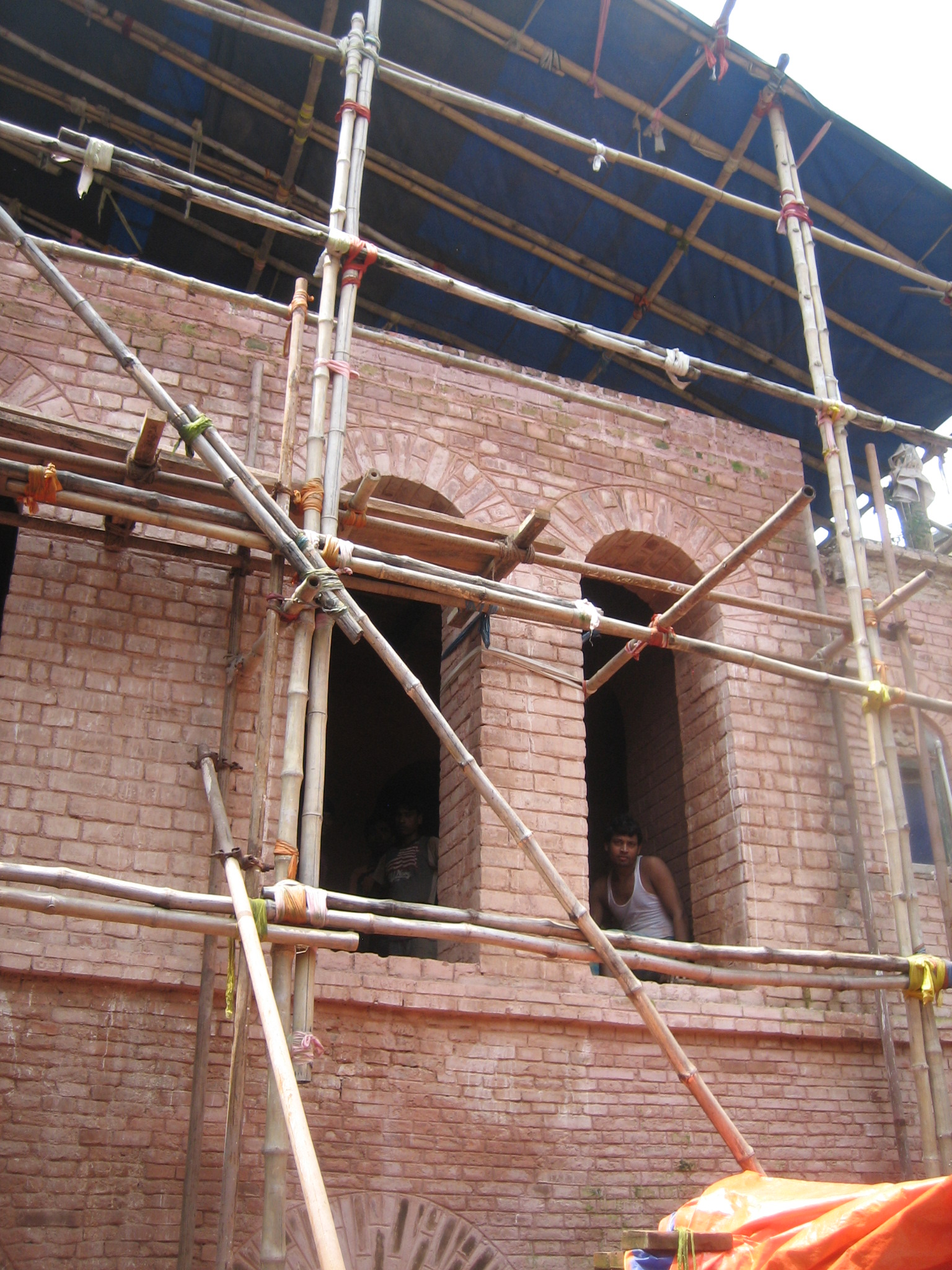
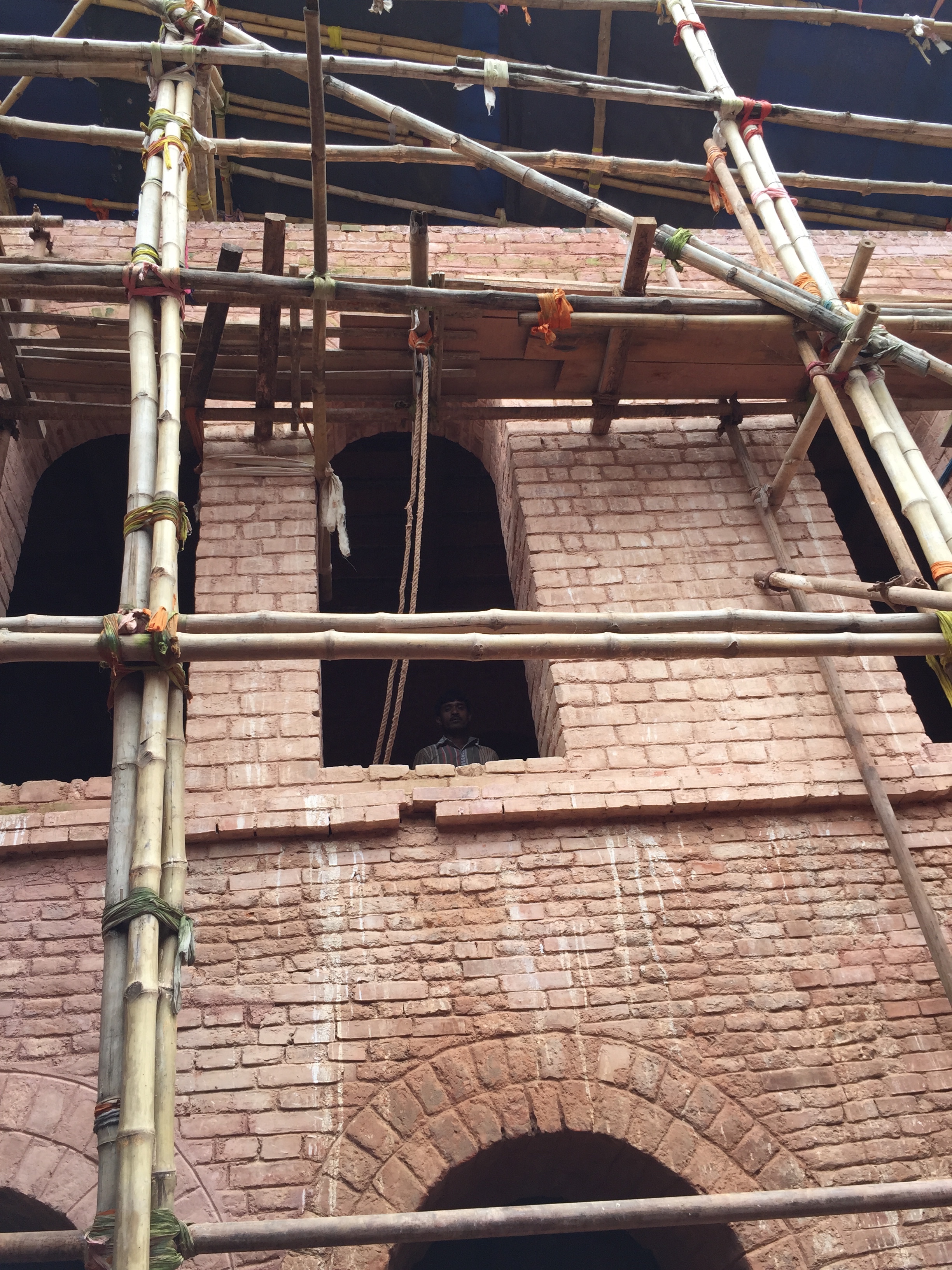
The following is the future restoration plan for the Baranagore Math.

Restoration plan for Baranagar Math showing marks for two original pillars (Thanks to Arundhathi Johri and Kanna Pichappan for writing the original report and Deba Uncle for providing the necessary information needed to write this post.)
 

Belur Math Pilgrimage – 2015, Day – 5 Morning at Cossipore Garden House

August 7, 2015

We were happy that by the grace of God and Mother Nature, we had completed four excellent days of pilgrimage and everything had worked out much better than we had expected.  Everyone had a good night of sleep in the Hyatt Hotel after the long day journey to Jayrambati and Kamarpukur. At the breakfast tables the next morning, no one looked tired, including the children.  The joyful noise of greeting each other filled the breakfast room.   After breakfast everyone was ready for another day.

In the morning, we first went to Baranagar Math and then to Cossipore Garden House.  But, I will talk about the Cossipore Garden house first because in the sequence of events, the events at Cossipore Garden House happened first. Also, It was because of the events at the Cossipore Garden House that the Baranagar Math came into being.

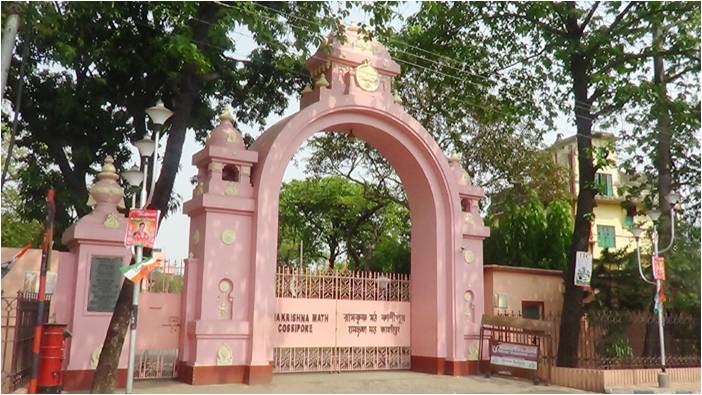
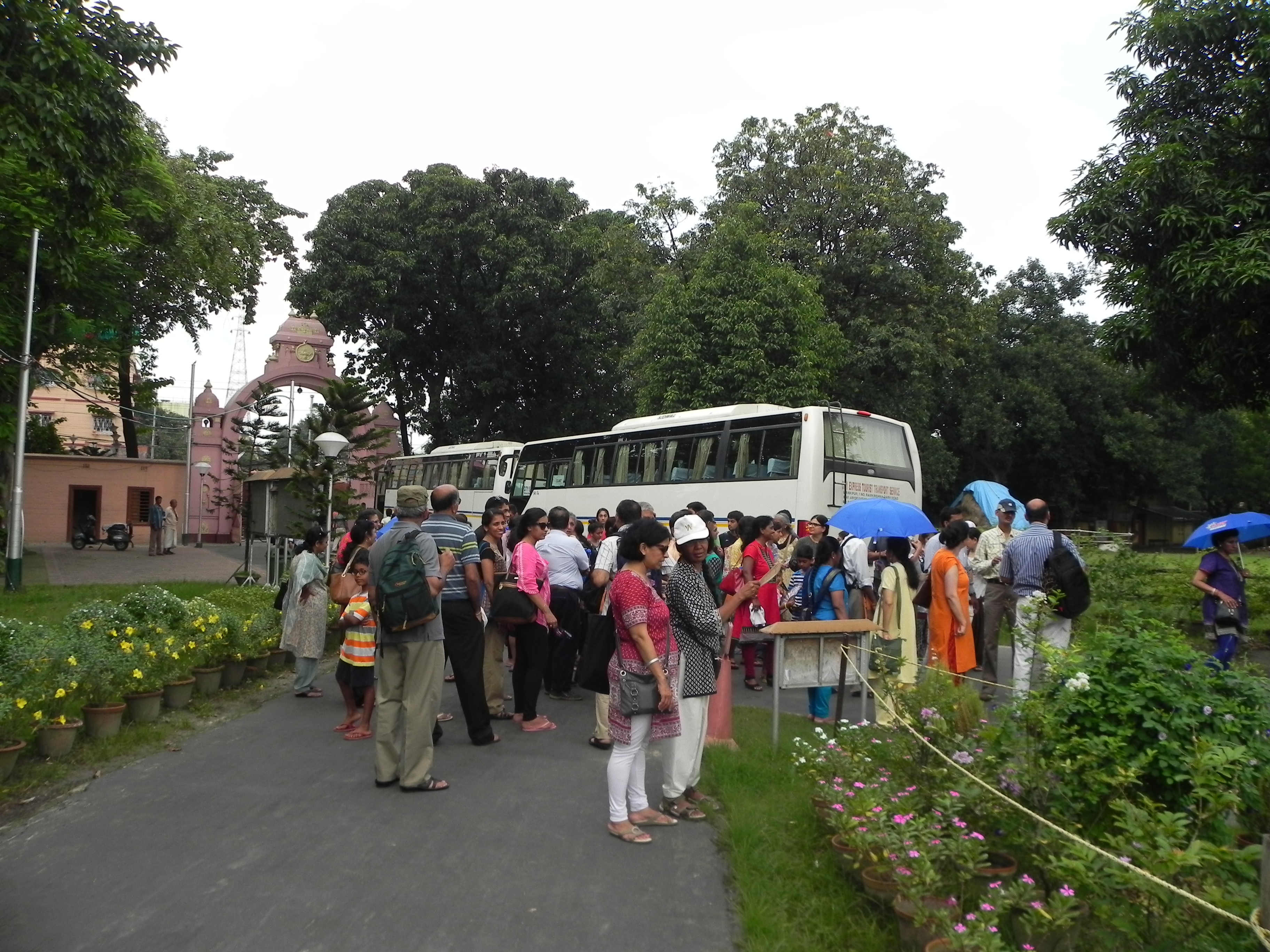
1 Gate-1  3 Entrance - buses

Cossipore Garden House:

Sri Ramakrishna’s illness brought his disciples together during his stay in the Shyampukur House. Sri Ramakrishna’s stay at the Cossipore Garden House:

(1) Molded Narendra’s (Swami Vivekananda’s) spiritual personality and made him the leader of all younger disciples

(2) Intensified the spiritual loving bondage among the younger disciples

(3) The younger disciples’ renunciation became stronger under the leadership of Narendra

(4) Set up the foundation of a great spiritual movement, later shaped as the Ramakrishna Math and Mission, to uplift and guide millions of people in spirituality in India and all over the world, and to help millions of poor and neglected people by providing for them means for their living, medicine, and education.  Thus, the Cossipore Garden House is of great historical importance.

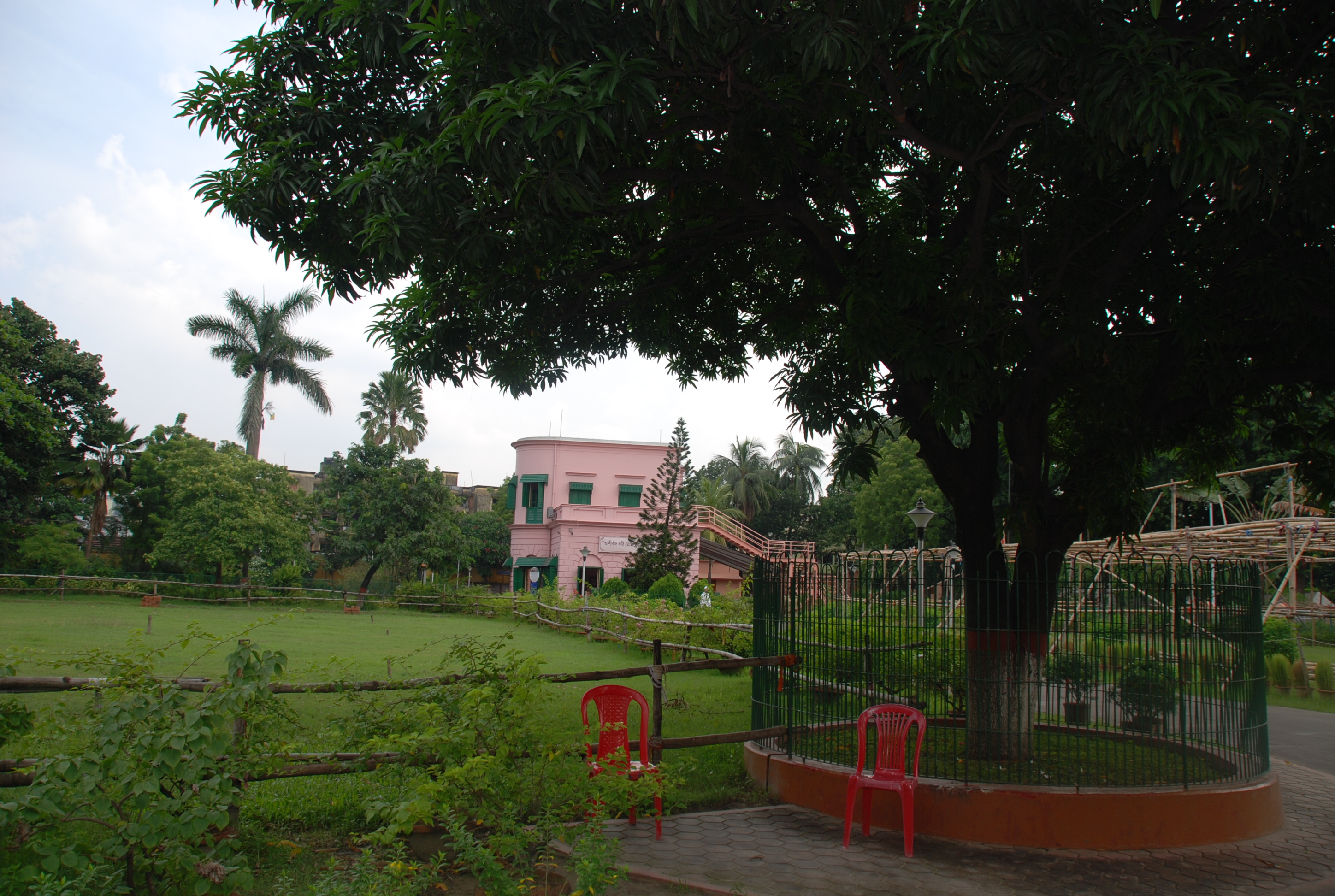
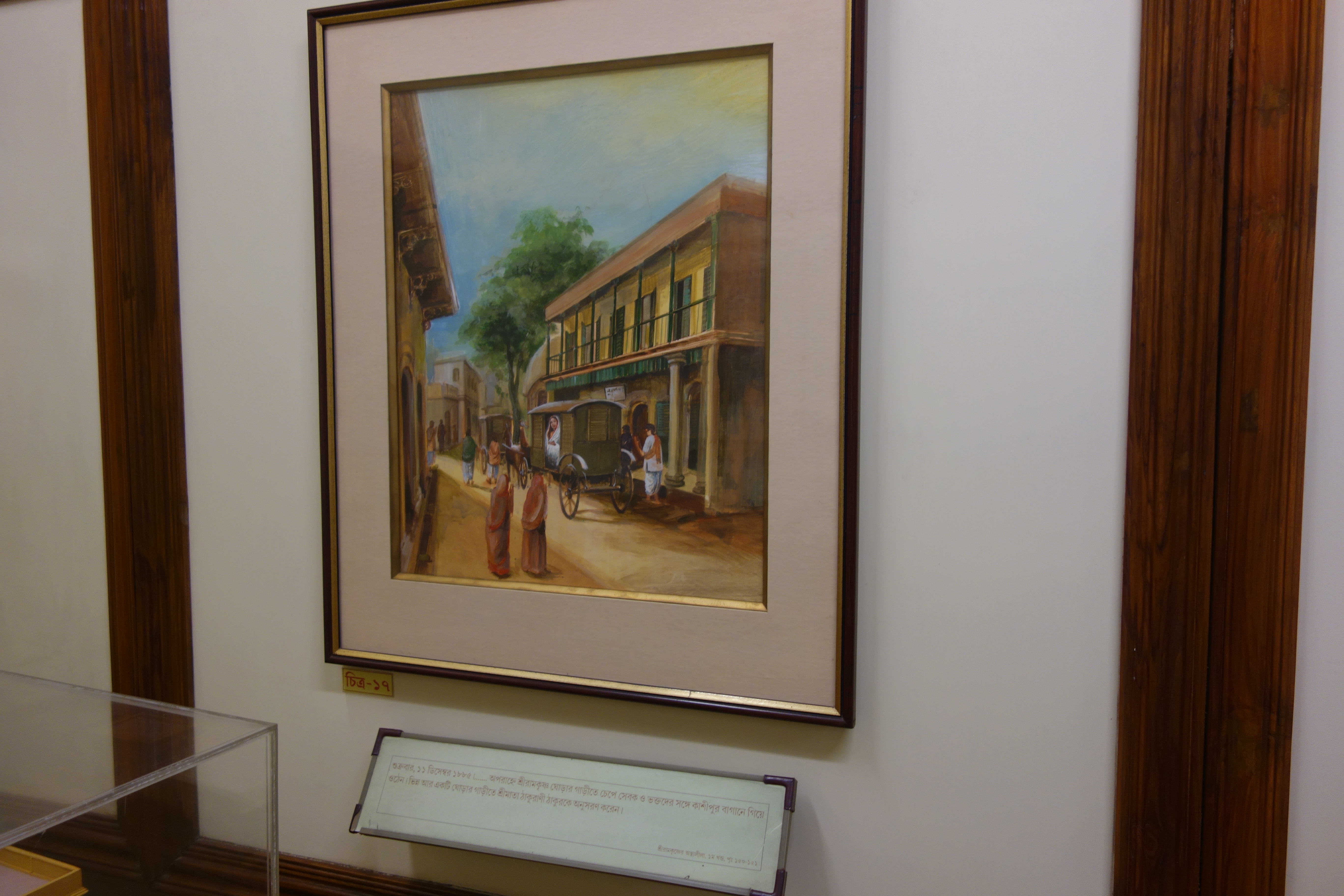
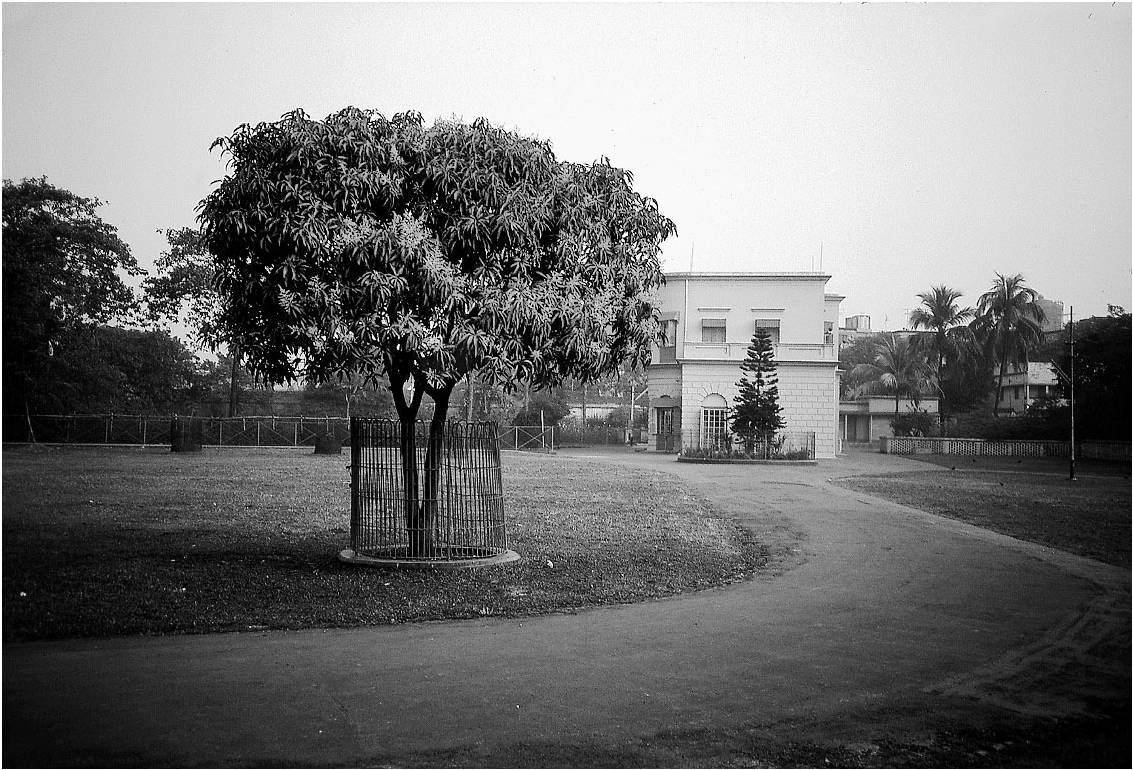
Sri Ramakrishna moved to the Cossipore Garden house on December 11, 1885 and lived there until he passed away on August 16, 1886. Sri Ramakrishna liked it here much more than the Shyampukur house.  The Cossipore Garden House was quiet, had beautiful garden full of various flowers, fruits and vegetables. There was also a bricked garden path decorated by beautiful flowers and convenient facilities.

7 Old House-Mango Tree ppt 4 House - old-1-ppt 4a House-newer-1-ppt

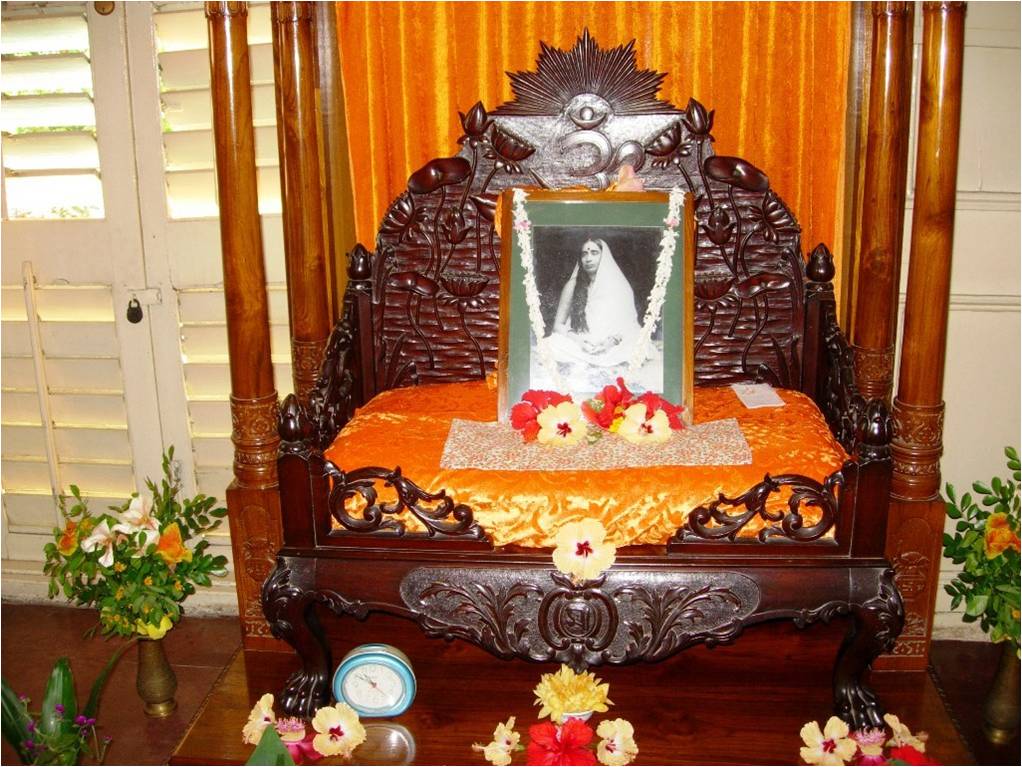
The house had four rooms on the ground level.  Holy Mother was very happy to see that she could stay in one of these four rooms and could serve Sri Ramakrishna.  She was also happy to find more freedom in moving around compared to the Shyampukur house.

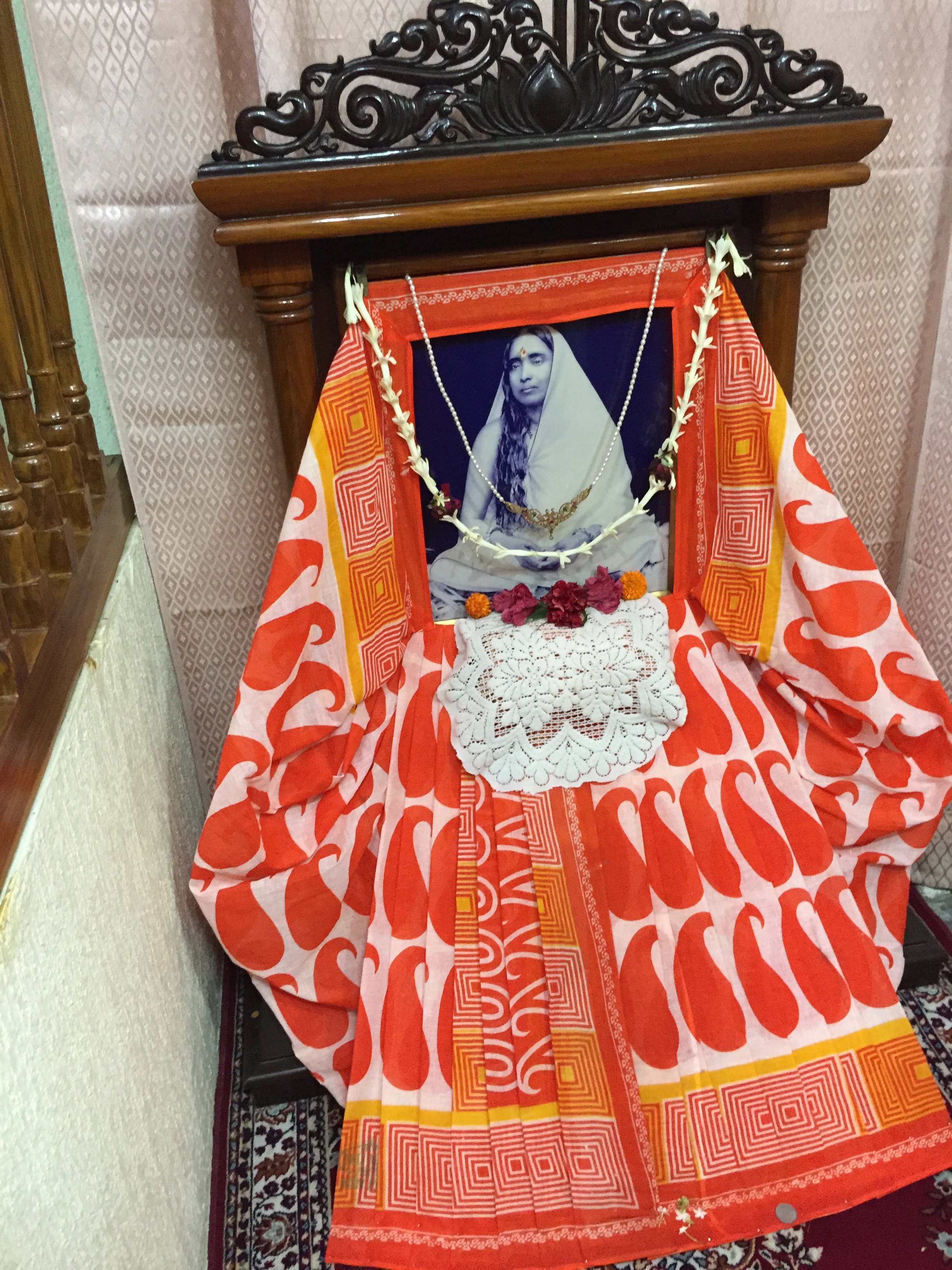
5 Holy Mother's Shrine 1st Floor ppt

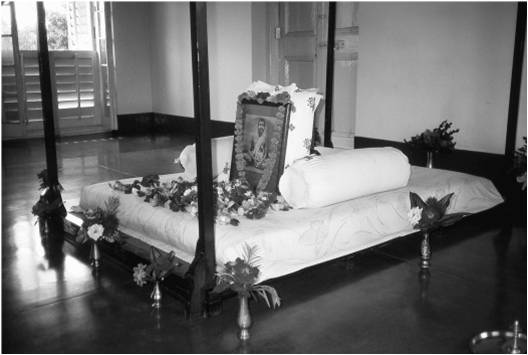
Younger devotees and other attendants were able to use one spacious room on the ground floor, while another room was used as their bedroom.  Sri Ramakrishna stayed in one of the two rooms upstairs.  The second room upstairs was used by Sri Ramakrishna for bathing and also by some attendants who would stay overnight to take care of Sri Ramakrishna’s needs.

6 Shrine ppt 6a Shrine ppt 6b Thakur's Shrine 2nd Floor ppt

Narendra as a guide to the younger devotees:

Narendra encouraged younger devotees to stay at the Cossipore Garden House and serve their Master (Sri Ramakrishna).  The parents of the younger disciples were not happy about this.  But, because of their love for their Master and Narendra’s encouragement, they did not listen to their parents.  While they were not serving Sri Ramakrishna, Narendra kept them engaged in meditation, devotional singing, study and discussion of the scriptures and spiritual conversations.  Sri Ramakrishna’s pure and unselfish love and Narendra’s spiritually uplifting company and love developed a strong bondage among them and this helped them later to renounce everything to realize God and to do unselfish service to humanity.

Taking care of the expenses and other needs: 

The rent for the house was Rs. 80 per month, which was considered very high in those days.  Sri Ramakrishna was worried about the devotees. How would they be able to pay such a steep rent?  But a devotee, Surendranath Mitra, came forward and agreed to pay the whole rent.  Other householder devotees shared the other expenses including that for food and other things.  Latu Maharaj took care of the physical needs of Sri Ramakrishna.  Once all these things were settled, Sri Ramakrishna was relieved from these earthly worries.

Dispute and Girish Chandra Ghosh’s Solution:

One incident is noteworthy.  The young disciples of Sri Ramakrishna took the responsibility of serving the Master–buying groceries, almost every day reporting to doctors, running errands, and helping Holy Mother.  The householder disciples saw that the expenditure was increasing.  A few of them accused the young disciples for their carelessness and asked them to maintain an account book properly.  The young disciples were hurt and decided not to take any more money from the householders.  When the situation became tense, Girish Chandra Ghosh came up with a solution.  In front of everyone, he burnt the account book!  Then, he told the householder disciples to give whatever they could and he would make up for the deficit.  He told the young disciples not to worry and assured them that if needed, he would sell his house to pay for the expenses.

Initially, Sri Ramakrishna’s health improved a little, but later on his health deteriorated. His robust body began to break down, becoming emaciated as a skeleton.  Yet, his mind remained in high spiritual realm and he continued to guide Narendra and others in their spiritual path.

Transformation of Kalipad Ghosh:

Kalipada Ghosh was born in 1849 in Calcutta to a pious family devoted to Mother Kali.   As a boy Kalipada was full of energy and had many interests–ranging from music and singing to drama and even cooking.  Due to the family’s poverty, his father was forced to take him out of school when he was  in the eighth grade and found him a job as a shop assistant in the British paper firm of Messrs. John Dickinson and Company. Uneducated, his career prospects thus appeared unimpressive. However, his innate intelligence, diligence, and dedication soon captured the attention of his superiors, and with time Kalipada rose to a high position at the paper firm. His importance can be gauged from the fact that the watermark of the papers printed by the firm carried his bust as an imprint. As a result of falling into bad company, he developed a drinking habit, and began to mistreat his family.

He was a close friend of Girish Chadra Ghosh.  By seeing a great transformation in Girish Chandra Ghosh as a result of the company and grace of Sri Ramakrishna, Kalipad had a desire to be blessed by the Master.

On December 23, 1885, Sri Ramakrishna, being in a spiritual mood, touched Kalipad’s chest and said, ‘May your inner spirit be awakened.’  Then, stroking Kalipad’s chin, he said, ‘Whoever has sincerely called on God or performed his daily religious devotions will certainly come here (meaning to him).’  The Master’s blessing and unrestrained love that day made Kalipad a new person.  He gave up his bad habit of drinking and all interest in worldly things.

Holy Mother Narrate an Incident:

I was once climbing the steps, carrying a big bowl of milk.  I felt dizzy and fell down.  The entire milk spilt on the ground.  One of my ankles was badly sprained.  Naren and Baburam ran there and took care of me.  There was a great inflammation of the foot. The Master heard of the incident…..I had then a ring on my nose.  The Master touched his nose and made a sign of ring by making a circle with his finger and said, “Baburam, can you put her in a basket and carry her on your shoulder to this room?”  Naren and Baburam were convulsed with side-splitting laughter. Thus he used to joke with them.  After three days the swelling subsided.  Then they helped me to go upstairs with his meals.”

Yogin-ma narrated one incident about Holy Mother and Sri Ramakrishna:

“One day Holy Mother carried the Master’s food to his room, which was on the upper floor. The Master asked her, ‘Do you know how to play asta-kaste?’

Holy Mother said, ‘No.’

Sri Ramakrishna said, ‘If one can pair two checkers, the opponent cannot take them.  Likewise, one should unite oneself with the Chosen Deity and thus be rid of fear.  Otherwise, a ripe checker (one that is near the goal), if it is still single can be turned back.  If a person can move in this world with the Chosen Deity, like a paired checkers, he will be saved.’

As Holy Mother listened she continued with a small household task in which she had been engaged.  Suddenly the Master said jokingly, ‘Are you listening to me or not?’  Holy Mother was embarrassed.”

Molding Spiritual Character of Narendra:

Sri Ramakrishna told Narendra, “The Divine Mother has brought you into the world by force to do Her work.”

On another occasion Sri Ramakrishna told Narendra, “I leave them (the young disciples) in your care.  Love them intensely and see that they practice spiritual disciplines even after my death, and that they do not return home.”

Burning of Desires:

Swami Saradananda wrote this incident in his book, “Sri Ramakrishna and His Divine Play.” One night Narendra could not sleep.  He found Gopal and couple of young devotees awake.  He asked them to go for a walk with him in the garden.  As they walked Narendra said, “The Master’s disease is extremely serious. May be he has decided to give up his body.  Make your best effort to achieve spiritual enlightenment through service to him, and prayer and meditation while there is yet time.  If you do otherwise, there will be no end to your repentance after he passed away.  We waste our time with the foolish thought that we shall pray to God after finishing this duty, or practice spiritual disciplines after doing that.  Thus, we entangle ourselves in a net of desires.  Those terrible desires lead to destruction-death.  Shun those desires! Uproot them!”

He then sat under a tree and asked all to collect twigs lying around so that they could set a friendly fire (Dhoony).  He said that at this moment all the sadhus (renounced people) set up a dhoony and meditate.  Narendra told them to burn all their desires in this dhoony fire.  The younger devotees did this and they actually felt that their desires had been burnt and experienced a wonderful bliss within.  Around 4:00 a.m. they went to their beds.

During this time, Narendra was experiencing great turmoil in his personal life. He had to study law to support his mother and siblings and had to fight in court against his own relatives who were trying to take away their ancestral house.  In spite of all that, Narendra kept his spiritual level high and helped the younger disciples to do the same.

Narendra’s Spiritual Power and the Master’s scolding:

One night, on March 1886, Narendra asked his brother disciple Kali to touch his right knee, and then entered into deep meditation.  Kali’s hand began to tremble; he felt a kind of electric shock.  Afterwards Sri Ramakrishna rebuked Narendra for frittering away spiritual powers before accumulating them in sufficient measure.  He told Narendra that he had injured Kali’s spiritual growth.  After talking to Kali, Sri Ramakrishna found that the damage was not serious.

Narendra’s Desire for Samadhi & Sri Ramakrishna’s Guidance:

At the Cossipore Garden House, Narendra’s longing for the vision of God knew no limit.  One day, he asked Sri Ramakrishna for a boon to remain merged in Samadhi (complete absorption in God). He wanted to mediate for three or four days at a stretch, interrupting his meditation now and then only for a bite of food to preserve the body.  Sri Ramakrishna said, “You are a fool.  There is a stage higher than that.  It is you who sing: ‘O Lord! Thou art all that exists.”  Sri Ramakrishna wanted him to see God in all beings and to serve them with the spirit of worship.

One day, Narendra was meditating under a tree with Girish Chandra Gosh at the Cossipore Garden House.  The place was infested with mosquitoes.  Girish tried in vain to concentrate.  Casting his eyes on Narendra, he saw that Narendra was absorbed in meditation even though his body was covered by a blanket of insects.

Once, Narendra spent an entire night walking in the garden loudly repeating Rama’s name.

Narendra had special affection for Lord Buddha.  One day, he suddenly felt an intense desire to visit Bodh-Gaya, the place where Lord Buddha had attained enlightenment.  He left Cossipore with Kali and Tarak, two of his brother disciples.  After they meditated for long hours under the Bo-tree where Lord Buddha had attained enlightenment, Narendra was overwhelmed by emotions and wept profusely.  He embraced Tarak and told him that he had felt the presence of Lord Buddha and he had seen how Buddha’s noble life and teachings had influenced India.  When Narendra came back and talked to the Master, he realized that Sri Ramakrishna’s life and teachings were even more appropriate for the present-time.

On another occasion when Narendra repeated his desire for uninterrupted Samadhi, Sri Ramakrishna said, “Shame on you!  You are asking for such an insignificant thing.  I thought that you would be like a big banyan tree, and that thousands of people would rest in your shade.  But, now I see that you are seeking your own liberation.”  Realizing the greatness of Sri Ramakrishna’s heart, Narendra shed profuse tears.

One day the master, unable to speak even in a whisper, wrote on a piece of paper: “Narendra will teach others.” Narendra protested.  Sri Ramakrishna said, “But, you must.  Your very bones will do it.”

One day while absorbed in meditation, Narendra felt only his head and not the rest of his body.  He asked Gopal where his body was.  Gopal was afraid that Narendra was dying.  He went upstairs to Sri Ramakrishna and told him everything.  Sri Ramakrishna said, “Let him stay in that state for a while; he has teased me long enough for it (Samadhi).”  After a long time, Narendra regained his normal state.  After that, when he entered Sri Ramakrishna’s room, Sri Ramakrishna said to him, “Now the Mother has shown you everything.  But, this realization, like the jewel locked in a box, will be hidden away from you and kept in my custody.  I will keep the key with me.  Only after you have fulfilled your mission on this earth will the box be unlocked, and you will know everything as you have known.”

A short while before Sri Ramakrishna passed away, he called Narendra to his room and asked him to sit by his bedside.  Then he intently looked at Narendra and went into deep meditation.  Narendra felt a subtle force, resembling an electric current, entering his body.  He gradually lost his consciousness.  After some time he regained normal consciousness and found that Sri Ramakrishna was weeping.  Sri Ramakrishna said, “O Naren!  Today I have given you everything I possess. Now I am no more than a fakir, a penniless beggar.  By the power I have transmitted to you, you will accomplish great things in the world, and not until then will you return to the source whence you have come.”

Sri Ramakrishna’s Highest State:

Because of his throat cancer, Sri Ramakrishna could not eat anything.  Narendra asked Sri Ramakrishna to pray to Mother Kali so that he could eat some food.  Sri Ramakrishna told Narendra that he could not do this; he had never asked Mother Kali for any worldly favor.  Narendra told him his devotees want his body to be alive, so he had to ask Mother Kali on behalf of his devotees and not for himself.  Sri Ramakrishna could not refuse his beloved disciple’s request.  A little later in a sad voice Sri Ramakrishna told Narendra, “Yes, I told Mother Kali that I could not swallow any food on account of the sore in my throat, and asked Her to do something about it.  But the Mother said, pointing to you all, ‘Why, are you not eating enough through all these mouths?’ I felt so humiliated that I could not utter any word.”  This was the highest example of realizing “Oneness of Existence”.

Caring for young disciples:

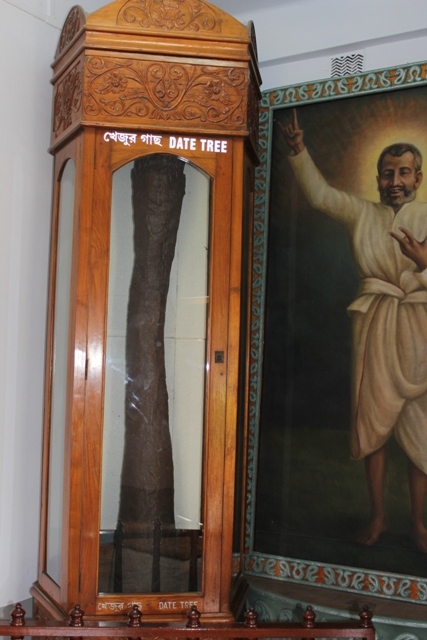
Once, a few young devotees decided that they would tap a date palm in the garden and drink its fresh juice.  Before the young devotees approached the date tree, Sri Ramakrishna swiftly got out from his bed and ran downstairs to the tree.  Holy Mother was surprised to see Sri Ramakrishna doing this since he could hardly walk in the room.  When Sri Ramakrishna returned Holy Mother asked the reason for him going downstairs.  Sri Ramakrishna said that there was a cobra living under the date tree.  He went there and asked the cobra to leave the garden.  He made sure that the cobra left before the young devotees went near the tree.

8 Date Tree

January 1st Incident:

On January 1, 1886 the Master felt better and expressed a desire to walk in the garden for a while.  Because of the holiday, the householder devotees began arriving at the Cossipore Garden House after midday–individually and in groups.  The Master came down around 3:00 p.m.  There were more than 30 people talking among themselves inside the house and sitting under the trees in the garden.  When they saw Sri Ramakrishna coming down, they all stood reverently and then bowed down to him.

7 Old House-Mango Tree ppt

7a Mango Tree -F 7b Maango Tree - F2

Before anyone had spoken a word, the Master addressed Girish Chandra Ghosh, asking him, “Girish, what have you seen and understood (about me) that makes you say all these things (that Sri Ramakrishna is an Incarnation of God) to everyone and everywhere?”  Girish Chandra Ghosh knelt down at the Master’s feet.  Then with folded hands he looked at Sri Ramakrishna and said in a voice choked with emotion:  “What more can I say of Him?  Even the sages, Vyas and Valmiki, could find no words to measure His glory!”  Girish Chandra Ghosh’s sincere faith expressed in those words touched the heart of the Master.  While looking at Girish he said: “What more can I tell you?  I bless you all.  May you all be illumined!” Sri Ramakrishna went into ecstasy.

The selfless and profound blessing touched the devotees deep within their hearts, and with great joy they said, “Victory to Sri Ramakrishna!”  One by one they bowed down to Sri Ramakrishna and he in return blessed all of them with his divine touch.  The devotees felt that they were spiritually uplifted by his blessings.

The householder devotees felt that on that day (January 1, 1886) the Master became “Kalpataru” (wish fulfilling tree).  The monastic disciples who were busy cleaning up Sri Ramakrishna’s bed and room felt that on that day the Master manifested his divine nature and made everyone fearless.

Incarnation of God:

Two days before Sri Ramakrishna left his body, Narendra was standing by his bedside.  A thought flashed in the mind of Narendra, ‘Was the Master really an Incarnation of God?’  He told himself that in this excruciating pain of the throat cancer, if the Master declared himself as an Incarnation of God, then only would he would believe it.  Sri Ramakrishna read his mind and said, “O my Naren, are you still not convinced?  He who in the past was born as Rama and Krishna is now living in this body as Ramakrishna-but not from the standpoint of your Vedanata.”

Holy Mother’s Austerities for Sri Ramakrishna:

Since Sri Ramakrishna’s health was deteriorating quickly, Holy Mother decided to seek divine help.  She went to the famous Tarakeswar Shiva Temple with Sri Ramakrishna’s niece and a maidservant.

Holy Mother described her experience in her own words, “I went to Tarkeswar and lay myself down before Lord Shiva without food and drink for two days.  I prayed and kept vigil, but got no response from the Lord.  On second night I was startled by a sound – a cracking sound as if someone were striking a heap of baked earthen pots with a heavy cudgel. I got up and this thought came to my mind: “Who is one’s husband?  Who are your relatives?  For whose sake am I about to give up my life?  All my attachments were completely cut asunder, and my mind was filled with renunciation. I groped my way through the darkness to the back of the temple, where the holy water offered to Shiva was accumulated in a basin.  I splashed that water on my eyes and face and drank it.  My throat was dry because I had been fasting.  I felt refreshed. Next day, I returned to Cossipore.  The moment the Master saw me, he asked, “Well, did you get anything?”  Then flexing his right thumb, he said, “Nothing is real. Isn’t that so?””

Last Instructions to Holy Mother:

(1)  How to live:  A few days before his passing, Sri Ramakrishna told Holy Mother, “Let me tell you something.  Do not stretch out your hand to anyone, even for a penny.  You will not lack simple food and clothes. If you hold your hand out to anyone, remember, you will sell him your head also. If it is absolutely necessary, you may beg your food, but never live in anyone else’s house.  Devotees may welcome you in their houses with great respect and affection, but never allow your hut in Kamarpukur to fall into despair.

Please stay in Kamarpukur.  Grow some spinach and eat that spinach with rice.  Chant name of God.”

(2)  You have to do many things:  One day Holy Mother knew that there is something in Sri Ramakrishna’s mind.  She asked, “Please tell me what is in your mind?”

He pointed to his body and said, “Wouldn’t you do anything?  Must this person (meaning himself) have to do everything?”

Holy Mother said, “But, what can I do?  I am a mere woman.”

Sri Ramakrishna said, “No, no.  You have to do many things.”

(3)  Siddha Mantras:  One day, Sri Ramakrishna taught Holy Mother eight mantras and said, “These are all siddha mantras (mantras for attaining illumination).  Please teach these mantras to those who come to you for initiation. Those who receive one of these mantras will have the vision of their Chosen Deities during their life time or at least at the time of death.  Later many people will come to you for initiation.”

Last Minutes of Sri Ramakrishna:

On August 15, 1886, Holy Mother had some bad omens.  She recalled: “On that day everything was topsy-turvy beginning in the morning.  I was cooking ‘khichuri’ for the Master’s disciples and it burnt at the bottom.  I served the top portion to them and we ate at the bottom portion.  After my bath, I hung my red-bordered sari outside to dry in the sun and someone stole it.  I tried to lift the earthen water jar and it slipped from my hand and broke into pieces.”  We can understand Holy Mother’s state of mind during that time.

At the end of the day when Holy Mother and Lakshmi went to Sri Ramakrishna’s room, he said in a feeble voice: “I am glad you are here.  I feel as if I am going to a faraway country across water-very far away.”  Holy Mother burst into tears.  The Master consoled her, saying: “Why should you feel troubled?  You will live as you are living now.  They (meaning Narendra and others) will do for you as they are doing for me.  Look after Lakshmi and keep her with you.”

At midnight he summoned Naren to his bedside and gave him the last instructions.  The disciples stood around him.  On August 16, 1886, at two minutes past one in the early morning, Sri Ramakrishna uttered three times, in a ringing voice, the name of his beloved Mother Kali and gave up his body.

After the cremation ceremony when Holy Mother was putting on the signs of a Hindu widow, Sri Ramakrishna appeared to her and said, “I am not dead. I have just moved from one room to another.”

Beginning of Ramakrishna Order of Monks:

Every year during “Makar Sankrinti” (an auspicious day for Hindu when sun is in a certain position -usually it is around January 14th) monks and pilgrims from all over India go to Gangasagar, the confluence of the Ganga and the Bay of Bengal, for a holy bath.  A disciple of Sri Ramakrishna known as “Elder Gopal” (Senior Gopal) wanted to acquire virtue by offering clothes to holy people on this day.  He bought 12 pieces of ochre clothes and 12 rosaries for this purpose.  When Sri Ramakrishna heard this, he told Senior Gopal: “You will attain a thousand times more virtue if you offer these to my children (the young disciples who wanted to renounce the world)…Where else will you find such all-renouncing monks?”

Senior Gopal was convinced. On January 12, 1886 (Makar Sankranti) senior Gopal gave 12 ochre clothes and rosaries to Sri Ramakrishna, who after blessing them, distributed them to the 11 young disciples, namely Narendra, Rakhal, Niranjan, Baburam, Shashi, Sharat, Kali, Jogin, Latu, Tarak, and Gopal.  He kept the 12th set for Girish Chandra Ghosh.  Thus, Sri Ramakrishna initiated these eleven young disciples into monastic life, and thus himself laid the foundation of the future Ramakrishna Order of the monks.

In order to have an experience of being monks, Sri Ramakrishna asked young disciples to go out and beg for their food from houses as the traditional monks did.  It was tough for these youngsters who were born in upper or middle class families and had never begged for anything.  Narendra and a couple of youngsters decide to follow the command of Sri Ramakrishna.  First, they went to Holy Mother and begged their food.  Holy Mother was taken by surprise and then she gave them handful of cooked rice.  When they begged for food outside the Cossipore Garden House, they had mixed responses.  Some gave food with reverence while some became angry on them for begging.  Thus, in all possible ways, Sri Ramakrishna trained them to be monks.

7c Talk

(Thanks to Arundhathi Johri and Kanna Pichappan for writing the original report, Nisha Parikh for editing this post and Deba Uncle for providing the necessary information needed to write this post.)
Belur Math Pilgrimage – 2015, Day – 3 Evening

August 5, 2015

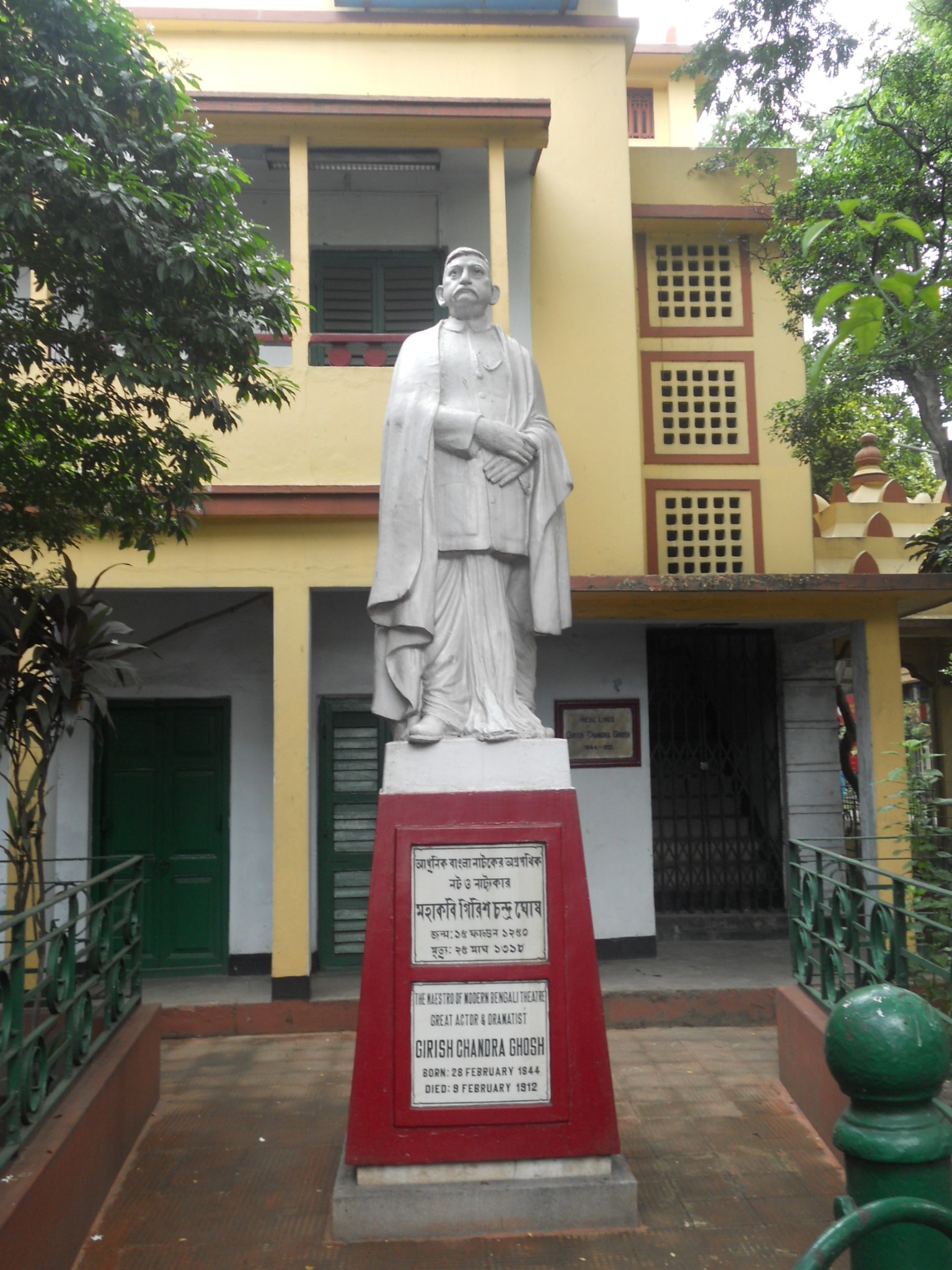
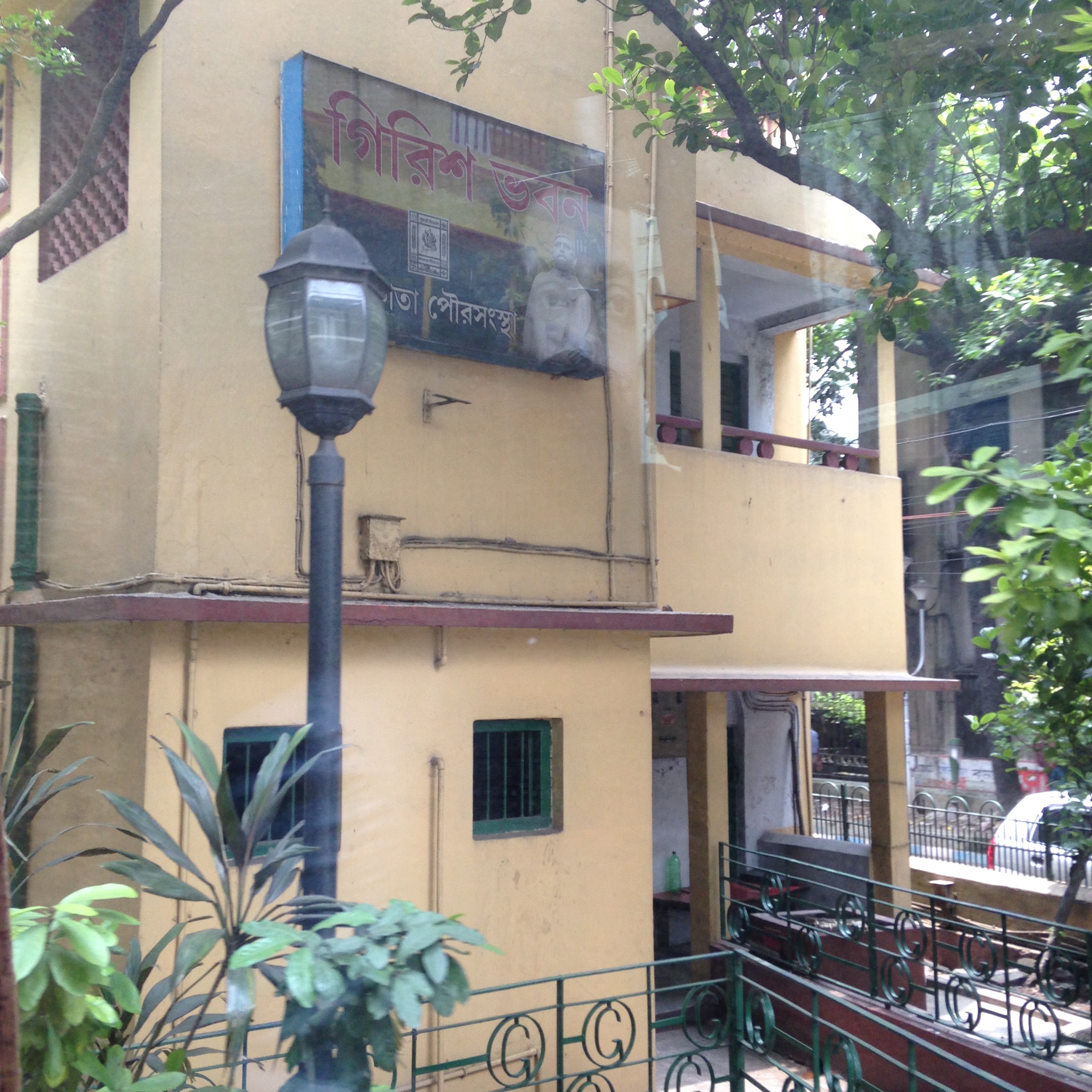
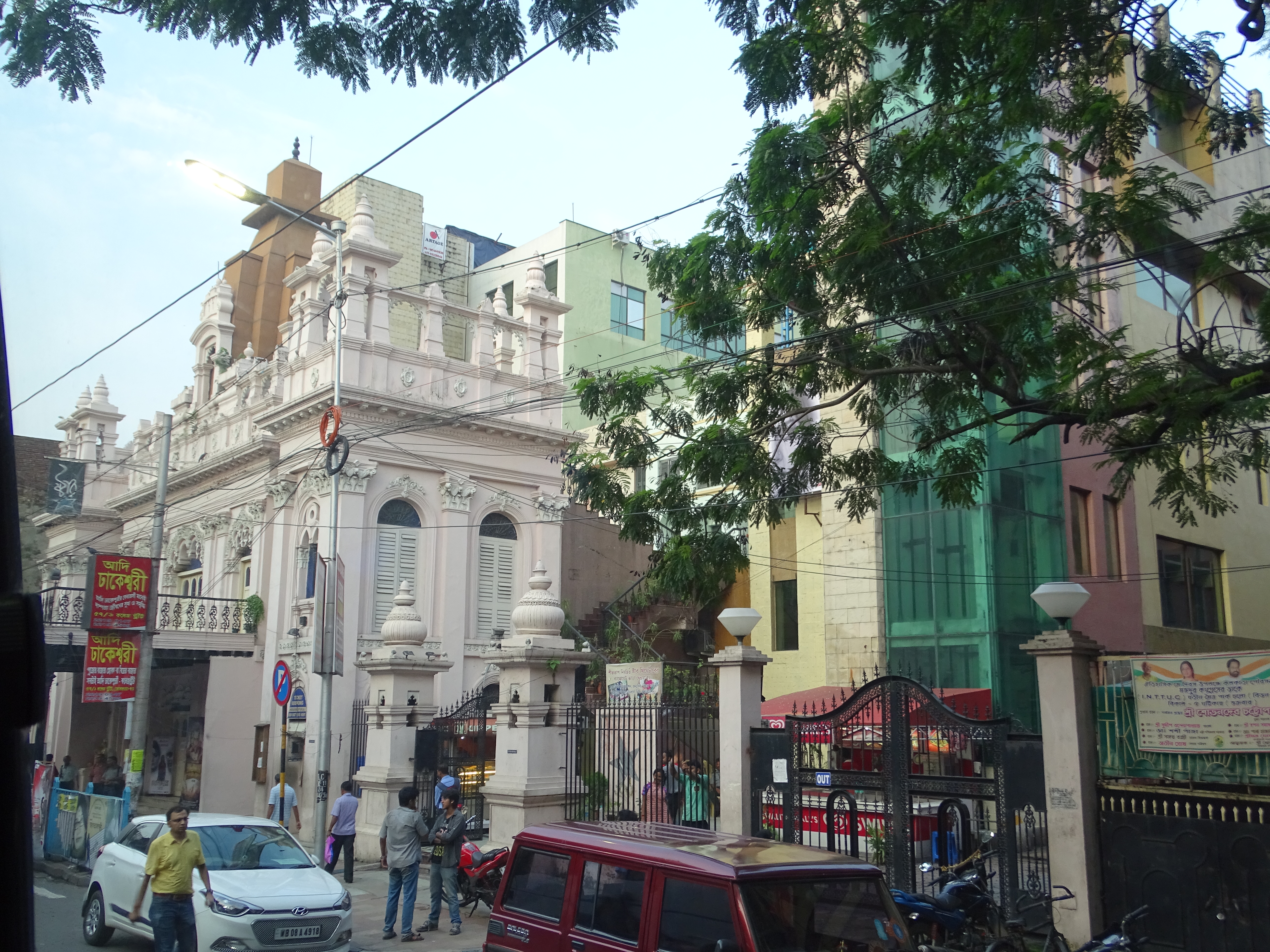
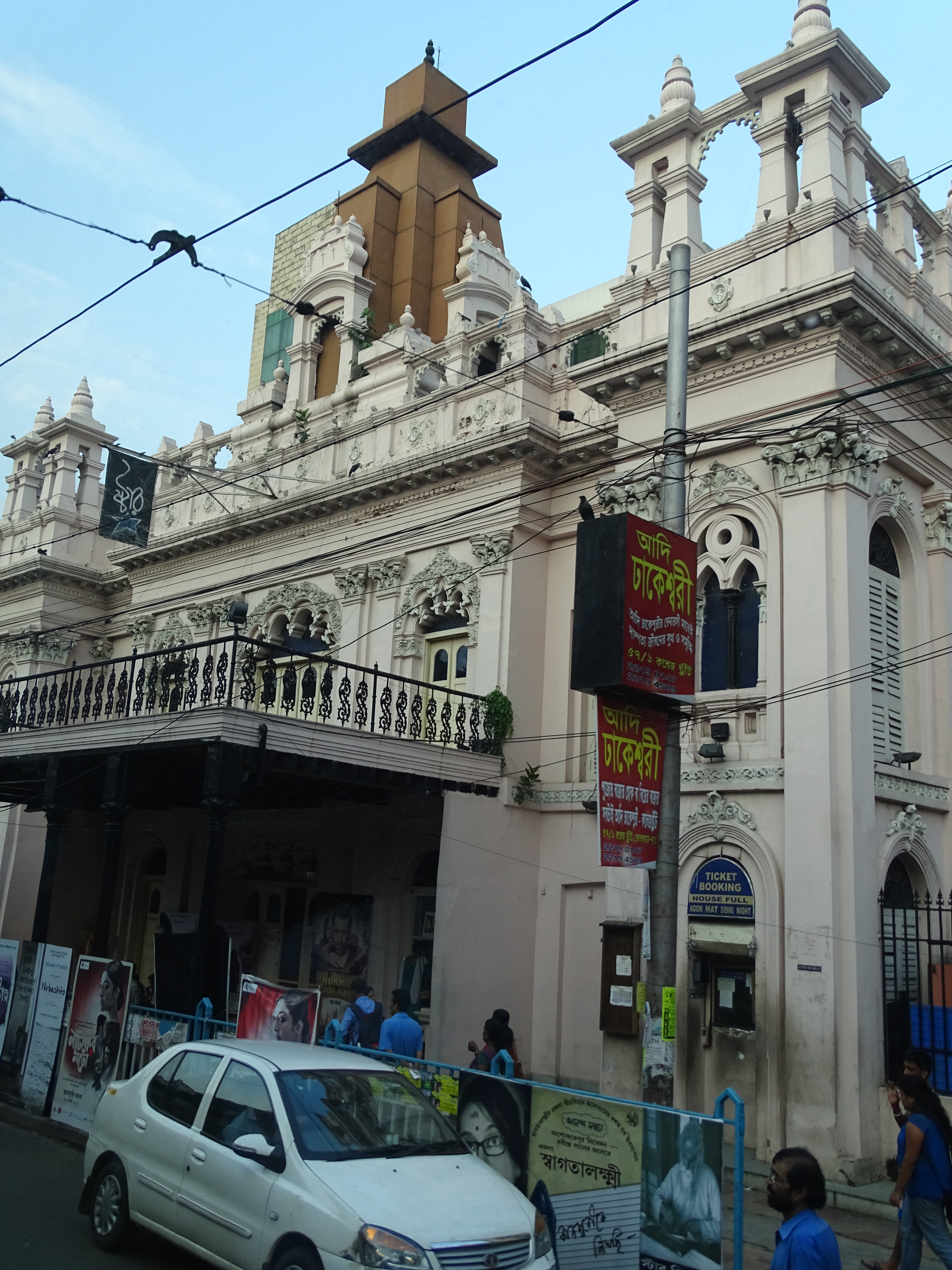
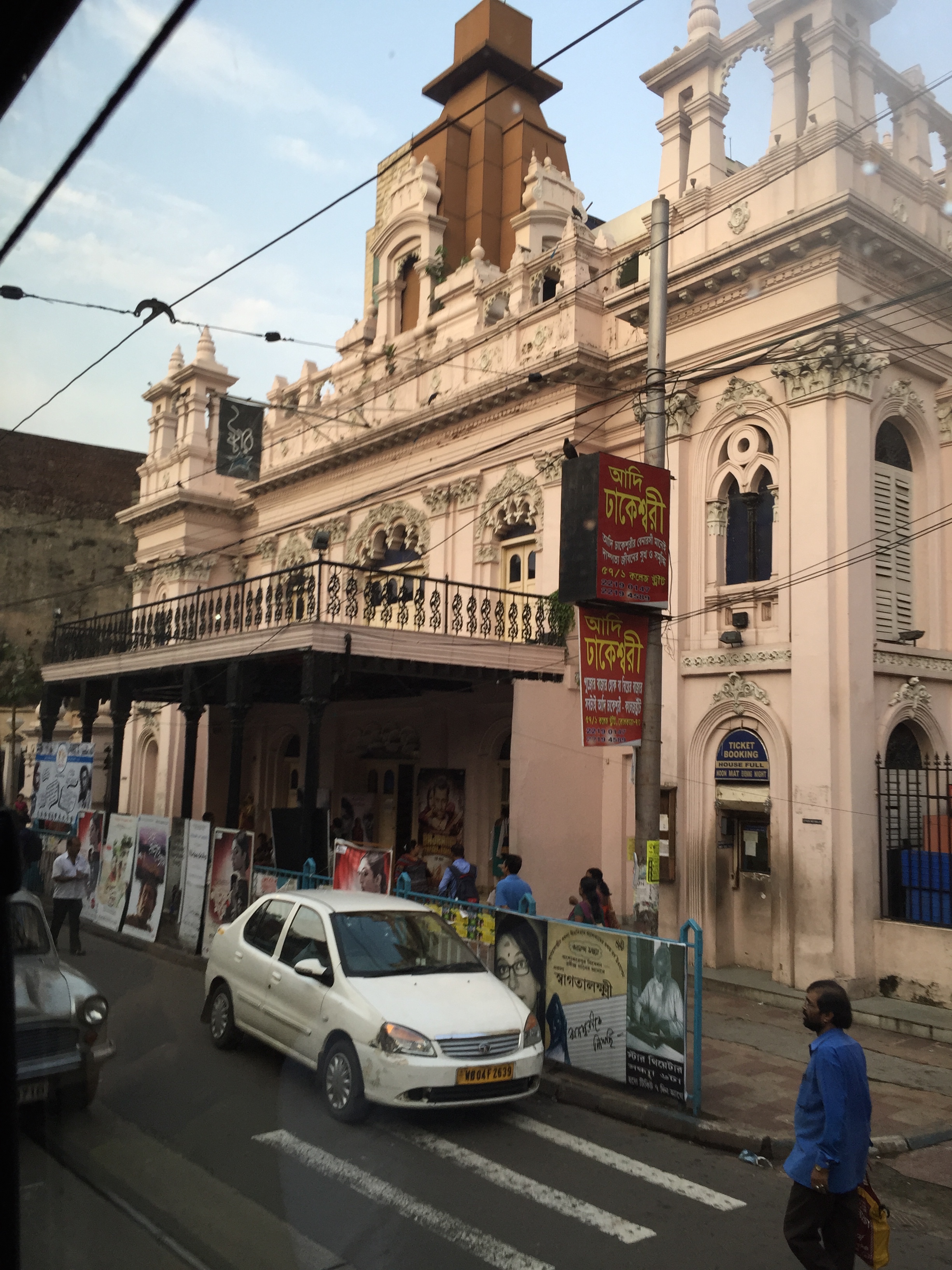
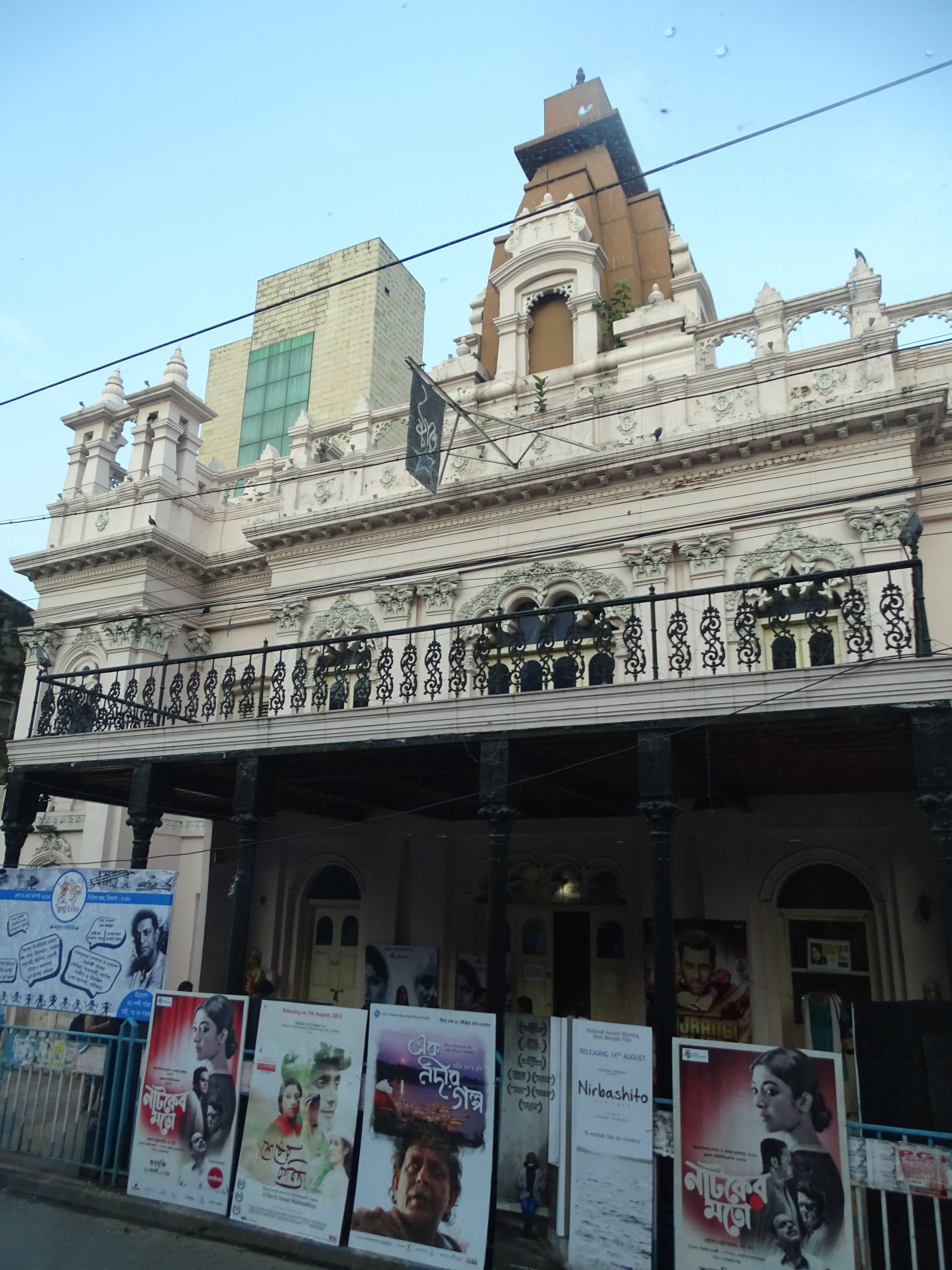
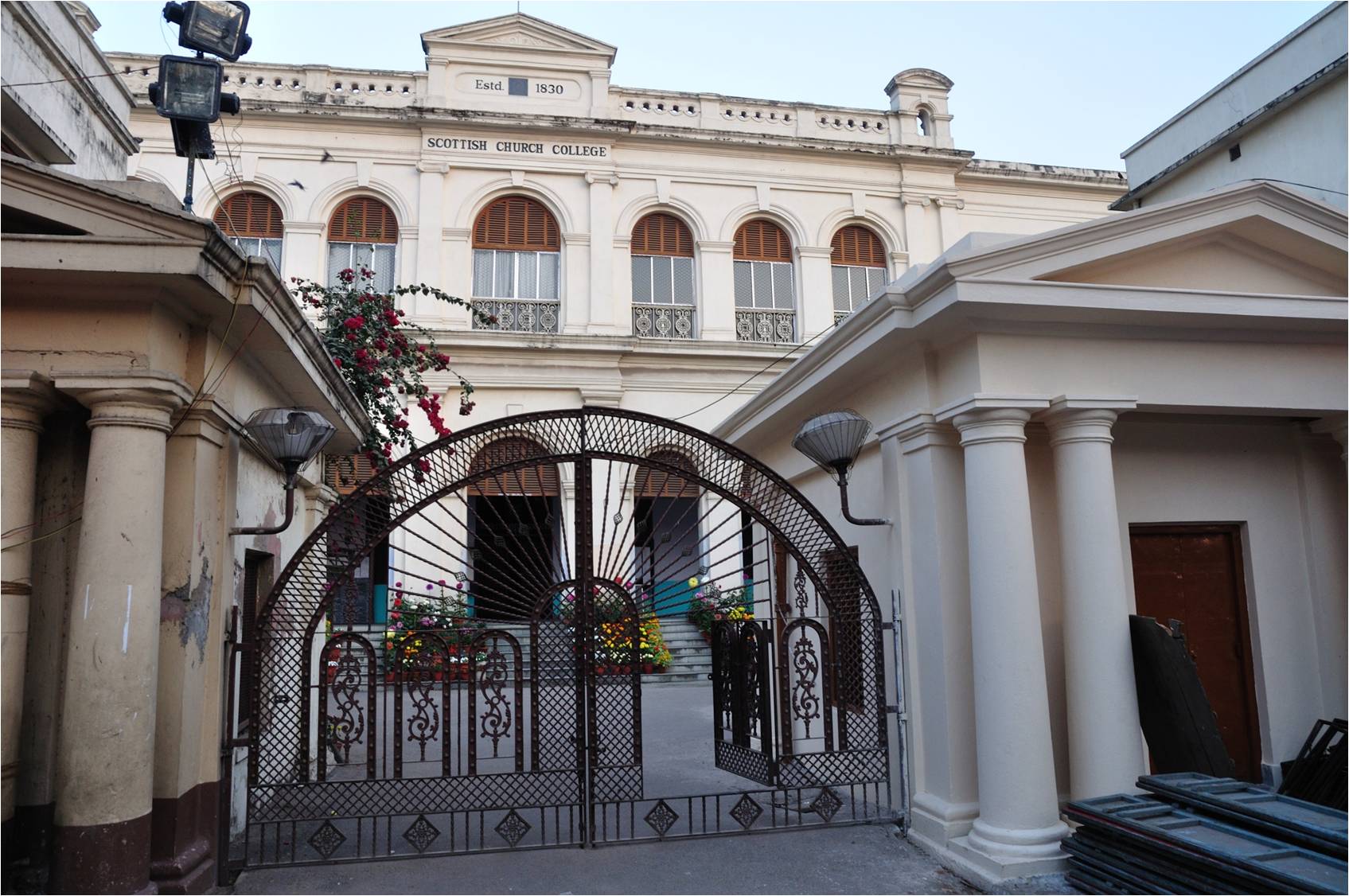
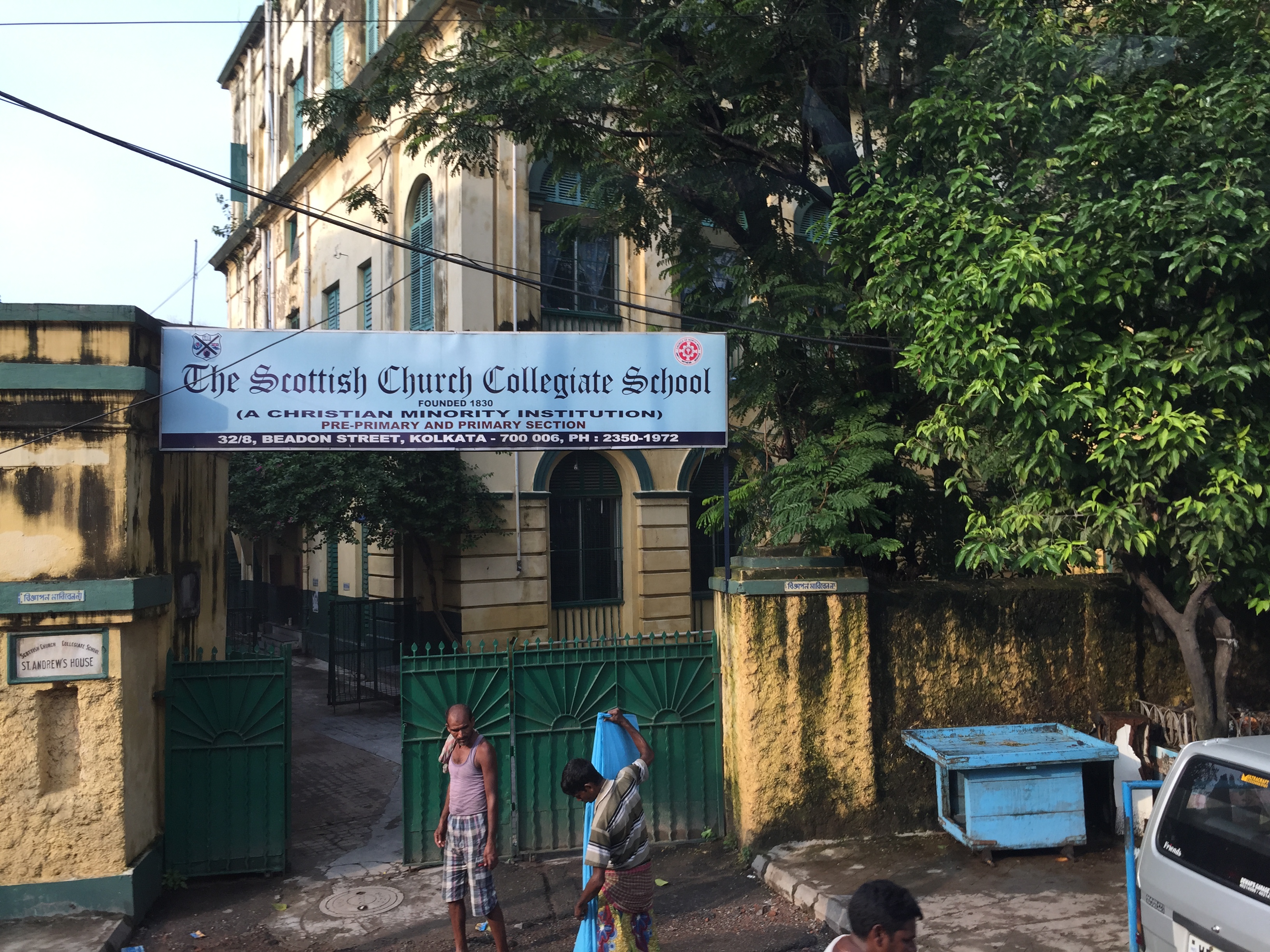
On the morning of Day 3, we saw Girish Bhavan, the house of Girish Chandra Ghosh, and in the afternoon we saw the “Star Theatre” and Swami Vivekananda’s college “Scottish Church College.”

Girish Bhavan:

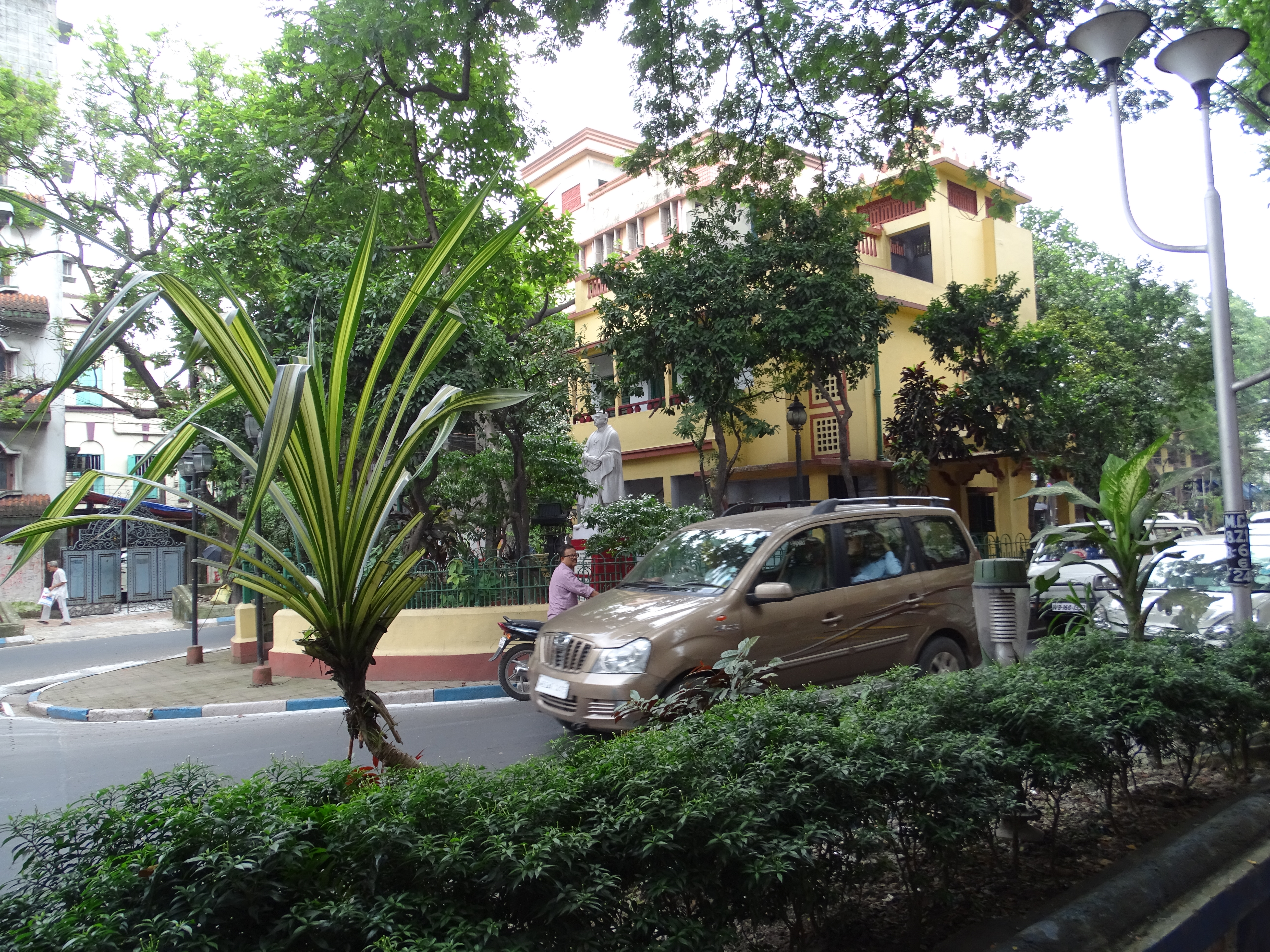
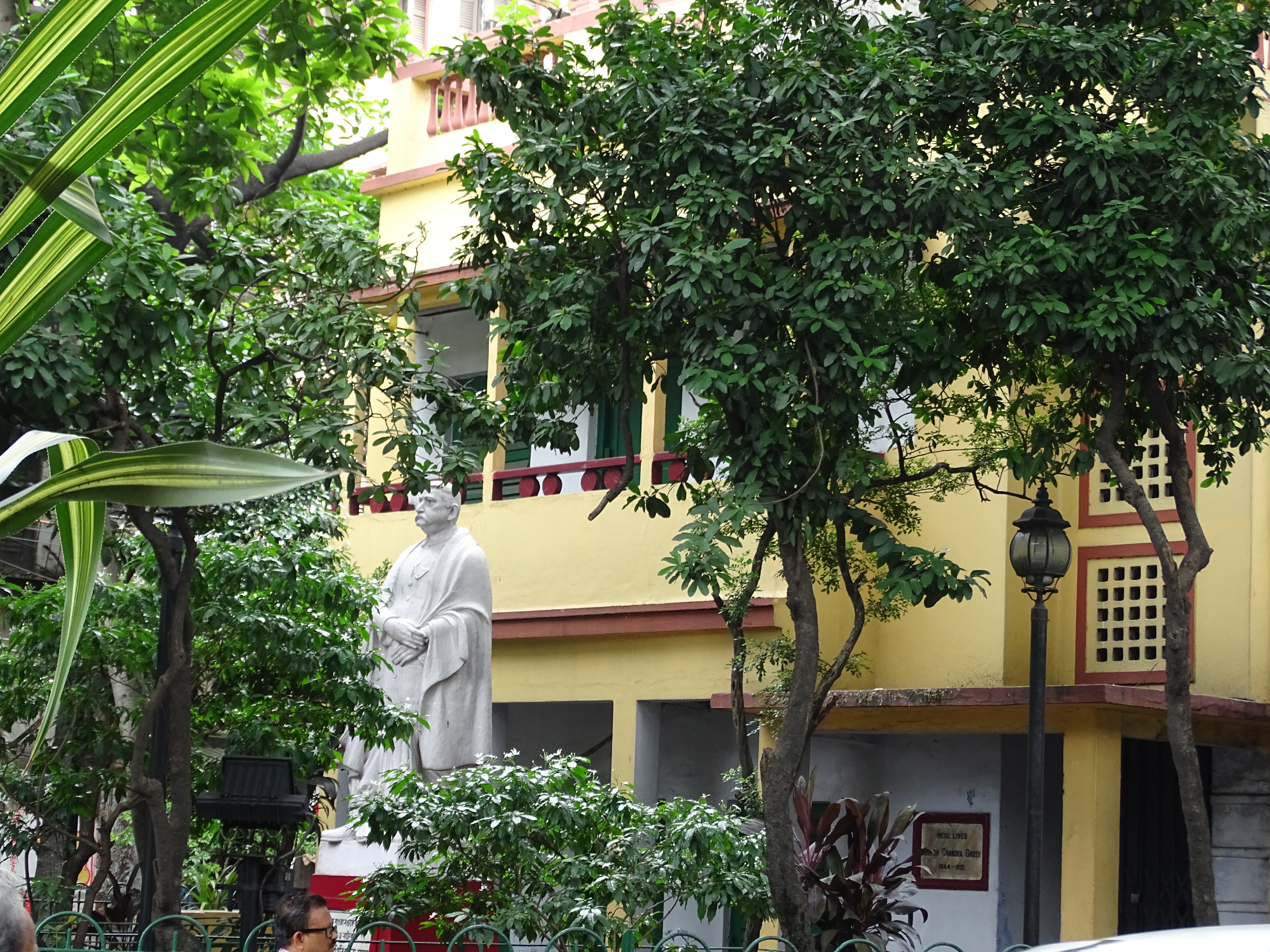
Girish Bhavan is Girish Chandra Ghosh’s house.  The house is right in the middle of the street and is so prominent that one cannot miss it.  To understand the importance of this house, one should know more about Girish Chandra Ghosh.

01 02

04 06

Girish Chandra Gosh:

Sri Girish Chandra Gosh was a producer, director, and an actor of Bengali dramas.  He was mainly responsible for the golden age of Bengali theatre and was referred to by many as the Father of Bengali theatre.  Girish Chandra Gosh was also a poet, drama writer and a musician.  There are five volumes of his writings that comprise of 3,717 pages.  These volumes include 80 plays, 1,370 songs, 25 fiction and short stories, 18 articles on Ramakrishna, Vivekananda and religion, and various other writings.  He played 62 roles of various characters in his dramas.  He guided many actors and actresses in their drama roles.

For the devotees of Sri Ramakrishna, Girish Chandra Ghosh’s life is very important.  The interaction between a famous drama director-actor-producer and a simple-minded saint is very inspiring.  This too was simply a divine play.  We can read this in Girish Chandra’s own words. Girish Chandra wrote his reminiscences of Sri Ramakrishna for two Bengali magazines: Udbodhan (April 1905) and Janmabhumi (June-July 1909).  Swami Aseshananda translated these articles and they were published in “Vedanta and the West,” March-April 1953.  The following are few interesting excerpts from this translation (the subtitles are mine):

Difficulty of writing the article:

“When the responsibility for writing an article on Sri Ramakrishna fell on me (meaning on Girish Chandra Ghosh), I thought it would be a very simple thing.  But, actually I find the writing extremely difficult.  I thought it would be easy, for I have enjoyed his unfathomable love….Can you describe the warmth of affection which you have received from your own mother?  For myself, I cannot…..If I stretch my imagination I can have a glimpse of my parents’ love.  But, the love of Sri Ramakrishna – the immaculately pure and absolutely unselfish love – how can I comprehend it? How shall I portray it in words?”

 Skepticism:

“Sometimes previously I had read in the “Indian Mirror” that there was a paramhamsa (an illumined soul) who was living in Dakshineswar.  Keshab Chandra Sen was visiting him frequently accompanied by his disciples.  With my little understanding I thought that the Brahmos, who had many strange ideas, had created a fake paramahamsa.  He could not be the real thing.

First Meeting:

A few days passed, and I heard that the paramahamsa would be coming to the house of Dinanath Basu, an attorney of the Calcutta High Court, in our neighborhood.  To satisfy my curiosity and to ascertain what kind of paramahamsa he was, I went to see him….When I arrived at Dinanath Basu’s house, I saw that the paramahamsa had come and that he was giving instructions to Keshab Sen and others, who were listening with rapt attention.  It was dusk.  Lights were lit and they were placed in front of Sri Ramakrishna. But he began to make a repeated inquiries, saying “Is it evening?”  At this I thought to myself: “What pretention!  It is dusk.  Lights are burning in front of him.  Yet he cannot tell whether it is evening or not.”  Thinking I had seen enough of him, I left.”  (At that time, Girish Chandra was not aware of a state of Samadhi.)
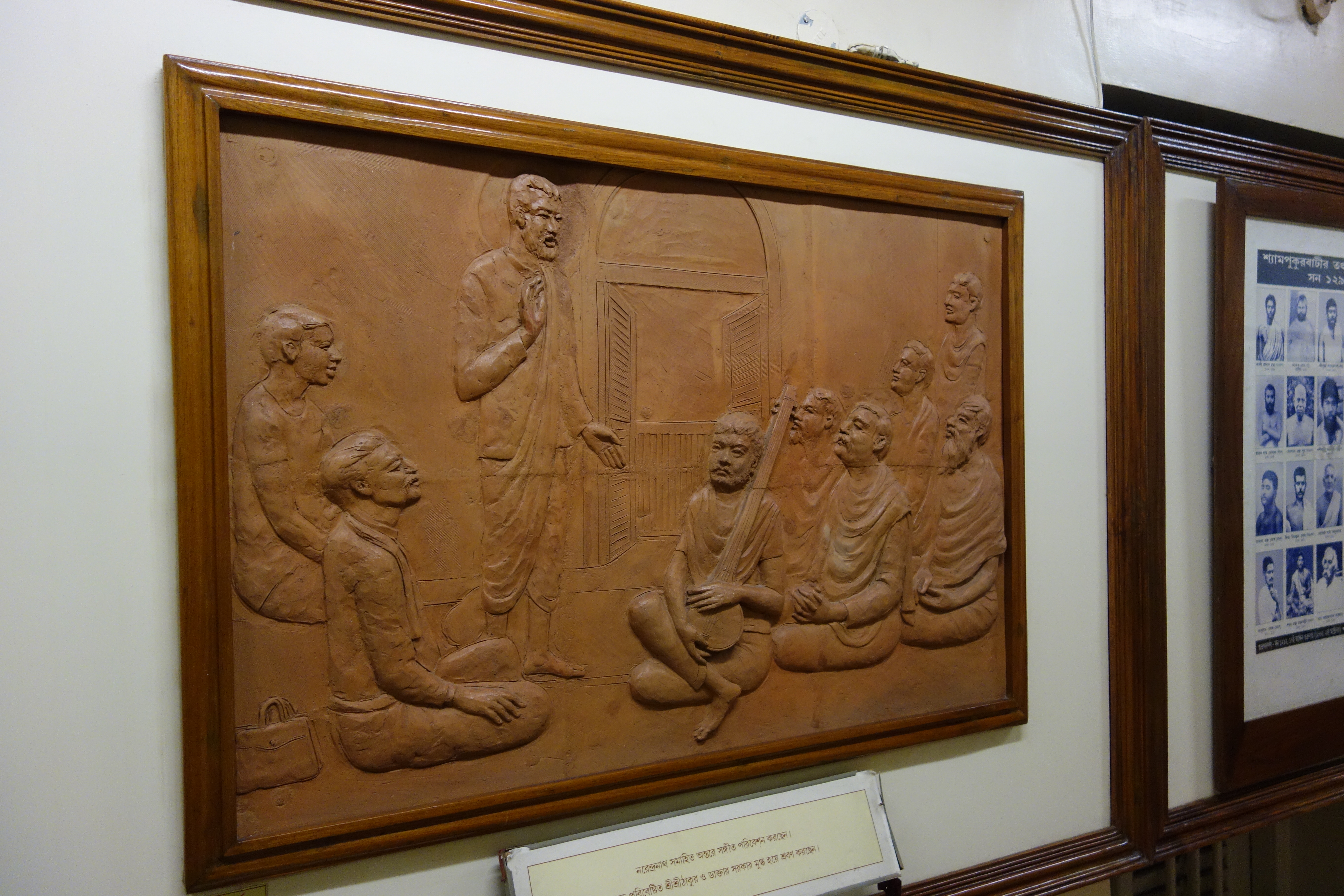
Second Meeting at the Star Theatre:

“…some days went by.  My play “The Life of Chaitanya” was being enacted in the Star Theatre.  I was strolling in the outer compound of the theatre one day when…one of the devotees of Sri Ramakrishna came and said to me, “Paramahmsadev has come to see the play.  If you allow him a free pass, well and good.  Otherwise, we will buy a ticket for him.”  I replied, “He will not have to purchase his ticket.  But others will have to.”  Saying this I proceeded to greet him.  I found him alighting from the carriage and entering the compound of the theatre. I wanted to salute him, but before I could do so he saluted me.  I returned his salute.  He saluted me again.  I bowed my head and he did the same to me.  I thought this might continue forever, so I greeted him mentally and led him upstairs and offered him a seat in the box.  After arranging with an attendant to fan him, I returned home, feeling indisposed.”  (Girish Chandra was not feeling well at that time.)
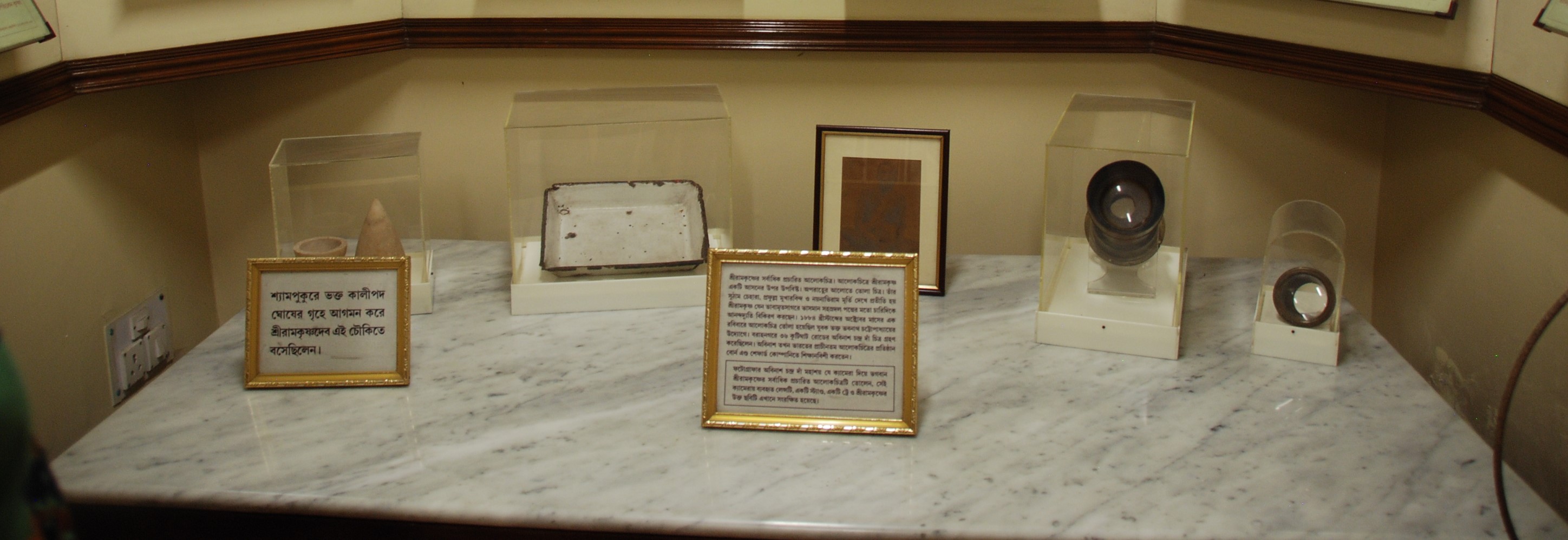
Third Meeting:

“Three days later I was sitting on the porch of a friend’s house, which was at an intersection, and I saw Sri Ramakrishna slowly approaching, accompanied by Narayan and a couple of devotees.  No sooner had I turned my eyes towards him than he saluted me.  I returned his salute.  Then he went on.  For no accountable reason my heart felt drawn towards him by an invisible string.  As soon as he had gone a short distance, I felt an urge to follow him.  I could not keep calm, for the attraction I felt was not of this earth.  It was something for which no former experience had ever prepared me….Just at that moment a person, whose name I do not recall, brought me a message from him (Sri Ramakrishna) and said, “Sri Ramakrishna is calling you.”  I went.

Sri Ramakrishna went on to Balaram’s house and there I followed him.  Balaram was lying on a couch, seemingly ill.  The moment he saw Sri Ramakrishna he got up quickly and with great reverence prostrated himself before him.  After an exchange of a few words with Balaram, Sri Ramakrishna suddenly exclaimed, “I am all right, I am all right.”  So saying, he went into a state of consciousness (Samadhi) which seemed very strange to me.  Then he remarked, “No, no, this is not pretense, this is not pretense.” He remained in this state for a while and then resumed his normal state.

I asked him, “What is a guru?”  He answered, “Do you know what the guru is?  He is like a matchmaker.  A matchmaker arranges for the union of the bride with the bridegroom.  Likewise a guru prepares for the meeting of the individual soul with his Beloved, the Divine Spirit.”  Actually he did not use the word matchmaker, but a slang expression, more forceful.  Then he said, “You need not worry.  Your guru has already been chosen.”  I asked, “What is mantram?”  He replied, “The name of God” and he told a story how Kabir received his mantra from Ramananda.

Then talks drifted to the theatre.  He said, “I liked your play very much. The sun of knowledge has begun to shine upon you.  All the blemishes of your heart will be washed away.  Very soon devotion will arise to sweeten your life with profuse joy and peace.”  I told him that I had none of those qualities and that I had written the play only with the idea of making some money.  He kept quiet.  Then he said, “Could you take me to your theatre and show me another play of yours? I replied, “Sure, any day you like.”  He said, “You must charge me something.”  I said, “All right, you may pay eight annas.”  Sri Ramakrishna said, “That will allow me a seat in the balcony, which is very noisy place.”  I answered: ”Oh no, you will not go there.  You will sit in the same place that you sat last time.”  He said, “Then you must take one rupee (sixteen annas).”  I said, “All right, as you please.”

Rudeness to Humility:

“A few days after my visit with him at Balaram’s house, I was sitting in the drawing room of the theatre when a devotee came to me in a hurry and said with some concern, “Sri Ramakrishna is here in his carriage.”  I replied: “Very well.  Take him to the box and offer him a seat.”  But the devotee answered, “Won’t you come to greet him personally and take him there yourself?”  With some annoyance I said, “Does he need me?  Can’t he get there himself?”  Nevertheless I went.  I found him coming down from his carriage.  Seeing his serene and radiant face, my stony heart melted.  I rebuked myself in shame, and that shame still haunts my memory….Then I guided him upstairs.  There I saluted him, touching his feet….I offered him a rose, which he accepted.  But he returned it saying: “Only a god or a dandy is entitled to flowers.  What shall I do with it?”

Savior of Fallen:

“One night in a happy and drunken mood….I felt an urge to visit Sri Ramakrishna.  My (two) friends and I hired a carriage and drove out to Dakshineswar.  It was late at night, and everyone was asleep.  The three of us entered Sri Ramakrishna’s room, tipsy and reeling.  Sri Ramakrishna grasped both my hands and began to sing and dance in ecstasy.  The thought flashed through my mind: “Here is a man whose love embraces all-even a wicked man like me, whose own family would condemn me in this state.  Surely this holy man, respected by the righteous, is also the savior of the fallen.”

God is Real:

“Then, one day I went to Dakshineswar and found Sri Ramakrishna seated on the southern porch of his room.  He was talking with a young devotee named Bhavanath.  I prostrated myself before Sri Ramakrishna and mentally recited the verse “The guru is Brahma, the guru is Vishnu, the guru is the Lord Maheshwara, the god of gods.”  He said: “I was just talking about you.  And if you don’t believe me, ask Bhavanath!”

After a while he started giving me spiritual advice.  I stopped him saying: “I won’t listen to any advice.  I have written cartloads of it myself.  It doesn’t help.  Do something that will transform my life.” Hearing these words, Sri Ramakrishna was highly pleased.  Ramlal, his nephew, was present.  Sri Ramakrishna asked him to recite a particular hymn, which ran thus: “Go into solitude and shut yourself in a cave.  Peace is not there.  Peace is where faith is, for faith is the root of all.” I saw a smile playing on the lips of Sri Ramakrishna, and I felt at that moment that I was free from all impurities.  And that moment my arrogant head bowed low at his feet.  In him I found my sanctuary and all my fear was gone.  I prostrated myself before him and was about to return home.

He followed me as far as the northern porch.  There I asked him, “Now that I have received your grace, am I to continue the same kind of work that I have been doing?  Sri Ramakrishna replied, “Yes, why not?”  From his words I understood that my connection with the theatre would not hurt my spiritual life.

My heart was filled with joy.  I felt as if I were born anew. I was a totally changed man.  There was no more doubt or conflict in my mind.  “God is real.  God is my sanctuary.  I have found my refuge in this God-man.  Now I can easily realize God.”  Thoughts like these cast their spell on me day and night.”

Sri Ramakrishna’s Love:

“One day when I arrived at Dakshineswar, Sri Ramakrishna was just finishing his noonday meal.  He offered me his dessert, but as I was about to eat it, he said: “Wait.  Let me feed you myself.”  Then he put the pudding into my mouth with his own fingers, and I ate as hungrily and unselfconsciously as a small baby.”

Forgiveness and Love:

“Although I had come to regard Sri Ramakrishna as my very own, the scars of past impressions were not so easily healed.  (He is talking about weaknesses of his own nature.)  One day, under the influence of liquor, I began to abuse him (Sri Ramakrishna) in most unutterable language.  The devotees of the Master grew furious and they were about to punish me, but he restrained them.  Abused continue to flow from my lips in a torrent.  Sri Ramakrishna kept quiet and then silently returned to Dakshineswar……
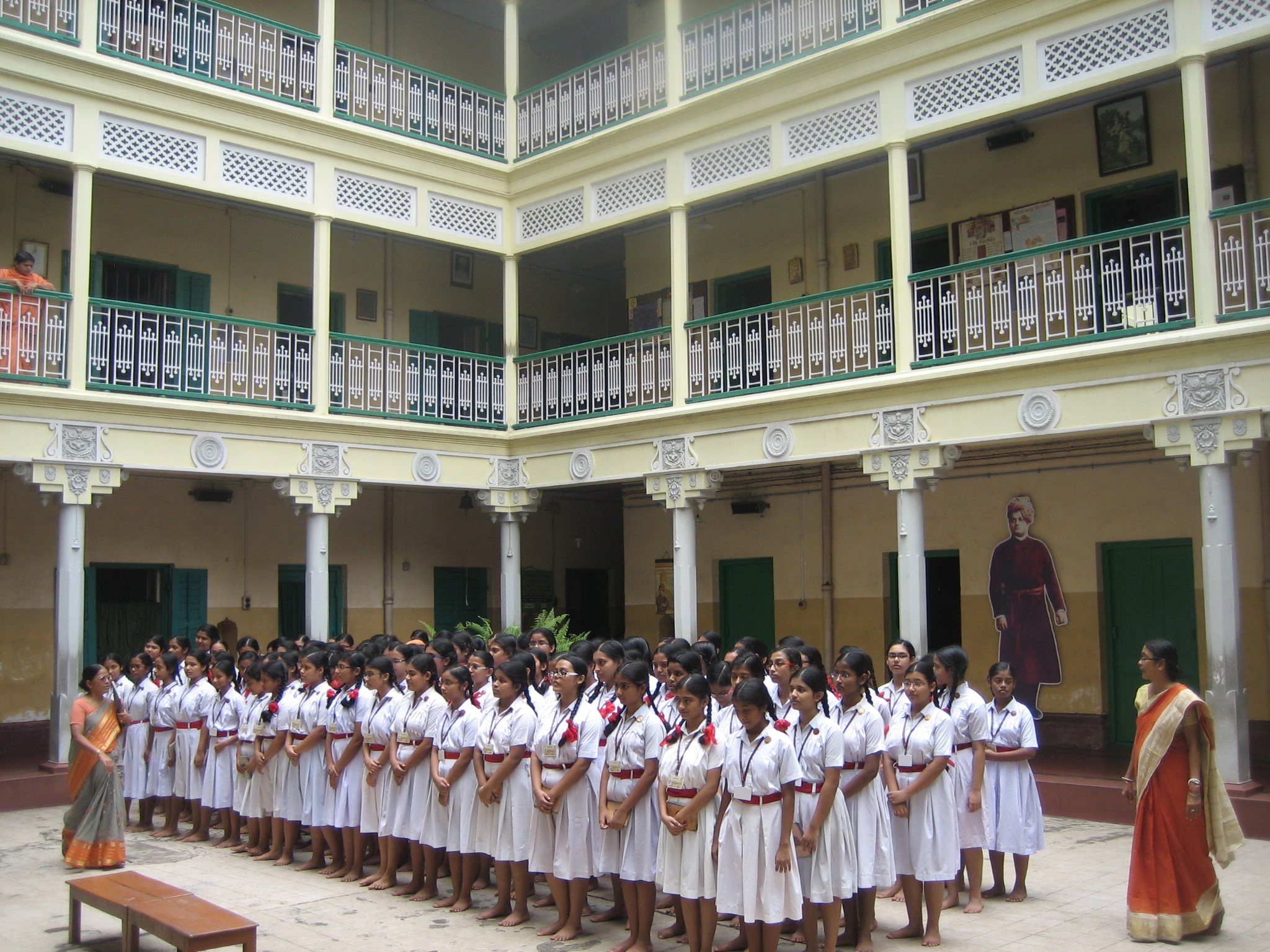
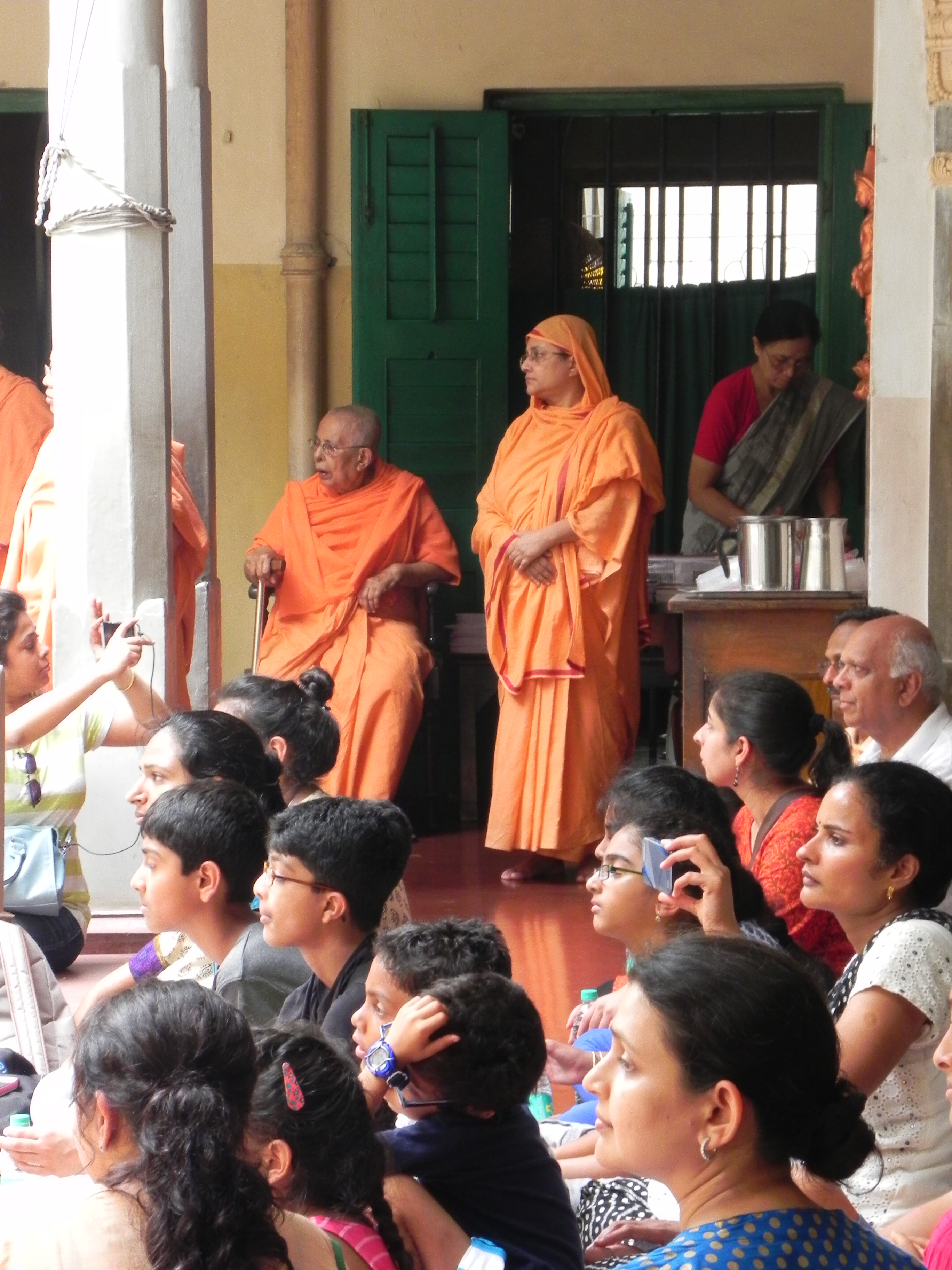
Many of the devotees wondered why Master put up with all my wickedness and suggested that he sever all connection with me.  Ram Chandra Datta alone pleaded on my behalf and said to him: “Sir, he has worshipped you with abuse, according to his nature.  The serpent Kaliya asked Lord Krishna, ‘Since you have given me poison, how can I offer you nectar?”  Sri Ramakrishna said, “Just listen to what Ram says,” But as others continued to condemn me, the Master said abruptly: “Get me a carriage.  I must go to Girish!”  My affectionate spiritual father then came to my house and blessed me by his presence.”……..Thinking of the other devotees who worshipped him with adoration, I was full of self-reproach.  It was in this state of depression the Sri Ramakrishna found me a few days later, and in an ecstatic mood he said: “Girish Ghosh, don’t worry.  People will be amazed at your transformation….

Sri Ramakrishna has taken full possession of my heart and bound it with his love.  But such a love cannot be measured by any earthly standard.  If I have acquired any virtues, it is not through my own efforts, but solely due to his grace.”

Girish Chandra’s Faith in Sri Ramakrishna:

In the Gospel of Sri Ramakrishna we find the following:  “Narendra did not believe that God could incarnate Himself in a human body.  But Girish differed with him; he had burning faith that from time to time the Almighty Lord, through His inscrutable Power, assumes a human body and descends to earth to serve a divine purpose.”  He firmly believed that Sri Ramakrishna was an incarnation of God.

Christopher Isherwood in his talk on Girish Chandra Ghosh said, “Girish asked for instructions from Ramakrishna: “What shall I do? Is there anything I can do?”  Ramakrishna answered, “Try and call on God three times a day.”  Girish said, “I am sorry.  I can’t promise to do it.  I may forget.”  Then the Master said: “Do it twice a day. Do it once.”  “No, no, I can’t promise anything.” Girish told him.  Then Ramakrishna said: “All right, then give me your power of attorney.  I will take it over.  I will be responsible for you.  Now you have no will at all.  You will only say, ‘I do whatever the Lord wills.’  Don’t ever say again, ‘I will do this’ or ‘I will not do that.’  And Girish really began to live like this.

Swami Vivekananda himself said, “Nobody has devoted himself, has abandoned his will, so absolutely to the Master as Girish.”

(One can read more about Girish Chandra Ghosh from the Gospel of Sri Ramakrishna and from Swami Chetanananda’s book “Girish Chandra Ghosh – A Bohemian Devotee of Sri Ramakrishna.).

Star Theatre:

The Star Theatre is one of the most eminent theatres and heritage buildings of Kolkata.  It is the pride of Bengali’s rich cultural history.  Its inception brought a new wave of Cultural Revolution which gave a new meaning to Bengali theatre.  Many historical plays were staged here under prominent directions.  With the setting up of Star Theatre, Bengali theatre gained a great deal of contemporary flavor.

01 02 03 04

The Star Theater was established in 1883.  It became a favorite place for art lovers of Kolkata.  The historic day of 21st July, 1883 marked the renaissance period of Bengali theatre with the inaugural staging of the theatre’s first play “Daksh Jagna” under the direction of eminent theatre personality and Father of Bengali Theatre – Girish Chandra Ghosh.  Another well-known personality of that era was the famous theatre actress Binodini Dasi, also known as Noti Binodini.  There was once a time when the people were thinking to name the theatre after her name.  Later for the good of the theatre that idea was dropped.

The Star Theatre gave recognition and fame to a number of exceptional talents. Renowned actors like Girish Chandra Ghosh, Noti Binodini, Saraju Devi, Shishi Bhaduri, Dani Mitra, Uttam kumar, Soumitra Chatterjee, Geeta Dey, Sabitri Chatterjee and madhabi Mukherjee performed at this famous theatre.

One important thing is that Sri Ramakrishna came to see plays at the Star Theatre including a play “Chaitanyalila” on September 21, 1884, and a play “Life of Prahlad” on December 14, 1884.

In the Star Theatre, on March 11, 1898 Swami Vivekananda convened a public meeting to introduce Margaret Noble (Sister Nivedita).  Swami Vivekananda said, “England has sent us another gift in Miss Margaret Noble.”  Sister Nivedita expressed her desire to serve India and her people.

In 1991, the Star Theatre was completely destroyed by fire.  Later the local municipal corporation restored it and maintained the heritage façade.  The interiors are contemporary.

Presidency College and Scottish Church College

Swami Vivekananda initially got admitted in the Presidency College, the premier college of Kolkata.  Now it is converted it to a full-fledged University. From his childhood Swami Vivekananda had stomach problems.  Because of his frequent stomach problems he had to drop out from Presidency and he procured admission in General Assemblies Institution.  Later the General Assemblies Institution’s name was changed to Scottish Church College.

4. Scottish Church College

William Hastie was a professor at the General Assemblies Institution.  One day in Narendra’s (Swami Vivekananda’s) class he was talking about William Wordsworth’s poem “Excursion.”   In that poem a word came “TRANCE.”  Professor Hastie told the class that if they wanted to really understand what “Trance” meant, then they should go and visit Sri Ramakrishna at Dakshineswar.  This inspired Narendra to go and visit Sri Ramakrishna.

We also saw Deba Uncle’s school “The Scottish Church Collegiate School.”

3. Deba Uncle's School

Vidyapith students of Deba Uncle were delighted to see his school and they cheered when it came into view.

Shyampukur Bati:

Evening was falling.  After visiting Swami Vivekananda’s ancestral house and having a bus-tour of the places of Kolkata on the way, we headed towards Shyampukur Bati and were dropped off at a point as far as buses could go.  We started walking in a line towards our destination, all while looking at all the shops and all people, most of who were going home from work.  Club7 organizers and few of our own volunteers made sure that no one got lost.  After about a 10-15 minutes’ walk we arrived at Shyampukur Bati.

1 Way to Shyampukur 1a 1b 2 2b 3

When Sri Ramakrishna developed throat cancer, he was brought to stay at Shyampukur Bati for his treatment.  Here, it was easy for the doctors and people living in Kolkata to visit Sri Ramakrishna and attend to him.  He stayed here from October 2, 1885 until December 11, 1885 after which he was moved to the Cossipore Garden House.

When we went inside, “Khandan Bhava Bandhana…” arati was going on.  We rushed to the shrine room on the first floor, and as large of a group we were, we filled every nook and corner.

3a

There were several other devotees in the room.  The environment was serene.  While thinking of the fact that Sri Ramakrishna lived in this very room, we felt goose bumps; the thought added to our joy as we sang  the glories of Sri Ramakrishna.  After arati, we all offered our salutations to the altar and quietly left the room to see the rest of the house.

4

Upstairs, we saw a museum which had things used by Sri Ramakrishna and excellent paintings which had captured the most important events happened in Shyampukur Bati during Sri Ramakrishna’s stay.  A devotee showed us all the items of the museum and informed us about their importance.  We are thankful to Deba Uncle who translated the Bengali write-up on the plates under these pictures.

5

We are inserting the pictures in the following write-up with the appropriate descriptions of the evens.

First, we should be aware that the devotees of Sri Ramakrishna had to go through some struggle to bring him in this house.  The following information gives us some idea of the struggle.

Expenses of Shyampukur House:

Sri Ramakrishna’s devotees were not rich.  When they found out that the treatment of their Master’s (Sri Ramakrishna’s) illness required that a place be rented in Kolkata, they all decided that they would do everything to bear the expenses.  One devotee said that he would mortgage his house, while another offered to sell the jewelry of his wife. One devotee said that just as he would bear the expenses of their children’s illness and marriages he will bear this expense too – demonstrating how he looked up on this as his duty too.  A devotee, Surendra, came forward to pay the rent of the house and other devotees like Balarambabu, Girish Chandra, Ramachandra, M. and others bore the other expenses.

Fees of Dr. Sarkar:

The devotees asked Dr. Mahendralal Sarkar, a famous doctor of Kolkata to treat Sri Ramakrishna. During his first visit, he accepted his usual fee, but when he found out that the devotees were bearing all the expenses he did not accept any fees afterwards.

The following painting of the museum says a lot about the first visit of Dr. Sarkar:

5b5

We find the following description in Swami Prabhananda’s book “Sri Ramakrishner Anta Lila.”

[Today Monday. 12 October, 1885. 27th Ashwin 1292. Shukla chaturthi. Time 12 PM.

Dr. Mahendralal Sarkar is a famous doctor. … Mastermahashay, i.e. M, brought the doctor to Shyampukur. While the doctor went into the first room adjacent to porch on the second floor, saw that Sri Ramakrishna was sitting. Thakur Ramakrishna welcomed him by saluting.

As soon as the doctor saw him, he immediately told Sri Ramakrishna “Hey! You are here with all your devotees!”

Sri Ramakrishna said, “For treatment they brought me here.” On Sri Ramakrishna’s invitation Dr. Sarkar sat on his bed.]

Holy Mother’s Love for Sri Ramakrishna:

Dr. Sarkar gave medicine, but he asked Sri Ramakrishna to follow a strict diet.  After much thought the devotees decided that the best way to take care of Sri Ramakrishna’s diet was to ask Holy Mother to come to Shyampukur and look after it.  The problem was that Holy Mother was too shy and she would probably not agree to come and stay in this house with all male devotees.  So they asked Sri Ramakrishna about it.  Sri Ramakrishna said that if she would agree, he would not have any problem. The devotees asked Holy Mother.  She was taught by Sri Ramakrishna that to fulfill one’s responsibility one should adjust to the time, place, and person.  By doing that, one attains a peace of mind and the desired goal.

Holy Mother understood the situation and agreed to come and stay at the Shyampukur house.  During all the days at Shyampukur, Holy Mother slept in a small room, and remained on the terrace for the whole day, cooking meals for Sri Ramakrishna. We saw this small room and also the terrace.

6d 6a

7

Since there was only one bathroom, she used to get at up 3:00 a.m.  She would quietly come down, use the bathroom and would go back up.  No one noticed, and she did not complain about it.  When the meal was prepared she would inform a couple of young devotees.  They would either bring the food down or people would leave Sri Ramakrishna’s room so that Holy Mother could bring the meal to him.

Serving Sri Ramakrishna at night:

The question arised, ”Who would  take care of Sri Ramakrishna at night?”  The elder disciples had their own homes and families to take care of, and the parents of the young devotees did not want their children to spend the nights at Shyampukur Bati.  Narendra stepped forward to take the responsibility, and began to spend nights at Shyampukur to serve Sri Ramakrisha.  His example inspired Junior Gopal, Kali, Shashi, and few other young devotees.

Why Sri Ramakrishna had illness?

During this time people started discussing why Sri Ramakrishna had this illness.  Some said that Sri Ramakrishna himself had created this situation for some purpose.  Some said that he was an instrument in the hands of the Divine Mother who wanted to accomplish something through this illness.  Narendra’s view was that the devotees should wholeheartedly work for Sri Ramakrishna’s recovery and put aside all speculations.  He said that Sri Ramakrishna had set up a great example of human life and our responsibility would be to follow his examples and continue to practice spiritual disciplines.

Later people realized that Sri Ramakrishna’s illness brought his sincere disciples together and bonded them with love for their Mater and prepared them for the great future work of ‘God-realization and Service to Humanity.’

Few Important Events happened at Shyampukur Bati:

Dr. Sarkar’s learning about spirituality:

One of the several important things that happened at Shyampukur Bati was the interaction of Sri Ramakrishna with Dr. Mahendralal Sarkar, a well-known, learned man of science.  From the several conversations written in the Gospel of Sri Ramakrishna, we find that Dr. Sarkar was initially very skeptical about spirituality and a God-man.  But, after coming in contact with Sri Ramakrishna, many of his beliefs changed.  He liked to converse with Sri Ramakrishna so much that he told him, ‘It is not good for your throat to talk much.  But, you can talk to me.’

5k 10

The paintings of the museum depicts the follwoing conversation form the Gospel of Sri Ramakrishna:

Doctor: “But is it ever possible to get rid of all doubts?”

MASTER: “Learn from me as much as I have told you. But if you want to know more, you must pray to God in solitude. Ask Him why He has so ordained.

“The son of the house can give a beggar only a small measure of rice. But if the beggar asks for his train fare, then the master of the house must be called.”

The doctor remained silent.

Master reasons with Dr. Sarkar

MASTER: “Well, you love reasoning. All right. Let us reason a little. Listen. According to the Jnāni there is no Incarnation of God. Krishna said to Arjuna: ‘You speak of Me as an Incarnation of God. Let me show you something. Come with Me.’ Arjuna had followed Sri Krishna a short distance, when Sri Krishna asked him, ‘What do you see there?’ Arjuna replied, ‘A big tree with black berries hanging in bunches.’ Krishna said, ‘Those are not black berries. Go nearer and look at them.’ Arjuna went nearer and saw that they were Krishnas hanging in bunches. ‘Do you see now’, said Krishna, ‘how many Krishnas like Me have grown there?’

…..”As you go nearer to God you see less and less of His Upādhis, His attributes. A devotee at first may see the Deity as the ten-armed Divine Mother; when he goes nearer he sees Her possessed of six arms; still nearer, he sees the Deity as the two-armed Gopala. The nearer he comes to the Deity, the fewer attributes he sees. At last, when he comes into the presence of the Deity, he sees only Light without any attributes.

Dr. Sarkar argued with the devotees of Sri Ramakrishna about various topics of spirituality.  He was amazed to see the faith of very bright people in Sri Ramakrishna.  Slowly Dr. Sarkar began to enjoy the company of Sri Ramakrishna and his devotees so much so that he did not want to go for his medical practice even though he was losing money by neglecting his practice.

Dr. Sarkar and Narendra’s singing:

Dr. Sarkar was impressed by Narendra’s intellect.  When he learned that Narendra was a talented singer, he asked him to sing devotional songs for him sometime.  Few days later, when Dr. Sarkar came to visit the Master, Narendra sang for couple of hours to keep his promise.

5a1

(The plate under the painting says, “We can see Narendranath deeply absorbed in singing while Sri Ramakrishna and Dr. Sarkar, encircled by the devotees, are completely immersed in listening.’)

The doctor was so happy that before he took leave, he affectionately embraced Narendra and blessed him as if he was his own son.  He told the Master, “I am very glad that such a boy has devoted himself to the spiritual life.  He is a jewel, and I am sure he will shine in any sphere of life.”

Medical Check-up of Sri Ramakrishna’s Samadhi:

Once, in his presence, Sri Ramakrishna went into Samadhi and lost outer consciousness being absorbed in God.  Dr. Sarkar had not seen Samadhi.  He examined Sri Ramakrishna in that state and found no sign of life.  Thus, for all skeptical people like us, he examined the Samadhi state and found that Sri Ramakrishna’s Samadhi was real and not a pretention.

Balaram’s Problem Was Solved:

Balarambabu was a great devotee of Sri Ramakrishna.  This bothered his distant relatives who thought that Balaram should only practice their family religion.  Balarambabu’s cousin Harivallabh was taking care of his property in Orissa and sending him money.  Balarambabu’s livelihood depended on this income.  A few people began spreading fabricated stories about Balaram’s association with Sri Ramakrishna and asked him to go to Kolkata to check it out for himself.  Balarambabu was worried that if Harivallabh refused to maintain his property, then Balarambabu would have to live in Orrisa away from Sri Ramakrishna.

Sri Ramakrishna realized the anxiety of Balarambabu and asked him to talk to Girish Chandra about this.  Girish Chandra agreed to bring Harivallabh to Sri Ramakrishna.  The next day they both came and met Sri Ramakrishna.  Harivallabh was so impressed by Sri Ramakrishna’s loving appearance, his inspiring words, and love for God, that tears welled up in his eyes.  He left with deep positive impressions about Sri Ramakrishna, and Balarambabu never had to worry about him.

Upendra’s Questions:

Atul Chandra was a brother of Girish Chandra.  He had a friend named Upendra who was a judge.  Atulbabu wrote to his friend that the next time when Upendra came to Kolkata, he would introduce Upendra to a wonderful person.  Thus, one afternoon when Upendra came to Kolkata, Atulbabu took him to Sri Ramakrishna.  Upendra was very much impressed by Sri Ramakrishna.  He told Atulbabu later that he had heard about universal love, but he had never before seen a person showing that love.

On his second visit, Upendra wanted to ask Sri Ramakrishan three questions.  Initially he was shy to ask his questions, but with a courage he asked, “Sir, does God have form, or is he formless?  And if he is both, how can those two contradictory natures be in Him at the same time?”  Sri Ramakrishna replied, “He is both with form and without form, like water and ice.”  Upendra did not ask his other two questions.  When they were leaving Shyampukur Bati, Atulbabu asked Upendra the reason for not asking the other two questions.  Upendra joyfully said that Sri Ramakrishna’s one answer gave answers to his other two questions.

Narendra’s Leadership:

During  Sri Ramakrishna’s stay at Shyampukur, several young devotees started showing excessive emotions thinking that that was the culmination of spirituality and showing indifference to renunciation, self-control and steady spiritual practices.  Narendra realized the danger in this attitude of external exuberance of emotion on the name of spirituality.  He repeatedly told his brother disciples, “An upsurge of emotion that does not transform life permanently makes people eager to realize God at one moment, but does not give them the power to desist from seeking lust and gold in the next.  There is no depth in it, and it is therefore of little value in life.  Under its influence people may experience physical reactions – such as tears, goose bumps, and so on – or may temporarily lose partial outer consciousness, but I am fully convinced that these things are caused by nervous weakness.  If people cannot control themselves through force of mind, they should eat nutritious food and seek medical help.”

Swami Saradananda writes that Narendra’s efforts and guidance saved many young brother disciples from going into shallow showing of “spirituality” and help them attain the real spiritual goal.

Once after visiting Sri Ramakrishna a devotee Mahimacharan Chakrabarty wearing an ochre cloth, sitting on a tiger skin, keeping an Ekatara in hand started teaching spirituality to the devotees present telling them that his way of sadhana was the best and easiest.  Narendra was aware of this spectacle and had checked Mahima’s shallowness and pretentious nature.  He could not see the young devotees being swayed by this shallowness.  So Narendra began a discussion with Mahimacharan on several topics on religion, and through reasoning, Narendra showed Mahimacharan how his thoughts were misguided.  Mahimacharan quickly took his leave.

Swami Saradananda writes that Narendra kept watch over the Master’s devotees so that they would pay due respect to genuine spiritual aspirants of other religious communities.  He reminded them the Master’s view “Jato Mot, tato poth (As many faiths, so many paths).”

Important articles of the Museum and stories associated with the paintings:

The Cot:

5b1

After Sri Ramakrishna arrived at the devotee, Kalipada Ghosh’s house at Shyampukur, he sat on this wooden cot.  We see couple of articles used by Sri Ramakrishna.

The Lens:

5i

[This is] the lens of the camera used by the photographer, Abinash Chandra Dā to take the most popular photograph of Sri Ramakrishna. The stand, the tray and the aforementioned photograph are preserved here.

The Phtograph:

5h3

The picture is fading out.  But, one can see the original photograph of Sri Ramakrishna.

Kali Puja:

(The following description is from the Gospel of Sri Ramakrishna translated by Swami Nikhilananda. p 928)

It is the dark night of the new moon. At seven o’clock the devotees make arrangements for the worship of Kāli in Sri Ramakrishna’s room on the second floor. Flowers, sandal- paste, vilwa-leaves, red hibiscus, rice pudding, and various sweets and other articles of worship are placed in front of the Master. The devotees are sitting around him. There are present, among others, Sarat, Śaśi, Ram, Girish, Chunilal, M., Rākhāl, Niranjan, and the younger Naren.

Sri Ramakrishna asks a devotee to bring some incense. A few minutes later he offers all the articles to the Divine Mother. M. is seated close to him. Looking at M., he says to the devotees, “Meditate a little.” The devotees close their eyes.

Presently Girish offers a garland of flowers at Sri Ramakrishna’s feet. M. offers flowers and sandal-paste. Rākhāl, Ram, and the other devotees follow him.

Niranjan offers a flower at Sri Ramakrishna’s feet, crying: “Brahmamayi! Brahmamayi!” and  prostrates  himself  before  him,  touching  the  Master’s  feet  with  his  head.  The devotees cry out, “Jai Ma!”, “Hail to the Mother!”

5a2

In the twinkling of an eye Sri Ramakrishna goes into deep samādhi. An amazing transformation takes place in the Master before the very eyes of the devotees. His face shines with a heavenly light. His two hands are raised in the posture of granting boons and giving assurance to the devotees; it is the posture one sees in images of the Divine Mother. His body is motionless; he has no consciousness of the outer world. He sits facing the north. Is the Divine Mother of the Universe manifesting Herself through his person? Speechless with wonder, the devotees look intently at Sri Ramakrishna, who appears to them to be the embodiment of the Divine Mother Herself.

Sri Ramakrishna Looking at the Paintings:

In the living room Sri Ramkrishna’s bed was arranged. The patron devotee, Ramachandra Dutta, was holding a lantern and showing Sri Ramakrishna some paintings hung on the wall.

01

Sri Ramakrishna saw Yashoda and Bāla Gopal. He saw the liberation of Ahalya. Also he saw a beautiful painting of Sri Chaitanya deva’s samkirtan. Nabagopal Ghosh, present there, made a comment, “You’re seeing yourself in the painting”.

125% devotion of Girish Chandra:

02

Sri Ramakrishna said that Girish Chandra has 5 Sika (5 quarters of a rupee) and 5 anna (5/16th of rupee) (meaning 125% ) devotion to Sri Ramakrishna. After he returned to Bati, Girish Chandra kept on saying with emotion, “When you were well, I treated you cruelly – that’s different. But, now in this state, I can’t see you suffering”. The devotee Girish Chandra was weeping profusely.

A vision of Sri Ramakrishna:

03

While he was staying at Shyampukur, one day the Master had a wonderful vision. He saw that his subtle body came out of his gross body as he was strolling hither and thither in the room, and he observed that its back was covered with sores, especially in the region of the throat.

Noti Binodini (A humorous incident):

This incident written by /swami Saradananda in his book “Ramakrishna Lila Prasanga.  “Noti Binodini, a famous actress was blessed by Sri Ramakrishna at the Star Theater after the play of “The Life of Chaitanya.” She looked upon Sri Ramakrishna as God Himself and adored him accordingly. She was seeking an opportunity of seeing him again. She became now very eager to see the Master once more when she heard of his serious illness. As she was acquainted with Kalipada Ghosh, she requested him to do something about it. Kalipada was a follower of Girish in all matters. ….He took counsel secretly and one day dressing her like an European gentleman, as “young Bengal ” used to then, came with her at dusk to the Shyampukur house where the Master was staying.

04

He introduced her to us (Swami Saradananda and other young devotees) as a friend of his, took her to the Master and told him who she really was.  None of us was in the Master’s room at that time and Kalipada had, therefore, no obstacle to overcome. Knowing the actress had come in that dress to throw dust in our eyes, the Master, fond of merriment, laughed. Pleased with her faith and devotion he praised her courage, strategy and reverence. He gave her a little spiritual instruction that she might have faith in and reliance on God and bade good-bye to her soon afterwards. She shed tears of joy and repentance, touched adoringly his holy feet with her head and went away with Kalipada.”

Sri Ramakrishna’s Samadhi and Worship at Surendra’s House:

At Shyampukur on one auspicious day Sri Ramakrishna went into Samadhi.  On that day there was a special puja at Surendra’s house.

5k 10

Sri Ramakrishna said, ” I  saw (in my Samadhi) that  there  opened  a  luminous path  from  here  to  Surendra’s house.   I  saw, further,  that  attracted  by  Surendra’s  devotion,  the  Mother  had  appeared in  the  image  and  that  a  ray  of  light  was  coming  out  from  Her  third  eye. I also  saw  that  rows  of  lamps  were  lighted  in  the  front  verandah and Surendra was sitting  and  weeping  piteously  in the  courtyard in front  of the Mother. Go you all together to his house now. He will feel much comforted to see you.”  Few devotees went to Surendra’s house and they found exactly similat scene described by Sri Ramakrishna.

To Cossipore Garden House:

Sri Ramakrishna’s illness became worse.  Dr. Sarkar’s medicines were not working.  He suggested that Sri Ramakrishna be moved to a garden house away from Kolkata’s polluted air.  The devotees rented the garden house of Gopal Chandra Gosh for eighty rupees per month.  The house is the current Cossipore Garden House.  Surendra Mitra promised to pay the entire rent himself.  On an auspicious day, they moved the Master’s belongings first and then on December 11, 1885 Sri Ramakrishna and Holy Mother moved to Cossipore Garden House.

5k 12

After filling our minds and hearts with innumerable inspiring memories and thoughts we started walking back to the buses to go to the hotel for dinner and rest.  Physically we were tired, but mentally we were elated by visiting all the historical and holly places.  We were thankful to Thakur, Maa, and Swamiji for giving us this most memorable day in our lives.

10g 10h


Belur Math Pilgrimage – 2015, Day – 3 Morning – Part II

August 5, 2015

Sister Nivedita’s Home and Her School

Visit of Sister Nivedita’s House:              

After enjoying their visit to Udbodhan and the Udbodhan Karyalaya, Group 2 then walked to Sister Nivedita’s house. While walking from Udbodhan to Sister Nivedita’s school, we saw two beautiful statues of Sri Sarada Devi and Swamiji.

29a Sister Nivedita Udyan

The statue of Sri Sarada Devi was commemorated in memory of Holy Mother’s first entering Udbodhan in 1909. It is located near Sister Nivedita’s Udyan.

30

Swamiji’s statue was taken near Nivedita’s School & House, Address: 24 Girish Ave. This was a long walk and we had to make sure that we did not lose anyone especially small children.  We walked in a line, one behind the other, while Deba Uncle and Club7 members made sure we were all together.  The Club7 umbrellas and flags were a great help. We could easily make out the bright blue umbrellas from a distance.  We should also note that the Club7 organizers specially arranged and acquired special permissions for our visits to Sister Nivedita’s house and school.

Group 1 of Bus 1 was going to go to Sister Nivedita’s house after visiting Balaram Mandir.  Their walk was very short.  Since not all 100 people could visit Sister Nivedita’s house together, Group 1 was going to come after Group 2 finished their visit.

Deba Uncle had prepared a map with the streets, the locations of the places  and how the two groups walked to these places.  Here is the map:

_Map Balaram Mandir-Mayer Bari walker’s map

Sister Nivedita’s House: 

Those who had visited Sister Nivedita’s house two years ago, must have seen it as an abandoned building that was and falling apart.

5b Sister Nivedita Old School 2

What a sad sight it was to see that such an important place had been totally neglected.  This house has great historical significance.  Holy Mother Sri Sarada Devi, Swami Vivekananda, Swami Brahmananda, and Swami Saradananda had visited this house.   Also many luminaries such as Rabindranath Tagore, Girish Chandra Gosh, Dr. Jagadish Chandra Bose, Sri Aurobindo Ghosh, many artists, writers, scientists, philosophers and freedom fighters had visited this place and had gained inspiration and encouragement from Sister Nivedita.

5c Sister Nivedita Old School 3

Two years ago, only a small white marble plaque reminded people that this house was a very special one.

The following is the content of the plaque:

————————————————————————————————————-

SISTER NIVEDITA’S GIRL’S SCHOOL WAS FIRST HOUSED 16, BOSE PARALANE, BAGBAZAR,  (NOW 16A BOSE PARALANE)

HERE SISTER NIVEDIATA STARTED HER GIRL’S SCHOOL (NOW RAMAKRISHNA SARADA MISSION SISTER NIVEDITA GIRL’S SCHOOL) ON THE AUSPICIOUS KALIPUJA DAY, 13 NOVEMBER, 1898.

HOLY MOTHER SARADA DEVI HERSEF CONDUCTED THE FOUNDATION CEREMONY WHICH WAS ATTENDED BY SWAMI VIVEKANANDA AND HIS BROTHER DISCIPLE SWAMI BRAHMANANDA AND SWAMI SARADANANDA.

THIS MARBLE PLAQUE IS PLACED BY THE COURTESY OF THE PEOPLE OF BAGBAZAR AND WITH THE HELP AND COOPERATION OF SUTANUTI PARISHAD, BAGBAZAR ANCHAL.   UNVAEILING OF THE PLAQUE: SWAMI PURNATMANANDA Jr MAHARAJ, EDITOR, ‘UDBODHAN’ (MONTHLY ORGAN OF THE RAMAKRISHNA MATH AND RAMAKRISHNA MISSION.

1 BAISAKH 1405 B.S. (15 APRIL 1998)

——————————————————————————————————

There was another poster in Bengali with Sister Nivedita’s picture.

14

We are thankful to Deba Uncle for translating it into English.  The following is the English translation of the Bengali

poster above:

———————————————————————————————————————-

It is every Indian’s responsibility to preserve Sister Nivedita’s historical heritage house

After a considerable effort, the dilapidated house of Nivedita, who offered her body, mind and life for India, has been declared a heritage building by Kolkata Municipal Corporation (KMC) In 2005. As a greatest offering in 150th year of Swamiji, KMC and West Bengal Govt handed over this house to Ramakrishna Sarada Mission on 16th March, 2013 for proper maintenance.
The plan of the mission:

  • Proper preservation of the house
  • Establish a museum and archive on NIvedita
  • Conduct research work on Nivedita’s contribution

*For this project any donation will be cordially accepted and exempt from income tax of 80G act. The Check/draft/money order should be sent in favor of Ramakrishna Sarada Mission with a covering letter clearly mentioning that the donation is meant for the ‘Sister Nivedita’s house Restoration Project’.

Contact address: Ramkrishna Sarada Mission, Dakshineshwar, Kolkata-76, Phone – 25645411, 25646566, 8017024512. Ramakrishna Sarada Mission Sister Nivedita Girl’s School, Bagbazar, Kolkata-3, Phone -2555-2109. Contact time: From morning 9 to evening 5-30 minute. email: rksmnivedita.house@gmail.com

On the right side of the poster there is a picture of a building.  On the bottom of the picture it is written “Present condition of Sister Nivedita’s house.

On the left side, below the picture of Sister Nivedita lies a picture of a flag.  On the bottom of the flag, it is written, “Sister Nivedita’s design of India’s national flag.”  The symbol on the flag is a Vajra (thunderbolt). On the left side of the flag is written “Vande” and the right side of the flag written “Mataram.”

———————————————————————————————————————-

At Sister Nivedita’s House:

Group 2 of buses 2 and 3 received a warm welcome by the Sadhvijis of Ramakrishna Sarada Mission.  The senior Sadhviji explained Ramakrishna Sarada Mission’s plans for restoration of the building and talked about the Mission’s ideas of archive and research.  She spoke to us about the historical importance of the building.

16b 16b2 16b3 21a6 21a3 21 a1 21 23

Revered Sadhviji told us that Sister Nivedita had a hard time finding students. At the time, families were hesitant to send their daughters to school. So she personally went from home to home to speak to parents and family members to encouraged them to send their daughters to her school.  Sadhviji showed us a picture of the first batch of Sister Nivedita’s school.

17a2 17a3

There was a picture of Sister Nivedita on the roof of her house.  That gave us an idea how the house looked when sh was living here.

17b

Interesting Incident:

We learned an interesting incident regarding the starting of this school.  We had mentioned in the prior post that on November 12, 1898 Swami Vivekananda arranged a meeting in Balaram Bose’s house to start Sister Nivedita’s girls’ school.  Sister Nivedita presented her plan for the girls’ school and encouraged all to send their daughters to her school.  Finding that people were reluctant to register their daughters for this school, Swami Vivekananda emphatically asked fathers to get up and register their daughters for school.  When no one got up, he forced his friend Haramohan to send his daughter to this school.  The fathers were afraid that Sister Nivedita would convert their daughters to Christianity!  Today, fathers are dying to register their daughters into Sister Nivedita’s school as it is one of the best school for girls in Kolkata!

On November 13, 1898, Holy Mother Sri Sarada Devi inaugurated Sister Nivedita’s school in this building on the auspicious day of Kalipuja.  The ceremony was attended by Swami Vivekananda, Swami Brahmananda, and Swami Saradananda.

At the time of the inauguration, Holy Mother Sri Sarada Devi said, “May the Divine Mother of the Universe bless this school.  May the girls trained here be ideals for society.

Restoration of Sister Nivedita’s House (where the school started):

From the Sadhviji’s talk and the literature that was given to us, we learned that the building had undergone a lot of restorations and alterations since the time when Sister Nivedita lived in this house.  The building was acquired by the Trinamool-run government from a private owner and was handed over to the Ramakrishna Sarada Mission on March 16, 2013.  We all know that 2013 is the year when Swami Vivekananda’s 150th birth anniversary was celebrated all over the world.  This was an appropriate tribute to Swami Vivekananda.  As mentioned earlier, we see that according to the white marble plaque, the mission of the construction is to: 1) Restore and preserve the original structure. 2) Establish Museum and Archives as a fitting memorial to the Sister and 3) Conduct research on Sister Nivedita’s contribution on various fields to India and abroad.

The Union Ministry of culture assigned the Archeological Survey of India (ASI) to restore the structure of the building.  Two years ago, Mr. A. K. Patel, the superintendent archeologist of the ASI said it is immensely challenging to restore this 115-year old building because of its several alterations and additions over the years.  ASI are providing skilled masons and old Indian traditional construction materials such as lime, shurki, mortar, molasses, khayar and bonding solutions which are needed in restoration.

16h 17 16a2 16g

Justice Mr. Shyamal Sen had expressed hope that this historic building would be restored to its former glory and will become a must visit place for Kolkatans and tourists visiting Kolkata.

Pravajika Gyanadaprana , a senior monk of Ramakrishna Sarada Mission said, “It (the whole project) will be a blend of deep-rooted culture and modernity.  We will plan the restoration in a way that will reflect the ideals of Swami Vivekananda and his disciple Sister Nivedita.  Both of them had dreamt of making India a modern nation, based on deeply rooted religion and culture.”

An Appeal:

Pravajika Amalaprana, the General-Secretary of the Ramakrishna Sarada Mission has appealed to all citizens to donate generously for this great cause of restoration and other plans.  One can write a check payable to “Ramakrishna Sarada Mission” with a note that it is for the “Sister Nivedita’s House Restoration Project.”  All donations are tax-exempt.

Famous Window:

Revered Sadhviji also showed us a place and a window where a very special picture of Swami Vivekananda and his brother disciples have been taken.  We were very happy to see the exact place of the photo that was hanging in our homes for many years.

16e 16f

24

It is not inappropriate to briefly look at the life of Sister Nivedita.

Sister Nivedita:

Sister Nivedita’s name was Margaret Elizabeth Noble.  She was born on October 28, 1867 in the town of Dungannon, Ireland.  Her father’s name was Samuel Richmond, and her mother’s name was Mary Isabel.  Her father was a priest who taught her that service to mankind is the true service to God.  Her father died when she was ten years old.  It was her maternal grandfather who raised her.  She studied at the Church boarding school in London and went to Halifax College.

Margaret started teaching at the age of seventeen.  She established a school in Wimbledon and followed her own unique method of teaching.  She was involved in church activities and had written in newspapers and periodicals. She was engaged to be married to a Welsh youth who died soon after the engagement.  Margaret turned to spirituality for peace and solace.

Meeting Swami Vivekananda:

In November 1895, Swami Vivekananda came from America to London and stayed there for three months.  During that time, on a cold afternoon, upon an invitation, he was explaining Vedanta philosophy in the drawing room of an aristocratic family.  Lady Isabel Margesson, a friend of Margaret had invited her to the meeting.  Margaret described her experience on that occasion.  ‘A majestic personage, clad in saffron gown and wearing a red waist-band, sat there on the floor, cross-legged. As he spoke to the company, he recited Sanskrit verses in his deep sonorous voice.’ Margaret was familiar with eastern philosophy found nothing new in what she heard on that day.  But, what was new to her was the personality of Swami Vivekananda himself.  She attended several other lectures of Swamiji.  She raised lots of questions whose answers dispelled her doubts and a deep faith and reverence grew in her heart for Swami Vivekananda.

Sister Nivedita wrote to her friend in 1904 regarding the decision she made to follow Swami Vivekananda as a result of her meeting him on England in November 1895: “Suppose he had not come to London at that time!  Life would have been like a headless dream, for I always knew that I was waiting for something.  I always said that a call would come.  And it did.  But, if I had known more of life, I doubt whether, when the time came, I shuld certainly have recognized it. …Always, I had this burning voice within, but nothing to utter.  How often I sat down, pen in hand, to speak, and there was no speech!  And now there is no end to it! As surely I am fitted to my world, so surely is my world in need of me, waiting-ready. The arrow has found its place in the bow.  But, if he had not come! If he had meditated on the Himalayan peaks!….I, for one, had never been here…”

Dedicating Her Life For a Noble Cause:

Seeing the fire and passion in Margaret, Swami Vivekananda could foresee her future role in India.  Swami Vivekananda saw that the rejuvenation of India was not possible without the proper education of her women. Even before starting the Belur Math, he was planning to start a center where girls could be educated on national lines.  Sister Nivedita’s noble heart was quick to respond to his suggestion to work for the Indian women, and she dedicated her life to the cause.  She landed in India on January 28, 1898.  Swami Vivekananda devoted a few days in molding her character and making her familiar with India’s history, philosophy, literature, life of common people, social traditions, and personalities both ancient and modern.  On March 11, 1898 Swamiji introduced Sister Nivedita in a public meeting held at the Star Theater.  Swami Vivekananda said, “England has sent us another gift in Miss Margaret Noble.”  Sister Nivedita expressed her desire to serve India and her people.  On March 25, 1898 Swami Vivekananda formally initiated Margaret in the vow of Brahmacharya and gave her the name “Nivedita” meaning the dedicated one.

On March 17, 1898 Sister Nivedita met Holy Mother Sri Sarada Devi and she became one of the closest associates of Holy Mother till her death.  In May 1898, she travelled with Swami Vivekananda, Sara Bull, Josephine MacLeod, and Swami Turiyananda to various places in India and in the Himalayas including Nainital, Almora, and Kashmir.  On November 13, 1898 she started her girls’ school at 16 Bose Para Lane, Bagbazar (Now 16A Bose Para Lane).  In 1899, she travelled to America with Swami Vivekananda to raise funds for her school.

The Passing Away of Swami Vivekananda:

When Swami Vivekananda died on July 4, 1902 Sister Nivedita rushed to Swamiji’s room and from around 7:00 a.m. till 1:00 p.m. she sat at the head of Swamiji’s body and fanned him continuously.  During the cremation of Swamiji’s body, Sister Nivedita wanted a small piece of the saffron cloth of Swamiji.  Swami Saradananda asked her to cut a small piece from the cloth.  But she thought it was inappropriate and so refrained from doing so.  After the cremation, when Sister Nivedita was leaving the place, a small piece of Swamiji’s cloth had flown from the pyre and landed at her feet.  She considered this to be Swami Vivekananda’s blessing.

Sister Nivedita and Holy Mother Sri Sarada Devi:

Holy Mother Sri Sarada Devi and Sister Nivedita had a sweet and loving relationship from the beginning till the end.  First time when Sister Nivedita met Holy Mother Swami Swarupananda was the translator between the two.  Holy Mother asked her name.  She said, “My name is Miss Margaret Elizabeth Noble.”  Holy Mother said, “My child, I cannot pronounce such a long name.  I will call you “Khooki (a little girl).”  Sister Nivedita said, “Yes, Mother I am your child.” Nivedita tried to learn Bengali so that she could talk to Holy Mother directly.  Holy Mother also kept Nivedita in her residence 10/2 Bosepara Lane, so that she could teach her about Hindu manners and customs.

When Nivedita moved to 16 Bosepara Lane, she used to visit Holy Mother almost every day and take the dust of her feet.  On Sundays, she used to clean Holy Mother’s room.  Once, Holy Mother gave her a palm-leaf fan with a woolen lace around the edges that she herself had made. Overjoyed, Sister Nivedita started telling everyone, “This fan has been made by Matadevi and she gave it to me!”  She put that fan on her head and touched it to her heart and touched it to the heads of all female devotees who were around.  Holy Mother said, “Ah, how simple she is.  She is a goddess!”  Holy Mother too treasured whatever Nivedita gave her.

On May 22, 1898 Sister Nivedita wrote to her friend Mrs. Eric Hammond in London: “I have often thought that I ought to tell you about the lady who was the wife of Sri Ramakrishna, Sarada as her name is…..She is very soul of sweetness-so gentle and loving and merry as a girl.  You should have heard her laugh the other day when I insisted that the Swami must come up and see us at once, or we would go home…..And she is so tender- “my daughter” she calls me. She has always been terribly orthodox, but all this melted away the instant she saw the first two Westerners –Mrs. Bull and Miss MacLeod, and she tasted food with them!….Then you should see the chivalrous feeling that the monks have for her.  They always call her “Mother” and speak of her as “The Holy Mother”-and she is literally their first thought in every emergency…..A monk read the Magnificat in Bengali to her one day for me, and you should have seen how she enjoyed it.  She really is, under the simplest, most unassuming guise, one of the strongest and greatest of women.”

One day Nivedita and Sister Christine visited Holy Mother.  Nivedita said in Bengali, “Matridevi, apani han amadiger Kali.”  (Mother, you are our Kali.)  At this Holy Mother said with a laugh: “No, my children, I cannot be Kali or any such thing-I would have to stick out my tongue!”  They said, “No, you do not have to take that trouble.  We shall regard you as our Mother Kali and Sri Ramakrishna as our Shiva.”  Holy Mother said with a smile, “That might be alright.”

Holy Mother’s Three Photos:

In the middle of November 1898, Mrs. Bull and Miss MacLeod came to Kolkata and stayed with Nivedita in her house at 16 Bosepara Lane.  Holy Mother was staying nearby at 10/2 Bosepara Lane.  One day Mrs. Bull asked Holy Mother for her consent to have her photo taken, but she declined.  Holy Mother was too shy to take out her veil in front of a male photographer.  Mrs. Bull said, “Mother, I wish to take the photo to America and worship it.”  Holy Mother agreed if she could find a woman photographer.

No woman photographer was found.  Finally, a British photographer Mr. Harrington was hired to come to Holy Mother’s residence.  In the attic room of her house a black screen was set up as a backdrop, two plants (a palm plant and a fern) were put on the two sides and Holy Mother sat on a cot over a small rug.  Sister Nivedita, Mrs. Bull, and Golap-Ma arranged Holy Mother’s cloth, hair, and veil.

Photograph – 1: When photographer came, Holy Mother looked down and went into an ecstatic mood.  That was the first photograph.

images

Photograph – 2:  After some time Holy Mother regained consciousness and She looked up.  The photographer captured that moment; this is the second photograph of Holy Mother which is now worshiped everywhere.

Holy Mother 002

Photograph – 3:    A third photo was taken afterwards of Holy Mother and Sister Nivedita facing each other.  This is also a famous photo which we see everywhere.

26

Sister Nivedita’s Letter:   In October 1910, Sister Nivedita went to America to see Mrs. Bull who was very sick.  One day she went to a church in Boston and saw Holy Mother in Mother Mary.  On December 11, 1910, Nivedita wrote this letter to Holy Mother:

“Beloved Mother:

This morning, early, I went to Church-to pray for Sara (Mrs. Bull).  All the people there were thinking of Mary, the Mother of Jesus, and suddenly I thought of you.  Your dear face, and your loving look, and your white sari and your bracelets.  It was there.  And it seemed to me that yours was the presence that was to soothe and bless poor S. Sara’s sick-room.  And-do you know?-I thought I had been very foolish to sit in your room, at the evening service to Sri Ramakrishna, trying to meditate.  Why did I not understand that it was quite enough to be a little a child at your dear feet? Dear Mother! You are full of love!  And it is not a flushed and violent love, like ours, and like the world’s but a gentle peace that brings good to everyone and wishes ill to none……Dearest Mother-I wish we could send you a wonderful hymn, or a prayer.  But, somehow even that would seem too loud, too full of noise!  Surely you are the most wonderful thing of God-Sri Ramakrishna’s own chalice of His Love for the world….”

-Ever, my darling Mother, your foolish Khooki

Nivedita.

Holy Mother’s Letter to Nivedita:

“My dear, love to you, baby daughter Nivedita,

I am so glad to learn you have prayed to the Lord for my eternal peace.  You are a manifestation of the ever-blissful Mother.

I look at your photo, which is with me, every now and then and it seems as if you are present with me.  I long for the day and the year when you shall return.  May the prayers you have uttered for me from the heart of your pure virgin soul be answered!……My dear,  love to you and blessings and prayers for your spiritual growth.  You are doing excellent work indeed.  But do not forget your Bengali, else I will not be able to understand you when you come back…..”

Yours, Mother

Once, Holy Mother remarked, “Her (Sister Nivedita’s) outside is white (meaning her skin) and her inside is white (meaning pure).”

Nivedita wrote: “To me is has always appeared that she (Holy Mother) is Sri Ramakrishna’s final word as to the ideal of Indian womanhood.  But is she the last of an old order, or the beginning of a new?  In her one sees realized that wisdom and sweetness to which the simplest of women nay attain…..Her life is a one long stillness of prayer…..”

Sister Nivedita’s Contribution (in brief):

Along with the school, Sister Nivedita helped greatly and offered her services during the 1899 plague outbreak in Kolkata. There are many moving stories about this time in her life. Later on, she also met many elite people of Kolkata and inspired them in their fields and encouraged freedom fighters to work for the cause of India’s freedom.  She wrote several books including “Kali the Mother,” “Cradle Tales of Hinduism,” “The Master as I Saw Him,” “Footfalls of Indian History,” ”Myths of the Hindus and Buddhists,” “Selected Essays of Sister Nivedita” and others.  The complete works of Sister Nivedita are available in five volumes.

On October 13, 1911 at the age of 43, Sister Nivedita who had given her whole life to India, died in Roy Villa, Darjeeling.  Swami Vivekananda wrote the following poem (Swami Vivekananda himself had written this poem by hand on one side of his own picture. This picture we found in the room of Sister Nivedita) :

“A Benediction to Sister Nivedita”

The Mother’s heart, the hero’s will

The sweetness of the southern breeze,

The sacred charm and strength that dwell

On Aryan altars, flaming, free;

All these be yours and many more

No ancient soul could dream before-

Be thou to India’s future son

The mistress, servant, friend in one.”

When Nivedita died in Darjeeling on October 13, 1911, Holy Mother shed tears and said, “What sincere devotion Nivedita had! She never considered anything too much that she might do for me.  She often comes to me at night.  Seeing that the light bothered my eyes, she put a shade of paper around the lamp….”

Leaving Sister Nivedita’s House:

As Group 2 was leaving Sister Nivedit’a House, several exciting things happened.  One was that at the time of leaving, a Revered Sadhviji gave each of us a bag of gifts.

27

Second, we were told that we are going to visit Sister Nivedita’s school.  The third was meeting our counterpart (Group 1) at the door.

20 Groups Crossing Paths 20d Groups Crossing Paths 20b Groups Crossing Paths 20f Groups Crossing Paths1

Because, today morning was the only time we were separately visiting places, we were missing each other.  When the two groups met, all were joylessly greeting each other.

Visit to Sister Nivedita’s School:

We were told in the morning that we may have some surprise.  In the morning we found out that Club7 members were trying to arrange a special visit to Sister Nivedita’s School.  With their efforts and by the grace of the Revered Sadhvijis of Ramakrishna Sarada Mission we were fortunate to visit Sister Nivedita’s School.  As this is a rare opportunity, we were excited about our visit.  We have heard that this is one of the best schools for girls in Kolkata.  The school was close to Sister Nivedita’s house. Group 2 started walking to the school.  After visiting Sister Nivedita’s house, Group 1 was also going to join Group 1 in Sister Nivedita’s School.

The lane was narrow.  But, we found that sometimes the lane was all empty and sometimes there was no room to walk.

15 16 18 17

The entrance of the school was inviting with a very decorative door and artistically carved Indian figures and designs.  The peacock on the top was eye-catching.

19 20

As we climbed up the stairs, we saw a big picture of Sister Nivedita’s.

21

It was as though she was waiting to receive us.  Her smiling face made us all happy.  We then turned left and from the corridor we saw a big open courtyard in the middle of the school building.

27

We were given a warm welcome by the Revered Sadhvijis of Ramakrishna Sarada Mission and they asked us to sit in a semi-open corridor, which was also the shrine room.  Everyone took off their shoes and placed them in an organized way on the floor.  We saw Holy Mother’s picture in the middle of the shrine room.

24

We all sat there facing Holy Mother’s picture.  There were pictures of Sri Ramakrishna, Swami Vivekananda, Sri Rama Parivar, Shri Shankaracharya, Sister Nivedita, and Rabindranath Tagore on the wall.  On one side there was a statue of Lord Buddha.  It was a very serene environment.

22 23 25

All Vidyapith devotees intuitively felt like singing for Holy Mother.  We all sang “Jaya Sri Sarade Jnanadayini…” dhoon and also offer a bhajan “Jaya Jagadishwari..” to Godess Saraswati since we were at a school, a place for knowledge.

By this time all the Vidyapith people and Club7 members arrived and joined the rest of the group.  We were on time as scheduled.  The Revered Sadhvijis called the Sister Nivedita’s School students to come down and gather in the open courtyard.  We all turned towards them.  We were very much impressed by the students, who in their uniform with white frocks, red belt and IDs hanging from their necks, came down in a disciplined way and stood in neatly formed rows.  It seemed like there were about hundred students standing there.  Our Vidyapith students immediately felt a connection with them as they follow similar discipline at Vidyapith.  We were greatly impressed looking at their students’ innocent and serene faces.

29 30 31 32

29a 34a

Revered Sadhviji then asked them to begin their singing.  There was no harmonium or any musical instrument to support them, but they sang in melodious voices “Madhuvata Rutayate,”  “Sahana Vavatu…,” a hymn on Sri Sarada Devi, and a Bengali song on Sister Nivedita.  The following is the Bengali song on Sister Nivedita as well as its literal translation.

Song 2 Part1 Song 2 Part2

The following are small clips which give some idea of their singing:

(1) Sahanvavatu, (2)  Song on Sister Nivedita  and (3)  Madhuvata…..and Asato ma Sadgamaya..

We were amazed by their music.  After that Revered Sadhviji welcomed all of us and asked Uncle (Dr. Mahendra Jani) to speak.  Uncle said that we are very thankful to the Revered Sadhvijis and Club7 members for giving us a wonderful opportunity to visit this great school, meet these wonderful students, and listen to their melodious music. He reminded the Vidyapith family why we were so lucky to have visited this place for Sister Nivedita had given her life for the cause of women’s education and for India. Uncle said that the students are really fortunate to study in Sister Nivedita’s school.

64 65

After that all the students in a disciplined way went to their classes.

66

With the guidance of Revered Sadhviji all the Vidyapith pilgrims went to the office/museum on the second floor.

82 70 71 80 81

In that office, we saw some special artifacts including Sister Nivedita personal belongings such as her writing table and Swami Vivekananda’s poster on which his poem for Sister Nivedita was written in his own handwriting,………

83 84 85 87 93 86 89 90 91 96 95 94

The last on above is the famous poem of Swami Vivekananda written in Bengali, called “Sakhar Prati” (To a Friend)

We also saw the students’ excellent projects that were displayed on the walls.  They were in Bengali with artistic drawings and handwritten essays.

98 97 99 100

Deba Uncle wrote the esence of few projects in English.

101

Poster entitled as “शत मङ्गलशिखा करे भवन आलो” or hundred of auspicious flame illumine the house, describes the backdrop of Nivedita’s school, Sarada Devi’s inspiration and Nivedita’s commitment in initiating the girl’s school, Rabindranath Tagore’s statement on Nivedita, the date of inauguration, and contribution of Sudhira Devi towards further progress of the school. A sketch on the left describes the former school that started in Nivedita’s house (No. 16, Bosepara Lane.) and a sketch on the right displaying the current dwelling.

103

A sketch on Nivedita’s house at No 16, Bosepara Lane where the school was

104

A sketch on the current school.

108

Poster entitled as “शताब्दीर अग्नीयज्ञे तपस्याय नि:शब्द दाहिका” or the silently burnt with austerities during the Yagna of century, describes the silent roles of the two women in the freedom movement of India:

107

Poster entitled “शिल्पी निवेदिता” or Nivedita as an artist: It describes her Initial design of Indian flag, her role in rejuvenating Indian art through her support for young artist such as Nandalal Ghosh to learn the art work from Ajanta, revival of western FRESCO art and her concept on the fusion of Rajput and Moghul art.

108

Poster entitled as “स्तिमितचित् सिन्धु भेदि उठिल ज्योतिघन” or the dormant mind pierces Sindhu as a glow concentrate, describes Swami Vivekananda’s relentless adherence to TRUTH and TRUTHFULNESS from his childhood with examples as well as the reference to “सत्यमेव जयते नानृतम”.

140

Class work on the analysis of conjugated Bengali words: such as splitting of conjugated words, Tapti, Mahananda, Narmada, Tarakeshwar, Suvarnarekha, Godavari, Brahmaputra, Sindhu and Tista.

123

Poster entitled as “अन्तरे ज्वालाये दीप निजेके ज्वालाये” highlights Nivedita’s sacrifice: The theme is “Illumine the lamp inside by burning yourself”

105

Poster starts with a reference to popular Tagore’s song “प्रथम आदि तब शक्ति आदि परमोज्वलो ज्योति तोमारइ हे गगने गगने” describes Swamiji’s viewpoints on non duality in Vedanta, concept on Vedas and Vedanta, primordial undivided energy, spirituality, his instruction for us to achieve ultimate goal by referring Nachiketa’s character from Kathoponishad and the poster ends with Swamiji’s motto “Arise, Awake and Stop not till the goal is reached”

Visiting Classrooms:

The best part was to see the students in their classes engrossed in their study.  They were sitting on the floor, leaning on the writing tables in front of them. In some classes they were sincerely writing in their notebooks.  We could enter in some classes.  As soon as we entered into a classroom students respectfully got up and with folded hands said “Namaskar.”  We asked them which subjects they liked most.  They could understand and speak in English.  Students gave their response and were very happy to talk to us.  It seemed that they had only lady teachers and they were neatly dressed.  All of them had very pleasant attitude.  We were greatly impressed by the classroom environment.

127 128 134 132 131 130 143141

We could see one of the notebook in which “Bengali Varna Vishleshans” were written down, and students showed how each word is constructed from various letters.

139 140

Holy Mother’s visit to Sister Nivedita’s School: 

(From a report of Sarala, Pravrajika Bharatiprana, a student of Nivedita’s school):  Once Holy Mother was going to visit Sister Nivedita’s school.  All were eager to enjoy the festive occasion.  Sister Nivedita was anxiously running to and fro like a little girl making sure that all the preparations have been made properly.  Holy Mother’s carriage arrived in the afternoon instead of the morning.  Radhu, Golap-Ma, and others were with her.  As soon as Holy Mother got down from the carriage, Nivedita prostrated to her and lead her to the prayer hall.  Nivedita gave flowers to the students to offer at Holy Mother’s feet.

Holy Mother asked the students to sing.  They sang and recited a poem composed by the poet Saralabala Sarkar.  Holy Mother listened to it an appreciated the poem.  Then she took a little sweet and asked Nivedita to distribute the Prasad to all the students.  Afterwards Nivedita took the Mother around and showed her the whole house and the handicrafts of the girls.  The Mother was very pleased and remarked: “The girls have learned well.”  Later Nivedita took the Mother to her own room for some rest.

Holy Mother’s comments on Nivedita’s Struggle:

One day Holy Mother told few women devotees who had gathered around her: “Look at Nivedita, a western girl who came to our country and worked happily, forbearing insults and harassment; and also enduring so much discomfort.  She tried to educate our children.  When she visited some homes to register their children for her school, she was humiliated; some did not allow her to go inside their houses; and some allowed her to go inside but later purified the place by sprinkling Ganga water.  She saw everything but did not mind.  She left each place with a smiling face.  There was no bounden necessity for her to educate the girls of our country by enduring such insults and ill-treatment and running her life little by little.

You see, my daughter Nivedita had such a wonderful mind that she took on the responsibility of teaching our girls on her own shoulders because her guru Naren wanted it and asked her to do it.  She did not care for physical suffering and discomfort or for the insults and incivility of our people…..”

Ramakrishna Sarada Mission Sister Nivedita’s Girls’ School (1898 till now):

As we mentioned earlier Holy Mother Sri Sarada Devi inaugurated this school on November 13, 1898 on the auspicious day of Kali Puja.  Then, in 1902 it turned into a regular school.

In 1903, Sister Christine, an American disciple of the Swami joined her in the work. Their combined sincere efforts soon overcame all the obstacles and the school not only continued to impart education to the girls, but under the personal influence of the Sisters, a devoted band of their students was ready to co-operate with them and dedicate their lives to the cause.

Unfortunately, in October 1911, Sister Nivedita passed away. The school then had to experience many difficulties. As it was, however, the school pulled itself through this critical period by the grace of the Holy Mother. Sister Christine carried on the work till she left India in 1914.

Later, Sister Sudhira, one of the earliest Indian ladies to renounce hearth and home to help the Sisters, came forward to shoulder the entire responsibility of the institution. Nurtured by a band of self-sacrificing lady workers, the institution then passed through various stages, and gradually evolved into its present form.

Management: The school, which was a branch center of the Ramakrishna Mission since 1918, was transferred on 9 August, 1963, to the Ramakrishna Sarada Mission, Dakshineswar and henceforward has been known as the branch center of that organization. The management of the school is entrusted to a Managing Committee appointed by the Governing Body of the Ramakrishna Sarada Mission.

 For more information on the school one can check the following link:

Ramakrishna Sarada Mission Sister Nivedita Girls’ School

Website link is http://www.sisterniveditagirlsschool.org/grandhistory.html

After visiting all the classrooms, we collectively gave a donation to the school.  The Revered Sadhvijis gave us few books and materials of the school as a gift & blessing.

149 147

All of us were very happy to have this special opportunity to visit this famous school, see its students, and listen to their music.

150 5

We could not believe that our morning would be so full of inspiration and joy. We had visited Holy Mother’s House (Udbodhan), Sri Ramakrishna’s fort in Kolkata (Balaram Mandir), Sister Nivedita’s House and Ramakrishna Sarada Mission Sister Nivedita’s School.  Filled with the joy of thinking about what we had seen and carefully crossing the roads, we reach our buses and headed back to the Hyatt for our lunch and a little rest.

2

(The original report was prepared by Ekalaya Patel)