Category Archives: Vedanta

The Essence of the Bhagavad Gita Chapter 4:  The Path of Renunciation of Actions – Leading to Knowledge

The Essence of the Bhagavad Gita Chapter 4: 

                               The Path of Renunciation of Actions – Leading to Knowledge                                                                      

Shri Krishna said, “I have told this Karma Yoga to Vivasvata.  This Karma Yoga is applicable at all times.  Vivasvata then told this Yoga to Manu.  Manu told this Yoga to Ikshvaku. Thus, handed down one to the other, this Yoga has been known to the royal sages. But, through a long lapse of time, this Yoga has been lost in the world. (1-2)

Since you are My devotee and friend, I have told you today the same Karma Yoga which is ancient and supremely profound. (3)

Arjuna asked, “Vivasvata was born many years ago and you are born just a few years ago. How can I understand that You have told this Yoga to Vivasvata in the past?” (4)

Shri Krishna said, “O Parantapa (Arjuna – the scorcher of the foes): “You and I have been born many times in the past. You do not know your previous births, but I know of them all. (5)

Though I am birth-less, Imperishable and the Lord of all beings, by My Own Power (Maya), I incarnate on the earth as a human being taking the support of My Prakriti. (6)

Whenever righteousness declines and unrighteousness prevails on earth, then I incarnate Myself as a human being. (7)

In every age, to protect the righteous people, to destroy the unrighteous people, and to establish Dharma (the righteous path), I (Ishvara, the Lord of the Universe) take birth as a human being. (8)

One who knows in true spirit My divine life and actions becomes free from the bondage of birth and death and attains Me after leaving his/her body. (9)

Many people, who are devoid of passion, fear, and anger, love Me intensely, are completely dependent on Me, and, being purified with the knowledge of the Ultimate Reality, have attained My State. (10)

O Arjuna! In whatever form devotee worships Me, I appear to the devotee in that form. All people through their various ways of worship come to Me only. (11)

People seeking worldly benefits worship various gods because they easily get those benefits by performing rituals for them. (12)

I have created four categories of people according to the dominance of gunas in them and their ability to perform actions. Even though I (as Ishvara or the Lord of the Universe) am the creator of these divisions of labor, I, as an Imperishable Brahman, am not the doer of anything. (13)

(Note: In general, people have natural tendencies or gifts to live their life accordingly and based on these tendencies and gifts they have various ways to offer service to society. Some people have natural tendencies to acquire knowledge and teach others, some are good at taking care of the health of people, some are good in doing business, and some have physical and mental tendencies to join army or police force or fire department, while some are good in doing work laid out by others. For a society to run smoothly, all kinds of people are needed and all are equally important in the society. According to the Bhagavad Gita, these tendencies are determined by the three gunas, namely sattva, rajas and tamas.

Brahman has been described as Existence-Knowledge-Bliss Absolute, the ground of all existence, basis of all awareness, and the source of all bliss. Brahman is also considered Pure Consciousness. Brahman by itself is inactive. Brahman and Its Divine Power Maya combined are called Saguna Brahman or Ishvara or God, the Lord of the Universe who creates, sustains and dissolves the universe.)

Action does not defile Me (as Brahman), nor do I long for its fruit. One who knows Me thus does not get bound by his/her action. (14)

(Note: One who realizes one’s true identity as Atman or Brahman feels oneself as a witness consciousness and not as a body and mind. Laws of actions apply to only body and mind which are nothing but matter.)

By knowing this, the seekers of the Ultimate Reality have performed their actions in the past. Therefore, you should also perform your actions like them. (15)

Even the wise people have been confused about ‘what is action’ and ‘what is inaction (action-less-ness)’. Therefore, I am going to tell you the ‘essence of the action’ (Karma Yoga) by knowing which you will be free from the unpleasant consequences of the actions. (16)

The philosophy of Karma Yoga is very deep. You have to know which actions to perform and how to perform them. Then, you have to know the forbidden actions and the state of action-less-ness. (17)

The Highest State of a Karma Yogi:

(Note: A person in a state of action-less-ness has a steady intellect as described in the Bhagavad Gita Chapter 2 (shlokas 55- 72). We call such a person as ‘action-less-ness person’. The mind of an action-less-ness person is serene. Such a person is fully aware of one’s divine identity (Atman). An action-less-ness person remains calm and serene in the midst of all activities. The calmness and serenity of such a person creates an illusion that the person is not doing anything. In the following shlokas Shri Krishna describes the characteristics of a person who has been established in the state of action-less-ness. This person has attained the highest state of Karma Yoga.)

Among all human beings, that person is wise who remains calm and serene (the state of action-less-ness) in the midst of activities and who is active in the state of action-less-ness. Such a person is a real Karma Yogi and he/she is performing all the actions properly. (18)

According to the wise people, a sage is a person whose all actions are free from selfish desires and self-will and the results of all his/her actions have been burnt by the fire of Knowledge of Brahman. (19)

(Note: Such a person performs his/her responsibilities as an offering to Brahman. This means that one performs one’s own responsibilities only for spiritual development which leads to the realization of the Ultimate Reality (also means attaining the Knowledge of Brahman). In this case, we say that the person has renounced the results of his/her actions.)

A person, who has renounced the results of his/her actions, who is not dependent on any person or a worldly object, and who is ever content, remains in the state of action-less-ness even when he/she is performing actions. (20)

A person, who has gained total control over one’s senses and mind, lives with the bare necessities of life, gets rid of unnecessary possessions, and has no false hopes in life, that person even though works through his/her body and mind does not incurs sins (does not get bounded by the unpleasant consequences of his/her actions). (21)

(Note: Such a person is fully aware that his/her true identity is Atman which is witness consciousness and it does not get affected by the actions of the body and mind. Such a person never does an unrighteous thing.)

One who is happy with whatever one gains through honest effort, never becomes jealous of anyone, has gone beyond the pairs of opposites such as joy and sorrow, honor and insults and others, remains calm in success and failures and continues performing one’s responsibilities; such a person never becomes bound by the results of his/her actions. (22)

A person, whose attachment to the worldly objects is gone, who is free from the ideas of ‘Me and Mine’, whose mind is constantly focused on his/her true identity (Atman), who performs one’s responsibilities as an offering to Brahman, the results of that person’s actions melt away without creating any positive or negative effect on his/her mind. (23)

(Note: The following shloka describes the state of mind of one who performs one’s responsibilities as an offering to Brahman like a Yajna.)

Brahman is the ingredients of the offering and Brahman is the offering. Brahman is the person who offers into the fire of Brahman. Thus, one who sees that Brahman alone is in action attains Brahman. (24)

Some yogis offer their oblations to Devas (gods), while others offer their own little self into the fire of Brahman (meaning they get rid of their false identification with the body and mind). (25)

Some yogis offer their senses like eyes, ears and others into the fire of self-discipline (meaning they control their senses), while other yogis offer their sound and other sense-objects into the fire of their senses (meaning they hear only what is good etc.). (26)

Some yogis offer all the activities of their senses and their vital forces into the fire of self-control, kindled by knowledge. (27)

(Note: The above shloka means that these yogis perform their activities with a sense of discrimination in order to acquire the knowledge of Atman or Brahman).

Some perform yajna (offering) of wealth (to give money for charity). Some perform yajna of austerity (to perform austerities to attain knowledge or to acquire some powers). Some perform yajna of Yoga (to achieve control over their senses and mind and focus their minds on Atman). Some yogis, having a disciplined mind and practicing severe vows, perform yajna of study (to study scriptures to obtain knowledge). (28)

Some offer their prana into apana, some offer apana into prana and some restraining their diet stop prana and apana and offer prana into prana (here various kinds of breathing practices have been mentioned through which people try to control their mind). These are various yajnas by which yogis destroy their sins (impurities). (29-30)

O Kurusattama (Arjuna)! Yogis, who enjoy the results of their actions after offering them to Brahman, attain Brahman. But, those who do not offer their actions to Brahman and perform their actions for selfish motives do not get happiness in this world and definitely not in the other world after they die. (31)

(Note: The actions offered to Brahman are for spiritual growth and to realize the Ultimate Reality, Brahman. As the nature of Brahman is Sat-Chit-Ananda, yogis who attain Brahman experience infinite bliss. While, unoffered actions (selfish actions) may bring some happiness, but, such happiness is short-lived and it always follows by unhappiness.)

Thus, there are various kinds of yajnas which have been described in the Vedas. Know that these yajnas are born of action. If you perform your actions as yajnas, then you will be free from the bondage of your actions. (32)

The ‘Yajna of Knowledge’ is superior to the ‘Yajna performed with Material Ingredients’. All actions culminate in the Knowledge of Brahman. (33)

(Note: Ritualistic worship or a yajna performed with ingredients without motive to attain the highest knowledge is not of much importance. The action offered to Brahman with the motive of obtaining Self-Knowledge is the best yajna. Only Knowledge of Brahman can destroy all bondage of our actions. Shri Krishna encourages Arjuna to acquire the Knowledge of Brahman.)

How to acquire Knowledge of Brahman?

Respectfully approach the wise people who have acquired the Knowledge of Brahman, offer them your salutations, serve them, and ask proper questions with humility and sincerity. Then, they will guide you to the path of Knowledge of Brahman. (34)

What happens after acquiring the Knowledge of Brahman?

Once you realize Brahman, you will not get deluded in this world. Through this knowledge, you will see all beings in your Self and then in Me (Brahman). (35)

The glories of Self-Knowledge (Knowledge of Brahman):

(Note: Arjuna has told Shri Krishna that he would incur sin by fighting this war. Shri Krishna tells Arjuna that if he performs his responsibility as a soldier to protect the righteous people as an offering to Brahman, then with the Knowledge of Brahman his sins will be destroyed.)

Even if you are the foremost sinner, with the boat of Knowledge of Brahman, you will cross the ocean of sins. (36)

(Note: Since Arjuna had no motive to kill people and was forced to fight, Shri Krishna says that by performing his responsibility in the proper spirit and with the Knowledge of Brahman, his conscience will be clear after the war.)

O Arjuna! As a blazing fire burns all wood to ashes, the Knowledge of Brahman destroys all the consequences of the actions. (37)

On this earth, there is no purifier like the Knowledge of Brahman. In the course of time, a person who has become perfect through the practices of Karma Yoga attains this Knowledge of Brahman within oneself. (38)

Who attains this knowledge?

A person who is full of faith and zeal and has control over one’s senses and mind attains this Knowledge of Brahman. Having attained this knowledge, he/she soon experiences supreme peace within. (39)

Destroy the doubts:

People who are ignorant, devoid of faith, and enjoy living in doubts bring destruction to themselves. A person who doubts everything will not experience happiness and to him/her neither this world nor another world will be good. (40)

(Note: The following shloka gives the essence of Karma Yoga.)

O Dhanajaya (Arjuna)! One, who has offered all his/her actions to Brahman, has destroyed one’s doubts by the Knowledge of Brahman, and has obtained total self-control will not get bound by his/her actions. (41)

Therefore, with the sword of Knowledge of Brahman, destroy the doubt that has been created by the ignorance in your heart, establish yourself in Karma Yoga and arise to perform your responsibility. (42)

Thus, in the Bhagavad Gita— the essence of the Upanishads, the science of Brahman, the scripture of Yoga, and the dialogue between Shri Krishna and Arjuna— ends the Fourth Chapter, entitled “The Path of Renunciation of Actions – Leading to Knowledge”.

Om Tat Sat.

(Thanks to Sonali Tatapudy and Rushil Desai for editing this post.)


The Essence of the Bhagavad Gita Chapter 3:  The Path of Action (Karma Yoga)

The Essence of the Bhagavad Gita Chapter 3:

The Path of Action (Karma Yoga)

Arjuna asked, “O Janardana (Krishna)! If you think that Knowledge of Brahman is superior to the Path of Action, then why do you engage me in this terrible action of fighting the war? (1)

My intellect gets confused with contradictory thoughts. Please tell one thing which definitely leads me to the Highest Goal. (2)

Shri Krishna said, “O Pure Minded Arjuna! I have described two kinds of paths in this world, namely “The Path of Knowledge” for the people who follow Sankhya Yoga and “The Path of Action” for the people who follow Karma Yoga. (3)

No one can attain ‘action-less-ness”, the highest state of Karma Yoga, by not performing any action. On the other hand, no one can attain the Highest Knowledge by simply renouncing all actions. (4)

Know for certain that even for a second, no person can remain without performing any action. All people are forced to perform actions by the three gunas created by the Prakriti (the Power of Brahman). (5)

A deluded person who forcefully controls his/her senses, but cherishes the sense-pleasures in the mind is called a hypocrite. (6)

But one who controls one’s senses through the mind, and by remaining unattached, engages the senses in the performance of actions, following the path of Karma Yoga, is indeed superior. (7)

Perform your responsibilities assigned by nature and as described in the scriptures. It is better to perform action than to remain inactive.  Even to keep one’s body alive one has to perform action. (8)

(Note: Each person is born in a particular space, time, and surrounding situation. According to these space-time-situations, one has allotted responsibilities.)

People get bound by their actions if they are not performed as an offering to God. Therefore, O Arjuna! Perform your responsibilities in a detached spirit and as an offering to God. (9)

The Creator Prajapati (Brahma) created human beings and the Yajna (sacrifices) in the beginning of the cycle and said, “May you multiply by these sacrifices. May these sacrifices be the ‘Cow of Plenty’ which fulfills your desires.” (10)

(Note: The Sanskrit word “Yajna” literally means a ritualistic worship described in the Vedas. In a broader sense, any action is “Yajna” if it is done as an offering to God or for one’s spiritual development. Such an action is also called ‘a sacrifice.’)

Prajapati continued, “With these ‘Yajnas’ you nourish the gods (the powers which control the environment) and may the gods nourish you. Thus, nourishing each other, you will obtain the Highest Good. The gods nourished by the ‘Yajnas’ will bestow on you the desired enjoyments. A person who enjoys worldly pleasures that were not given by the gods is a thief.” (11-12)

Good people, who eat the remnant of the “Yajnas” become free from their sins; but those wicked people who cook only for themselves without offering it as “Yajna” verily eat sin. (13)

(Note: Eating sins is like living a selfish life.)

From food all creatures are born. Food comes because of rain. From “Yajnas” comes rain. “Yajnas” (sacrifices) come from actions. Actions are prescribed in the Vedas and the Vedas arise from the Imperishable Brahman. Therefore, the all-pervading Brahman always resides in the “Yajnas” (sacrifices). (14-15)

Thus the wheel was set in motion. One who does not follow this, but takes delight in the selfish pleasures and commits sins lives in vain. (16)

But if one rejoices to be one with the Self (Atman), remains fully satisfied with the Self, and is content in the Self alone, such a person does not have any responsibility to perform.  Such a great soul has nothing left to accomplish in this universe for which he/she has to work, nor does he/she lose anything from any action which is not performed. Such a soul has no selfish motive in his/her relationship with others.  (17-18)

(Note: All the actions of such a great soul are unselfish and beneficial to humanity.)

Therefore, remain always detached and perform your responsibilities. By performing one’s responsibilities without any attachment one realizes the Ultimate Reality (Brahman).  (19)

(Note: Performing responsibility with detachment means to perform it as an offering to God (Brahman) or for to perform for one’s own spiritual (inner) development. First one starts as ‘Work and Worship,’ then it becomes ‘Work as Worship’ and ultimately it becomes ‘Work is Worship.’ To understand more about detachment, one has to study and practice Swami Vivekananda’s lectures on Karma Yoga.)

By performing actions alone in the detached spirit, King Janaka and otherwise people have attained the Supreme Knowledge (or Perfection). Further, you should perform your responsibility in this way even to set a good example in society. (20)

Whatever the great people do, people follow them.  Whatever standards they set in the world, others try to attain. (21)

O Arjuna! I have no responsibility in the world. There is nothing in these three worlds that I have not gained and nothing that remains to be gained. But, I continue to work. (22)

If I do not engage Myself continuously in action, then there will be great harm in society because people follow Me in everything. If I do not perform My responsibilities, then all people will do the same and they will be destroyed. They will either do whatever they want or choose not to perform their responsibilities at all and thus they will destroy themselves. Therefore, I would become the cause of their destruction. (23-24)

O Bharata (Arjuna)! The unattached and wise people, wishing the welfare of all, should perform their actions with the same zeal as ignorant people, who are attached to the world, perform their actions. (25)

An enlightened person should not disturb the mind-set of those who are attached to their actions.  But, he/she should perform actions with the proper spirit and help others to do the same. (26)

Actually, all people are forced to work by the three gunas of the Prakriti.  Only a deluded, egoistic person thinks that “I am performing all actions.” (27)

O Mighty Armed Arjuna! One who knows the truth about ‘the gunas and the actions’ and ‘the Atman being as a witness consciousness’ remains unattached to all actions, realizing that the gunas are forcing the senses to perform these actions. (28)

Those who are under the spell of the three gunas, remain attached to the actions which were forced on them by the gunas. A person who has full understanding of the activities of the three gunas should not disturb the minds of those who have little understanding about them. (29)

Keeping your mind focused on the Self (Atman), offer all actions to Me (Brahman). Thus, you will free your mind from worldly desires and selfishness. Then, perform your responsibility as a warrior to fight without being perturbed by grief. (30)

Those who follow this advice of Mine, having faith in Me and without any complaint, will be free from the bondage of their actions. (31)

Those who are skeptical about this teaching and do not follow it, know that these senseless people blinded to all wisdom are heading towards their own destruction. (32)

All people, including the knowledgeable ones, are working under the dictate of Prakriti. It is useless to try to do otherwise. (33)

Attachment and aversion are engraved in the senses towards their sense-objects. You should not be controlled by them. They are the enemies in the path to perfection (the Highest Knowledge). (34)

One’s own unpleasant responsibility, even if ill-performed, is better than the well-performed, pleasant-looking responsibility of another.  It is better to die performing one’s own responsibility. There is a great danger in performing other people’s responsibilities. (35)

Arjuna asked, “O Krishna! Under what compulsion do people unwillingly commit sin as if they are forced by it?” (36)

Shri Krishna said, “Know that desire and anger are all-devouring and they are the cause of all sin. They arise by the rajo-guna and are our enemy in this world. As smoke covers fire, dirt covers a mirror, and an amniotic sac covers the fetus, desire and anger cover knowledge of our true identity. (37-38)

(Note: Sri Ramakrishna said that one has to conquer lust and greed as they cover our true identity.)

O Arjuna! Know that this desire is like a fire which cannot be quenched by any amount of ghee or wood we put into it. The Ultimate Knowledge of a person is covered by his/her worldly desires. A person who is seeking the Supreme Knowledge should consider these worldly desires as an enemy. (39)

(Note: A person’s worldly desires (especially lust and greed) cannot be fulfilled no matter how many ways one tries to fulfill them. The more we try to fulfill our worldly desires, the more they  multiply and intensify like the fire with the ghee or the wood.)

The senses, the mind, and the intellect are the abode of worldly desires and through them they cover the supreme knowledge of a person that he/she is nothing but the Self (Atman). (40)

Therefore, O Arjuna! Control your senses and destroy the worldly desires which cover the supreme knowledge and the wisdom of a person. (41)

The senses are stronger than the worldly objects. The mind is superior to the senses. The intellect (discriminating power) is superior to the mind. The Self (Atman) is superior to the intellect. (42)

O Mighty Armed Arjuna! With your pure intellect realize the supremacy of the Self, and with it control your mind and destroy this worldly desire, the enemy which is most powerful and difficult to conquer. (43)

Thus, in the Bhagavad Gita— the essence of the Upanishads, the science of Brahman, the scripture of Yoga, and the dialogue between Shri Krishna and Arjuna— ends the Third Chapter, entitled “The Path of Action.”

Om Tat Sat.

(Thanks to Sonali Tatapudy and Rushil Desai for editing this post.)
 

The Essence of the Bhagavad Gita Chapter 2:  The Path of Knowledge (Part II – Shlokas 39 – 72)

The Essence of the Bhagavad Gita Chapter 2: 

The Path of Knowledge (Part II – Shlokas 39 – 72)

Shri Krishna said, “O Partha (Arjuna) whatever I told you so far is from the ‘Knowledge of the Ultimate Reality’ point of view. Now, I will tell you from the Karma Yoga point of view. This will help you to perform your responsibility without being bound by its consequences. (39)

In this path of Karma Yoga (the path of action) no effort is ever lost and there is no ill consequence of any action. Even a small effort made in this path saves a person from the Great Fear (the cycle of birth and death). (40)

O Kurunandan (Arjuna)! In this path, a Karma Yogi possesses single-minded determination and purposefulness. The thoughts of the people who do not follow Karma Yoga and just work for their selfish reasons such as sense pleasures, worldly gain, and heaven are irresolute. Their thoughts go in all directions and never become conclusive. (41)

No resolute and unwavering thought is formed in the minds of those who:

(1) are deeply attached to pleasure and power,

(2) allow their discrimination to be stolen by the flowery words of the unwise,

(3) permit their souls to be ridden with desires,

(4) regard the attainment of heaven as the highest goal,

(5) think that the Vedas (the scriptures) promise rebirths as the reward of their actions and lay down specific rites for the attainment of pleasure and power, and

(6) take great delight in quoting the ritualistic parts of the scriptures which promise enjoyment in heaven as the fruit of sacrifices and worship, and declare that besides these, there is nothing more to attain from the scriptures. (42-44)

O Arjuna! The Vedas deal with the three Gunas; you must go beyond the three Gunas. Remain balanced in the pairs of opposites like joy and sorrow, praise and blame, etc. Establish yourself in Sattva. Do not desire any worldly thing which you do not have and do not try to preserve what you have. Remain steadily focused on your Self (Atman). (45)

When everything is flooded with water from all sides, one does not need a reservoir of water. Similarly, when a person realizes the Ultimate Reality (Brahman), he/she has attained the highest goal described in the Vedas and has no further need of the Vedas. (46)

(Note: Sri Ramakrishna said that if a relative asks you in a letter to bring a couple of things, once you acquire these things, the letter is no longer important.)

You are entitled to perform an action, but you have no control over its result. Let not the result of the action be your motive to work. You should not be inclined to be inactive either. (47)

(Note: A seeker of the highest truth works only for inner spiritual development and wishes to acquire knowledge and devotion by performing any action. He/she is not interested in worldly gain or loss.)

O Dhananjaya (Arjuna): Perform your responsibilities remaining unattached towards their results and keep your mind balanced in success and failure. Performing responsibilities with a balanced mind is called Yoga. (48)

The performance of those who work for worldly results is inferior to those who work for the highest knowledge. Therefore, acquire the attitude to work for the highest knowledge. The people who work for the worldly results are beggars. (49)

(Note: The highest knowledge or the goal of spiritual development is to realize that our true identity is Divine which is called the Self or Atman and that Brahman is the Ultimate Reality underlying the whole universe. Brahman relative to an individual is called Atman. The nature of Atman and Brahman is Sat-Chit-Ananda (Existence-Knowledge-Bliss Absolute).)

A person with a balanced mind goes beyond the ideas of acquiring merits to go to heaven and the worries of sins to go to hell. Therefore, perform your responsibilities to acquire the highest knowledge, keeping your mind balanced. Skillfully performing all responsibilities to acquire the highest knowledge is called Yoga. (50)

Wise people, keeping their mind balanced, perform actions for the highest knowledge and thus renounce worldly results. They then become free from the bondage of the results of their actions. Ultimately, they attain the state which is beyond all evil. (51)

When your intellect gets rid of delusion, then you will be indifferent to the various ideologies you have heard and many yet to be heard. (52)

Your intellect has been confused by various ideologies you have heard. When your intellect is established firmly in the Self (Atman), then you will attain the goal of Yoga (Self-Realization). (53)

Characteristics of a person with steady intellect:

Arjuna asked, “O Keshava (Shri Krishna)! What are the characteristics of a person whose intellect has been steadily established in the Self? How does such a person speak and behave in the world? (54)

Shri Krishna said, “O Arjuna! When a person has cast off all worldly desires from his/her mind and is completely satisfied to remain focused in the Self (Atman) alone, then that person is called a person of steady intellect. (55)

(Note: A person with a steady intellect has been fully convinced that the world cannot give him/her the infinite bliss, love, satisfaction, knowledge, immortality, fearlessness, and freedom which he/she can get from realizing one’s true identity (Atman). That is why such a person gives up all worldly desires.)

When a person does not get disturbed or depressed by the sufferings of the world, does not seek any longer-lasting happiness in the world, and has given up attachment, fear, and anger, such a person is said to be of a steady intellect or steady wisdom. (56)

One who is not attached to anyone and loves all equally, and does not get elated or agitated when good or evil things come, such a person is said to have a steady intellect. (57)

As a turtle withdraws its limbs when it is in danger, if a person completely withdraws one’s senses from worldly objects, then that person is said to have steady wisdom (or steady intellect). (58)

(Note: This means that one may work with one’s senses in the world, but should keep the mind focused on the Atman so that the mind does not get deviated by the sense-experiences.)

Many times people withdraw their senses from their objects, but their taste (desire) for sense-enjoyment does not go away. However, even the taste (desire) of sense-enjoyment drops away from a person who has realized the Highest Truth (Brahman). (59)

(Note: A person who has realized Brahman experiences infinite bliss within and all other sense-pleasures become so insignificant that they do not attract the person, just as the light of the moon becomes insignificant when the sun comes out.)

O Arjuna! The turbulent senses forcefully drag away even the mind of a wise person who is making efforts to realize the Ultimate Reality (Brahman). (60)

Therefore, a wise person should control all senses and focus his/her mind on Me (Brahman). A person attains steady wisdom (intellect) when all his/her senses are under control. (61)

How a person falls:

– By thinking about sense objects, one develops attachment to those objects.

– From attachment arises the desire to attain these objects.

– When obstacles come in the way of fulfilling these desires, then anger comes.

– Anger covers the mind with one thought and deludes a person.

– In the state of delusion, one forgets all the good things one has heard in the past.

– With such a loss of memory, one loses the sense of discrimination that enables him/her to distinguish right from wrong.

– When the power of discrimination is gone, then that person falls from righteousness. (62-63)

On the other hand, a person with self-control, moving among objects with his/her senses under restraint, and free from attachment and hate, attains serenity of mind. (64)

The serenity of the mind removes all sufferings of the world because the intellect of a person with a serene mind is easily focused on the Self (Atman). (65)

A person who does not have control over his/her senses cannot have a steady intellect. A person without a steady intellect cannot have the inclination to realize the Self (Atman). Without realizing the Self there is no peace of mind. How can a person be happy without peace of mind? (66)

Even one of the roving senses, if the mind yields to it, carries away the intellect (the discriminating power) as a storm carries away a boat in the river. (67)

Therefore O Mighty Armed (Arjuna)! A person has steady wisdom when his/her senses are completely restrained from their objects. (68)

In that which is night to all beings, a person with self-control is awake; where all beings are awake, a person with self-control (who is the seeker of the Ultimate Reality) sleeps. (69)

(Note:  This means that whereas most people are enthusiastic and active to acquire sense-pleasures, the seeker of the Ultimate Reality does not have much interest in such endeavors. On the other hand, a seeker of Self-Knowledge is very enthusiastic to make spiritual efforts, though people seeking sense-pleasures do not have much interest in those efforts.)

Those who are seeking sense-pleasures do not attain peace of mind. But, peace is attained by a person in whom all the desires enter and get absorbed without creating any disturbance in the mind just as an ocean being full to its brim with water remains clam and grounded even though many rivers dump their water into it. (70)

A person who lives completely free from worldly desires, without longing, devoid of the sense of “Me and Mine” and is egoless attains peace. (71)

O Arjuna! This is the state of a person who has attained the Self-Knowledge (the knowledge of the Ultimate Reality, Brahman). By attaining this state one never becomes deluded. Being established therein, even in the hour of death, one attains final liberation in Brahman. (72).

Thus, in the Bhagavad Gita— the essence of the Upanishads, the science of Brahman, the scripture of Yoga, and the dialogue between Shri Krishna and Arjuna— ends the Second Chapter, entitled “The Path of Knowledge.”

Om Tat Sat.

(Thanks to Sonali Tatapudy and Rushil Desai for editing this post.)


The Essence of the Bhagavad Gita Chapter 2:  The Path of Knowledge (Part I – Shlokas 1 – 38)

The Essence of the Bhagavad Gita Chapter 2: 

The Path of Knowledge (Part I – Shlokas 1 – 38)

Sanjaya said, “Arjuna was overwhelmed with pity and despondency. His eyes were agitated and filled with tears. Lord Madhusudan (Shri Krishna) told the following things to Arjuna.” (1)

Shri Krishna said, “O Arjuna! How come this delusion has covered your mind at this critical time? Neither this attitude is fitting for a noble person, nor does it give honor to a person, nor does it take one to heaven. (2)

O Partha (Arjuna)! Don’t be a coward! It does not befit you. Remove this low-level weakness from your heart and stand up! You are actually the scorcher of enemies.” (3)

Arjuna said, “O Madhusudan (Shri Krishna)! In war, how can I shoot arrows at the grandsire Bhishma and my teacher Drona? They are worthy of worship. (4)

I think it is better for me to live on alms than to kill these respectable teachers. By killing them, I will only enjoy in this world the wealth and objects of desires filled with their blood. (5)

We do not know which is better for us: to fight or not to fight. We do not know who will win at the end. And we do not wish to live by killing our cousins, the sons of Dhritarashtra, who are in the opposite army. (6)

My mind has been possessed by pity and I am really confused about my duty. Please tell me what is good for me in this situation. I take refuge at your feet. I am your student. Please guide me. (7)

Even if I become a king of a large prosperous kingdom without any enemy or obtain the lordship over the gods in heaven, I do not see a way to overcome the sorrow which burns up my senses.” (8)

Sanjaya said, “O King Dhritarashtra! Having said this, Arjuna, who is the scorcher of enemies, told Shri Krishna that “I will not fight.” and sat quietly. (9)

Then, Shri Krishna, in the middle of two armies, told the grief-stricken Arjuna the following things with a smile.” (10)

(Note: Shri Krishna is a great teacher and a guide. It is interesting to know how in various ways he explains to Arjuna why it is good for him to perform his duty. First, he explains from the philosophical (Atman) point of view. We also can learn from these teachings why we should continue to perform our responsibility in critical situations.)

Shri Krishna said, “You are grieving for the people who should not be grieved for. You talk like a wise person, but the wise do not grieve for the living or those who are not living. (11)

It is not true that these kings, you, or I were not living in the past nor not living in the future.  Wise people are always aware that the soul (Atman) of an individual gets another body after death just as an individual in one’s own body goes through stages like childhood, adulthood and old age. (12-13)

O Son of Kunti (Arjuna)! Because of the contact of the senses with their objects, one feels heat and cold and joy and sorrow. These dualities always come and go. They are temporary. O Bharata (Arjuna)! You have to endure them. (14)

O the Best among the Human Beings (Arjuna)! Knowing this cause of joy and sorrow, a wise person does not get disturbed. Thus, such a wise person, remaining calm in joy and sorrow, is fit to realize the immortality of the soul (Atman). (15)

The wise people who have realized the Ultimate Reality (the Highest Truth) have observed that ‘the unreal does not exist and the Real never perishes.’ (16)

The One (Brahman) which pervades the whole universe is Imperishable. No one can destroy this Imperishable. The bodies of human beings are perishable, but the Atman residing within is imperishable and incomprehensible. Therefore, O Bharata (Arjuna)! You must perform your duty as a soldier to fight. Both types of people, one who thinks that ‘I kill the Atman’ and the one who thinks that ‘The Atman is being killed,’ do not know that the Atman does not kill and does not get killed. (17-18-19)

This Atman was never born and It never dies. It is not that at some point the Atman is born and then It dies. This Atman is birth-less, eternal, and ancient. This Atman does not die when the body dies. (20)

O Partha (Arjuna)! If one knows that the Atman is imperishable, eternal, unborn, and immutable, how then can that person think that he/she slays or is the cause for another to slay? (21)

(Note: One should not misinterpret these teachings as a justification to kill anyone. That kind of interpretation is completely wrong and distorted. Shri Krishna had made all efforts to stop the war, but the Pandavas (and in particular Arjuna) were forced to fight for their survival and they had no other choice left. We always have to keep in mind this situation when we read these teachings. On the other hand, the deeper understanding that the Atman is imperishable may help us in carrying out our responsibility in various situations.)

As we get rid of worn-out clothes and put on new clothes, the Jivatma (the embodied Atman) gets rid of the old body and put on a new body. (22)

The Atman is Imperishable. Weapons cannot destroy the Atman, fire cannot burn It, water cannot drown It and the wind cannot blow It.  (23)

The Atman can neither be destroyed, nor be burnt, nor be drowned, and nor be blown. The Atman is eternal, all-pervading, immovable, unchangeable and ancient. This Atman is said to be Un-manifest, beyond comprehension, and unchangeable. Therefore, knowing Atman the way it has been described, you should not grieve.  (24-25)

(Note: Now in the next two shlokas, Shri Krishna talks from the layman’s point of view and then again goes back to the philosophy of the Ultimate Reality of the Atman.)

O Mighty Armed Arjuna! Even if you think that this Atman is born with the body and dies with it, you should not grieve, because whatever is born dies and whatever dies is born again, and you cannot do anything about it. (26-27)

All beings were un-manifested before their birth and again become un-manifested after death. They manifest only in the middle. In this situation, what is there to grieve about?  (28)

Some look on this Atman as a wonder; some speak of It as a wonder; some hear about It as a wonder; still others, though hearing, do not understand It at all. (29)

O Bharata (Arjuna)! The Atman which dwells in all bodies is Imperishable. Therefore, you should not grieve for any being. (30)

(Note: In the next six shlokas, Shri Krishna tells Arjuna why it is good for him to perform his responsibilities as a trained warrior from the practical point of view.)

You should not waver from your responsibility as a warrior on the battlefield knowing that the war is unpleasant. For a warrior, there is nothing better than to die fighting for a righteous cause. (31)

O Partha (Arjuna)! Only blessed warriors get such unsought war opening a gate to heaven. On the other hand, if you do not fight this righteous war, then you will incur sin by forsaking your responsibility and honor. (32-33)

If you do not fight, then for years people will talk about your infamy. For an honorable person, dishonor is more painful than death. The great warriors will think that you have run away from the battlefield due to fear.  Also those, who have high regard for you as a warrior, will look down upon you. (34-35)

Your enemies and ill-wishers will make degrading comments about your lack of strength and vigor to fight a war.  Nothing will be more painful than to listen to these remarks.  (36)

If you get killed fighting a war for the righteous cause, then you will go to heaven and if you win, then you will enjoy a large kingdom. Therefore, O Son of Kunti (Arjuna)! Arise and resolve to fight. (37)

Consider the pairs of opposites like pain and pleasure, benefit and loss, and victory or defeat as different stages of life. They are not different from the absolute point of view. Be ready to perform your duty as a warrior to fight. By doing this you will not incur any sin. (38)

End of Gita Chapter two Part I.

(Note: In the year of 1973, at my graduate school, City University of New York, I was talking to couple of classmates about India and Indian culture. In that conversation Bhagavad Gita came up as a topic of discussion. I remembered one classmate said, “Oh! Bhagavad Gita! Is that about an archer who did not want to fight a war and God (Krishna) told him to fight the war?” I just smiled and asked the classmate whether he knew about the reason for the war, the circumstances which led to the war, and the efforts made by Krishna to prevent the war? He did not know any of this.

I told him that Shri Krishna went to the opposite party (King Duryodhana’s court) as a peace-making messenger to prevent the war.  Duryoudhana walked out of the court, insulting Krishna. Even though Pandavas deserved half of the kingdom, Duryodhana said that Pandavas would have to fight even for a piece land that fits on the tip of a blade of grass. Shri Krishna went to Duryodhana’s father, who simply said that his son (Duryodhana) did not listen to him. Shri Krishna went to Bhishma and Drona to prevent the war. Bhishma and Drona both knew that this was an unrighteous war, but they had been bound by their obligations. Thus, Shri Krishna made all his efforts to prevent the war, but he failed. He came back with a heavy heart to tell Pandavas that they had no choice left but to go to war. Moreover, I told my classmate how despite the various ways in which Duryodhana and his cousins tried to kill the Pandavas, the Pandavas were able to survive. Duryodhana cheated the Pandavas and took away their kingdom, with the goal to destroy the righteous Pandavas; just see how much they had to suffer in their lives!  Arjuna was the Pandavas’ main hope to survive.

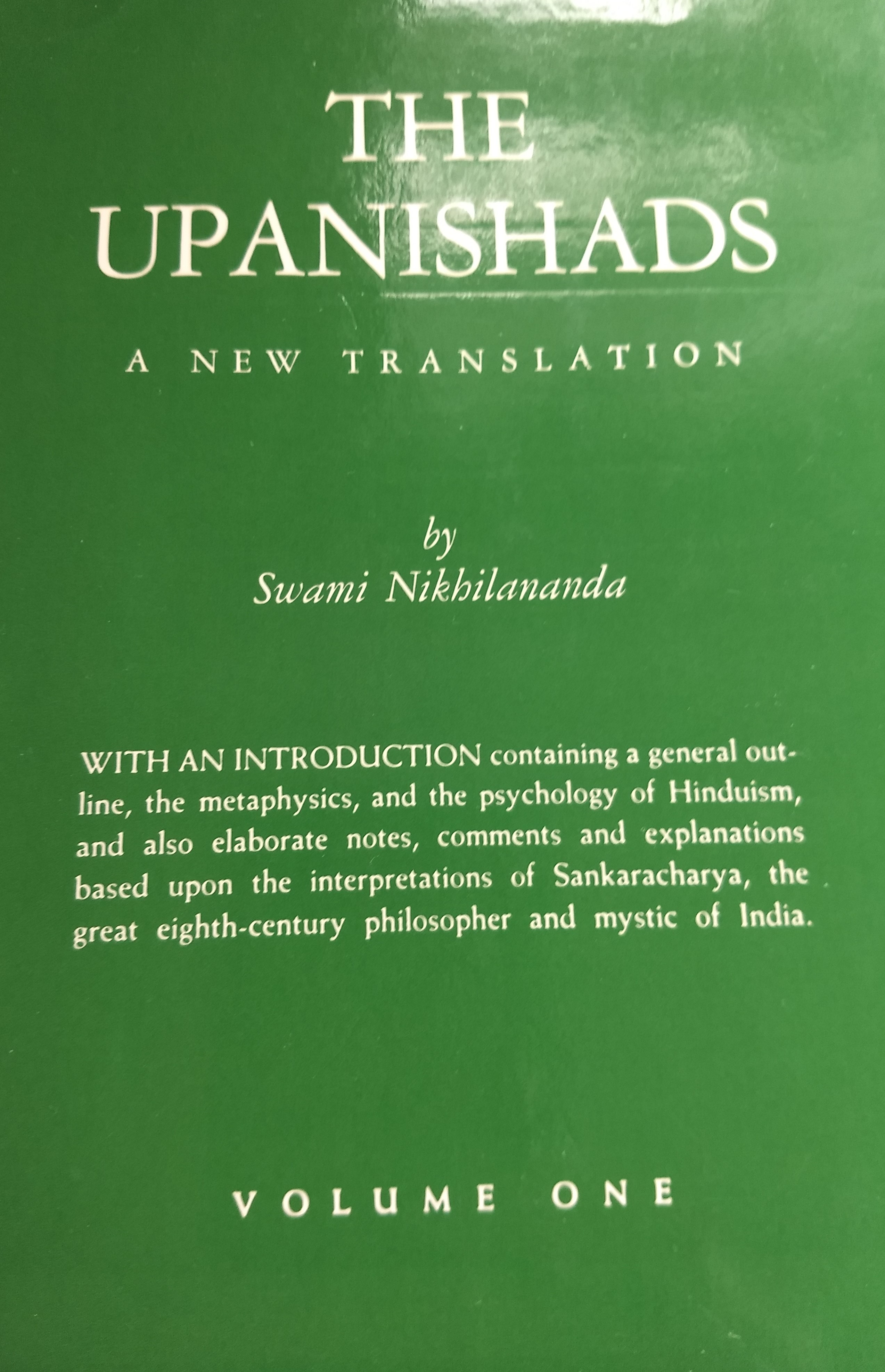
Another important point is that the teachings of Upanishads were given in Ashramas, which were like universities in wooded areas. All the Upanishads’ teachings were related to the fundamental questions of life, like, ‘What is the purpose of life (if there is any)?’, ‘What is my true identity?’, ‘What is my relationship with others?’, ‘What is the nature and the purpose of the universe?’, ‘What is the goal of a human life?’. The Upanishads give answers to all these questions. But, these answers are philosophical answers. How to practice these thoughts in our day-to-day life is very important. That is why Bhagavad Gita is most important. Shri Krishna told Arjuna how to apply the teachings of the Upanishads in the critical time of his life. With Arjuna, we can learn how to apply Bhagavad Gita’s teachings in the critical time of our life. What could be more critical in our life than Arjuna’s situation In the middle of the battle-field where he was forced to fight with his own relatives? Bhagavad Gita teach us very practical ideas such as, ‘How to live in the world keeping our mind balanced?’, ‘How to acquire the highest knowledge and unbroken bliss while living in the world?’, ‘What are the values we can practice in our life?’, ‘How to love all unselfishly?’ and many others.)

(Thanks to Sonali Tatapudy and Rushil Desai for editing this post.)


The Essence of the Bhagavad Gita Chapter 11:  The Path of the Vision of the Universal Form

The Essence of the Bhagavad Gita Chapter 11:

The Path of the Vision of the Universal Form

Arjuna said, “Out of compassion for me, you have told me profound truths about the Self. These words have removed my delusion.

O Lotus-eyed Shri Krishna! I have heard from you in detail about the creation and dissolution of beings and also about Your Divine Manifestations.

O Lord! I completely believe what you have described about yourself.  But, O Supreme Purusha! I want to see these Divine Manifestations with my own eyes.

O Lord! O the Master of all Yogas! If you think that I am fit to see your Imperishable Universal Form, then please show me that divine form.”

Shri Krishna said, “O Partha (Arjuna)! Behold My hundreds and thousands of divine forms which consist of various colors and shapes.

Behold in Me. all the Adityas, the Vasus, the Rudras, two Ashwinkumaras and the Marutas.  Also, behold various wondrous forms which were not seen before by anyone.

O Arjuna! Behold in Me the whole universe including movable and immovable beings and things, and also whatever you desire to see.

But, you will not be able to see My Divine Forms with your physical eyes, so I will give you ‘Divine Eyes’. With these ‘Divine Eyes’, behold My Supreme Yogic Power.”

Sanjaya said, “O King Dhrutarashtra! By saying thus, the Great Master of the Yogas, Lord Shri Krishna showed Arjuna His Supreme Divine Form.

Then, Arjuna saw the Infinite Form of Shri Krishna which had infinitely many faces and eyes, was wearing various celestial garments and garlands, was adorned with divine ointments and ornaments, and was holding various celestial arms. This Form was filled with various wonderful and wondrous sights and was facing in all directions.

If the radiance of a thousand suns were to burst forth at once in the sky, then it would be like the splendor of that Mighty Being.

At that time, Arjuna saw the whole universe with its various aspects in that one Universal Form.

Then, overcome with wonder and with goosebumps, Arjuna saluted that Universal Form with folded hands and said the following:

Arjuna Said, “O Lord! I see in Thy body all the gods, all the beings, all the celestial serpents, all the Rishis, and the creator Brahma sitting on a lotus.

O Lord of the Universe! I see that Thou have infinitely many faces, eyes, hands, and bellies. I see that Thou are everywhere having infinitely many forms. I do not see the beginning, the middle, and the end of Thy Infinite Form.

I see Thou wearing a crown on head and holding a mace and a ‘Sudarshana Chakra’ (discus). I see Thou glowing like a mass of radiance on all sides. Thou are blazing like a burning fire and the sun and very difficult to look at. Thou are incomprehensible.

O Lord! Thou art the Supreme Imperishable Being that has to be realized. Thou art the sole support of the universe. Thou art the protector of the ‘Eternal Dharma’ (Righteousness in the universe).  In my opinion, Thou art the ‘Eternal Purusha.’

I see that Thou art without beginning, middle and an end, having infinitely many arms, and an embodiment of infinite strength. I see the sun and moon as Thine eyes and Thy face is like a blazing fire burning the whole universe with Thy radiance.

O Great Soul! The space between the heaven and the earth and all the directions are filled with Thee. I see that with Thy wonderful and terrible form the three worlds tremble with fear.

All the gods enter into Thy body and a few out of fear sing Thy glories with folded hands. The Great Rishis and the Siddhas, after saying ‘May there is peace!’ praise Thee with excellent hymns.

All the Rudras, Adityas, Vasus, Sadhyas, Viswas, Ashwin Kumars, Maruts, Ushmapas, Gandharvas, Yakshas, Asuras, and the Siddhas behold Thee and are amazed.

O Mighty Armed Lord! By beholding Thy Infinite Form with many faces, eyes, arms, thighs, feet, bellies, and terrible tusks, all the people are terrified and so am I.

O Lord Vishnu! By seeing Thy blazing form which reaches the sky, which shines with many colors, having its mouth wide open and with bright shining big eyes, I am scared and I am losing my courage and peace.

Thy mouths and terrible tusks blaze like fire which is going to devour the whole universe. By seeing them I am disoriented and find no peace. O Lord! O Abode of the Universe! Please be gracious to us all.

I behold that all the sons of Dhrutarashtra with all their kings, Bhishma, Drona, Karna, and many prominent warriors of our side enter into Thy terrible mouth with big tusks. Many of them have been caught between Thy teeth with their heads being crushed to powder.

As the torrents of rivers gush to the ocean, all these warriors are gushing into Thy blazing mouth.  As the moths fly into the fire for their own destruction, so these beings are gushing into Thy mouth for their destruction. O Lord Vishnu! Devouring all the worlds through Thy fiercely flaming mouths Thou lick Thy lips from all sides.  Thy fiery rays fill the whole universe with their radiance and scorch it.

Please tell me, “Who art Thou? O the Supreme Lord! I salute to you. Be pleased with me. O Ancient Purusha! I want to know Thee.  I do not know Thy purpose.”

Shri Krishna said, “I am the mighty world-destroying Time.  I am engaged here to destroy these people. Even without you, the warriors in the opposite side will be destroyed.  Therefore, O Arjuna! Get up, fight, conquer the enemies, enjoy the flourishing kingdom and obtain fame.  Know that I have destroyed them already and you are just an instrument.

Know that I have already killed Drona, Bhishma, Jayadratha, Karna and many other powerful warriors. You fight with them and become an instrument to kill them. Do not worry.  Go on and fight. You will be victorious over your enemies.”

Sanjaya said, “After listening to Shri Krishna’s words, Arjuna trembled. With folded hands in adoration, he saluted Shri Krishna. Overwhelmed with fear, he saluted Shri Krishna again and addressed Shri Krishna with a choked voice.

Arjuna said, “O Hrishikesh (Shri Krishna)! It is appropriate that the world rejoices and takes delight in singing your glories.  The fearful Rakshasas are fleeing away in terror and all the Siddhas salute Thee in adoration.

O Great Soul! Thou art the Primal Cause of even Brahma, the creator of the universe. Thou art the greatest among all.  There is no wonder that all these Siddhas are saluting you. O Supreme Lord! O Abode of the Universe! Thou art the Supreme Imperishable Brahman which is beyond the Manifest and the Un-manifest.

Thou art the Ancient God, the Eternal Purusha. Thou art the Supreme Abode of the universe. Thou art the Knower and That which has to be known. Thou art the Ultimate Goal of all. O Lord with Infinite Form! The universe is pervaded by Thee only.

Thou art the Wind, Yama, Fire, Varuna (Water), the Moon, and the creator of the universe,
Brahma. I salute to Thee a thousand times.  And I salute to you again and again.

O Mighty Lord with Infinite Power! Thou pervade the whole universe and therefore Thou art everything. I salute to you from the front, from behind, and from all sides.

Considering Thou as my friend and not knowing Thy greatness, I have rashly addressed you as “O Krishna” or “O Yadava” or “O Friend” out of love or from inadvertence. O Achyuta! I may have shown disrespect to Thee while playing, resting, eating, or sitting when we were alone or in front of other people. Please forgive me for all this disrespectful behavior.

Thou art the Father of the whole universe including the movable or the immovable beings and things. Thou art the Great Teacher and most respectable. O Almighty Lord! In the three worlds, there is no one even equal to Thee, then how someone could be superior to Thee?

Therefore, O Adorable Lord! I salute to Thee, prostrate my body at Thy feet, and pray to Thee to be pleased with me. O Lord! Please bear with me as a loving father does to his son, a close friend to his friend, and a loving husband to his wife.

By seeing Thy wonderful and terrible form that I have never before seen, I am very happy, but my mind has been distressed with fear. O Lord of the gods! O Abode of the Universe! Be pleased with me and show me Thy godly form.

I want to see Thy godly form wearing a crown and holding a conch, a discus, a mace and a lotus. O Lord with the Universal Form! O Thousand Armed Lord! Please reveal Thy four-armed godly form to me.”

Shri Krishna said, “O Arjuna! By My grace, through My Yoga Power, I showed you My Supreme, Resplendent, Primeval, and Infinite Universal Form which no one has seen except you.

O Arjuna! In this human world, the Universal Form that you had seen is not possible for anyone to see by studying scriptures, by charity, by performing rituals, or by any austerity.

Do not be afraid or bewildered by seeing My terrible form.  Be fearless and be glad to behold My godly form.”

Sanjaya said, “After saying thus, Lord Vasudeva (Shri Krishna), the Great Soul, showed Arjuna his godly form. Then, he assumed his gracious form and appeased the terrified Arjuna.

Arjuna said, “O Janardana (Shri Krishna)! Now, by seeing Thy gracious human form, I have come back to my senses and have attained my normal state of my mind.”

Shri Krishna said, “My godly form that you have seen is very difficult to see. Even all the Devas (gods) always desire to see this form.

One cannot see this godly form (that you have seen) by studying the scriptures, by performing austerities, by charity, or by performing Yajnas.

O Arjuna! Only through one-pointed devotion to Me one can see this godly form, really understand It and become one with It.

O Arjuna! One who performs all actions for Me, looks at Me as the Supreme Goal of life, is My devotee, is unattached and hates none, attains Me.

Thus, in the Bhagavad Gita— the essence of the Upanishads, the science of Brahman, the scripture of Yoga, and the dialogue between Shri Krishna and Arjuna— ends the Eleventh Chapter, entitled “The Path of the Vision of the Universal Form.”

Om Tat Sat.

(Thanks to Rushil Desai for editing this post.)

The Essence of Bhagavad Gita – Chapter 18: The Path to Liberation through Renunciation (Part I of III)

The Essence of the Bhagavad Gita – Chapter 18

 The Path to Liberation through Renunciation

Part I of III (Shlokas 1 – 28)

(This is the last chapter of the Bhagavad Gita. In this chapter, Arjuna asks a question that is crucial for him to make the final decision for his future action. This question connects with his state of mind, which he described in the first chapter. In this chapter, Shri Krishna tells Arjuna the essence of his teachings and his final command.)

Arjuna asks, “O Hrishikesha! O Mahabaho! O Keshinishudana! (Names of Shri Krishna) I want to know the clear difference between “Tyaga” and “Sanyasa”.

Shri Krishna answers, “Sages say that the renunciation of all actions that are motivated by fulfilling worldly desires is called “Sanyas,” while wise people say that giving up attachment to the results of all actions is called “Tyaga”.

One group of philosophers says that every action is harmful to a spiritual seeker; therefore, every action has to be renounced. Another group of philosophers says that, Yajna (Offering), Dana (Charity), and Tapa (Austerity) should not be given up.

O Arjuna! I will tell you my firm convictions about Yajna, Dana, Tapa, and Tyaga.

Yajna, Dana, and Tapa should not be given up. They should be performed. Yajna, Dana, and Tapa purify a human being. However, they should be performed with a sense of responsibility, without being attached to them, and by renouncing their results.

[Note: Renouncing attachment means remembering that everything belongs to God who is the creator, the nourisher, and the dissolver of the whole universe. Keeping this fact in mind, the renouncer makes constant changes in attitude (which consists of one’s thoughts, speech, and actions), gradually progressing from “Me and Mine” to “Thee and Thine,” until “Me and Mine” are completely replaced by “Thee and Thine.” Finally, only a slight non-harmful ego remains in a person for the purposes of serving humanity. This is a state of true knowledge of the Ultimate Reality.

By renouncing the results of one’s actions means performing all responsibilities as work given by God. Through this, one develops awareness of the presence of God and love for God. By renouncing, one considers every responsibility being performed as worship of God or an offering to God. One accepts the worldly part of the results as a “Prasad from God” or “Grace of God,” which may be either pleasant or unpleasant.]

The Three Kinds of Tyaga

Tyaga is of three kinds.

One should not renounce one’s own responsibilities. For those who renounce their responsibilities out of ignorance or delusion, their renunciation is considered a “Tamasika Tyaga” (an inferior renunciation).

Renunciation where one gives up one’s responsibilities because of fear of trouble to one’s body, thinking that all actions are painful is called a “Rajasika Tyaga” (a mediocre renunciation).

However, a “Sattvika Tyaga” (a superior or proper renunciation) is one where a person is convinced that he/she must perform his/her responsibilities and performs them while renouncing all attachments to them and offering their results to God.

A True Tyagi (Renouncer)

A true renouncer never hates an unpleasant responsibility and never gets elated by a pleasant responsibility. It means that he/she remains completely focused and performs every responsibility (pleasant or unpleasant) sincerely and to the best of his/her ability.

Such a person is established in a Satvik (pure and divine) state of mind, has matured intellect, and has destroyed all the doubts in his/her mind.

As long as one has a body, one cannot renounce all actions because one has to perform actions to maintain his/her body. Therefore, a “true tyagi” is the one who renounces the results of all actions.

Every action has three kinds of results: favorable, unfavorable, or mixed. One who has renounced the results of all actions does not get affected by these results, but results definitely affect the people who have not renounced them.

We Do Not Have Control over the Results of Actions

In the Samkhya Philosophy, five causes have been described for the accomplishment of any action. These are (1) the field of an action, (2) the performer, (3) tools to perform the action, (4) performance of the action, and (5) divine fate.

With regard to an individual, we can consider the following five causes for accomplishment of any action: (1) the body, (2) the doer, (3) the senses, (4) various actions, and (5) fate, over which the person has no control. These are the five causes of accomplishing any good or bad action performed by an individual with his/her body, mind, or speech.

This is a fact. However, due to undeveloped intellect and a deluded mind, a person thinks that the Atman is the performer of the actions. Such a person does not understand that the Atman is beyond the body and mind and is simply a witness-consciousness. (As light is not affected by the actions being performed in the light, similarly Atman is not affected by the actions performed by the body and mind.)

If a person has no “doer-ship” and has a delusion-free intellect, even when he/she has to perform a responsibility like a soldier who fights and kills enemies, he/she will not be considered a criminal.

The knower, the knowledge, and the object of knowledge create the motivation for actions, while the performer, the tools to perform, and the action are the three-fold basis of actions.

Now, I will tell you the three kinds of knowledge, action, and the performer of an action, as they have been described in the Samkhya philosophy.

The Three Kinds of Knowledge

The knowledge, by which a person can see One, Imperishable, and Undivided Atman in all beings which look divided by their external differences, is called Sattvika Knowledge (superior or perfect knowledge).

The knowledge by which a person sees more and more differences among all beings is called Rajasika Knowledge (mediocre knowledge).

The knowledge by which one thinks that only a part is a whole truth (like the body is the whole personality of a being), the knowledge which is illogical, not grounded on truth, and trifle, is called Tamasika Knowledge (inferior knowledge).

The Three Kinds of Actions

An action that is a person’s true responsibility, has been performed without any attachment, selfish motive, or hatred, and performed as an offering to or worship of God, is called a Sattvika Action (superior or perfect action).

An action that has been performed to fulfill one’s worldly desire, to boost one’s ego, and performed with much undue efforts, is called a Rajasika Action (mediocre action).

An action that is undertaken through delusion and performed without thinking about one’s ability, the consequences, loss, or injury, is called a Tamasika Action (an inferior action).

The Three Kinds of Performers

A Sattvika Performer (a superior or an ideal performer) is one who (1) is free from attachment, (2) does not brag about him/herself, (3) is filled with fortitude and enthusiasm, and (4) is unaffected by success or failure.

A Rajasika Performer (a mediocre performer) is one who is (1) passionately attached to the action, (2) mostly interested in the result and not in the performance, (3) greedy, (4) violent (5) impure, and (6) swings between joys and sorrows because of the favorable or unfavorable results.

A Tamasika Performer (an inferior performer) is one who is (1) unsteady, (2) untrained for action, (3) arrogant, (4) deceitful, (5) malicious, (6) despondent, (7) lazy, and (8) a procrastinator.

(Thanks to Radha Dhar for editing this post.)


Meditation and the Transformation of the Character

Meditation and the Transformation of the Character

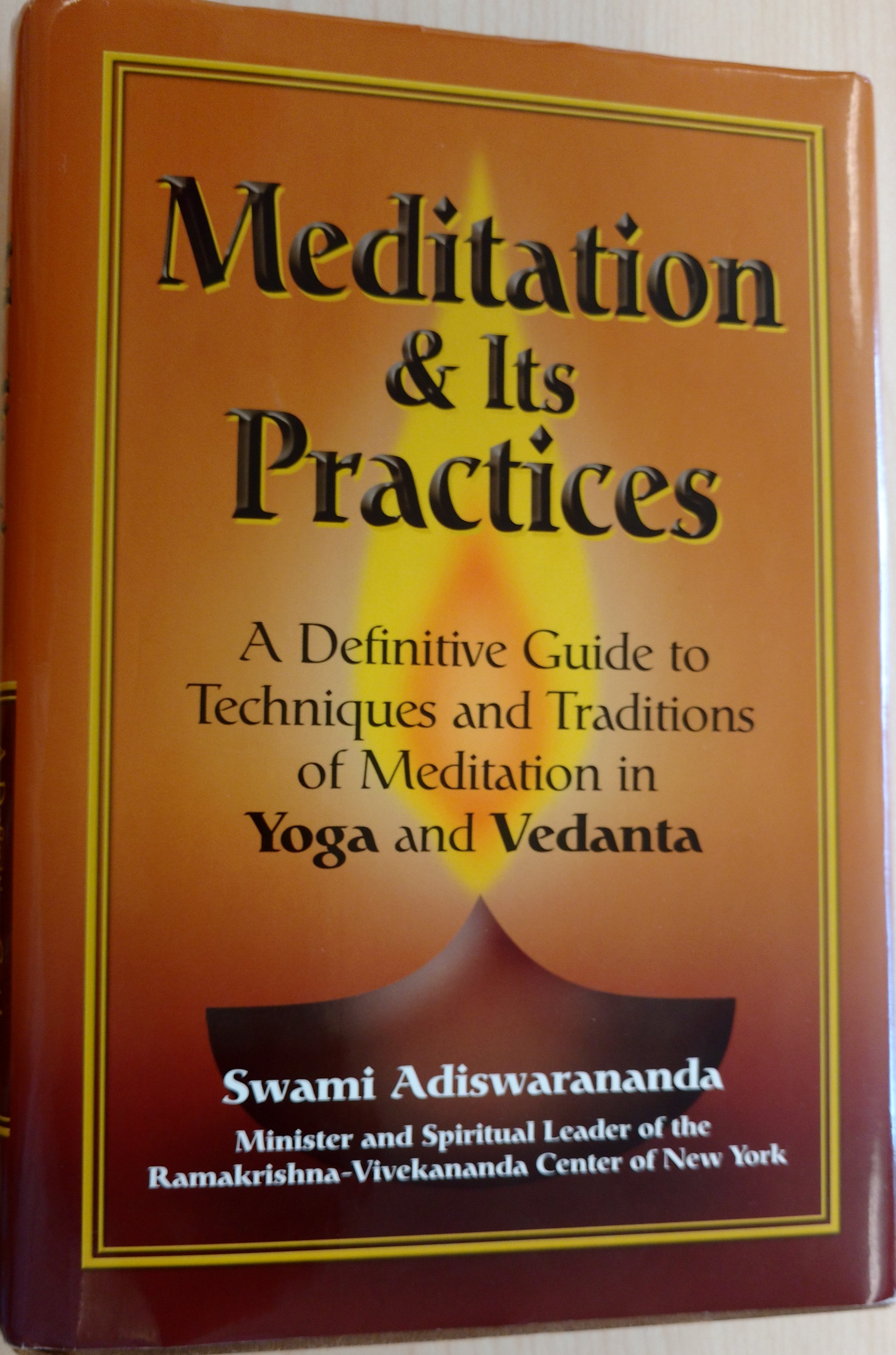
            Swami Adiswarananda, Minister and Spiritual Leader of the Ramakrishna Vivekananda Center, New York (1973 – 2007), had written several books related to Vedanta. His books are like mathematics and physics books. Every word and sentence of his books is thoughtfully selected, and one can see logical development of his ideas.

Currently, I enjoy reading his book, “Meditation and Its Practices.” It is a definitive guide to techniques and traditions of meditation in Yoga and Vedanta.

In this book, meditation has been looked at from several points of view, and it contains innumerable quotations from several standard books of meditation, Vedanta, and Yoga.

Personally, on many occasions, I was fortunate to see Swami Adiswarananda absorbed in meditation and felt uplifted by the spiritual environment created by these absorptions. Several times, I have heard him give talks after deep meditation, and I could feel that his words were coming from his direct communion with the Self, filled with convincing power and destroying all doubts.

The quoted paragraphs are excerpts from his book “Meditation and Its Practices.” I found these paragraphs to be very helpful for me to understand meditation and thoughts related to it. The titles and in-between thoughts are mine.

The importance of Meditation:

“Meditation is a subject of universal interest. It is practiced by spiritual seekers of all traditions, in some form or another, for serenity, peace, and blessedness.

The Vedic seers tell us that the causes of suffering are five, and they are:

(1)  Ignorance that makes us out of touch with Ultimate Reality

(2)  Ego that creates the world of dreams and desires

(3)  Attachments to things and beings of that dream world

(4)  Aversion toward things and beings we do not like and

(5)  Clinging to life and not moving forward.

The only way to overcome the maladies of life is to establish contact with the Ultimate Reality, and the only way to make contact with It is through meditation.

Meditation liberates us from the bondage of the mind and body, and lifts us up into the vast expanse of the Infinite Self.

Meditation awakens the dormant powers of the mind.”

The Steps Leading to Meditation:

             “The step leading to meditation is uninterrupted spiritual concentration of the mind on the Self. Such concentration does not develop by itself. It has to be practiced consciously and regularly, and requires overcoming the drags of perverted habits, attachments, and desires. For this reason, meditation is a twofold practice. It is focusing the mind on the ideal, while at the same time, practicing self-control.”

Meditation and Integrated Personality

“An average person’s spiritual goal and spiritual efforts are not well integrated because his thinking, feeling, willing, and acting do not support but instead oppose each other. Most often, his spiritual goal is subordinated to his material and worldly goals.

In his efforts, he does not follow moderation but swings from indulgence to asceticism, pessimism to optimism. Integration of personality is the alignment of all one’s thoughts, words, deeds, and aspirations to spiritual aspiration.

An integrated life, according to Yoga and Vedanta, is a grand symphony of many reflexes, impulses, desires, emotions, thoughts, and purposes. As the millions of cells of the human body must be well harmonized to produce a balanced physique, so must the multiple centers of our personality also be well integrated to make the symphony a reality.  The more we get a glimpse of our real Self in meditation, the more we are able to achieve this harmony.”

What is Integrated Personality?

“Meditation enables us to discover the rhythm of integrated living, which is marked by withdrawal from and response to the everyday world. Mere withdrawal without response is meaningless, while mere response without withdrawal is disastrous.

The more active we are, the more we are required to be meditative. The more the musical instruments in an orchestra are played, the more they need tuning. Meditation is to the mind what sleep is to the body. Meditation is the inbreathing of life, while activity represents its outbreathing. Meditation, like a gyroscope, helps the aspirant maintain his poise and balance amid the turbulence of life. Sincerely pursued, meditation becomes the aspirant’s second nature and follows him like his shadow in every action and thought, enabling him to function as two voices singing in counterpoint.”

 Meditation is more than the Concentration of the Mind:

“In the philosophies of Yoga and Vedanta, meditation is a mental process by which the meditator becomes one with the object of meditation.

Communion with our true Self, according to the Mahabharata, is the most efficacious form of meditation, comparable to bathing in a sacred river: ‘the river of Atman is filled with the water of self-control; truth is its current, righteous conduct its banks and compassion its waves…. Bathe in its sacred water; ordinary water does not purify the inmost soul.’ Meditation is thus the greatest purifier of the mind.”

Meditation is a constant awareness of our true identity (Atman) or the Ultimate Reality (Brahman). If one is a devotee and worships a chosen form of God (Ishta), then the constant remembrance of this form leads to meditation. Thus, japa, lovingly repeating God’s name or a mantra related to the beloved form of God, leads to an absorption into that form. This is meditation for a devotee. Finally, when this beloved form of God merges with the Ultimate Reality (Brahman), the devotee attains the highest communion with Brahman.

Swami Adiswarananda says, “Through meditation, our individual self, communes with the cosmic Self, as represented by our Chosen Ideal. These moments of communion lift us out of all egocentric involvements and infuse us with a quantum of inner serenity that heals the wounds of our mind, filling it with new strength to face the challenges of life. This inner serenity brings in its wake a stabilizing effect on our everyday life and makes it more efficient, creative, and purposeful. Our daily contact and communion with the external world of countless diversities temporarily overwhelms our knowledge of the unity of existence. As a result, our perception of diversities becomes exaggerated and heightened, and we lose the distinction between the Reality that is permanent and eternal and the realities that are impermanent or relatively permanent. Proficiency in meditation restores our true vision of reality.”

Being Calm and Serene is not Enough:

Only remaining calm or serene does not mean anything. We have to see what is the goal of the person who is calm and serene.

Swami Chetanananda told a story from the Ramayana. When Mother Sita was kidnapped, Lord Rama was crying profusely. At this time, he saw a crane standing calmly with complete serenity in a lake.  Lord Rama told his brother Lakshmana, “See how this crane is calm and serene, while I am crying because of the separation of Sita.” At that time, a fish jumped up from the water of the lake and told Rama, “O Lord Rama! This crane has killed my wife and my children and now is meditating to kill me. It looks serene, but not with good intention!”

Meditation brings Transformation of Character:

Vedanta does not like any ambiguity, and it is not only a theory. Vedanta is very practical. The goal of Vedanta— “Self-Realization” or “Communion with the Ultimate Reality” — is not imaginary. The Bhagavad Gita and other Vedantic books clearly state the tangible characteristics of a person who has achieved Communion with the Ultimate Reality.  One who practices Vedanta and makes sincere efforts to achieve its goal becomes a decent human being.  Such a person’s thoughts, speech, and actions become blessings to society. Actually, society continues to survive due to the presence and inspirations of such people. Without them, people do not see a reason  to become unselfish and do any amount of harm to fellow beings, even if destructive, to fulfill their selfishness.

The Bhagavad Gita describes the sets of characteristics of “A Person with Steady Intellect (Gita 2.55-72), “My Beloved Devotee” (Gita 12.13-19), and “A Person Who Has Gone beyond the Three Gunas” (Gita 14.22-27) separately.  These characteristics help us know how a person practicing Vedanta becomes a decent human being and a blessing to society.

Meditation is a very personal thing. It is hard to find out whether a person is making progress in his/her meditation or has become stagnant, or if the person is becoming duller and more inactive than before. Many times during meditation, sleep or inertia takes over the meditator’s mind without him/her being aware of it. Experts in meditation say that if we want to measure the progress of the mind of a person who is practicing meditation, we must  observe how that person does work in day-to-day life, how that person behaves with other people in various situations, and how the person expresses his/her thoughts in speech. In the following list, Swami Adiswarananda clearly expresses the characteristics of a person who is making progress in meditation and/or has attained the goal of meditation – Communion with the Ultimate Reality. It is an excellent guideline to measure progress in our meditation.

“The sure sign of an individual’s inner integration is his behavioral transformation.

(1)        Such a person is always sincere, honest, and straightforward in thought, word, and action. Because he is honest with himself, he is honest with others. His honest intentions are always reflected in his conduct and behavior.

(2)        Truthful in all circumstances, he not only desists from lying in any form but does not exaggerate, misrepresent, manipulate, or distort facts to suit his own convenience and self-interest.

(3)        Free from all sense of guilt, he enjoys peace of mind.

(4)        What he really is and what he appears to be are always the same, and so he is never  secretive.

(5)        He never broods over the past nor dreams about the future. He acts in the living present; being of clean conscience, he does not procrastinate or vacillate in his decisions or actions.

(6)        Positive in his outlook, he is always ready to learn and grow in wisdom.

(7)        He accepts the trials and tribulations of life as they come and does not blame anyone or anything for them. Grounded in self-awareness, he is neither aggressive nor defensive in   dealing with others.

(8)        He is spontaneous, efficient, and creative.

(9)        Moderation is his motto, discrimination is his guideline, and Self-Knowledge is his goal.”

(Thanks to Nishank Mehta for editing this post.)


Life after Death

A young boy asked death whether there is life after death.

The story of the Kathopanishad goes as follows (this is an outline of the story in my version):

DSC04082
Beginning of Kathopanishad

In India, during the Upanishad time, a person who had renounced everything used to receive the highest honor.  Powerful kings used to bow down to the Sadhus who had renounced everything.  Even now we see at many places in India similar honor given to the sadhus.

A Rishi Uddalaka decided to perform a Yajna in which he had to renounce everything he had.  He had a huge Ashram and many cows.  At that time the wealth was considered by the number of cows one has.   When the time came closer for the Yajna, he started worrying about the future of his young son named Nachiketa.  Then, he decided to give away old cows that were of no use and were about to die.  He kept good cows hidden.   Nachiketa saw this.  He thought that his father is doing wrong thing and this will not do good to him.  But, how can he tell this to his father?  An idea came to his mind.  If his father gives him away to someone, then he did not have to worry about him.

Nachiketa went to his father and asked him to whom he is giving away to.  Father did not like the question.  He ignored him.  Nachiketa asked him second and third time.  Now, father got mad and said that he is giving him to death.

yama-nachiketa
Lord Yama and nachiketa

Nachiketa sat down in meditation to go to the Lord of Death, called Yama.  When Nachiketa went to Yama’s home, he found that Yama was away for his work.  Nachiketa waited for Yama outside his house for three days without food, water and sleep.  When Yama returned home he felt sorry for Nachiketa.  To reward him, Yama requested Nachiketa to ask three boons.

Nachiketa asked his first boon that when Yama will release him to go home his father will receive him with love and accept him as his son.  Yama granted that boon to him.

Nachiketa asked second boon to learn a Yajna which takes him to heaven.  Yama taught him the Yajna and being pleased with his capacity to learn said that this Yajna will be known as Nachiketa Yajna.

The third boon is the central theme of Kathopanishad.  This young boy Nachiketa asked Yama that among the two groups of people, one who believes that there is life after death and another who believes that there is no life after death, who is telling the truth.  Nachiketa wanted to know this from the Lord of Death who is the only one knows what happens after death.

Death is a mystery of life.  No dead person ever came back to tell us what happens after death.  Many do not want to talk about death.  But, we cannot avoid the fact by not talking about it.  Death makes life more important and valuable.  From the perspective of death we can decide what is important in life and what is not.

What was the Yama’s answer?  Instead of giving the answer, Yama offered Nachiketa wealth, long life and pleasures of life.  Yama said, “O Nachiketa! This is a subtle knowledge.  Even highly evolved souls like Devas want to know this.  You can ask me long life, children, grandchildren, kingdom, and all the pleasures of the world. Please do not ask this boon.”  Nachiketa said, “O Yama! Long life comes to an end.  Pleasures of the senses are short-lived and they wear out senses.  You are the only teacher who can answer my question.  Therefore, I am not asking any other boon.”

Lord Yama was greatly pleased with Nachiketa.  He said, “O Nachiketa!  Any human being would have been tempted by a fraction of the pleasures I offered to you.  I offered to you all the possible pleasures available on the earth, but your mind was not deviated by them.  You are worthy for such knowledge.  May I have students like you.”

Kathopanishad is enriched with wonderful and inspiring thoughts following which we can acquire the highest knowledge possible for a human being.  Here I will just state few of these thoughts along with the answer to the basic question:  Is there a life after death?

Few teachings of Yama (of Kathopanishad):

  •  Pleasurable and preferable choices come to every human being.  Pleasurable things give pleasures to the senses and mind which are short-lived and bring miseries as their consequences.  They also increase our ignorance of ourselves and others. Preferable things lead us to the highest knowledge which gives us deeper understanding and awareness of human life and other people.  Such things bring unlimited happiness, satisfaction, and unselfish love for all.  Wise people chose preferable things over the pleasurable things.  While people with short-sightedness chose pleasurable things and then suffer
  •  Behind our body, mind and intellect, there is Atman (Soul) which is our true identity.  Body, mind and intellect are constantly changing.  These changes can be realized because of having Atman in the background.  Our body, mind and intellect are material.  They are made out of five elements, namely space, air, fire, water, and earth.  Atman is not made out of anything.  Just as we remove body, mind and intellect from a human being Atman remains, similarly if we remove name and form from the universe, Brahman (God) remains.   Atman is pure.  Its nature is Sat-Chit-Ananda, Existence-Knowledge-Bliss absolute.  It is the center of our existence. When the atman leaves the body, the body becomes dead.  Without Atman body, mind and intellect are nothing but matter.  All knowledge and bliss comes from the Atman.  This Atman cannot be killed by any weapon, nor can it be burnt by the fire, nor can it be drowned by the water, and nor can it be blown away by the wind.
  • Atman and Brahman are same.  Imagine, a pot is floating in an ocean and there is ocean water inside the pot.  Just as the water of the ocean outside the pot is the same as water inside the pot, Atman in an individual is the same as Brahman outside the individual.  Also, what is in the macro (universe) is in the micro (atom).  All characteristics of a tree are in its seed.  Thus, all characteristics of Brahman are in the Atman.
  • In order to realize this Atman (our true identity) we have to focus our mind on the Atman through the help of our pure (unpolluted) intellect.  The realization of Atman is not an intellectual knowledge.  This realization does not come only from reasoning.  Since our senses drag our mind away from the Atman to the world of sense-objects, we have to control them.  A person having no control on the senses, mind and intellect cannot realize this Atman.  A beautiful analogy is given in the Kathopanishad:  “A chariot is going in the world.  The senses of a being are the horses, mind is the rein, intellect is the driver and the Atman is the master sitting inside the chariot.”  We have to control our senses by our mind, our mind by our intellect, and our intellect by the power of our Atman.  Only then we have a smooth ride in this world.
  • A person with bad character, a restless person, and a person without self-control cannot realize this Atman.
  • Only a person who has realized this Atman (our true identity) can have ever-lasting peace of mind.  No one else.
  • It is not easy to realize this Atman.  One has to take proper guidance from knowledgeable people and properly make efforts to realize It.  Realization of Atman is difficult, but not impossible.  Many people have realized this Atman and have blessed humanity with their knowledge, love, and guidance.  Kathopanishad says to all, “Arise!  Awake!  And stop not till this goal (realization of Atman) is reached.”
  • After getting proper guidance from Lord Yama, Nachiketa realized this Atman and acquire the highest knowledge, eternal bliss, and immortality.

Answer to the question: “is there a life after death?”

The answer is “Yes, there is life after death.  But, it is for those who have not realized this Atman.”  Those who have realized the Atman become one with Atman and remain in bliss until they chose to acquire a life.

Mother Nature is compassionate.  A human being cannot fulfill all the worldly desires in one life.  Many unfulfilled desires remain when a person dies.  So, Mother Nature or Atman or Brahman creates bodies to fulfill these desires.  I tell students that a human being cannot sleep for 10-12 hours every day or eat as much as one wants.  Human body and human environment are not fit for this.  Thus, a person who had cravings left to sleep many hours in a day, or eat ferociously, or have unlimited sense-pleasures, then in the next life Mother Nature gives a body of an alligator, or a bear, or a dog to fulfill these desires.  When one gets tired of these limited pleasures, a life of ignorance and miseries, then Mother Nature gives a human body which is fit to realize one’s true identity, Atman.