Category Archives: Uncategorized

Belur Math Pilgrimage – 2015, Day -2 Afternoon and Evening

August 4, 2015

Ramakrishna Mission Saradapitha:

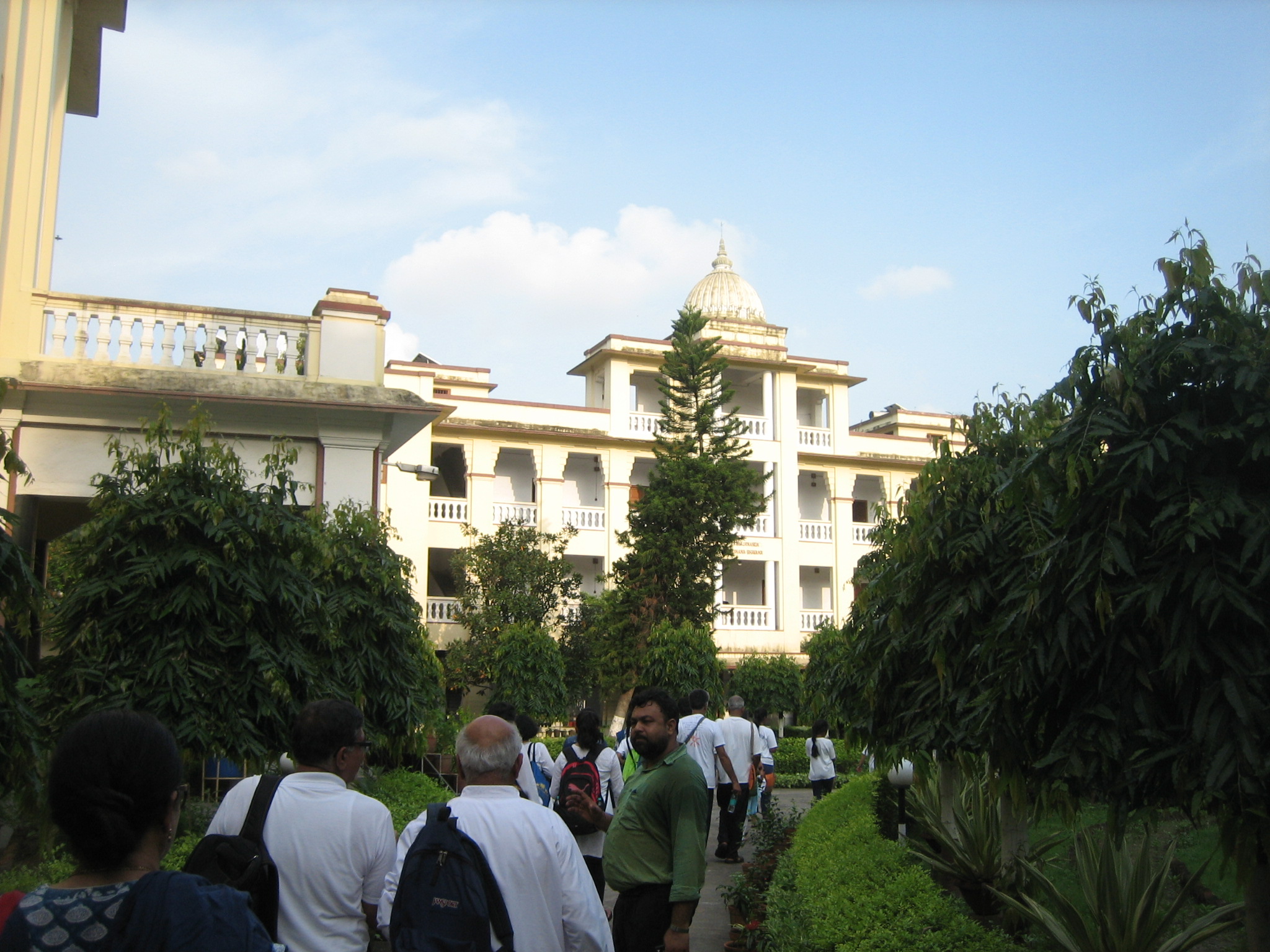
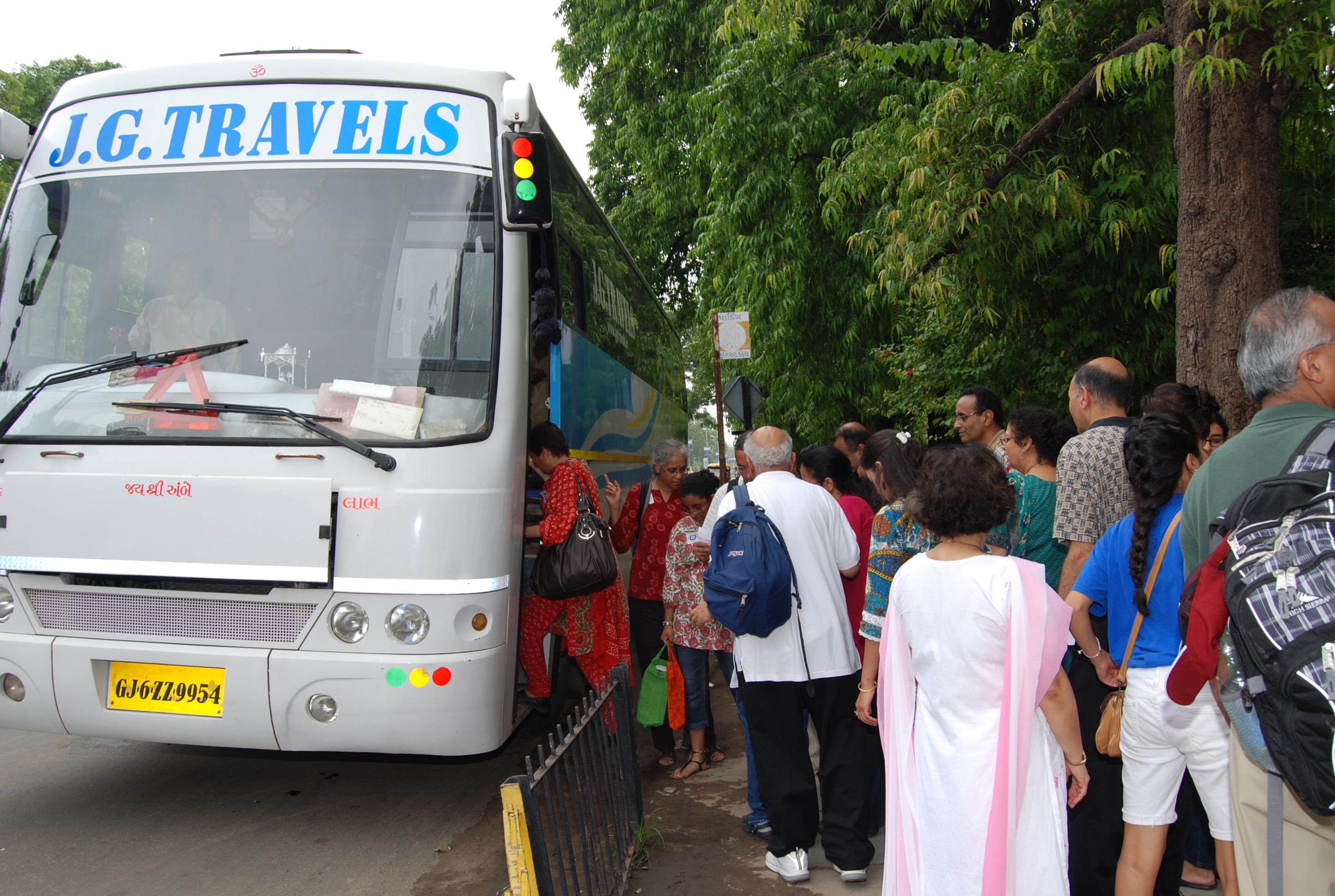
                  After a reinvigorating lunch and a refreshing afternoon at Hyatt, we got back on our buses around 2:00 p.m and headed to the Ramakrishna Mission Saradapitha, near Belur Math.
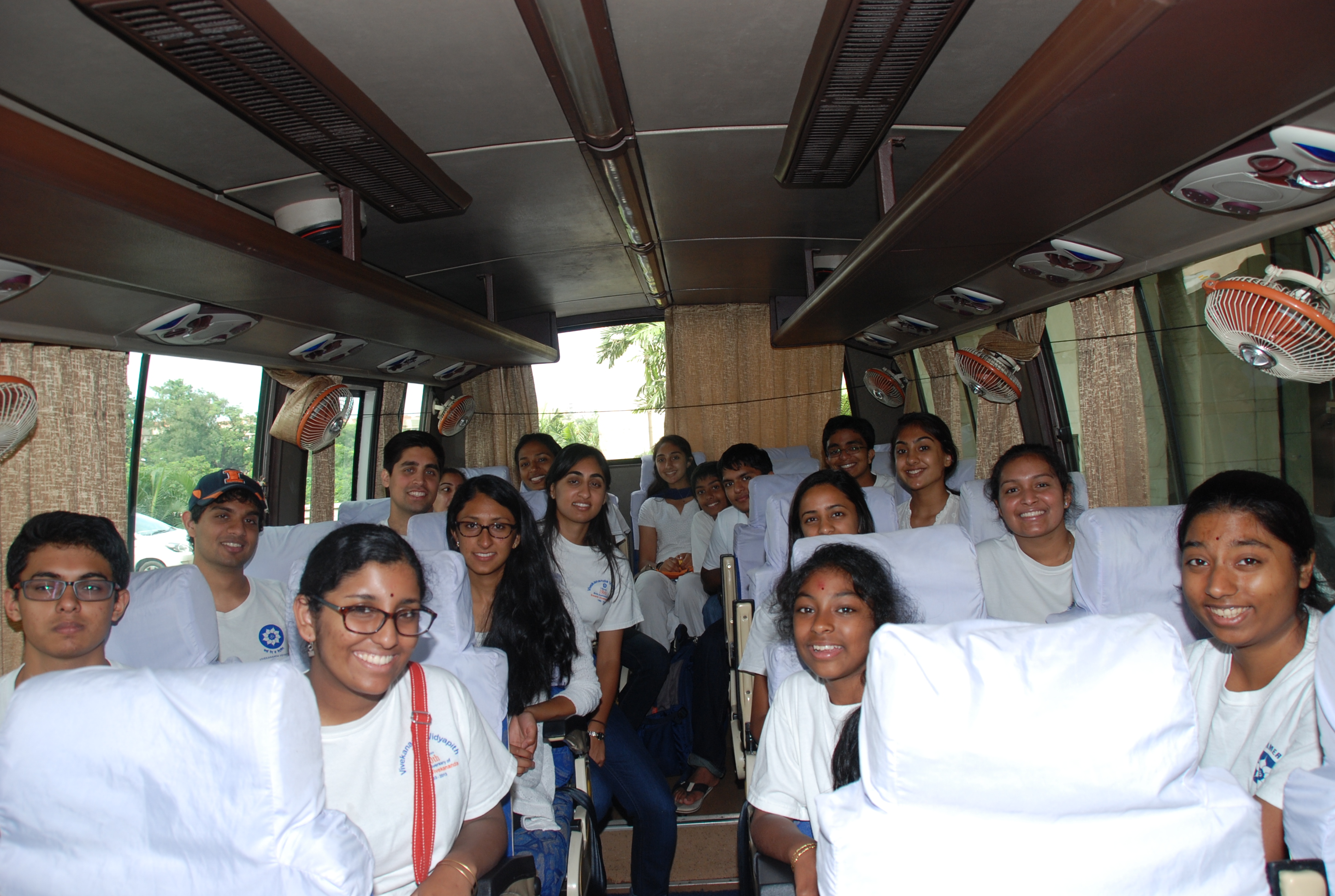
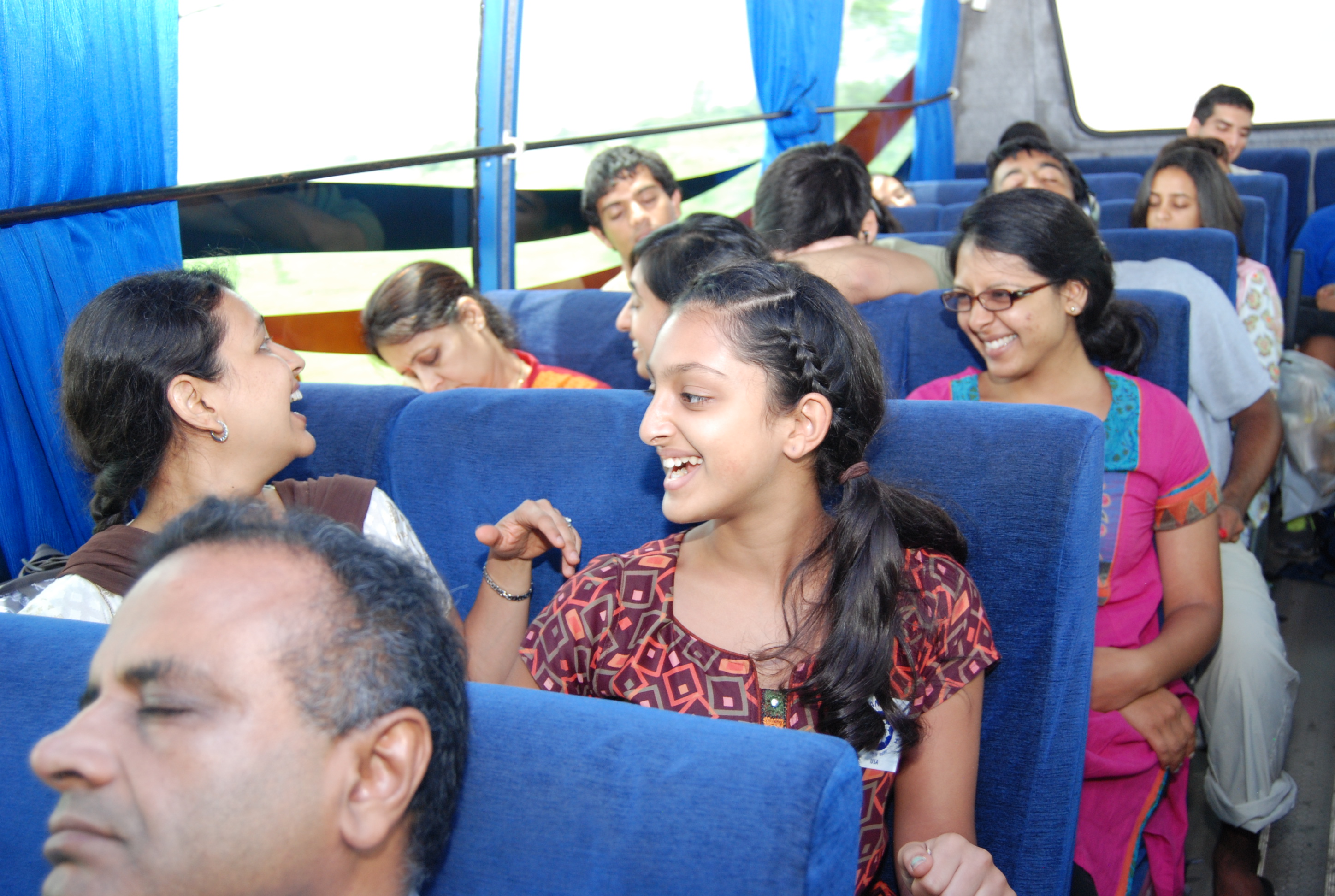
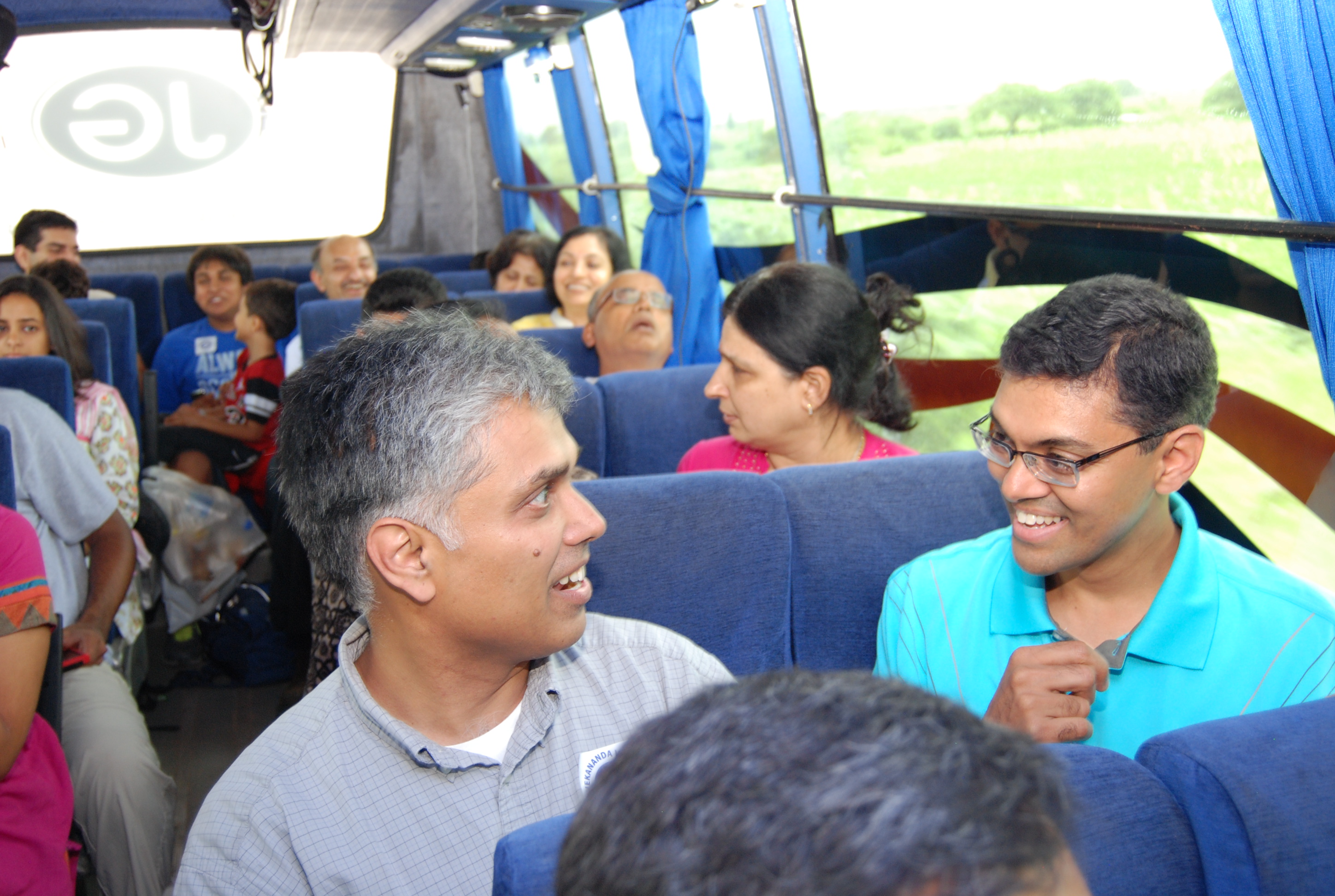
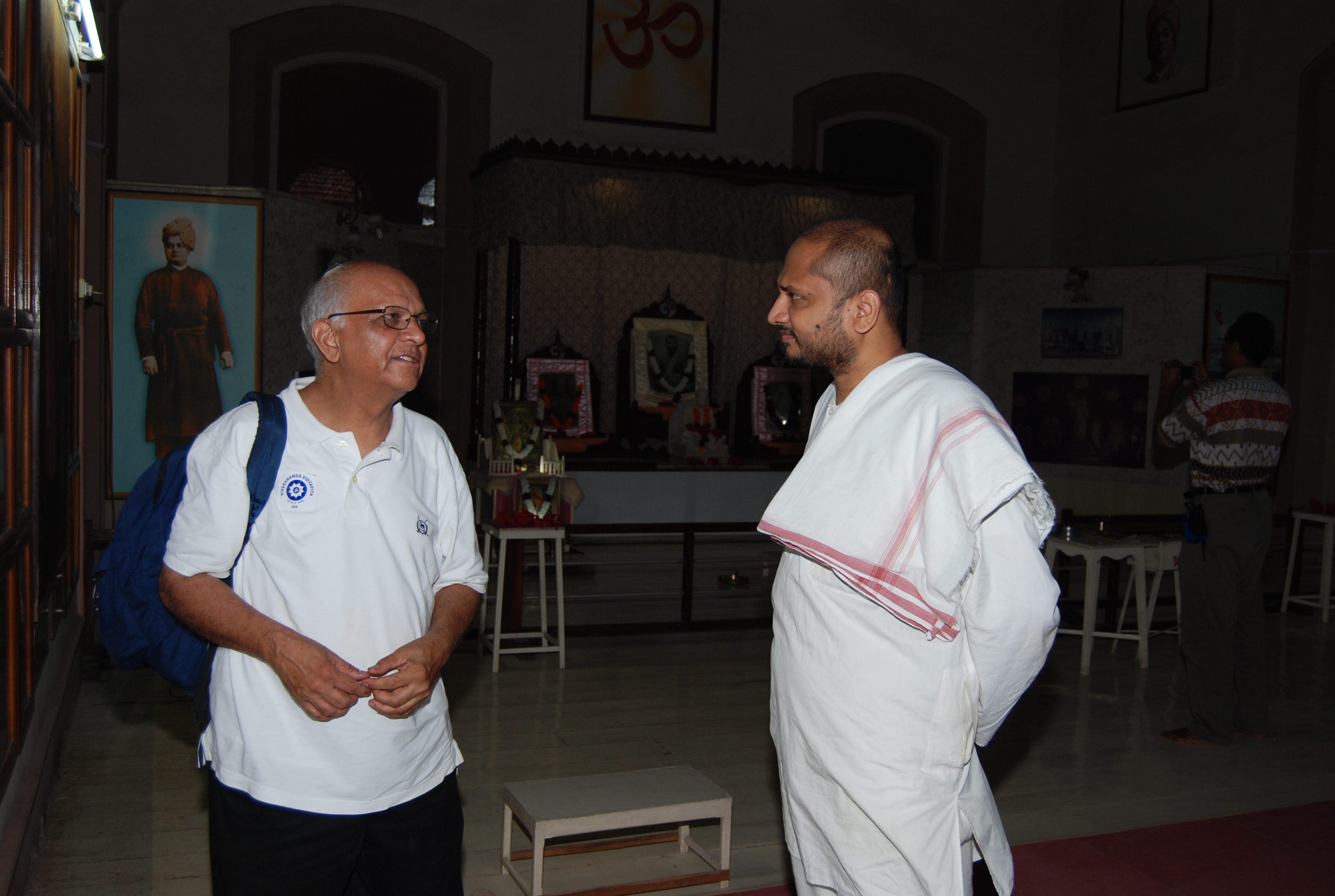
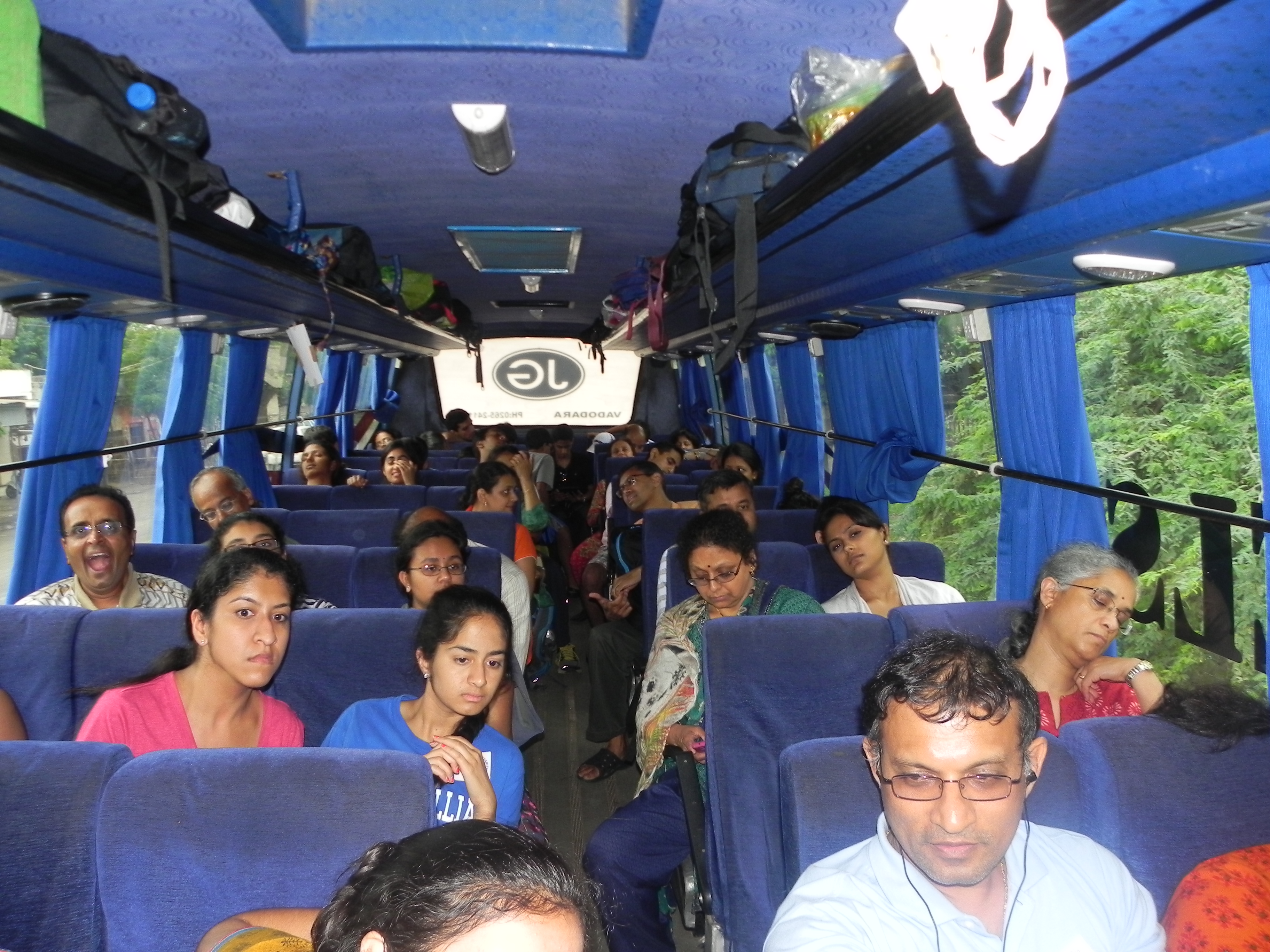
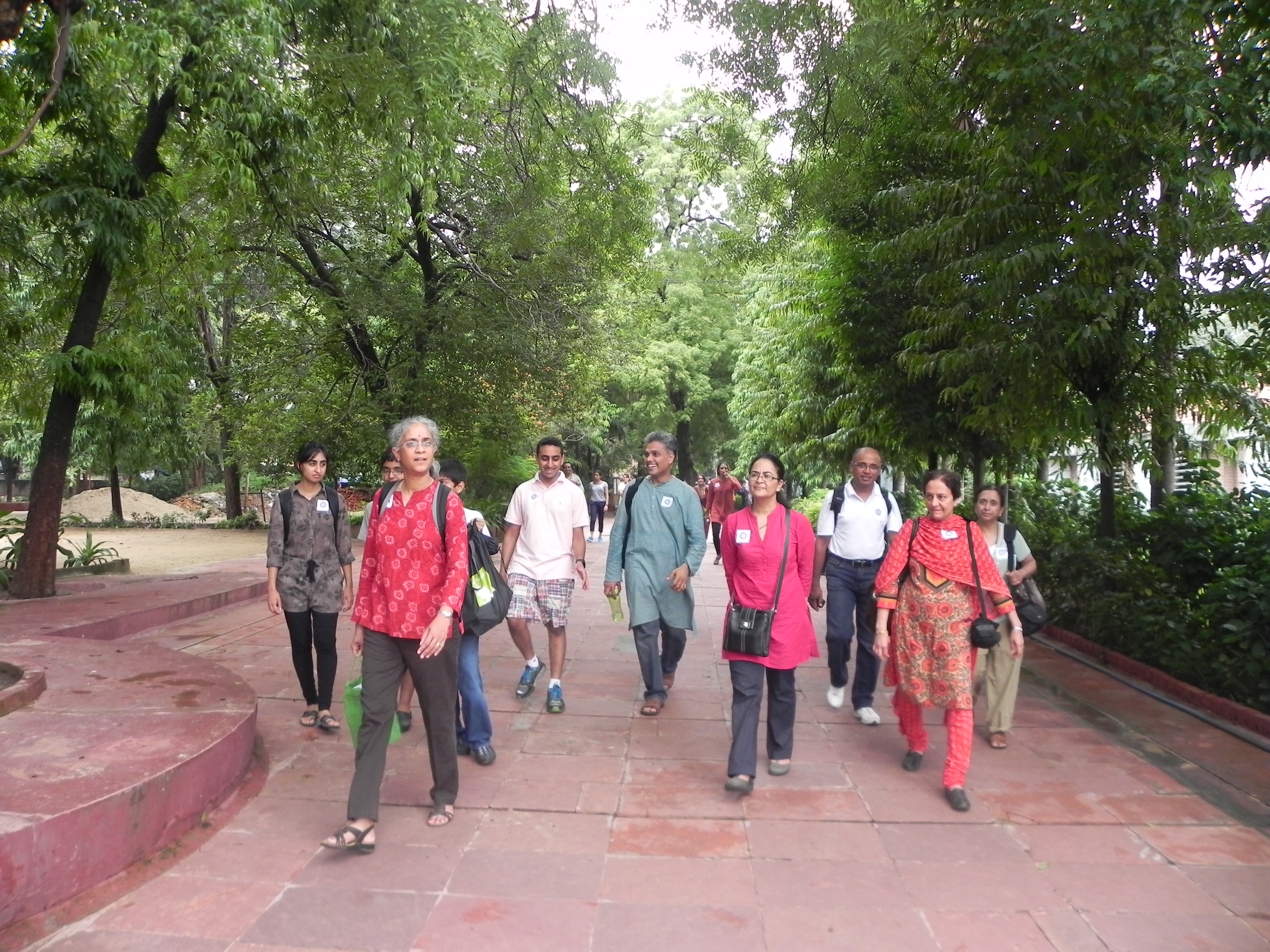
DSC_0344We were fortunate enough to be invited by Revered Swami Divyananda, Secretary of Ramakrishna Mission Saradapitha to visit this auspicious place. The drive was about an hour and a half. During the ride, we sang various dhoons and bhajans and a few of us caught up on sleep. Throughout the journey, our Club7 guides pointed out various important places in Kolkata and talked about their history.

We reached Saradapitha around 3:30 pm. We were surprised to see Rev. Swami Divyananda personally waiting for us. He asked the three buses to park across the gate of the Saradapitha. At first we were confused as to why he made this request, but when we stepped down we realized the streets behind us were completely flooded! Upon inquiry we found that due to the high tide in the Ganga, the water came on the street all the way to the Saradapitha.

1. Flooding 1 IMG_1190After we entered into the Saradapitha campus, Revered Swami Divyananda asked us to first visit Holy Mother’s temple.

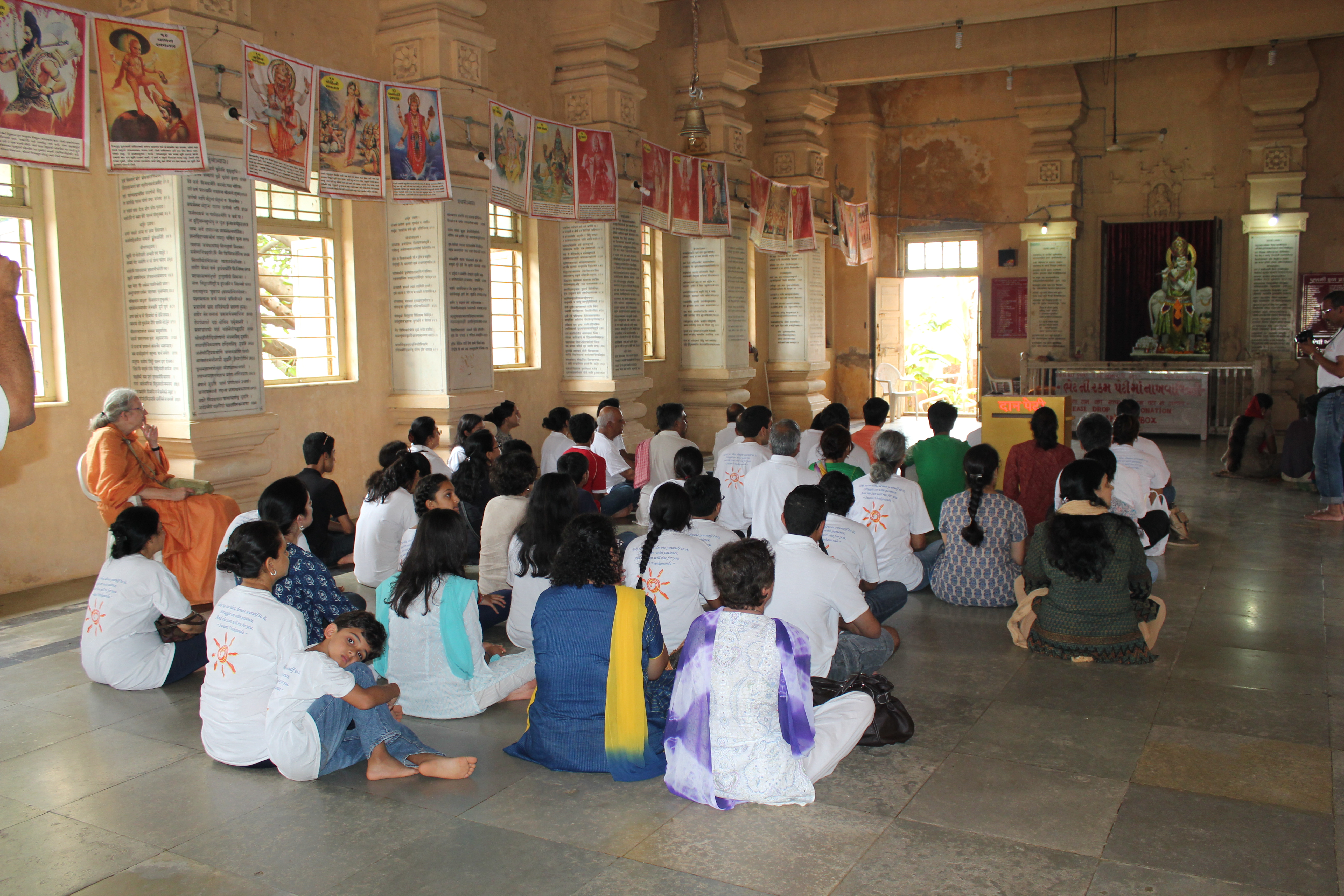
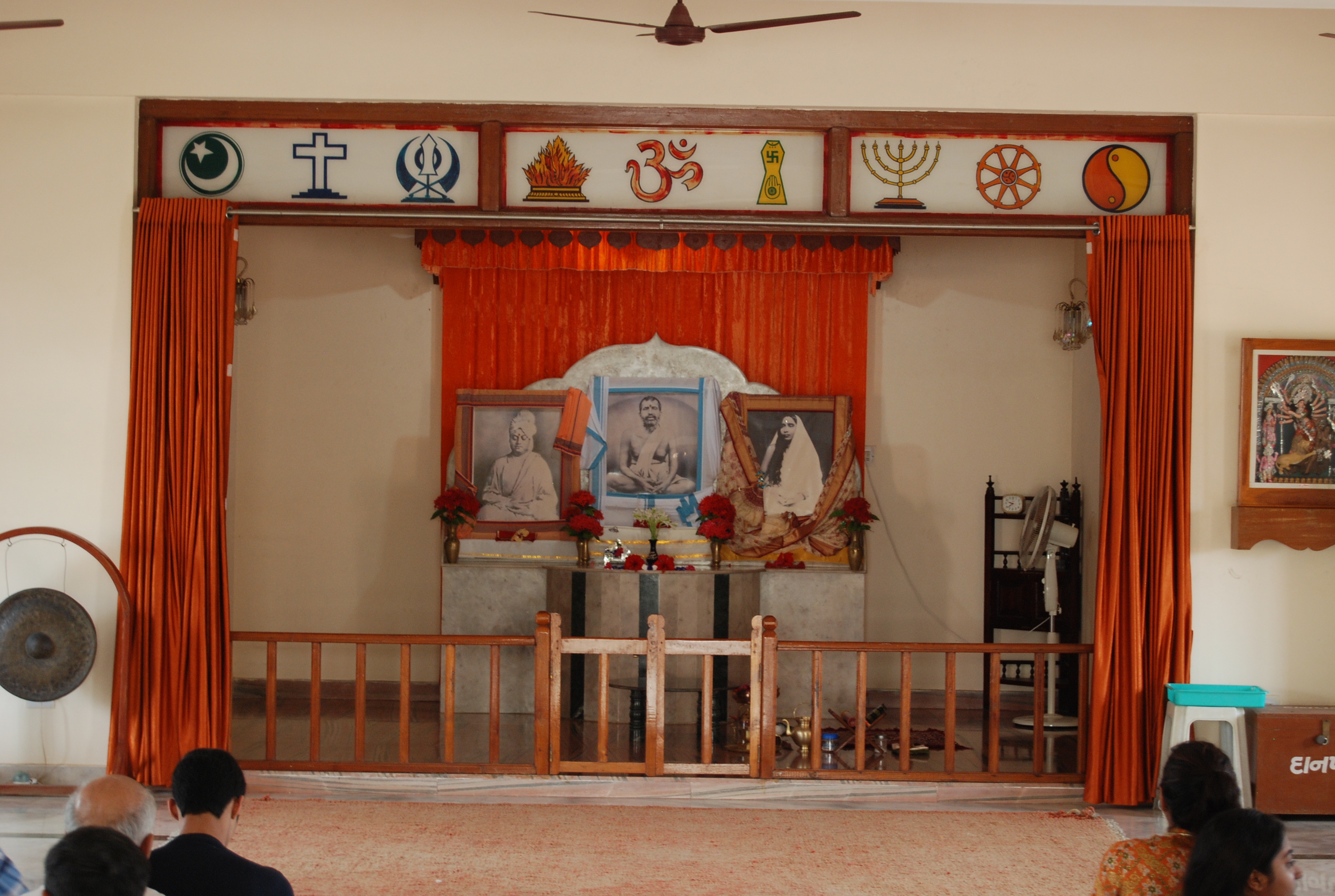
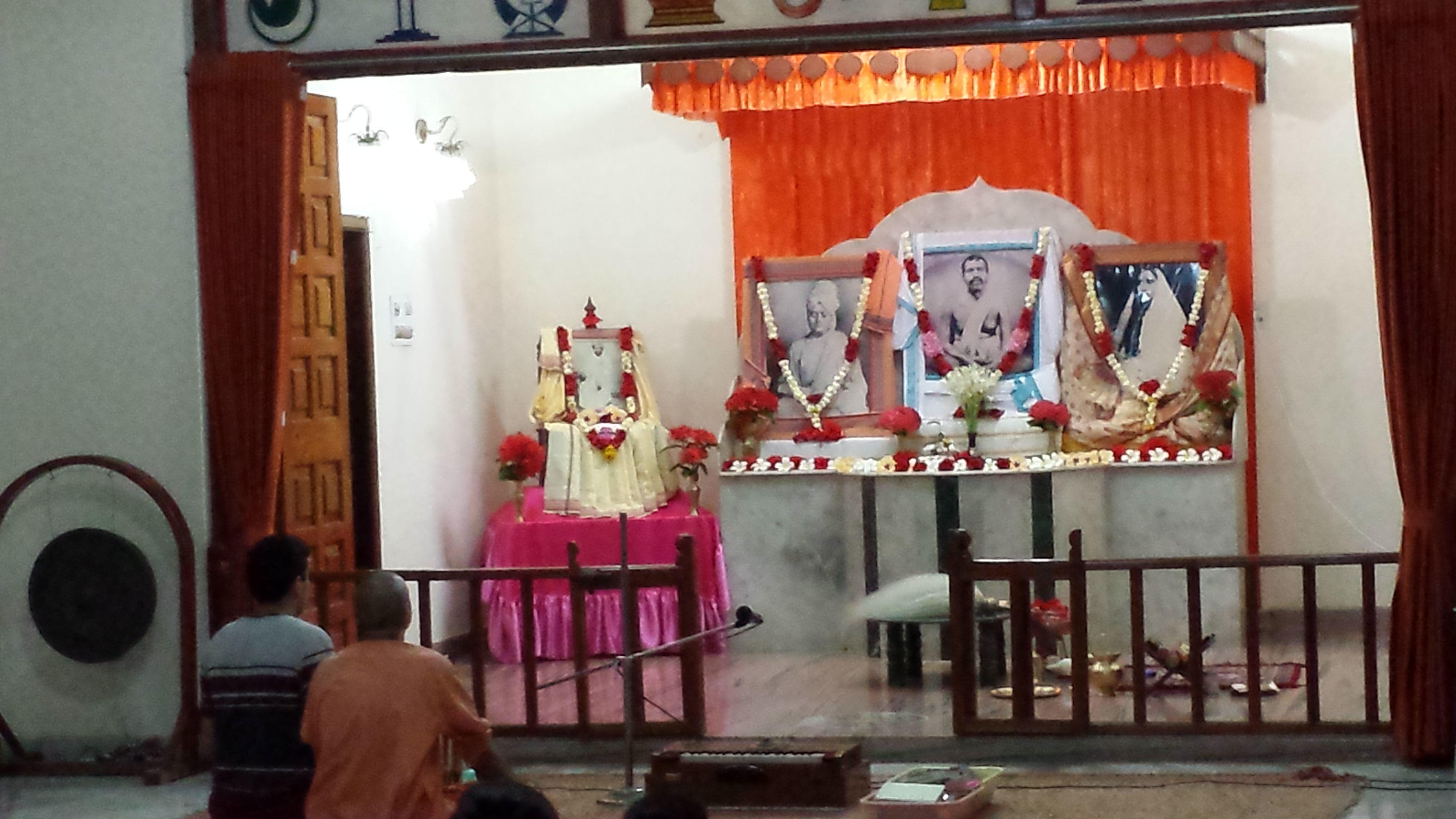
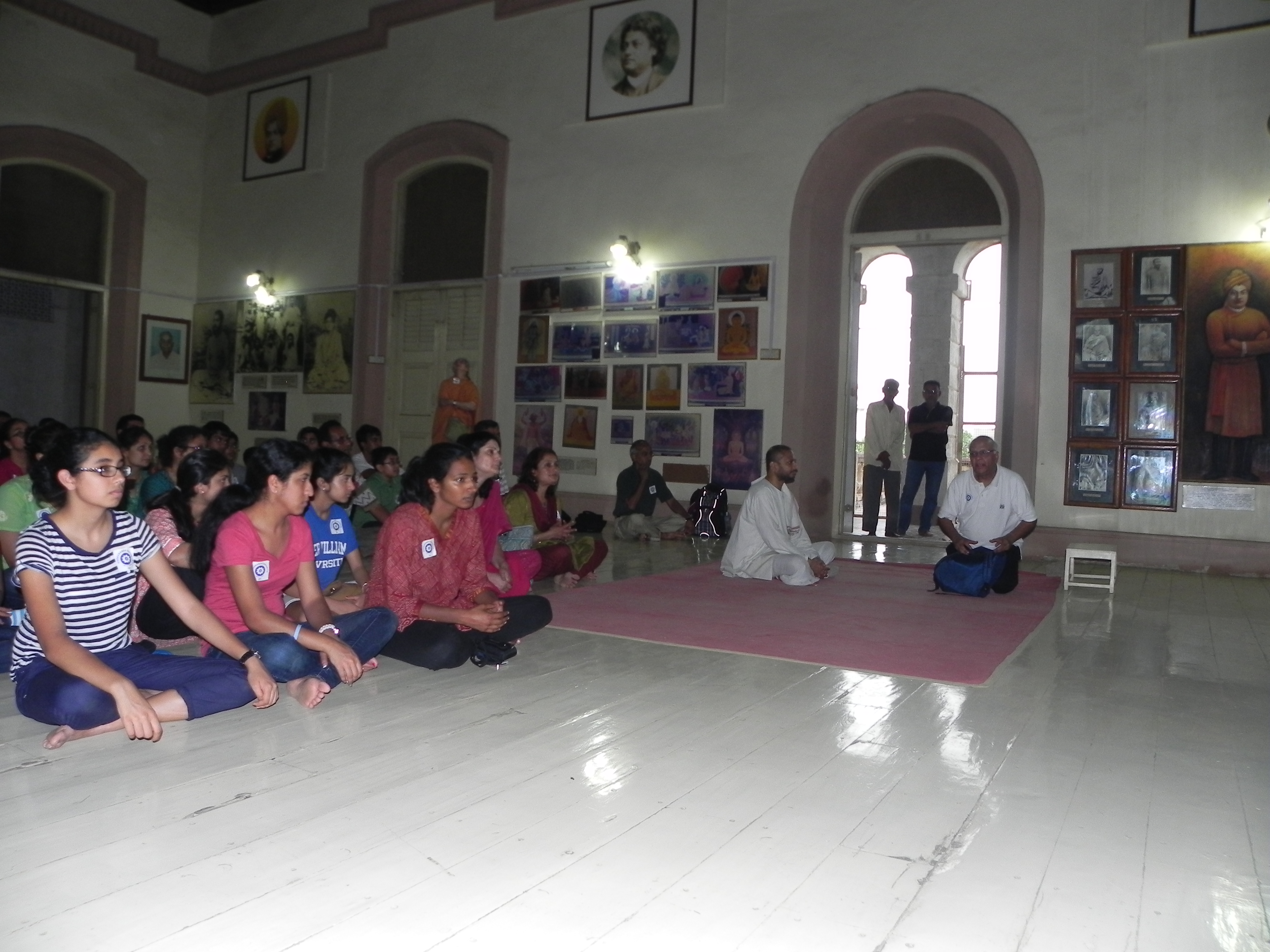
1. IMG_1189We all entered the temple and took a seat on the floor. As we do at Vidyapith, we sat in a quiet and orderly fashion. The boys and Uncles sat on the left hand side facing the altar and girls and Aunties sat on the right hand side facing the altar.   The temple environment was very serene. We all sat quietly and did some japa.
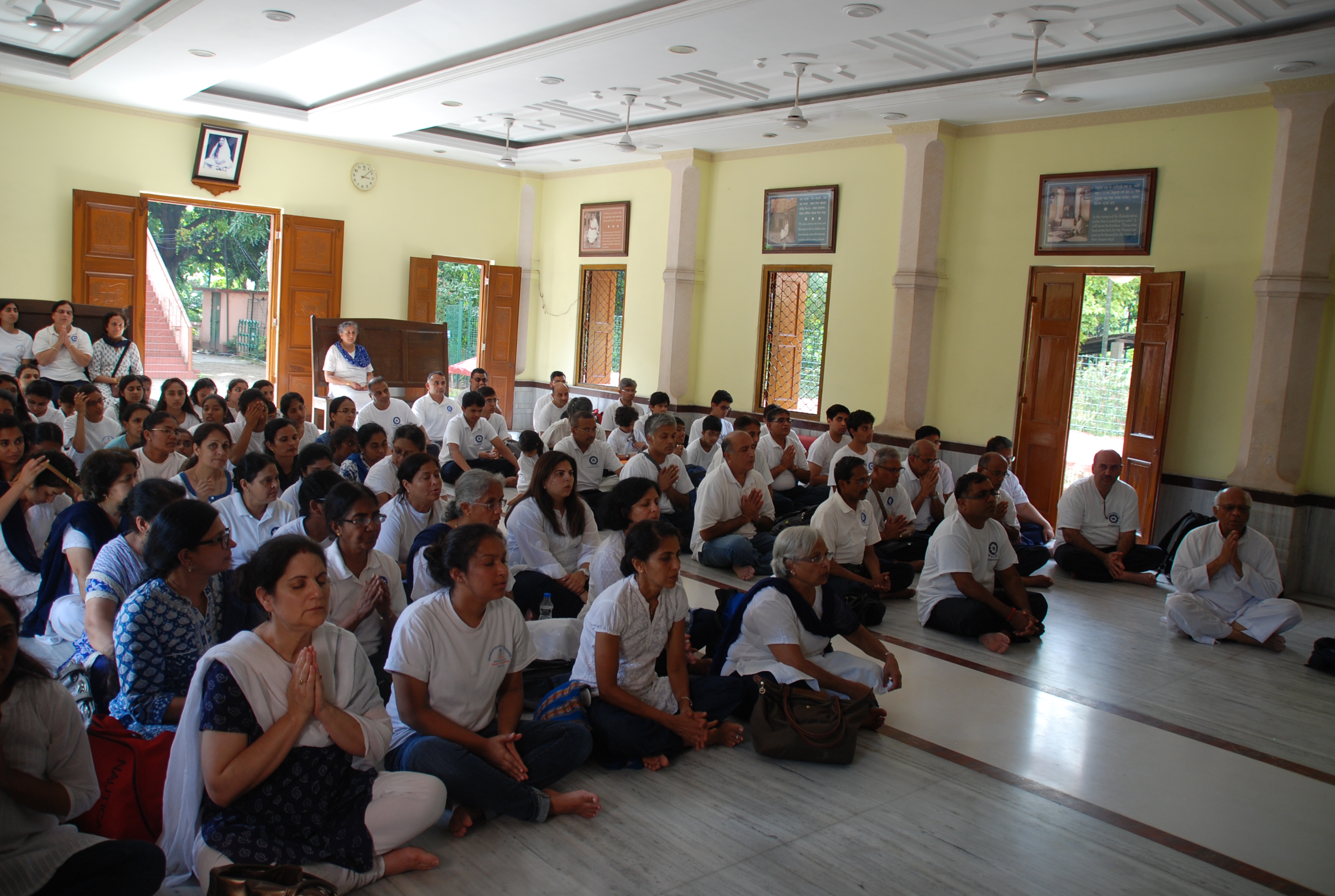
2. DSC_0345 2. DSC_0346 2. DSC_0348 2. DSC_0350

After japa, we sang pranam mantras, offering salutations to Sri Ramakrishna, Holy Mother Sri Sarada Devi and Swami Vivekananda. We also sang “Tvameva Mata ca Pita tvameva…” Later on, we realized that Rev. Swami Divyanandaji had also sat down with us in the back of the prayer room.

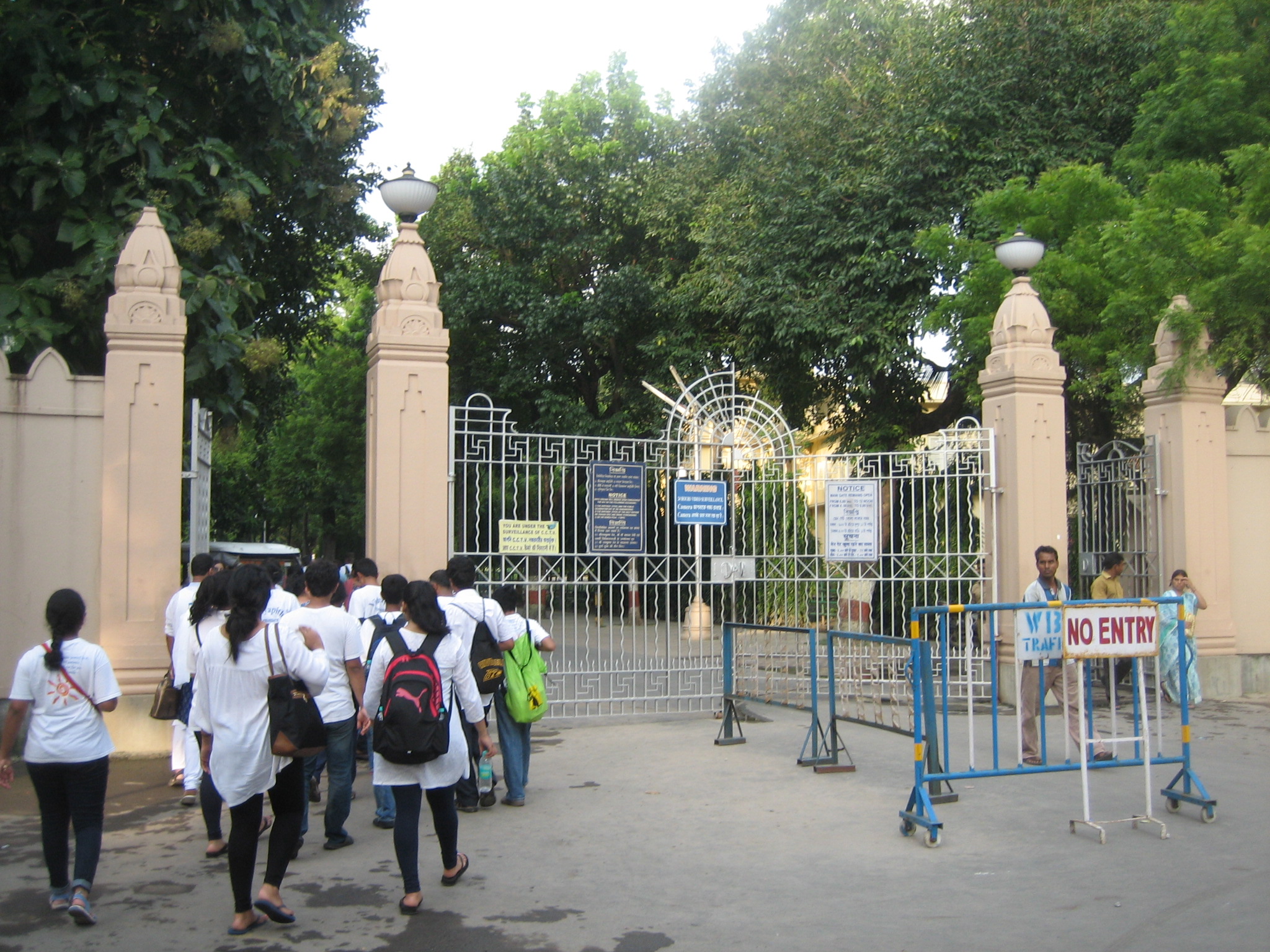
After our prayer at the temple, we walked to the Ramakrishna Mission Saradapitha office building. When we approached the building, we were reminded that the area was flooded not too long ago. There was a large amount of water in front of the steps leading to the building. Rev. Swami Divyanandaji suggested that we enter the office by walking on the curb, which was about six inches high and 3 inches wide. Revered Swamiji made sure that all are okay. We all applied our balancing skills and entered the office building while holding a railing.

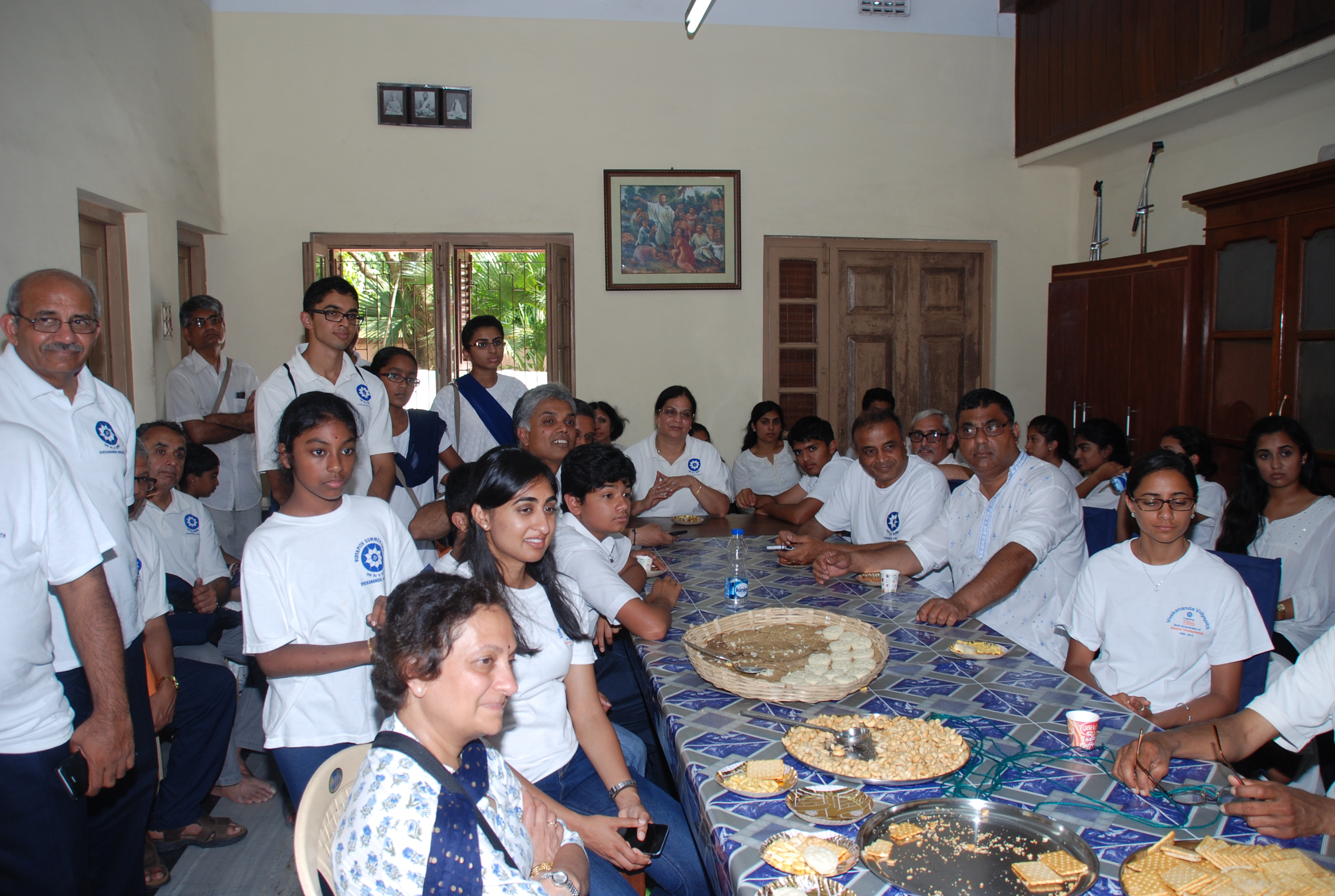
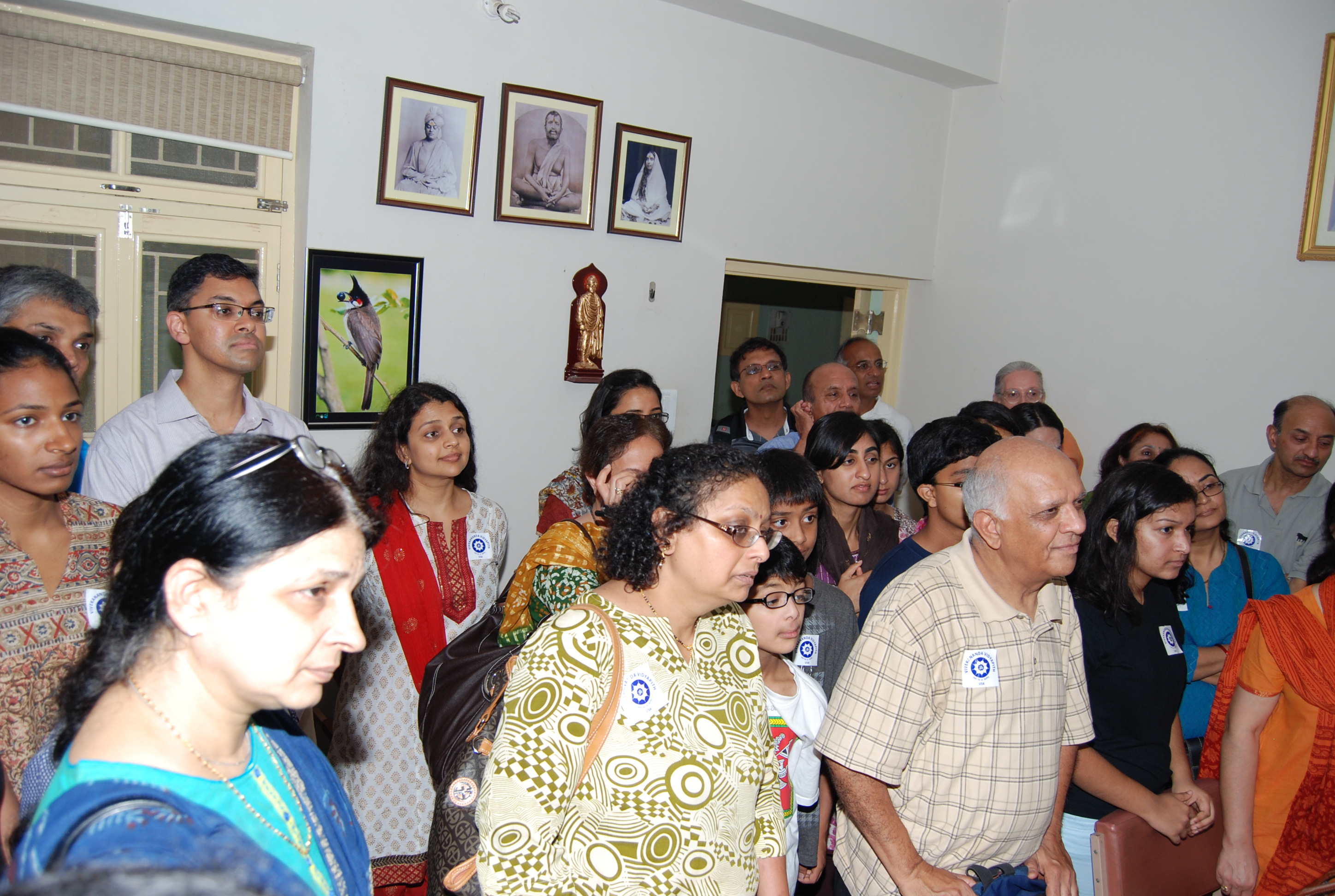
Inside the building, we found a large room and a large lobby. There were tables in the middle of the room and chairs around them. On the table they had arranged a variety of snacks, plastic plates, and a huge coffee pot with cups on the side. It was clear that Revered Swami Divyanandaji had made all of this ready for us.
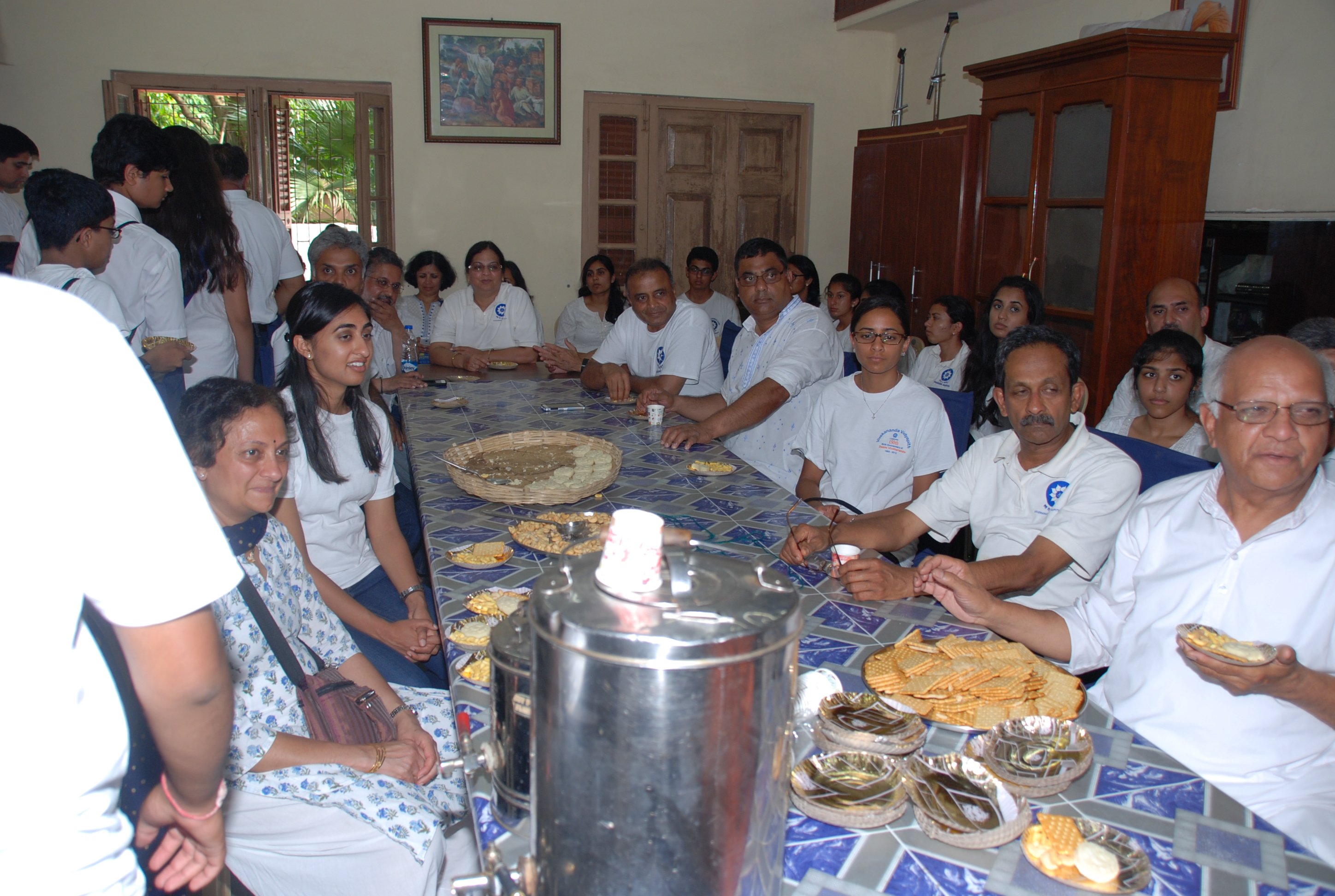
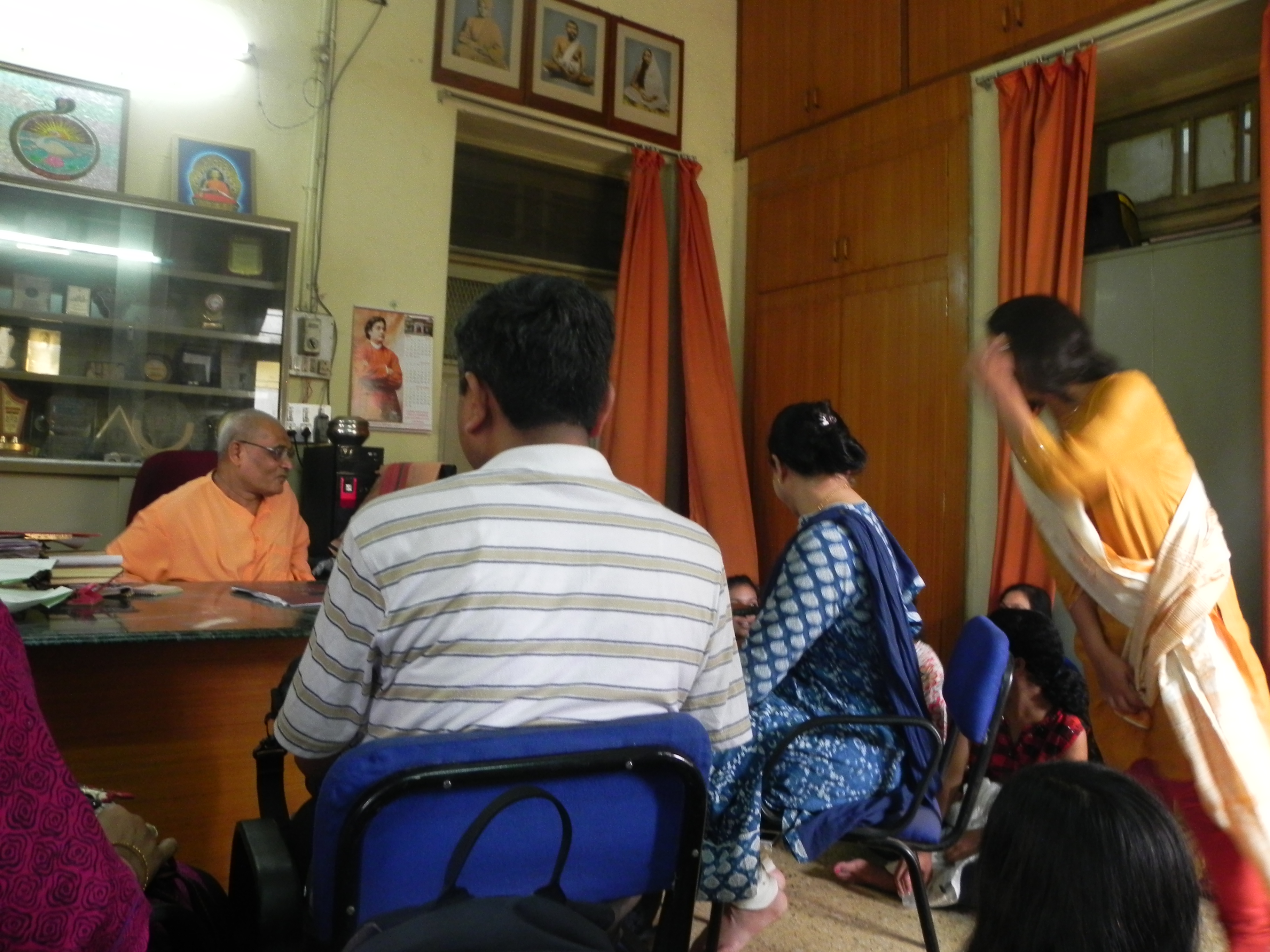
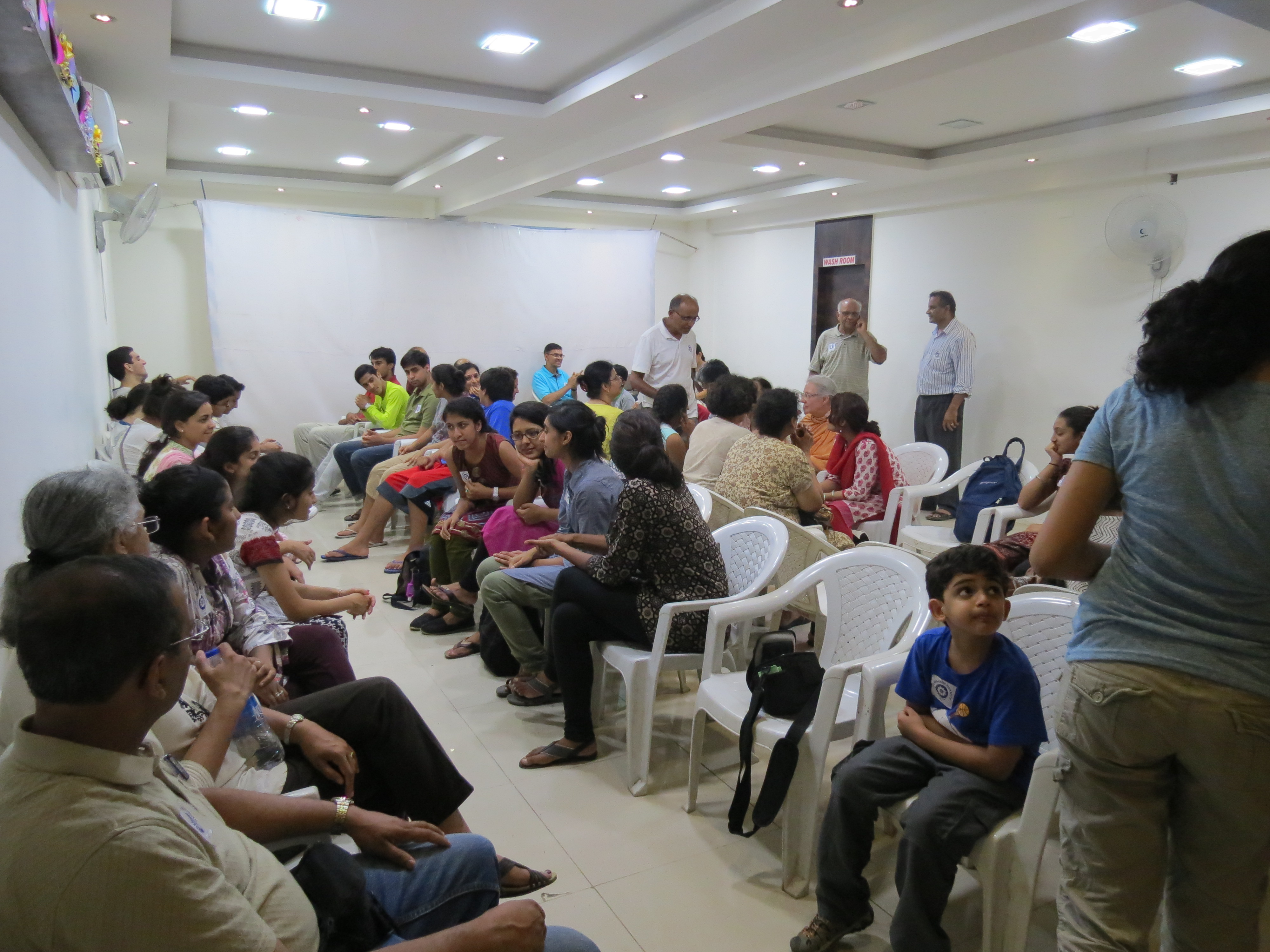
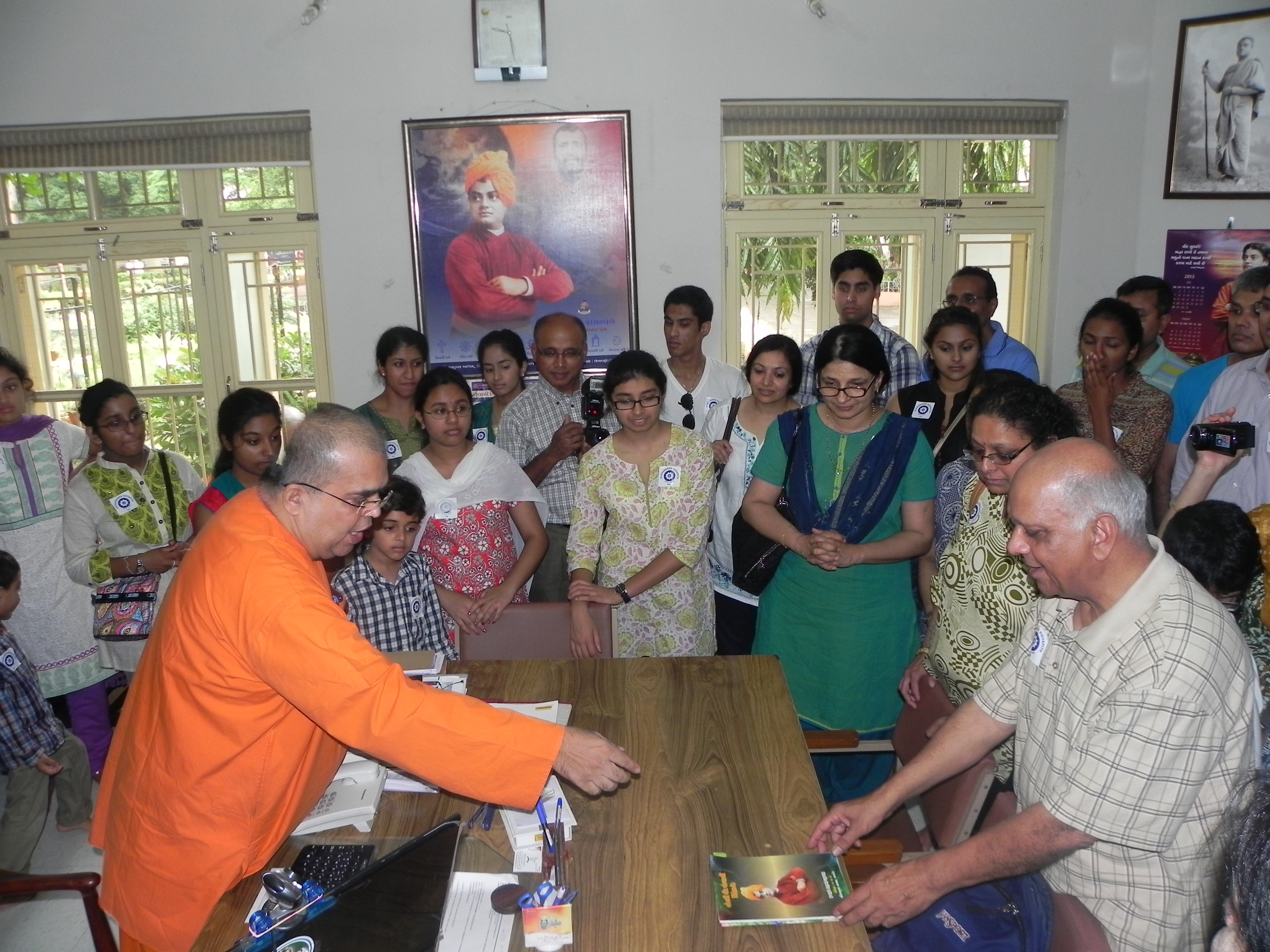
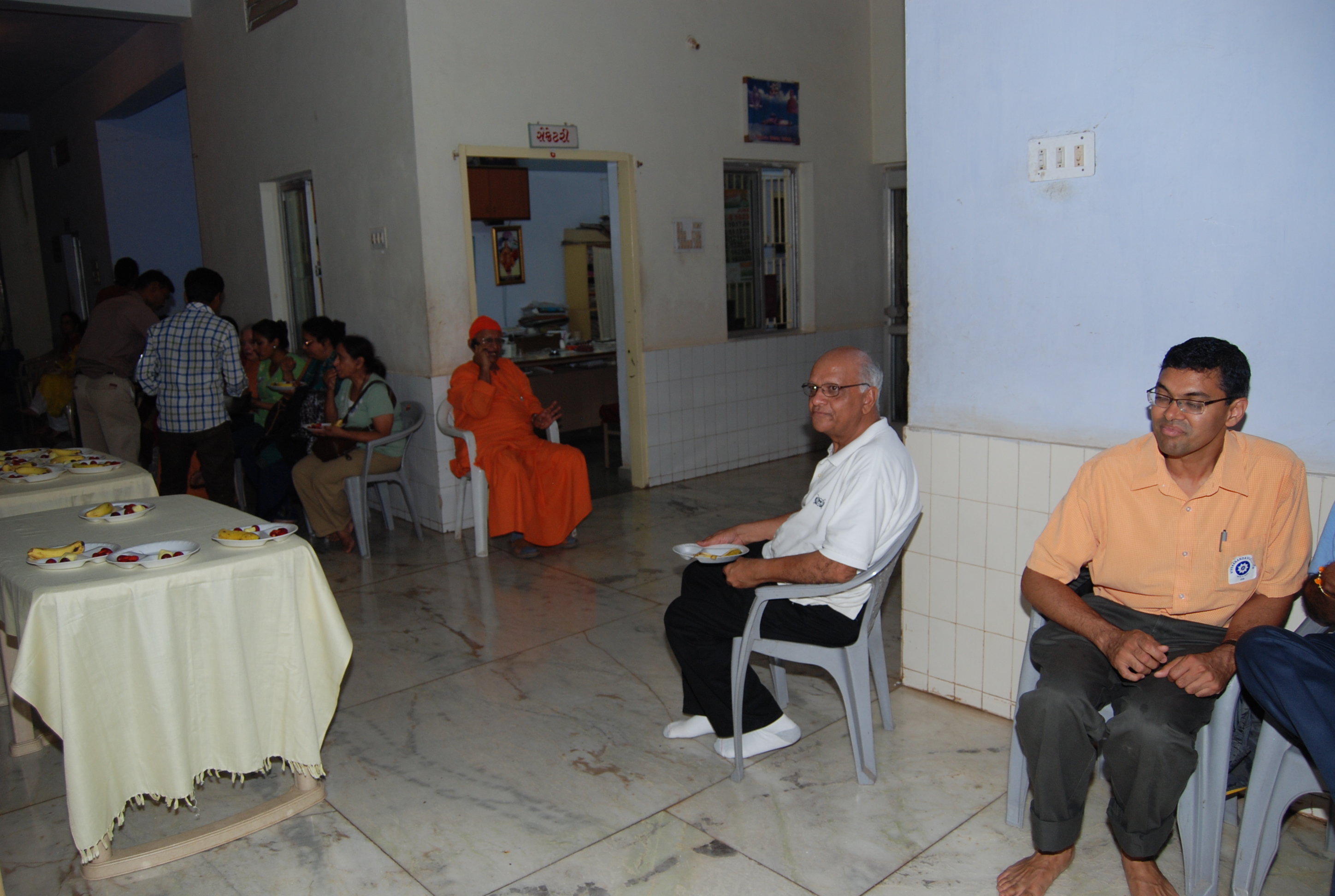
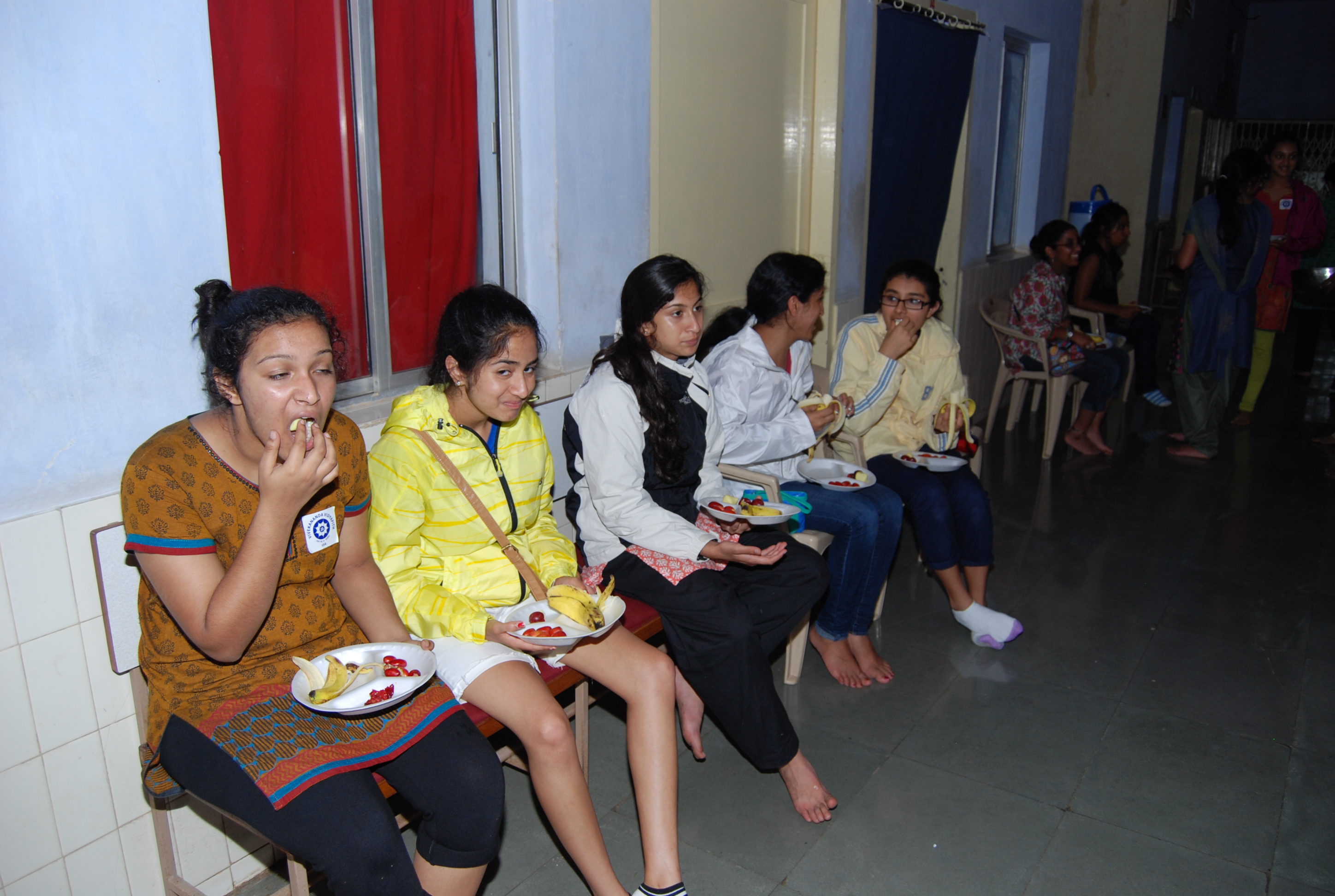
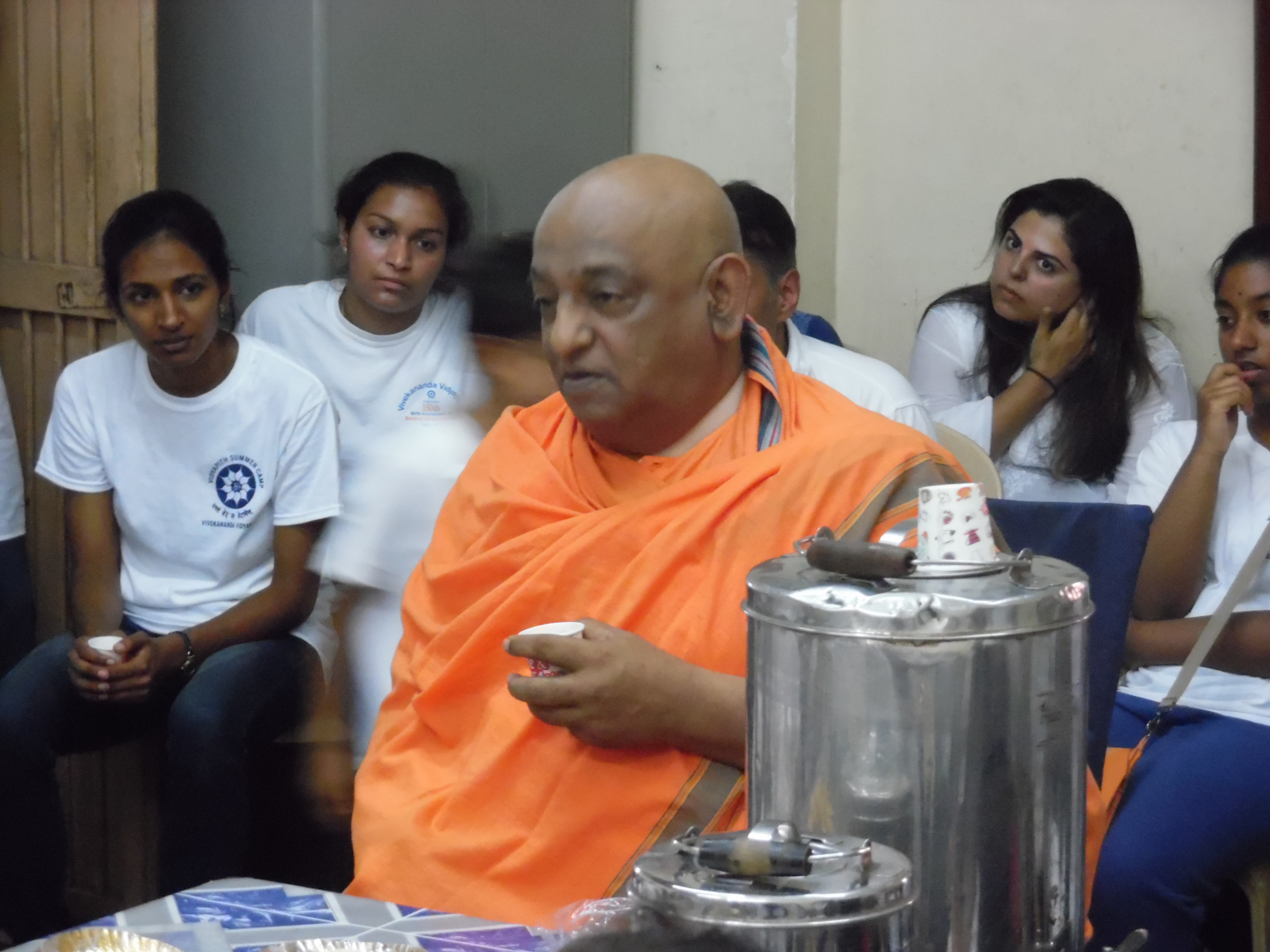
3. DSC_0353 3. DSC_0354 3. DSC_0356He asked us to take our seats and asked a few people to help with serving the snacks. We filled the room and a few of us went into the lobby. A couple of Vidyapith people started serving the coffee and snacks. Rev. Swami Divyanandaji was lovingly and joyfully watching us serve and enjoying the snacks and coffee. We requested him to sit with us and he joyfully agreed, “Yes, I will join you.” He was very non-assuming. He sat and asked, “Let me taste the coffee to see how it was made.” He took some coffee and started sharing his thoughts with us.
3. SAM_0088

Rev. Swami Divyanandaji:

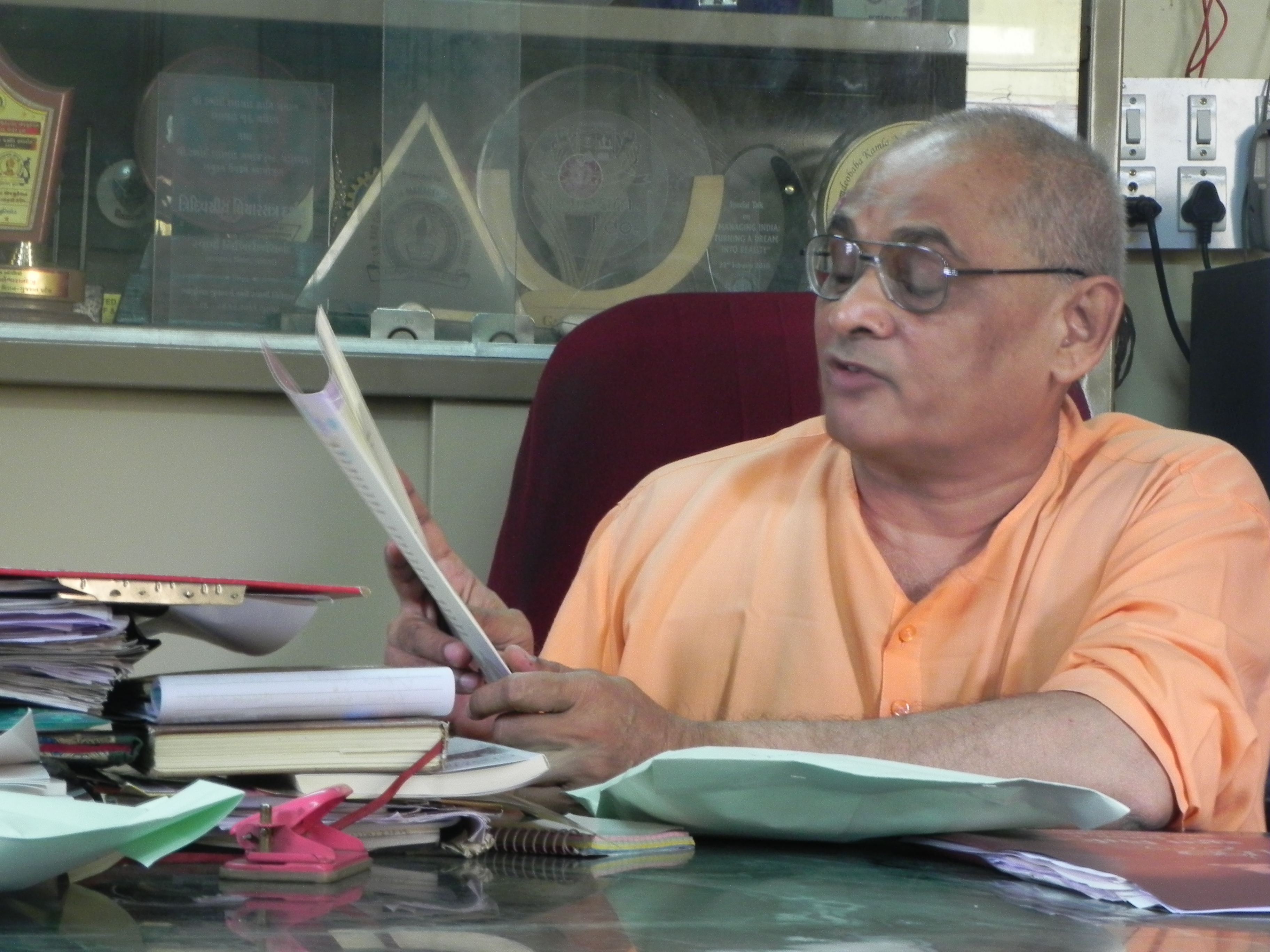
Rev. Swami Divyanandaji has done work with prisoners in jails and has helped many of them change their lives. He gave examples of how many innocent people were convicted and how he helped them educate themselves while fighting for their innocence and release. Several of these innocent prisoners were lawfully released and then went on to acquire academic degrees and settle with good jobs. These touching stories drew the attention of all of us, young and old. Everyone started looking at him with great reverence.

After these stories, Rev. Swami Divyanandaji advised us to turn all of our negatives into positives. He told us how to do this with a few clever acronyms. The following are a few examples:

  • “If someone tells you NO, do not get upset. Think that NO means a New O It is an opportunity to think about your next step or next goal.”
  • “Do not worry about failure. Do you know what FAIL means? It means that was the ‘First Attempt In Learning!’”
  • “Watch your WATCH. Watch your Words, Actions, Thoughts, Character and Habit!”
  • “Do you know what STRUGGLE means? STRUGGLE means ‘Surrender To Ramakrishna and U (You) Get Genuine Love Easily’.”
  • “Whenever you see PEPSI, think of this: ‘Play well, Eat well, Pray well, Study well, and Integrate Well’.”
  • “If you had worked hard for something and you cannot achieve it, don’t think it is the END of everything. Think that END means ‘Efforts Never Dies’.”

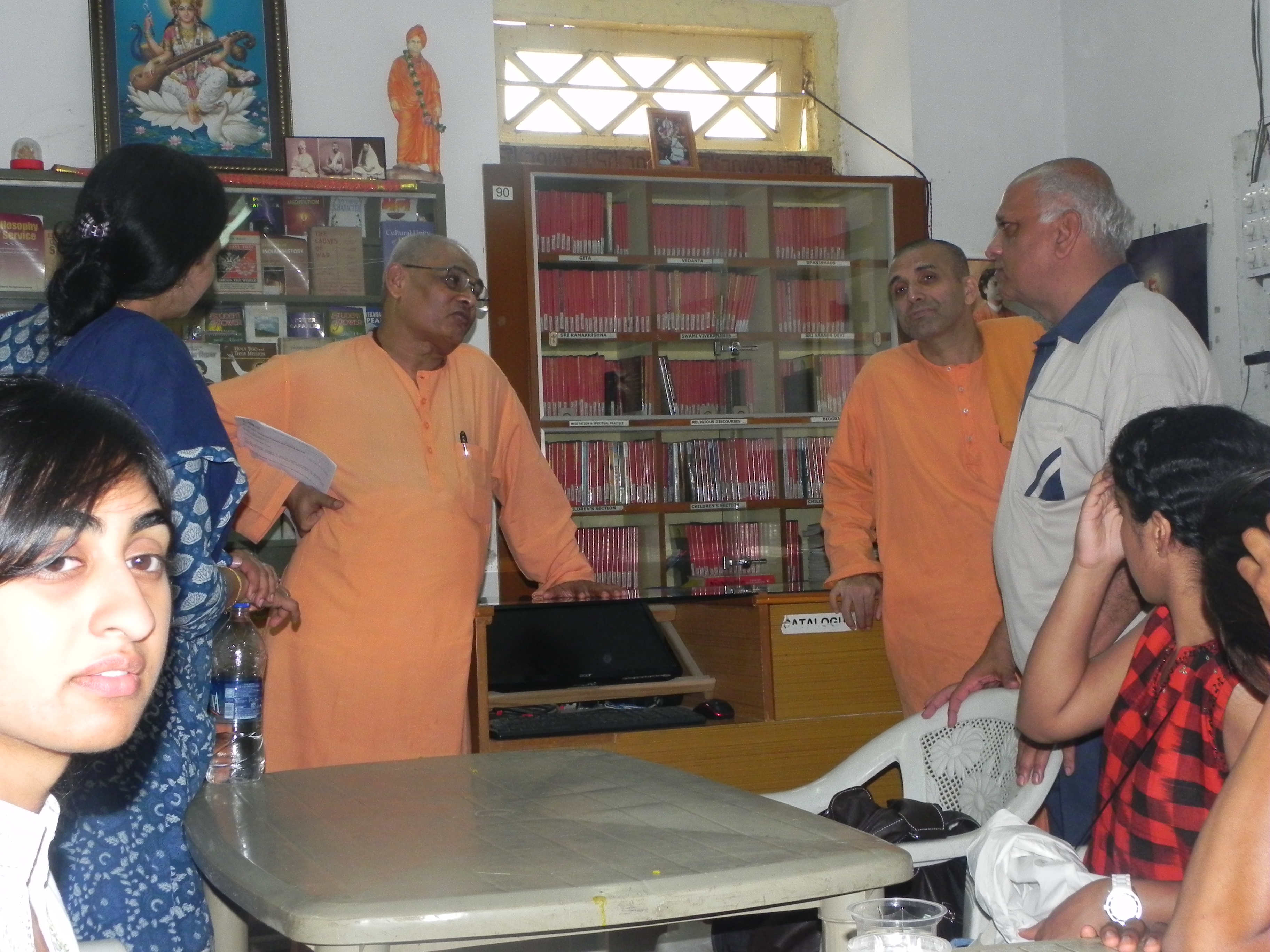
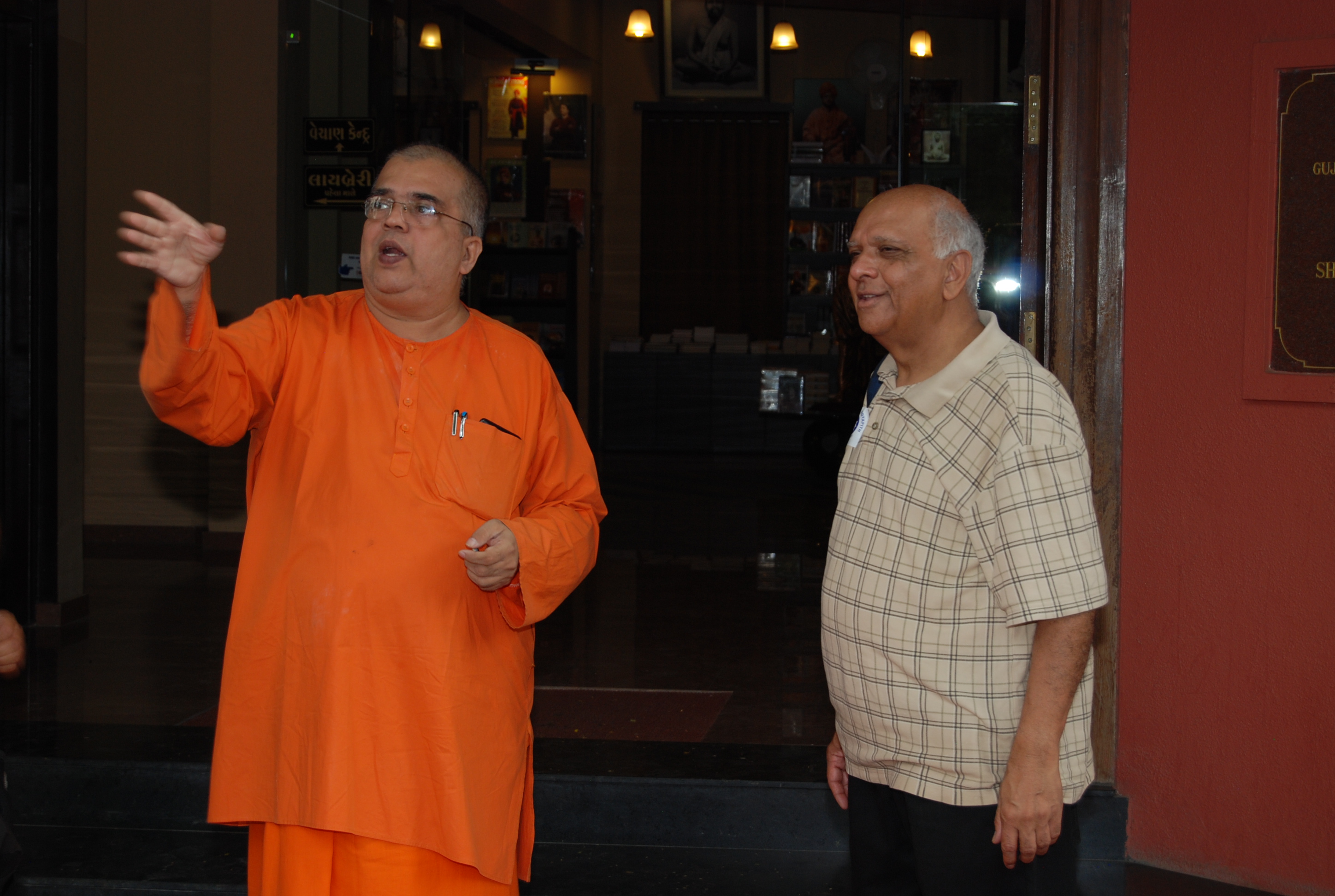
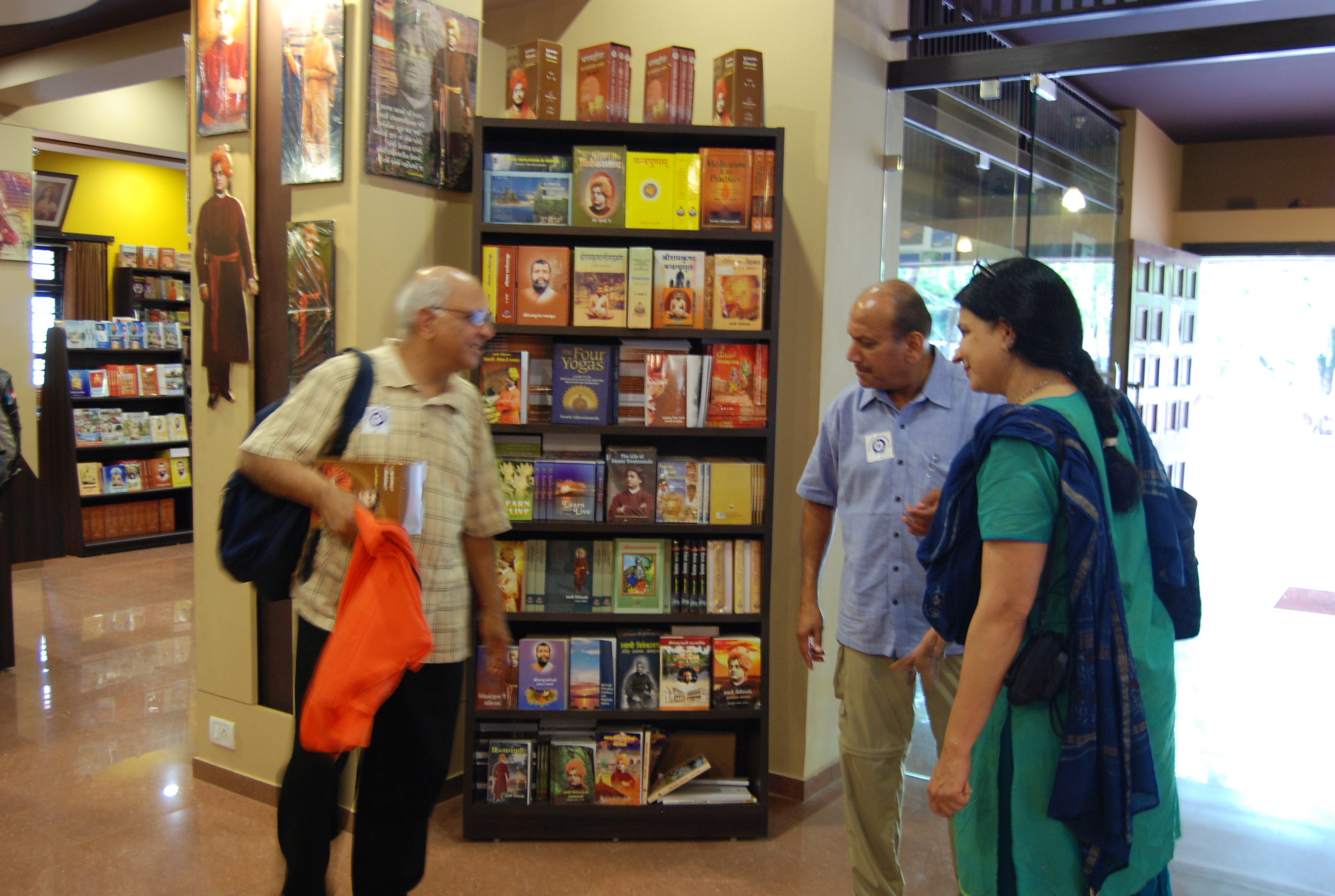
With his deep and commanding voice, his sense of humor, and his cool way of presenting inspiring thoughts, Revered Swami Divyananda touched the hearts of us all. After the conversations, one person immediately asked, “Swamiji, will you please visit our Vivekananda Vidyapith when you come to the USA?” Swamiji without any hesitation responded, “Sure! When I will visit USA next, I will come to Vivekananda Vidyapith.” Rev. Swamiji, then asked us to visit Saradapitha’s educational institutions and the bookstore. He informed us that the bookstore in Saradapitha has the largest collection of Ramakrishna literature around here.

Educational Institutions and Bookstore of Saradapitha:

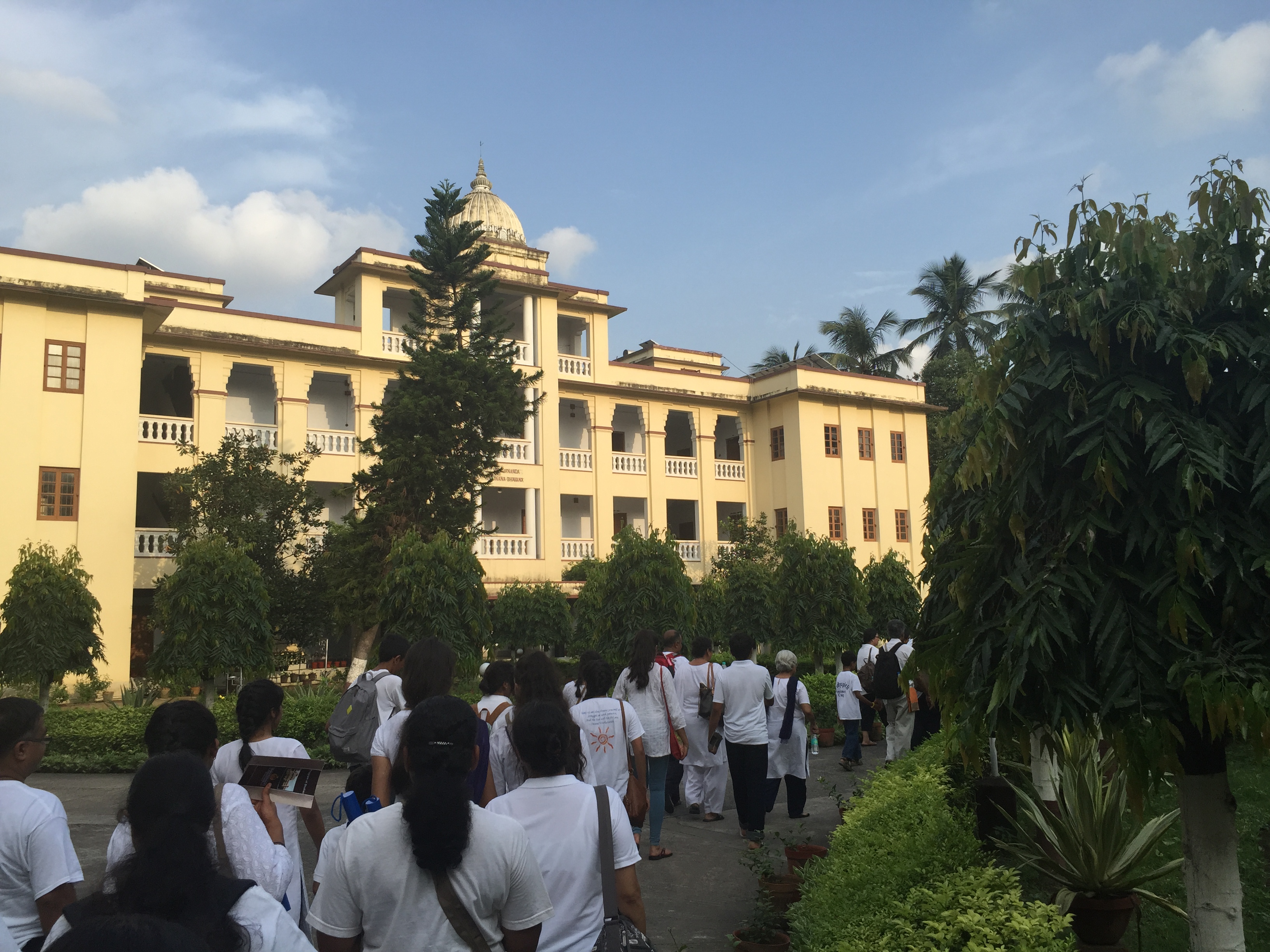
As we walked to the educational institutions, Rev. Swami Divyanandaji gave us literature depicting the various educational activities at Saradapitha. We learned that RKM (Ramakrishna Mission) Saradapitha runs the following educational institutions: (

1) RKM Shilpa-vidyalaya (a vocational training center for the under privileged)

5. (1) shilpavidyalaya

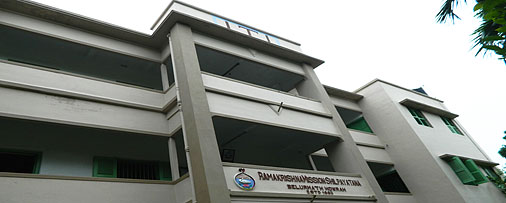
(2) RKM Shilpayatana (the Industrial Training Center),
5. (2)rkm_shilpayatana

(3) RKM Shilpa-mandir (Community Training and Computer Centers)
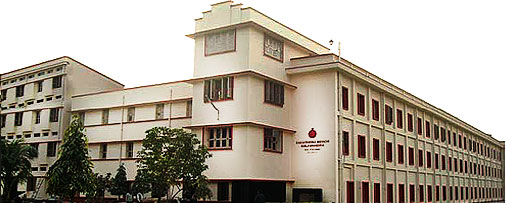
5. (3)shilpamandira

(4) RKM Jana-siksha-mandira (a center for school drop-outs and those students who had little formal opportunities for education)
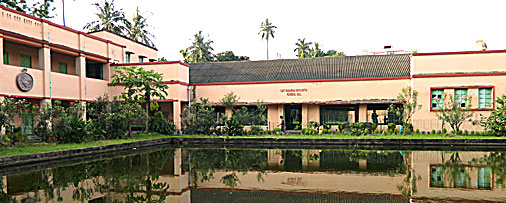
5. (4)janasikshamandira

(5) RKM Samaj-sevak-sikshan-mandira (the Residential Training Center for Rural Youth)

5. (5)samaj_sevak_sikshan_mandir

(6) RKM Sikshana-mandira (the Residential Teachers Training College) and

5. (6)sikshanamandira

(7) RKM Vidya-mandira (the Residential College providing undergraduate and Graduate degrees).
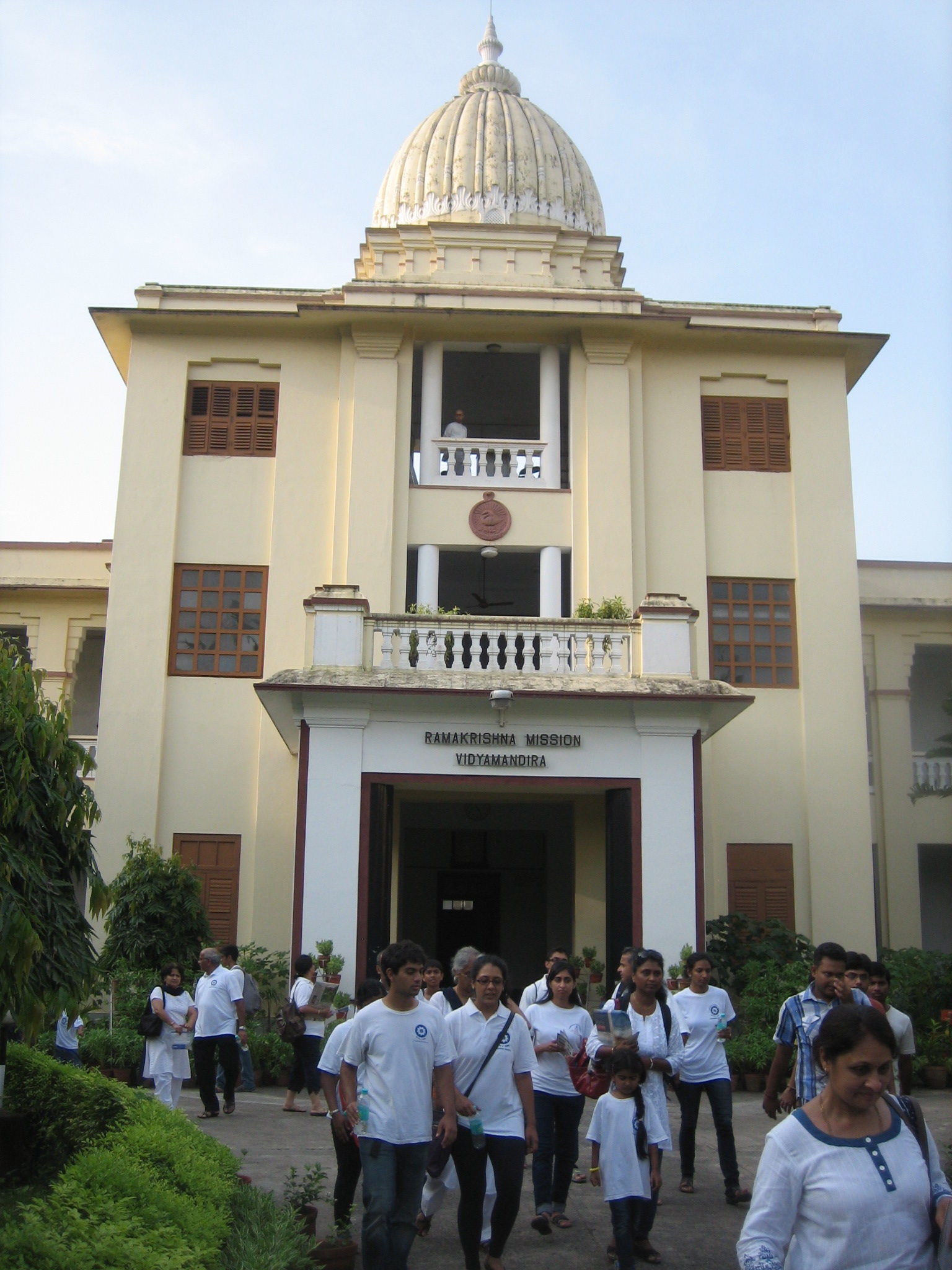
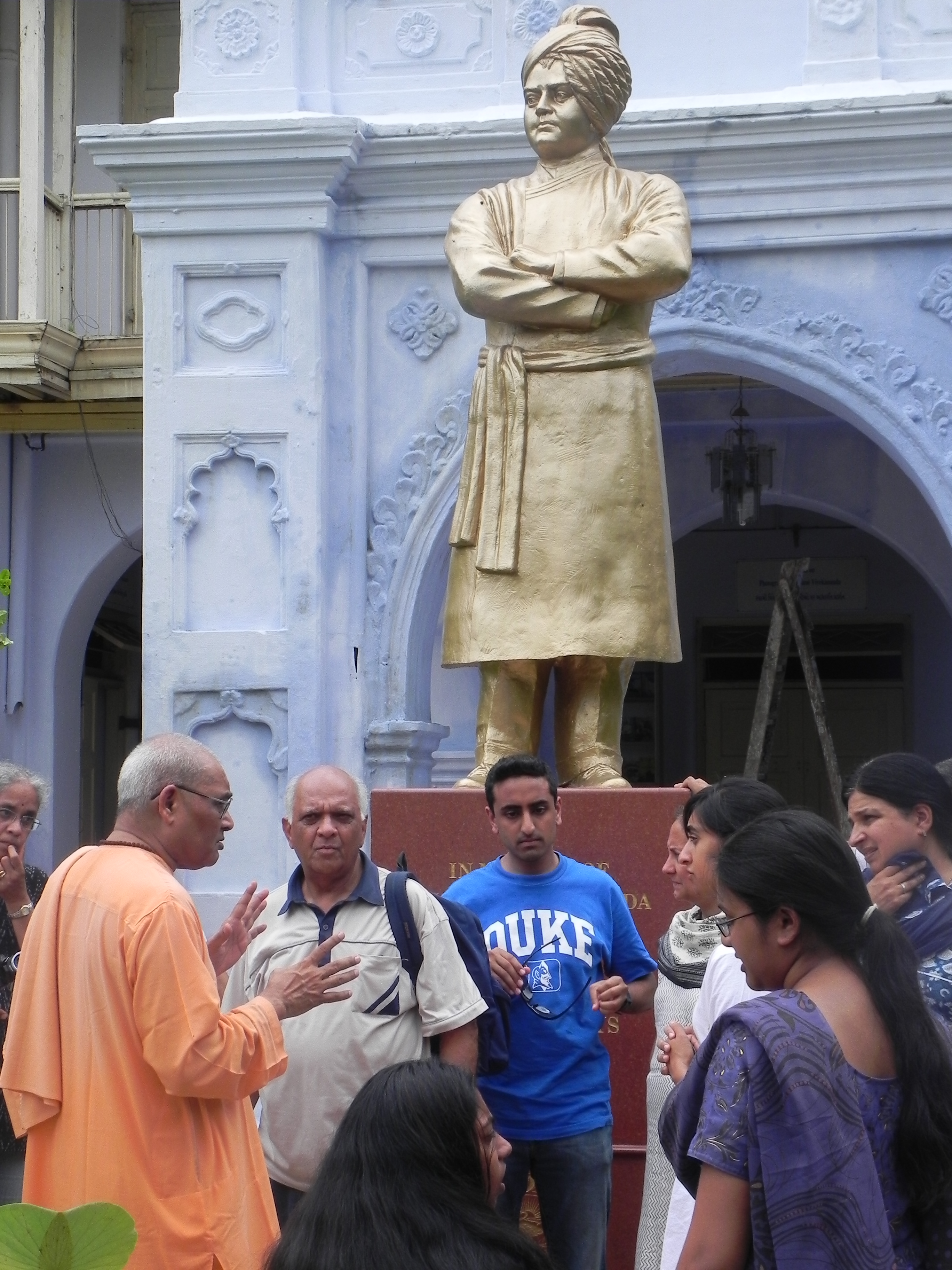
4. IMG_1196We learned that several senior Swamis of Ramakrishna Math and Mission are and have been associated with this college and the other Saradapith Institutions. Some of these Swamis include Rev. Swamis Adiswarananda, Tathagatananda, Swahananda, Sarvadevananda, Girishananda, Divyananda, Vimuktananda, and Tejasananda.
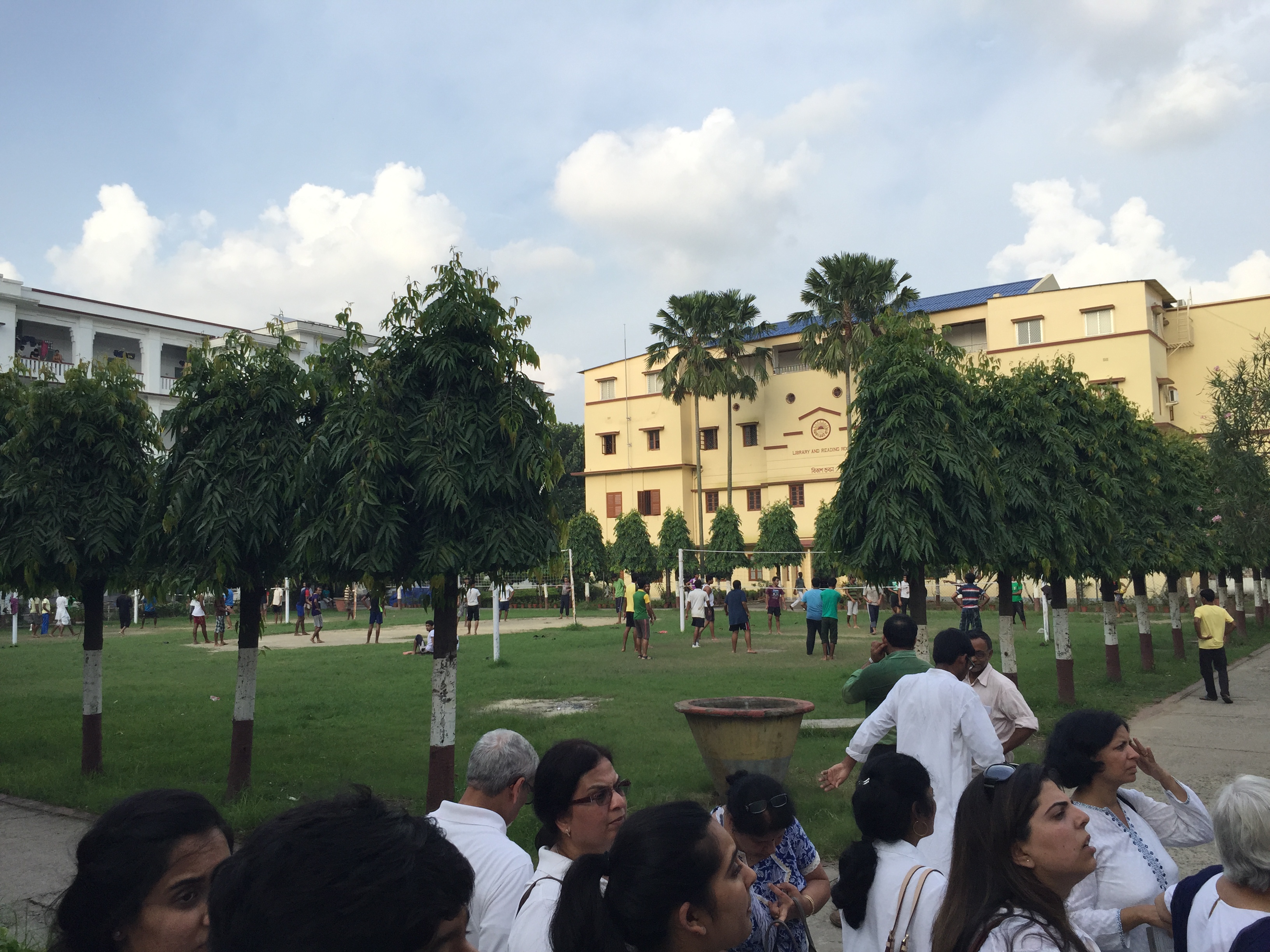
4. IMG_0628 4. IMG_0629 4. IMG_1193 4. IMG_1194

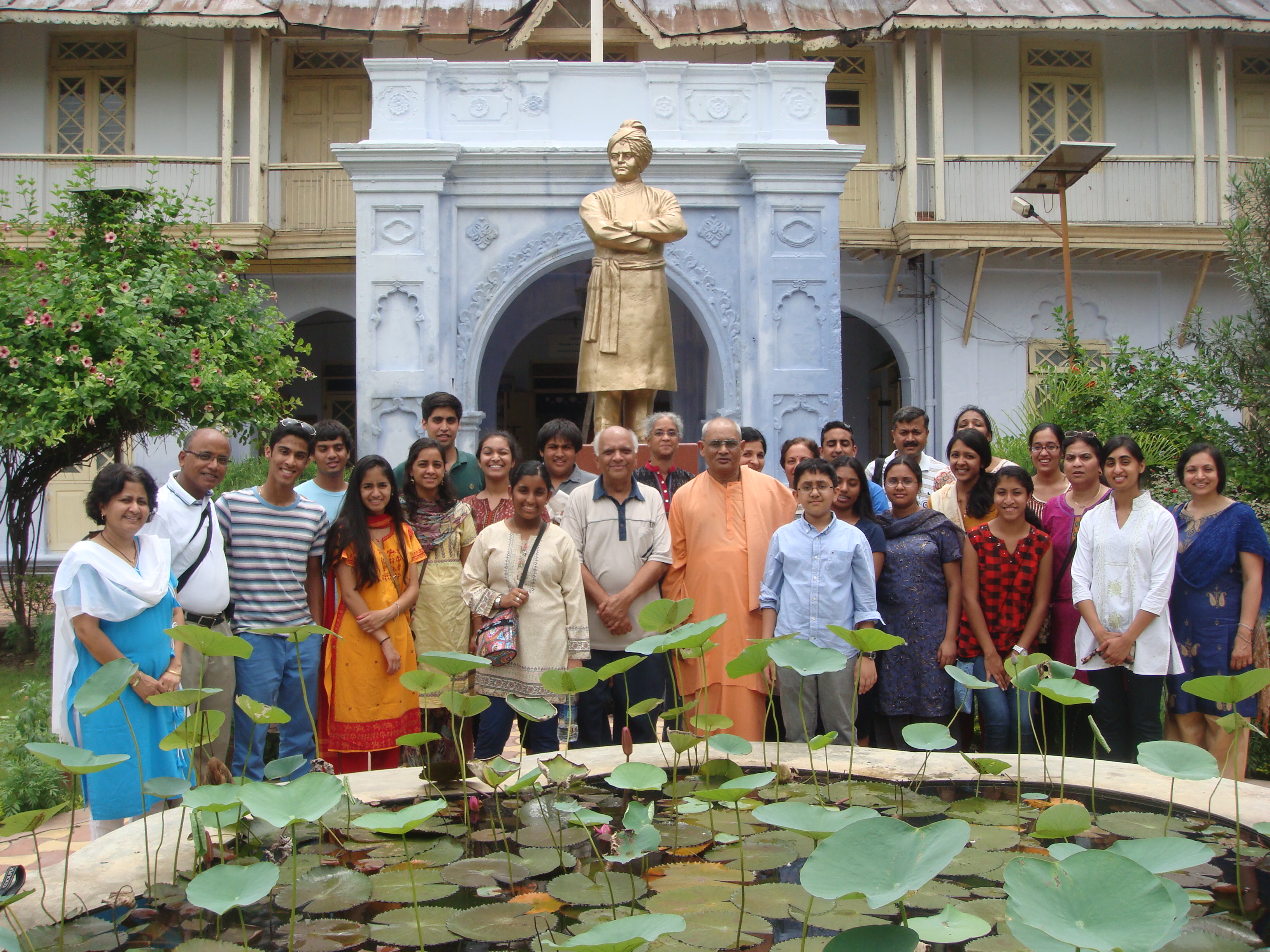
The weather was very hot and humid as we walked to the educational institutions. Luckily, the Club7 members brought packages of water bottles inside the gate of the Saradapitha. Everyone grabbed a water bottle to quench his/her thirst. Then, with the help of Dr. Suvendu Majumdar, we visited several of the educational institutions described above. Many of Vivekananda Vidyapith’s devotees were associated with Rev. Adiswarananda for many years and they were thrilled to see the RKM Vidya-mandira and Swamiji’s association with it.

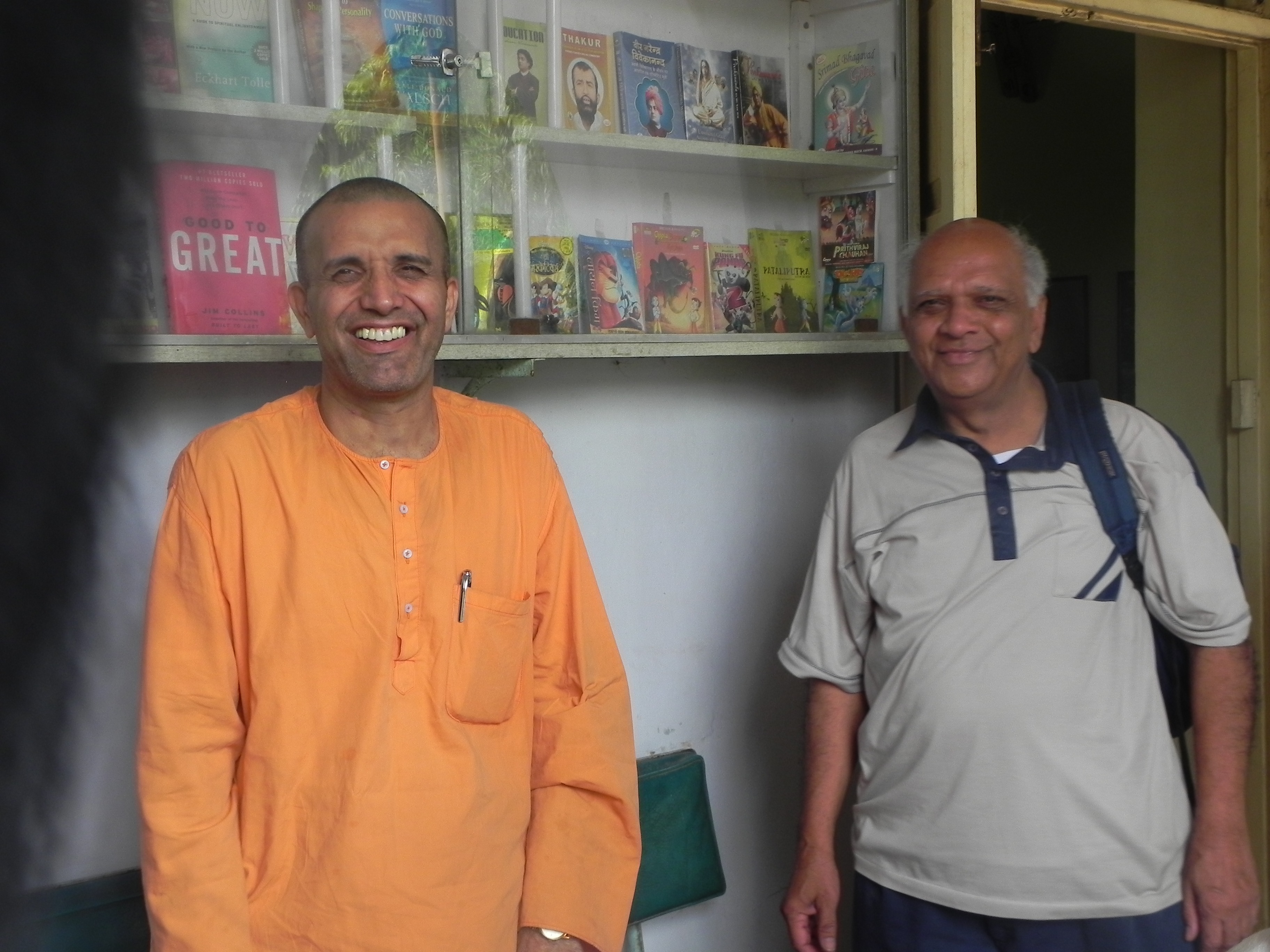
After visiting the institutions, we went into the bookstore. We had half an hour to buy books, pictures and other things from the store. Most of the pilgrims bought books and pictures of Sri Ramakrishna, Holy Mother Sarada Devi, Swami Vivekananda, and their disciples. Because our group was so large, several additional Saradapitha volunteers came to the bookstore to help us checkout. After our trip to the bookstore, we all put our things in the buses and headed towards the Belur Math Museum. To our surprise, we found that all of the water from the Saradapitha campus and the street outside was gone! It was dry again and we had no difficulty in walking.
4. IMG_1197

Sri Ramakrishna Museum:

We gathered at the entrance of the Belur Math Museum. The Club7 organizers had bought tickets for all of us. With the company of Dr. Suvendu Majumdar and the Club7 managers, we went inside the museum. We were all surprised to see a variety artifacts; each was meticulously collected, carefully protected, and thoughtfully presented. The following are a few of the items we saw at the museum:

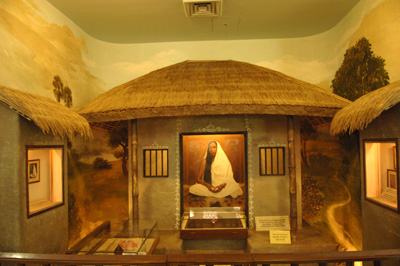
RKM Museum 1 RKM Museum 2

  • Beautiful replicas of Jayrambati and Kamarpukur.
  • Replicas of Thakur’s and Holy Mother’s homes with several artifacts they had actually used.
  • Jugis’ Shiva Temple where Sri Chandramani Devi had a vision that a light from Shiva entered into her. This is the story behind Sri Ramakrishna’s birth.
  • A beautiful painting of a flock of white cranes contrasting with the dark clouds in the background. This gave us a glimpse of the scene Sri Ramakrishna was captured by and impacted by as a child. That was his first Samadhi experience.
  • The Pynes’ Shiva Temple where Gadadhar acted as Shiva and went into Samadhi.
  • A life-size statue of Sri Ramakrishna, with his green jacket and original slippers.
  • Many articles of clothing used by Sri Ramakrishna, Holy Moher Sri Sarada Devi, Swami  Vivekananda and other disciples.
  • A sample of Sri Ramakrishna’s handwriting.
  • Holy Mother’s foot-prints and an impression of Holy Mother’s thump on a postal money-order.
  • Several items used by Holy Mother.
  • A life size image of Holy Mother. Her smile and loving eyes in the picture seemed to shower pure love for all of us.
  • A replica of Sri Ramakrishna’s room in Dakshineswar as it was while he was living there. Narendra’s original tanpura reminded us that he used to sing on this tanpura in that room and Sri Ramakrishna used to go into Samadhi. It gave also gave us a glimpse of the Dakshineswar temple. Everyone, especially the students, were recognizing and pointing to the things they had seen at Dakshineswar in the morning and were extremely happy.
  • We saw Shyampukur Bati, Cossipore Garden House, Udbodhan where Holy Mother stayed, and Balaram Mandir –all of which we were going to see in coming days.
  • The replica of the Art Institute of Chicago, a huge picture of the Pariament of Religions, and a life size image of Swami Vivekananda wearing a rob and a turban took us to September 11, 1893, reminding us his famous lecture and universal message of love, peace, and harmony of religions.
  • A replica of the Vivekananda cottage at Thousand Island Park, New York State which looked just like the original. Many of us had been there. We felt as if we were in the USA.
  • The experience of seeing robes and shoes of Swami Vivekananda was thrilling.
  • There were pictures of direct disciples and things they had used. There were also pictures of householder disciples of Sri Ramakrishna and the western disciples of Swami Vivekananda. We even saw things used by Sister Nivedita.

Several students said that after seeing all these they felt that what they had learned about Sri Ramakrishna, Holy Mother Sri Sarada Devi, Swami Vivekananda and other disciples were true and real, not mythology or stories.

The following is a link to the Museum Video Link. The video has been prepared by the Belur  Math:

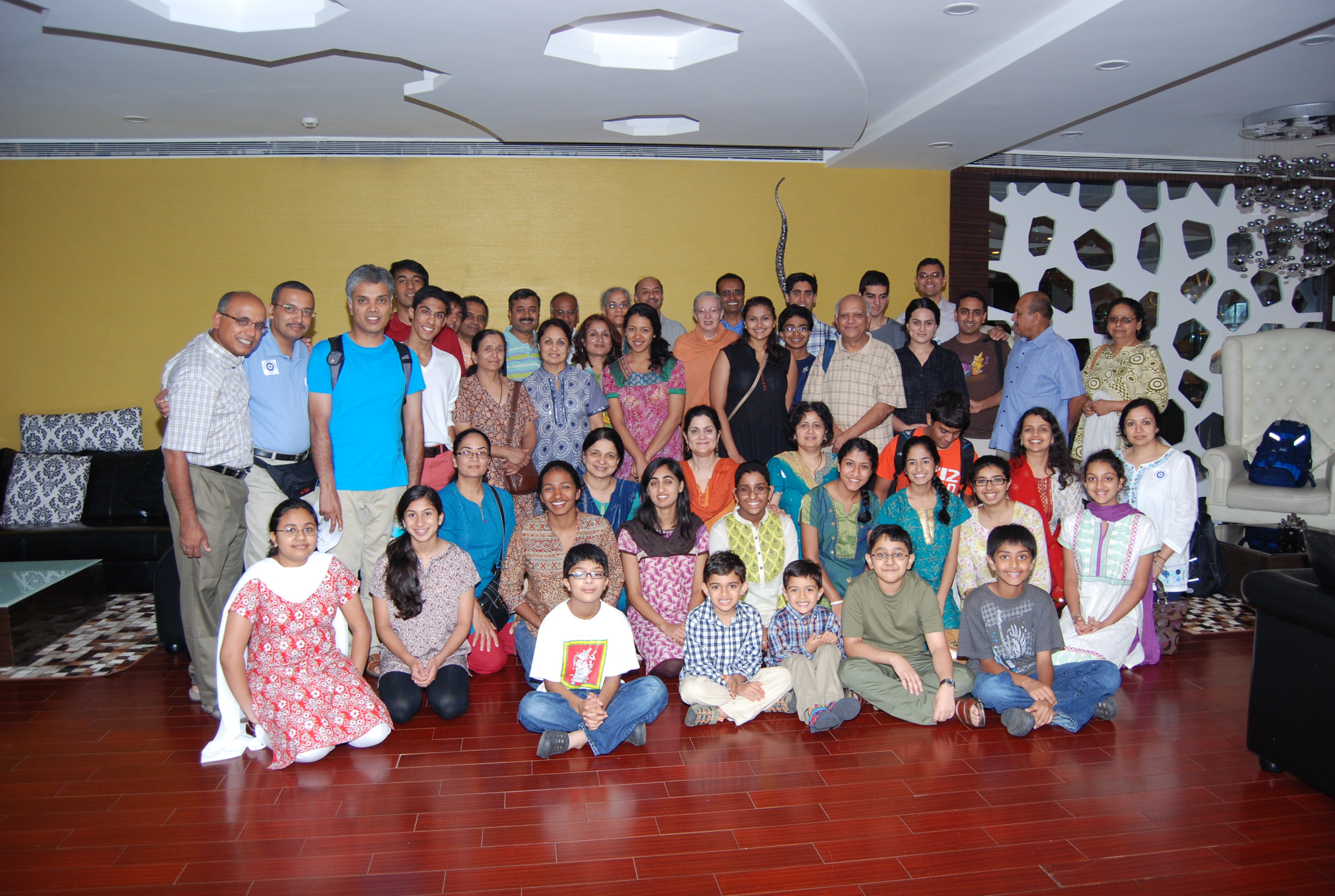
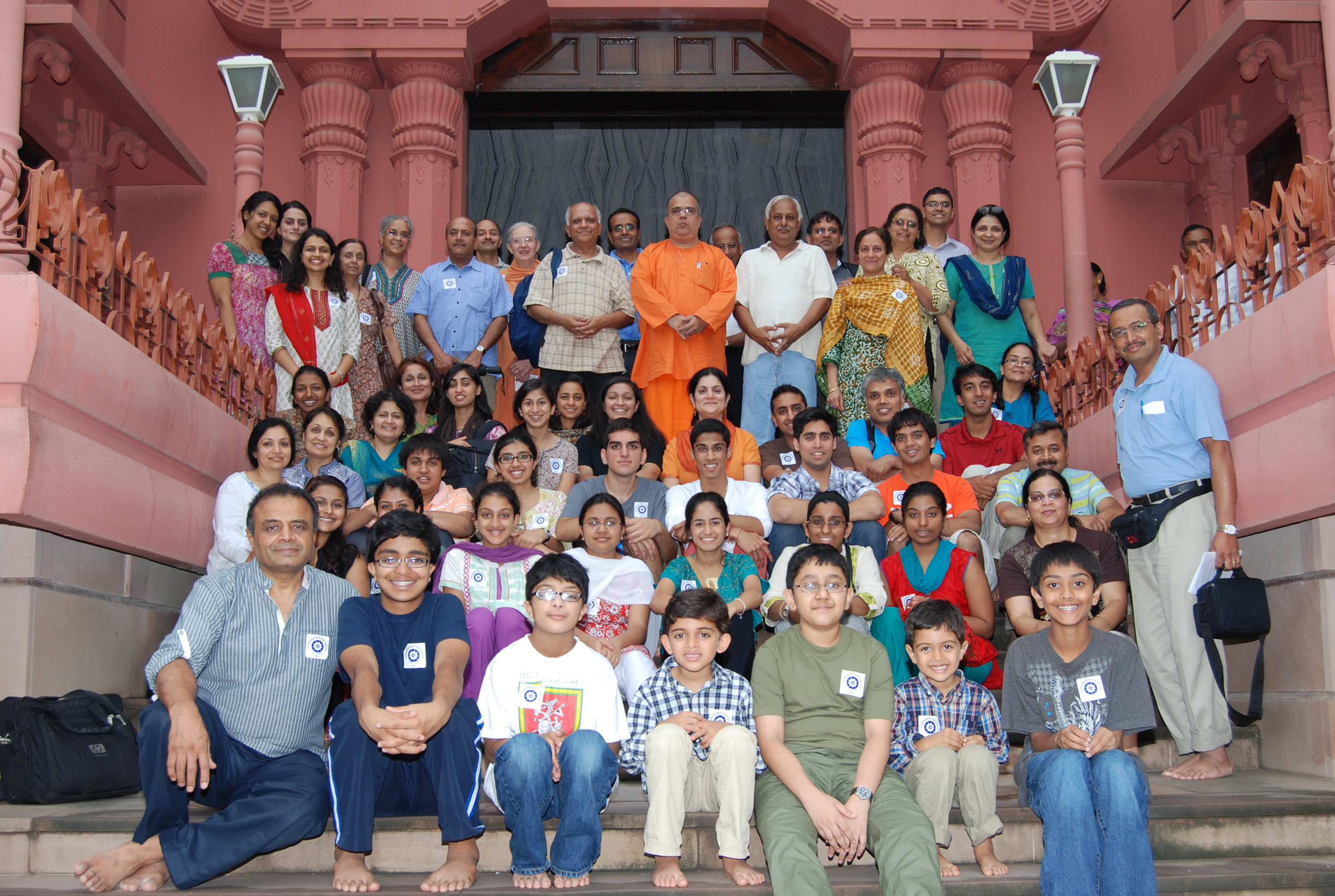
As people finished seeing things in the museum, they came out and sat on the front steps of the museum. Soon all 91 Vidyapith people in their Vidyapith’s uniform were sitting on the steps. It was a spectacular view.

The Sun was setting, Ganga was flowing on one side, and people were gathering inside the main temple for the evening arati. We quickly went to our buses to remove our shoes and freshened up, and followed Dr. Suvendu Majumdar to the main temple of the Belur Math.

Belur Math Temple Shrine 2Aarti

We were so blessed that Rev. Swami Girishanandaji had made an arrangement for all the Vivekananda Vidyapith people to sit immediately behind the Ramakrishna Mission and Math Swamis and Brahmacharis. We all sat as we sit in the Vidyapith prayer hall, gents on the left side and ladies on the right side. Everyone sat in the prayer posture (crossed-legs) and started doing japa as we were waiting for the arati to start.

A few of us were observing how systematically all the preparation for the arati was done. Two young brahmacharis came and swiftly rolled down the carpets for the Sadhus and Brahmacharies. Slowly, the Sadhus and Brahmacharis started coming and taking their places. The tanpuras, mridangam, and other musical instruments came. Outside, in all directions a conch was blown to convey to all that the ararti is about to begin. The big prayer hall was packed with devotees. There were devotees sitting outside the doors. All eyes were focused on Sri Ramakrishna who was decorated with beautiful clothes and garlands. There was a serene environment.

One Swami played a tune to begin the arati. Inside, near the altar, a Swami stood with a big decorative lit arati to offer to Sri Ramakrishna. With melodious voice, a Swami started “Khandan Bhava Bandhan…” accompanied with the mridangam playing chautaal while a gong gave the main beats of the taal.

Everyone joined in singing the arati. The voices of hundreds of people, lead by the melodious voices of the Swamis and Brahmacharis singing the glories of Sri Ramakrishna, easily captured the minds and hearts of all. Swami Vivekananda’s every word of the Khandan Ararti had deep meaning and the music was appropriate for the words. The Vivekananda Vidyapith devotees did not need any papers as they knew all the words; they only had to carefully stay with the slow pace. The slow pace singing helped the mind dwell on each word and meditate on Sri Ramakrishna. After the slow paced singing, everyone sang the whole Khandan Bhava Bandhana… in a fast pace. This was followed by the Sri Ramakrishna hymn, “Om Hri Ritam…” again composed by Swami Vivekananda. The meaning of the hymn is: “O Sri Ramakrishna! The friend of people who are poor in virtues! For various reasons I surrender to you.   Your name is auspicious and gives peace. You are the only goal of my life.” It was followed by a hymn to Holy Mother Sri Sarada Devi, namely “Sarva mangal Mangalye…” The hymn was sung with great devotion using all the serenity and melody of the Bihaga Raga. Any heart would have melted upon hearing the singing of the hymn. One could feel the presence of Sri Ramakrishna, Holy Mother, and Swami Vivekananda, as the writer and composer, in the hall. The arati was concluded with “Jai Mahamayiki Jai” and “Jai Bhagavan Sri Rmakrishna Devaki Jai.”

The following is the arati link where we can listen to the whole arati prepared by the Belur Math Swamis and Brahmacharis.

http://www.belurmath.org/arati_belurmath.htm

Khandana – http://www.belurmath.org/arati/khandana.mp3

Om Hrim Ritam – http://www.belurmath.org/arati/om.mp3

Sarva Mangala – http://www.belurmath.org/arati/sarva.mp3

Everyone remained seated in silence as the Swamis and Brahacharies saluted and left. Then, the Vidyapith people were asked to go to the front to salute Sri Ramakrishna and then proceed outside through the door on the right side. As we were coming out from the door, Rev. Tapas Maharaj was waiting for us to take us to Rev. Swami Girishanandaji. We all came down the steps in a line and took the prasad of “Patasa” given by two Swamis and then went to the office of Rev. Swami Girishanandaji. He was very pleased to see us all again. We narrated to him what we had done between previous morning and today’s arati. Then, he wished us well for the rest of our pilgrimage and blessed us all.

Even though it was a long day, everyone’s mind and heart was filled with the joy of being able to do all of the things we had planned. All the activities were spiritually uplifting. With high spirits, we went to our air-conditioned buses to go back to our hotel. In the buses, people reminisced all the events of the day, sang a few dhoons and bhajans, and caught up with some rest.

At the Hyatt, a delicious dinner was waiting for us. Everyone enjoyed the dinner and soon went to bed to get ready for the next day. Everyone was thankful that by the grace of God, we had successfully completed two days of our pilgrimage with great weather and had been able to go through all the activities as planned without any problems.

(The original report was written by Abhishek and Avni Senjalia)

Being Spiritual Vs. Religious

The original aim of all religions was to develop the spiritual side of human beings.  However, knowingly or unknowingly, many religious groups slowly drifted away from spirituality.  The earth has been covered with bloodshed more so in the name of religion than for any other reason. No religion can claim that it is inculpable of this.  Every religion has a group of people who, instead of encouraging love for all human beings, espouse hatred for the people of other religions.  That is why many thoughtful and sensitive people are distancing themselves away from religion and are happy to be called atheists.  However, they do not realize that along with religion they are often giving up spirituality and thus they miss all life-essential benefits that spirituality can offer.

Keeping this in mind, I reflected upon the differences between being a spiritual person and being a religious person.

1. The Goal:

Spiritual:  The goal of a spiritual person is to realize the Spirit or Soul or Atman that is lying within. The Spirit is what remains after we remove the name and form of a person.  Thus, the Spirit is the same in all people irrespective of a person’s color, country, culture, religion, age, gender and any other external thing that separates them.  This Spirit or Soul is divine.  It is the support of every being on the individual plane and it is the support of the universe as a whole.  It is called the Consciousness or the Ultimate Reality of a being.  It is referred to as the highest truth a human-being can achieve. And it is the peak of the mental evolution of human beings.

Religious: The goal of a religious person is multifarious. Some people want to go to heaven. Some want worldly pleasures and success including wealth, power, position, name and fame. Some want a little peace of mind. Some want to continue the tradition of their parents and grandparents. And some want to avoid the guilt of not being religious.

2. The Practices:

Spiritual:  A spiritual person’s practice is an inner search for the Ultimate Truth.  This search is as scientific in nature as that of a scientist’s for external truth.  Even though this inner search is based on the guidelines of the scriptures and the teachings of Sages and Saints who have realized the Ultimate Reality or Ultimate Truth, a spiritual seeker has full freedom to carve out a path which suits his/her physical and mental capacity and chemistry.  Thus, the spiritual practice is individually customized.  Since spiritual development is an inner journey towards our own divine Self, it is purely individual.

In general, there are four kinds of practices for spiritual development related to the four faculties of a human being: the physical, the emotional, the focusing of the mind (concentration), and the analytical.

The spiritual practice related to the physical faculty is unselfish service to humanity.  In this practice, one puts aside all external differences and personal gain and tries to serve all beings for one’s own spiritual development.  The more one becomes unselfish in thought, speech, and action, the more one advances towards his/her own divine Self.

The spiritual practice related to the emotional faculty focuses on developing love for a divine form of God, an incarnation of God, or a saintly person, and to think of and imbibe His/Her virtues in one’s personal life. One worships a form of God and sings His/Her glories to develop love for God or love for goodness.  A devotee realizes that God is not hiding somewhere outside, but is residing within.  Our true identity, the Divine Self, makes us pray to God and seek God.  Through the worship of various forms of God, people are worshipping that same God that is residing within.  Even though the same God resides in all, people are different because the manifestations of God through them are different.  Shri Ramakrishna says that fire is in every object, but it is more manifested in wood, meaning we can get fire more easily from wood than any other object.  In the same way, God’s presence can be felt more through the thoughts, speech, and actions of good people – our Saints and Sages.

Repeating name of God (Japa), doing regular prayers, worshipping God, reading spiritually uplifting books, serving and learning from devotees of God, and visiting holy places are various ways to develop love for God.  Thus, these spiritual practices are associated with the emotional faculty of human beings.

The spiritual practices related to the faculty of focusing of the mind are measures that enable one to acquire complete control over the body and mind and to develop concentration power.  Moderation in all activities – such as eating, sleeping, working, exercise, entertainment and others–is an important spiritual practice, which helps in focusing the mind.  Trying to live a goal-oriented and self-disciplined life helps us achieve control over our minds.  Worldly cravings distract the mind.  If worldly cravings are more important than spiritual development, when one attempts to focus the mind, the mind will wander about thinking about those very cravings. Practicing virtues eliminate many worldly cravings.

To focus the mind, japa (repeating name of God) and meditation are useful.  Japa easily leads to meditation.  When we meditate, we become one with the object or the person on whom we meditate.  Thus, when we meditate on our true identity, our Divine Soul, we become one with that Divine Soul.

The spiritual practice related to the analytical faculty of a person involves developing a refined, unbiased and objective reasoning.  Through this reasoning, one can find out one’s true identity or the Ultimate Reality, Soul or Atman.  Meditation and self-control help one in realizing one’s true identity.  This realization is then reflected in the thoughts, speech, and actions of a person.

Religious:  Going to a church or temple, or any other religious place, and doing solely ritualistic prayer or worship is the main activity of most religious people.  Religious people do ritualistic worship whenever it is convenient for them.  Some people do it daily, some do it weekly, some do it on monthly basis, and some do it whenever they remember to or have free time.

Swami Adiswarananda used to say that many people go to religious places of worship when they are hatched, matched, and dispatched; when a child is born, when people get married and when they die.

Religious people like to go to a religious place to offer prayers, worship as prescribed by the priest, and eat sacred food given by the priest.  They occasionally read religious books, watch religious videos, and listen to or sing religious songs.  These practices are the means and ends of religious people. It is more of a congregational practice.  Many people go to a religious place to socialize or to eat good food.  Thus, many religious places have become social, economic, and political centers.  Prayer and religious worship seem like excuses to meet and socialize. People worship with the hope that these practices fulfill their worldly desires.  Since genuine spiritual practices are difficult, people take satisfaction in going to holy places and doing some ritualistic worship or prayers.

3. The Progress:

Spiritual:  If a person does spiritual practices properly, then the following can be seen in a person.

(i)  Transformation:  A transformation starts taking place in his/her life for good. Many virtues develop like humility, unselfish love for all, not hating anyone, seeing good things in all, service-oriented nature and others.

(ii) Inner Peace & Strength: A person feels peace within himself / herself.  He/she develops inner strength which helps to face any situation with calmer mind.

One feels joy within.  This joy does not depend on any worldly object or a person.  With this joy, a person’s life becomes truly and genuinely joyful.

(iii) Deeper Understanding: One obtains a deeper understanding of one’s own mind.  This helps in understanding others’ minds and in looking things with a proper, balanced perspective.  With this understanding, one develops better relationships with other people.

A finer intellect (Viveka) develops which makes a person realize that the body and mind are not permanent.  The body and mind constantly change.  A person realizes that one’s true identity is beyond the body and mind, and is rather the Soul or Atman.  This Atman is the support of life.  Because of Atman, the body, mind, and senses of an individual function.  Similarly, as with Atman on an individual level, there is a single support of the whole universe, which is called Brahman. The whole universe came from this Brahman, is nourished by Brahman and is going to dissolve in Brahman.  Through a deeper understanding, one understands that there is no difference in Atman and Brahman.   Brahman residing in an individual person is called the Atman.
(iv) Self-Control:  One attains more control over one’s own mind and senses.  This helps a person avoid unnecessary problems, which he/she could have been trapped into unconsciously.  One develops virtues and obtains control over weaknesses like lust, greed, anger, jealousy, hatred etc.

(v) Awareness:  One lives a life with awareness.  One thinks before uttering any word or getting involved in any action.

One realizes that the goal of life is not moneymaking, producing children, acquiring name and fame, or seeking out sense-pleasures.  One becomes fully convinced that the goal of life is to realize one’s true identity, Atman, whose nature is “Existence-Knowledge-Bliss-Absolute” – the support of all life.  All knowledge and bliss comes from the Atman.  In short, whatever a human being is seeking in the universe (happiness, knowledge, fearlessness, immortality, satisfaction and others), he/she gets all by realizing Atman.

Religious:

A religious person who attends church, does prayer, etc. and is regularly engaging in spiritual practices for spiritual development will obtain all the benefits mentioned above.

However, one who does only religious practices without the goal of spiritual development will only achieve the following:

(i) Momentary Satisfaction: Through the performance of religious practices without spirituality, one attains momentary satisfaction and feels happy that one has followed the family tradition.

Since the motives of religious practices do not include spiritual development, the joy of performing religious practices is short lived.  Many times, after the religious worships, trifle matters remain engraved in the mind of this person. This person focuses more on things like the worldly behavior of the priest, the behavior and interactions of people in the congregation, the taste of the Prasad (the sacred food) etc.

Without trying for spiritual development, religious practices become like a patchwork or bandage treatment.  Since the fundamental problem, “the basic ignorance of life”, is not resolved, life brings many problems like fear and frustration, which ultimately make life miserable. This prevents a longer lasting peace.

(ii) Worldly Benefits: A religious person seeks to develop a social network by meeting other people in religious places and uses this network to accomplish some worldly goals and increase his/her name or fame – whether professionally or socially.  Through these contacts one’s wealth may increase and one may acquire name and fame as a religious person.

(iii) Fanatic Joy:  On an extreme end, a religious person may acquire joy in converting people to one’s faith and sometimes one gets joy in killing people of other faiths.

4. The Outcomes:

Spiritual:  The major outcomes of truly engaging in spiritual practices include the following:

(i)   Divinity: A complete transformation of life for good. A person becomes divine, meaning all of the virtues described in the scriptures (which are needed to have a happy human society) manifest in the person: love for all, humility, free from lust, greed, anger, jealousy, ego and selfishness, forgiving nature, and others.

(ii)  Freedom: A spiritual person becomes free from all bondages.  He/she will not be a slave of anything and will work and live as his/her own master.

(iii) Fulfillment: All human desires become fulfilled and a true sense of fulfillment comes in life.

(iv) Love For All: One develops unselfish love for all, understands that each person is divine as a soul, and is always ready to serve others.

(v)  Inner Peace and Power: One feels an unbroken inner peace which does not depend on any worldly object. Being identified with the soul or Atman, one feels tremendous power within.

(vi) Realization of Truth: One realizes that one’s true identity is divine.  This divinity is Atman.  One realizes that as the ocean water in pots of different shape and colors is the same, the Atman in all is the same.  If a pot breaks, then the water inside merges with the water outside and it becomes one.  Similarly, when the body-mind frame of a being dies, the Atman lying within merges with Brahman outside.  Identifying with the Atman (Spirit) makes one immortal and fearless.

One realizes that just as various ornaments are made from the same element of gold, all “different” beings and things of the universe are made from the same consciousness called Brahman.  In this way, one realizes that he/she is associated with all beings and things of the universe and that they are part of him/her.  As one hand does not harm another hand because both the hands are the parts of the same body, a realized person does not harm another person.  If the left hand is hurt, the right hand will try to ease the pain of the left hand.  Similarly, a realized person is always ready to help any other being considering that they all share common identity.

A realized person lives a fully aware life.  He/she is always aware that the true identity of a being is Existence-Knowledge-Bliss Absolute.  This person’s life is creative and not monotonous.  For such a person, everything in the universe is alive and meaningful.  He/she takes full interest in everything that comes to him/her.  In the presence of a realized person, others feel that their lives are meaningful and as a result their good qualities blossom.  To live in the company of such a person is truly a blessing.  It is like living in the presence of God.

Religious:  If a person doing religious worship develops love for spiritual development, then he/she can obtain the benefits outlined above. Yet if a person does religious worship without spiritual development, he/she will only gain the following major outcomes and will risk facing the dangers described subsequently.

(i) Short-term Satisfaction: A religious person will earn some satisfaction and short-term peace of mind thinking that one has continued one’s family tradition.

(ii) Worldly Gains: A religious person may acquire name and fame, develop a strong social network helpful for worldly purposes, and gain financial benefits.

Dangers: However, along with these limited benefits, there are various dangers of doing religious practices without having spiritual development as a goal.

(i) Being Mechanical:  The mouth may repeat the words of prayers and hymns, but the mind will become occupied with worldly thoughts.  Thus, ritualistic prayers and worship may become mechanical and one may lose interest in them.

(ii) Losing Faith:  If by doing ritualistic worship one’s worldly desires do not get fulfilled, then one may lose faith in God and thus lose the benefit that spirituality can offer.

(iii) Living Double Life: Without a spiritual goal, one’s actions may not match with the words of prayers.  Many times, the actions of a religious person become contradictory to the meanings of the prayers uttered. One may pray to God who is compassionate, but the person may become cruel to his/her fellow beings.

(iv) Frustration and Depression:  Since the fundamental questions of the life – “What is my true identity?”, “What is the meaning of my life?”, “What is the connection between the people of the world and I?” – are not addressed, one will become frustrated and depressed.  A time comes when money, worldly name and fame, or sense pleasures become meaningless and a person will crave for something higher to have a peace of mind.

(v) Becoming Fanatic: On an extreme end, one may become a fanatic.  One may lose the sense of discrimination between what is good and what is bad.  A fanatic believes that his/her religion is the only great religion in the world and all followers of other religions are demonic.  A fanatic believes that converting other people to one’s faith is a great religious activity.  The worst is when a fanatic believes that killing the people of other faiths is a religious activity.  This is the complete opposite of the goal of a religion.

I love my mother.  But, it is ludicrous to ask and force everyone to love my mother as I do.  Each person has a mother who is dear to him/her.  The point is that the forms of the mothers are different, but the “motherhood” is the same.  Thus, God has many forms and people, according to their own family faiths, situations, and tastes, worship the form they feel comfortable with.  Like motherhood, Godhood is the same for all religions. All are worshipping the same God through different forms. However, the fanatics are ignorant of this, causing them to lose their common sense and simple human decency.  Because of this, sensible people get fed-up with religion and are happy to be atheists.

5. Conclusion:

As I had mentioned in the beginning, all religions started for the spiritual development of human beings.  But slowly, many religious groups have drifted away from their goal and have become more or less social, economic, and political groups.  As a result, the religious people, instead of becoming divine, become more worldly, hypocritical, indecent and cruel.

The great religious personalities who have done good for the whole of humanity and not just for a selected group of people were all spiritually oriented.  Spiritual Development is the ultimate goal of human life and until we accept that, we will have to face death, destruction, fear, frustration, depression, and all the negative aspects of life.

(Thanks to Ronak Parikh for editing this blog.)

“The Magic Flute”

Christmas break is an occasion when family members can spend time together.  Most of the people are off from their work or schools.  During that time New York City offers great shows to entertain families. We enjoyed “The Magic Flute,” a famous opera by the great musician Mozart at the Metropolitan Opera in New York.  We, along with our son, daughter-in-law and two young grand-daughters had a great time.

The Magic Flute-1
Papageno, the bird-catcher

Even though this was an abridged kids-friendly version of 100-minutes opera, the music, the performance, the dialogues, the dances, the costumes, and the stage settings were superb and most enjoyable.  Who was Mozart?

Wolfgang Amadeus Mozart (1756 – 1791) lived only for 35 years, but he was a prolific and influential composer of the Western Classical Music.  Within a short span of his life he composed over 600 works, many acknowledged as pinnacles of symphonic, concert-ante, chamber, operatic, and choral music.  The famous musician Beethoven composed his early works in the shadow of Mozart.  Another great musician Joseph Haydn wrote about Mozart that “posterity will not see such a talent again in 100 years.”   Haydon wrote to Mozart’s father in 1785, “I tell you before God, and as an honest man, your son is the greatest composer known to me by person and repute, he has taste and what is more the greatest skill in composition.”

Mozart
Wolfgang Amadeus Mozart

Mozart showed prodigious ability from his earliest childhood.  He composed at the age of 5 and he performed his composition before European royalty.  At the age of 17 he was a court musician in Salzburg.  During his final years in Vienna, he composed many of his best-known symphonies, concertos, and operas.

The Magic Flute:  Mozart experienced great satisfaction in the public success of some of his work.  “The Magic Flute” opera is one of these works which was performed several times between its premiere (September 30, 1791) and his death (December 5, 1791).  Mozart conducted the premiere of “The Magic Flute.”  This opera is in a popular form (called Singspiel) that includes both singing and spoken dialogue.

On the reception of the opera, Mozart scholar Maynard Solomon Write, “Although there were no previews of the performances, it was immediately evident that Mozart and Schikaneder (the main actor in the premier and followed up performances) had achieved a great success, the opera drawing immense crowds and reaching hundreds of performances during 1790s.”  The opera celebrated its 100th performance in November 1792, but unfortunately Mozart did not live long enough to witness it.  An expert says that since its premiere “The Magic Flute” has always been one of the most beloved works in the operatic repertoire and is presently the fourth most frequently performed opera worldwide.

The Magic Flute-2
The entrance of the Metropolitan Opera
The Magic Flute-3
Looking outside from the Metropolitan Opera – Decorated Christmas Tree & Chandelier

The plot of “The Magic Flute”:   The story takes place in a mythical land between the sun and the moon.  The Queen of the Night sends a handsome prince Tamino to free her daughter Pamina who was enslaved by the king Sarastro.  A bird-catcher Papageno accompanies Tamino.  Three ladies, helpers of the Queen, give a magic flute to Tamino and silver bells to Papageno to ensure their safety on the journey.

They encounter Sarastro’s slave Monostatos who wanted to marry Pamina.  The magic flute and the siver bells help Tamino and Papageno in several critical life-threatening occasions.  Sarastro punishes Monostatos and tells Pamina that he will eventually set her free.  Sarastro tells Pamina that he is only wishing her happiness and he does not want to return her to her mother who is a proud, headstrong woman, and a bad influence in the society.

Tamino learns from the priests of the temple of Sarastro that the Queen of the Night is evil and not Sarastro.   Actually, Sarastro wanted Tamino to go through “the trials of wisdom” to become a worthy husband of Pamina and wanted the couple (Tamino & Pamina) to eventually take over from him as rulers of the temple.  The priests test Tamino and Papageno.  Tamino takes the challenges of the trials and proves that he can control his senses and his mind, he is fearless, and he wants wisdom and unselfish love.  Papageno reluctantly accepts the trials but fails to control his mind and senses.
The priests congratulate Tamino for successfully passing the tests.  Meanwhile the Queen of the Night attacks Sarastro, but she gets defeated.  Sarastro does not believe in revenge and he pardens the Queen.  At the end, Sarastro announces the sun’s triumph over the night.  Everyone praises the courage, self-control, patience, fearlessness, and wisdom of Tamino and Pamina and ask goddess Isis and god Osiris to bless this couple.

Note:  The huge Metropolitan Opera House of New York was full.  There was not a single dull moment in the performance.  Several Papageno’s dialogues were hilarious.  Singing was enchanting.  One can read the words of the singing and the dialogues in the small screen set at the back of the front seat.

The Magic Flute-4
Inside the Metropolitan Opera – the sold-out show

Opera singers’ range of singing and the swiftness were amazing, especially the singing and the pitch range of the Queen of the Night.  It seems she had swallowed piano!  The Queen of the Night’s song “The vengeance of Hell boils in my heart” reaches a high F6 and at the low end, the part of Sarastro includes a conspicuous F in few locations.

Striking points of “The Magic Flute”:

The following are few thoughts which came to my mind while watching the performance of “The Magic Flute.”

1.  The story of “The Magic Flute” portrays the education of mankind, going from religious superstition to rationalistic enlightenment.  The ultimate goal is to make “the Earth a heavenly kingdom and mortals like the gods.”  This is a couplet in a song.  Swami Vivekananda used to say that each person has to be divine.  When a person realizes one’s divinity and expresses it in one’s speech and actions, then the kingdom of heaven comes on the earth for him/her.

2.  We find that virtues and virtuous people are important all over the world at all times.  The priests’ testing of Tamino’s patience, love for wisdom, self-control, and fearlessness emphasizes the importance of virtues needed to be a worthy person and a leader.

3.  Tamino represents an ideal of a human being.  While Papageno represents a common man.  Papageno was reluctant to go through the “trials of wisdom.”  When he was asked, “Don’t you want wisdom?, he said, “I am a simple man.  I just want food, water, wine and wife.”  Papageno could not control himself.  He broke all the vows.  Having him on the side, Tamino’s character shined more.  Papageno showed that the trials were not easy.  One who succeeds has much stronger mind and a divine power.

4.  Personally, the magic flute of Tamino reminded me of Lord Shri Krishna playing his flute. With his flute all people and animals around him used to get charmed.  Simultaneously, the silver bells reminded me of Shri Radha.  The bells of her anklets used to bring joy and happiness around.

5.  Music really calms down the mind.  It even changes the mind of evil people and ferocious animals.  Music brings happiness and hope in life.

6.  The light of the sun is considered the wisdom.  In the last scene, due to the light effects and stage-setting you can feel that the sun is shining brightly in the auditorium and illumines everything.  In Bhagavad Gita, Shri Krishna says that, “As the sun illumines the whole world, the Soul (Atman) illumines the whole body and the mind of a person.”  (Gita 13.33).  Similarly, Brahman, the Source of Life, illumines everything in the universe.
7.  I realize the greatness of Mozart.  Shri Krishna says in Bhagavad Gita, “Whatever is glorious or beautiful or wherever a mighty being exists, know that it has sprung from but a spark of My (God’s) splendor.”  (Gita 10.41).  God’s power manifests more through great personalities.

IYC – Bulletin 10

August 8, 2013

Visit to “Ramakrishna Mission Vivekananda Memorial, Vadodara”

as a Vivekananda Vidyapith Group

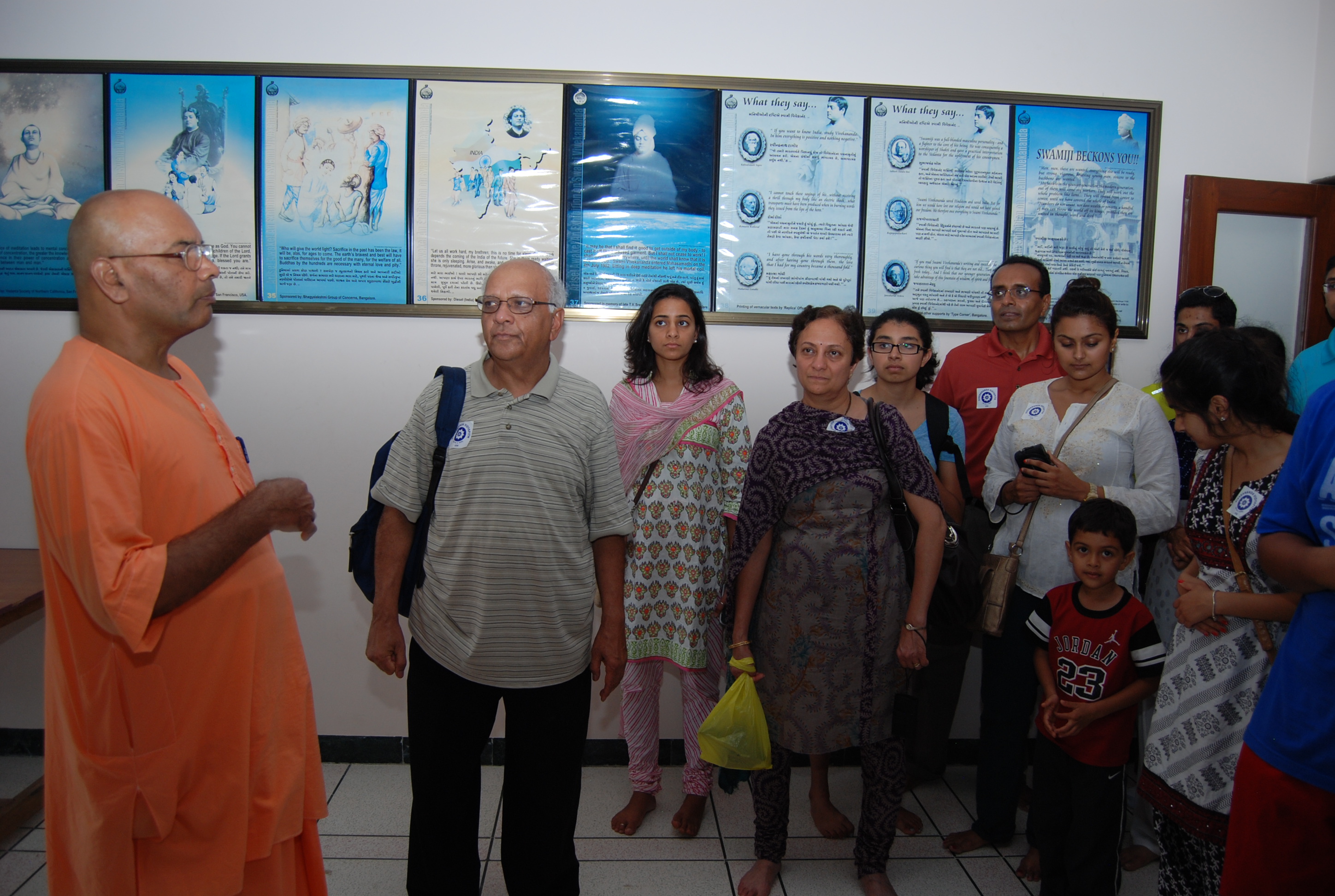
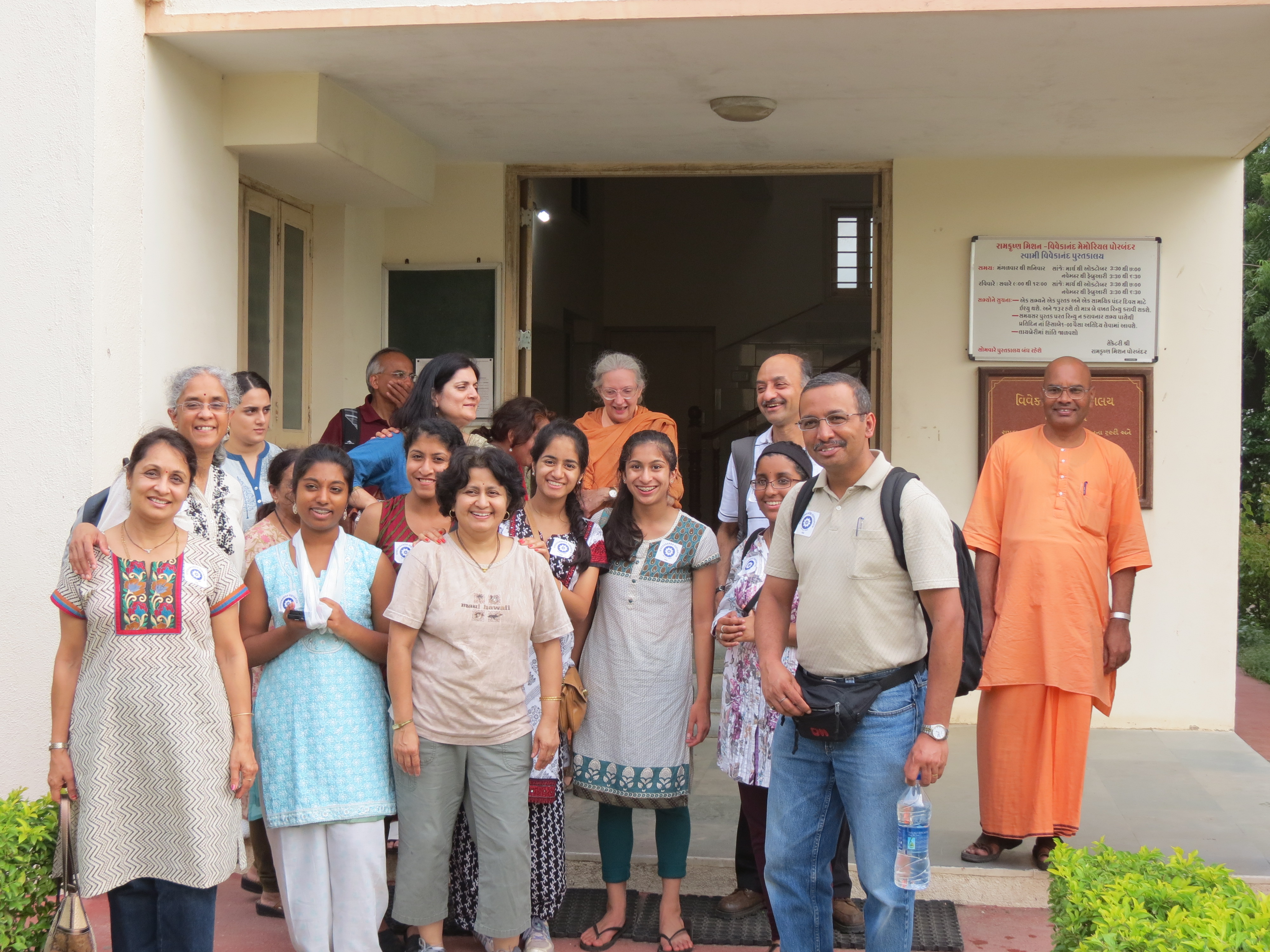
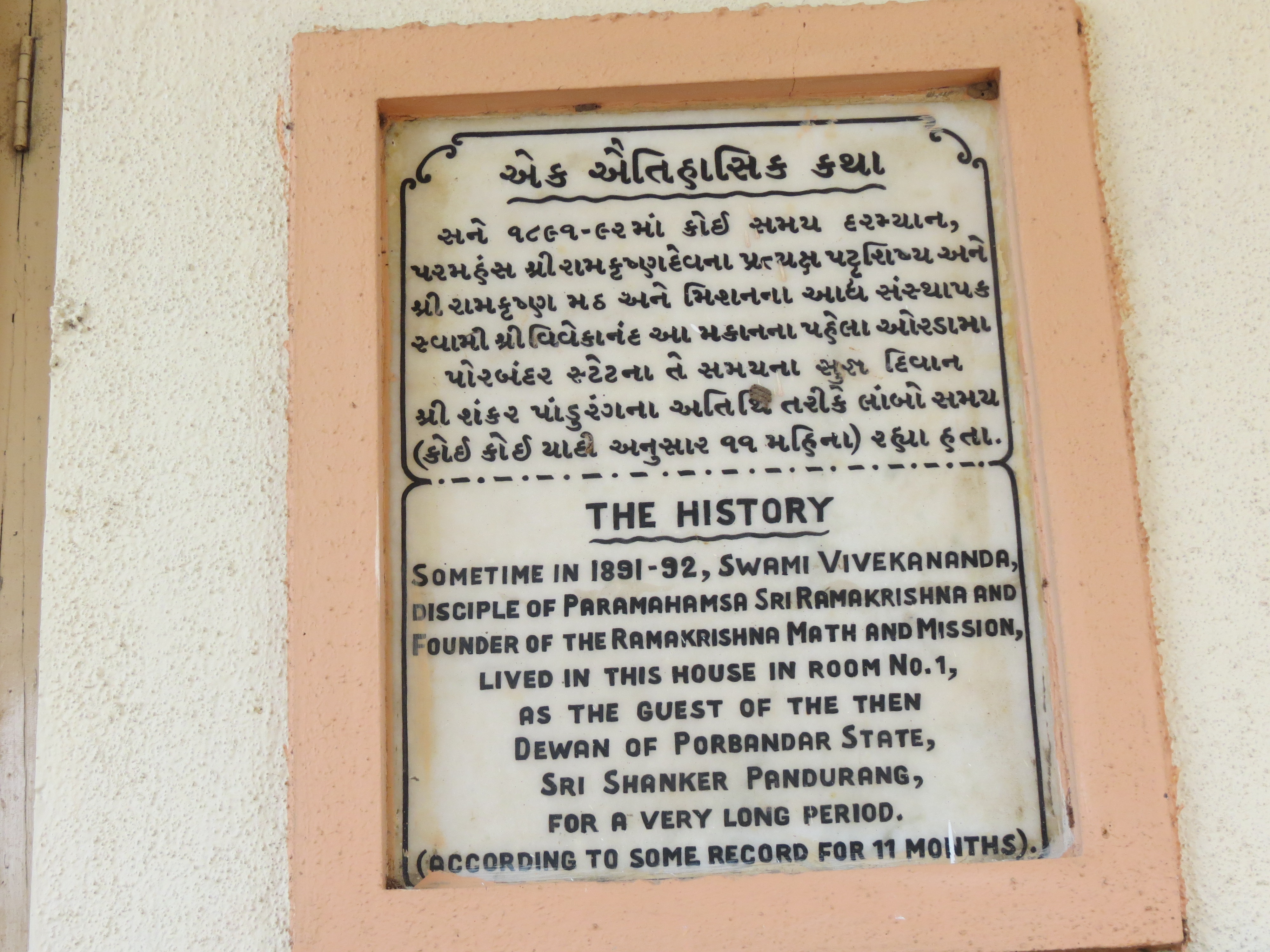
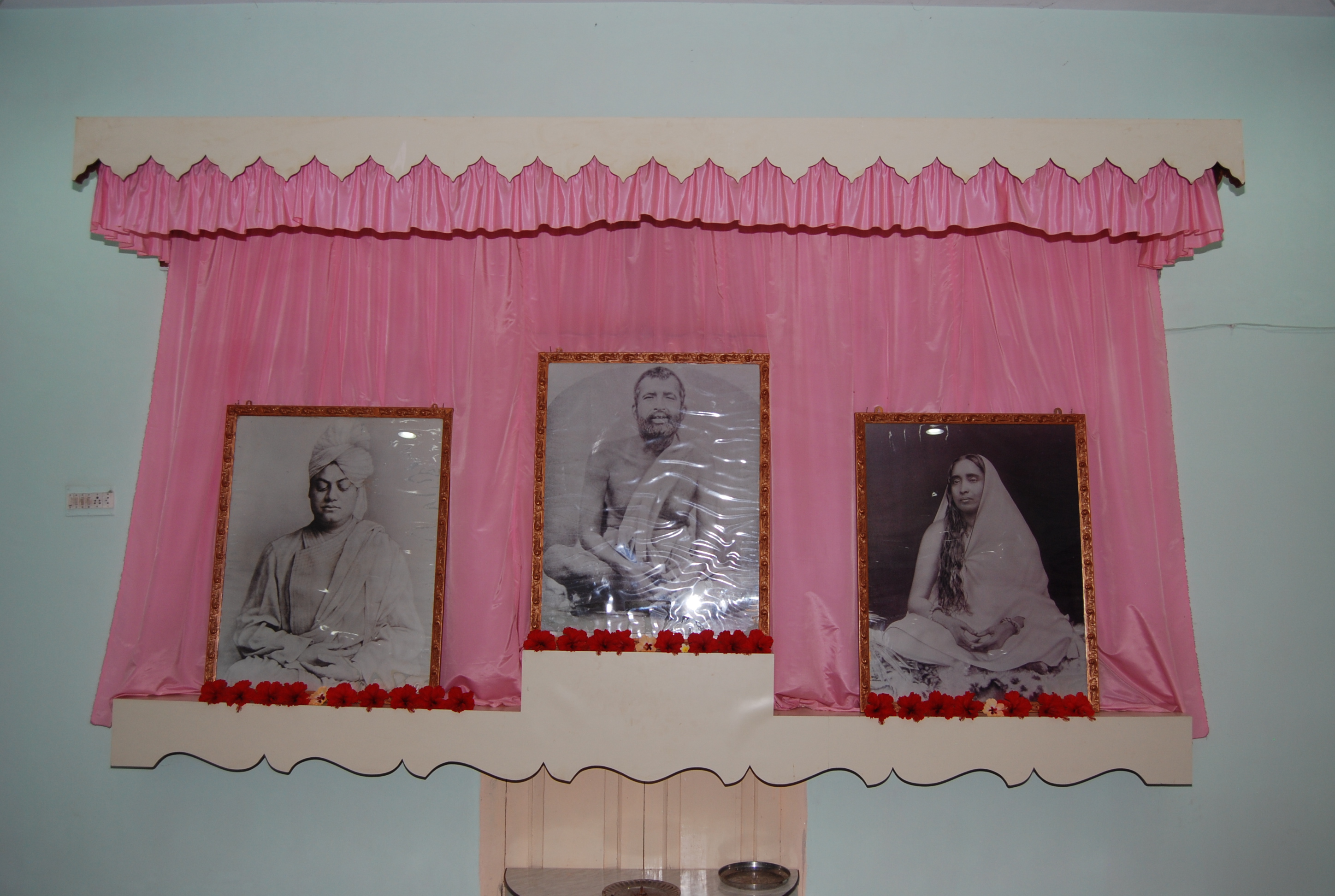
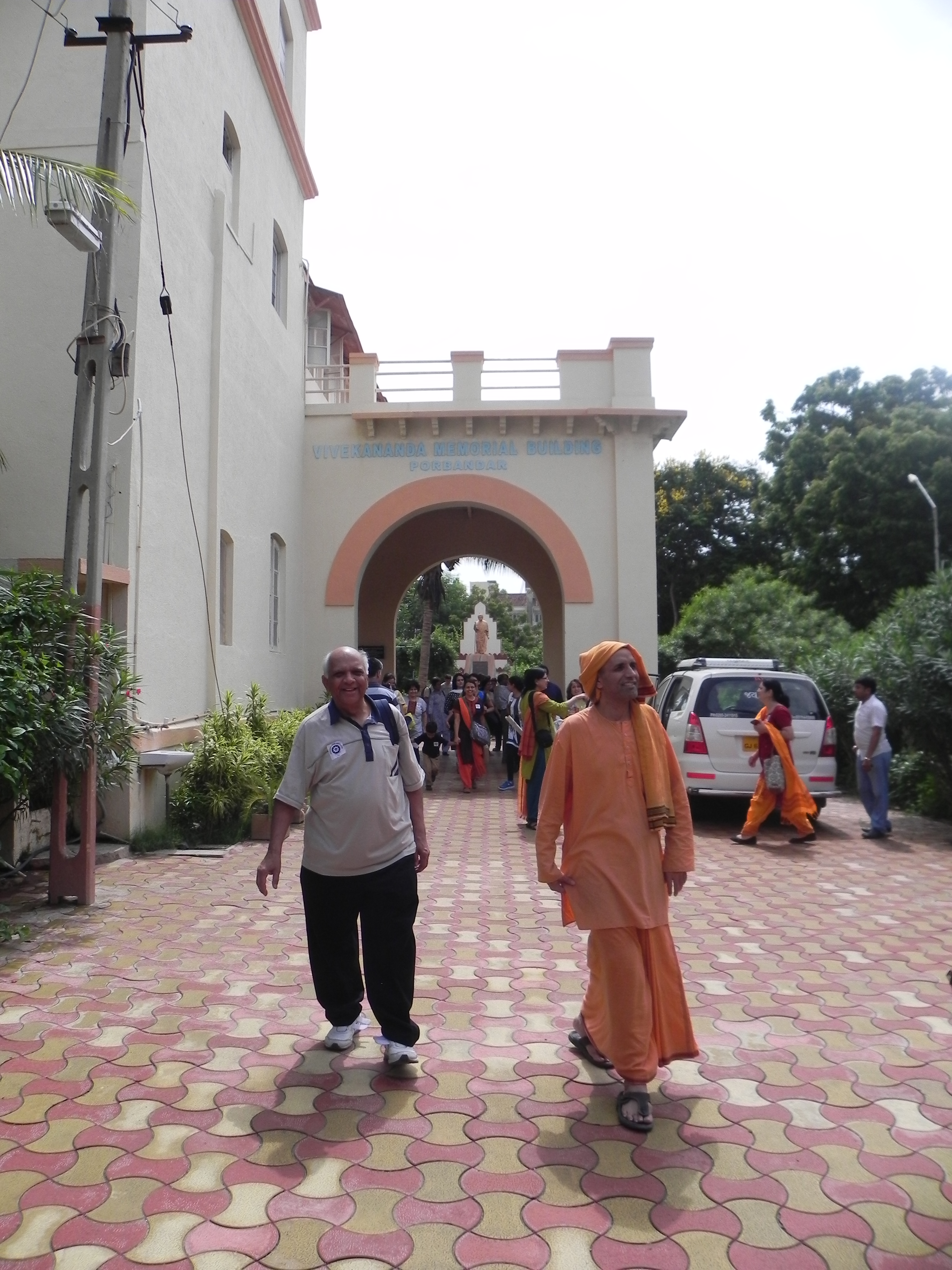
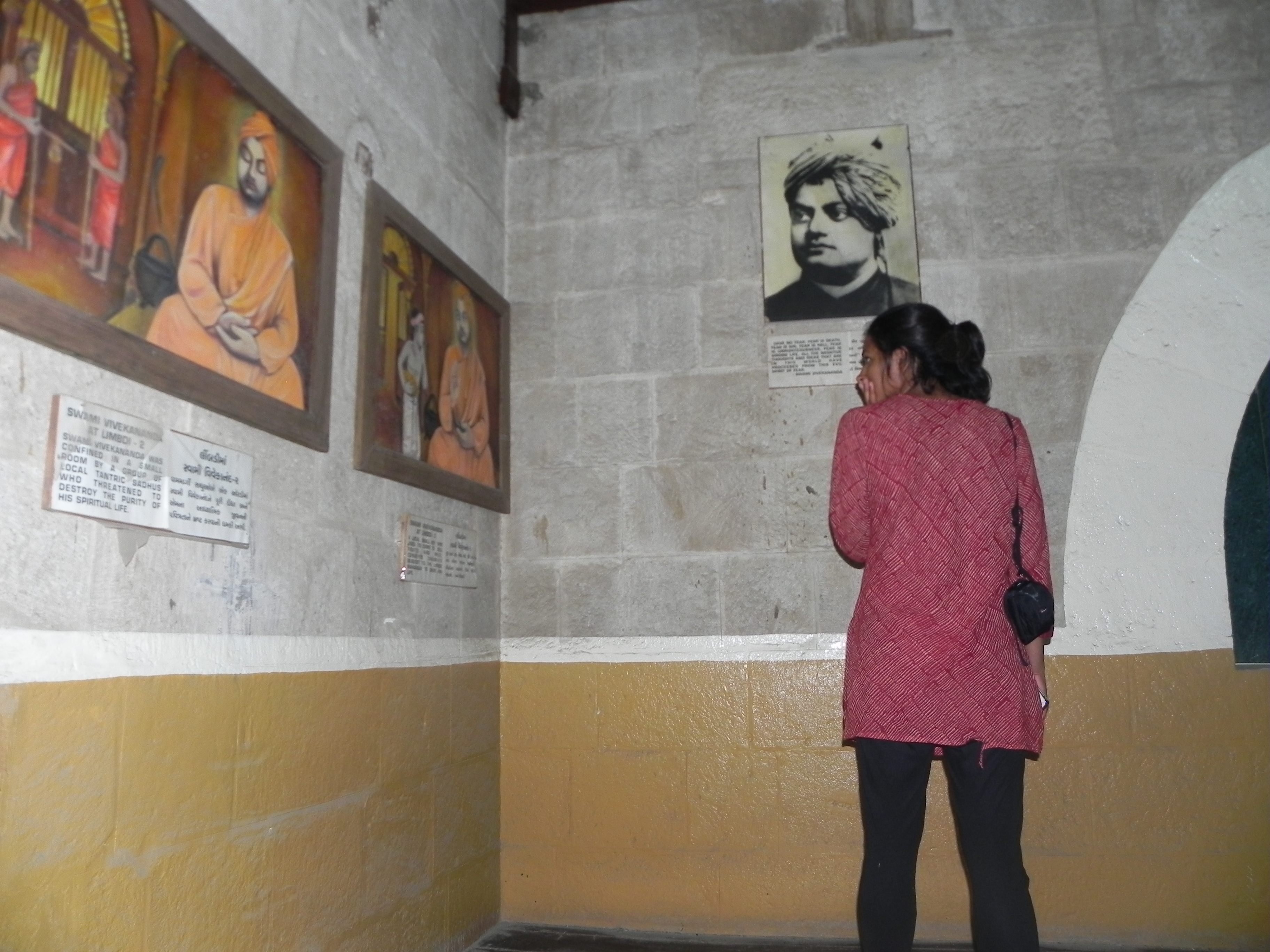
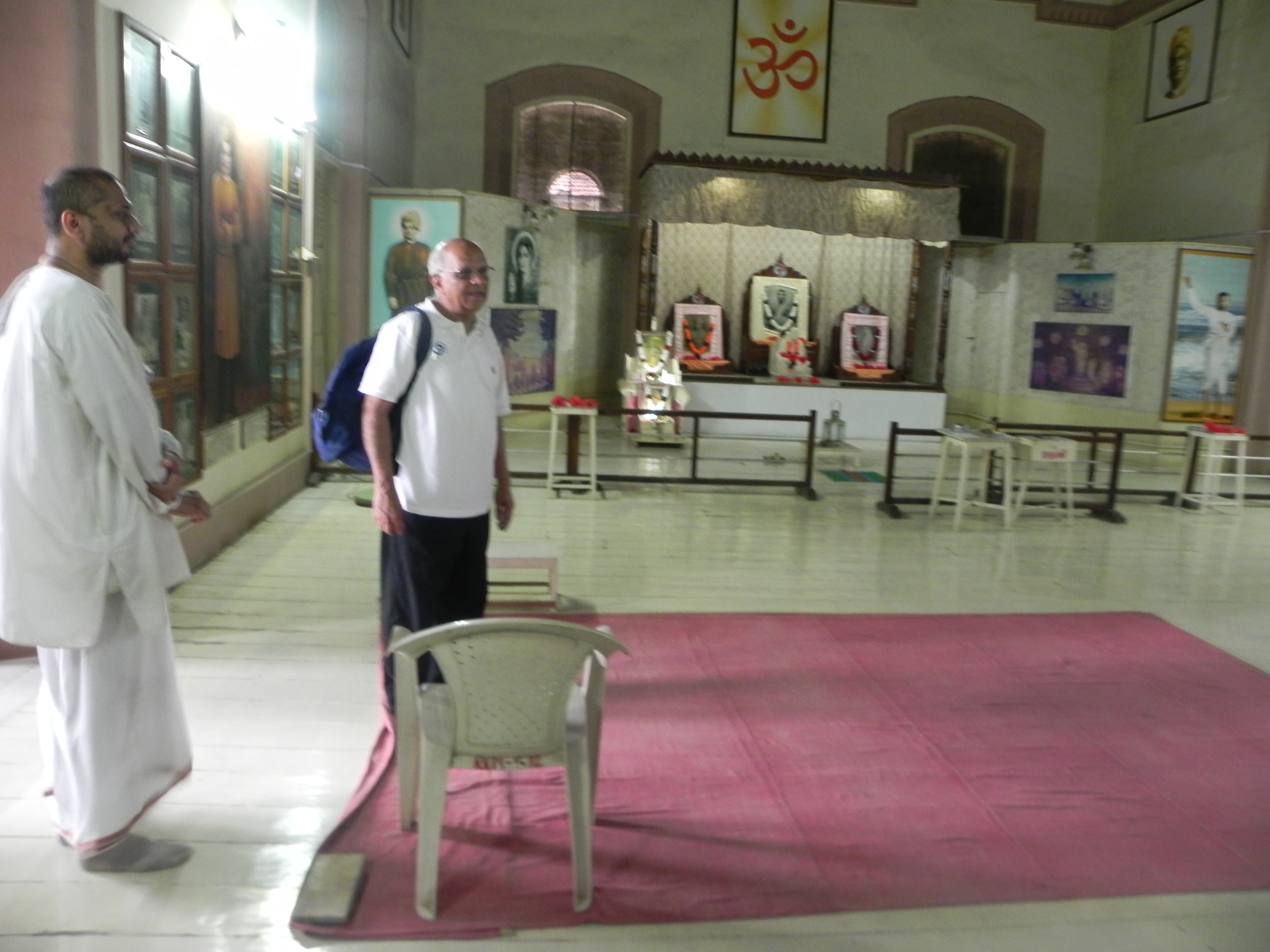
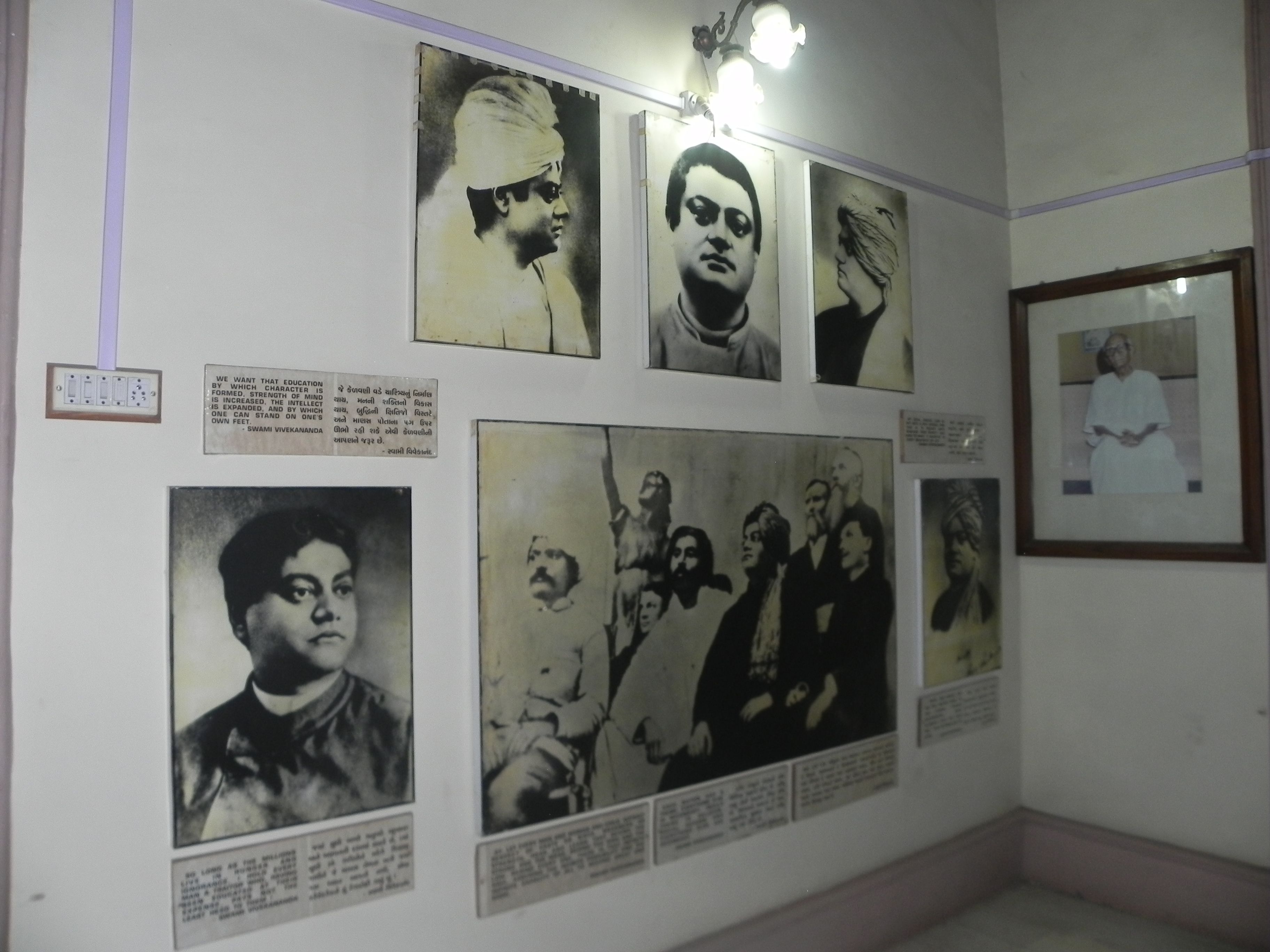
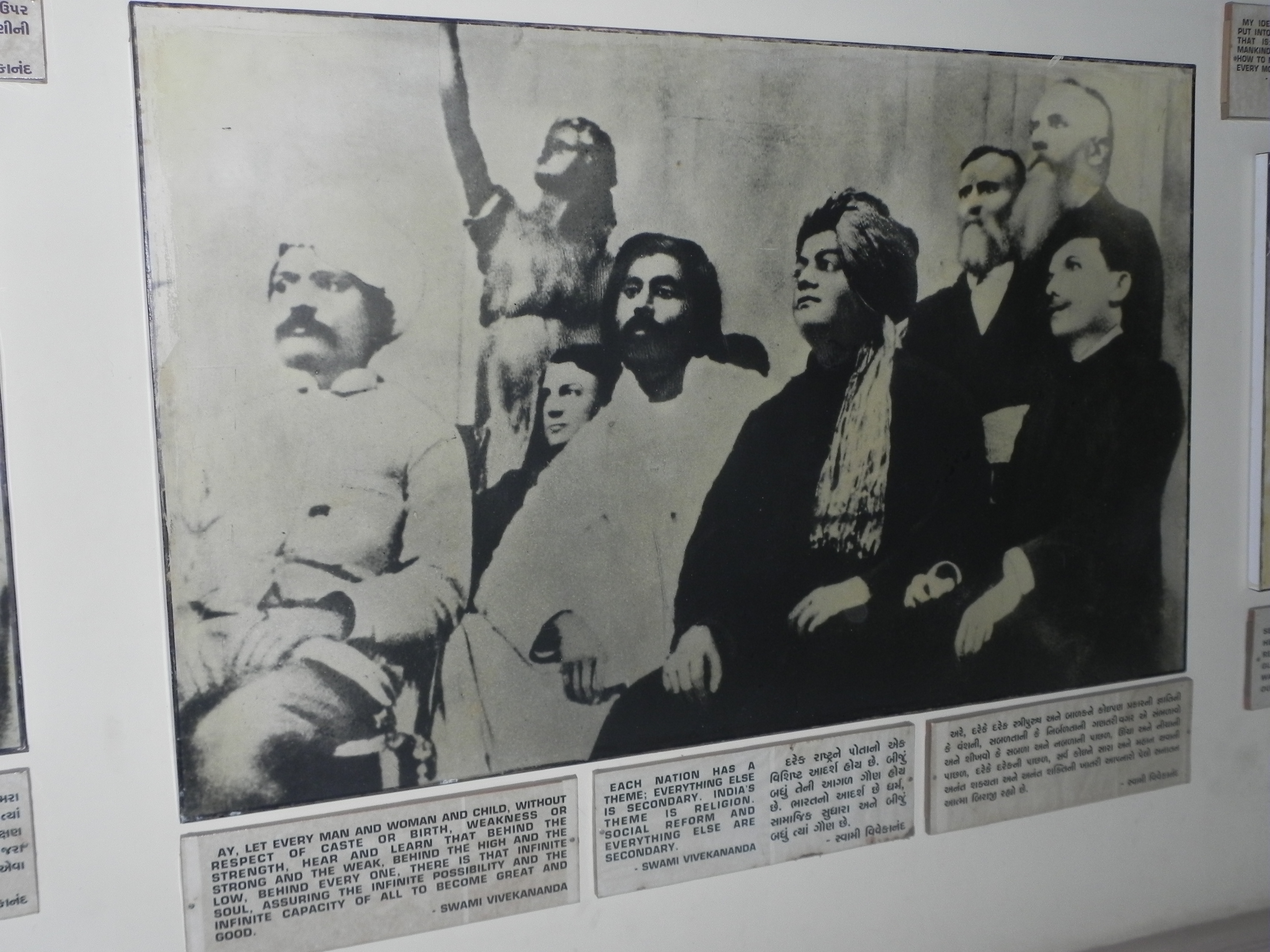
                 Revered Swami Nikhileswaranandaji had invited all the Vivekananda Vidyapith people who had come for the International Youth Convention to the ashram at 10:00 a.m.  We all gathered at the ashram arond 10:00 a.m. We felt very fortunate to have come to the building that had been sanctified by Swami Vivekananda. He had stayed here in 1892.   Great personalities leave their positive vibrations in the places they stay.  If we tune our minds to these personalities, then we can feel these vibrations and uplift ourselves.  Thinking about Swami Vivekananda, we went to the prayer room.  We offered our salutations and sat down to do japa.  Then, we went to a room in which there was an exhibition of Swami Vivekananda’s pictures.  After seeing the exhibition, we all went to the bookstore.  People bought books and CDs.

In front of RKM Vivekananda Memorial, Vadodara
Exhibition room - 1
The Exhibition room
The other side of the exhibition room
Swami Atmadipanandaji came from Porbandar to join in IYC
A group photo with Rev. Swami Atmadipanandaji in the exhibition room

Then we went to Swami Nikhileswaranandaji’s office.  He cordially invited us into his office.  We filled his office; people sat on chairs, sofas, and on the floor.  He was extremely busy with work–the convention was starting after a day.  But, in between work, he talked to us with full attention.  We had some laughs and talks.

In the office of Rev. Swami Nikhileswaranandaji
We filled the office
Swamiji had so much work, but he was happy that we came
Answering question of a student
He gave an idea what delegates would be getting

Around 11:45 a.m. he invited us to go for lunch.  Since we were so many people, he had made a special arrangement for our lunch in the seminar room.  As we walked into the room, we saw that tables had been set and food had already been served on the plates.  Swamiji had special items made for us that are not usually part of the regular lunch.  Throughout our lunch he stood at the end of the tables and made sure that we ate well.  He himself did not eat.  He was attending important phone calls, but he gave his loving attention towards our lunch.  After lunch, we talked about a few instructions relating to the International Youth Convention.  We were amazed to see how he could keep his calm in the midst of important activities.  He asked all of us to come back on August 12th, the day after the convention, if we were around. We had a very good morning. What a great way to begin the second half of our trip.

A very special grand luncheon
discussing about our needs for the cultural program presentation
Wanted us to prepare a list of questions
Group photo with Rev. Swami Nikhileswaranandaji

At night, we called all the Vidyapith delegates for a meeting at the Royal Orchid Central Hotel. Swami Nikhileswaranandaji had asked that the delegates compile a list of questions they had for Dr. Abdul Kalam, Shri Sam Pitroda, and all the Swamis. We were to send him a typed list of these questions, indicating exactly which questions were for whom. From 9:00 p.m.-11:00 p.m. all the delegates brainstormed questions to ask. Even though it was late, it was exciting to see the young minds at work.  They were engaged and thoughtful. Vidyapith’s students came up with very good questions. Ronak typed these questions on his laptop, and we e-mailed the list to Swamiji.

Real activity, which is the goal of Vedanta, is combined with eternal calmness, the calmness which cannot be ruffled, the balance of mind which is never disturbed, whatever happens. And we all know from our experience in life that that is the best attitude for work.”  (Practical Vedanta, p-3)                                                                                – Swami Vivekananda 

IYC – Bulletin 9

Upleta – Ahmedabad – Vadodara

                 The youngsters and adults, who went to explore Uperkot in Junagadh, came back before 8:00 a.m.  We all had breakfast at the hotel and then finished packing so we could check out.  Today was the last day of the trip.  People were happy that the trip so far had been excellent.  The original plan was to go back to Vadodara from Junagadh via Ahmedabad.  But, Yagnesh Maharaj (Swami Atmadipananda) of Porbandar requested and insisted that we go back via Upleta.  He said, “It is on your way and a few householders at Upleta are doing an excellent service which you would like to see.”  We all agreed.

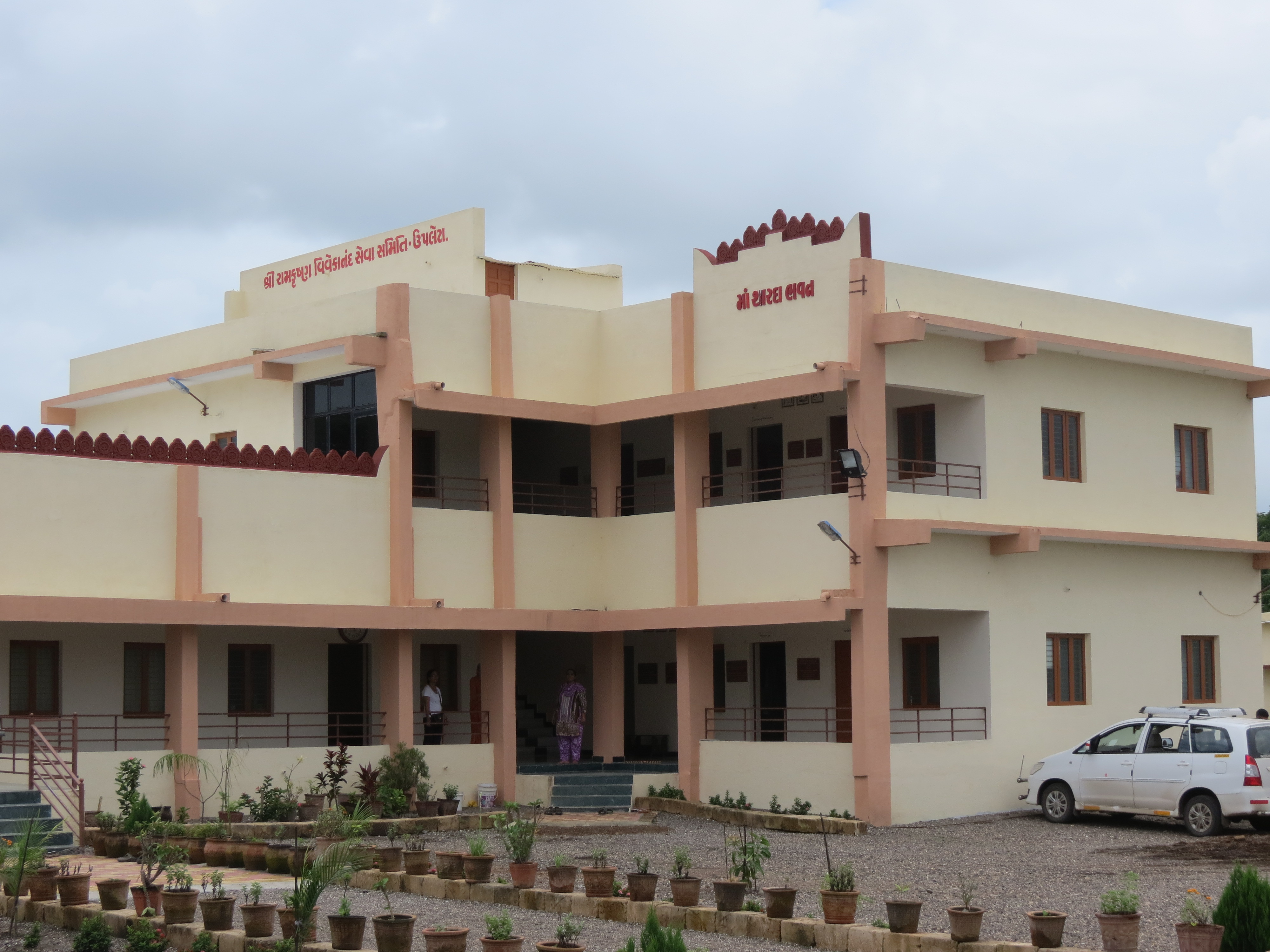
We got onto the bus and headed to Upleta.  We passed villages and farms, and then, all of a sudden, we saw an eye-catching building. A sign read: “Sri Ramakrishna Vivekananda Seva Samiti” and “Maa Sarada Bhavan.”

Reached Upleta
Reached Upleta
Building of Sri Ramakrishna Vivekananda Seva Samiti

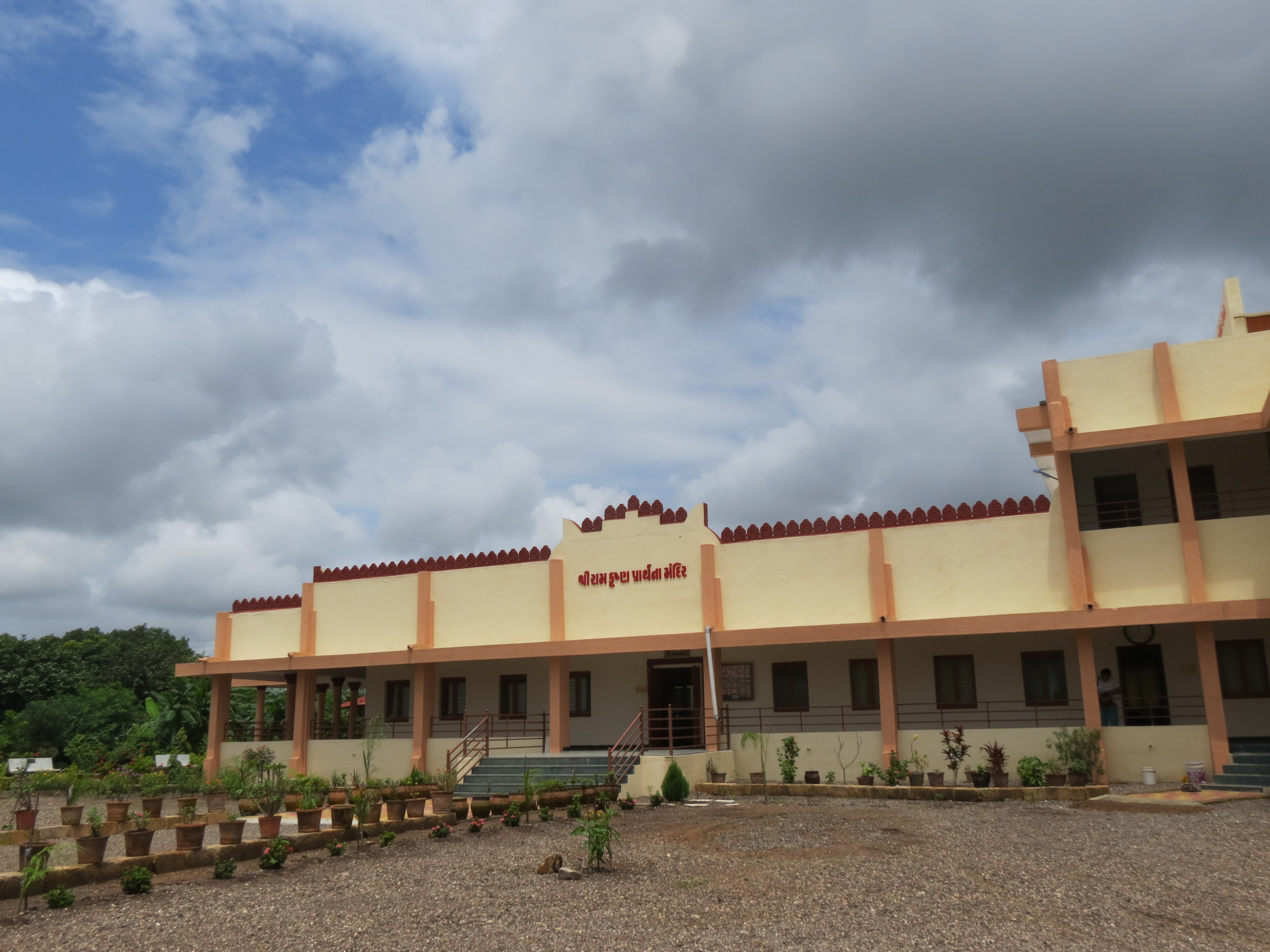
People were waiting for us, and as we got down from the bus they greeted all of us with great affection.  First they asked us to go to the prayer hall, the “Shri Ramakrishna Prarthana Mandir.”  The new building, the green environment, the organizers’ love, and the beautifully decorated altar created a very serene atmosphere.  Yagnesh Maharaj had told them that we sing dhoons and bhajans.  So they asked us to sing.  The harmonium was ready, and we all sat down to offer our singing.  We sang Thakur, Maa, and Swamiji’s dhoons and bhajans.

Prayer Hall
Sri Ramakrishna Prarthana Mandir
Shrine in the Prayer Hall
Altar in the Prayer Hall
We sang bhajans and dhoons
Good opportunity to offer our singing
The Organizer welcomes us
The Organizer welcomed us

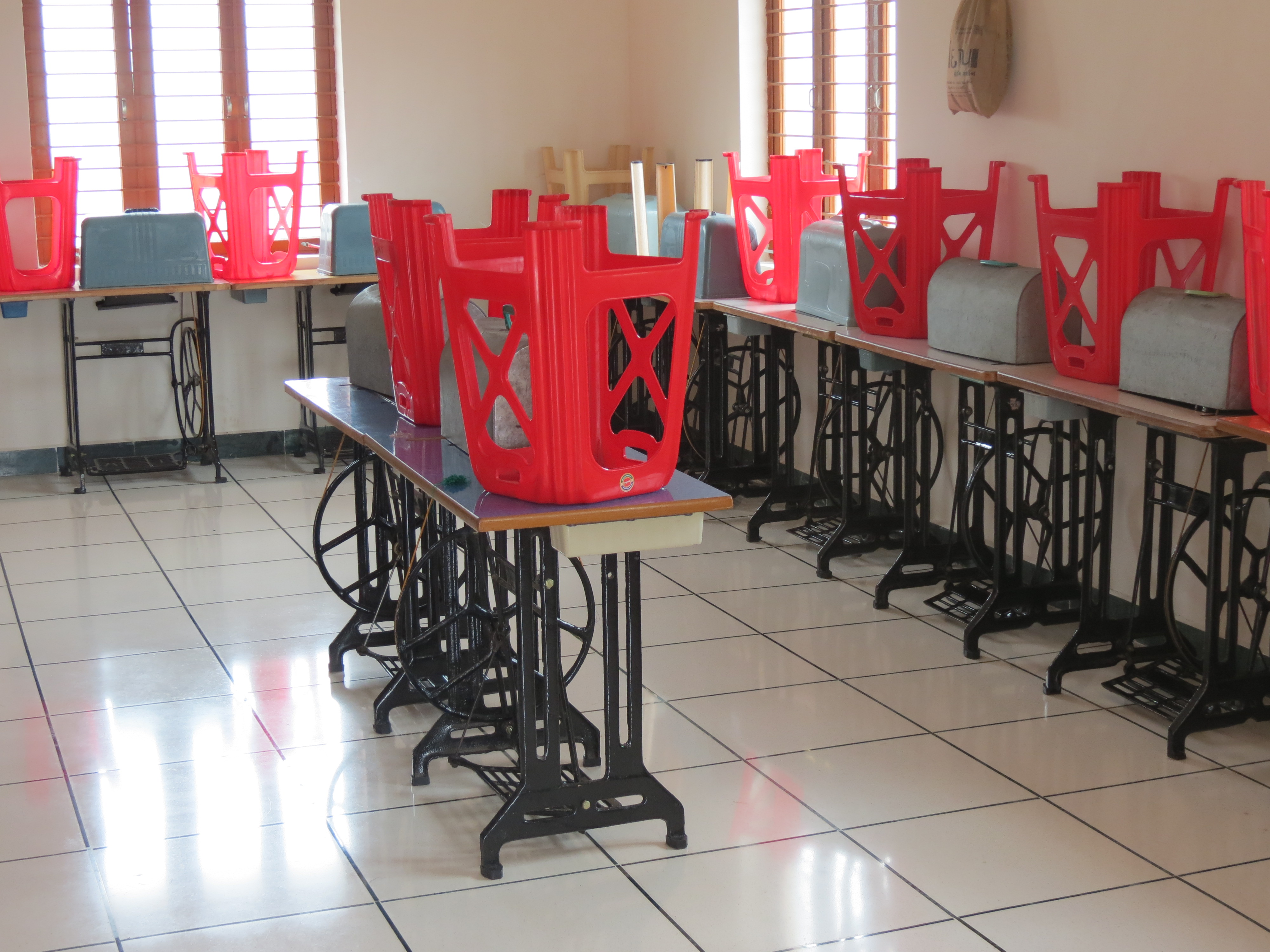
Then, the organizers showed us their classrooms.  Most of the Center’s programs are run by women and are for women.  After nearby village women finish their morning choirs at home, vans bring them to this Center where they learn various skills such as sewing, computer software, arts and crafts, and many other things.  They sell their products and earn some money.  Some of the artwork was amazing and could easily compete with exhibition items in art galleries.  Women and children also get medical help at the Center.  We heard that the organizers are trying to make this Center a part of the Sarada Math of Belur.

Going to show us classes
Going to see classes
Offering water to all of us
Welcomed with water
A tour of the building
Various classes
Various classes
A Sewing class for women
 A computer class for women
A computer class for women
Art class for women
Art class for women
A few final products
Beautiful art piece done in the class
Another piece of art work
It is like work of a professional artist
Work of a professional artist
More art work
More art work
Excellent statue of Goddess Saraswati
Mother Saradadevi
Mother Saradadevi
Great work going on here
Great service
Great service
We want to take a picture here

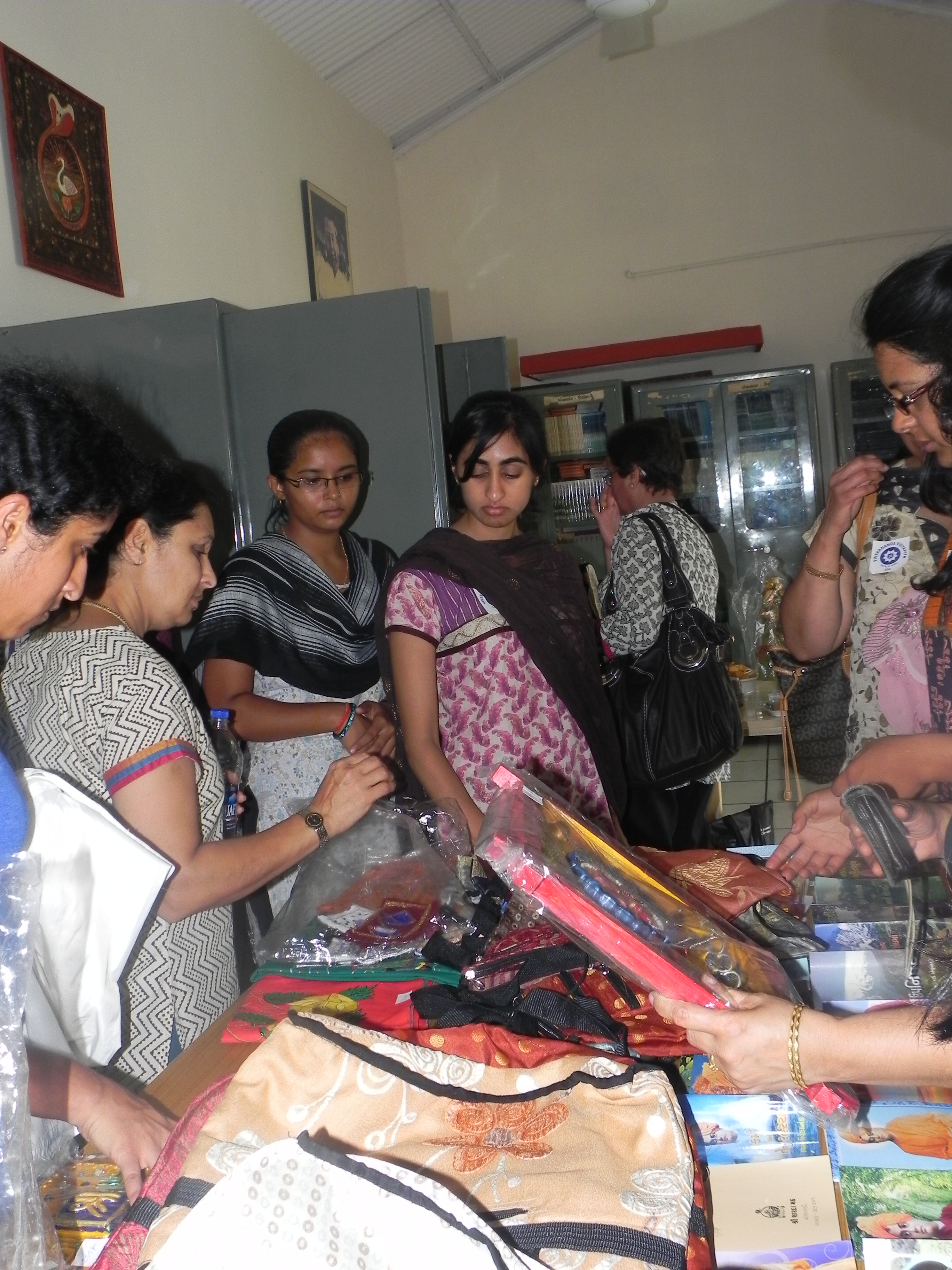
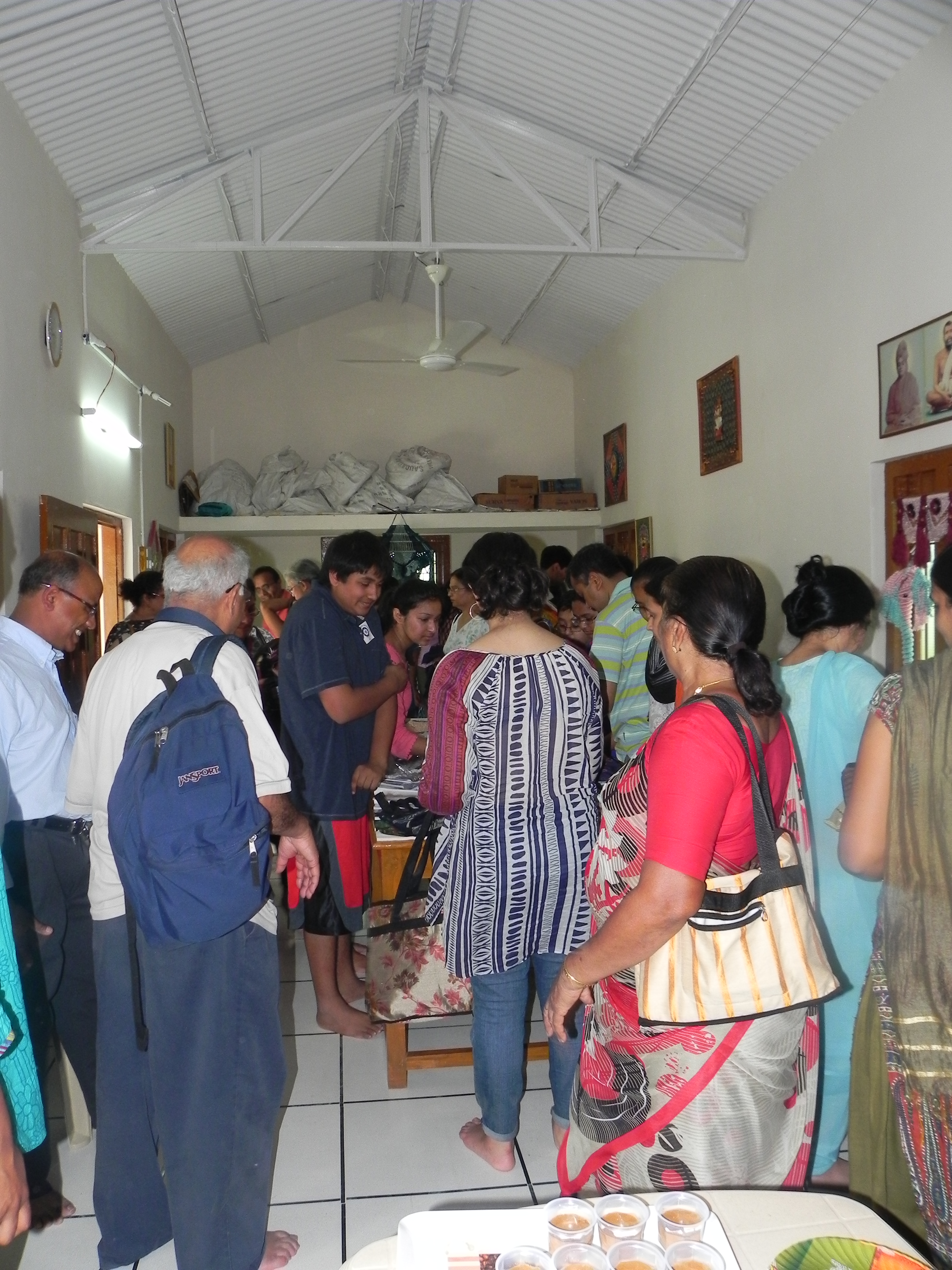
We were lead to another building where we had tea and were shown the handicrafts for sale.  Vidyapith’s mothers, daughters, and a few fathers were going crazy to buy things.  The products were good and they wanted to help the women who come to this Center. 

Building in which they sell the final products
Professional final products
We liked it
Wow!  This is great!
It is good we buy and help the women who worked
What should I buy?
Wow! Varities of things
They had to bring more things
What is the price for this?
Uncle, do you want to buy something?
What did my mom paid for this?
What my mom paid for this?
Standing in a line to pay

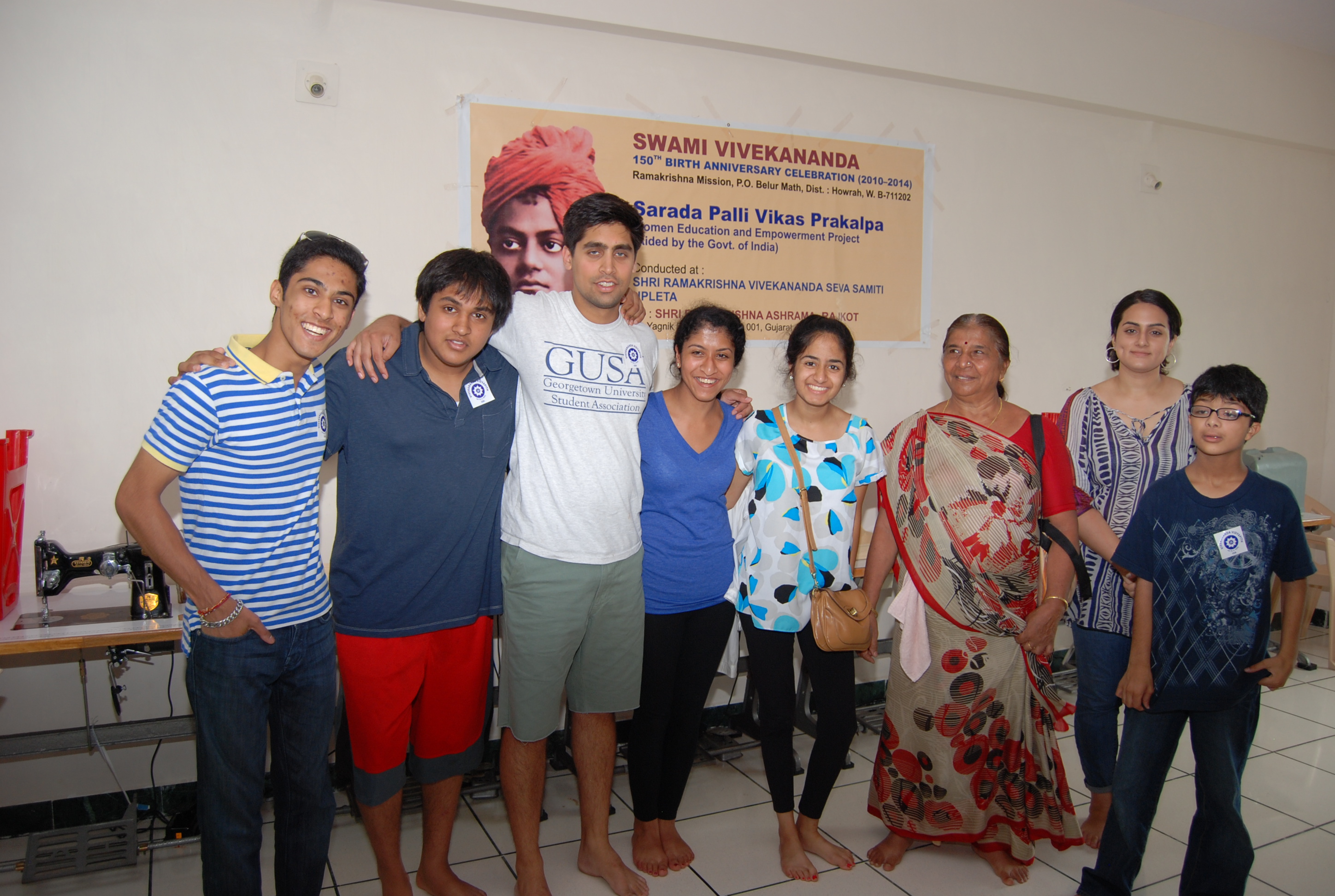
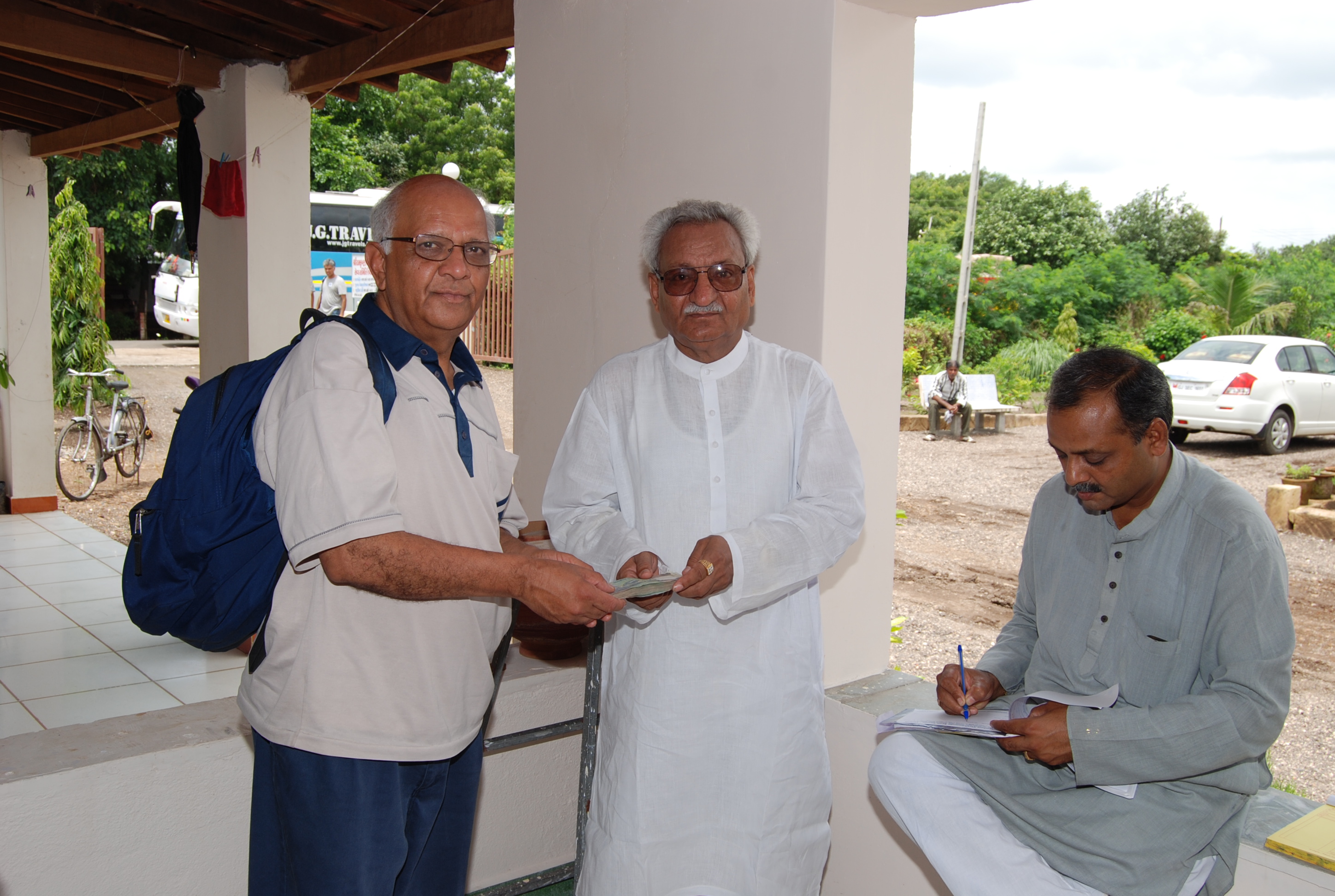
A small donation was given on behalf of all of us.  They wanted to have a picture taken for this.  We could not say, ‘no.’After everyone’s shopping desire was fulfilled, we got onto the bus.  The organizers stood lovingly to say “bye” to us and told us to come again.  We were glad that we had decided to make this stop at Upleta.

A small donation from all of us
With the organizers
With the organizers
(From left to right) Driver Rafik and his helper Ketan
(From left to right) Driver Rafik and his helper Ketan – ready to go

We had a long journey back to Ahmedabad and Vadodara.  On the bus, while thinking about the entire trip, everyone was filled with satisfaction. Some were emotional. By the grace of God everything had worked out well and we had covered so many things.  We wanted to reach Vadodara before dark, so we decided not to stop for lunch or dinner anywhere.  We had so many snacks and goodies on the bus that we could enjoy on our way. So every now and then we’d pass out different goodies, and thus not only did we have some fun but we also saved time.  We made small breaks on the way and soon arrived at Ahmedabad.  Several families were getting off here.  Again, the pain of separation came.  But, we knew that we were going to meet soon in Vadodara.  The bus finally came to the Royal Orchid Central Hotel in Vadodara.  We were exhausted but extremely happy about our successful trip.  We were thinking of all the people who had helped to make this trip successful and prayed to God for His blessings.  It was a big relief for all who were responsible for the trip.

Those who were staying at the hotel went to a nearby restaurant to celebrate this trip and ate a delicious dinner that included rotala, kadhi, laddu, and many other things.  That night the organizers had a very good sleep.

This life is short, the vanities of the world are transient, but they alone live who live for others, the rest are more dead than alive.”  –  Swami Vivekananda

IYC – Bulletin 8

Excursions in Junagadh

             While going from Somanath to Junagadh, our bus driver slowed the bus and told us to look to our left.  It was an amazing scene.  We saw hundreds of colorful boats.  He told us that they were brought here for repair.

Colorful Boats for repair

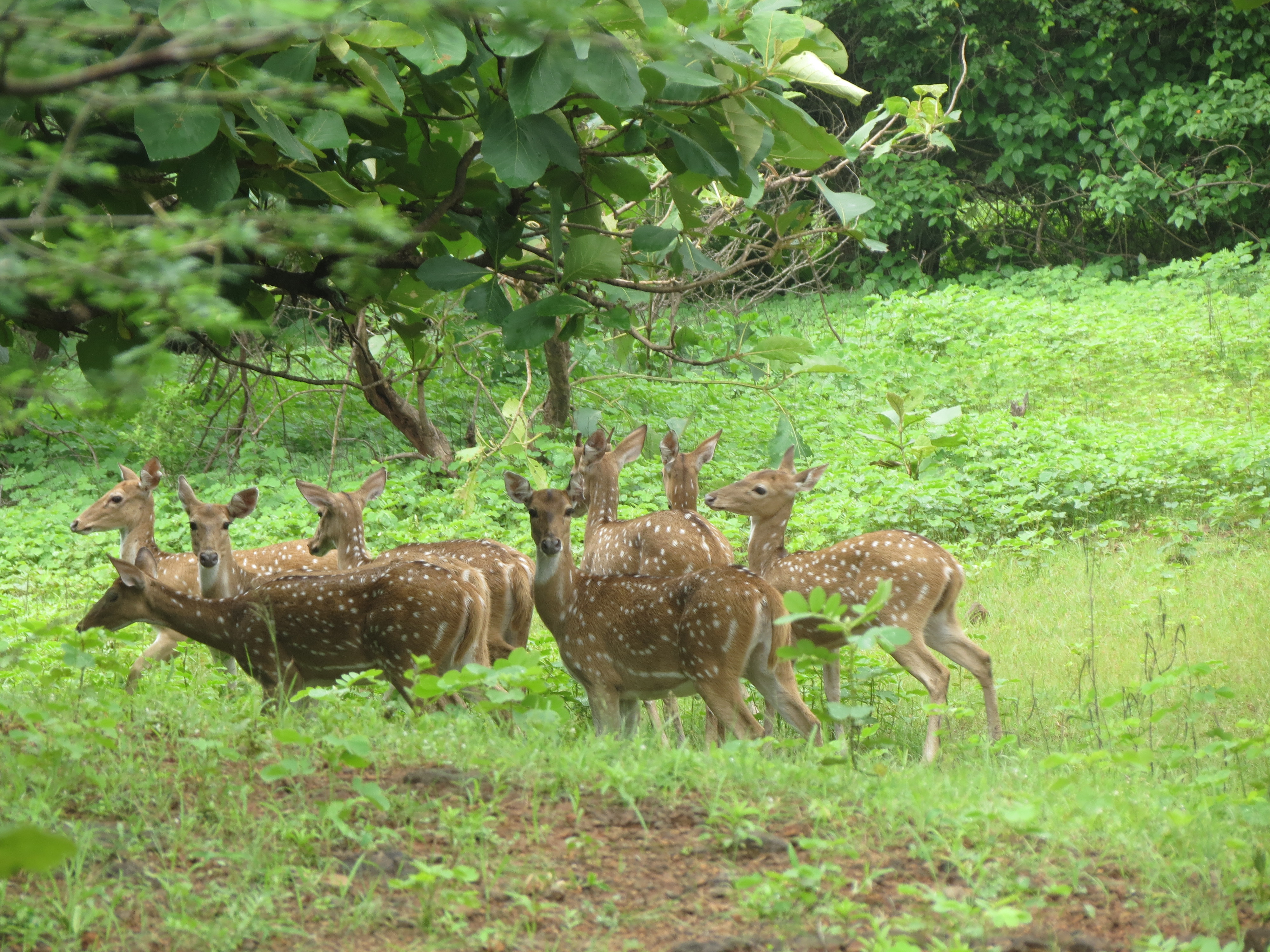
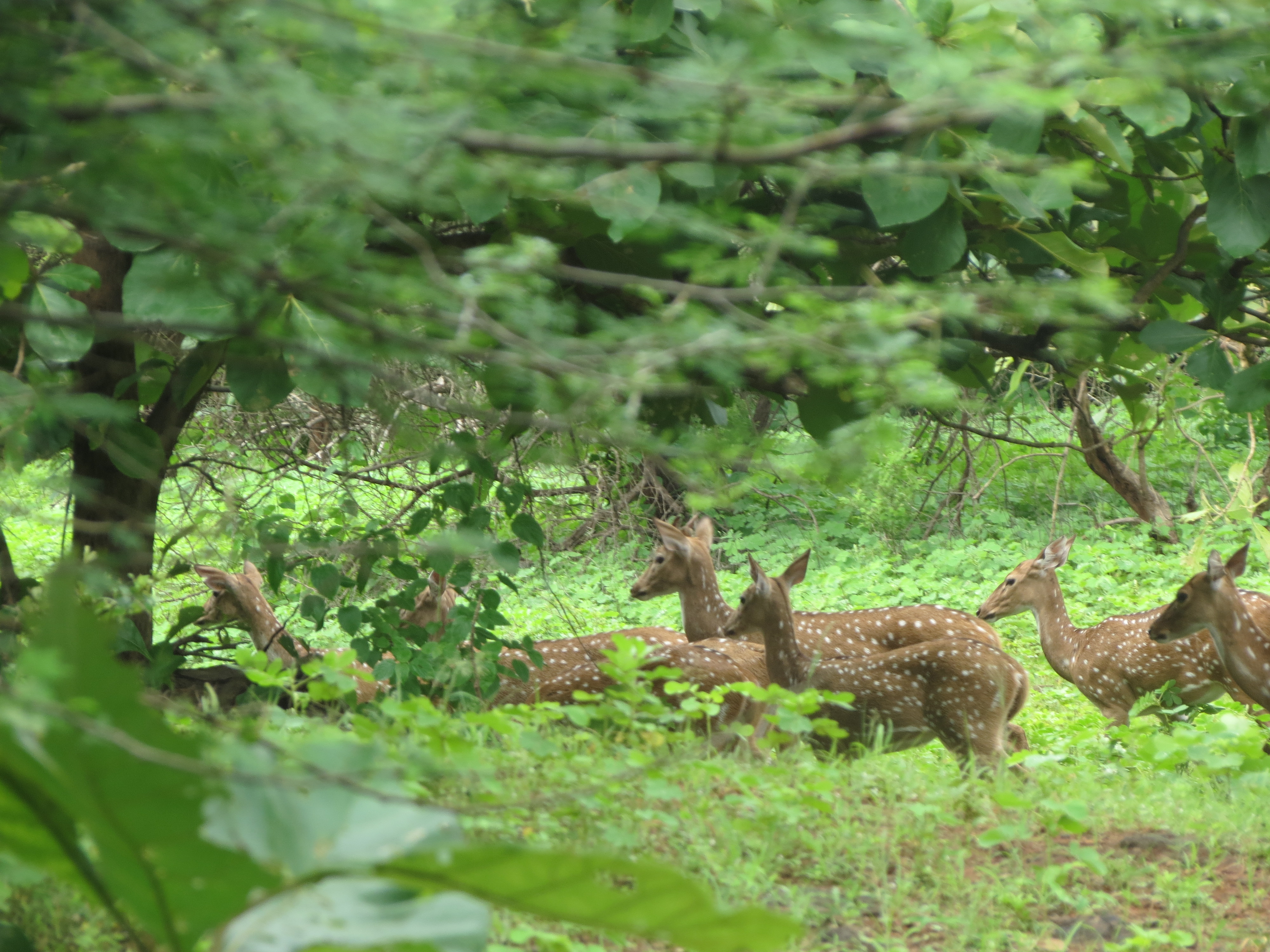
After a while we saw the forest.  Every thing around was covered with varieties of plants, trees, bushes, and green grass.  When we heard that we were going through the famous “Gir Forest,” a thrill passed through everyone.  People were thinking about the famous “Gir lions.”  Many were wishing that a lion would pass by on the road.  Our escort and bus driver had selected an excellent route.  Since there was a decent amount of rain this season, everything was covered in green.  Suddenly, our bus driver Rafik stopped the bus and whispered to look at the beautiful deer on our right.  He told us that a few of us could go down to take pictures if we did not make any noise.  A few of us got down quietly tried to take pictures.  The deer were very sensitive and started running.  We were chasing them on the middle of the road with our cameras.  A couple of us got glimpses of the deer.

Photographers are out to capture deer
Be quiet!  Deer are there
Be quiet! Deer are there
We saw one spotted dear
We see more.  Wow! this is Gir forest
We see more. Wow! this is Gir forest
hey are so pretty! No wonder why Sitaji wanted it.
They are so pretty! No wonder why Sitaji wanted it.
Take photo before they run
Oh! they started running
Who are these people?

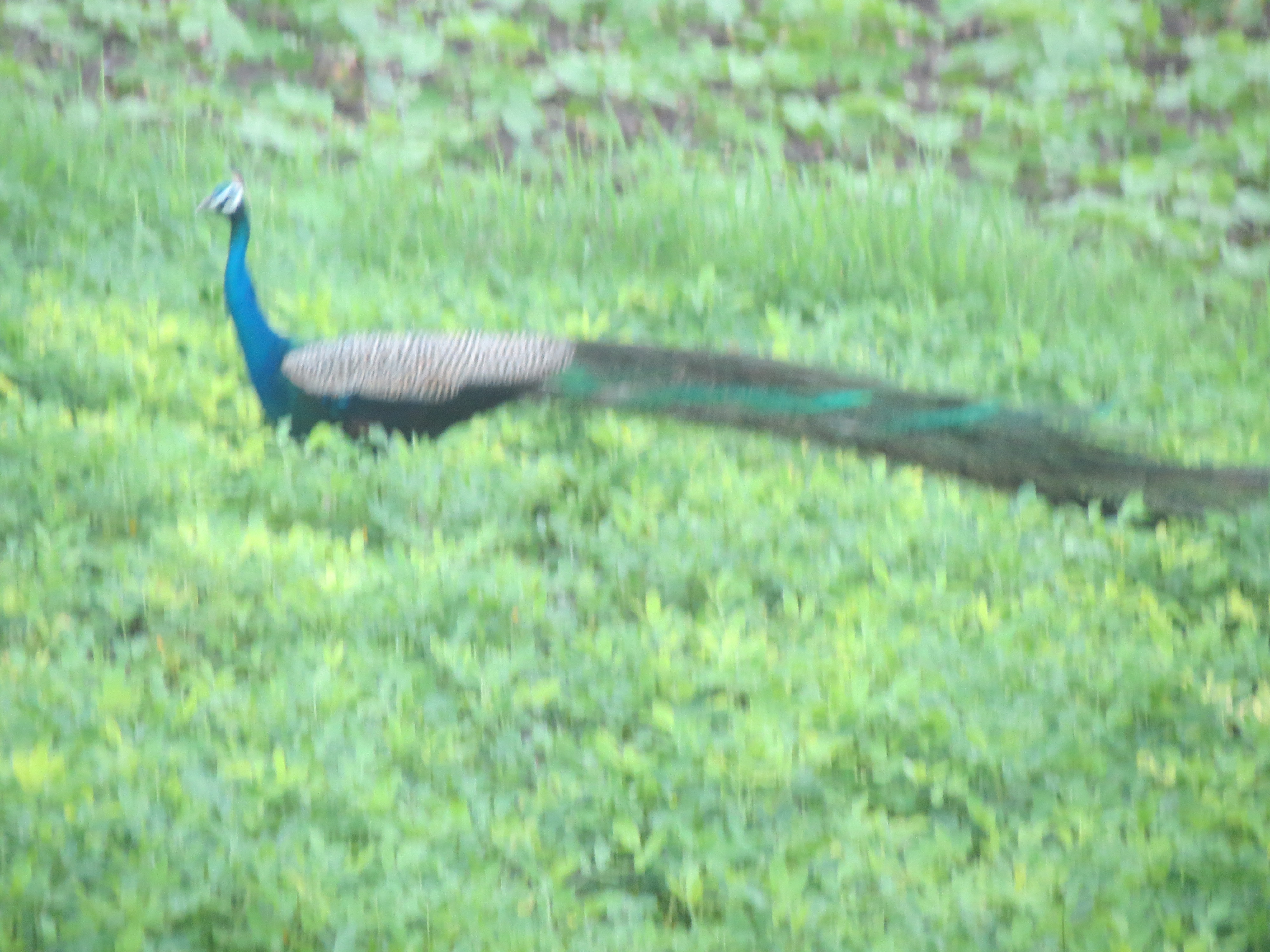
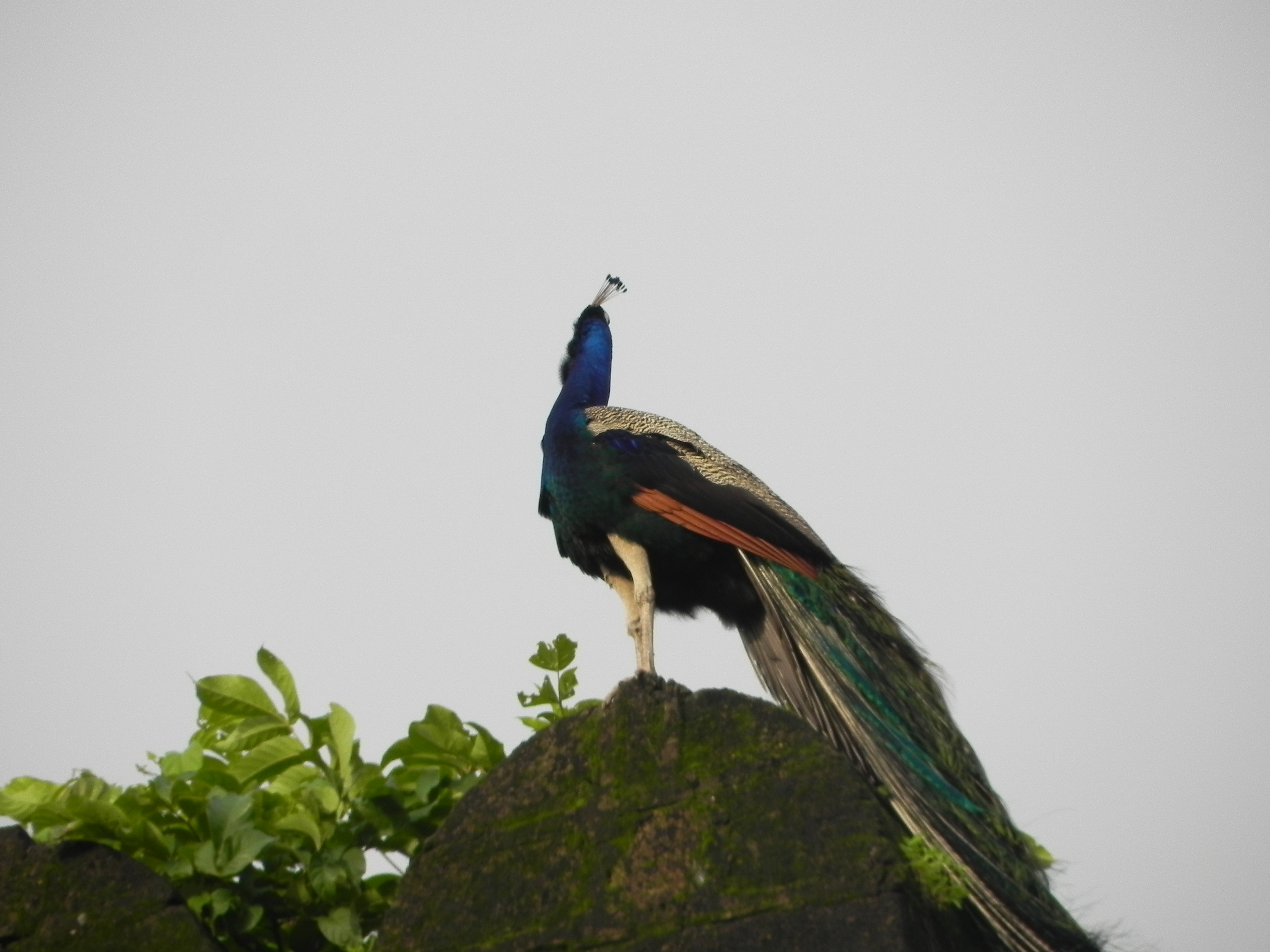
After sometime, he stopped the bus so we could see peacocks.  The youngsters were excited to see peacocks.  Again, there was a chase between the photographers and the peacocks.  Gir Forest excursions were closed for visitors during the monsoon season. We had initially been disappointed about not being to visit the forest. But, these little glimpses gave us some satisfaction.

Youngsters were excited to see a peacock
We have to get going

It had been raining as we neared Junagadh, and we were running late for lunch.  Our lunch was fixed at B.A.P.S.  They were calling us inquiring when we would reach.  Finally we arrived at 3:00 p.m.  We had a very good lunch.

At B.A.P.S.
At B.A.P.S.
Lunch is tasty
Lunch is tasty
Discussions over lunch
Relaxed after lunch
Relaxed after lunch
Big dining hall
Big dining hall
What is next?
What is next?

Then we went to Hotel Indraloka.  As usual, we checked in.  Many of us were too tired to do anything.  But the youngsters wanted to see whatever they could since next day we had to start our long journey back to Vadodara.

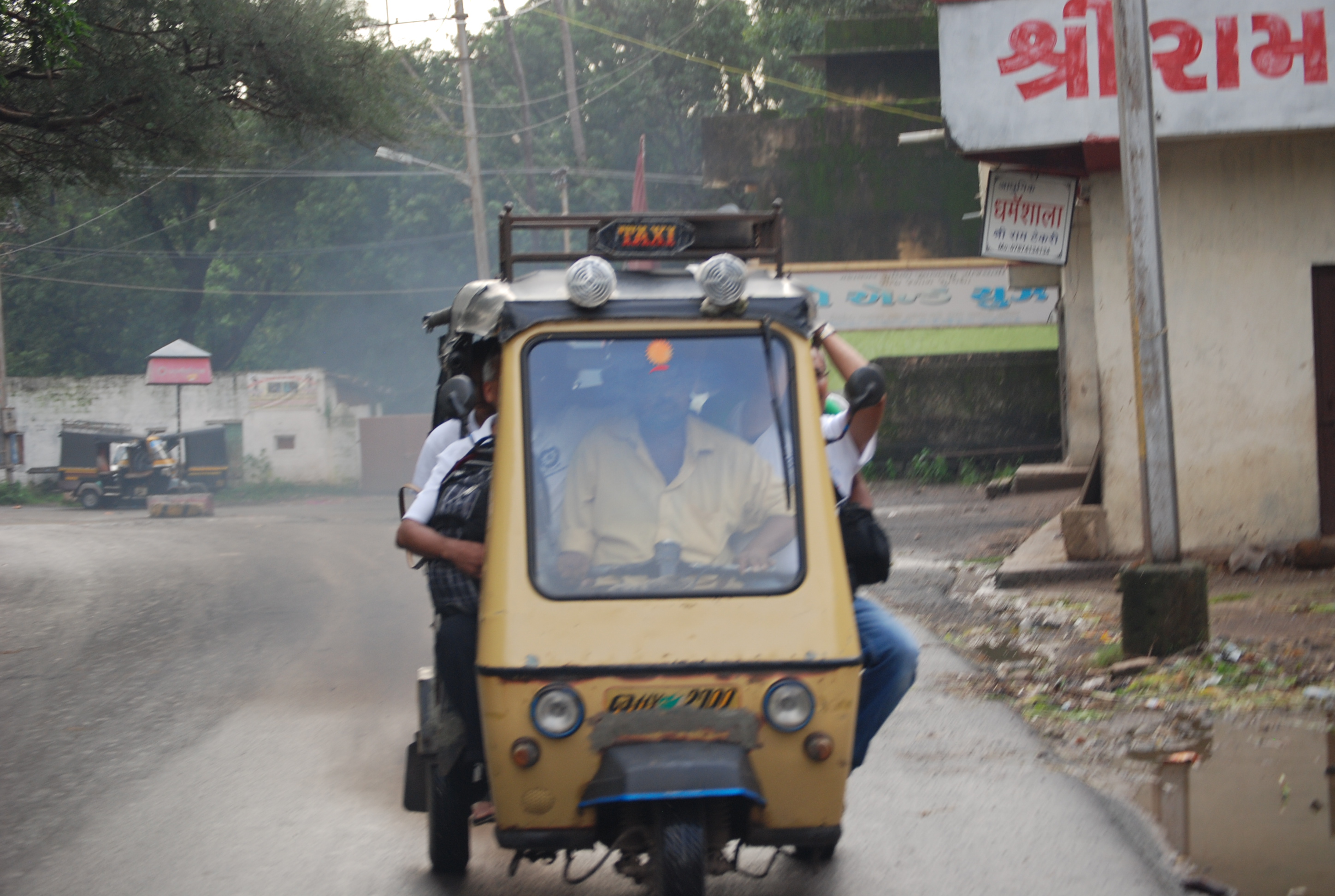
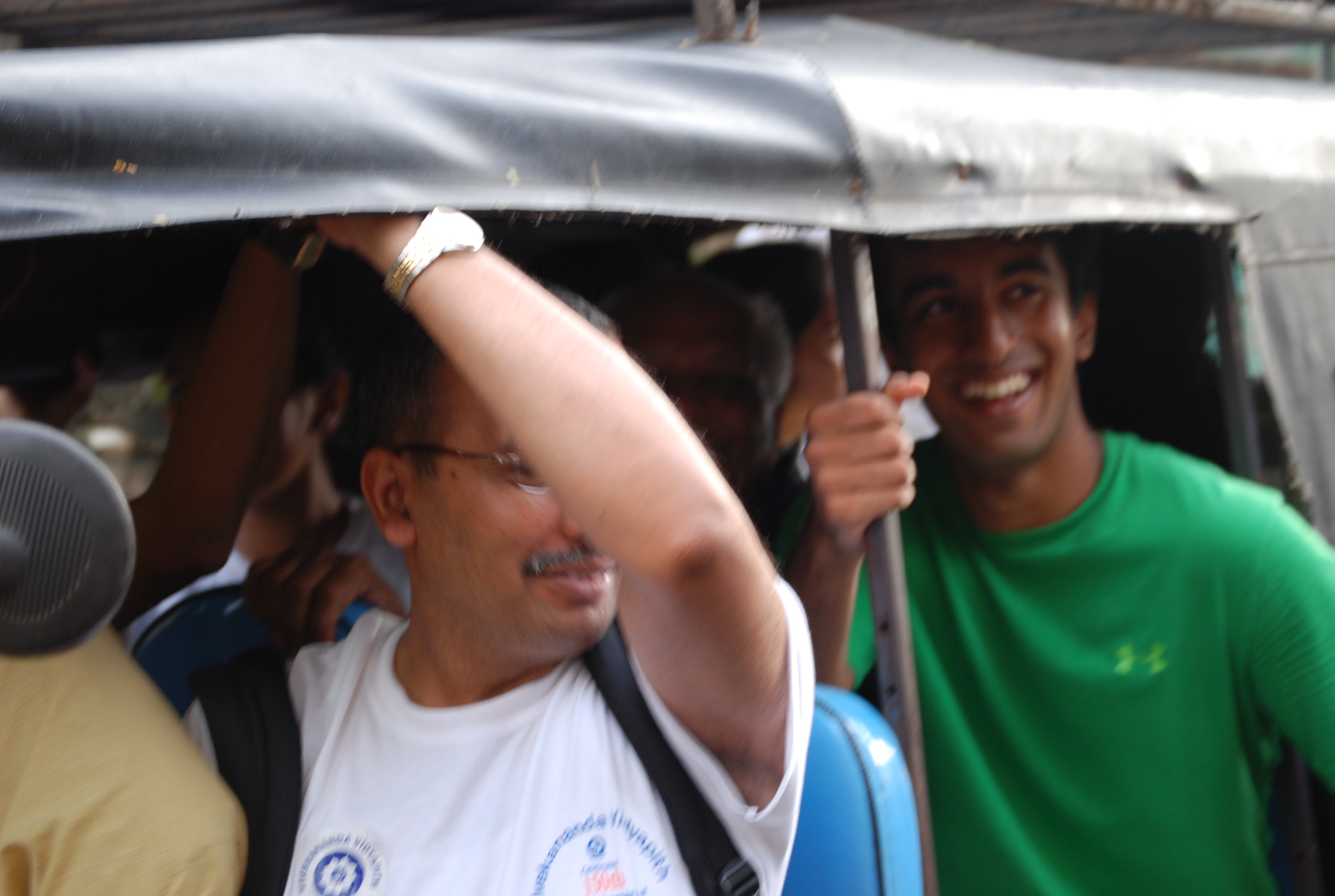
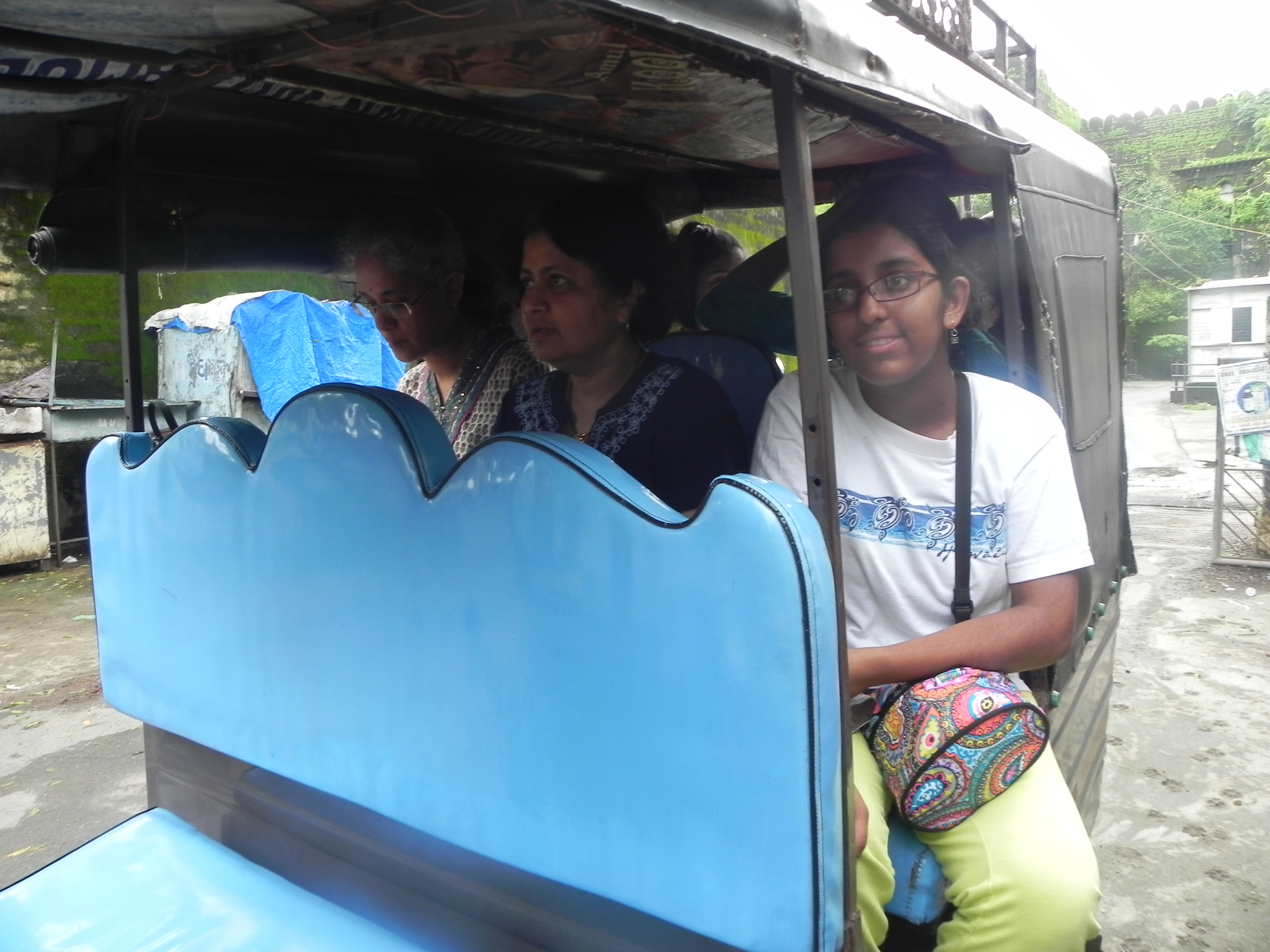
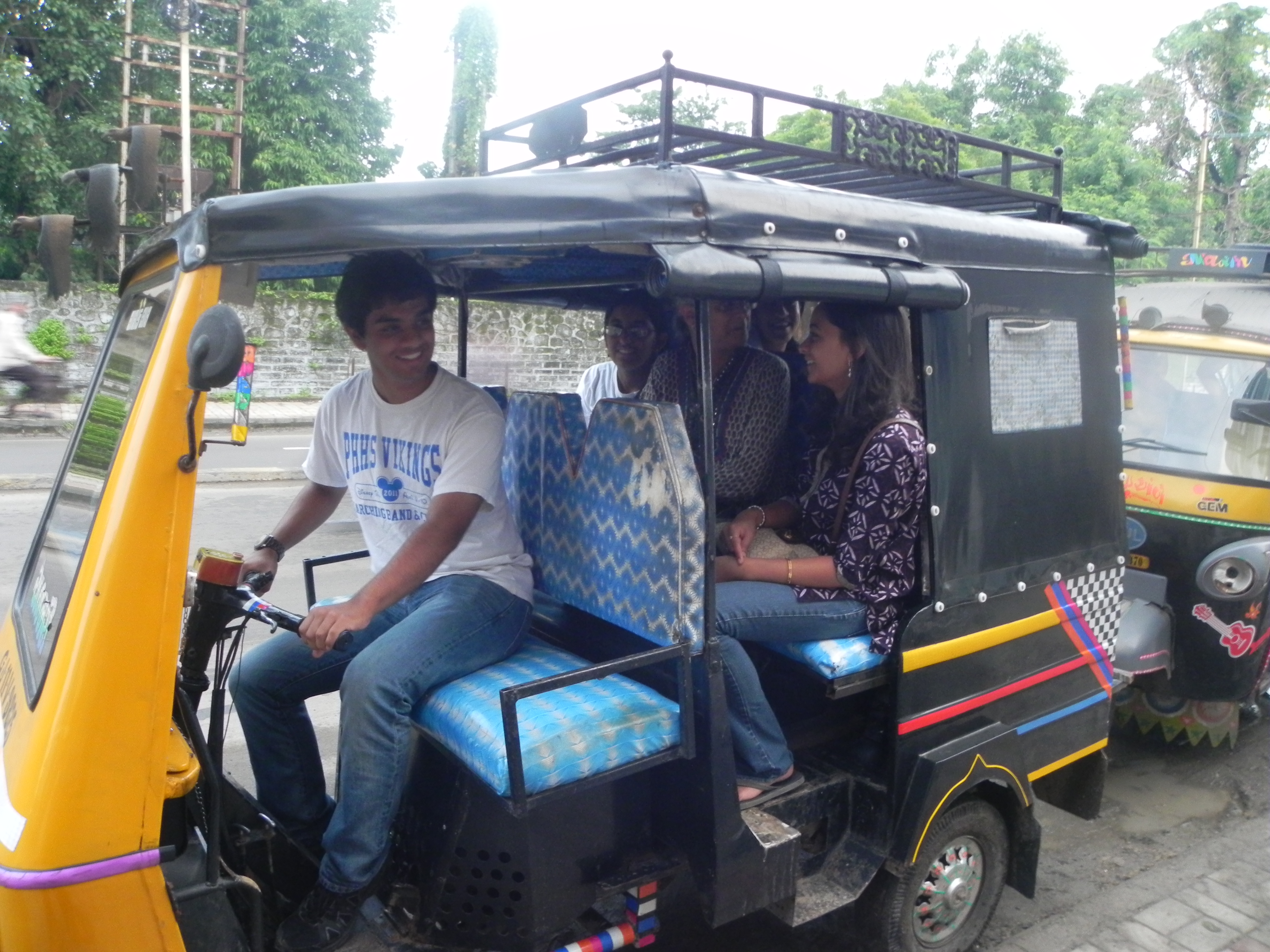
Seeing their spirit, many others also got ready to go.  Quickly, with the help of Kalpitbhai, we called several rickshaws and went to Uperkot. 

Get in rikshaws – maximum fit
Get in rickshaws – maximum fit
It is fun being packed
On the back of rikshaw
On the back of rickshaw
Waiting for the driver
I can drive
I can drive
It is not easy to drive rikshaw
It is not easy to drive rickshaw

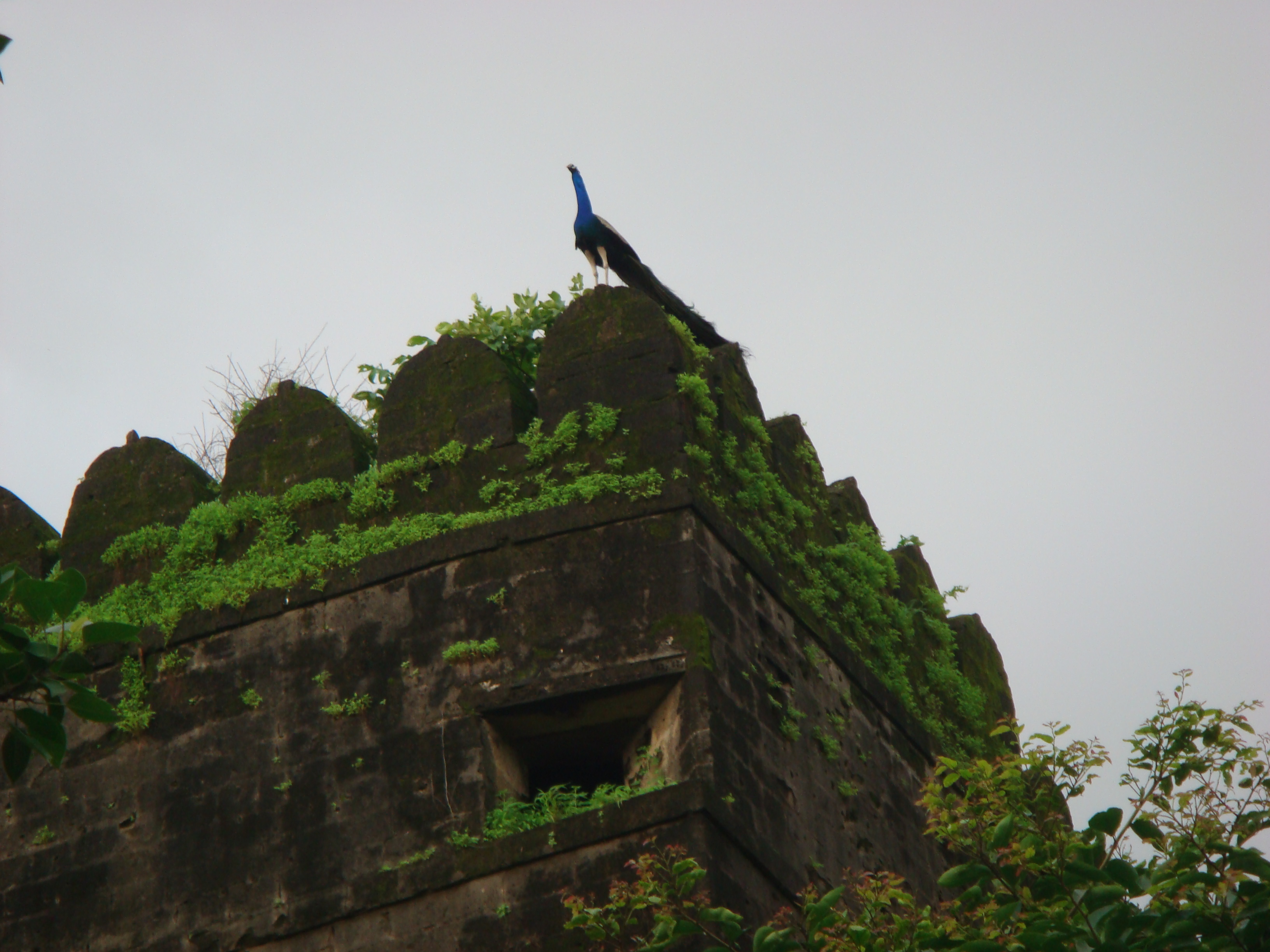
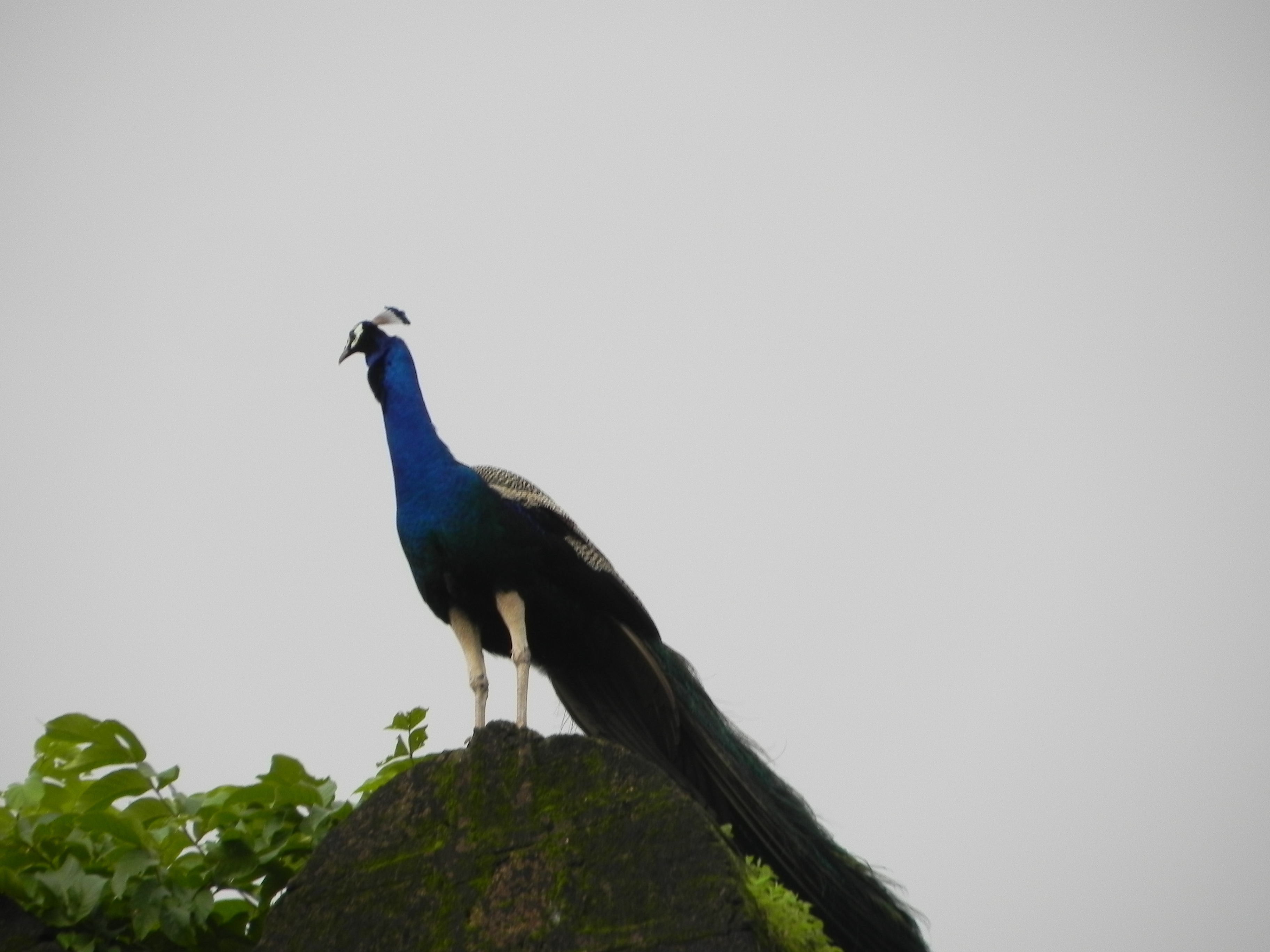
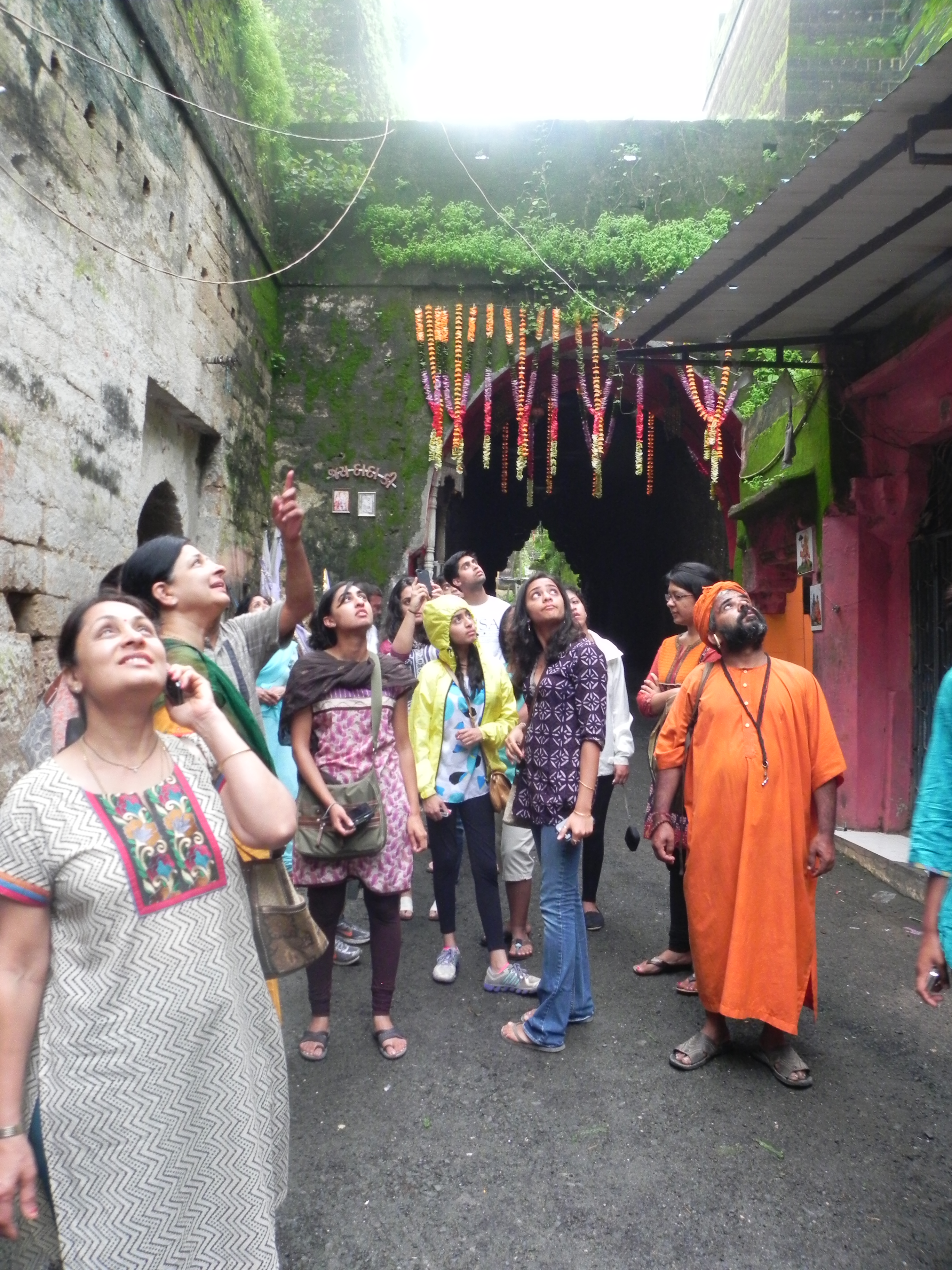
There we found out that they were closing.  We made requests, but they told us to come the next morning at 6:00 a.m.  While some of the teachers were speaking to a local guide to discuss what else we could visit that day, the youngsters were busy looking up at something else. High above us on the fort walls, a peacock was sitting magnificently. It had charmed the youngsters.  They started to mimic the sound of the peacock—some of them sounded almost like the peacock.

Uperkot’s castle
Uperkot’s fort
A peacock on the castle
A peacock on the fort
Closer look
Closer look
Look at the colors
Look at the colors

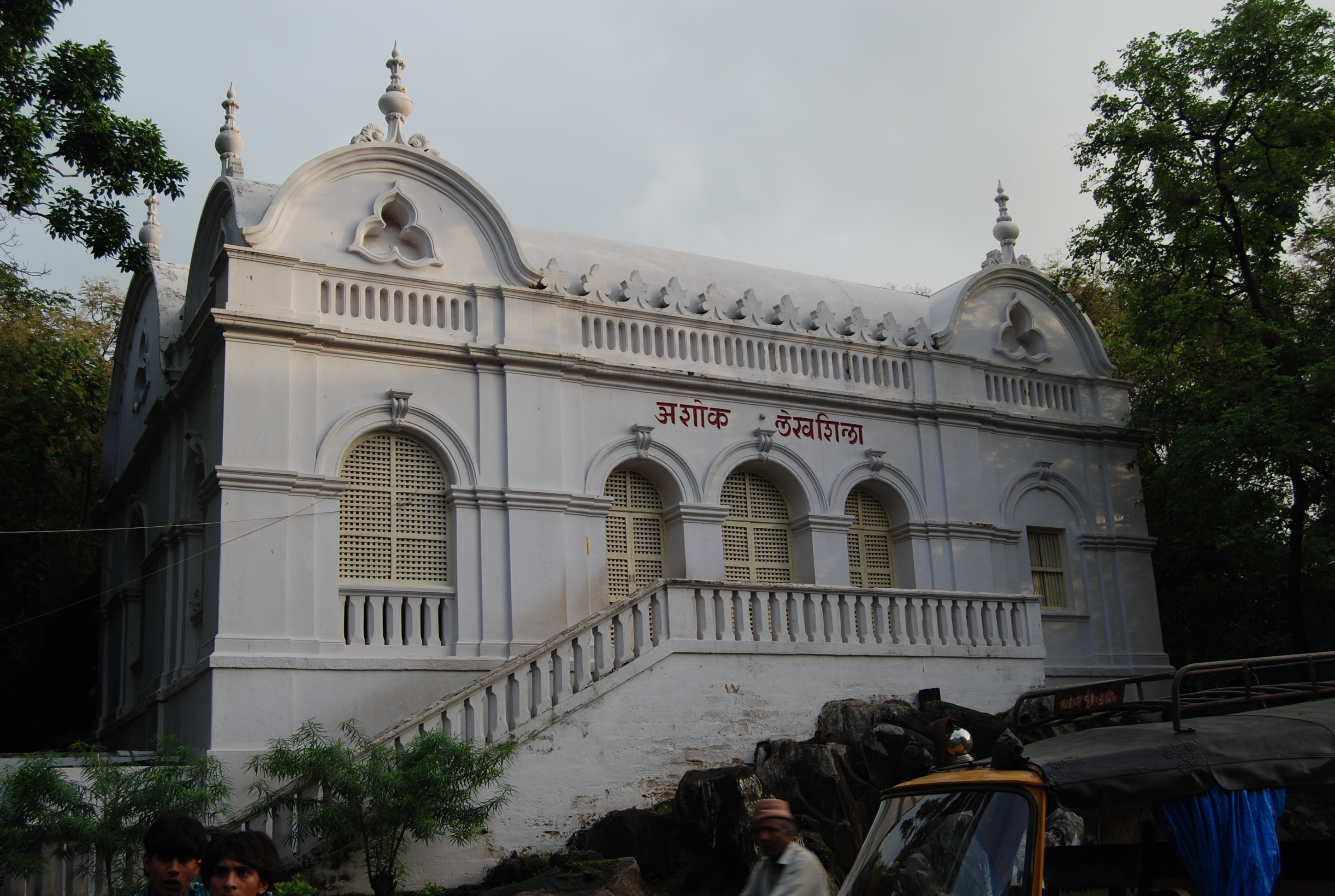
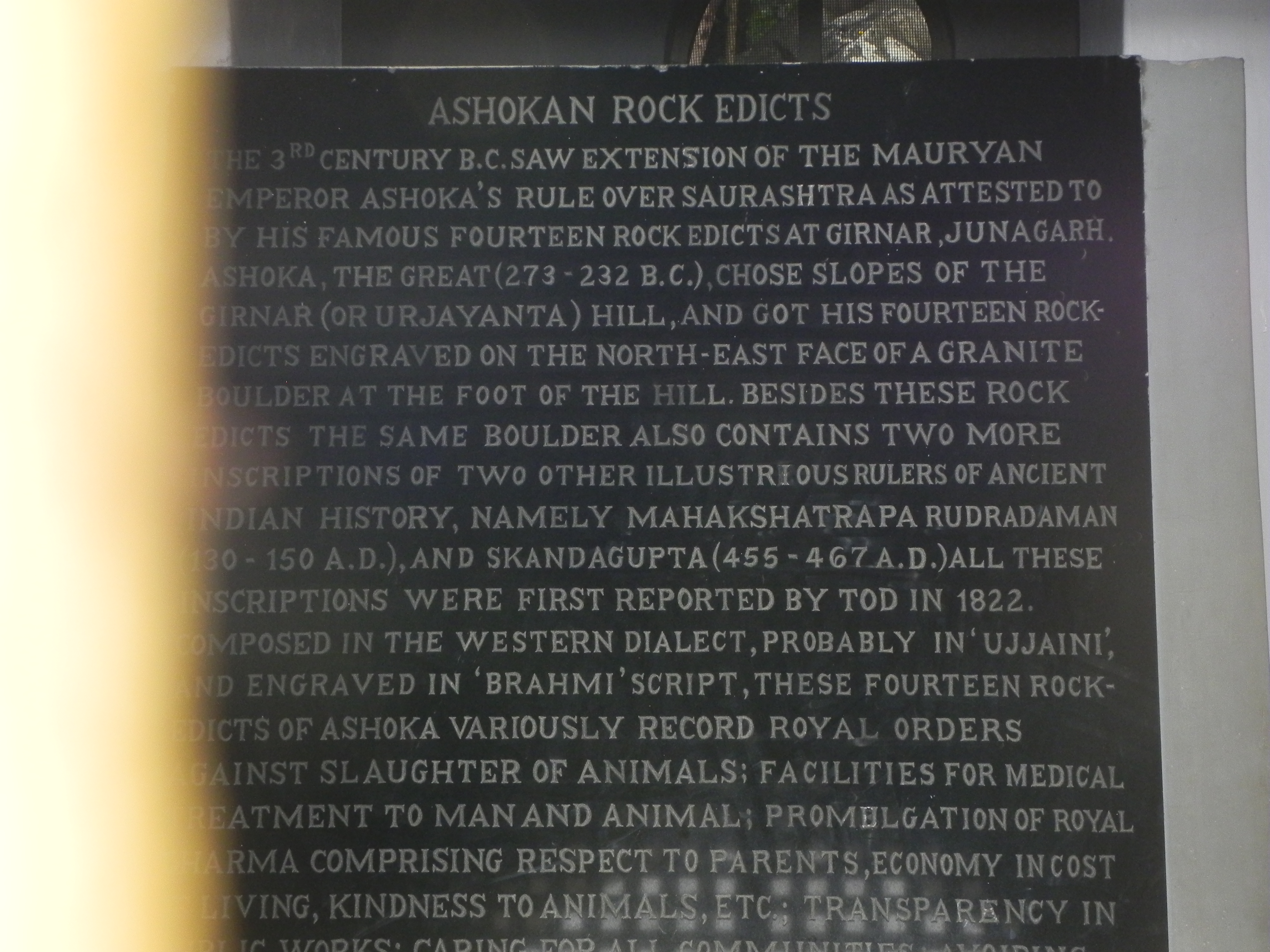
We found a guide and a few rickshaws that agreed to take us the town to see whatever was open at that time. We stopped by at Ashok’s Shilalekh where the message of the great king, Ashoka, had been carved on a huge black stone.  The room was closed.  People went around and found holes to peep through.  Someone turned on the flash light from their cell phone.

Our guide
Our guide
Ashok’s Shilalekh
Ashok’s Shilalekh
14th Rock Edict
Rock Edict

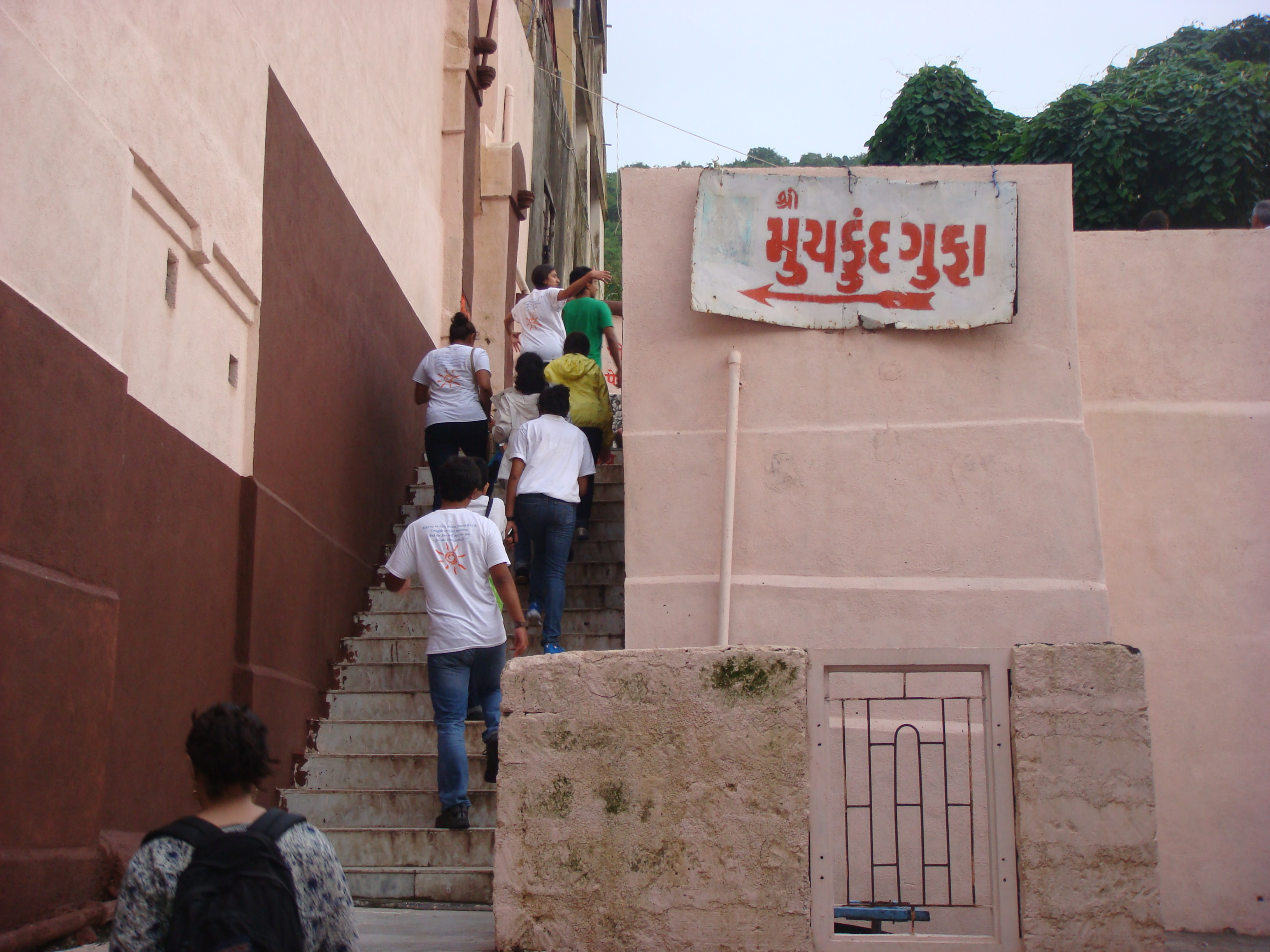
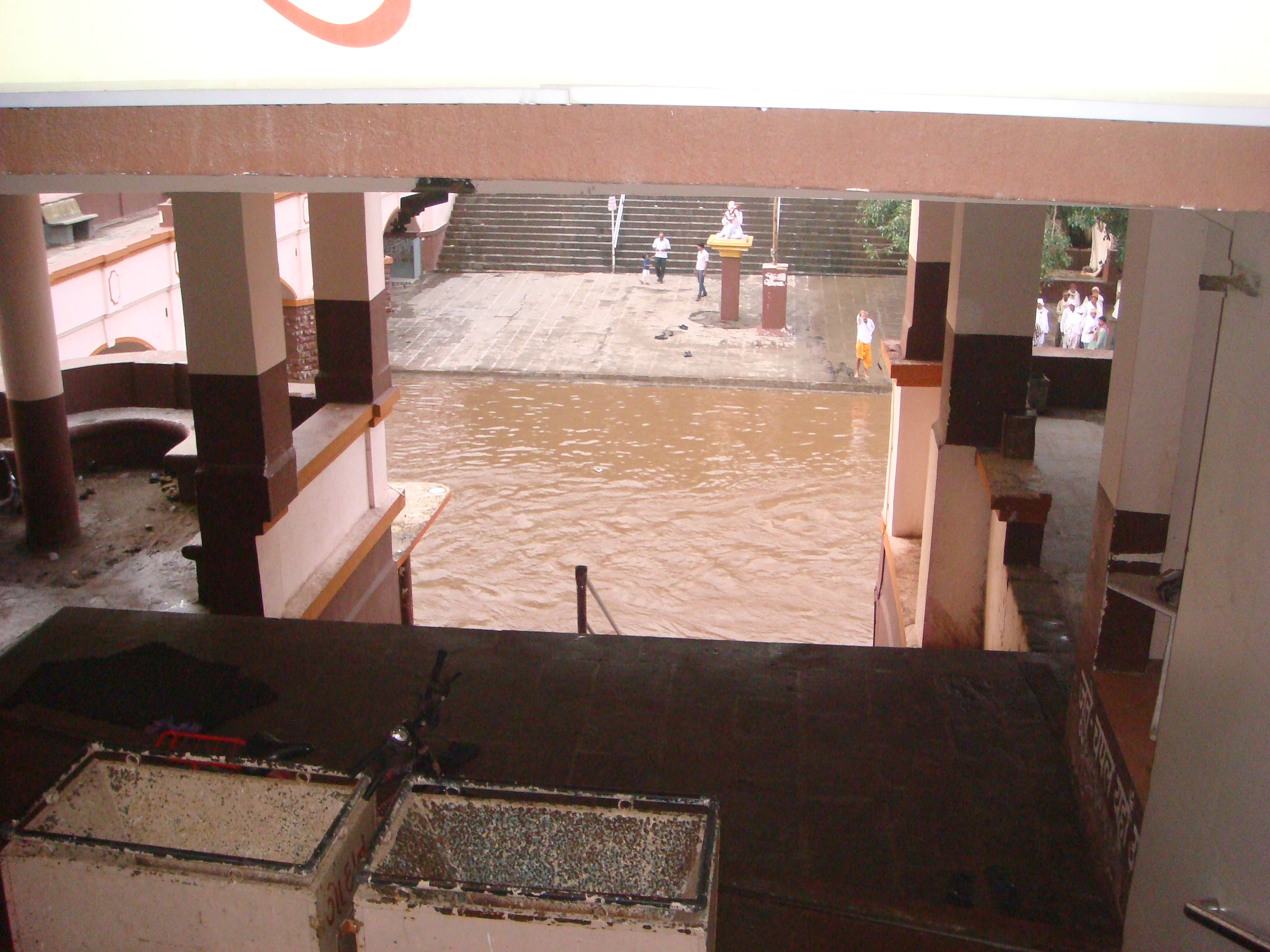
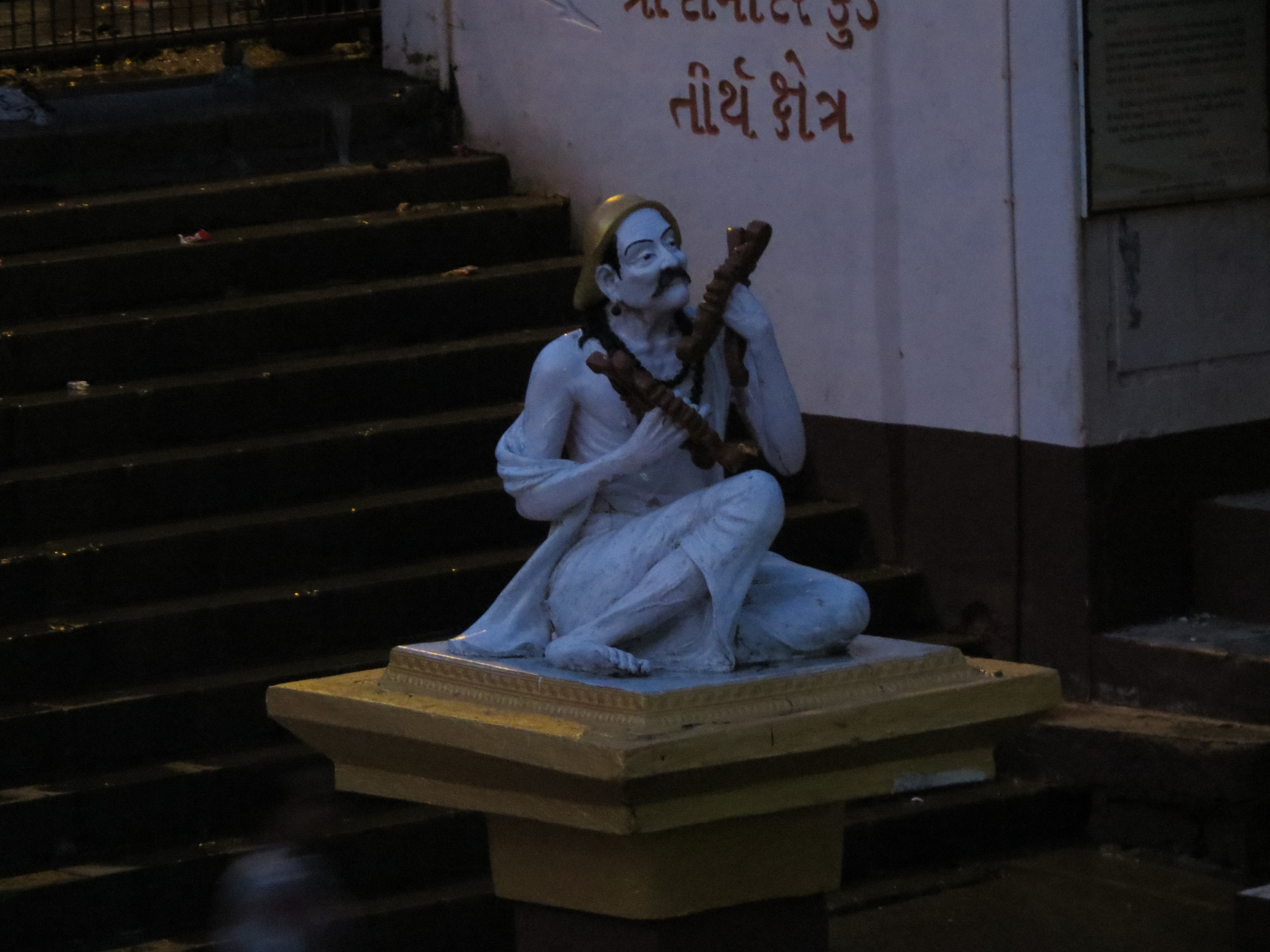
Next, we went to the “Damodar Kund” where the famous Gujarati poet and saint, Narasimh Mehta, regularly took his bath.  Narasimh Mehta had written the famous bhajan “Vaishnav Jana to tene re kahiye…”  Gandhiji and many other had loved this bhajan.  It is considered a very holy place.  There we learned mythological stories and saw the Muchkund cave.

A temple
A temple
Lord Radha Damodaji’s temple
Monkeys having a great time
Telling a story of Muchkund
Towards the cave of Muchkund
The mountain view is pretty
The Girnar mountain view is pretty
Damodar Kund where Saint narasimh Mehta used to come daily to take a bath
Damodar Kund where Saint Narasimh Mehta used to come daily to take a bath
I visited this place
Narasimh Mehta -  the poet of “Vaishnav Jananto…”
Narasimh Mehta – the poet of “Vaishnav Jananto…”
Sunset at Girnar
Sunset at Girnar
Another view
Another view

It was getting dark.  But, we saw the Giranar Mountain and a part of the forest.  We went to Giranar Mountain.  It had 10,000 steps and several places of pilgrimage on the way up.  It was dark and we did not have time.  With a heavy heart we climbed the first few steps and returned.

Going towards Girnar
It was getting dark
It was getting dark
But, we wanted to touch Girnar’s feet
Here we are at Girnar – roughly 10,000 steps

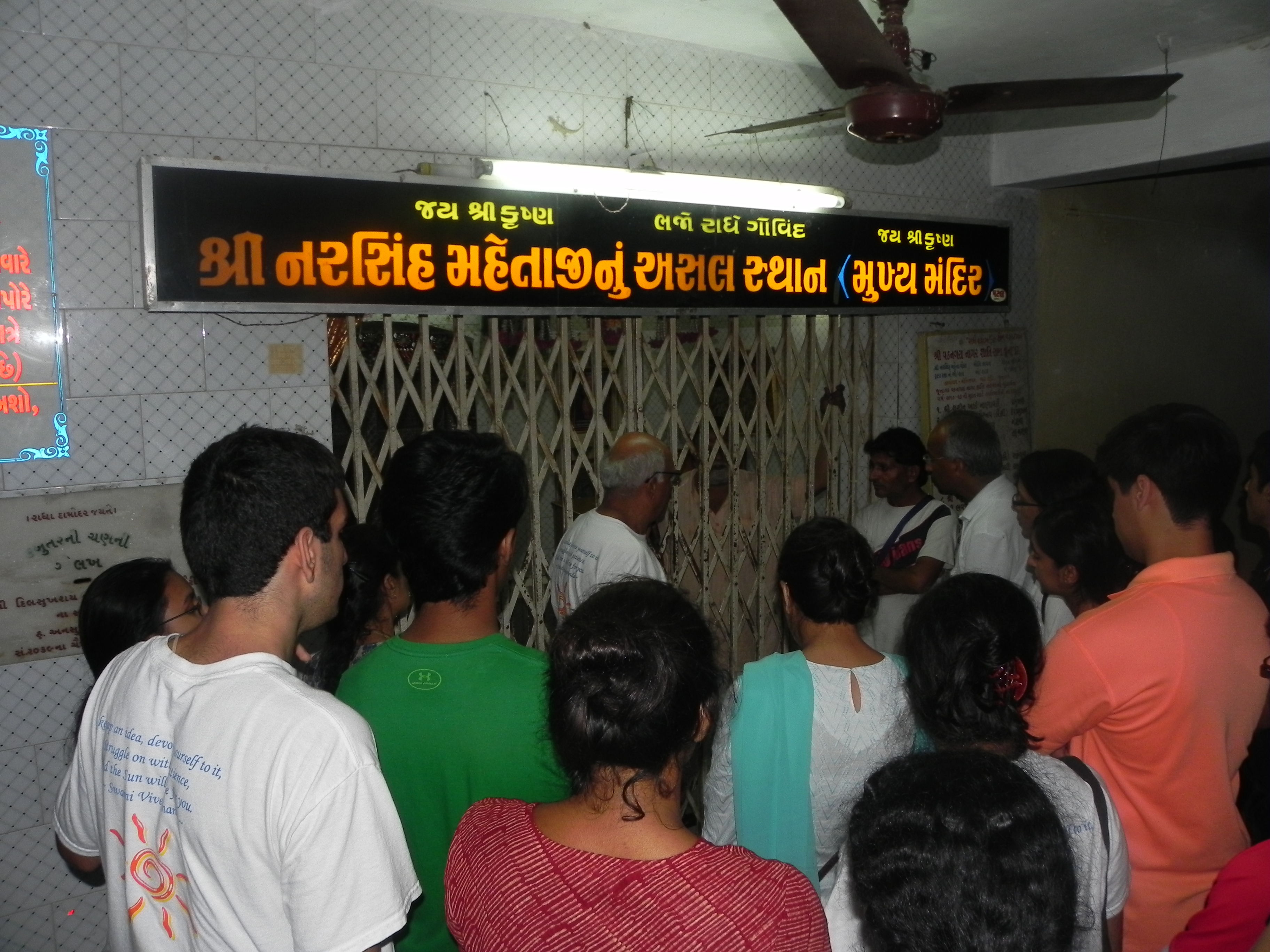
The final destination was Narasimh Mehta’s birthplace.  It was almost 9:00 p.m. and by now completely dark. There were no lights and it seemed to be closed. We entered the gate of Narasimh Mehta’s birthplace.  Intuitively some of the students started singing “Vaishnav Jana to…” loudly and we went to his house. Listening to our song, Narasimh Mehta’s descendant and his wife came out and stood there, listening to us emotionally.  He said that it was late and everything was closed. But upon seeing people’s love for Narasimh Mehta, he stood to talk to us.  He said that he was not fit to talk about the great saint, but he would share his thoughts.  Just like Sri Ramakrishna, Narasimh Mehta did not go to school.  He realized God on his own intense desire and practice.  Narasimh Mehta did not have regular academic education, but many received Ph.D.s on his work.  His poetry expresses the fundamental truths of scriptures, especially of devotion.  Such poems could not have been written without direct experience of God.  Also, his poems have all the aesthetic beauty in them.  The selections of words could not have been better.  We saw where he used to sing bhajans every day.  He was also going to devotees who were untouchables and would sing bhajans with them.  His cast people threw him out of their cast.  But, he did not stop singing bhajans with those that were considered to be untouchables.

Narasimh Mehta’s house
The door inside was opened for us to see the image that Narsimh Mehta worshipped
It was great to remember this saint.
This visit was inspiring.

It was really late at night.  We came back and had dinner at the hotel.

Dinner at Indraloka
Dinner at Indraloka
We were all hungry
We were all hungry

The next day, a few enthusiastic youngsters and adults went to Uperkot at 6:00 a.m.  They could not see all the sites because they were not open.  However, they were happy to see what they could and especially happy to have sighted lots of peacocks.

At the Uperkot at 6:00 a.m.
Look at the view
Look at the view
A historical place - originally built in 319 BCE
A historical place – originally built in 319 BCE
View of Junagadh
View of Junagadh
War weapons
War weapons
another view
another view
View of Giranar Mountain
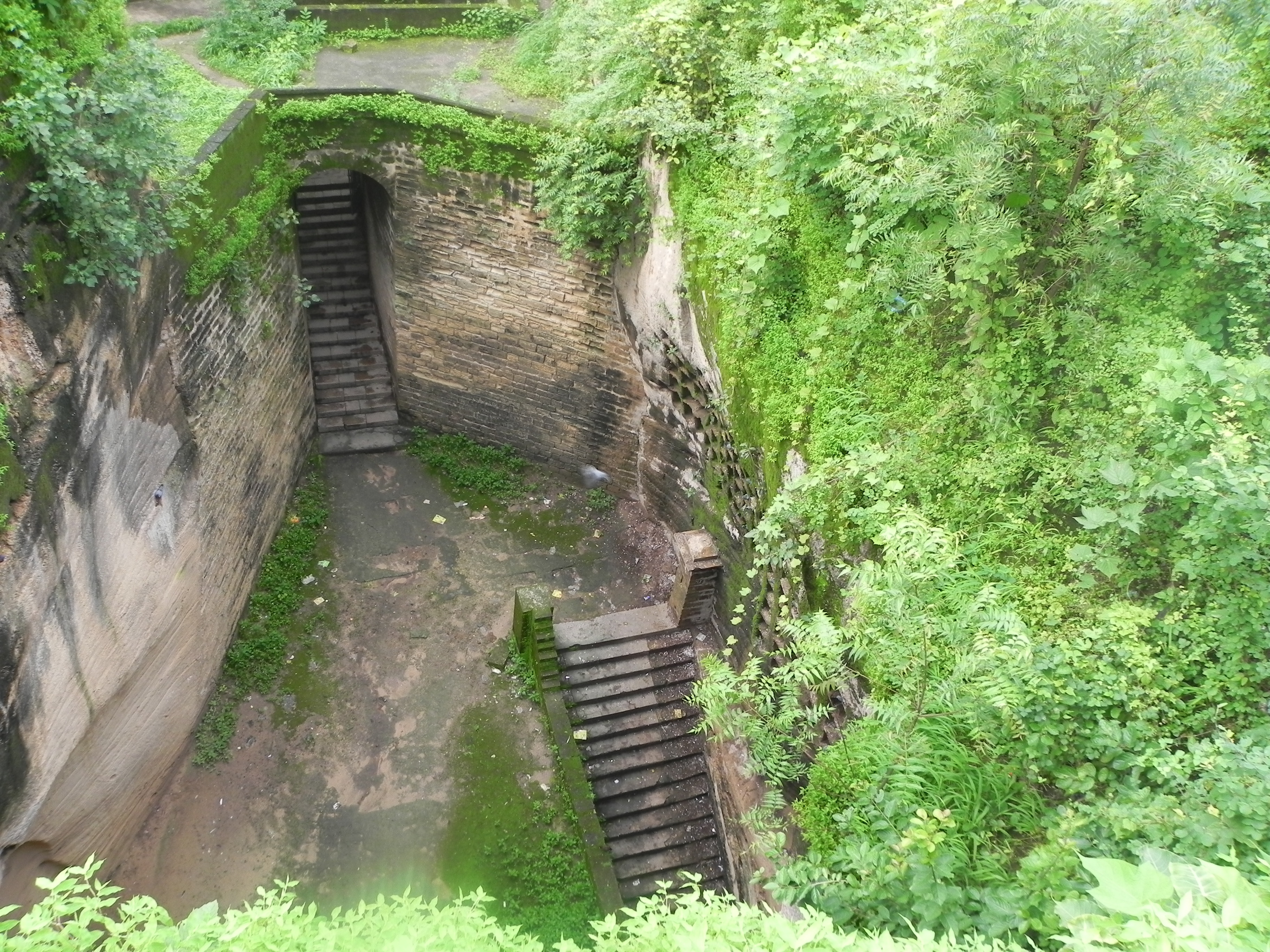
Big hole
Hugh step well
It is very deep
It is very deep
Having Giranar in teh background
Having Giranar in the background
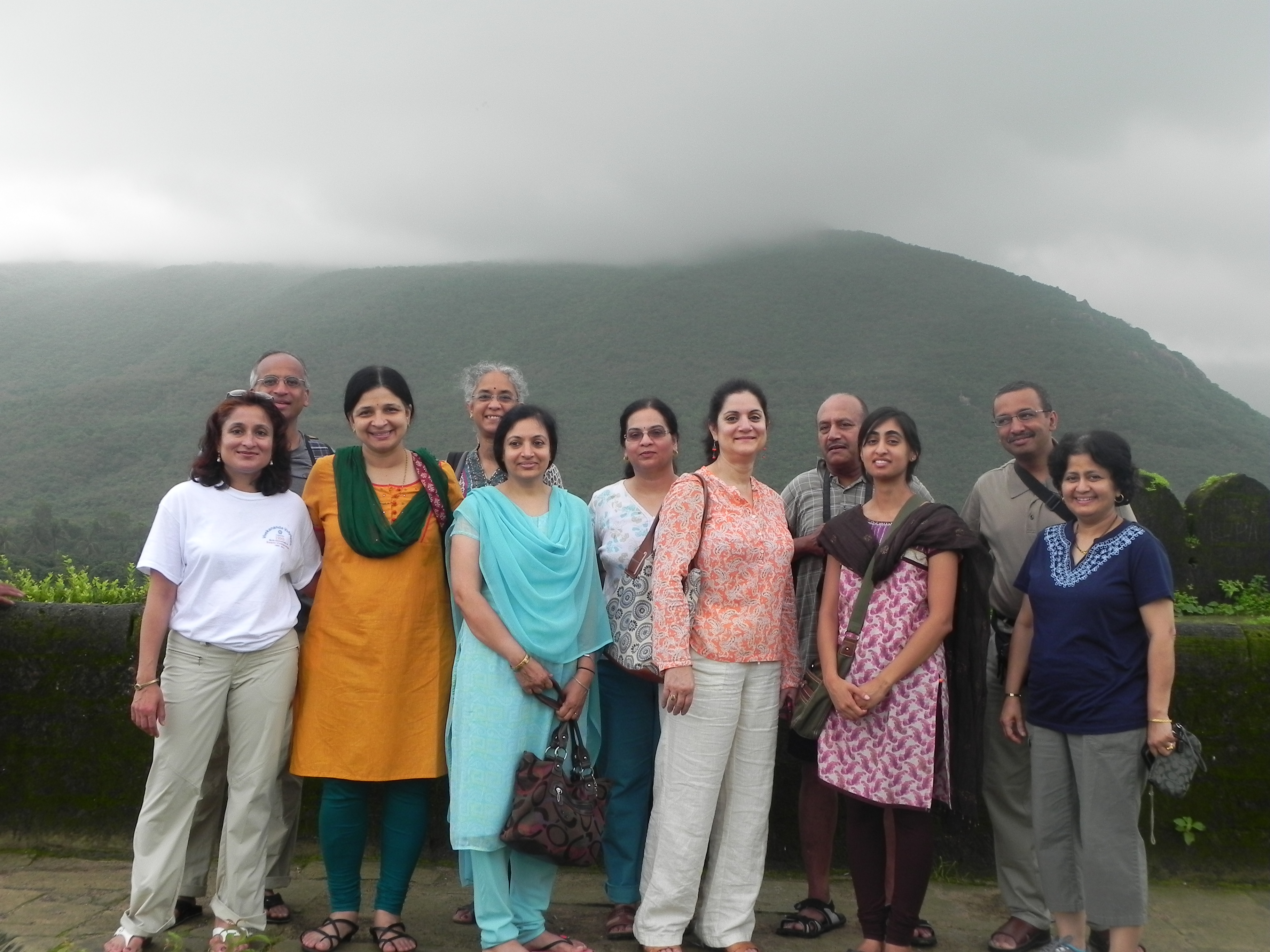
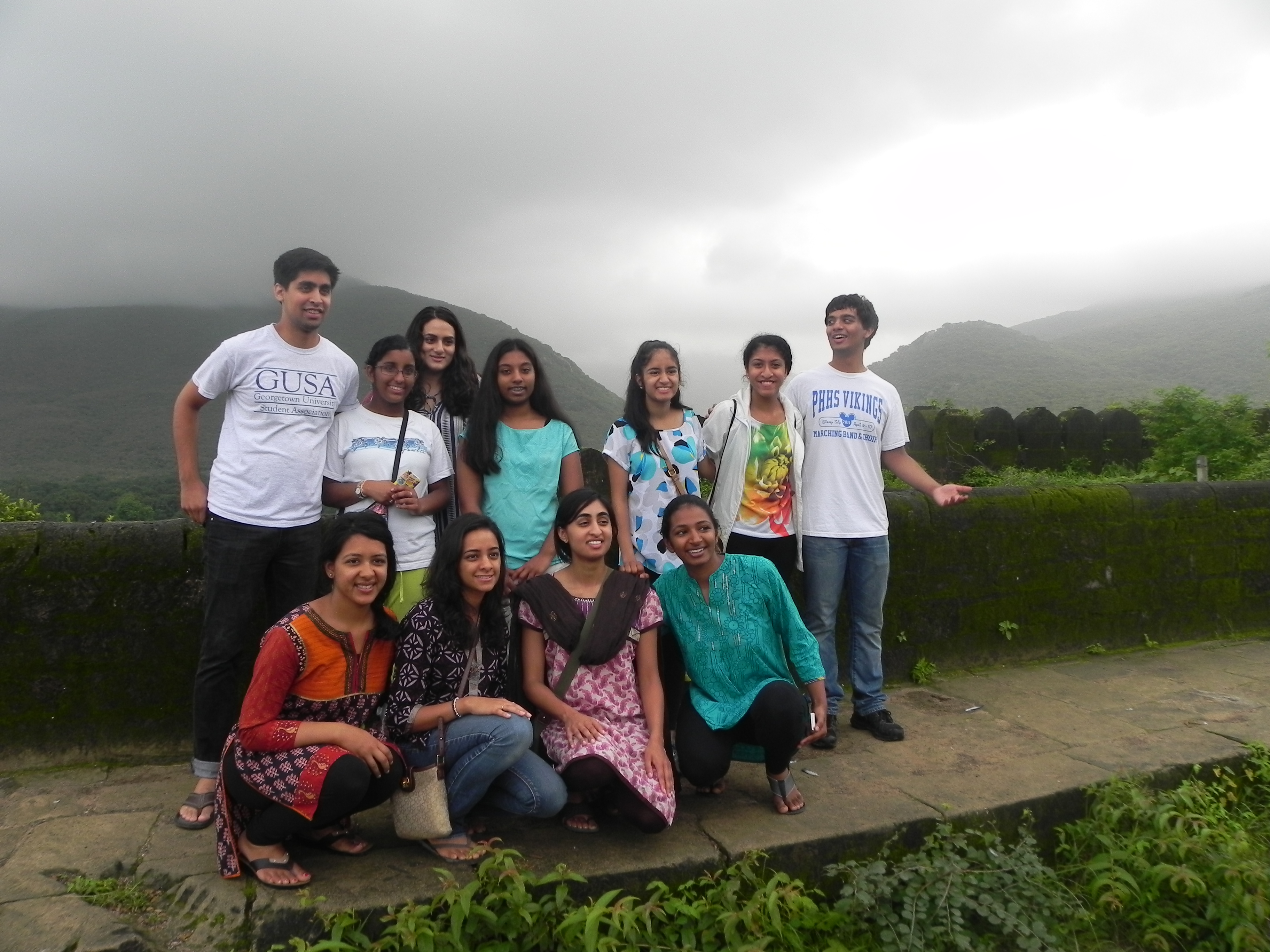
Another group photo
Another group photo
Why not us alone!
Why not us alone!
Beautiful scene of Giranar
Hey! Peacock
Hey! Peacock
Another angle
Another angle
Peacock started dancing
Time to go back
Time to go back
Well, we could see something
Waiting for rikshaws
Waiting for rickshaws
Take few souvenirs
Take few souvenirs

After breakfast we checked out and started heading back to Vadodara.  Swami Atmadipananda had told us that we must visit “Sarada Math of Upleta” on our way back.

That was our next destination and last thing to see on our trip.

IYC – Bulletin 7

Somanath Shiva Temple – one of the Dwadash Jotirlingas

We had many activities in the morning in Porbandar. We went to the Ramakrishna Ashram, Sudama Mandir, and Kirti Mandir. The walking and taking rickshaws took time.  It was getting late and we still had to reach Somanath before the 7:00 p.m. arati. We were happy to have a good time in Porbandar and soon left the city after having a delicious lunch.

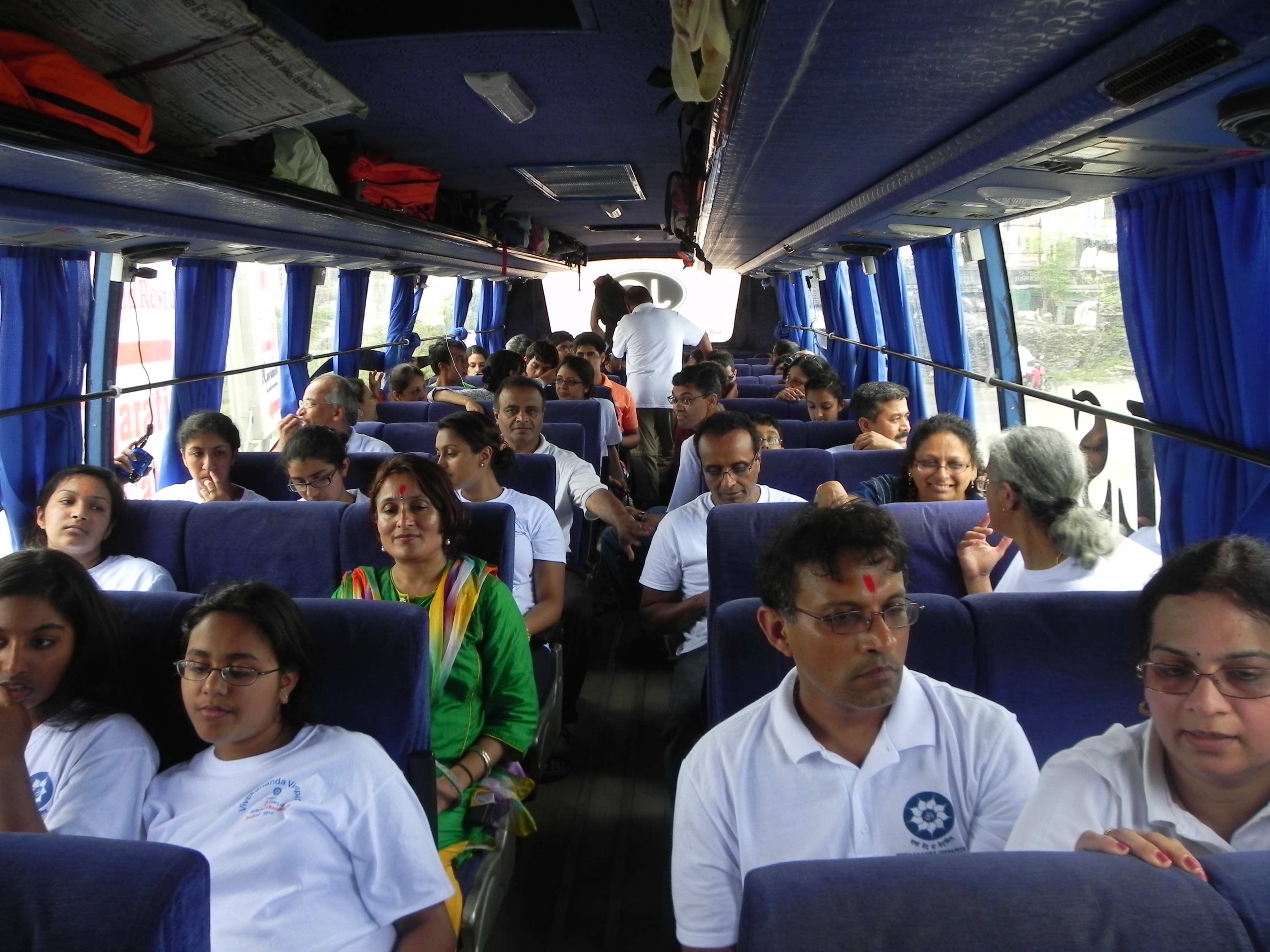
On the bus, we all started thinking of Shiva.  Some were singing, some talking, while some were catching up on their sleep.  Three to four people were sick with stomach problems, but the team of doctors was taking care of them.  Those who were sick got the opportunity to travel in the van that was accompanying us.  This way they could stop whenever there was a need.  When people got better, they joined us in the bus and everyone welcomed them back warmly.

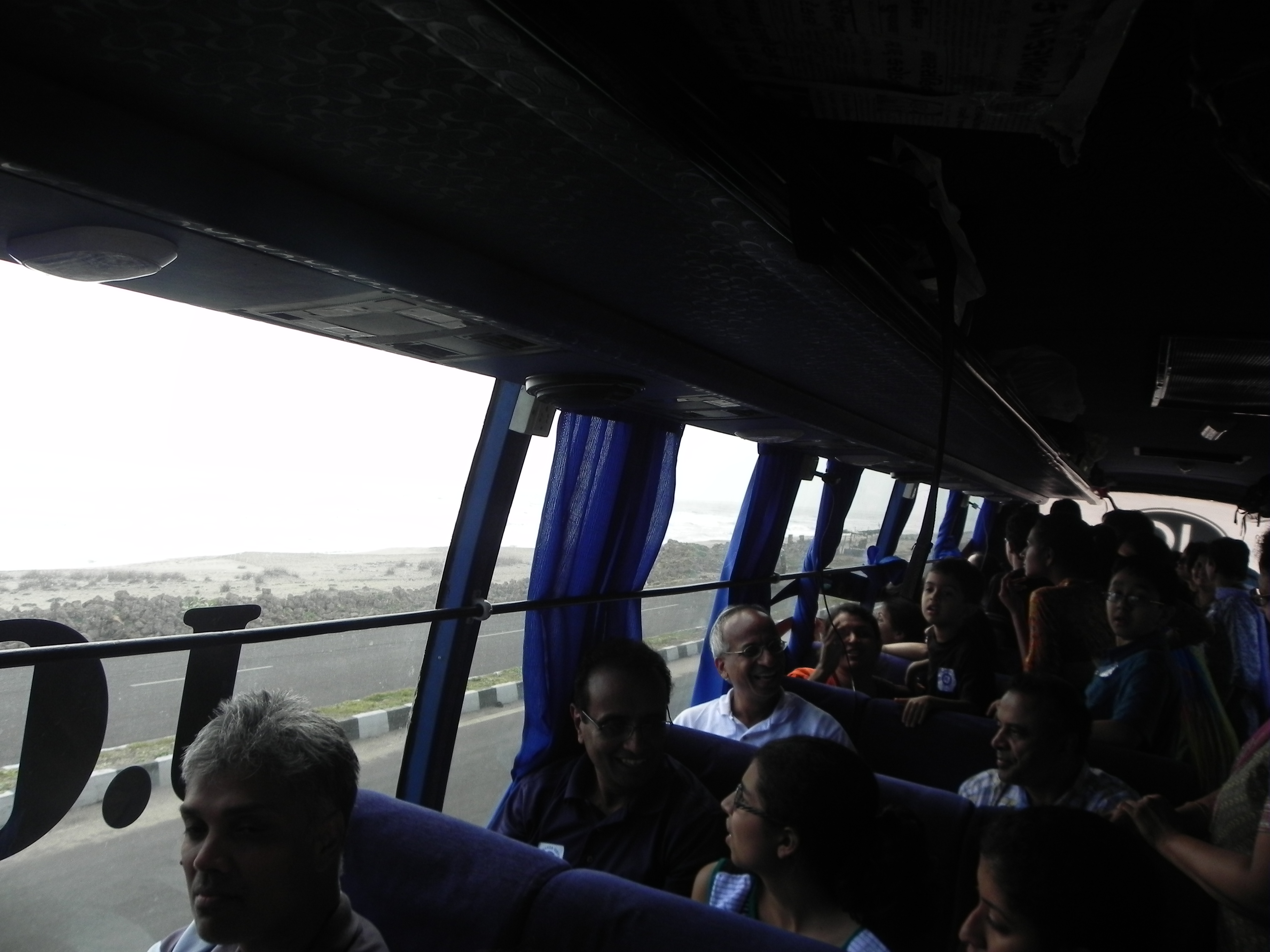
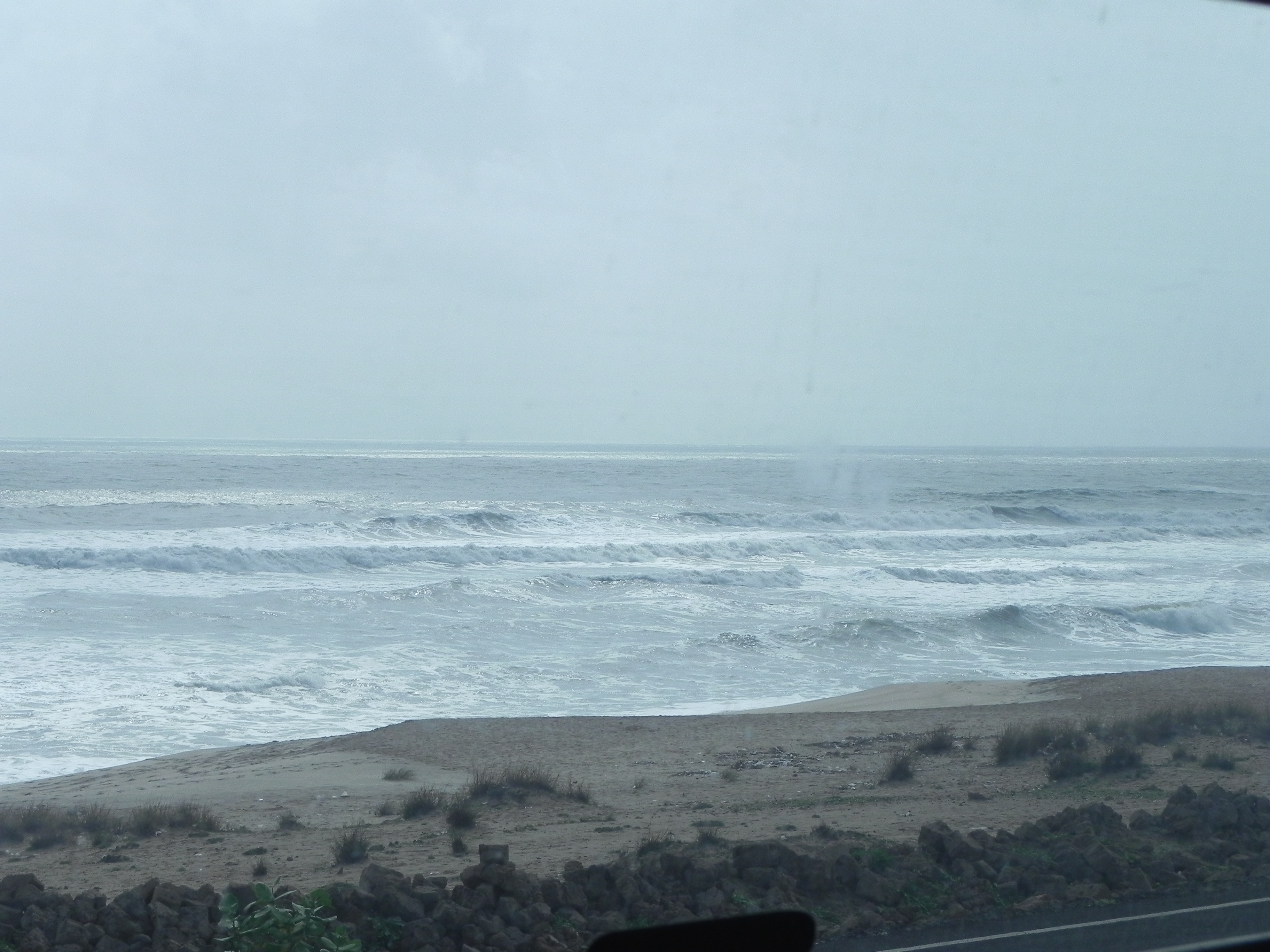
On the way, all of a sudden, people saw the ocean on the right.  It was very close and the coast was roaring with high waves.  All of the youngsters cheered loudly.  The ocean was inviting.  We stopped the bus on the side.  Unfortunately, the ocean was on the other side of the highway.  The driver had missed an exit to go to that side.  Now, in order to go close to the ocean, we would have to cross four lanes of the highway. Meanwhile, vehicles on the highway were traveling at great speeds.  We decided against taking the risk of crossing such a busy highway, and watched the ocean from the bus.  After some time, the bus continued to go ahead.  And what did we find?  The van people were walking back up the beach.  At the sight of them, all of the youngsters in our bus started to protest and said, “It’s not fair!”  They wanted to walk to the water too.

Well, the ride to Somnath was pleasant and we enjoyed great views of the ocean every now and then.  We soon arrived at the “Lords Inn” where we were staying overnight.  All checked-in and were rushing to go to the Somnath temple for the 7:00 p.m. arati.  Swami Atmadipananda (Yagnesh Maharaj) of Porbandar Ashram had called a devotee, Mr. Narendra Dave, who was going to guide us here.  We found him already waiting for all of us at the hotel. So we quickly got ready and rushed onto the bus.

The bus had to park a little bit away from the temple.  It was a long walk to the temple. We had to leave our shoes, belts, phones, and cameras at the counters.  After doing so, we all ran to the temple. The arati had already begun.  We stood at the door with hundreds of people.  It was a thrilling experience to see the devotion of so many people.  There was no singing, but the atmosphere was lively and full of energy. People were clapping with the rhythm of the drums and the sounds of metallic plates while looking at the Shivalingam.  Many were reciting “Om Namah Shivaya.”  At the entrance, devotees stood in line (men and women separately) to have “darshana” of Shiva. After arati, one could easily go near the Shivalingam and have “darshana.”  Several Vidyapith people bought “Ganga Water” and took it to the Shrine.  They poured the “Ganga Water” in a vessel. From that vessel, with the help of a motor, the water would go through a pipe and would pour directly on the Shivalingam.  It was a modern way of doing “abhikhekam.”  Still, it was a good feeling that we had offered Ganga water to Shivaji.

Then, our guide Narendraji led us outside the main temple.  Behind the main temple, there was a flat pedestal, a few feet high.  This pedestal is said to have been the site of the old “Parvati Temple.” We all walked up the steps and sat at the top. In front us lay the roaring ocean. There was a great view from all sides. Narendraji told us the mythological story of the Somanath temple.  It was related to the moon.  “Soma” means moon and “Nath” means Lord.  It is amazing that though this temple had been destroyed several times, it had been built again and again.  With the help of Saradar Vallabhbhai Patel and government, the temple was very well built and has since been well maintained.

On the right side of the temple there were beautiful, colorful statues depicting the stories of the “Dwadash Jyotirlings.”  We saw all of them.  Then, Narendraji took us to the “Swayambhu Shivalingam,” meaning the Shivalingam manifested by itself.

After spending much time at the Somanath Temple and being touched by the atmosphere created by the devotion of people, we went back to the hotel planning to come back early the next day.  We had a delicious dinner.  All then rushed to their rooms.  Our plan was to go to the temple the next day at 6:15 a.m. to attend the 7:00 a.m. arati.  No one wanted to miss this one.

Around 6:00 a.m. the bus left from the hotel.  The sky was full of dark clouds. There was thunder and it was raining.  All were wearing their Vidyapith’s T-shirts.  Many had Swami Vivekananda’s 150th Birth Anniversary T-shirts, while others had Vidyapith’s blue logo T-shirts.  Our wish was to take a group photo in front of the Somanath Temple in our Vidyapith uniform after the arati. As we walked through the rain to get onto the bus, it seemed as though our wish was not going to work out.  We thought we would leave the fate of that wish upon Shiva.

As we entered the temple, we were surprised to see that many people had already come into the temple and had taken seats from where the arati could be seen.  Women were on the left and men were on the right, facing Shiva.  While sitting in the temple, we could see the worship of the Shivalingam on the closed circuit TV screen.  First they gave a bath to the Shivalingam, and then very artistically decorated it with colors and cloth.  It seemed as though there were very talented artists doing the worship of Shiva.  Meanwhile Trupti Aunty and a few students started singing Shiva’s various dhoons many of which involved “Om Namah Shivaya.”  Slowly all started joining in.  It was a very inspiring atmosphere.  The temple again filled with people.  Then, arati started.  All stood up.  The same emotions and devotion were rising in the minds of all.  One has to be there in person to feel the environment.

After arati, we all went outside to the left side of the temple. As we walked down the steps we could see the roaring ocean.  It was still drizzling.  We all sat and wanted to recite the Shiva Mahimna Stotra.  Trupti Aunty had made copies of the Shiva Sangeet in Ahmedabad.  Exactly as we were passing out our Shiva Sangeet copies and arranging ourselves, we heard the Shiva Mahimna Stora from the loud speakers albeit in a different tune.  However, all felt that we should recite it in our own tune.  All joined in singing Shiva Mahimna.  Those who did not know were listening and reading it with others.  It was a most memorable Shiva Mahimna recitation.  We also sang “Nagendraharay Trilochanaya…” All enjoyed singing the hymn and dhoon “Shiva, Shiva, Shiva, Shiva, Om Namah Shivay…”

Then, we decided to just look at the ocean and quietly spend some time on our own.  We tried to fill our eyes, minds, and hearts with the waves of the ocean and wondered about infinite nature of the universe.

Some students then proposed that we go to the “Parvati Temple,” stand there looking at the ocean, and recite the Shanti Mantras.  All were excited with this idea.  The ancient Shiva temple, the age-old ocean, and the Vedic chanting, all these three were connected as if it was the connection of the Vedic times of Rishis to the modern times of the 21st century.  The Shanti Mantra chanting was very powerful.  After the chanting, all sat down quietly.  Spirituality was becoming tangible.  Pilgrimage properly done is really helpful for spiritual development.  Filled with inner joy, we all came out of the temple.

Guess what! Shiva wanted us to have a group photo in front of this great temple.  Rain had stopped and the sun had started coming out.  We were looking for a professional photographer.  Several of them came forward.  Finally, one expert came and everyone gave him the camera.  It was amazing.  The photographer said that he would deliver the requested copies of the photograph to the hotel in a short time for a reasonable price.  No deposit was asked.  It was all trust.

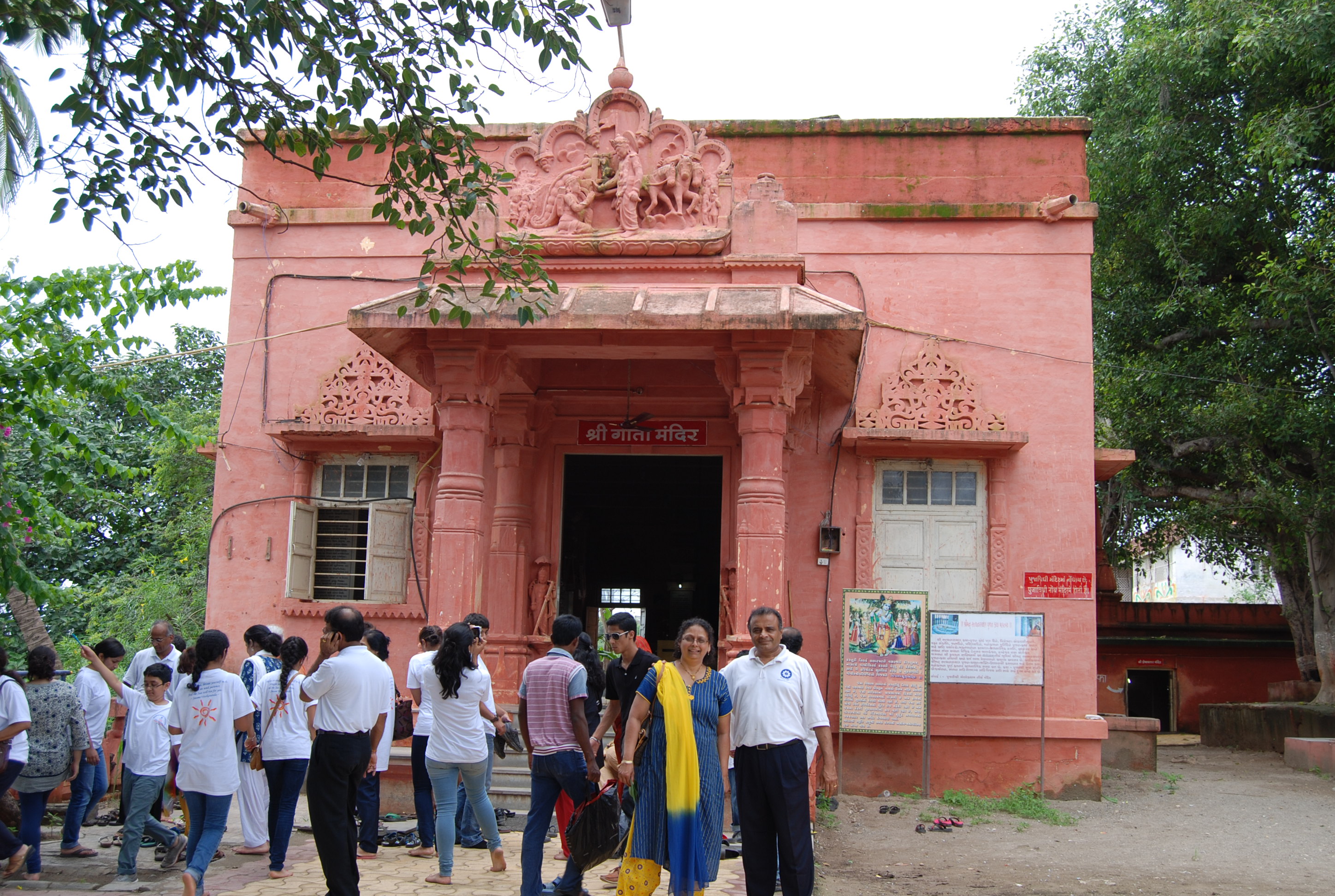
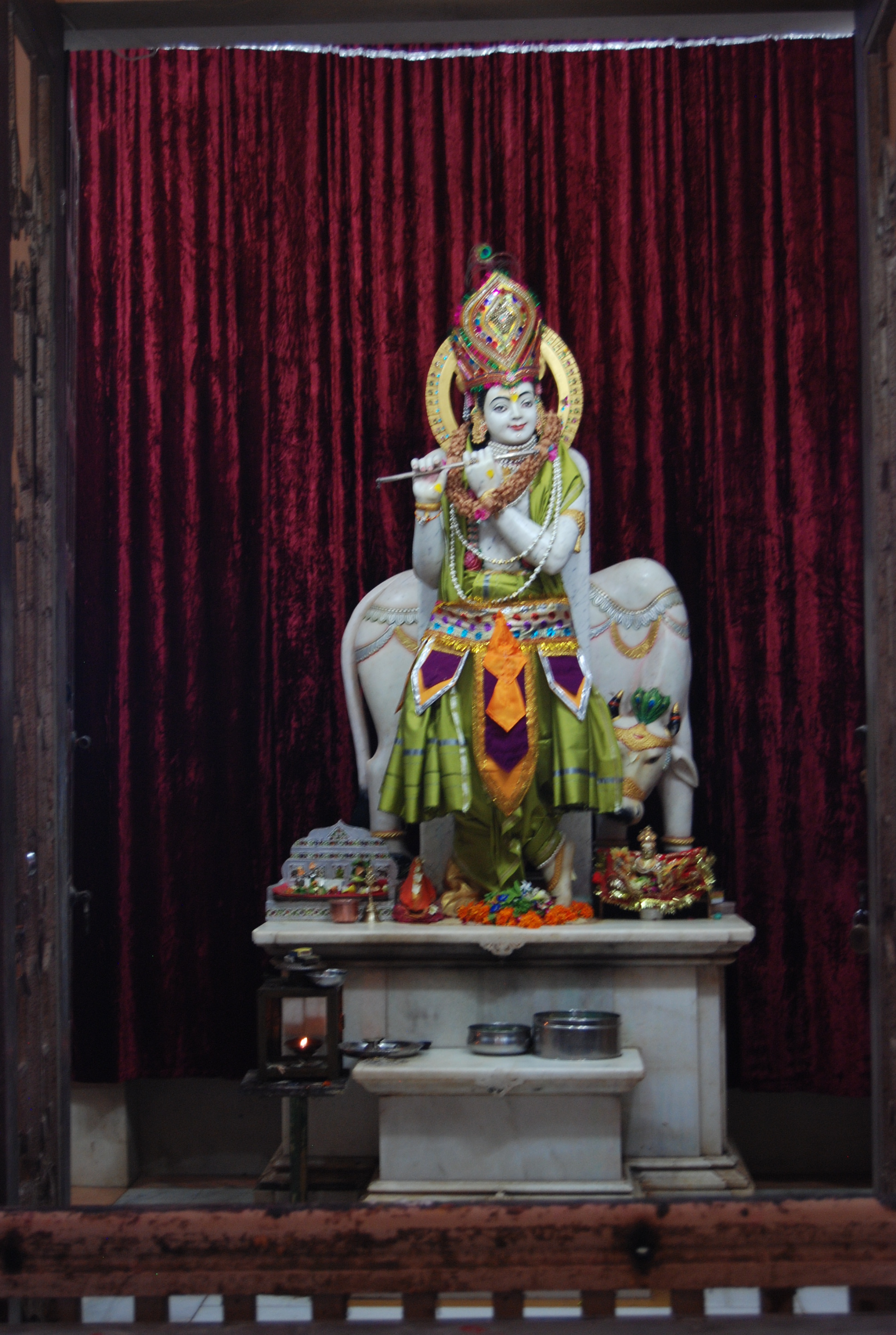
We came back to our hotel and had an excellent breakfast.  Narendraji was ready to take us to other known sites. First, we saw the Gita temple.  Shri Krishna’s statue was exceptionally beautiful.  His sweet smile and flute-playing pose was attracting all minds.  All 18 chapters of Bhagavad Gita had been carved on the pillars.  After saluting Shri Krishna we all sat down and recited Gita Chapter 15.  Most of the group knew it by heart.  The environment created a divine mood. We had good singers in the group and that helped.  The whole temple vibrated with this recitation.  Those who knew the meaning of the chapter enjoyed it even more.

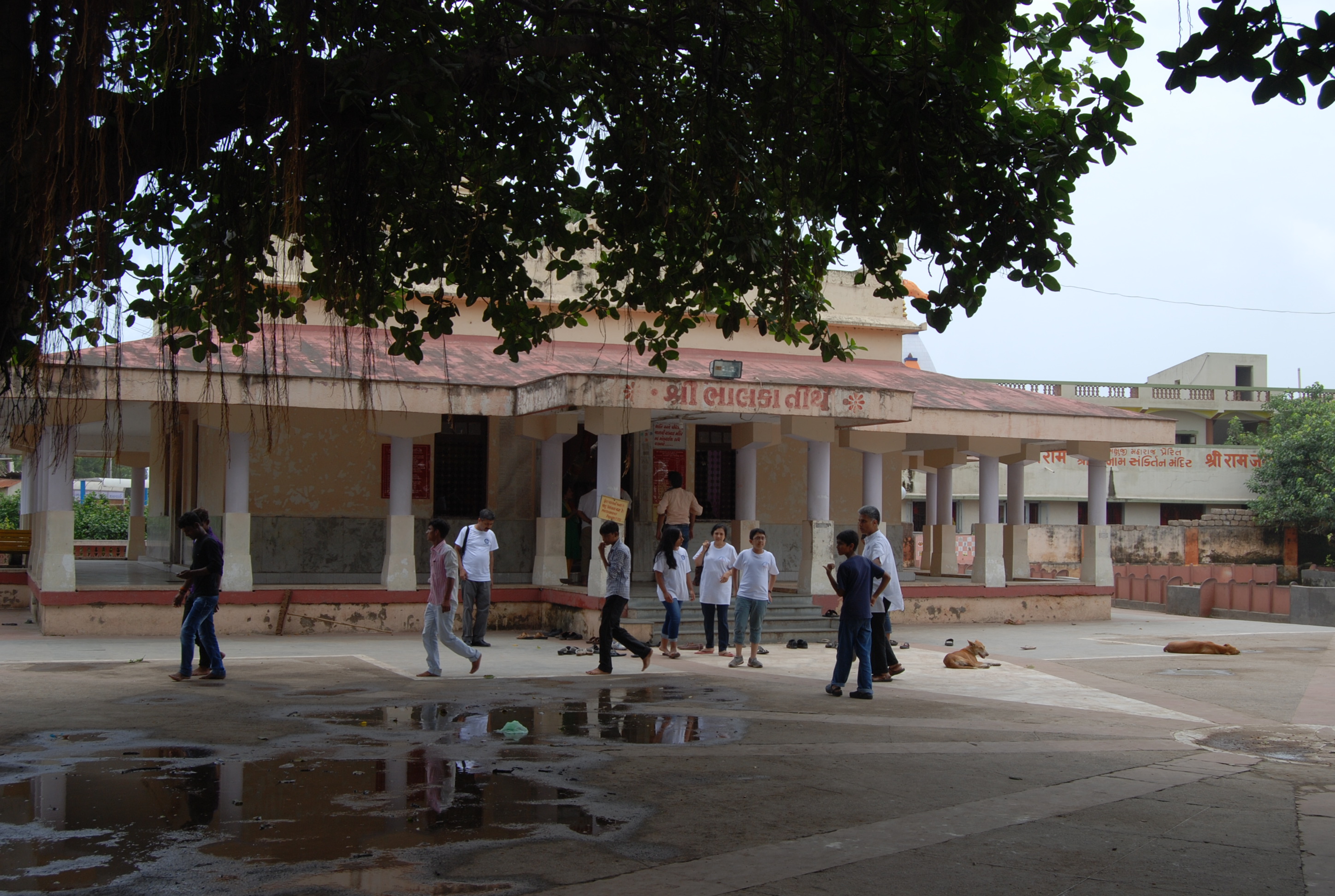
Next we visited Balaram’s cave where Shri Balaram had left his body.  Then, we visited a meeting place of three rivers: Hiran, Saraswati, and Kapila.  River Saraswati had been underneath.  The pool of water looked like an ocean.  Narendraji asked us to do little bit of worship of the place of pilgrimage.  We took “Sankalpa” taking water in our hand to do spiritual practice. Our last stop was “Bhalka Tirtha” where a hunter had shot a poisonous arrow and hit Shri Krishna’s foot, mistaking it for a deer from afar.  When the hunter realized what he had done, he felt very bad.  At that time, Shri Krishna told him that he should not feel bad.  He had simply done his job.  Since millions were killed in Mahabharat war and his own army was killed due to an inner dispute, it was time for Shri Krishna to go.

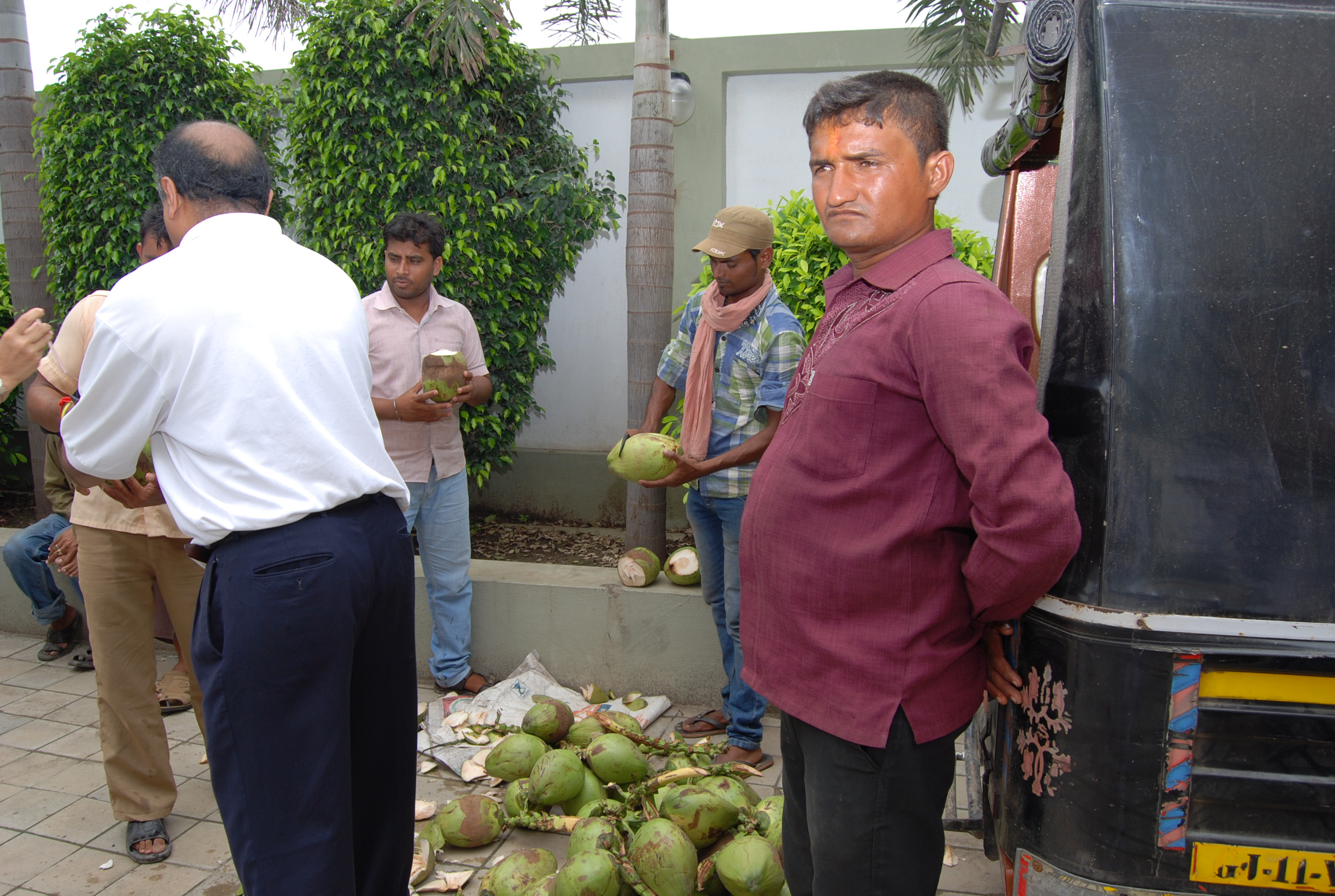
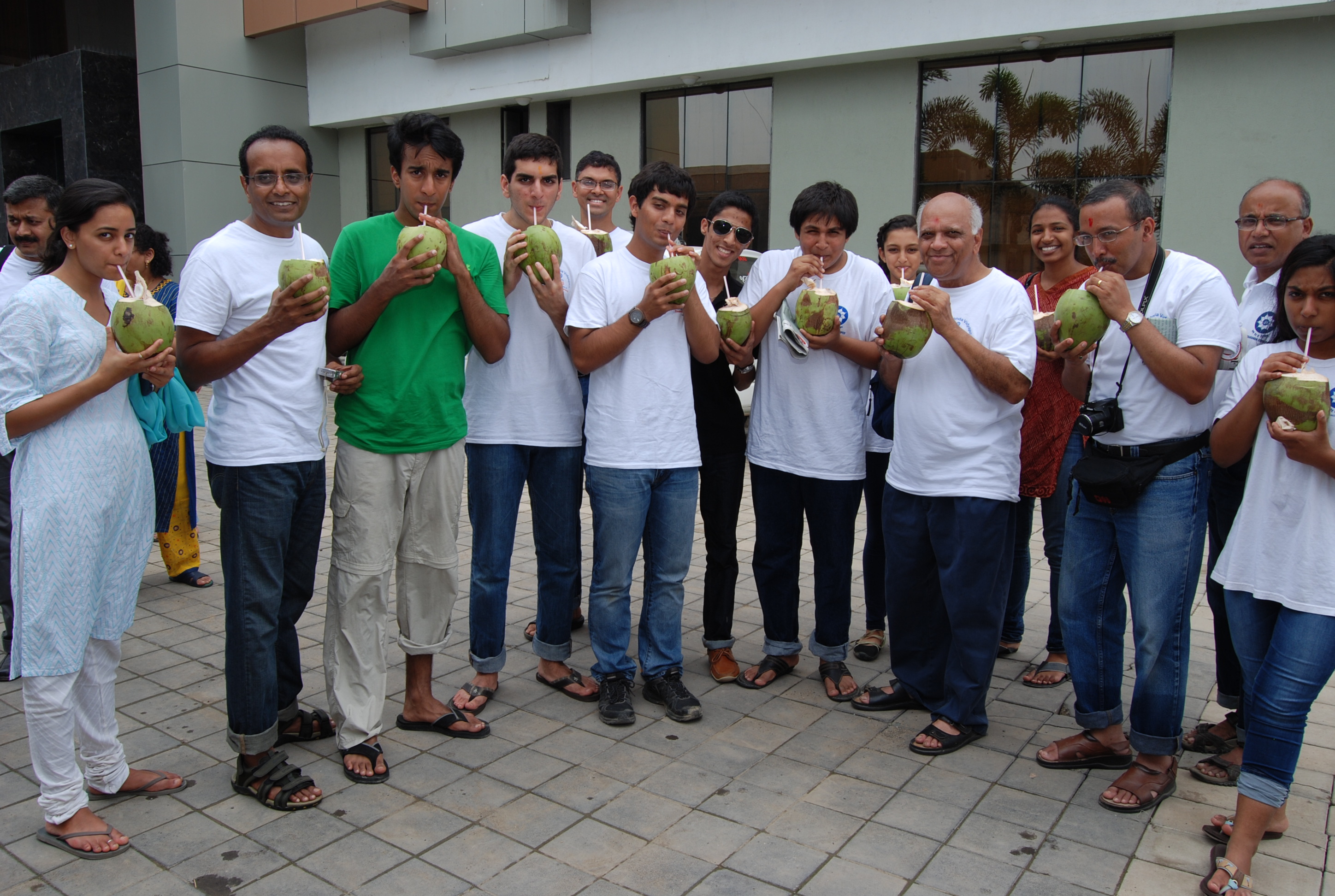
After visiting all the sites, it was time for us to go to the hotel and checked out.  After checking out, we found that the photographer had brought the requested copies of our group photo.  All were amazed to see how fast he and his team worked, and the quality of the copies was excellent.  In addition, upon our request, he had brought with him a “nariyal vala”- a coconut vendor—who had brought many green coconuts. We all drank fresh coconut water.  It was a pleasant surprise and a great treat.  After the refreshing drink, the coconuts were cut open and we enjoyed eating the “malai” by scraping it out from inside. Fully satisfied of our Somanath trip, we all sat down in the bus to go to Junagadh.

I will quote to you, brethren, a few lines from a hymn which I remember to have repeated from my earliest boyhood, which is every day repeated by millions of human beings: “As the different streams having their sources in different places all mingle their water in the sea, so, O Lord, the different paths which men take through different tendencies, various though they appear, crooked or straight, all lead to Thee.” (Look Shiva Mahimna Stotra, shloka no. 7)

–   a quote from Swami Vivekananda’s famous lecture at the World’s Parliament of Religions, Chicago, September 11, 1893.

Wow! Ocean!  All youngsters stood up and cheered
Wow! Ocean! All youngsters stood up and cheered
View of ocean through the window of our bus
View of ocean through a window of our bus
View of ocean through another window
Rough ocean
Rough ocean
Cannot have enough of ocean
Look at the waves!
Look at the waves!
Calm ocean
Calm ocean
May be a bay
May be a bay
The Famous Temple of Somanath
Wish fulfilled!  Having group photo in Vidyapith’s T-shirts in front of Somanath Temple
Wish fulfilled! Having group photo in Vidyapith’s T-shirts in front of Somanath Temple
Photo from cell phone!
Photo from a cell phone!
The Gita Mandir
The Gita Mandir
Pleasant and loving image of Shri Krishna
Recitation of Gita’s 15th chapter – look at the pillars
Want to catch in my camera
Shri Baldevaji’s temple
Shri Krishna’s last foot steps
Shri Krishna’s sandles
Guide Shri Narendra Dave
Under a Pipple tree
Under a Pipple tree
At the meeting of three rivers
Sankalpa – “will continue doing spiritual practice”
Our escort Kalpitbhai also got a chance to offer
Bhalka Tirtha – Where Shri Krishna got hit by an arrow
No camera inside – captured photo in the heart
Chek-out time
Chek-out time
The skillful camera person brought photos and green coconuts
It was a pleasant surprise!  Simple delicious!
It was a pleasant surprise! Simply delicious!
Taste “malai’ also
Taste “malai’ also
Time to move on
Time to move on

IYC – Bulletin 6B

Porbandar – Sudama & Kirti Mandirs

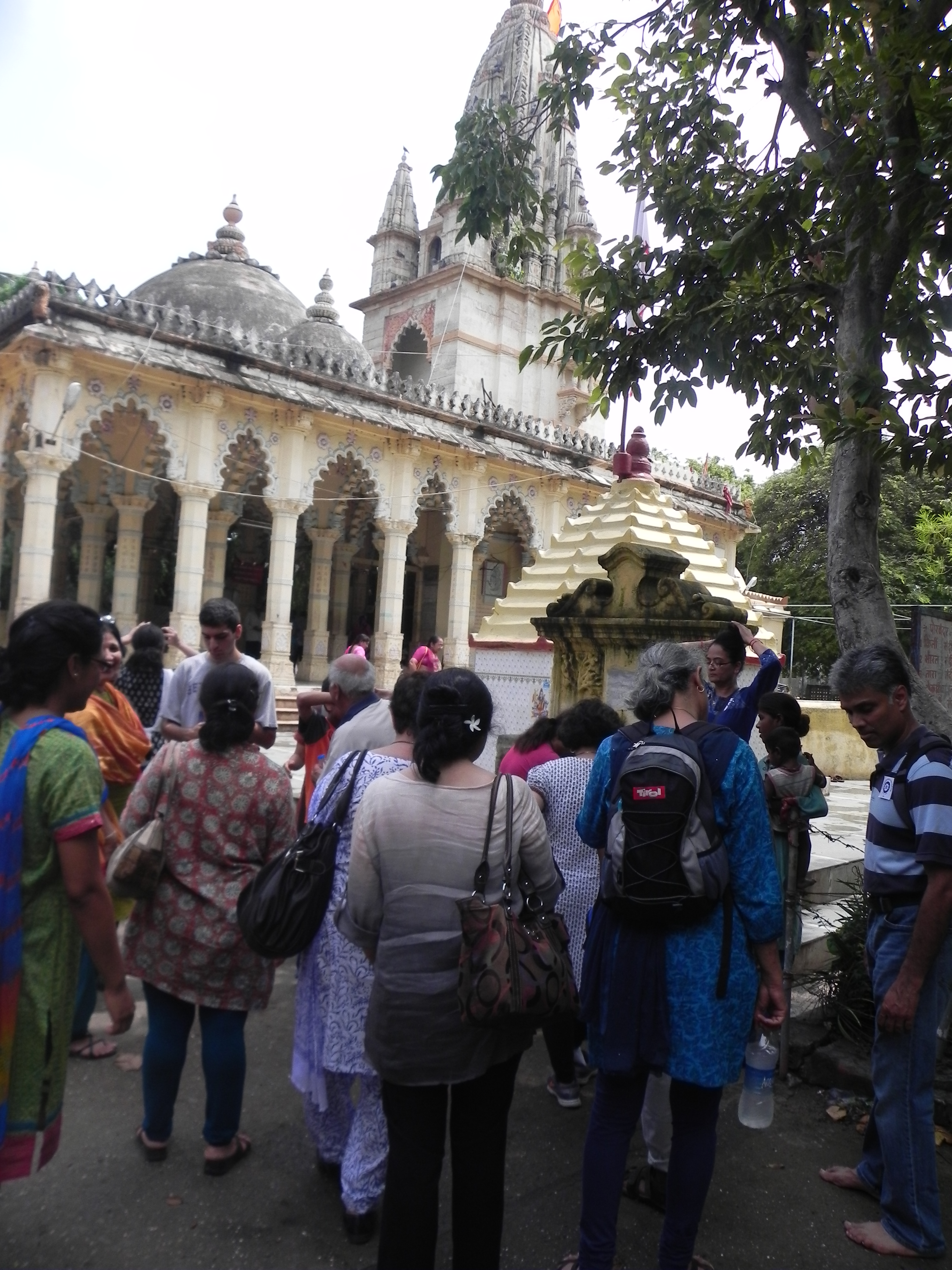
             After visiting the Ramakrishna Ashram in Porbandar, we all got into the bus.  Rafik, the bus driver, parked the bus at a place from where our next destinations, the “Sudama Mandir” and “Kirti Mandir” (Mahatma Gandhiji’s Birth Place), were walking distance. It was a 5-7 minutes walk.  It was fun asking people for directions and trying to keep the group together as we watched for bicycles, rickshaws, cars, cows, dogs, and puddles. Soon enough, we made it to the Sudama Mandir.  We were thinking of Shri Krishna’s love for his friend, Sudama.  At the shrine, we received “pouha” that Shri Sudama took to offer to Shri Krishna.  In the temple ground there was a maze, a “maze of life.”  A few students tried to go around the maze.

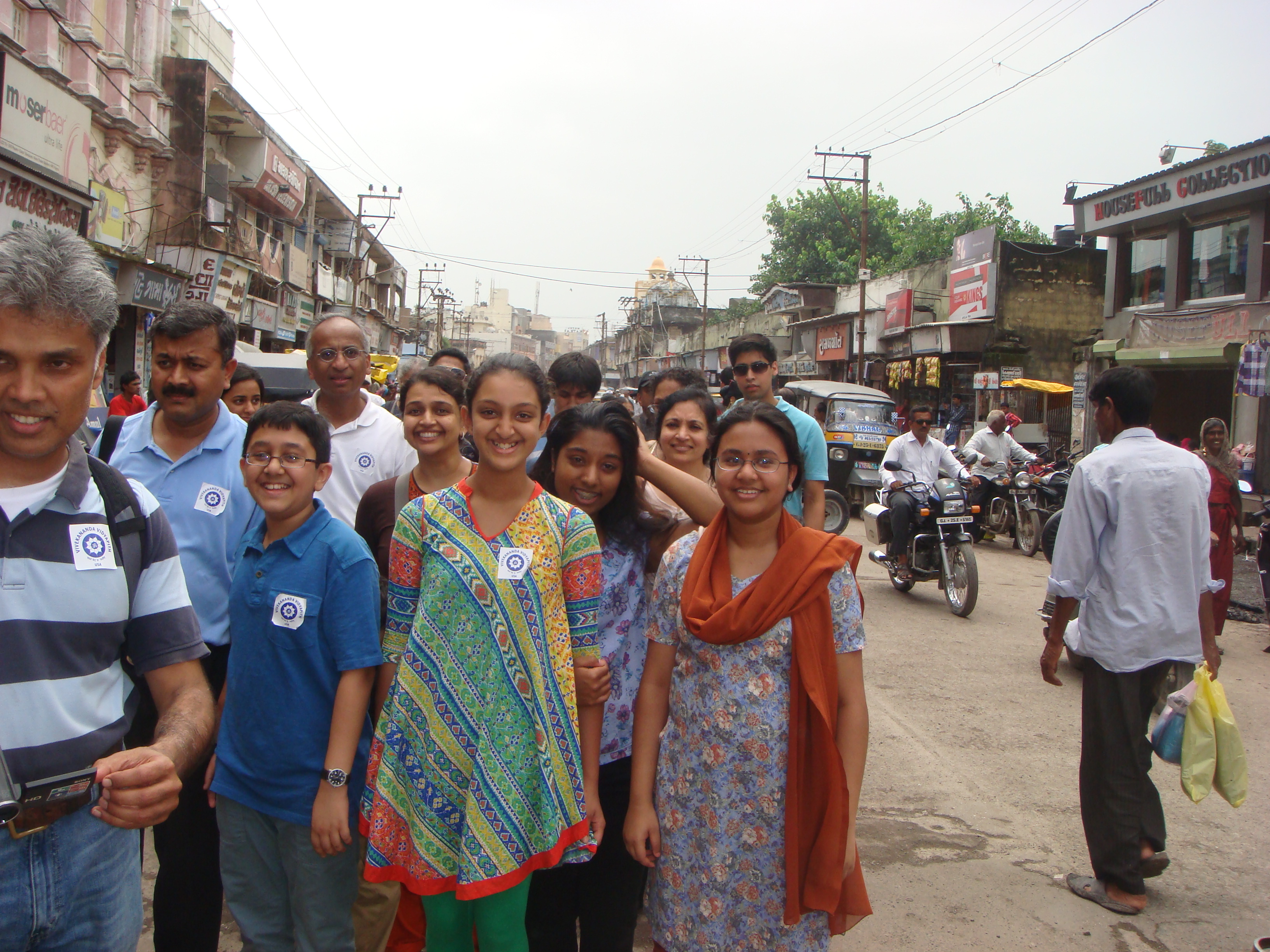
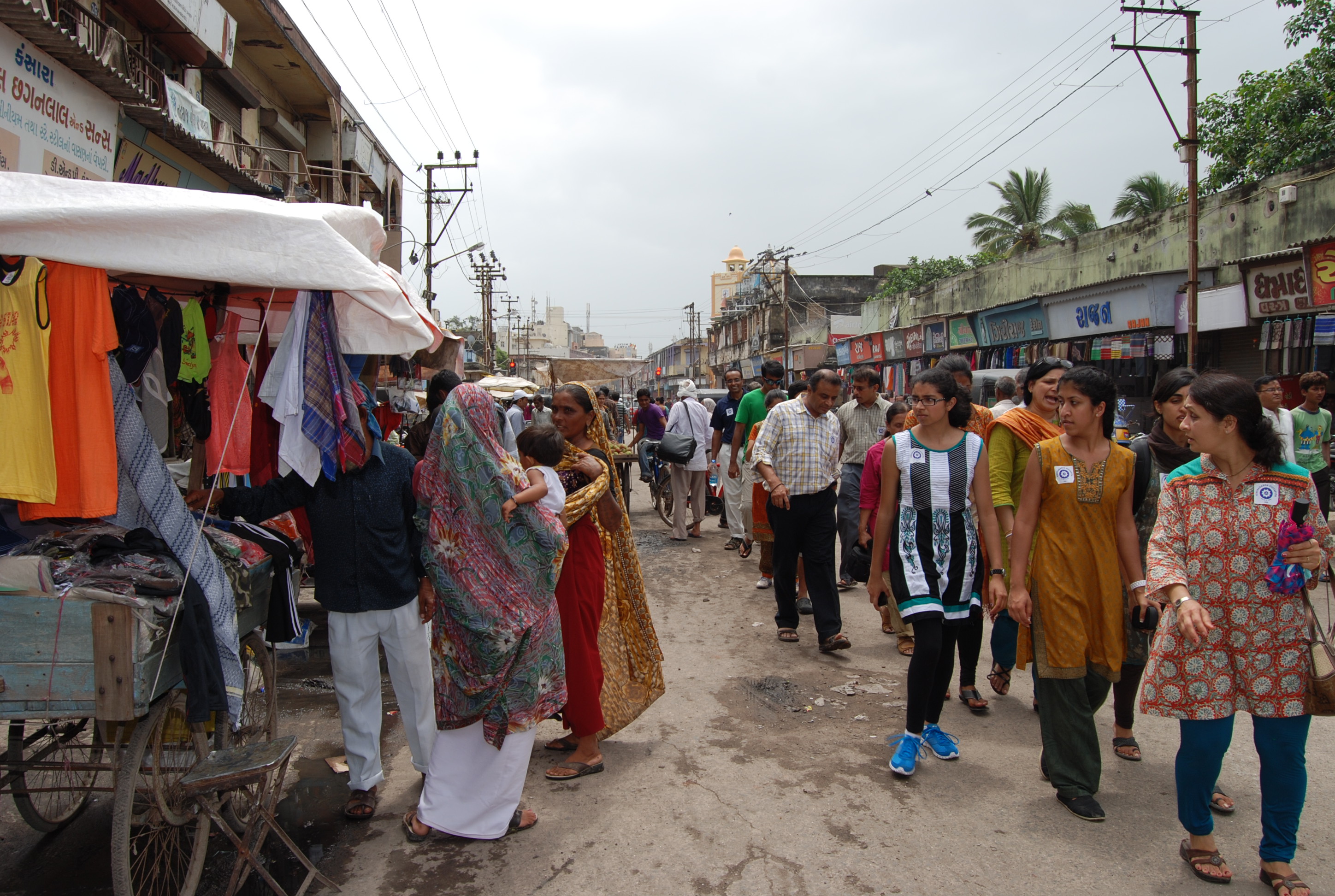
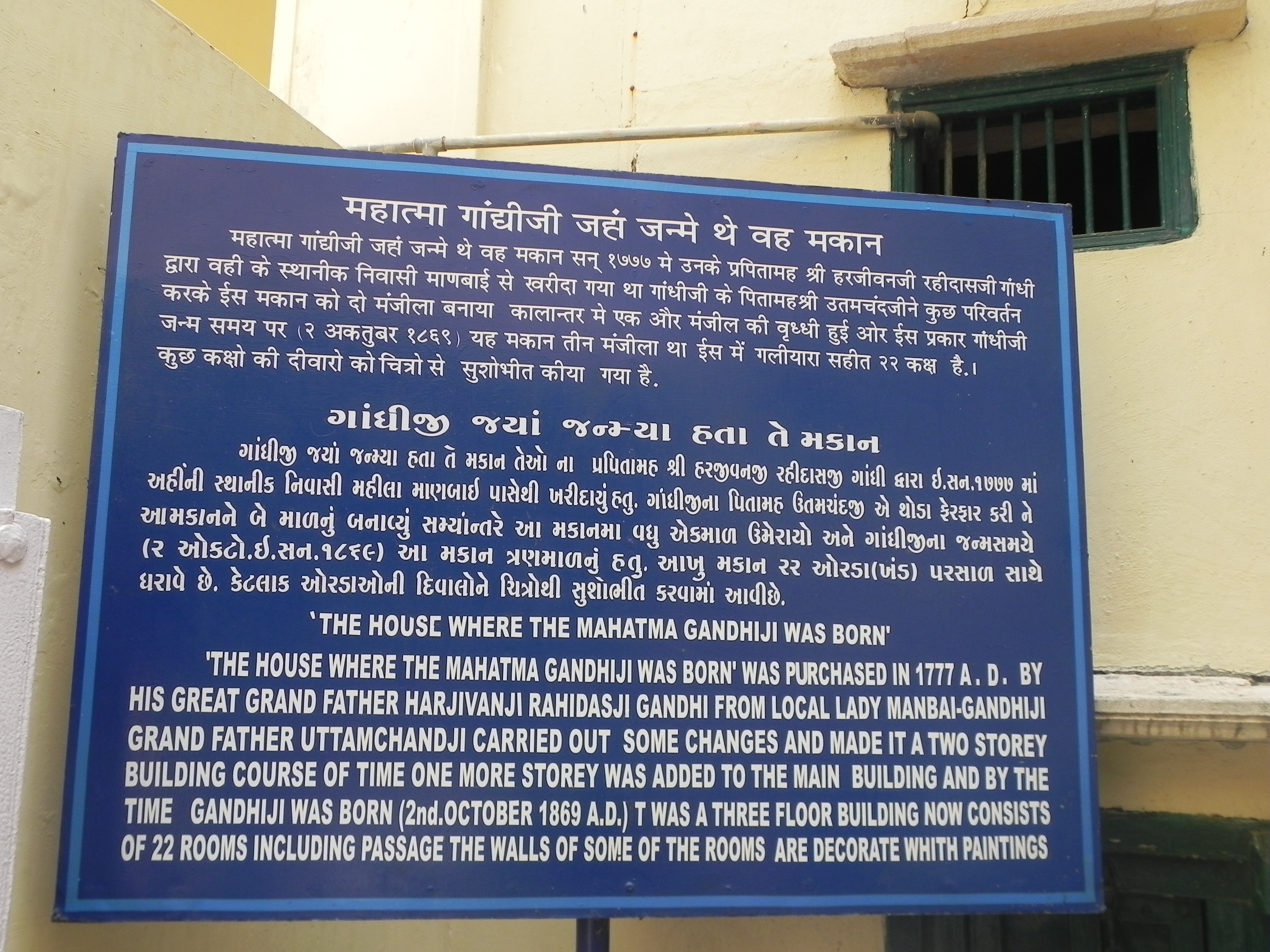
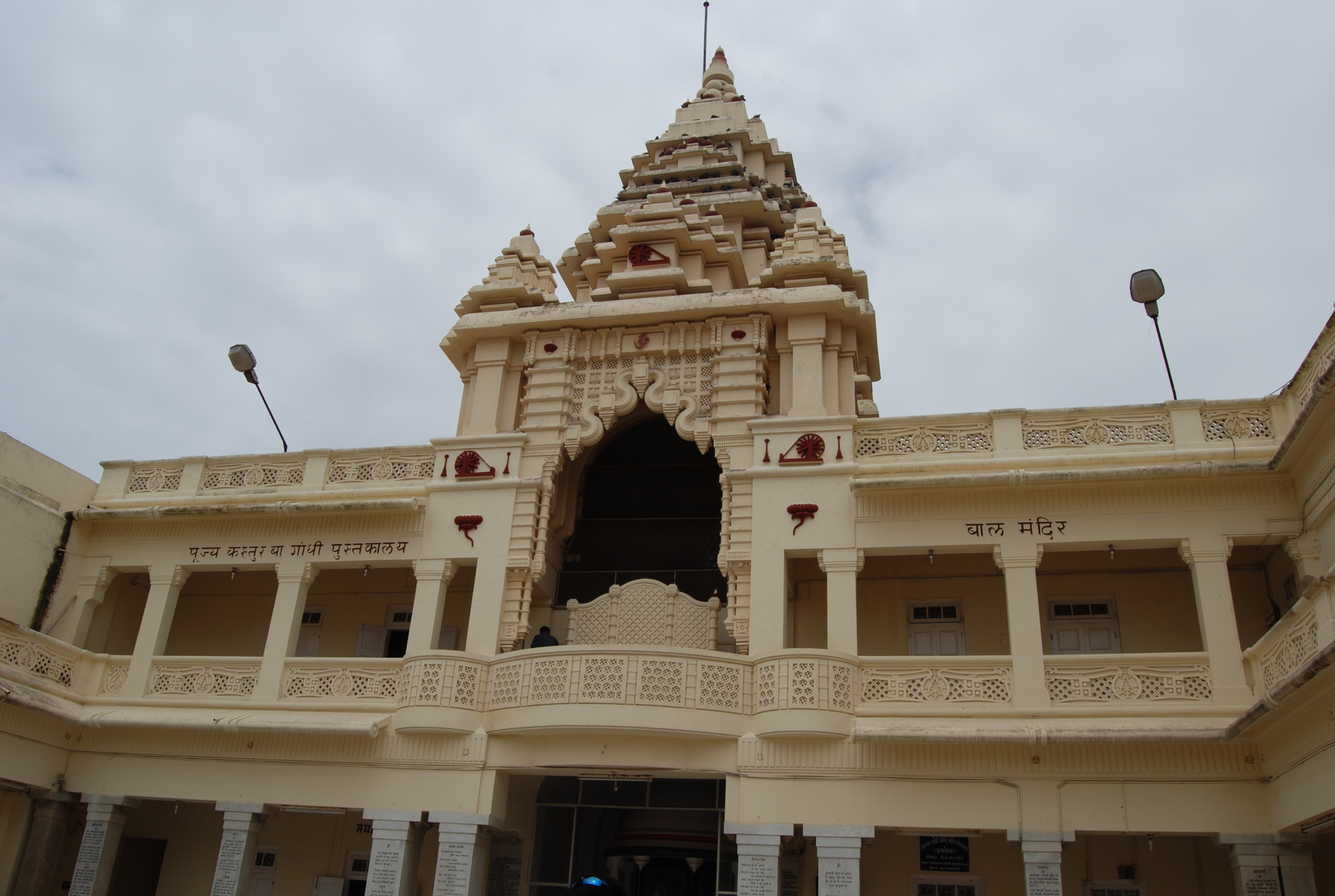
Then, we went to Kirti Mandir, the birthplace of Mahatma Gandhiji.  It was a little longer walk and through a busy shopping street.  We walked in a single line.  There were teachers and alumni in the front, middle, and at the end who were keeping eyes on students.  We were told to keep walking until we came to Mahatma Gandhi’s statue, where we were to make a right.  We took the turn and passed through an old city gate, where we found a huge corridor and building. We had arrived at Kirti Mandir.

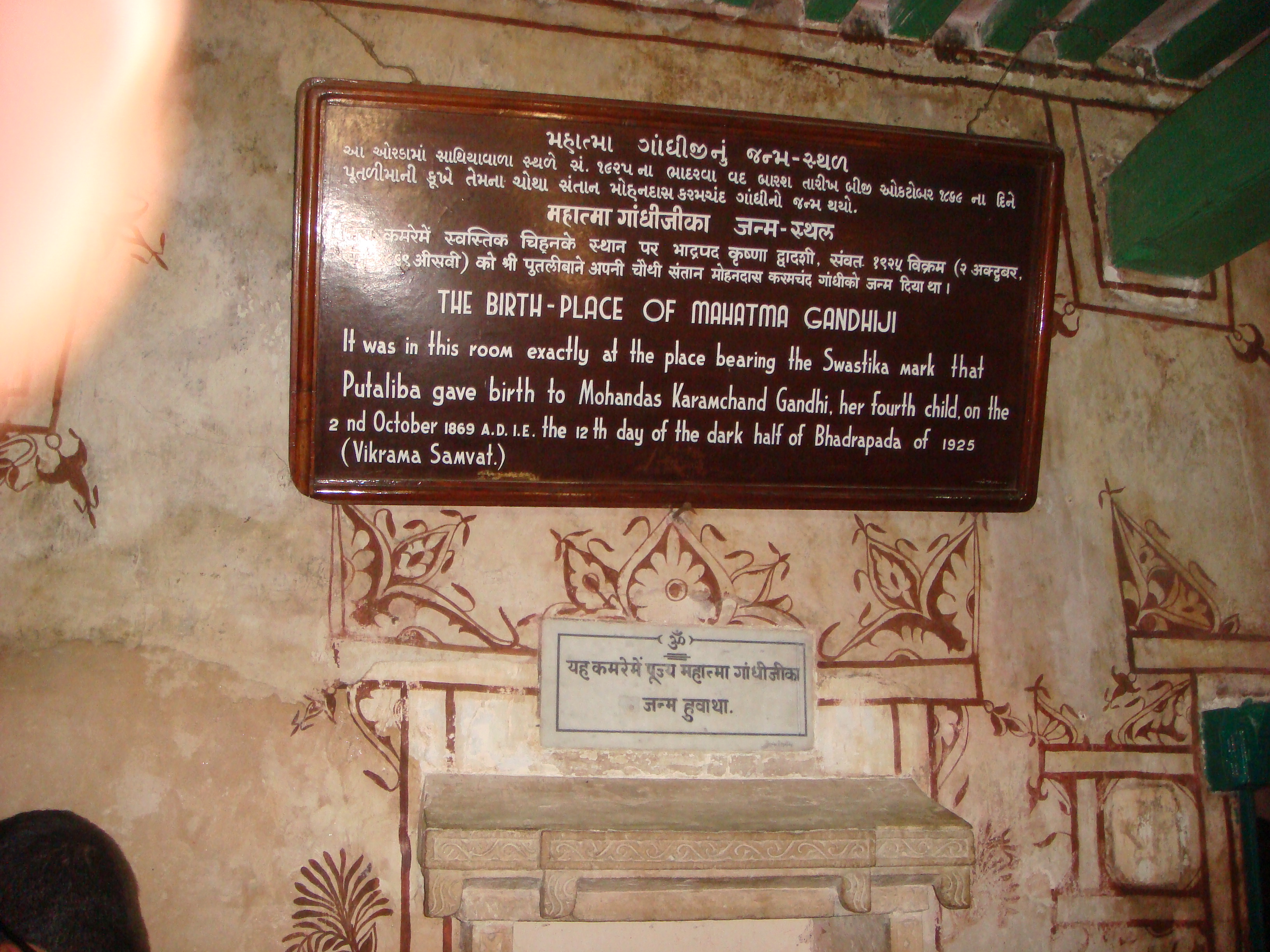
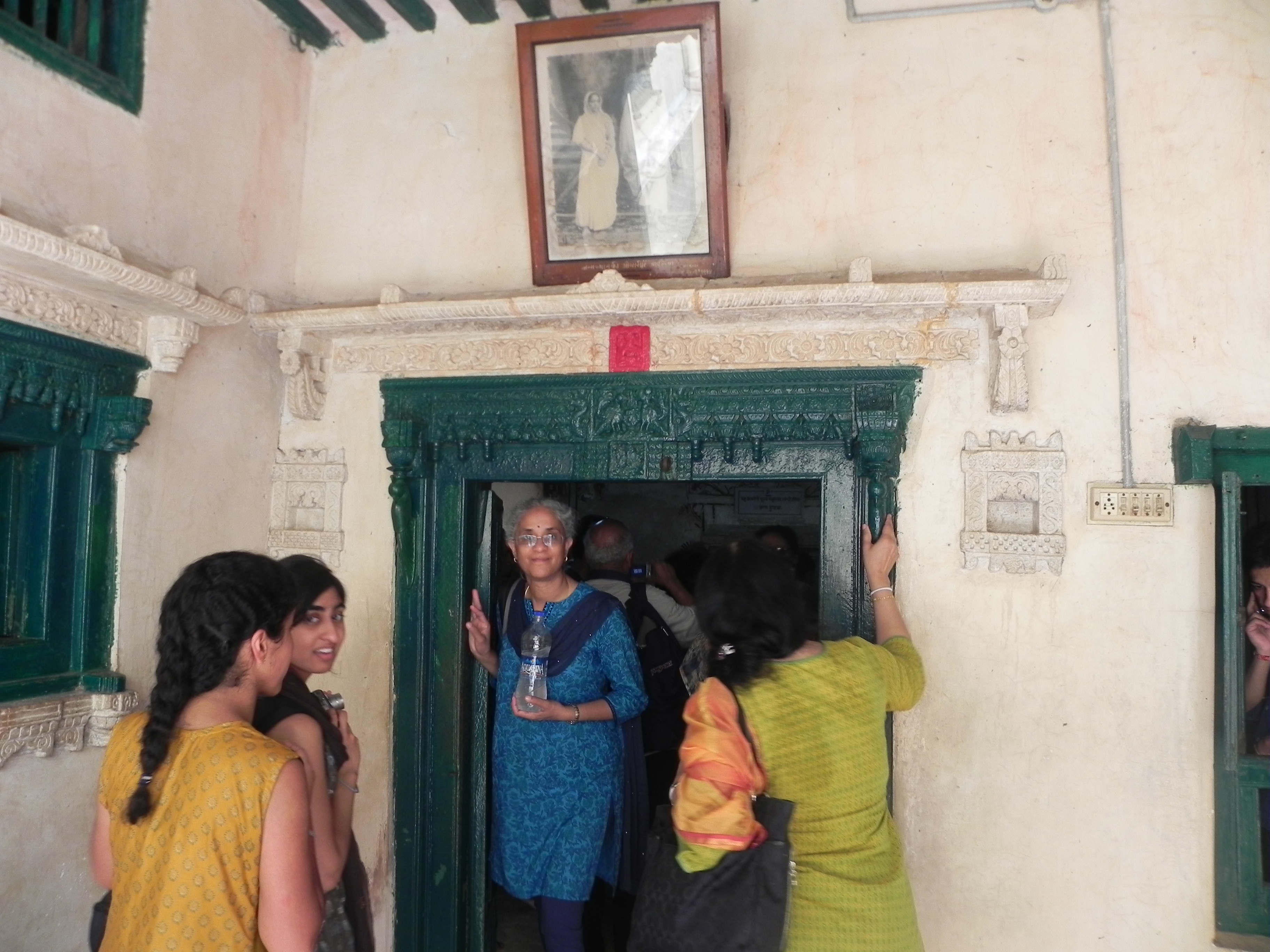
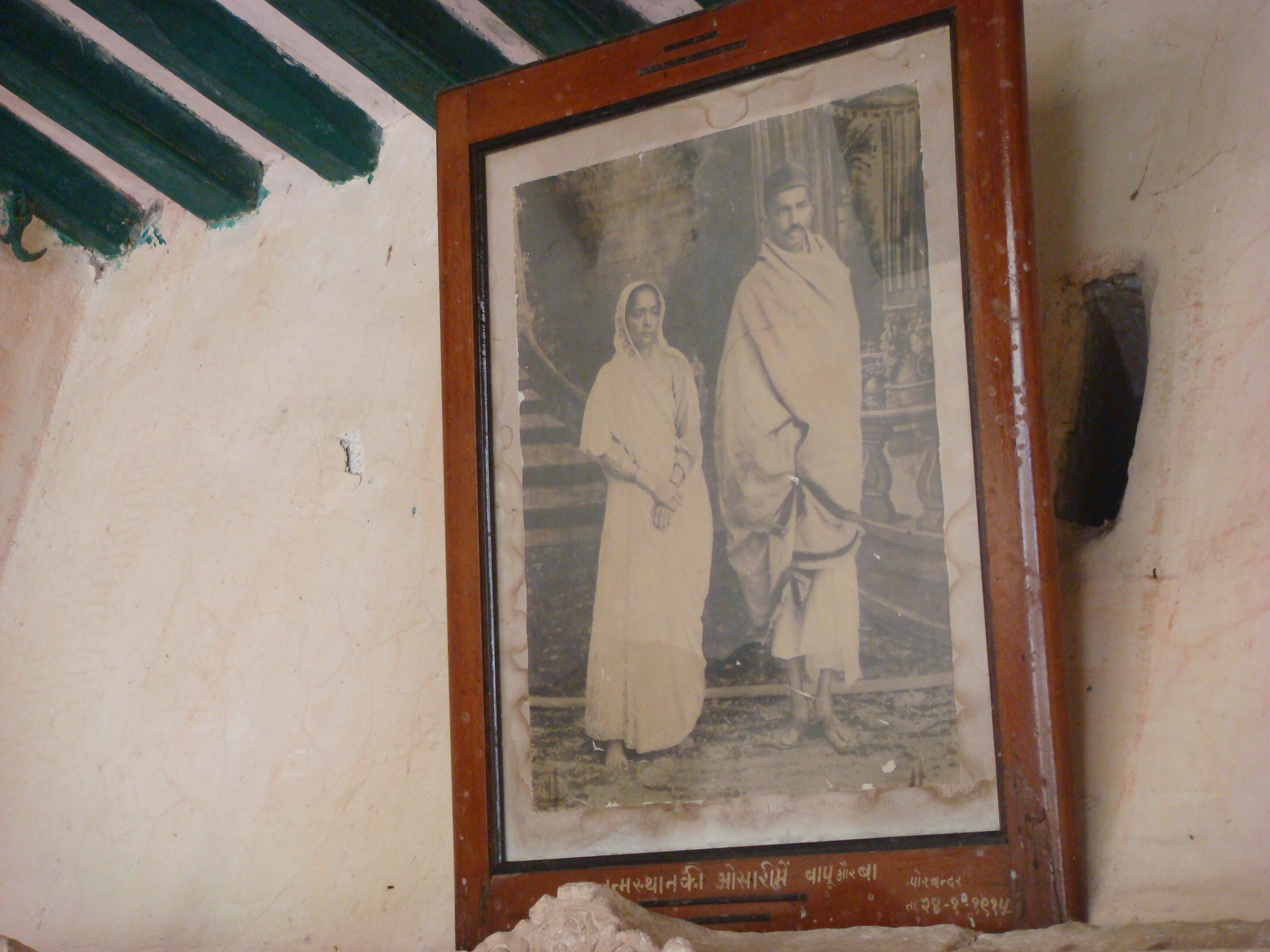
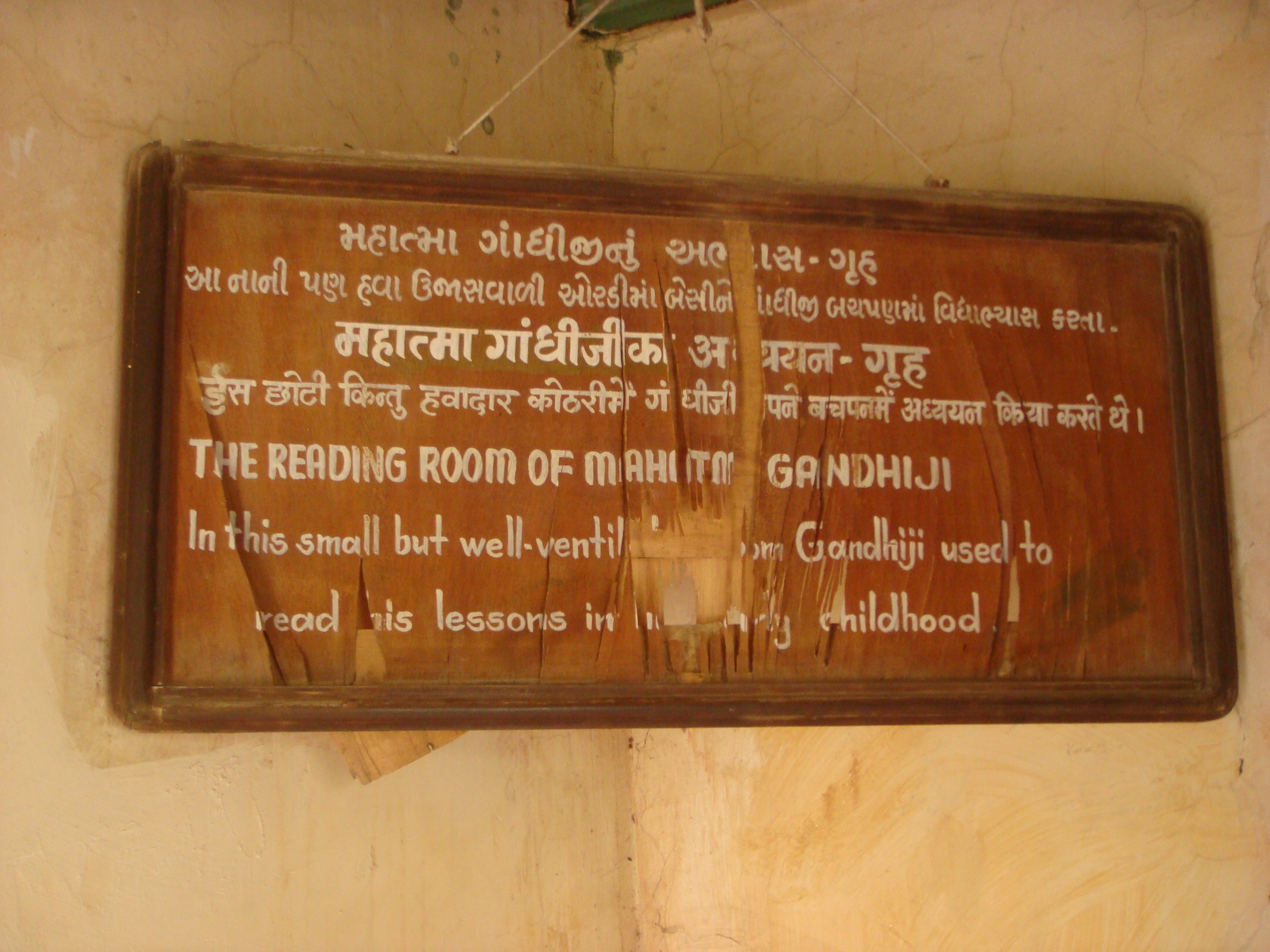
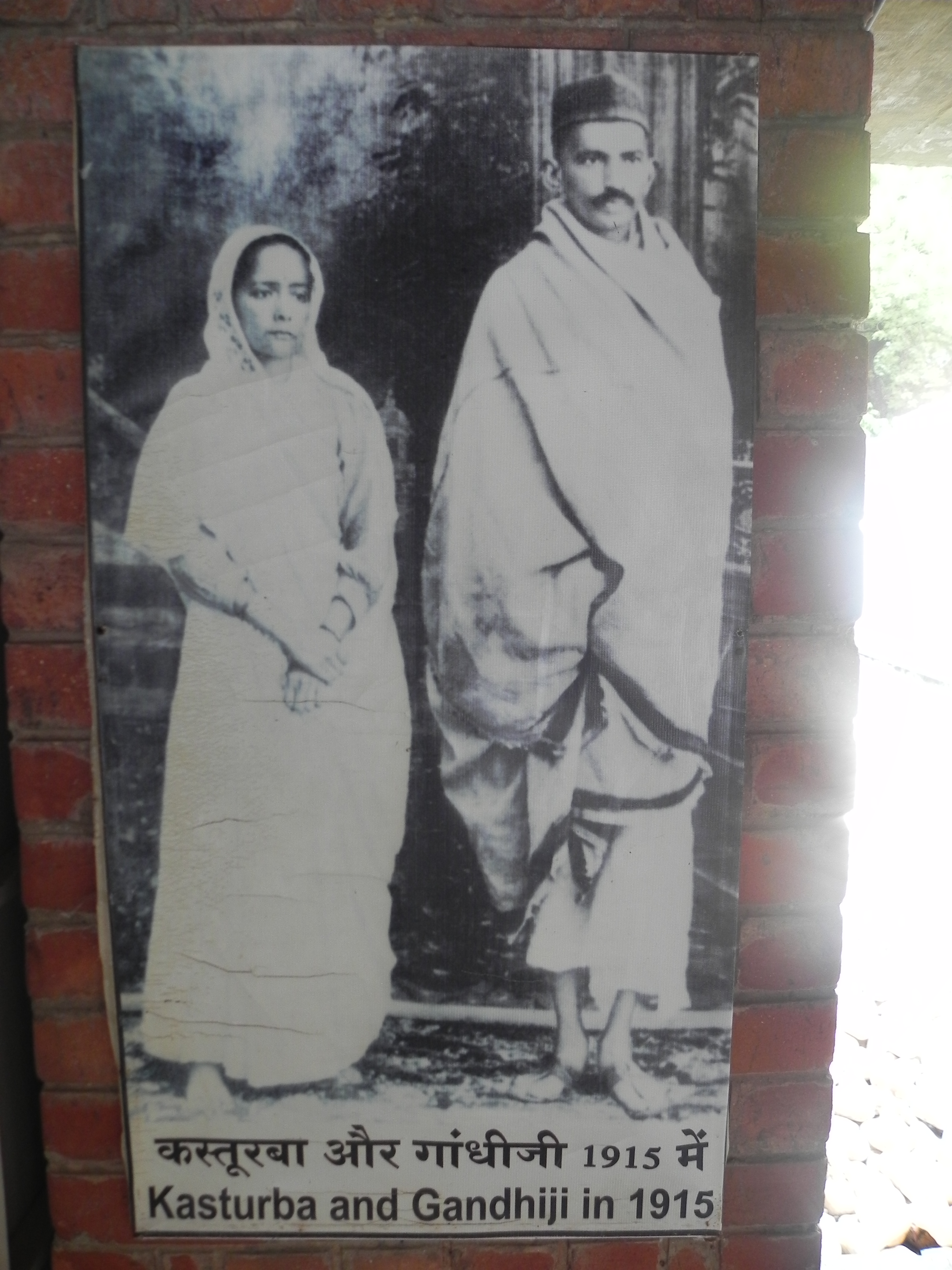
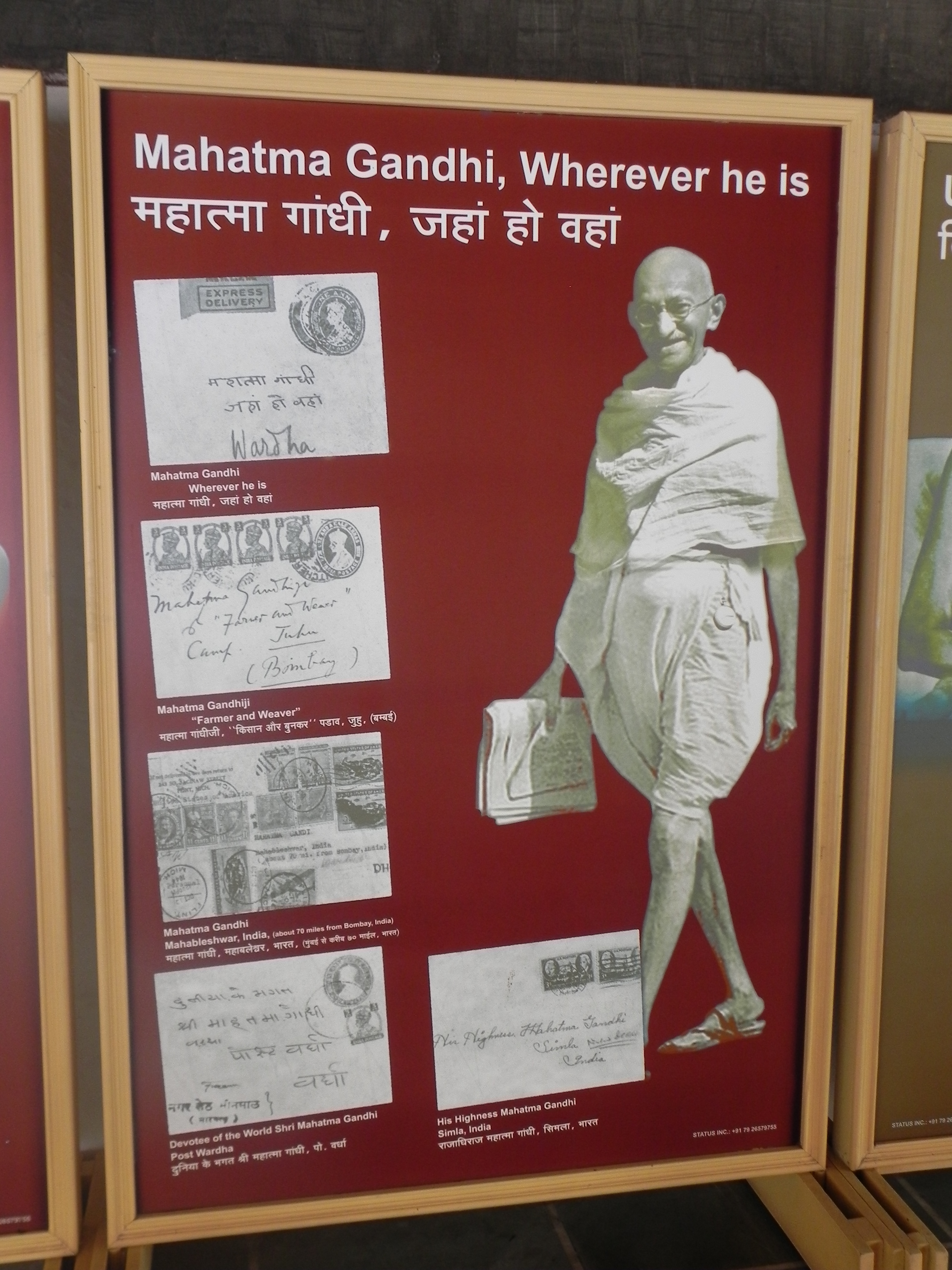
We remembered what we had read and heard about Mahatma Gandhiji.  Inside the building we saw his birth-room, reading room, and other rooms. There were large paintings of Gandhiji’s parents.  Students liked the balcony-like windows, from which they would peek out and wave to other students who were on other stories of the building. Even though it was very hot outside, the inside of the building was cool without fans or air-conditioning. It was an impressive house. Those who had read his autobiography remembered all his childhood incidents that had happened here. There were many pictures depicting various historical moments and moments with great personalities.  We walked through the rooms thinking of the great soul Mahatma Gandhi.

Under one picture of Mahatma Gandhi, one can read the following quote:

“I have gone through his (Swami Vivekananda’s) Works very thoroughly, and after having gone through them, the love that I had for my country became a thousandfold.”

                                                                                                                                                          – Mahatma Gandhi

With the help of rickshaws we soon reached back to our bus.  We counted and recounted everyone in our group and made sure that no one was left out. Group leaders would take head counts. It was very hot and we were thirsty. Nayana Aunty had thought of this and asked Kalpitbhai to keep icy cold Nimbooz (lemonade) ready for everyone.  At that moment we felt as though we had a taste of nectar.  Now, it was time for lunch.  We had a lunch reservation in another famous restaurant “Swati,” thanks to the organizers.  After delicious lunch we headed to the famous Somnath Temple, one of the Dwadash Jyotirlinga.

So long there is no coordination between body, mind, and the soul, no work will be done smoothly.”   – Mahatma Gandhi

The Sudama Mandir
The Sudama Mandir
Thinking of Shri krishna’s frienship
Sudama’s dignifying character shines
Sudama Kund
Sudama Kund
The maze of life
The maze of life
Next is Kirti Mandir
Walking on the street of Porabandar
Tough to be together
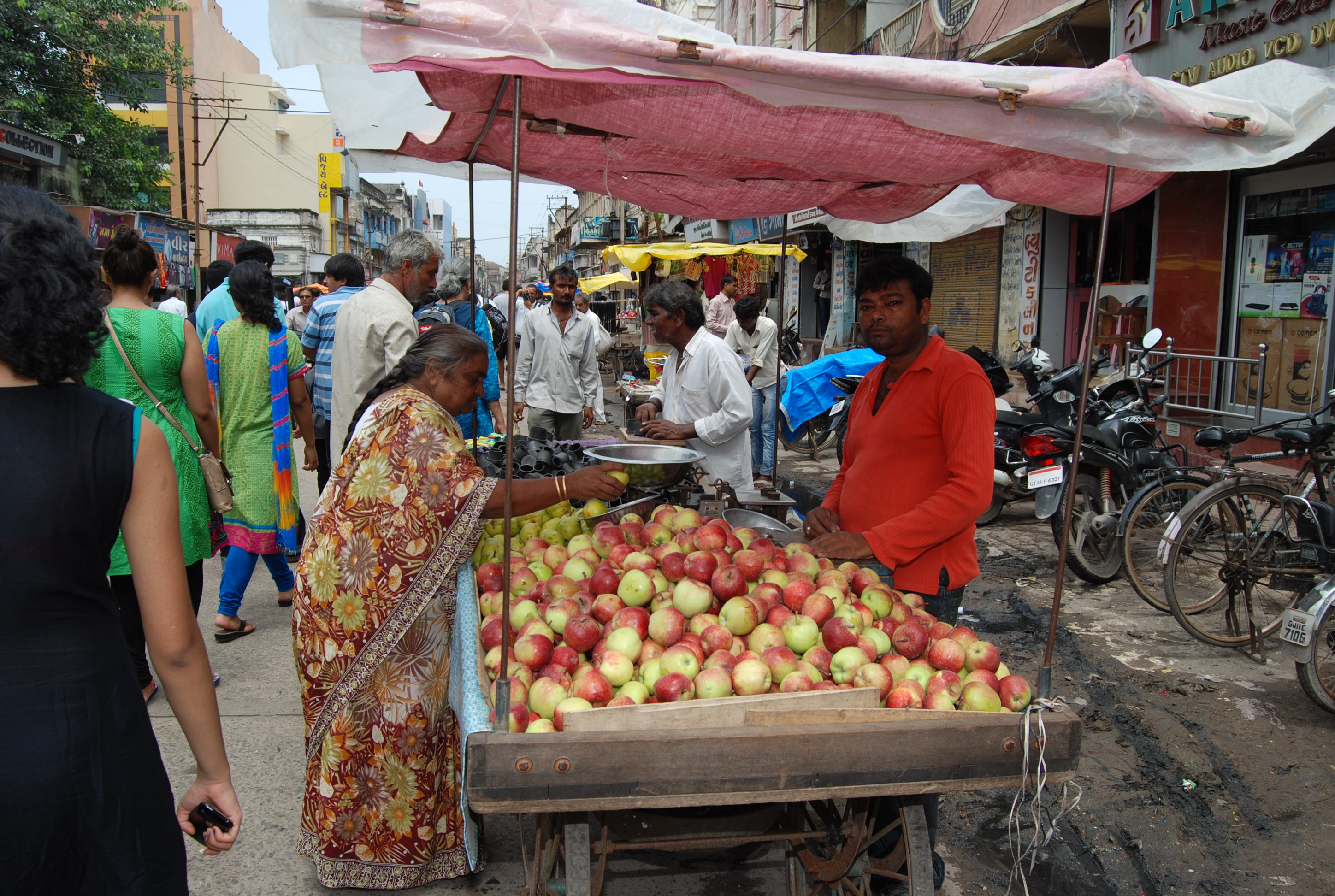
Delicious apples
Delicious apples
Surrounded by shops
Surrounded by shops
Finally reached Mahatma Gandhi’s statue
Entrance of Kirti Mandir (Mahatma Gandhi’s Birth Place)
Nice house
Nice house
The sign
The sign
Good place for a group photo
Three-story building with 22 rooms
We must read this sign
Big crowd getting into the house
“Give all, get all.  Keep all, lose all.”
“Give all, get all. Keep all, lose all.”
Going towards Mahatma Gandhi’s Birth-room
The sign confirms
The sign confirms
Exactly the place where little Mohan was born
Mother Putlibai – the first teacher
The guide is explaining
Father Kaba Gandhi
Father Kaba Gandhi
The rooms are impressive
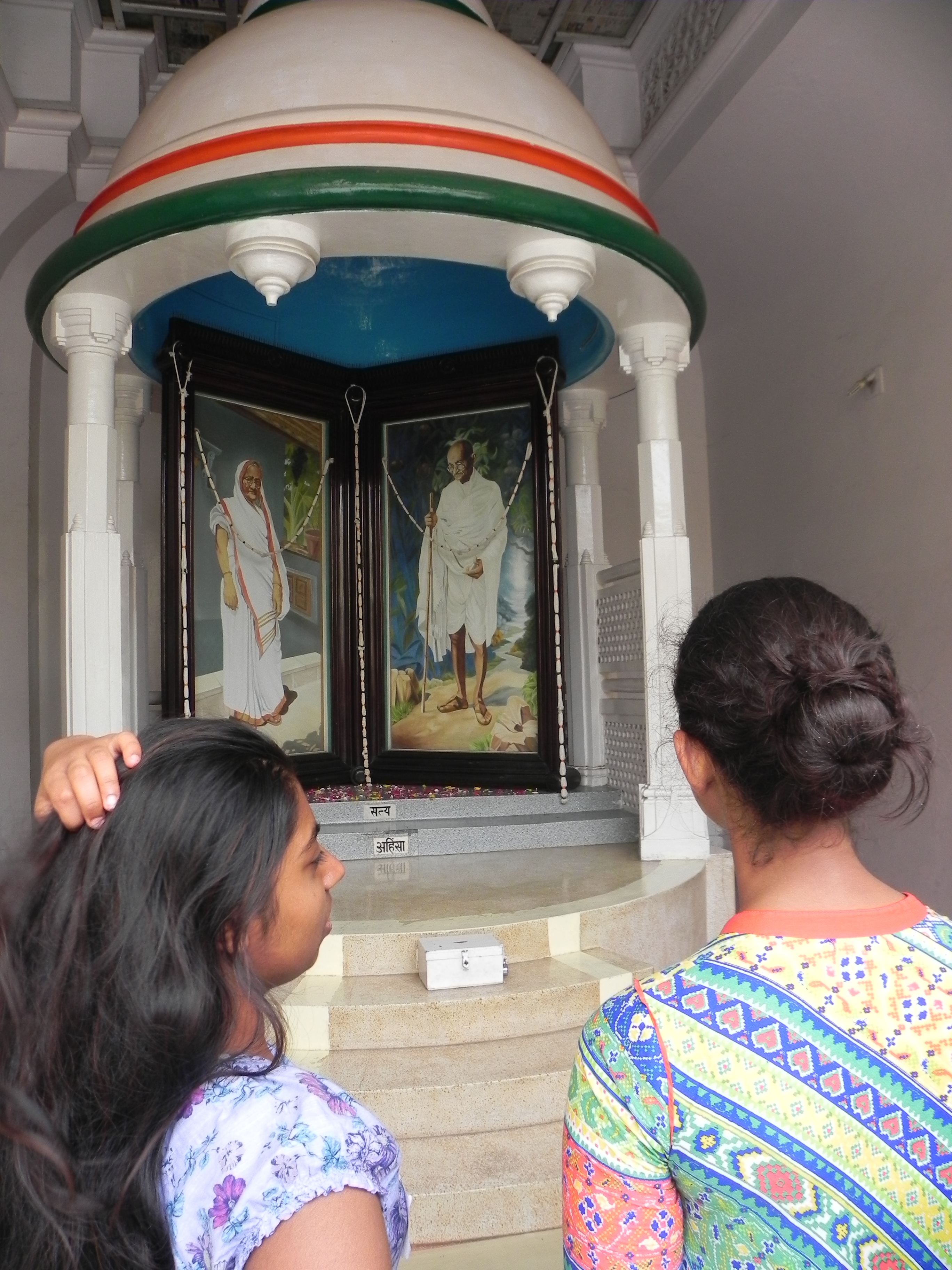
Mohandas Gandhi & Kasturba
The original part of the building
Mohan’s reading room
More rooms
More rooms
The famous picture of Mahatma Gandhi
Mahatma Gandhi describes the effect of Swami Vivekananda’s teachings on him
Shri Shankar Pandurang Pandit who hosted Swami Vivekananda for several months
Attractive balconies
How do I look?
How do I look?
Nice view
Nice view
Hey! Look at me
Hello! How are you?
What a memory!
What a memory!
Look like birds
Look like birds
Looking down is fun
Looking down is fun
At Kasturba library
At Kasturba library
Building of Kasturba library
“I must sign Visitor’s book.”
What do you think about these pictures?
It was a great experience
We are hungry
We are hungry
Hungry but happy
Hungry but happy
Waiting for food
Waiting for food
Hello!
Hello!
All children are together
Waiting for more food

IYC – Bulletin 6A

Ramakrishna Mission Vivekananda Memorial at Porbandar

On the bus ride people were busy with various things.  Some people were checking their cameras to see the photographs they had taken.  Boys were busy playing games to sharpen their intellect and imagination.  Some were sharing jokes and laughing.

Porbandar was coming near.  I thought to recite Bhagavad Gita Chapters 12 and 15.  When we started the Bhagavad Gita dhyanam, Vijaya Aunty pointed to something outside.  It was a divine coincidence!  Out of the blue, we saw a big gate and lo and behold, on top of this gate was a large statue of Arjuna’s chariot driven by Shri Krishna, led by five horses.  It was beautifully carved.  There was no building or temple around—just the gate and chariot.  Everyone was thrilled by this coincidence. It was as though Shri Krishna was with us.  One can imagine how exciting the recitation of Gita Chapters 12 and 15 was.  No wonder our enthusiasm doubled. For a long time we sat in awe, thinking about what had happened.

We were getting late for our lunch and the restaurant we had reserved kept calling Trupti Aunty to make sure we were going to be there.  Trupti Aunty assured them that we would.  We soon entered the Porbandar city.  Our bus was huge and too big for the roads.  There were three difficulties: One, driving the bus thru the narrow, traffic-filled streets with trees hitting the bus; second trying to figure out the exact directions; Third finding parking for such a big bus.  Somehow, after some time, we were dropped off near the Swagat restaurant. According to city traffic regulations, we could not drive the bus through the town. So, the bus driver told us that he would quickly drop us off at our hotels after lunch and then he would park the bus at a proper place for the rest of the time.  We had to get around the city in rickshaws.

It was around 3:00 p.m. when we had our lunch.  It was delicious.  There, Nilesh’s Aunt came and told us to visit her house. Her house was only a block away from the Ramakrishna Ashrama.  But, first we had to go to our hotels to check-in.  Porbandar is a small port city. Therefore it was difficult to find a good hotel that could accommodate our entire group.  So, we had to divide into two groups. One group went to Hotel Kuber and one went to Hotel Kaveri.  We had enjoyed each other’s company so much thus far, that this little separation felt a bit painful.  Because of the small roads we had to quickly take our luggage out and stand on the sidewalks.  But Vidyapith people are disciplined, and we had no problem adjusting to the situation.  From the Kaveri hotel, one could see a play ground where there were several cricket matches going on.

After checking in the hotels, we called several rickshaws and packed ourselves in them- sometimes even accommodating 6-10 people in one rickshaw! This was an exciting experience for many, especially for our students.  They really enjoyed the ride.

The Kuber group was the first to reach Nilesh’s Uncle and Aunt’s house.  Nilesh’s Uncle and Aunty had visited Vivekananda Vidyapith before.  They were also associated with the Ramakrishna Ashram. When the Kaveri group arrived, the Kuber group began to head to the Ramakrishna Ashram. They had experienced loving hospitality from the hosts and it was time to make way for the new group to enjoy the same. Nilesh’s aunt was busy serving everyone. Tea, cookies, and even chhash (lassi) were being passed out to all while the kids enjoyed a treat of some soda and potato chips. Some of us sat around Nilesh’s uncle as he shared stories and some fun adages.

Finally, both the groups reached Ramakrishna Ashram of Porbandar.  One Swami guided us to the “Value Education building”.  We looked at all the classrooms and exhibitions of posters depicting the lives of Thakur, Maa, and Swami Vivekananda. There, we met a 100-year-old devotee whose great grandfather had invited Swami Vivekananda’s to his home.  He was related to Nilesh’s Uncle.

Then, the assistant Swami took us to the room that we had been waiting to visit.  This is the room where Swami Vivekananda had stayed for several months as a guest of Shri Shankar Pandurang.  There was also an exhibition of huge pictures depicting Swami Vivekananda and his teachings.  In the lobby before the room, there were pictures of the direct disciples and their disciples.  We went inside the room. There was a shrine on one side.  It was a thrilling experience to think that Swami Vivekananda had lived here.  We all sat quietly, recited pranam mantras softly and did japa, feeling the presence of Swami Vivekananda.

In the main Prayer Hall, Swami Atmadipananda had already started his lecture.  We all went to the main prayer hall and quietly sat down.  To our surprise we found that Swami Atmadipananda was giving his talk on Gita Chapter 12.  People realized the familiar shlokas and enjoyed his talk.  His talk ended at the “Adveshta Sarva Bhutanam….”  After the talk, Swami Atmadipananda (Yagnesh Maharaj) spoke from the podium and shared with everyone that a group from Vivekananda Vidyapith, USA had come to participate in the Vadodara International Youth Convention and visit places that Swami Vivekananda had himself been to.  To our pleasant surprise, he added that after arati they were going to sing.  Ananta Maharaj, from Rajkot, had informed him that this group sang good dhoons and bhajans.

We all joined in the arati.  Yagnesh Maharaj asked if any one played tabla.  Rishi came forward and played during the arati.  Afterwards, we all went in the front of the prayer hall near the shrine, and sang “Pranam Manras, Durgati Nashini, Tumi Brahma Ramakrishna, Gaurang Aradhang, and Paramhansa Ramakrishna.”  Again, we all felt that we were very fortunate to have an opportunity to sing for Thakur, Maa, and Swami Vivekananda.  During this singing one of our alumni wanted to record the singing on his phone. But, he was hesitant do so since Yagnesh Maharaj was sitting beside him. Then, he saw that Yagnesh Maharaj was himself taping it.  Then, he took out his phone and started taping the singing. Yagnesh Maharaj looked at him and smiled.

Afterward singing, he met all of us lovingly downstairs and talked to all.  He recognized meeting Sunita Aunty in Vadodara before.  He was apologetic that he could not make arrangements for dinner for such a large group.  We told him not to worry.  We had made an arrangement for dinner in a restaurant.  He invited us for breakfast.  But, we told him that breakfast was included in our hotels with the charges of rooms. After talking to Swamiji for some time under the star lit sky, we bid good-bye.

Again, we called several rickshaws to go to the dinner place.  In almost pitch darkness, we had to make sure that no one was left out and no one got lost.  It was a tough task. We counted people again and again.  The dinner place was famous in Porbandar.  We all sat in an air-conditioned room.  Vandana Aunty called at that time.  It was the right time to call. She also had called on several occasions, which were just as appropriate. She must have heard a chorus of hellos from the entire group. All felt that Aunty (Vandana Aunty) had been with us in spirit.  We had a delicious dinner and again filed into rickshaws and made our way to the hotels.

The next day, the Kaveri people had breakfast on the roof of the hotel from where one could see several parts of Porbandar and also the bay.  The Kuber people were also happy with their hotel.  After the bus picked up both groups, we went to the Ramakrishna Ashram again.  We did japa in Swami Vivekananda’s room and went to meet Yagnesh Maharaj in the “Value Education Building.”  We visited the ashram’s bookstore.  People bought books and tapes.

Now we wanted to visit the Sudama Mandir and Kirti Mandir (the birth place of Mahatma Gandhiji).

The road to good is the roughest and steepest in the universe.  It is a wonder that so many succeed, no wonder that so many fall.  Character has to be established through a thousand stumbles.”  – Swami Vivekananda

The divine chariot
The divine chariot
Much awaited lunch
Much awaited lunch
Excellent food
Excellent food
Family together
Family together
Several Cricket games
Tea at Nilesh’s Uncle’s house
First group say “bye”
Tea and talks
Tea and talks
Second group says ‘bye”
Value Education Building
Value Education Building - classes
Value Education Building – classes
Value Education Building - exhibition
Value Education Building – exhibition
After seeing the classes & exhibitions
Meeting a 100 years old person
Swami Vivekananda’s stay in the building
Swami Vivekananda’s study of French
Altar in Swami Vivekananda’s room
Feeling the presence of Swami Vivekananda
Ready to do japa
Ready to do japa
Sri Ramakrishna’s direct disciples
Sri Ramakrishna’s direct disciples & their disciples
The charm of terrace
Swamiji! Please join us.
Vidyapith’s trade-mark
Dedication of the Prayer Hall
Donors
Donors
The Shrine in the Prayer Hall
Closer look
Closer look
The Mother
The Mother
Rishi was asked to paly tabla
Gorup photo with Swami Atmadipananda - 1
Gorup photo with Swami Atmadipananda – 1
Gorup photo with Swami Atmadipananda - 2
Gorup photo with Swami Atmadipananda – 2
Waiting for dinner
Waiting for dinner
Aunty was with us in the trip
Breakfast time
Breakfast time
Breakfast on the terrace
View of Porabandar - 1
View of Porabandar – 1
Can you see bay?
Can you see bay?
View of Porabandar - 2
View of Porabandar – 2
View of Porabandar - 3
View of Porabandar – 3
Ready to go into Ashram
Such a peaceful place with greens around!
Swamiji’s wandering pose
Arise! Awake! And stop not till the goal is reached!
“Yes! I will come for the picture”
Group photo with Swami Atmadipanandaji
Life long memory
Life long memory

IYC – Bulletin 5

Dwaraka, Sri Krishna’s Place & Nageshwar, Shiva’s Place

Rajkot to Dwarka was going to be a long drive and we wanted to reach there before 7:00 p.m. to attend the evening arati.  We had gotten up early in the morning. So, after a sumptuous lunch, many started to catch up on their sleep. But, the rest of the bus was fully awake–sharing jokes and interesting stories, while others enjoyed observing various things coming on the road.

The rain had stopped and the day was bright.  We were happy to see many windmills, which were generating natural electricity.  When we approached Dwarka, we saw the gorgeous Dwarikadhish Temple from a distance.  We were excited to visit the temple.  We arrived just on time because of our skillful driver and our planning.  Again, thanks to the organizers, the check-in of 54 people in the hotel was smooth and fast.  Everyone got ready within a short time and with a guide, we all headed to the famous Dwarakadish Temple.  Because of the rain, the roads were filled with mud and water.  It was a bit of an adventure. Students, who had come to India for the first time during the monsoon season, learned how to walk on such muddy streets.  They also learned how to go around cows and dogs.

As we approached the temple we start hearing joyful cries like “Dwarikadhish ki jai!” Our main concern was to remain together in the crowd.  Our guide and adults helped with this.  The guide explained the history and mythology behind the main temple and other small temples inside.  When the time came for arati, the guide told us to stand in the line for “darshan” of Dwarikadhish Sri Krishna.  We saw that some ladies had even stood on the railings to catch a glimpse of the deity.  The arati began. People raised their two hands and started chanting Sri Krishna’s names.  The environment was filled with devotion.  The procedure was that men and women, in separate lines, were to walk one by one, go near the deity, salute and move onward.  If you wanted to do “darshan” again, then you had to stand in line again.  Some people went two-three times to satisfy their desire to see Dwarikadhishji.  When Swami Vivekananda came here in 1891, he wrote that Shri Krishna’s image was beautiful, but the crowd would not let you stand in front of deity for long.  One had to look at the deity, then keep it in one’s heart, and close the doors of the eyes.

After all had “darshan,” our guide took us to Sri Adi Shankaracharya Pitham, which was next to the temple inside the campus.  The current Shankaracharyaji was not there.  The guide then took us to several small temples and told us the stories associated with them.  Fully satisfied with our visit, we proceeded back to our hotel. Upon arriving back at the hotel, we learned that since we missed our dinner reservation time, we had to wait for an hour before the hotel could accommodate 54 people.  So we all sat in the lobby waiting for food.  Trupti Aunty and a few students sang Shri Krishna’s dhoons and bhajans in the lobby.  After dinner, all wanted to sleep. We were about to retire to our rooms, when some of us heard that the bus had run into a mechanical problem. Our bus driver was trying to find a mechanic. We left it in the driver’s hands.

A few devotees decided to attend the mangala arati at 6:00 a.m.  They got up early, got ready, and enjoyed the early morning arati.  Their extra reward was that they had a group picture taken by a professional in front of this famous temple for a very reasonable price.  As we were finishing breakfast, we waited for news about the bus. We were worried about whether the bus would run.  Fortunately, Kalpitbhai and the driver had found a mechanic at night and fixed the problem. We were lucky and ready to go!

One good thing happened in the morning.  Sudhirbhai told us that they could see the ocean from their room windows.  We all ran to his room and found a spectacular view of ocean.  Then, we found that from the terrace we could get an even better view of the ocean and the temple.  The day was bright.  We all headed to the terrace where we enjoyed a beautiful view of the rough ocean and a clear view of the temple.  This fulfilled the desire of many people who wanted to see the ocean.

When we started to get into the bus, a smart vendor brought varieties of things to sell.  Several people were excited to shop because we did not have any shopping plans in our program.  This delayed our bus a little, but seeing the joy of people shopping, others did not mind.

We started to go to Nageshwara.  There is a controversy about this temple that whether it is one of the Dwadash Jyotirlingas (12 famous Shivalingam).  We heard that Gulshan had taken interest and helped in the development of this temple.  So far, we had been thinking of Shri Krishna, now we started thinking of Shiva.  In the bus, Nilesh sang and led “Nagendra Haraya…”  Some students, who did not know Nilesh, were surprised to see that he could sing so well.  All enjoyed the hymn and the dhoon “Namah Shivay…”  Nageshwara was only 15 kilometers away from Dwarka.  When the bus stopped, all were amazed to see a huge statue of Shiva.  It created a divine mood in the minds of all.  The entrance to the temple, the clean ground inside, a huge banyan tree, and the temple structure created a very good impression in the minds of all.  We entered the temple and found that it was clean and there was an orderly way to go to the shrine.  We all saluted and felt like singing the salutation mantra, “Om Namah Shivay Shnatay…”  Then all were inspired to sing Shiva’s dhoons and bhajans, especially led by Trupti Aunty.  Her melodious voice captured the minds of all.  There were many singers in the group, so we had a special Shiva’s celebration for about 45 minutes.  We wish we had taped the singing.  It was in tune, filled with devotion and sweet in melody.

All ladies decided to do Shiva puja.  Men were required to wear dhoti for the puja, so they were not very enthusiastic.  The priest informed us that only family members could go together, but Trupti Aunty said that this was one family, our Vidyapith family.  Somehow they agreed to let most of the ladies & girls go for puja.  They all did joint puja of Shiva while singing “Om Namah Shivay..” and “Hara Hara Bhole, Namah Shivay…”  I have no doubt that Shiva must have been greatly pleased.  Actually, Shiva had arranged this whole thing.  After being pleased with the singing and puja, we all came outside and took a group picture under the huge banyan tree.  The whole environment was peaceful, serene, and joyful.

We were getting little late in our schedule and started walking towards the bus. But how could we miss a group picture under the huge statute of Shiva? Again we quickly assembled to take another photo and filed into the bus. Kalpitbhai had told us that nearby, there was a hill on which there were beautiful statues of Shiva and his family.  As we passed by them, we saluted from the bus and continued on our journey.  Our next stop was Porbandar.

India’s gift to the world is the spiritual light…Slow and silent, as the gentle dew that falls in the morning, unseen and unheard yet producing a most tremendous result. – Swami Vivekananda

Road is not only for vehicles
Catching up with sleep
Relaxing in the bus
Relaxing in the bus
It is so funny!
It is so funny!
Oh, Really!
Oh, Really!
Creating Solar Energy
Wind-power energy
Glimpse of Dwarakadhisha’s Temple
After Dwaradhisha’s Darshan
View of the Temple  from Terrace of the Hotel
View of the Temple from the terrace of the Hotel
Gathered on the terrace for a nice view
Gathered on the the terrace for a nice view
Delicious breakfast
Delicious breakfast
There is a problem.  What should we do?
There is a problem. What should we do?
Can you guess what happened?
Electronic devices’ time
Oh, Shopping!
Oh, Sweet Shopping!
Wow!  Nice things!
Wow! You have brought nice things!
God bless you for bringing these things!
God bless you for bringing all of these!
“Nagendra Haraya…”
“Nagendra Haraya…”
We are happy to be here
Beautiful Temple
Beautiful Temple
Peaceful place under a banyan tree
Photographer also be included
Photographer should be included
Om Namah Shivaya
Om Namah Shivaya
Under the shelter of Shiva
Ready to go to Porabandar
Shiva’s  Family
Shiva’s Family

IYC – Bulletin 4

Shri Ramakrishna Ashram at Rajkot

From Limbdi we headed to Rajkot.  It was raining in Limbdi when we were getting into the bus.  Later the rain became even heavier.  But, inside the bus we were all remembering the experience of the presence of Swami Vivekananda in the Durbar Hall and love of Swami Adibhavanandaji.

We said our “five jai’s” and continued on our way.  Since it was evening, all did prayer together.  As we joined in prayer, we appreciated that having all Vidyapith people together on this journey made it a unique experience. It gave us all a special joy.

Heavy rain, roads filled with pot-holes, and driving in the dark on Indian highways created some concern.  We saw many trucks with no reflectors or red lights in the back. Some did not even have headlights. Drivers seemed to have their own driving logic—logic of a high-risk nature.  Our only solace was based on three people: (1) our escort Kalpitbhai, a family friend, who was always in the front with a small van keeping an eye on everything related to transportation. (2) A known, reliable, calm, and skillful bus driver Rafik, who had in his mind the complete dimension of the bus and was fully aware of the whole traffic situation.  He was also fixing the bus whenever we ran into mechanical problems.  (3) Ketan, a helper of the bus driver who was driving away cows, buffaloes, and sheep from the front of the bus, helpful in making U-turns or reversing the bus, and helpful in giving food to the driver and giving him company. Those who were in the front were a little worried during overtakes when there were about two inches of distance between fast driving vehicles and our bus.

We reached Rajkot around 8:30 p.m., after dark, much later than expected.  Anant Maharaj, (Swami Sarvasthananda) head of Rajkot Ashram, had been informed by phone about our estimated time of arrival.  With little difficulty the huge 56-seater bus was pulled in the ashram.  Swamiji was waiting for us.  He asked us to go straight into the shrine before they closed it.  With the help of umbrellas and ponchos we protected ourselves and went to the shrine.  It was a beautiful shrine.  We all quietly saluted Thakur, Maa, and Swamiji, sat down and did some japa.  Then, we went to Anant Maharaj to meet him.  He received all of us and asked about our plans.  He told us to come tomorrow before 8:00 a.m. since buses were not allowed into the city after 8:00 a.m.

We had a dinner invitation by Mr. Virani.  He and his wife were also waiting for our arrival.  They took us to a very special Rajasthani Restaurant.  Even in the drizzle, a drummer, dressed up in Rajashtani outfit, started playing the drum.  A small girl in a beautiful dress welcomed each of us with a tilak of kumkum.  Inside there was a huge ground with pillars, statues, plants, and flowers.  We entered into a huge, palace-like building.  There was a huge room with sofas all around where two musicians were waiting for us. While playing the harmonium, one started singing a Rajasthani song in a melodious voice.  He was accompanied by a person on dholak.  We all enjoyed their songs. It was late and all were hungry.  We went to a nicely decorated dining room and had delicious dinner.  We were told that there were dancers waiting to entertain us upstairs.  But, we apologized to them and said that we had a long day and we were exhausted.  We wanted to check in our hotel and take some rest.  We checked in the hotel “The Fern.”  It was a very nice hotel and some were amazed to see cricket bats with signatures of famous players.  We were a large group of 54 people, but because of some pre-planning, the check-in was very smooth and we soon retired to our rooms.

The next day all got up early, had breakfast, and got into the bus.  We had to get into the city before 8:00 a.m.  We made it on time.  Again, we all went to the shrine, quietly sat down, and did japa.  After some time, when we started coming out, we found Anant Maharaj waiting to greet us near the entrance.  He said, “I have heard that you sing good dhoons and bhajans.  Would you like to sing by the shrine?  It will be a good memory for all of you.”  We were pleasantly surprised by this.  I asked him how he found out that we sing dhoon-bhajans.  He said that Prafulbhai, uncle of Shyam Gohel (Meera Gohel Aunty’s husband Rajen Gohel’s brother) had told him.  Prafulbhai was joyfully standing by Swamiji’s side.  We were thrilled by this idea of singing by the shrine.  Swamiji asked us to wait a few minutes while some preparations were made for our singing.  Meanwhile, I lovingly and joyfully gave a hug to Prafulbhai.

Prafulbhai told me that he regularly comes to the ashrama to do prayer. That day when he came, he saw stickers of “Vivekananda Vidyapith” on all of you.  He was so excited that he could not do prayer anymore. He went out and met Anant Maharaj and told him that these people are from Vivekananda Vidyapith.  They sing very good dhoons and bhajans and I have listened to their tapes for over the last several years.

Reflecting upon the all of this later, I told everyone that in a billiard-ball game, a player hits one ball, then that ball hits another one and so on and at the end the desired ball goes into the hole.  When Nisha’s uncle Nimishbhai made stickers for all of us, he had no idea of this divine opportunity.

In the Prayer Hall two huge carpets were spread. On one carpet there was a harmonium and a pair of tabla. We sat down and sang Pranam Mantras, Sri Ramakrishna Suprabhatam, Tumi Brahma Ramakrishna, Jaya Sri Sarade, and Jaya Vireshwar. The singing was perfectly tuned, melodious, and filled with devotion. Swamiji had taped our singing.  He was very much pleased with our singing.  We felt as though Thakur wanted to listen to our singing.  Indeed Swamiji was right – a life-long memory had been created.

Swamiji then took us to his office and told us about the Rajkot ashram, its “Value Education Program,” and its future building. He also gave us books. He talked about all the recently released DVDs about Swami Vivekananda and an upcoming movie on Swami Vivekananda. After that he showed us the original temple and the bookstore.  It was an attractive bookstore.  All were crazy to buy books, tapes, bags, and other things.  Meanwhile a few people visited the “Sister Nivedita School” and other services run by Mr. Gulabbhai Jani and his wife.

Swami Sarvasthanandaji had offered us lunch.  Plates were set on the dining tables for all 54 people.  Swamiji himself was waiting to make sure we ate well.  All were fed sumptuously.  After lunch it was time for us to go.  All saluted Swamiji and got into the bus.  At the end Prafulbhai and his wife Chitraben handed me a bag filled with tasty “Khakhara” and famous sweet “Rajkot Pendas.”

It was a challenging task to get the huge bus out of the gate and make a U-turn in the busy street.  Swamiji himself stood out to make sure we were okay.  With the bus driver’s amazing skill and his assistant’s help, the bus was maneuvered successfully.  As we pulled out, we waved our hands to say “bye” to Swamiji.

Out next destination was Dwaraka.

We were prepared for rain
Swami Sarvasthanandaji is waiting to receive us
Swami Sarvasthanandaji was waiting to receive us
We are here!
We are here!
A girl in Rajashthani dress ready to do tilak
Is that a palace?
Is that a palace?
Shri Krishna in open ground
Shri Krishna in an open ground
Mirabai – beautiful statue
The singers
The singers
Wow!  Nice singing
Wow! Nice singing
Wow!  Nice singing
We loved it
Excellent food
Excellent food
Mr. & Mrs. Virani – The Hosts

We can be statues too!

We can be statues too!
How impressive!
How impressive!
Finally at the Hotel “The Fern”
Never miss a group photo opportunity
Can you read who signed it?
With Prafulbhai and Chitraben
With Swami Sarvasthanandaji
Temple in the background
Welcome to my office
Our value education program
You must look at this book
About Rajkot Ashram
About Rajkot Ashram
Interesting Talks
Interesting Talks
Character Building Education is important
Books on Value Education
Let me show you Ashram
The place of old temple
The Shrine of Old Temple
A bag – 150th Birth Anniversary of Swami Vivekananda souvenir
Value Education Building Plan
Swami Vivekananda’s DVD
Temple in the background
Exhibition in open
Exhibition in open
Sister Nivedita School
Swamiji had invited for lunch
Swamiji had invited us for lunch
Lunch
Lunch
“I don’t want my picture”
Devotees of Holy Mother
Please! Bring food here
A gift from me!
A gift from me!
Belur Math Temple’s Small Replica
(From R to L)  Kalpitbhai, Rafik, and Ketan
(From R to L) Kalpitbhai, Rafik, and Ketan


IYC – Bulletin 3

Ramakrishna Mission Vivekananda Memorial at Limbdi

From Sabarmati Ashram we went for lunch at the “Silver Cloud” restaurant. Trupti Aunty and Nayana Aunty had worked hard to find good restaurants in all the cities we were to visit on the trip. They had called the managers and fixed the menus and times for all of our meals – breakfasts, lunches and dinners. So in a nice air-conditioned room we all enjoyed a delicious lunch.

We then headed to Ramakrishna Mission at Limbdi. Rain started. The roads had lots of potholes due to heavy rain over the few weeks before we arrived. The bus was sometimes traveling at 5-km/hour and going over bumps. At each bump, all the boys seated in the last row would jump up and down, and the laughter with each jump only grew louder and louder.

As we were traveling, Swami Adibhavananda of the Limbdi Ashram was eagerly waiting for us and even inquired through phone calls about when we would be reaching there. Finally, we arrived at Limbdi. Swami Adibhavanandaji, whom people lovingly call “Bapa”, sent a young boy on motorcycle to escort us. The boy asked me to get on his motorcycle and I had a chance to ride it. Swami Adibhavanandaji asked us to go to the palace first. On the way, you could see Swami Vivekananda’s statue prominently in the city center with “Arise! Awake!…” written in Gujarati. We then saw the palace. In this small Limbdi town, the palace stands out as a gorgeous structure. It was in this palace that Swami Vivekananda stayed for several days. Swamiji had held spiritual discussions in the “Durbar Hall,” an assembly hall of the palace.

We all climbed several steps to go to the Durbar Hall. While going up we saw an excellent exhibition of Swami Vivekananda’s pictures. One painting of Swami Vivekananda with the Maharaja seemed like it had just been painted. It was amazing to see that the colors had still remained intact over all these years.

It was Maharaja Thakur Saheb of Limbdi Shri Yashwantsinhji who had hosted Swami Vivekananda. He was a very learned and cultured king. He had visited England and America and he advised Swami Vivekananda to go to the west to teach Sanatan Dharma.

Upstairs, there was a beautiful shrine in the Durbar hall. The experience was sitting in the hall was thrilling. Imagine! Swami Vivekananda held spiritual discussions in this very room. The atmosphere was serene and pleasant. We all sat down in awe and offered our salutations to Thakur, Maa and Swamiji. We sang the bhajan “Jaya Vireshwar” and quietly did japa. The melodious singing of Pranam Mantras in perfect tune and filled with devotion, created a very inspiring atmosphere. All forgot their tiredness.

A Brahmachari led us to the Limbdi Ashram where Swami Adibhavanandaji was waiting for us. He had asked devotees to prepare 54 plates filled with a banana, a sweet, and fresh dates. We all enjoyed this loving hospitality. Swami Adibhavanandaji made sure that we enjoyed the snack. A few devotees were serving all of us with love.

It had started to rain again, and the huge bus could not come to the door. Swami was concerned about us getting wet so he asked couple of people to give us rides in the ashram’s cars. The rest of us walked through the muddy road with umbrellas and ponchos. We finally got into our bus and started on our journey to Rajkot. Despite the inconveniences, all were very happy and felt that they were lucky to be in the room in which Swami Vivekananda had stayed.

One student had a stomach problem, but luckily we had four physicians with us. They were ready with all needed medicines, and they immediately took care of him.

One thing I forgot to mention was that every morning on the bus, we started our journey with saying “Jai,” and then singing “Sri Ramakrishna Suprabhatam” with students and myself leading over the bus’s megaphone. Afterwards, whenever we had the chance, we recited Shanti Mantras, sang dhoons, bhajans and Gita Chapters 12 and 15. With all of the singing, we did not feel the tiredness of the long bus rides. Also, we had delicious snacks, which were brought to us by Jaymeen Uncle, Trupti Aunty, Nayana Aunty, and Apexa Aunty. Thus we filled our stomachs and minds with satisfaction and joy.

Lunch at Silver Cloud, Ahmedabad
Oh it’s so delicious!
It’s time to sing bhajans!
Ride to Limdi
Ride to Limdi
Lost in Limdi
Lost in Limdi
Ride on a motorcycle
Can you find Uncle?
Can you find Uncle?
Arise! Awake!
Arise! Awake!
Arrived at palace
Arrived at palace
Thakur Saheb’s palace
Palace dedicated to Ramakrishna Mission
Palace dedicated to   Ramakrishna Mission
Time for a group picture
Climbing up the stairs and looking at the exhibition
Dedication plaque
Dedication plaque
Durbar Hall gifted to Shri Ramakrishna Prathana Mandir
The Durbar Hall was gifted to Shri Ramakrishna Prathana Mandir
So wonderful!
So wonderful!
The exhibition is amazing!
Thakur Saheb with Swamiji
Beautiful picture
Beautiful picture
The Durbar Hall where Swami Vivekananda held discussions
Meeting Brahmachariji
Excellent exhibition
Swamiji’s various pictures
Thakur Saheb’s pictures
True Education
True Education
Exploring
Exploring
Swamiji and Brother Disciples
More pictures of Swamiji
The Parliament of Religions
The altar in Durbar Hall
Pleasant talk
Pleasant talk
Sitting for prayer
Sitting for prayer
Preparing for prayer
Nap time
Nap time
At the gate of the palace
On our way to the Limbdi Ashram
Limbdi Ashram with Swami Adibhavananda
Enjoying prasad
Enjoying prasad

39

40

Going to the shrine room
It started raining
It started raining
We were prepared
We were prepared
Found some shelter
Found some shelter
We have ponchos!
We have ponchos!
Going to Rajkot
Going to Rajkot
Buffaloes
Buffaloes
So happy in the bus
So happy in the bus

IYC – Bulletin 2

Vadodara to Sabarmati Ashram, Ahmedabad

Sorry to keep you waiting for more Bulletins of our trip.  I could not load them immediately for several reasons including having exciting activities from early morning to late night and not having enough sleep or access to Wi-Fi.

Several students, teachers, and parents checked in to the Royal Orchid Central Hotel, Vadodara, on Thursday, August 1st and had dinner at the hotel. It was exciting to see a little Vidyapith in the lobby of the hotel.  They were eagerly waiting for the next day to begin. It would be a unique trip and our first Vidyapith trip in India. Also, we were happy that we were going to visit the places that Swami Vivekananda had visited.

Let me take you on a pictorial journey of the places we visited.  We had lots of fun and uplifting moments.  I wish I could make you feel our fun, joy, and inspiration through some magic.  But alas, I do not know magic.  You will have to imagine!

Early morning on Friday, August 2nd, all of the Vidyapith people who were at the Royal Orchid Hotel gathered in the restaurant to enjoy a delicious breakfast.  The youngsters were amazed to see the variety of items including cereals, idlies, toasts, etc.  Those who were staying in Vadodara came and joined in as well. It was also a divine coincidence that Pravrajika Shuddhatmaprana, who we visited at Ridgely Manor, could also join in our trip.  Just couple of days before, Swami Nikhileshwaranandaji asked me if Pr. Shuddhatmaprana could join us.  We were all happy about this divine company especially given that we had enjoyed her loving hospitality at Ridgely Manor.

The beginning of our trip was not very exciting as we had very heavy rain in the morning in Vadodara.  There was even a power-outage in the early morning, but it paid-off to stay in a good hotel that had a generator which immediately gave us full electric power.  I was worried that our trip would be a disaster; many had warned us of keeping this program in the monsoon season.  I left everything to Thakur’s wish.  People loaded our luggage in the heavy rain while we ran and took our seats.  In spite of the rains, Vidaypith people were excited to go on the trip and were ready to go through whatever the future brought.

We arrived at Mahatma Gandhiji’s Ashram in Ahmedabad where many Vidyapith people were going to join us.  You can only imagine our joy when we met each other.  Together, we visited this international historic place and learned many things about the great soul, Mahatma Gandhi.  Einstein had once said that after some time people would not even believe that such a great person lived on this earth.  People would think that Gandhiji was just a myth.  It is remarkable that in 1893 when Swami Vivekananda gave a famous speech at the World Parliament of Religions in Chicago, Mahatma Gandhi had also arrived in South Africa – both events were significant in making these great souls known to the world. Mahatma Gandhi has even said that after reading Vivekananda’s lectures, his love for India multiplied by thousand-fold. In Gandhiji’s works, several teachings of Vivekananda became tangible.


Happy to gather at the Royal Orchid Central Hotel, Vadodara
Breakfast before the long journey!
Pr. Shudhatmaprana joining us for the trip
Summer Camp 5 breakfast
Happy Parikh family
Happy Parikh family
Breakfast is delicious!
The journey begins in our J.G. Travels bus
Relaxing in the bus
Relaxing in the bus
The bus has arrived at Sabarmati Ashram
Here we are at Gandhiji’s ashram!
The groups are reunited at Gandhi ashram
A message of truth
A message of truth
Great couple
Great couple
Museum in the Ashram
Absorbed in reading Gandhiji’s biography
“I want world sympathy in this battle of Right against Might”
We are happy to be here!
Gandhiji’s mailing address
Gandhiji’s mails
Gandhiji’s mails
Peace and serenity is captured
Great personalities on Mahatma Gandhi
A famous political cartoon of Mahatma Gandhi
Happy Vidyapith students in Gandhi Ashram
The famous 3 monkeys
Our famous 3 monkeys
Hridaya Kunj – Gandhiji’s residence
Visiting Gandhiji’s living quarters
Life at the ashram
Life at the ashram
Gandhiji’s famous room where many significant decisions were made
Gandhiji’s famous room where many foreign visitors called on Bapu and where many historical decisions were deliberated
Walking on the beautiful ashram grounds
Timeline of Gandhiji’s life
At the Hridaya Kunj
At the Hridaya Kunj
The entire group
The entire group
The ashram’s sacred prayer ground – Upasana Mandir
Overlooking Sabarmati River
Boarding the bus to go to lunch
It always takes time to board