Category Archives: Sri Ramakrishna

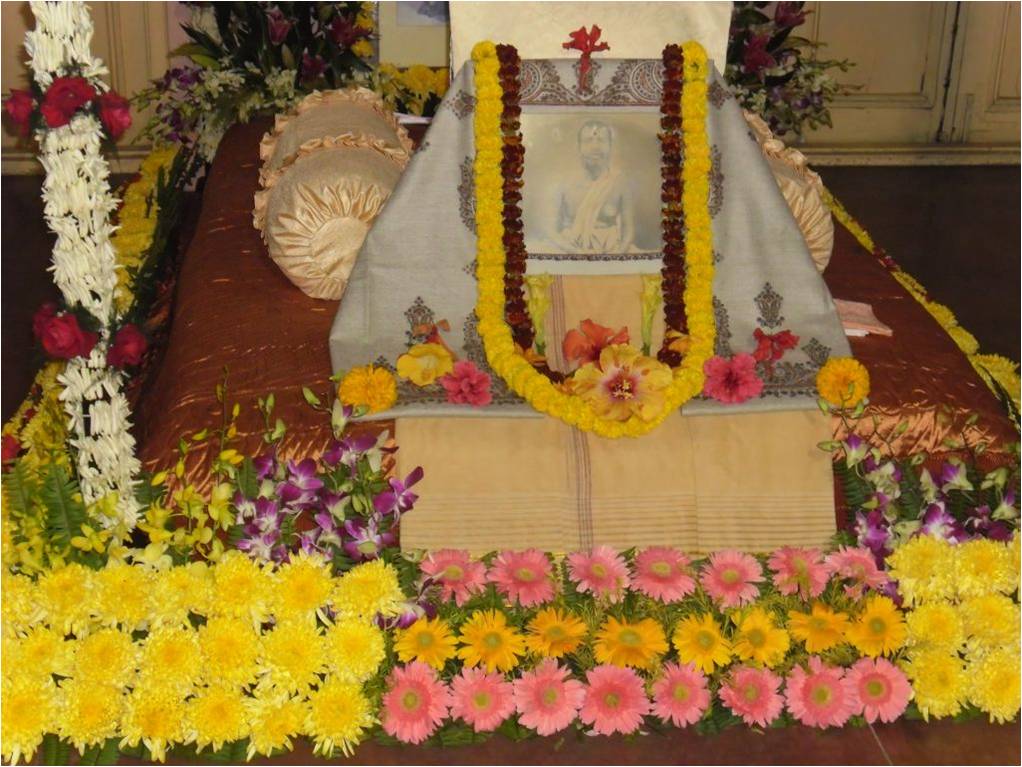
Celebrating Sri Ramakrishna’s 183rd Birthday

We are very fortunate that Sri Ramakrishna was born before us and made the spirituality real, tangible, and clear. From his life, he showed that the highest state of “God Consciousness” is real. While living like a normal person in the world he showed that one’s mind can be uplifted often to the level of God Consciousness. He guided his disciples to God Realization and showed us that the goal of spirituality is tangible. There are various and contradictory looking thoughts in spirituality, but Sri Ramakrishna showed that they are not contradictory. For example, he said that God has a form and God is also formless. The ocean water has no form. But, due to cold, at some places the water becomes ice. Similarly, by the devotion of the devotee, God assumes a form. Then, when the sun of knowledge shines, then the ice melts and becomes the formless water.

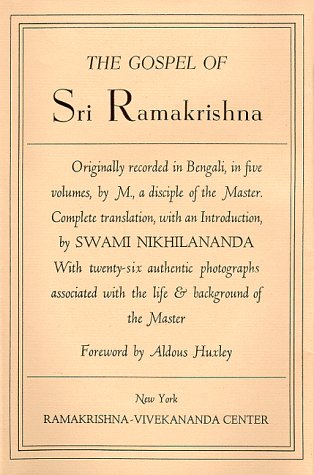
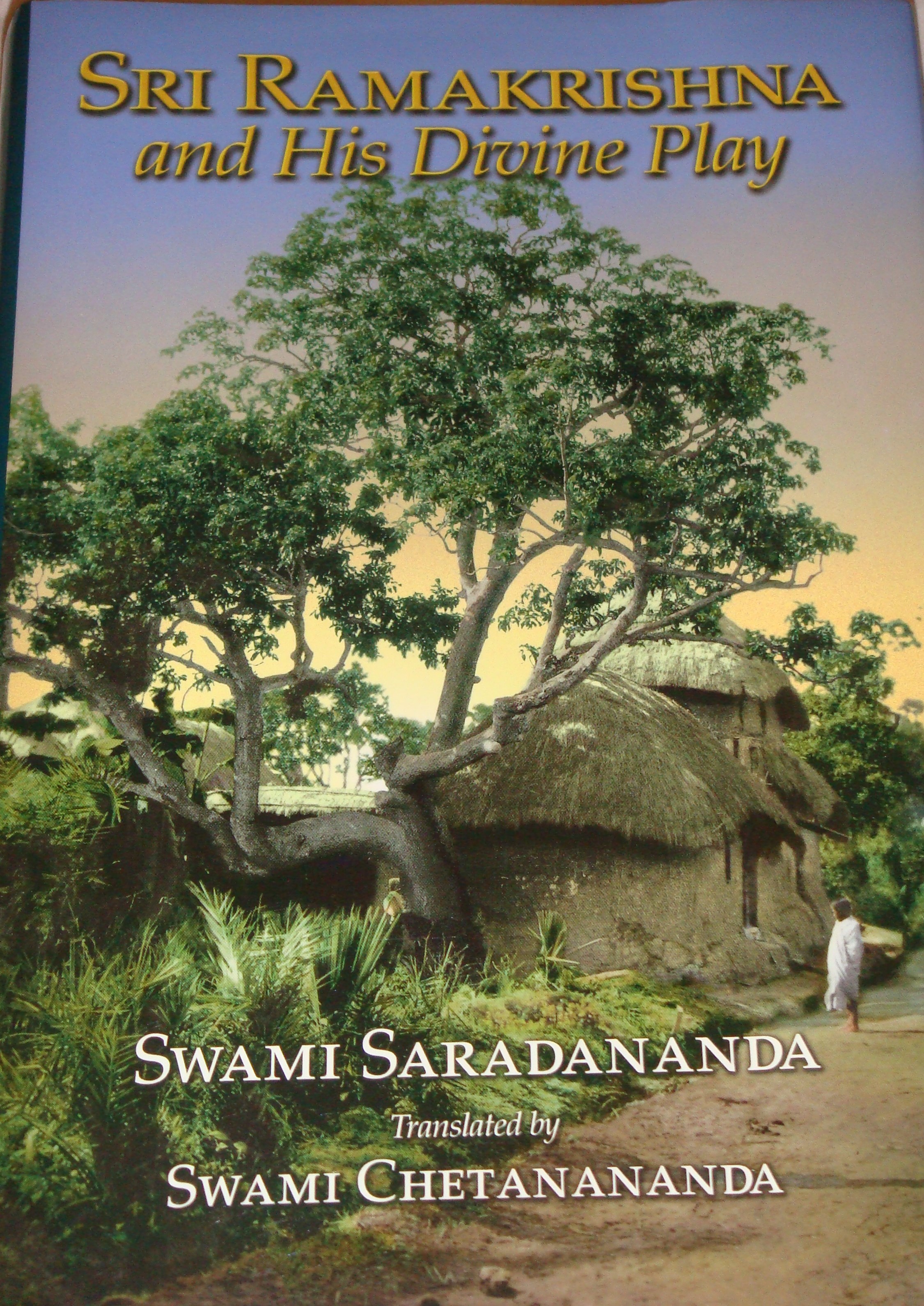
We can know Sri Ramakrishna’s life and teachings through Swami Vivekananda’s lectures, Shri Mahendranath Gupta’s “The Gospel of Sri Ramakrishna”, Swami Saradananda’s “Sri Ramakrishna and His Divine Play” and other direct disciples’ teachings. They had personally witnessed Sri Ramakrishna’s life and had received guidance from him. Thus, Sri Ramakrishna’s life is not a myth.

Sri Ramakrishna’s life and teachings are like a big ocean of nectar in which we can take deeps and uplift ourselves spiritually. To celebrate his birthday, we have to reflect upon one of his life incidents or his teachings. Sri Ramakrishna’s many teachings are ‘sutratmaka’, like formulas. We can easily remember, reflect, and follow them.

I was thinking about one of Sri Ramakrishna’s main teachings:

(In Bengali) মানব জীবনের উদ্দেশ্য  ঈশ্বর লাভ

 In Devanagari transliteration: “मानब जीबनेर उद्देश्य – ईश्वर लाभ”.

In English, “The Goal of Human Life is – God Realization.”

For most people, the goals of life are: going to school, going to college, study, get a degree, find a good job, make as much money as possible, acquire name-fame, recognition, power, position, get married, have a family, raise children and grand-children and die. Enjoy the world as much as you can. For the majority of people, these goals are satisfactory. Every now and then questions may come about the significance of these goals, but people brush them off as useless thoughts.

However, for some people, these goals are not satisfactory. They ask questions, such as : (1) is there any purpose for my birth? (2) Is there any meaning in my life? (3) Money, power, worldly pleasures do not give longer lasting happiness. Is there something else which can give me permanent happiness which does not depend on any worldly object or a person? (4) Is there life after death? (5) What is my true identity? (6) is there something beyond my body and mind?

For such inquiry-oriented people who cannot be happy with the temporary pleasures of the world, Sri Ramakrishna reminded the goal of life and it is ‘God Realization’. From his life, he showed that ‘God Realization’ is not an abstract or imaginary thing. He showed that this goal can be achieved in life.

Human beings want to know, to be immortal, to be fearless, to be permanently happy, and to love and to be loved. “God-Realization’ gives all these things and more.

Sri Ramakrishna showed a way to realize God. He said that regularly go into solitude, pray to God, discriminate between what is temporary and what is permanent, and keep holy company. When a person has an intense desire to see God, then God reveals to that person.

May we practice what Sri Ramakrishna taught and make progress towards the achievement of this goal of human life – God Realization.


Four Questions

Four Questions and Their Answers
from The Gospel of Sri Ramakrishna

Mahendranath Gupta, known as “M.,” met the God-man Sri Ramakrishna in February 1882 (137 years ago). He was the Principal of the Vidyasagar High School at Syambazar. He recorded in his diary Sri Ramakrishna’s conversation with his devotees, including himself. Most people know that from his notes he wrote in Bengali, the famous book Sri Ramakrishna Kathamrita, which Swami Nikhilananda translated into English as The Gospel of Sri Ramakrishna.

Sri Ramakrishna Kathamrita has been translated into all Indian languages and probably all major languages of the world. When we read this book, we sit face-to-face with Sri Ramakrishna and enjoy his inspiring conversations. We wonder how Sri Ramakrishna explained the deepest truths of spirituality in simple words with parables and perfect analogies.

At the beginning of this book, M. asked four fundamental questions to Sri Ramakrishna regarding spirituality and spiritual practices. I reflect on these four questions and their answers again and again. One must read these questions and answers in Sri Ramakrishna’s words from the book “The Gospel of Sri Ramakrishna, translated by Swami Nikhilananda (pages 81-83). I am writing and commenting on these questions and answers as a part of my own study. One can think of it as my notebook about these pages.
————————————————————————————————————————-
Question – 1:   “How, Sir, may we fix our minds on God?”

Sri Ramakrishna said to do two things:

(1) Repeat God’s name (do japa) and sing His/Her glories, and
(2) Keep holy company (now and then visit God’s devotees and holy men)

Why cannot we fix our minds on God?

Sri Ramakrishna reasoned, “The mind cannot dwell on God if it is immersed day and night in worldliness, in worldly duties and responsibilities.”

What should we do?

 We should do japa and meditation in solitude.

Sri Ramakrishna said, “It is most necessary to go into solitude now and then and think of God. To fix the mind on God is very difficult in the beginning unless one practices meditation in solitude. When a tree is young it should be fenced all around; otherwise, it may be destroyed by cattle (cattle means worldly or distracting thoughts and influences).”

How should one meditate?

Sri Ramakrishna said, “To meditate, you should withdraw within yourself or retire to a secluded corner or to the forest (mone, kone, and bone in Indian language). And you should always discriminate between the Real and the unreal. God alone is Real, the Eternal Substance; all else is unreal, that is impermanent. By discriminating thus, one should shake off impermanent objects from the mind.”

Note: Impermanent objects cannot give us permanent happiness. They give a little pleasure and lots of sufferings because of our false hopes created by our ignorance.  On the other hand, God, the Ultimate Reality, our true identity whose nature is Sat-Chit-Ananda (Existence-Knowledge-Bliss Absolute), removes all our sufferings and gives us Infinite bliss. It destroys all our ignorance about ourselves and the universe.
————————————————————————————————————————-
Question – 2: “How ought we to live in the world?”

Sri Ramakrishna said, “Do all your duties but keep your mind on God. Live with all-with wife and children, father and mother- and serve them. Treat them as if they were very dear to you, but know in your heart of hearts that they do not belong to you.”

Sri Ramakrishna gave two excellent examples:

Example 1:  “A maidservant in the house of a rich man performs all the household duties, but her thoughts are fixed on her own home in her native village. She brings up her master’s children as if they were her own. She even speaks of them as ‘my Rama’ or ‘my Hari.’ But, in her own mind, she knows very well that they do not belong to her at all.”

Note: I understood as follows: God has given us our parents, family members, relatives, and friends. We love them as our own and serve them. But, we should be aware that we have no control over them. God had created them, nourishes them, and when the time comes, takes them away from us. With this awareness, we can keep our mind on God while serving them.

Example 2:  “The tortoise moves about in the water. But, can you guess where her thoughts are? They are on the bank, where her eggs are lying.”

Sri Ramakrishna emphasized:  “Do all your duties in the world, but keep your mind on God.”

Why do we have to think of God while living in the world?

Sri Ramakrishna gave a very clear answer. He said, “If you enter the world without first cultivating love for God, you will be entangled more and more. You will be overwhelmed with its danger, its grief, and its sorrows. And the more you think of the worldly things, the more you will be attached to them.”

Note: By sincerely praying to God, we develop inner spiritual strength which helps us face grief, sorrows, and dangers of life. We have to be attached with all through God. If we attach ourselves to all, without God, selfishness comes and creates many problems.

Example 3:  (Sri Ramakrishna gave a wonderful example to enhance his point.) First, rub your hands with oil and then break open the jack-fruit otherwise they (your hands) will be smeared with its sticky milk. First, secure the oil of divine love, and then set your hands to the duties of the world.”

Note: When we have developed divine love for God, our mind will be calmer, more thoughtful, and more aware of what is good and helpful and also what is not good and harmful. After that, we will be able to perform our responsibilities with sanity, devoid of weaknesses like ego, expectations, hatred, and others.

How to attain divine love?

Sri Ramakrishna said, “But, one must go into solitude to attain this divine love.”

Note: Sri Ramakrishna emphasized again to go into solitude, discriminate or analyze the Real and the unreal and do japa and meditation to develop the love for God. He gave the following example to illustrate this thought.

Example 4: Sri Ramakrishna said, “To get butter from milk you must let it set into curd in a secluded spot: if it is too much disturbed, milk would not turn into curd. Next, you must put aside all other duties, sit in a quiet spot, and churn the curd. Only then do you get the butter.”

Note: The human mind has an amazing capacity if it is focused on a higher goal. The energy of the mind can be wasted by engaging in trifle things. With this mind, we can realize God or get the highest knowledge.

Sri Ramakrishna said, “Further, by meditating on God in solitude the mind acquires knowledge, dispassion, and devotion. But, the very same mind goes down if it dwells in the world. In the world, there is only one thought: ‘lust and greed’.

Note: Sri Ramakrishna gave another wonderful example to make this point clear.

Example 5: Sri Ramakrishna said, “The world is water and the mind milk. If you pour milk into the water they become one; you cannot find pure milk anymore. But turn the milk into curd and churn it into butter. Then, when that butter is placed in water, it will float. So, practice spiritual discipline in solitude and obtain the butter of knowledge and love. Even if you keep that butter in the water of the world the two will not mix. The butter will float.”

A Question: A genuine question may come: ‘I do not have knowledge of God and have not acquired the love for God. In this situation, what should I do? Should I not perform my responsibilities?’

My Answer: This is a valid question and it comes to all sincere beginners in the path of spirituality. I will write what I have understood about this teaching and how to practice it. First of all, we have to accept Sri Ramakrishna’s teaching in principle: ‘We cannot perform the worldly responsibilities in the best possible way without developing love for God and acquiring knowledge of God.’ Now, we have to start doing spiritual practices which he had mentioned before (go in solitude, analyze, do prayer, japa and meditation, seek holy company and others) daily at least in the morning and in the evening. After the morning spiritual practice, we develop a sense of detachment and try as much as possible to perform our responsibilities with detachment, meaning with the idea that everything belongs to God and I am just a caretaker. I perform these responsibilities as an offering to God to develop the love for God and to feel God’s presence in everything. Slowly, by God’s grace, we develop the love for God and acquire knowledge about God, our responsibilities will be performed with a proper state of mind and we do not get affected by the dangers, and sorrows of life.

How to discriminate in solitude?

Sri Ramakrishna emphasized that lust and greed are the two weaknesses of a human being, which bring his/her mind down to the body-mind level and will not let the person’s mind rise to the inner Self (Atman) or God. We have to train our mind to rise beyond lust and greed. Sri Ramakrishna teaches us how to prepare our mind for this.

Sri Ramakrishna said, “Together with this, you must practice discrimination. ‘Lust and greed’ is impermanent. God is the only eternal substance. What does a man get with money? You get food, clothes, and a dwelling-place; nothing more. You cannot realize God with its help. Therefore money can never be the goal of life. That is the process of discrimination. Do you understand?…. What is there in money or a beautiful body?”

Sri Ramakrishna said that when one discriminates, then one finds that even a beautiful body consists of bones, flesh, fat, and other disagreeable things. Why a person should give up God and directs one’s mind to such things, like lust and greed? Why a person should forget God for their sake?
————————————————————————————————————————-
Question – 3:  “Is it possible to see God?”

Sri Ramakrishna said, “Yes, certainly. Living in solitude now and then, repeating God’s name and singing His glories, and discriminating between the Real and the unreal – these are the means to employ to see Him.”

Note: Wow! Sri Ramakrishna emphatically said that ‘God can be realized’. It is a great assurance. He also told the spiritual practices through which one can realize God.
————————————————————————————————————————-
Question – 4: “Under what conditions does one see God?”

Sri Ramakrishna said, “Cry to the Lord with an intensely yearning heart and you will certainly see Him. People shed a whole jug of tears for wife and children. They swim in tears for money. But, who weeps for God? Cry to Him with a real cry.”

Sri Ramakrishna sang a song:

Cry to your Mother Shyama with a real cry, O mind!
And how can she hold Herself from you?
How can Shyama stay away?
How can your Mother Kali hold Herself away?

O mind, if you are in earnest, bring Her an offering
Of bel-leaves and hibiscus flowers;
Lay at Her feet your offering
And with it mingle the fragrant sandal-paste of Love.

Sri Ramakrishna continued, “Longing is like the rosy dawn. After the dawn out comes the sun. Longing is followed by the vision of God.”

Note: Sri Ramakrishna clearly described the state of a person’s mind that is ready to realize God. There is no ambiguity in this. With spiritual practices, we hope to develop intense desire and a need to realize God. Sri Ramakrishna gives more examples to give a clear picture of intense longing.

Example 6:  Sri Ramakrishna said, “God reveals Himself to a devotee who feels drawn to Him by the combined force of these three attractions: (1) the attraction of worldly possessions for the worldly man, (2) the child’s attraction for its mother, and (3) the husband’s attraction for the chaste wife. If one feels drawn to Him by the combined force of these three attractions, then through it one can attain Him.

“The point is, to love God even as the mother loves her child, the chaste wife her husband, and the worldly person his wealth. Add together these three forces of love, these three powers of attraction, and give it all to God. Then you will certainly see Him.”

Note: Again, a very clear picture of the force of the longing has been given. People are familiar with these three forces of love. Now, we have to combine these three forces of love and give it all to God. In order to attain a worldly thing like degree, money, position, power etc. people give up so many other distractions and focus their mind to attain that thing. Sri Ramakrishna says that seeing God is not impossible if we apply our full mind and heart to realize God. Whatever yoga we practice, whether Jnana Yoga, Bhakti Yoga, Karma Yoga, or Raja Yoga, one needs intense longing to realize the ultimate goal of the four yogas, namely God-realization.

The Final Word – Surrender

Example 7: Sri Ramakrishna concludes his answer with the following: “It is necessary to pray to Him with a longing heart. The kitten knows only how to call its mother, crying, ‘Mew, mew!’ It remains satisfied wherever its mother puts it. And the mother cat puts the kitten sometimes in the kitchen, sometimes on the floor, and sometimes on the bed. When it suffers it cries only, ‘Mew, mew!’ That’s all it knows. But as soon as the mother hears this cry, wherever she may be, she comes to the kitten.”

Note:  One can relate to this example more when one gets familiar with the Asian Indian atmosphere where the doors and the windows of a house are mostly open and street cats carry kittens into the houses. Cats carry kittens holding them in their mouths, put them at various places and look for their food. Cats know that at different timings, different places of the house are safer. The point is that one has to completely surrender to God with an understanding that ‘God is my father and mother and will take care of me.’ We have to go through various situations in life, good or bad; no matter what, hold on to God and intensely pray to God. Especially during the suffering, we have to bear the pain of life and call on God. If our prayer is intense, God will definitely come.

Note that Sri Ramakrishna had developed an intense longing to realize God, had a vision of Mother Kali, and then throughout his life, he remained in the God-consciousness state. He had also completely surrendered himself to Mother Kali.

(Thanks to Rushil Desai and Sonali Tatapudi for editing this post.)

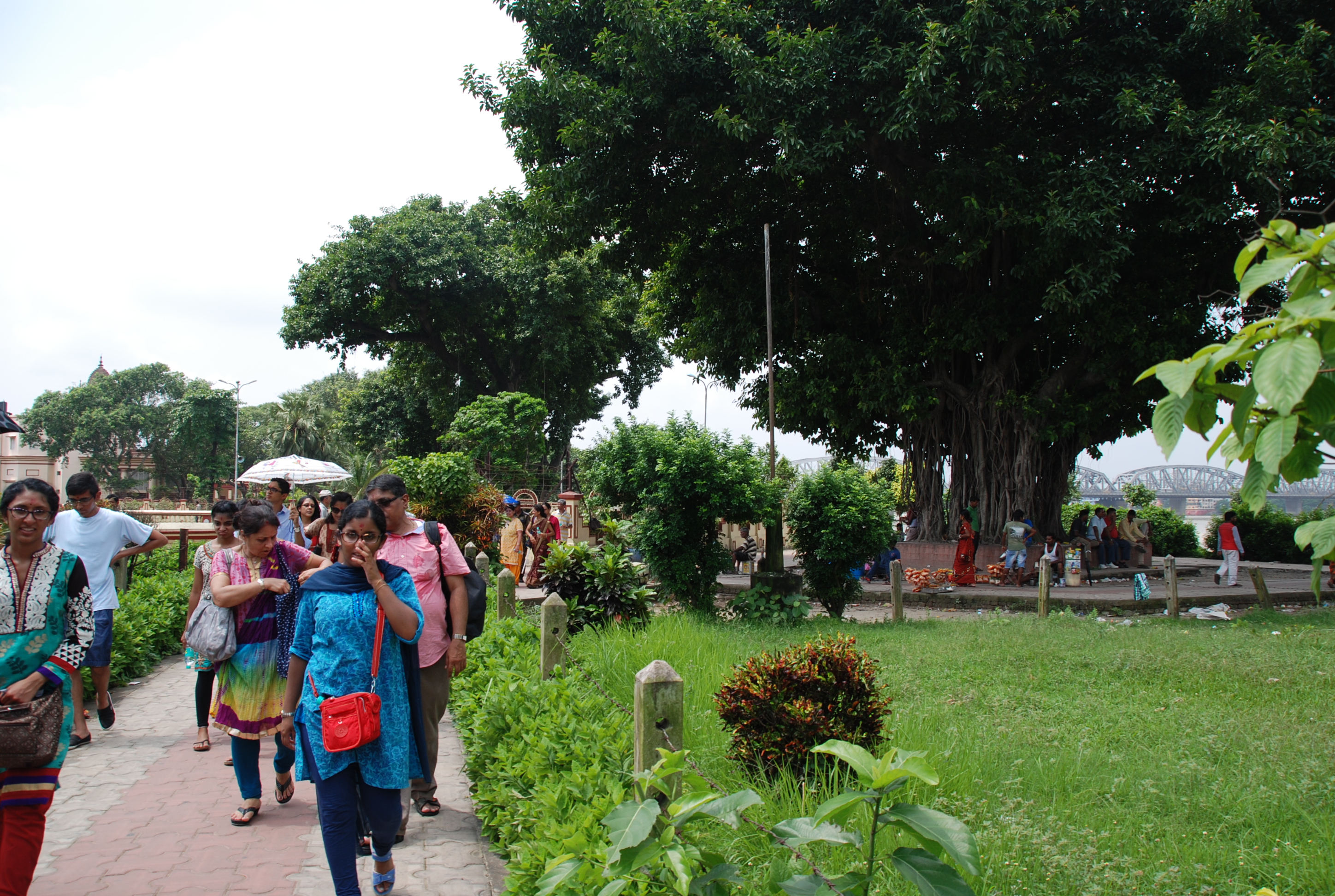
Belur Math Pilgrimage – 2015, Day – 5 Morning at Cossipore Garden House

August 7, 2015

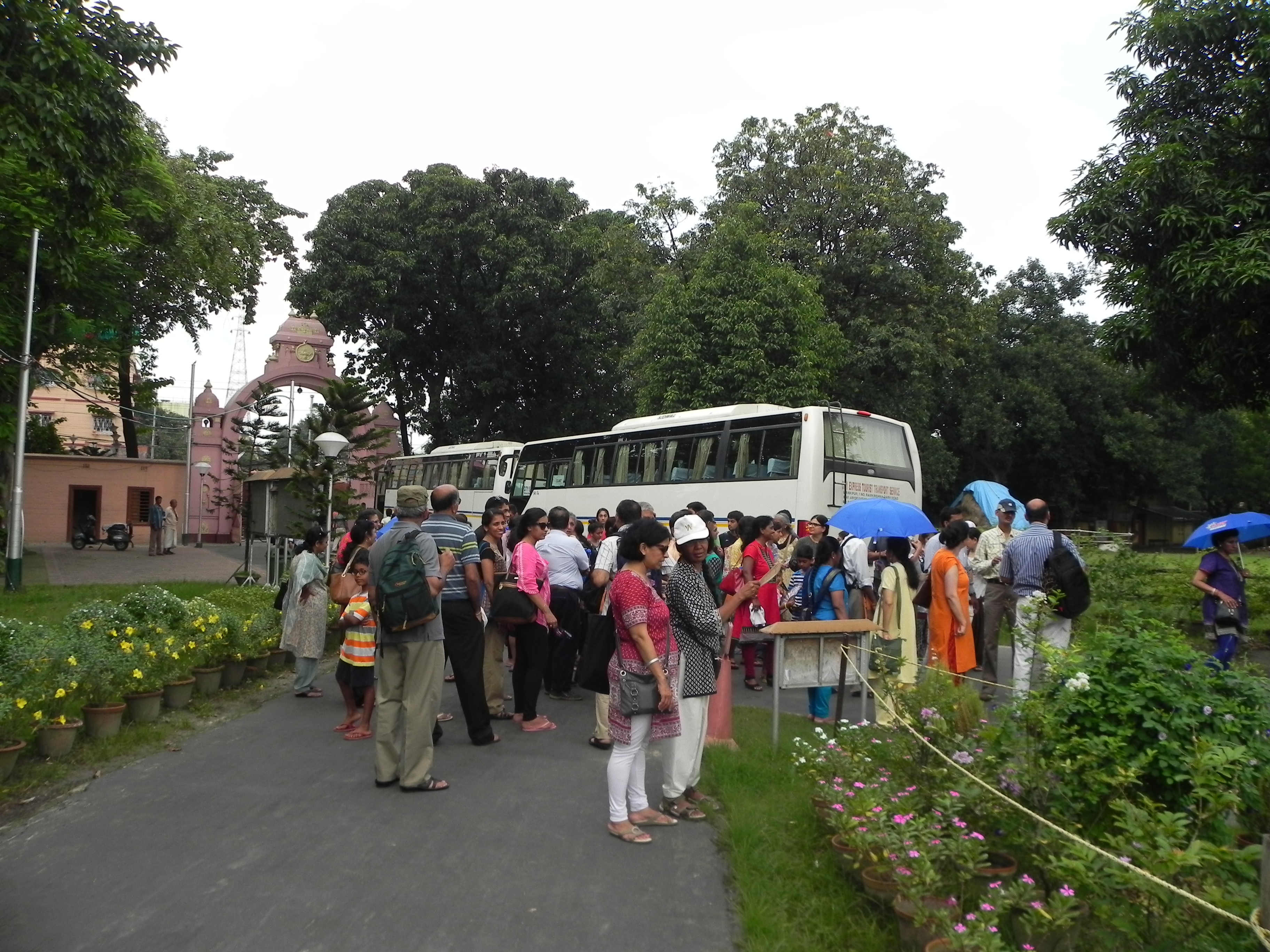
We were happy that by the grace of God and Mother Nature, we had completed four excellent days of pilgrimage and everything had worked out much better than we had expected.  Everyone had a good night of sleep in the Hyatt Hotel after the long day journey to Jayrambati and Kamarpukur. At the breakfast tables the next morning, no one looked tired, including the children.  The joyful noise of greeting each other filled the breakfast room.   After breakfast everyone was ready for another day.

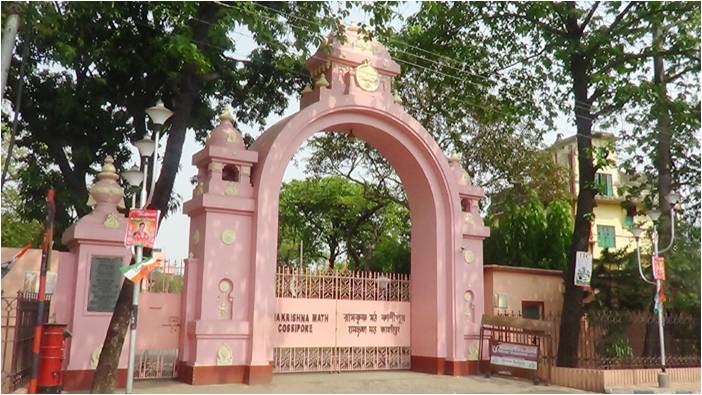
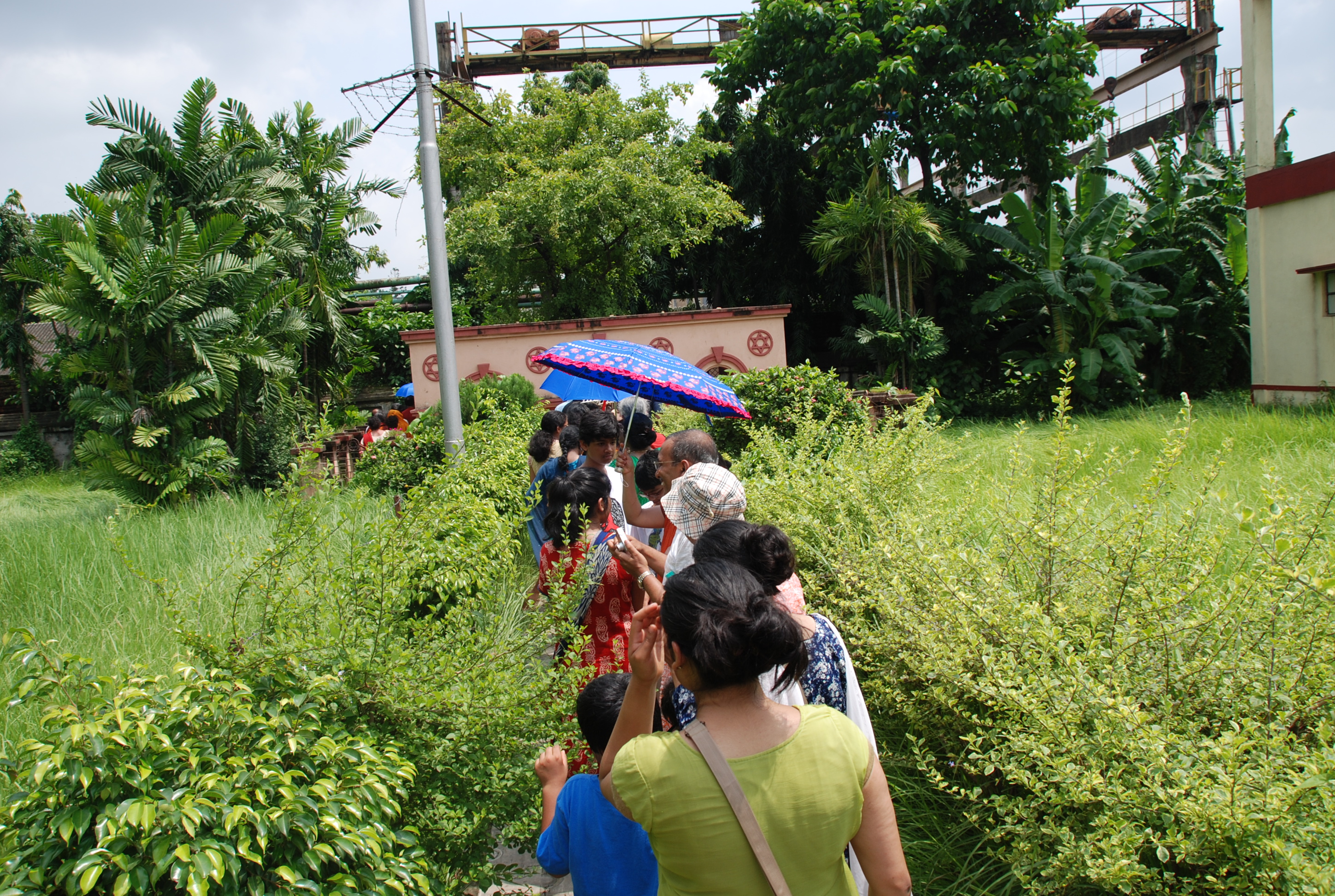
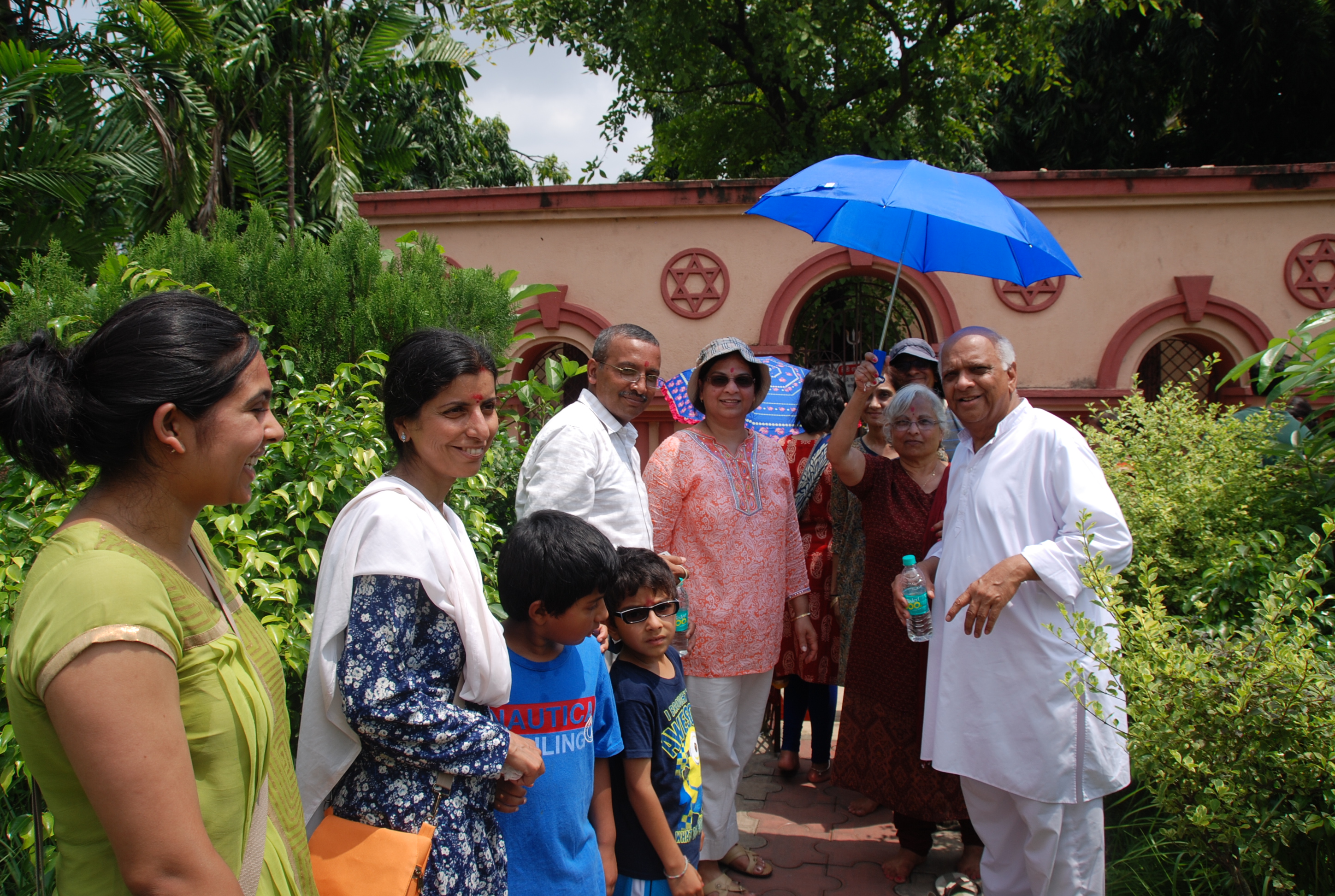
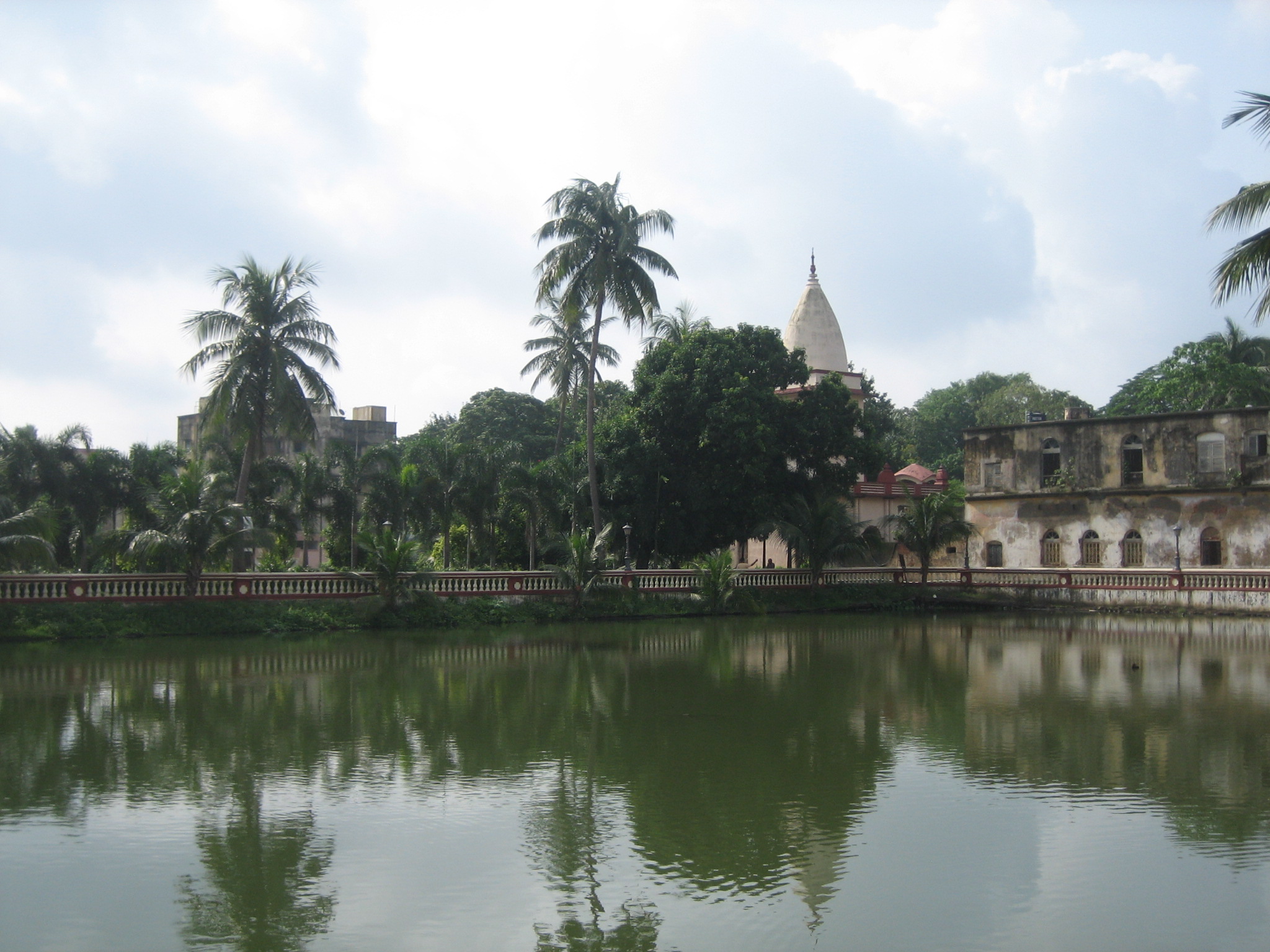
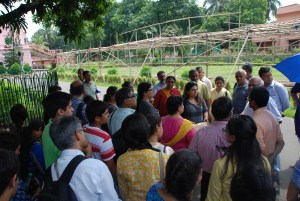
In the morning, we first went to Baranagar Math and then to Cossipore Garden House.  But, I will talk about the Cossipore Garden house first because in the sequence of events, the events at Cossipore Garden House happened first. Also, It was because of the events at the Cossipore Garden House that the Baranagar Math came into being.
1 Gate-1  3 Entrance - buses

Cossipore Garden House:

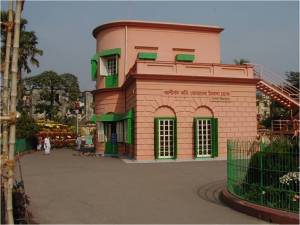
Sri Ramakrishna’s illness brought his disciples together during his stay in the Shyampukur House. Sri Ramakrishna’s stay at the Cossipore Garden House:

(1) Molded Narendra’s (Swami Vivekananda’s) spiritual personality and made him the leader of all younger disciples

(2) Intensified the spiritual loving bondage among the younger disciples

(3) The younger disciples’ renunciation became stronger under the leadership of Narendra

(4) Set up the foundation of a great spiritual movement, later shaped as the Ramakrishna Math and Mission, to uplift and guide millions of people in spirituality in India and all over the world, and to help millions of poor and neglected people by providing for them means for their living, medicine, and education.  Thus, the Cossipore Garden House is of great historical importance.

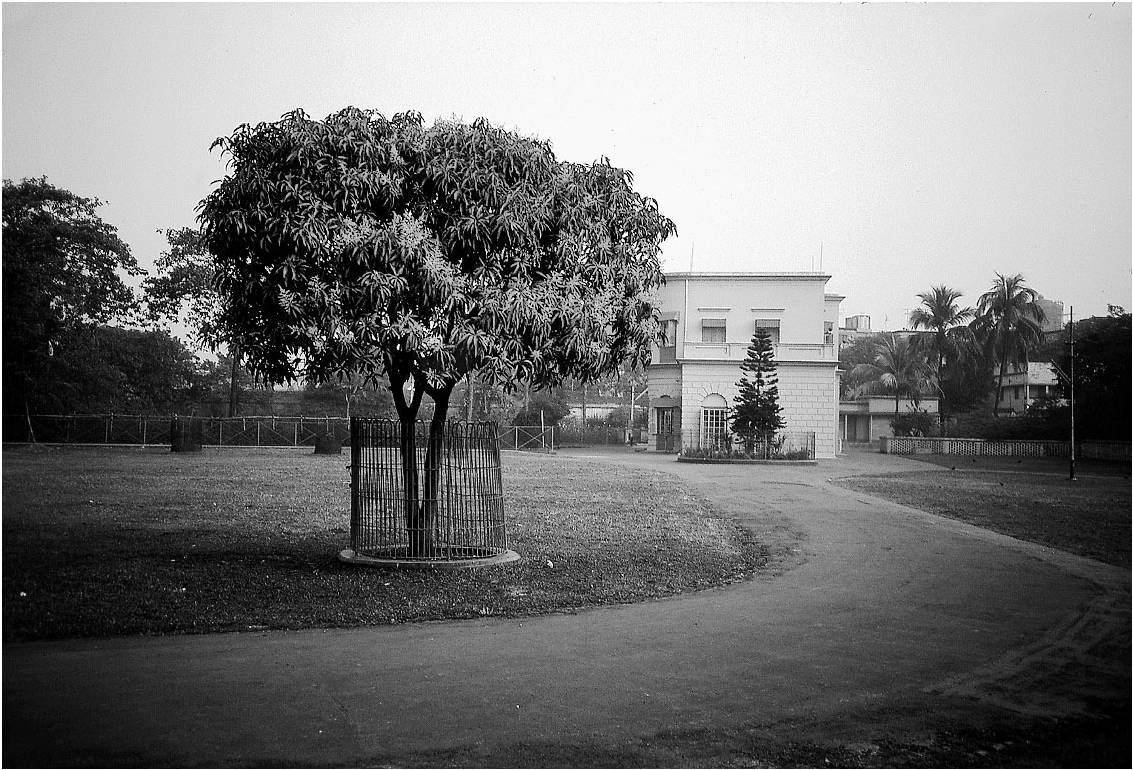
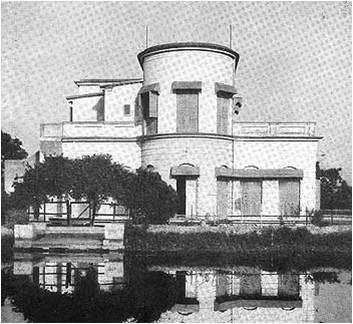
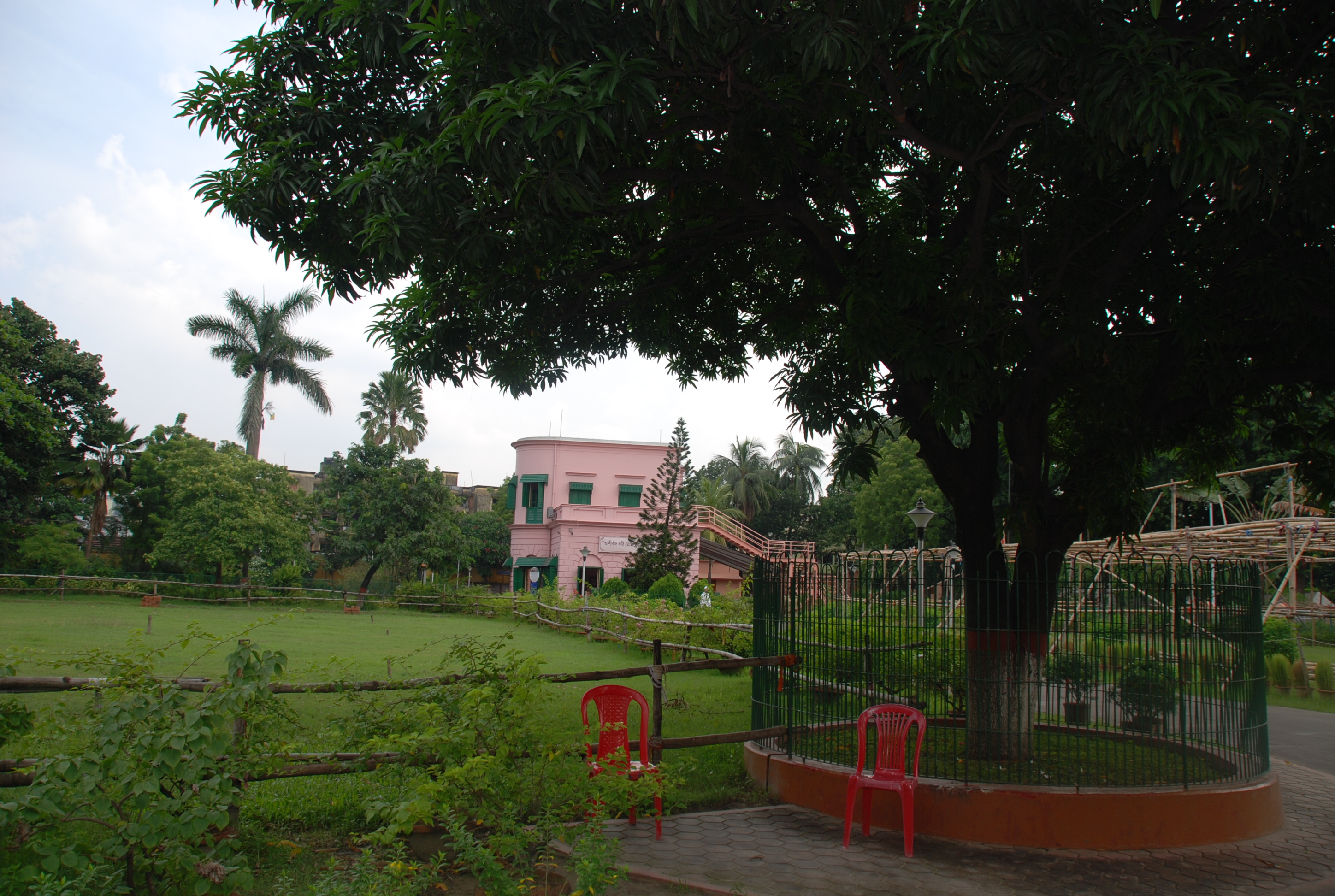
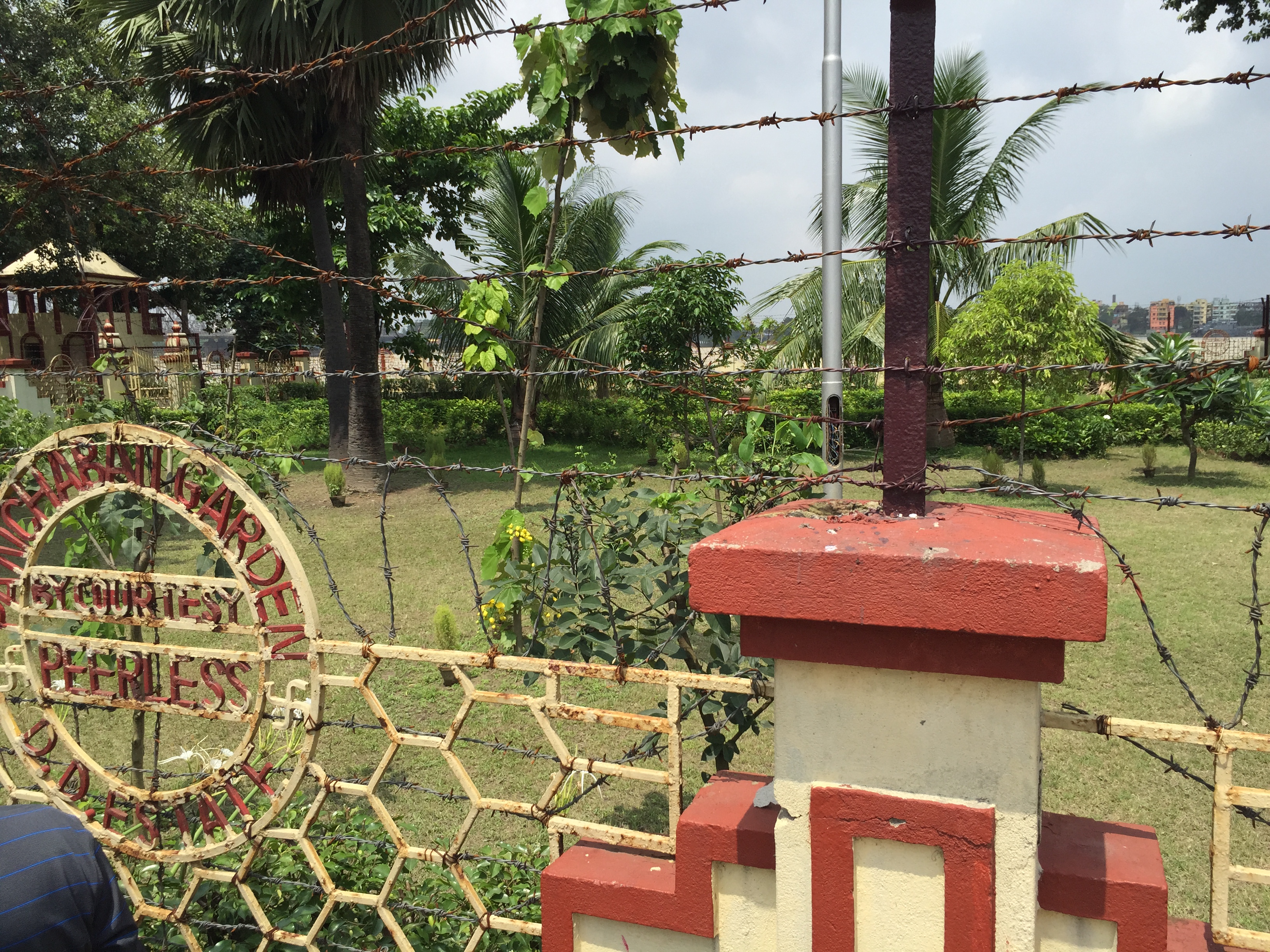
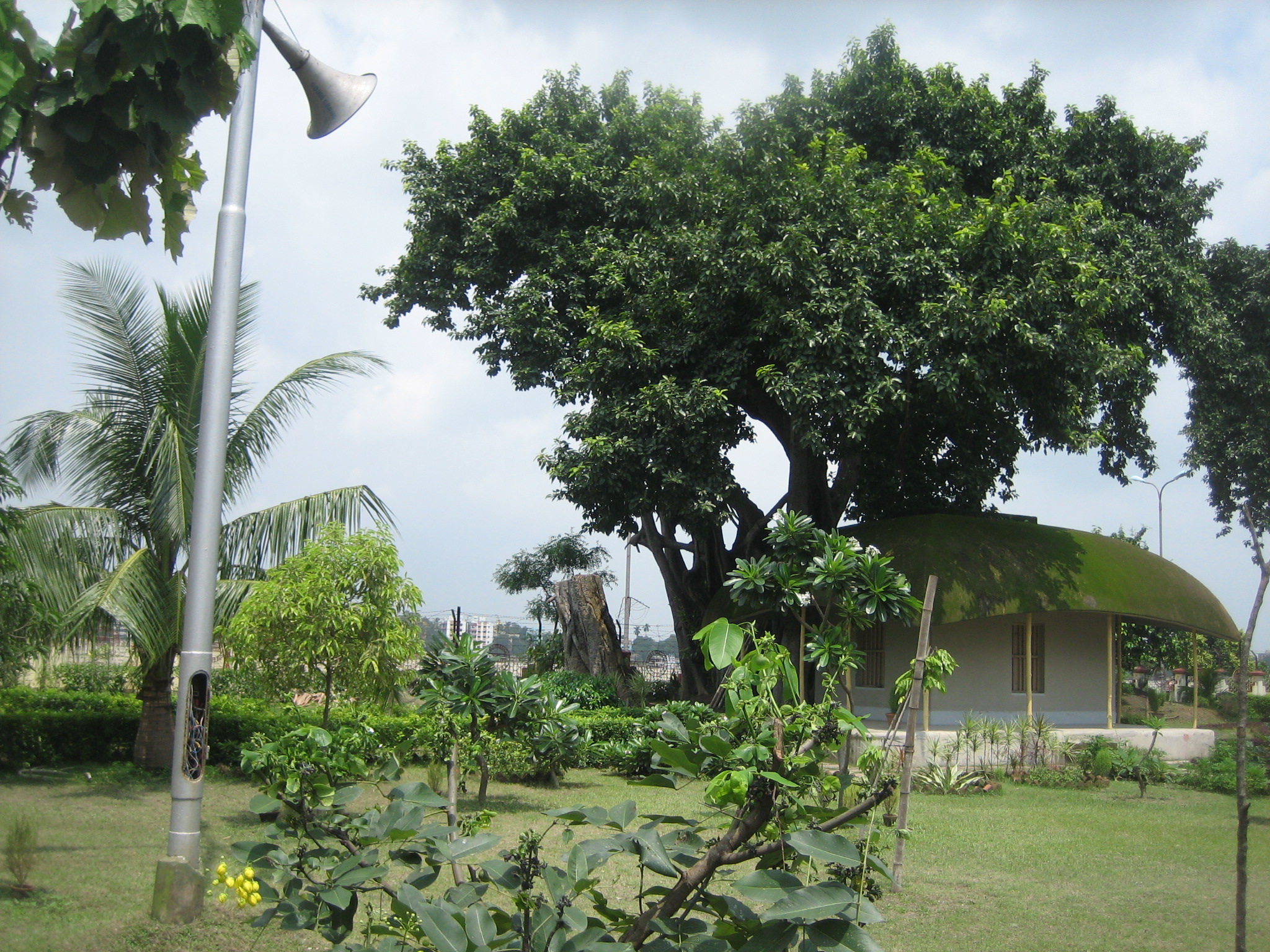
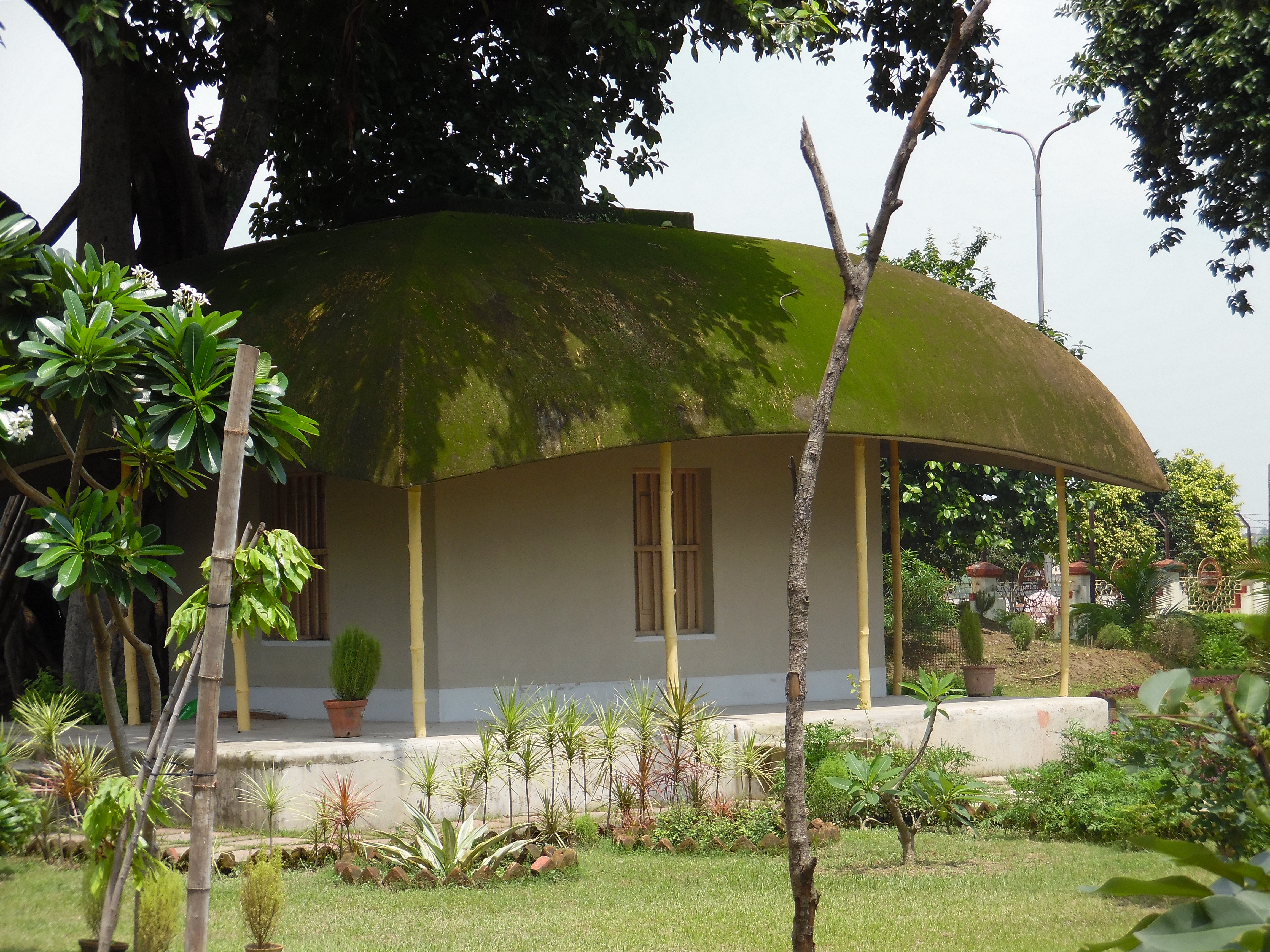
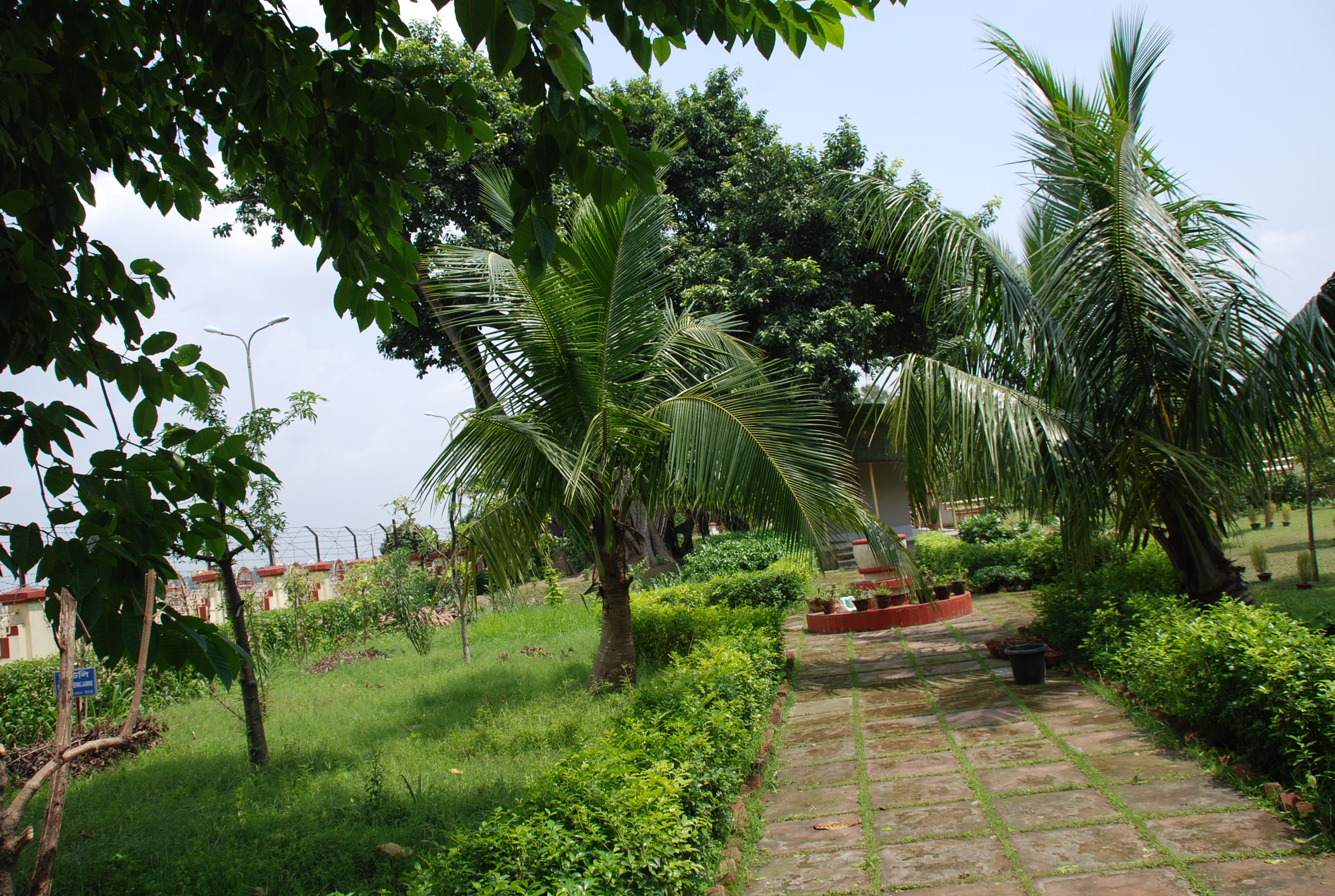
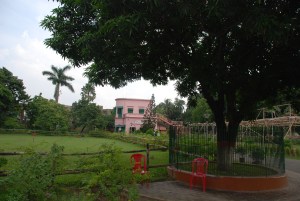
Sri Ramakrishna moved to the Cossipore Garden house on December 11, 1885 and lived there until he passed away on August 16, 1886. Sri Ramakrishna liked it here much more than the Shyampukur house.  The Cossipore Garden House was quiet, had beautiful garden full of various flowers, fruits and vegetables. There was also a bricked garden path decorated by beautiful flowers and convenient facilities.
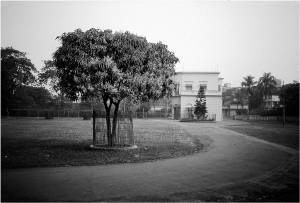
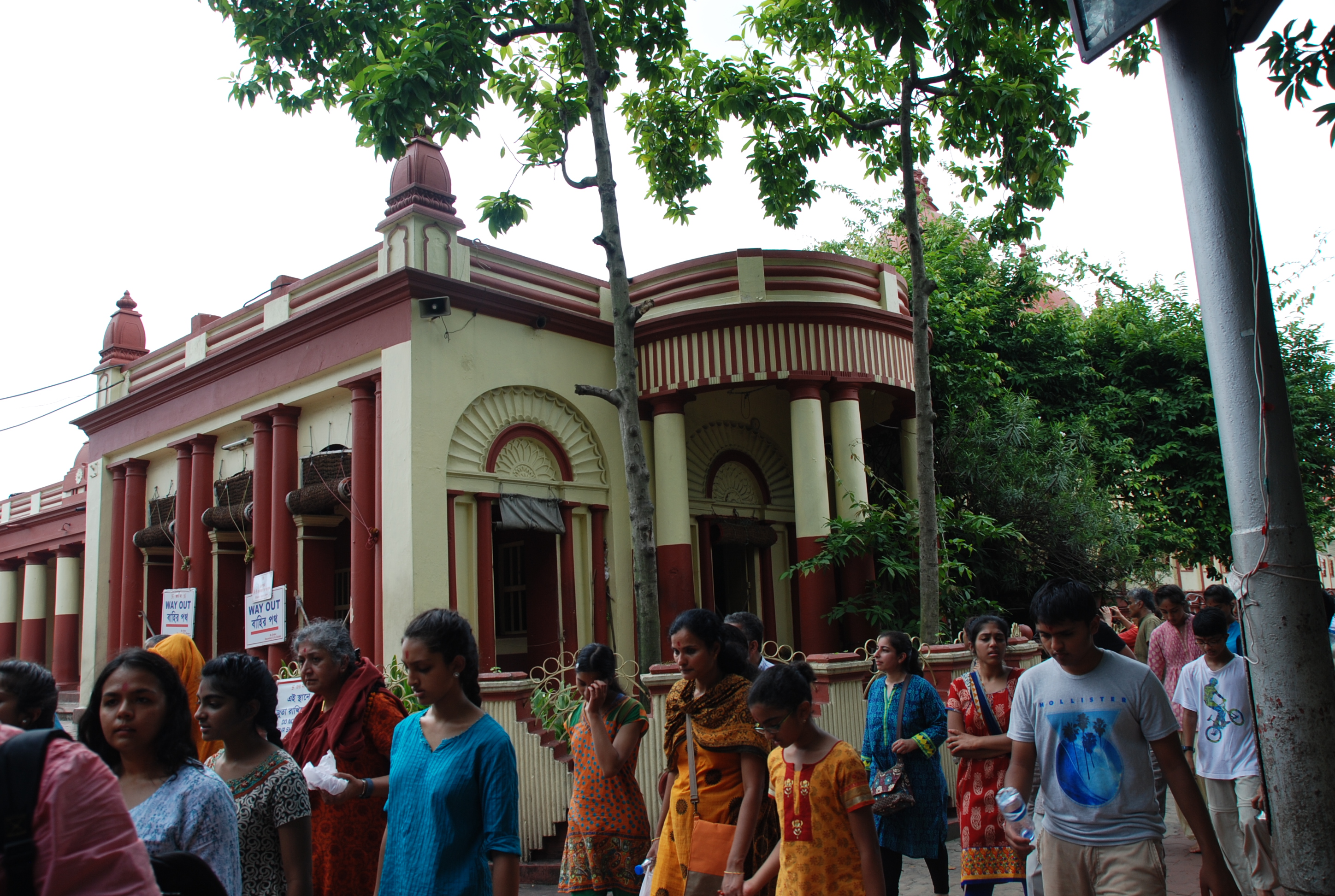
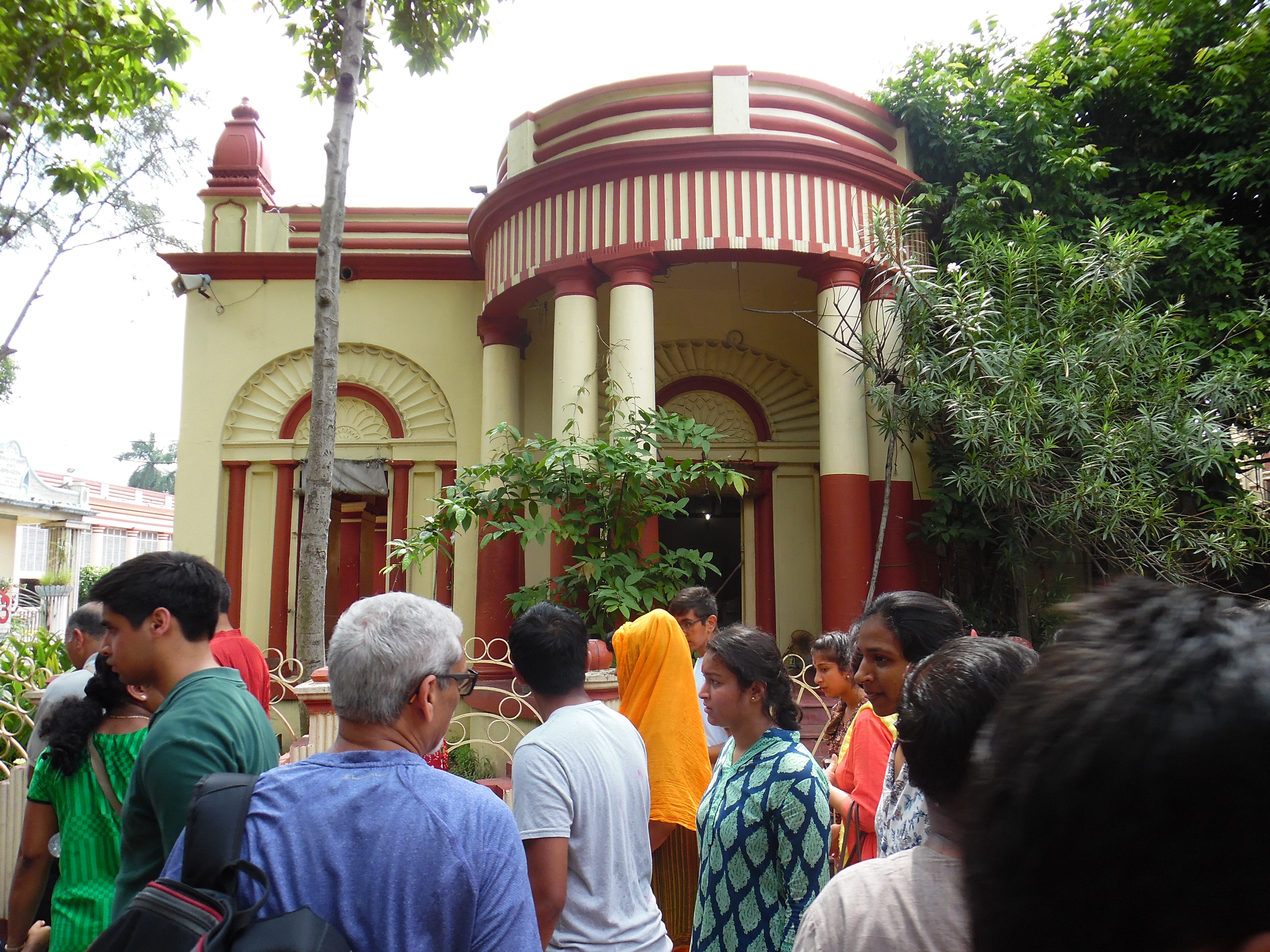
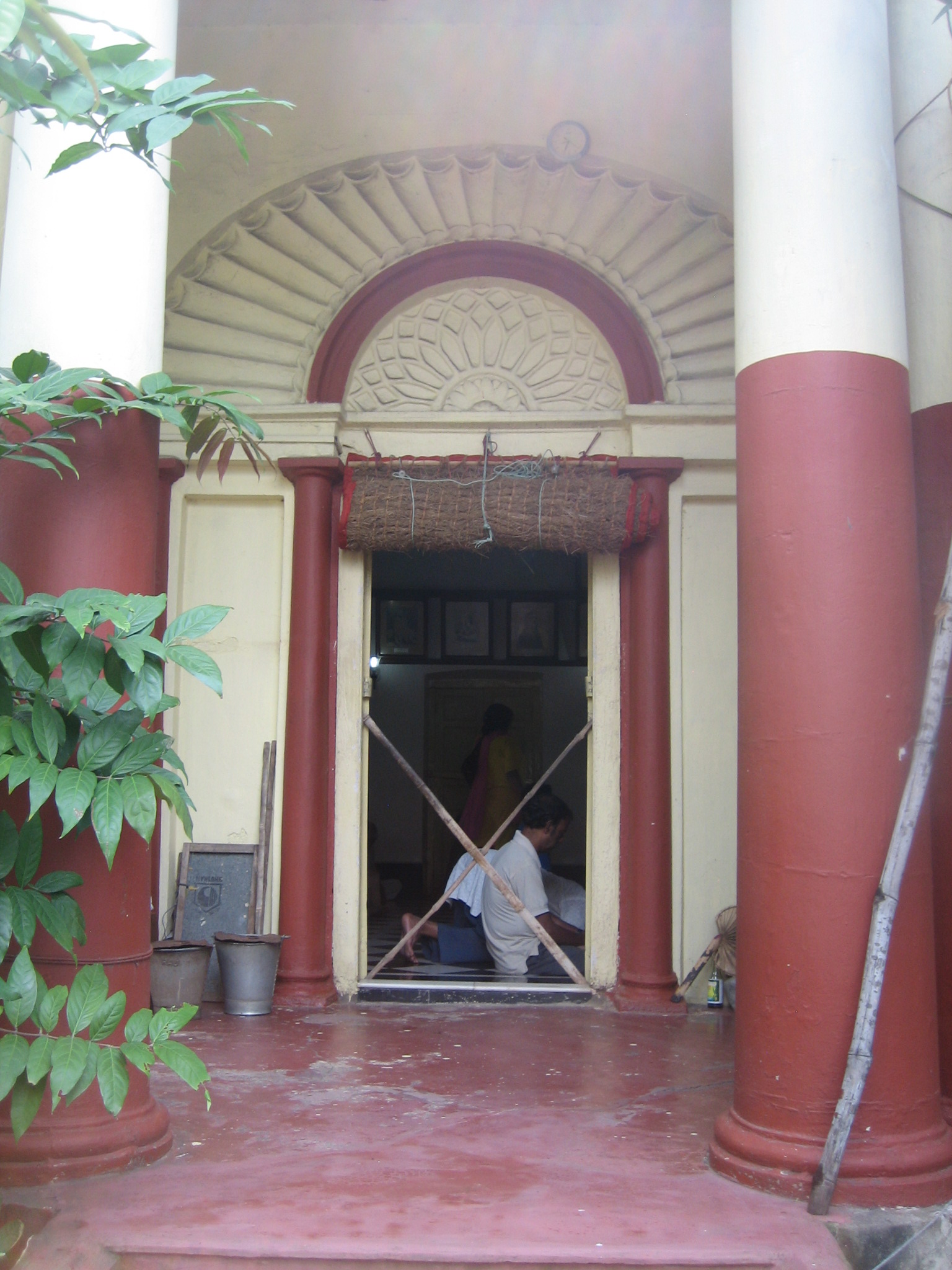
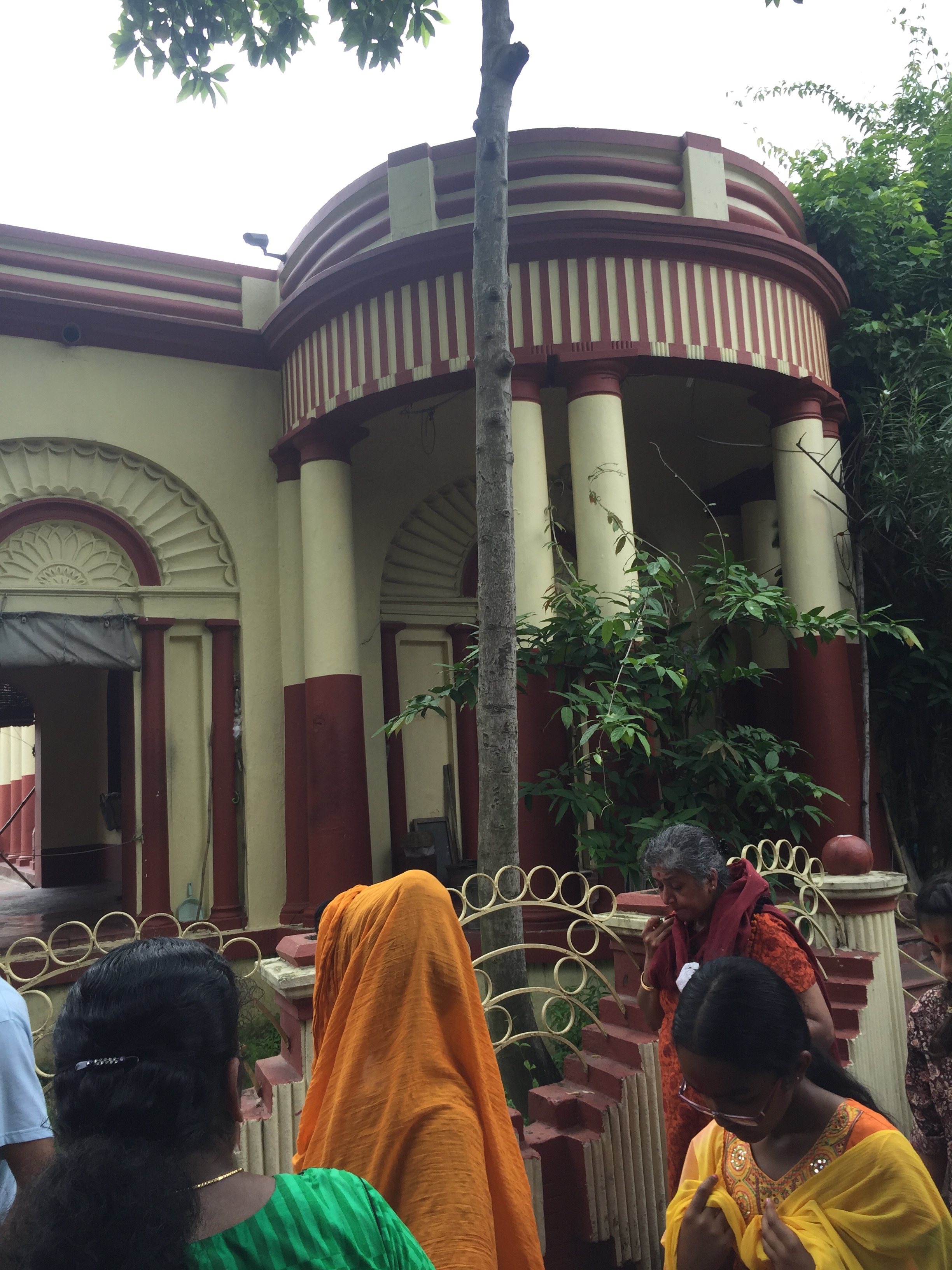
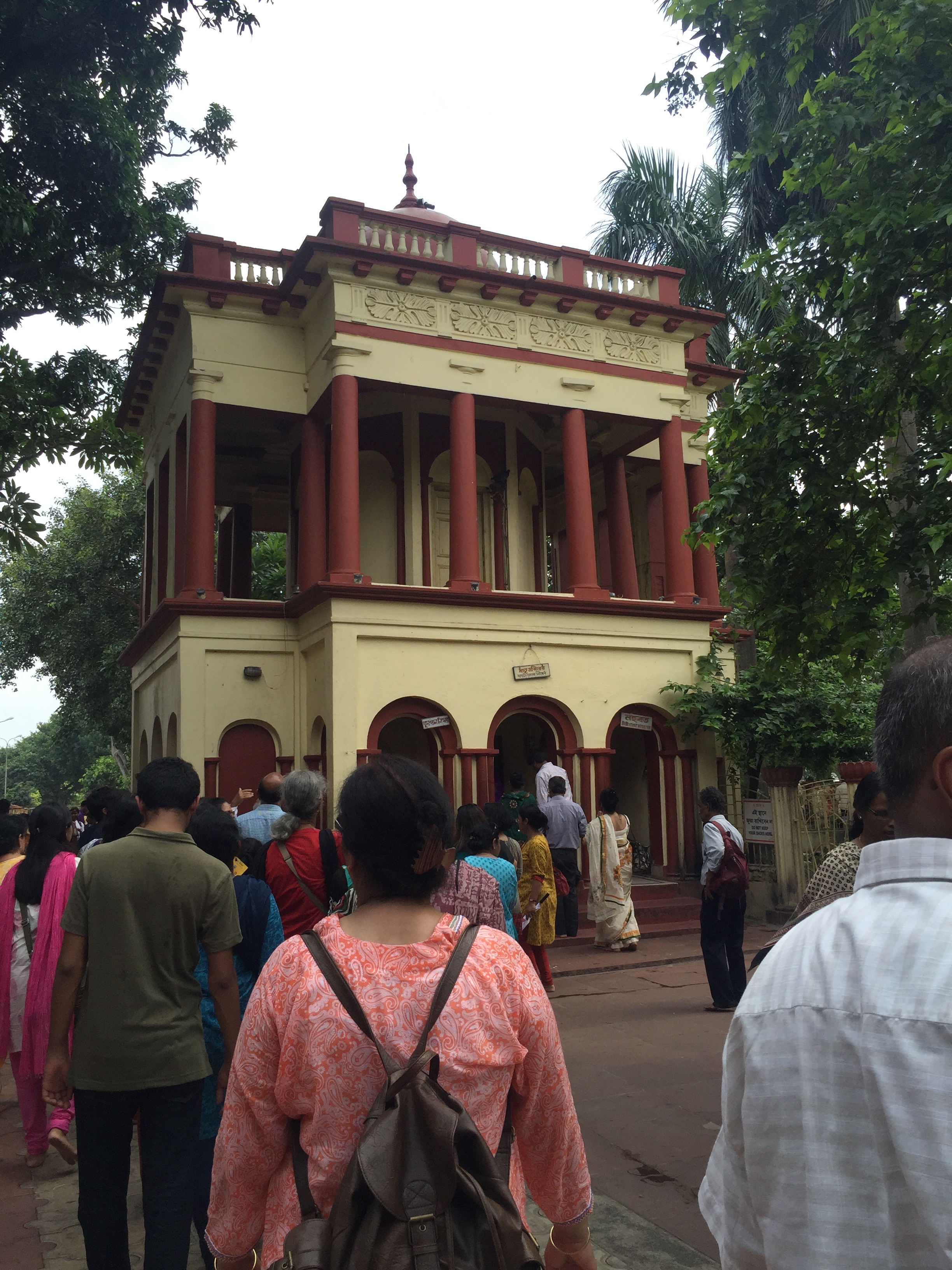
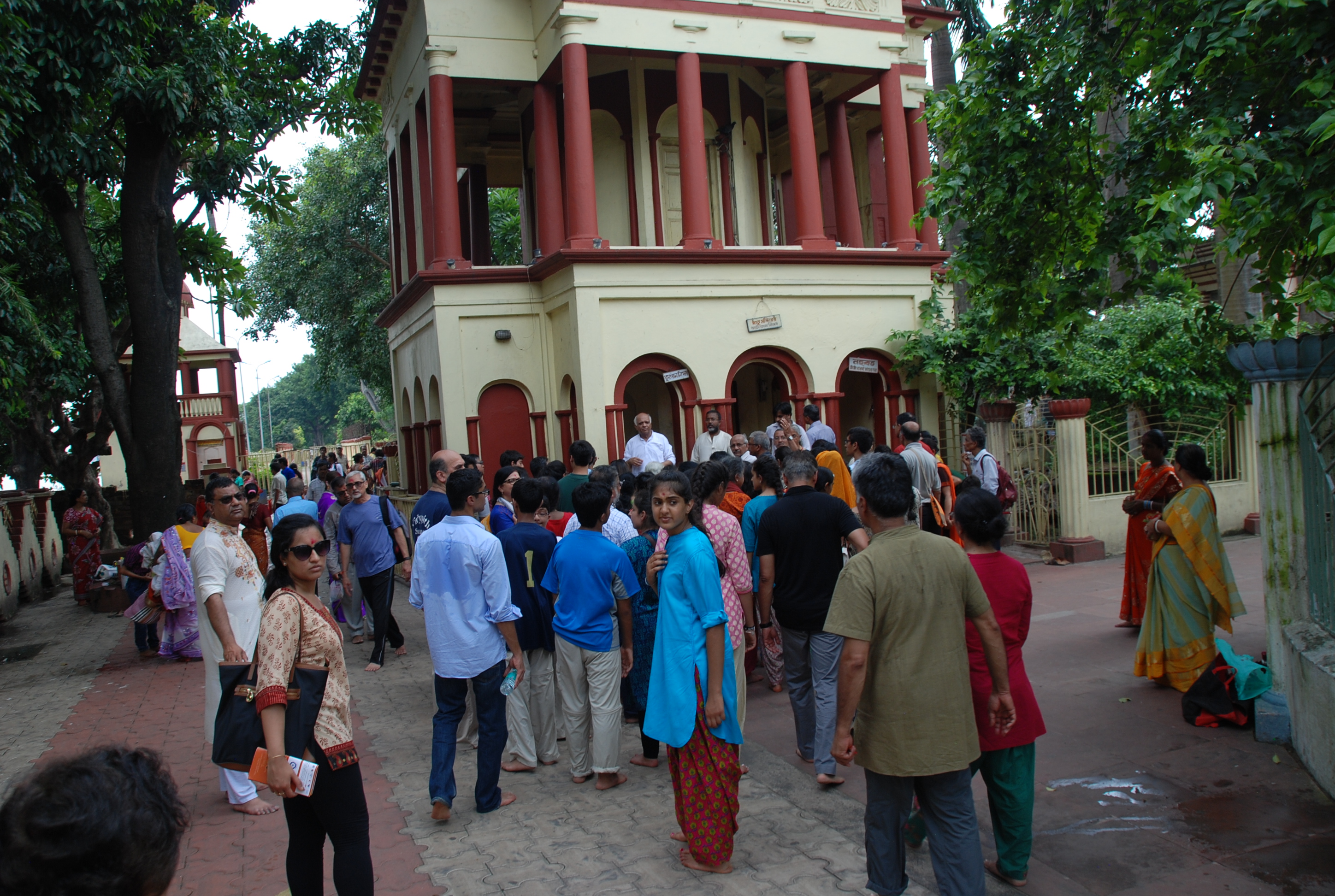
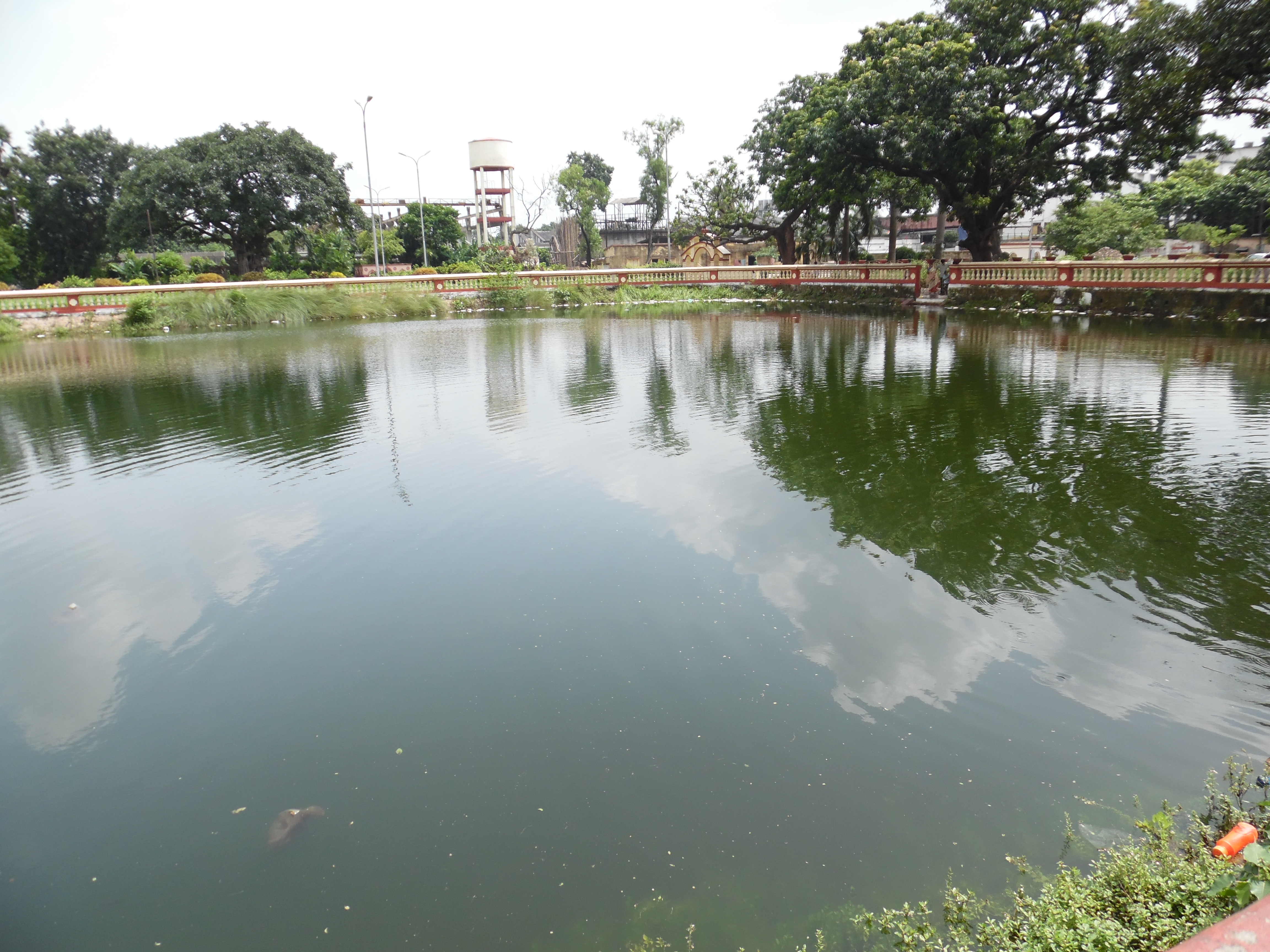
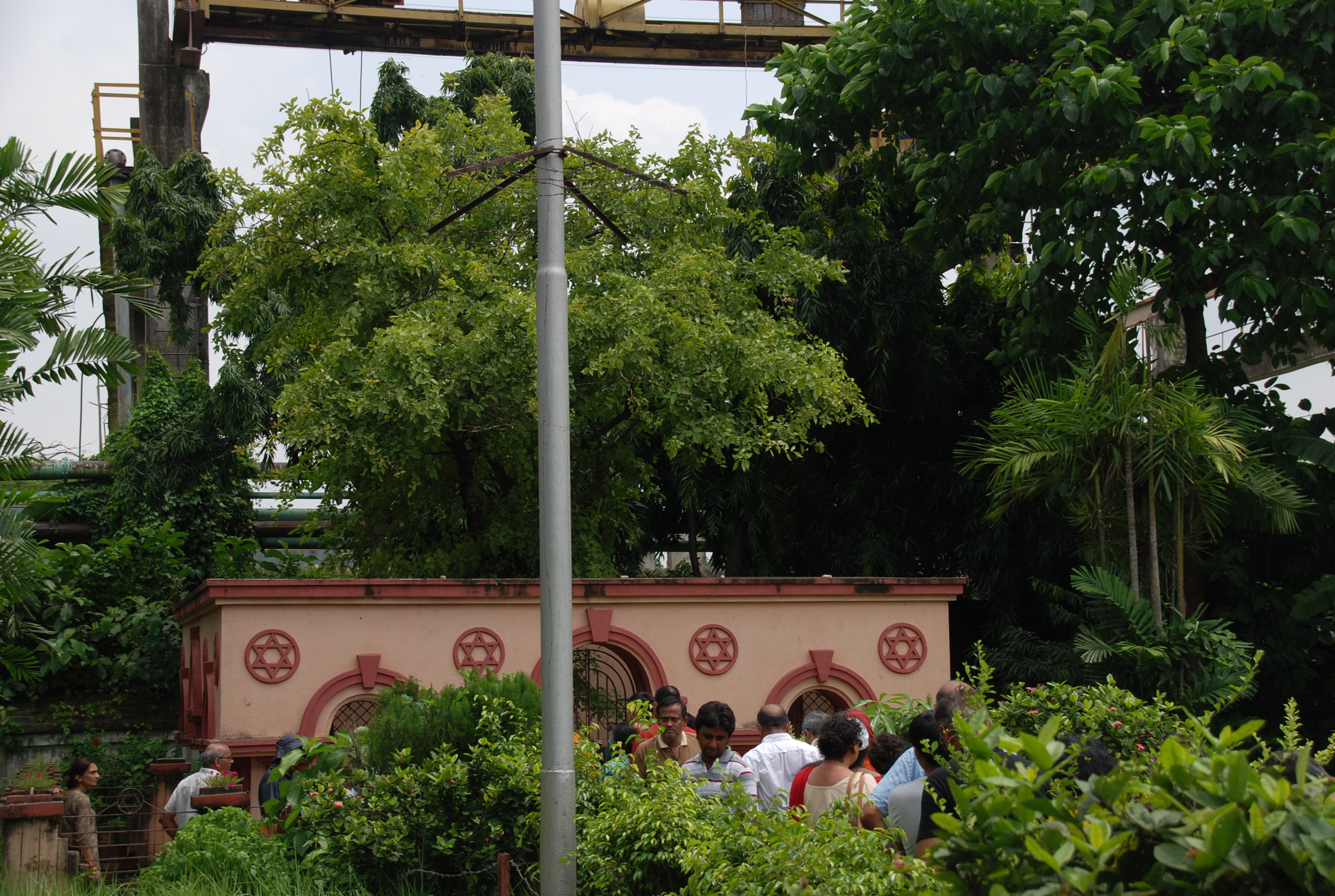
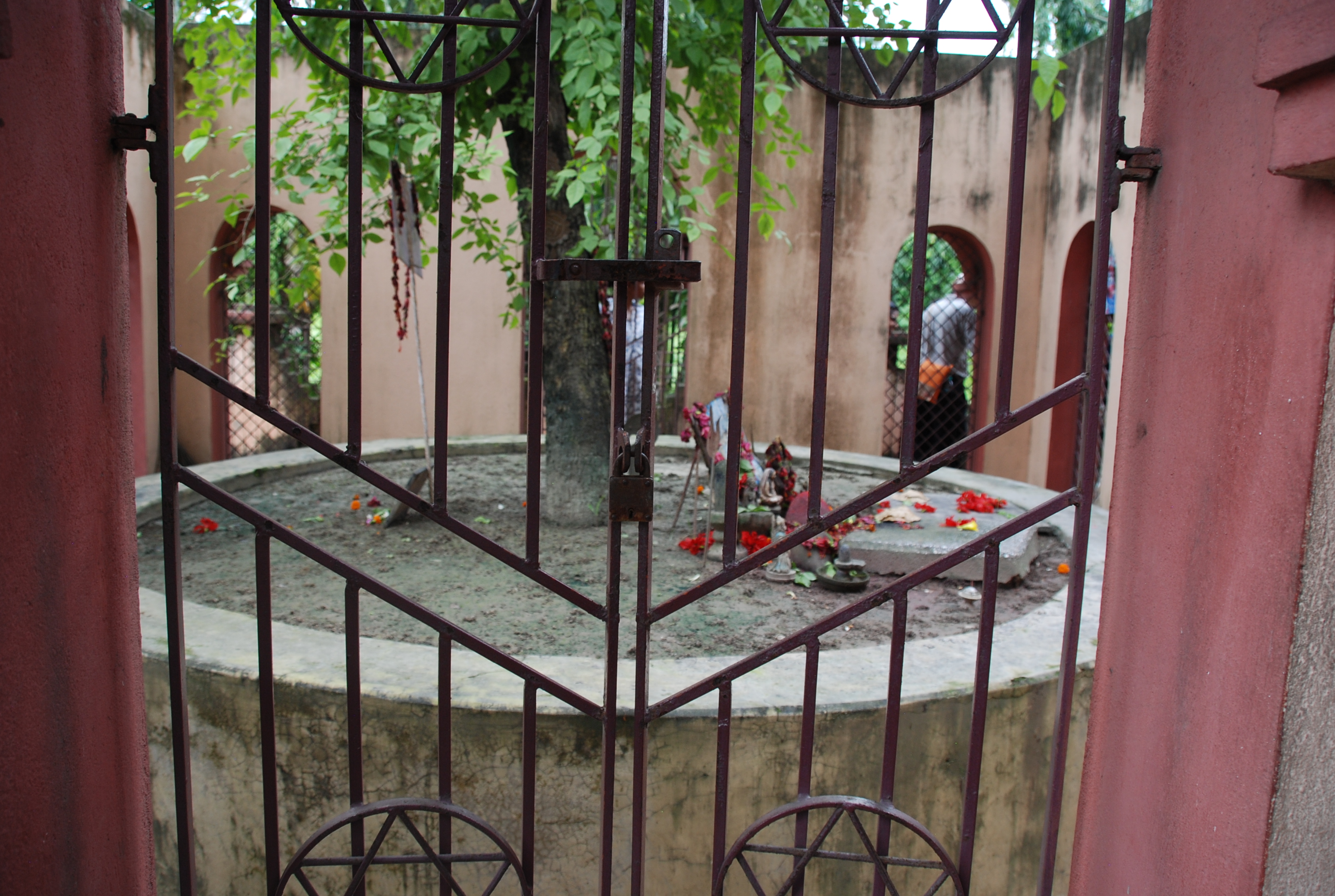
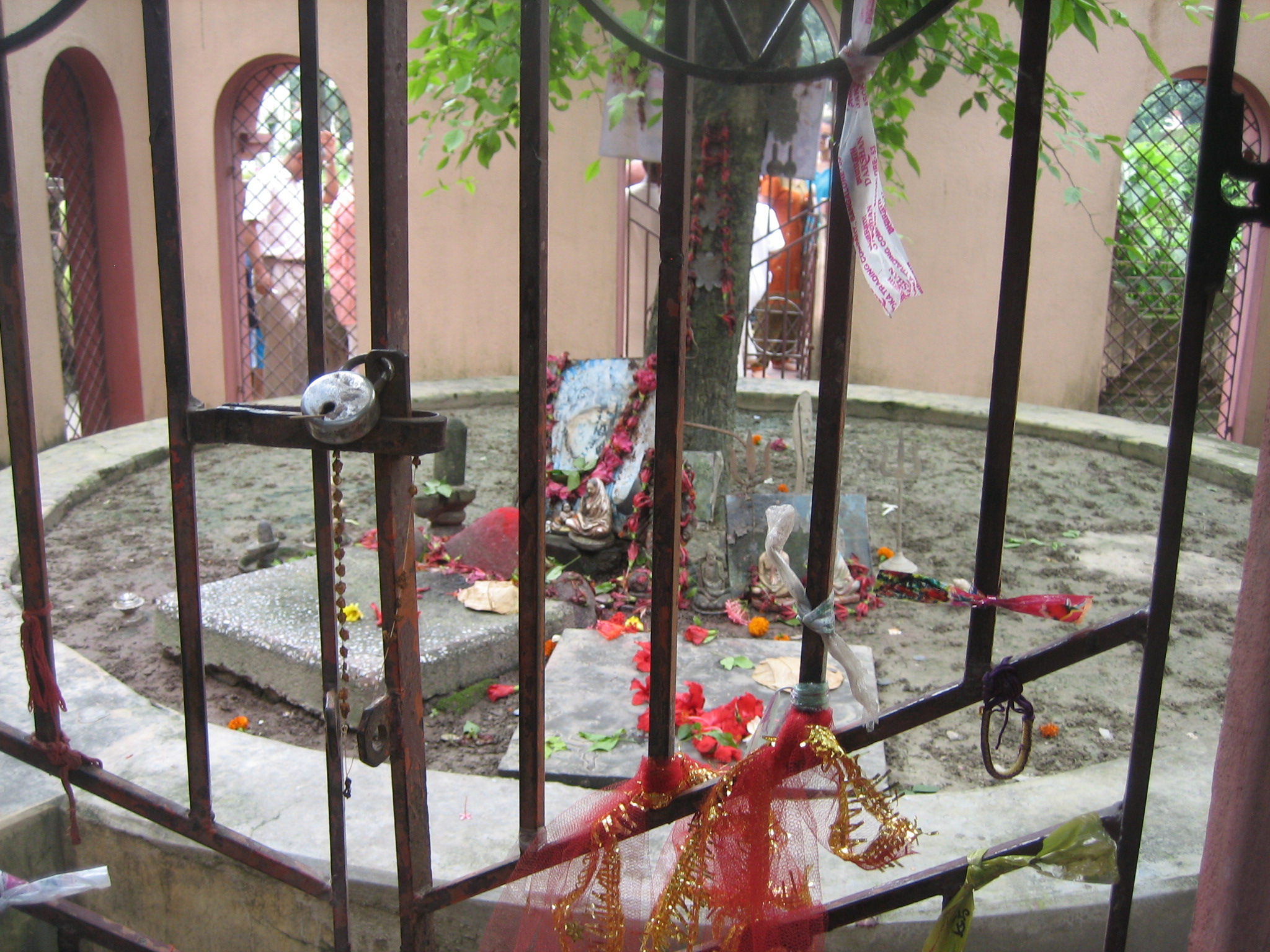
7 Old House-Mango Tree ppt 4 House - old-1-ppt 4a House-newer-1-ppt

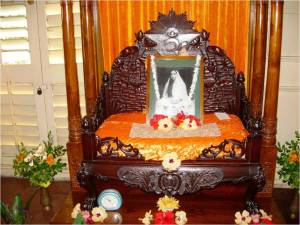
The house had four rooms on the ground level.  Holy Mother was very happy to see that she could stay in one of these four rooms and could serve Sri Ramakrishna.  She was also happy to find more freedom in moving around compared to the Shyampukur house.
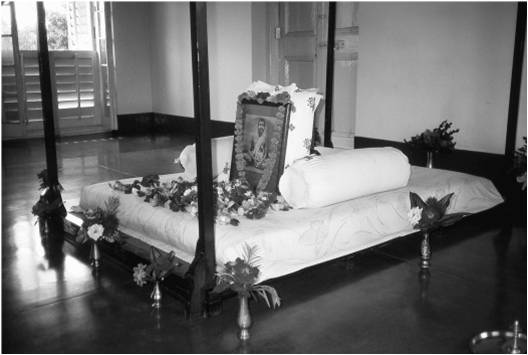
5 Holy Mother's Shrine 1st Floor ppt

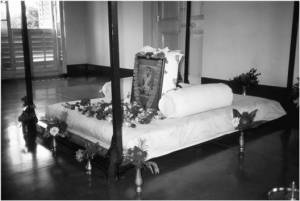
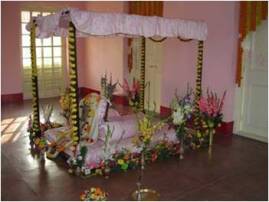
Younger devotees and other attendants were able to use one spacious room on the ground floor, while another room was used as their bedroom.  Sri Ramakrishna stayed in one of the two rooms upstairs.  The second room upstairs was used by Sri Ramakrishna for bathing and also by some attendants who would stay overnight to take care of Sri Ramakrishna’s needs.
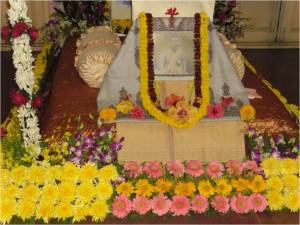
6 Shrine ppt 6a Shrine ppt 6b Thakur's Shrine 2nd Floor ppt

Narendra as a guide to the younger devotees:

Narendra encouraged younger devotees to stay at the Cossipore Garden House and serve their Master (Sri Ramakrishna).  The parents of the younger disciples were not happy about this.  But, because of their love for their Master and Narendra’s encouragement, they did not listen to their parents.  While they were not serving Sri Ramakrishna, Narendra kept them engaged in meditation, devotional singing, study and discussion of the scriptures and spiritual conversations.  Sri Ramakrishna’s pure and unselfish love and Narendra’s spiritually uplifting company and love developed a strong bondage among them and this helped them later to renounce everything to realize God and to do unselfish service to humanity.

Taking care of the expenses and other needs: 

The rent for the house was Rs. 80 per month, which was considered very high in those days.  Sri Ramakrishna was worried about the devotees. How would they be able to pay such a steep rent?  But a devotee, Surendranath Mitra, came forward and agreed to pay the whole rent.  Other householder devotees shared the other expenses including that for food and other things.  Latu Maharaj took care of the physical needs of Sri Ramakrishna.  Once all these things were settled, Sri Ramakrishna was relieved from these earthly worries.

Dispute and Girish Chandra Ghosh’s Solution:

One incident is noteworthy.  The young disciples of Sri Ramakrishna took the responsibility of serving the Master–buying groceries, almost every day reporting to doctors, running errands, and helping Holy Mother.  The householder disciples saw that the expenditure was increasing.  A few of them accused the young disciples for their carelessness and asked them to maintain an account book properly.  The young disciples were hurt and decided not to take any more money from the householders.  When the situation became tense, Girish Chandra Ghosh came up with a solution.  In front of everyone, he burnt the account book!  Then, he told the householder disciples to give whatever they could and he would make up for the deficit.  He told the young disciples not to worry and assured them that if needed, he would sell his house to pay for the expenses.

Initially, Sri Ramakrishna’s health improved a little, but later on his health deteriorated. His robust body began to break down, becoming emaciated as a skeleton.  Yet, his mind remained in high spiritual realm and he continued to guide Narendra and others in their spiritual path.

Transformation of Kalipad Ghosh:

Kalipada Ghosh was born in 1849 in Calcutta to a pious family devoted to Mother Kali.   As a boy Kalipada was full of energy and had many interests–ranging from music and singing to drama and even cooking.  Due to the family’s poverty, his father was forced to take him out of school when he was  in the eighth grade and found him a job as a shop assistant in the British paper firm of Messrs. John Dickinson and Company. Uneducated, his career prospects thus appeared unimpressive. However, his innate intelligence, diligence, and dedication soon captured the attention of his superiors, and with time Kalipada rose to a high position at the paper firm. His importance can be gauged from the fact that the watermark of the papers printed by the firm carried his bust as an imprint. As a result of falling into bad company, he developed a drinking habit, and began to mistreat his family.

He was a close friend of Girish Chadra Ghosh.  By seeing a great transformation in Girish Chandra Ghosh as a result of the company and grace of Sri Ramakrishna, Kalipad had a desire to be blessed by the Master.

On December 23, 1885, Sri Ramakrishna, being in a spiritual mood, touched Kalipad’s chest and said, ‘May your inner spirit be awakened.’  Then, stroking Kalipad’s chin, he said, ‘Whoever has sincerely called on God or performed his daily religious devotions will certainly come here (meaning to him).’  The Master’s blessing and unrestrained love that day made Kalipad a new person.  He gave up his bad habit of drinking and all interest in worldly things.

Holy Mother Narrate an Incident:

I was once climbing the steps, carrying a big bowl of milk.  I felt dizzy and fell down.  The entire milk spilt on the ground.  One of my ankles was badly sprained.  Naren and Baburam ran there and took care of me.  There was a great inflammation of the foot. The Master heard of the incident…..I had then a ring on my nose.  The Master touched his nose and made a sign of ring by making a circle with his finger and said, “Baburam, can you put her in a basket and carry her on your shoulder to this room?”  Naren and Baburam were convulsed with side-splitting laughter. Thus he used to joke with them.  After three days the swelling subsided.  Then they helped me to go upstairs with his meals.”

Yogin-ma narrated one incident about Holy Mother and Sri Ramakrishna:

“One day Holy Mother carried the Master’s food to his room, which was on the upper floor. The Master asked her, ‘Do you know how to play asta-kaste?’

Holy Mother said, ‘No.’

Sri Ramakrishna said, ‘If one can pair two checkers, the opponent cannot take them.  Likewise, one should unite oneself with the Chosen Deity and thus be rid of fear.  Otherwise, a ripe checker (one that is near the goal), if it is still single can be turned back.  If a person can move in this world with the Chosen Deity, like a paired checkers, he will be saved.’

As Holy Mother listened she continued with a small household task in which she had been engaged.  Suddenly the Master said jokingly, ‘Are you listening to me or not?’  Holy Mother was embarrassed.”

Molding Spiritual Character of Narendra:

Sri Ramakrishna told Narendra, “The Divine Mother has brought you into the world by force to do Her work.”

On another occasion Sri Ramakrishna told Narendra, “I leave them (the young disciples) in your care.  Love them intensely and see that they practice spiritual disciplines even after my death, and that they do not return home.”

Burning of Desires:

Swami Saradananda wrote this incident in his book, “Sri Ramakrishna and His Divine Play.” One night Narendra could not sleep.  He found Gopal and couple of young devotees awake.  He asked them to go for a walk with him in the garden.  As they walked Narendra said, “The Master’s disease is extremely serious. May be he has decided to give up his body.  Make your best effort to achieve spiritual enlightenment through service to him, and prayer and meditation while there is yet time.  If you do otherwise, there will be no end to your repentance after he passed away.  We waste our time with the foolish thought that we shall pray to God after finishing this duty, or practice spiritual disciplines after doing that.  Thus, we entangle ourselves in a net of desires.  Those terrible desires lead to destruction-death.  Shun those desires! Uproot them!”

He then sat under a tree and asked all to collect twigs lying around so that they could set a friendly fire (Dhoony).  He said that at this moment all the sadhus (renounced people) set up a dhoony and meditate.  Narendra told them to burn all their desires in this dhoony fire.  The younger devotees did this and they actually felt that their desires had been burnt and experienced a wonderful bliss within.  Around 4:00 a.m. they went to their beds.

During this time, Narendra was experiencing great turmoil in his personal life. He had to study law to support his mother and siblings and had to fight in court against his own relatives who were trying to take away their ancestral house.  In spite of all that, Narendra kept his spiritual level high and helped the younger disciples to do the same.

Narendra’s Spiritual Power and the Master’s scolding:

One night, on March 1886, Narendra asked his brother disciple Kali to touch his right knee, and then entered into deep meditation.  Kali’s hand began to tremble; he felt a kind of electric shock.  Afterwards Sri Ramakrishna rebuked Narendra for frittering away spiritual powers before accumulating them in sufficient measure.  He told Narendra that he had injured Kali’s spiritual growth.  After talking to Kali, Sri Ramakrishna found that the damage was not serious.

Narendra’s Desire for Samadhi & Sri Ramakrishna’s Guidance:

At the Cossipore Garden House, Narendra’s longing for the vision of God knew no limit.  One day, he asked Sri Ramakrishna for a boon to remain merged in Samadhi (complete absorption in God). He wanted to mediate for three or four days at a stretch, interrupting his meditation now and then only for a bite of food to preserve the body.  Sri Ramakrishna said, “You are a fool.  There is a stage higher than that.  It is you who sing: ‘O Lord! Thou art all that exists.”  Sri Ramakrishna wanted him to see God in all beings and to serve them with the spirit of worship.

One day, Narendra was meditating under a tree with Girish Chandra Gosh at the Cossipore Garden House.  The place was infested with mosquitoes.  Girish tried in vain to concentrate.  Casting his eyes on Narendra, he saw that Narendra was absorbed in meditation even though his body was covered by a blanket of insects.

Once, Narendra spent an entire night walking in the garden loudly repeating Rama’s name.

Narendra had special affection for Lord Buddha.  One day, he suddenly felt an intense desire to visit Bodh-Gaya, the place where Lord Buddha had attained enlightenment.  He left Cossipore with Kali and Tarak, two of his brother disciples.  After they meditated for long hours under the Bo-tree where Lord Buddha had attained enlightenment, Narendra was overwhelmed by emotions and wept profusely.  He embraced Tarak and told him that he had felt the presence of Lord Buddha and he had seen how Buddha’s noble life and teachings had influenced India.  When Narendra came back and talked to the Master, he realized that Sri Ramakrishna’s life and teachings were even more appropriate for the present-time.

On another occasion when Narendra repeated his desire for uninterrupted Samadhi, Sri Ramakrishna said, “Shame on you!  You are asking for such an insignificant thing.  I thought that you would be like a big banyan tree, and that thousands of people would rest in your shade.  But, now I see that you are seeking your own liberation.”  Realizing the greatness of Sri Ramakrishna’s heart, Narendra shed profuse tears.

One day the master, unable to speak even in a whisper, wrote on a piece of paper: “Narendra will teach others.” Narendra protested.  Sri Ramakrishna said, “But, you must.  Your very bones will do it.”

One day while absorbed in meditation, Narendra felt only his head and not the rest of his body.  He asked Gopal where his body was.  Gopal was afraid that Narendra was dying.  He went upstairs to Sri Ramakrishna and told him everything.  Sri Ramakrishna said, “Let him stay in that state for a while; he has teased me long enough for it (Samadhi).”  After a long time, Narendra regained his normal state.  After that, when he entered Sri Ramakrishna’s room, Sri Ramakrishna said to him, “Now the Mother has shown you everything.  But, this realization, like the jewel locked in a box, will be hidden away from you and kept in my custody.  I will keep the key with me.  Only after you have fulfilled your mission on this earth will the box be unlocked, and you will know everything as you have known.”

A short while before Sri Ramakrishna passed away, he called Narendra to his room and asked him to sit by his bedside.  Then he intently looked at Narendra and went into deep meditation.  Narendra felt a subtle force, resembling an electric current, entering his body.  He gradually lost his consciousness.  After some time he regained normal consciousness and found that Sri Ramakrishna was weeping.  Sri Ramakrishna said, “O Naren!  Today I have given you everything I possess. Now I am no more than a fakir, a penniless beggar.  By the power I have transmitted to you, you will accomplish great things in the world, and not until then will you return to the source whence you have come.”

Sri Ramakrishna’s Highest State:

Because of his throat cancer, Sri Ramakrishna could not eat anything.  Narendra asked Sri Ramakrishna to pray to Mother Kali so that he could eat some food.  Sri Ramakrishna told Narendra that he could not do this; he had never asked Mother Kali for any worldly favor.  Narendra told him his devotees want his body to be alive, so he had to ask Mother Kali on behalf of his devotees and not for himself.  Sri Ramakrishna could not refuse his beloved disciple’s request.  A little later in a sad voice Sri Ramakrishna told Narendra, “Yes, I told Mother Kali that I could not swallow any food on account of the sore in my throat, and asked Her to do something about it.  But the Mother said, pointing to you all, ‘Why, are you not eating enough through all these mouths?’ I felt so humiliated that I could not utter any word.”  This was the highest example of realizing “Oneness of Existence”.

Caring for young disciples:

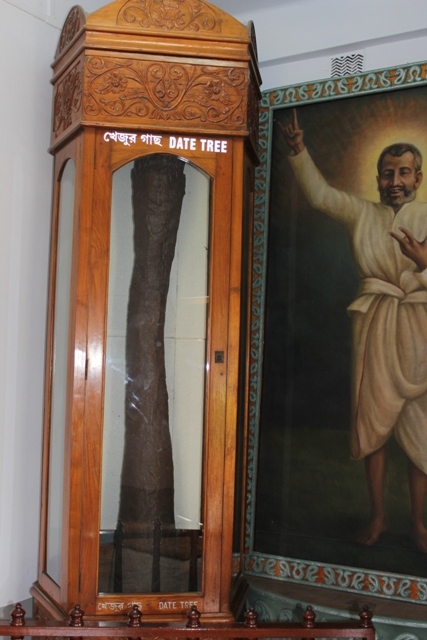
Once, a few young devotees decided that they would tap a date palm in the garden and drink its fresh juice.  Before the young devotees approached the date tree, Sri Ramakrishna swiftly got out from his bed and ran downstairs to the tree.  Holy Mother was surprised to see Sri Ramakrishna doing this since he could hardly walk in the room.  When Sri Ramakrishna returned Holy Mother asked the reason for him going downstairs.  Sri Ramakrishna said that there was a cobra living under the date tree.  He went there and asked the cobra to leave the garden.  He made sure that the cobra left before the young devotees went near the tree.

8 Date Tree

January 1st Incident:

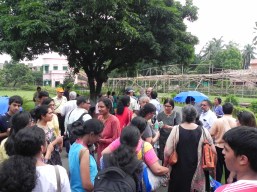
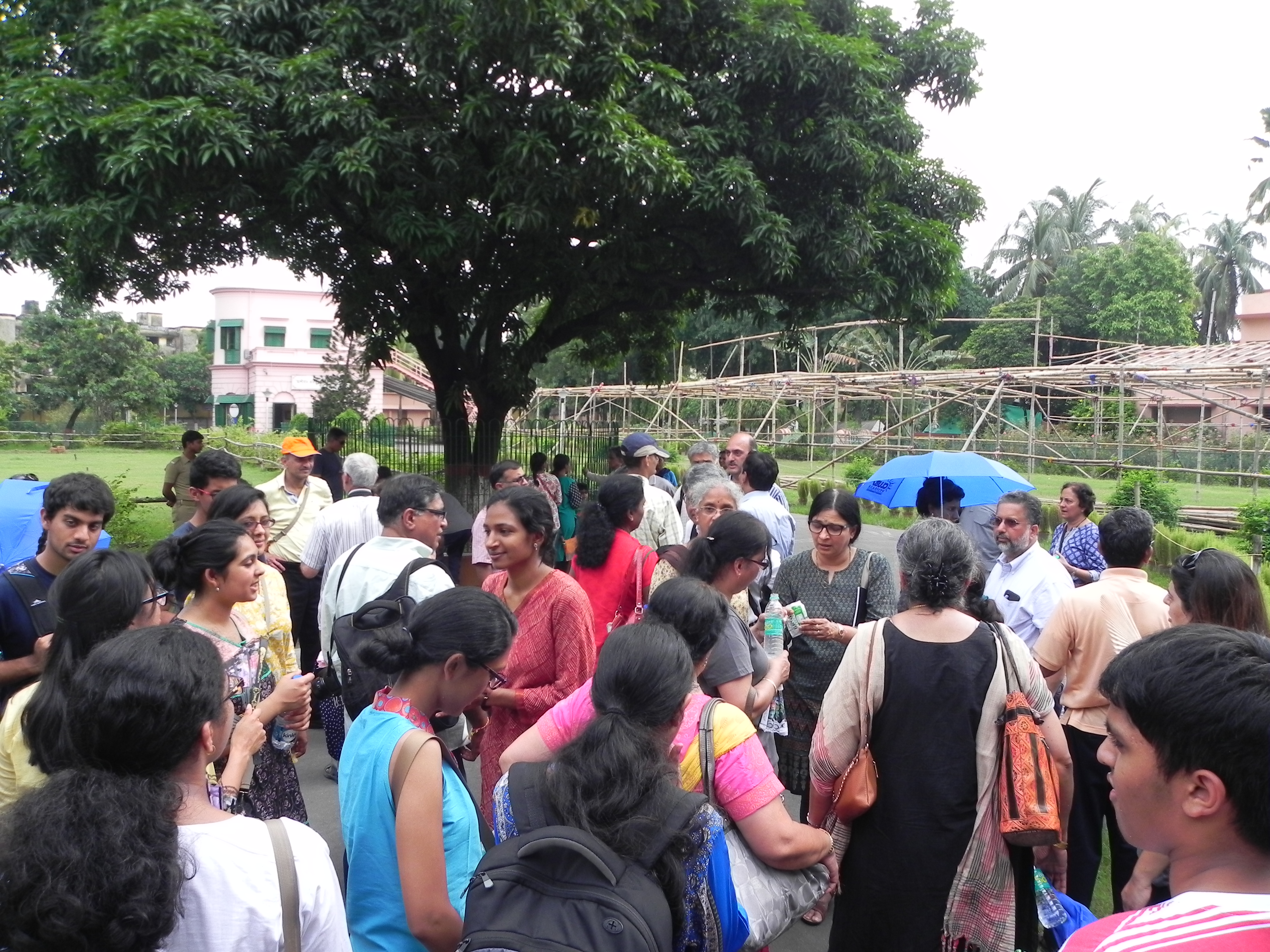
On January 1, 1886 the Master felt better and expressed a desire to walk in the garden for a while.  Because of the holiday, the householder devotees began arriving at the Cossipore Garden House after midday–individually and in groups.  The Master came down around 3:00 p.m.  There were more than 30 people talking among themselves inside the house and sitting under the trees in the garden.  When they saw Sri Ramakrishna coming down, they all stood reverently and then bowed down to him.
7 Old House-Mango Tree ppt

7a Mango Tree -F 7b Maango Tree - F2

Before anyone had spoken a word, the Master addressed Girish Chandra Ghosh, asking him, “Girish, what have you seen and understood (about me) that makes you say all these things (that Sri Ramakrishna is an Incarnation of God) to everyone and everywhere?”  Girish Chandra Ghosh knelt down at the Master’s feet.  Then with folded hands he looked at Sri Ramakrishna and said in a voice choked with emotion:  “What more can I say of Him?  Even the sages, Vyas and Valmiki, could find no words to measure His glory!”  Girish Chandra Ghosh’s sincere faith expressed in those words touched the heart of the Master.  While looking at Girish he said: “What more can I tell you?  I bless you all.  May you all be illumined!” Sri Ramakrishna went into ecstasy.

The selfless and profound blessing touched the devotees deep within their hearts, and with great joy they said, “Victory to Sri Ramakrishna!”  One by one they bowed down to Sri Ramakrishna and he in return blessed all of them with his divine touch.  The devotees felt that they were spiritually uplifted by his blessings.

The householder devotees felt that on that day (January 1, 1886) the Master became “Kalpataru” (wish fulfilling tree).  The monastic disciples who were busy cleaning up Sri Ramakrishna’s bed and room felt that on that day the Master manifested his divine nature and made everyone fearless.

Incarnation of God:

Two days before Sri Ramakrishna left his body, Narendra was standing by his bedside.  A thought flashed in the mind of Narendra, ‘Was the Master really an Incarnation of God?’  He told himself that in this excruciating pain of the throat cancer, if the Master declared himself as an Incarnation of God, then only would he would believe it.  Sri Ramakrishna read his mind and said, “O my Naren, are you still not convinced?  He who in the past was born as Rama and Krishna is now living in this body as Ramakrishna-but not from the standpoint of your Vedanata.”

Holy Mother’s Austerities for Sri Ramakrishna:

Since Sri Ramakrishna’s health was deteriorating quickly, Holy Mother decided to seek divine help.  She went to the famous Tarakeswar Shiva Temple with Sri Ramakrishna’s niece and a maidservant.

Holy Mother described her experience in her own words, “I went to Tarkeswar and lay myself down before Lord Shiva without food and drink for two days.  I prayed and kept vigil, but got no response from the Lord.  On second night I was startled by a sound – a cracking sound as if someone were striking a heap of baked earthen pots with a heavy cudgel. I got up and this thought came to my mind: “Who is one’s husband?  Who are your relatives?  For whose sake am I about to give up my life?  All my attachments were completely cut asunder, and my mind was filled with renunciation. I groped my way through the darkness to the back of the temple, where the holy water offered to Shiva was accumulated in a basin.  I splashed that water on my eyes and face and drank it.  My throat was dry because I had been fasting.  I felt refreshed. Next day, I returned to Cossipore.  The moment the Master saw me, he asked, “Well, did you get anything?”  Then flexing his right thumb, he said, “Nothing is real. Isn’t that so?””

Last Instructions to Holy Mother:

(1)  How to live:  A few days before his passing, Sri Ramakrishna told Holy Mother, “Let me tell you something.  Do not stretch out your hand to anyone, even for a penny.  You will not lack simple food and clothes. If you hold your hand out to anyone, remember, you will sell him your head also. If it is absolutely necessary, you may beg your food, but never live in anyone else’s house.  Devotees may welcome you in their houses with great respect and affection, but never allow your hut in Kamarpukur to fall into despair.

Please stay in Kamarpukur.  Grow some spinach and eat that spinach with rice.  Chant name of God.”

(2)  You have to do many things:  One day Holy Mother knew that there is something in Sri Ramakrishna’s mind.  She asked, “Please tell me what is in your mind?”

He pointed to his body and said, “Wouldn’t you do anything?  Must this person (meaning himself) have to do everything?”

Holy Mother said, “But, what can I do?  I am a mere woman.”

Sri Ramakrishna said, “No, no.  You have to do many things.”

(3)  Siddha Mantras:  One day, Sri Ramakrishna taught Holy Mother eight mantras and said, “These are all siddha mantras (mantras for attaining illumination).  Please teach these mantras to those who come to you for initiation. Those who receive one of these mantras will have the vision of their Chosen Deities during their life time or at least at the time of death.  Later many people will come to you for initiation.”

Last Minutes of Sri Ramakrishna:

On August 15, 1886, Holy Mother had some bad omens.  She recalled: “On that day everything was topsy-turvy beginning in the morning.  I was cooking ‘khichuri’ for the Master’s disciples and it burnt at the bottom.  I served the top portion to them and we ate at the bottom portion.  After my bath, I hung my red-bordered sari outside to dry in the sun and someone stole it.  I tried to lift the earthen water jar and it slipped from my hand and broke into pieces.”  We can understand Holy Mother’s state of mind during that time.

At the end of the day when Holy Mother and Lakshmi went to Sri Ramakrishna’s room, he said in a feeble voice: “I am glad you are here.  I feel as if I am going to a faraway country across water-very far away.”  Holy Mother burst into tears.  The Master consoled her, saying: “Why should you feel troubled?  You will live as you are living now.  They (meaning Narendra and others) will do for you as they are doing for me.  Look after Lakshmi and keep her with you.”

At midnight he summoned Naren to his bedside and gave him the last instructions.  The disciples stood around him.  On August 16, 1886, at two minutes past one in the early morning, Sri Ramakrishna uttered three times, in a ringing voice, the name of his beloved Mother Kali and gave up his body.

After the cremation ceremony when Holy Mother was putting on the signs of a Hindu widow, Sri Ramakrishna appeared to her and said, “I am not dead. I have just moved from one room to another.”

Beginning of Ramakrishna Order of Monks:

Every year during “Makar Sankrinti” (an auspicious day for Hindu when sun is in a certain position -usually it is around January 14th) monks and pilgrims from all over India go to Gangasagar, the confluence of the Ganga and the Bay of Bengal, for a holy bath.  A disciple of Sri Ramakrishna known as “Elder Gopal” (Senior Gopal) wanted to acquire virtue by offering clothes to holy people on this day.  He bought 12 pieces of ochre clothes and 12 rosaries for this purpose.  When Sri Ramakrishna heard this, he told Senior Gopal: “You will attain a thousand times more virtue if you offer these to my children (the young disciples who wanted to renounce the world)…Where else will you find such all-renouncing monks?”

Senior Gopal was convinced. On January 12, 1886 (Makar Sankranti) senior Gopal gave 12 ochre clothes and rosaries to Sri Ramakrishna, who after blessing them, distributed them to the 11 young disciples, namely Narendra, Rakhal, Niranjan, Baburam, Shashi, Sharat, Kali, Jogin, Latu, Tarak, and Gopal.  He kept the 12th set for Girish Chandra Ghosh.  Thus, Sri Ramakrishna initiated these eleven young disciples into monastic life, and thus himself laid the foundation of the future Ramakrishna Order of the monks.

In order to have an experience of being monks, Sri Ramakrishna asked young disciples to go out and beg for their food from houses as the traditional monks did.  It was tough for these youngsters who were born in upper or middle class families and had never begged for anything.  Narendra and a couple of youngsters decide to follow the command of Sri Ramakrishna.  First, they went to Holy Mother and begged their food.  Holy Mother was taken by surprise and then she gave them handful of cooked rice.  When they begged for food outside the Cossipore Garden House, they had mixed responses.  Some gave food with reverence while some became angry on them for begging.  Thus, in all possible ways, Sri Ramakrishna trained them to be monks.
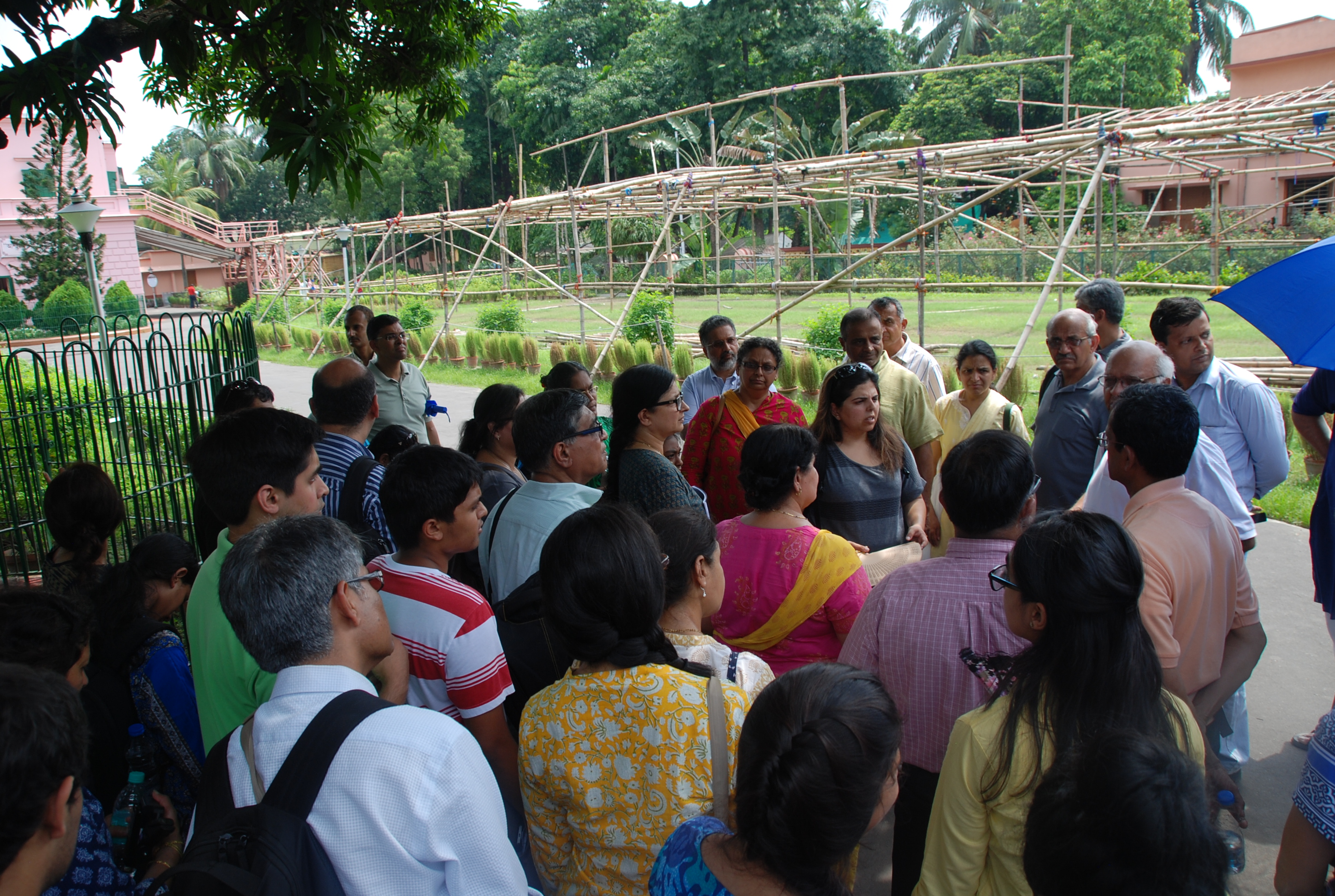
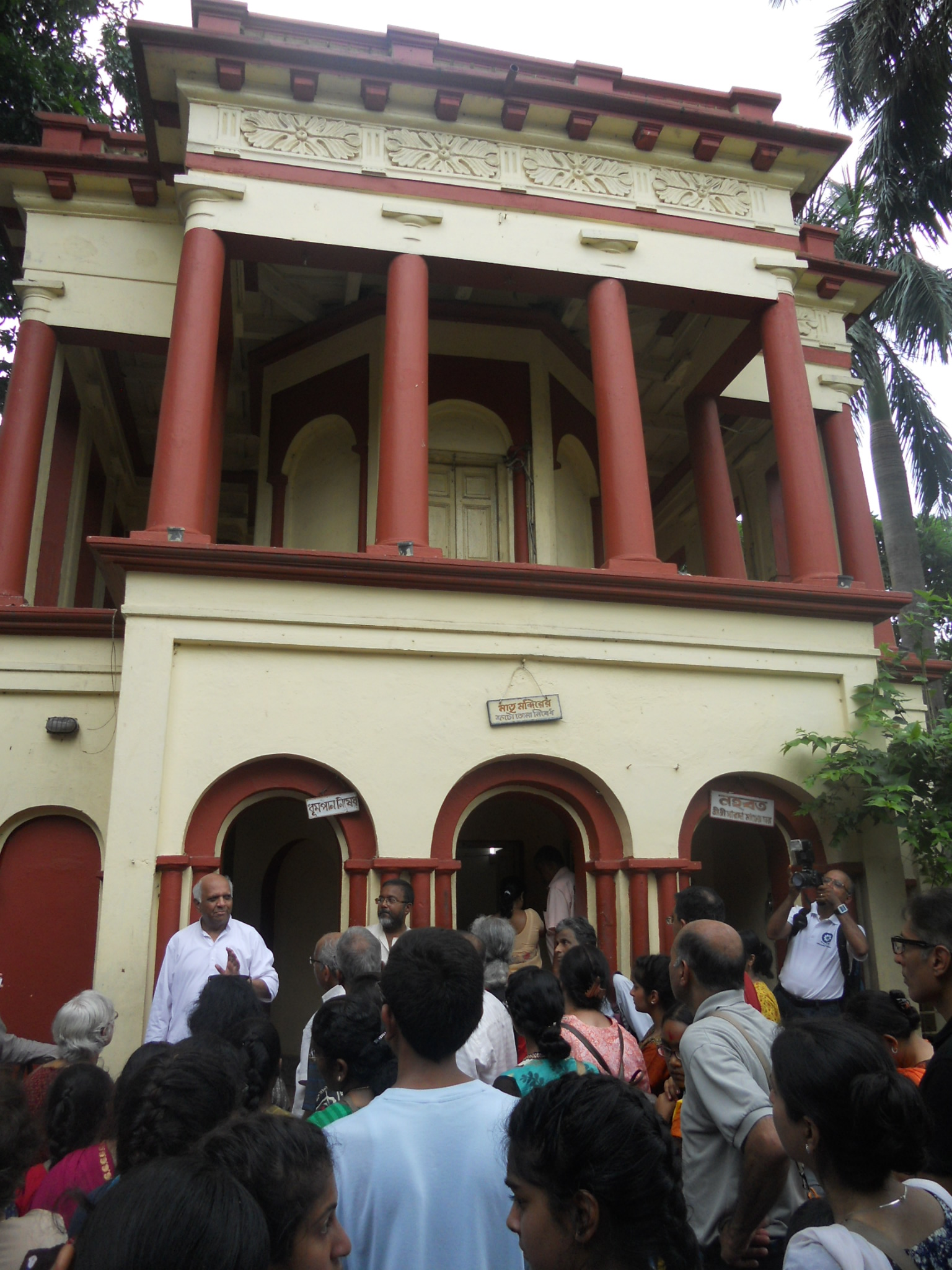
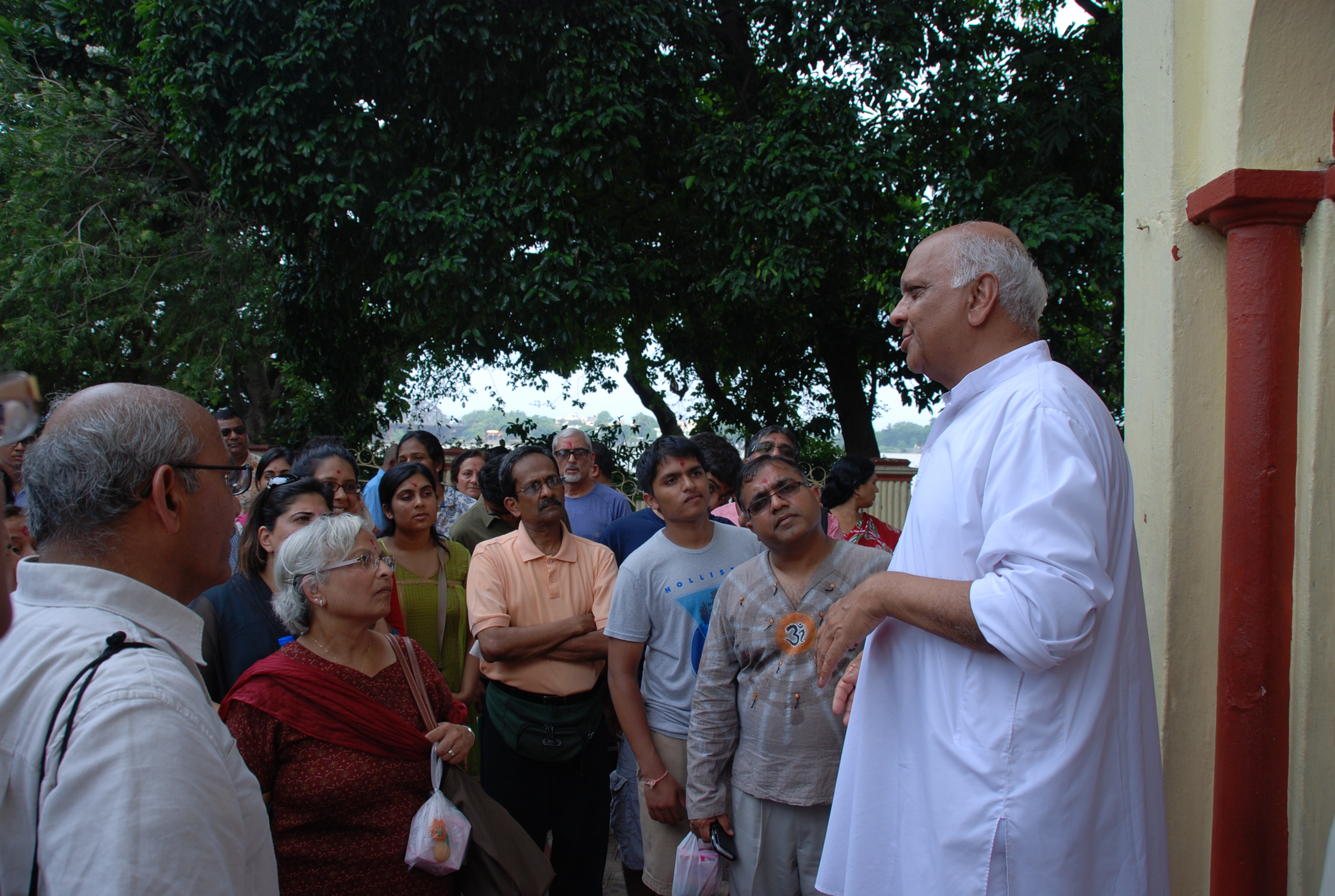
7c Talk

(Thanks to Arundhathi Johri and Kanna Pichappan for writing the original report, Nisha Parikh for editing this post and Deba Uncle for providing the necessary information needed to write this post.)
Belur Math Pilgrimage – 2015, Day -2 Morning

August 4, 2015

Dakshineswar

Miracle:

Welcome to Day 2 of our pilgrimage! By God’s grace, today was another beautiful, sunny day – a perfect day to resume our spiritual pilgrimage.

Breakfast and Bus-ride

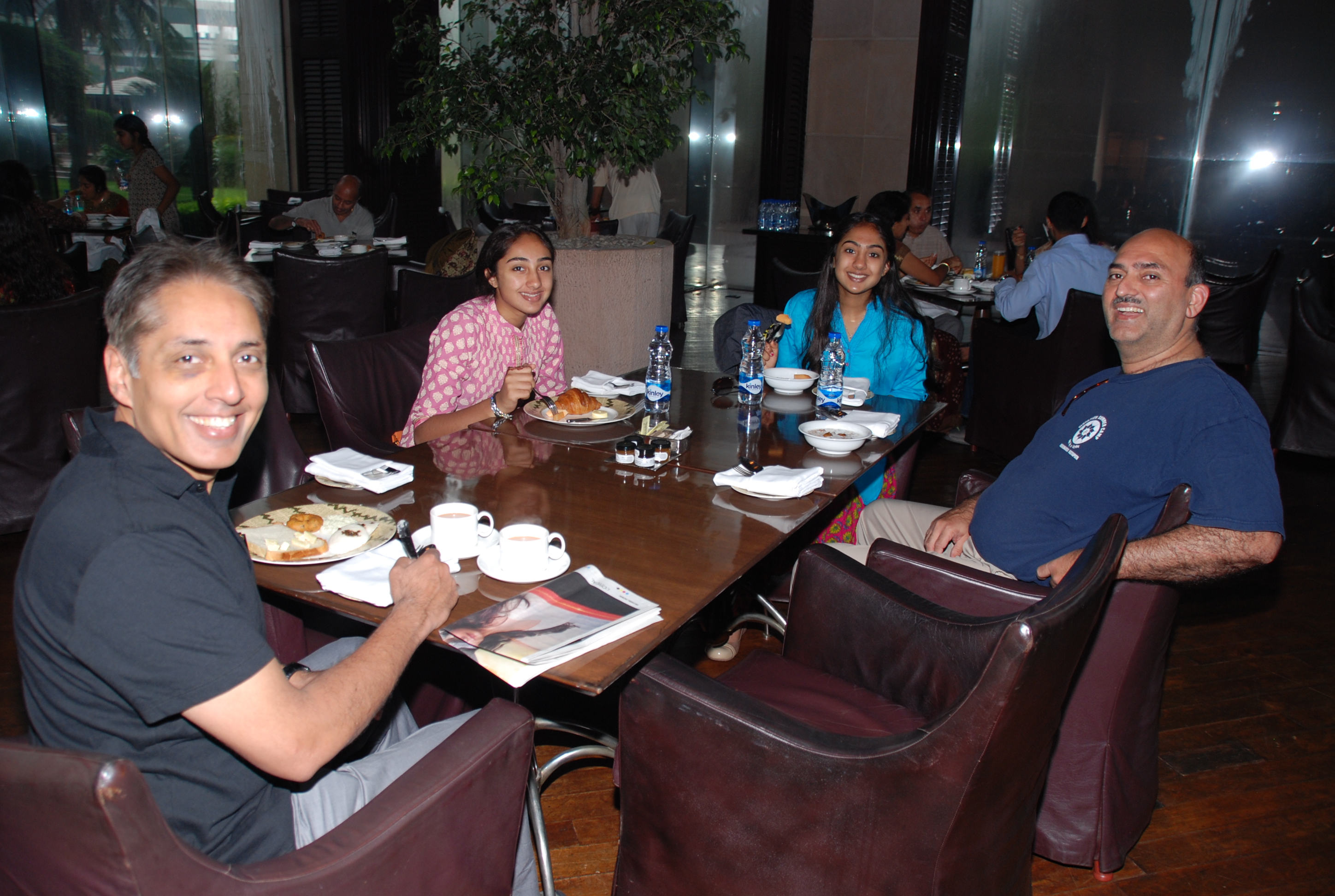
Our morning began early at 5:30 a.m. We all met at our breakfast locataion in the hotel – “Guchhi.”  A variety of items were presented for breakfast by the Hotel Hyatt including Idlis and Dosas, which were made at the premises upon request.

Breakfast - 1 Breakfast - 2

Breakfast - 3 Bus going to Dakshineswar

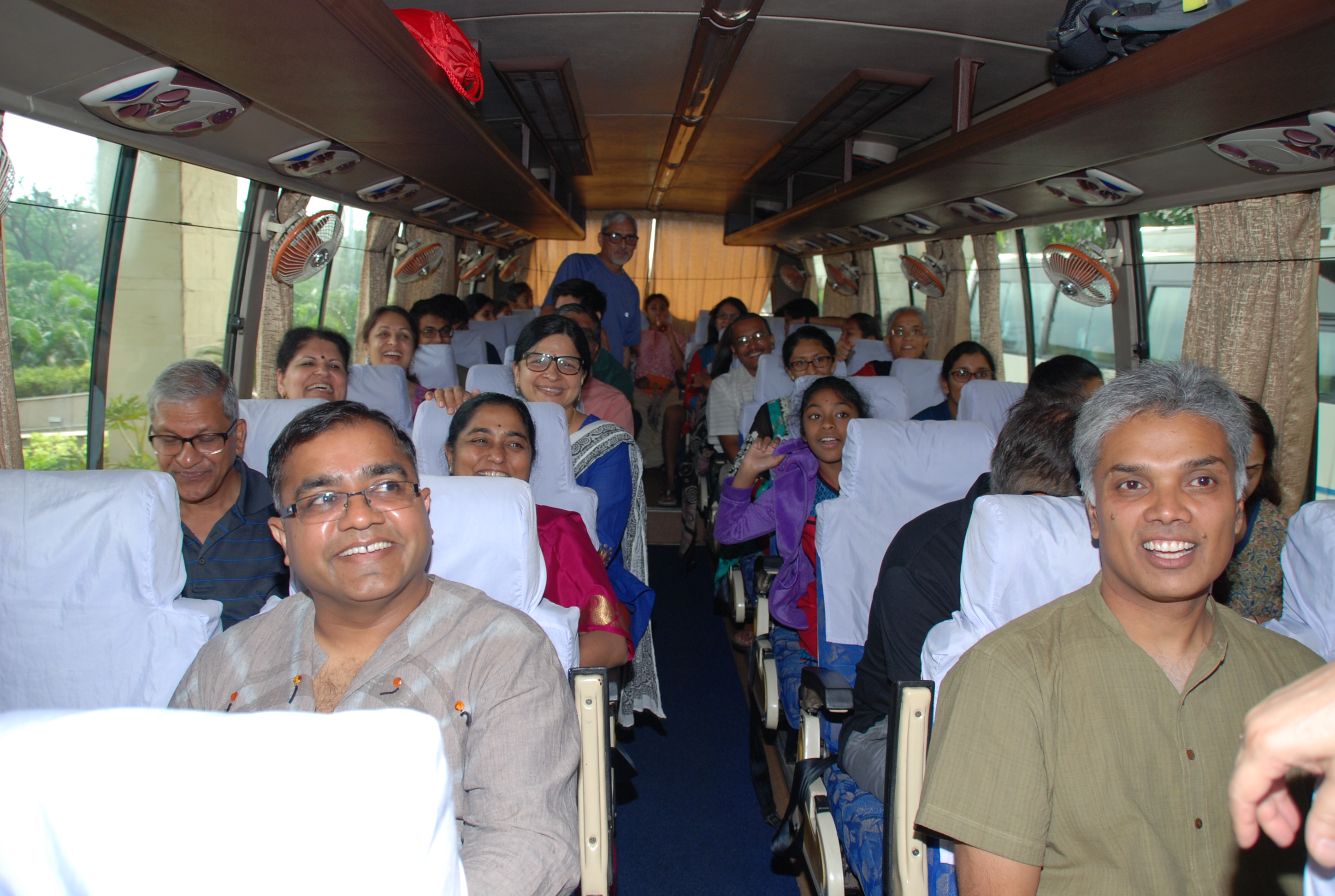
After a delicious breakfast, we embarked on our journey.  Our bus-ride started with five “Jai’s” (victory) to Sri Guru Maharaj (Sri Ramakrishna), Mahamayi (Holy Mother Sri Sarada Devi), Swamiji Maharaj (Swami Vivekananda), Gangamayi (Mother Ganga) and Sab-santan (all saints).  It was followed by the Sri Ramakrishna Suprabhatam and our Vidyapith’s Morning Prayer.  This daily prayer made our early morning bus rides serene and holy.

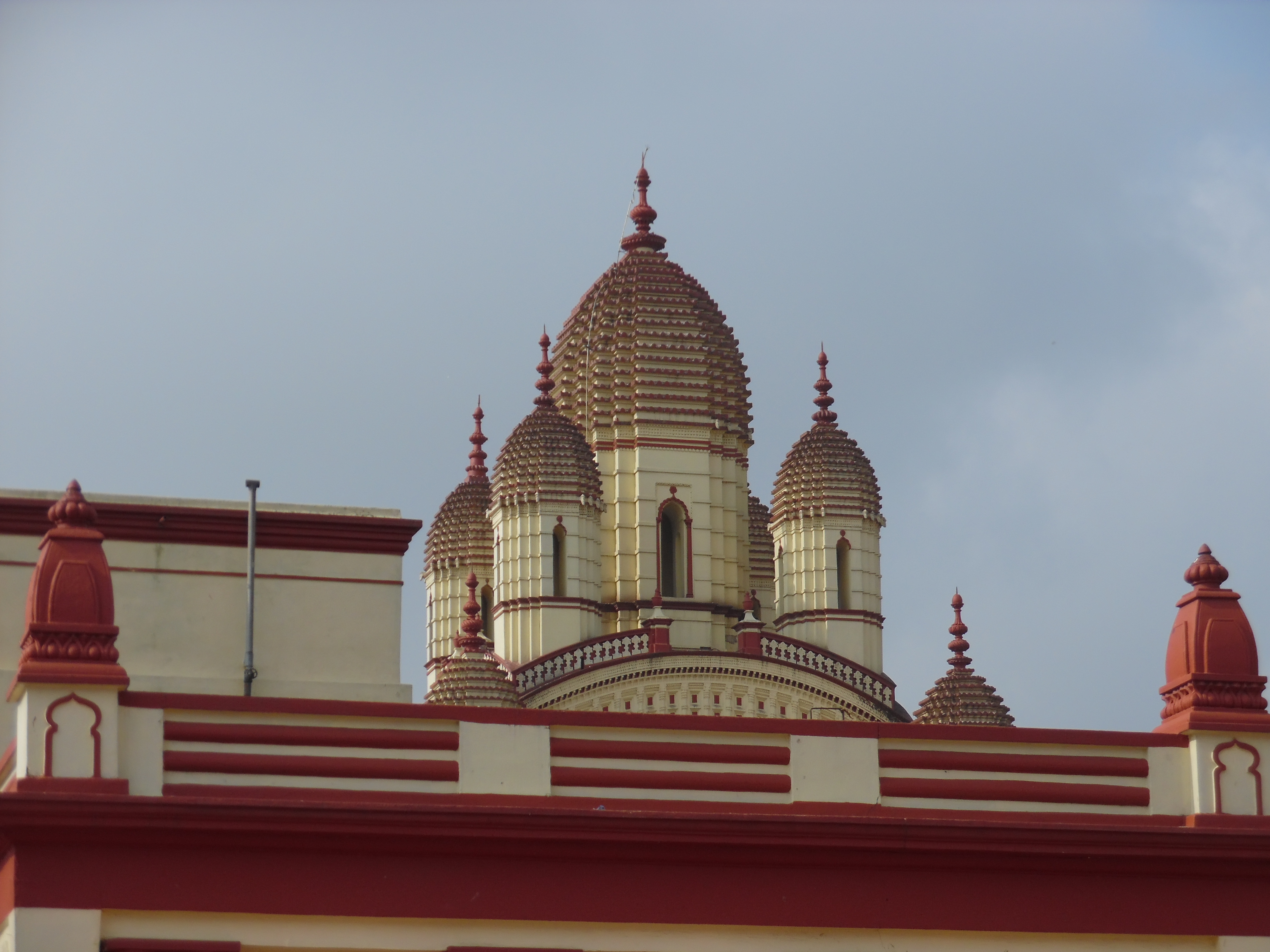
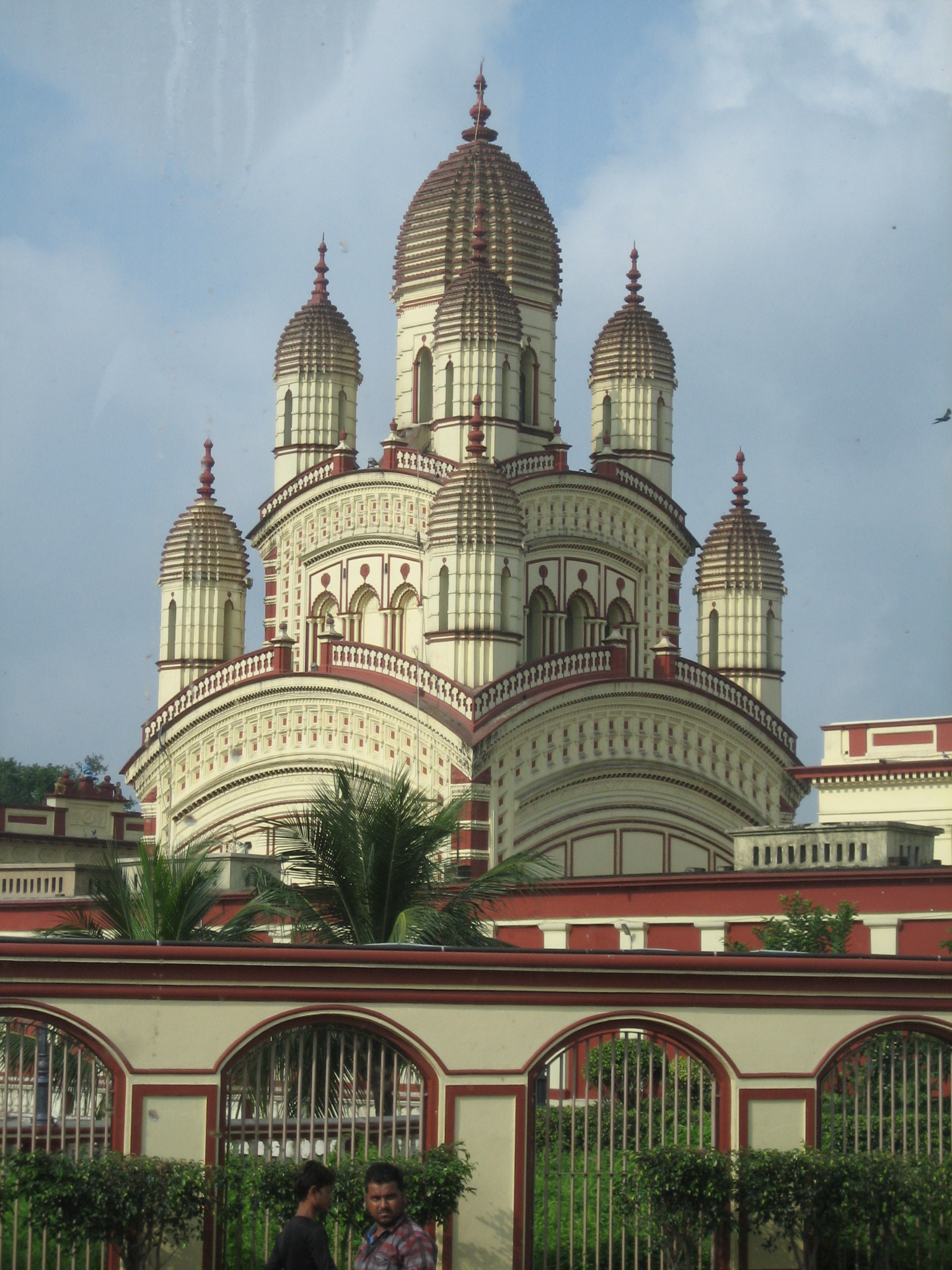
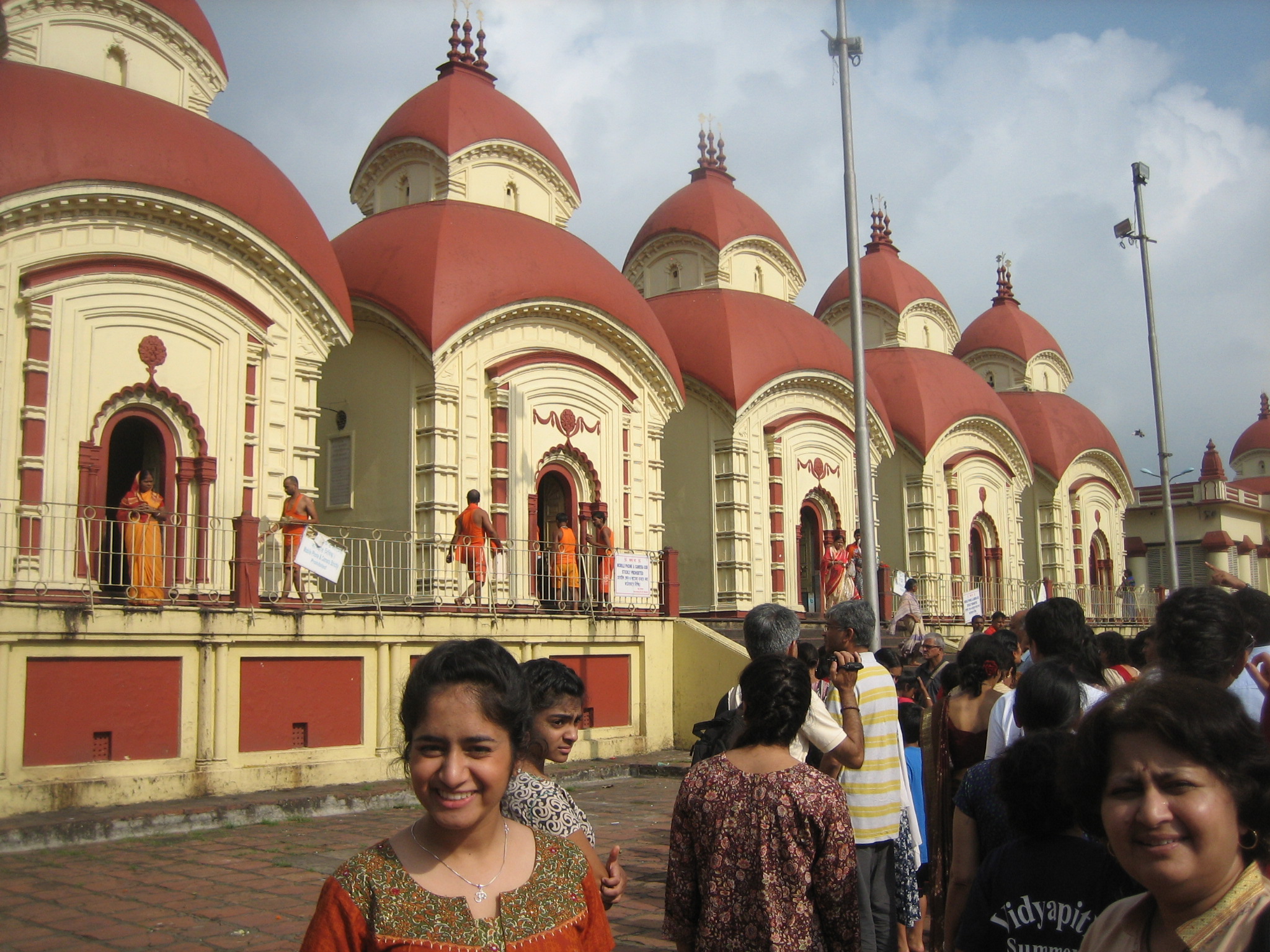
Our bus-ride was smooth and by 7:15 A.M., we were greeted by the breathtaking views of the Dakshineshwar Temple.

Picturesque Kali Temple - 2 Picturesque Kali Temple

We were all eager to visit this special place – “Dakshineswar.” In Vivekananda Vidyapith, we had read about Dakshineswar in books and we had heard about all the important events that had happened there, but now we were going to be in all of these places. Many pilgrims were visiting it for the first time.  They had an extra excitement.

Dakshineswar is a place where

– A village boy, Gadadhar of Kamarpukur, became Sri Ramakrishna Paramahansa.

–  Sri Ramakrishna was going to give up his life for a vision of Mother Kali.  Mother Kali granted his wish and he had her vision.

– Sri Ramakrishna did severe spiritual practices in areas including Panchavati, Panchamundi, Totapuri Hut and Kali Temple

– Mathurbabu saw Sri Ramakrishna as both Mother Kali and Lord Shiva

– Swami Vivekananda came as the young boy Narendra and asked Sri Ramakrishna, “Sir! Have you seen God?”  The answer of Sri Ramakrishna changed the life of Narendra for the good of humanity.

– M. (Sri Mahendranath Gupta) saw Sri Ramakrishna first time – a life-changing moment.  M. preserved the conversations of Sri Ramakrishna in the famous book “The Gospel of Sri Ramakrishna.”.

– Holy Mother lived for several years.  She did intense spiritual practices.  She took care of all the needs of Sri Ramakrishna.  She also lovingly fed all the young devotees of Sri Ramakrishna and bound them with her love.

– Rakhal, Tarak, Baburam, Latu, Sarad, Yogen, Shashi, and many other direct disciples of Sri Ramakrishna received their spiritual guidance.

These are only a few of the many significant events that occurred at Dakshineshwar.

At the Entrance:

Getting off the bus - going to Dakshineswar Getting off from bus - going to Dakshineswar - 2

Entrance of Dakshineswar - 3

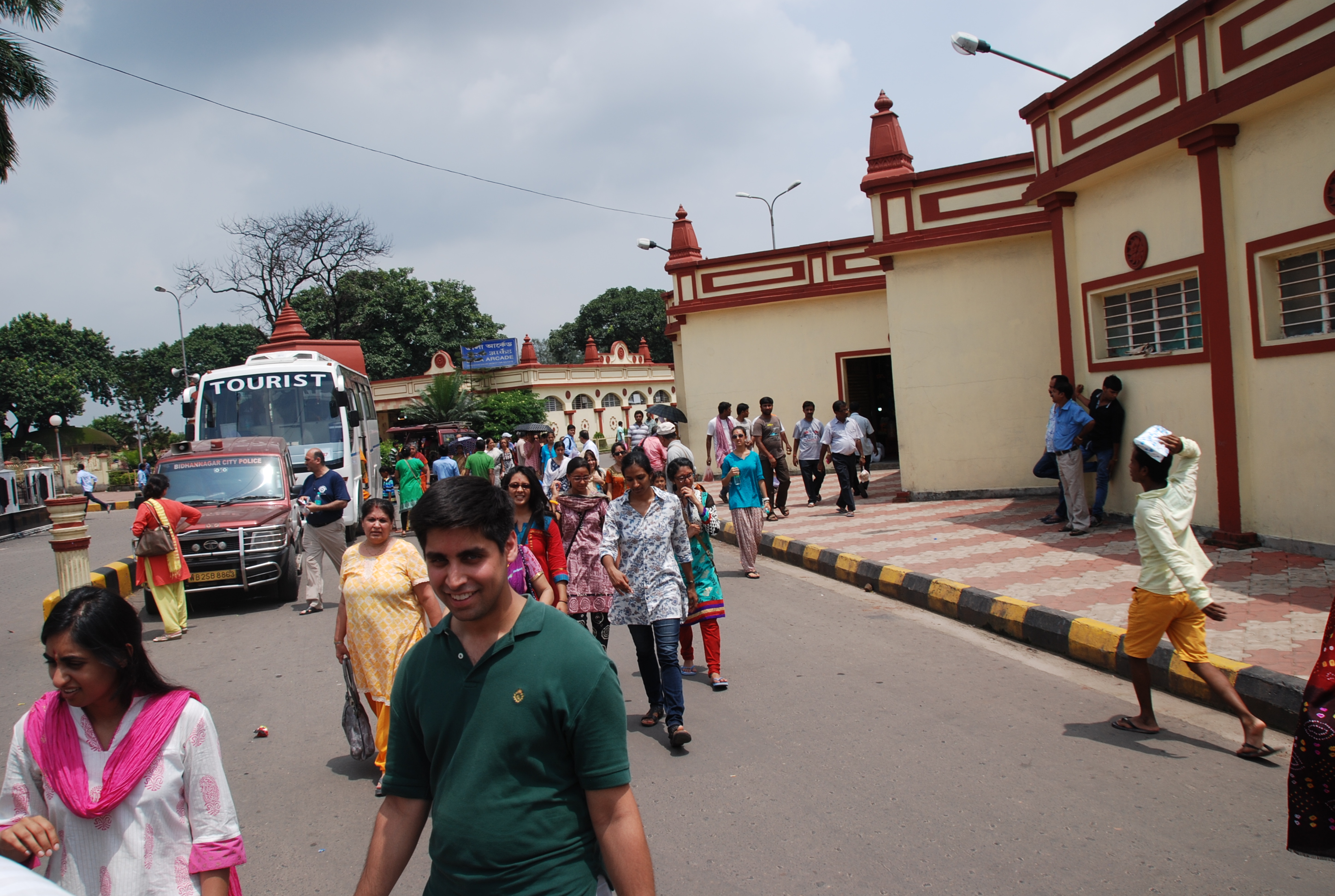
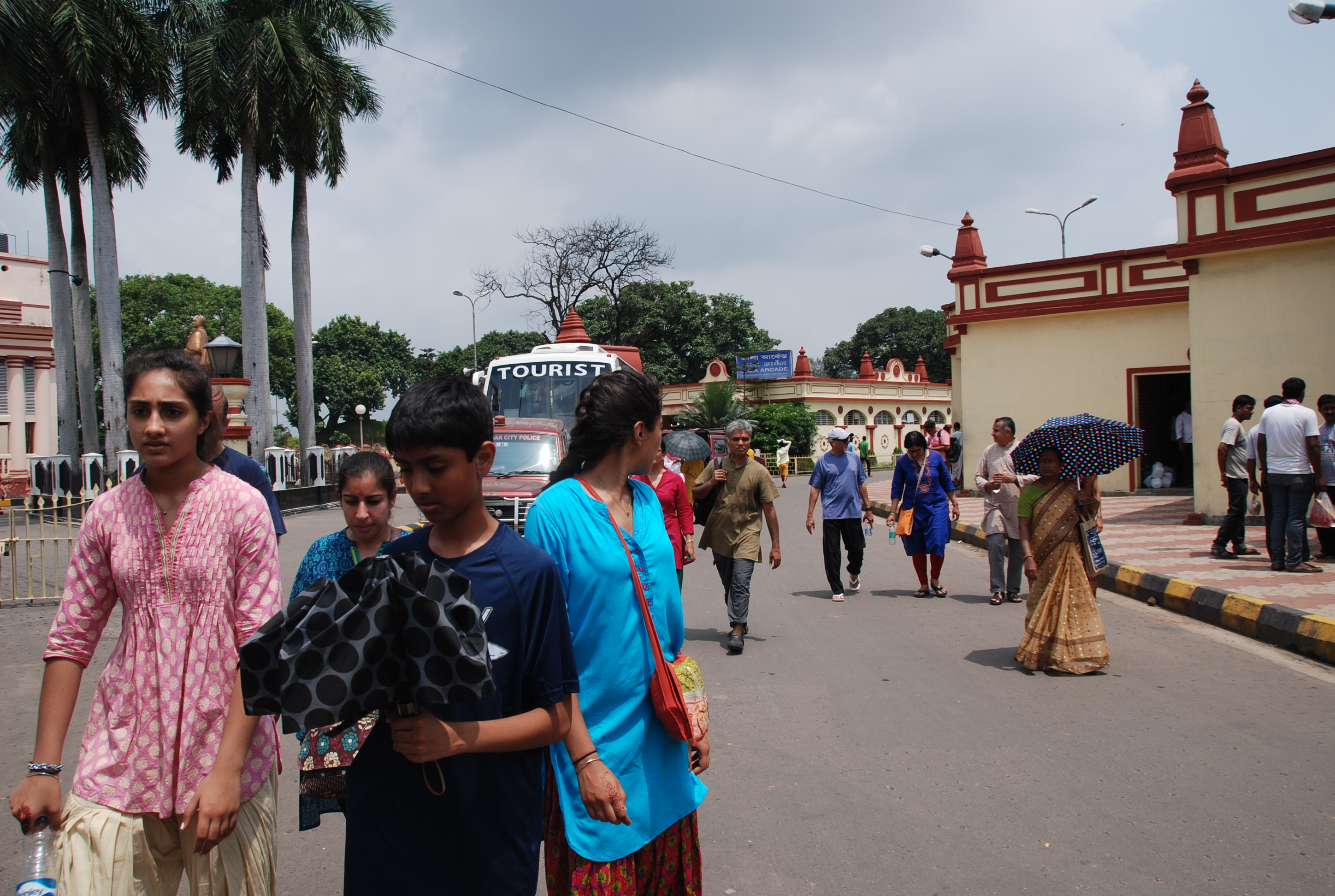
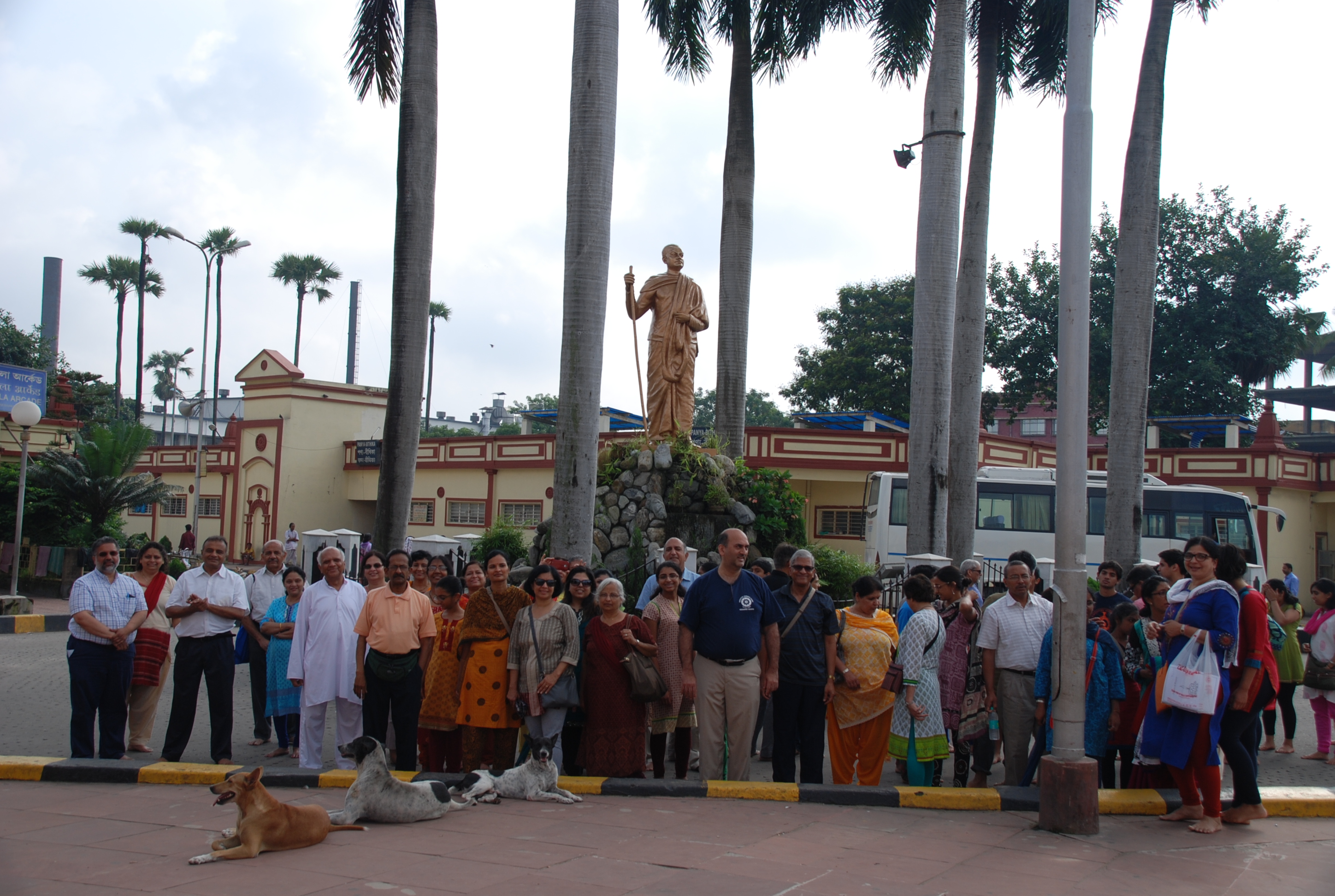
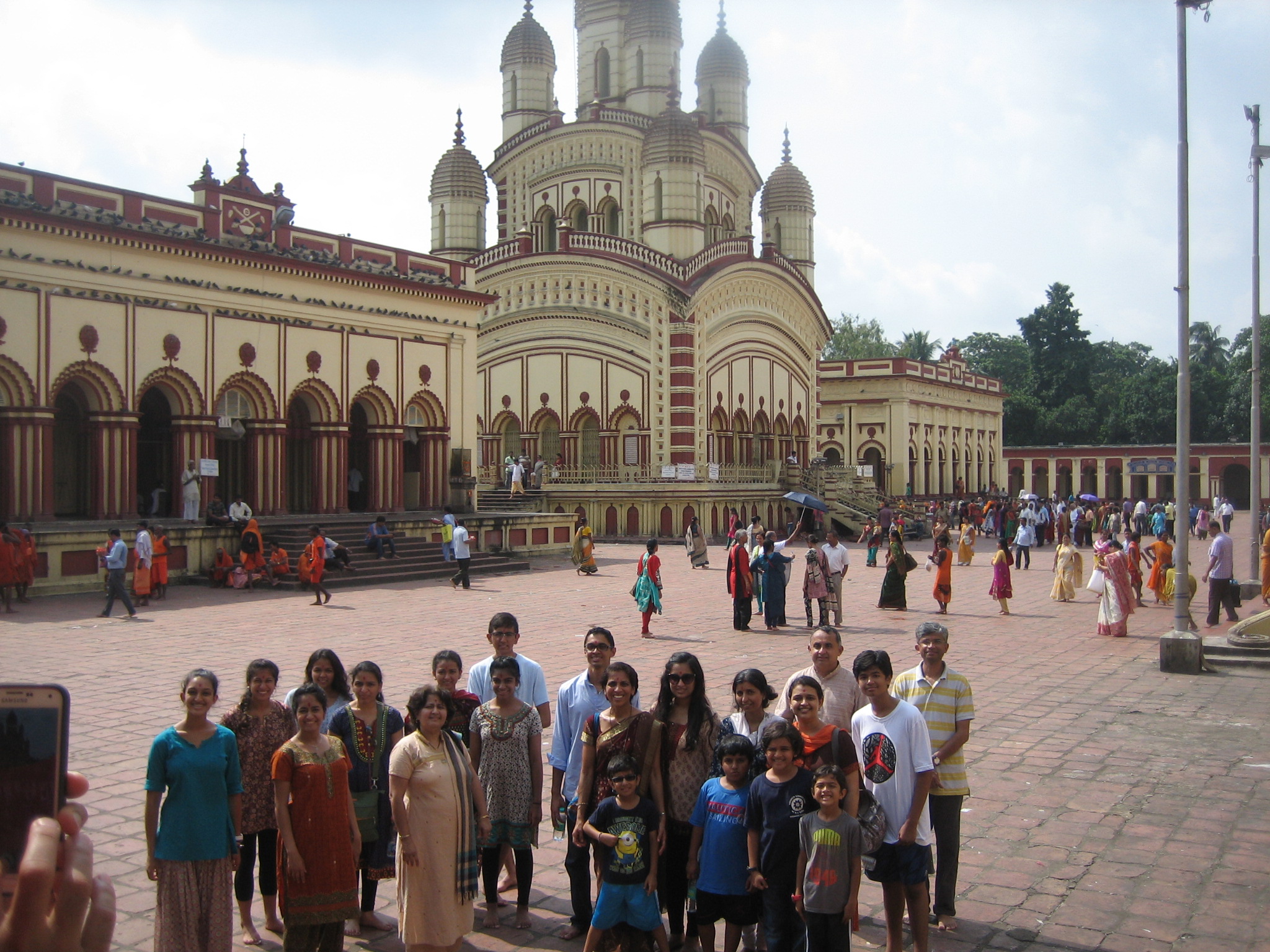
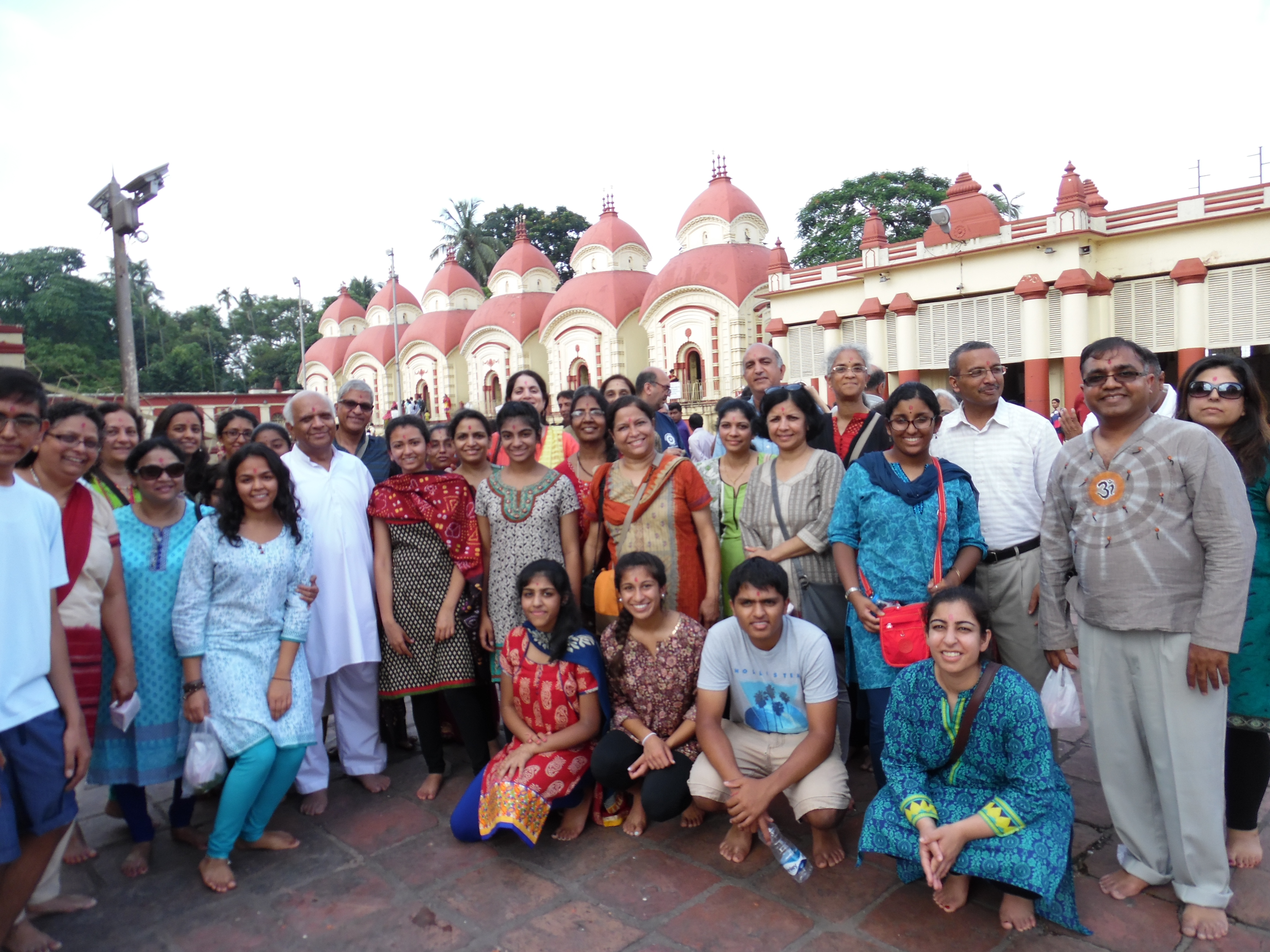
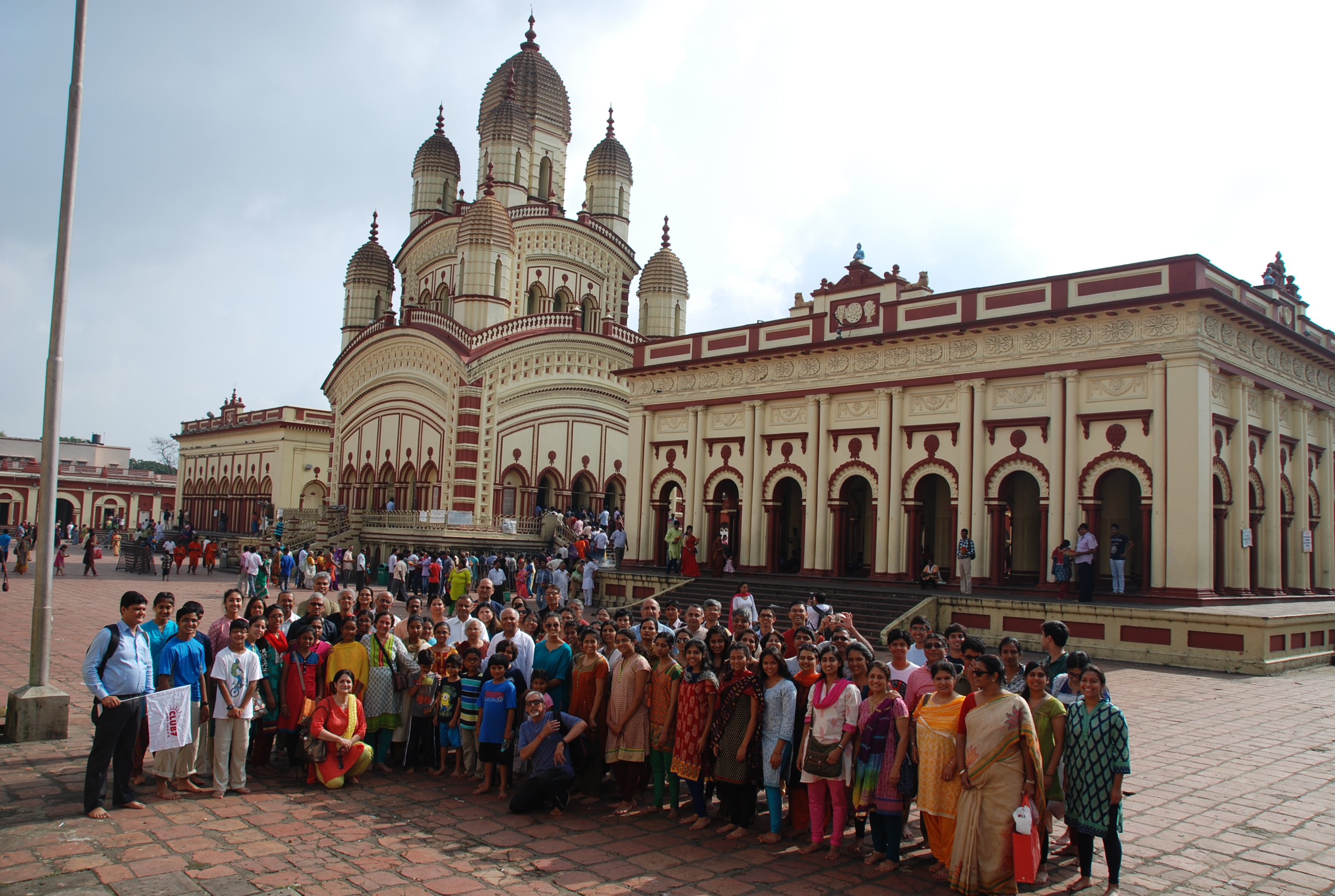
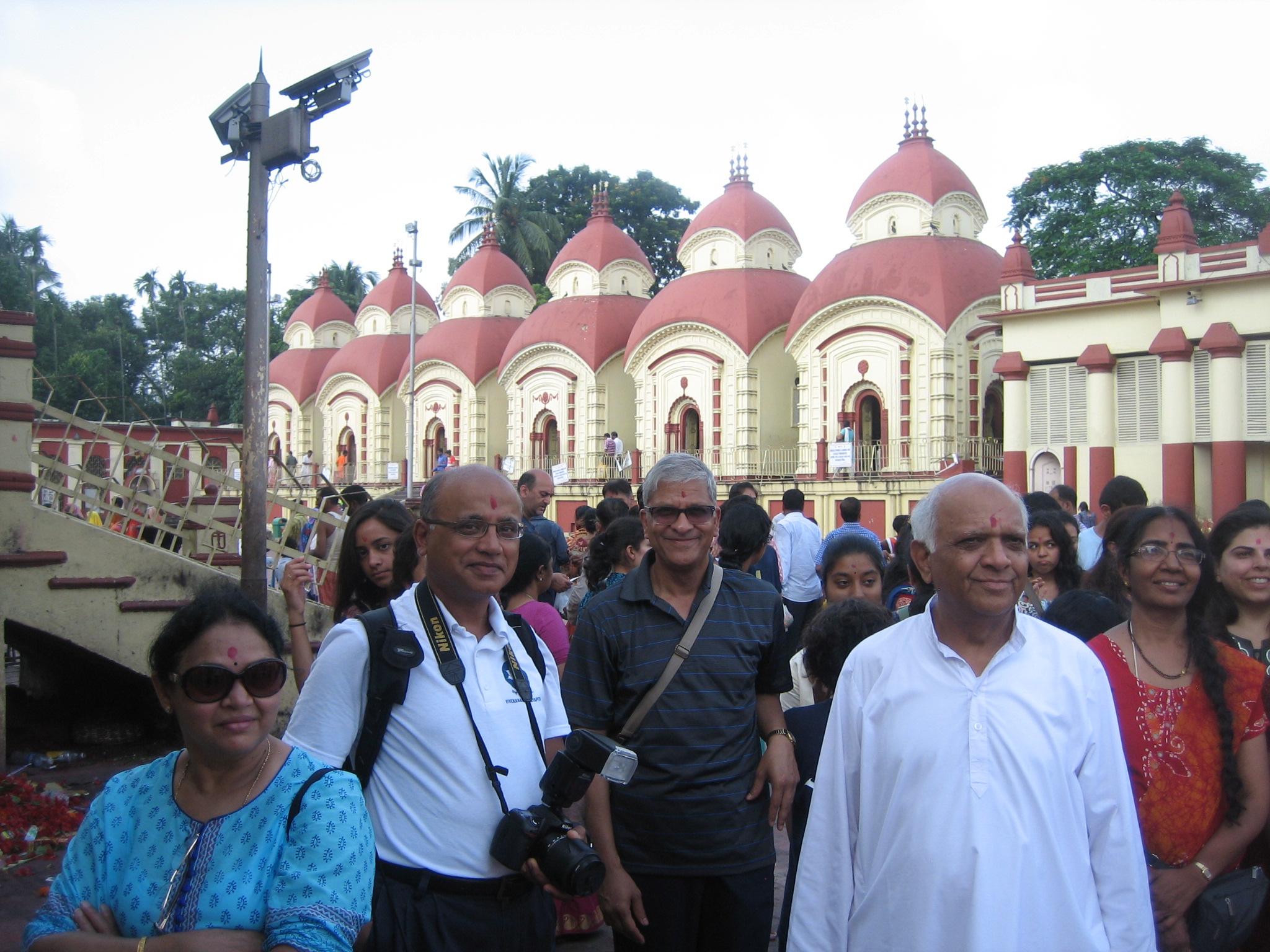
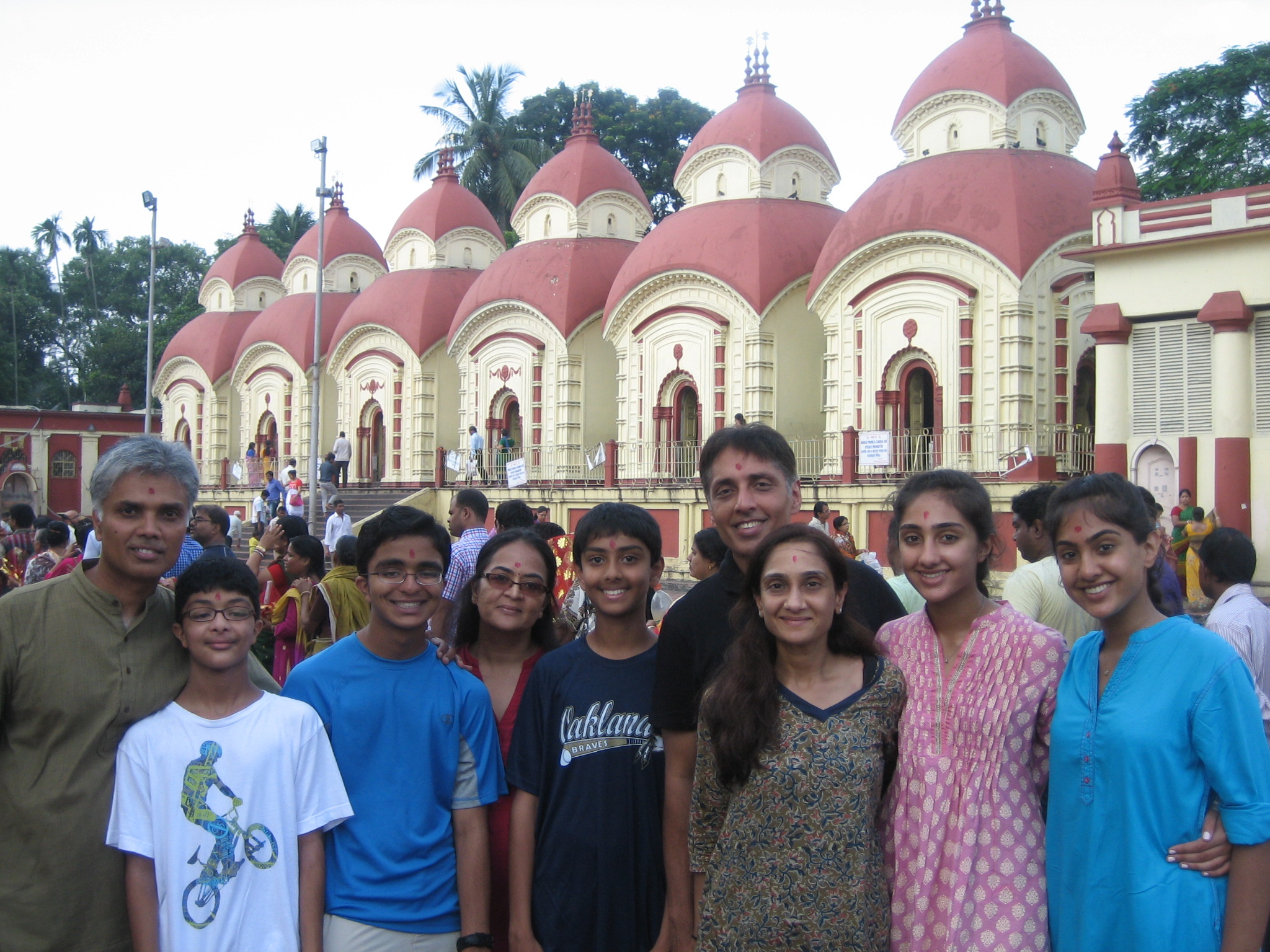
The buses dropped us near the Dakshineswar Kali temple and all of us walked out barefoot.  We gathered near a tall, prominent statue of Swami Vivekananda.  Here we gathered to take our group picture. A couple of dogs came and sat in the front – they must have wanted to join our group!

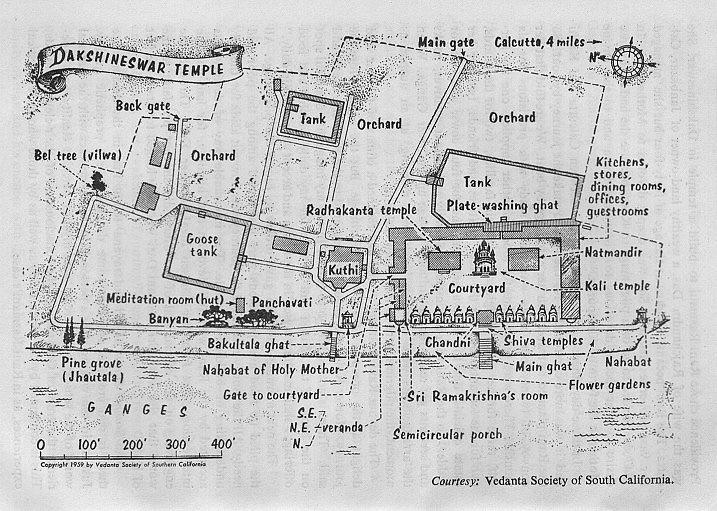
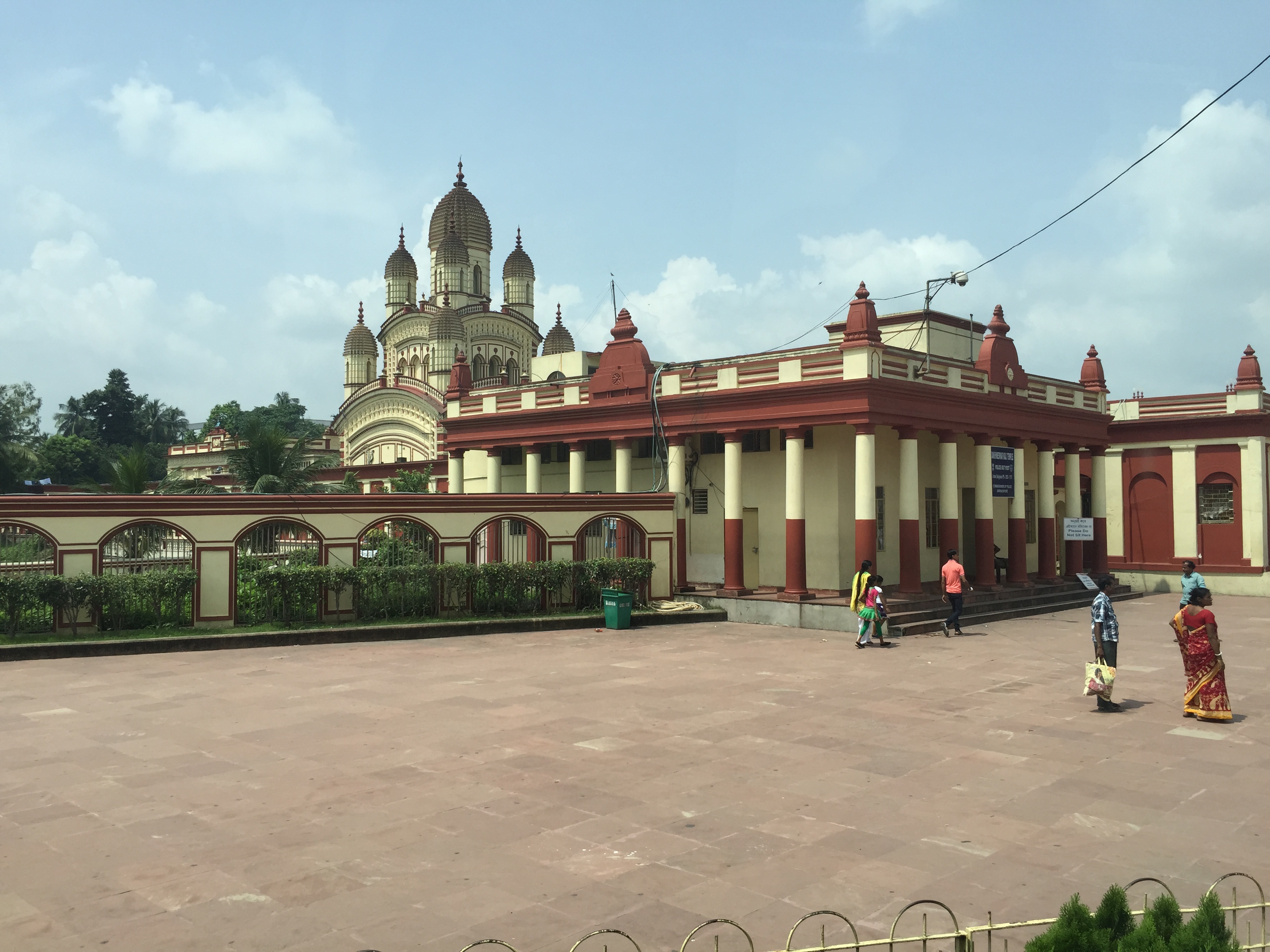
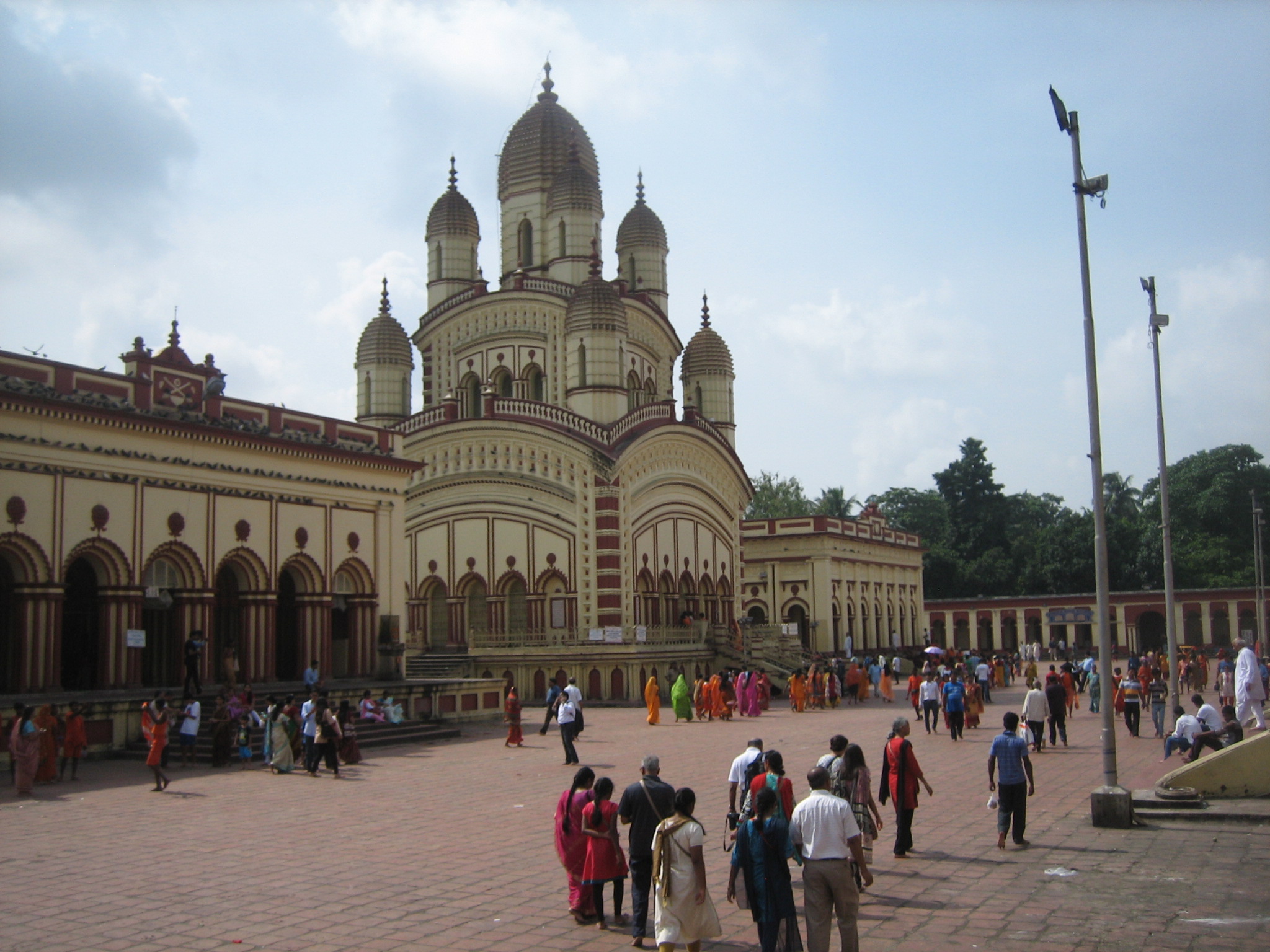
It was early in the morning so the temple was not crowded, and it was easy to go through the security at the entrance.  We then entered the courtyard of the Kali Temple.  The view was spectacular.  There was a big open courtyard with Shiva temples on the right, Radhakant Temple, Kali Temple, and Natmandir on the left.

1. Dakshineswar Temple Grounds Map IMG_0621 Kali Mandir Court Yard - 2

Blessed:

When Deba Saha Uncle’s mother found out about our pilgrimage, she suggested that he contact the Trustees of Dakshniswar Kalimandir Trust to see if we could get permission to enter the inner sanctum of the temple–the very room of the temple where Sri Ramakrishna worshipped Mother Kali.  With many efforts and many late night phone calls from the US, Deba Uncle received the permission just a day before our visit.  Deba Uncle also made special arrangements so that we would have sweets and flowers to offer to Mother Kali in the temple.  In fact, the flowers we were offering were delivered fresh – as we were standing in line!

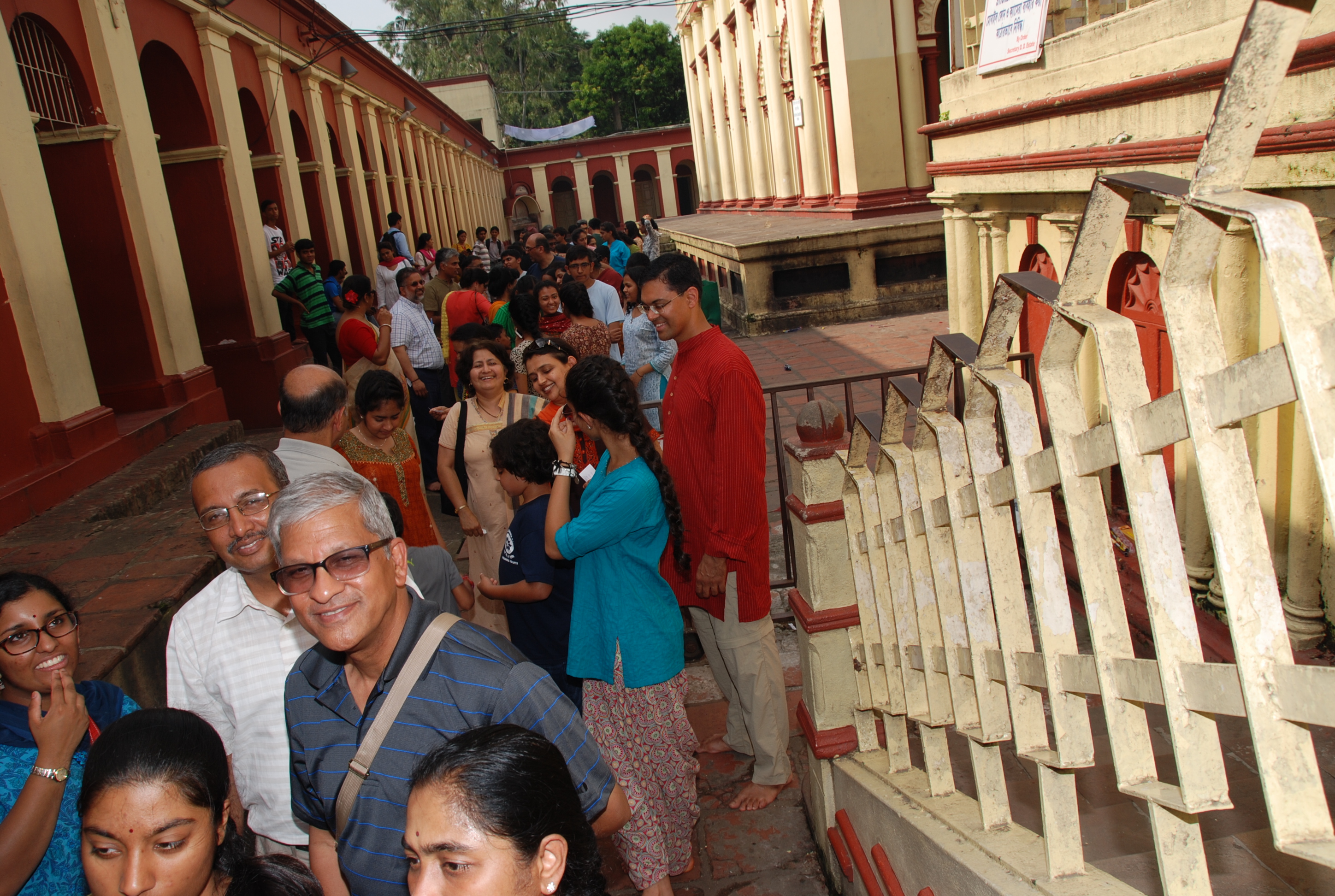
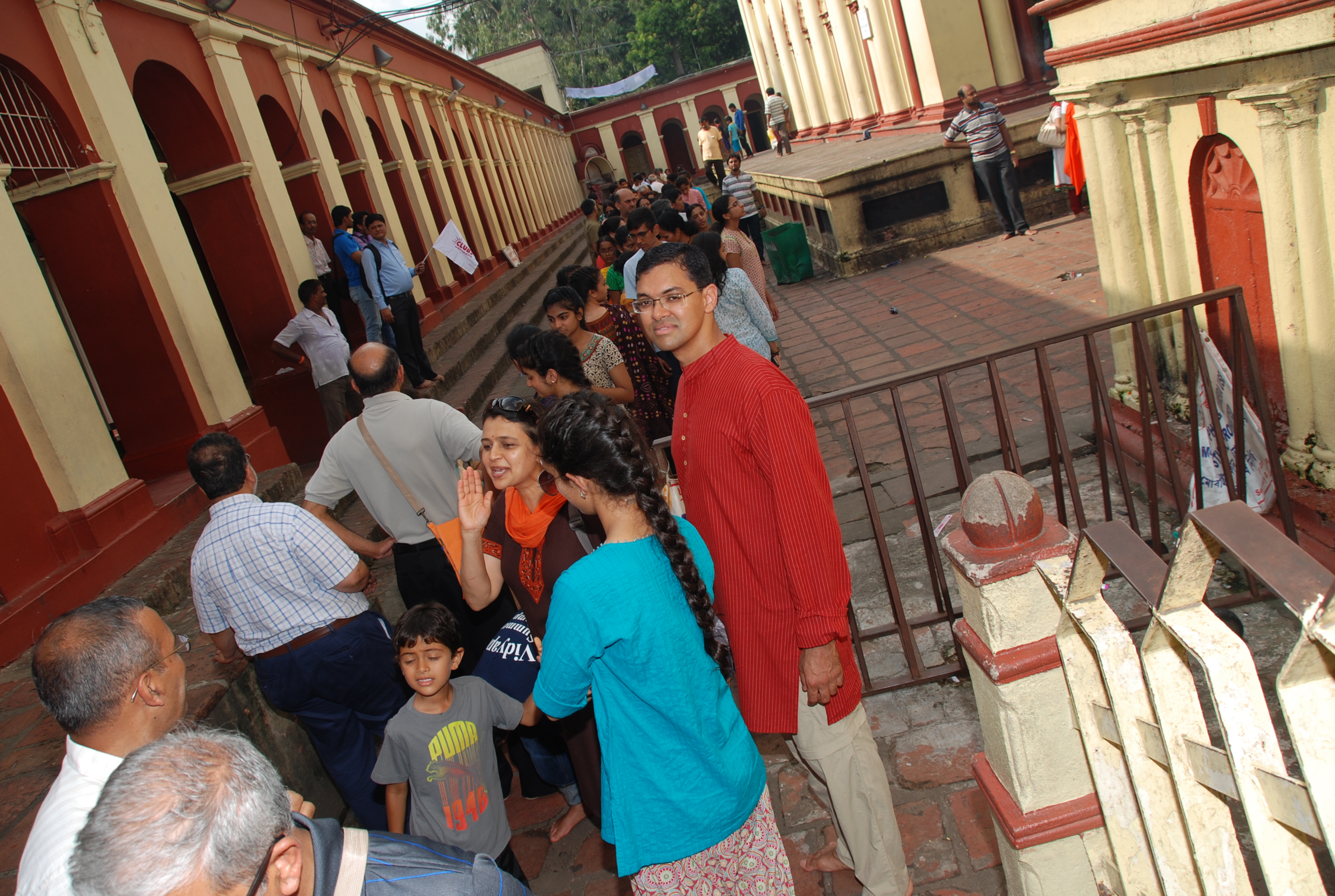
Line to go to Gharbha Griha - 2 Line to go to Gharbha Griha - 1

We formed a line in the back of the temple to go inside the temple called “Garbha Griha.” We were told that around 10 people could go inside the temple at a time, so families entered in their respective groups.

It was a thrilling experience to go inside the Kali Temple, to be face to face with Mother Kali and offer our salutations.  This was the very same Mother Kali which Sri Ramakrishna had a vision of! Here Sri Ramakrishna sat and worshiped the Mother, fanned her, and sang bhajans.  While looking at this Mother Kali and thinking about her glories, Narendra (Swami Vivekananda) forgot all about his family’s suffering; he could not ask for anything other than knowledge and devotion.

Mother Kali

We stood in full reverence and offered our salutations. With Mother Kali’s “Darshana,” we proceeded outside to the courtyard. Our foreheads were adorned with kumkum tilaks and we were carrying a few precious offered flowers and prasad.

Kali Mandir from Thakur's room In front of Shiva Temples- 3

We had been told that it was not easy to get a permission to enter inside this part of the temple. We all mentally thanked the Dakshineswar Kalimandir Trustee who gave us the permission.  Each one’s heart was filled with devotion, a love for Mother Kali, and a gratitude to have such a great opportunity.

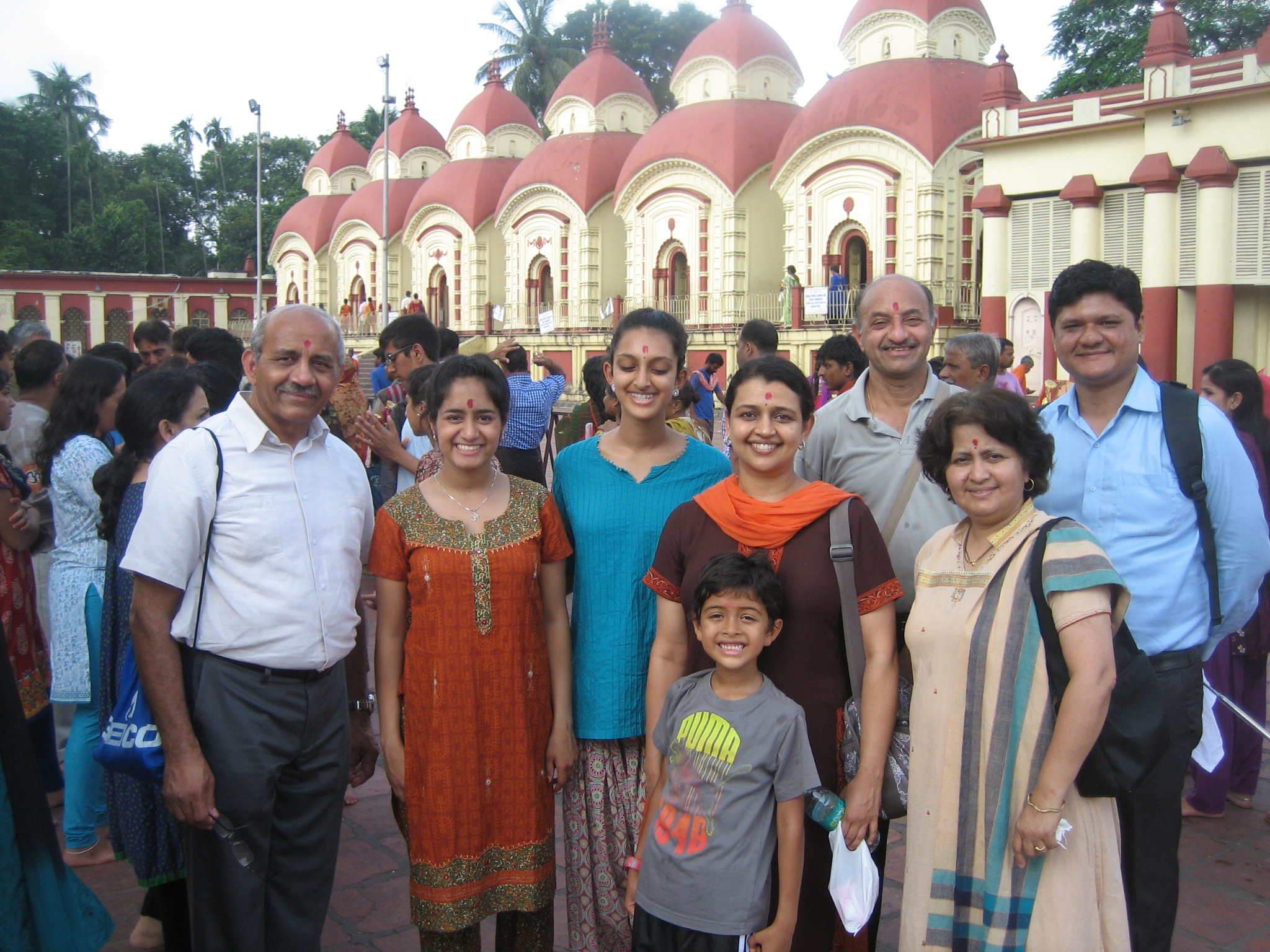
We also received special permission to take group pictures in front of the Kali Temple.

Vivekananda Vidyapith devotees in front of Kali Temple

After our picture, we divided into groups to visit the other temples in the complex.

Shiva Temples:

Shiva Temples - 7 Shiva Temples - 1 Shiva Temples - 4 Shiva Temples - 2 Shiva Temples - 5 Shiva Temples - 1-5

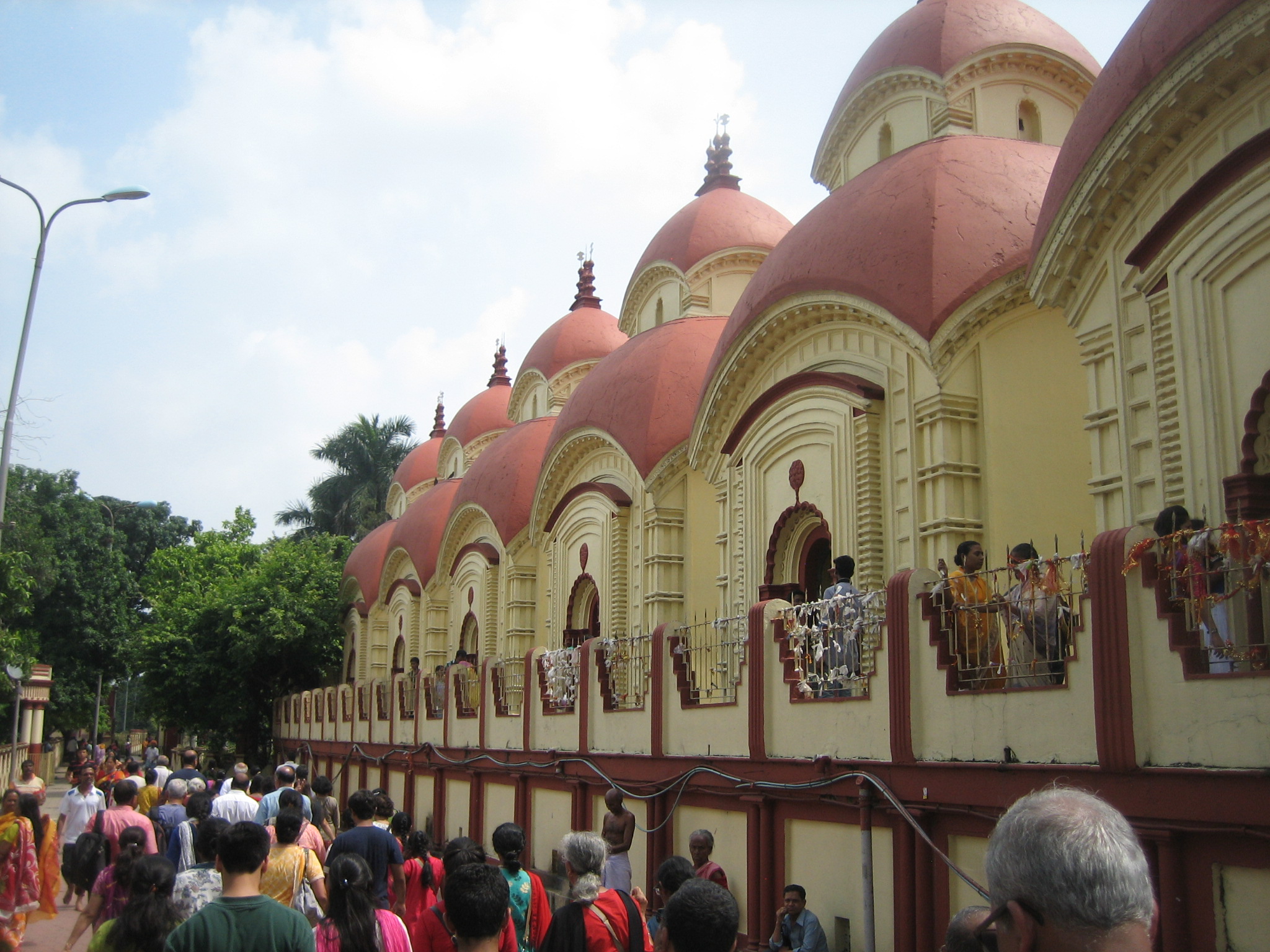
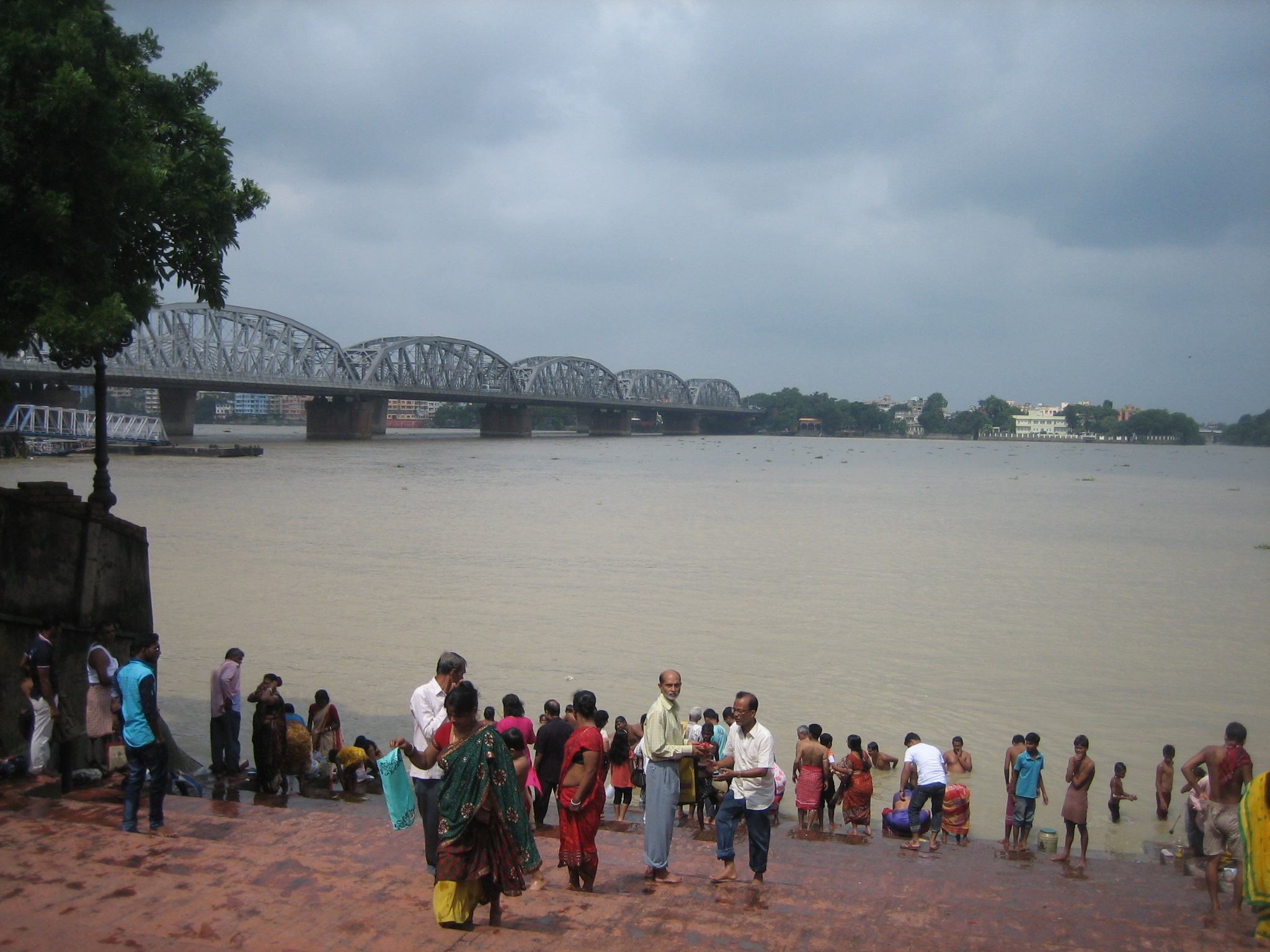
On the side of the complex adjacent to the Ganga was a line of 12 Shiva temples. We went to all 12 Shiva Temples to offer our salutations.  We were amazed by the architectural designs and the construction of the temples which were built between 1855 and 1860 – over 150 years ago! The people who built it must have had great knowledge of construction. The temples were organized with six on one side and six on the other.  Between them was a square area called “Chandani”. From here there are steps that go towards the Main Ghat (steps leading to the Ganga which were made so that people could bathe in the river).  Sri Ramakrishna used to go to this ghat to bathe in river Ganga.

Main Ghat

There are many references of Sri Ramakrishna going to the Shiva Temples to pray.  Once, he was reciting Shiva Mahimna hymn and when this famous shloka came: “even Goddess Saraswati (Goddess of Knowledge) cannot describe your glories…” Sri Ramakrishna held the Shivalingam with both hands and kept repeating this line.  Tears of joy and devotion rolled down his eyes.  People thought he had gone crazy.  Mathurbabu, however, knew his state of mind and asked no one to bother him.

We realized that it was a “Nag-panchapi,” a special day associated to Lord Shiva. Many devotees were offering Ganga water and flowers to Lord Shiva.

Radhakant and Krishna Temples

In the Gospel of Sri Ramakrishna, there is mention of the Radhakant Temple.  Here, we offered our salutations to Sri Radha and Lord Krishna.  Many times when Sri Ramakrishna sang songs that described the intense love of Sri Radha for Lord Krishna, he used to go into Bhava-samadhi.

Kali Mandir Court Yard - 2

On the left of the Radhakant Temple, there was a temple of Sri Krishna.  There we saw the statue of Sri Krishna. This statue has a story associated with it.  Once, a priest dropped this statue, causing the leg of the statue to break.  When all of the pundits came to know of this news, they said that the statue had to be put into Ganga and another one must be used for worship instead.  Mathurbabu was confused with this reasoning as he had attachment with the statue.  When Sri Ramakrishna came to know about this, he said, “If a son-in-law of Rani Rasamani breaks his leg, would she throw away the son-in-law and get another one or she would make arrangements for the treatment of his leg?” Then, Sri Ramakrishna fixed the leg in such a skillful way that many could not tell it was broken in the first place.

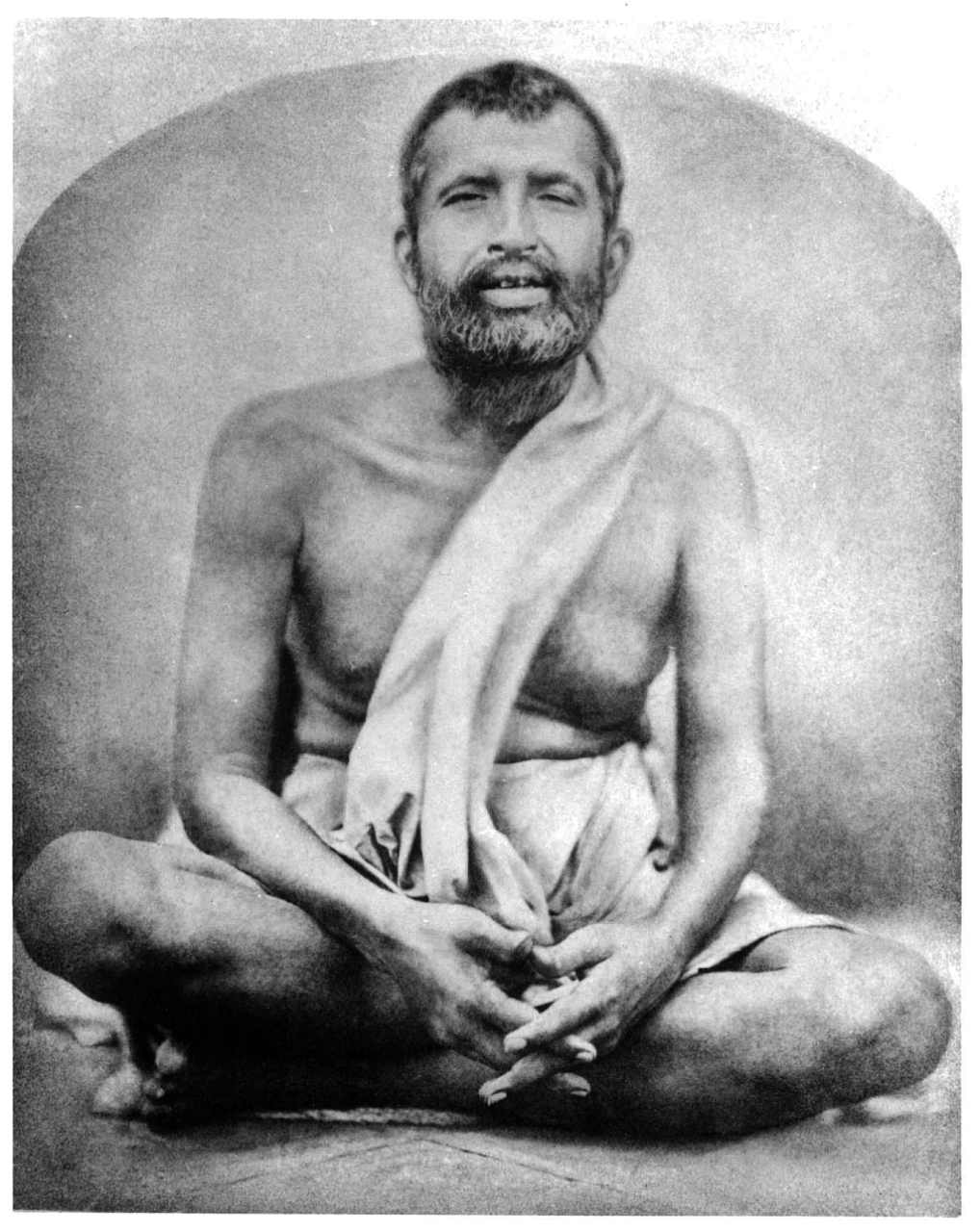
There is another event that we remembered regarding the Radhakant Temple.  Once, Bhavanath brought a cameraman to take a photograph of Sri Ramakrishna. However, Sri Ramakrishna refused to have his picture taken.  When he was pressed for the photograph, Sri Ramakrishna came out from his room and sat on the steps of Radhakant Temple.  Then, Narendra came.  He learned about the situation.  Narenda asked the cameraman to wait. He went to Sri Ramakrishna and started talking to him.  During the discussion, Sri Ramakrishna went into Samadhi. Narendra now asked the photographer to take the picture.  This same picture is the picture of Sri Ramakrishna that we see being worshipped in all temples and houses. Later, Sri Ramakrishna himself worshipped this picture and said, “This picture shows a very high state of Yoga.  Hereafter it will be worshipped from house to house.”  We could not believe that we were seeing these same steps.

Natmandir:

It was in Natmandir, Bhairavi Brahmani, the spiritual Guru of Sri Ramakrishna proved to the assembly of Pundits that Sri Ramakrishna is an Incarnation of God, meaning he has all the qualities of an Incarnation of God as described by the scriptures.  All of the pundits agreed to this and thanked Bhairavi Brahmani for recognizing it.

On the top of Natmandir, there is a Bhairava statue with two attendants of Lord Shiva, namely Nandi and Bringi.  Sri Ramakrishna used to salute them before entering the Kali Temple as if he was taking their permission to enter.

Sri Ramakrishna’s Room

Entrance to Thakur's room - Northrn Varanda - 1

On the right side of Shiva Temples is Sri Ramakrishna’s room.   This is the heart of the complex for all devotees of Sri Ramakrishna. There are many chapters in the Gospel of Sri Ramakrishna which describe various spiritual states of Sri Ramakrishna and his inspiring and uplifting conversations in this room.  Sri Ramakrishna lived in this room for 14 years, from 1871 to 1885.  This room also played a significant role in the life of Swami Vivekananda and the direct disciples of Sri Ramakrishna.

In small groups, we reverently entered the room.  There were two cots.  We have read in the Gospel of Sri Ramakrishna that Sri Ramakrishna used to sleep on the bigger cot and then he would come down and sit on the smaller cot to talk to people.  Sometimes he would even sit on the floor with young devotees and have many laughs.  Many memories from the Gospel of Sri Ramakrishna came to our minds when we sat in the room.  We felt goosebumps when we thought of Narendra sitting here and singing and Sri Ramakrishna going into Samadhi.  Various kinds of conversations took place here and these conversations shaped the lives of many people.  Each one of us sat in the room for a few minutes, did japa, and remembered Sri Ramakrishna.

Around the room, there are three verandahs (lobbies): the Northeastern, Northern, and Southeastern verandahs.  These verandahs had witnessed many important incidents in the lives of Sri Ramakrishna, Swami Vivekananda, and others.  One of the incidents that took place in the Northern verandah was Mathurbabu’s vision.  After Bhairavi Brahmani had proved to the Pundits that Sri Ramakrishna was an Incarnation of God, Mathurbabu, who had a great respect for Sri Ramakrishna as a saint, still was not convinced that Sri Ramakrishna was an Incarnation of God.   One day, Sri Ramakrishna was pacing up and down in this northern verandah.  Mathurbabu was sitting in the lobby of Kuthi Badi.  He looked at Sri Ramakrishna and, to his surprise, he saw Mother Kali walking.  As Sri Ramakrishna turned in another direction, he saw Lord Shiva walking.  These were Mathurbabu’s Ishta-devas (chosen deities).  He could not believe this.  He went to Sri Ramakrishna and fell at his feet.  Mathurbabu said, “Baba (Father), is it true what I saw?”  Sri Ramakrishna said, “Please do not tell anyone about it.”

Thakur's Room - Semi-circular porch - 1 Thakur's Room - Semi-circular porch - 2 View of Thakur's Room Thakur Room's semi-circular Porch - 3

To the west of the room is a semi-circular porch.  Sri Ramakrishna used to come here to see the Ganga.  Around the porch was a flower garden.  Sri Ramarkishna used to pluck flowers from this garden for his worship.  When Narendra came for the first time, he entered from this porch.

Nahabat:

After visiting Sri Ramakrishna’s room, we all got together and went to see the Main Ghat where Sri Ramakrishna used to take his bath.  We saw the Ghat, the semi-circular porch of Sri Ramakrishna’s room and then continued to Nahbat, another important place for the devotees.

Towards Nahbat  Nahbat - 1 Nahbat - Remembering Holy Mother Nahbat - 6 Nahbat - 6 (2)

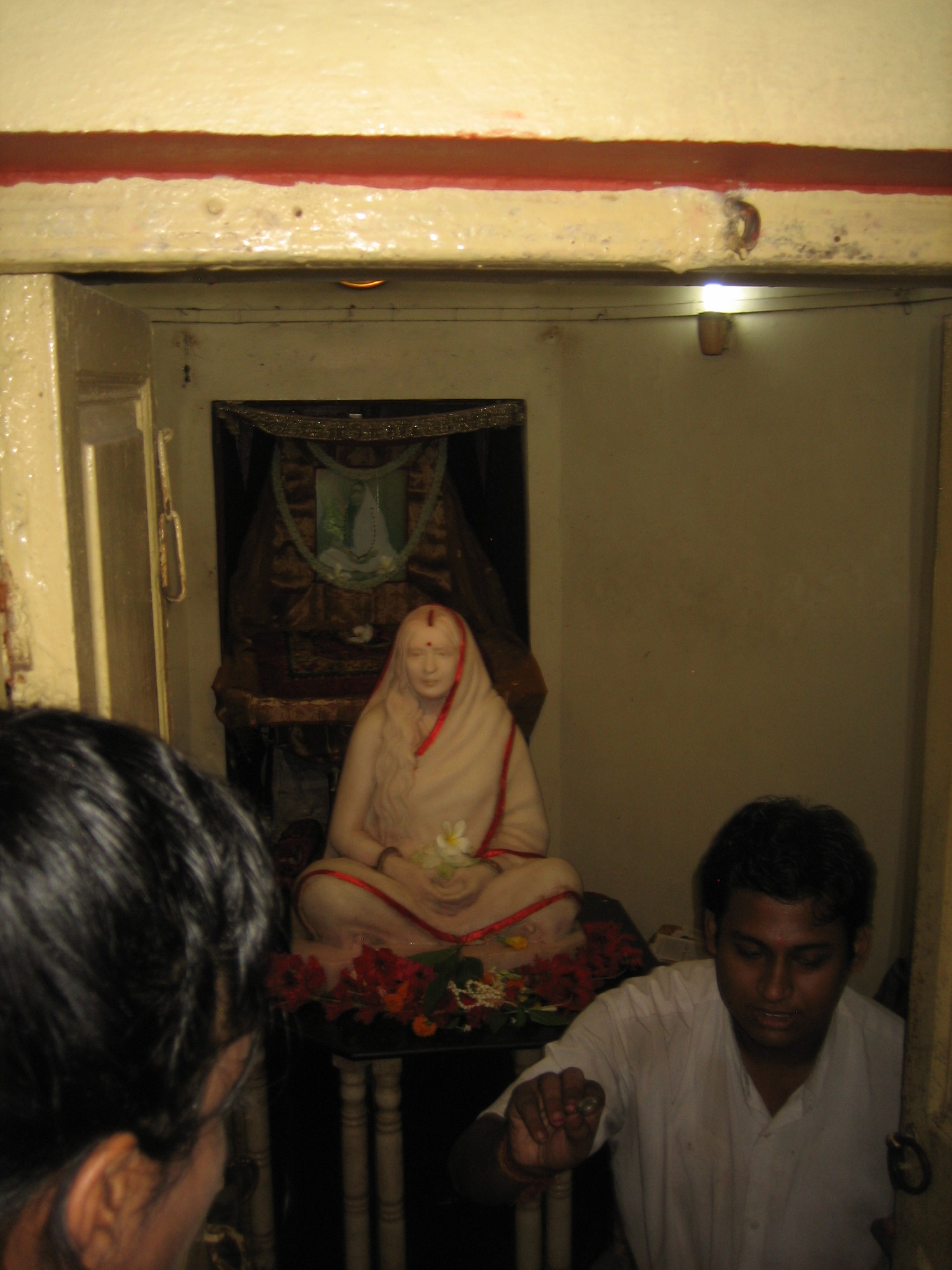
Holy Mother Sri Sarada Devi lived in Nahbat from 1872 to 1885.  Uncle told everyone to look at how small the room is.  Holy Mother lived in this small room for years!  For her, that room was a living room, a bedroom, a storage room, and a guest room.  The door of the room was so low that many times Holy Mother hit her head while going out.  Even though she lived in such a small space and lived simply, Holy Mother led an exemplary and inspiring life.  She never complained about her room.  On the contrary, she said that at Dakshineswar her heart always remained filled with joy.  When men devotees were present, Holy Mother could not go to Sri Ramakrishna’s room.  But, to see what was going on there and to listen to the bhajans, she used to look through a hole in the mat that was placed on the door of her room.  Sri Ramakrishna used to jokingly say that each day this hole was getting bigger!

During her days in Dakshineswar, Holy Mother used to get up around 3:30 in the morning, take a bath in the Ganga, and then meditate for long hours.  Women devotees would see her completely absorbed in meditation.  She cooked under the staircase of the Nahbat for Sri Ramakrishna and his devotees, especially the younger devotees who stayed overnight for spiritual practices.

We offered our salutations; our eyes filled with tears of reverence and love for Holy Mother.

Bakultala Ghat:

 Next to Bakul Tala Ghat - 2

               A few feet away on the left of the Nahbat was the Bakultala Ghat.  Here, Holy Mother used to go to take her bath early in the morning.  One dark morning when she walked down for her bath, Holy Mother almost stepped on a crocodile that was lying on the steps of the ghat! Upon hearing this, Sri Ramakrishna was very concerned about her. He told her to go with a lantern.

Rani Rasmani’s Memorial: 

Rani Rasamani built the Dakshineswar Kali Temple between 1855 and 1860, following her divine call from Mother Kali and her commitment to fulfill her husband’s wish.   This Dakshineswar Kali Temple was the place where Sri Ramakrishna built the foundation for the huge spiritual upsurge which became the Vedanta Movement through the Ramakrishna Mission and Math.

Rani Rasamani was known for her charity, her love for poor people, and her fearlessness. In a time when the society would not allow women to go out in public alone, Rani Rasamani managed the huge estate of her husband who passed away at a young age.  Once, when the British Government unjustly imposed taxes on the fishermen of the Ganga, Rani Rasamani spent a huge sum to procure the lease of the concerned part of the Ganga and allowed the fishermen to fish freely without paying any tax.  She even enclosed the area so that British ships could not enter into the area.  Another time, when a Hindu procession was stopped because a Brit was disturbed at night by the noise, Rani Rasamani blocked the entire road from her palace to the Ganga, creating hardship for British vehicles. As a result of her actions, the British both removed the tax and allowed for the Hindu procession.

This fearless lady was a great devotee of Mother Kali and had a great reverence for Sri Ramakrishna.  She loved to listen to Sri Ramakrishna’s bhajans.

Kuthi Bari

Kuthi Badi - 1A Kuthi Badi - 1 Kuthi Badi - 2 Kuthi Badi - 2A Kuthi Badi - 6 (need water)

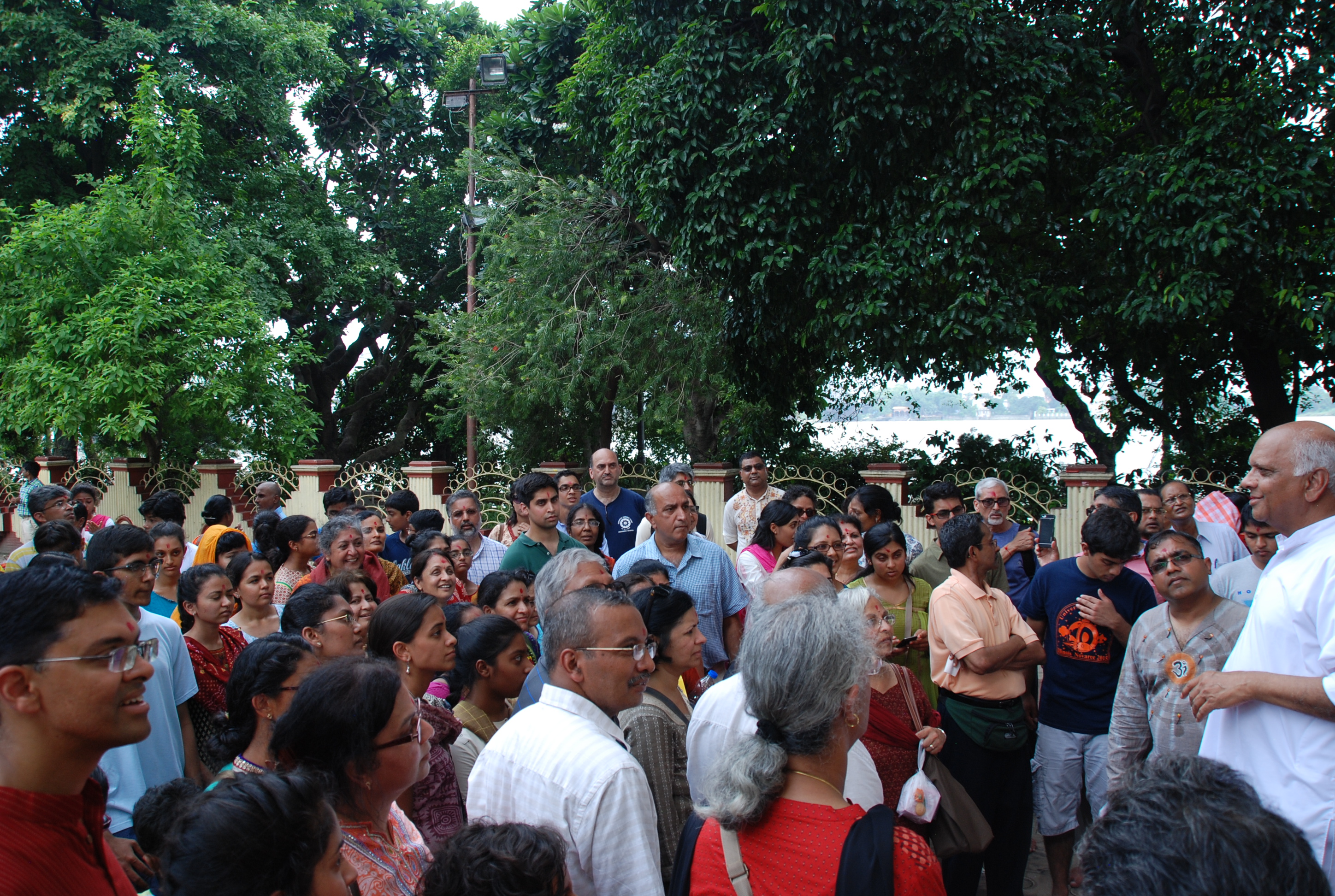
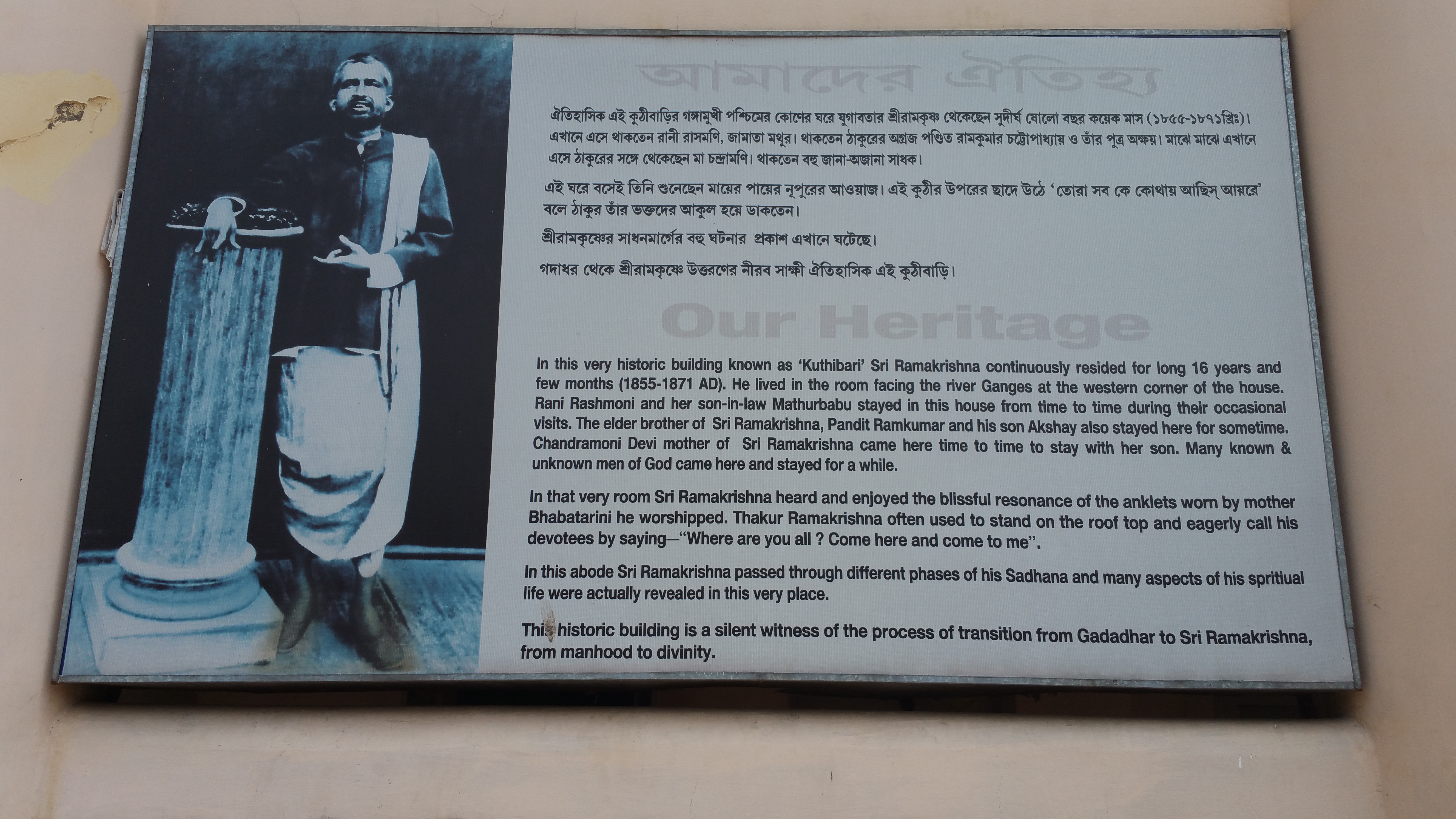
On the left of Rani Rasamani’s memorial is Kuthi Bari where Sri Ramakrishna lived, from 1855 to 1871, in a room facing Ganga.  This was the period of his intense spiritual practices and divine visions.  It was on the terrace of the Kuthi Bari that Sri Ranmakrishna went and cried out, “Where are you my children?  Do come, one and all.  I cannot rest anymore without seeing you.”  After this, one by one, all the known devotees of Sri Ramakrishna came to him for spiritual guidance.

Panchavati:

Pnachvati - 3 Panchavati - 9 Panchavati - 12 Panchavati - 8

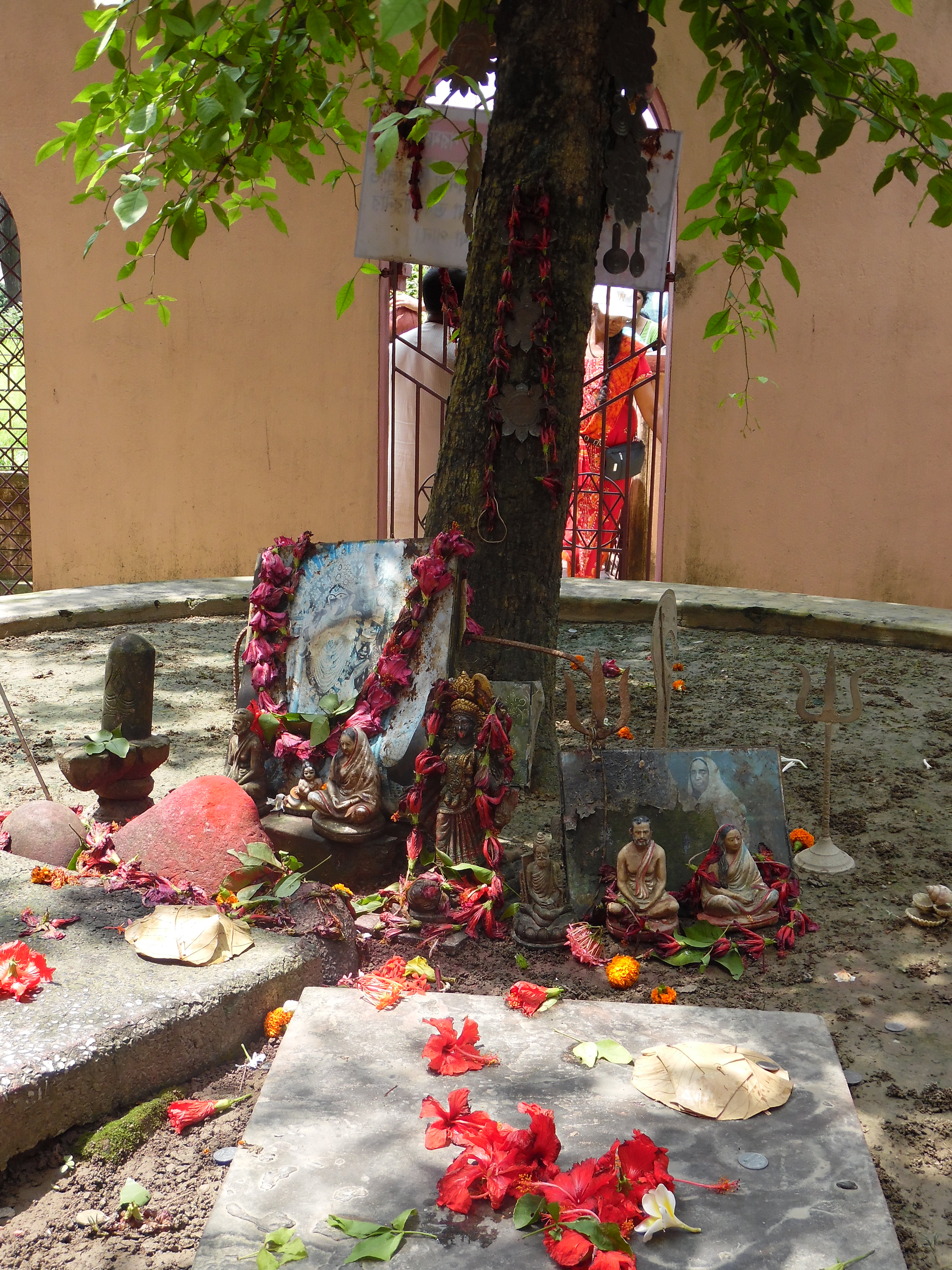
Next we went to the Panchavati, a very important place where Sri Ramakrishna did intense spiritual practice and where he encouraged his devotees to do so as well.  Originally, the Panchavati was a thick jungle that people used to avoid going to.

“Pancha” means five.  During his lifetime, Sri Ramakrishna had planted five trees here and made it a special place for his spiritual practices.  The five trees according to the book “Belur Math Pilgrimage” were: Indian fig, Bel (Bilva), Amalaki, Banyan, and Ashoka.

The “Panchavati” and the “Ashoka Tree” have connections with the great epic Ramayana.  Sri Rama, Sri Sitaji and Sri Lakshman resided in the Panchavati forest during their exile.  Also, the “Ashoka tree” reminds us that Ravana kept Sri Sitaji in the Ashoka-vana meaning a jungle (or a place) with lots of Ashoka trees.   Sri Ramakrishna had a vision of Sri Sitaji in Panchavati.  In his vision Mother Sitaji came and entered into him.  After seeing bangles on the hands of Sri Sitaji in his vision, he made similar ones for Holy Mother Sri Sarada Devi.  Holy Mother wore these bangles all her life.  At one time, Sri Ramakrishna prayed to Mother Kali to have intense love for God like Sri Sitaji.  Sri Ramakrishna said that in Ashokavan Sri Sitaji became oblivious of herself and was constantly thinking of Sri Rama.  Just one thought was in her mind, “Where is Sri Rama?”

The Panchavati was covered all around by a fence.  Visitors were not allowed to go inside the Panchavati area. We saw it from outside.

Totapuri Hut in Panchavati:

Totapur Hut - 7 Totapuri Hut - 1

Inside the Panchavati, we saw from a distance a hut known as the Totapuri Hut.  We were told that this was the place where Totapuri took Sri Ramakrishna for Non-dualist (Advaita) spiritual practice.  He set up a fire and asked Sri Ramarkrishna to meditate on the infinite aspect of God, called Brahman.  Sri Ramakrishna said that he could not do it because Mother Kali’s blissful face kept coming to his mind. Frustrated, Totapuri took a piece of glass and touched it between Sri Ramakrishna’s eyebrows and asked him to meditate there.  Sri Ramakrishna later explained that it was then that, with the sword of knowledge, he destroyed the blissful form of Mother Kali and his mind soared beyond the relative plane merging with the infinite Brahman.  His mind remained there for three days.  Totapuri had a hard time bringing Sri Ramakrishna’s mind down to the relative plane.  He loudly repeated “Hari Om” to bring Sri Ramakrishna’s mind down.  Totapuri was amazed to witness that the state of mind he, himself, had achieved after 40 years of intense spiritual practices, Sri Ramakrishna achieved in one day!

Panchamundi:

Path to Totapuri's Hut - 1 Going to Pancha Mundi

Going to Panch Mundi In front of Pancha Mundi

Out last place of pilgrimage in Dakshineswar was “Panchamundi.”  The sun was getting hot and so was the ground.  Most of us opened the umbrellas given to us by Club7, and constantly sipped our drinking water from the water-bottles provided by them. The ground was very hot, so people were also trying to find shaded areas to cool down.

Duck's Pukur - 2 Ducks Pukur - 1

On our way we saw a very nice pukur (a lake) called “Goose Pond” and a huge banyan tree.  We were told that Sri Ramakrishna did japa and meditation under this tree.

Panch Mundi - 7 Pancha Mundi - 9 Panch Mundi - 6 Panch Mundi - 1

Walking through a narrow path we reached the place called “Panchamundi” where Sri Ramakrishna did his Tantric spiritual practices under the guidance of Bharavi Brahmani.   The original place is enclosed by a fence.  We could see a bilva tree which marked the original spot. Sri Ramakrishna practiced all the disciplines of the sixty-four principal Tantrik books and mastered them all in a short time.

Thus, remembering the lives of Sri Ramakrishna, Holy Mother Sri Sarada Devi, Swami Vviekananda, and the direct disciples of Sri Ramkrishna associated with Dakshineswar, we all started walking towards the gate to go to our buses.  We all felt that we were blessed to have such a spiritually uplifting morning.

Being fully satisfied - waiting for buses to leave Waiting for buses

Sickness:

For all of us, one of the major worries was not to get sick.  A couple of people had an upset stomach because of jet-lag, the tiredness after a long plane-journey and bus-travel.  One person was dehydrated and felt dizzy.  Yet, we had four skillful doctors Dr. Anandhi Johri, Dr. Sridhar Nambi, Dr. Apexa Shukla, and Dr. Nilesh Shukla who took care of us all.  The patients recovered within short time and the rest remained healthy.

(The original report was written by Abhishek and Avni Senjalia.)
Happy New Year!

Happy New Year!

May the year 2015 brings peace, prosperity, and progress to all of you.

Kalpataru Day:

search
Sri Ramakrishna

To the devotees of Sri Ramakrishna, January 1st is considered to be a Kalpataru Day, meaning a day which fulfills all desires, especially spiritual desires.  Spiritual progress brings inner peace, true happiness, wealth of knowledge, and fulfillment.

On January 1, 1886, Sri Ramakrishna, in the midst of intense pain of throat cancer and physical weakness, came down from his second floor room, walked to the devotees and blessed them.  At that time the desires of all the devotees who were present were fulfilled.  That is why it is called a Kalpataru Day.

Eat mangoes!

People were asking Sri Ramakrishna whether there is life after death or what happens after a person dies or other similar questions.   Sri Ramakrishna used to tell them to eat mangoes and not to bother their heads with the details of how many branches, leaves, or mangoes the mango tree has.

Where are mangoes?  Where is the tree?

Once a famous painter Nanda Basu asked Sri Ramakrishna where the mango tree is and where are the mangoes.  Sri Ramakrishna said that God is infinite, but God is also a Wish-fulfilling Tree, called a Kalpataru Tree.  All our wishes would be fulfill if we go closer to God.  Then, we will find that four fruits called Dharma (Rightousness), Artha (Wealth), Kama (Worldly Desires), and Moksha (Freedom from all Bondages) are lying under the tree.
Worldly minded people ask God for Artha and Kama, Jnani (Those who seek Knowledge) ask God for Dharma and Moksha, while devotees of God ask God for only devotion or love for God.

Devotees enjoy taking name of God, constantly thinking of God, serving devotees of God, and loving unselfishly the children of God.

Happy 178th Birthday to Sri Ramakrishna

Sri Ramakrishna was born on Wednesday, February 18, 1836 in Kamarpukur, a village in Bengal, India.  It is amazing to see that a boy who was born in a village and spent his childhood in that environment, became a source of great inspiration for millions of people in India and abroad.  All over the world, through various religions and philosophies, people are still trying to solve the mystery of life and God.  This boy, who later became Sri Ramakrishna, realized all the aspects of life and God and the essence of all scriptures and religions.

sri-ramakrishna-7
Sri Ramakrishna

This year according to the Hindu calendar Sri Ramakrishna’s birthdate falls on Monday, March 3, 2014.  On this day, let us first remember how a few known personalities looked at Sri Ramakrishna:

Leo Tolstoy called Sri Ramakrishna a “remarkable sage.”

Romain Rolland considered Sri Ramakrishna to be the “consummation of two thousand years of spiritual life of the three hundred million people.”

Mahatma Gandhi wrote, “Sri Ramakrishna’s life enables us to see God face to face. He was a living embodiment of godliness.”

Maharshi Aurobindo wrote, “When skepticism had reached its height, the time had come for spirituality to assert itself and establish the reality of the world as a manifestation of the spirit, the secret of the confusion created by the senses, the magnificent possibilities of man and the ineffable beatitude of God. This is the work whose consummation Sri Ramakrishna came to begin and all the development of the previous two thousand years and more since Buddha appeared has been a preparation for the harmonization of spiritual teaching and experience by the Avatar (Incarnation of God) of Dakshineshwar (Sri Ramakrishna).”

Jawaharlal Nehru described Sri Ramakrishna as “one of the great Rishis of India, who had come to draw our attention to the higher things of life and of the spirit.”

sri-ramakrishna-1
Sri Ramakrishna

Sri Ramakrishna’s life and teachings appeal to me for several reasons.  The following are a few of these reasons:

1.  Sri Ramakrishna as a young man had an intense desire to realize God. Through his determination and self-effort he realized God.  Later on with various teachers he had the same experience of God through various paths.

2.  He had no formal education, but hundreds of educated people of Kolkata would come to him to learn about the most important aspect of life.

3.  Sri Ramakrishna’s teachings are simple but very profound.  He explains the essence of scriptures through simple stories and analogies from the day-to-day life of common people.

4.  His teachings cover all levels of spiritual life; from the period of curiosity and initial questioning to the state of realization of God.

5.  We all talk about having interfaith dialogue and tolerance of other faiths.  Sri Ramakrishna realized God through his own tradition and then through other religions. He realized through his experiences that all religions are various paths leading to the same God.

6.  At the time of Sri Ramakrishna, many youngsters and the elite started believing that all Hindu scriptures and their religious ideas were primitive and useless.  Sri Ramakrishna single handedly destroyed these doubts and wrong ideas from the minds of the youngsters and elite and established the essential truths of the scriptures.  Since his words had the power of direct experience of the Truth, they prevail over all skepticism and faulty arguments.

7.  He prepared a few spiritual giants whose influence, even today, inspires millions of people to be good and to do unselfish service for humanity.  His idea of ‘seeing God in all and serving each one as though doing worship to God’ was revolutionary.  He said that a human being is an insignificant little insect crawling on the Earth.  How can this limited being do good to the world? Instead, we should realize that by doing good to the world we actually do good to ourselves.

8.  His every act and word was a manifestation of the Ultimate Truth described by the scriptures. At the end of his life, he could not eat any food due to the cancer of his throat.  His beloved disciple, Narendra, asked him to pray to the Divine Mother to enable him to eat a little so that he could keep his body for the good of many.  Upon inquiry, Sri Ramakrishna said that the Divine Mother had told him, “Are you not eating through the millions of mouths of all beings? Why worry if one mouth stops eating?”

9.  Sri Ramakrishna guided each disciple according to his/her mental chemistry.

10.  Sri Ramakrishna never uttered a degrading word for anyone and for any religious path.  He always encouraged everyone. People with various paths and sects went to him and each one felt that Sri Ramakrishna belonged to his/her path or sect.  Sri Ramakrishna encouraged householders and said that they can also realize God.

Let us remember a few of his teachings:

(i)  The goal of life is “God Realization.”

(ii)  The main obstacles in God Realization are lust and greed.

(iii)  Never think that ‘My religion is true and other religions are false.’  All religions are nothing but different paths made to suit people of different temperaments to reach the same God.

(iv)  Use your common sense in the spiritual path.  (Remember the story, “Elephant is Narayana, but so is the Elephant-driver.”)

(v)  Have intense desire and determination to realize God and make efforts for it.  (Remember the story of the determined farmer who worked hard to bring water to his field.)

(vi)  Spiritual progress is based upon the positive transformation that happens in life including the manifestation of virtues described in the scriptures.  Spiritual progress cannot be judged by the amount of lectures one has given about spirituality.  (Remember the story of Poddo who had not cleaned the temple, but did not hesitate from blowing the conch loudly)

(vi) As one gallon container cannot hold 10 gallons of milk, a finite human mind cannot comprehend the infinite God (Brahman).  Think that there is a huge hill of sugar grains.  An ant took one grain of sugar in its mouth from the hill and was going towards its hole.  While going the ant thought that next time it will take the whole sugar-hill in her hole.  A Salt-doll wanted to measure the depth of an ocean.  She took a measuring stick and went to the ocean.  As soon as she went into the ocean, she was totally merged in the ocean.  How can she measure the depth of the ocean?  A human mind tries to comprehend infinite Brahman.  But, when it goes closer to Brahman, it starts losing its separate identity.  Finally, when it merges with Brahman, there is no one else left to measure the Brahman.

One can learn many things about Sri Ramakrishna’s life and teachings from the following books:

DSC03937
The Gospel of Sri Ramakrishna
Sri Ramakrishna Divine Play
Sri Ramakrishna & His Divine Play

May we get inspiration for our spiritual development from Sri Ramakrishna’s life and teachings.