August 8, 2015
Memories of Jorasanko:
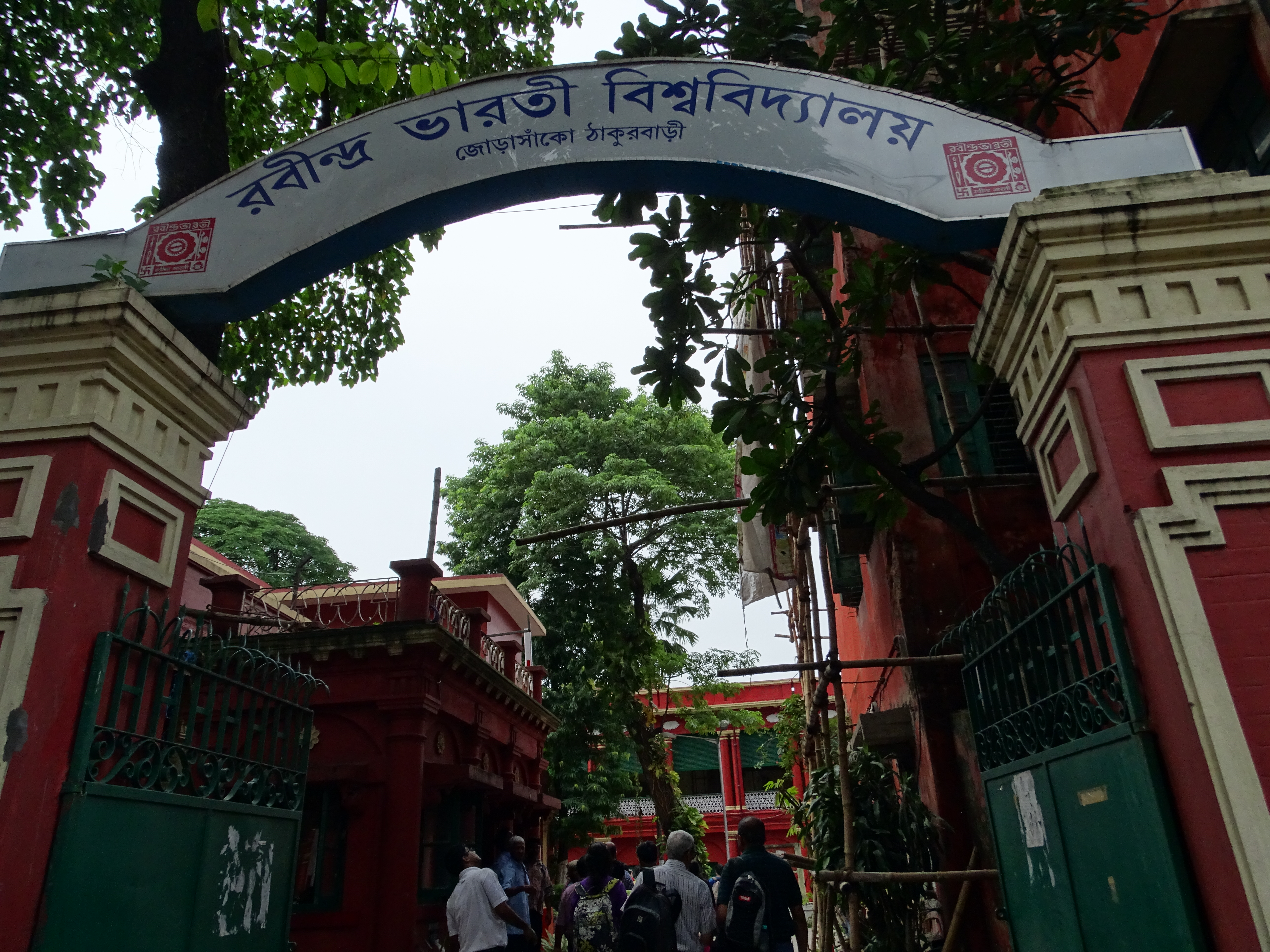
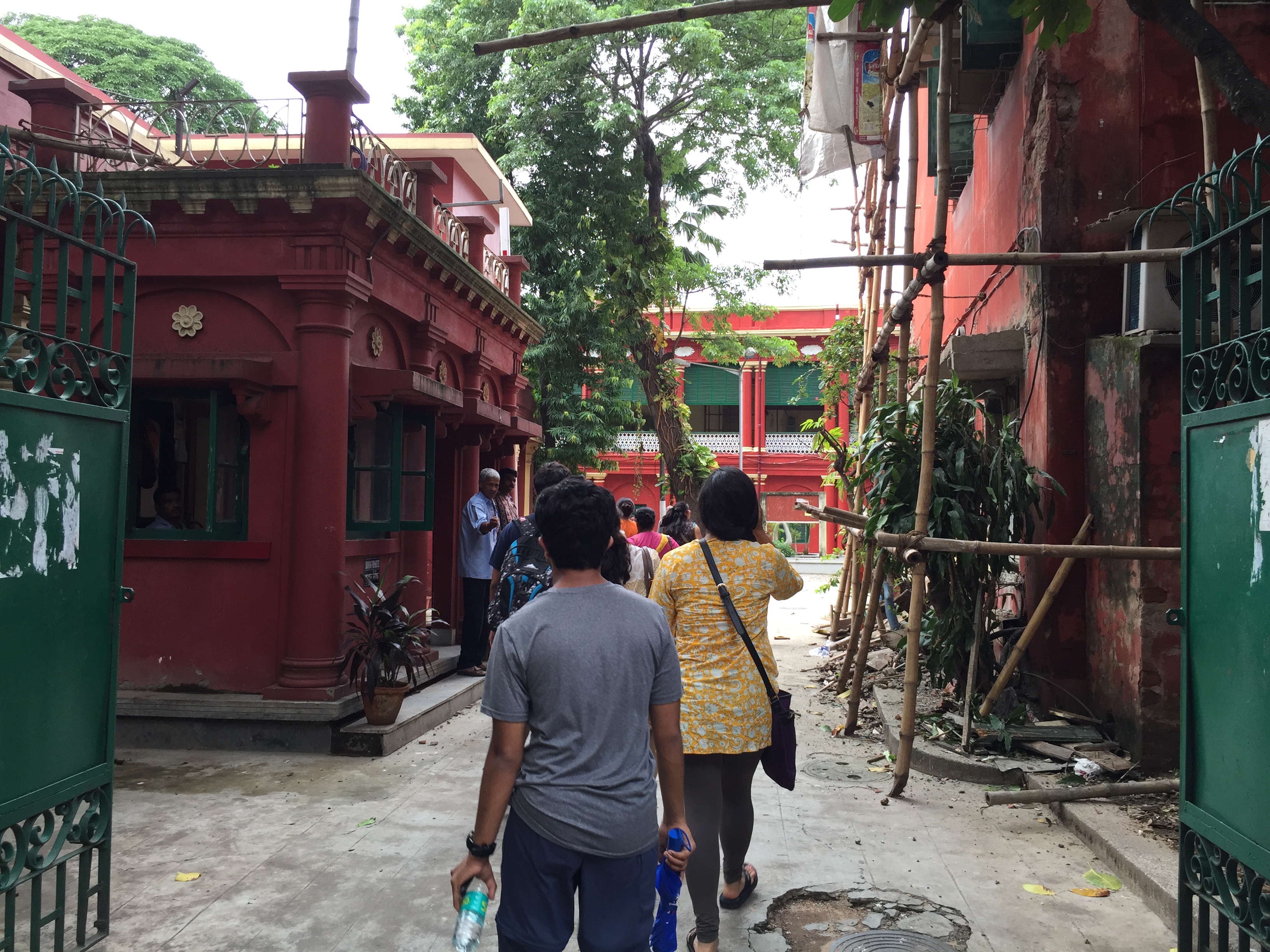
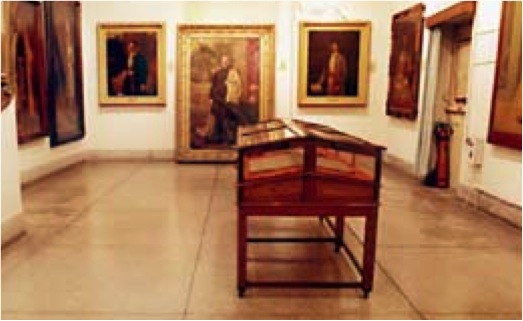
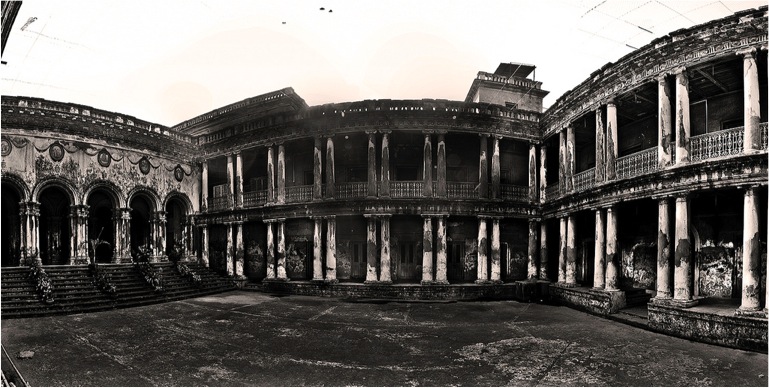
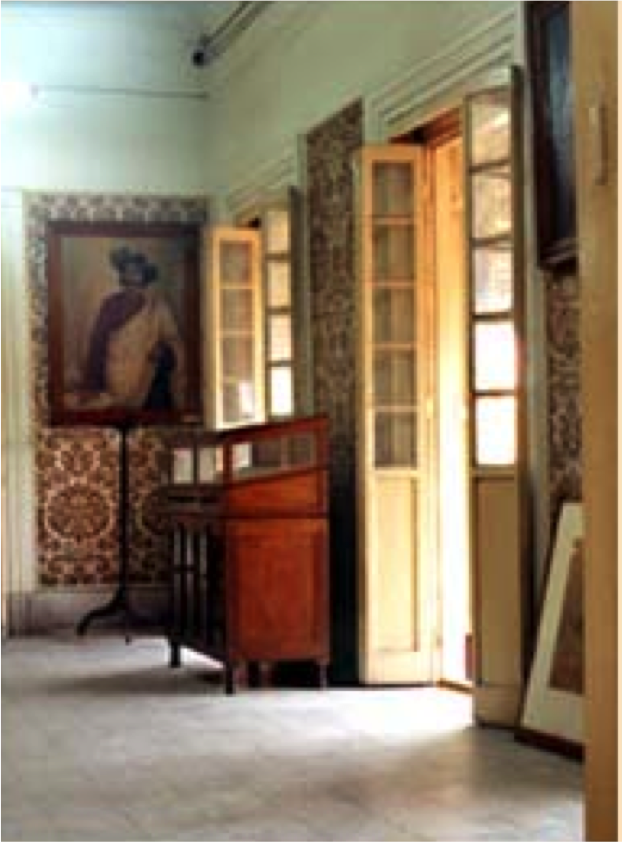
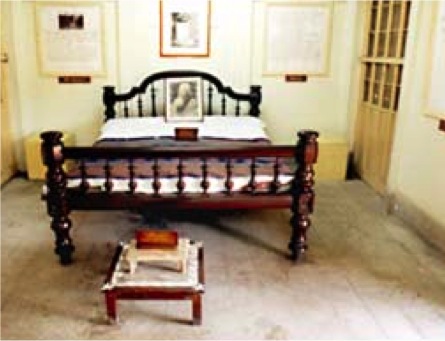
On August 7th, we visited Jorasankho, the Nobel laureate Rabindranath Tagore’s house. He was born in this house and also had left his body here. His father, Debendranath Tagore, his grandfather, Dwarkananth Tagore, and many of his family members were well-known public figures and talented personalities. We were amazed to learn about the Tagore family’s contributions to Indian Culture and to the world. In this environment, while walking through Jorasankho, we felt that we were touching a part of history.
Today, on August 8th, we were going to visit “Shantiniketan,” the place that brought Rabindranath Tagore’s vision of education and culture to life and practice. During our visit to Shantiniketan, we thought of the incidents in the lives of the Tagore family that connected them to Sri Ramakrishna, Holy Mother Sri Saradadevi, and Swami Vivekananda.
Connections of the Tagore Family and Swami Vivekananda:
Sri Ramakrishna had met Debendranath Tagore. Swami Vivekananda also met Debendranath Tagore, and as a young boy (Narendra), asked him, “Sir! Have you seen God?” Debendranath replied that Narendra had the eyes of a “Yogi” and that he should practice meditation.
Narendra was a member of the Brahmo Samaj where he was one of the lead singers in the choir. Rabindranath Tagore had written a few songs for the Brahmo Samaj and Narendra would go to Jorasanko for musical rehearsals.
Later, Swami Vivekananda and Rabindranath Tagore’s mission in life took different turns. However, Rabindranath Tagore showed great respect for Sri Ramakrishna and Swami Vivekananda. Also, Swami Vivekananda’s disciple, Sister Nivedita, played a crucial role in making Rabindranath Tagore known to the Western World–catapulting him to fame and leading him to becoming the first Asian recipient of the Nobel Prize.
Rabindranath Tagore on Sri Ramakrishna:

To the Paramahamsa Ramakrishna Deva
“Diverse courses of worship
from varied springs of fulfillment
have mingled in your meditation.
The manifold revelation of the joy of the Infinite
has given form to a shrine of unity in your life
where from far and near arrive salutations
to which I join my own.”
Rabindranath Tagore on Swami Vivekananda:
- Swami Vivekananda’s Gospel:

“Some time ago Vivekananda said that there was the power of Brahman in every man and that Narayana (God) wanted to have our service through the poor. This is what I call real gospel. This gospel showed of infinite from man’s tiny egocentric self beyond the limits of all selfishness. This was no sermon relating to a particular ritual, nor was it a narrow injunction to be imposed upon one’s external life. This naturally contained in it protest against untouchability— not because that would make for political freedom, but because that would do away with the humiliation of man— a curse which in fact puts to shame the self of us all. Vivekananda’s gospel marked the awakening of man in his fullness and that is why it inspired our youth to the diverse course of liberation through work and sacrifice.
- Swami Vivekananda’s Message:
“In India of modern times, it was Vivekananda alone who preached a great message which is not tied to any do’s and don’ts. Addressing one and all in the nation, he said: In every one of you there is the power of Brahman (God); the God in the poor desires you to serve Him. This message has roused the heart of the youths in a most pervasive way. That is why this message has borne fruit in the service of the nation in diverse ways and in diverse forms of sacrifice. This message has, at one and the same time, imparted dignity and respect to man along with energy and power. The strength that this message has imparted to man is not confined to a particular point; nor is it limited to repetitions of some physical movements. It has, indeed, invested his life with a wonderful dynamism in various spheres. There at the source of the adventurous activities of today’s youth of Bengal is the message of Vivekananda—which calls the soul of man, not his fingers.
- Study Vivekananda:

“If you want to know India, study Vivekananda. In him everything is positive and nothing negative.”
Bus Tour to Shantiniketan & a break
Early in the morning, at 5:30 a.m., we began assembling in the lobby of the Hyatt Hotel in preparation for our departure to the university town of Shantiniketan. Once more, the Club7 staff had graciously put together lunch boxes for each of us to take on the bus ride. Like our visits to Jayrambati and Kamarpukur, the trip to Shantiniketan was a long drive, and we traveled in two big buses instead of our usual three. We left the Hyatt shortly after 6:00 a.m. and sang morning prayers as we drove through Kolkata.
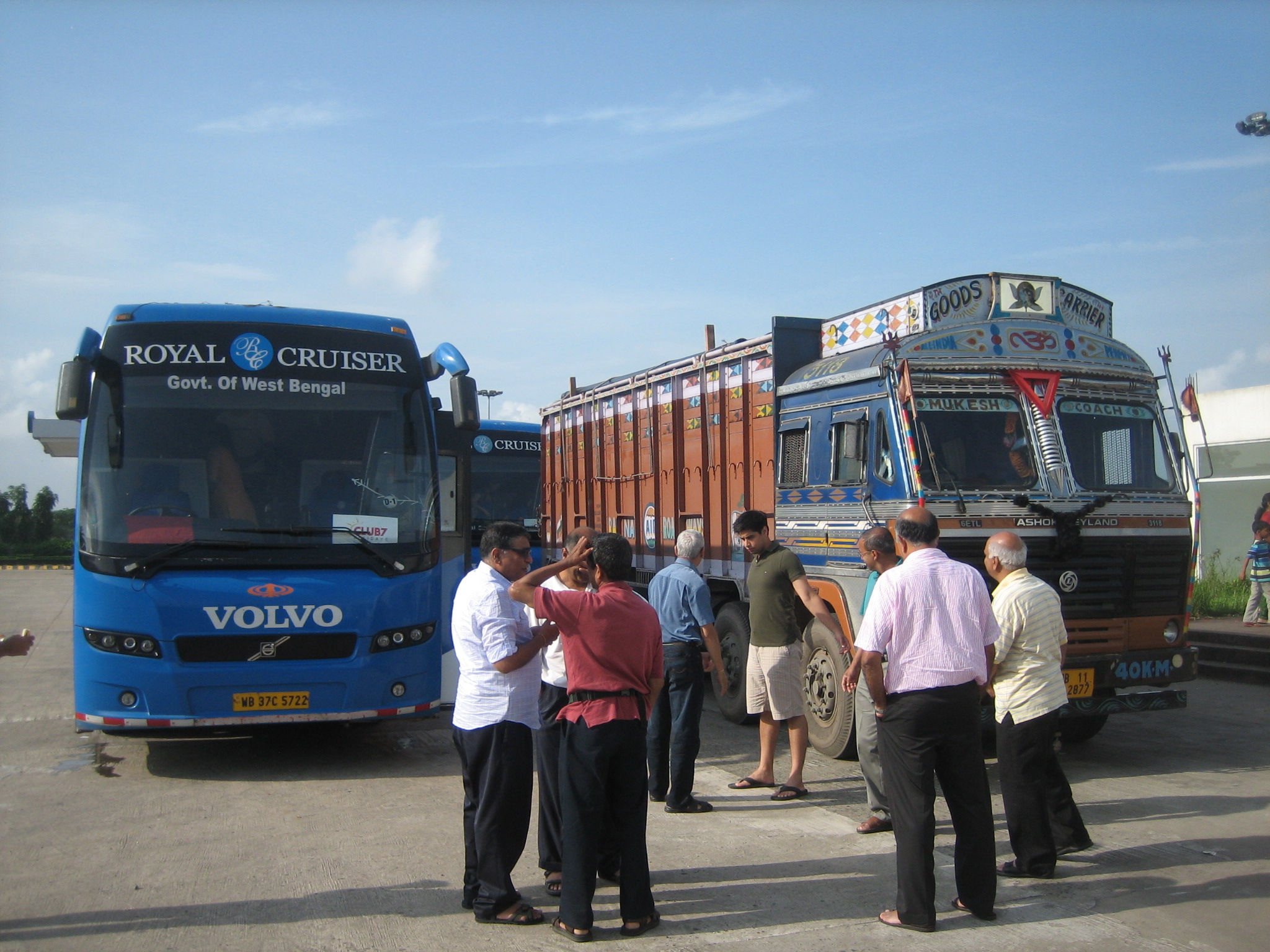 We took a short break along the way. As a result of some construction, a part of the road was blocked from all sides with huge trucks, buses, vans, cars and other vehicles. Our bus drivers and their helpers used all of their skills and experience to avoid our delay. They even drove safely on the opposite side of the road when needed. The helpers stood on the road to stop other vehicles in order to make the way for our buses. The total journey took us four and a half hours. Without the bus drivers’ skills, we would have probably arrived hours later, in the afternoon.
Traveling in Totos:
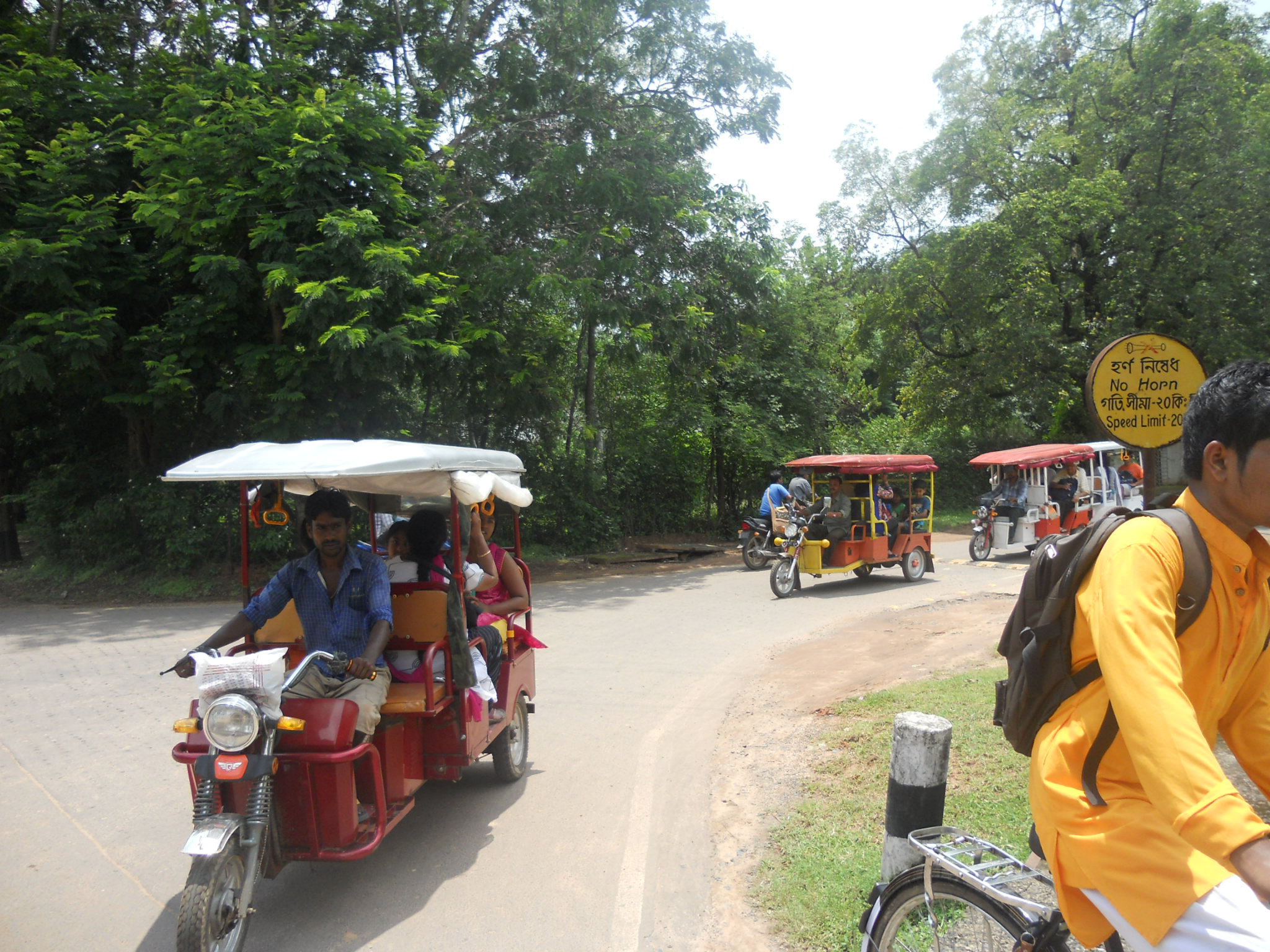
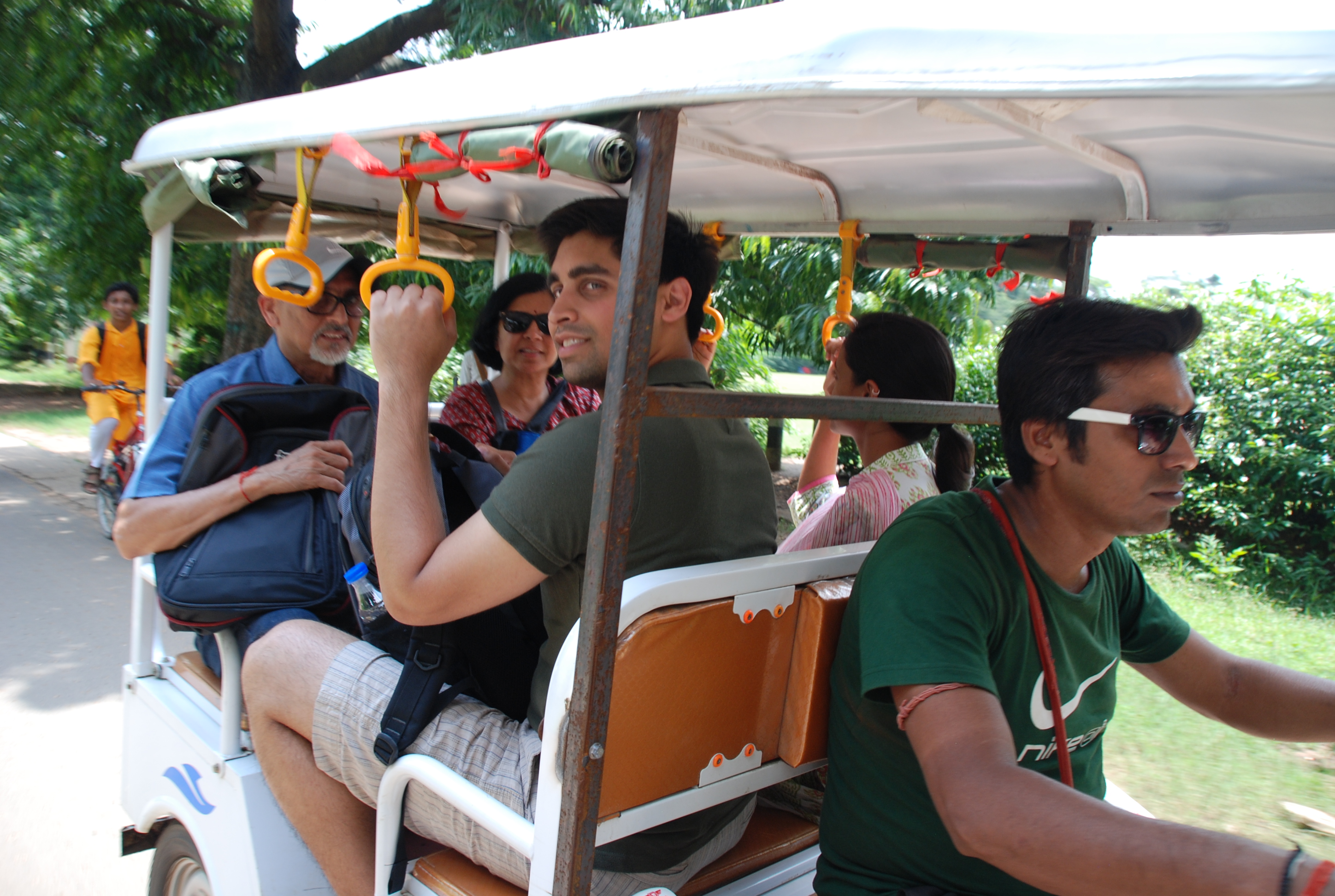
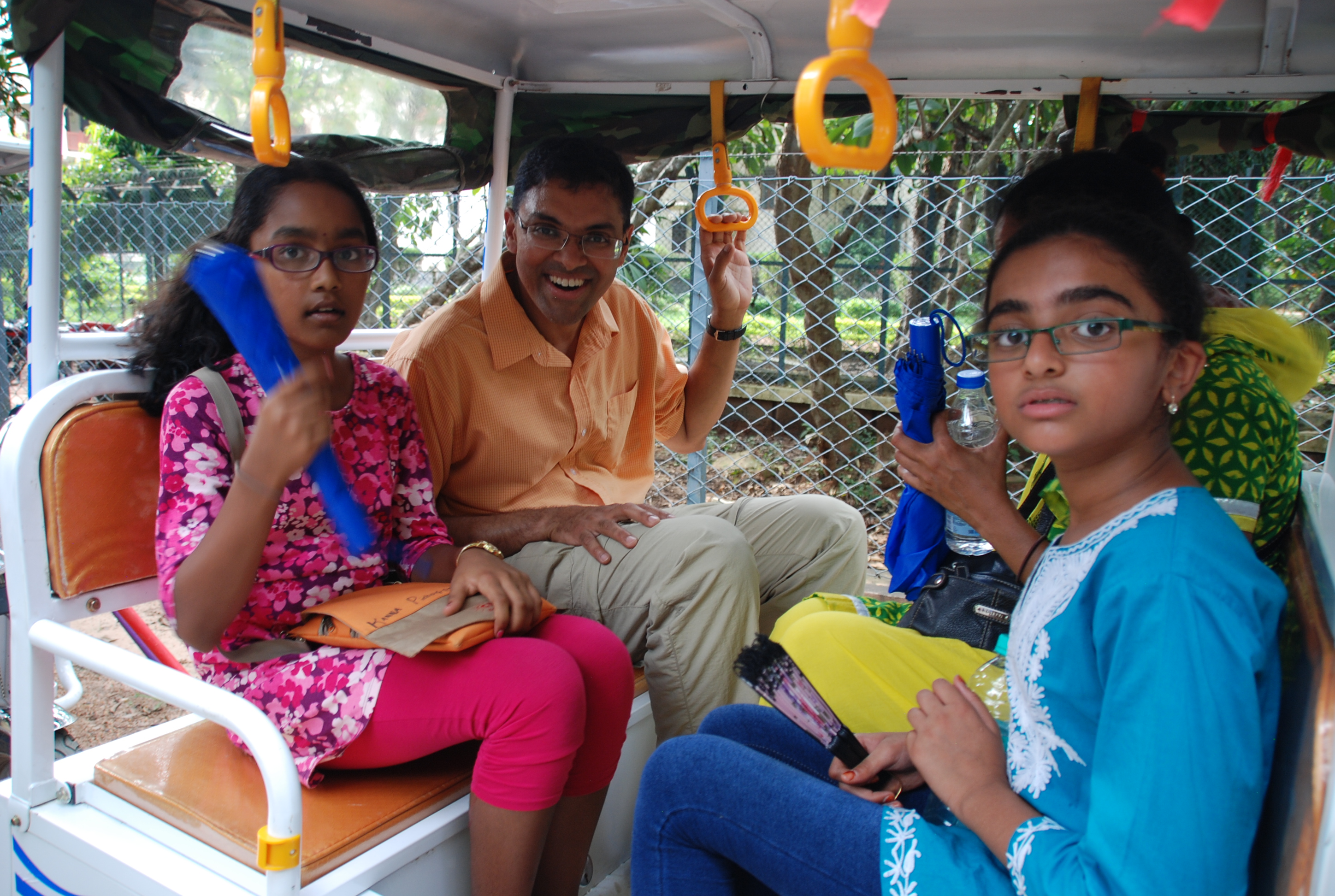
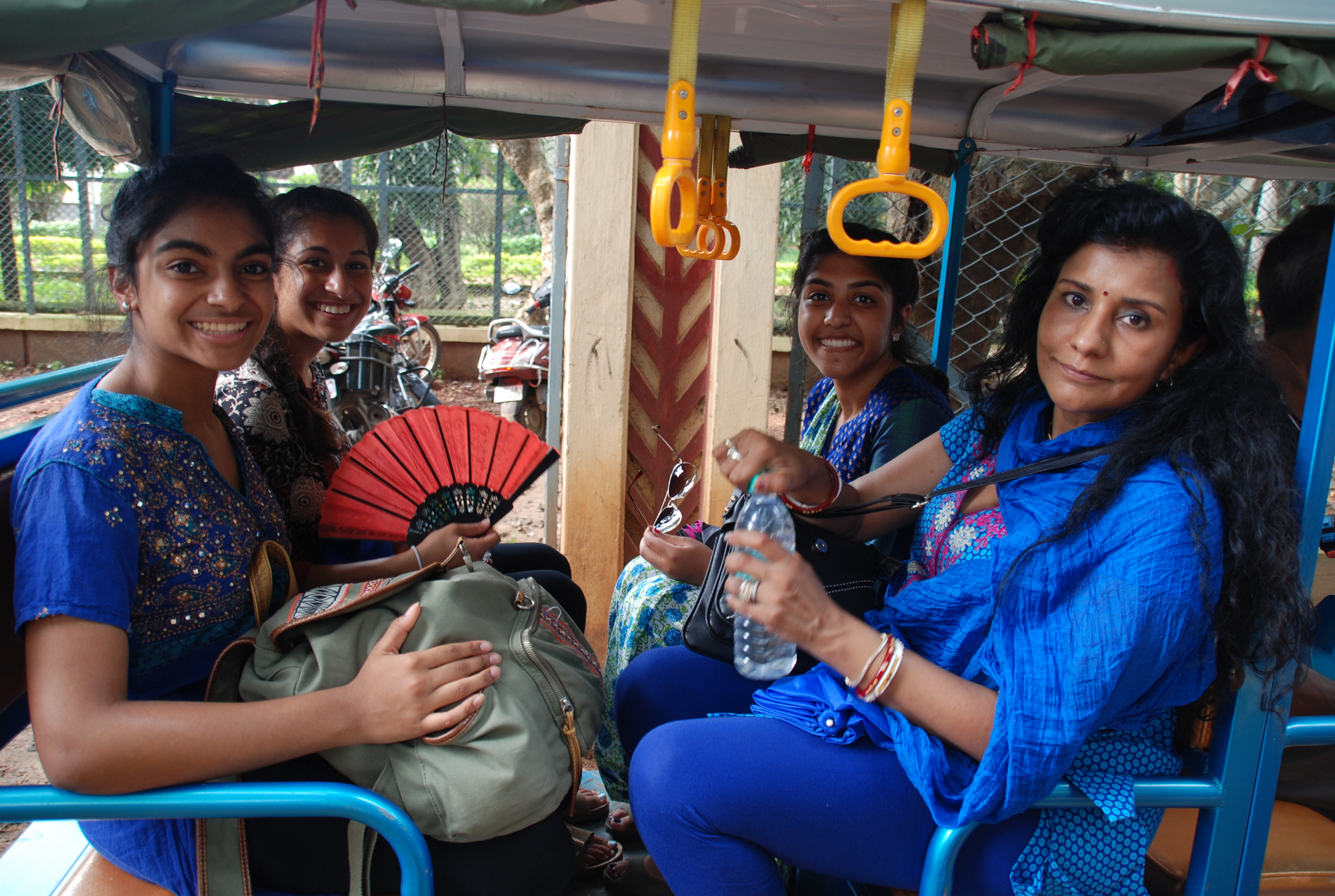
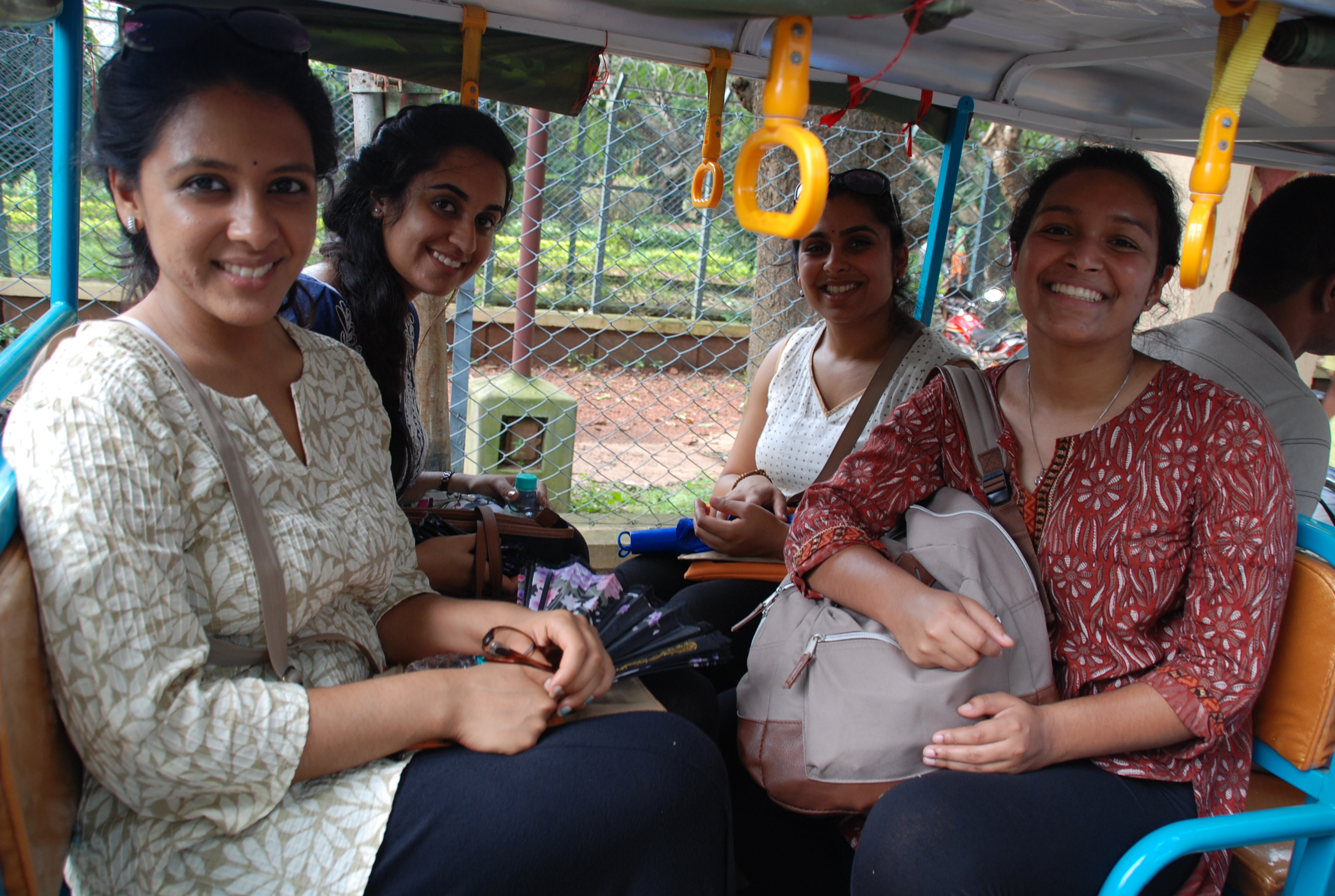
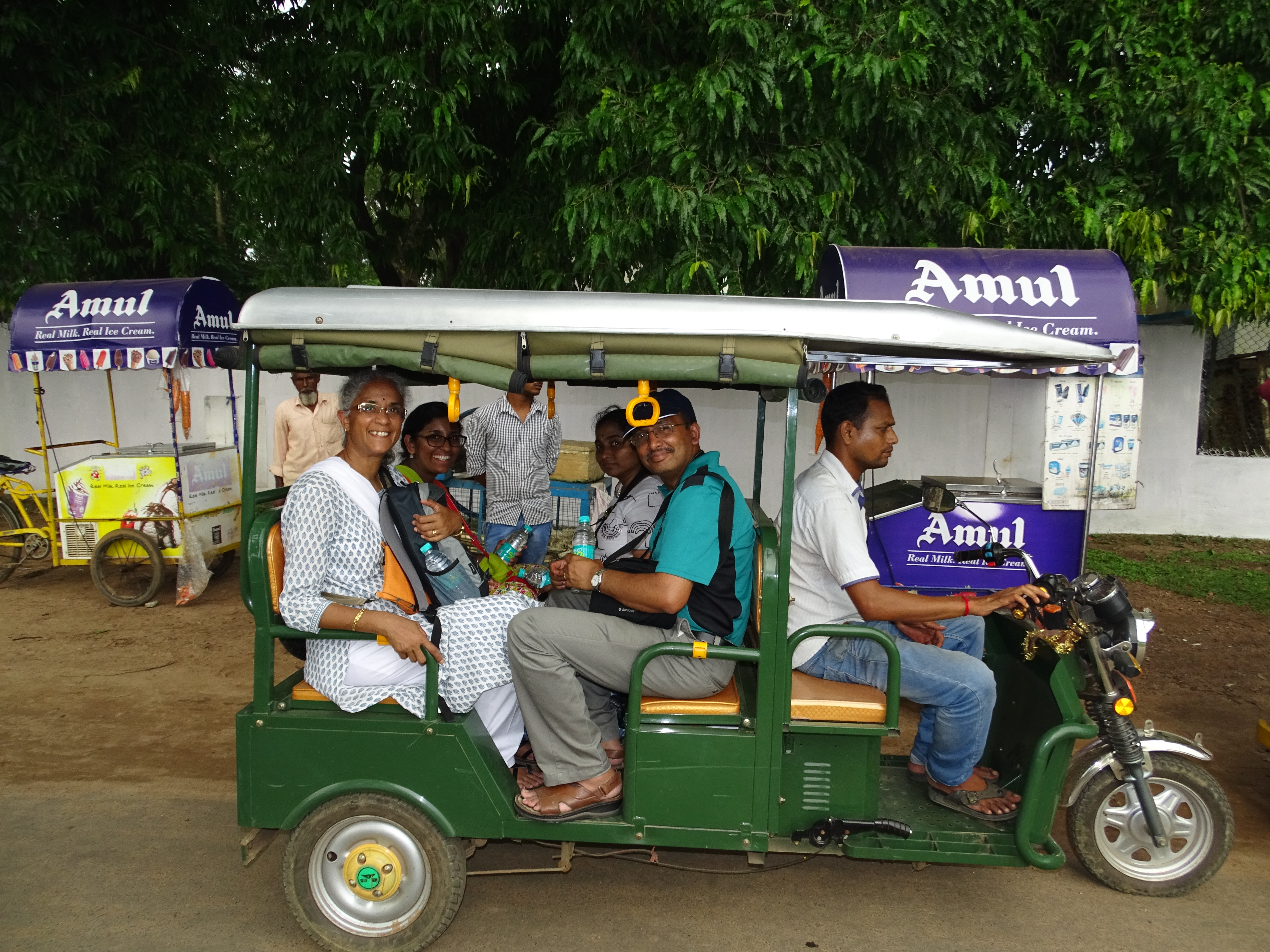
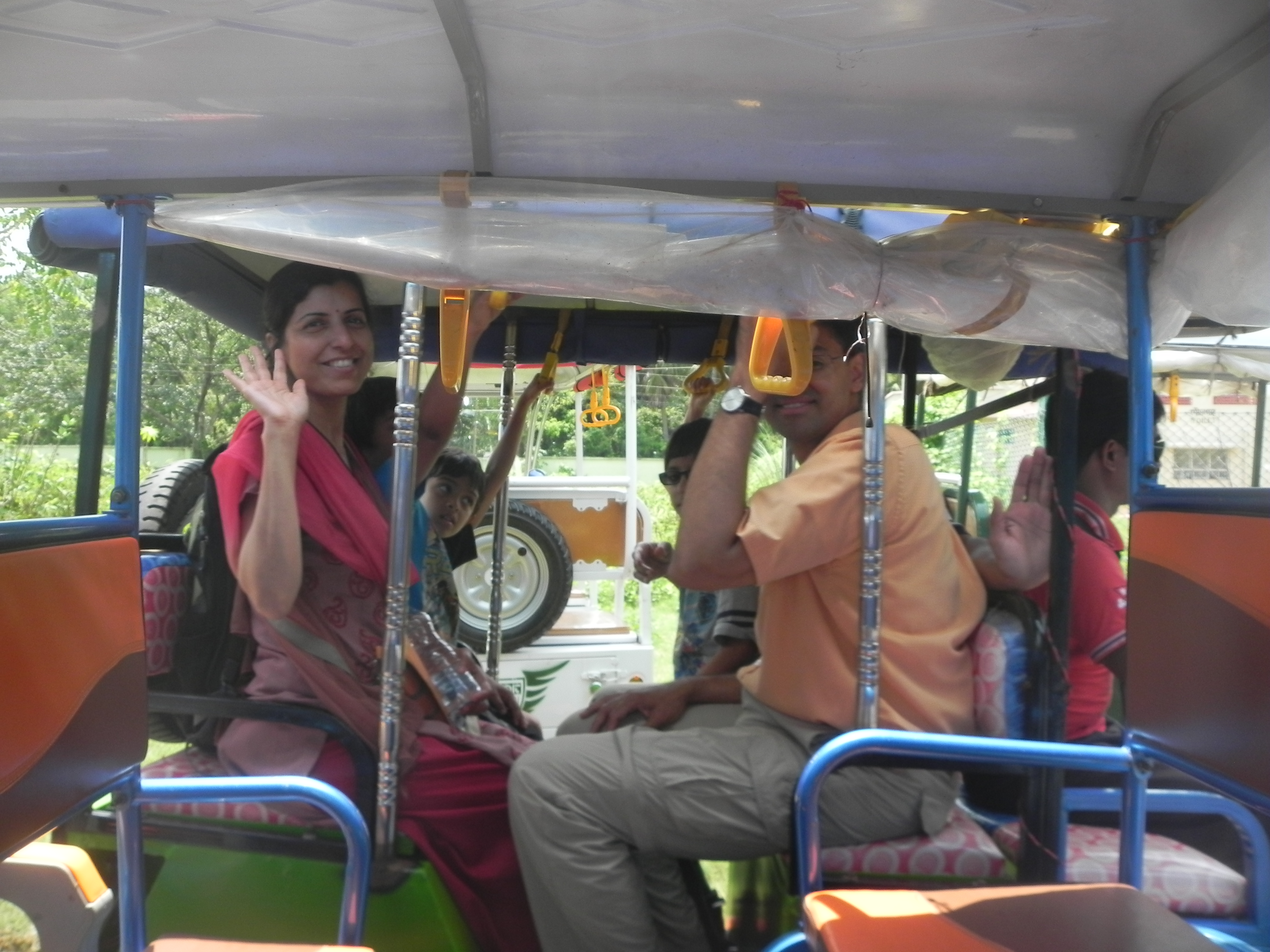
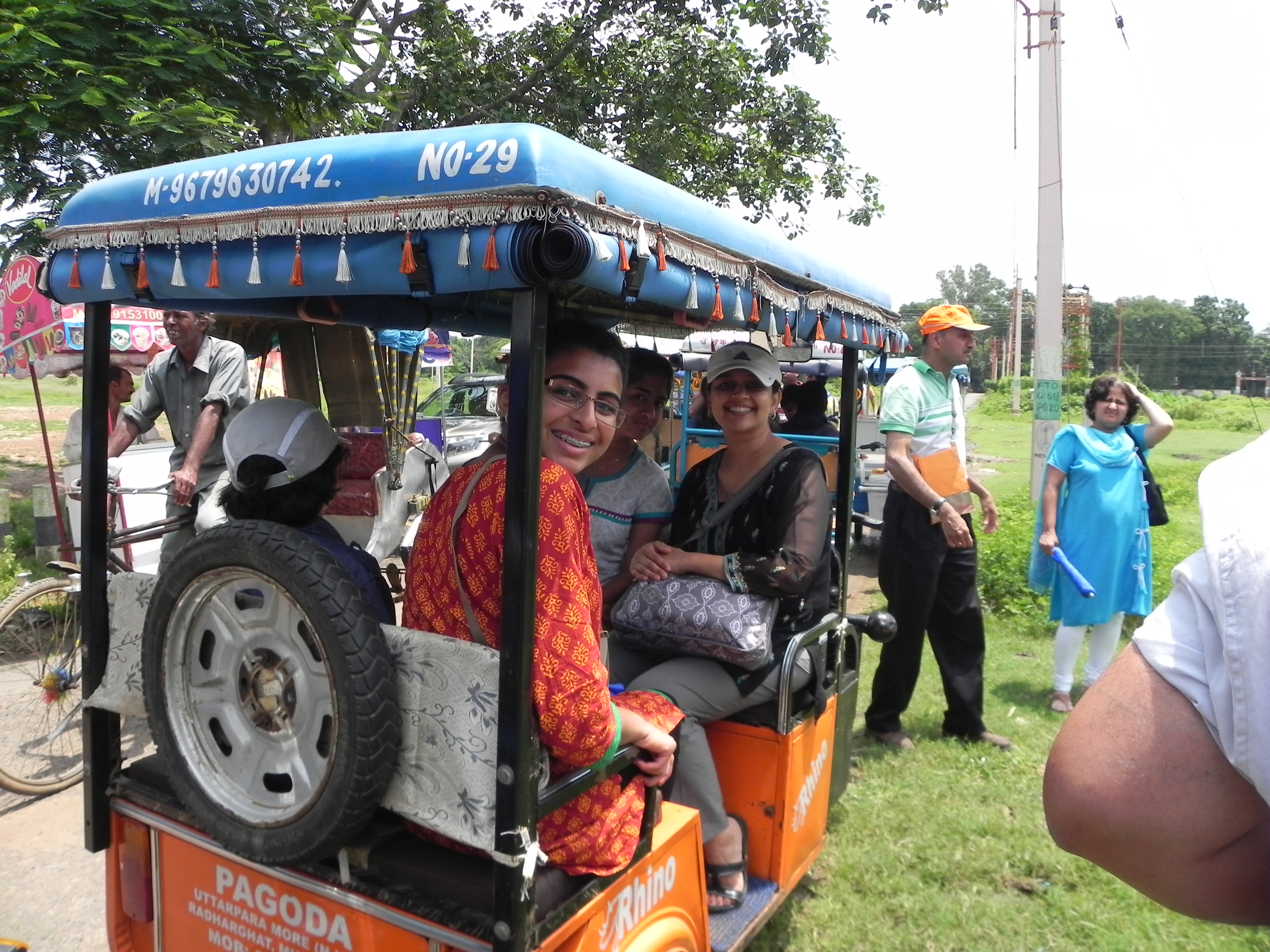
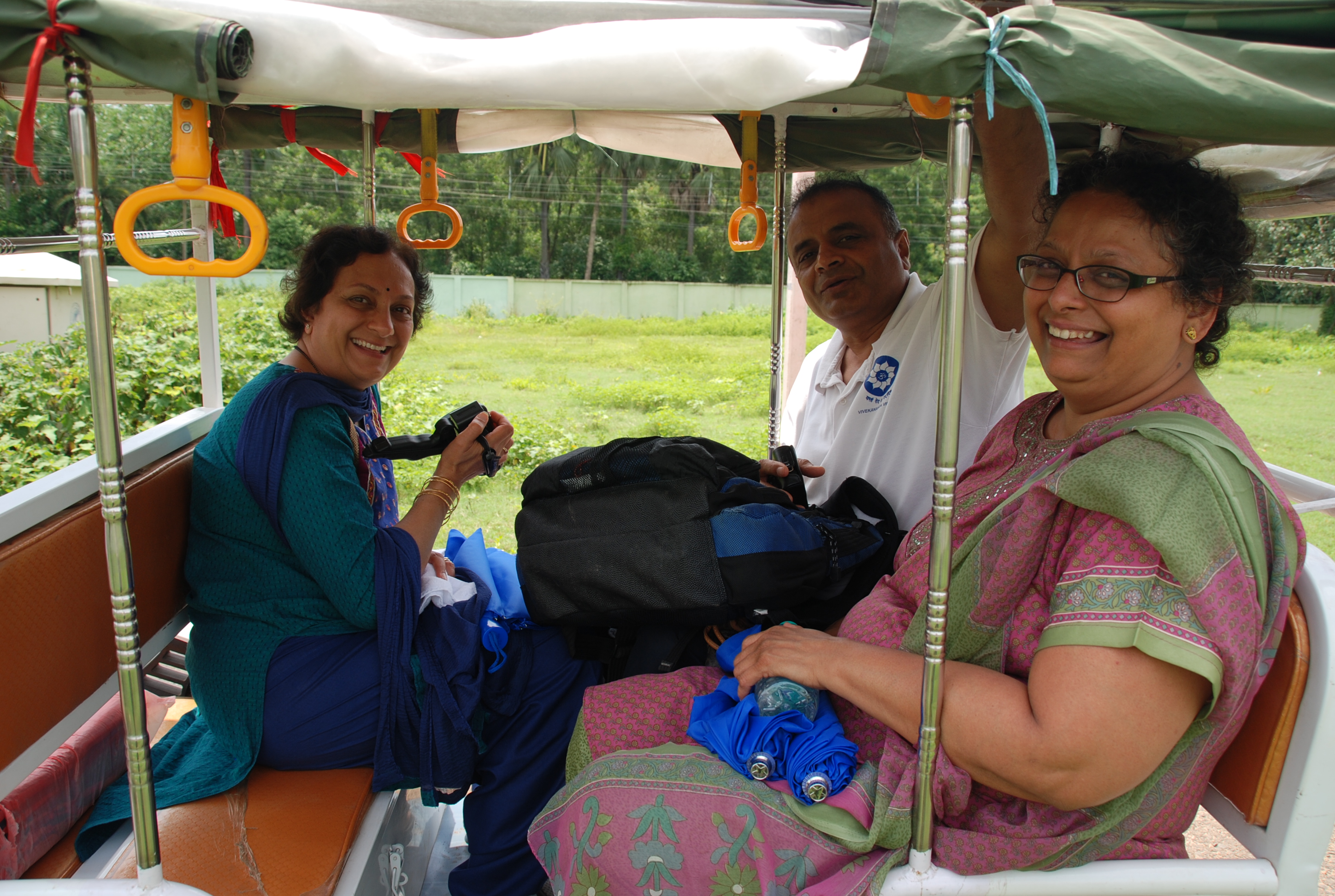
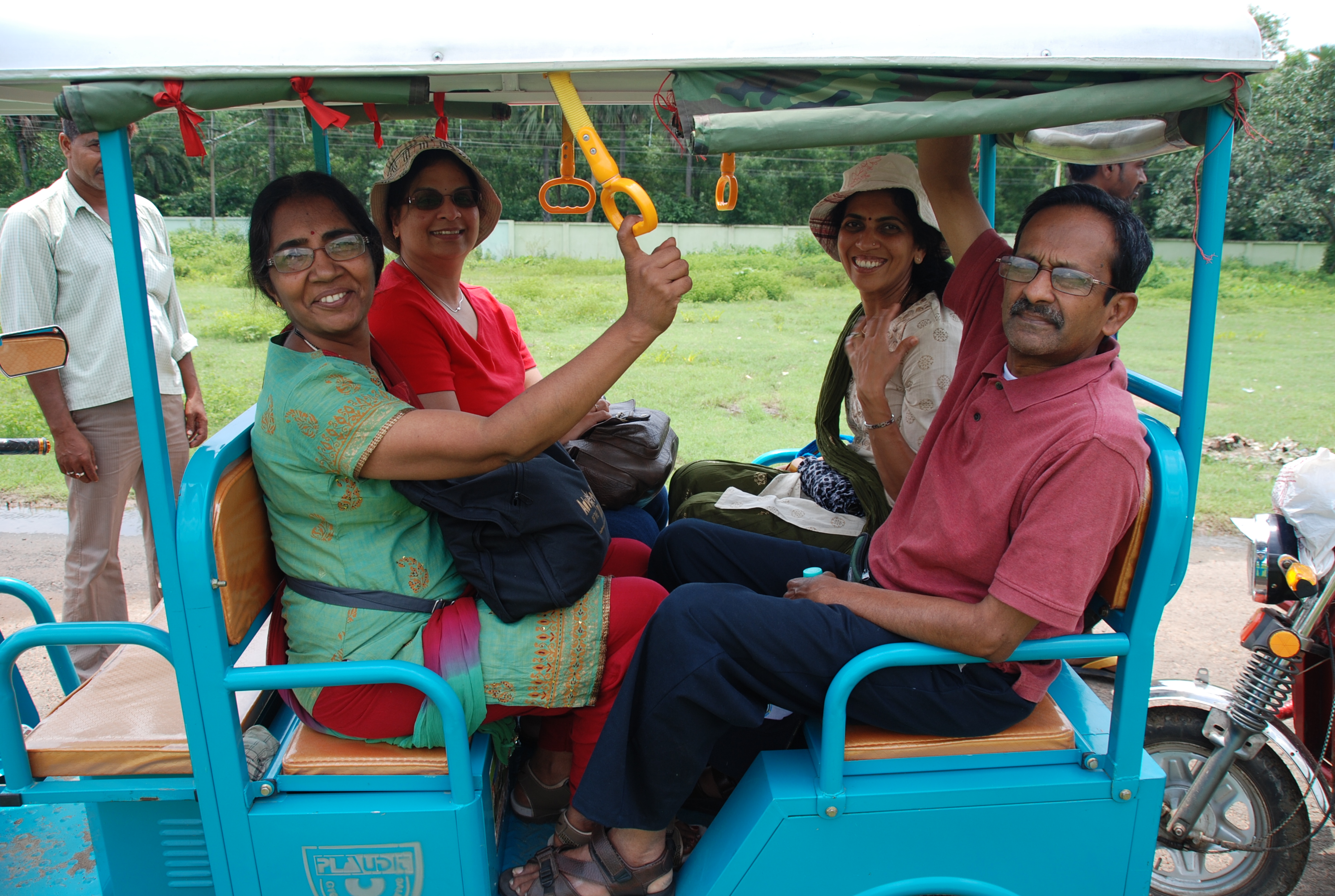
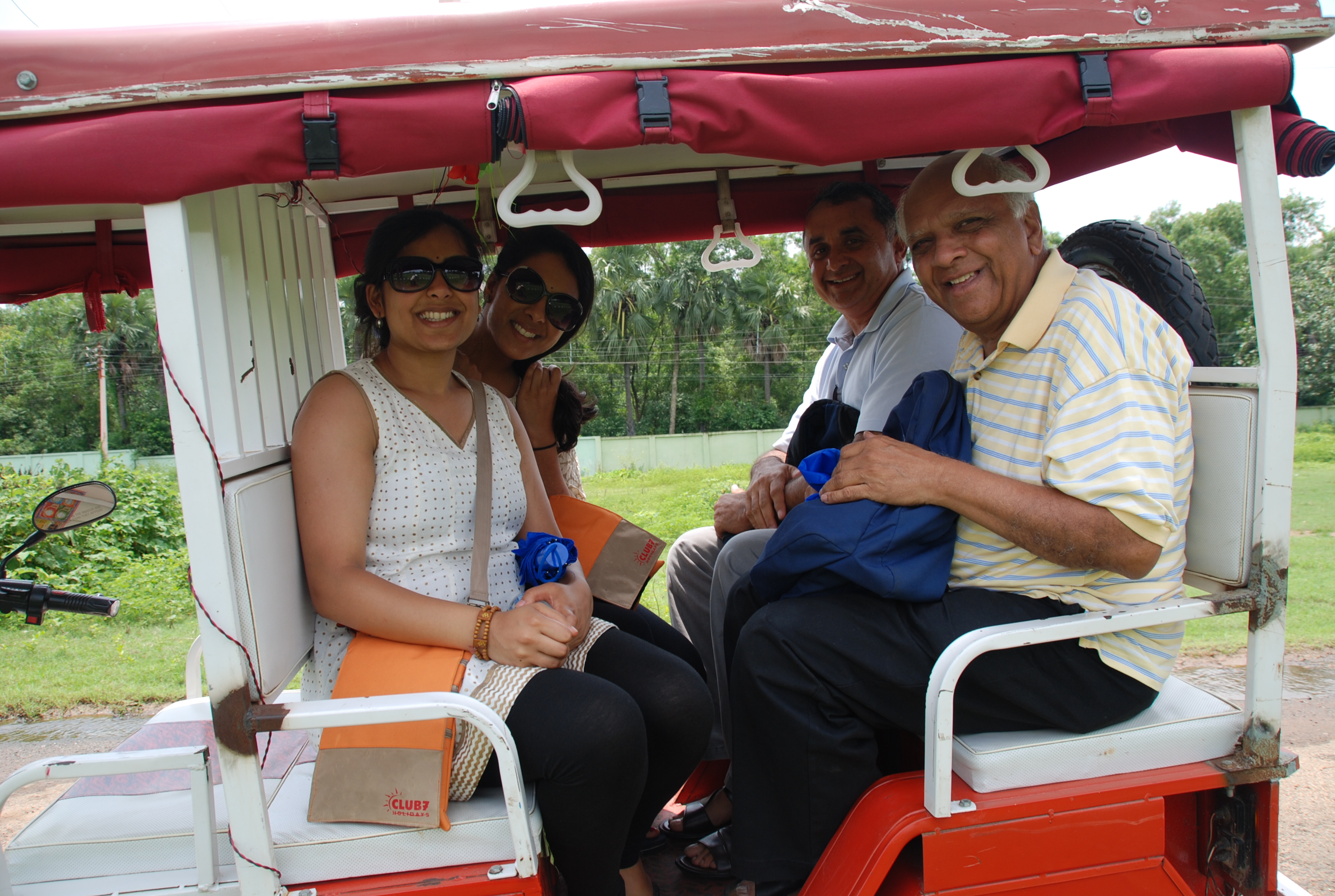
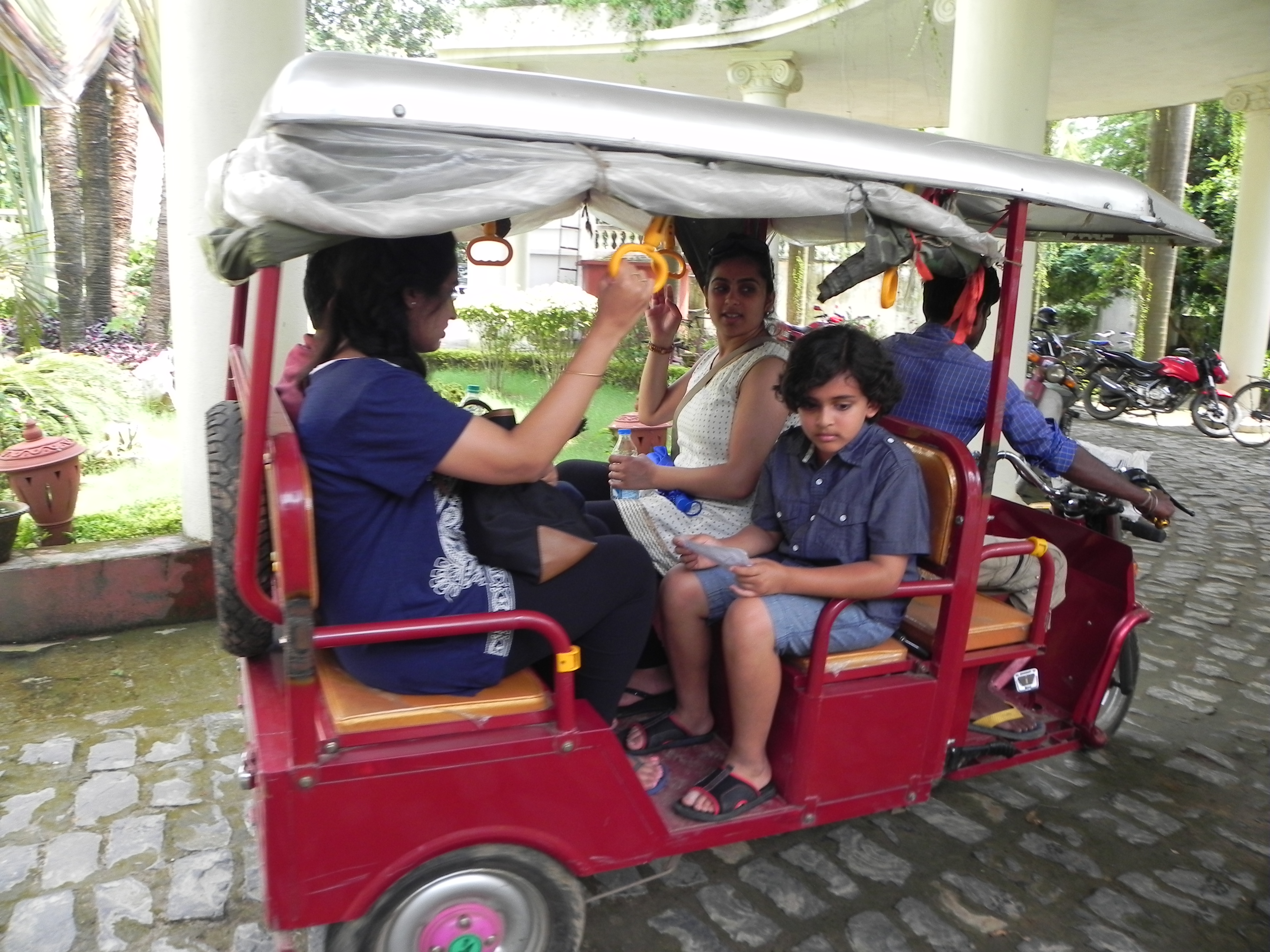
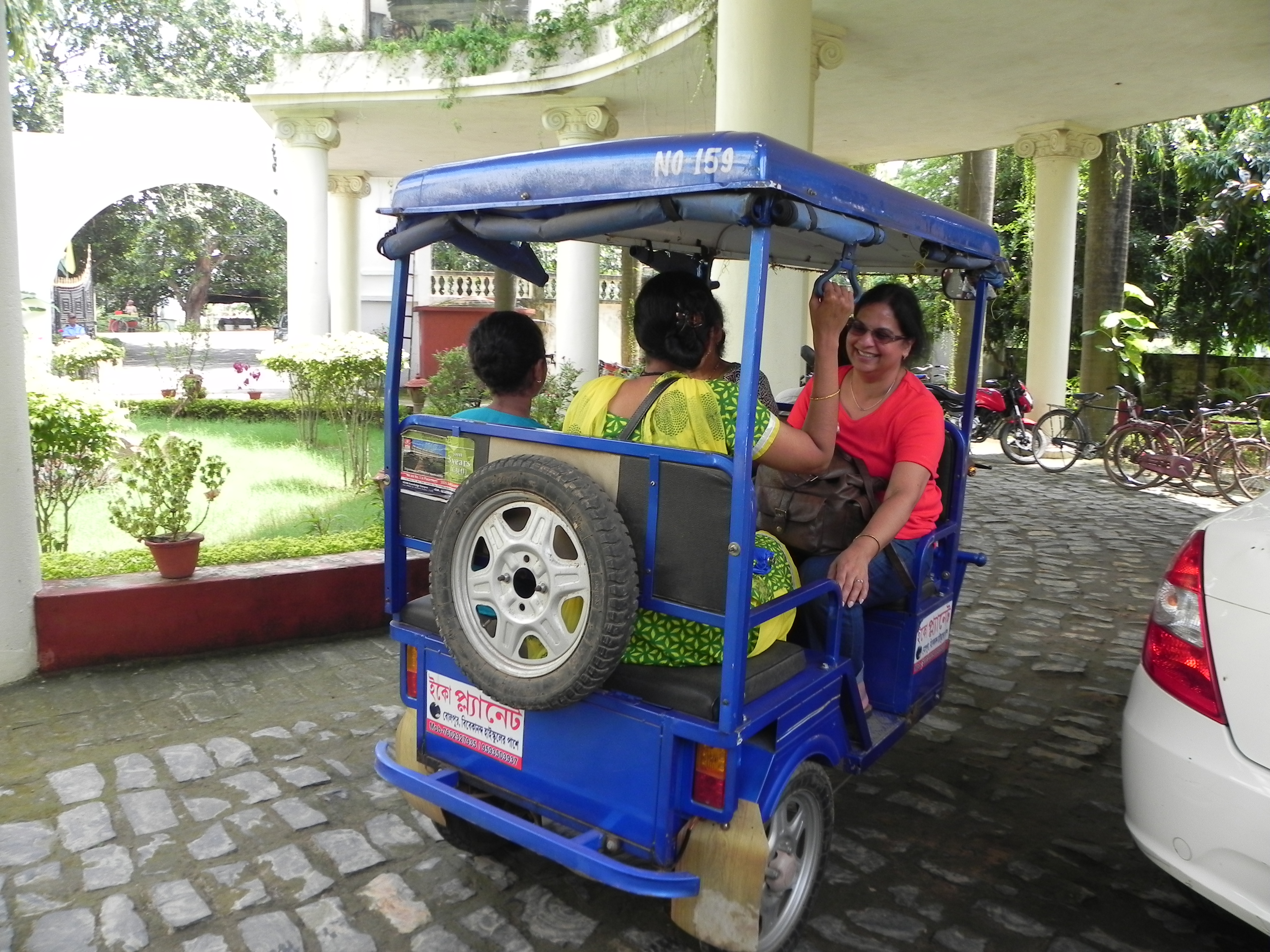
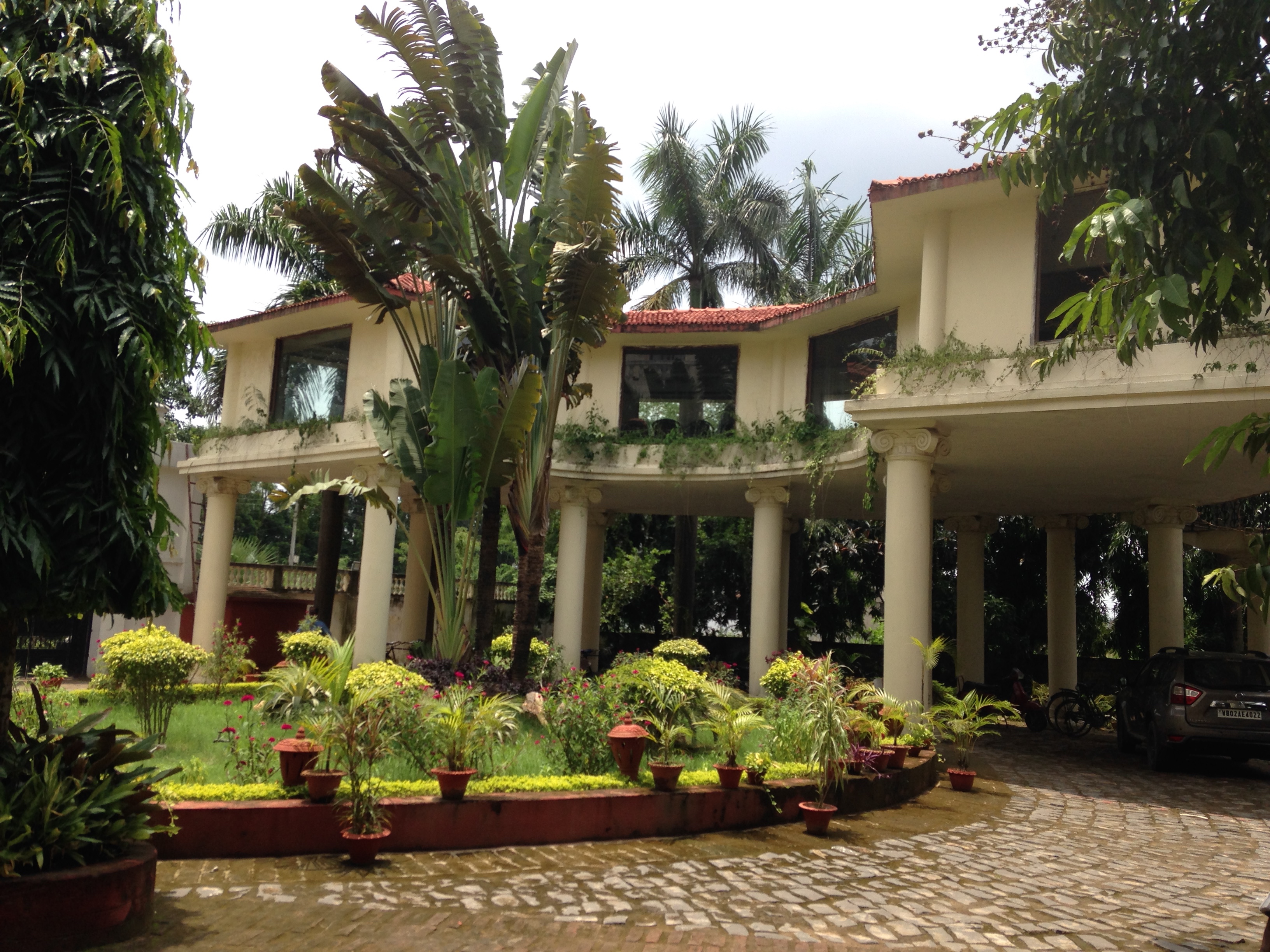
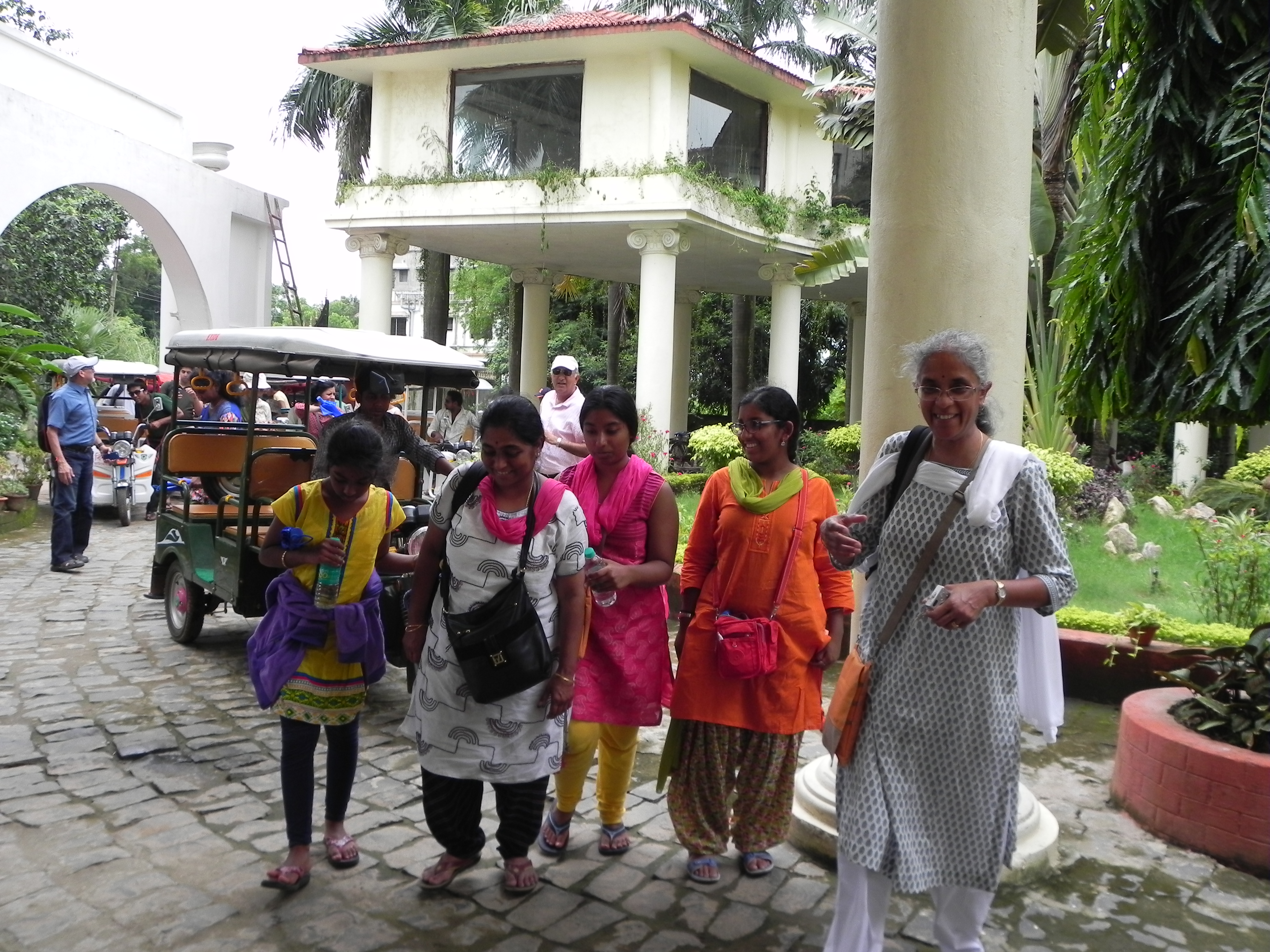
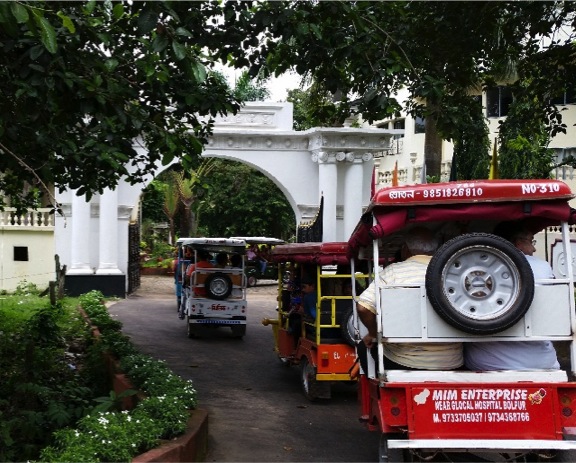
At Shantiniketan, the path was inaccessible to our huge buses. So we boarded around twenty four-passenger, battery operated toto rickshaws to drive us to our destination. This was an exciting experience for the young and old. As we rode down the dirt road in the open totos, we could begin to feel Shantiniketan’s peaceful natural aura.












Special Lunch:


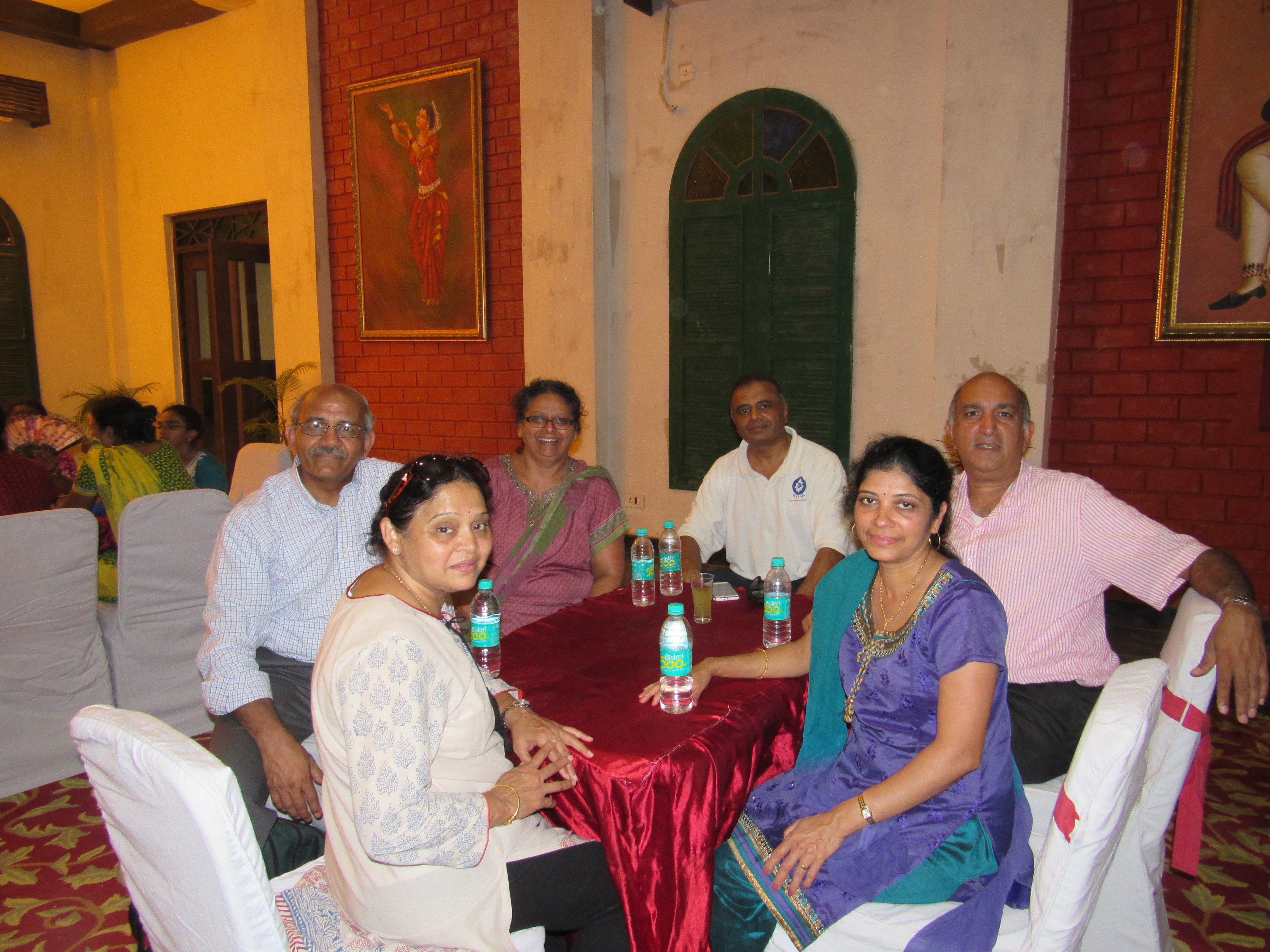
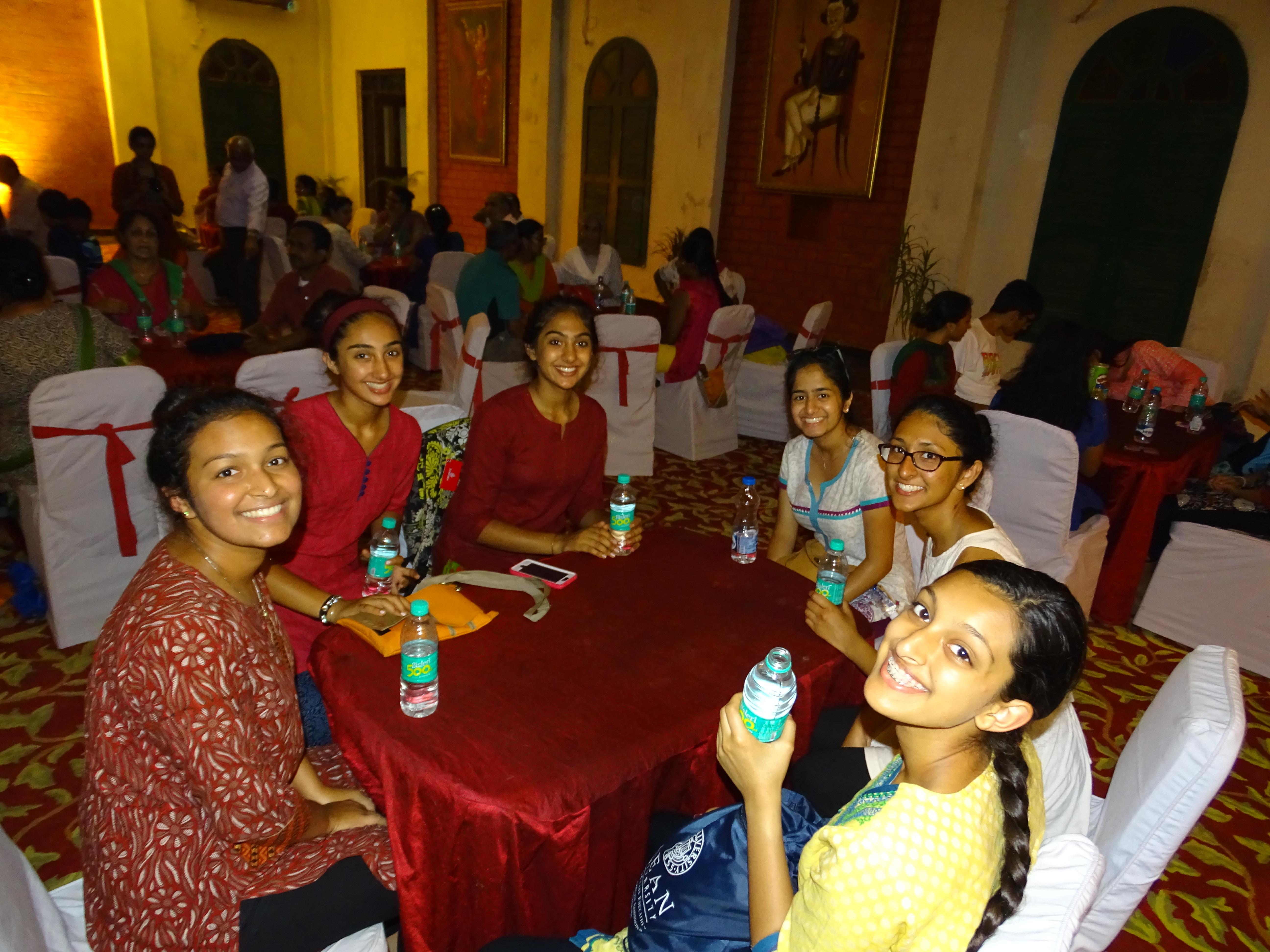
After a brief ride, our caravan of totos arrived at the Hotel Camelia Restaurant, where we were greeted with cold bottles of Thums Up and a buffet lunch of mutter paneer, dum aloo, naan, and the famous Bengali rasgulla. Club7 members had made all the arrangements for our lunch. The place looked like a royal palace with the impressive red colored furniture and excellent paintings on the walls.
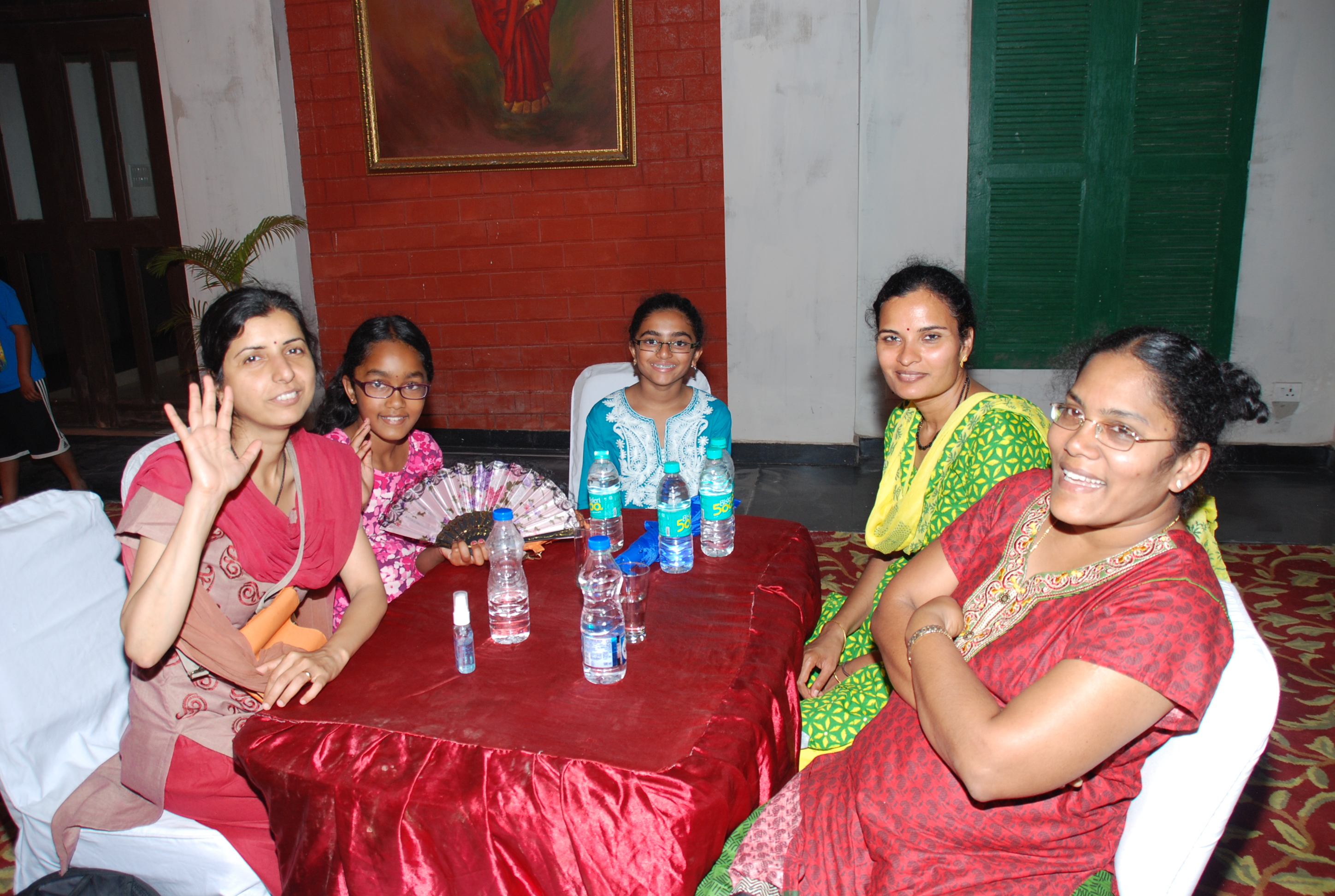


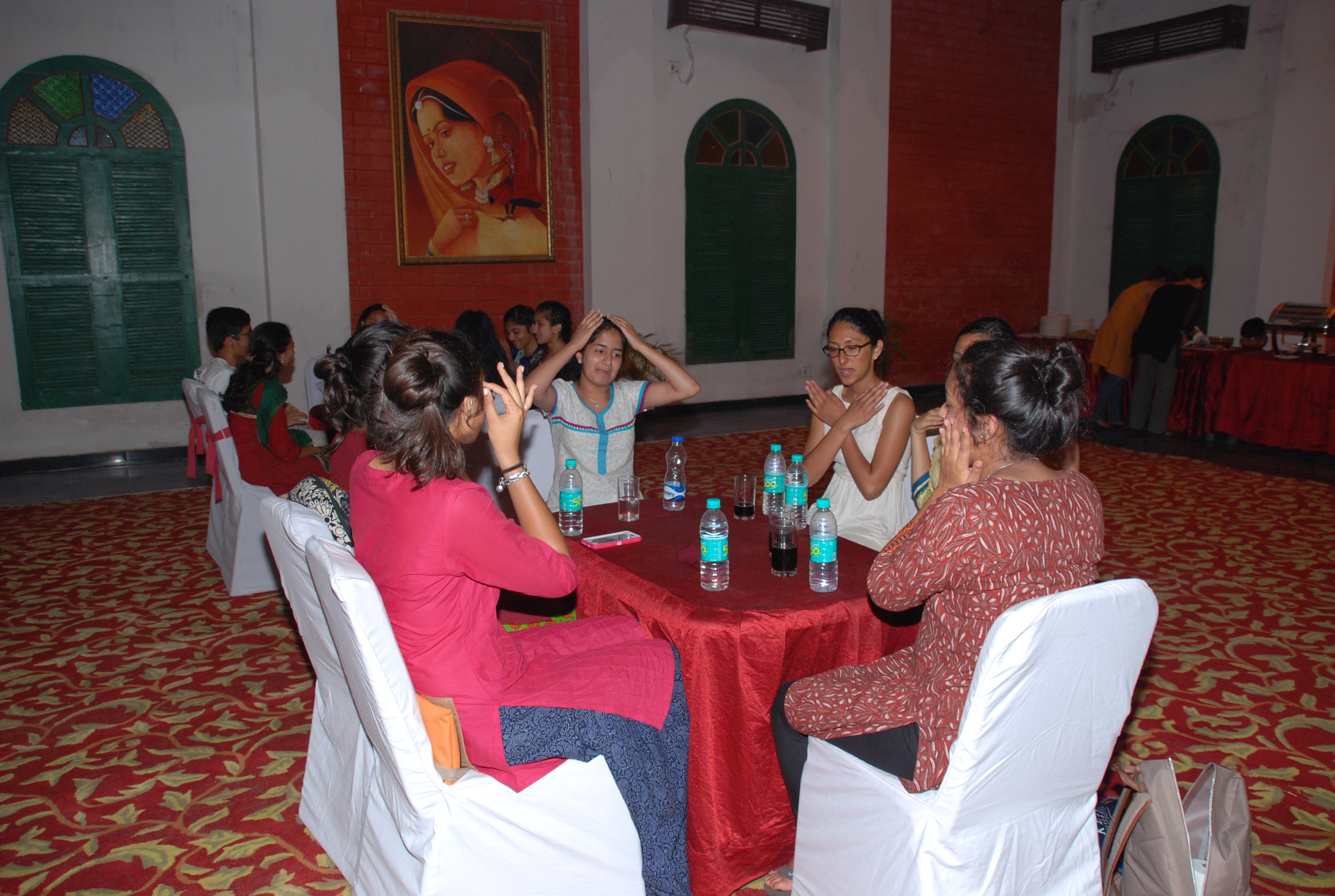


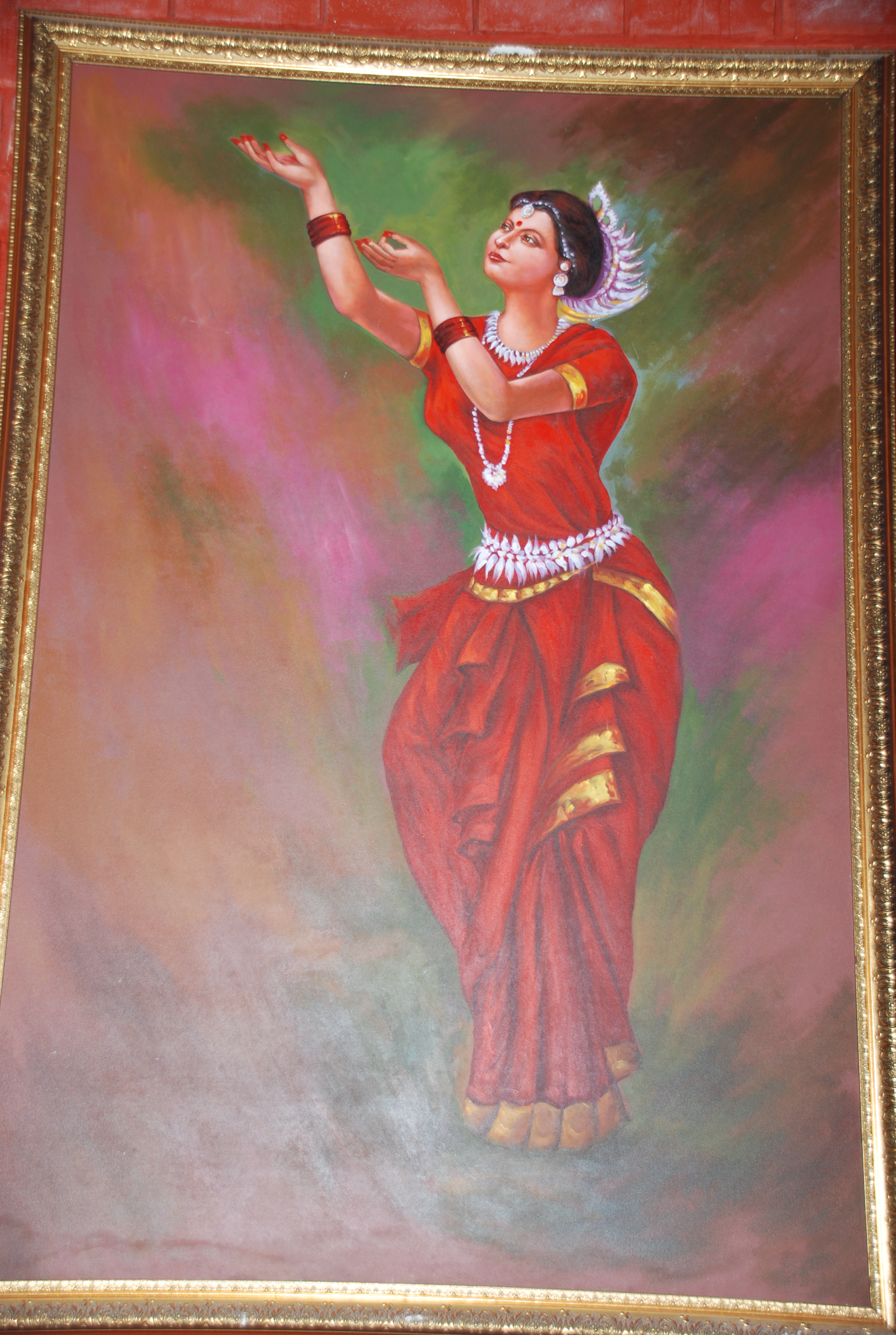





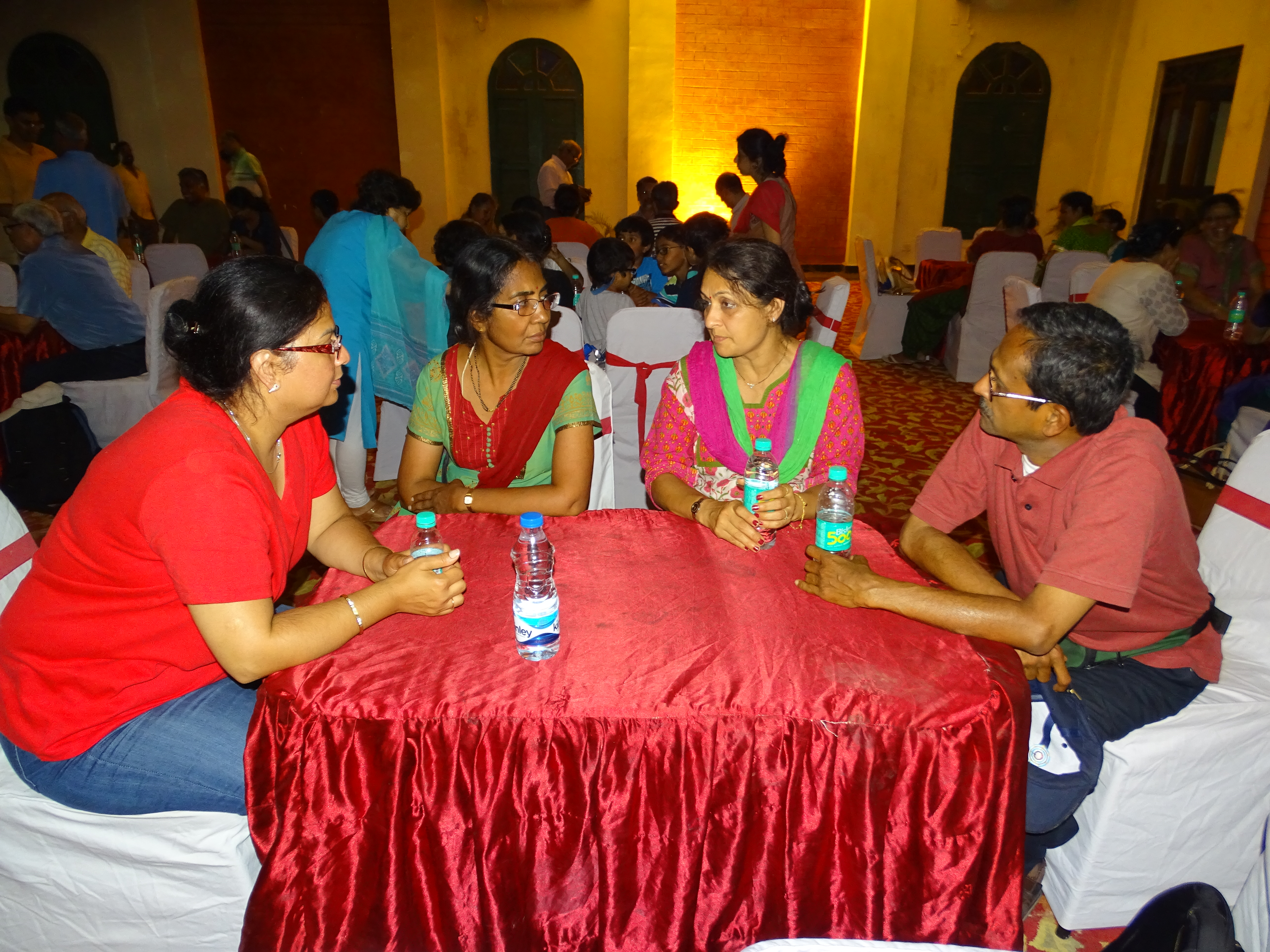





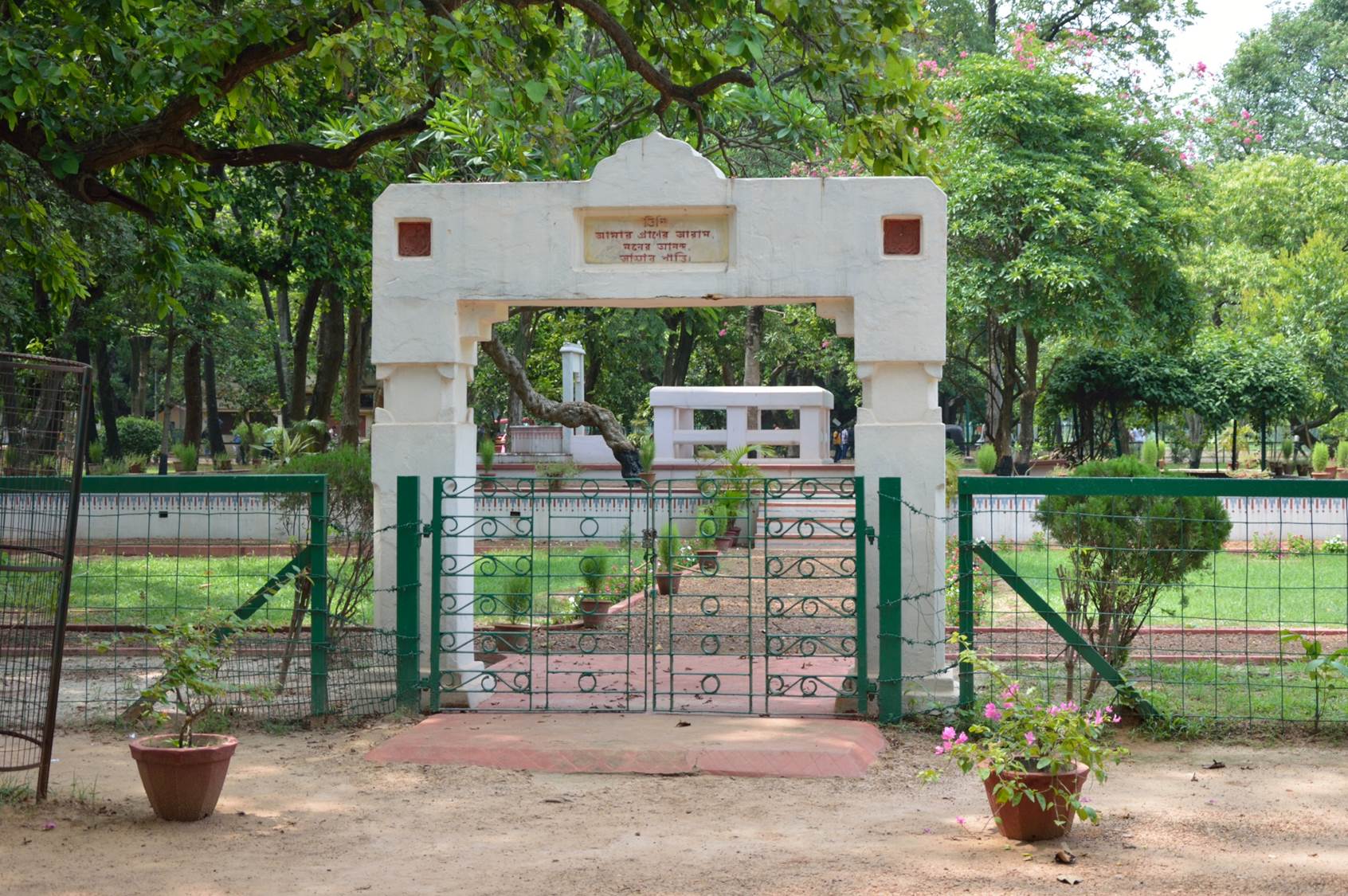
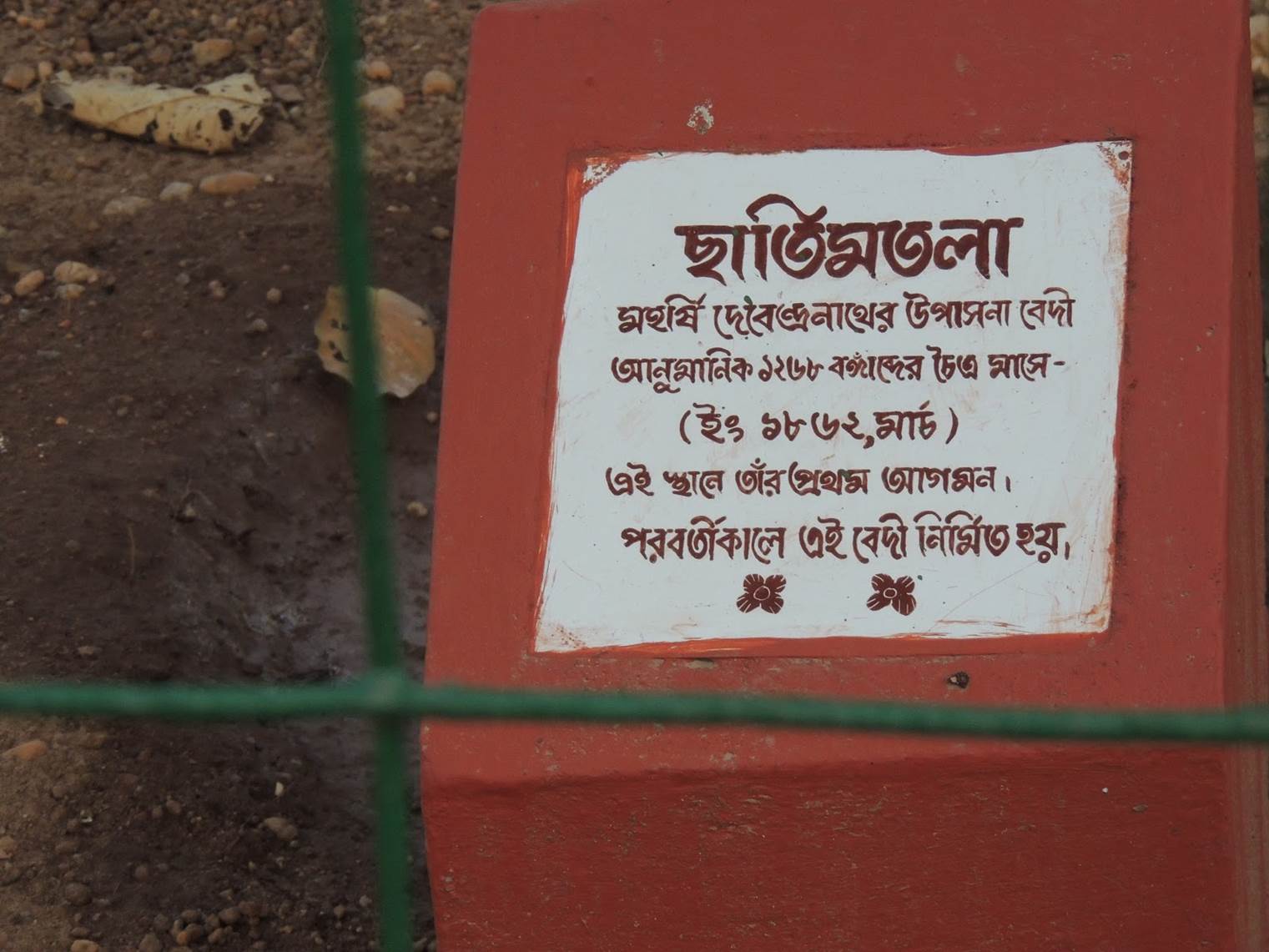
Chhatimtala: After lunch, we boarded the totos once more and rode to Chhatimtala.
The Chhatim tree is also known as the Devil’s tree. However, in Sanskrit it is called “Sapta Parni,” Sapta means seven and Parni means leaves. The tree has clusters of beautifully arranged 7 leaves.
Chhatimala is considered the starting point of Shantiniketan. Debendranath, and later Rabindranath, would sit under these Chhatim trees in meditation. It was here, under a tree of Chhatim, that Maharshi Debendranath Tagore found peace of mind and soul. The original tree is no longer there. Another such tree has been planted and it is growing well. The green surrounding with the sacred ‘bedi’ made us feel at peace.

Shantiniketan:
In 1863, on a seven-acre plot at the site of the present institution, Debendranath Tagore, Rabindranath’s father, built a small retreat for meditation, and in 1888 he dedicated the land and buildings towards the establishment of a Brahmavidyalaya and a library.
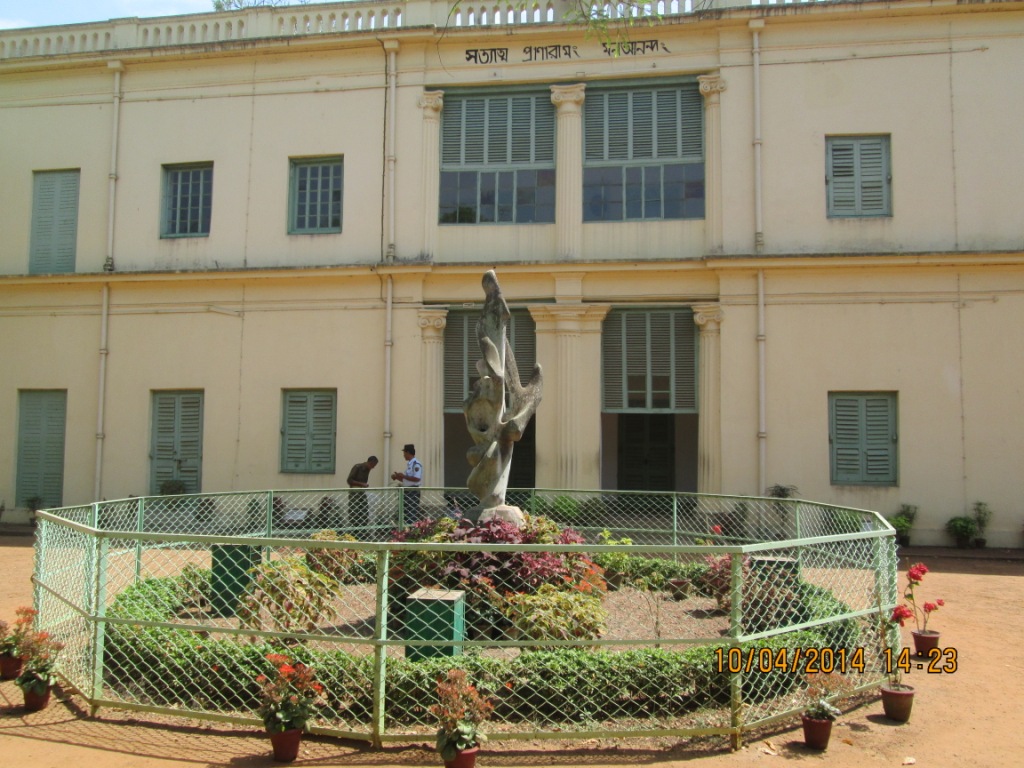
Shantiniketan Griha– Very near Chatimtala, we find the oldest building where ‘Shantiniketan’ was founded in 1863. We were fortunate to have the Principal of the school “Patha Bhavan” as our guide.

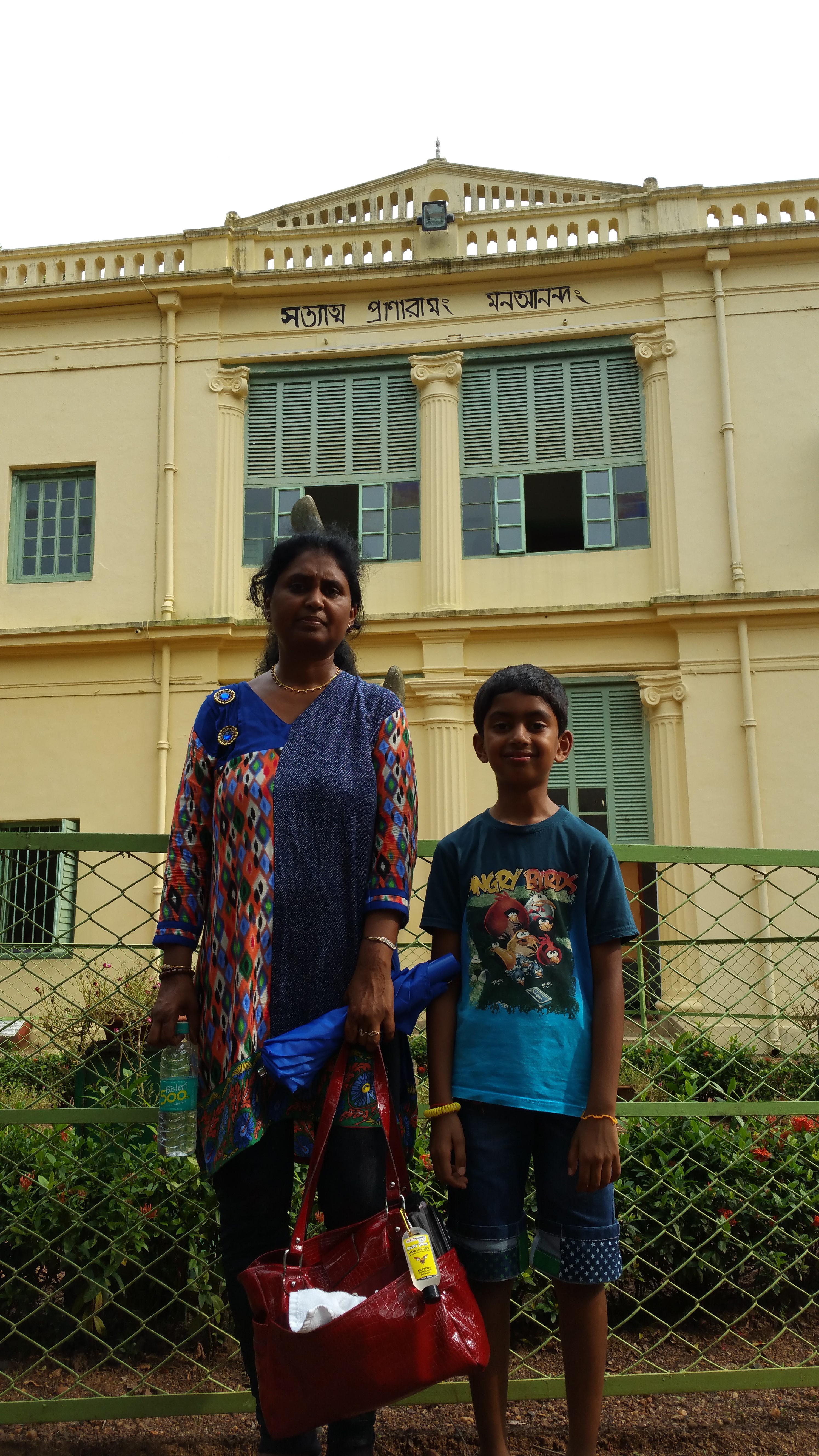

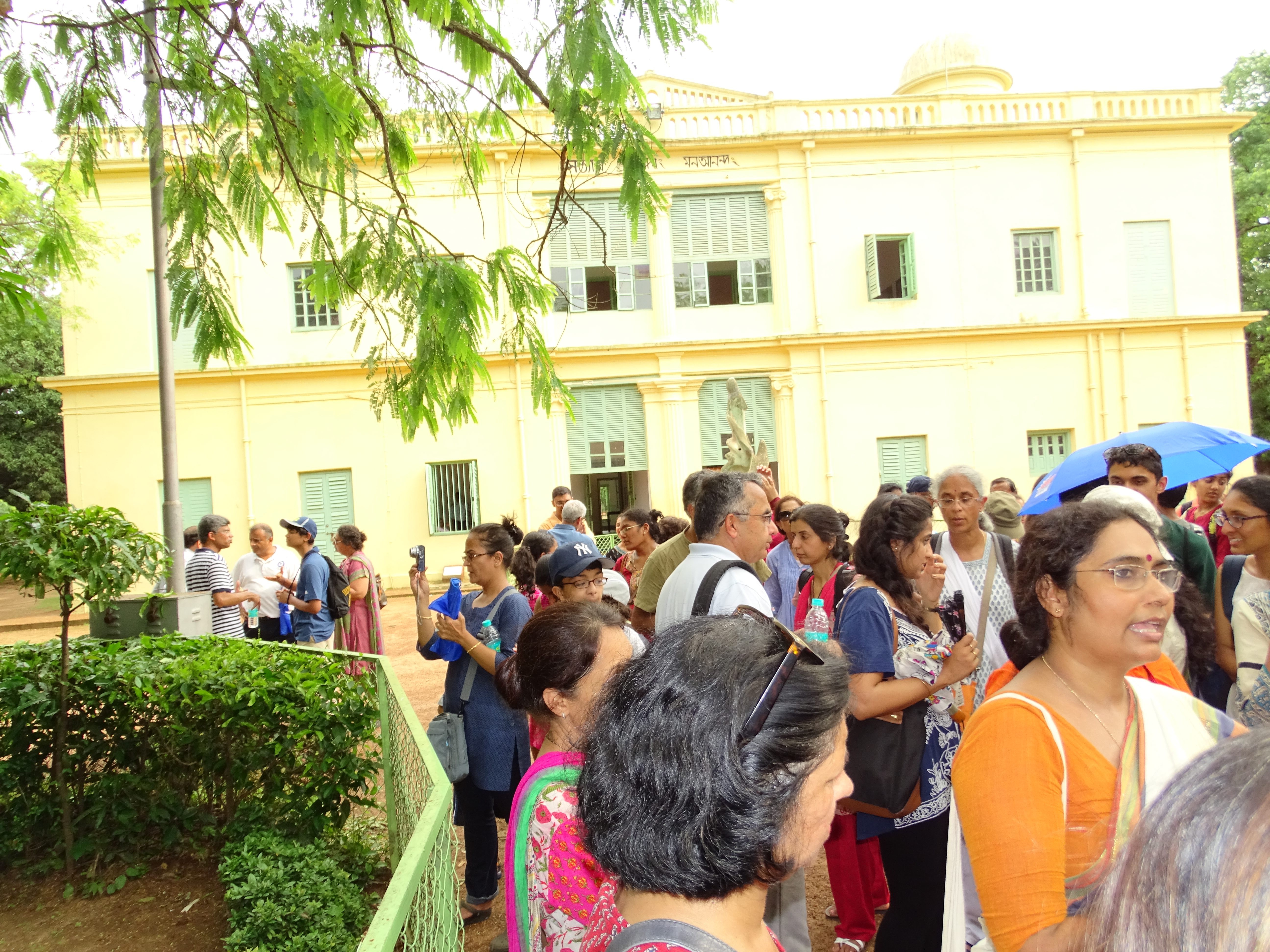

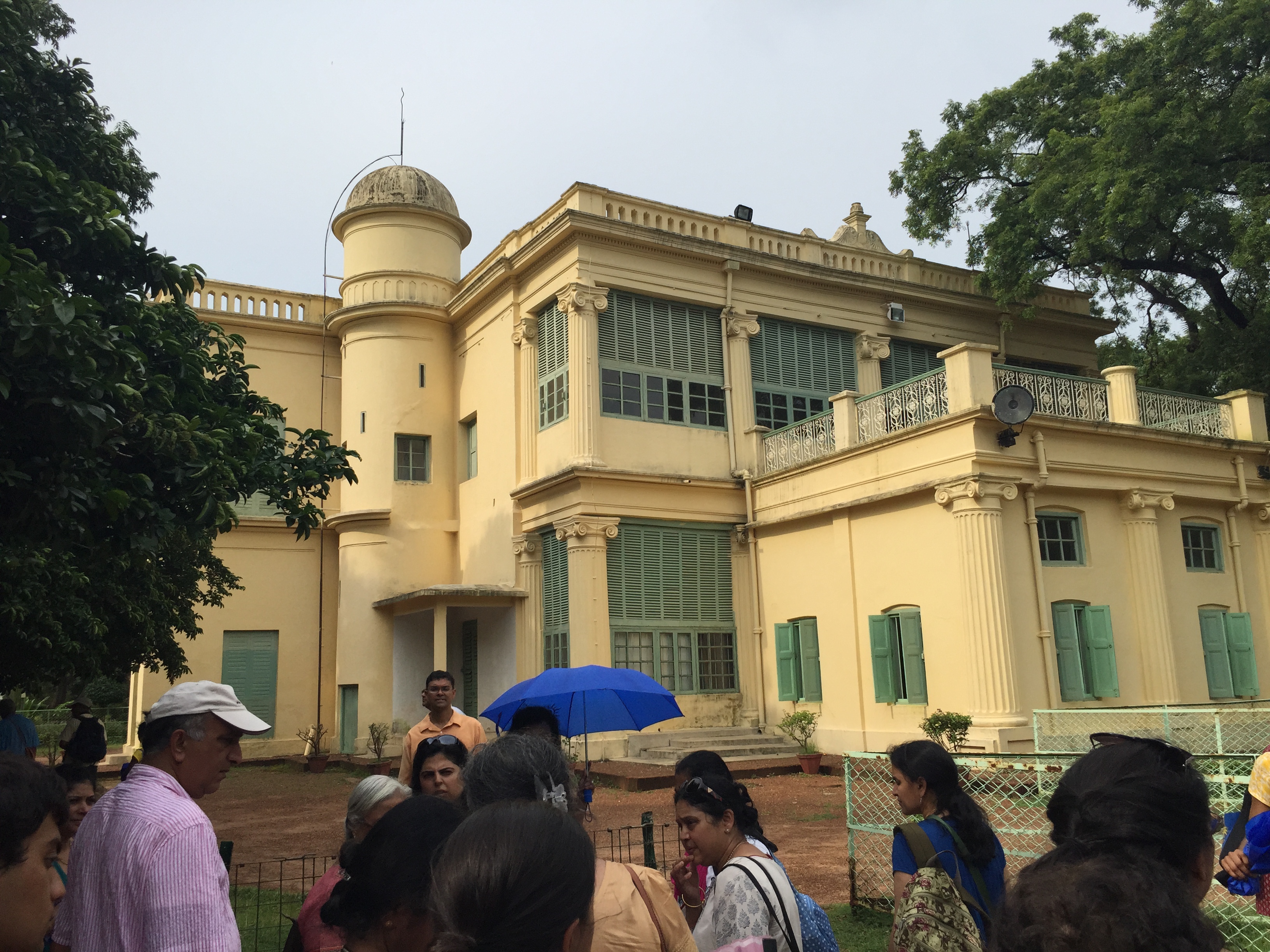
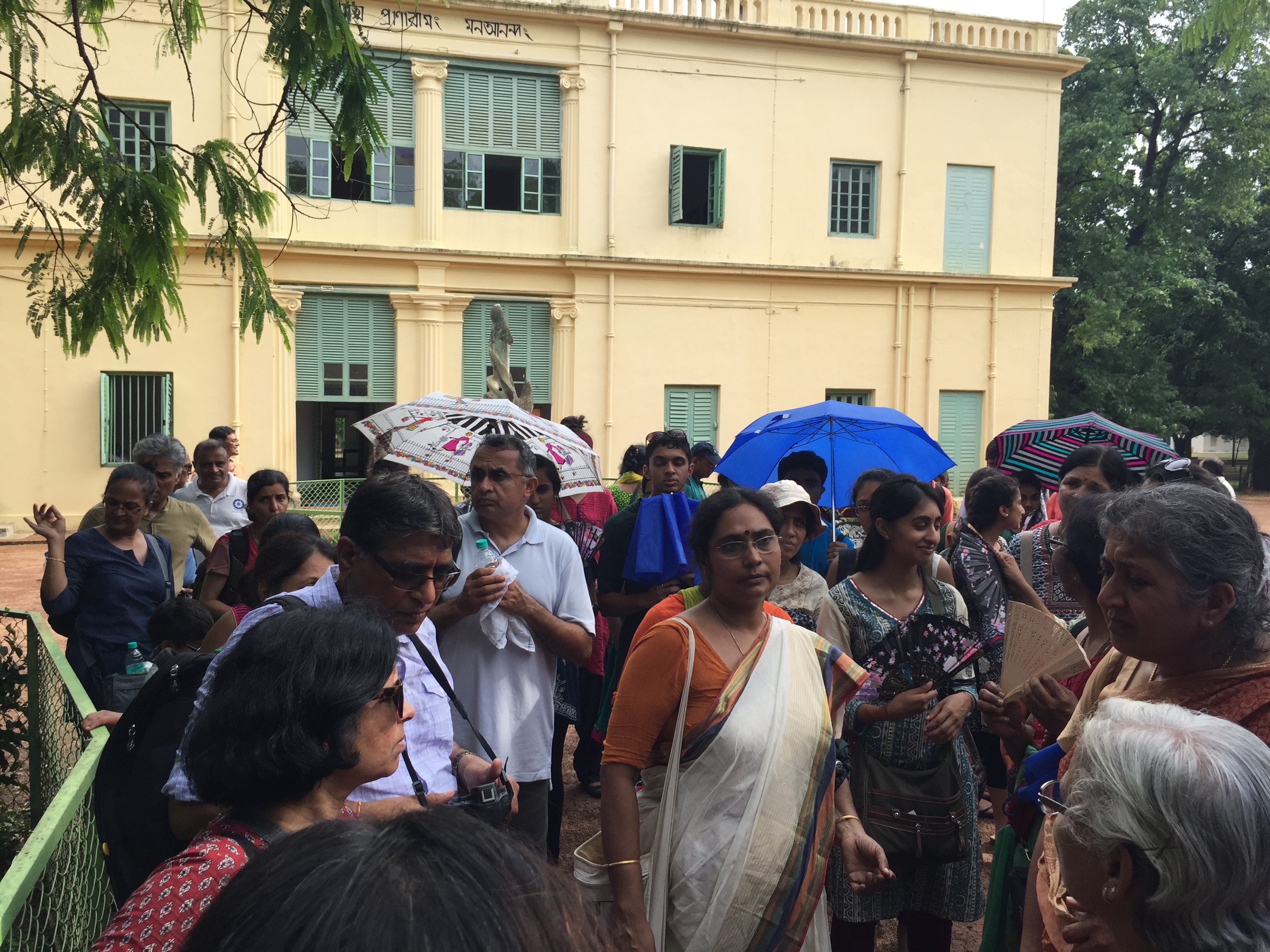
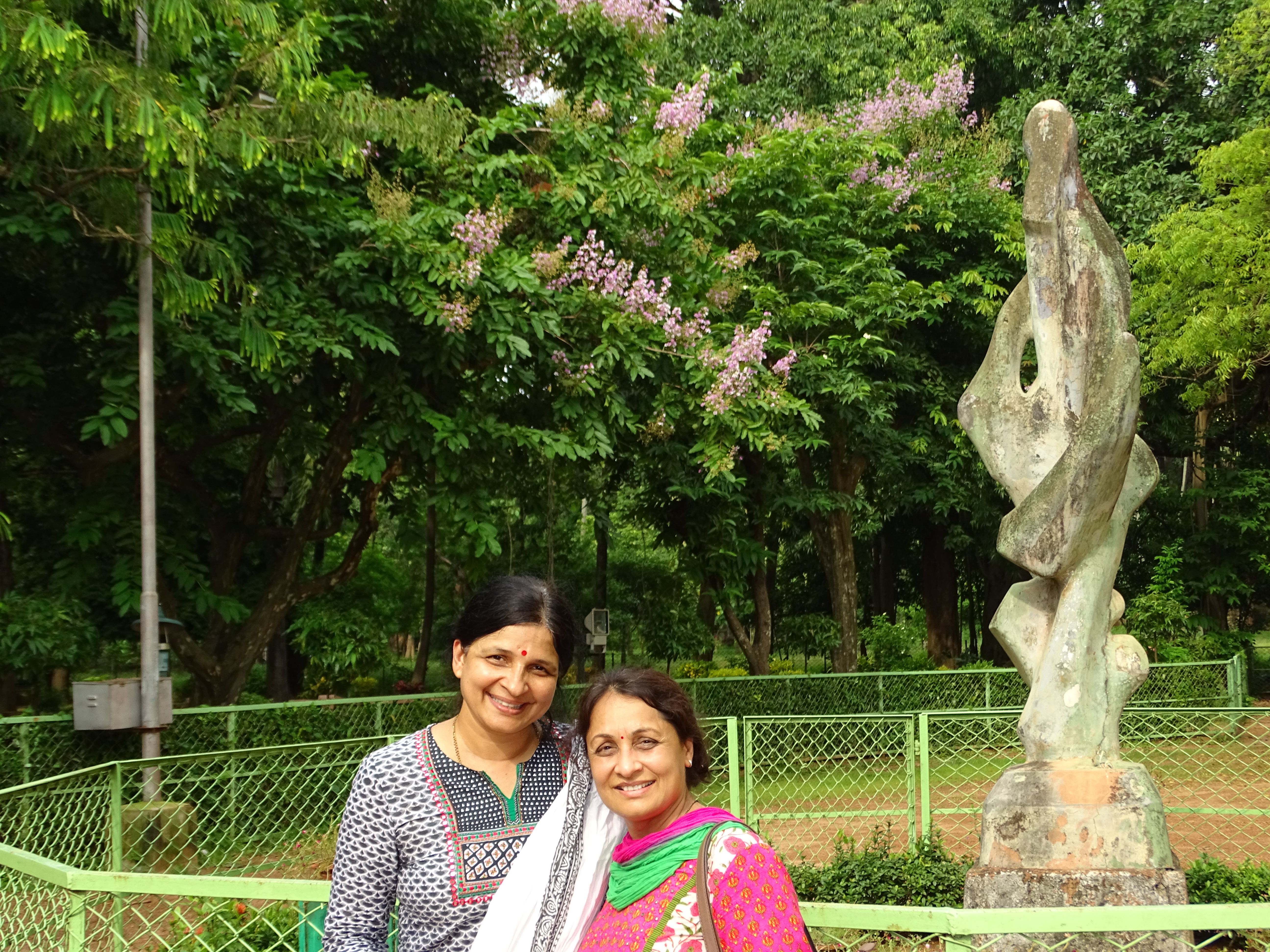
In front of this building, there is a sculpture known as the ‘Anirban Shikha’– made by the genius sculptor Ramkinkar Beij, a renowned ‘Shantinikatani’. The sculpture depicts burning flames of fire. Yet the astonishing thing about this sculpture is that in the early morning light, it generates a shadow of a ‘mother and child’.

Amro-Kunj and Patha-Bhavana – Institute of Primary and Secondary Education:


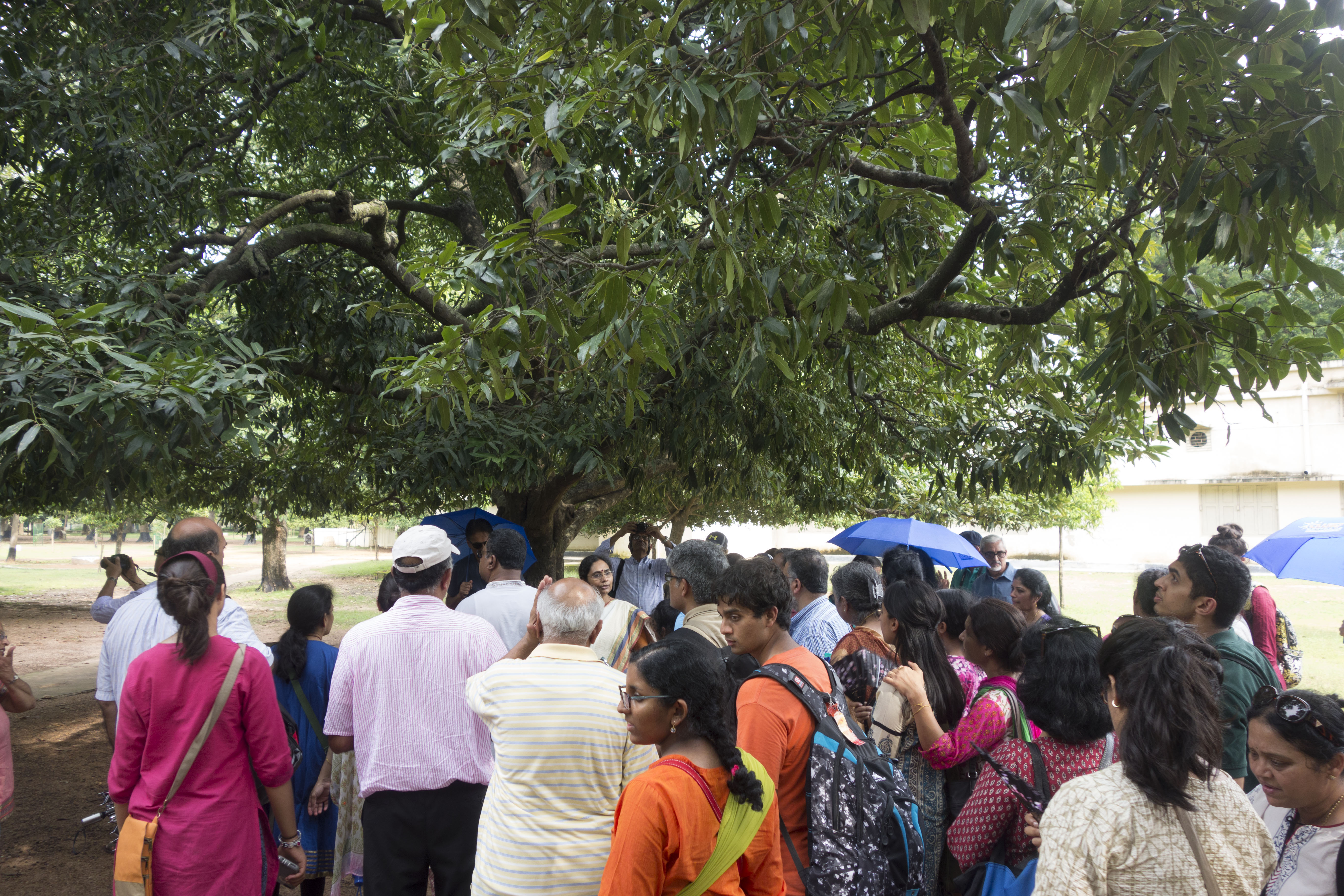
We learned that Debendranath used to bring young Rabi (as Rabindranath was affectionately called in his young age) here. Rabi loved to immerse himself in the natural beauty of Shantiniketan. He hated traditional book learning and believed that education should be a part of life and carried out in nature instead of separately inside schools. With this ideal in mind, he established a school which later became the Visva Bharati University.
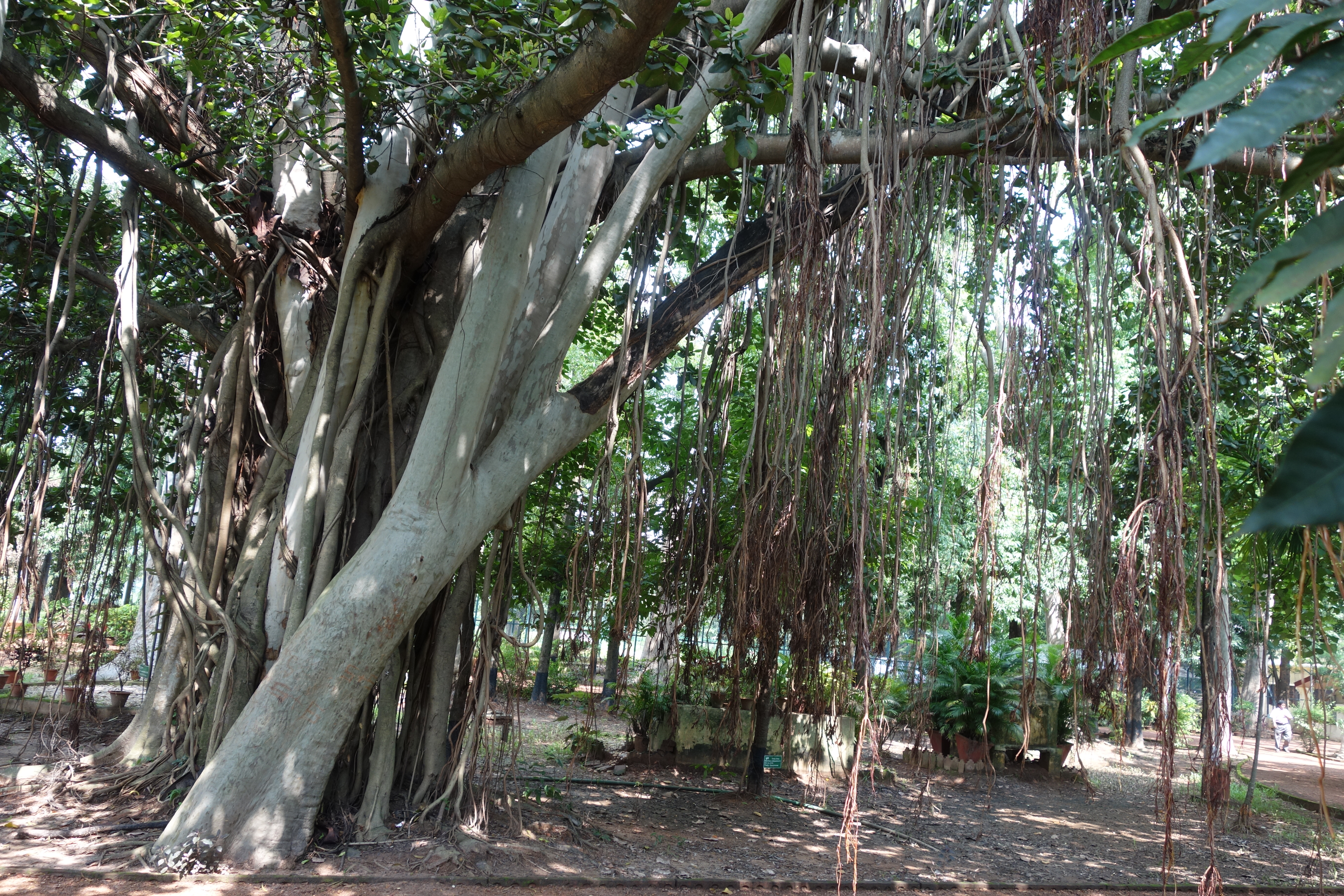


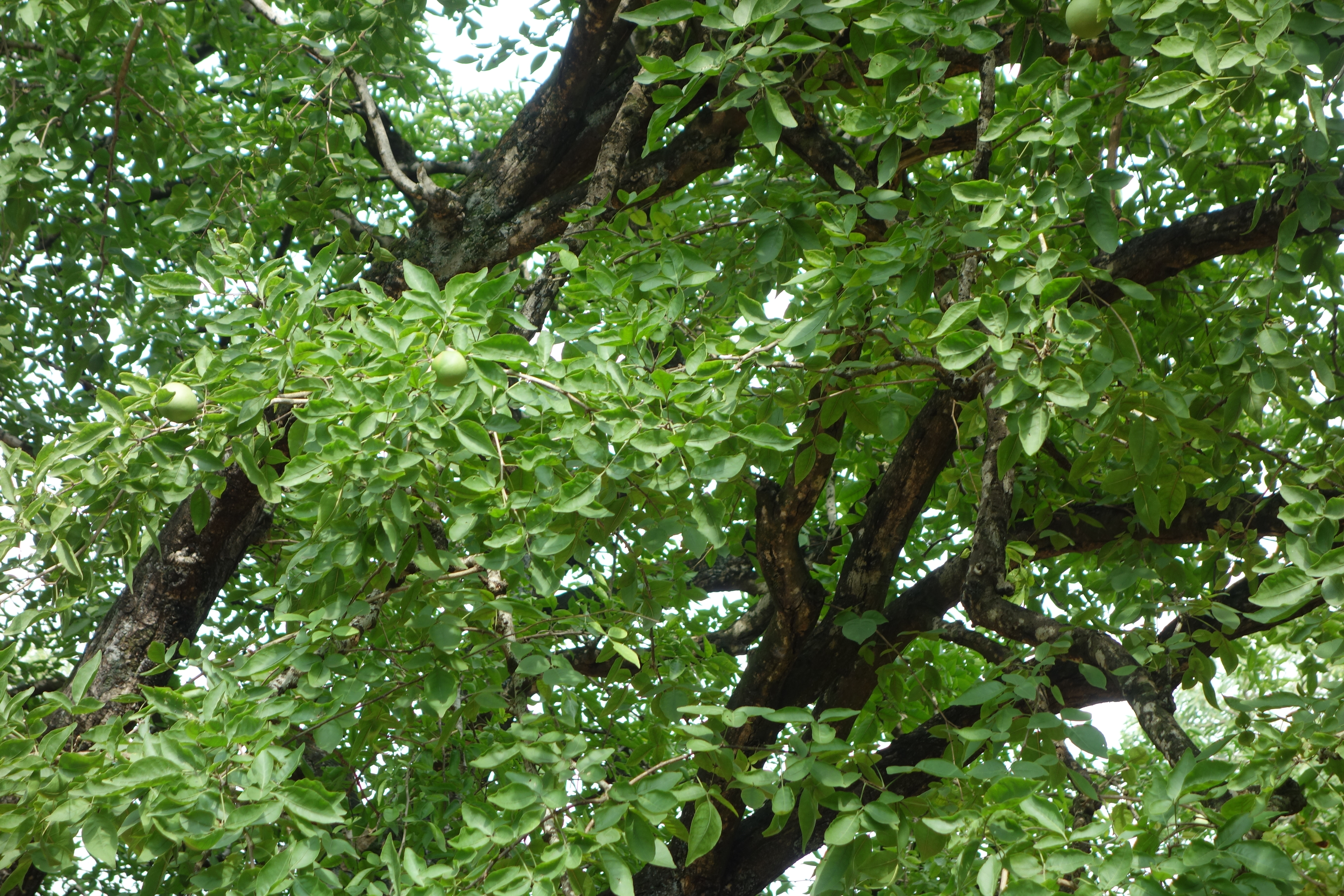

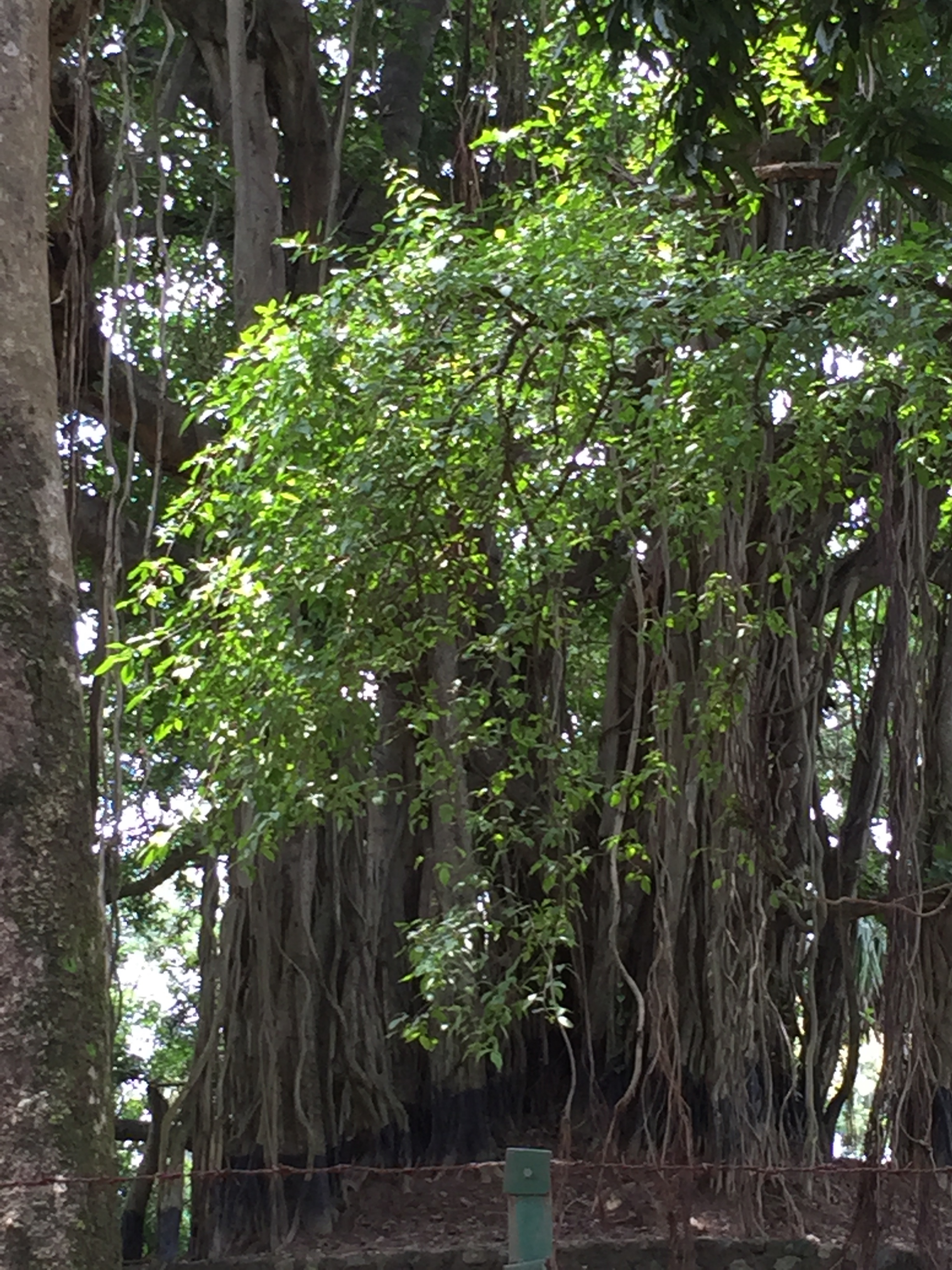


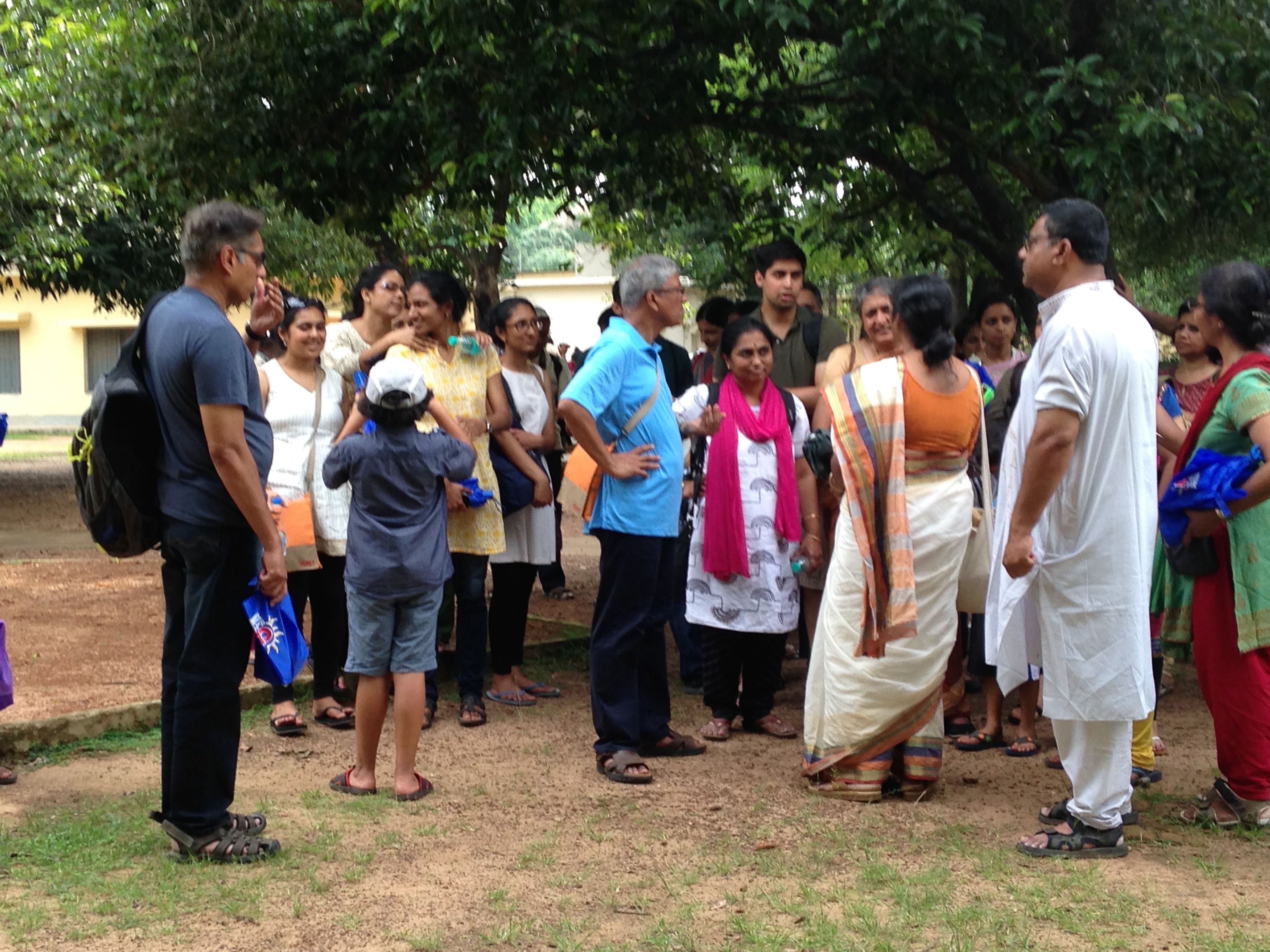
Its unique feature is open-air classes. We found a park with many huge mango trees. This is known as the Amro-Kunj. Under the mango trees, in this serene environment, we found a teacher’s seat made out of stone and in front of it, circular round stone seating for students.


The atmosphere adds something to the learning experience that is missed in walled classrooms. Just imagine learning under the shade of a tree instead of sitting at a desk within the confines of a conventional classroom!
Rabindranath’s school Brahmacharyasrama which started functioning formally from December 22, 1901 with no more than five students on the roll, was, in part, a fulfillment of the wishes of his father who was a considerable figure of his time in the field of educational reform. From 1925 this school came to be known as Patha-Bhavana. It is partly a residential co-educational school for elementary and secondary education, preparing students for the School Certificate Examination. Our tour guide informed us that Shantiniketan was the first co-ed school in India, where boys and girls studied the same curriculum.
The teachers among our Vidyapith family were particularly interested in the institution’s progressive curriculum. Rabindranath Tagore’s legacy lives on through the school’s educational program which encourages children to engage in singing, dancing, writing, painting, and various other creative fields. From 9th grade onwards, the university adopts a more traditional curriculum so that students can take standardized exams and seek employment after graduation.


Visva-Bharati:
Rabindranath founded a school for children at Shantiniketan and it was around this nucleus that the structure of an unconventional university called the Visva-Bharati was developed through careful planning. On December 23, 1921 Rabindranath formally started the college with proceeds from the Nobel Prize that he received in 1913 for his work, Gitanjali.
After India’s independence, in 1951, the college was given the status of a university and named Visva-Bharati University. It grew to become one of India’s most renowned places of higher learning. Its list of alumni consists of many renowned personalities including the Nobel Prize Winner economist Amrtya Sen, the world renowned film-maker Satyajit Ray, India’s leading art historian Shri R. Siva Kumar, and others.
The university’s 1,150 students are taught by around 80 teachers with a relatively small class size of approximately 25 students per class. Although few in number, international students from Korea, Bangladesh, Sri Lanka, Spain, Russia and other countries attend this university. We were told that many Visva-Bharati alumni pursue their careers in research and art.
Rabindranath himself said the following about Visva-Bharati:
“Visva-Bharati represents India where she has her wealth of mind which is for all. Visva-Bharati acknowledges India’s obligation to offer to others the hospitality of her best culture and India’s right to accept from others their best.”
The Entrance of Visva-Bharati:

The main gateway to the Visva-Bharati complex is called “New Ghanta Ghar” Or “Simha –Sadan”. Simha is used to denote the main entrance. There is a beautiful bell and clock tower on both sides, which regulate the timing of the daily routine for the ashrama inmates. The square-looking gateways flanking the Simha-Sadan are known as the Purva-toran and the Paschim-toran. The Simha-Sadan was built out of a donation by Satyendra Prasanna Simha of Raipur. It was in this building that Oxford University conferred its honorary doctorate to Rabindranath.


UTTARAYANA COMPLEX:
The Uttarayana Complex is the enclave of Rabindranath’s own houses, built over the last three decades of his life (1919-1941), where he lived at different times. The entire complex is divided into many buildings with varying architectural styles. Tagore’s five houses inside the Uttarayan Complex are: Konarka, Shamali, Punascha, Udichi, Udayana.
The gardens of Uttarayana were planned and laid out by the Poet’s son, Rathindranath, a horticulturist by training. He planted exotic plants and trees in the Uttarayan complex and in the surrounding area. The African Tulip from Equatorial Africa, the Sausage tree and Rhodesian Wistaria from Tropical Africa, the Baobab tree from Sub-Saharan Africa, and the Caribbean Trumpet tree from Latin America are some of the trees that have survived in Shantiniketan. They are a testament to the ideas and research studies produced by foreign scholars who came to Shantiniketan.
(1) Konark:
Originally a mud house, this was the earliest dwelling that Rabindranath built for his own seclusion from activity and as a place for his own work. It contained an east-facing verandah with rows of pillars used as a stage for plays and dance-dramas composed by the Poet. Natir Puja was first staged here. Since there were no walls in the central large room, nature was the effective backdrop. The Konark verandah was used for poetry readings by the Poet. The Mrinmoyee Patio is a beautiful cemented floor with seating arrangements. This was built on the foundation of the other mud house when it was pulled down. Rabindranath would sit in this open patio and write.

(2) Shyamali:
This house was an experiment in mud house construction. Rabindranath wanted to see if instead of a thatched roof, which was always vulnerable to fire hazards, a permanent mud roof could be built. It was to be a low-cost structure and would serve as a model house for villagers. The walls were heavily built so that the weight of the mud roofs could be borne. One of the rooms was constructed by using earthen water-pots arranged inside plaster-casings as its roof and walls. Rabindranath believed that when hot air would pass through the earthern pots, it would lose some of its heat, and thus keep the rooms cool. Keeping Rabindranath’s ideas in mind, Surendranath Kar prepared the architectural plan and Nandalal Bose prepared the visual perspective based on the Borobudur style. The entire outside wall was decorated with beautiful relief work by Kala-Bhavana students under the guidance of Nandalal Bose. The Santals on either side of the main door and on the eastern corner were made by Ramkinkar Baiz. Mahatma Gandhiji and Kasturba stayed as guests in this house. Rabindranath loved this mud roofed house very much. On the wall there are also works of Ramkinkar Baij.


(3) Punascha:
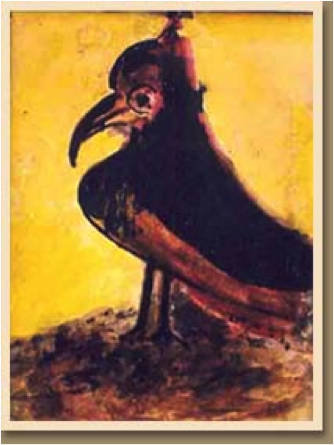
Punascha means “P.S.” postscript–an afterthought after a letter has been written and signed. The chosen name suggests the Poet’s change of mind. This house was built on the eastern side of Shyamali. Rabindranath lived in this house for a short time, but it was here that he created most of his paintings.

(4) Udichi:
This was the last house built for Rabindranath. He felt claustrophobic, he said, and wanted a room to be constructed on four pillars. However, changes were gradually made according to the owner’s needs. Rabindranath held poetry classes on the ground floor.
 (5) Udayan:
The most imposing house in Uttarayana, is Udayan.

Udayan, unlike the other houses, was conceived by Rathindranath, son of Rabindranath. When Rabindranath came to live in Konark, Rathindranath and his wife lived in an outhouse by its side. Starting from these modest and functional rooms, the elaborate structure of Udayan was gradually evolved. Udayan has many suites of rooms─ each on a different level which gives this house its individuality. Distinguished visitors who have stayed here are Stella Kramrisch, Margaret Milward, Sir Maurice Gwyer, S. Radhakrishnan (later, President of India) and Jawaharlal Nehru.
A Special Talk:
We were fortunate that with the help of Club7 we were invited by Dr. Tapati Mukherjee, the Director of Culture and Cultural Relations and Prinicipal (Adhyaksha) of Rabindra-Bhavana, the institute of Tagore Studies and Research, Visva-Bharati. We entered the historical building as a group, and were asked to sit in the main hall. The main hall was nicely decorated with important photographs and paintings. It appeared as though this hall was used for major gatherings.
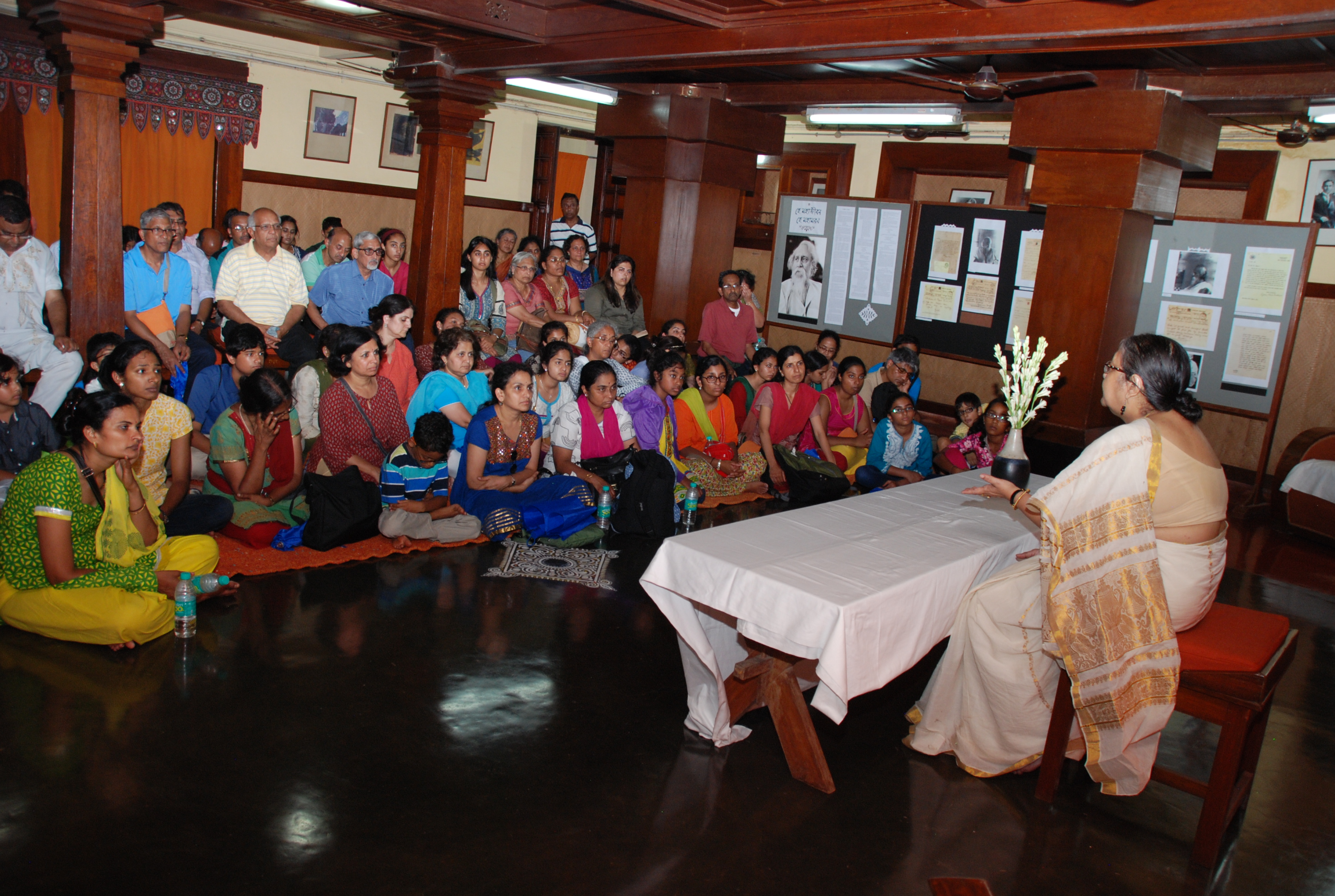
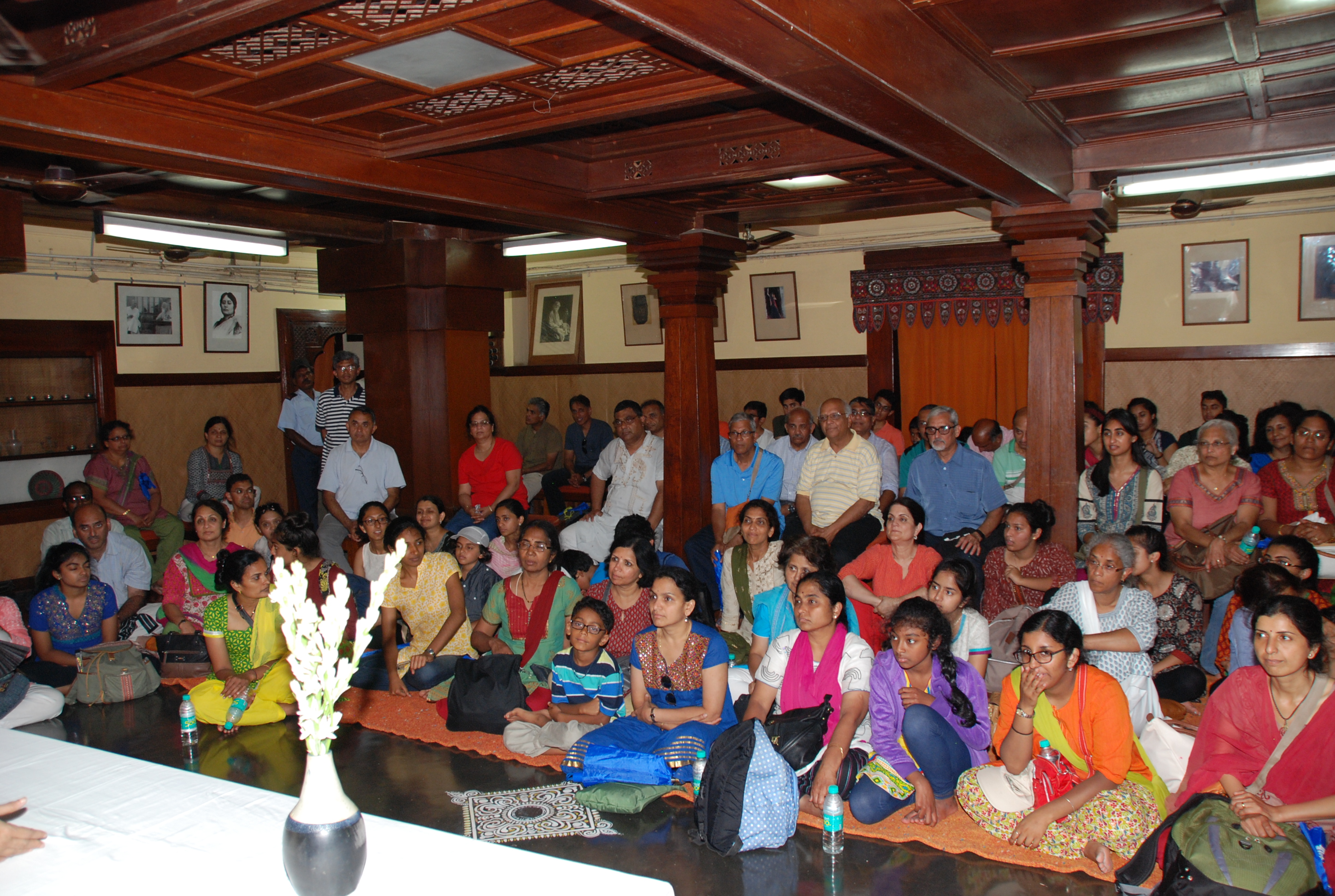
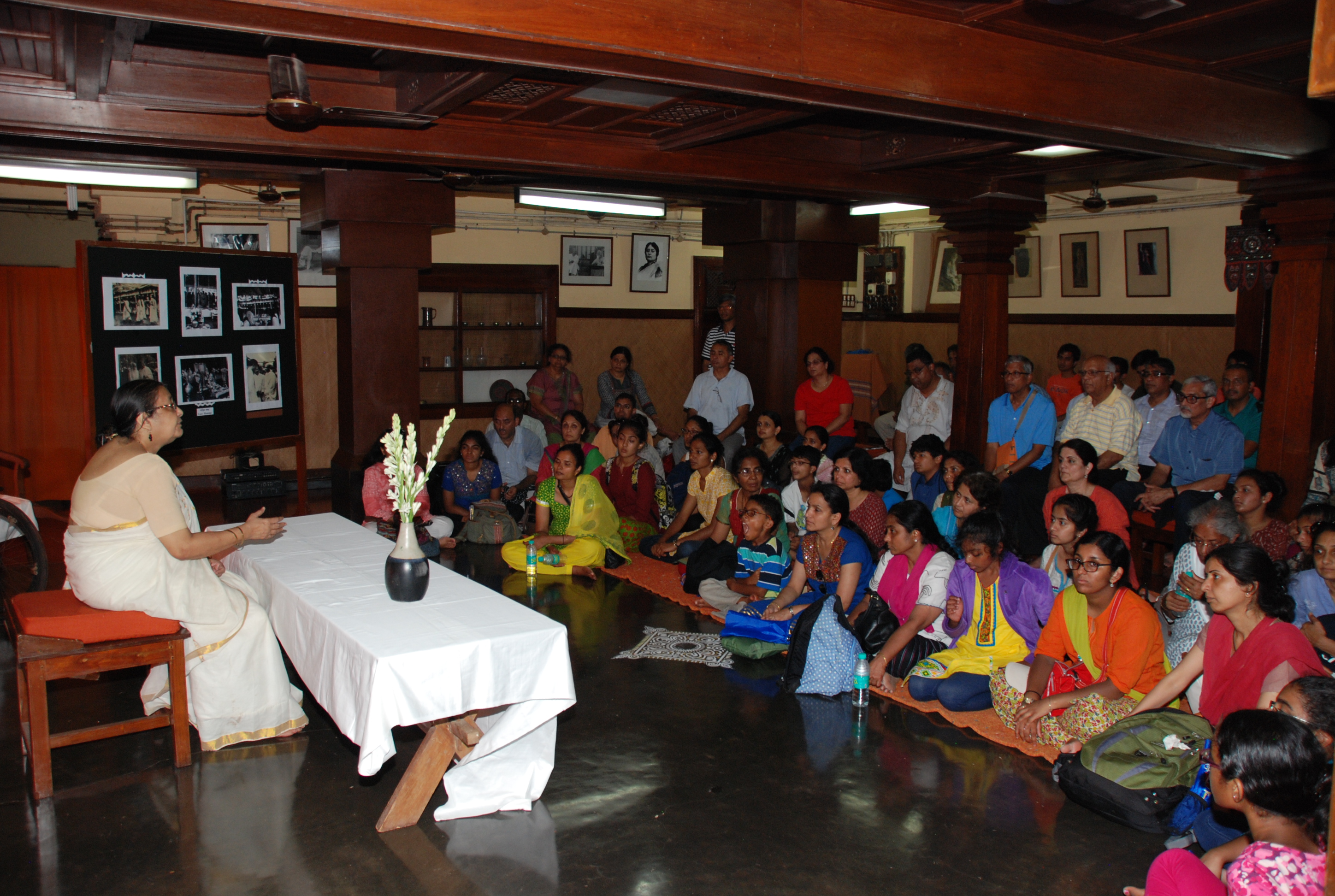


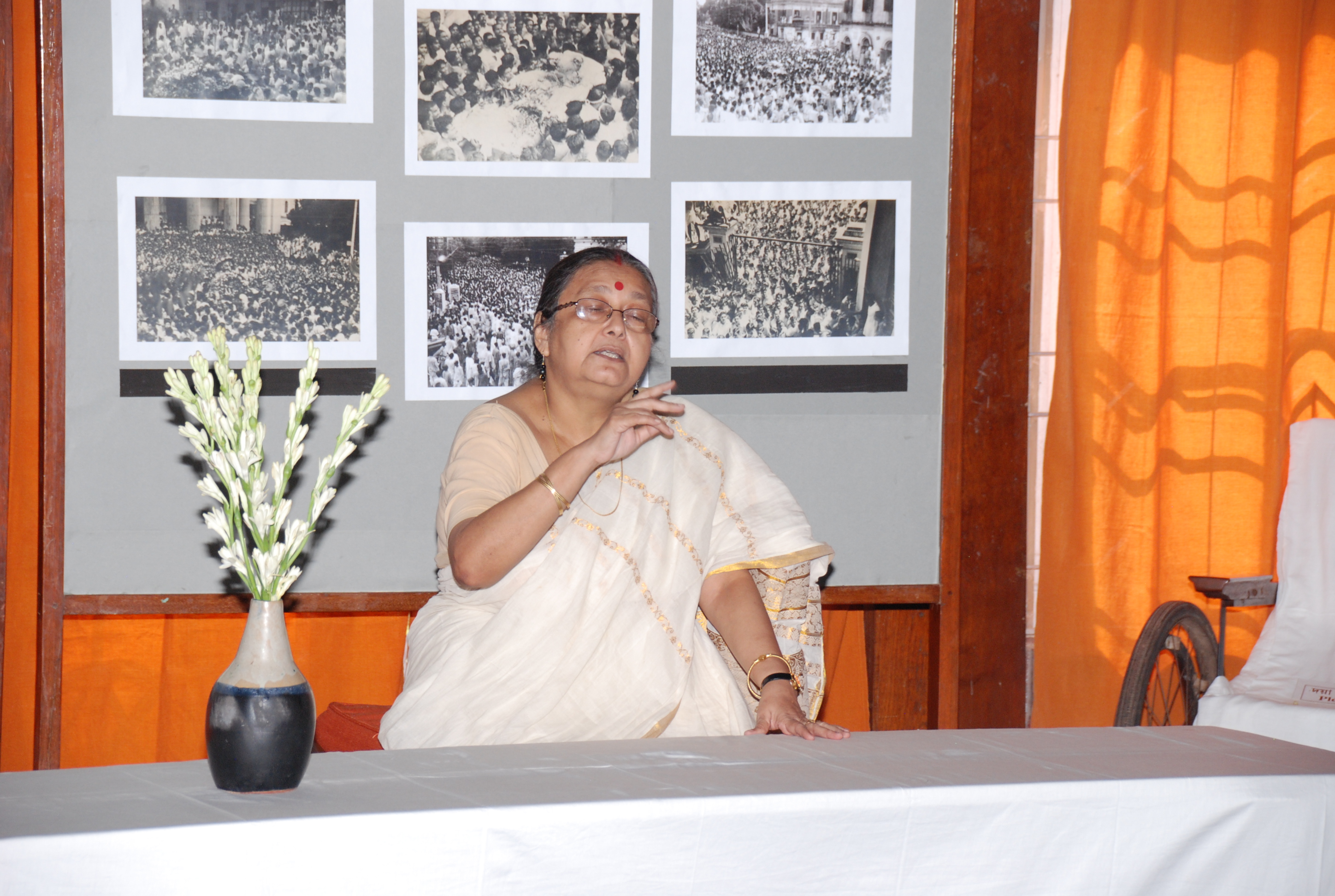

Dr. Tapati Mukherjee welcomed us and talked to us about the history of the Visva-Bharati and its current programs and activities. We all felt honored to have been invited to this place and to have the opportunity to listen to one of Visva-Bharati’s top-ranked persons.
Famous Sculptures:
Opposite the Udayan, is the immortal larger-than-life sculpture ‘Santal Family’ by Ramkinkarl Beij (Baij).


Another famous sculpture in the Udayan complex by Ramkinkarl’s Beij’s student, KS Radhakrishnan:


Rathindranath’s studio is also known as Guha-ghar/Chitrabhanu:
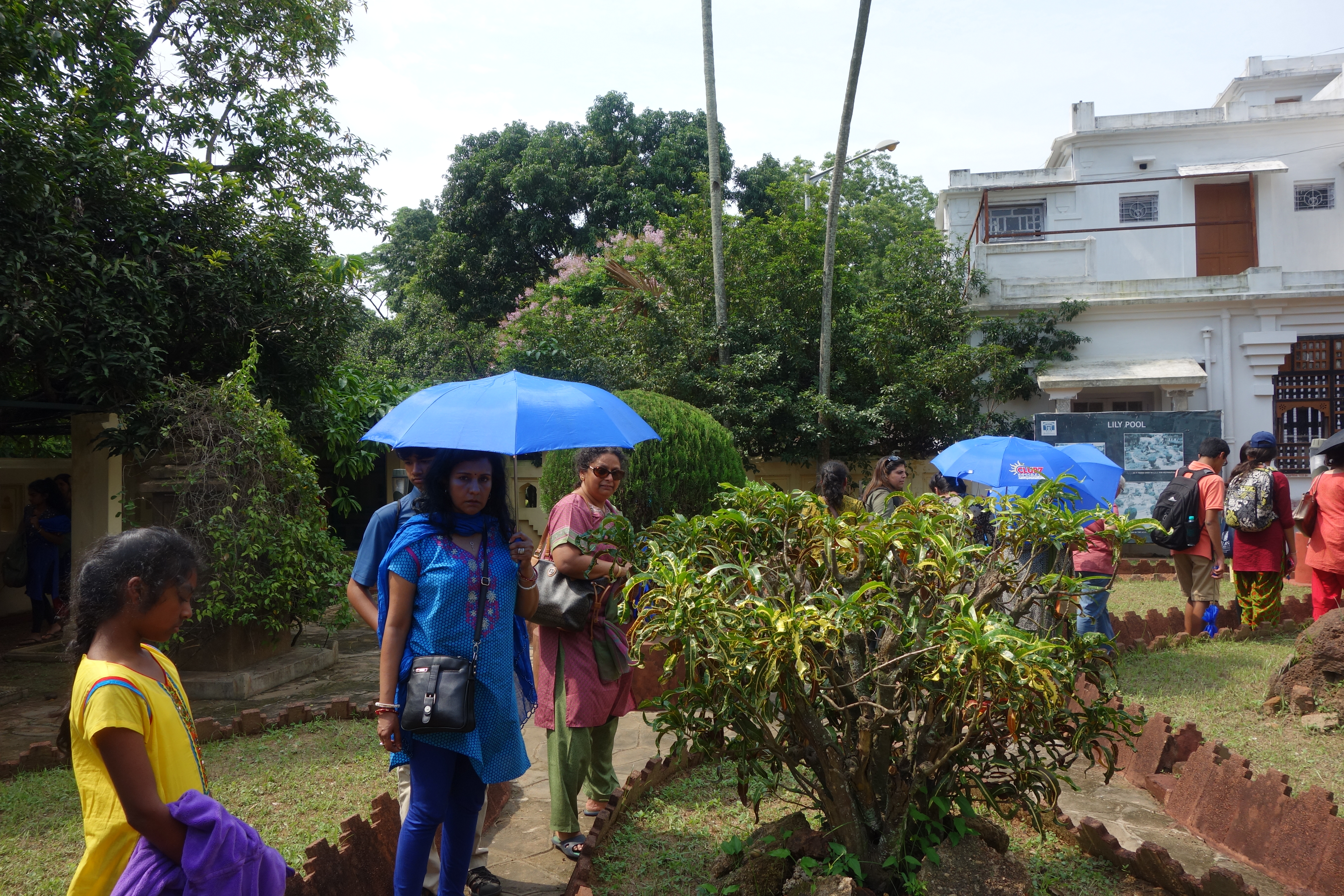
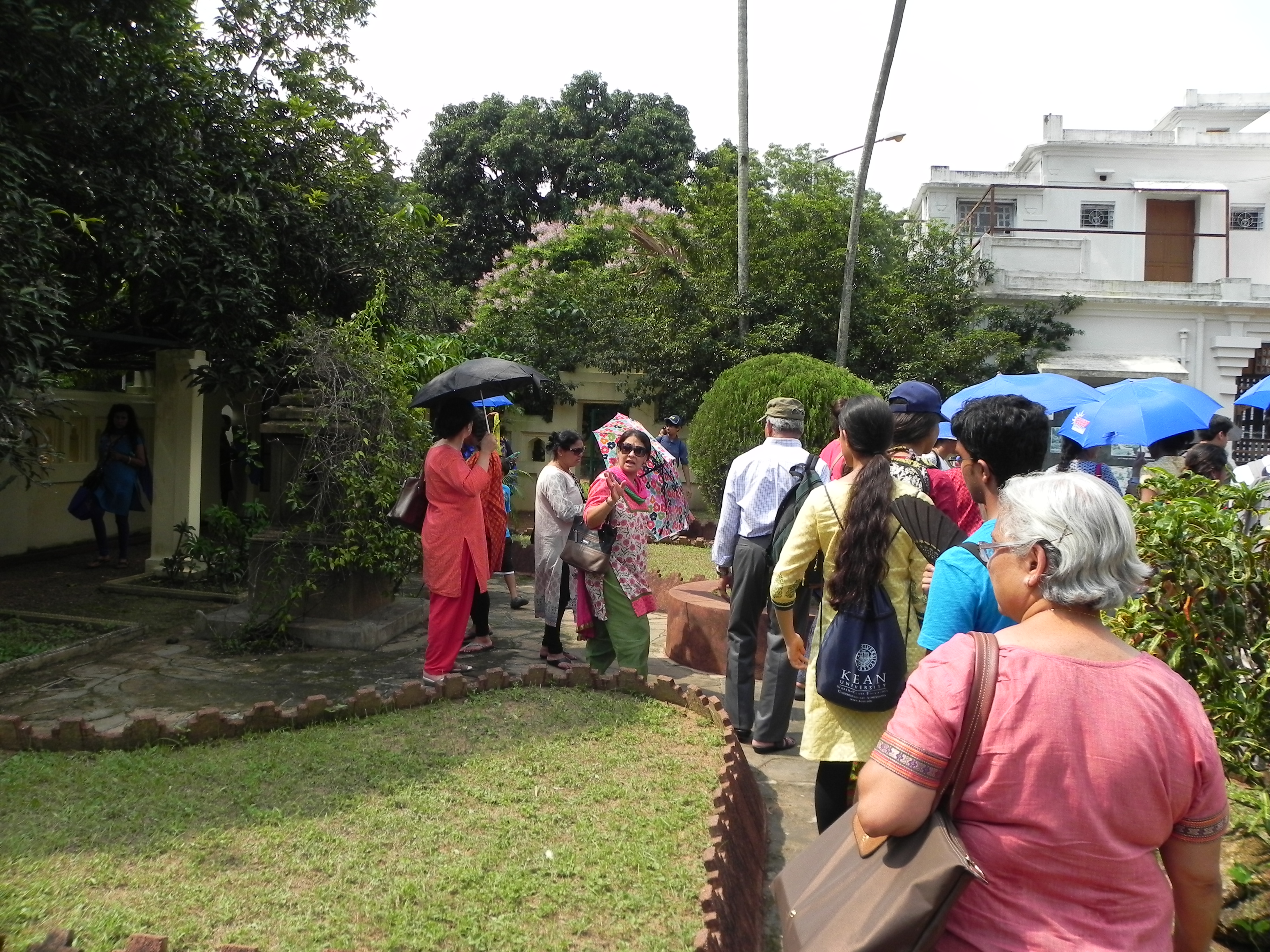
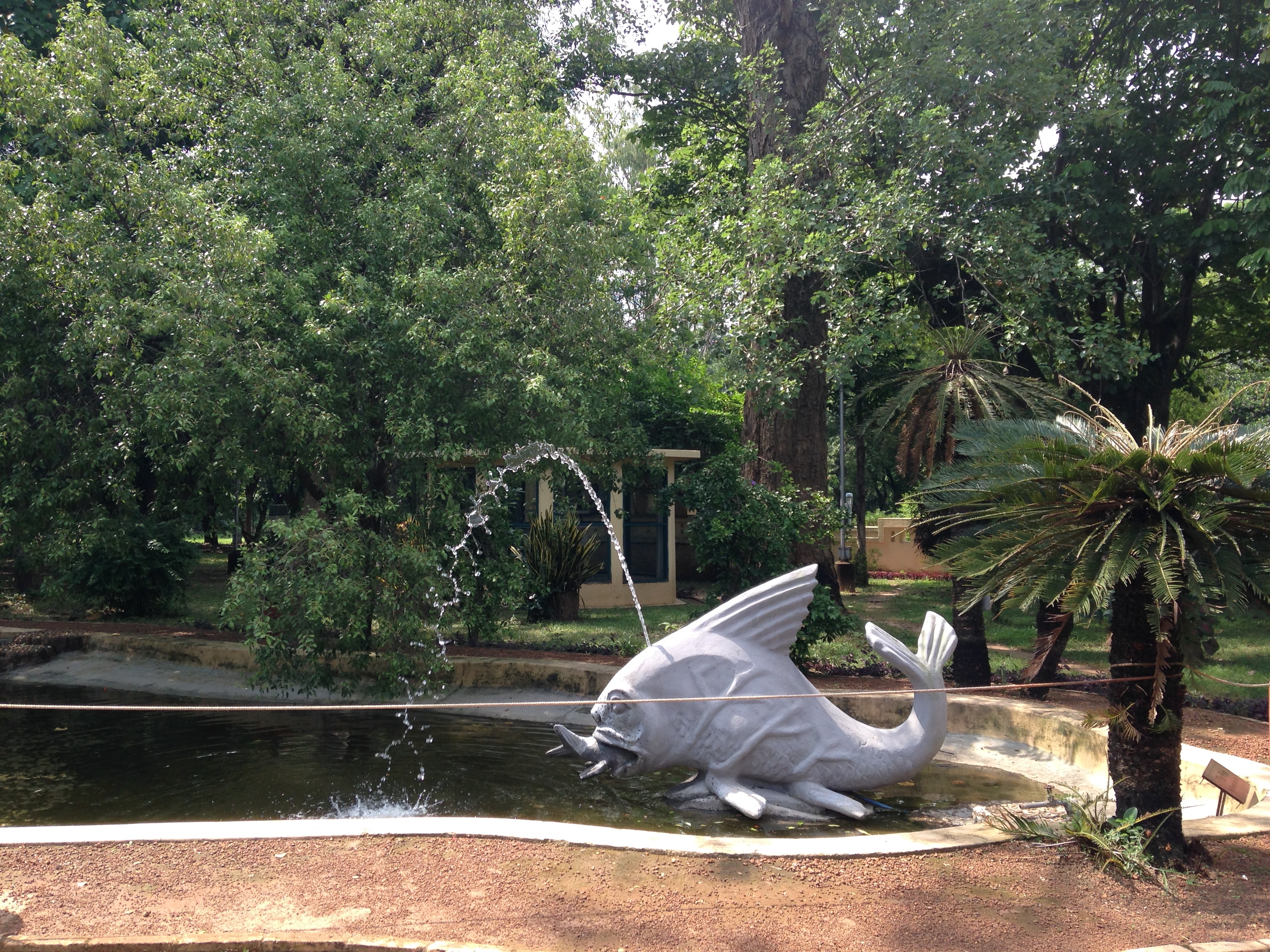
Within the Uttarayan complex of houses that Rabindranath built for his own work, we visited the Rathindra Museum, which commemorates Rabindranath Tagore’s son Rathindranath. We also visited Chitrabhanu, which was a studio built for Rathindranath’s wife, Pratima Devi, near a beautiful Japanese-style garden with a small pond.
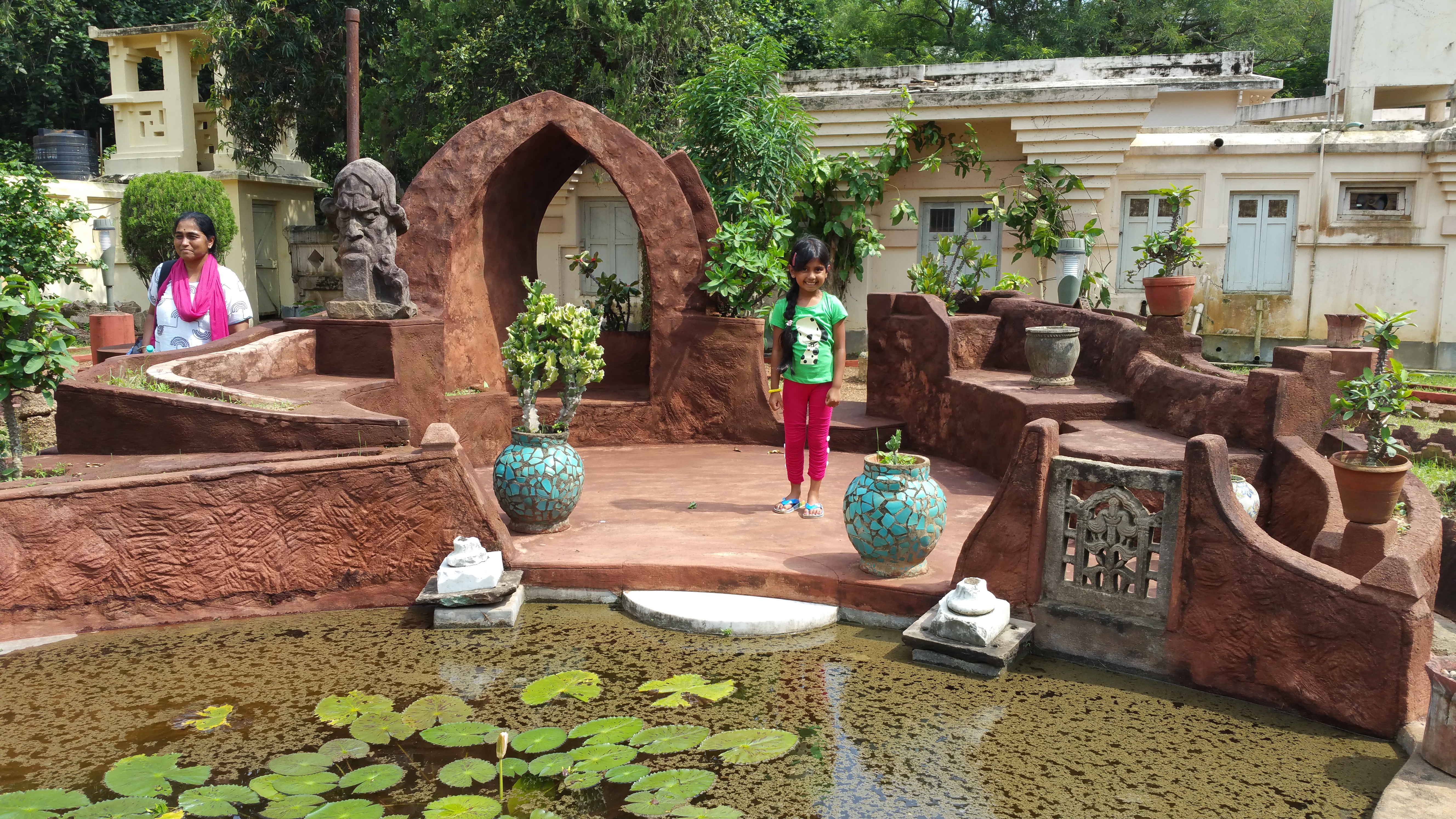
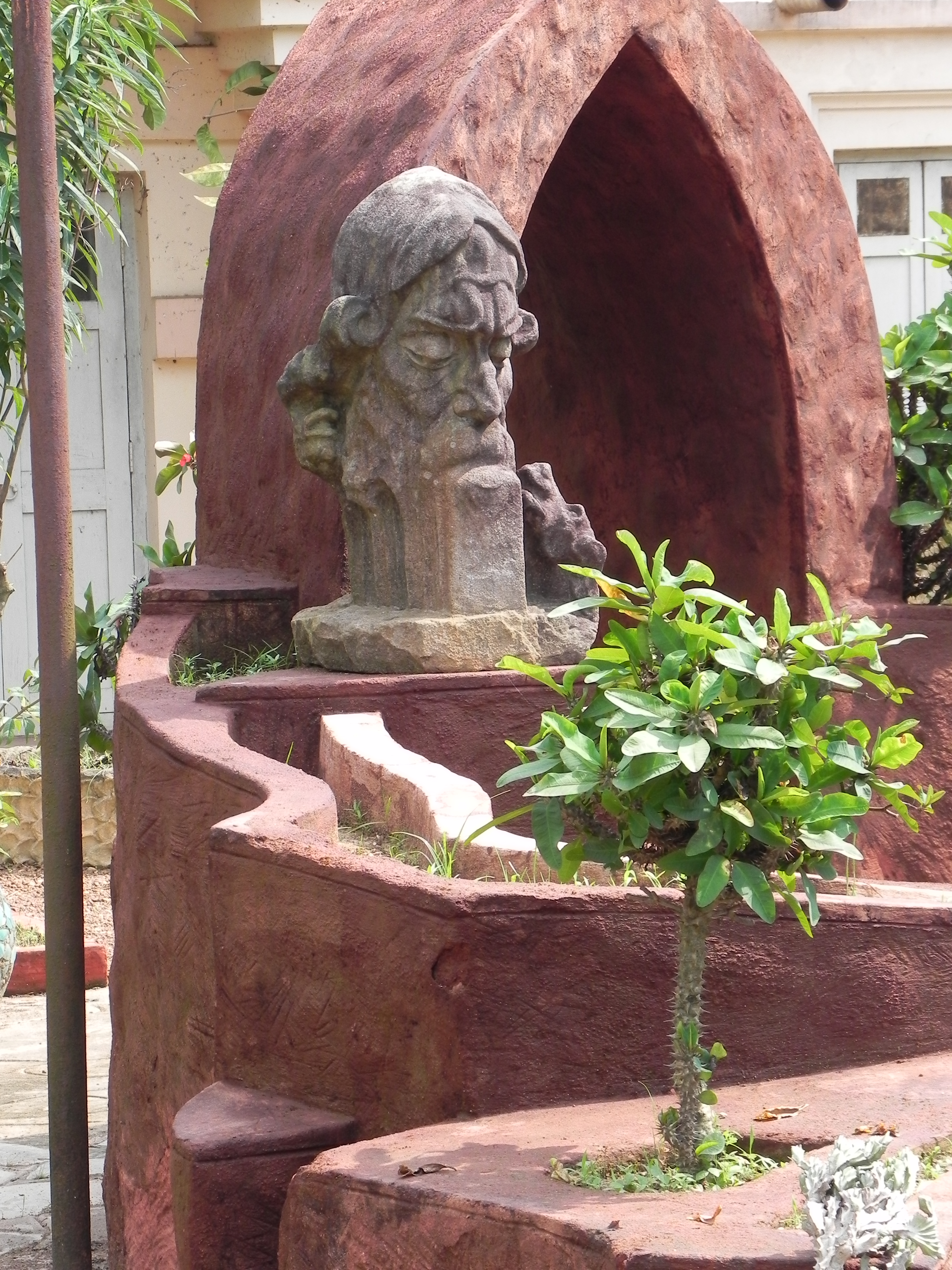

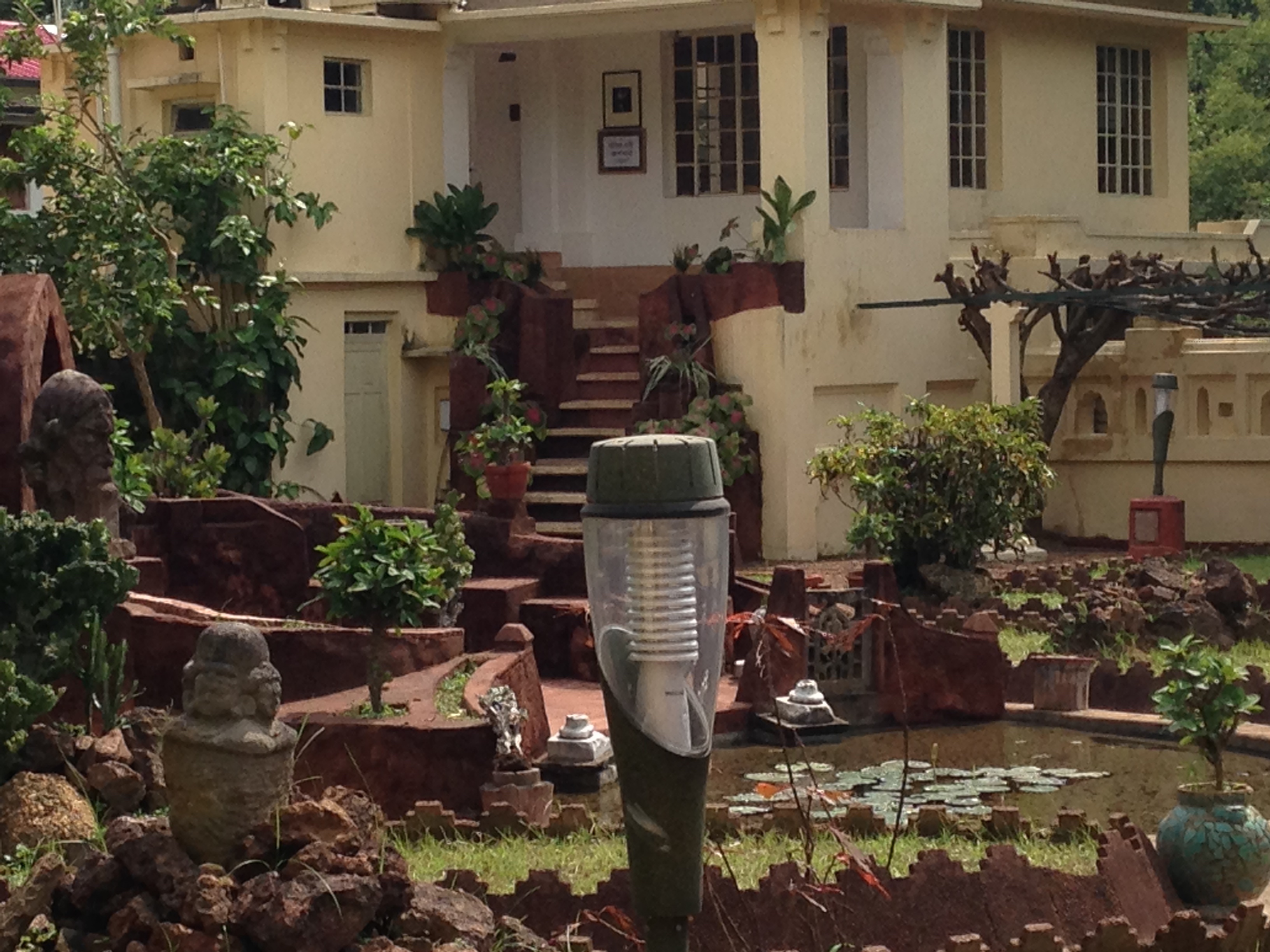
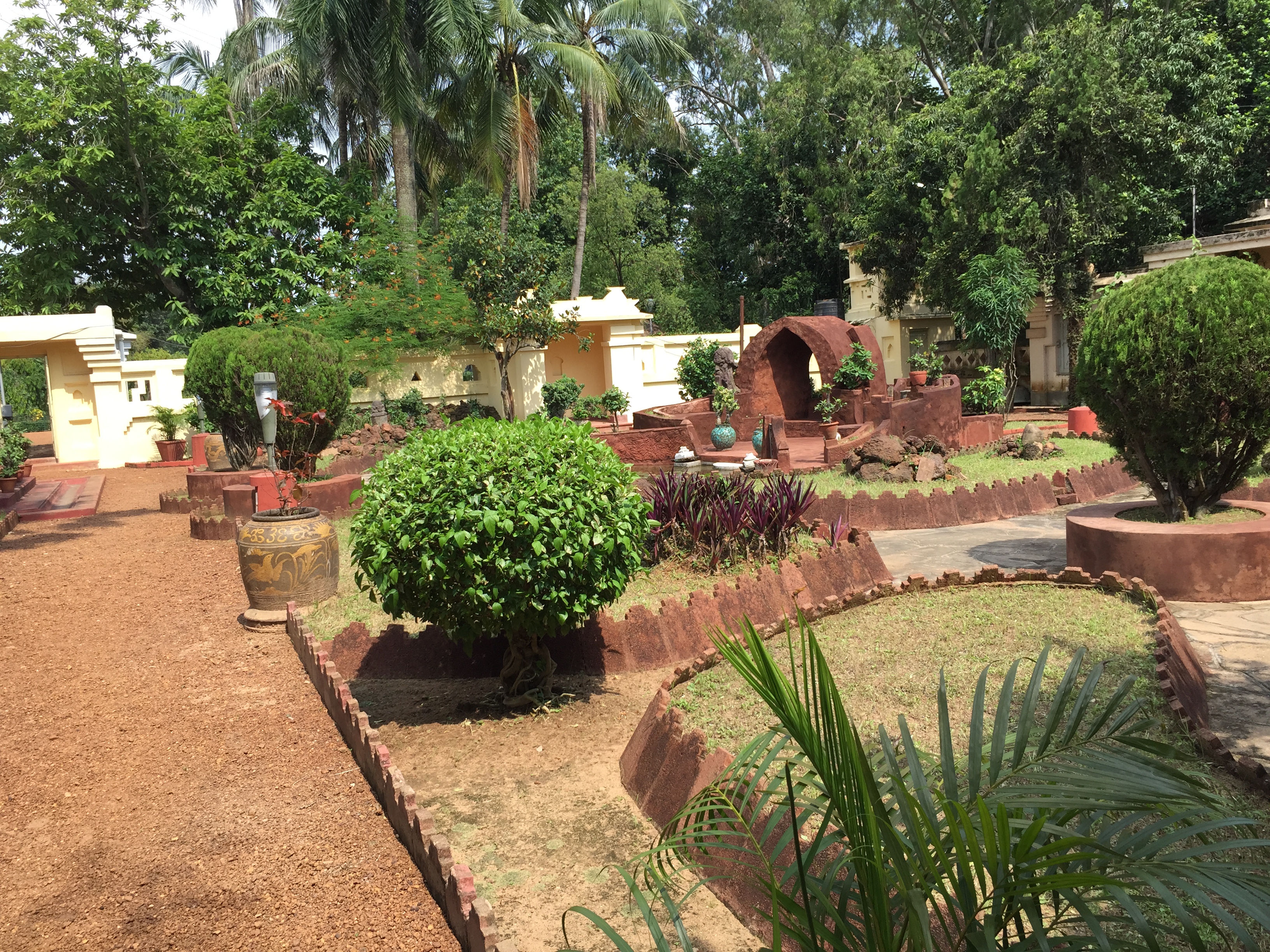
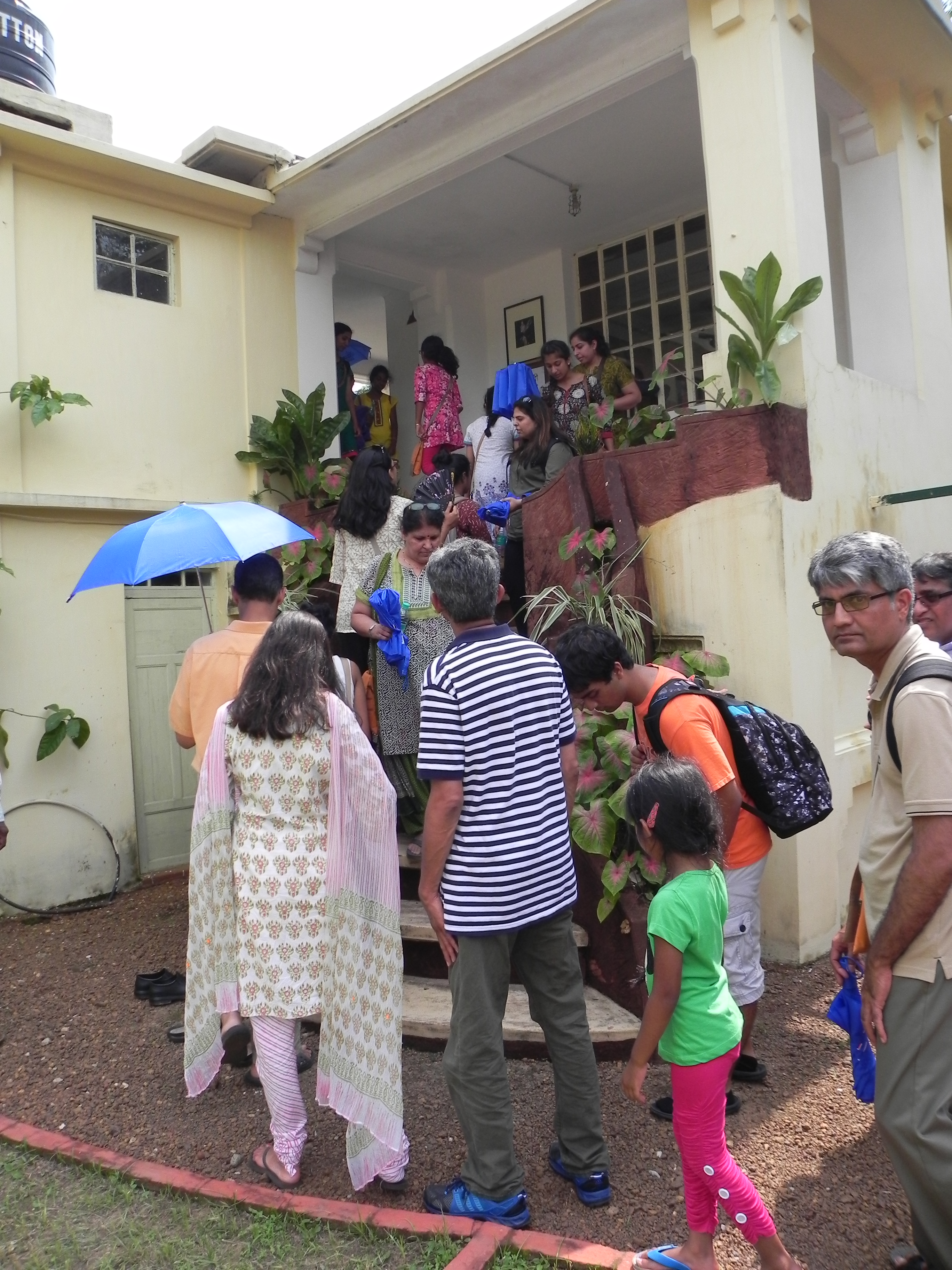
The studio or Chitrabhanu was built on a higher level on the ground and later the space below was converted into a room to be used as a workshop for Rathindranath. The workshop is a low-ceiling room; its entrance wall is embedded with rough stones and has creepers growing over it, giving it the resemblance of a cave-dwelling or Guha-ghar.

Here is a photograph of Rabindranath Tagore with his son Rathindranath and his daughter-in-law Pratima Devi.

The attractive gateway below is a part of the Uttarayan complex.

The Rabindra Bhavan:
Rabindra Bhavana is an Institute of Tagore Studies and Research. Founded in July 1942, just a year after the Poet’s death, Rabindra Bhavana is an important component of Visva-Bharati. It is, in fact, the focal point of the University. Rabindra Bhavan houses a museum which is called The Bichitra Bhavan.
The Bichitra Bhavan (The Rabindra Bhavan Museum):
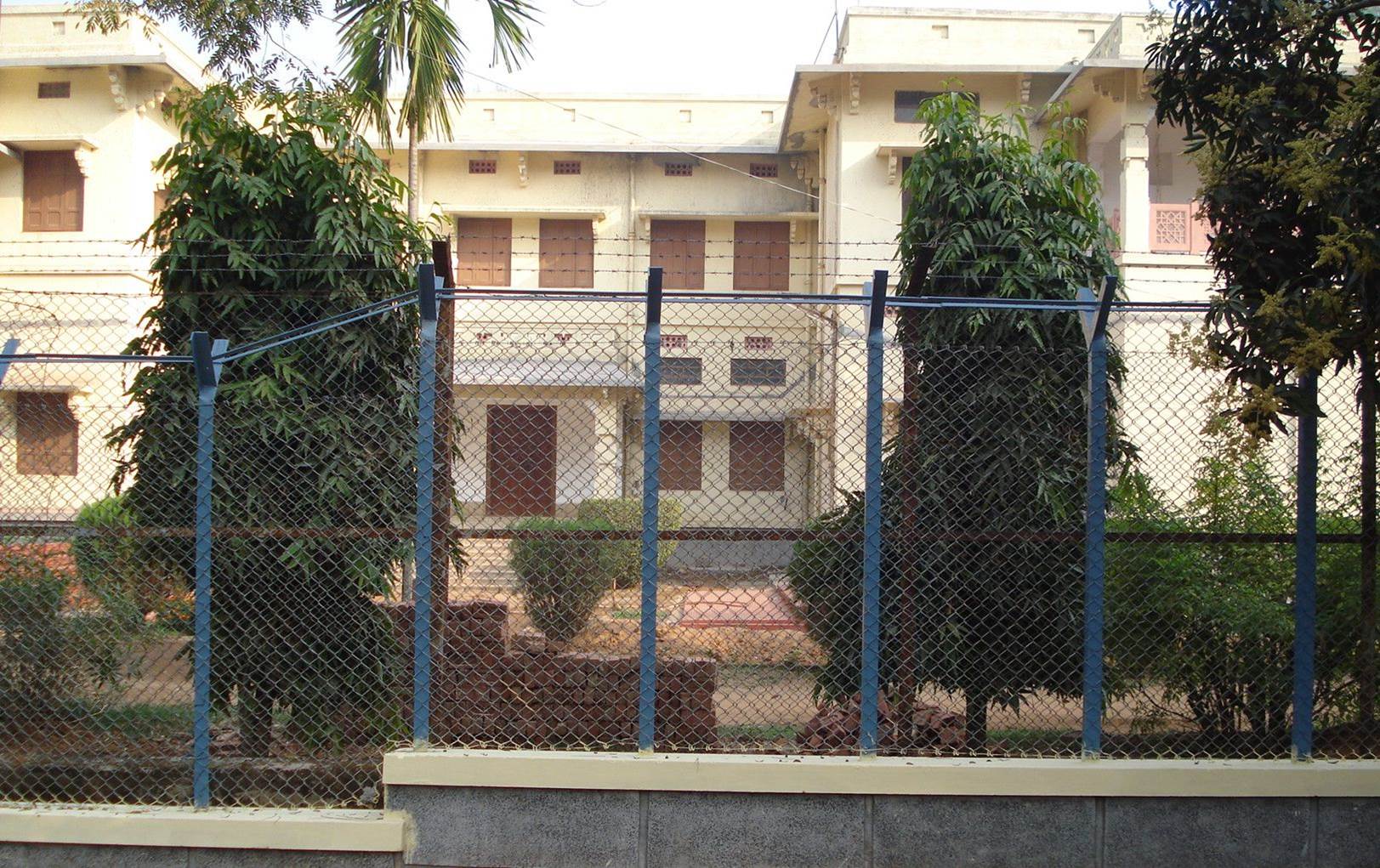
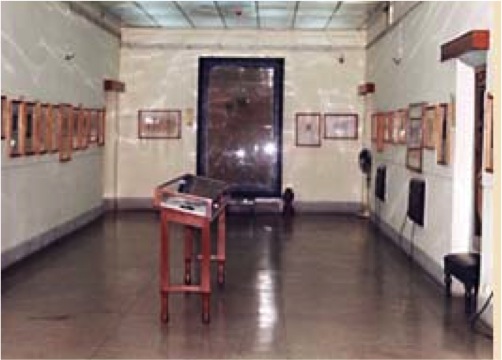
In Sanskrit Vaichitra means “diversity”. The diverse collection of Tagore is displayed in The Bichitra Bhavan, including the replica of Tagore’s Nobel Prize medal. This Bhavana includes among its treasures a very major part of Tagore’s manuscripts, correspondences, paintings, and sketches. It also has the poet’s personal library, various objects used by him, his musical instrument the Esraj, his voice-recordings, and thousands of photographs taken of him at different times and places. Along with these things, the many gifts and honors that he received from different parts of the world enrich the Bhavana’s archival holdings. The following is a photo of one side of the Bichitra Bhavan.
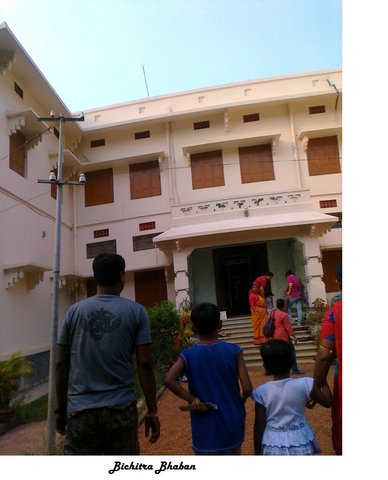
The following Tagor’s saying engraved on the wall of The Bichitra Bhavan’s (museum’s) wall.

Still, every day, the dawn
Brings a blessing
To whatever is growing
Towards the sun.
Here, Tagore says that every morning the sun brings a blessing in the direction of all that is still a mere sprout or sapling, growing, not fully grown. A sprout or sapling signifies hope or peace. This is why the tree planting ceremony is of high significance at Shantiniketan.
Rabindranath’s car and a letter-press treadle machine were beside Konark, one of Tagore’s five residences in Shantiniketan.

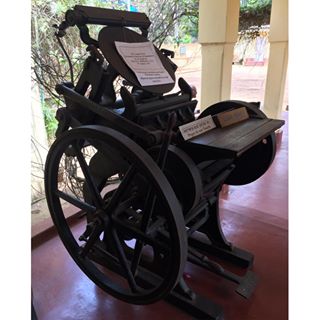


In 1917, the citizens of Lincoln, Nebraska presented to the boys of Shantiniketan, a letter-press treadle machine. The gift initiated the Shantiniketan Press from whIch the Shantiniketan Patrika newsletter was printed.
Upasana Griha
In 1863, Maharshi Devendranath Tagore, Tagore’s father, constructed a Prayer Hall where Bramho prayers were conducted. The prayer hall opens on Wednesdays and for occasional meetings. Prayers at Shantiniketan are non-denominational. Yet, major holidays of various faiths are celebrated here including Christmas and Buddha Jayanti. This concept of harmony of religions along with the ashram style seating arrangement and general open-minded attitude reminded us of our own Vidyapith in many ways.


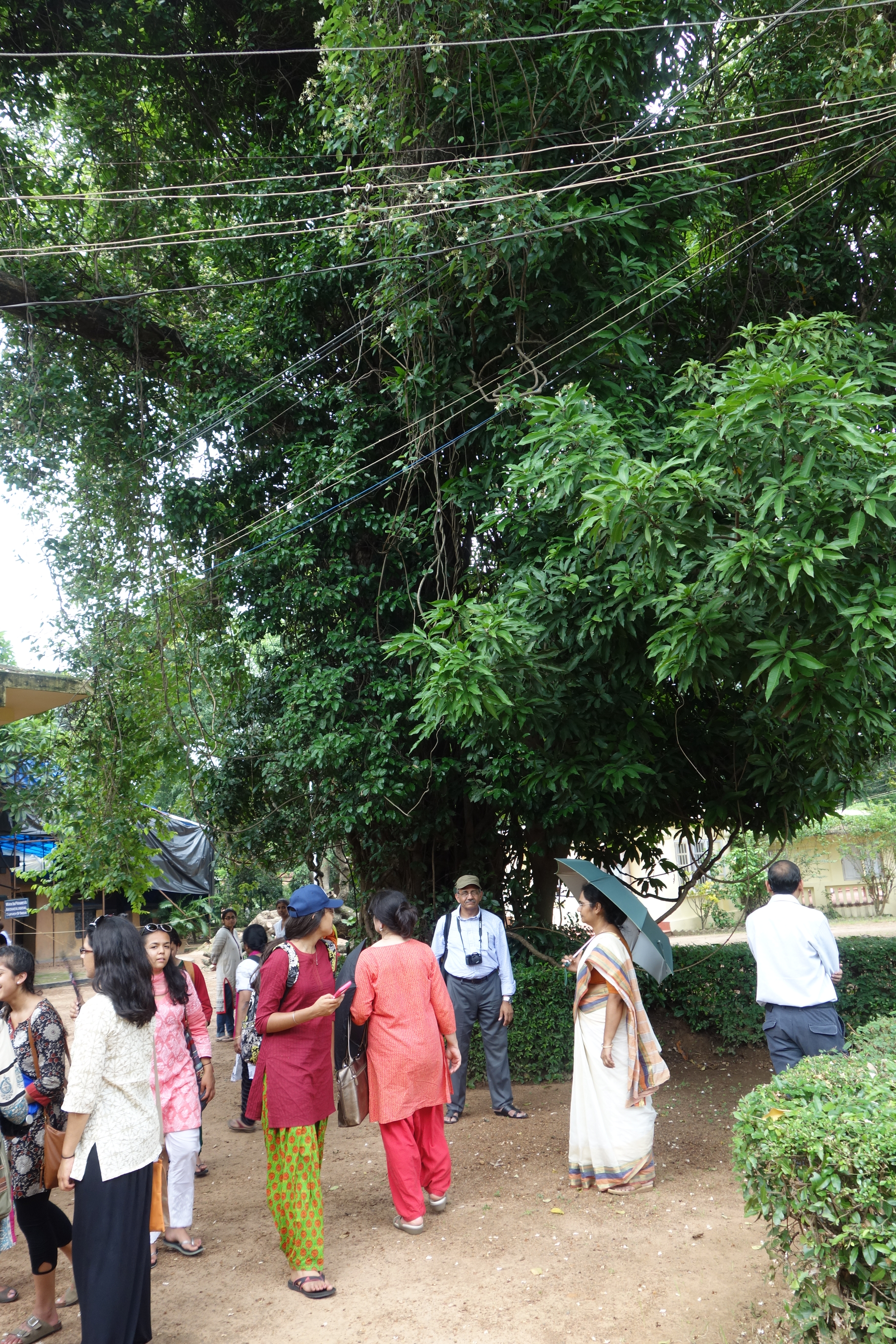
Beside the Prayer Hall is a massive Banyan tree – it is said Rabindranath loved to sit under this tree.
Because we were short on time, we were unable to visit the Kala Bhavan, the Institute of Fine Arts, a noted institution of education and research in visual arts, founded in 1919. It is the home of the Fine Arts faculty of the Visva-Bharati University, Shantiniketan.
Vriksharopan Celebration (Planting Trees Celebration):
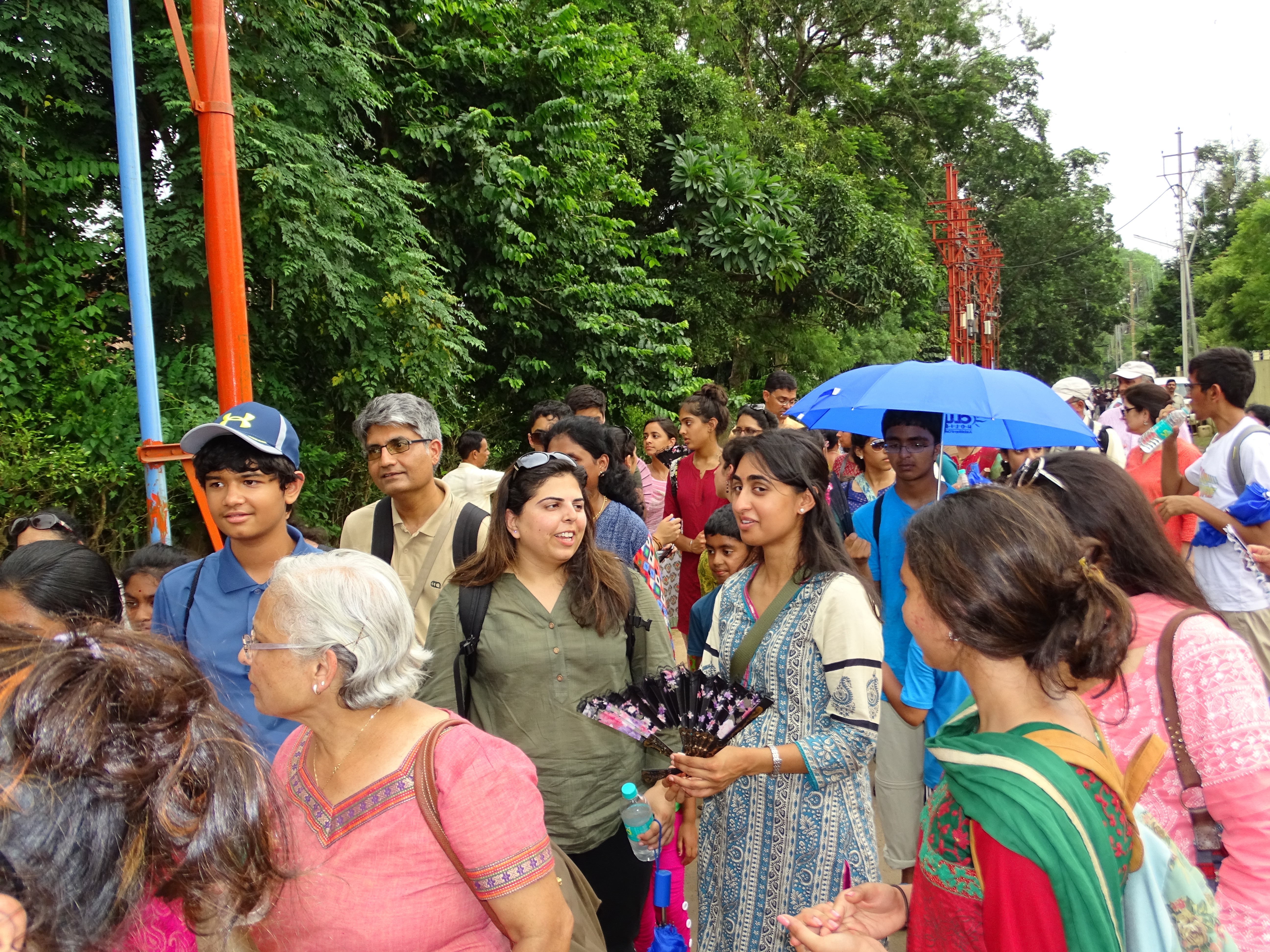
As we made our way back to our totos, we caught a glimpse of Shantiniketan’s school girls dressed in colorful saris. They were assembling for the tree planting ceremony presentations. Rabindranath Tagore himself had started the “Vriksharopan Celebration” (Planting Trees Celebration). We could see that this was a major Shantiniketan festival. There were so many nicely dressed students, and people were walking to the ceremony. The traditional dance makeup, colorful costumes, and classical tones drifting into the air from the direction of the open stage were reminiscent of our own Annual Function.
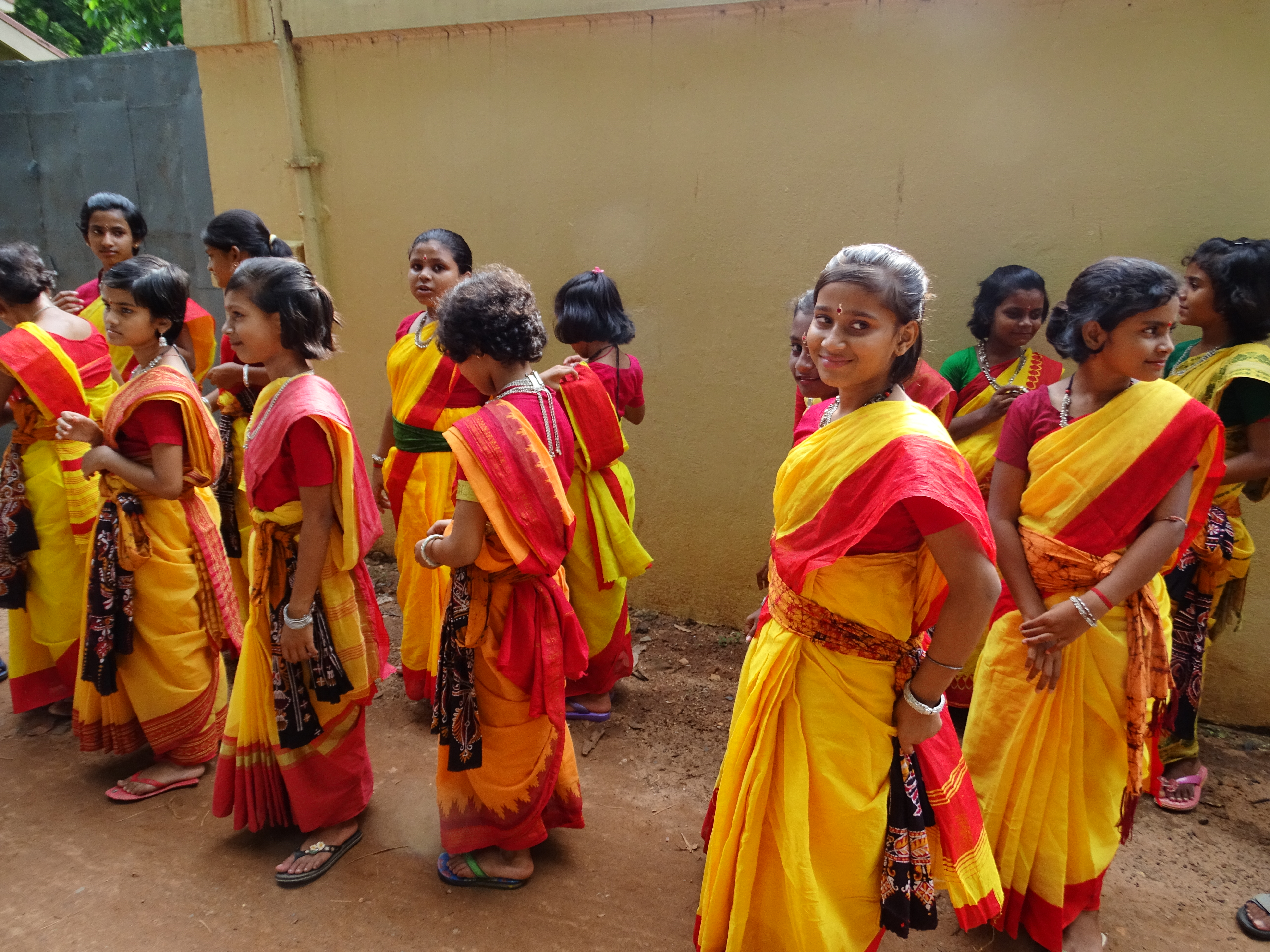

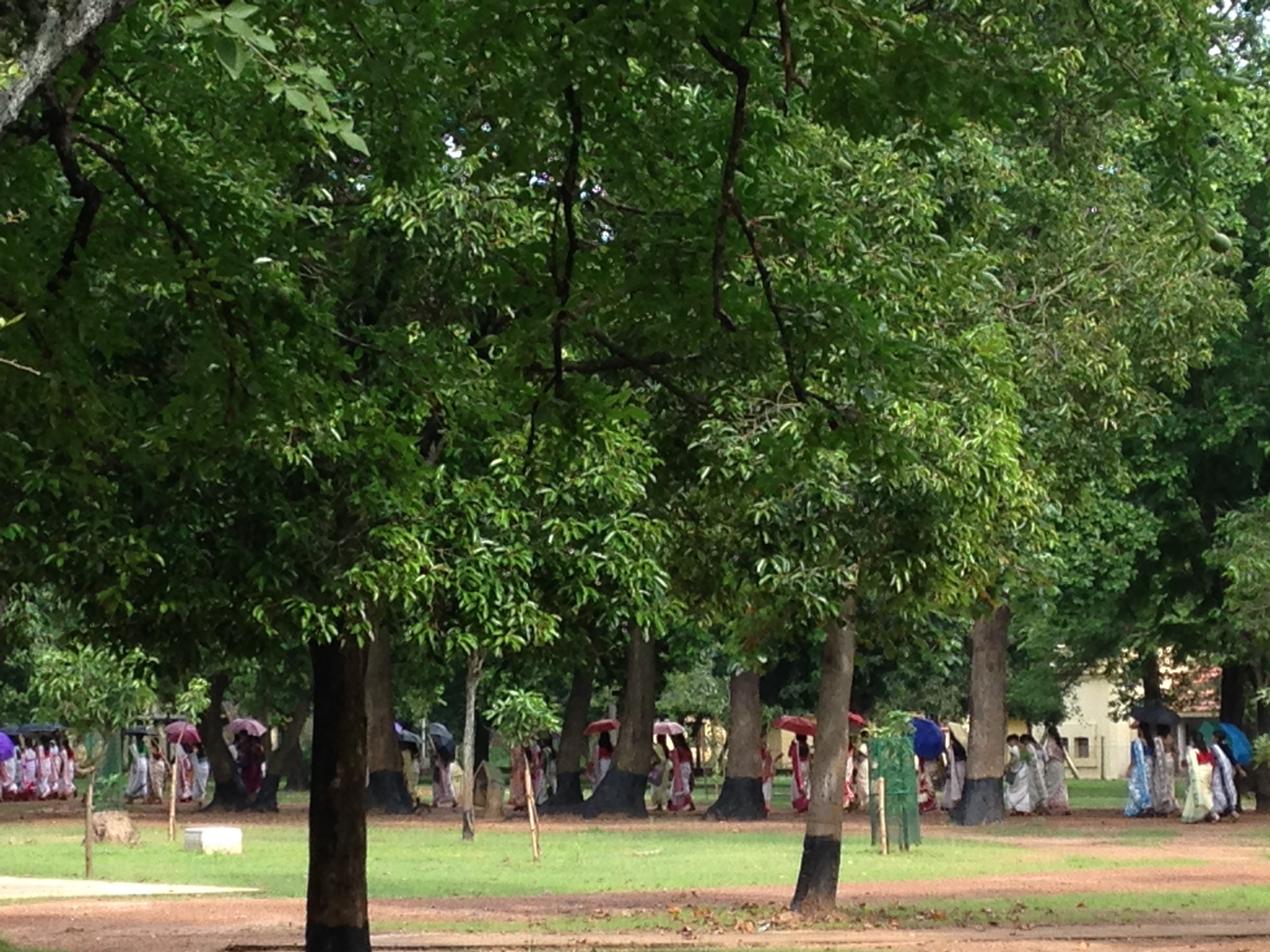
The girls above are from Santoshalaya, the girls’ hostel. Santoshalaya, a single-story house, is named after Santoshchandra Majumdar, one of the first students of the Santiniketan Vidyalaya. The walls of this house have frescoes prepared by artists of the 1920s. It includes other hostels.

With a long bus ride back to Kolkata ahead of us, we were not able to stay and watch the program, but we left feeling a resonating sense of familiarity.


Bus Ride Back:
The bus ride back was filled with devotional singing. Reflecting on the day’s experiences, it was evident that Rabindranath Tagore had created in Shantiniketan, an oasis that upheld the poet’s spiritual and educational ideals. This can be understood from the lines of Poem “Let My Country Awake!” from his most renowned book of poems, Gitanjali (“Song Offerings”):
Where the mind is without fear and the head held high;
Where knowledge is free;
Where the world has not been broken up into fragments by narrow domestic walls;
Where words come out from the depth of truth;
Where tireless striving stretches its arms towards perfection;
Where the clear stream of reason has not lost its way into the dreary desert sand of dead habit;
Where the mind is led forward by thee into ever-widening thought and action–
Into that heaven of freedom, my Father, let my country awake.
(I would like to thank Sneha Shah for writing the original report, Deba Saha for providing important information and photos and Nisha Parikh for editing the blog.)




























 mahendrajani