Category Archives: Places Associated with Sri Ramakrishna

Belur Math Pilgrimage – 2015, Day – 7 Evening at Nilambar’s Garden House and Belur Math Arati

August 9, 2015

(I am very happy to publish today the last post of the series of posts titled “Belur Math Pilgrimage – 2015”.  It is a coincidence that exactly one year ago we completed our last trip of the pilgrimage on this day.  All of the 91 people felt that this pilgrimage was a life-long inspiring memory.)

Going to Belur Math:

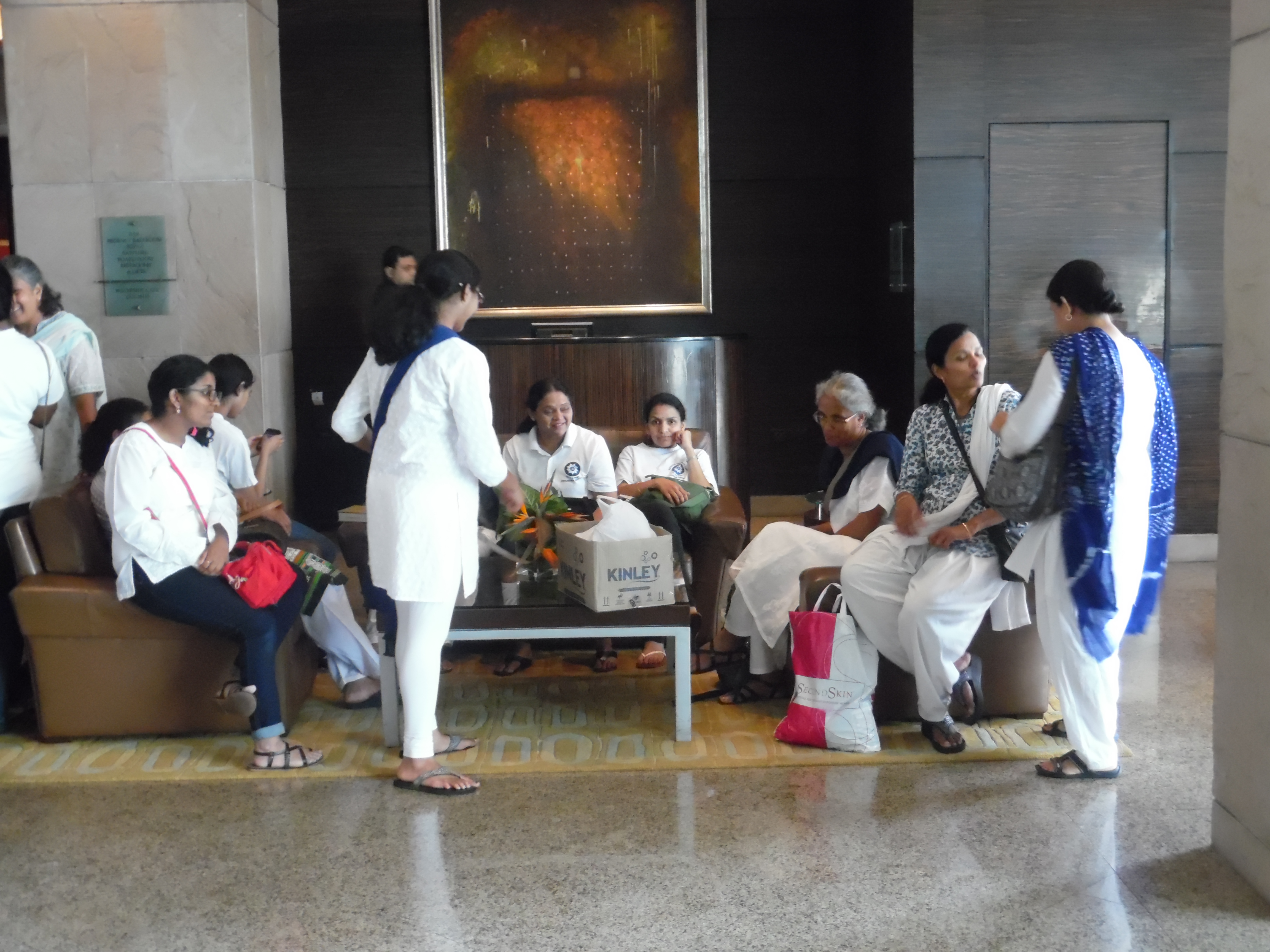
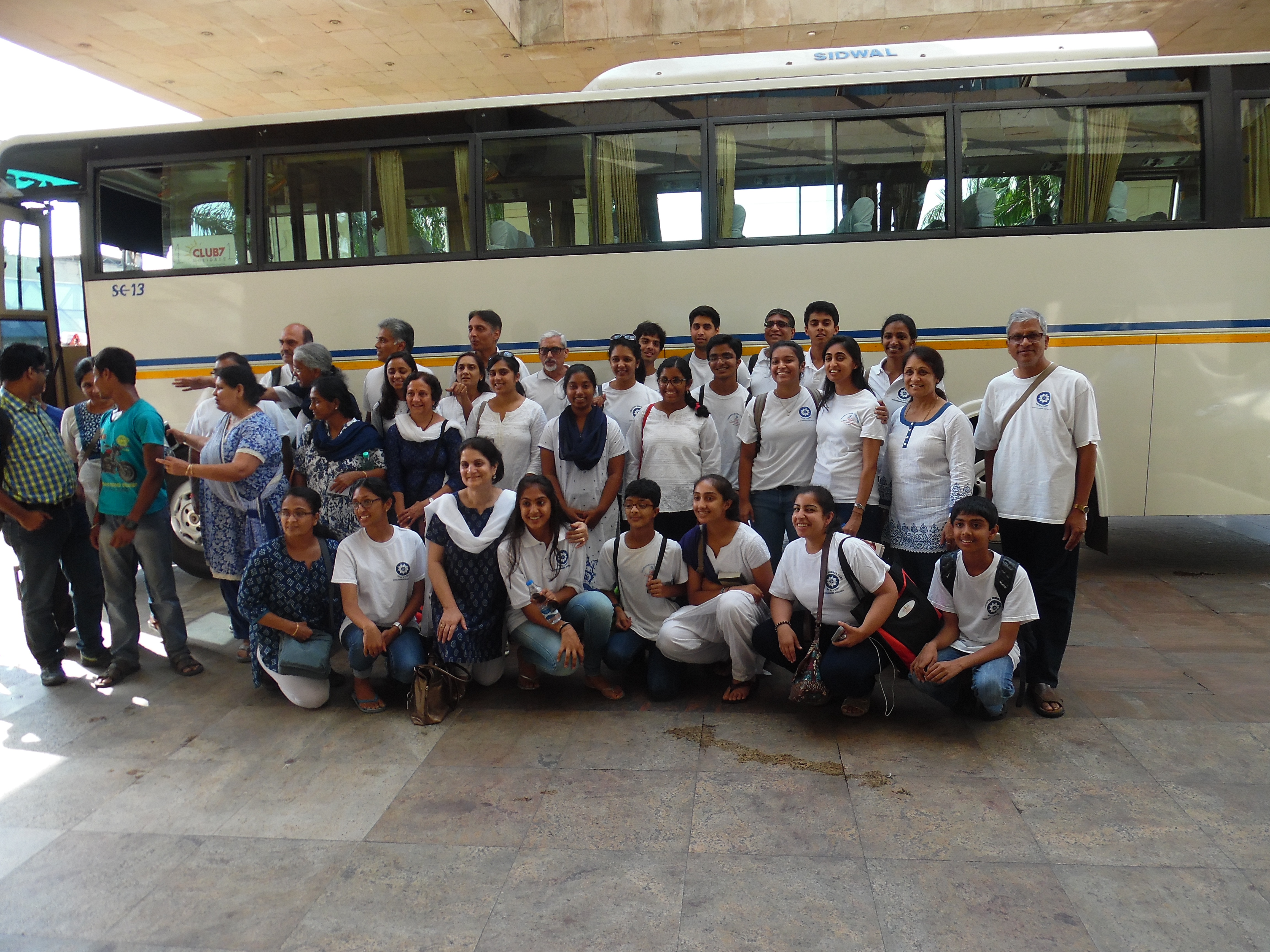
Around 2:30 p.m. all of the pilgrims gathered, wearing the Vidyapith uniform, at the Hyatt entrance.

At Hyatt -1 At Hyatt -2 At Hyatt -3

We were ready to once again get into the three buses for our last trip of this pilgrimage – going to the Belur Math.  We were all both happy and thankful that everything in our trip had gone according to plan and had worked out successfully.

As the last part of the pilgrimage, all wanted to go to the Belur Math, attend the evening arati, and salute Sri Ramakrishna, Holy Mother Sri Sarada Devi and Swami Vivekananda. We wanted to take their leave and also to take leave from Revered Manager Maharaj Swami Girishanandaji,Tapas Maharaj and Bhandari Maharaj.  We also wanted to visit Nilambar Mukherjee’s Garden House, which we could not do it in the earlier visit.

Before we boarded the buses, each group took a picture in front of the Hyatt entrance to keep as a memory.
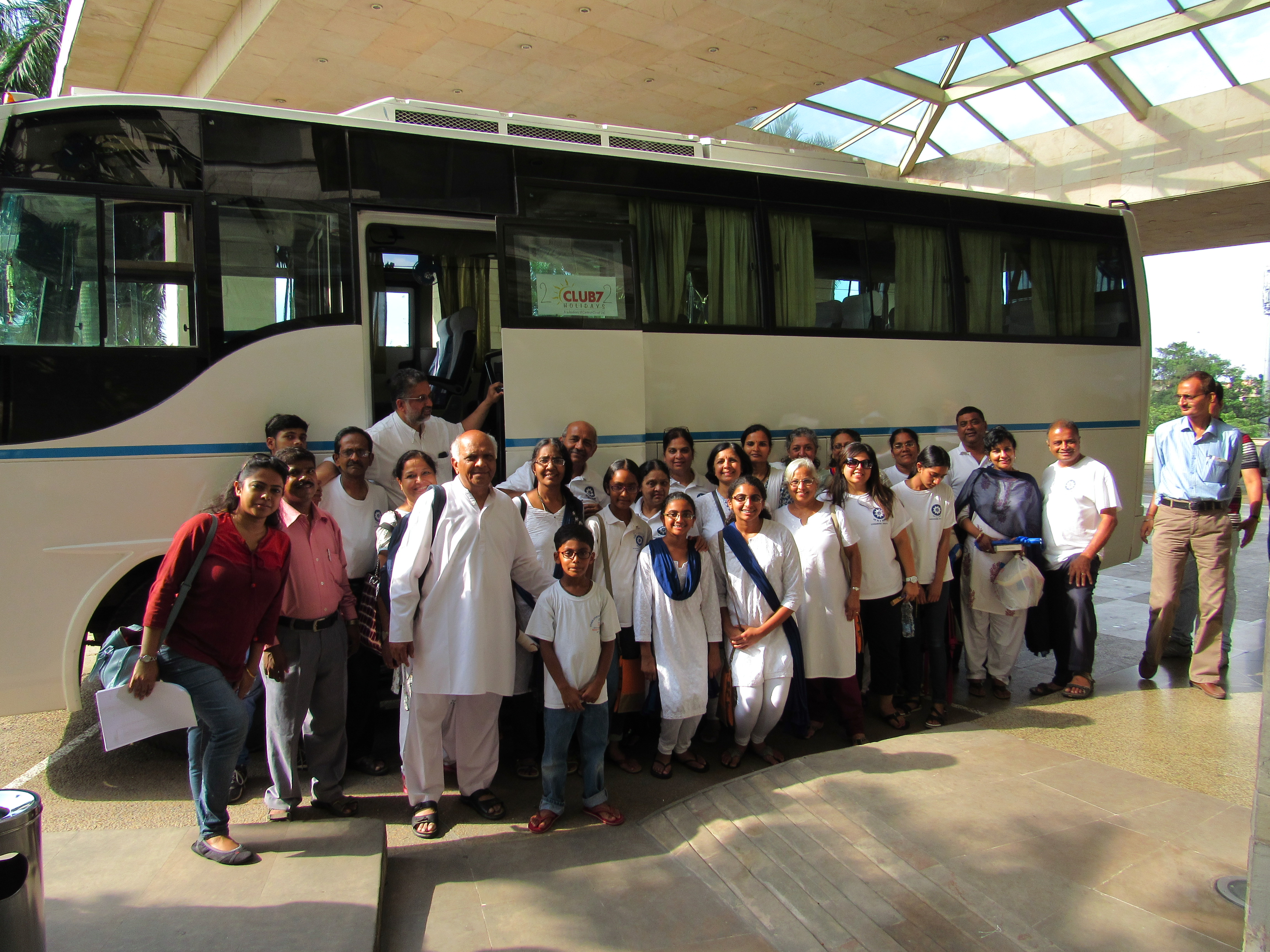
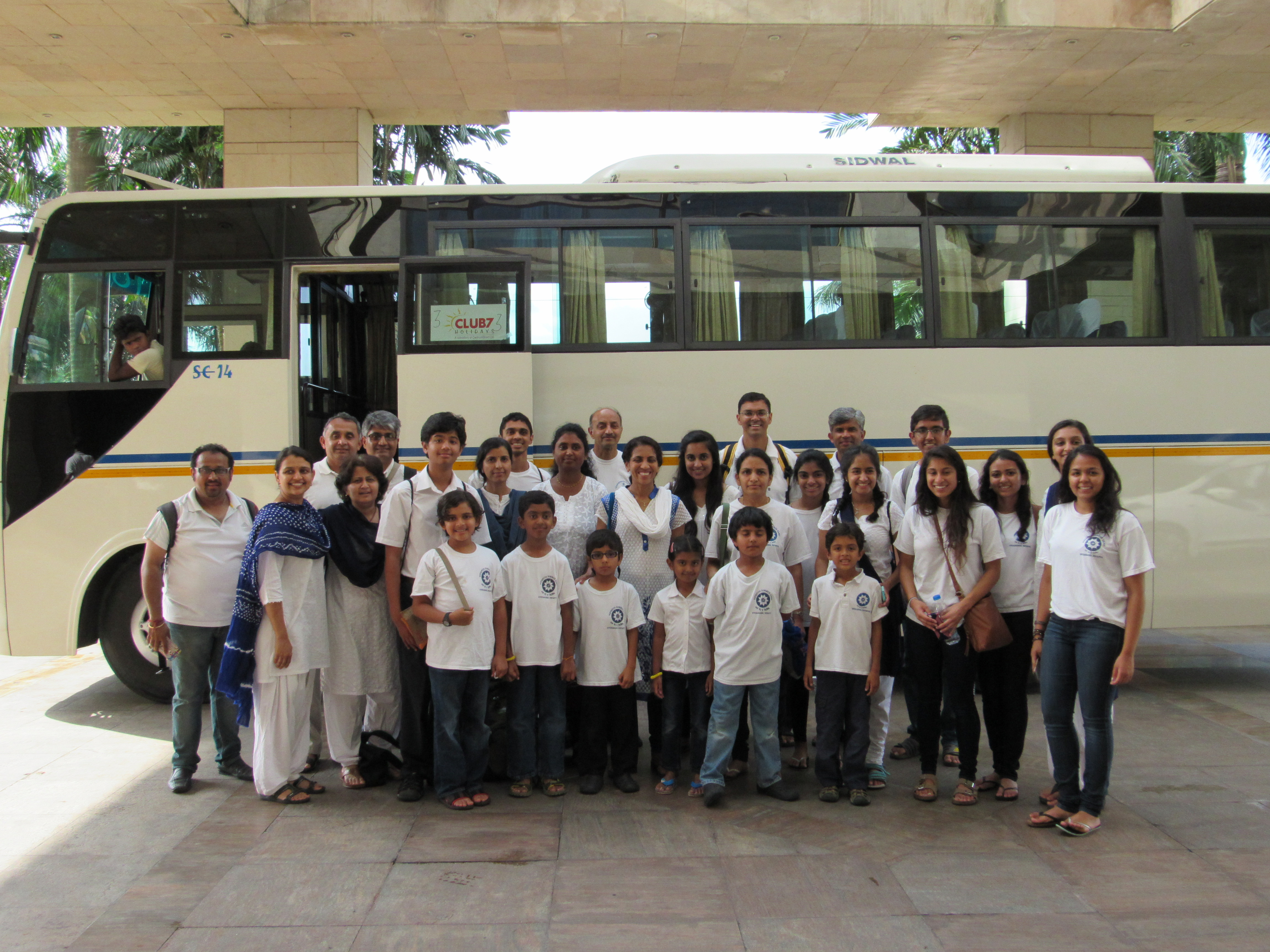
Group - 2 Group - 3

DSC_0778

The groups in each bus loudly uttered “The Five Jai” – “Jai Shri Guru Maharajjiki Jai,” “Jai   Mahamayiki Jai,” “Jai Swamiji Maharajjiki Jai”, “Jai Gangamayiki Jai, and “Jai Sab Santanaki Jai.” Once again, we were blessed with good weather.  There was no rain.  By this point, the buildings and the roads were more familiar than before as we had traveled this route quite a few times.  During the ride, people were singing, chatting or trying to catch up the sleep.

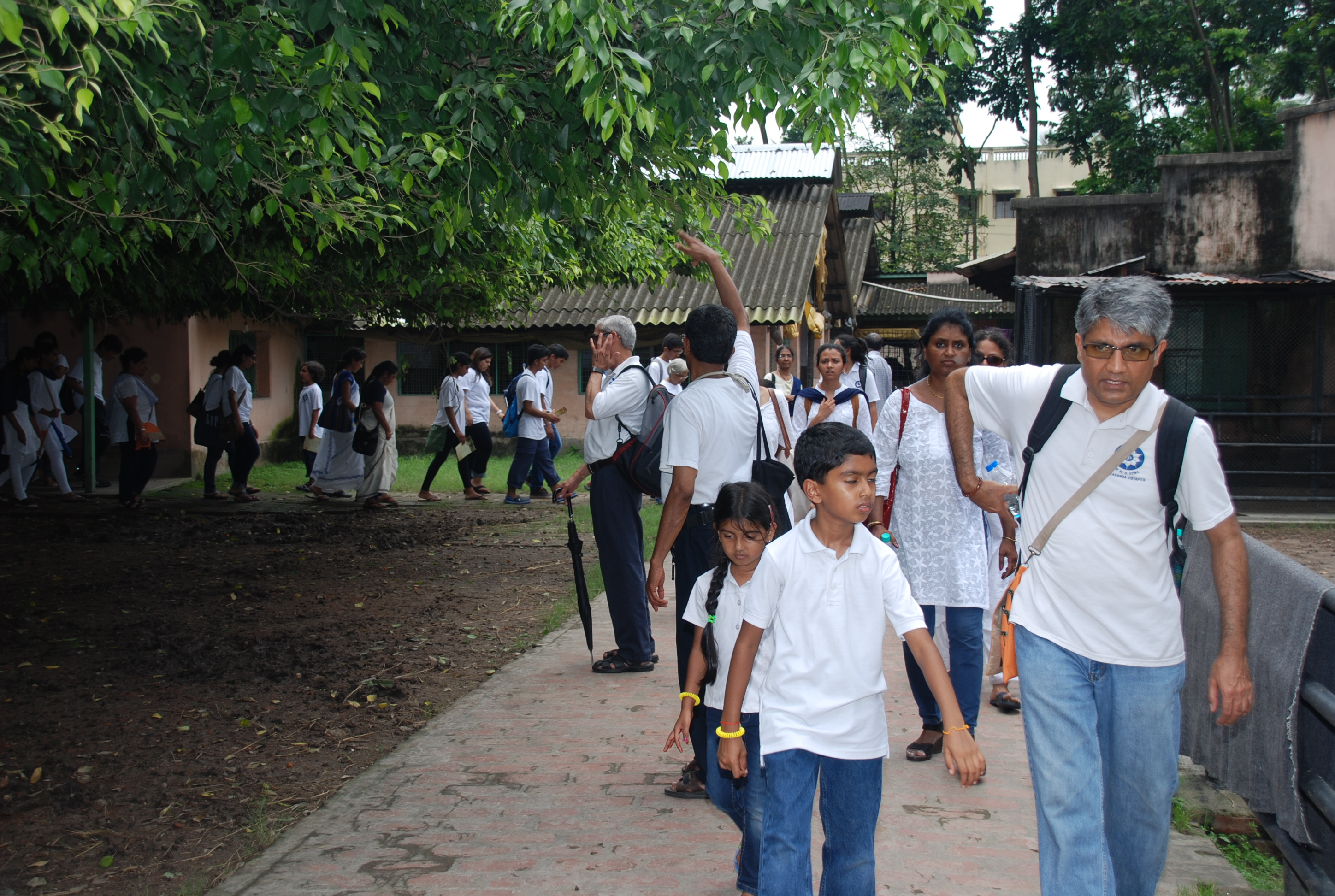
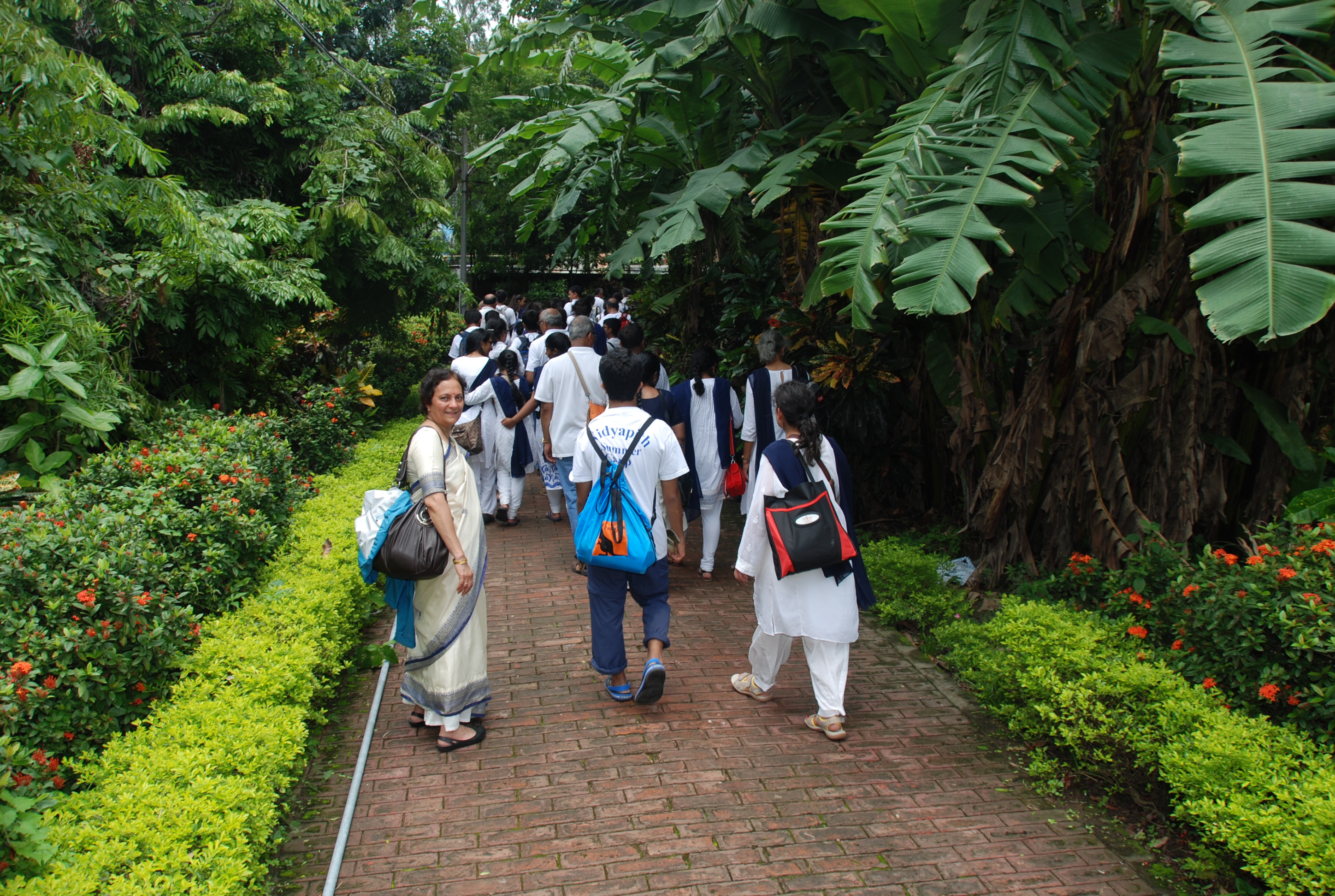
Since this was our last visit during our trip, our buses were allowed by the Belur Math to park inside the campus, closer to the main building.  Revered Tapas Maharaj had arranged a guide for our final visit.  After getting off the buses, we all went to the Nilambar Mukherjee’s house.  The road leading to the house was very pleasant.  The various kinds of green trees were eye-catching.
Going to Nilambar's House - 1 Going to Nilambar's House - 2 Going to Nilambar's House - 3 Going to Nilambar's House - 4

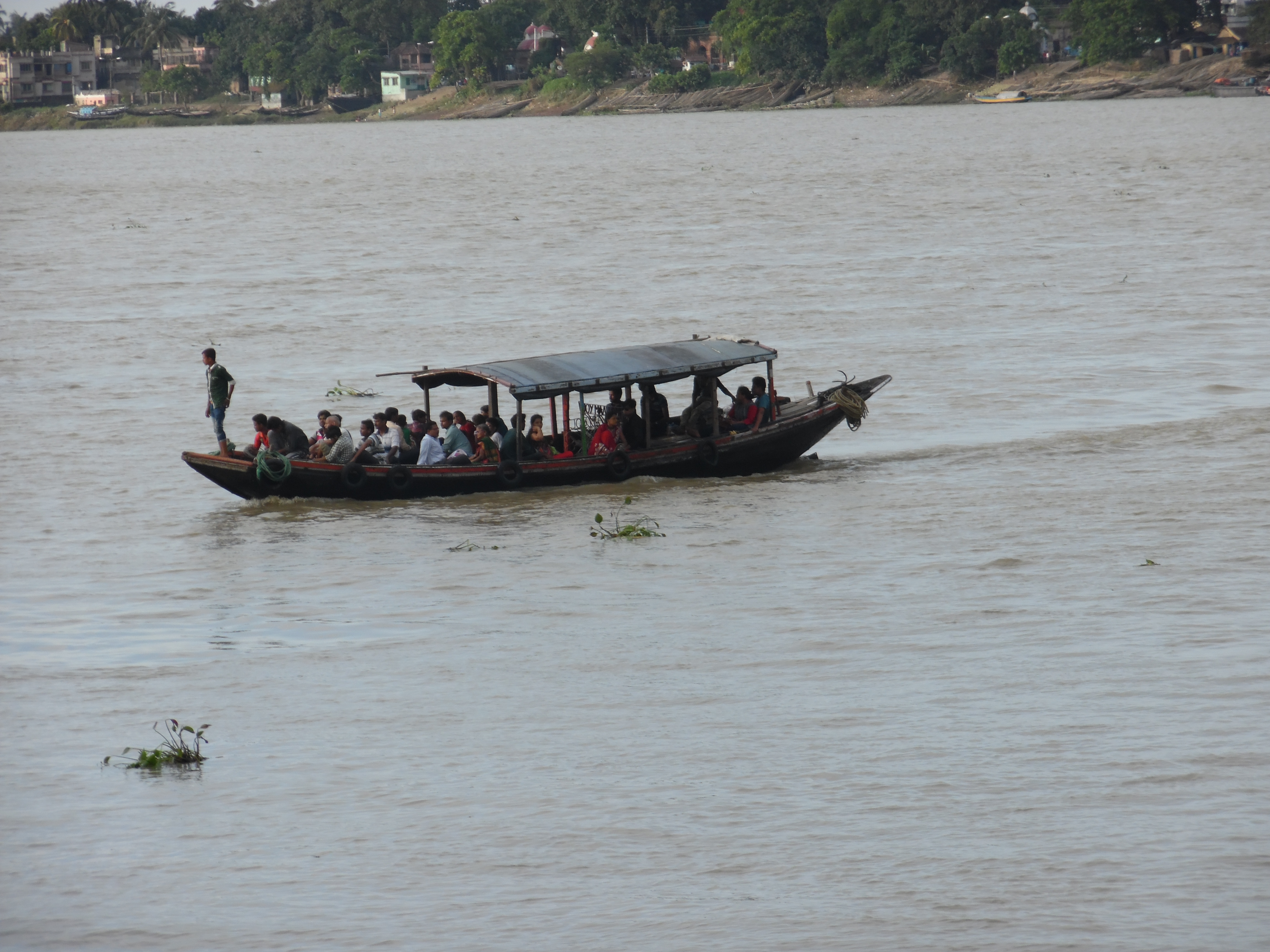
The Ganga was filled with water up to both the sides of its banks.  The waves were gently splashing.  We could see a few boats traveling on the river.  It was a serene atmosphere.

Ganga - 1 Ganga - 3

Holy Mother in Nilambar Mukherjee’s house:

Nilambar's House - 1

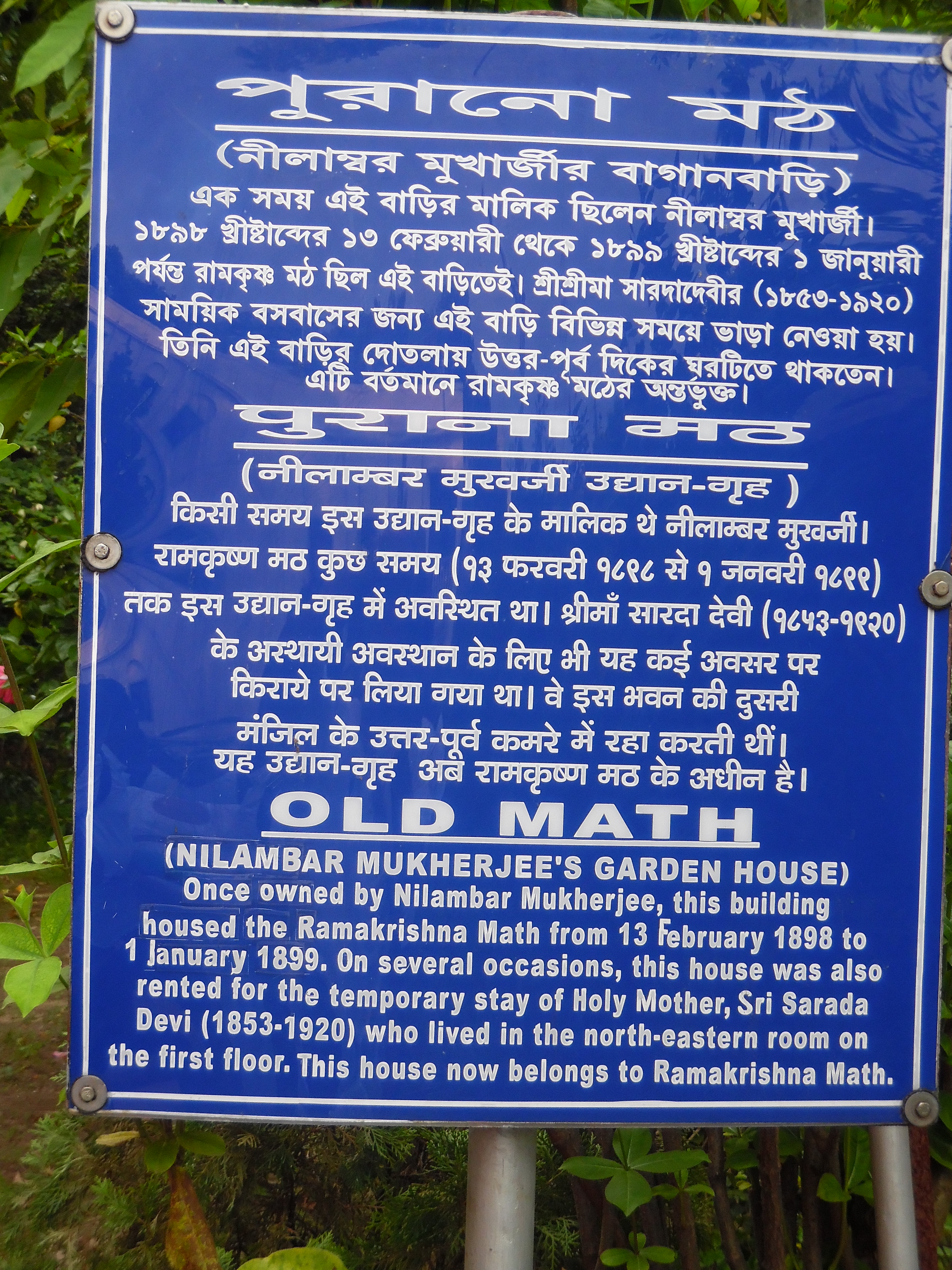
Sign - Old math

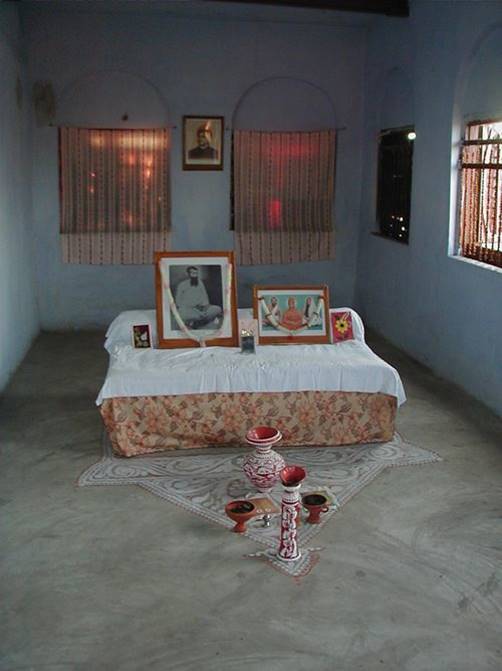
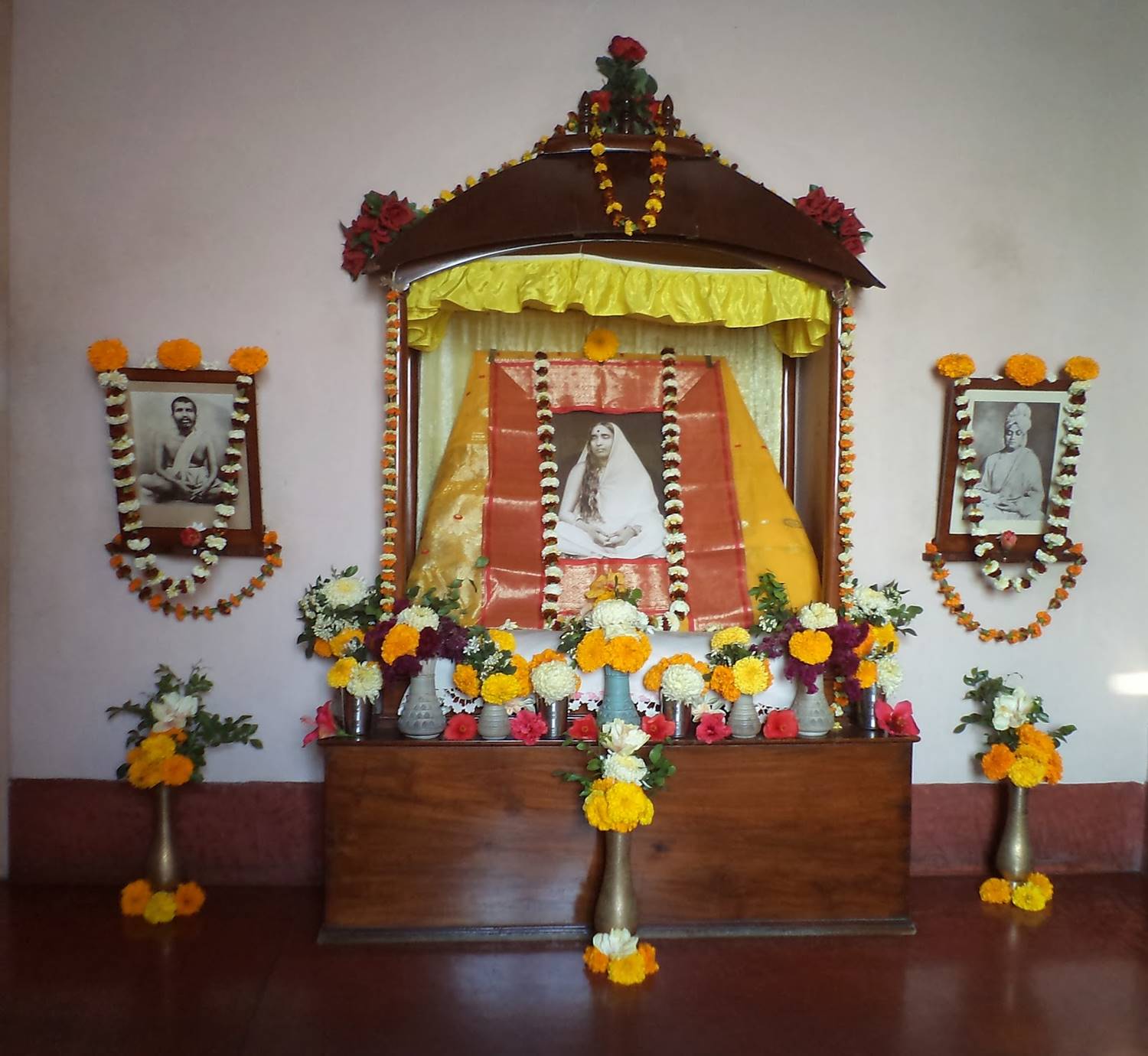
This place is very special and holy because Holy Mother stayed here.  There is a shrine room of Holy Mother on the second floor.

Sign - Mother's Shrine

When entering, one can feel the serenity and divinity in the environment.  Our group went to the shrine room upstairs in batches.  Each pilgrim quietly offered salutations and did japa.
Holy Mother's shrine in Nilambar Babu's house

Those people who were not in the shrine room, sat outside in the open area of the house and enjoyed the view of the Ganga.

Ganga - 2

After we all had offered our salutations, we remembered that the following important events of Holy Mother’s life which took place here.  (Swami Chetanananda’s book “Sri Sarada Devi and Her Divine Play” describes all these events in great detail)

Holy Mother’s First Stay (May 1888 – October 1888):

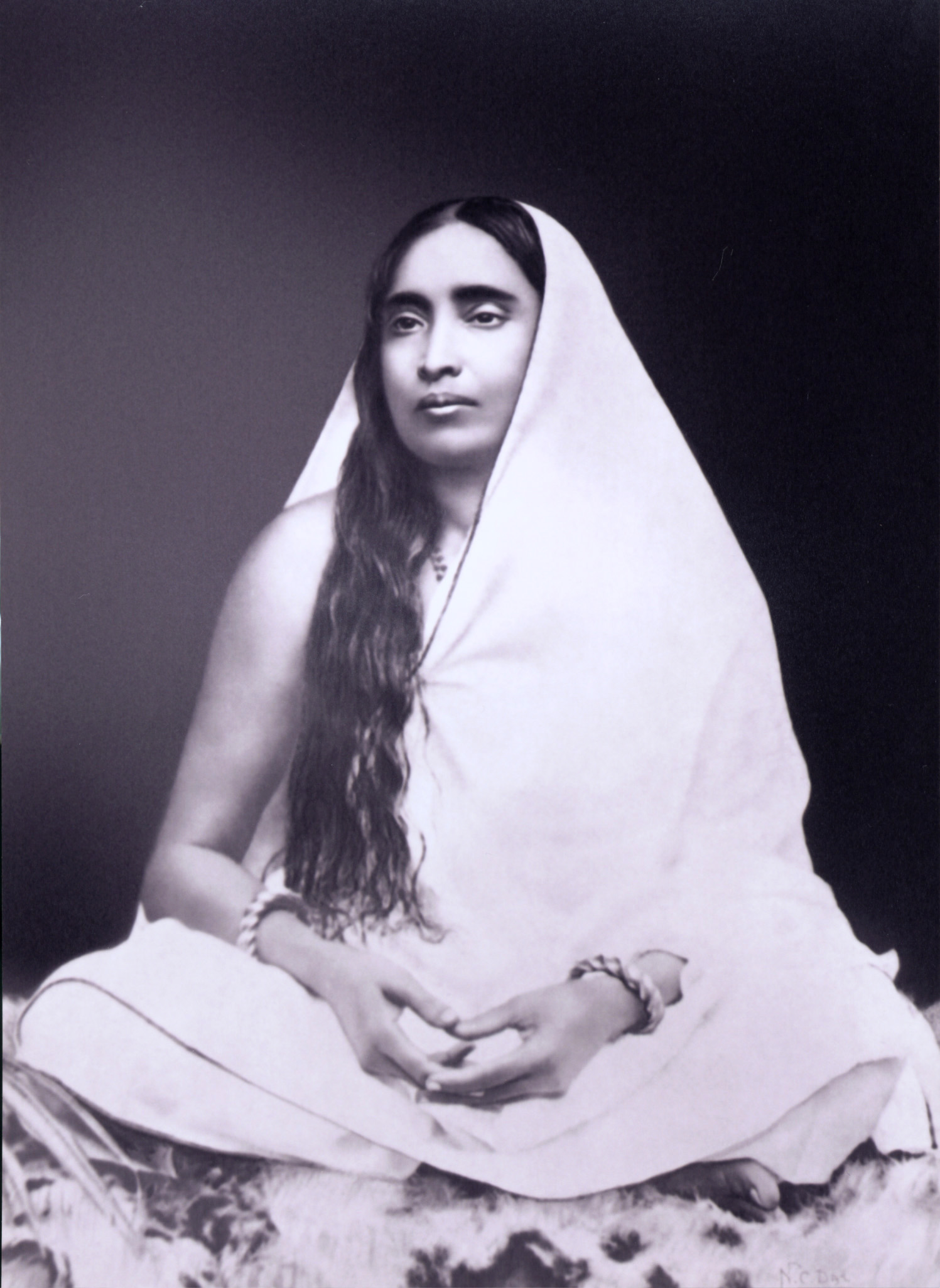
After Sri Ramakrishna passed away in August 1886, Holy Mother lived in Kamarpukur and Jayarambati.  Upon the request of devotees, Holy Mother came to Kolkata in May 1888.
Holy Mother 002

She stayed in Balaram Babu’s house for a few days.  After this, devotees rented Nilambar Mukherjee’s Gardan House for six months for Holy Mother’s stay.  Holy Mother moved into the Garden House with two women devotees, Yogin-ma and Golap- ma.  Swamis Yogananda and Adbhutananda were taking care of Holy Mother’s needs.  During her stay in the Garden House, Holy Mother’s mind remained in God-consciousness and went into Samadhi quiet often.

  1. Experiencing Nirvikalpa Samadhi:

Yogin-ma recalled, “One evening Holy Mother, Golap-ma, and I were meditating on the roof. When my meditation was over, I noticed that Mother was still absorbed in meditation – motionless in Samadhi.  After a long time, she regained some consciousness and said, ‘Oh Yogin! Where are my hands? Where are my feet? I pressed her limbs and said: ‘Here are your hands and feet.’  It took Holy Mother a long time to regain consciousness of her body.”

  1. Hymn on Holy Mother (Prakrutim Paramam…):

A direct disciple of Sri Ramakrishna named Kali (Swami Abhedananda) had composed a hymn on Holy Mother in Sanskrit.  One day, he approached Holy Mother and expressed his desire to recite the hymn to her.  Holy Mother was startled and asked, “What kind of hymn? Whose hymn is it?” Swami Abhedananda humbly replied, “Mother, I composed a hymn on you.” Amazed, Holy Mother asked, “My son, what is the need for composing a hymn on me?” Upon repeated requests, Holy Mother listened to the hymn “Prakritim Paramam…”  Swami Abhedananda said that when he recited the line “Ramakrishna gata pranam” (meaning whose soul is absorbed in Sri Ramakrishna), the Mother’s whole body became motionless as one seats in meditation.  When he recited the lines, “Tan nama shravana priyam” (meaning who loves to hear Sri Ramakrishna’s name), tears of joy and love started rolling out from her eyes.  When Swami Abhedananda recited the lines “Tad bhava ranjitakara” (meaning whose mind being absorbed in Sri Ramakrishna became one with Him), he saw that Holy Mother was completely absorbed in meditation and has become one with Sri Ramakrishna.   Afterwards, Holy Mother blessed Swami Abhedananda saying, “May Saraswati (the goddess of knowledge) sit on your tongue.”

Devotees love this hymn and we see that all over the world, wherever there is worship of Holy Mother, they sing this hymn.

  1. The First Chapter of the Gospel of Sri Ramakrishna:

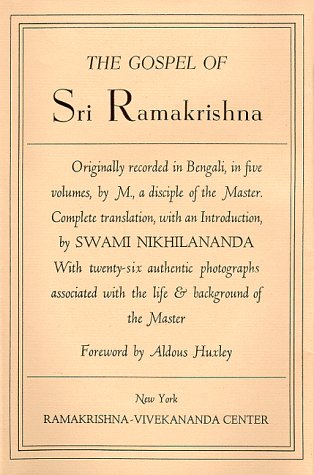
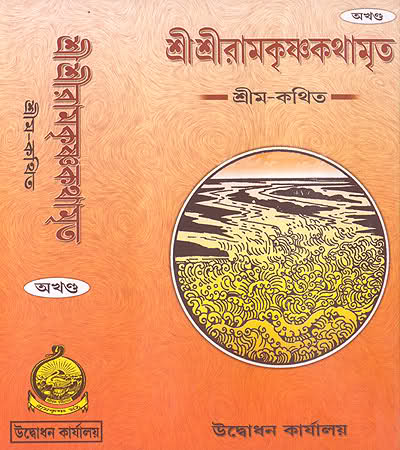
On July 11, 1888 M. (Mahendranath Gupta) read a chapter of the Kathamrita (the Gospel of Sri Ramakrishna in Bengali) to Holy Mother.  M. had not told anyone about this chapter.  He wanted to read it to Holy Mother first.  After listening to the chapter, Holy Mother praised M. and encouraged him to write more.
Kathamrita The_Gospel_of_Sri_Ramakrishna

 Holy Mother’s Second Stay (July 1893 – October 1893):

Five years after Holy Mother’s first stay, devotees again rented the same garden house of Nilambar Mukherjee for Holy Mother’s stay.  Holy Mother stayed there with Yogin-ma and Golap-ma.  This time, Swami Trigunatitananda took care of Holy Mother’s needs.  Holy Mother spent most of her time in worship, japa, and meditation.  Swami Trigunatitananda used to pick flowers for Holy Mother’s morning worship. During her stay at this time, two important events took place in the life of Holy Mother.

  1. Panchtapa Austerity:

For various other reasons, including doing some austerity, Holy Mother practiced the “Panchatapa” on the flat roof of this house.

Panchatapa Roof

“Pancha” means five and “Tapa” means austerity.  On the flat roof of the house, four fires were set in a square not too far and not too near to Holy Mother.  Holy Mother set in the middle of these fires from dawn to dusk under the blazing sun (the fifth fire) doing japa and meditation.  This was not easy an easy practice for most people.  This austerity is intended to keep the mind calm under the pressing circumstances.  Holy Mother had kept her calm demeanor during the adverse family and social circumstances in Kamarpukur and Jayrambati for years.  This austerity showed externally how Holy Mother kept her calmness within during all kinds of favorable and unfavorable circumstances.   She later on said, “My child, I went through it for the sake of all of you. Can you practice austerities? This is why I had to do it.”  Mother Sita had gone through the “fire test” when people questioned her purity.  Sri Ramakrishna used to say, “Sa, Sa, Sa,” which had the same pronunciation in Bengali . These “sa’s” refer to the phrase “Sahan Karo” (in Gujarati), or “Shajhya” in Bengali. The phrase suggests that in this world the greatest austerity is to “endure, endure, and endure.”  If we want to remain grounded in our true identity, Our Soul, or Our Atman, and live in the constantly changing world with a steady intellect, we have to learn “endurance.”

  1. Holy Mother’s vision:

It was a moonlit night.  Holy Mother was seated on the steps leading to Ganga.  The soothing light of the full moon illumined everything around her including the river Ganga.  The reflection of the full moon was dancing with the waves of the water.  Suddenly, she saw Sri Ramakrishna come from behind and proceed swiftly towards Ganga.  As soon as he touched the water, his body dissolved in it.  Holy Mother sat in amazement.  Then, from nowhere, Narendra appeared. He went to Ganga and while loudly chanting “Victory unto Ramakrishna!” started to sprinkle the Ganga water on innumerable men and women.  Immediately, these people were liberated.  This vision went so deep into Holy Mother’s mind that she could not bathe in Ganga for several days.  This vision has significance.  Sri Ramakrishna loved the Ganga and his life was pure like the Ganga.  Narendra (Swami Vivekananda) elaborated on Sri Ramakrishna’s teachings and spread them everywhere.  This helped (and is still helping) people attain the Knowledge of Ultimate Reality (Brahman) and destroy their ignorance and bondage.

We were fortunate enough to see the steps leading to Ganga from Nilambar Mukherjee’s house.  Seeing the same house, the same roof, and the same steps, we felt the presence of Holy Mother and deep within we experienced a feeling of blessedness.  Several youngsters later mentioned that by visiting these places, Sri Ramakrishna, Holy Mother Sri Sarada Devi and Swami Vivekananda became real to them. They were no longer legends and stories of imagination.

OTHER STAYS AND EVENTS AT THE GARDEN HOUSE

Holy Mother also stayed at this house for one day in April of 1898, one day in November of 1898, and five days in October of 1901.

  1. Monastery at Nilambar Mukherjee’s Garden House:

In February 1898, the monastery was moved from Alambazar to Nilambar Mukherjee’s Garden House. It was then that the Belur Math land came into the possession of the Ramakrishna Math. There was a dilapidated building that existed on the northern side of the land, which was renovated under the supervision of Swami Vijnanananda.
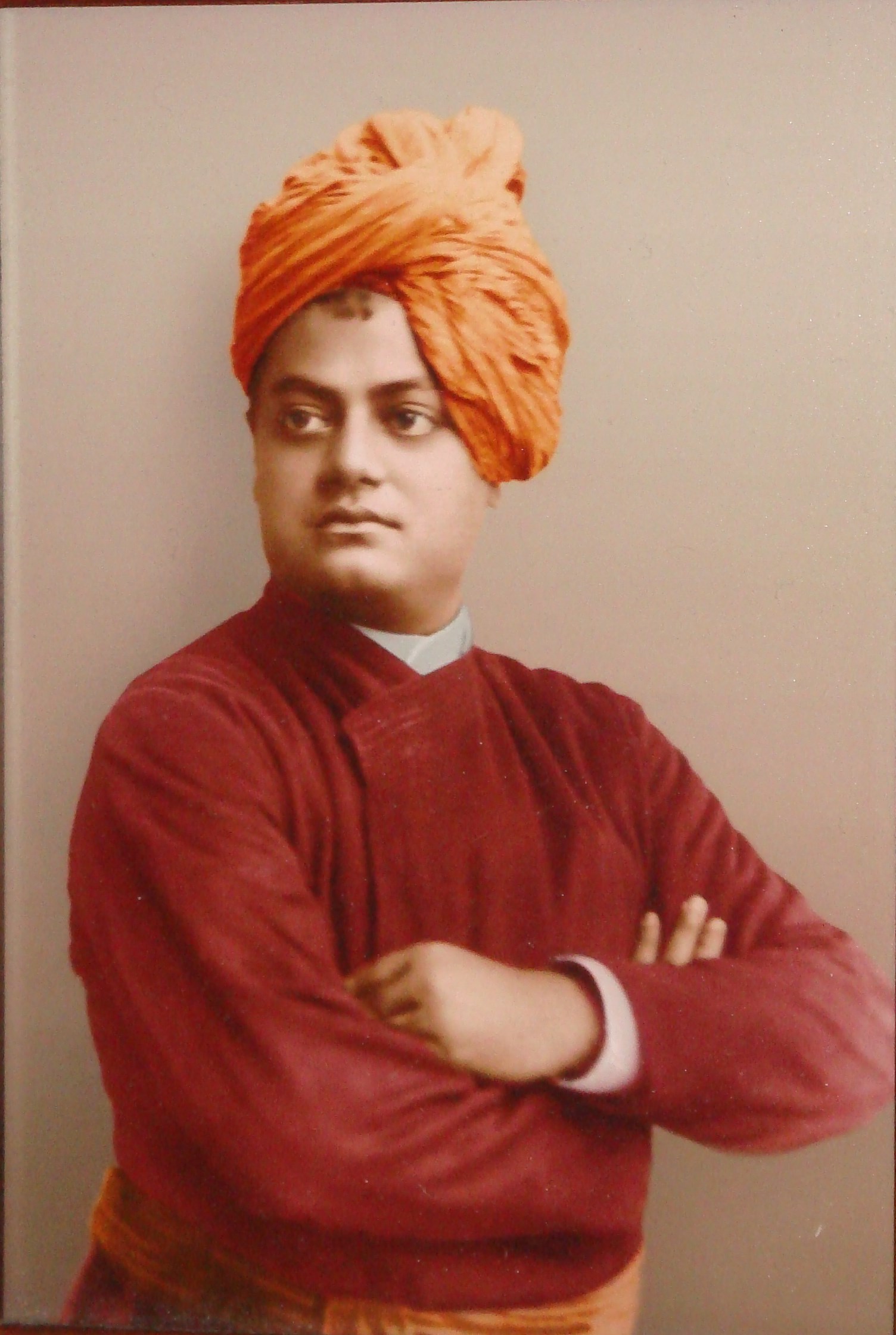
Swami Vivekananda (2)

Swami Vivekananda had stayed at the Garden House during this time.  In the morning he used to take bath in Ganga, salute Sri Ramakrishna’s “padukas” (slippers) and then meditate.

  1. Composition of “Khandan Bhava Bandhan…”:

The Nilambar Mukherjee’s Garden House was also the place where, in February 1898, Swami Vivekananda composed the famous Arati “Khandan Bhava Bandhan…” This aarti is sung all over the world in the shrines where Sri Ramakrishna is being worshiped.  In November of 1898, Swami Vivekananda composed “Om Hrim Ritam..” here – a hymn on Sri Ramakrishna which Usually follows by the Arati “Khandan…”

The following are links to the lyrics and meaning of the Arati and hymn:

Khandana Bhava Bandhana

Om Hrim Ritam

Furthermore, Swamiji also composed the following hymn on Sri Ramakrishna in this location:

आचण्डालाप्रतिहतरयो यस्य प्रेमप्रवाहो
लोकातीतोऽप्यहह न जहौ लोककल्याणमार्गम्।

The Garden House was truly a blessed place to have been the setting of such influential moments.

Swamiji’s Mango Tree:

Afterward visiting the Garden House, we were guided to the Belur Math office buildings.
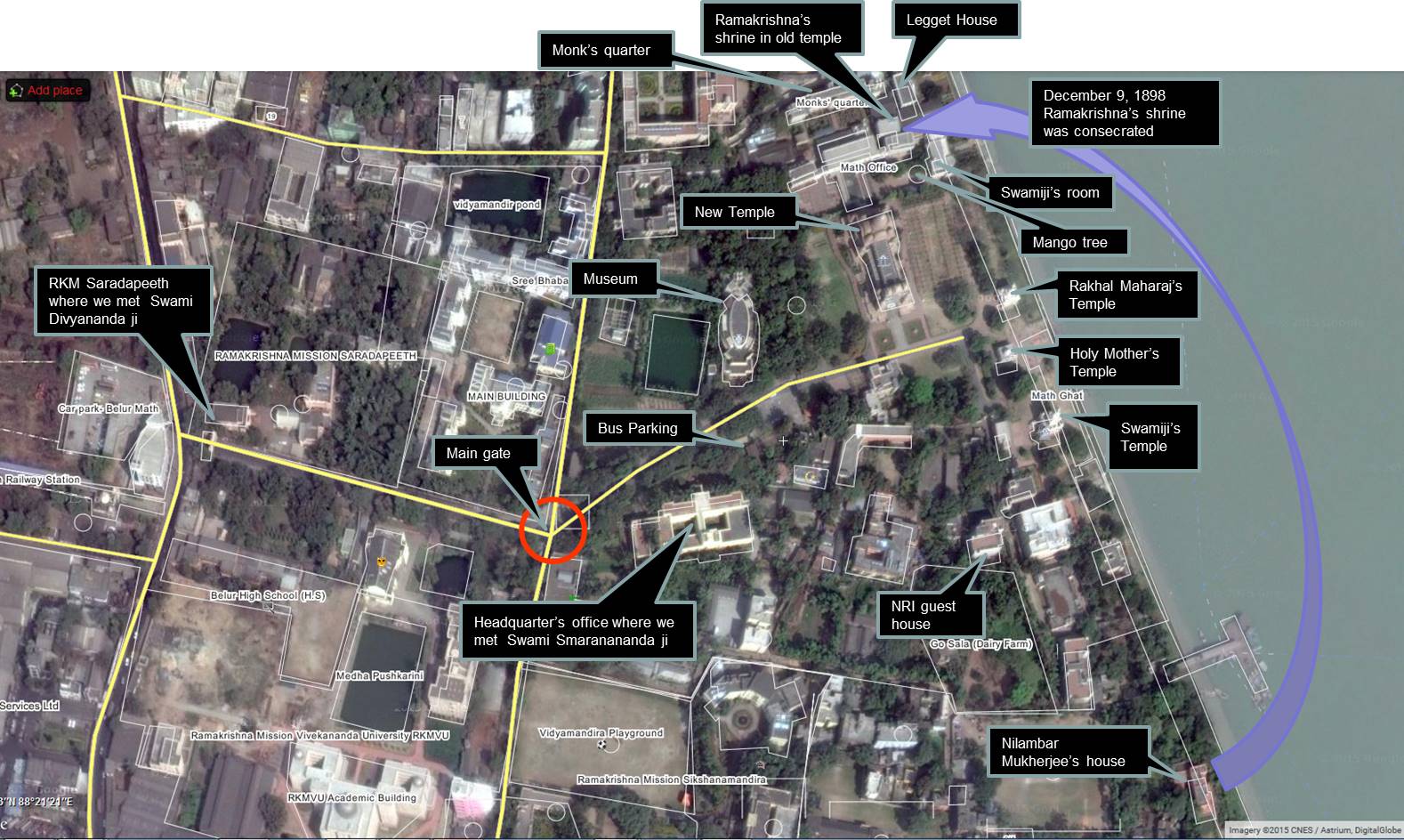
Belur Math Map Modified

During our previous visit, we had seen the Old Math and Swami Vivekananda’s room.  This time, we learned more about the big mango tree in the courtyard.  One of the favorite seats of Swami Vivekananda was under this mango tree.
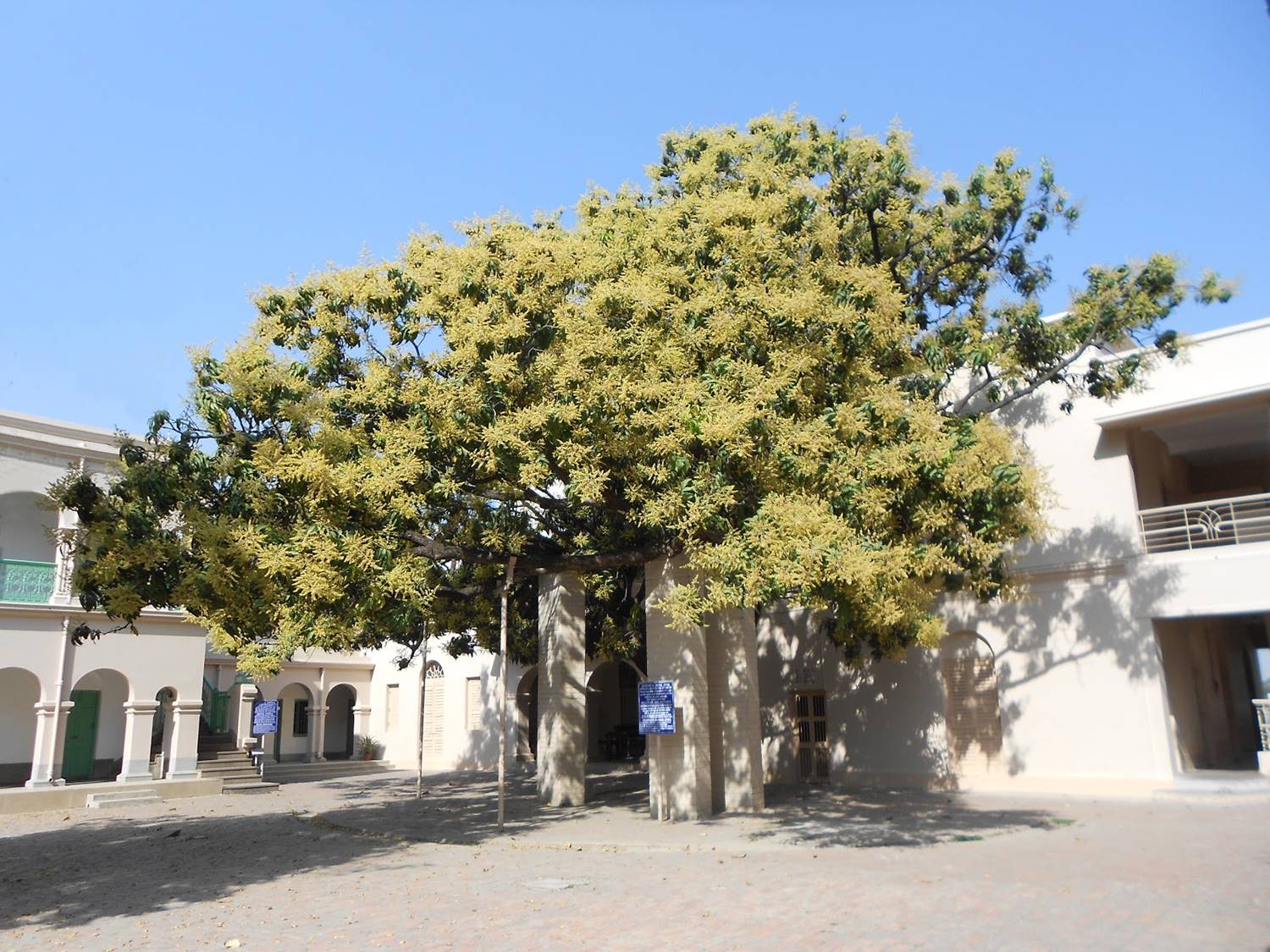
Swamiji's mango tree 2 Swamiji's mango tree 1

In the morning, he would usually be found seated on a canvas cot under this mango tree. This is where he would attend to his correspondences, write articles, read, or engage in conversation.  Devotees called it “Swamiji’s mango tree.”  There are few striking incidences took place under this tree.  Here are two such incidents.

  1. Gayatri Avahan Mantra:

It was evening.  Swami Vivekananda had just taken a bath in the Ganga and was returning to this place.  On the way back, he chanted, “Gayatri Avahana Mantra” (Ayahi Varade Devi….)*.    Swami Vivekananda’s soul-touching chanting made the surrounding people spellbound.  He then came to the mango tree and stood under it as if he were in Samadhi.  Then, he started pacing back and forth.  With this divine inebriation, his steps faltered.  All of those around him were deeply touched by his divine state and felt uplifted.

Many of us had attended Swami Adiswaranandaji’s talks at Ramakrishna Vivekananda Center, New York, USA.  They remembered that Swami Adiswarananda used to recite this Gayatri Avahan Mantra before his talks.

  1. Where will you go to seek God?

One day, Swamiji was sitting on the cot under this tree facing west.  His eyes were luminous and he was filled with spiritual consciousness.  Pointing to the Brahmacharis and Sanyasins, he said, “Where will you go to seek God? He is immanent in all beings.  Here, here is the visible God!”  All around him stopped and became motionless.  At the time, Swami Premananda was coming from Ganga after his bath to go to the shrine for worship.  He heard these words and became overpowered by spiritual consciousness.  He just stood there in front of Swamiji being unconscious to the outer world.  After a while Swami Vivekananda came back to a normal state, so did Swami Premananda.  Swami Vivekananda then asked Swami Premananda to go for his worship.

Special Snack:

Thinking that we would not be at the hotel until late at night and to express their love for us, the Swamis of the Belur Math and Bhandari Maharaj arranged a special snack for all of us. We were guided to a dining area behind the offices. There, we found a small snack including tea, biscuits, dhokla, and chevda. Bhandari Maharaj made sure that all the items were delicious.  We were overwhelmed with the Swamis’ love and enjoyed the treat.

Right next door to the room where we were eating was the Leggett House, which was nothing short of grand, with large pillars and doors.

The evening was descending.  Just a few steps away from our location were the bank of the Ganga, where we could see countless Swamis walking around.

We still had some time before the Aarti began so few of us decided to visit the bookstore to buy books and other things. Others few walked on the grounds of the Belur Math.  As we gathered again, we found that the time before evening aarti was very special at the Belur Math.  Evening was entering.  The rays of the sunset were falling on the Ganga, creating a colorful sight.  Hundreds of birds were chirping.  Many Swamis in ochre clothes were quietly walking around absorbed in the thoughts of God.  Devotees were offering their salutations in the temples. Because the environment in the Belur Math campus was so serene and because it was the weekend, hundreds of families from the neighboring areas were either sitting or walking around enjoying the beauty of the place on the bank of the Ganga.  We too enjoyed this serene environment.

Evening Arati:

As the arati time was nearing, we all went into the main Prayer Hall.  We were again fortunate to have a reserved area just behind the Swamis and Brahmacharis of the Belur Math.  We sat quietly and meditated in silence before the arati. One Swami blew a conch on all sides of the Prayer Hall.  The long, continuous sound of the conch reminded all to think of God.  The tanpuras and other instruments were fine tuned. The Prayer Hall was fully packed with several hundreds of people. The atmosphere in the temple was absolutely captivating. The Swami who was doing arati inside the shrine room stood up with a special lamp to offer arati and began to ring bell. With melodious voices, the leading Swamis started to sing arati “Khandan Bhava Bandhan…”  Hundreds of people joined in the singing. The mridangam and other percussions lifted up the singing into another level.  It was such a spiritually uplifting experience. Most of the Vidyapith people knew the arati by heart. They enjoyed singing with all. The arati was followed by the “Om Hri Ritam..” hymn and the “Sarva mangala mangalye…”hymn. The singing was tuneful, melodious and filled with devotion. Finally, all joined in two Jai’s: “Jai Mahamayiki Jai,” and “Jai Bhagavan Sri Ramakrishna Devaki Jai.”

The following are links to the Belur Math Evening Arati:

Khandana Mp3 Link

Om Hrim Ritam Mp3 Link

Sarva Mangala Mangalye Mp3 Link

All of the Swamis and Brahmacharis offered their salutations. We were allowed to offer our salutations before other people. All of us offered our salutations and went out through the doors on the Ganga side. A Swami was giving “batasa” (“Patasa” in Gujarati) as Prasad.  We took Prasad with great respect and went to the Belur Math offices to salute Swami Giritshanandaji and say “Good Bye.”

When we arrived, Revered Swami Girishanandaji came out from his office and blessed us all.  He was very happy to see us.  We all saluted him and took his leave.  He said, “Come again.”  We also saluted Revered Tapas Maharaj and took his leave.  We then started walking towards our buses.  Our minds were thankful to God for making our pilgrimage successful against all the odds of the weather and other unpleasant surprises.

A Surprise Meeting with Swami Tyagananda:

Yet, as we were walking towards our buses, we had another pleasant surprise.  We ran into Swami Tyagananda, spiritual head of the Boston Vedanta Society, USA.  We all knew him very well because he had visited Vivekananda Vidyapith. A few devotees had also visited him at The Boston Vedanta Society. What a coincidence! Among many unfamiliar faces, seeing a familiar face of someone whom we love and respect filled our hearts with great joy. We also saw joy on his face.  He greeted and blessed us and joked about how we are so close in distance to each other in America yet our paths crossed in Belur Math.

After a brief conversation, we made our way back to the buses for our last ride together, a bittersweet moment as we concluded the final excursion of this enlightening trip. We all sat in the bus and recited our five Jai’s.  To maintain the mindsets created by the beautiful aarti, we sang in the bus until our tired voices finally could not sing anymore.  In one of the buses, the air-condition broke down. It was very hot and humid evening. People in that bus opened all the windows, but it was very uncomfortable. All realized that it was a blessing that this did not happened during all our previous travels on this trip. But even in such a circumstance, the pilgrims in that bus happily sang dhoons, bhajans and enjoyed the trip.

A Special Dinner:

Dinner at night

We arrived at the hotel for our last dinner in the Hyatt Hotel. We had yet another pleasant surprise waiting for us. The dinner consisted of many delicious and popular Kolkata dishes including Kati Rolls, Pani Puri, Chaat, and much more.  All of us enjoyed to our hearts’ content.

Thank You and Good Bye:

During the dinner, Krishnan Uncle took the microphone to give a more than well-deserved thank you to Uncle, Aunty, our doctors, and Deba Uncle for making our trip as exciting, educational, and smooth as it was.

As dinner ended, we took a photo of all the students and alumni of Vidyapith.

?

After that, a bittersweet series of goodbyes were said as we started to leave to our rooms for packing and to rest before our flights the next day.

Many of us had flights at different times, but the Club7 members took care of the airport transportation for all of our pilgrims with love and great care.

Our trip had ended, with new knowledge in our minds, with a refreshed love for India, with Thakur, Sri Ma, Swamiji in our hearts, and with invaluable spiritual progress for our souls.

(The original report was written by Kanchan Railker and Apurva Shah. Thanks to Ronak Parikh for editing this post and Deba Saha for providing some important information and photos.)
Belur Math Pilgrimage – 2015, Day – 5 Evening Bus Tour of Special Places

August 7, 2015

Bus Tour:

(Deba Saha Uncle had planned the whole tour with the help of Club7 members.  Many thanks to Deba Saha Uncle for writing this post, and providing the map and several photos.)
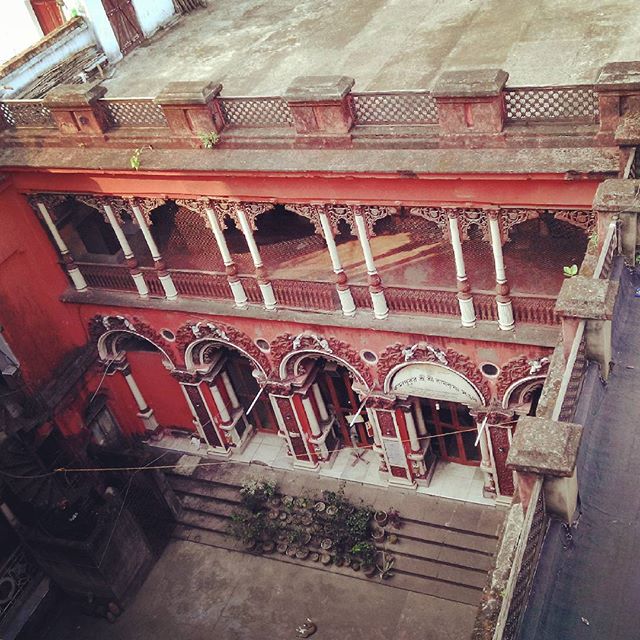
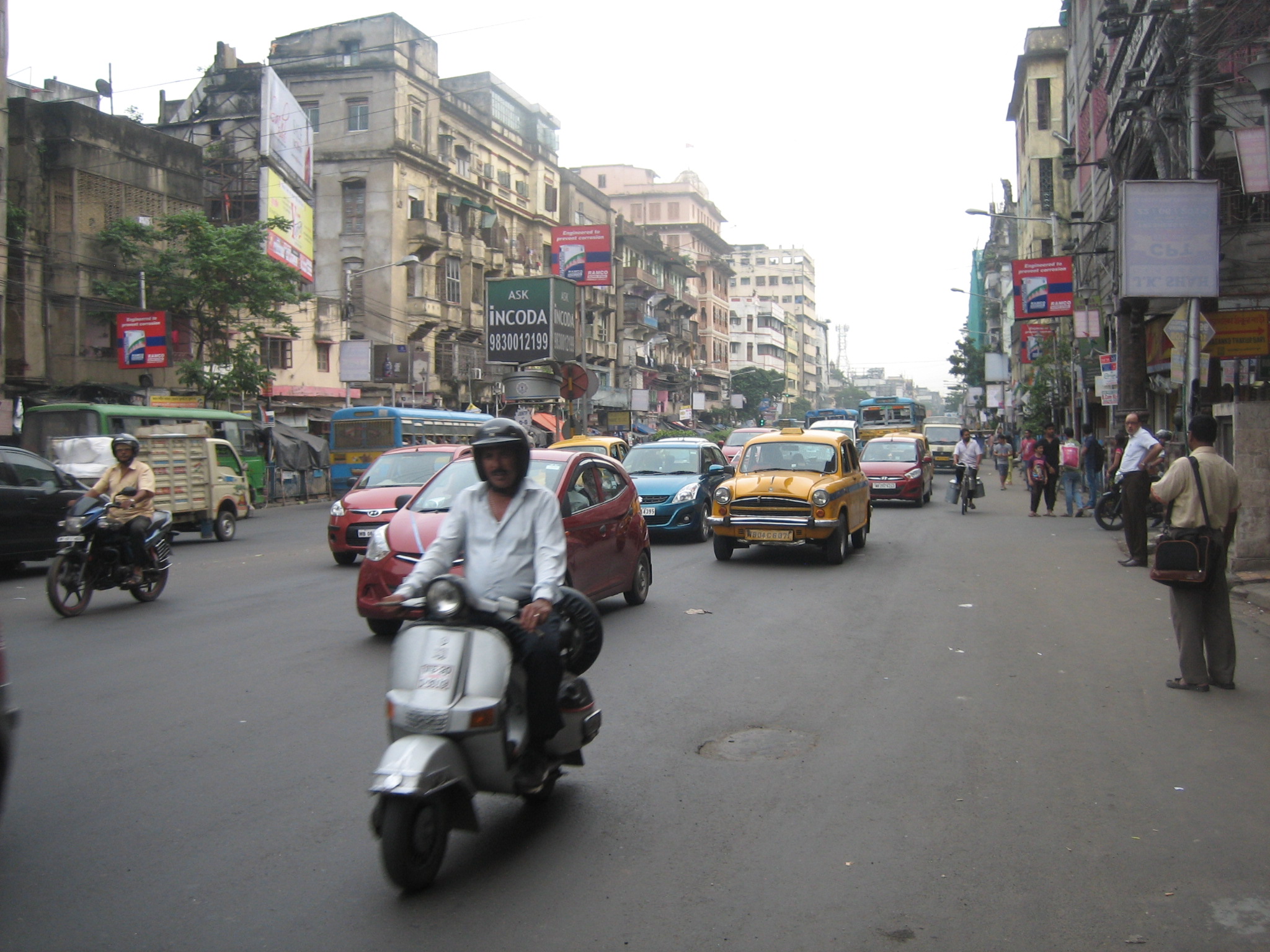
From Jorasanko Thakur Bari, Rabindranath Tagore’s ancestral house (A), we went on a short bus tour to glance a few places where Thakur’s footprints remained as silent witnesses of his divine play.

Street of Kolkata

A.  Jorasanko Thakur Bari:  (Click here to see previous post for details)

Afternoon short bus trip map

From our drop off point for our visit to Tagore’s house, our bus started going north on Central Avenue and made a right turn on Vivekananda Road by Girish Park. Our first stop was at Ramtanu Bose Lane on Vivekananda Road. From the bus we looked to our left to find 7 Ramtanu Bose Lane (B). The significance of this point was as follows:

B.  7 Ramtanu Bose Lane:

7 or 9 Ramtanu Bose Lane Ramtanu Bose Lane Swamiji's grandmother Raghumani Devi

  • Here once stood Narendranath’s (Swami Vivekananda) maternal grandmother, Raghumani Devi’s house. Naren used to spend most of his time studying in an attic (‘Tong’ in Bengali word) of this house as his house was quite noisy because of the constant presence of guests.
  • For quite some time Narendranath (Naren) didn’t go to Dakshineshwar and Ramakrishna was very anxious to meet him. Thakur, accompanied by Ramalal, visited Naren here who was staying in this house with his friends. Thakur met Naren in an emotionally choked condition and fed Naren the sandesh that he had brought for him with his own hands. After feeding Naren, Thakur asked him to sing a song for him. Naren then sang the song “Jago ma Kulakundalini”. As soon as he heard the song Thakur went into Samadhi. Narendra continued singing for a long time. After he stopped singing Ramakrishna came out of his trance and asked Narendra to visit him at Dakshineswar.
  • Swamiji’s family took shelter in this very house, after being removed from his ancestral house due to a family feud, with the help of his grandmother.
  • In this house Bhupendranath Dutta, Swamiji’s youngest brother received news of Swami Vivekananda’s mahasamadhi by Nadu, Swamiji’s attendant at Belur Math. Subsequently his mother, Bhuvaneshwari Devi, got the news and immediately ran to Belur Math.

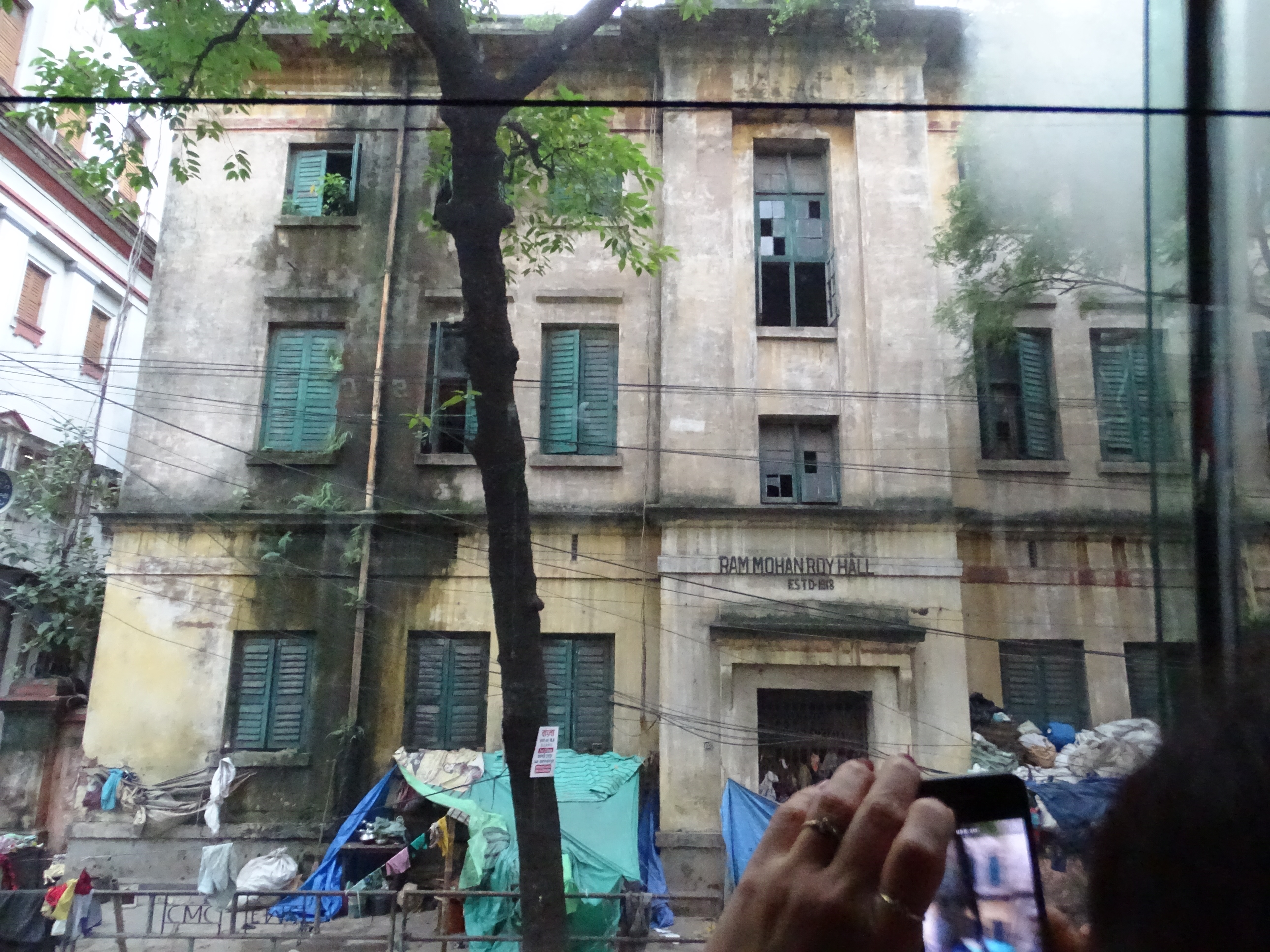
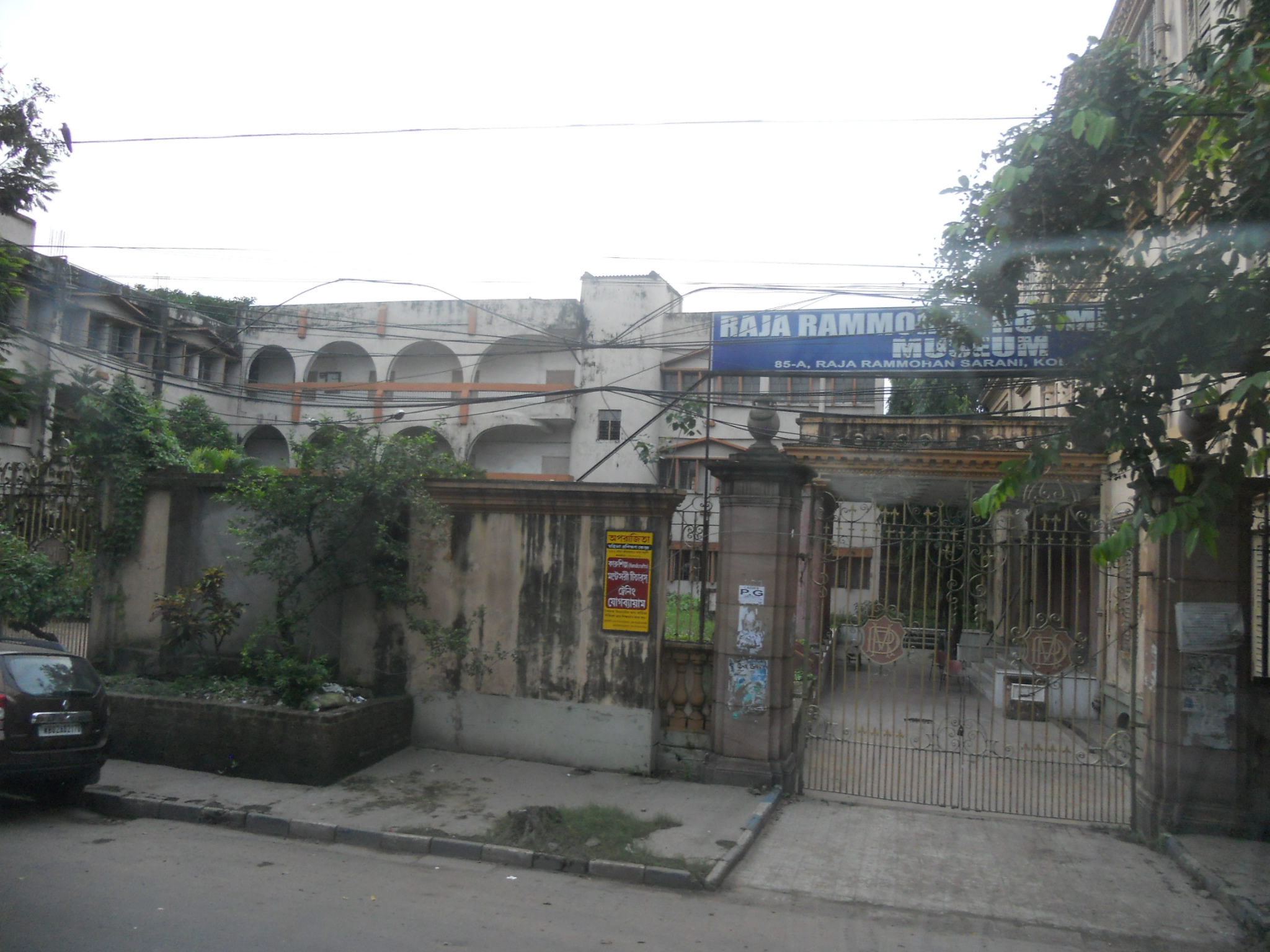
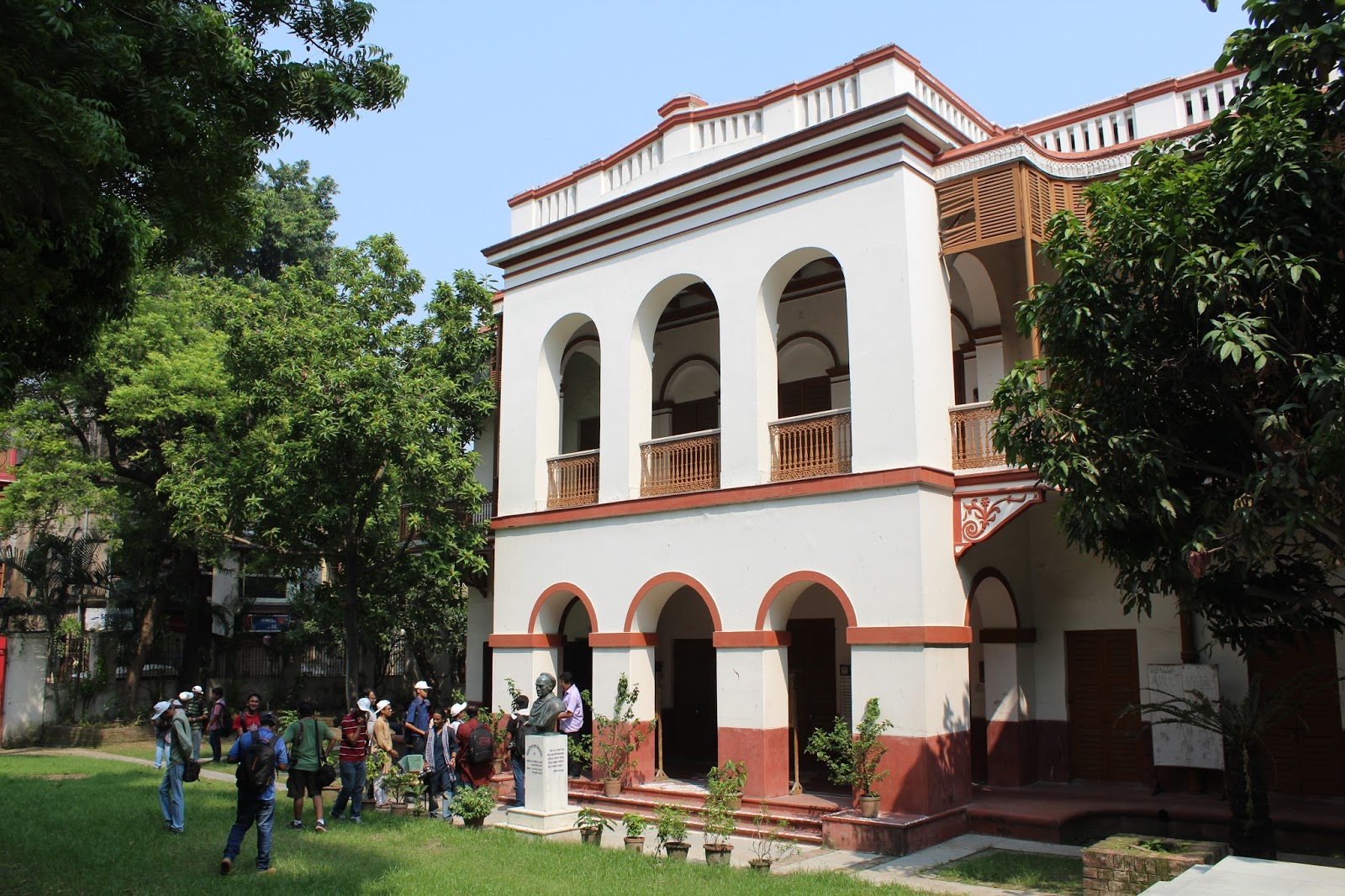
While we were proceeding on Vivekananda Road towards our next stop, we peeked at Swamiji’s ancestral house which is in the vicinity of the house of his grandmother. We then crossed over the main street that led to his college, the Scottish Church College which was also in the vicinity of his house. The bus took a right turn on Amherst St. (currently renames as Raja Ram Mohan Sarani) and we stopped at Raja Ram Mohan Roy Memorial Museum (C) which was on the right side of our bus. The highlights of this place is summarized below:

C. Raja Ram Mohan Roy’s house (converted to museum):

Raja Ram Mohan Roy Hall Ram Mohan Roy's House Ram Mohan Roy's House 3 Ram Mohan Roy's House 2

  • Raja Rammohan Roy was a great social reformer, instrumental in abolishing age old Sati Daha (burning alive the widows) practice
  • He was also a founder of the Brahmo Sabha that eventually inspired the conception and establishment of the Brahmo Samaj.
  • This was Ram Mohan Roy’s garden house built for his family. However, he never lived in this house. The house was converted to a museum.

Our bus moved forward towards the next stop (D). We looked to the left and we saw a park, locally known as Hrishikesh Park. The area behind the park is known as Badur Bagan. In this area Ishwar Chandra Vidyasagar, also known as दयार सागर or the ocean of kindness once lived. His Kolkata house was on 36 Vidyasagar Street and some highlights about the house are given below:

D: Vidyasagar’s house in Kolkata: (now called Vidyasagar Smriti Mandir):

Vidyasagar's house 1 at Kolkata converted to college for Girls and Vidyasagar Smriti Mandir (museum) Vidyasagar's house 2 at Kolkata converted to college for Girls and Vidyasagar Smriti Mandir (museum)

  • This is the very house where Shri Ramakrishna came here to meet him. This incident is referred to in the Kathamrita or Gospel. An excerpt is given as follows:

“……………..On the afternoon of August 5 the Master left Dakshineswar in a hackney carriage, accompanied by Bhavanath, M., and Hazra.  Vidyasagar lived in Badurbagan, in central Calcutta, about six miles from Dakshineswar.  On the way Sri Ramakrishna talked with his companions; but as the carriage neared Vidyasagar’s house his mood suddenly changed.  He was overpowered with divine ecstasy.  Not noticing this, M. pointed out the garden house where Raja Rammohan Roy had lived.  The Master was annoyed and said, “I don’t care about such things now. ” He was going into an ecstatic state………………………………” 

“………..After taking some of the sweets, the Master, with a smile, began to speak to Vidyasagar.  Meanwhile the room had become filled with people; some were standing and others were seated. 

MASTER: “Ah! Today, at last, I have come to the ocean.  Up till now I have seen only canals, marshes, or a river at the most.  But today I am face to face with the sagar, the ocean.”(All laugh.)
VIDYASAGAR (smiling): “Then please take home some salt water.” (Laughter.)

MASTER: “Oh, no! Why salt water? You aren’t the ocean of ignorance.  You are the ocean of vidyā, knowledge.  You are the ocean of condensed milk.” (All laugh.)………………….”

  • The house is now converted to the Vidyasagar Girls College as well as the Vidyasagar Smriti Mandir (museum).

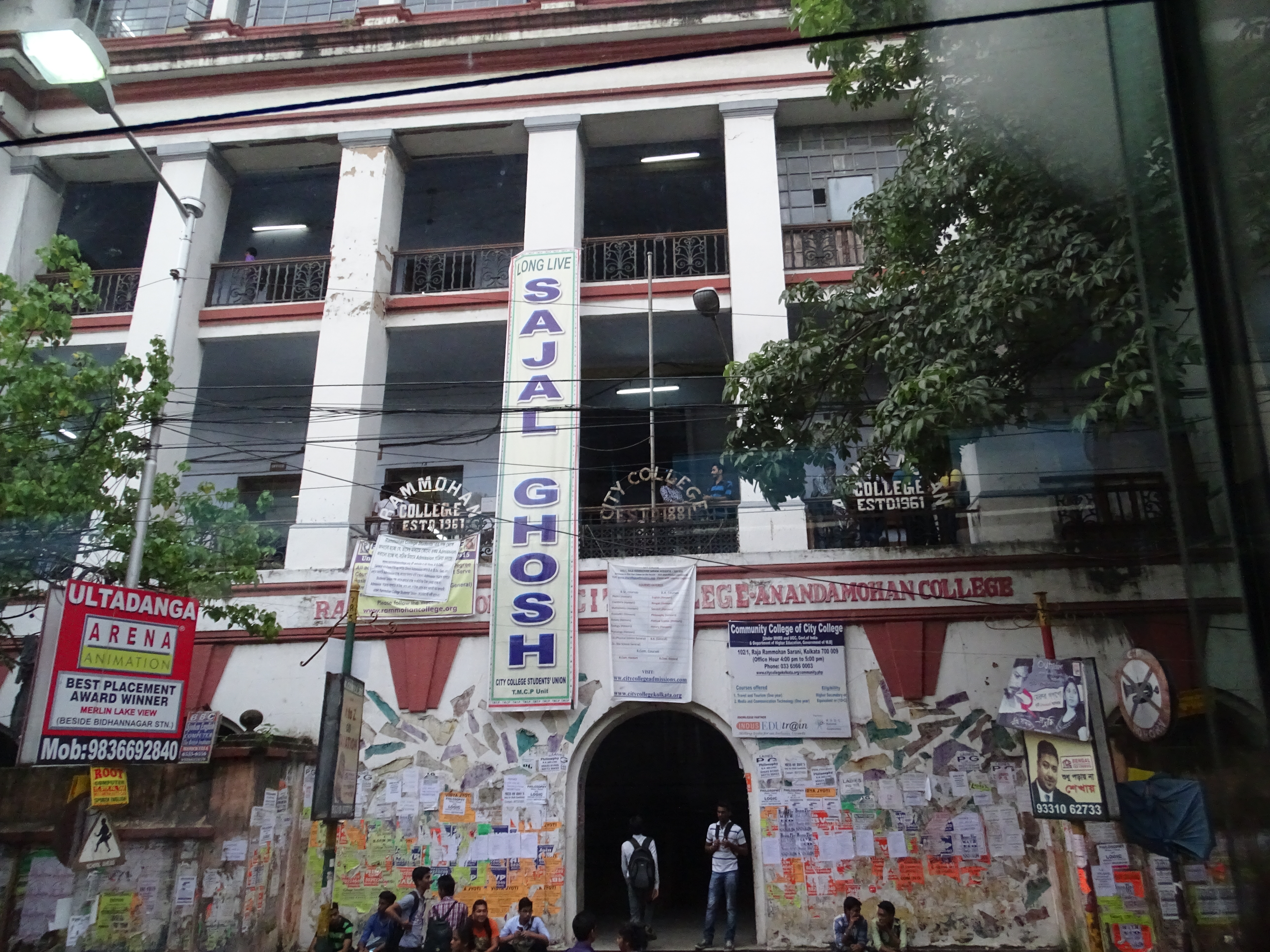
We then advanced to our next stop at the point (E). We looked to the right and saw a building that houses three colleges: Ram Mohan College for Girls (the morning session), City College (the day session) and Ananda Mohan College (the evening session). The importance of this area is given below:

E. City College area:

RMR College - City College 2 RMR College - City College 3 RMR College - City College 1

  • The area behind this college is known as Jhamapukur. In 1850, Ramkumar, Ramakrishna Dev’s elder brother, opened a Sanskrit school in this area. He rented a room with a tiled roof in the house of Govinda Chattopadhyay on 61 Bechu Chatterjee Street behind this college. He brought Thakur, then the young Gadadhar or Gadai, there in 1852 when he was 17 years old. Thakur lived there for over two years after which he stayed sometimes at ‘Nather Bagan’ in Beniatola area of northern Kolkata. As Thakur was averse to a bread-winning education, Ramkumar engaged him in performing rituals in some of his clients’ houses. He used to perform puja to Radha-Krishna deity in Govinda Chattophadhyay’s house and Nayaran in a nearby local king’s palace, known as Jhamapukur Rajbari (king’s palace). Currently the Radha-Krishna’s image of Govinda Chattophadhyay’s house had been moved to a nearby temple locally known as ‘Shyam Sundar Tola’ on Bechu Chatterjee St.

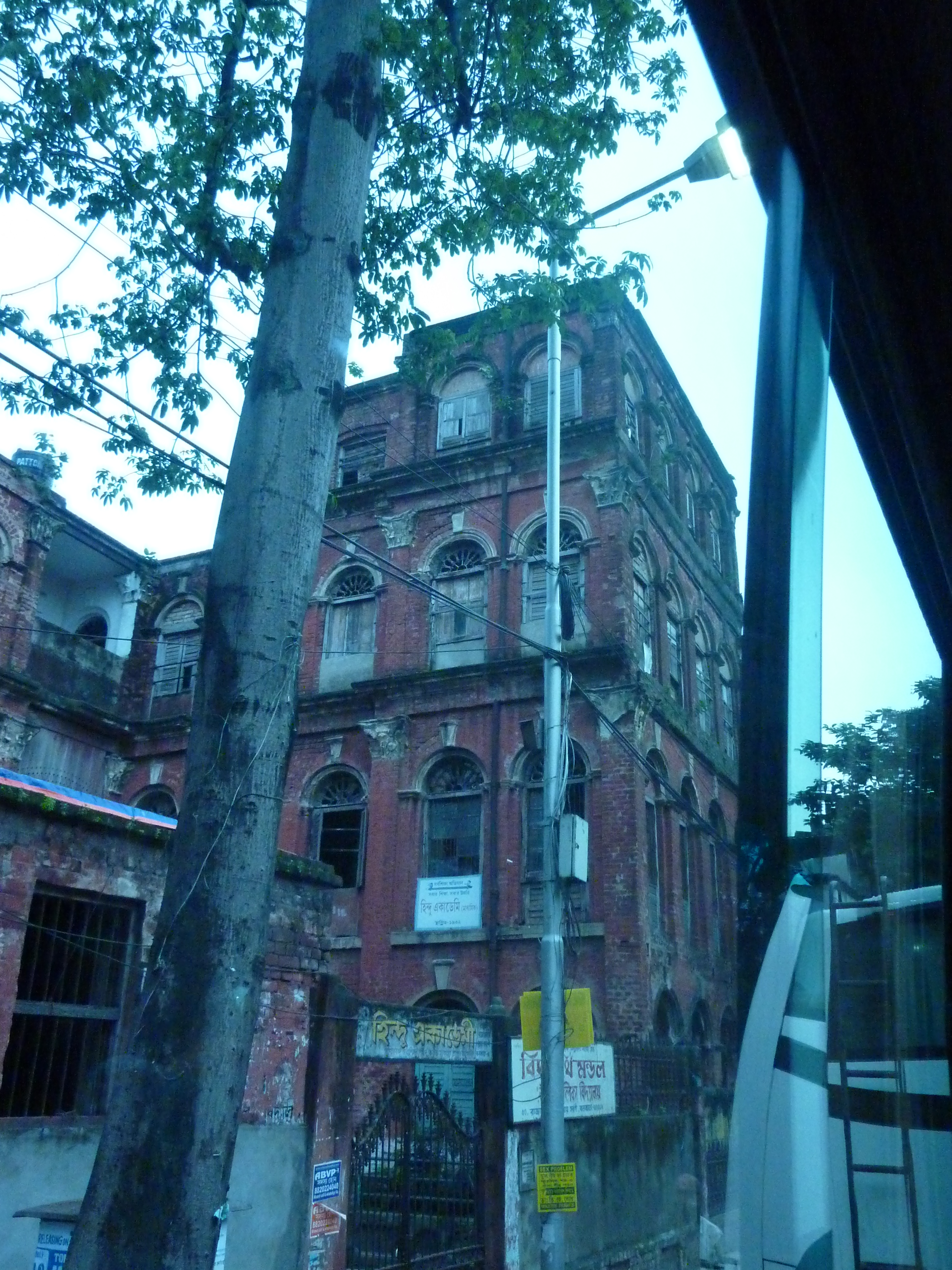
We advanced a little further south on Amherst St. towards our next stop at the point ( F ) where we looked to the left at a red dilapidated girls’ school, the Hindu Academy. Some highlights of this building are given below:

F: Morton Institute (currently a dilapidated school, Hindu Academy):

M's Last School 9 M's Last School 2  M's Last School 8 M's Last School 3 M's Last School 7 M's Last School 6 M's Last School 4 M's room in Morton Institute 

  • This unimpressive red 4 storied primary school was once known as The Morton Institution. Mahendranath Gupta or M, the author of Kathamrita, was the headmaster or principal of the institute. He also used to meet his own devotees upstairs. In 1905, 3 years after Swami Vivekananda passed away, he retired from the active life of a principal and devoted his remaining 27 years exclusively to the preaching of the life and message of Ramakrishna. He bought this school from its original owners and moved to this place permanently. Under his management this institute turned out to be one of the most efficient schools in Kolkata. He occupied a staircase room at the top, and used to cook his own meal that consisted only of milk and rice without variation. His dress also was the simplest possible. It was his conviction that limiting one’s personal needs to a minimum is an important factor to holy living. For about an hour in the morning, he would inspect the classes of the school. He would then come back to his staircase room to write his diary. He continued to live in a divine atmosphere as long as he lived, unless devotees and admirers had already gathered in his room seeking his holy company. However, just to clarify– the Kathamrita was written in his previous residence, not in this institute. You can also visit his room upstairs in this red building.
  • Paramahansa Yogananda (Mukunda Lal Ghosh), a 20th century Yogi popular in the USA, was a student of M and he was taught in the Morton Institute with Ramakrishna’s teaching. In fact this red house is Paramahansa Yogananda’s ancestral house and M bought from the family.

Our bus went further down to an intersection of Amherst St and Keshab Sen St for us to have a glance to our right at the two points ( G ) and ( H ); the significance of these two places is given below:

G: Jhamapukur Rajbari (Jhamapukur local king’s palace)

Jhamapukur Rajbari 2 No.1 Jhamapukur Lane Jhamapukur Rajbari 3 old picture Jhamapukur Rajbari 4 only part left where Ramakrishna used to come for worship Jhamapukur Rajbari 5 only part left where Ramakrishna used to come for worship Jhamapukur Rajbari 6 part of ruins Jhamapukur Rajbari 7 Holy trinity being worshipped Jhamapukur Rajbari 8 Holy trinity being worshipped Jhamapukur Rajbari 9 Ramakrishna_Memorial_Plaque Jhamapukur_Rajbari_-_1_Jhamapukur_Lane_-_Kolkata_2014-01-01_1863-1871 High Resolution

  • This was once a local king, Digambar Mitra’s palace. Mitra family was a client of Ramkumar and Ramakrishna Deva, then Gadai, used to come and perform puja to their family deity, Narayan every day during 1852/53-1855/56. Currently many parts of the palace were sold except one part where Thakur used to come and stay. This part of the palace is currently owned by Jhamapukur Ramakrishna Sangha.
  • There is a marble plaque that validates Thakur’s stay in this area during the above time frame and it says:

“Bhagavan Shri Ramakrishna lived in Jhamapukur area for a little over two years. In Bengali calendar, 1259-1262. In English calendar, 1852/53-1855/56. At that time King Digamabar Mitra’s palace was one of the places for his divine play.”

Underneath the paper poster says:

‘Shri Ramakrishna Sharanam, Jhamapukur Ramakrishna Sangha, No. 1, Jhamapukur Lane (Jhamapukur Rajbati), Kolkata 700009, etc.’

 In 1905, M quit his post as the headmaster (principal) and bought the Morton Institution. At that time, the institution was located at Jhamapukur Lane. M later moved this Institution to 50 Amherst Street, (the red dilapidated building that was our previous stop point), the ancestral house of Paramahamsa Yogananda. He would bow down to the place on Bechu Chatterjee Street where Thakur’s elder brother, Ramkumar had once run a school, as well as bow down to house of the Mitra family at Jhamapukur Rajbari, where Thakur had once worked as a priest. M. used to say, “Do you know that anyone who walks through this street will become a yogi?”

  • Also in the Jhamapukur (27 Jhamapukur Lane) area Ramakrishna dev’s Brahmo devotee, VIJAY Krishna Goswami, once the leader of Sadharan Brahmo Samaj, lived in a rented house. Thakur visited him when he was sick

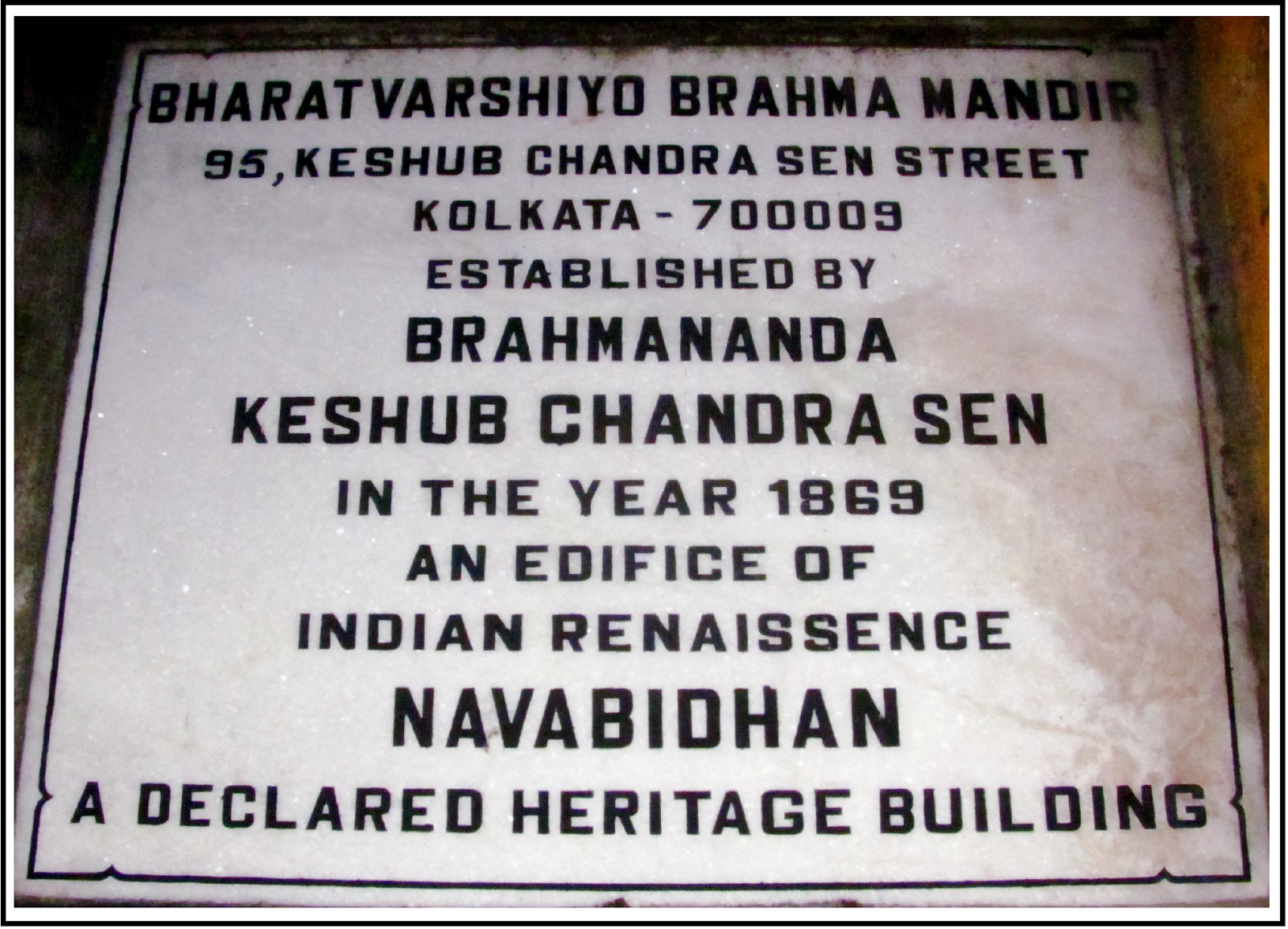
H: Bharatvarshiya Brahmo Mandir (Navavidhan Brahmo Samaj)

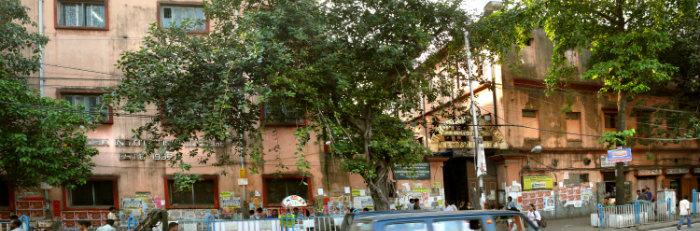
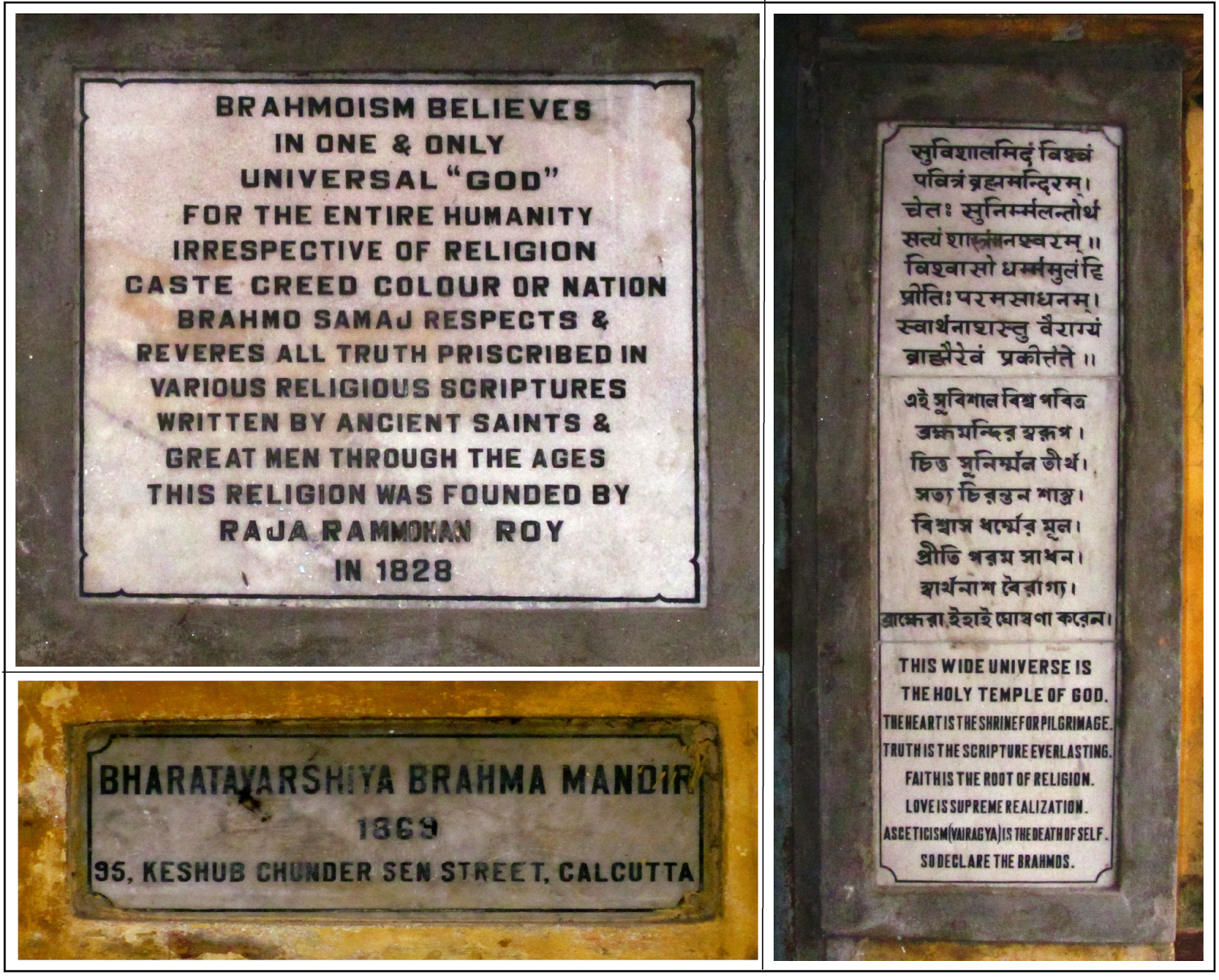
DSCN0144 intersection of Keshab Sen St and Raja Ram Mohan Sarani Keshab Sen's house Kamal Kutir (Lilly Cottage) Native Ladies Normal and Adult School later converted to Victoria College for Girls  Navavidhan Brahmo Samaj Mandir 2 Sri_Ramkrishna's picture in Lily Cottage (Kamal Kutir) Victoria Institutions modified-1871 Writing in front of Navavidhan Brahmo Samaj mandir 1 Writing in front of Navavidhan Brahmo Samaj mandir 4 Writing in front of Navavidhan Brahmo Samaj mandir 2 Writing in front of Navavidhan Brahmo Samaj mandir 3

  • On the right corner of Keshab Sen Street, close to the intersection, one can find Bharatvarshiya Brahmo Mandir, established by Keshab Sen. It was through Keshab Sen that Ramakrishna became known to the elite class of Kolkata. At an early age, Keshab Sen came under the influence of Christ and he strove to introduce Christ to the first Brahmo Samaj (Adi Brahmo Samaj). This created great tension in the organization. In 1868, Keshab Sen broke with the original organization and founded the Brahmo Samaj of India (Bharatvarshiya Brahmo Mandir). The leadership of the first Brahmo Samaj, currently called the Adi Brahmo Samaj, (the original Brahmo Samaj), was retained by Devendranath Tagore (Rabindranath Tagore’s father). However, at about the time of his first contact with Sri Ramakrishna, he began to discover the harmony of religions, became sympathetic toward the Hindu gods and goddesses, and preached God’s newly revealed law, the New Dispensation (Navavidhan). Pertaining to Keshab’s new organization Thakur commented, as referred in Gospel:

Ramakrishna: I was talking with Keshab Sen of this Brahma-Jnana. Keshab asked me to say more about the Absolute. I replied: “If I say more, your sect and creed will vanish.” Keshab answered: “Revered Sir, then I do not wish to hear more.” Still, I said to Keshab: “‘I, me, mine,’ this is ignorance; ‘I am the doer,’ ‘I am the actor,’ ‘This is my wife, these are my children, my property, wealth, fame,’ all these arise from ignorance.” Keshab replied: “Revered Sir, nothing will be left, if the sense of ‘I’ be abandoned.” The unripe and ripe “I. “I answered: “Keshab, I do not ask you to abandon the whole of the sense of ‘I’; but leave out the unripe ‘I’—’I am the doer,’ ‘my wife, my children, I am the teacher,’ abandoning this sense of ‘I,’ retain the ripe ‘I’—’I am His servant, I am His devotee,’ ‘I am not the doer, but He is the Actor.'”

Devotee: Can the ripe “I” make a sect?

Ramakrishna: I said to Keshab: “I am the leader of a sect, I have founded a sect, I am teaching others, all these proceed from the sense of the unripe ‘I.'” Therefore I asked Keshab to abandon this “I.” I also said to him: “You talk of your sect, many members of your sect have resigned.” Keshab replied: “Revered Sir, after remaining for three years under my instructions, they have now joined another sect, and at the time of leaving, they criticised and slandered me.” I said to him: “You do not understand the inner nature of your disciples. You must study their predominant traits and you must not make disciples indiscriminately.”

Ram Babu : Bhagavan, I do not see what good has been done by the New Dispensation of Keshab Sen. If Keshab himself had realized God, the condition of his disciples and followers would have been different. In my opinion he has had no realization.

Srî Ramakrishna: Oh yes, he must have some realization; otherwise why should so many people honor and respect him? Why do they not honor and respect the leaders of other branches of the Brahmo-Samaj in the same way? Without Divine will no one can command such respect from the masses. A spiritual leader must renounce the world. A man cannot become a true spiritual leader unless he practises absolute renunciation. Without this people will have no faith in him. “

Although it’s not clear if Ramakrishna Dev visited Keshab Sen’s Navavidhan Brahmo Samaj, it is known that he visited the Adi Brahmo Samaj. It was at the Adi Brahmo Samaj where Thakur saw him for the first time on a podium in deeply meditative state. Thakur once said,

” Many years ago I went to Adi Brahmo Samaj, where I saw everyone sitting silent with eyes closed. It appeared to me that internally they were all fighting. But seeing Keshab I found that his float had sunk”, i.e. he was near God-realization.

The Adi Brahmo Samaj (follow the west ward lavender arrow in the map) is located close to Jorasanko Thakurbari ( point A ). Because of our time limitation, we couldn’t make it to this place.

  • On the west ward of Keshab Sen Street, close to Navavidhan Brahmo Samaj and Jhamapukur palace, another Thakur’s devotee, Ishan Mukerjee once lived (19 Keshab Chandra Sen St). Thakur came to his house twice and also met Ishan’s second son, Shirish on 25th June, 1884. Also from this house Thakur went to meet Pundit Shashadhar of nearby Thanthania area where the famous Thanthania Siddheshwari Kali temple is located . As excerpt from Gospel is given below:

“ It was the day of the Rathyatra the Car Festival of the Hindus. At Ishan’s invitation Sri Ramakrishna went to his house in Calcutta. For some time the Master had a desire to meet Pundit Shashadhar. Tarkachudamani, who had been staying with one of Ishan’s neighbours. So it was decided that he would visit the pundit in the afternoon.

A few devotees, including Hazra, accompanied the Master to Ishan’s house. Ishan had invited one or two brahmin scholars and a devotee who followed the Tantrik method of worship. Shrish and Ishan’s other sons were also present.

The Master noticed that the Tantrik worshipper had a vermilion mark on his forehead, and smilingly said, “I see he is branded.”

After a while M. and Narendra arrived and bowed before Sri Ramakrishna. The Master had previously informed M. that he would be at Ishan’s house.

The Master joked about the delay in serving their meal. One of the scholars quoted a Sanskrit verse about the anxiety created in people’s minds by the pangs of hunger. Proceeding to explain the verse he said: “The study of philosophy is indeed edifying, but poetry is more fascinating than philosophy. People listening to good poems think of the study of philosophy-Vedānta, Nyaya, Samkhya, and so forth  as dry and insipid. Again, music is more attractive than poetry. Music melts even a heart of stone. But a beautiful woman has an even greater attraction for a man’s heart than music. Such a woman, passing by, diverts a man’s attention from both poetry and music. But when a man feels the pangs of hunger, everything else  poetry, music and woman  appears as of no consequence. Thus, hunger is the most arresting thing.”

The Master remarked with a smile, “The pundit is witty.”

Soon Narendra began to sing. A few moments later the Master went upstairs for a little rest. M. and  Shrish accompanied him. M. introduced Shrish to the Master, saying: “He is a scholar and a man of peaceful nature. We were fellow students in our boyhood. Now he is a lawyer.”

MASTER: “It is a pity that such a man should practise law.”

M: “Yes, sir. It was a mistake on his part.”

MASTER: “I know a few lawyers. One of them shows me great respect. He is a straightforward man. (To Shrish) What is your idea about the most essential thing in life?”

SHRISH: “God exists and He alone does everything. But the attributes we ascribe to Him are not the right ones. How can a man conceive of Him? His nature is infinite.”

MASTER: “What need is there of your counting the number of trees and branches in an orchard? You have come to the orchard to eat mangoes. Do that and be happy. The aim of human birth is to love God. Realize that love and be at peace.

“Suppose you have entered a tavern for a drink. Is it necessary for you to know how many gallons of wine there are in the tavern? One glass is enough for you. What need is there of your knowing the infinite qualities of God? You may discriminate for millions of years about God’s attributes and still you will not know them.”

  • Keshab Sen’s house, known as Lilly Cottage (Kamal Kutir), can be reached if one walks east ward on Keshab Sen St. following the lavender arrow as shown in the map. Inside the house there was a lily pond that was used to be decorated and illuminated during fair and attracted by the children and hence his house was named. Currently the house is completely converted to a full scale Girls’ college known as Victoria Institution. In this house the famous standing picture of Thakur, who was in the deep state of SAMADHI and supported by his nephew, HRIDAY was taken. Also Thakur came to this house for his last visit to Keshab on 28th Nov, 1883 as illustrated in Gospel:

“ At two o’clock in the afternoon, M. was pacing the foot-path of the Circular Road in front of the Lily Cottage, where Keshab Chandra Sen lived. He was eagerly awaiting the arrival of Sri Ramakrishna. Keshab’s illness had taken a serious turn, and there was very little chance of his recovery. Since the Master loved Keshab dearly, he was coming from Dakshineswar to pay him a visit.

On the east side of the Circular Road was Victoria College, where the ladies of Keshab’s Brahmo Samaj and their daughters received their education. To the north of the college was a spacious garden house inhabited by an English family. M. noticed that there was a commotion in the house and wondered what was going on. Presently a hearse arrived with the drivers dressed in black, and the members of the household appeared, looking very sad. There had been a death in the family.

“Whither does the soul go, leaving behind this mortal body?” Pondering the age-old question, M. waited, watching the carriages that came from the north.

About five o’clock a carriage stopped in front of the Lily Cottage and Sri Ramakrishna got out with Latu and several other devotees, including Rakhal. He was received by Keshab’s relatives, who led him and the devotees upstairs to the verandah south of the drawing-room. The Master seated himself on a couch.

After a long wait he became impatient to see Keshab. Keshab’s disciples said that he was resting and would be there presently. Sri Ramakrishna became more and more impatient and said to Keshab’s disciples: “Look here, what need is there of his coming to me? Why can’t I go in and see him?”.
…………………………………………………………………………………………

“ MASTER (to Keshab’s mother): “Please pray to the Divine Mother, who is the Bestower of all bliss. She will take away your troubles.

(To Keshab) “Don’t spend long hours in the inner apartments. You will sink down and down in the company of women. You will feel better if you hear only talk of God.”

The Master uttered these words in a serious voice and then began to laugh like a boy. He said to Keshab, “Let me see your hand.” He weighed it playfully, like a child. At last he said: “No, your hand is light. Hypocrites have heavy hands.” (All laugh.)

Umanath again said to the Master from the door, “Mother asks you to bless Keshab.”

MASTER (gravely): “What can I do? God alone blesses all. ‘Thou workest Thine own work; men only call it theirs.’

God laughs on two occasions. He laughs when two brothers divide land between them. They put a string across the land and say to each other, | ‘This side is mine, and that side is yours.’ God laughs and says to Himself, ‘Why, this whole universe is Mine; and about a little clod they say, “This side is mine, and that side is yours”!’

“God laughs again when the physician says to the mother weeping bitterly because of her child’s desperate illness: ‘Don’t be afraid, mother. I shall cure vour child.’ The physician does not know that no one can save the child if God wills that he should die.” (All are silent.)

Just then Keshab was seized with a fit of coughing, which lasted for a long time. The sight of his suffering made everyone sad. He became exhausted and could stay no longer. He bowed low before the Master and left the room, holding to the wall as before.”

  • Victoria Institution then adjacent to Lily Cottage, was originally named as ‘The Native Ladies Normal and Adult School’ and it was founded on 1st February, 1871, by Keshab Chandra Sen for building a scheme of education that suited to the female mind and women’s position in the society.

From the intersection we advanced a little on Amherst St (now known as Raja Rammohan Sarani) and saw a church on our left ( I ); its significance is detailed below:

I: Holy Trinity Church:

Near Holy Trinity Church 1 Near Holy Trinity Church 2 RK Visited Church After Vision 1 RK Visited Church After Vision 1a RK Visited Church After Vision 4

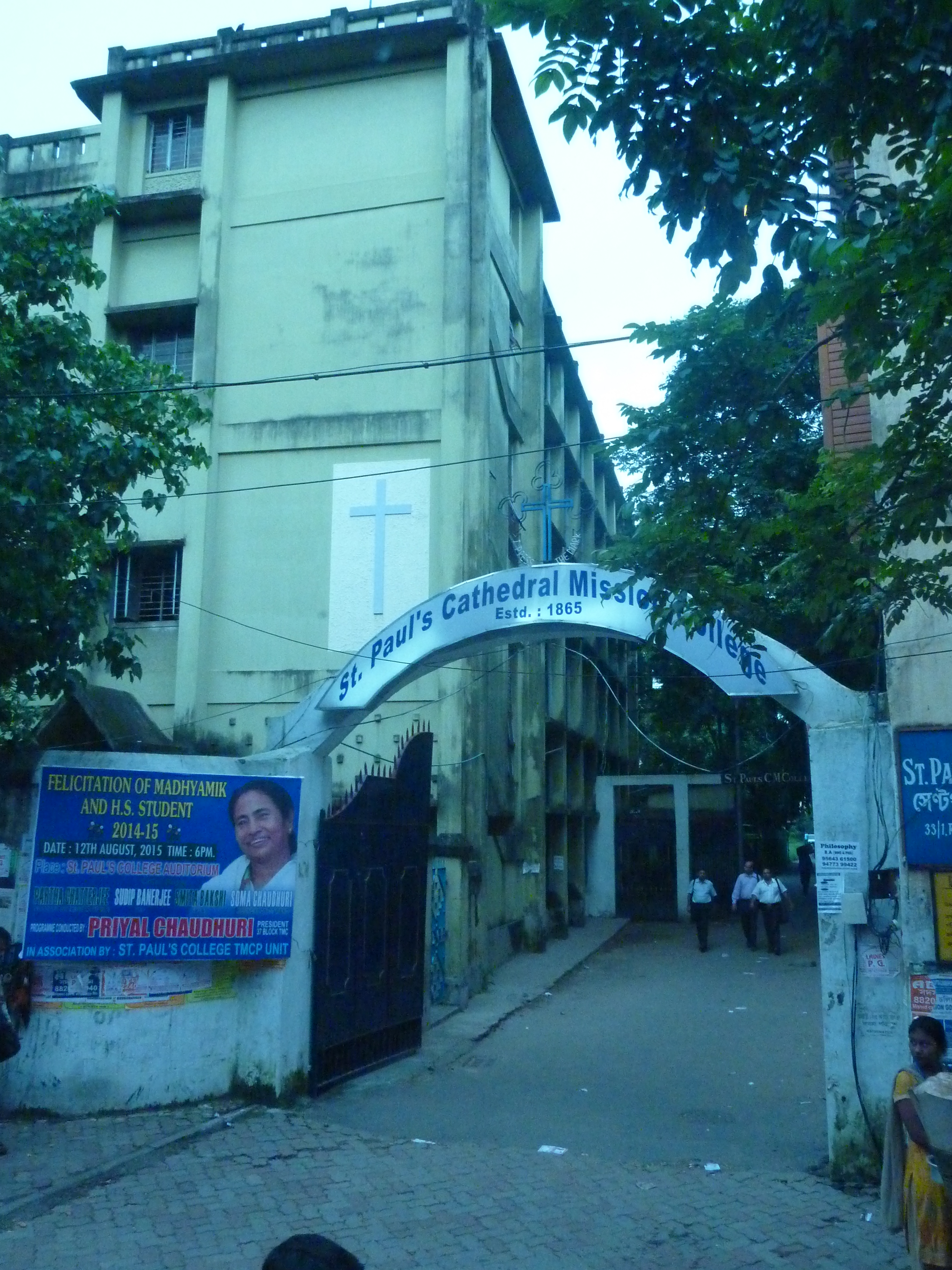
  • On the left by St. Paul’s School one can see this little church known as Holy Trinity Church. The Church was known as ‘Long Saheb-ka girja’ for a long time due to the fact that the famous Rev. James Long was associated with this Chapel and St Paul’s College and School. Rev. James Long is still remembered and revered by the people of Bengal for his association and active participation in siding with the Indians in the anti-indigo plantation movement in Bengal even though he was a British citizen.
  • After Shri Ramakrishna had a vision of Jesus Christ in the Panchabati of Dakshineshwar, he wanted to visit a church to see how Christians performed worship. This is the church he visited while the service was being conducted after his vision of Christ. He also visited another church in Kolkata during its service. This church is known as the Wesleyan Methodist Church, located on S. N. Banerjee Rd in central Kolkata.

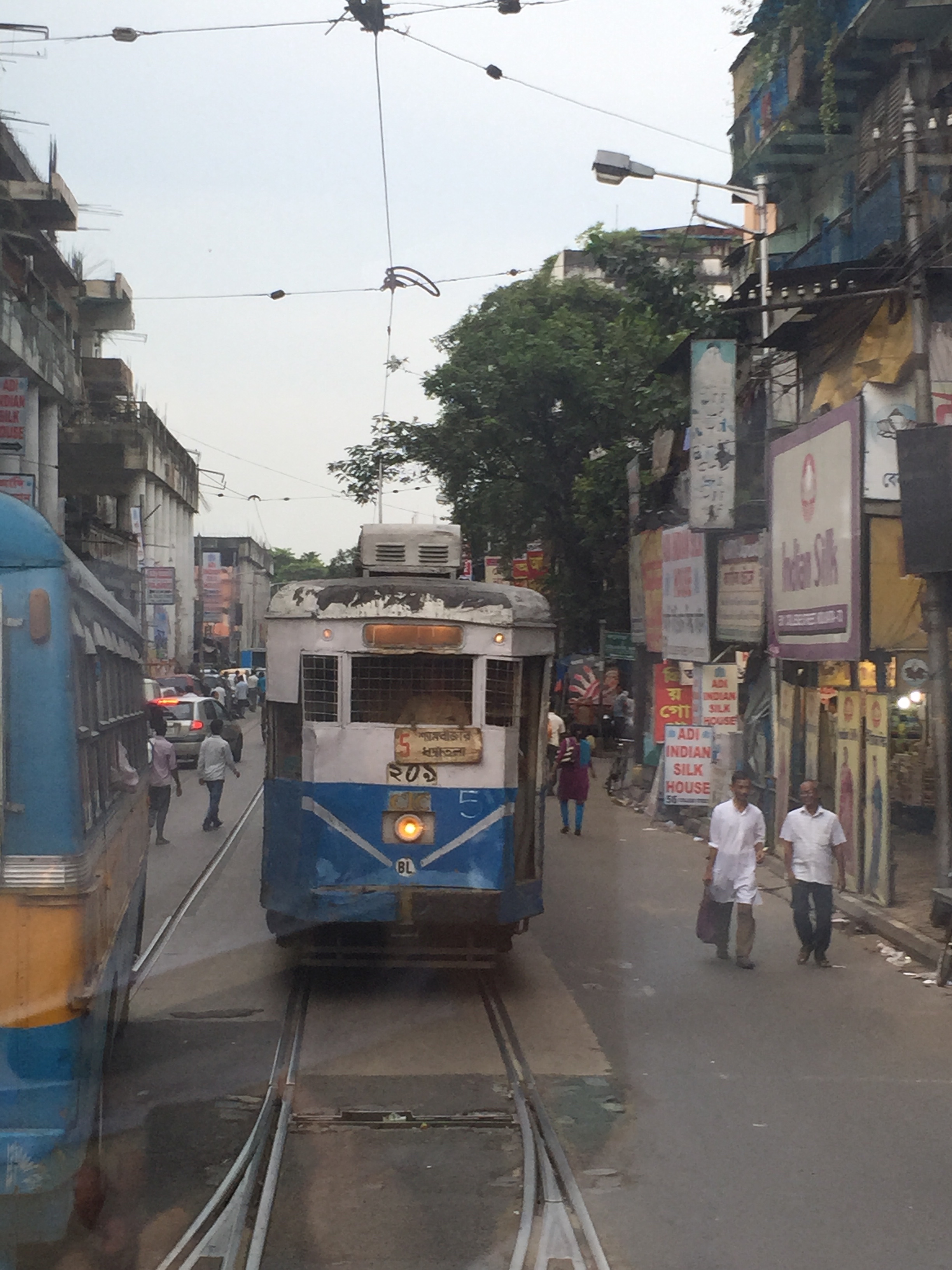
Our bus then proceeded to the intersection of Raja Rammohan Sarani and Mahatma Gandhi Rd. From the intersection, we made a right and another right at College Street to go north on a tram road. Although it was very difficult, we tried to glance at point ( J ) to our left. Thakur’s divine play around this place is detailed below:

J: Geratala Mosque:

DSC00528 DSC00529 Tram

  • The area on the left is known as Kalabagan. There was a very old Mosque, locally known as, ‘Geratalar Masjid’ (or Geratala Mosque) in this area.
  • According to Manmatha Nath Ghosh’s reminiscience (Sri Ramakrishna as we saw him by Swami Chetanananda):

“One evening as I was passing by the Geratala mosque, I heard the loud prayer of a Muslim fakir (holy man): “प्यारे आ जाउ, आ जाउ “ (Oh my beloved please come, please come)” He was repeating this prayer with love and longing as tears rolled down his cheeks. Suddenly I saw Sri Ramakrishna climb down from a hired carriage and rush up to the Fakir. The two embraced each other. This incident happened when the Thakur was returning from Kalighat after visiting the Divine Mother there. What a wonderful sight it was! Two other people were in the carriage. One of them was Ramlal, a nephew of Sri Ramakrishna.

We further proceeded north towards the point ( K ) where a very old Kali temple was located by a tram stop.

K: Thanthani Kalibari (Thanthania Kali temple):

Thanthania Kalibari, founded by Shankar Ghosh in 1803, is a revered Kali temple in Kolkata. The idol of the presiding deity Siddheshwari is made of clay and it is replaced every year by a new one. Tuesdays and Saturdays are considered auspicious for a visit to the temple.

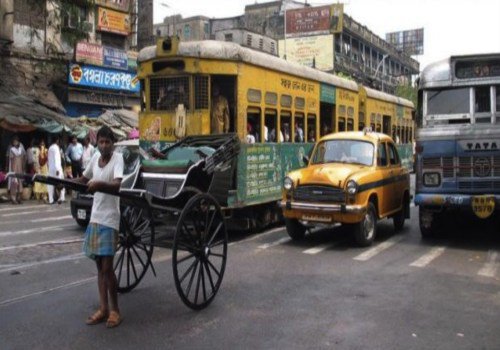
Thanthania Kali Temple 2 Thanthania Kali Temple 3 Thanthania Kali Temple 4 Thanthania Kali Temple 5 inside Thanthania Kali Temple 6 Siddheshwari Kali Thanthania Kalibari 1 tram-Taxi-Bus-Rickshaw only possible in-kolkata

  • On our left we saw Kali temple that is more than 300 years, known as the Siddheswari Kali Temple, popularly known as Thanthania Kali Temple. While Shri Ramakrishna, then young Gadadhar was living in this area from 1852/53 to 1855/56, he used to walk down the Bechu Chatterjee St. (as mentioned before, from our previous point of stop at E ) to visit this Kali temple and sing for Siddheshwari Kali every now and then.
  • M according to Thakur’s advice brought the Prasad from Siddheshwari Kali and walked about 1.5 miles barefoot to Shyampukur. The incident is also referred to in the Kathamrita/Gospel; see the excerpts below:

“ Friday, November 6, 1885 It was the day of the Kali Puja, the worship of the Divine Mother, Sri Ramakrishna’s Chosen Ideal. At about nine o’clock in the morning the Master, clad in a   
new cloth, stood in the south room on the second floor of his temporary residence at Syampukur. He had asked M. to offer worship to Siddhesvari at Thanthania, in the central part of Calcutta, with flowers, green coconut, sugar, and other sweets. After bathing in the Ganges, M. had offered the worship and come barefoot to Syampukur. He had brought the Prasad with him. Sri Ramakrishna took off his shoes and with great reverence ate a little of the Prasad and placed a little on his head.

At the Master’s request M. had purchased two books of songs by Ramprasad and Kamlakanta for Dr. Sarkar.

M: “Here are the books of songs by Ramprasad and Kamlakanta.

MASTER: “Force songs like these on the doctor.”

  • Thanthania Siddhesvari Kali temple is owned by the family of Thakur’s direct disciple, Swami Subodhananda (Khokha Maharaj).

 We advanced a little towards the north and stopped at the front of a narrow street and glanced to our right for the points ( L )  and ( M ). The significance is elaborated below:

L: Shankar Ghosh Lane:

Sankar_Ghosh_Lane leading to M's house 1 Sankar_Ghosh_Lane leading to M's house 2 Sankar_Ghosh_Lane leading to M's house 3 showing Vidyasagar College

  • The narrow street on our right is Shankar Ghosh Lane. This lane was named after a person named Shankar Ghosh who established the Thanthania Kali temple in 1703. Shankar Ghosh was great grandfather of Ramakrishna’s one of the direct disciples, Swami Subodhananda (Khoka Maharaj). More than 300 years ago, the devotee, Shankar Ghosh replaced the clay image with a stone image of Kali. Ramakrishna used to tell Swami Subodhananda that he used to visit his great grandfather’s house before he was even born. The house is still there and located at 41 Shankar Ghosh Lane.
  • In this narrow lane, we find even today the Vidyasagar College (previously named Metropolitan College) where another one of Thakur’s devotee, Swami Ramakrishnananda (Shashi Maharaj) took admission for his Bachelor of Arts (B.A.) study. His special subjects of study were Sanskrit, English literature, Mathematics and Philosophy. While studying in this college, he and his cousin brother Sharat (Swami Saradananda) who was attending Calcutta Medical College, the premier medical school, heard about ShriRamakrishna through Keshab Sen and finally went to Dakshineshwar to visit Thakur.

M: M’s house (newly named Kathamrita Bhavan):

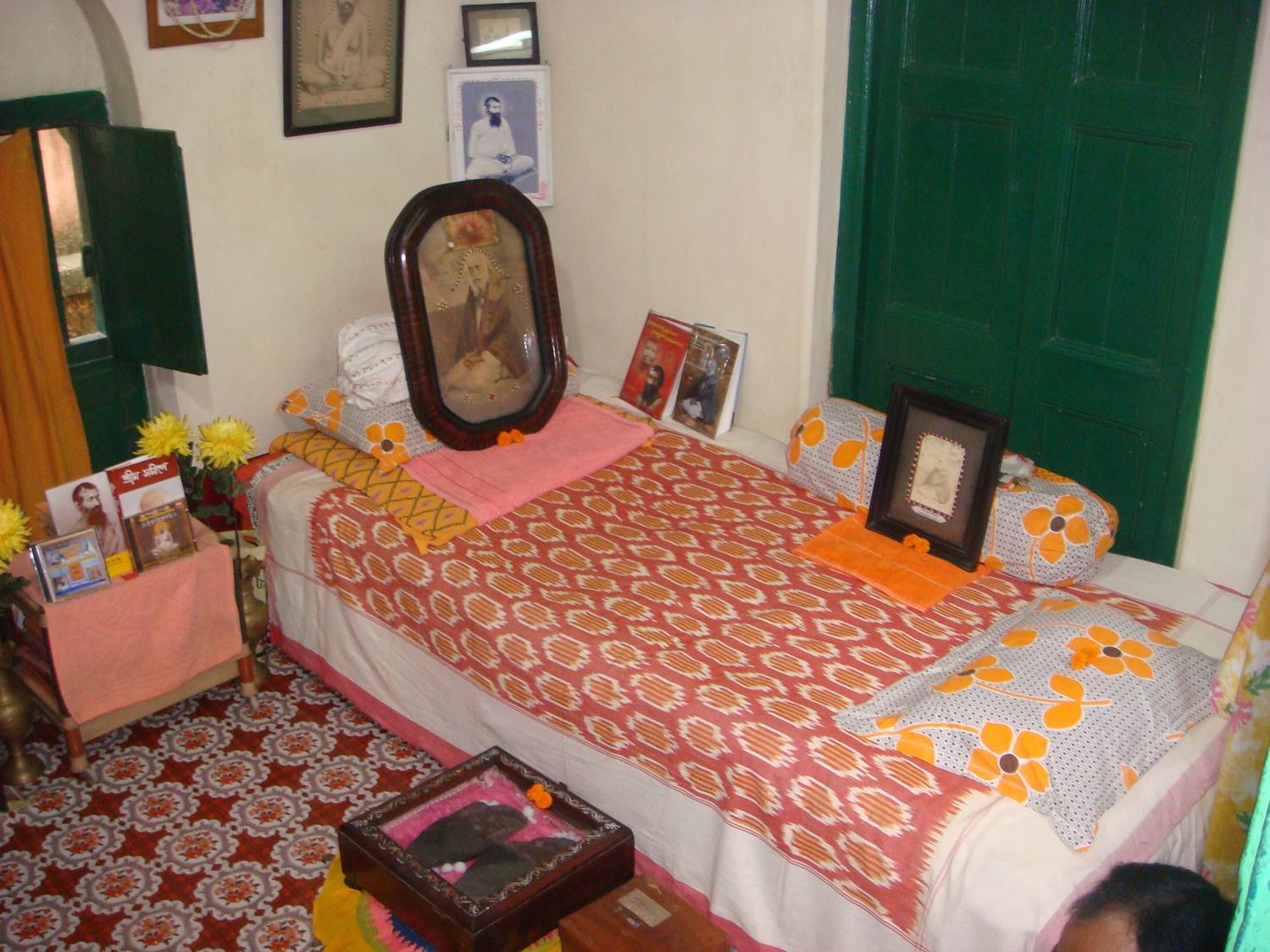
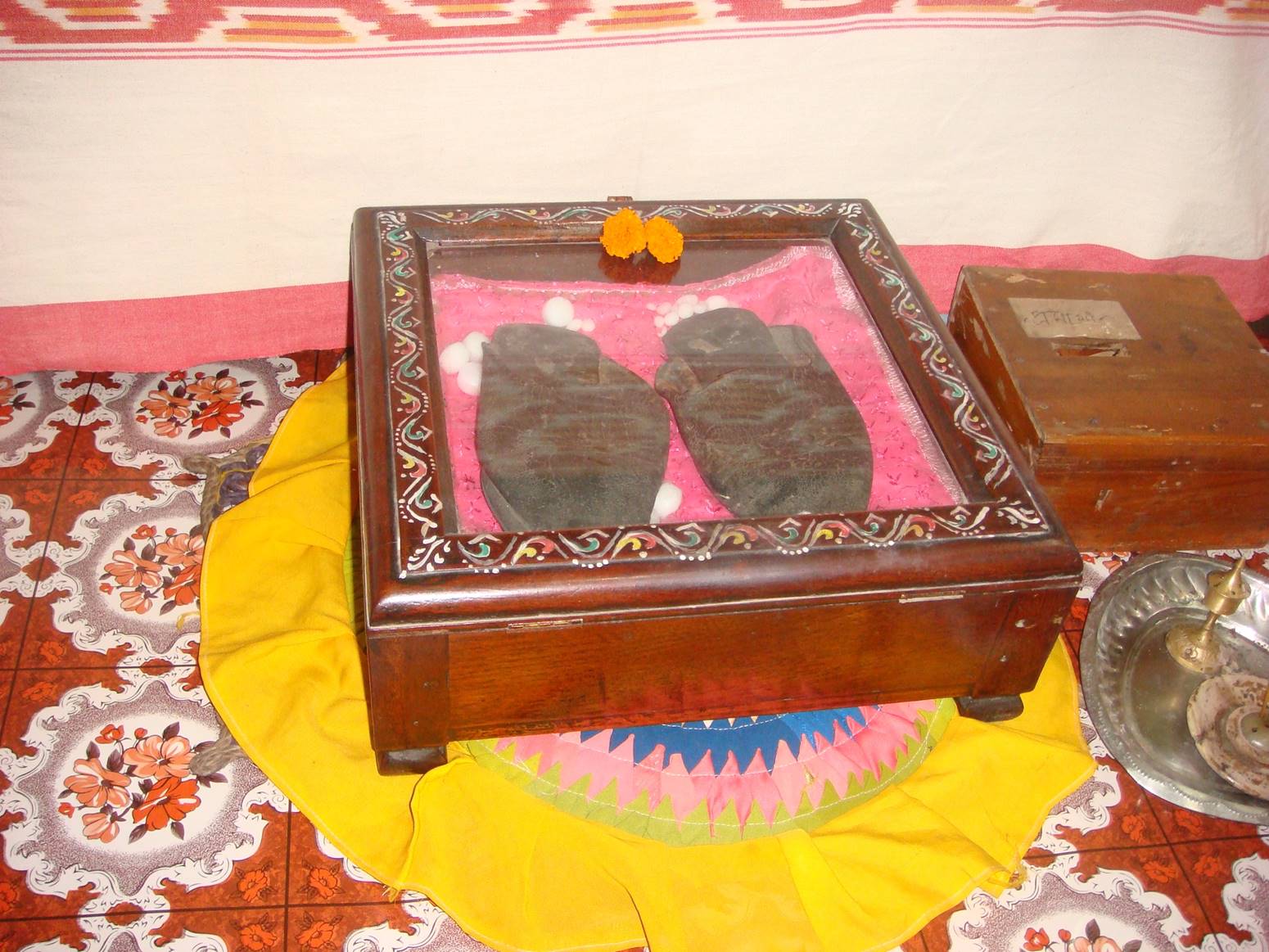
M's house front gate M's room M's shrine installed by the Holy Mother M's slipper

  • Through the narrow, Shankar Ghosh Lane and by Vidyasagar College one can reach Mahendranath Gupta or M’s house at 13/2 Guruprasad Chaudhury Lane. He used to live in this house and wrote a substantial portion of Kathamrita, the original gospel of Ramakrishna in Bengali here before he moved to live in the staircase room of Morton Institute that we’ve visited before. M came back to this house 3 months before his Mahasamadhi on completion of the final volume (5th volume) of Kathamrita in 1932.
  • Thakur visited this house more than once. Swami Vivekananda, Swami Ramakrishnanda, and their brother disiciples visited this house on multiple occasions. M’s shrine was installed by Holy Mother. The slipper of Thakur, bundles containing holy hair and nails of Thakur and Holy Mother, the Rudraksha Mala of Holy Mother, etc. are preserved here.

Within stone’s throw of Shankar Ghosh Lane is the Sadharan Brahmo Samaj at point ( N )  on our left.

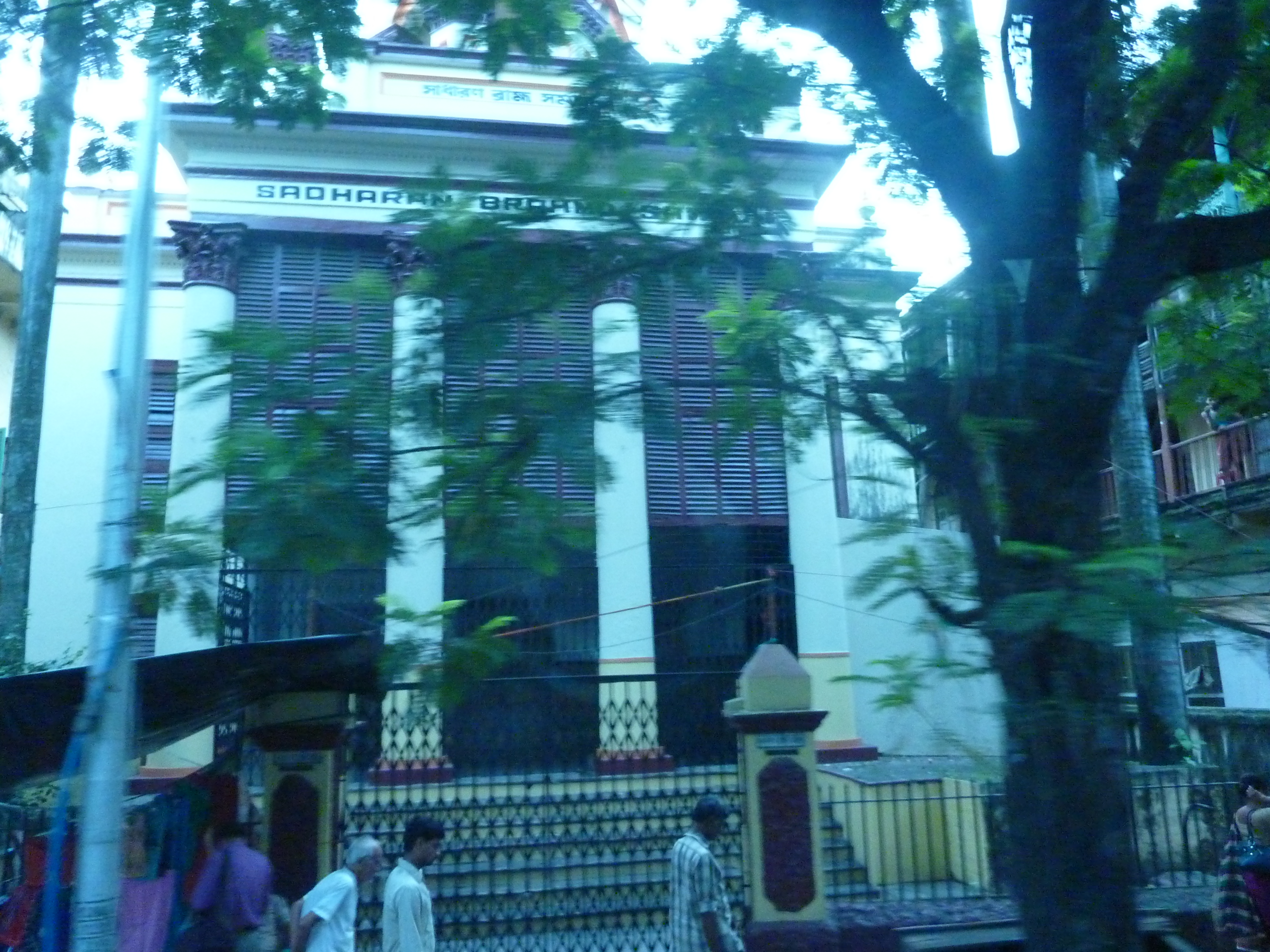
N: Sadharan Brahmo Samaj:

Sadharan Bramho Samaj 3 Sadharan Bramho Samaj 1 Sadharan Bramho Samaj 2

  • The Sadharan Brahmo Samaj was founded by Thakur’r Brahmo devotees, Shivanath Shastri and Vijay Krishna Goswami. Their followers split from Keshab Sen’s Navavidhan Brahmo Samaj.
  • The Samaj is close to Narendranath’s (Swami Vivekananda) ancestral house. Young Narendranath frequently visited the Sadharan Brahmo Samaj before he met Ramakrishna Dev.
  • Shri Ramakrishna Dev also visited the Sadharan Brahmo Samaj as illustrated in the Gospel:

“Friday, September 26, 1884

A little after three the Master’s carriage drove up. As soon as Sri Ramakrishna stepped out he saluted the temple of the Brahmo Samaj with folded hands. Hazra and a few other devotees were with him. M. bowed before the Master and took the dust of his feet. The Master told him that he was going to Shivanath’s house. A few minutes later several members of the Brahmo Samaj came and took him to Shivanath’s. But Shivanath was not at home. Shortly afterwards Vijay Goswami, Mahalnavish, and several other Brahmo leaders greeted the Master and took him inside the Brahmo temple.

Sri Ramakrishna was in a happy mood. He was given a seat below the altar. There the Brahmo devotees sang their devotional music. Vijay and the Brahmo devotees sat in front of the Master.

MASTER (to Vijay, with a smile): “I was told that you had put up a ‘signboard’ here that people belonging to other faiths are not allowed to come in. Narendra, too, said to me: ‘You shouldn’t go to the Brahmo Samiij. You had better visit Shivanath’s house.’”

We moved further ahead and stopped at the point ( O )and looked to our right.

O: Arya Samaj Mandir:

Arya Samaj School affiliated with Arya Samaj Estb 1961

  • On our right stands Arya Samaj Mandir, a branch of Arya Samaj. The greater organization was founded by Swami Dayanand Sarasvati. Once Swami Dayananda Sarasvati, the founder of the Arya Samaj, came to Bengal on a tour and lived for some time in a gentleman’s garden (currently became Indian Statistical Institute, the premier Institute for Statistics in India) in the village called Sinthi in Baranagar, located in the north of Kolkata. Although he was very well-known for his scholarship, he had not then begun to preach his own doctrine, nor had he founded his organization, Arya Samaj.

“On hearing of him, one day the Master went there to pay him a visit. In the course of a conversation on Dayananda, the Master said to us on one occasion, ” I went to see him in the garden of Sinthi; I found that he had acquired a little power; his chest was always red. He was in the state of Vaikhari, speaking on scriptural subjects night and day; by the application of grammar, he was twisting the meaning of many words. He had in his mind the egoism , ‘I will do something, I will preach a doctrine.’ “

  • Dayananda saw Sri Ramakrishna and witnessed him in the state of samadhi, he lamented,

” We people have just studied so much of the Veda and Vedanta but in this great man we see its manifestation. On seeing him it is proved that the learned only take buttermilk when they churn the scriptures. Such great men as he only eat butter. “

We further went ahead and stopped at Machhua bazar area, our final point ( P ) of the tour. Thakur’s divine play in this area is summarized as follows:

P: Machhua bazar area:

Machhua Bazar and surrounding buildings 1 Machhua Bazar and surrounding buildings 2 Machhua Bazar and surrounding buildings 3 Machhua Bazar and surrounding buildings 4 Machhua Bazar and surrounding buildings 5 Machhua Bazar and surrounding buildings 6

  • After Thakur completed about 4 years of intense Sadhana, a doubt came to Rani Rasmoni and her son-in-law Mathur Babu’s mind since Thakur was not acting in a normal way. They thought that he was dwelling on a very high plane and living an absolute life of continence that appeared abnormal to the regular people. They felt he should be brought down to the normal plane by breaking his vow of continence. They came up with a plan to tempt Thakur initially through sending an ill-famed woman to his room at Dakshineshwar. Then Thakur was further tested with Lachhmibai (Lakshmibai) and other women of lowly characters in a house of Machhua Bazar in Kolkata. Thakur immediately saw divine mother in these women of ill-fame and cried ‘Mother, Mother’ and went into ecstasy. Thakur’s astonishing reaction led to the emergence of Vatsalya Bhava (loving God as one’s child) in these women who then asked him for pardon and left.

We were mesmerized by learning the divine plays and imagining and feeling the footprints of Thakur within such a little perimeter of Kolkata. Having such an experience that would reverberate in our memory for a long time, we finally proceeded towards our hotel for dinner.

(Thanks to Nisha Parikh for editing this post.)