Loving Tribute to Padmashree Ramakant Gundecha (1962-2019)
November 24, 2019
(On November 8, 2019, in the evening the Dhrupad Maestro Padmashtree Ramakant Gundecha had a massive heart attack while waiting to board a train to Pune with his brothers and family members. The Gundecha Brothers were going from Bhopal to Pune for their performance. Shri Ramakantji was taken to the hospital, but on the way, he passed away in the ambulance at the age of 57. A huge wave of shock and sadness covered the minds and hearts of the Dhrupad music lovers in India and outside India.
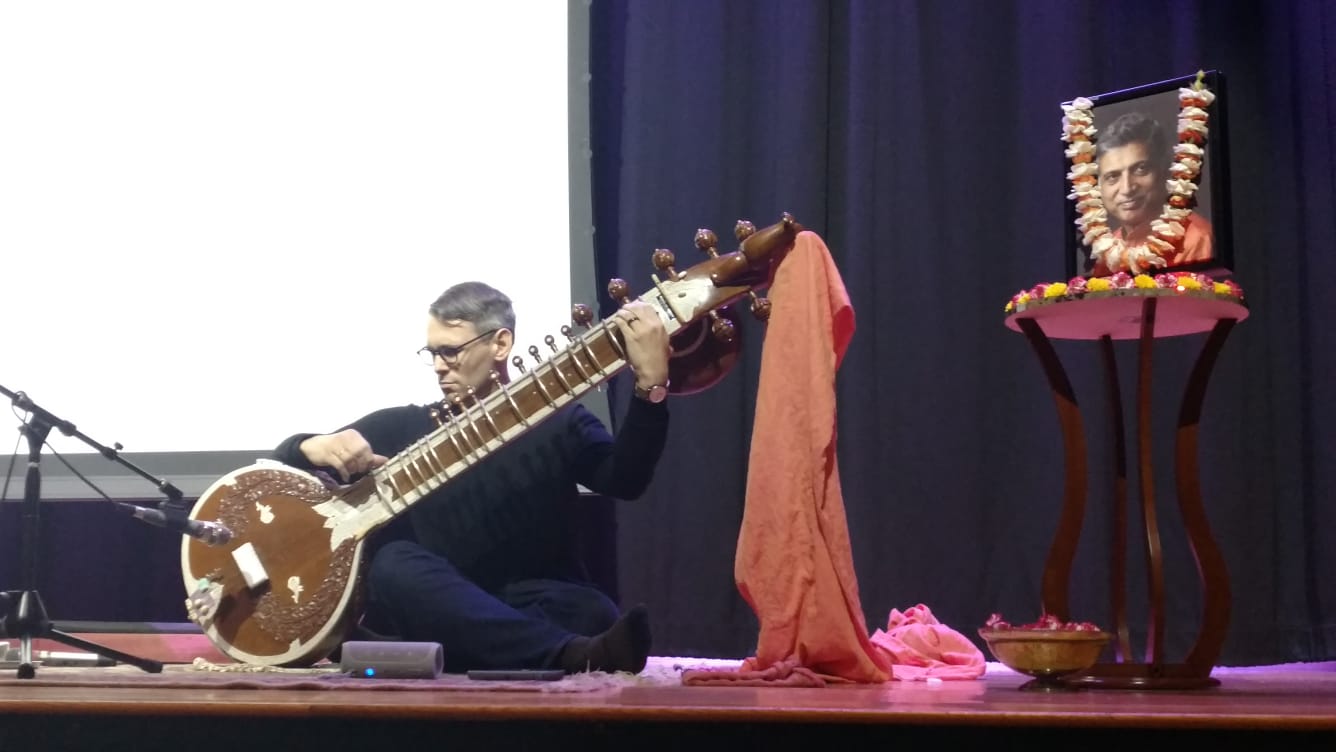
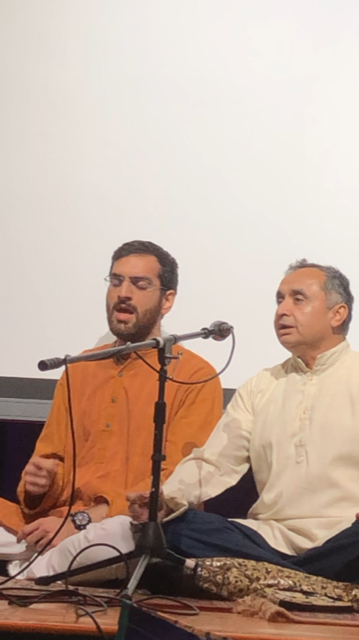
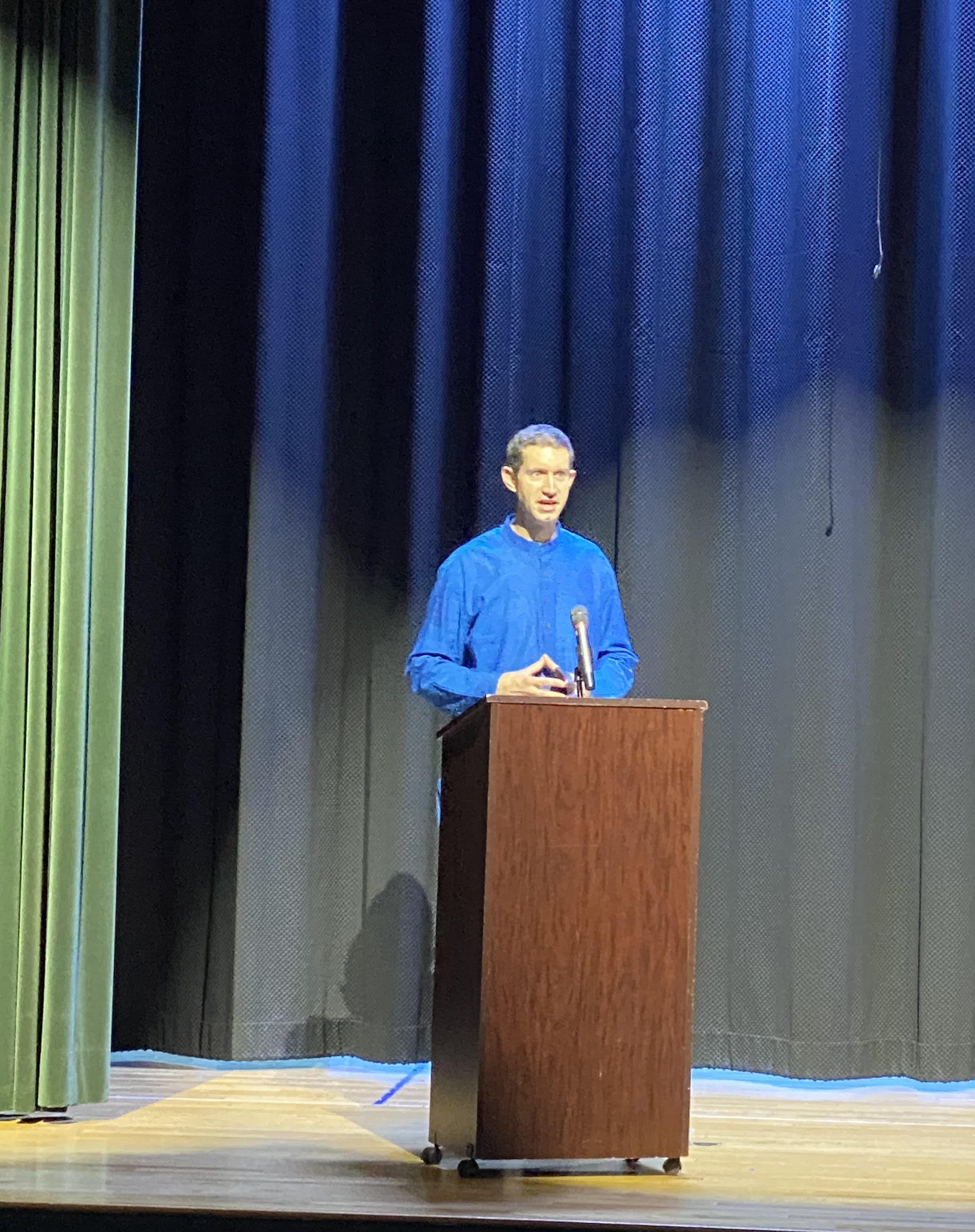
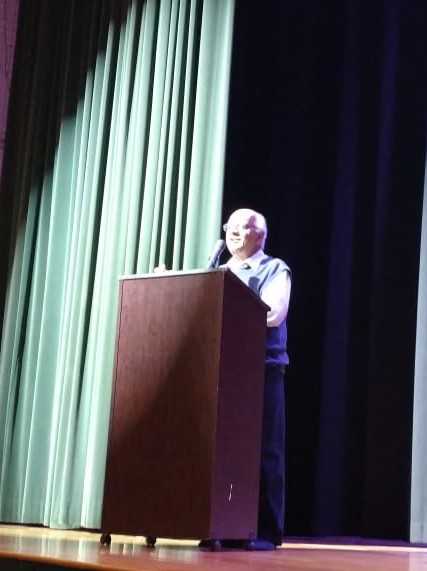
All over the world, Dhrupad music lovers paid their tributes to this great artist and the noble soul. In New Jersey, North America, on behalf of the Dhrupad.org, the Gundecha Brothers’ student Dr. Payton MacDonald and their Guru-bhagini Shrimati Shruti Rawoot arranged a program on November 24, 2019, to give a loving tribute to Shri Ramakrant Gundecha and to celebrate and honor his life. On that occasion, upon their request, I offered my loving tribute to Shri Ramakantji and shared my thoughts and a few memorable moments. The following post is based on this loving offering.)




The sad news and the loss:
Today (November 24, 2019) is Shri Ramakantji’s birthday. Today, he would have completed 57 years. On November 9th when I heard from Shrutiji that Ramakant Bhaiyya has passed away due to a massive heart attack, I was dumbfounded. I could not believe it and I did not want to believe it. Today, I still have a hard time to accept this fact that our dear Ramakantji is no more with us.
With passing away of Ramakantji, the world has lost a great Dhrupad artist and a great soul. Many notable personalities have died at a young age, but their positive impact in the world continued to inspire people for years. The Dhrupad music created and presented by Ramakantji, Umakantji, and Akhileshji will continue to inspire and uplift the minds of the Dhrupad music lovers all over the world for years to come. All three brothers were like one soul and three bodies. Ramakantji’s and Umakantji’s singing and Akhileshji’s pakhawaj blend perfectly to create enchanting music just like three primary colors create a beautiful painting.

My Personal Contact with the Gundecha Brothers:
Around 1963, I was learning vocal classical music. My teacher Shri Vasantarao Tendulkar told me that if you want to know the exact placement of the musical notes, then listen to the Dhrupad singers. Following his advice, I was listening to the Dagar Brothers. After the Dagar Brothers (the seniors and the juniors), Gundecha Brothers started spreading the Dhrupad Music in India and all over the world.

Dhrupad was not a popular genre of music as Khayal in India. But, by their hard work, sincerity, and dedication, the Gundecha Brothers created a large audience in India and all over the world who could appreciate and enjoy the Dhrupad Music. They proved that Dhrupad Music is “an international language” which can appeal to music lovers everywhere in the world.
Over the last 12 years, Vivekananda Vidyapith had arranged several concerts of the Gundecha Brothers.

When I heard them the first time, I was deeply impressed by their music, in particular, the precise placements of the musical notes and the development of the Ragas. When I came in personal contact with them, I was more impressed by their humility, love and noble characters.
The Gundecha Brothers – the great teachers and the loving hosts:
In July 2007, upon the invitation of Gundecha Brothers, I went to Bhopal to be with them and visit their recently established Gurukul. I went with my music lover nephew Vaibhav. We were planning to stay in a motel, but they lovingly forced us to stay in their house. They are the best hosts. They made us feel like we are their family members. According to the plan, in the early morning, one of their students came to their house and gave a small concert singing Raga Bhairava accompanied by Akhileshji playing pakhawaj. We were amazed to find how Gundecha Brothers have trained the young student in this difficult Dhrupad style music. Later we visited their Gurukul and heard a group of students who were living and learning there. Ramakantji sat along with us, Umakantji sat at the back and Akhileshji played pakhawaj. The students sang two short compositions. We saw that Ramakantji was completely absorbed in the students’ singing and enjoying their presentation as a proud parent.
After lunch, along with other conversations, they told us about their experiences in teaching Dhrupad Music. Two incidences touched our hearts. One was about a Pakistani mother who approached them from Pakistan and asked them if they can teach her daughter the Dhrupad Music. They agreed. The mother had to go through many difficulties to get the visa and travel to Bhopal from Pakistan. The daughter was visually impaired. After visiting them and the Gurukul, the mother was very happy to keep her daughter in Bhopal for a year to learn Dhrupad music. However, she humbly requested them to allow her daughter to stay in their house rather than in the Gurukul or somewhere else. The Gudencha Brothers told the mother that they are vegetarian and they don’t cook meat in their house while her daughter is a non-vegetarian. How would she survive? It was amazing that the Gundecha Brothers were not thinking about their own inconvenience, but worrying about the student. The mother with the consent of her daughter said that her daughter will not mind being a vegetarian for a year. She stayed with them, learned Dhrupad Music for a year and gave an excellent performance. We saw and heard her singing on a video clip.
They showed us another set of video clips. In that, they showed their workshop given to a group of non-Indian music students of a European College. Several students had difficulty in speaking even English. The Gundecha Brothers started teaching them a few preliminary lessons, starting with singing the notes correctly and giving “Taal” with their hands. For the whole week, all the students took rigorous lessons for several hours a day and did many hours of individual practice. At the end of the week, they had a small performance. We watched the video clip of their performance. It was a miracle. They all sat crossed-leg, giving correct “Taal” with their hands, and with almost correct pronunciation and exact notes sang a couple of compositions. They were all happy giving their performance. We were thinking ‘How Gundecha Brothers could do all this?’ This cannot happen without unswerving passion for the Dhrupad music, love for the students, and ready to sacrifice all personal comforts. I felt that I am in a company of genuine, versatile, great Dhrupad artists with large loving hearts, and amazing skill of teaching.
In the evening, Ramakantji and Akhileshji took us to an art museum and a boat ride in a lake of Bhopal.
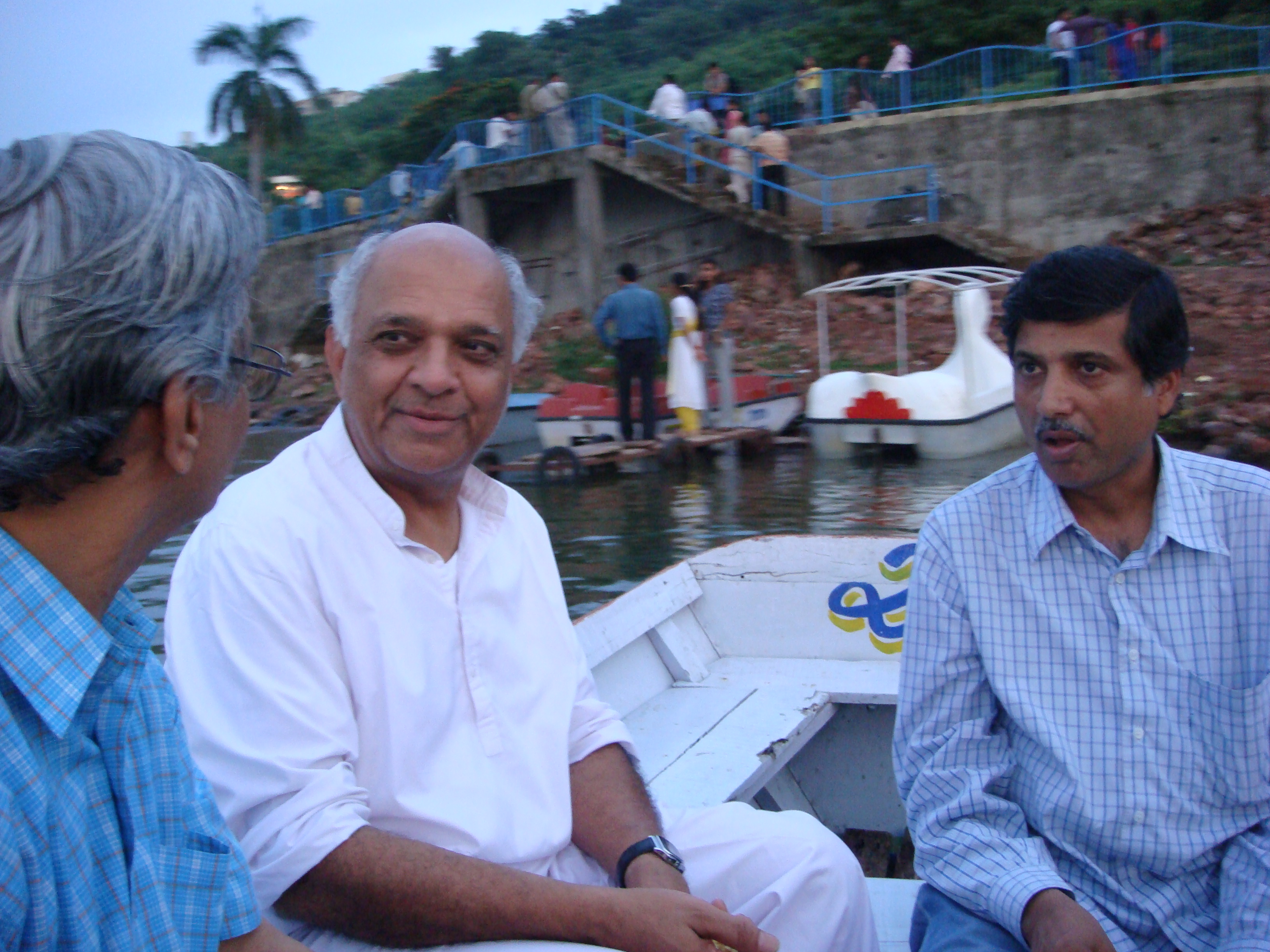
They made sure to pack up some snacks for the boat ride. Pandit Kiran Deshpande also joined us in the ride. We had a great time. The next day, Akhileshji took us for a sight-seeing: to the famous Bhojpur Shiva Temple and other places.
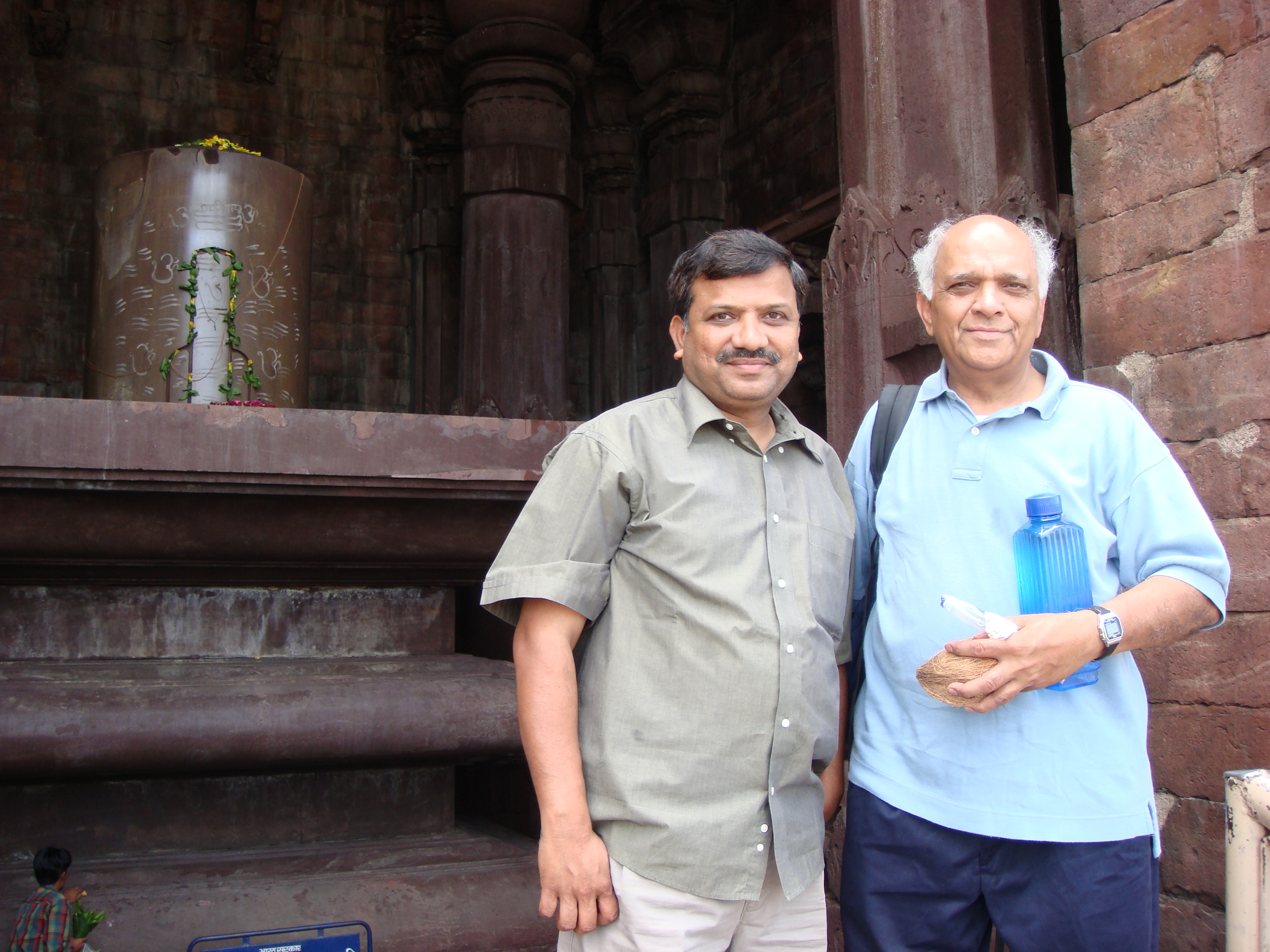
All the family members of the Gundecha Brothers made sure that we are comfortable, well-fed, and having a great time with them. I came to know that everyone who went to Bhopal to see them had the same experience. The Gundecha Brothers exhibited what we had learned from a Sanskrit Subhashit “Udar Charitanam Tu Vasudhaiva Kutumbakam”, meaning, for the broad-minded people the whole world is one family.
Modifications of the Dhrupad Music and Encouragements to students:
I found that Ramakantji and both other brothers were keeping the Dhrupad tradition, but ready to modify and do new experiments. They took Hindi poems of famous poets like Nirala, Mahadevi Verma, Kabir and others and hymns from scriptures and composed them in the traditional Dhrupad style music. Also, people thought that certain ragas may not be good for Dhrupad style music. But, Ramakantji and Umakantji took this challenge and sang compositions in the ragas like Piloo, Shivaranjani, Khamaj, Charukeshi, Jhinjhoti and others bringing out the melodies of the ragas expanding the scope of the Dhrupad Music style.
Recently, encouraged by the Gundecha Brothers, their Dhrupad All Women Ensemble known as Dhrupad Sisters made a tour in the USA and gave wonderful concerts in various places.

Amita Sinha Mahapatra and Janhavi Phansalkar (singers), Anuja Borude (Pakawaj)
Nada Brahma Yogis:
To me, Dhrupad music is very divine. It is very ancient music and it is one of the spiritual paths (Yogas) to realize the Ultimate Reality. I noticed that when Ramakantji and Umakantji sing they themselves go deeper within and touch the soul of each raga they are elaborating.

When they touch the soul of the raga, they touch the hearts of all who are following them musically with the elaboration of the raga. I think this is because of the exact placements of the musical notes of the ragas and the combinations of the notes which create and enhance the mood of the ragas. I have heard many ragas they had sung, like Komal Rishabh Asavari, Bhupali, Yaman, Bihag, Malkauns, Bhairav, Adana, Sohini, Charukeshi, and others. Each time I had the same experience. In one of the New York Concerts, they sang Raga Khamaj. I have heard many compositions of Khamaj sung by many artists, but I have never heard such a deep and serene form of Khamaj. I thought Khamaj is for “thumaries” and for light songs.
 After the New York Concert
In June 2012, the Gundecha Brothers had a concert at the Bridgewater Temple auditorium in New Jersey, where Pandit Jasarajji was present.
 Before the concert
In the middle of the concert, Ramakantji explained the various sounds which help develop the Dhrupad music. I was amazed to find that they have mastered all the possible sounds starting from the navel (Nabhi) through the upper part of the body to the top of the head (Sahasrara) which they use in there singing.
Ramakantji was a perfectionist. In every little thing, he tried to be perfect. Especially, when he tunes a tanpura, he gets completely absorbed into the tuning. Shrutiji told me that in the Bharat Bhavan, Bhopal, whenever there was a concert, Ramakantji has to tune all the tanpuras even when all the famous artists like Pandit Jasaraj, Mallikarjun Mansur and others were performing. All liked the tanpuras tuned by Ramakantji. The following is a photo taken by Shrutiji of Ramakantji tuning a tanpura at William Paterson University, New Jersey, before the concert. Behind Payton is playing another tanpura.

In one of the Vidyapith concerts, during the intermission, Ramakantji asked me what ragas they should sing in the second half of the concert. They mentioned a couple of ragas they were planning to sing. I told them that whatever ragas they select is fine with me, but knowing the Vidyapith audience many will be waiting to listen to the composition “Shiva, Shiva, Shiva…”. Ramakantji said. “We sang it yesterday in the New York concert where you were present”. I told him that I was there, but many of the Vidyapith people were not there. After a pause of a few seconds, Ramakantji said, “You know, certain compositions take away lots of energy.” This comment gave me a better understanding of what they are going through when they sing. However, immediately Umakantji said, “It is okay. We will sing it again today.” Along with other ragas, they sang that composition putting their hearts and souls in such a way that it became one of the most memorable times for the audience.
Ramakantji was once telling me that people do not have a clear idea about Dhrupad Music. Sometimes people ask, “Why don’t you use harmonium for the accompaniment?” Ramakantji said what should I tell them? People have no idea how many “shrutis” are there between two musical notes and even the same musical note in two different ragas have different places differing by a few frequencies.
Humility and Love:
Within the last 12 years, I had various opportunities to meet the Gundecha Brothers personally and had breakfasts, lunches, and dinners with them. In every meeting, I felt that I am one of their family members. Their love was amazing and natural.
I remember a couple of incidences when we spent time together. Once, the Gundecha Brothers were staying with Dr. Mohan Deshpande and his wife Shrimati Medha Deshpande in New jersey. One evening they invited me to join them in their dinner. Shrutiji and her daughter Anaya also joined us. We had a great time talking about various things. Then, there was a surprise. Medha Aunty brought a cake for Umakantji! It was his birthday.

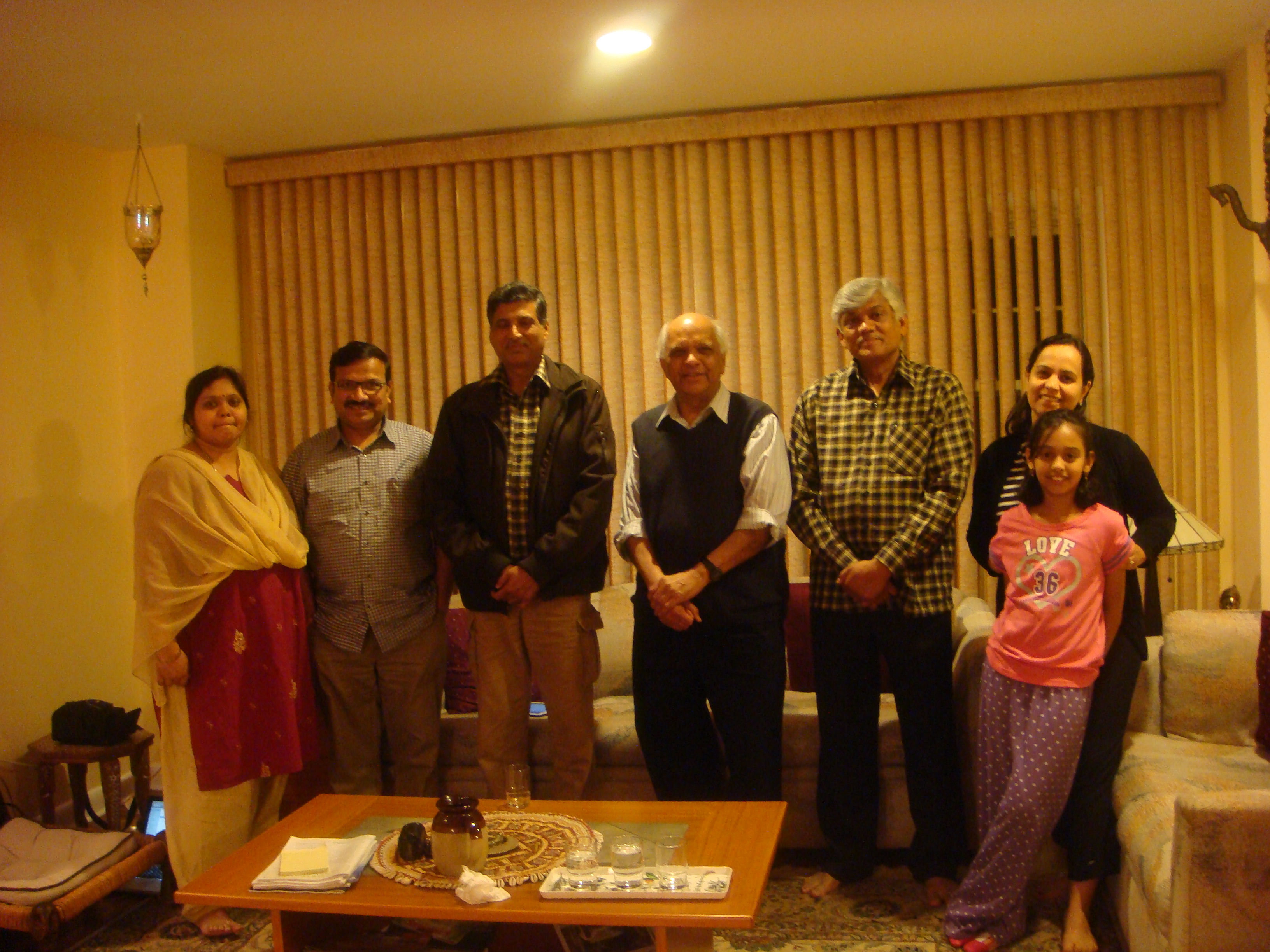


All three Gudecha brothers and their family members were very happy and they enjoyed the cake feeding each other. Being such great artists, receiving the Padmashree award, but they had no trace of ego. They were very simple and embraced all with love.
One thing about Ramakantji was very striking: even though his schedule was extremely busy with travels and concerts, he immediately responds to every e-mail. I wrote to Ramakantji that I missed them when they were in New Jersey. He told me that they are conducting a workshop in Rhode Island and if possible we can go and meet them. He wrote a very inviting e-mail. On May 28th of this year, I went with Nishank , a Vidyapith alum, to Hopkinton, Rhode Island where the Gundecha Brothers were conducting the workshop. It was a remote place in the woods. After their morning session, they sat with us for lunch and made sure that we eat enough. We had various conversations.
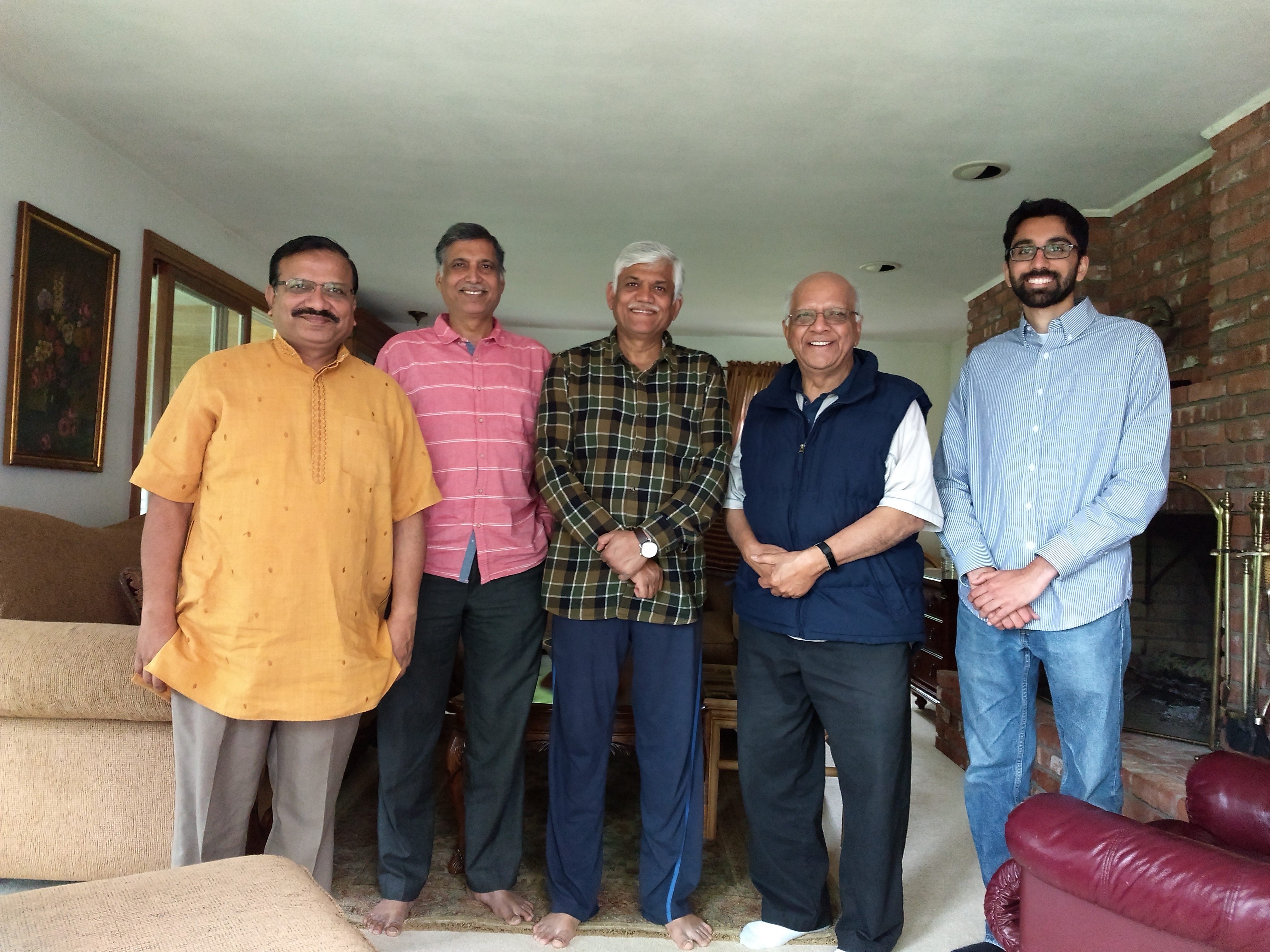
Finally, when we were leaving, Ramakantji was looking all around for something to give us to eat on our way back. Finally, he packed us a few fruits. Nishank was touched by their love. He told me while going back that in this remote place they have a hard time to get food and fruits for themselves and they gave away so many fruits to us. I am sure many people have similar experiences of their love and concern.
Again and again, we felt that even though being great artists and having received Padmashree, the Gundecha Brothers had no trace of ego. They had a genuine love for all and they are the embodiment of humility. Ramakantji’s shining character and enchanting music glorify each other. Today, in the beginning when Anaya, Shrutiji’s daughter, sang Bhagavad Gita shlokas 13-19 describing the characteristics of a Lord Krishna’s beloved devotee, I was thinking that Ramakantji had shown many of these characteristics from his life. He was a noble soul.
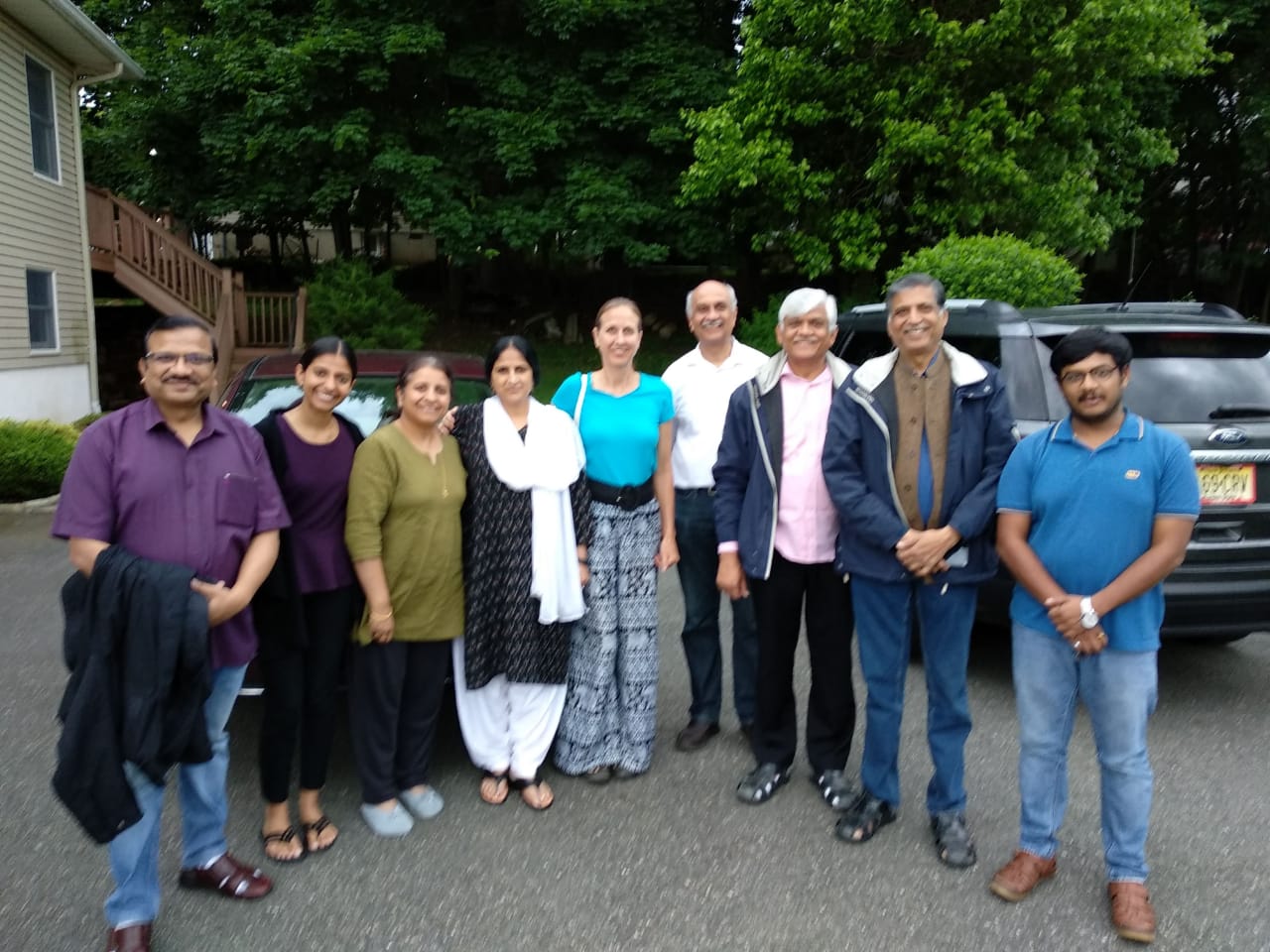
The following are a couple of photos taken during the Gundecha Brothers New Jersey workshops and concerts. These are loving memories.

Ramakantji has NOT left us. He is living with us, in our loving memories and through his students. He had given fruits of his life-long sadhana of music to his students. Ramakantji’s mission was to spread the beauty and charm of pure Dhrupad music to music lovers all over the world. To accomplish this mission, he did not think about his required rest, comforts, and personal pleasures. He lived an exemplary life which reminded me of Swami Vivekananda’s quote: “It is better to wear out than to rust out.” I am sure Umakantji, Ahileshji, Ramakantji’s son Anant, and the students of the Gundecha Brothers will continue to spread the enchanting and divine Dhrupad Music in India and all over the world.
I am sure we all feel like telling Ramakanti, “We love you and you are always with us in our hearts”.
(I thank Shrutiji for her few suggestions and providing few photos.)
 mahendrajani