“Bhalo Thanathan Das!”
The following post is based on a story I heard from Swami Adiswarananda, the Spiritual Leader of the Ramakrishna Vivekananda Center in New York from 1973 to 2007.
There was a rich man in West Bengal named Thanathan Das. He lived in a big mansion, owned several properties and pieces of land, ran many businesses, and had a nice family. He was happy with almost everything in his life, except for his name. His parents had given him this name. He was more engrossed in establishing his business and taking care of his family, so he did not think much about his name. But as he worked to establish his businesses, he met lots of people and he found that people chuckled when he mentioned his name. This made him unhappy. After some thought, he decided to change his name. He called his most reliable manager and asked him to find a nice new name.
The manager was surprised by this request, but he had to please his boss. He thought for a couple of days and decided to suggest the name ‘Bharata’, a name of Rama’s brother from the Ramayana. He told Thanathan Das that Bharata is a very good name. In the Ramayana, Rama loved Bharata very dearly and because of Bharata’s love for Rama, he is loved by all. Bharata kept Rama’s sandals on the throne and ruled the kingdom. He showed that Rama was the actual king and he was only a caretaker. Thanathan Das was extremely happy with this name. Now, he proudly began introducing himself as Bharata. A few days went by. One day, he was passing through the market and wanted to buy a few fish. Usually, his servants did the shopping, but that day he wanted to do the shopping himself.
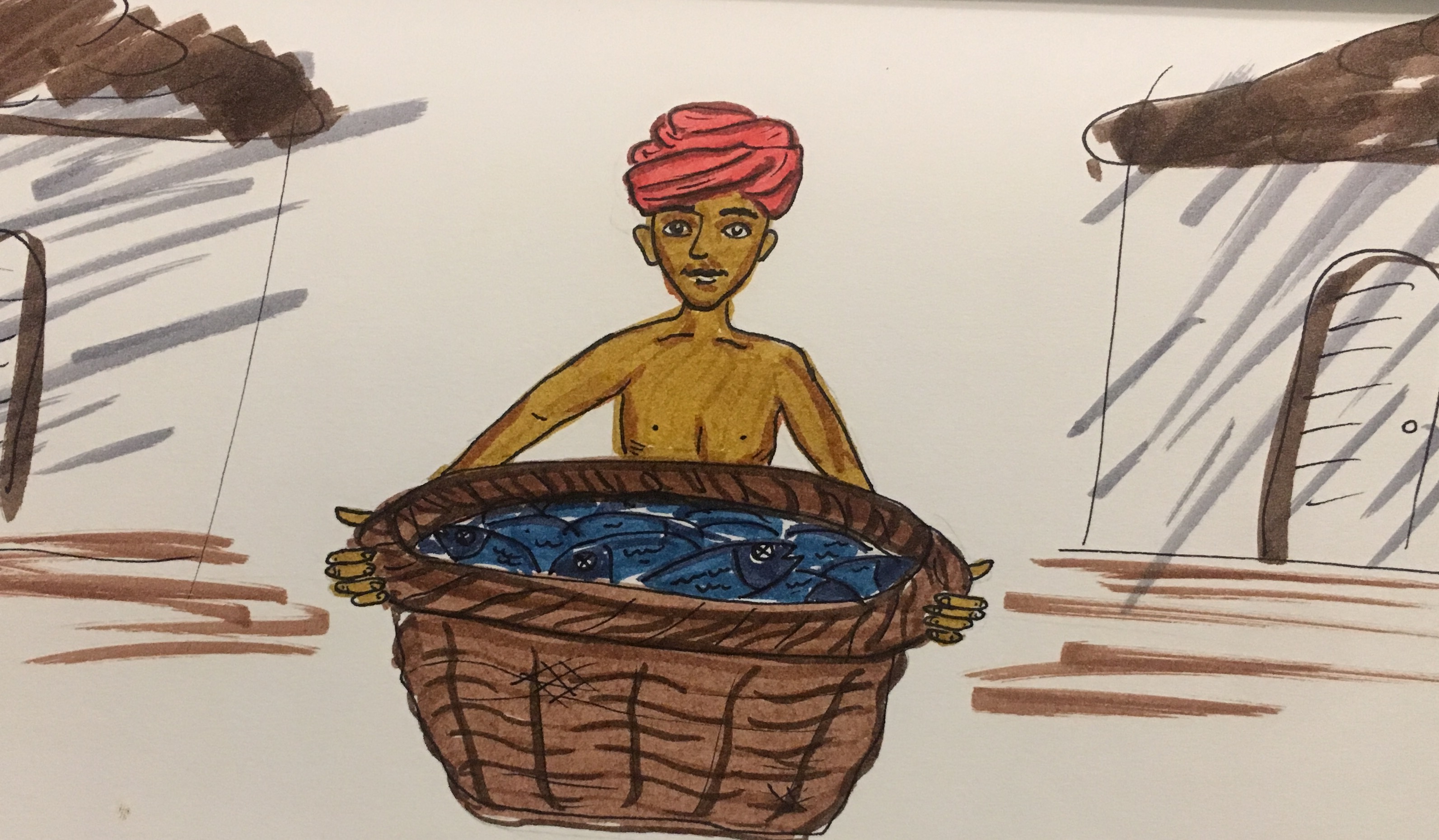
He approached one fisherman who was selling fish and asked for the price of the fish. After some negotiation to reduce the price, he bought a few fish. While leaving he asked the fisherman his name. The fisherman said that his name was Bharata. Thanathan Das was startled to hear that his name was also Bharata and instantly, he no longer liked his name. He called his manager and asked him to find another name.
After a couple of days, the manager suggested ‘Lakshmana’ as his new name. He explained that Lakshmana was always with Lord Rama and sacrificed everything to help Lord Rama and Mother Sita. Thanathan Das was happy to change his name to Lakshmana. He was again proud of his name for a few months, until one day he found a man cutting grass in the water.

Thanathana Das who was now Lakshmana Das was touched by the man’s hard work. He called him to take some rest and offered him some money as a gift. The man was touched and saluted Lakshmana Das. Then, Lakshmana Das asked him “What is your name?” The man who was cutting the grass said, “Sir! My name is Lakshmana.” Thanathan Das was upset. He did not show his frustration to the man, but he immediately left that place and came home. He started screaming and called his manager. The manager came running to find out what was the matter. Lakshmana Das said to him, “Find me another name and do not find any name from the Ramayana or Mahabharata. Lots of people select their names from the characters of these epics and I do not want to see myself as equal to them. The manager said, “Please relax, Sir! I will find another name which is not from the Ramayana or the Mahabharata”.
After a couple of days, he suggested the name ‘Amar.’ The manager told Lakshmana Das that ‘Amar’ means one who is immortal. I have checked with many people and found that no one has that name and also none of their relatives or friends has that name. Lakshmana Das was pleased with the suggestion. He went to his temple, did some puja, and changed his name to Amar Das. For a couple of years, he did not find anyone whose name was ‘Amar’ and thus he enjoyed his name. One day, as he was passing by on a street, he heard lots of men and women were crying.

He found that someone had died and a few people were carrying his dead body on their shoulders. He inquired who died. A family person of the dead man told him with sobbing that one who died was very dear to him and his name was ‘Amar’. Lakshmana Das also felt like crying, not because of the death of this person, but because the dead man had the same name as him.
This time Amar Das was not mad. He was in deep thought. He went back to his office. He did not greet anyone, went to his room and sat down in his chair with a serene face. The manager felt that something was wrong with the boss. He came to him and asked him, “Sir! Is everything alright with you?” Then, he said, “O Manager! I learned a great lesson today. I learned that my original name ‘Thanathan Das’ was the best name possible. From now on, I just want to be known as ‘Thanathan Das’ and no one else.” The manager asked, “May I know why you decided that way?”
Then, Thanathan Das said, “Listen!
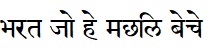
(Bharat jo he machhali beche.)
Bharata was selling fish.

(Lakshman kate ghaas.)
Lakshmana was cutting grass.

(Amar jo he mara gaya.)
Amar who was supposed to be immortal had died.
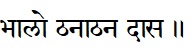
(Bhalo Thanathan Das.)
So, I think ‘Thanathan Das’ is the best name for me. No one has such a name and I am proud of my name which was given to me by my parents.
—————————————————————————————–
Reflections:
Once a recently appointed Swami called Swami Adiswarananda and told him that here in USA people keep changing their religious denominations frequently. To him, Swami Adiswarananda explained: this is the USA. Everything here is changing at a fast pace. People frequently change their hair, clothes, facial look, jobs, cars, houses, cities, countries and even their spouses. So, get used to it.
All people want to be happy. No one wants to be unhappy. Some people even derive happiness from their pain or suffering.
One reason people look for change is that they are not happy with what they have. This is a usual scenario: people want something and they work hard for it, but when they get it they are not happy with it.
Change is good if it is for a higher purpose. But when one becomes a slave of the demands of one’s mind and its idiosyncrasies and looks for a change to fulfill the mind’s desires for happiness, then most of the time the change does not bring happiness. Many times, one ends up in more unhappiness than before.
Happiness is not in the object. It is in the state of the mind. Suppose I like the Indian sweet “Gulabjambu” and someone offers it to me.

When I am ready to eat it with all my delight, a phone-call comes and I find that one of my dearest friends or relatives is in the hospital for some serious problem. At that time, I leave the “Gulabjambu” on the side and run to the hospital. At that time if someone says ‘just eat the Gulabjambu first and then go’, I will feel that that person is my enemy.
I can present another situation. Suppose nothing unpleasant thing happens and I am enjoying eating Gulabjambu. Someone keeps feeding me. Suppose I ate 12 or 15 Gulabjambus. After eating this many Gulabjambus, I no longer enjoy its taste. If someone presses me hard to eat more, then I might throw up. Thus, most of the sense-pleasures are good for a short time or within their limitations. After a point, the mind gets fed up and it does not enjoy anymore. After some bitter experiences, some of the joys even become painful and distasteful.
Rishis of the Upanishads realized the ultimate truth and declared that the real happiness is in being one with our true identity, which is Atman or Self. This Atman is the support of our existence. Its nature is Sat-Chit-Ananda, Existence-Knowledge-Bliss Absolute. This Atman is the same as Brahman that manifests as the whole universe. When we see varieties of things and do not see Brahman behind them, then we become deceived and run after these things to be “happy.” But as I mentioned before, we get bored by these limited things (perceived as devoid of Brahman) and we try desperately to keep changing things to be happy.
In Brihadaranyaka Upanishad, Rishi Yajnavalkya said, “Verily, not for the sake of the beings, my dear, are the beings loved, but they are loved for the sake of the Self. Verily, not for the sake of All, my dear, is the All loved, but it is loved for the sake of the Self. Verily, my dear Maitreyi, it is the Self that should be realized-should be heard of, reflected on, and meditated upon. By the realization of the Self, my dear-through hearing, reflection, and meditation-all this is known.” (2.4.5)
In Taittiriya Upanishad 2.8, it has been mentioned that all the joys of the world combined together are just a very small fraction of the bliss one experiences when one realizes the Self (Atman).
We learn from this that external changes may not bring happiness. True happiness comes when we realize our true identity, the Self. Then, we will be happy in any situation. So, we have to make efforts to realize our Self (Atman).
(Thanks to Sonali Tatapudy and Rushil Desai for editing this post and to Shailey Patel for the illustrations.)
 mahendrajani
Enjoyed reading the story and the lesson that followed it.
“What is in a name?” Everything and nothing! When we are alive it gives identity and nothing more, when we are dead it is nothing more. Through all this the Atman is the only constant!
Very well written and threaded together (the story and it’s meaning) like threading two fabrics. We don’t see the thread but without it the fabrics cannot be held together!
Krishnan
Dear Krishnan: Excellent comments about the value of ‘name’ and the truth about Atman. Thanks to see the two fabrics of thoughts combined together seamlessly. Thanks a lot for your comments.
Through all this the Atman is the only constant,
This Constant Atman only derived with the help of True Guru .With Faith in Guru.
Thanks for your comments. Sri Ramakrishna says that if a person is a sincere seeker for the truth and makes intense efforts to realize the truth, then a True Guru comes to the person to help.
Thus, a disciple has to be ready to understand who is a True Guru, the importance of the True Guru’s instructions, how to follow them, and then make efforts to follow. Again, thanks for writing your comments and sharing your thoughts.
Uncle– thanks for your blog. It’s so true about people in the US always trying to change different aspects and features of themselves and their identities. In the midst of all of that change, I think the elements and importance of self-reflection are lost. I think reading stories like this make it easier to internalize the type of happiness we should truly be seeking.
Dear Eesha: I am very happy to read your comments. I am glad you realized the importance of self-reflection in all fast-paced ever-changing way of life. Thanks for writing your comments.
Uncle-Loved reading the story and the reflection following it.You explained it very well.
Reminded me of the story of Narada and Sri Krishna when Narada asks him to explain the secret of this life and the appearances of the world and Sri Krishna asks him to bring him a cup of water. Our life, through the myriads of ever-changing acquaintances and experiences is a journey to the sacred unchanging center of the universe within ourselves
Thank you, Lalitha for your comments. Yes, Narad’s story reminds us to focus on the unchangeable while living in the constantly changing life and the world. I am glad you loved the story.