Bhagavad Gita, Chapter 12: The Path of Devotion
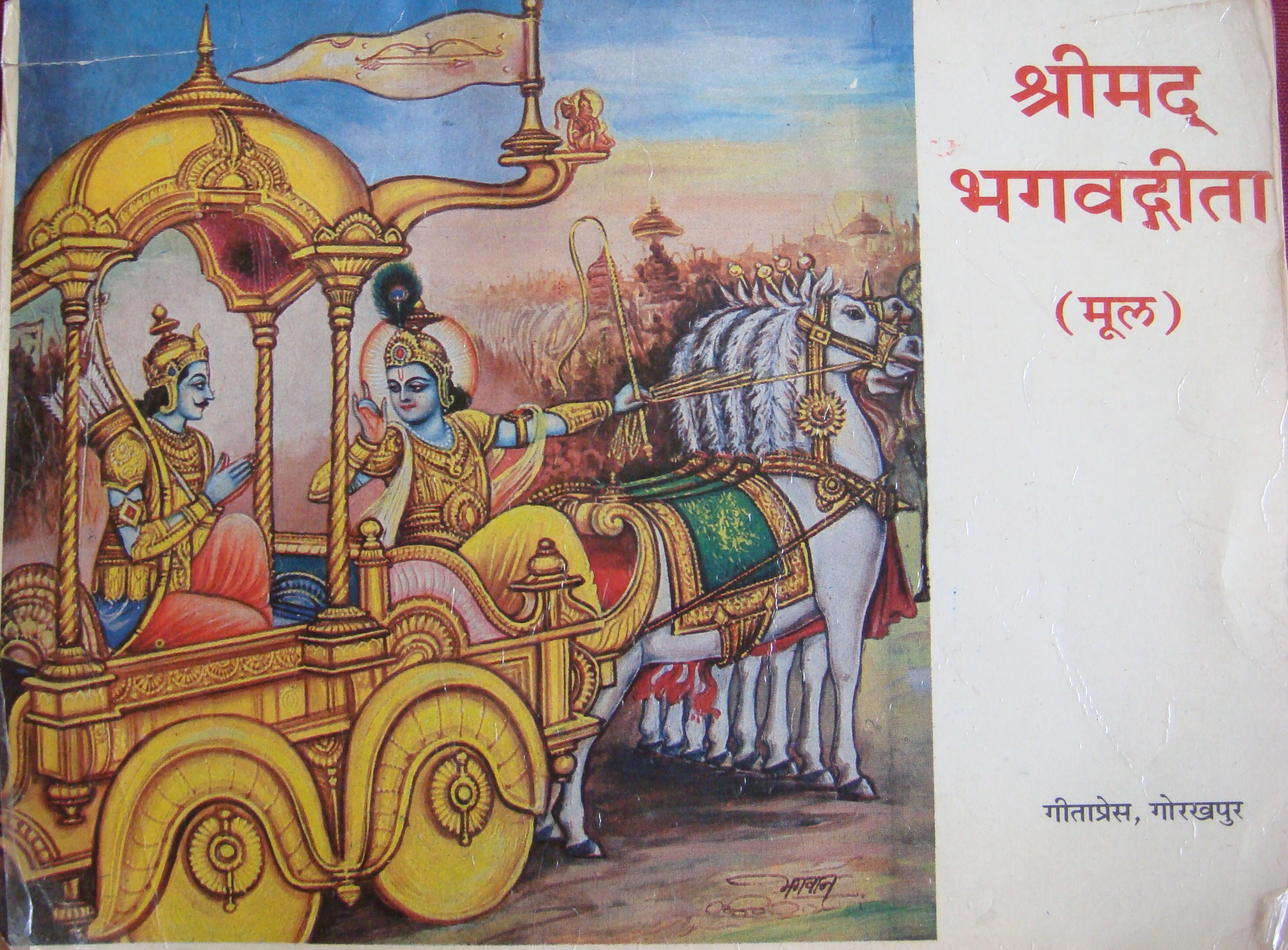
Arjun’s Question:
Arjuna asked Shri Krishna, “There are two kinds of devotees: those who sincerely make efforts to realize God with form and those who contemplate on the Imperishable and the Un-manifested formless God, called Brahman. Among these two kinds of devotees, who are the better yogis?”
Shri Krishna’s Answer:
Shri Krishna replied, “Those who focus their minds on God with form with supreme faith and constantly make efforts to realize God are better yogis. However, those who worship Infinite, Immovable, Imperishable, Un-manifested, Omnipresent, and incomprehensible Brahman with total self-control, and serve all beings with their whole heart, considering them as manifestations of Brahman, are also able to reach Me.
People, who cannot comprehend the Self as their true divine identity, which is beyond their body and mind, have greater difficulty in realizing the formless aspect of God. On the other hand, I (God) immediately lift up the devotees from the ocean of this mortal world who constantly focus their mind on Me (God with form) and offer the results of their actions to Me.
Who Can Realize God?
Shri Krishna says, “If you focus your mind and intellect on Me, then, without a doubt, you will live in Me, meaning you will attain the highest state of divine awareness possible for a human being.”
Alternate Spiritual Practices:
(1) If you cannot focus your mind on Me, then make repeated efforts to focus it by refraining from having other thoughts.
(2) If you cannot make efforts to focus your mind, then perform all actions that help you think of Me, such as performing worship, taking the name of God, or similar practices.
(3) If you cannot perform such actions, then offer the results of all your actions to Me. One instantly attains supreme peace by renouncing the results of all actions.”
The Characteristics of a Devotee Who is Most Beloved by God:
Shri Krishna then said that his most beloved devotee has the following characteristics.
“My most beloved devotee is one who: (1) hates none (2) is a friend to all (3) is compassionate towards all (4) has nothing of his own (meaning one who considers everything as belonging to God) (5) is egoless (6) remains balanced in pain and pleasure (7) is forgiving (8) is satisfied with whatever he/she gets, after making sincere efforts in any endeavor (9) is constantly engaged in spiritual development (10) has self-control (11) is determined to attain the highest knowledge (12) has given his/her mind and intellect to God, the innermost divine Self (13) does not get disturbed by others, nor becomes the cause of disturbance for others (14) is free from the disturbances created by excessive joy, jealousy, fear, and anxiety (15) has no meaningless expectations (16) is pure (17) is skillful and prompt (18) is unbiased (19) is free from worries (20) will not get engaged in fruitless selfish activities (21) who does not deviate from a spiritual path in joyful moments (22) does not grieve (23) does not crave for worldly pleasures, as they are limited and are followed by suffering (24) has gone beyond auspicious and un-auspicious (25) sees the same God in friends and foes (26) remains calm within, whether receiving honor or insults (27) does not deviate from his spiritual path in joys and sorrows or heat and cold—the opposite situations of favorable and unfavorable (28) is unattached, meaning attached to God, who is the Ultimate Reality, and attached to all things of the world through God (29) considers praise and blame to be two sides of a coin, or in other words, knows that both come together (30) is silent, speaks when needed, and is contemplative (31) is happy with whatever he/she has (32) is constantly connected with God and sees that God dwells everywhere (33) has steady intellect and (34) is filled with devotion.
Those who practice the above-mentioned nectar-like characteristics (Dharma) with supreme faith are most beloved by God.
(Thanks to Radha Dhar for editing this post.)
 mahendrajani
A very lucid and concise description of the 12 th chapter.
Amazing
Thank you Sridharji. I am very happy that you liked this description.
Thank you Uncle for this wonderful post on Chapter 12! As mentioned in Gita Dhyanam, the nectar of Gita is like milk that nourishes and satisfies the soul – some chapters are fairly easy to digest (skim milk) whereas some, like chapter 12, are brimming with knowledge (condensed milk) and take several lifetimes to absorb and put into practice.
Thank you Kiran for your thoughtful comments. You presented good analogies. Chapter 12 has the essence of Bhakti Yoga. Since it takes several lifetimes to absorb and put these teachings into practice, we have tons of lives.
I am new to this site. l developed passion with GITA having found it rhymes with my innate belief system. How do l get a copy of the Bhagavad Gita in Nigeria?
Dear Ebiloma Joel-Davidson: I am very happy to know that you developed a passion for Gita. It is a great book. Mahatma Gandhi said that Gita helped him in his life especially in the critical time of his life. He had many such situations. Millions of people all over the world including great personalities have been inspired by it. I am sure Amazon.com can help you. Also, if you write to the Vedanta Society of Southern California in Los Angeles, USA, they will mail you a copy. If you have difficulty, please let me know. I will try to help you out.
I learned Gita from my childhood and I am still enjoying it. Gita helped me in my life throughout. It has many useful practical hints. I tried to write the essence of each chapter avoiding technicalities. I hope those blogs help you.