Monthly Archives: September 2015

Belur Math Pilgrimage – 2015, Day – 3 Morning – Part I

August 5, 2015

Udbodhan (Mayer Bati) and Balaram Mandir

Breakfast:

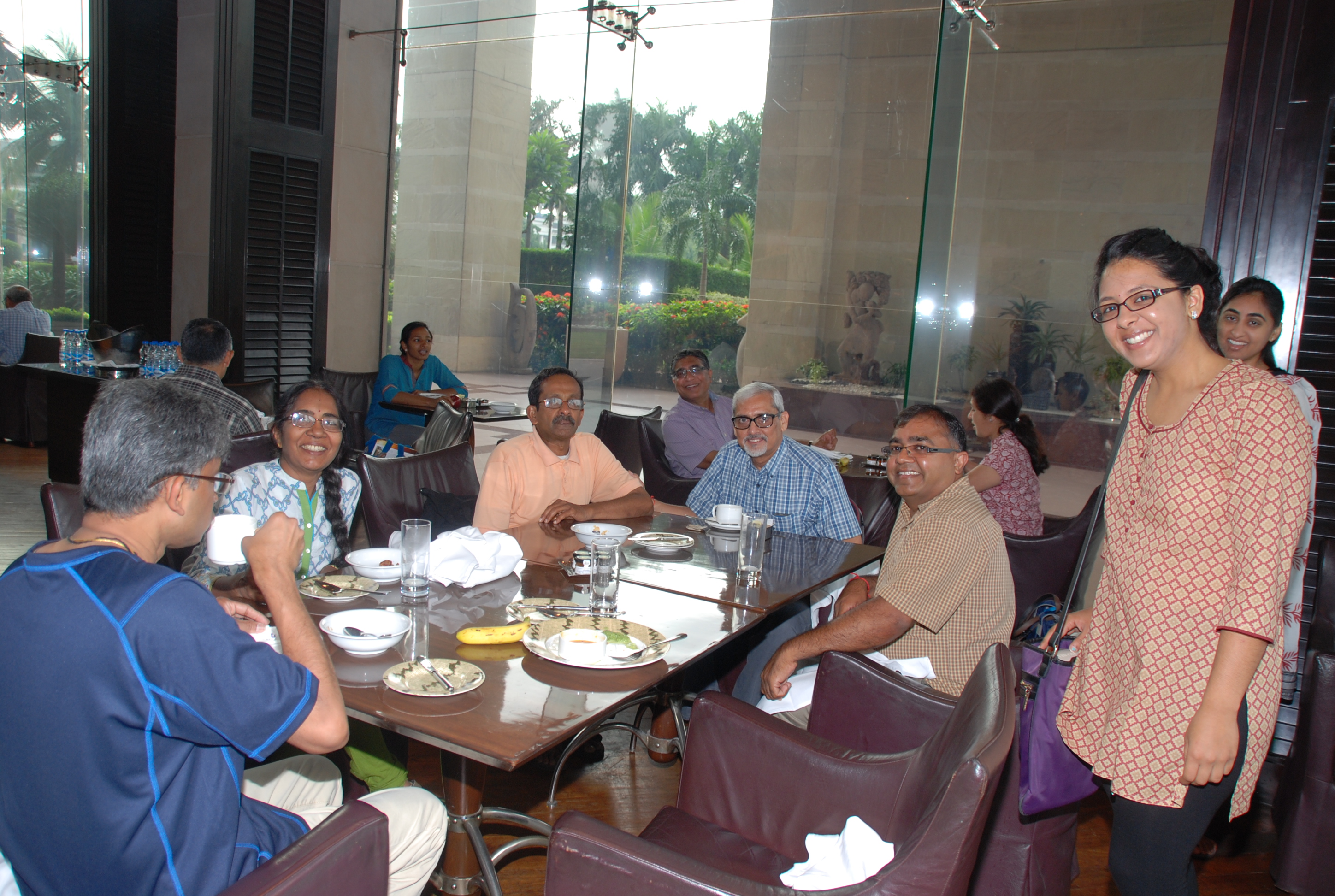
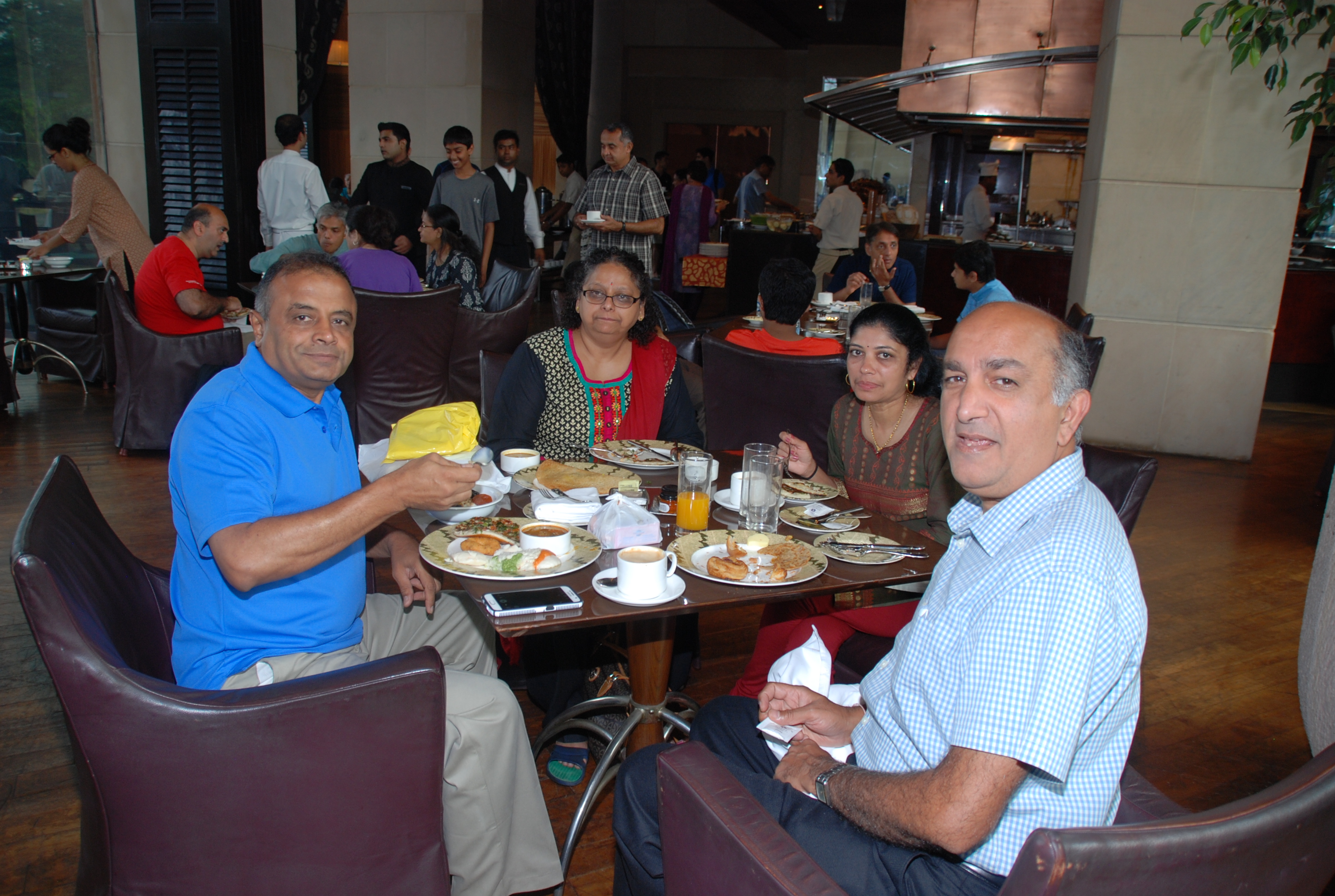
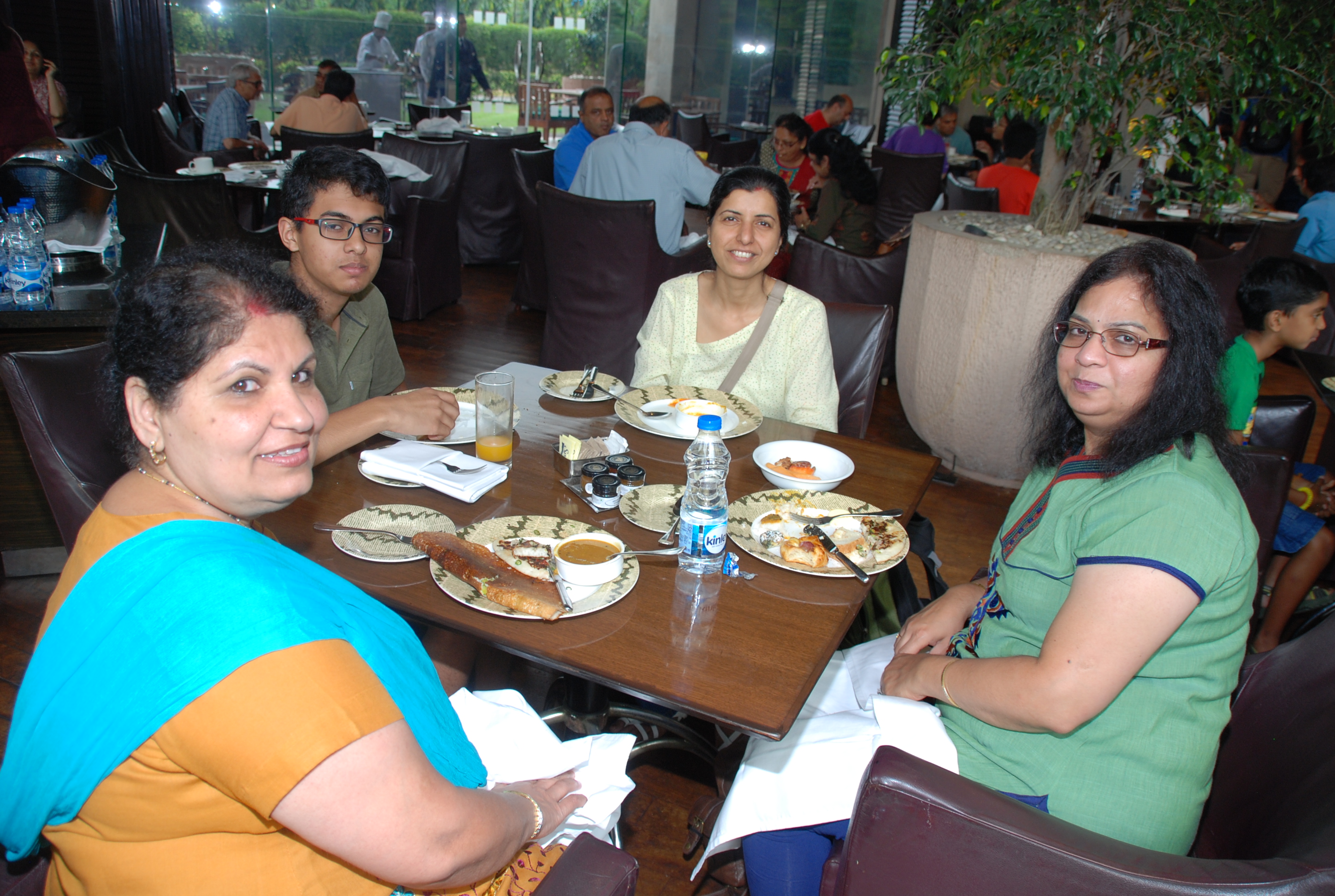
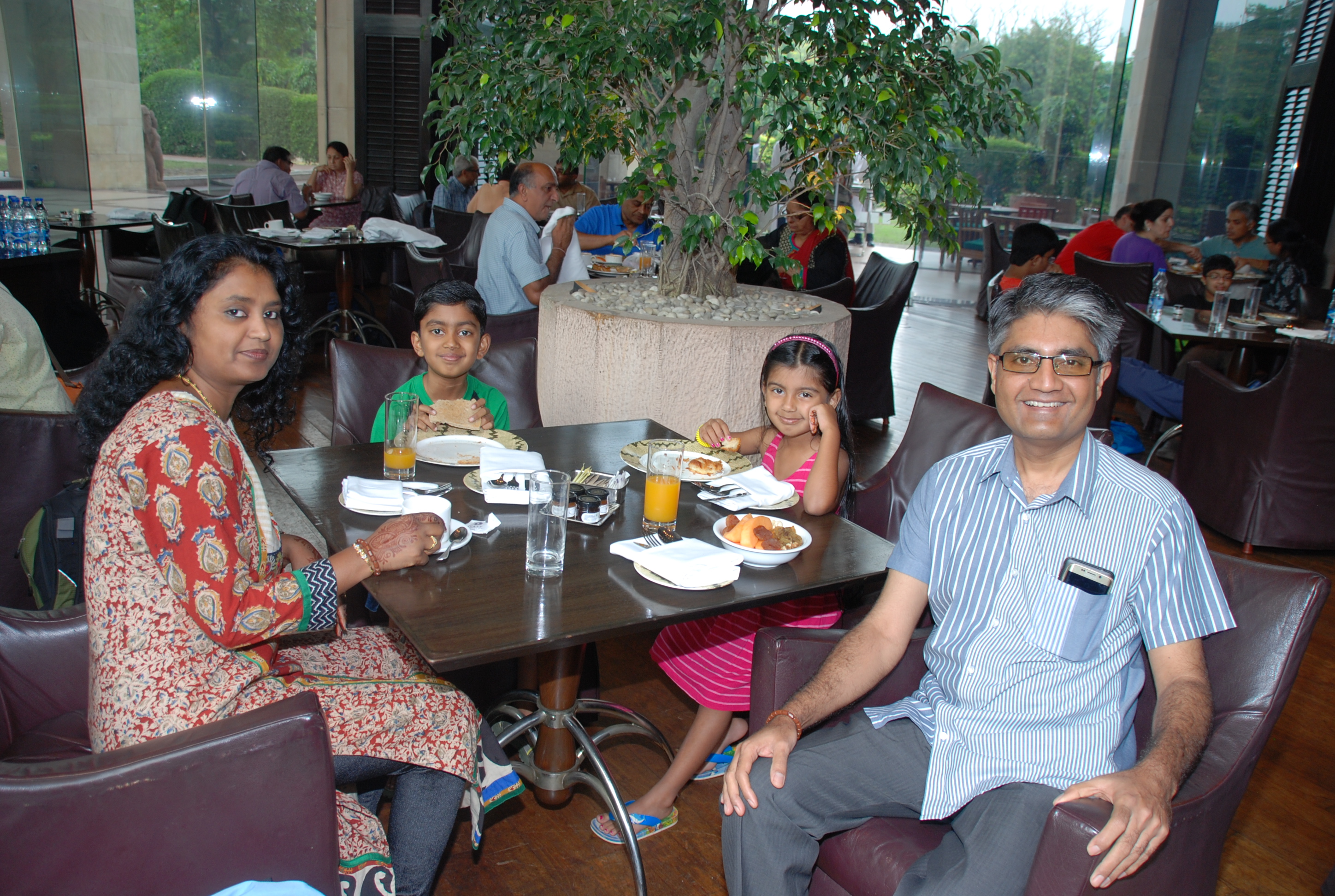
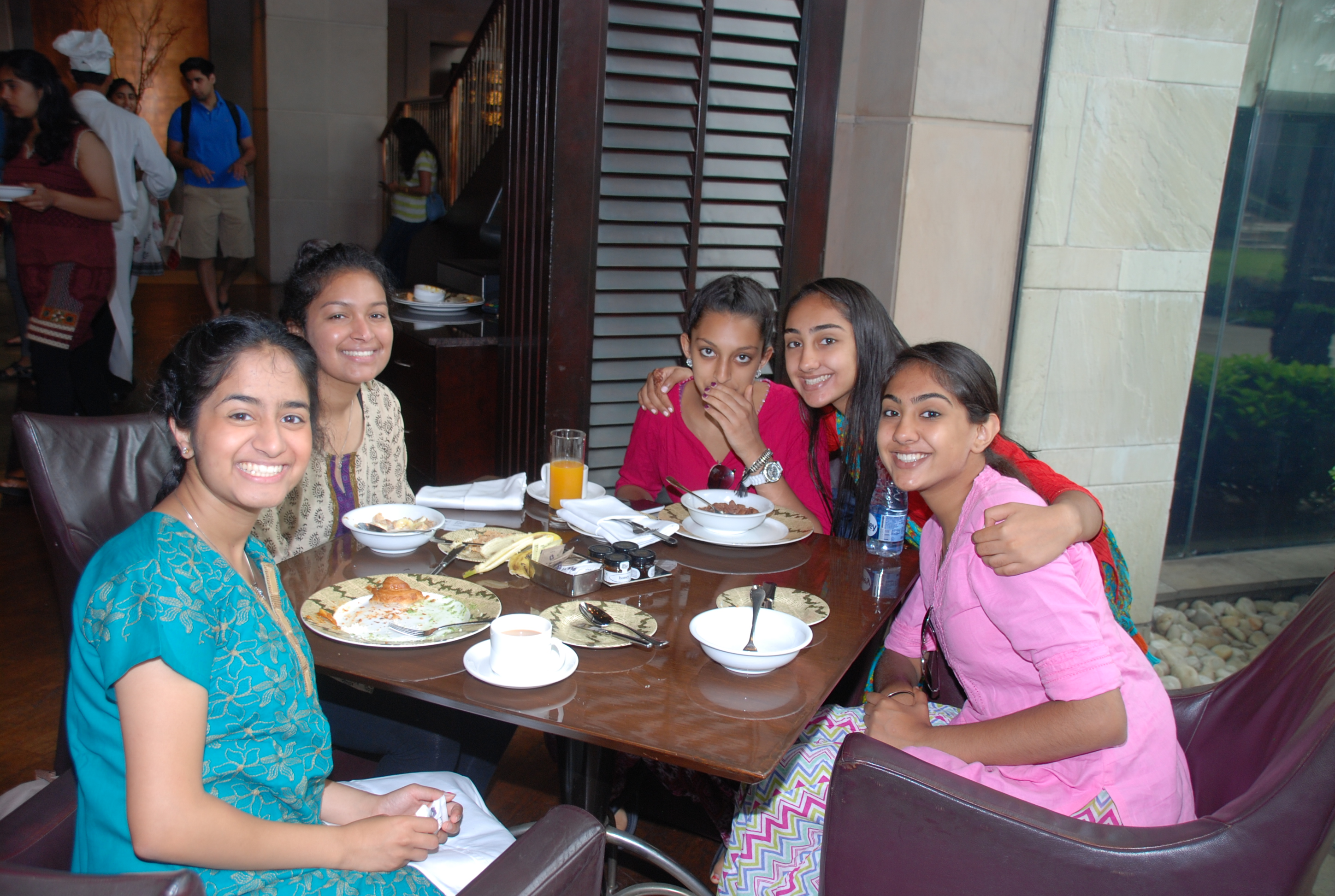
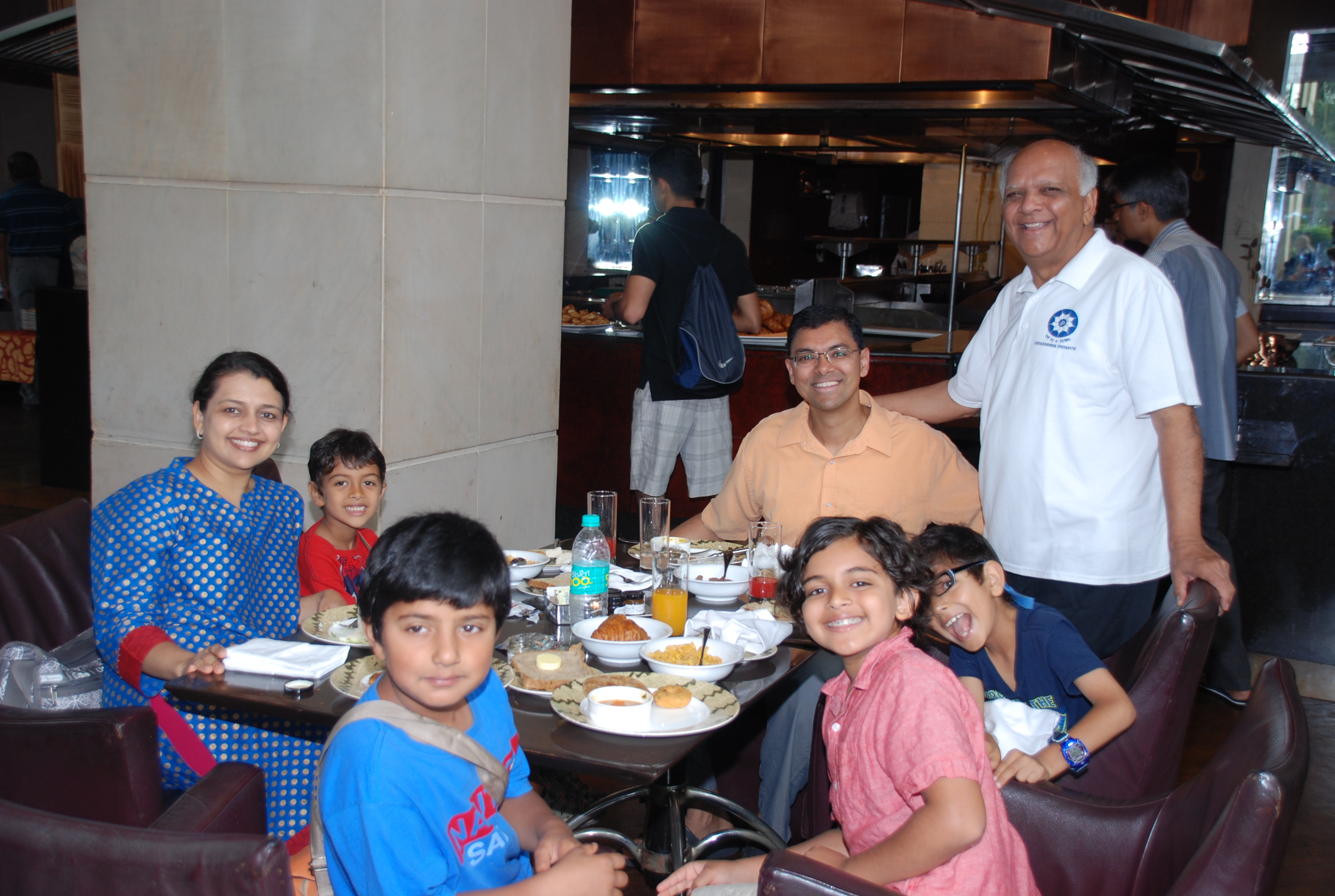
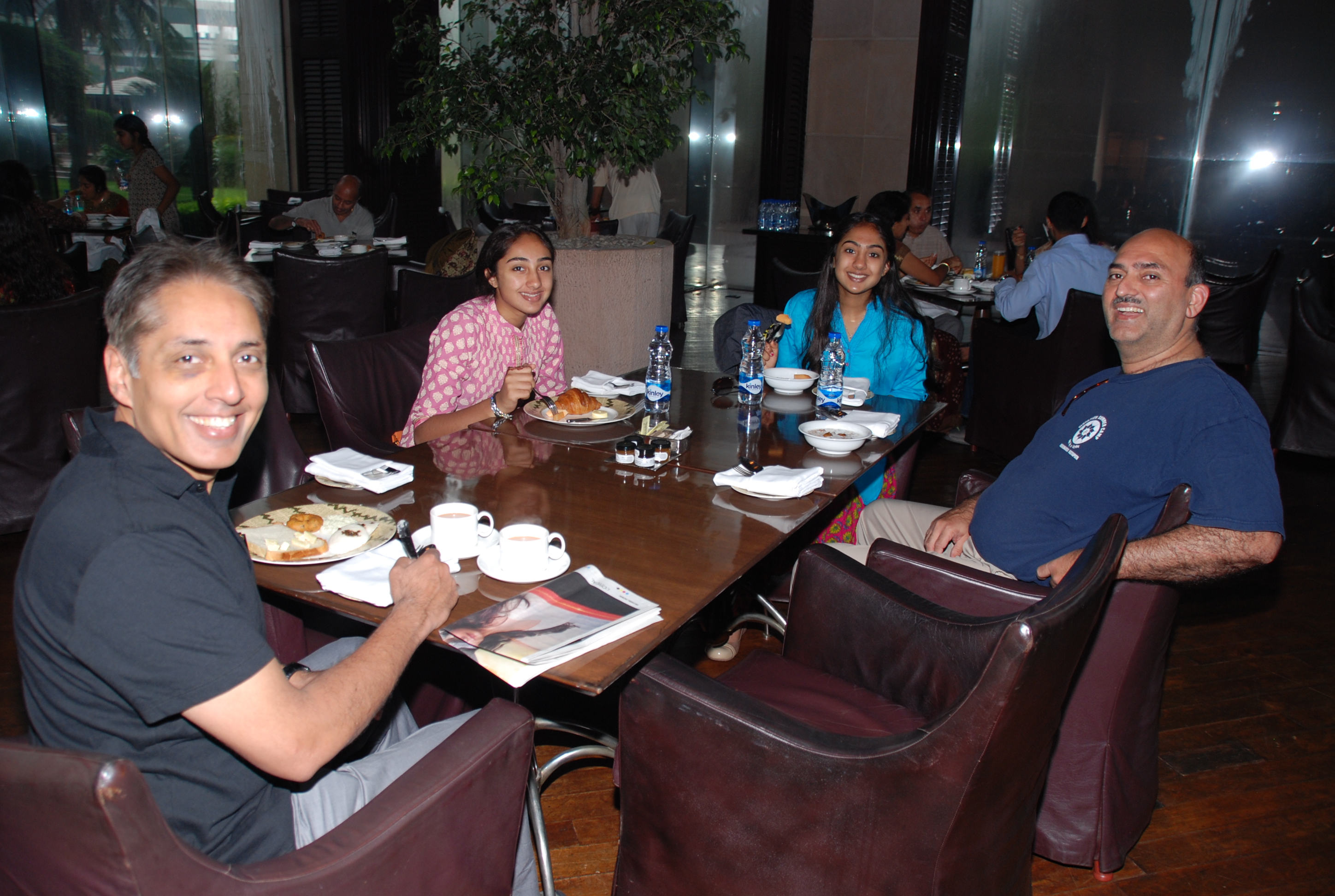
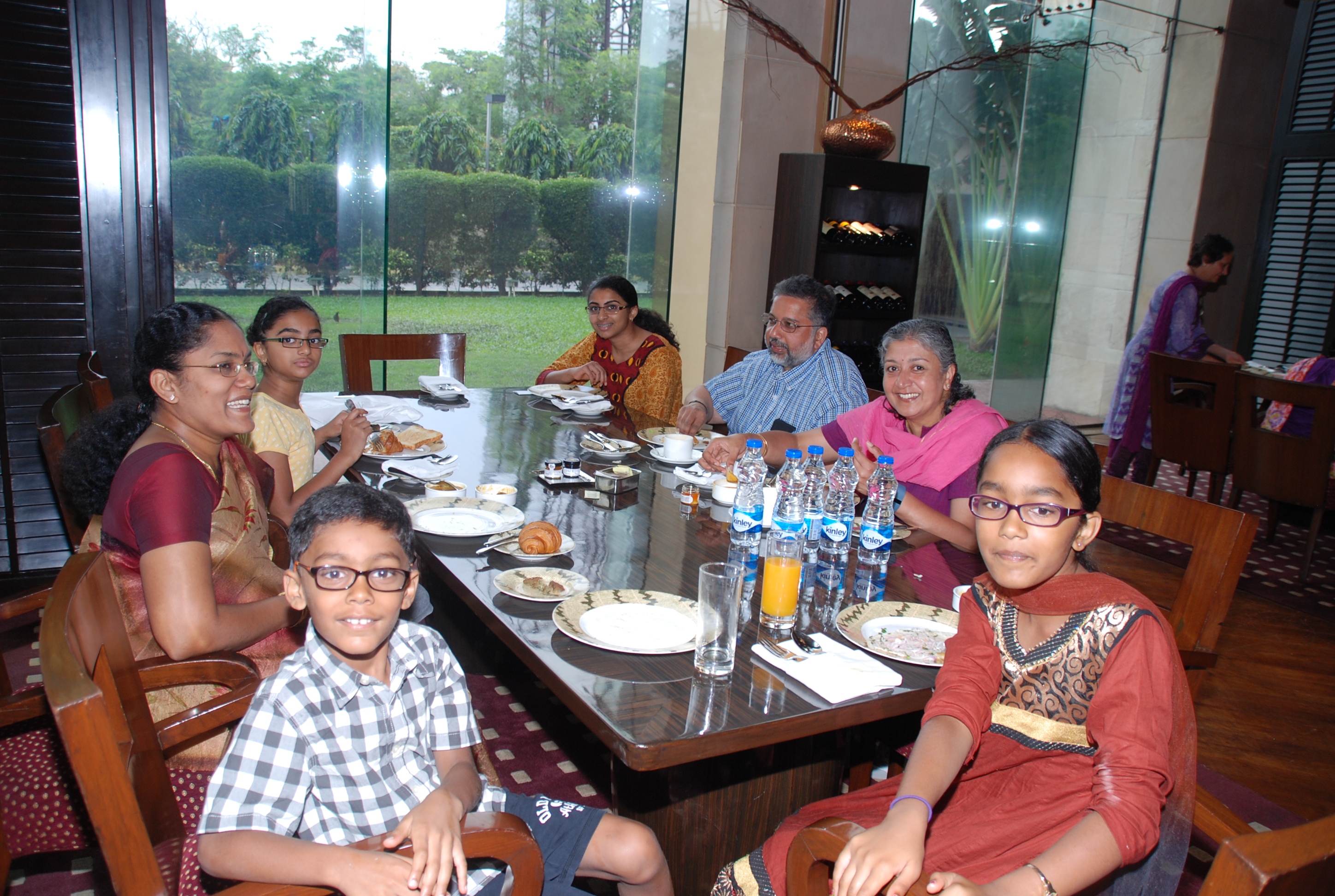
Our morning on August 5th began with an overcast sky; almost as if it was going to rain. By 6:00 a.m. everyone had gathered at “Guchhi”, our designated breakfast area. Breakfast consisted of a variety of things, from several South Indian cuisines such as Idli and Dosa to the usual western options including milk, cereal and muffins.
DSC_0370 DSC_0369 DSC_0368 DSC_0367 DSC_0366 DSC_0364 DSC_0363 DSC_0362 DSC_0361 DSC_0360 DSC_0359

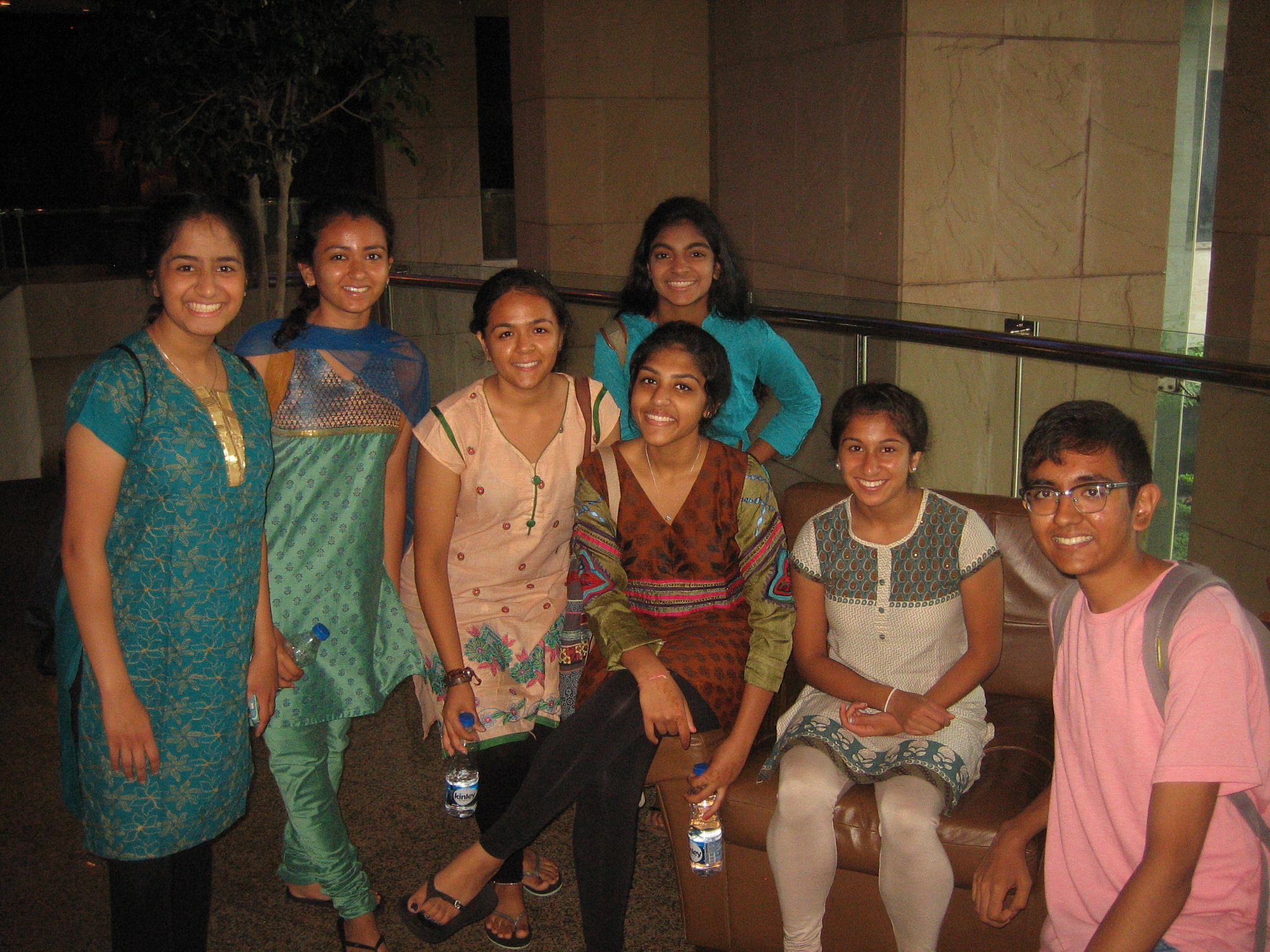
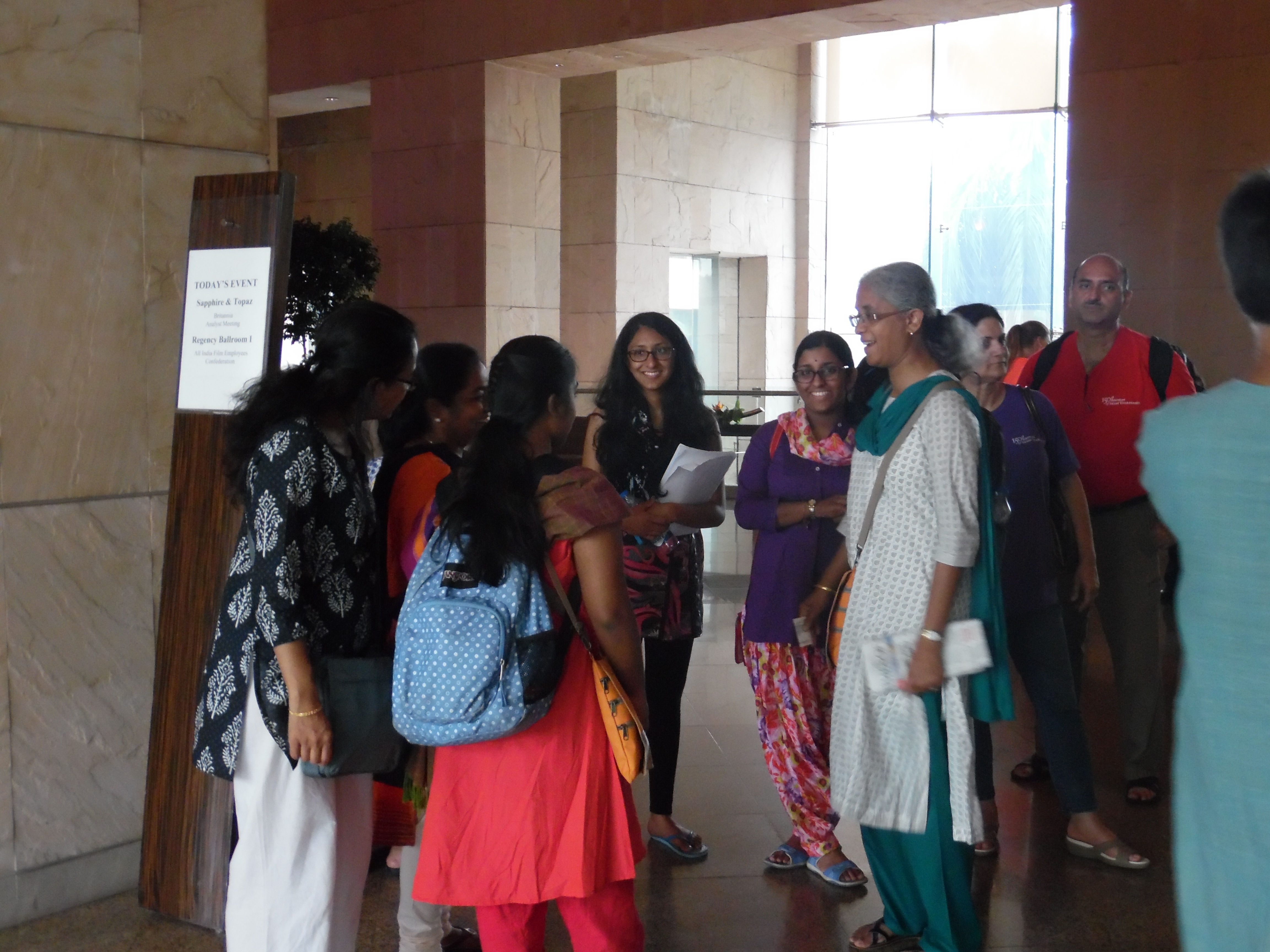
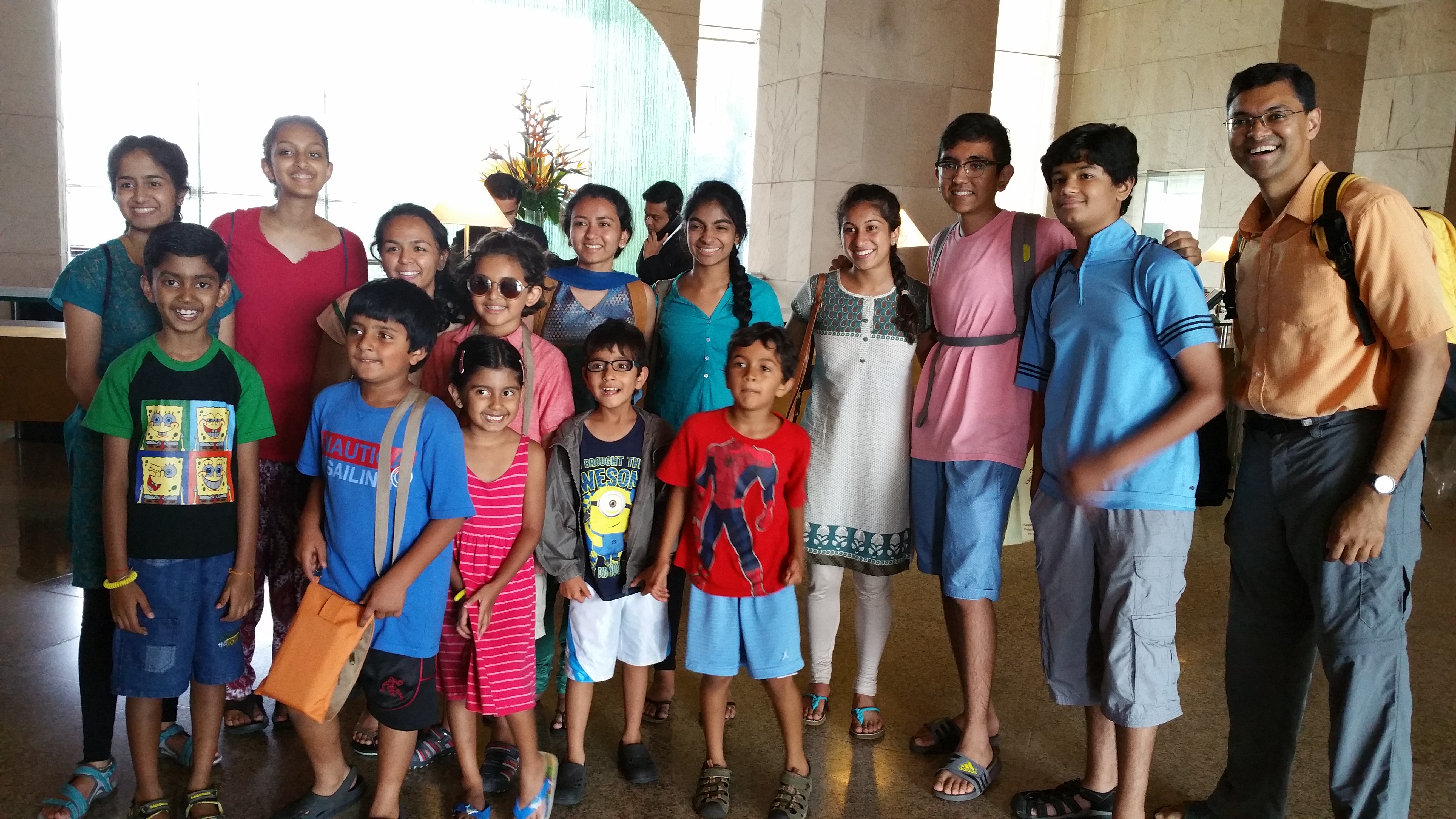
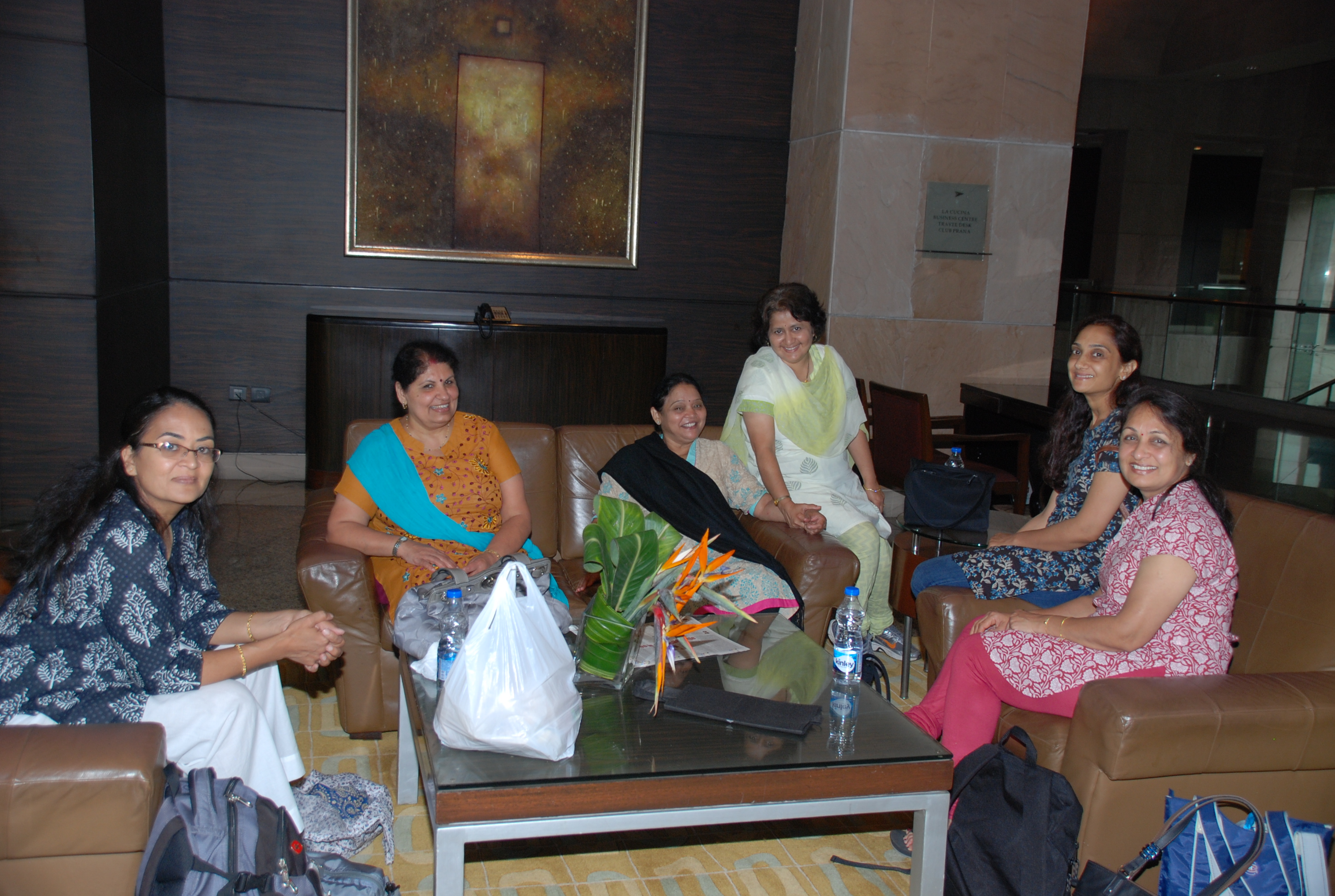
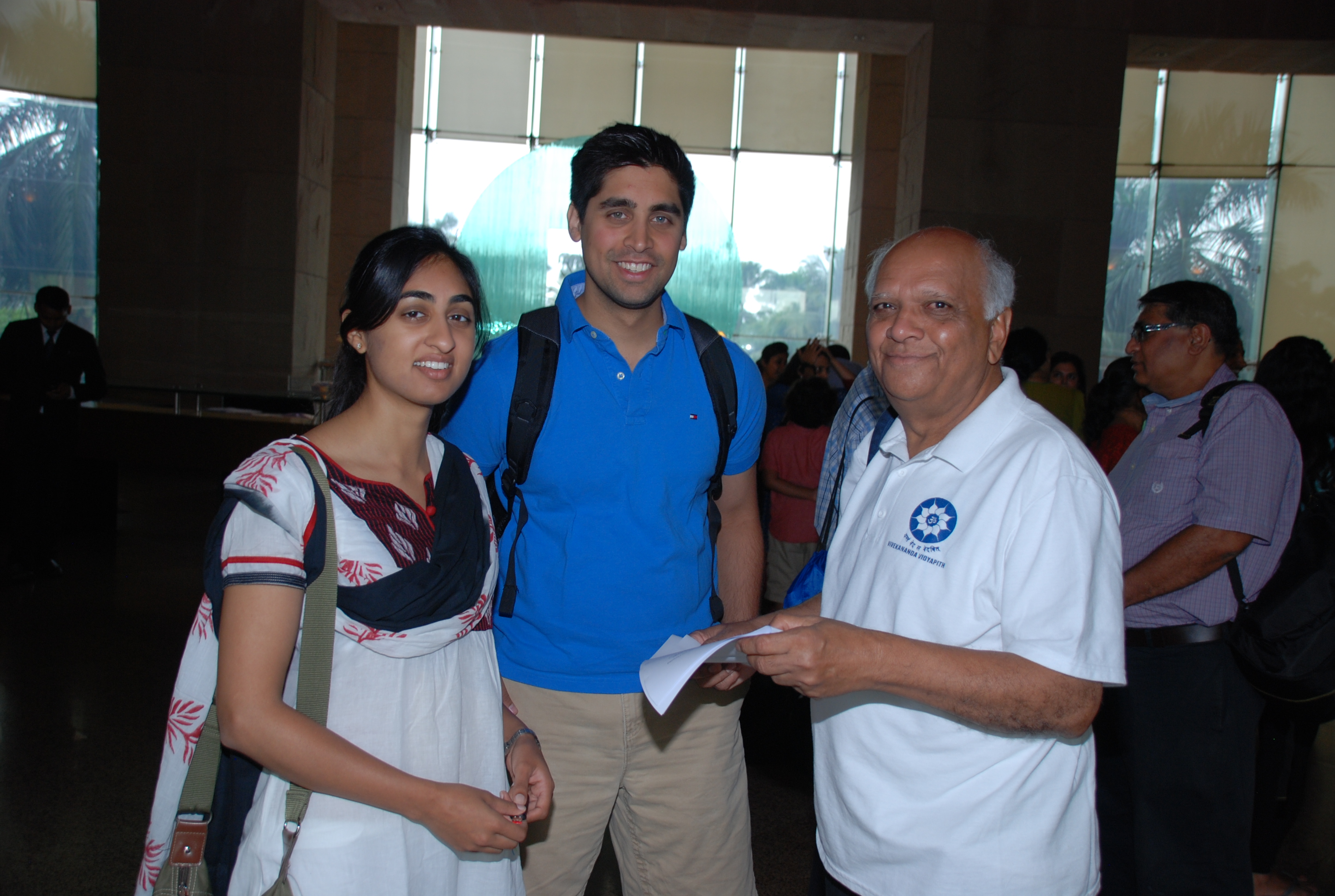
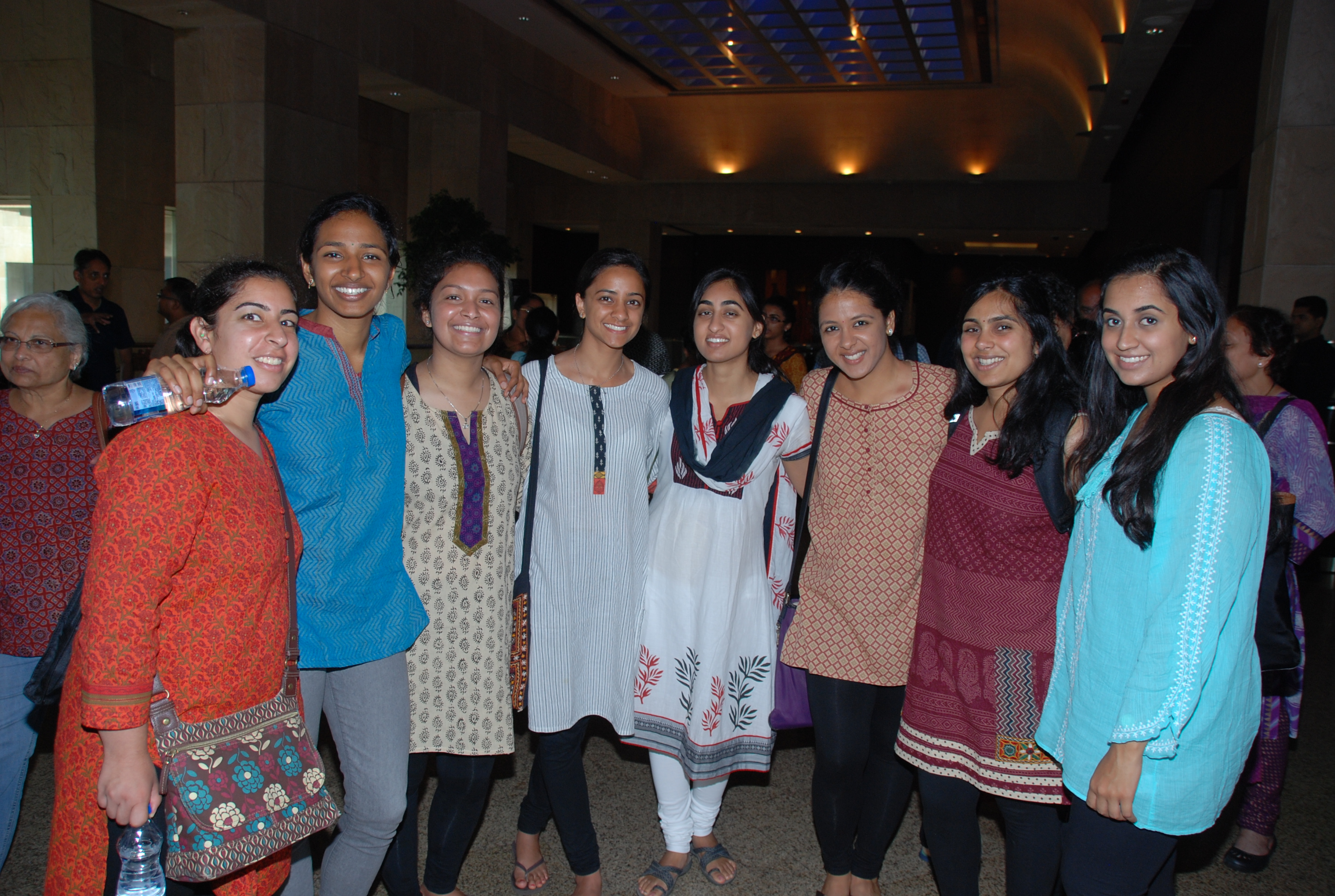
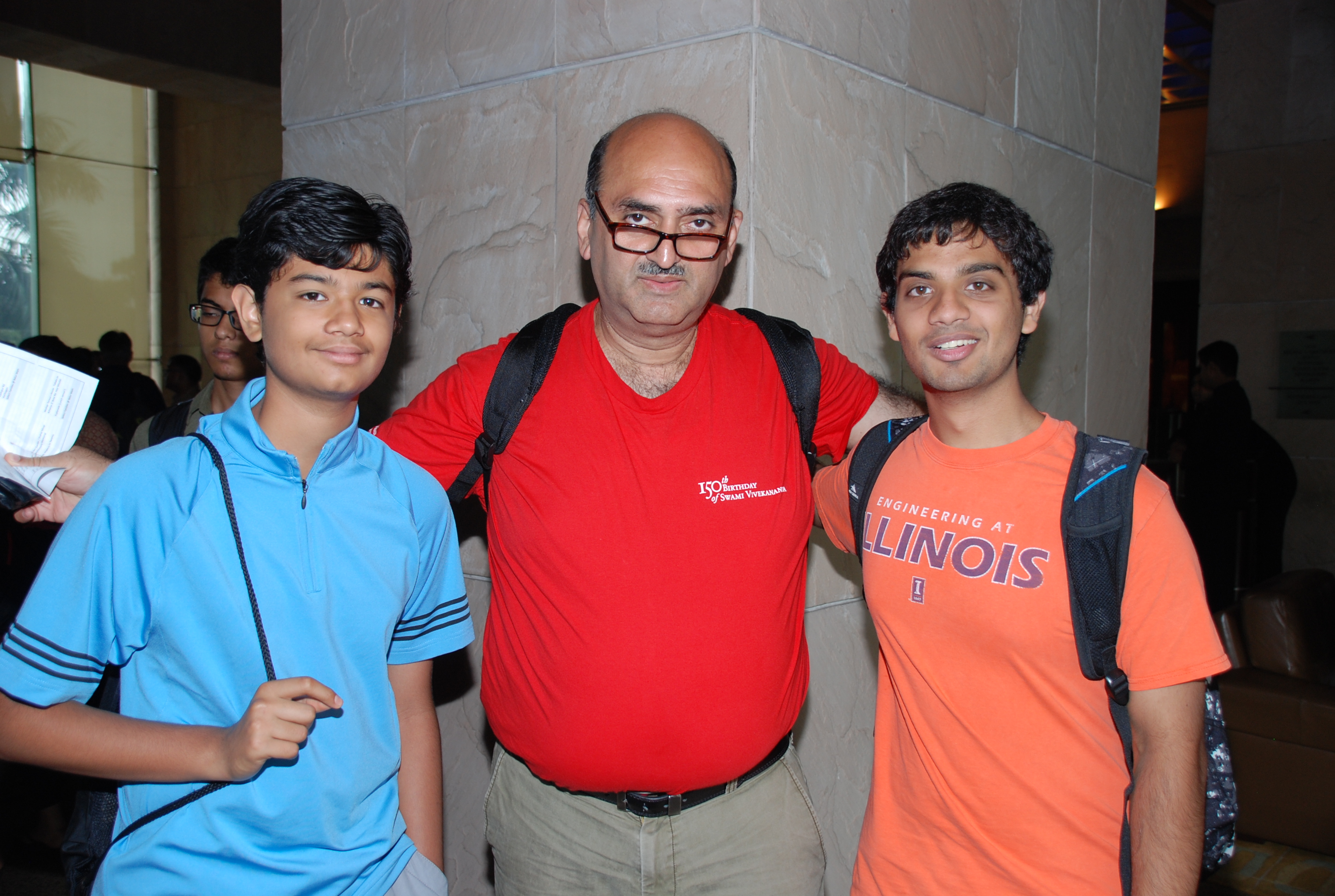
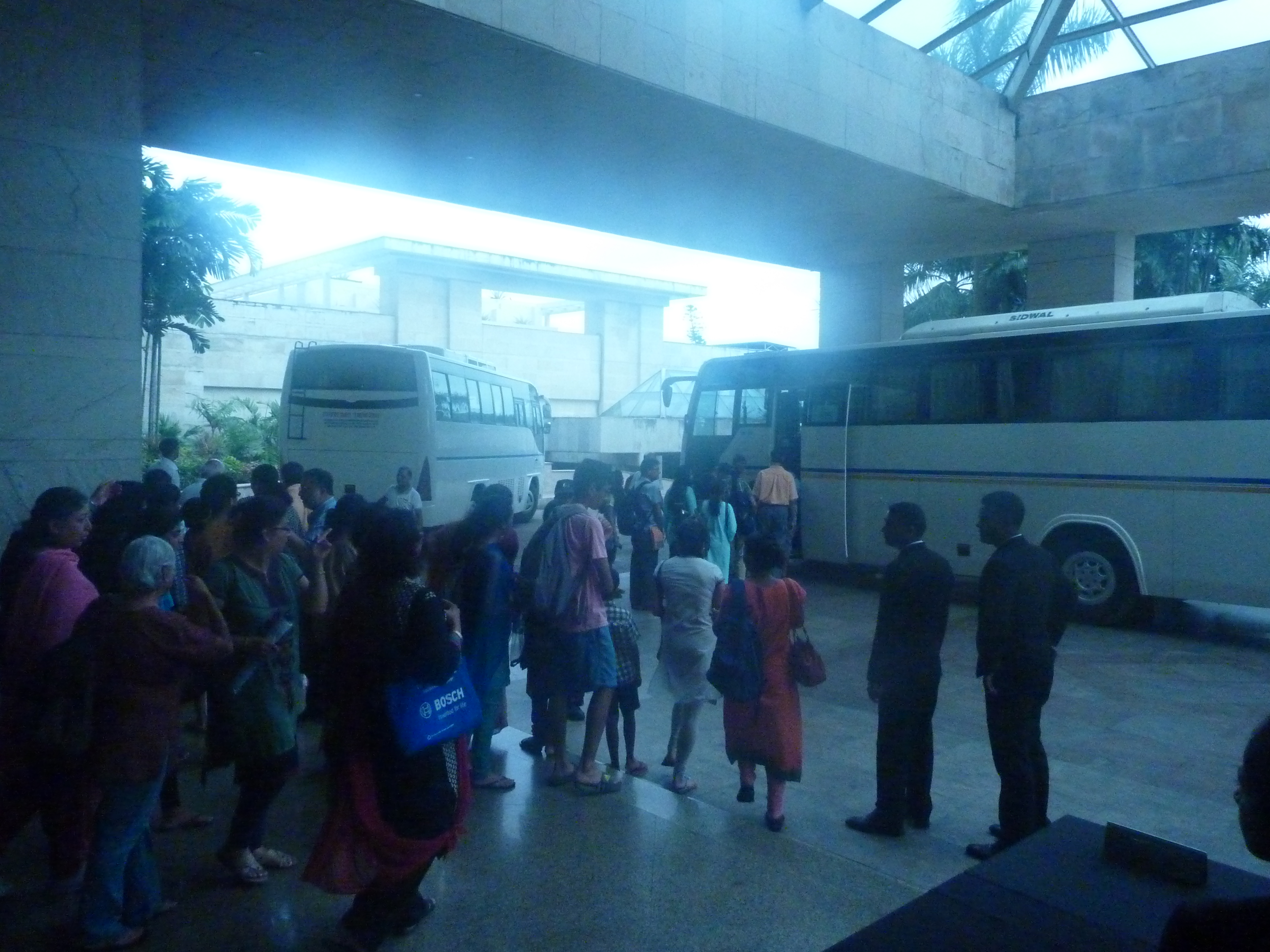
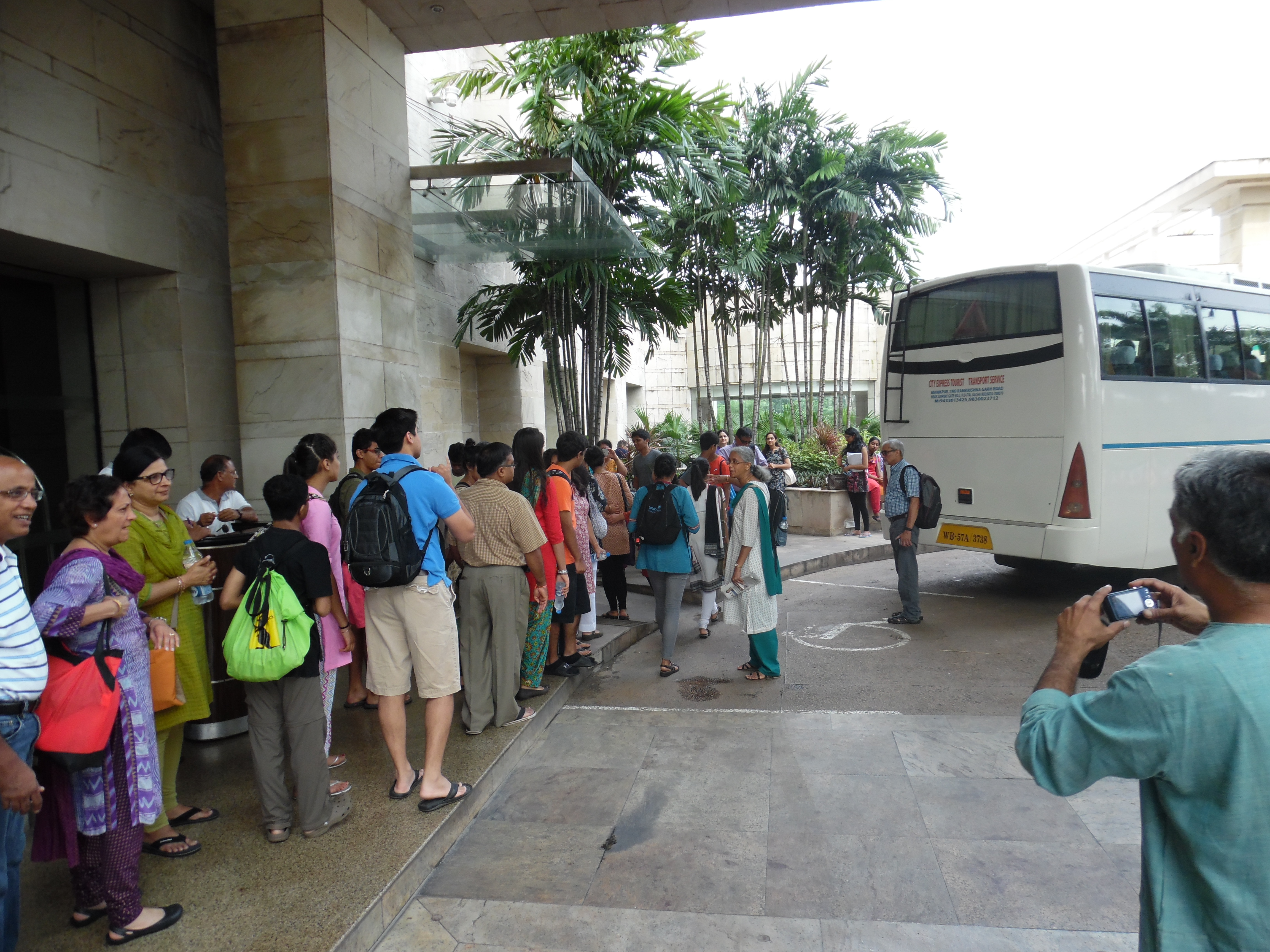
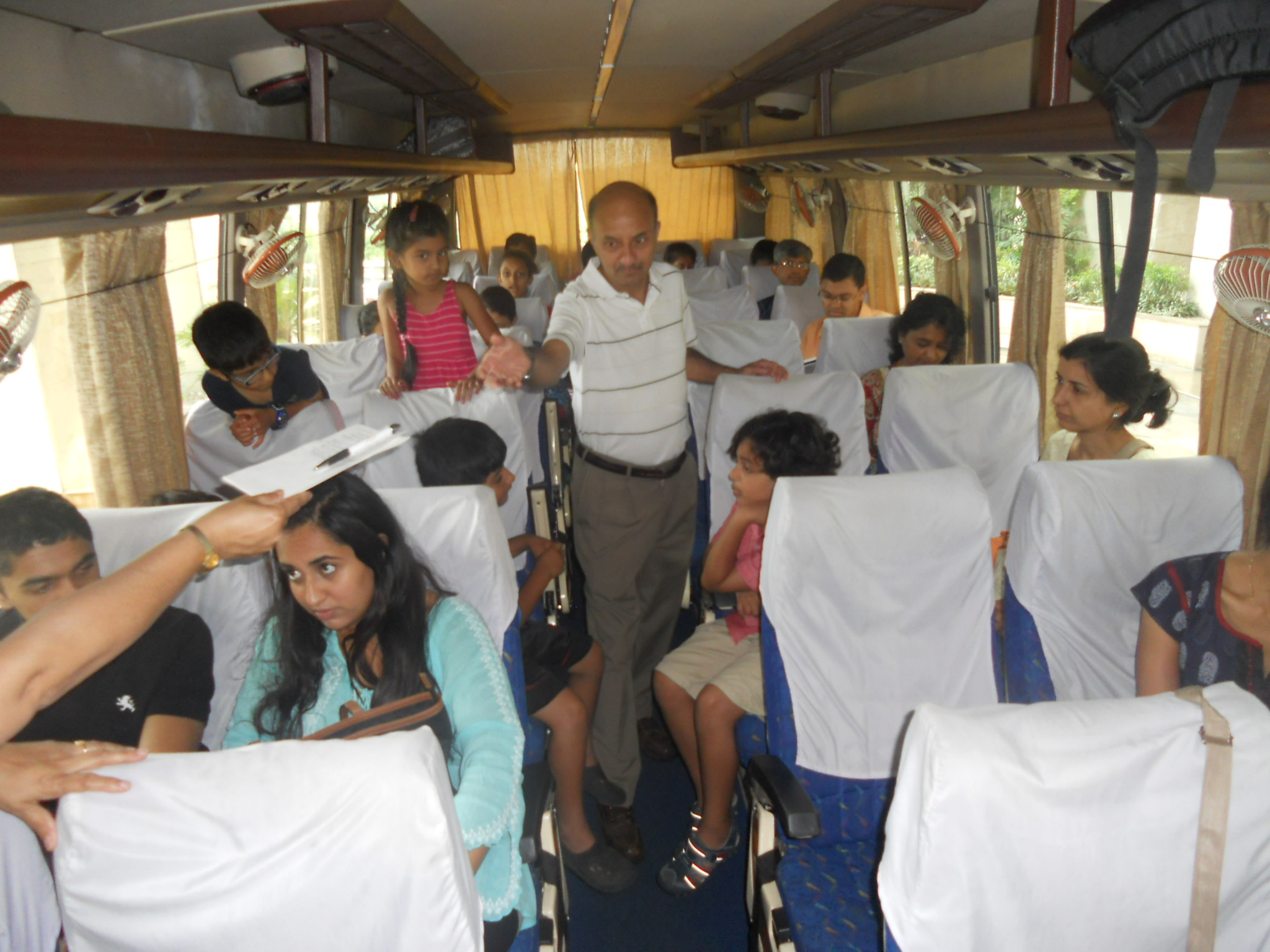
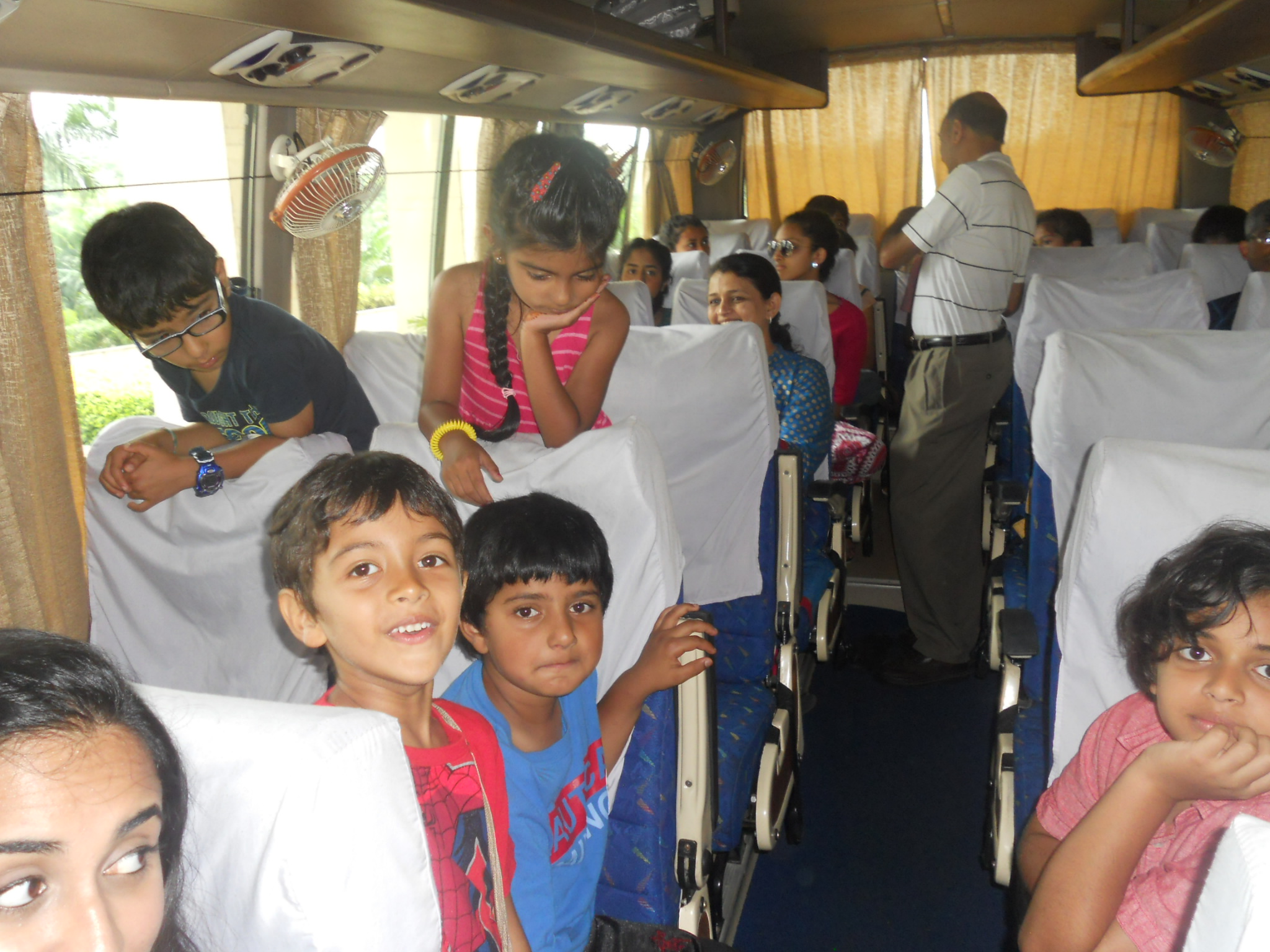
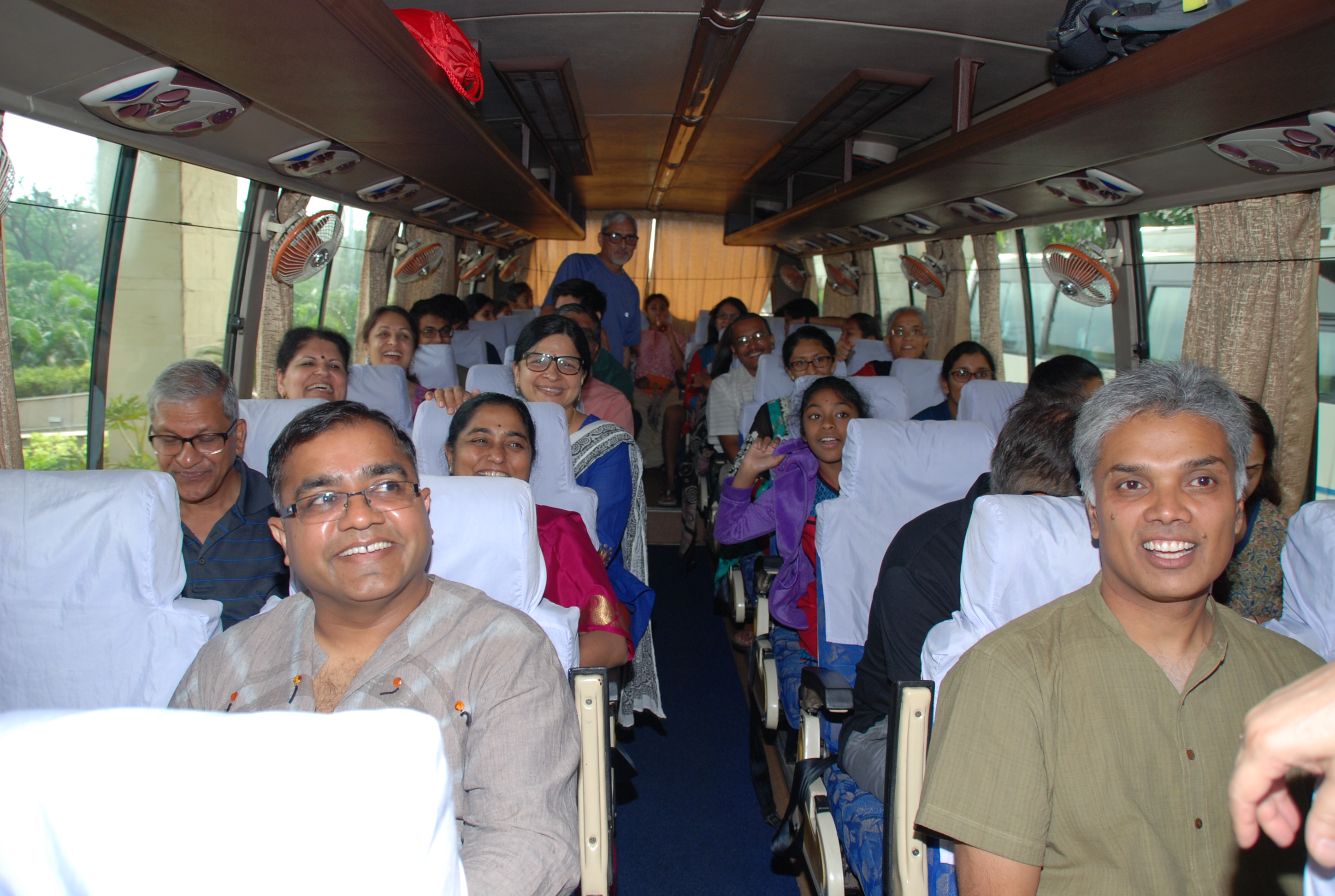
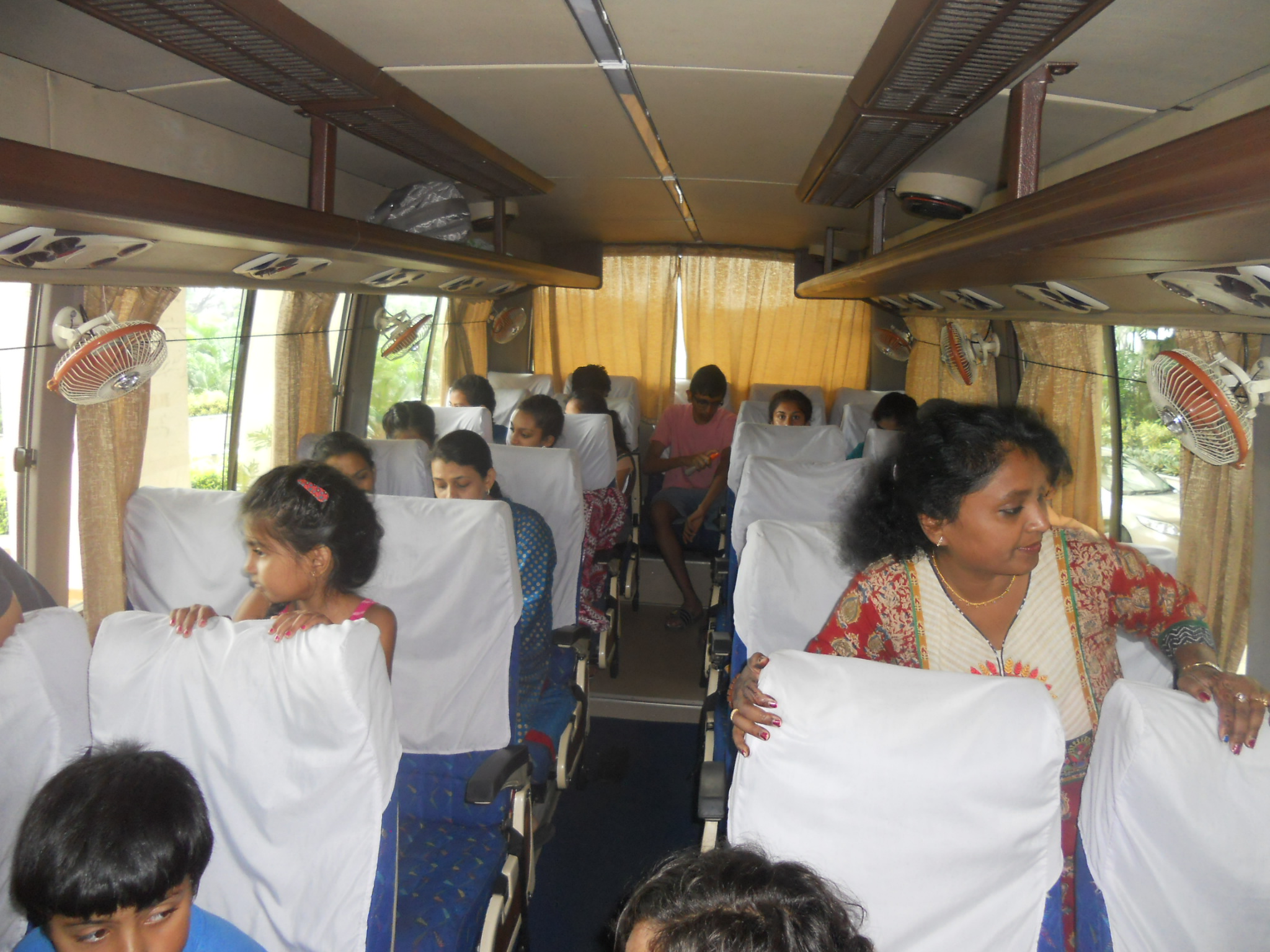
At about 6:45 a.m. everyone met in the hotel lobby to start boarding the buses.

Getting ready for the Buses:

E IMG_1208 E IMG_1206 SAM_0093 20150805_144429

DSC_0371 DSC_0372 DSC_0373 DSC_0376 DSC_0375 DSC_0374 DSC_0378 DSC_0382 P1060175 SAM_0098

Challenging Day for Planning:

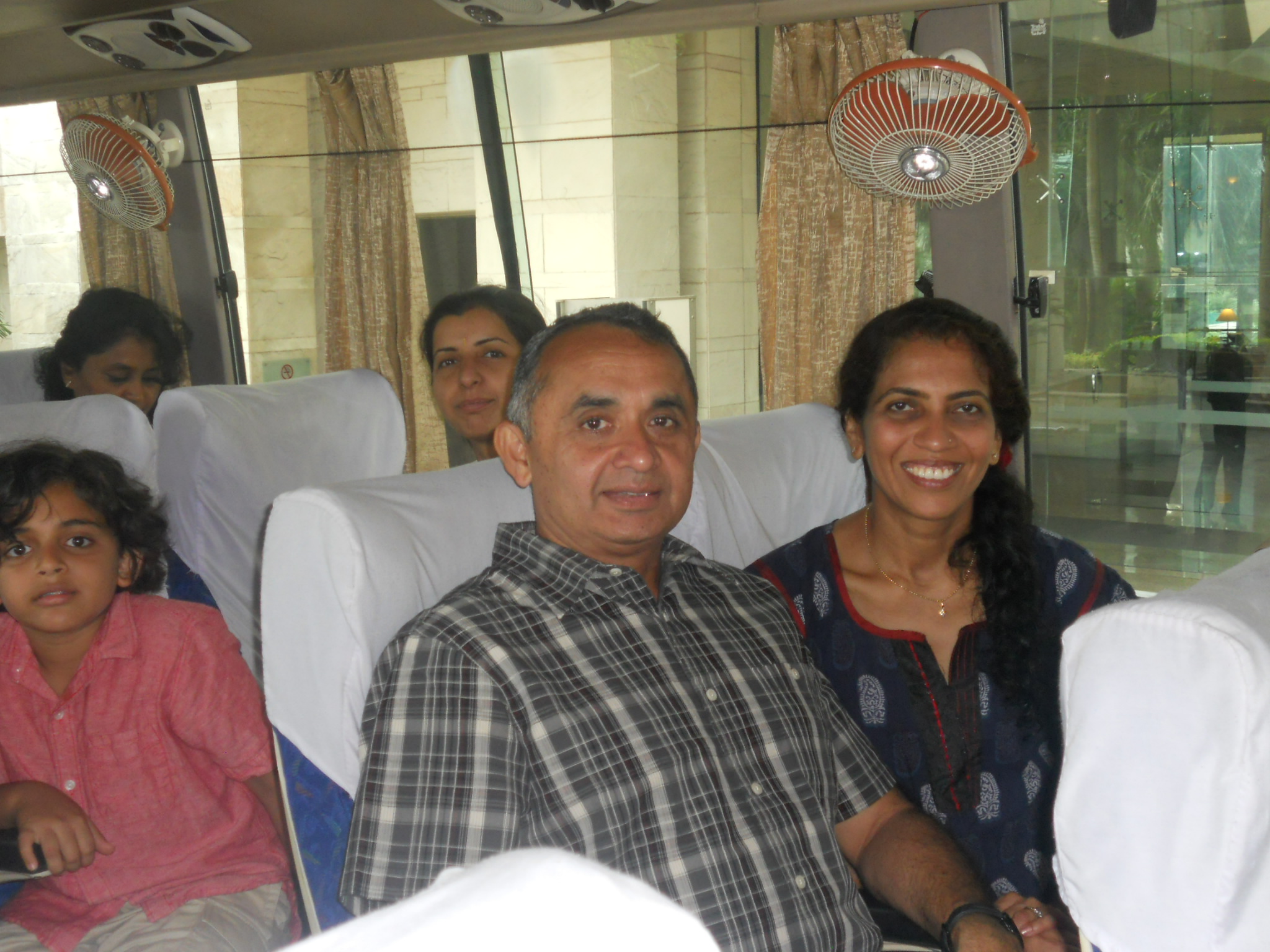
Today’s journey was a bit more challenging than that of the first two days. The places we were visiting today did not have parking places for buses and were located in the middle of the city where the narrow roads could not fit out big buses.  However several factors set us up for success: 1) Deba Uncle’s familiarity with the streets of Kolkata and his excellent planning 2) the morning briefing with the drivers to plan the specific route of travel using maps 3) help of Club7 members and 4) the discipline of our group.
E DSCN0045 E DSCN0046 E DSCN0048 E DSCN0047 E DSCN0049

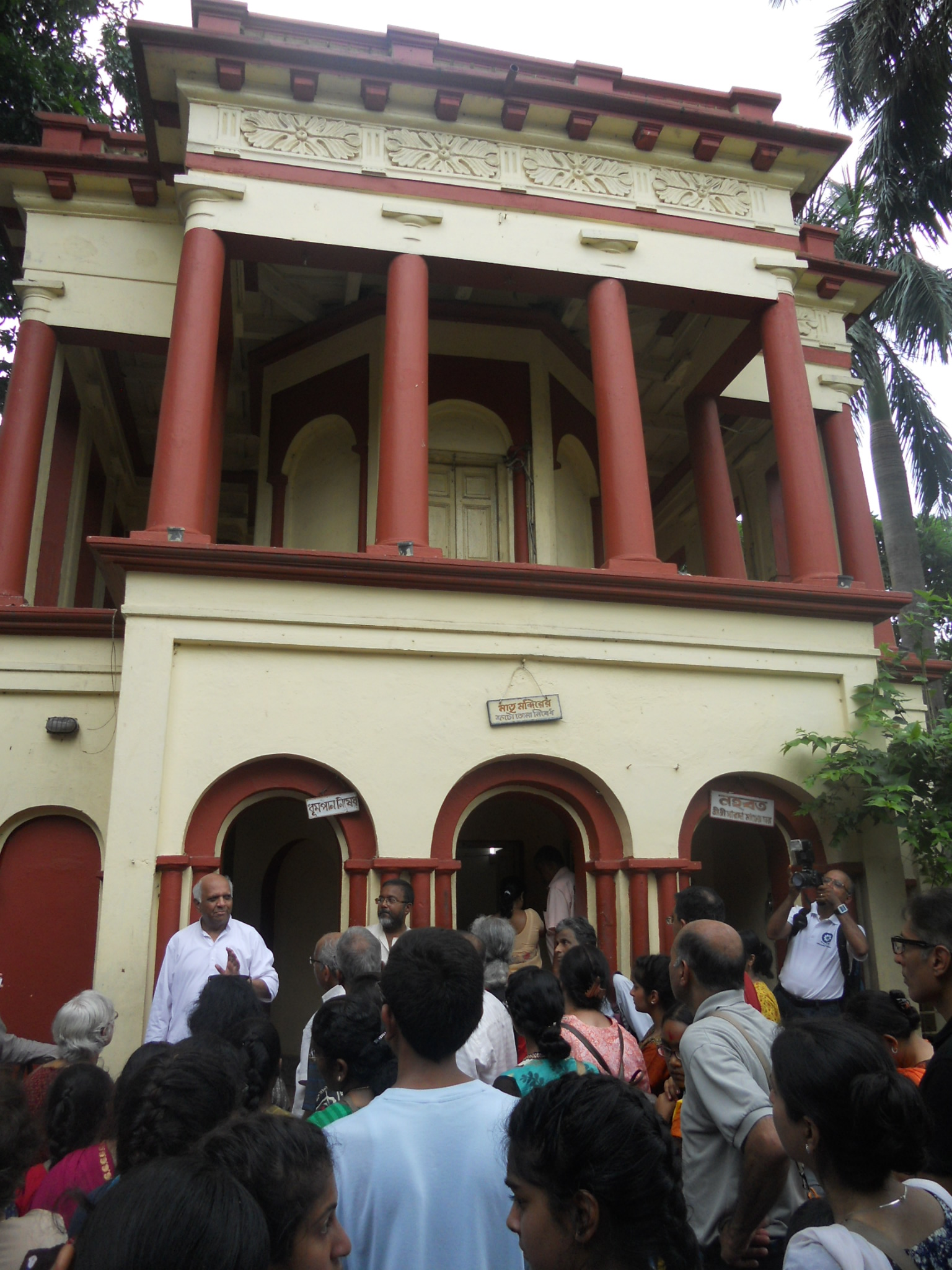
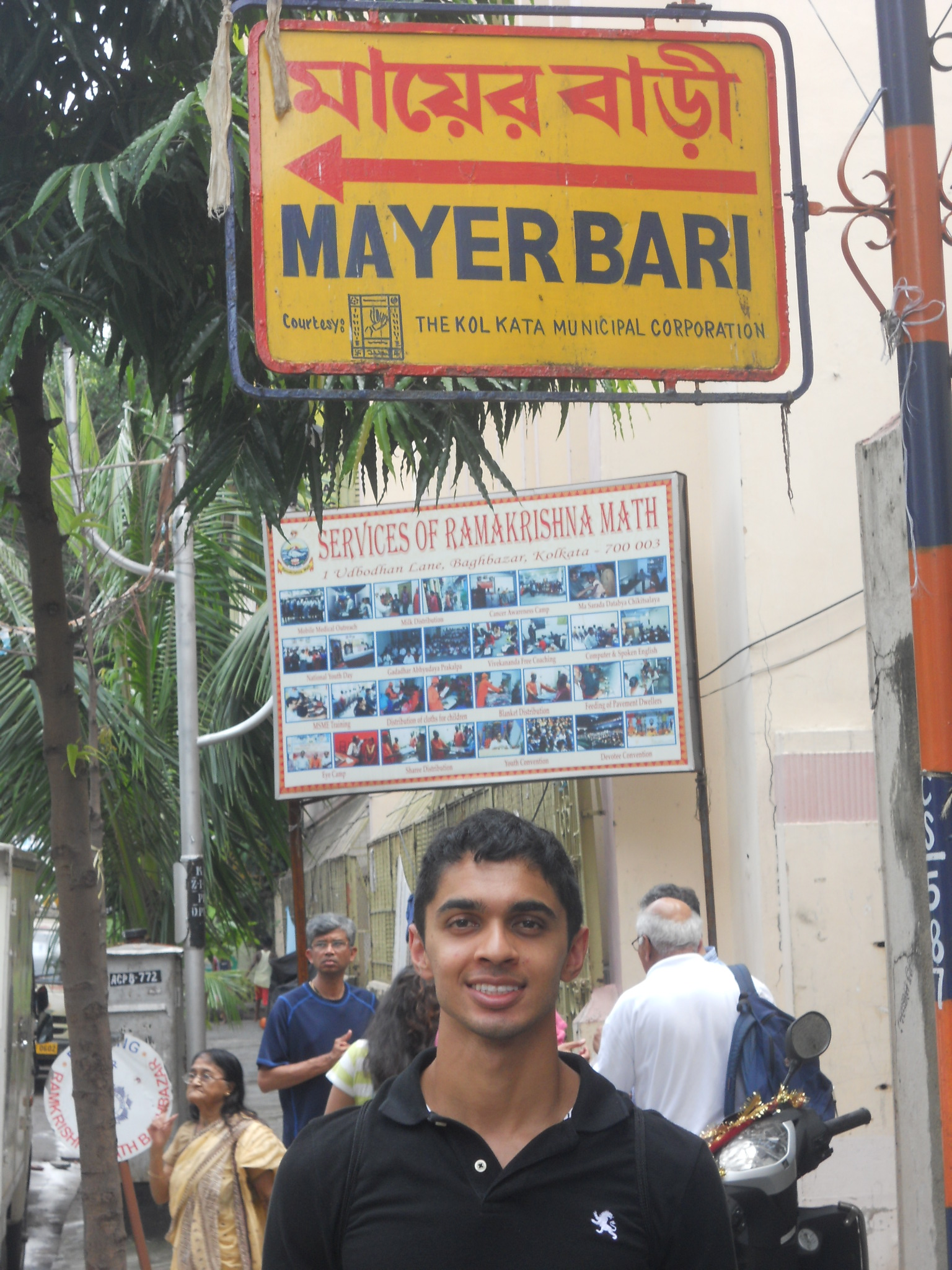
Our first two stops for the day were “Mayer Bati” (also known as “Mother’s House” or “Udbodhan”) and Balaram Mandir. Because Udbodhan is relatively small, we divided our pilgrims into two groups, each of which would visit Mayer Bati and Balaram Mandir at different times.

_1c Can see Mayer Bari Grill _1b On the way to Mayer Bari

“Mayer Bati” or “Udbodhan”:

After Sri Ramakrishna passed away in 1886, Holy Mother lived in Kamarpukur and Jayarambati. However, whenever she visited Kolkata, Holy Mother would stay in the houses of devotees or rented houses. Seeing this, Swami Saradananda (Sarat Maharaj), who had a great respect and love for Holy Mother, wanted to have a permanent place for Holy Mother in Kolkata.
1 1a Plaque3

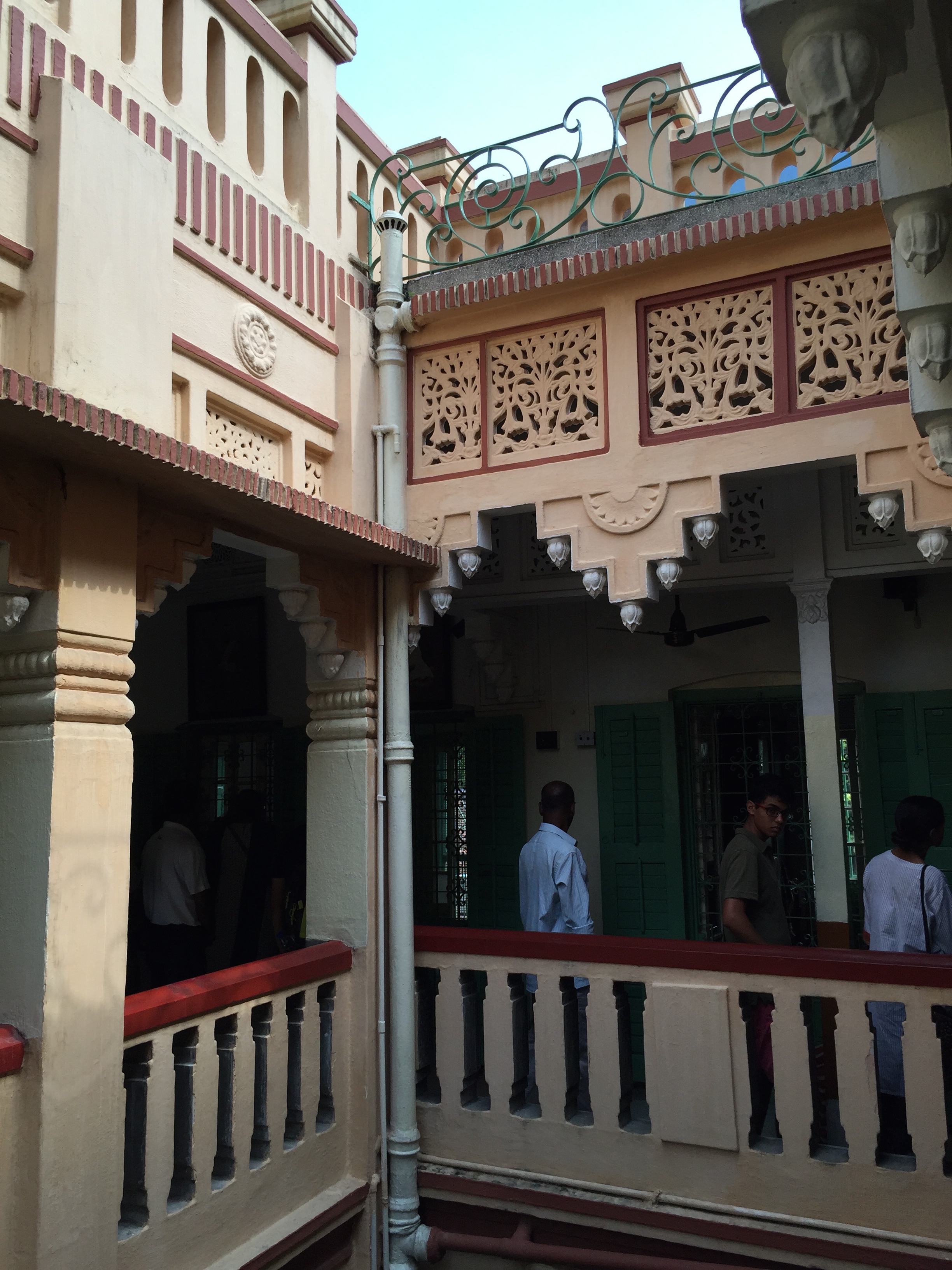
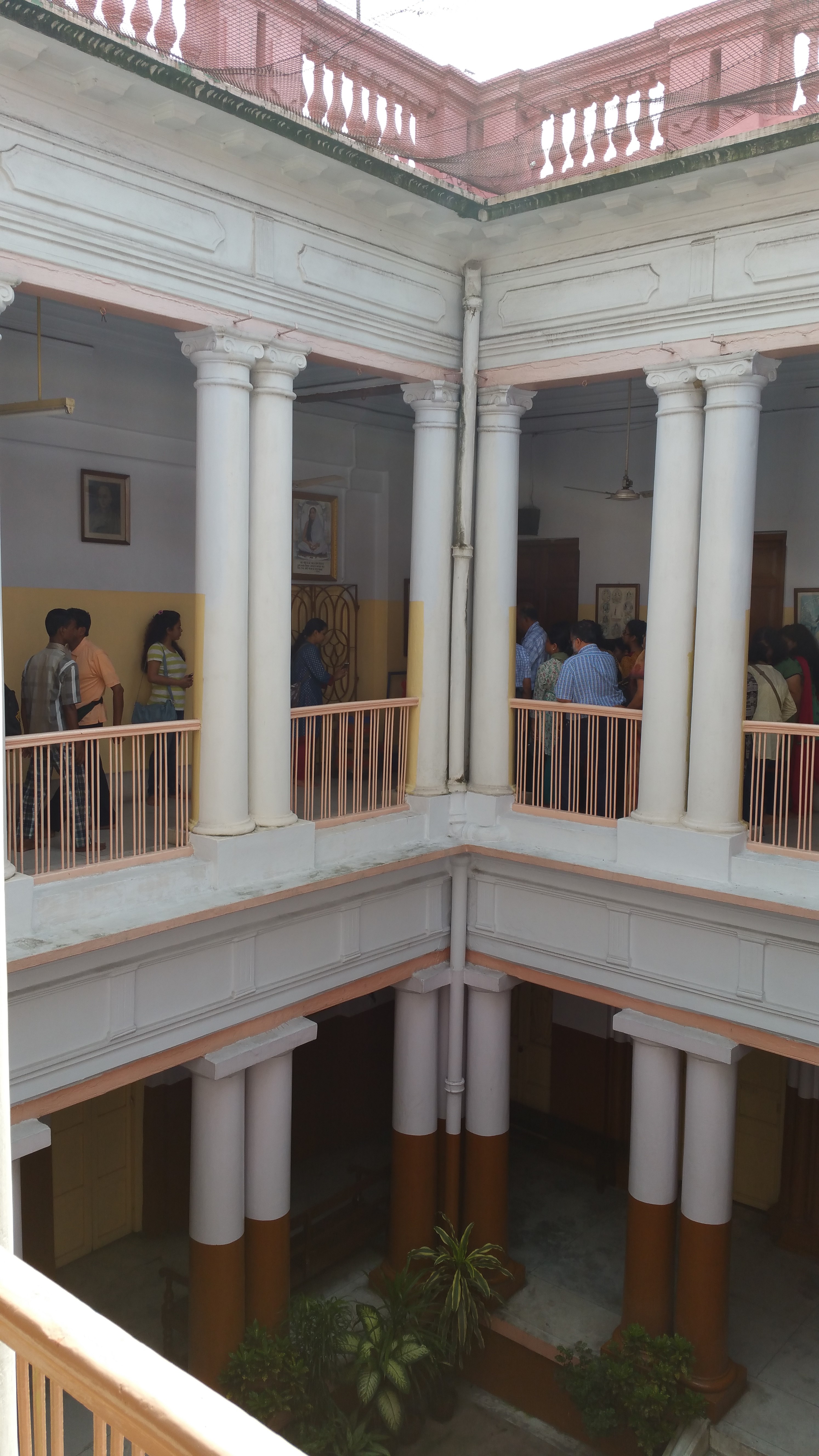
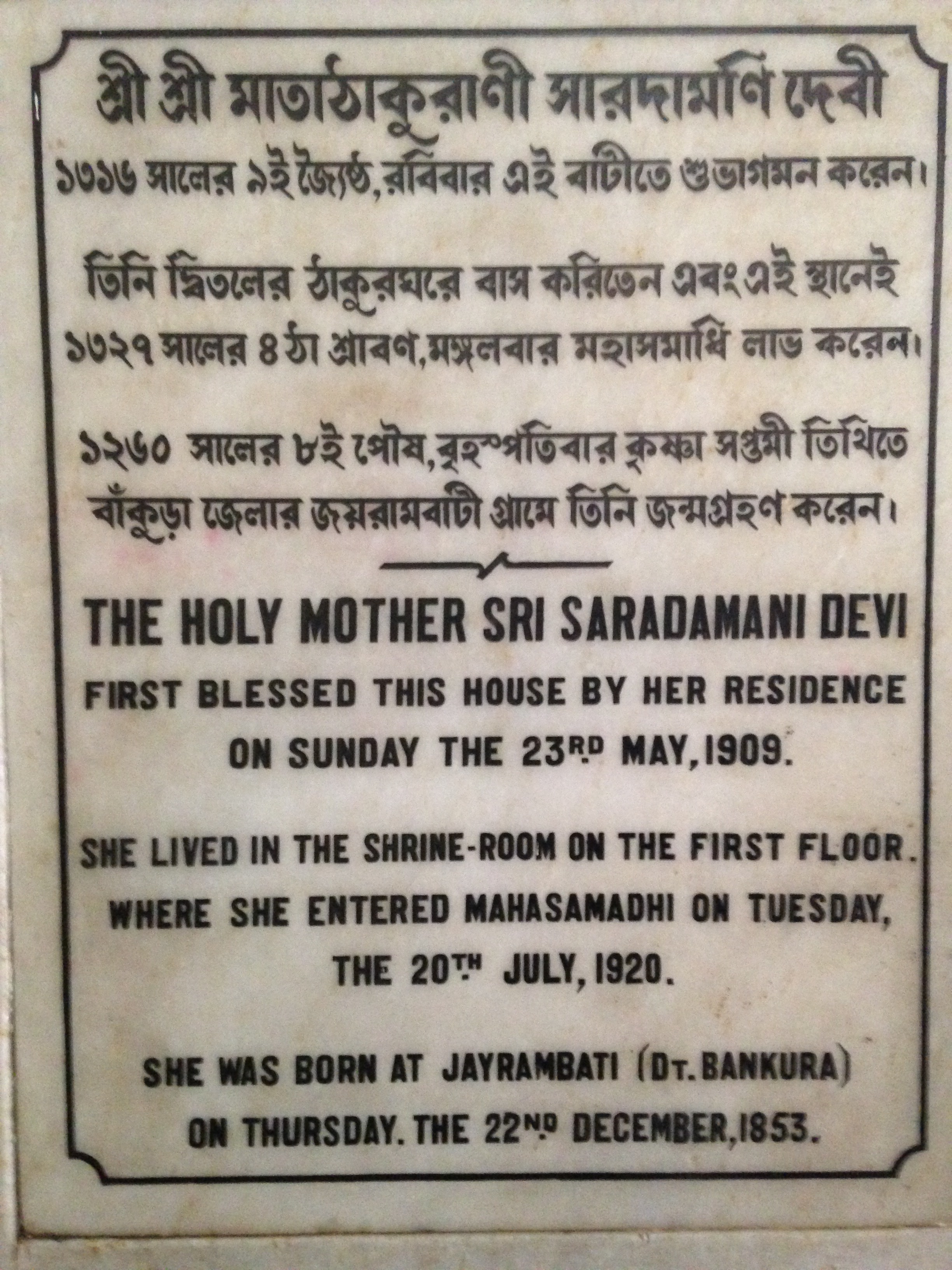
He incurred a loan and built a house at 1 Udbodhan Lane, Baghbazar, Kolakata. This house is now referred to as “Mayer Bati” or “Udbodhan”. On May 23, 1909, Holy Mother entered the house for the first time. The house itself was originally built before an open ground from which one was able to see the river Ganga from the terrace of the house.  She lived there until 1920 with the exception of when she went to Jayaram Bati or went out for pilgrimage. Holy Mother lived with her relatives and women devotees on the first floor of the house, and her monastic attendants and other disciples lived on the ground floor.  After Sri Ramakrishna passed away, Holy Mother was the great source of inspiration for all of the devotees of Sri Ramakrishna including Swami Vivekananda, Rakhal Maharaj, Swami Saradananda, Mahendranath Gupta (M.), Nag Mahashay, Girish Chandra Gosh, Sister Nivedita, and others. All of these devotees would visit Udbodhan often.

A couple of important things that are not to be missed in Udbodhan:

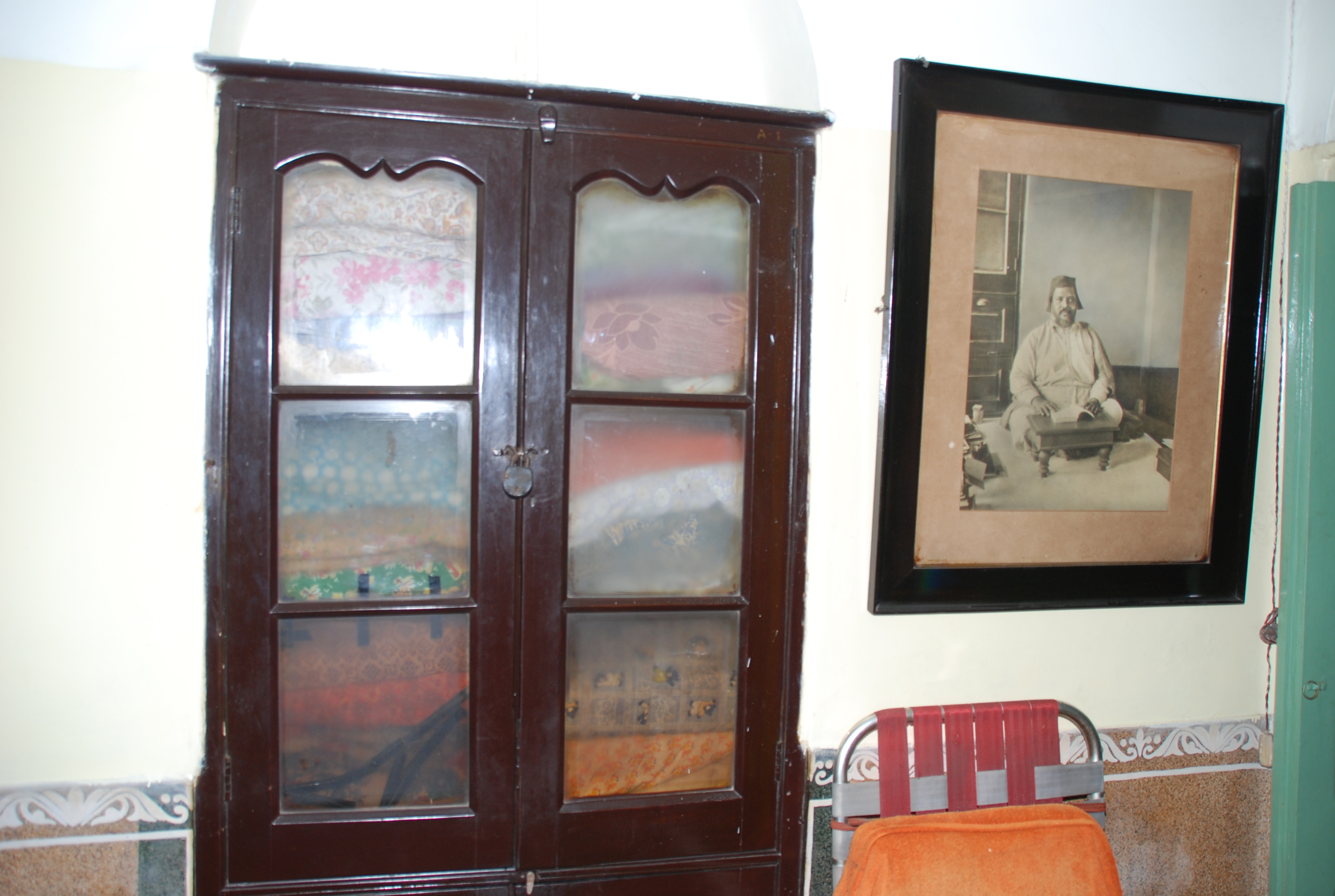
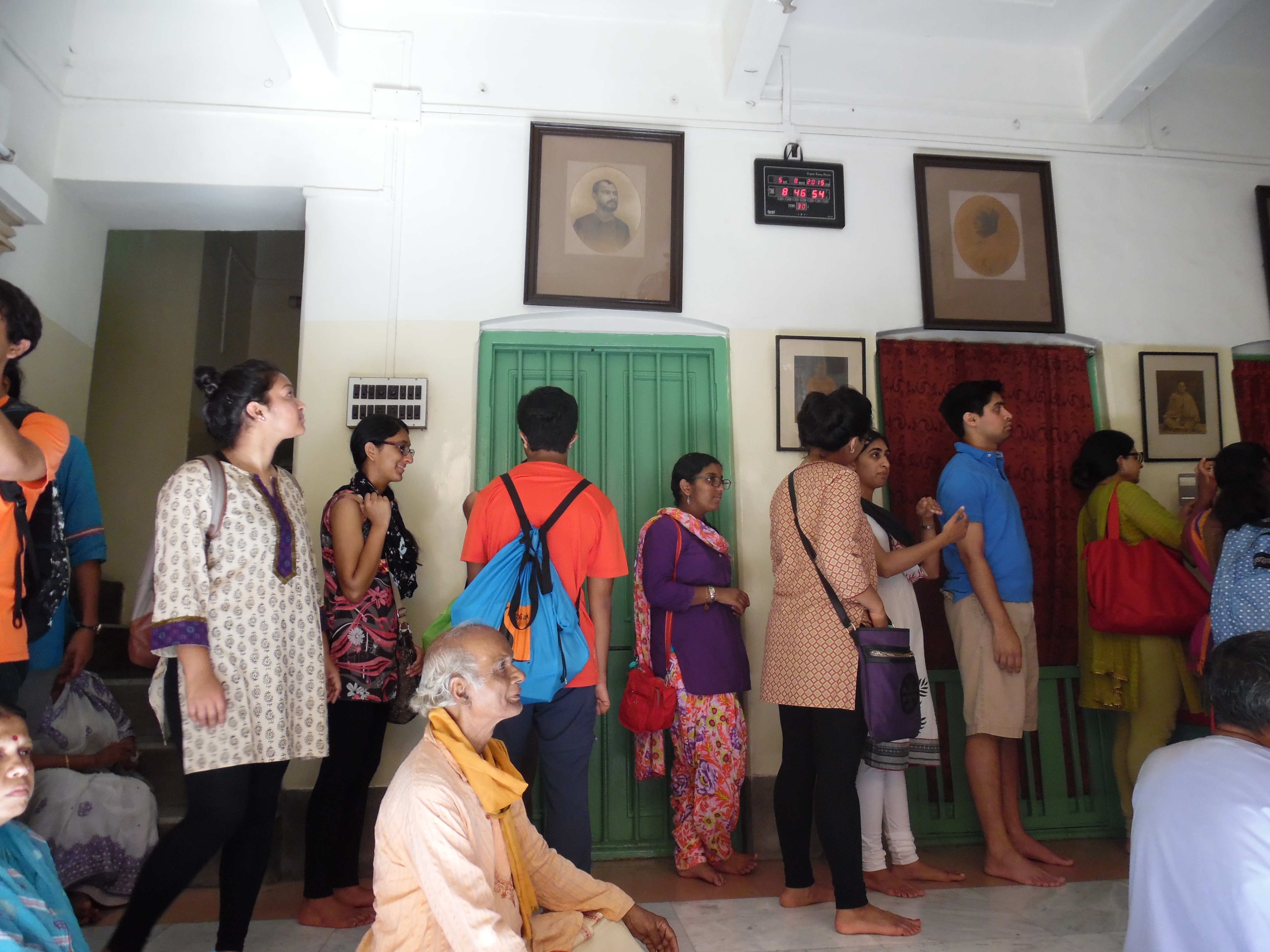
(1) Swami Saradananda’s room on the first floor:  As we entered the house, we saw a small room on the left hand side, which belonged to Swami Saradananda.
2 Swami Saradananda's Cabinet and Office

In this room we see where he actually used to sit. In one picture we can see Swamiji writing on a small desk in this spot.   Swami Saradananda considered himself the ‘gate keeper’ of Holy Mother’s house. He also took care of all the needs of Holy Mother. Swami Saradananda had many responsibilities both as the General Secretary of the Ramakrishna Order and in taking care of Holy Mother. It is amazing that, despite all the commotion of the household around him, Swami Saradananda, sitting on the first floor, wrote an inspiring book titled the “Sri Ramakrishna Lilaprasanga” (It English Translation is “Sri Ramakrishna, The Great master”).  Of the commotion, he used to say to himself, “Do not listen to unnecessary things.”  Swami Saradananda used the money he collected from the sale of the book to pay the loan he had incurred for Udbodhan.

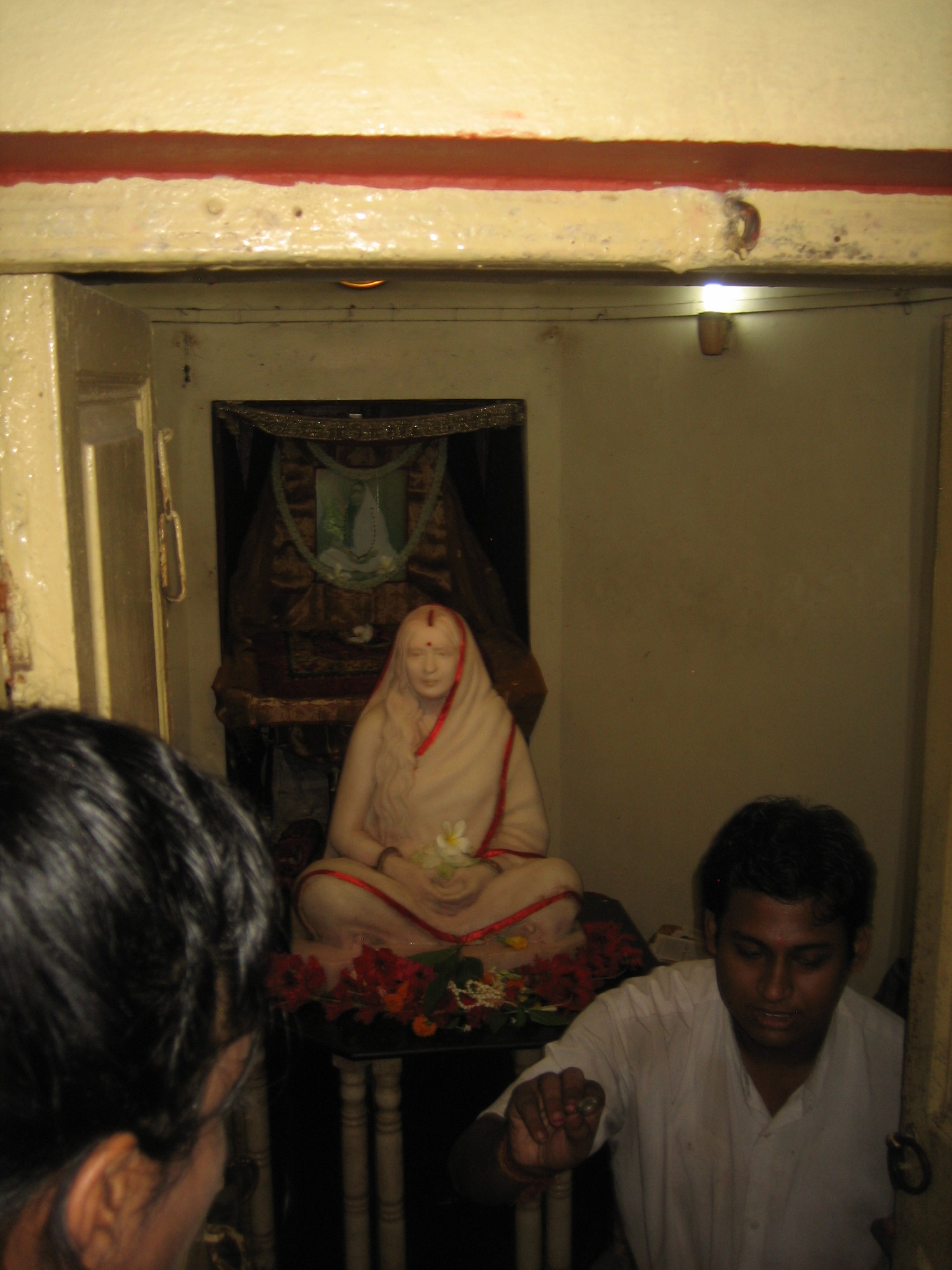
(2) Holy Mother’s Shrine:  When we climbed up the staircase of the house, we were able to see Holy Mother’s Shrine.
4

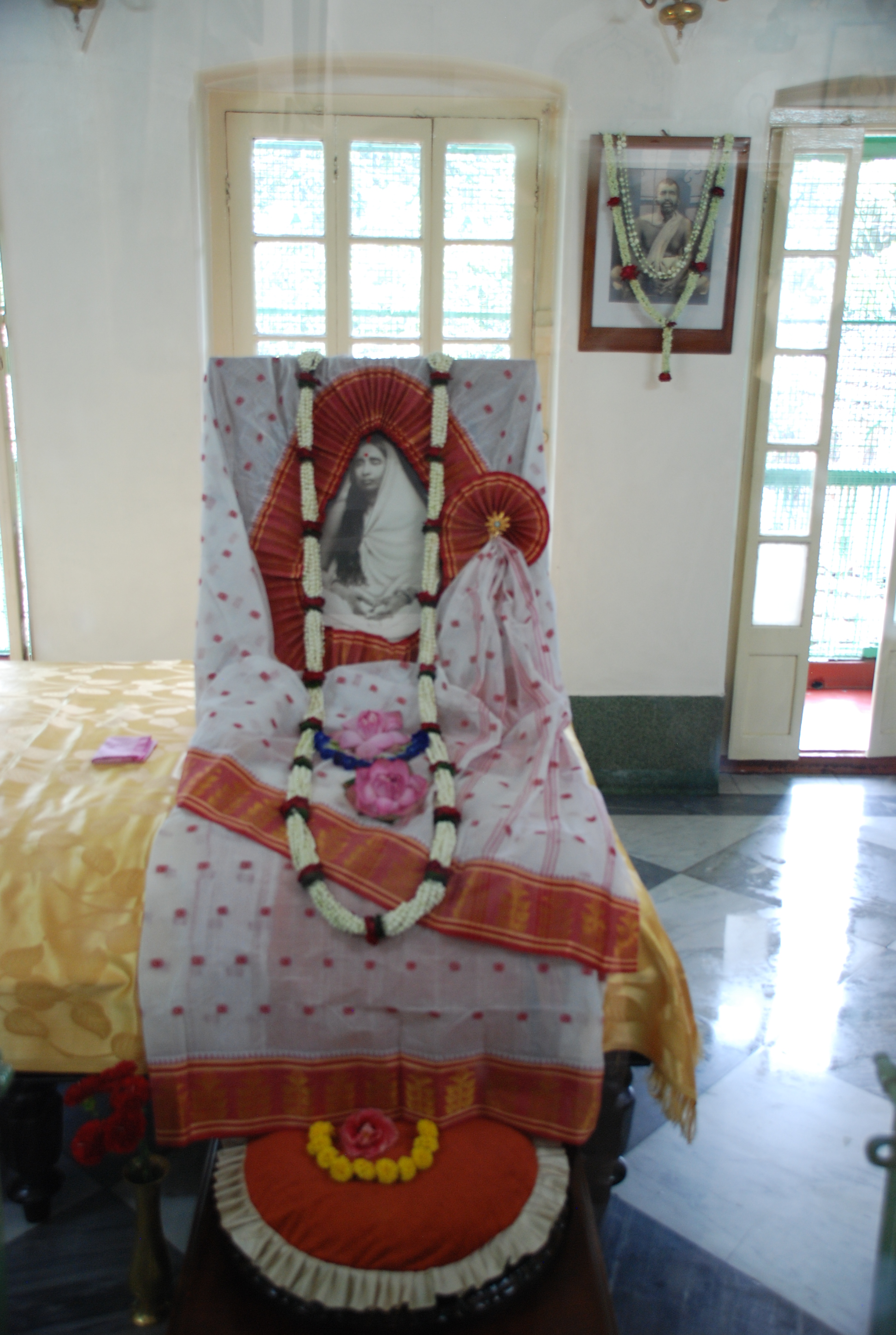
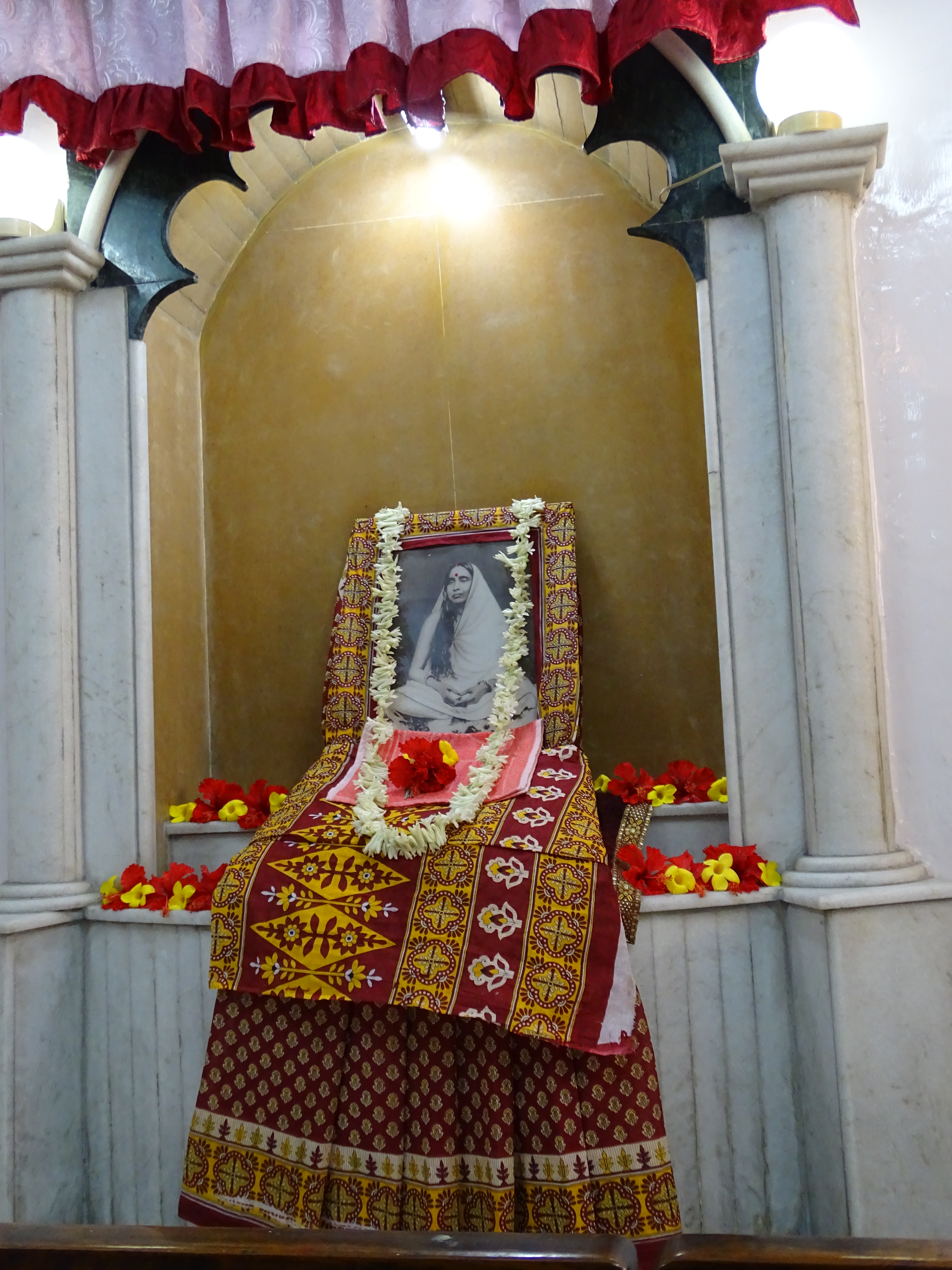
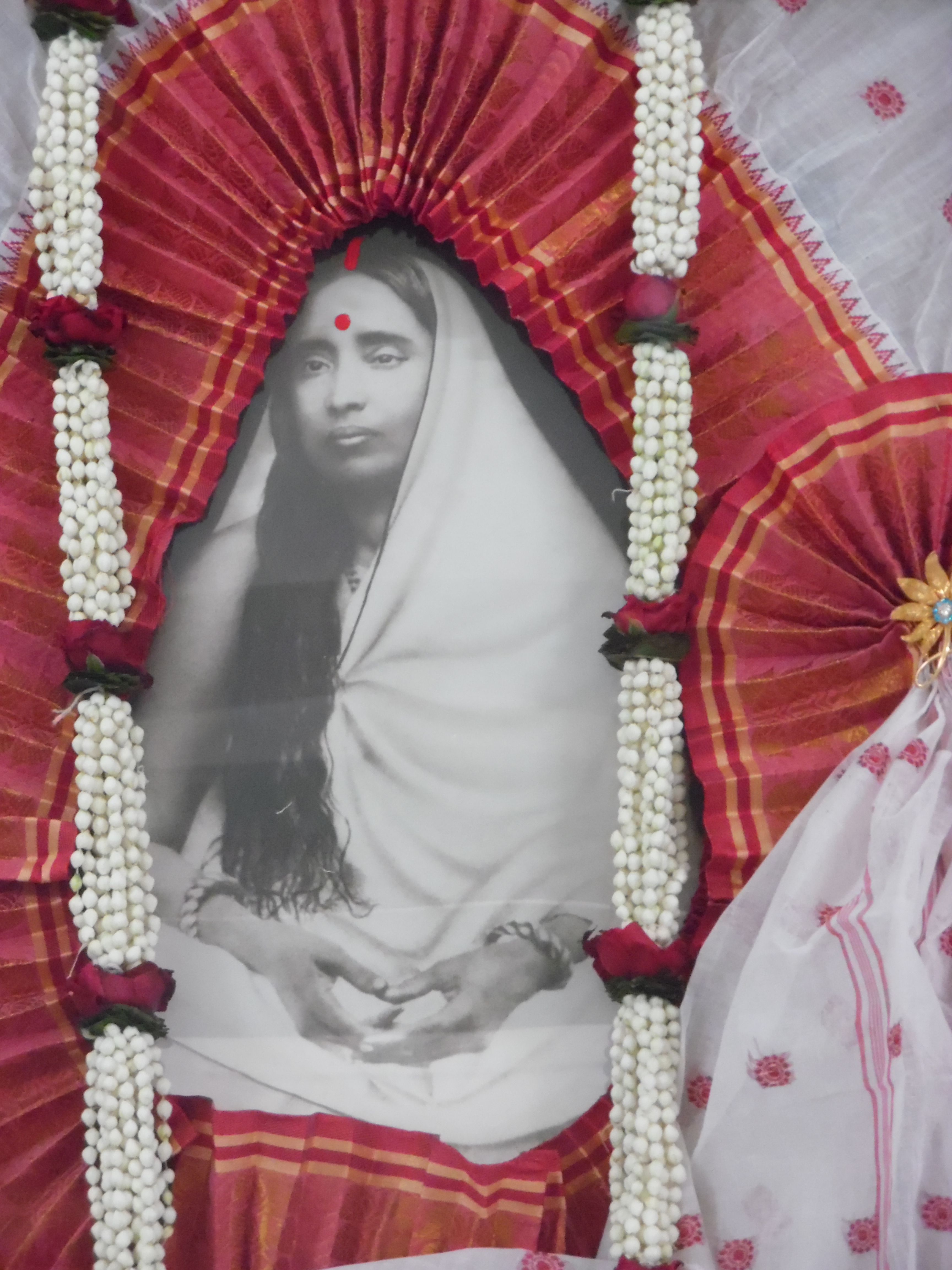
Initially, this room was a shrine to worship Sri Ramakrishna. Holy Mother made this room her living quarters because she did not want to live away from Sri Ramakrishna.  Through the window of Holy Mother’s shrine, we see a beautifully adorned picture of Holy Mother on the bed that she had used.  Below the picture lie Holy Mother’s footprints.
SAM_0112 DSC_0393

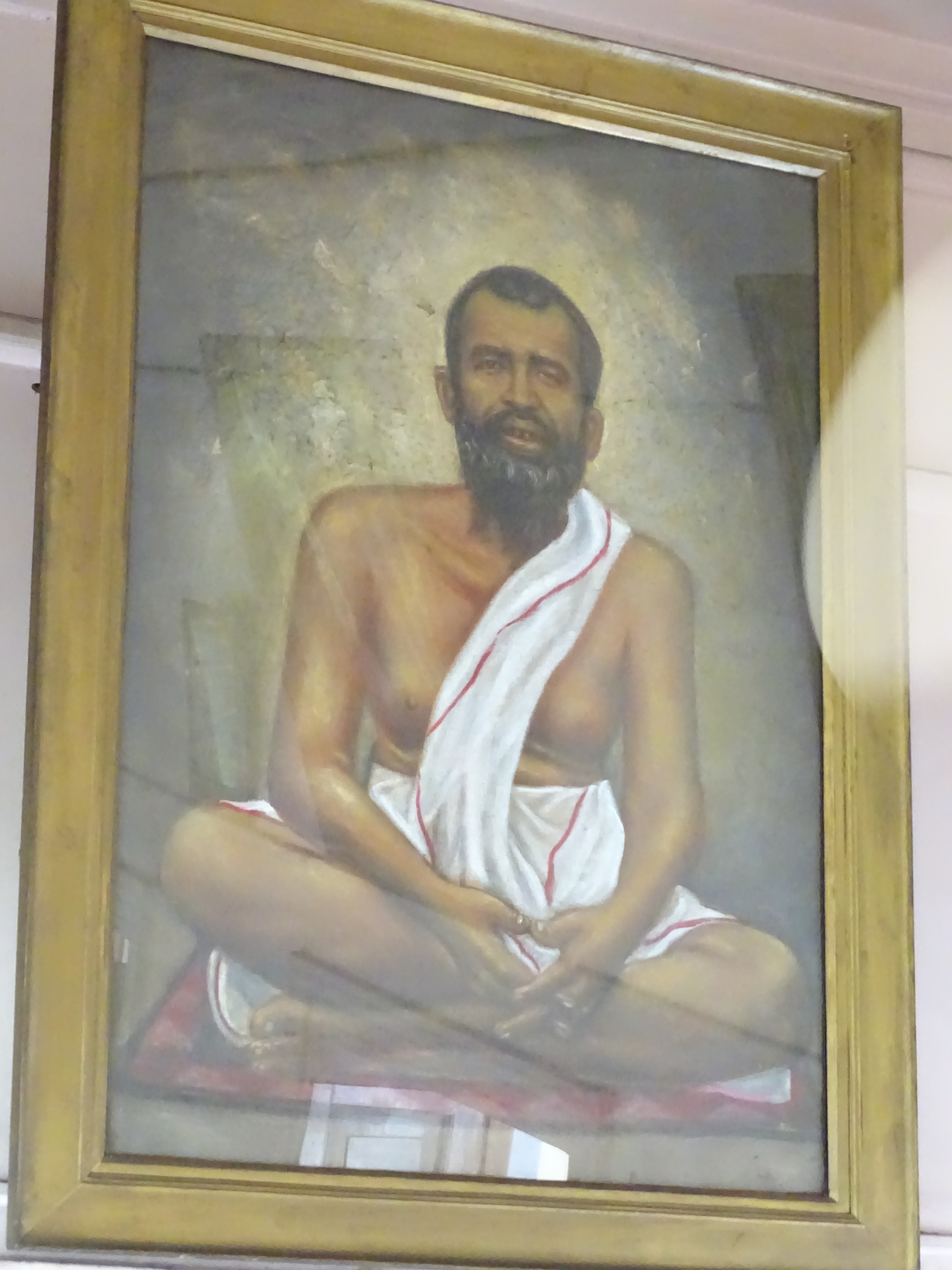
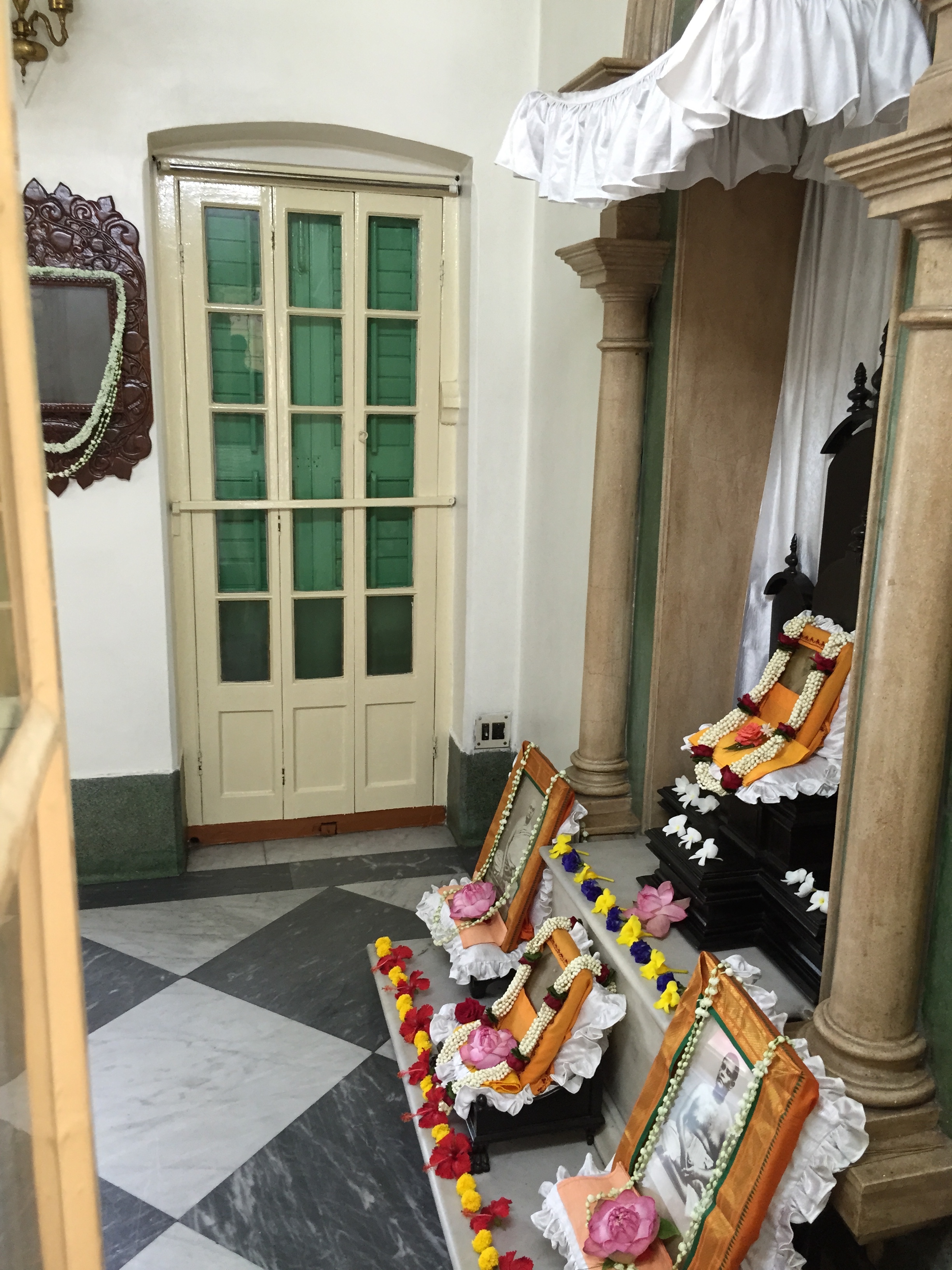
On the back wall, we saw Sri Ramakrishna’s picture adorned with a garland.
IMG_0650

To the right of this picture was an altar on which there were two pictures of Sri Ramakrishna – one bigger picture place on the top part of the altar and a small picture on the bottom part of the altar – and pictures of Swami Vivekananda and Swami Saradananda. Holy Mother used to worship both of these pictures of Shri Ramakrishna. The top picture of Sri Ramakrishna remained in the shrine, while the one below it, she would carry with her for her worship whenever she travelled.
1 (2) 3

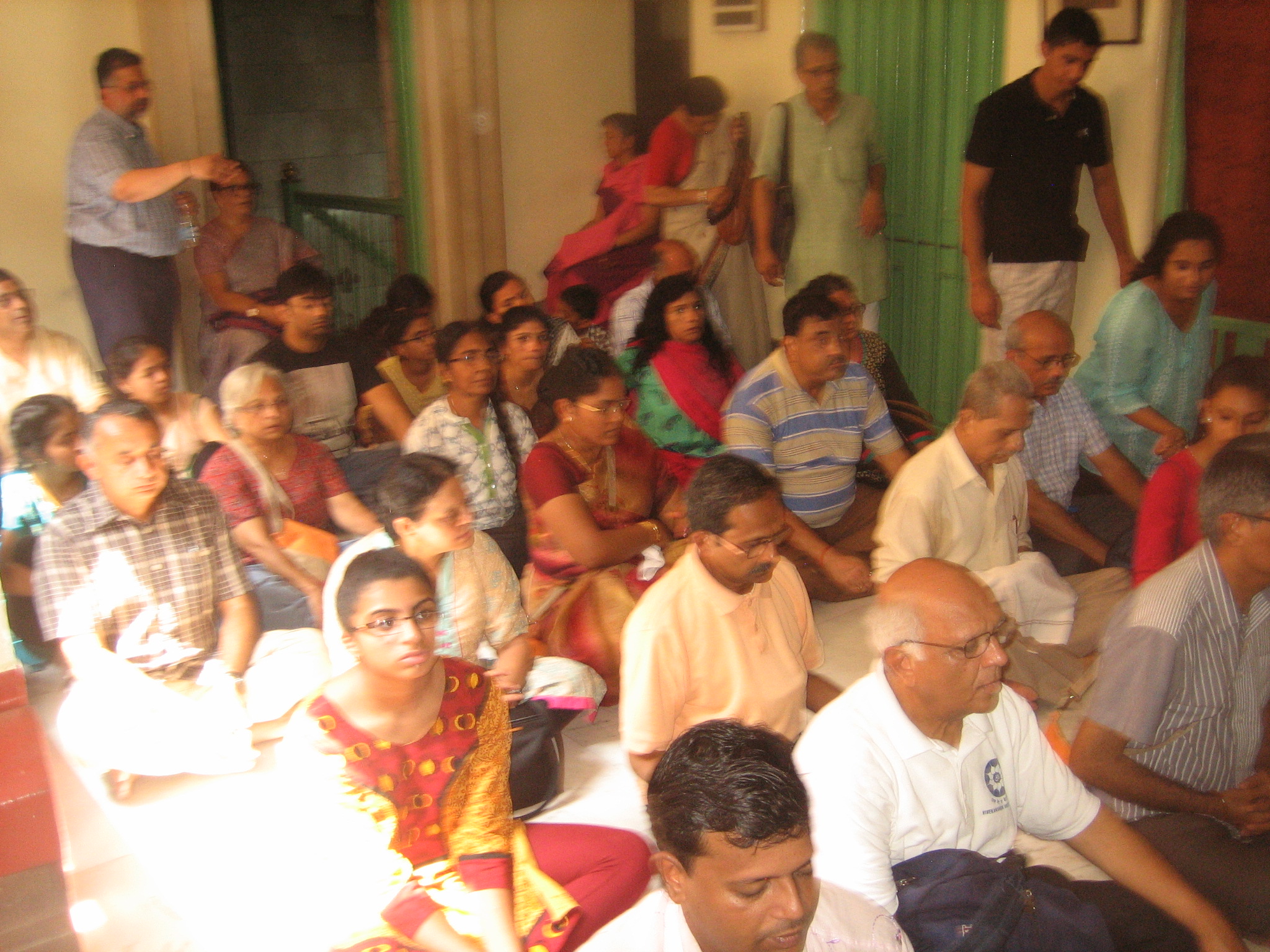
The shrine is only open at certain times for worship. If the shrine is open, devotees can offer their salutations to Holy Mother and Sri Ramakrishna and then sit down on the floor in front of the shrine to offer japa or to meditate remembering Holy Mother’s infinite love and her auspicious pure life.

(3) Memorial:  Next to the Mother’s shrine, there was another room.
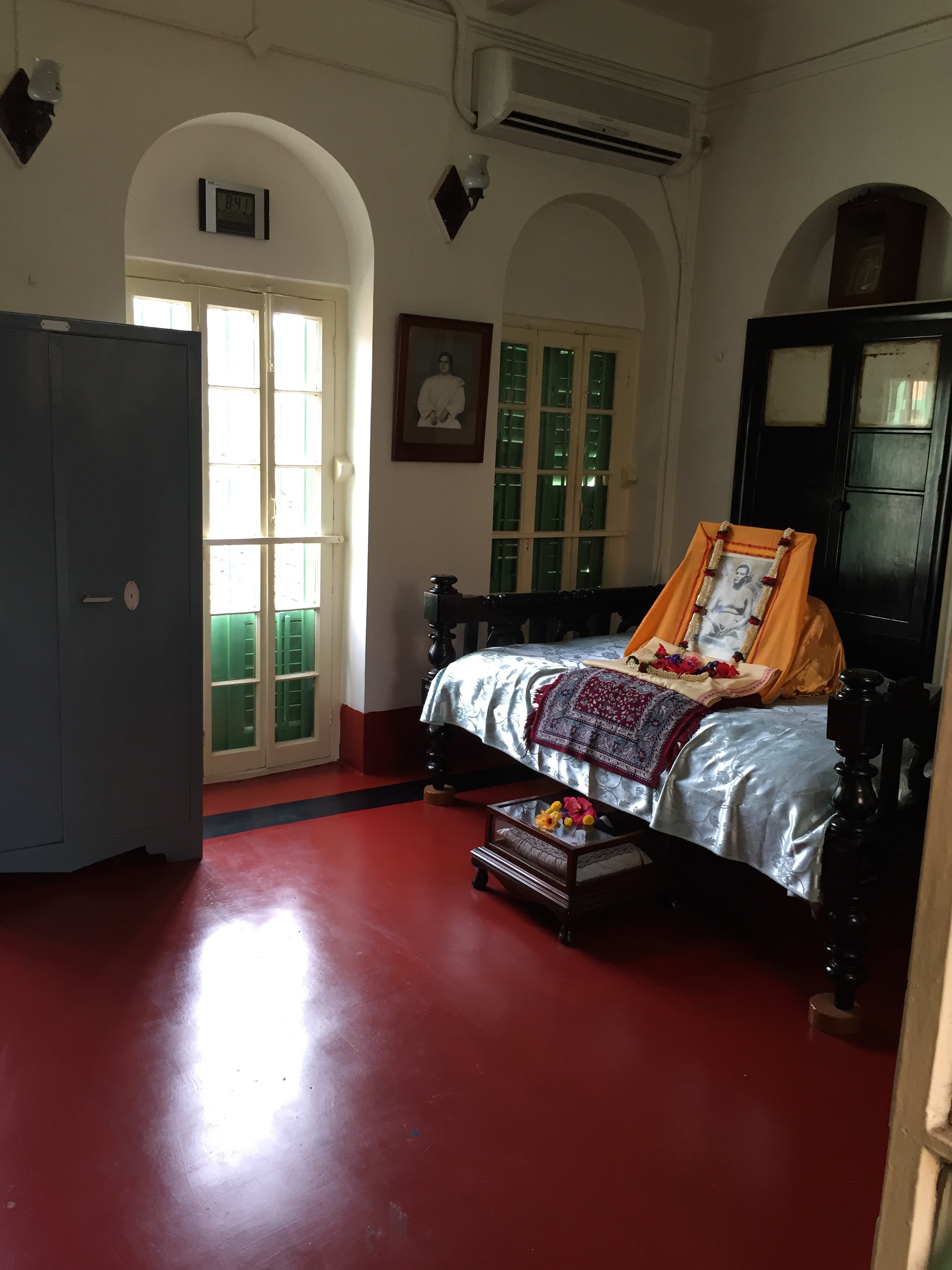
Swamiji's Room

In this room we can see the bed that was used by Swami Saradananda and a number of items that Swami Saradananda and Holy Mother used.

Vidyapith Pilgrims arriving at Udbodhan:

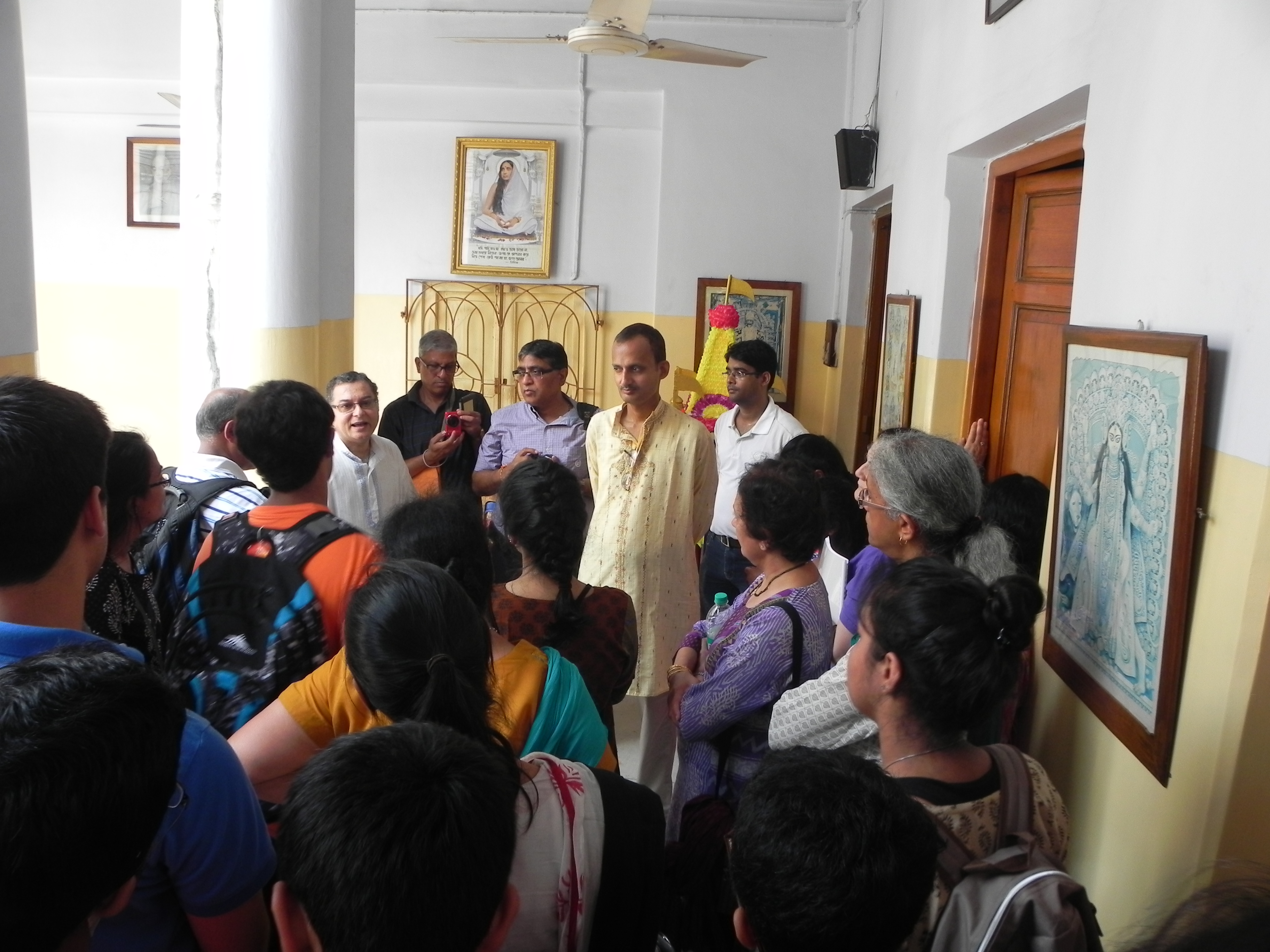
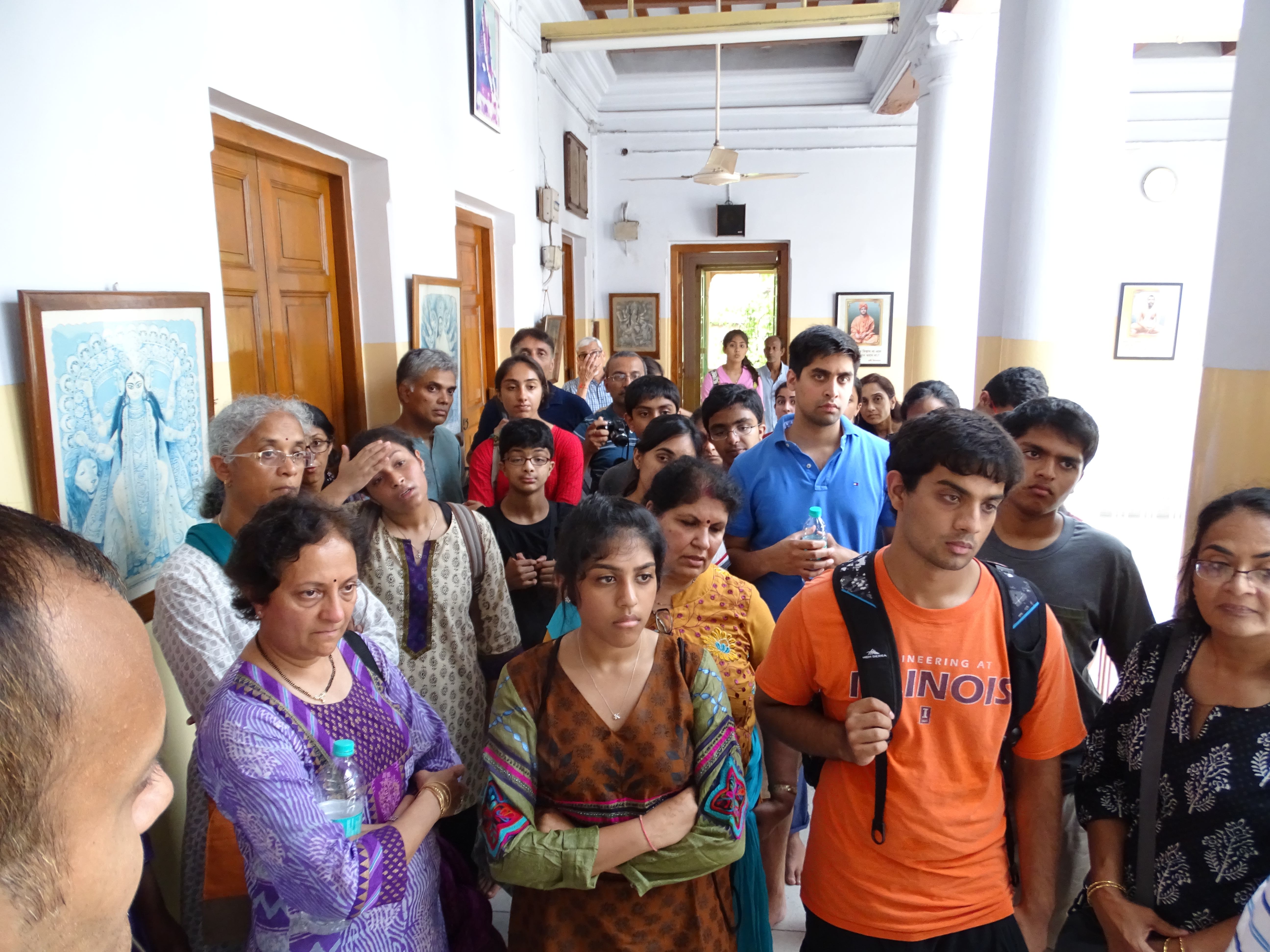
The Vidyapiths pilgrims of Bus No. 1 arrived first in Udbodhan and then went to Balaram Mandir while the pilgrims of Buses 2 and 3 went to Balaram Mandir first and then came to Udbodhan.  As each group entered Udbodhan, they offered their salutations to Swami Saradananda on the first floor. The group then went upstairs, offered their salutations to Holy Mother and Sri Ramakrishna, sat on the floor in front of the shrine and did japa.  Many also saw the articles used by Swami Saradananda and Holy Mother.  The environment was very serene and filled with Holy Mother’s love.  We all felt as if we had come to our own mother’s house.
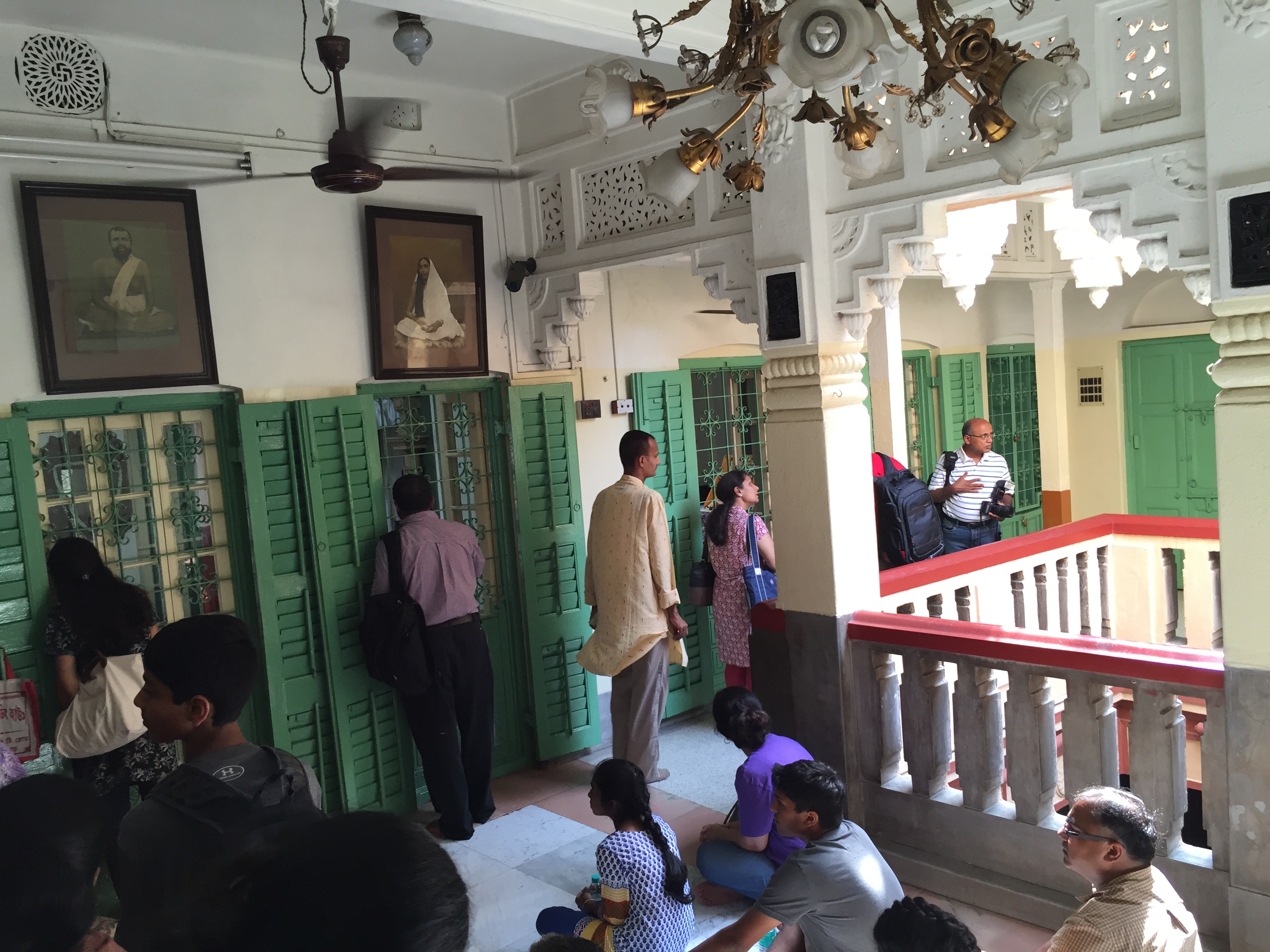
2 (2) IMG_0653

IMG_0655 SAM_0107 DSCN6673

Before leaving Udbodhan, the first group asked the office if they could offer a bhajan to Holy Mother.  Since all other devotees had left and no one was meditating, the group was able to offer a bhajan “Sarada Subhadayaini…..”
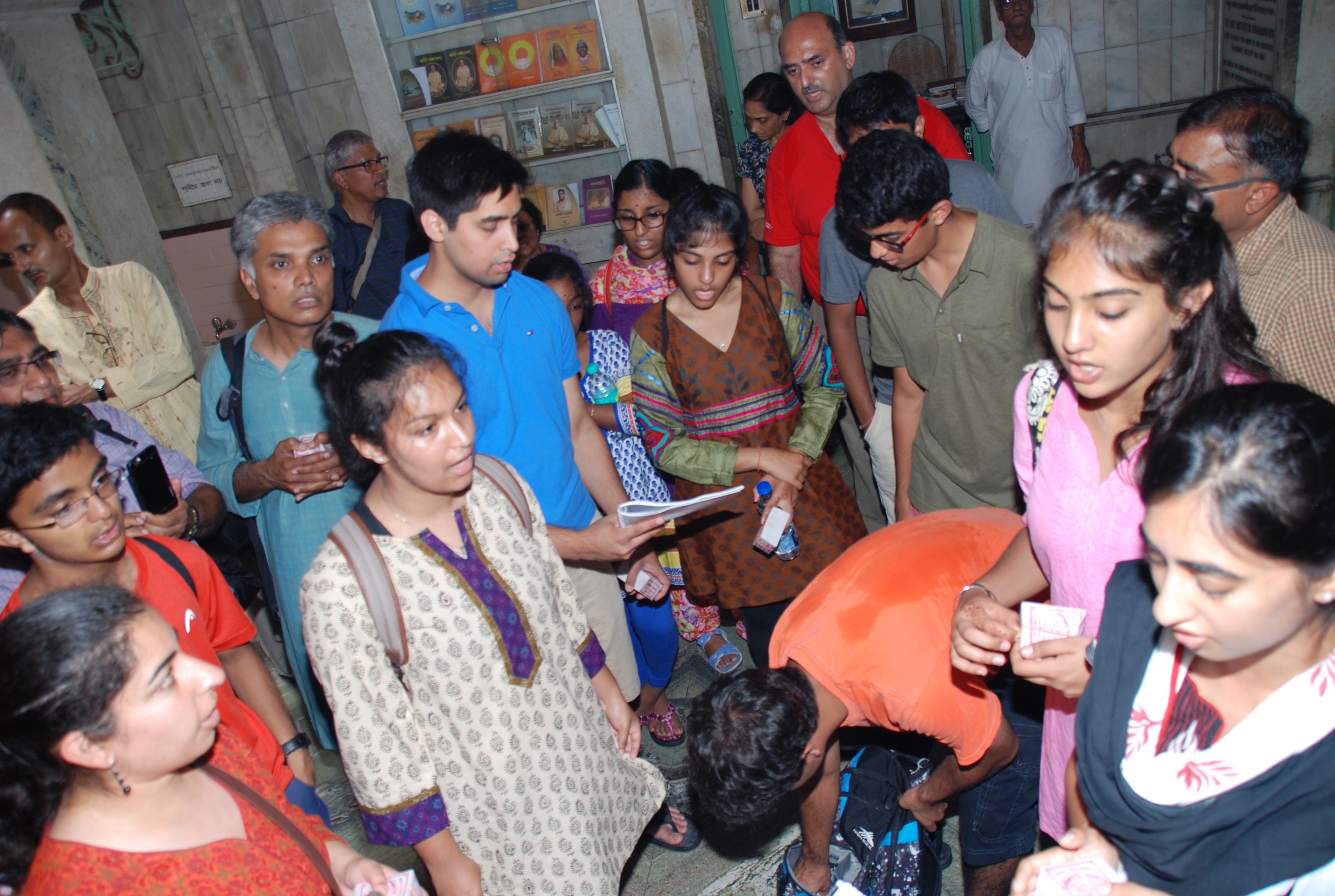
DSC_0402

The place was filled with the devotional fervor of the singing.  We could feel the words of the bhajan “Jago Maa” –  that may the Universal Mother or the Kundalini (the Power of Brahman) residing in all be awakened.

As the pilgrims of Buses 2 and 3 were leaving Udbodhan, the Swami who was the head of Udbodhan came to them and asked if all would like to take their Prasad at the Udbodhan.  Almost all devotees of Sri Ramakrishna and Holy Mother that visit would like to take Prasad at Udbodhan because they feel that Holy Mother herself is giving Prasad and blessing all.  When we told the Swamiji that we did not plan to take Prasad here because we are almost 100 people and it would be an inconvenience, he quickly said that they could take care of 100 people without any problem.  We thought for a while and said that because we would be taking Prasad in Jayaram Bati and had already made a plan to eat lunch at Hyatt, it would not be possible for us to enjoy Prasad at Udbodhan. While we felt bad letting this opportunity go, we were touched by the Swami’s love and his willingness to go out of his way to accommodate 100 people within an hour’s notice.

They gave all of us delicious Prasad of Sandesh, which we enjoyed outside Udbodhan.

Udbodhan Publications:  Near “Mayer Bati”, there is a building called “Udbodhan Karyalaya.”  This is the premier publishing house of Bengali books of the Ramakrishna Math & Ramakrishna Mission.  Through its publications, Udbodhan Karyalaya has immensely contributed in bringing awareness of Sri Ramakrishna, Swami Vivekananda, and Vedanta’s teachings overall both in India and abroad.  The publishing house also publishes “Udbodhan Patrika,” a magazine in Bengali that actually was started by Swami Vivekananda in 1899.

The second group could also visit Udbodhan karyalaya’s bookstore since it was opened at that time.  Devotees were excited to buy pictures of Holy Mother and her footprints and other related things at this publishing house.

Memories of Udbodhan:

During the visit of the Udbodhan, we remembered the several important things and incidents happened here in Udbodhan that made it a very special place of pilgrimage.  Here are few of them:

  • Giving Spiritual Guidance: During her stay in Udbodhan, Holy Mother blessed countless people and initiated many devotees here.  She removed their sorrows by her loving glance, her holy presences and proper guidance. Many people who had made some mistakes in their lives and felt dejected and hopeless would visit Holy Mother.  She encouraged them, gave them loving hugs, took them in the shrine to Sri Ramakrishna and asked them not to repeat their mistakes and pray sincerely to Sri Ramakrishna. Swami Nikhilanandaji writes, “(During 1909-1920) Men and women of every station and stage of life came to her.  Among them there were high and low, students and lawyers, physicians and teachers, revolutionaries, spiritually evolved souls and people entangled in the world, and some eccentric as well….From the fullness of her heart Holy Mother bestowed her grace upon all.”
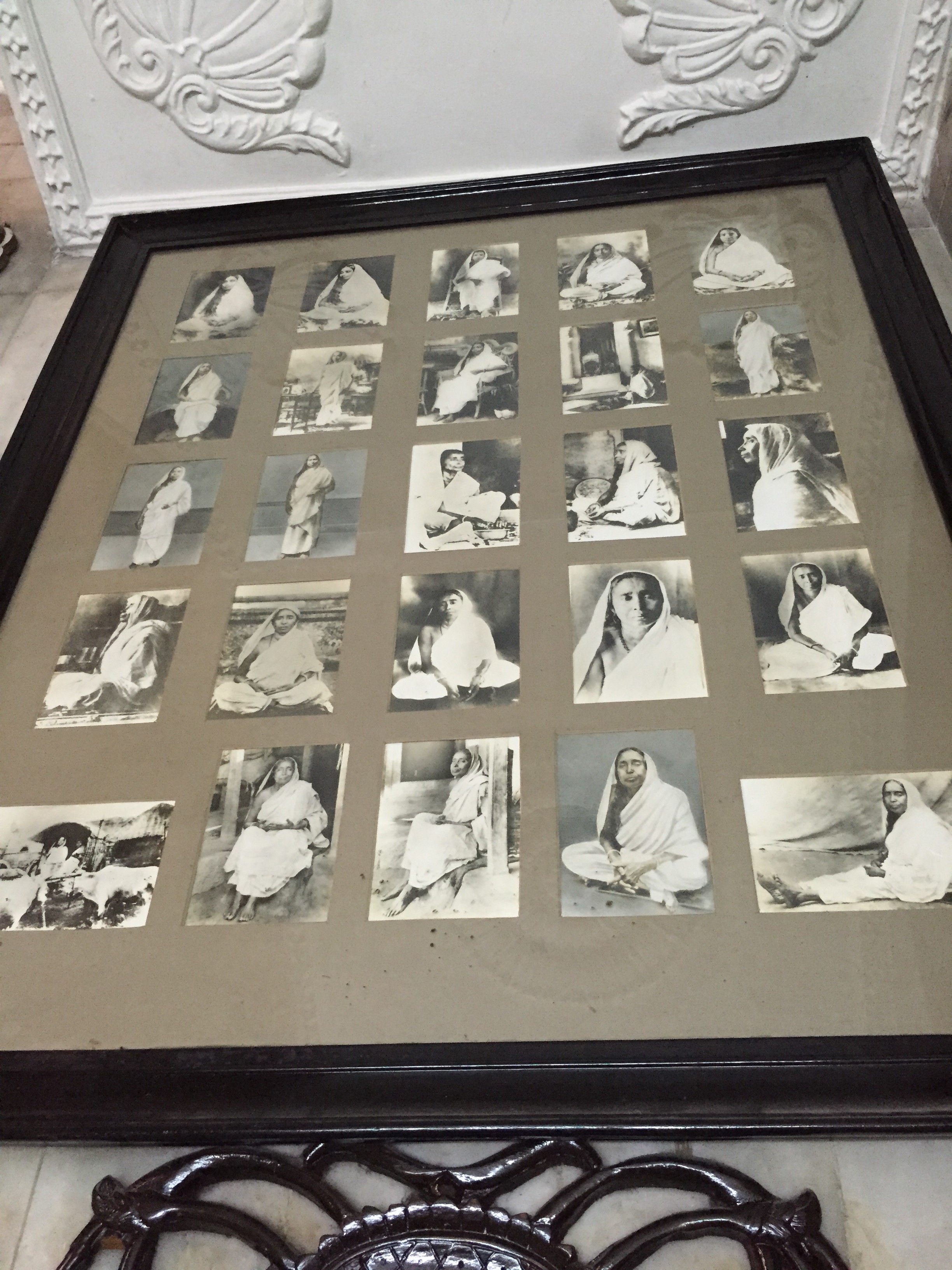
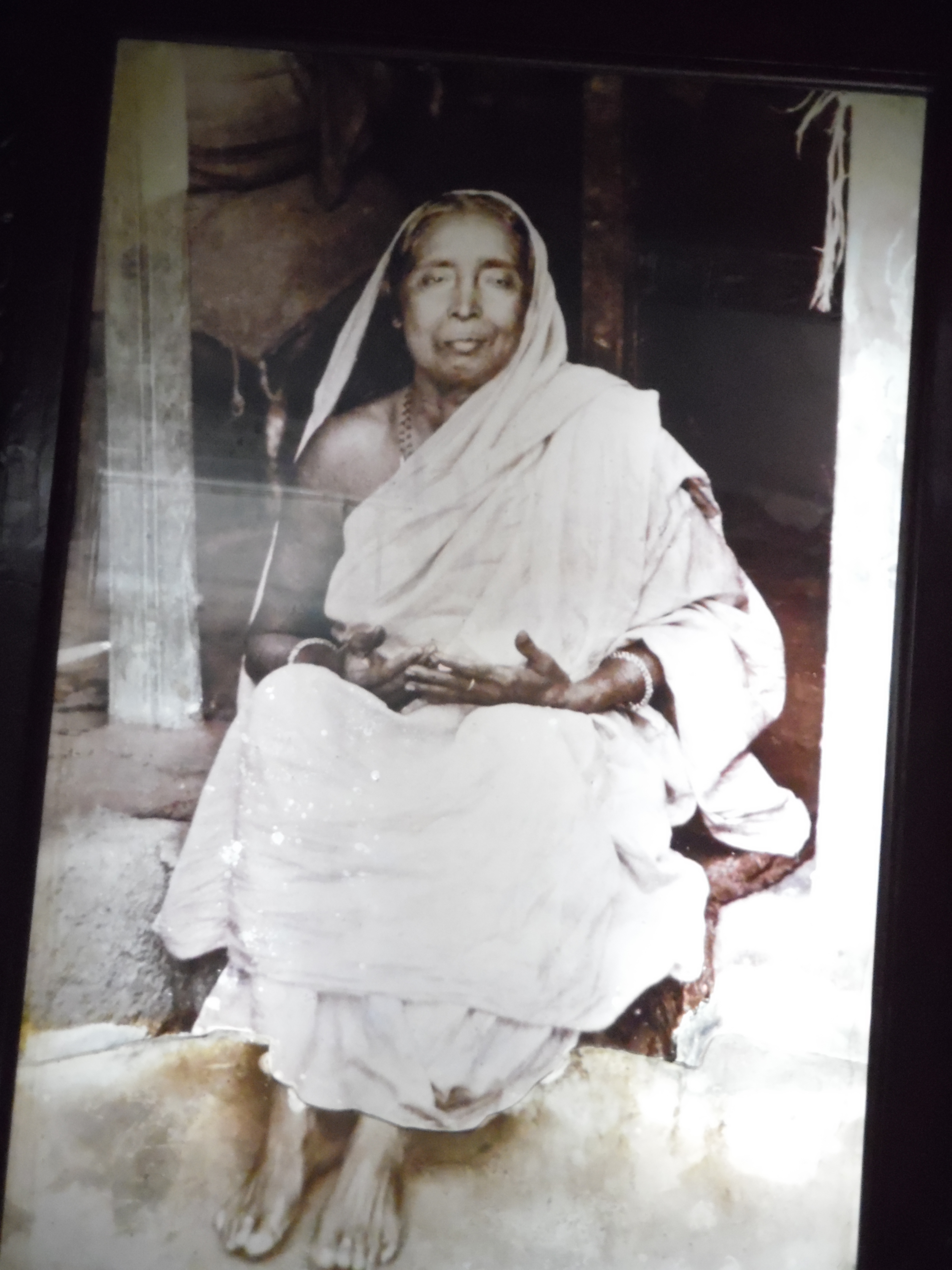
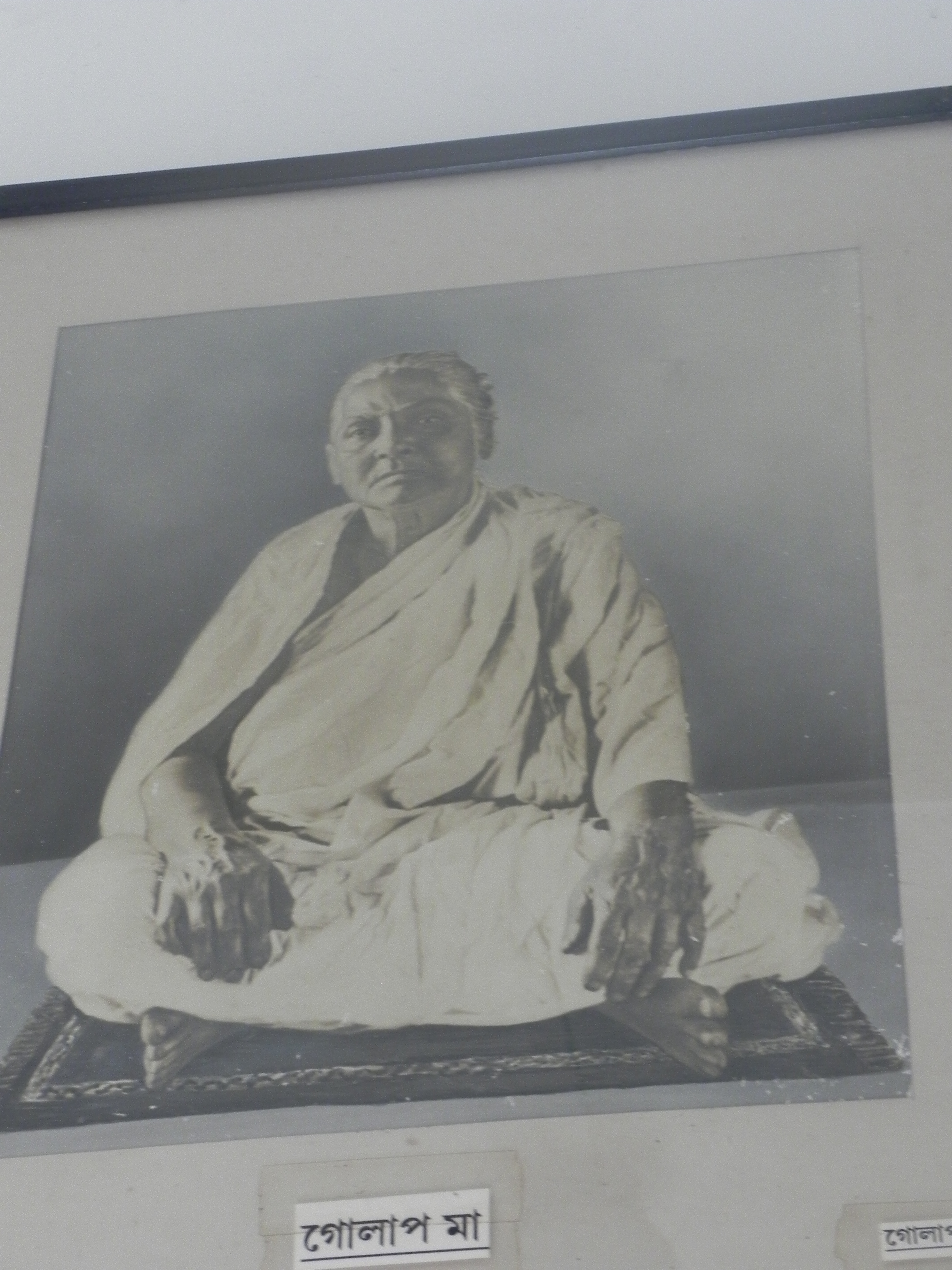
  • Mother’s Helpers: Golap-Ma and Yogin-Ma helped Mother in Udbodhan.  One can find their pictures on the wall.
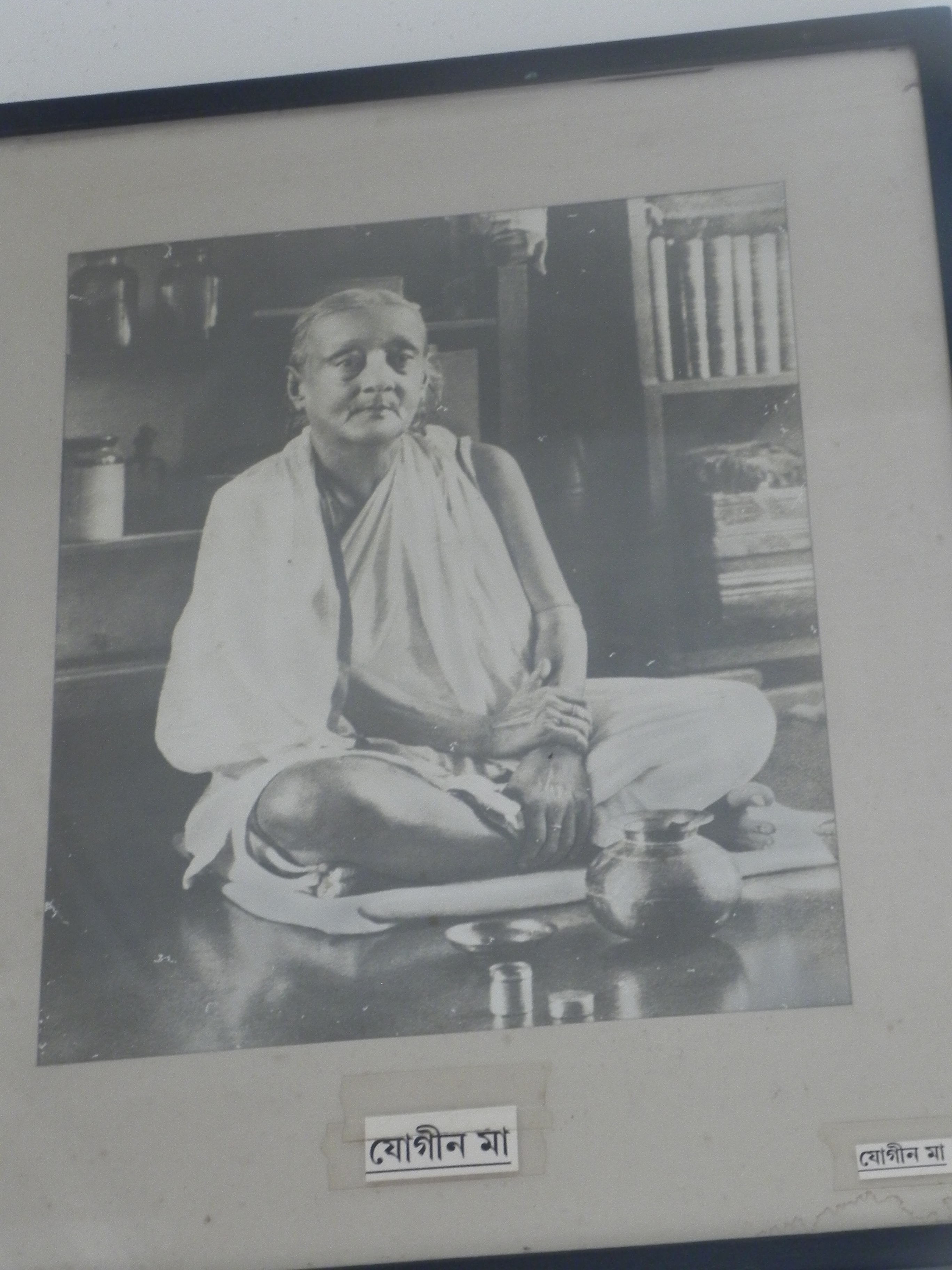
DSCN6675 DSCN6674

  • Everyone had to work: Udbodhan was a busy publishing center.  The monks working there had to sell books, keep accounts, correct proofs, and look after the publications of books.  Someone said that Sri Ramakrishna had discouraged such activities and emphasized meditation, prayer, and other spiritual practices.  When the matter was referred to Holy Mother she said, “Never listen to such ideas.  Sri Ramakrishna’s case was quite different.  Mathur Babu always provided him with his milk and butter.  If you do not work who will supply you with your morning cup of tea?”
  • Mother being Kali: Sister Nivedita once said to Holy Mother, “Mother, you are our Kali.”  Sister Christine, who was present, nodded her agreement.  Holy Mother said with a laugh, “No, children, I cannot be Kali or any such thing; otherwise, I shall have to stick out my tongue!”
  • Chandra’s fasting: There was a devotee named Chandra who ran errands for Holy Mother.  He could not fast.  The monastic disciples at Udbodhan pressed him to fast during Shivaratri – for the entire day and night.  In the evening of his fast, Chandra went to Holy Mother and offered his salutation.  Mother asked him why he looked so pale and hungry.  He told that he agreed to fast, but it was hard for him.  Holy Mother said that he should eat.  But Chandra said that he would not derive the merit of fasting.  Holy Mother caringly said that she would fast for him so that he could eat.  Chandra respectfully agreed and ate happily.  Holy Mother fasted for him.
  • Chandra’s asking for Prasad: This same Chandra used to go to Holy Mother for Prasad.  Once, one senior Swami told him that he should ask Holy Mother for liberation.  The Swami trained him how to ask for liberation and sent him upstairs.  Chandra went upstairs. Holy Mother was in the shrine engaged in her worship.  Chandra saluted her.  After a while Holy Mother looked at him and asked, “What do you want?”  Chandra said, “Prasad!” The Mother said that it was under the couch and he helped himself.
  • Mother’s Compassion: Padmabinode was a student in M’s school who had received Sri Ramakrishna’s blessings.  Later he joined a theatre and got into a drinking habit.  While intoxicated, he used to come to see Holy Mother at late night.  No one would let him come inside the Udbodhan because Holy Mother was sleeping.  One night, from the street, he sang loudly a song asking Mother to wake up and open the door.  He had put his heart and soul into his singing.  Holy Mother woke up, opened the window, and looked at him.  Padmabinide was extremely happy.  He rolled on the ground and saluted Holy Mother.  Next day Holy Mother said, “Did you see his firm conviction?…I cannot contain myself when he calls on me in that way.” This song was “Jaago Maa”.
  • Intense Desire to See Mother: Once a devotee named Sri Surendranath Roy walked three miles to come to Udbodhan to see Holy Mother.  At that time, Holy Mother was tired and resting.  Without asking anyone, he tried to go upstairs to see Holy Mother.  Swami Saradananda stood blocking his way and said, “I can’t allow you to go upstairs now because Holy Mother just returned and is resting.”  Surendra, in a fit of ill humor, pushed Swami Saradananda aside saying, “Is the Mother a monopoly of yours?” and went upstairs.  Holy Mother woke up.  Surendra saluted Mother, but felt bad for what he had done.  He related the whole story to Mother.  Holy Mother said that his son (meaning Swami Saradananda) will not be offended.  Surendra was afraid to face Swami Saradananda while coming downstairs.  He was surprised that Swami Saradananda embraced him and said, “Can one see the Mother unless one is so earnest?”
  • Inspiring Book Written at Udbodhan: Swami Saradananda wrote the inspiring book “Sri Ramakrishna Lila Prasang” (in English, “Sri Ramakrishna: The Great Master.”) in Udbodhan.
  • Mother’s Love for Swami Saradananda: After 1909, Holy Mother would not come to Kolkata if Swami Saradananda were not there.  She said that he is her crest-jewel.  Another time she said, “Is it easy to assume my responsibility? I have yet to find anyone except Sarat who can bare that burden.”
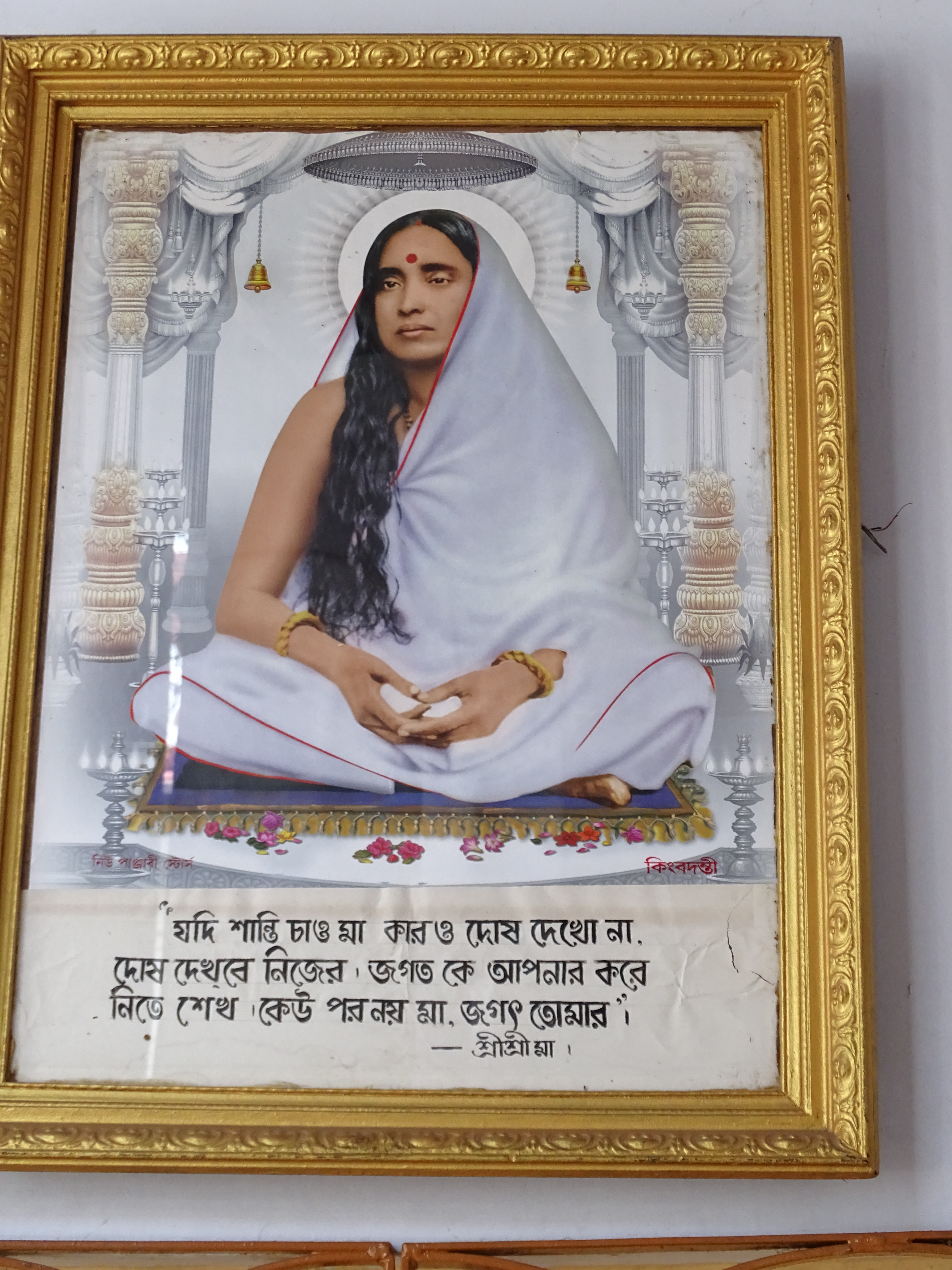
  • Last Message of Holy Mother at udbodhan: A woman devotee who had known Sri Ramakrishna came to Udbodhan to see Holy Mother who was bed-ridden at the time.  As no one was allowed to go inside the room, the woman stood outside.  Holy Mother signed to her to come.  She came in and saluted the Mother. She wept and said, “Mother, what will happen to us?”  Holy Mother said in a feeble voice, “You have seen the Master.  Nothing should frighten you.”  Then she added, “Let me tell you something.  My child, if you want peace then do not look into anybody’s faults.  Look into your own faults.  Learn to make the world your own.  No one is a stranger, my child; the whole world is your own.”

Remembering Holy Mother’s love and compassion through her stories, remembering her last message, and feeling her divine power through the recollection of various incidents, we truly felt Mother’s presence in Udbodhan and we felt blessed by coming here.
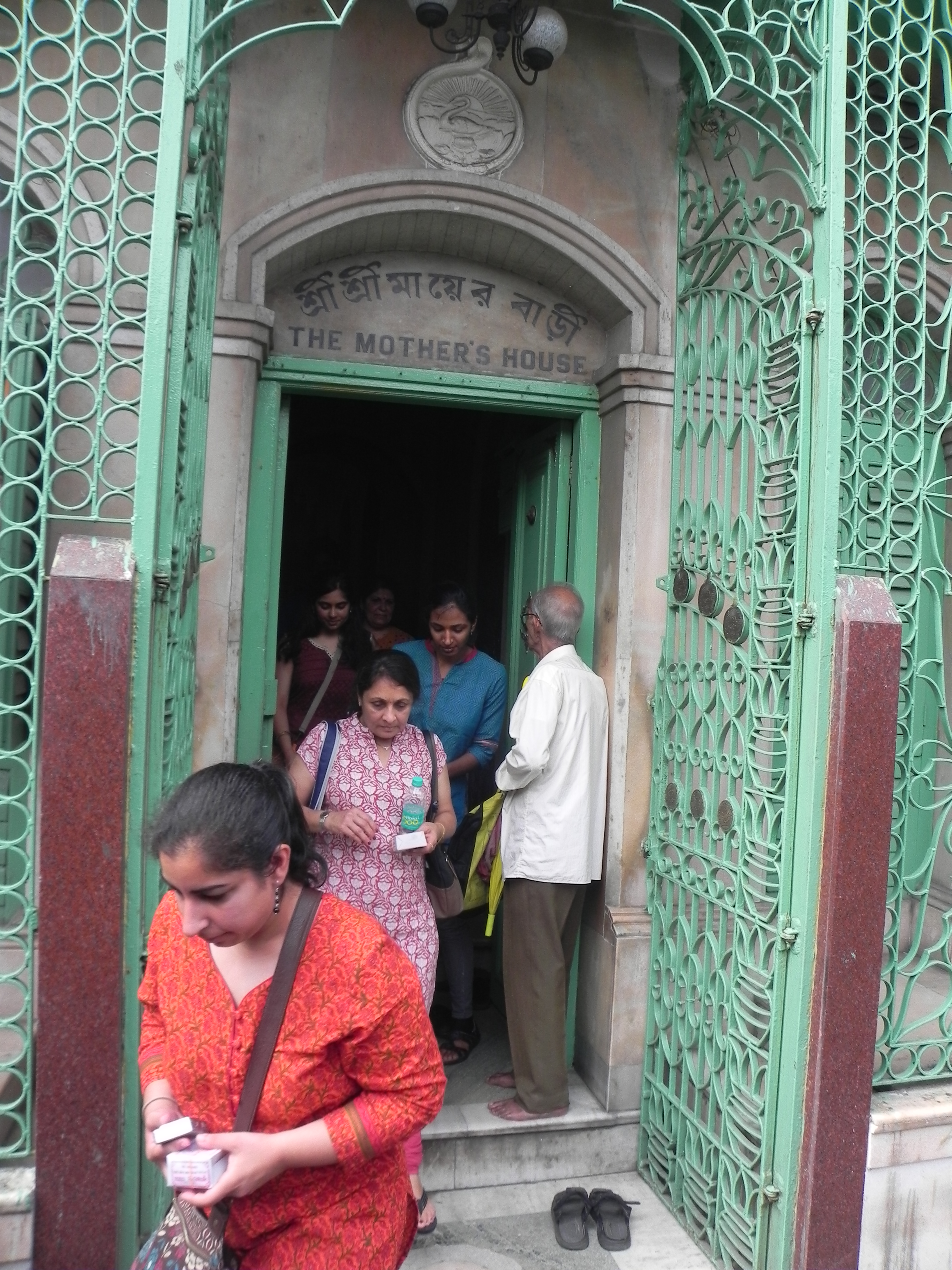
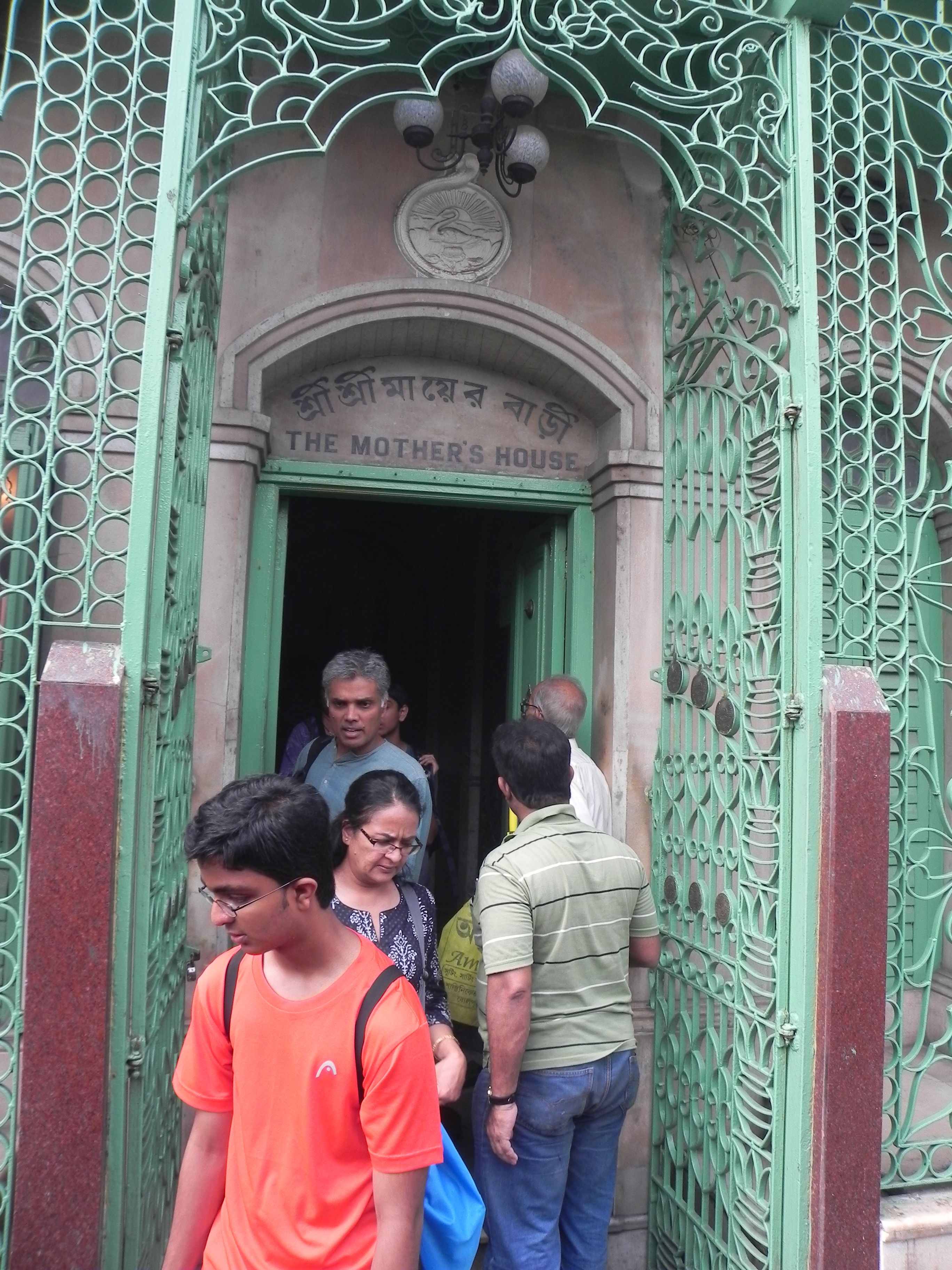
DSCN6686 DSCN6682

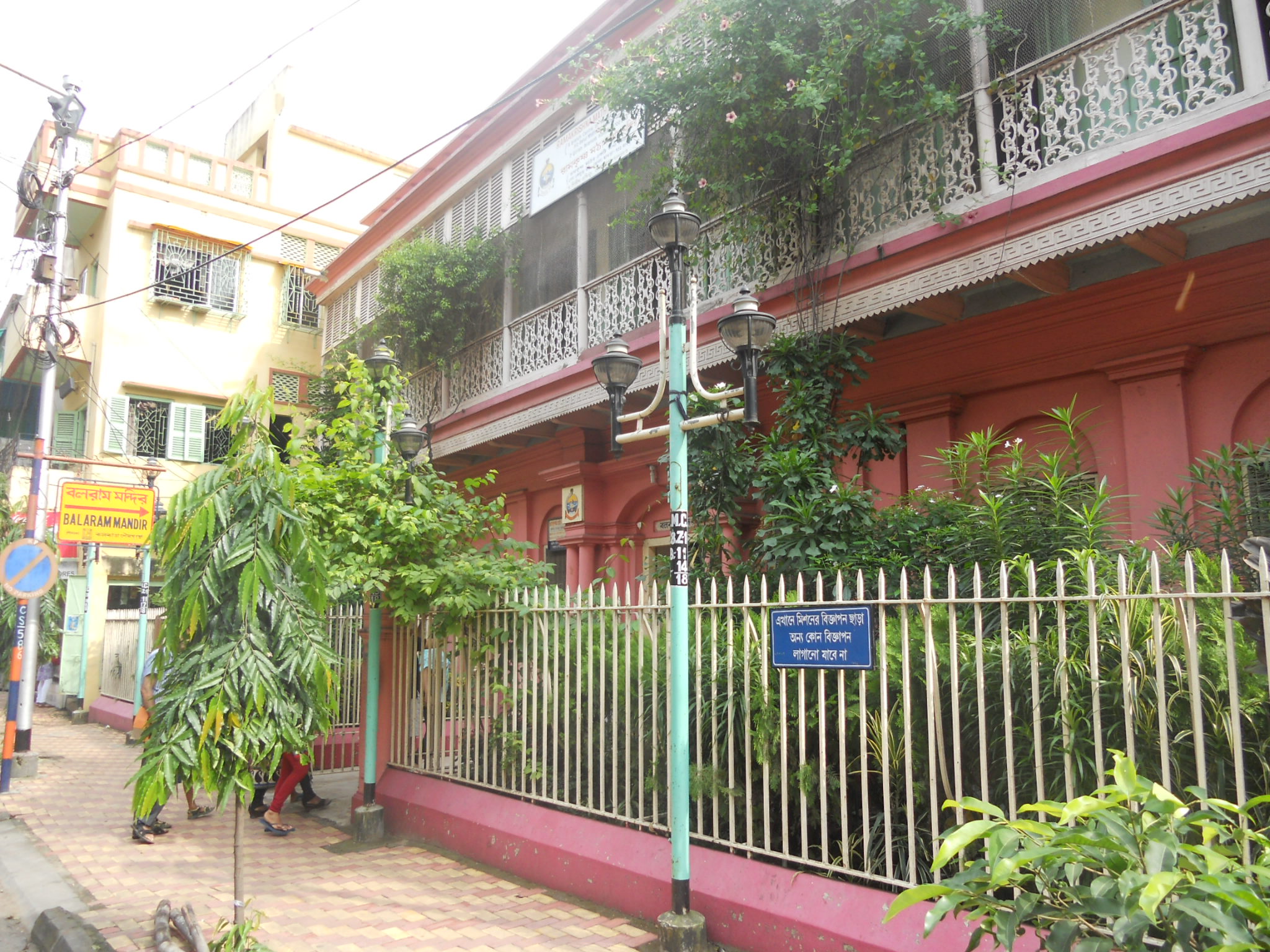
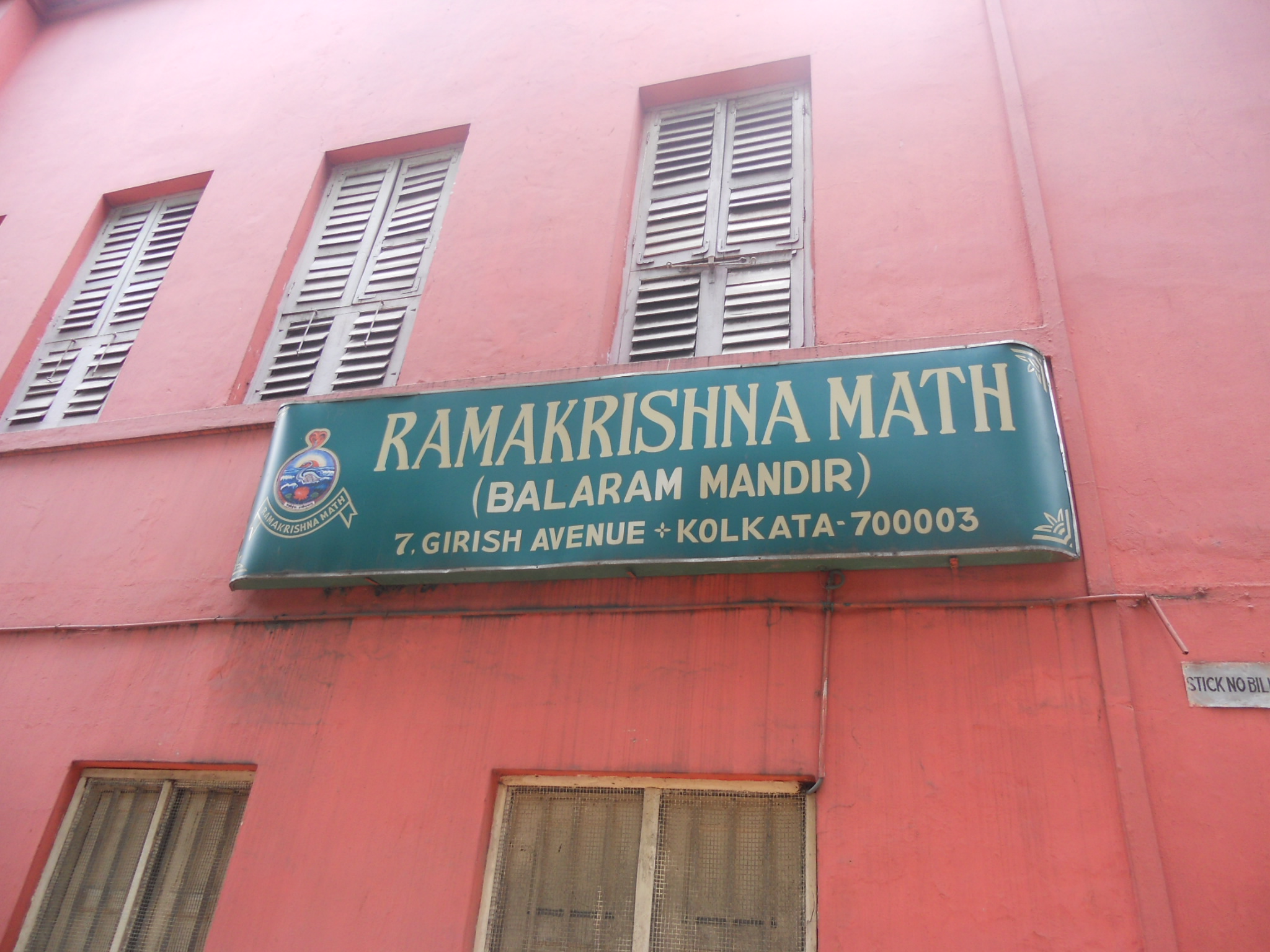
Balaram Mandir:

Balaram Basu had imbibed a devotional nature from his father and grandfather who were great devotees.  Balaram Basu became attracted to Sri Ramakrishna during their very first meeting.  Sri Ramakrishna’s presence and his teachings about both the existence of God and how to realize God left deep impressions in Balaram’s mind.  In a vision, Sri Ramakrishna had also seen Balaram as one of the close disciples of Sri Chaitanya.
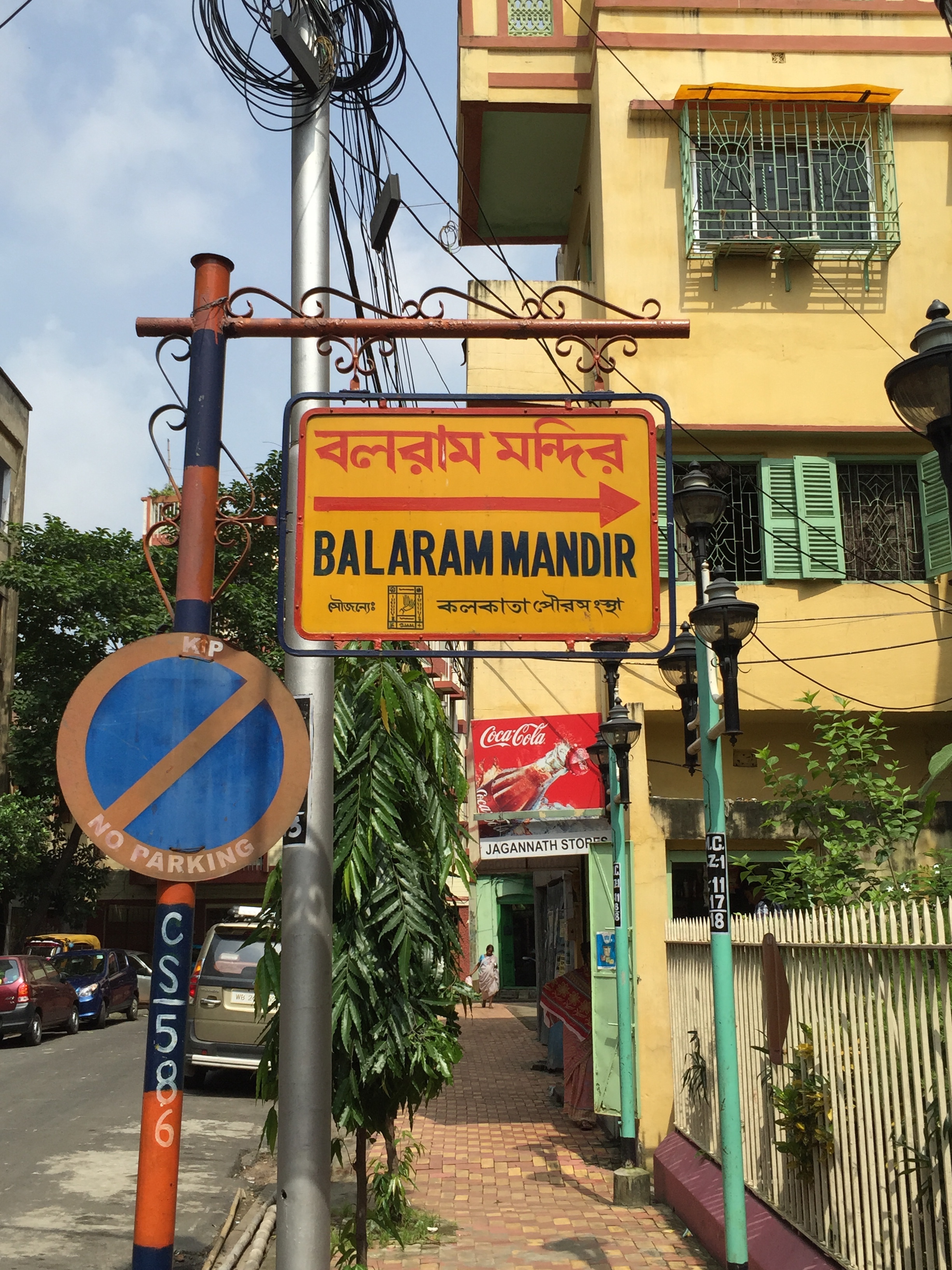
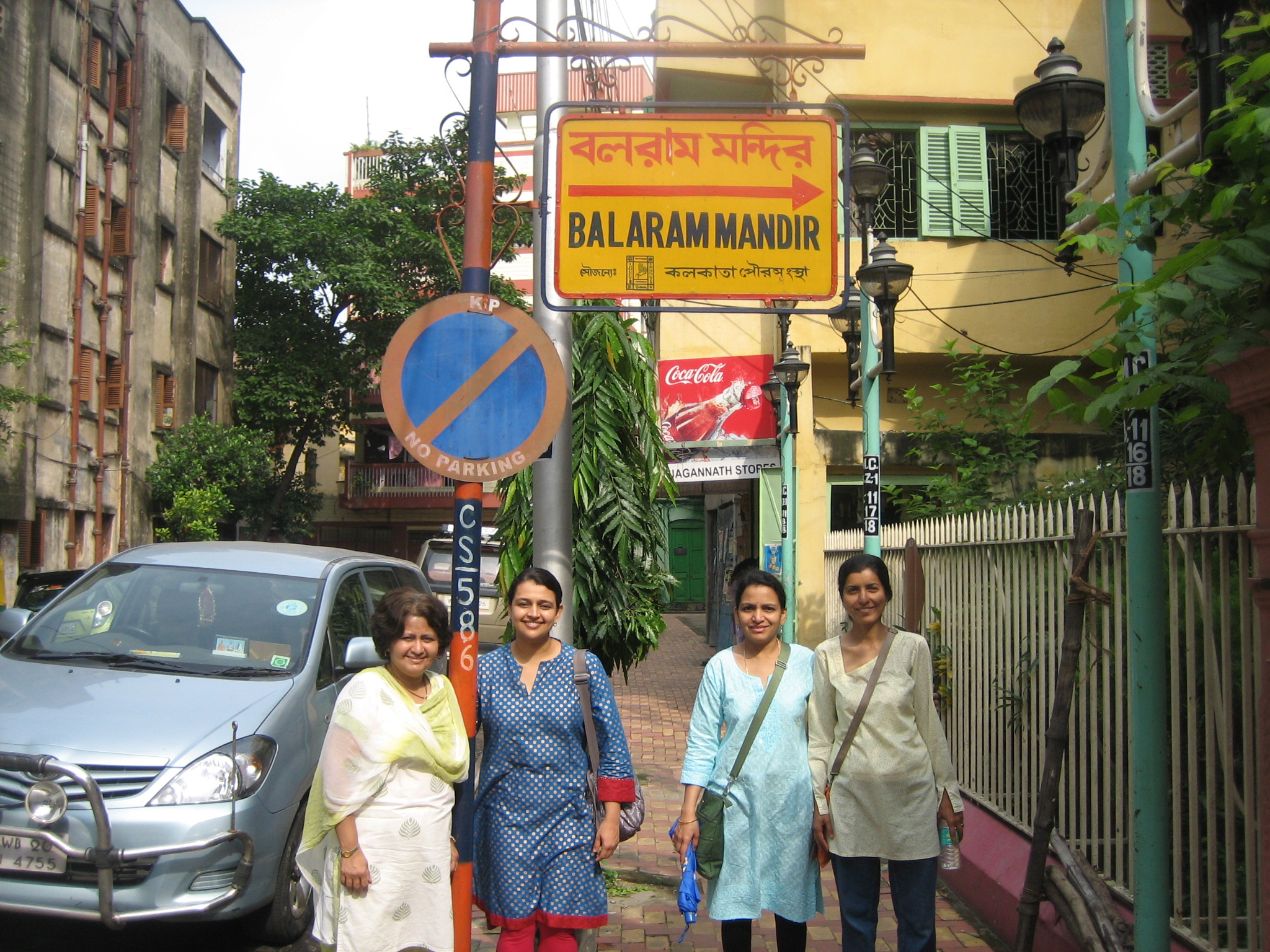
1f 1e 1a _1

1j 1h

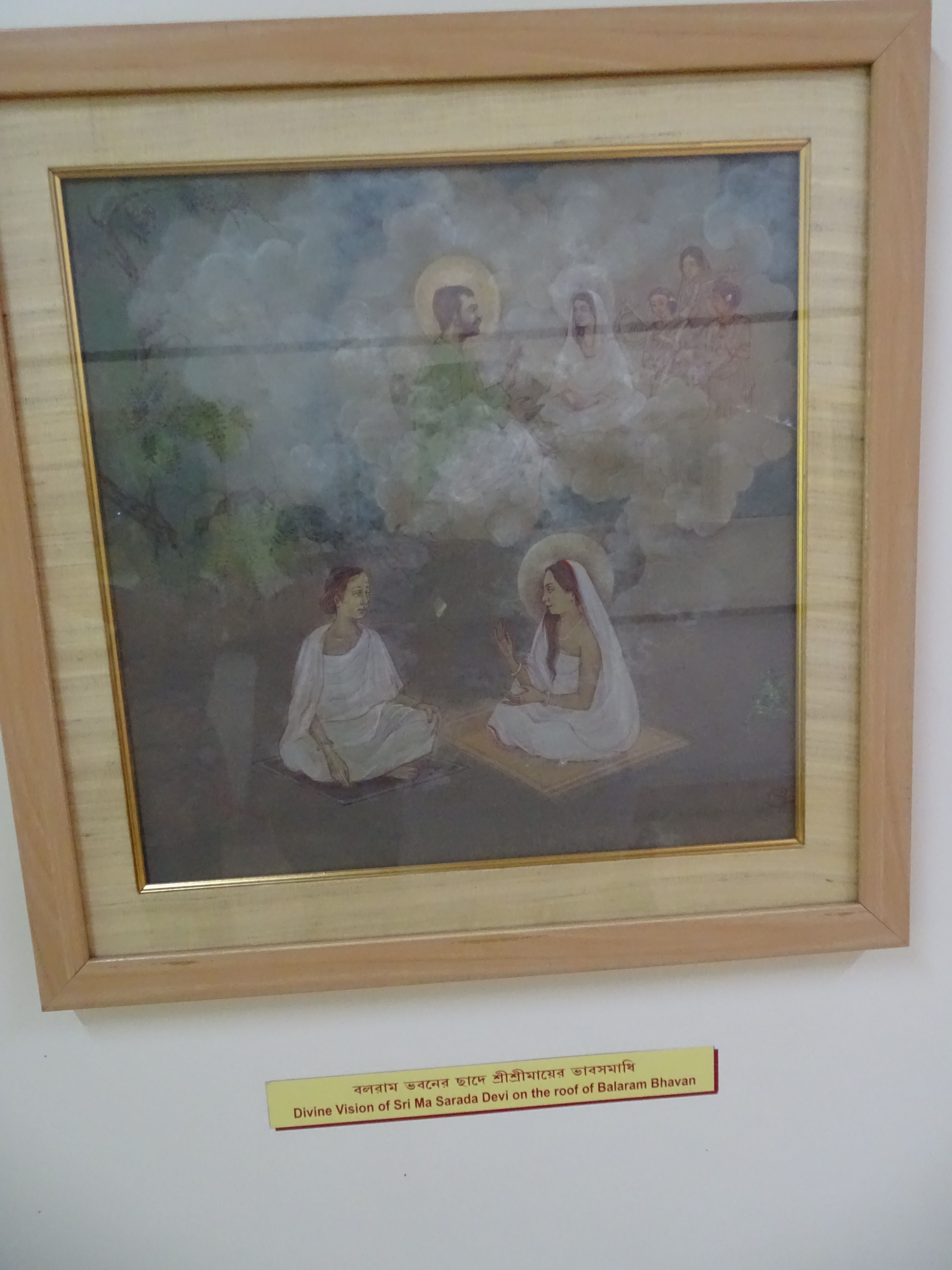
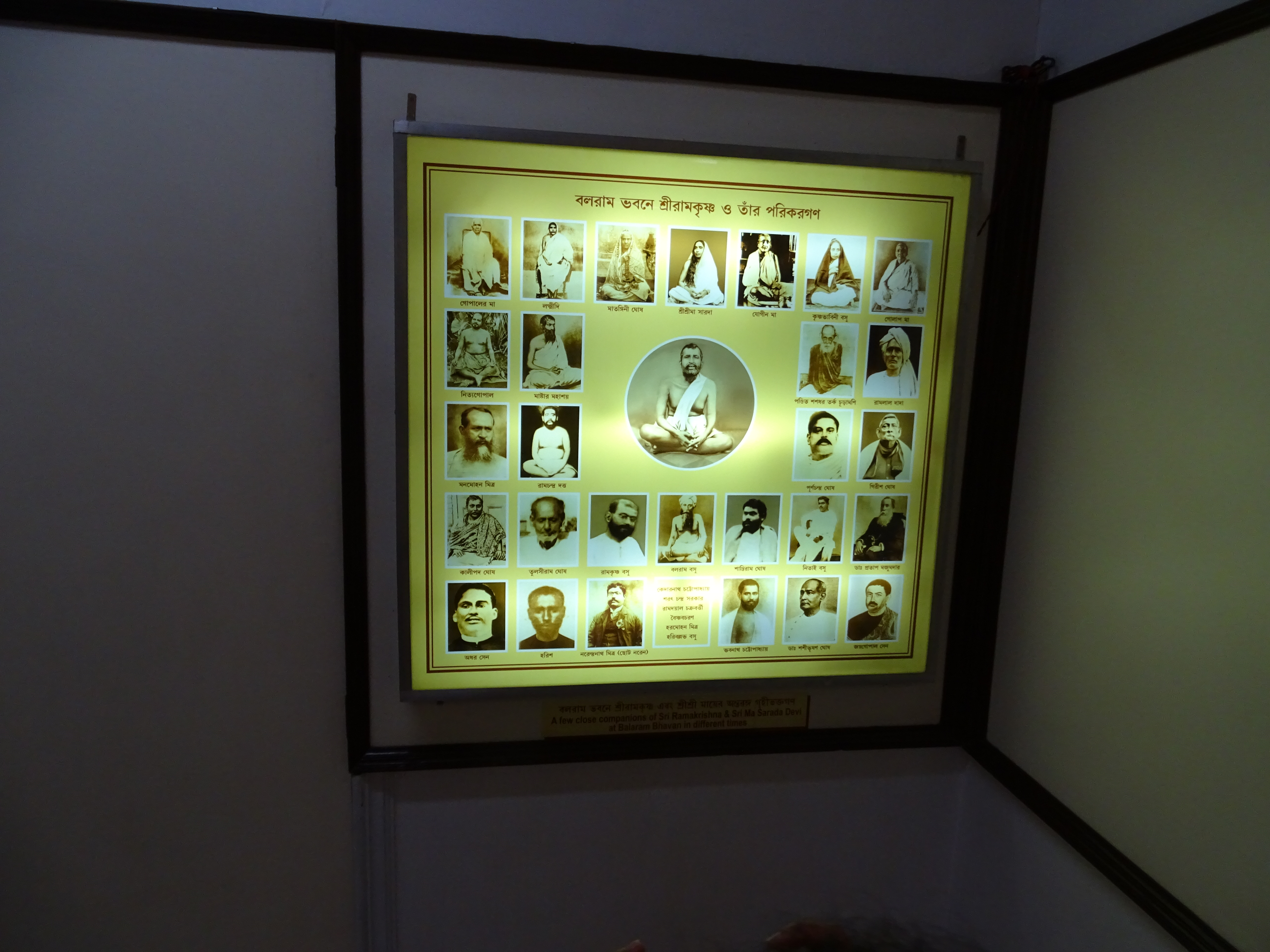
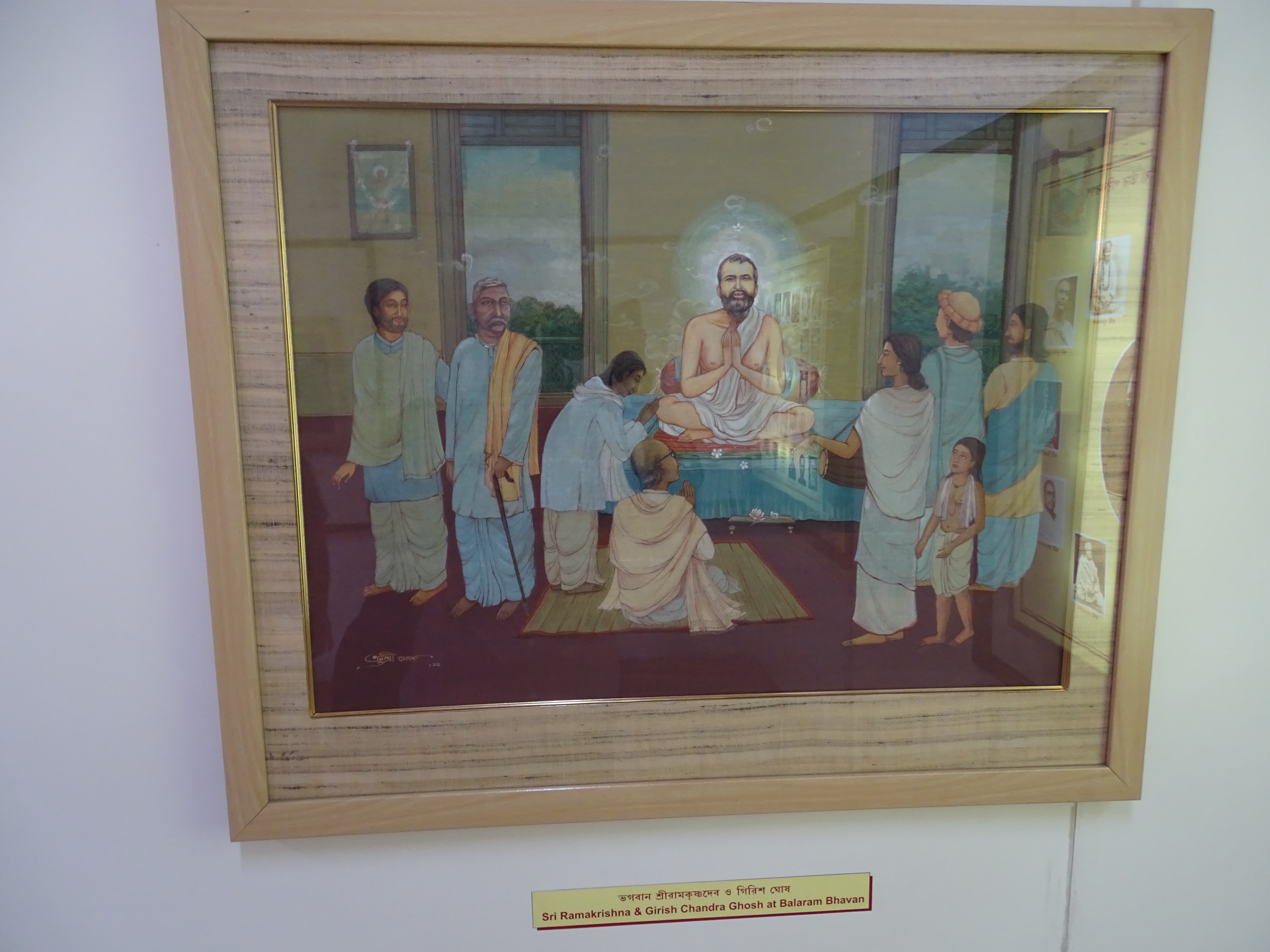
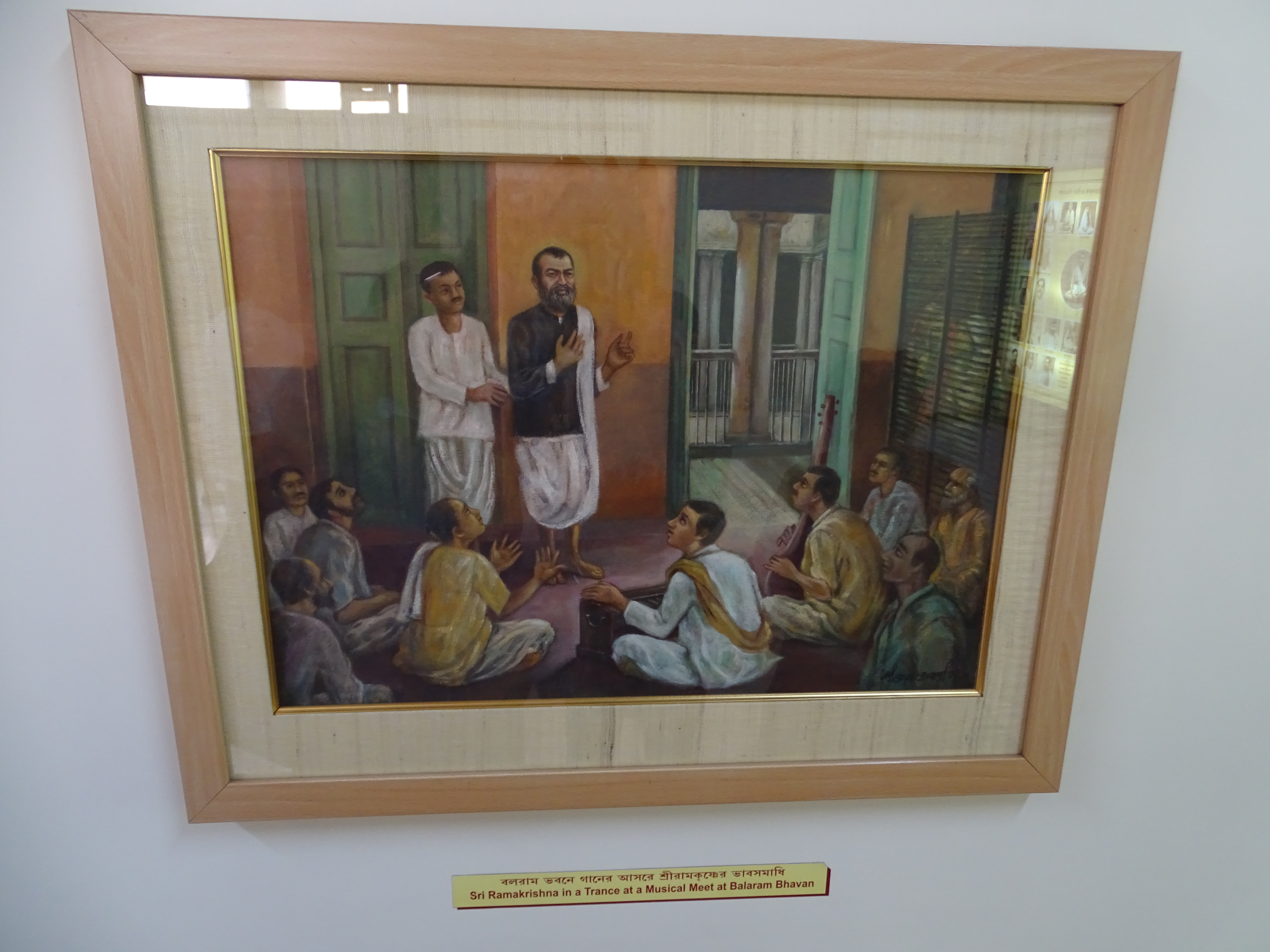
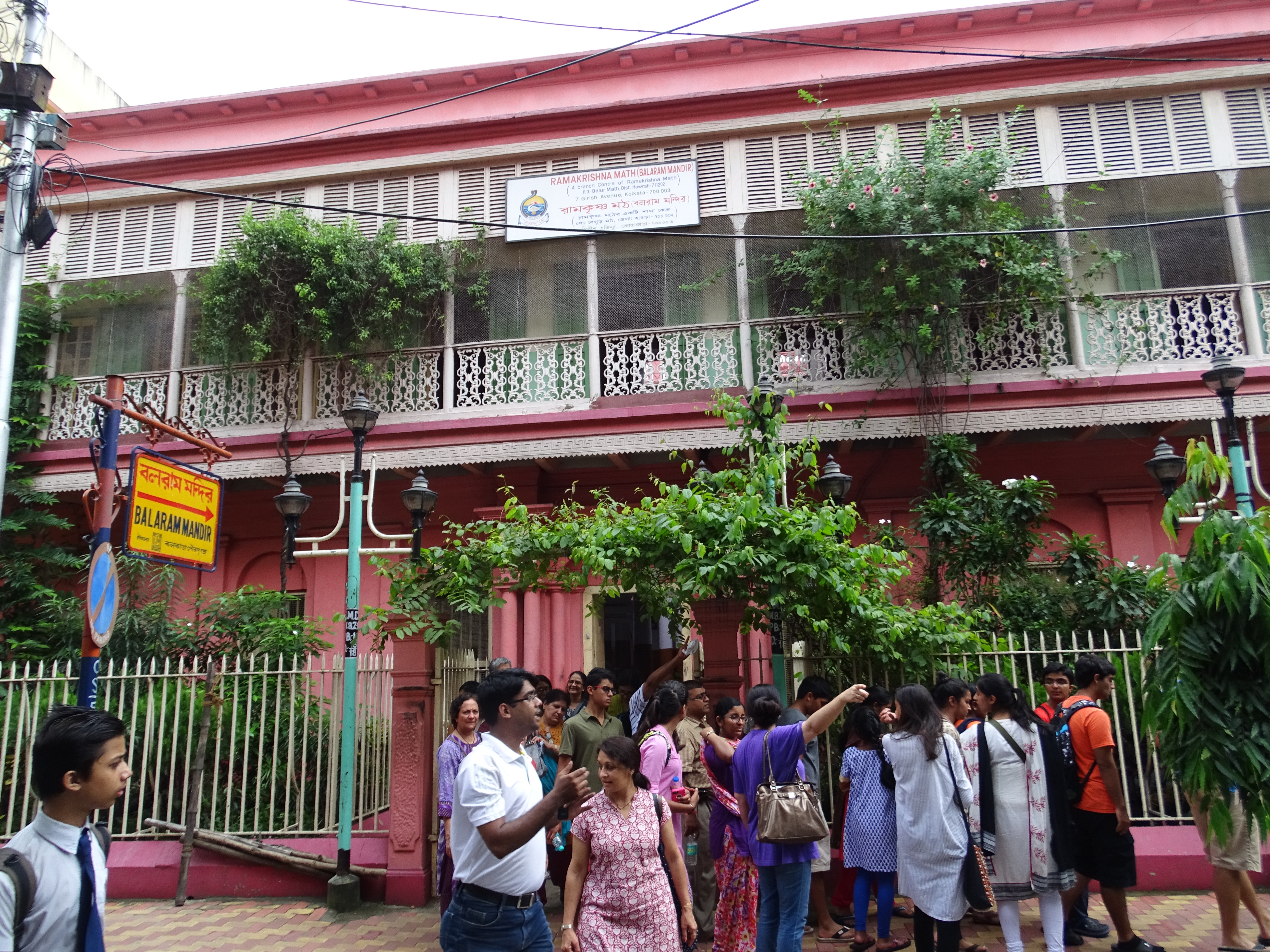
Sri Ramakrishna visited Balaram’s house, Balaram Mandir, more than a hundred times.  He wanted to see his disciples, especially his young disciples like Narendra, Rakhal, Bhavanath and others, who could not come to Dakshineswar often.  At Balaram Mandir, Sri Ramakrishna talked to these young disciples about God, gave them spiritual instructions, sang God’s glories, danced on the name of God, and often lost himself in Samadhi.  Sri Ramakrishna sometimes jokingly referred to the temple of Dakshineswar as “Mother Kali’s fort” and Balaram’s house as “His fort or parlour.”  Sri Ramakrishna, who was very particular about who had cooked his food and who was serving his meal, often said, “Balaram’s food is very pure.  The members of his family have for generations been devotees and have been hospitable to monks and poor people.”  Sri Ramakrishna often stayed overnight in Balaram’s house.  Sri Ramakrishna, Holy Mother, and several other disciples of Sri Ramarkishna had stayed in Balaram Mandir.  Balaram Bose always stood beside the disciples of Sri Ramakrishna and served them wholeheartedly.   Swami Vivekananda had lots of love and regard for Balaram Bose.  He once said to Balarm Bose, “Our relationship with you is special.  if you push us out of the door, we will not feel bad. On the contrary, remembering your love, we will enter your home through the back door.’

As we had mentioned earlier, pilgrims of bus number-1 went to Udbodhan first and then went to Balaram Mandir while the pilgrims of buses numbers 2 and 3 went to Balaram Mandir first and then went to Udbodhan.
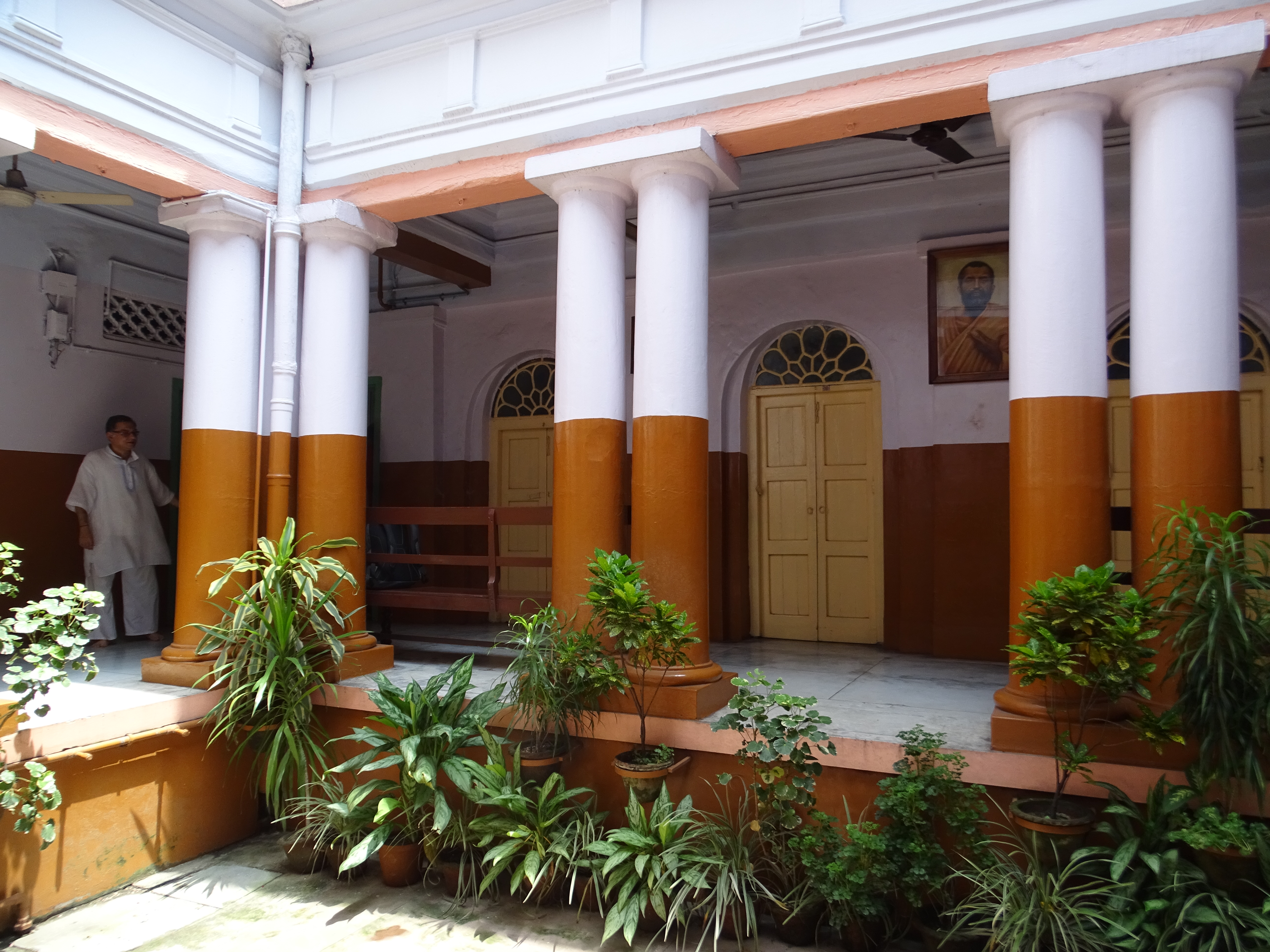
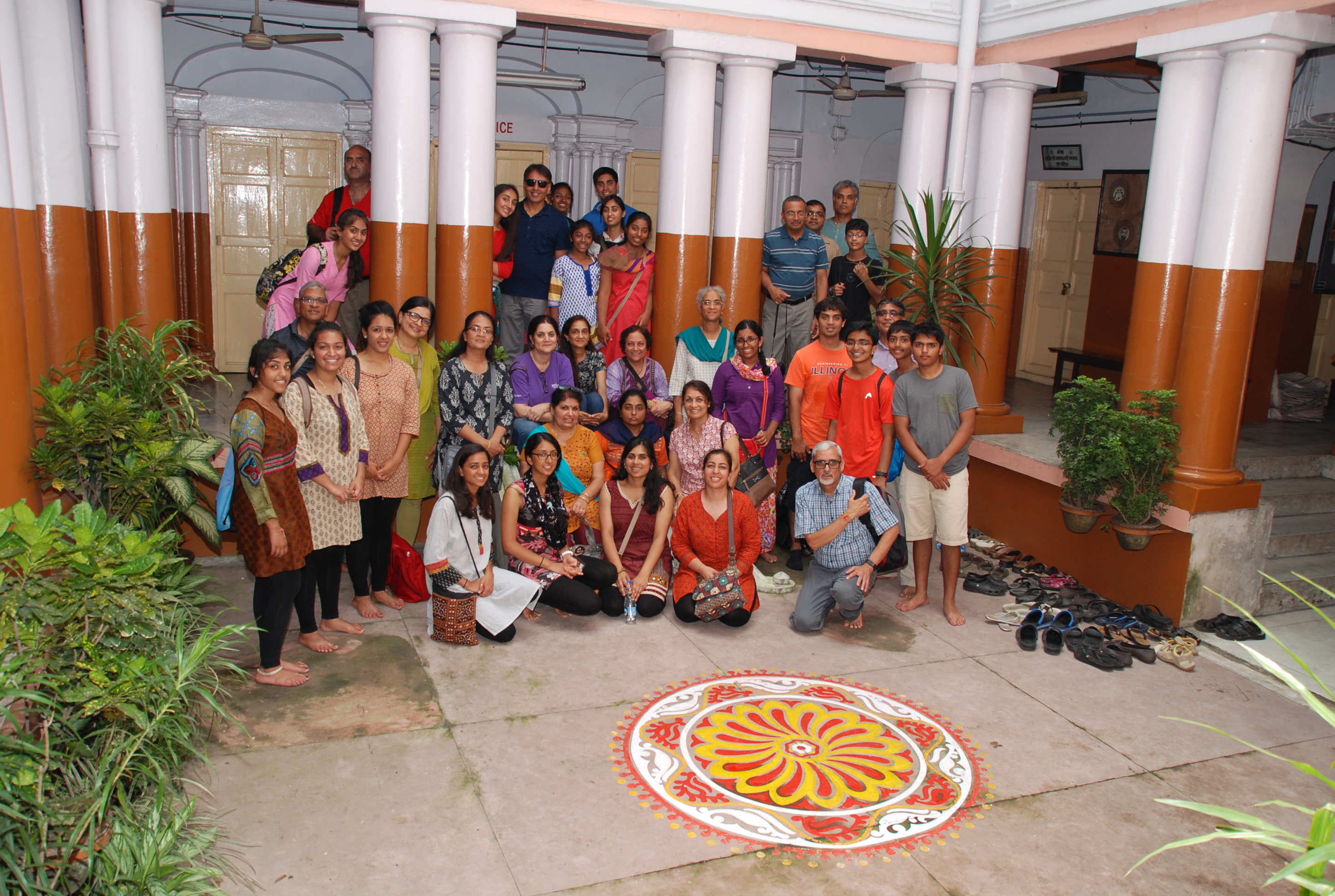
2f 2a

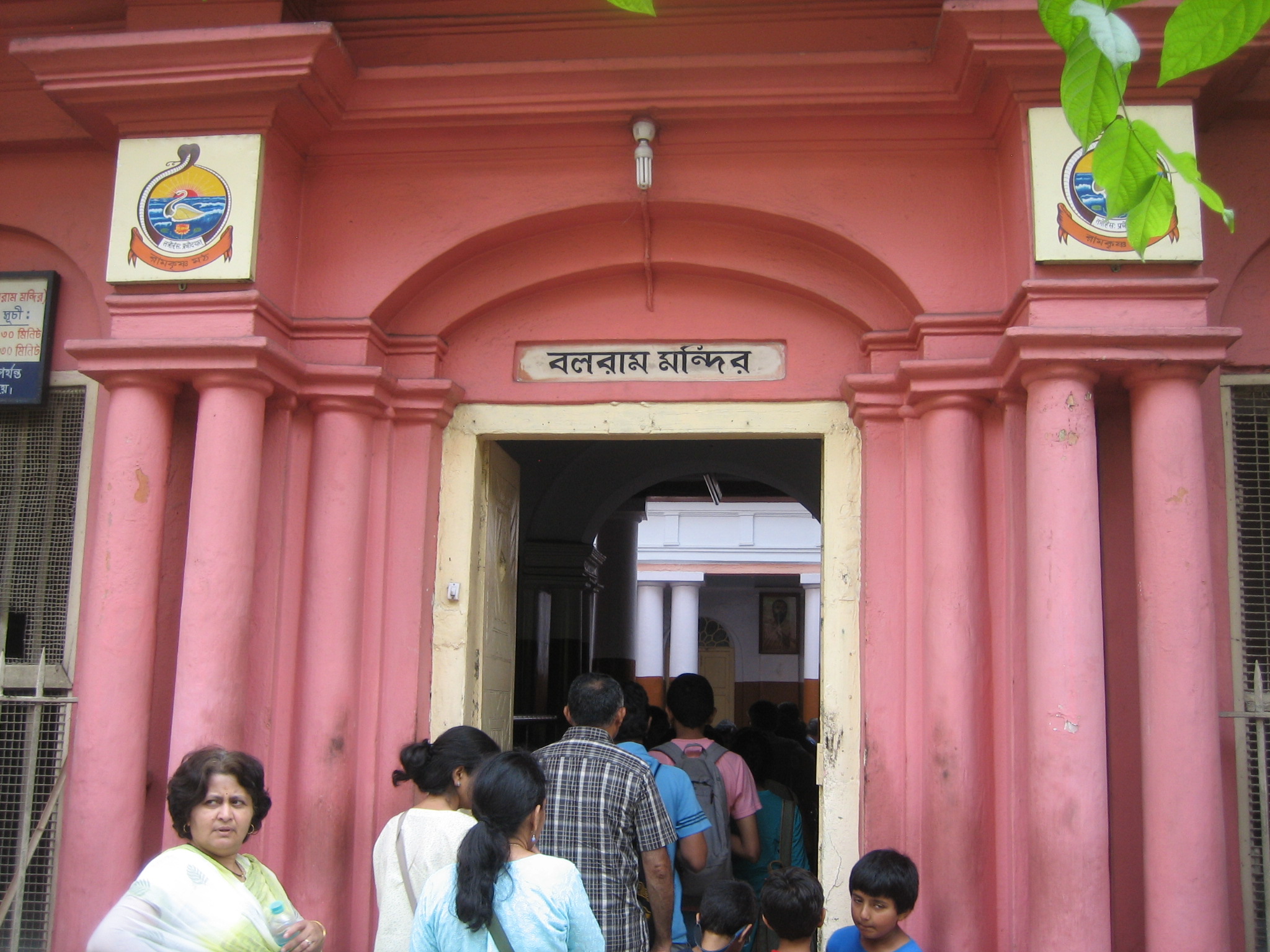
Buses numbers 2 and 3 had problem where to park the buses on a narrow busy road to drop off the pilgrims.  Bus drivers found a place closest to Balaram Mandir where the road has little more space on the side.  They stopped the buses. Deba Uncle and Club7 members blocked the road and all the Vidyapith people got off the buses as fast as they could.  Still, people in the vehicles started honking to complain that they were getting late for their work.  But, it was not bad.

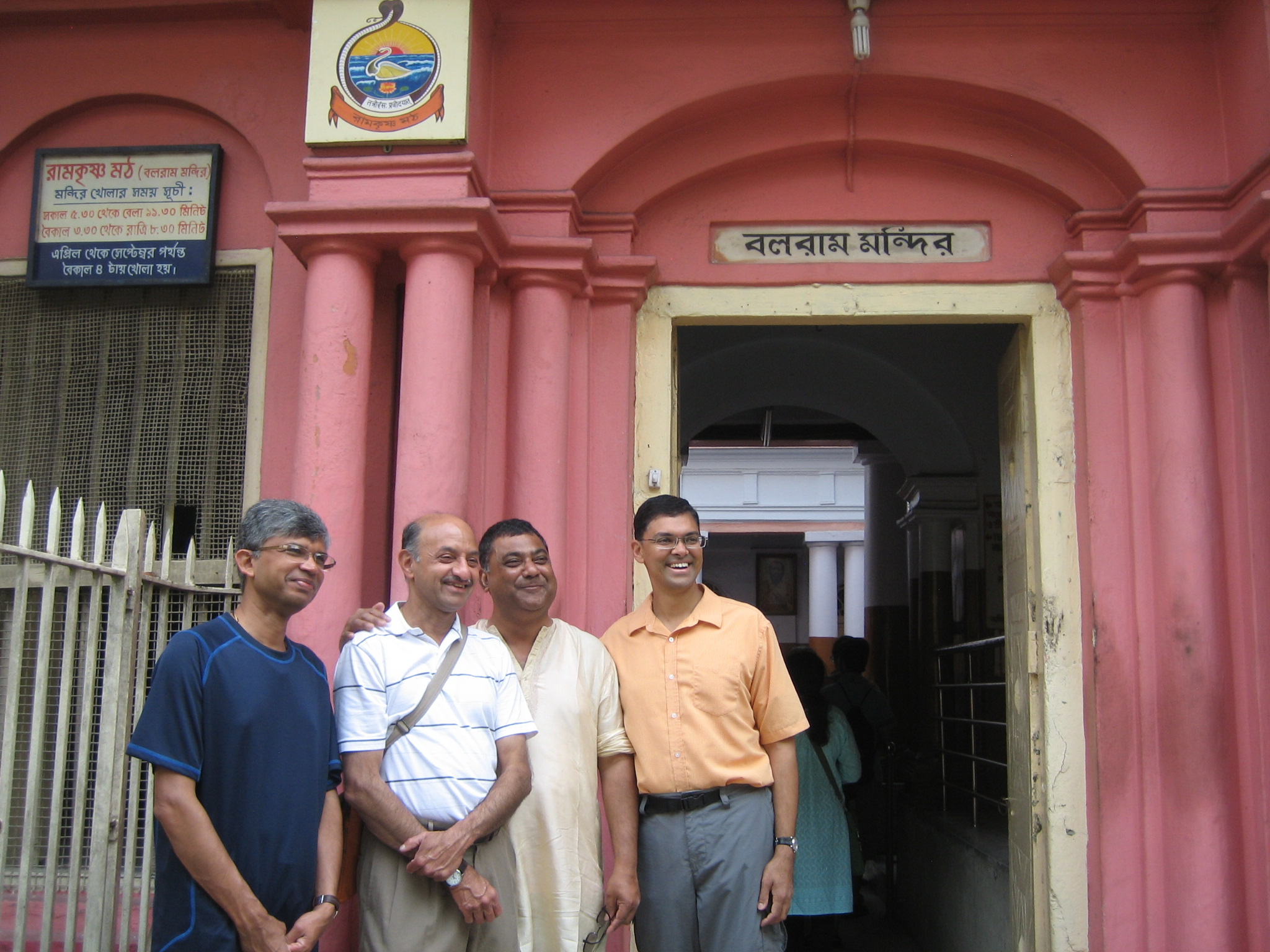
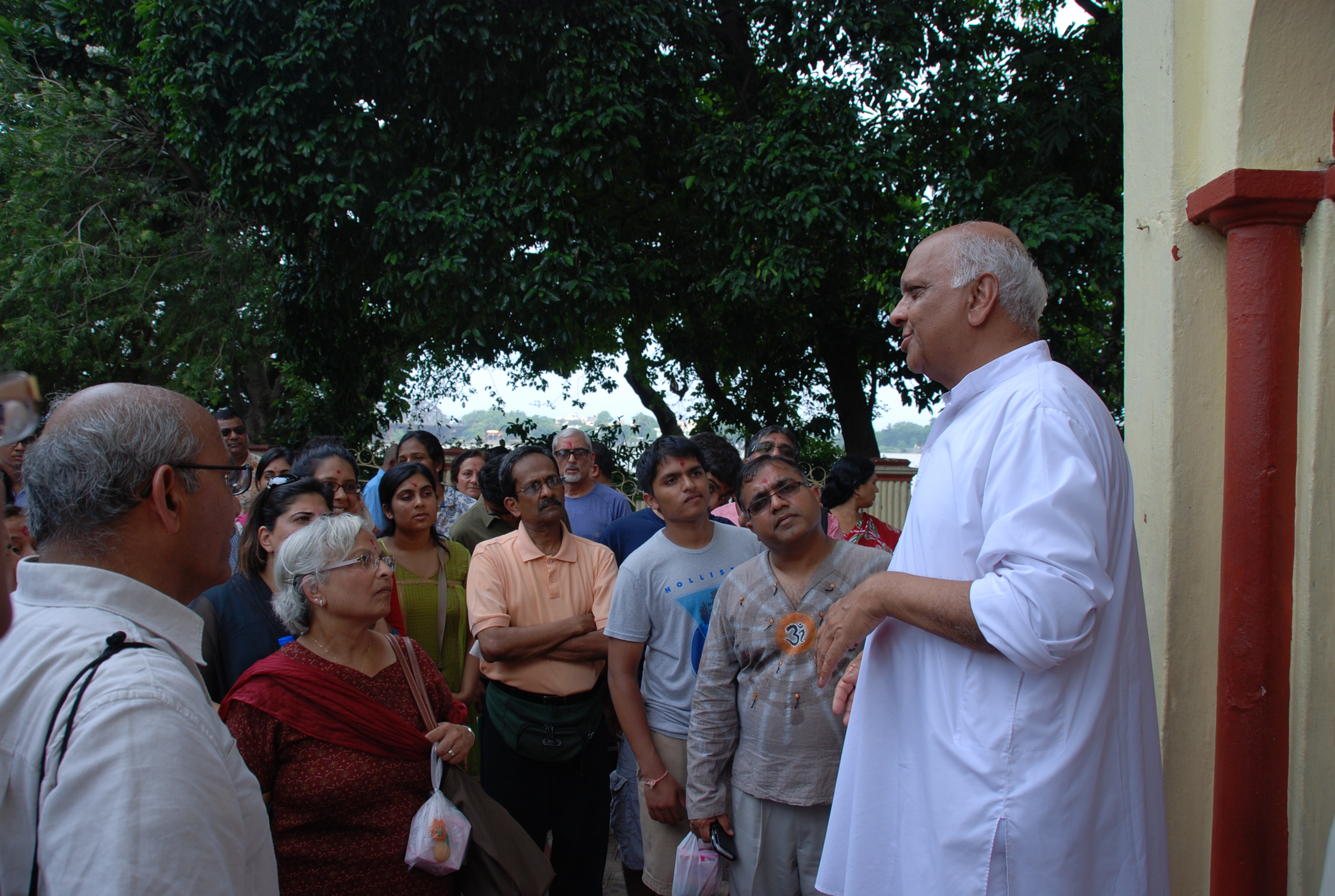
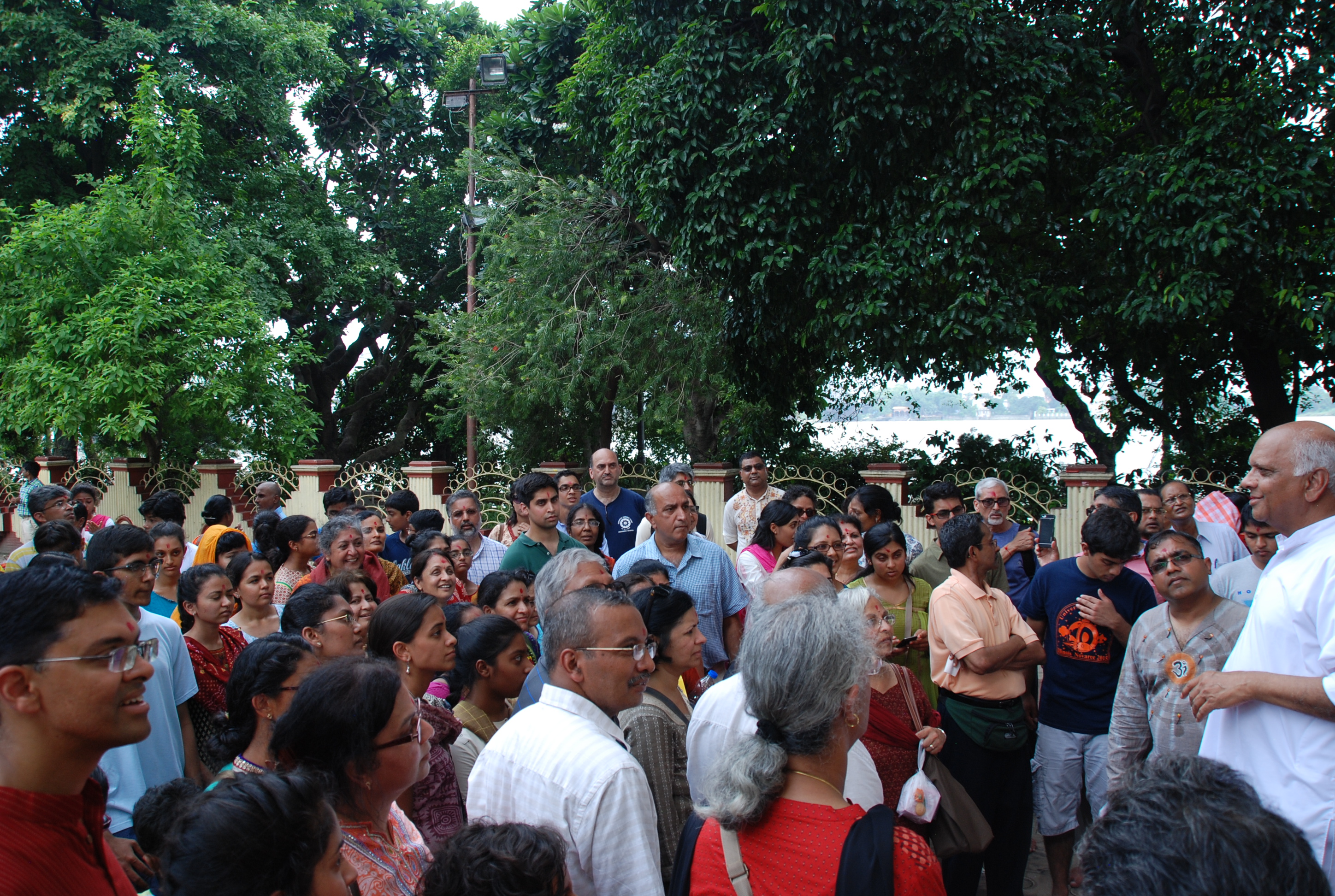
On the walk going from one place to another, we had to be extra cautious because there were small children in the group and we did not want to lose anyone.  The Club7 team used flags and umbrellas to guide us and to keep us together in a line.  On the way, we enjoyed seeing shops and daily activities of people.  One group arrived at Balaram Mandir a bit early and had to wait to go inside the Shrine room.  We gathered on the ground floor where a guide explained the importance of Balaram Mandir.  Soon, a devotee in charge of the group allowed us to go to the shrine.
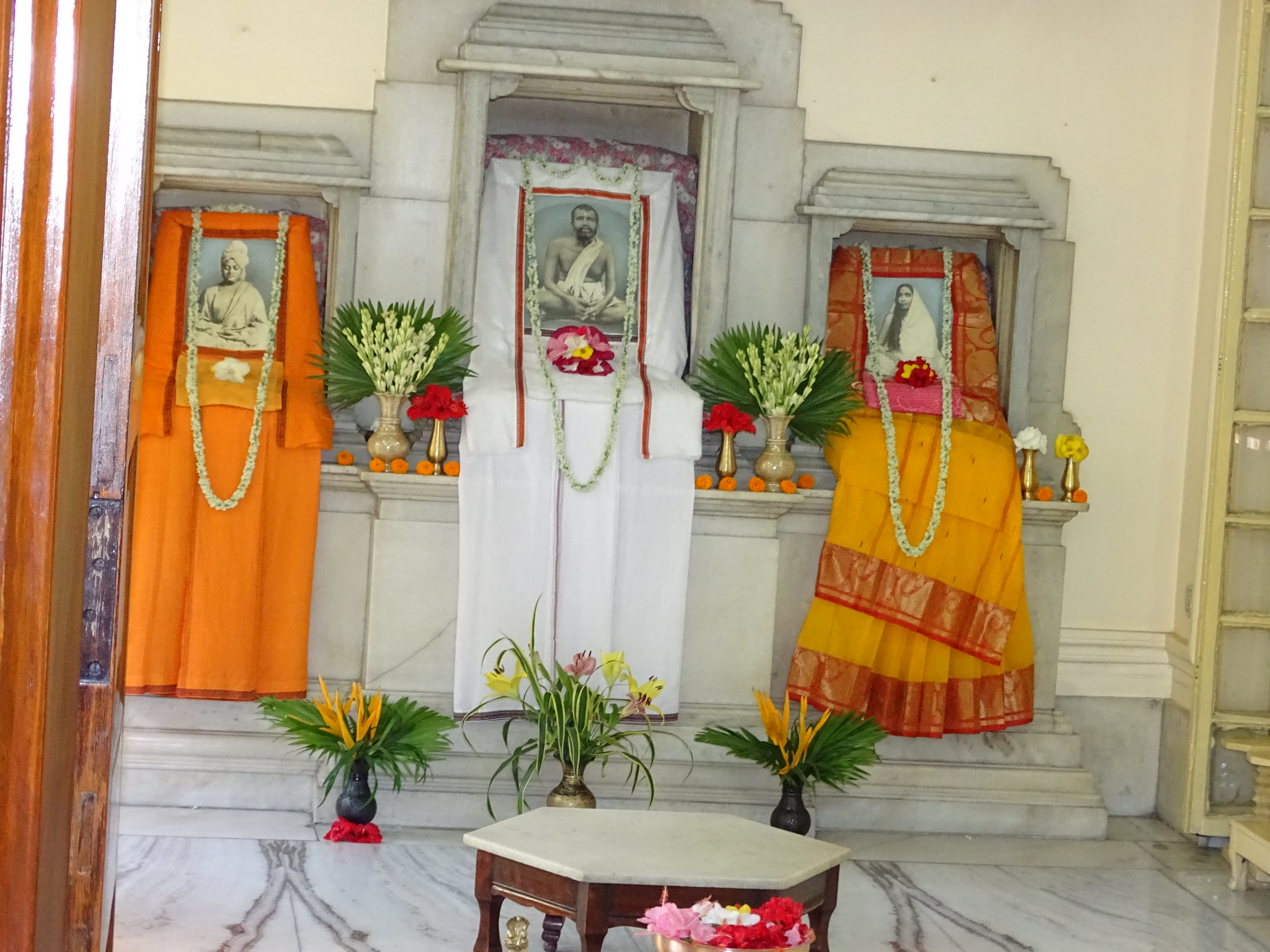
3b2 3b

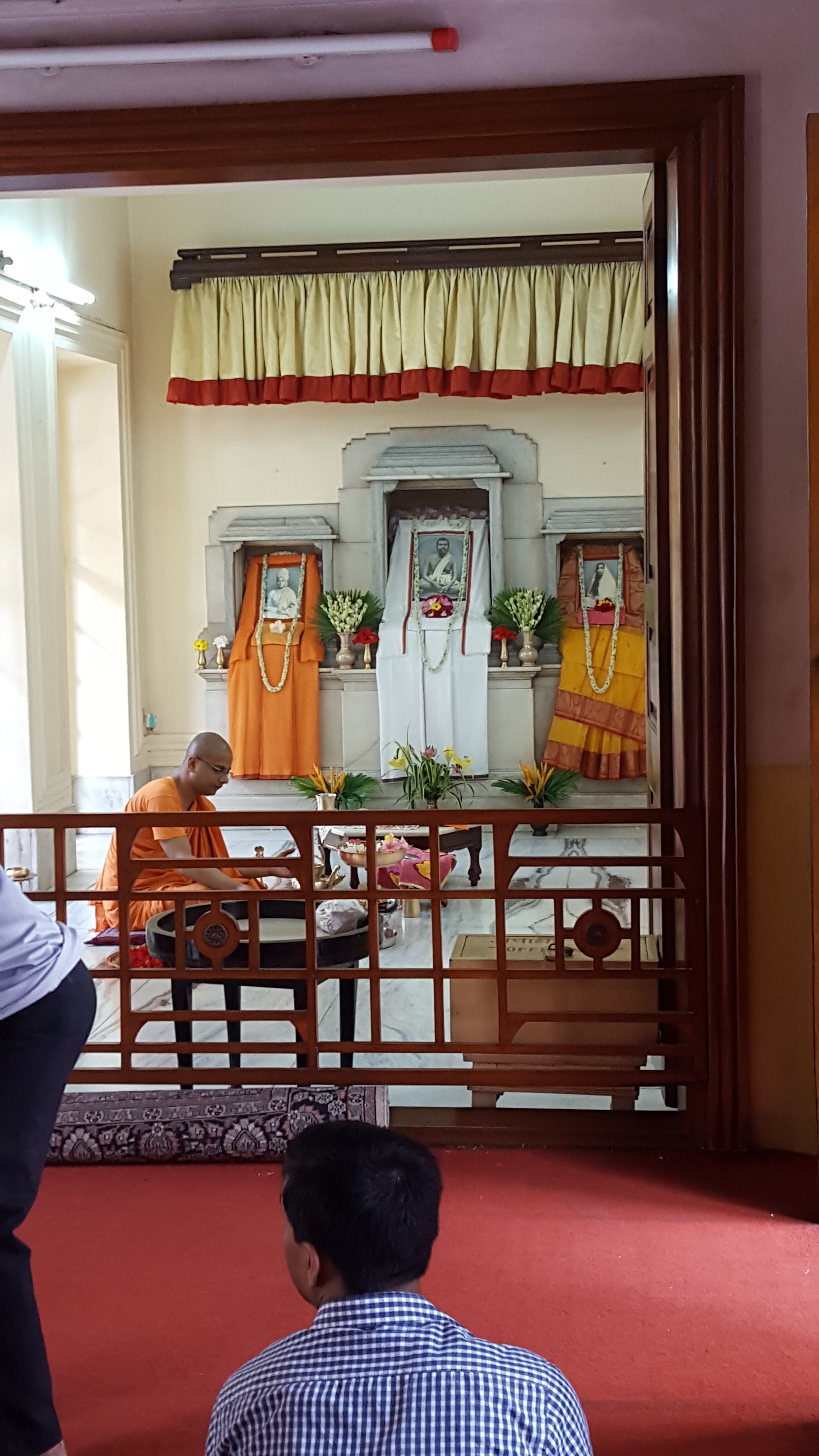
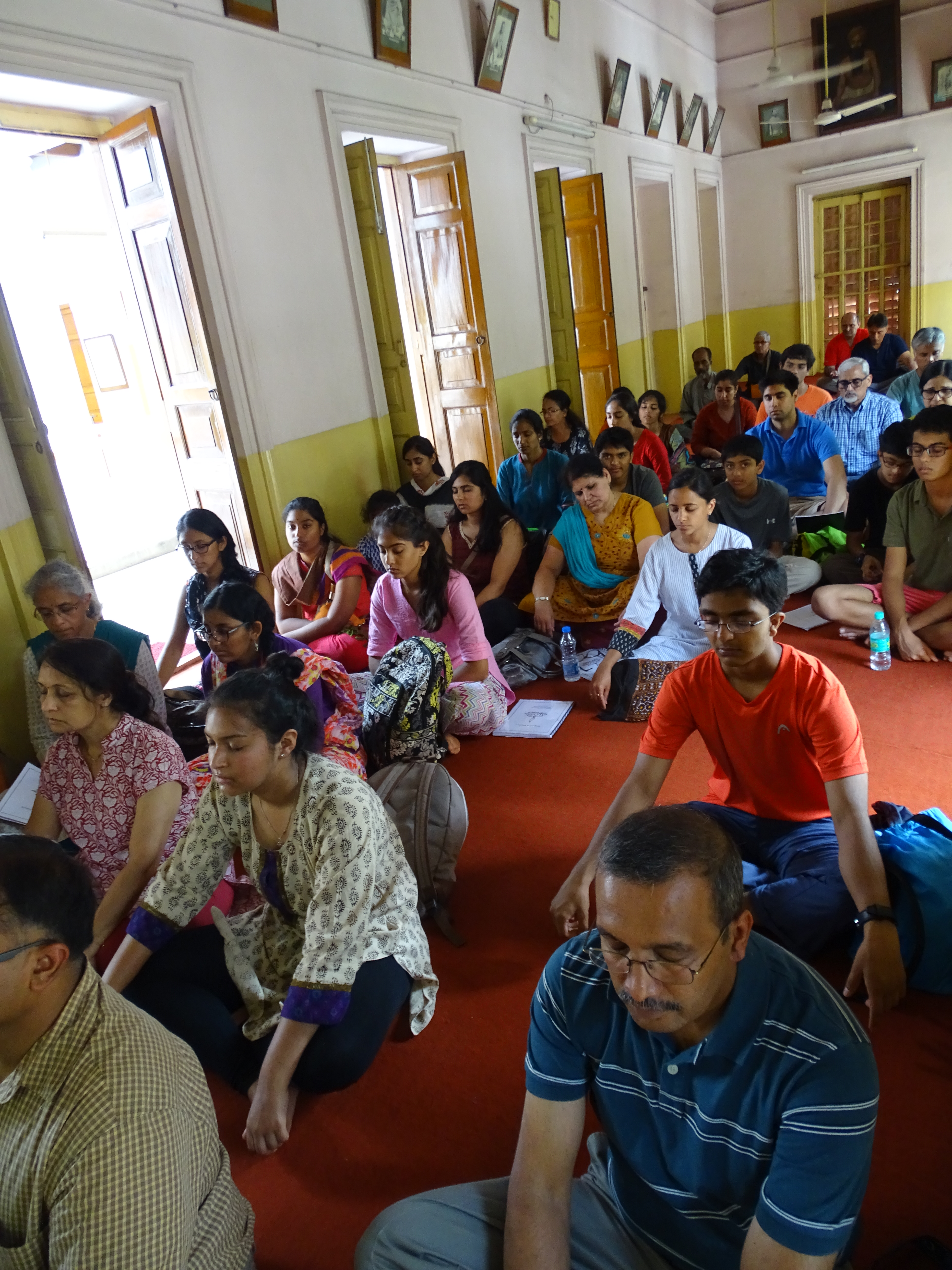
One Swami was sitting in the Shrine engaged in worship.  There was serene atmosphere in the room.  This was the room where Sri Ramakrishna met all his devotees, talked to them about God, sang and danced taking God’s name and lost himself in samadhi.  The shrine room had many doors and windows and all felt the great refreshing touch of the morning breeze and heard the chirping of birds.  All sat down quietly and did japa for about 15 – 20 minutes.  The thought that Sri Ramakrishna and his direct disciples had once sat in this very room, uplifted our minds.

When the group from Bus 1 came, the worship was over.  They also sat and did japa for 15 – 20 minutes.
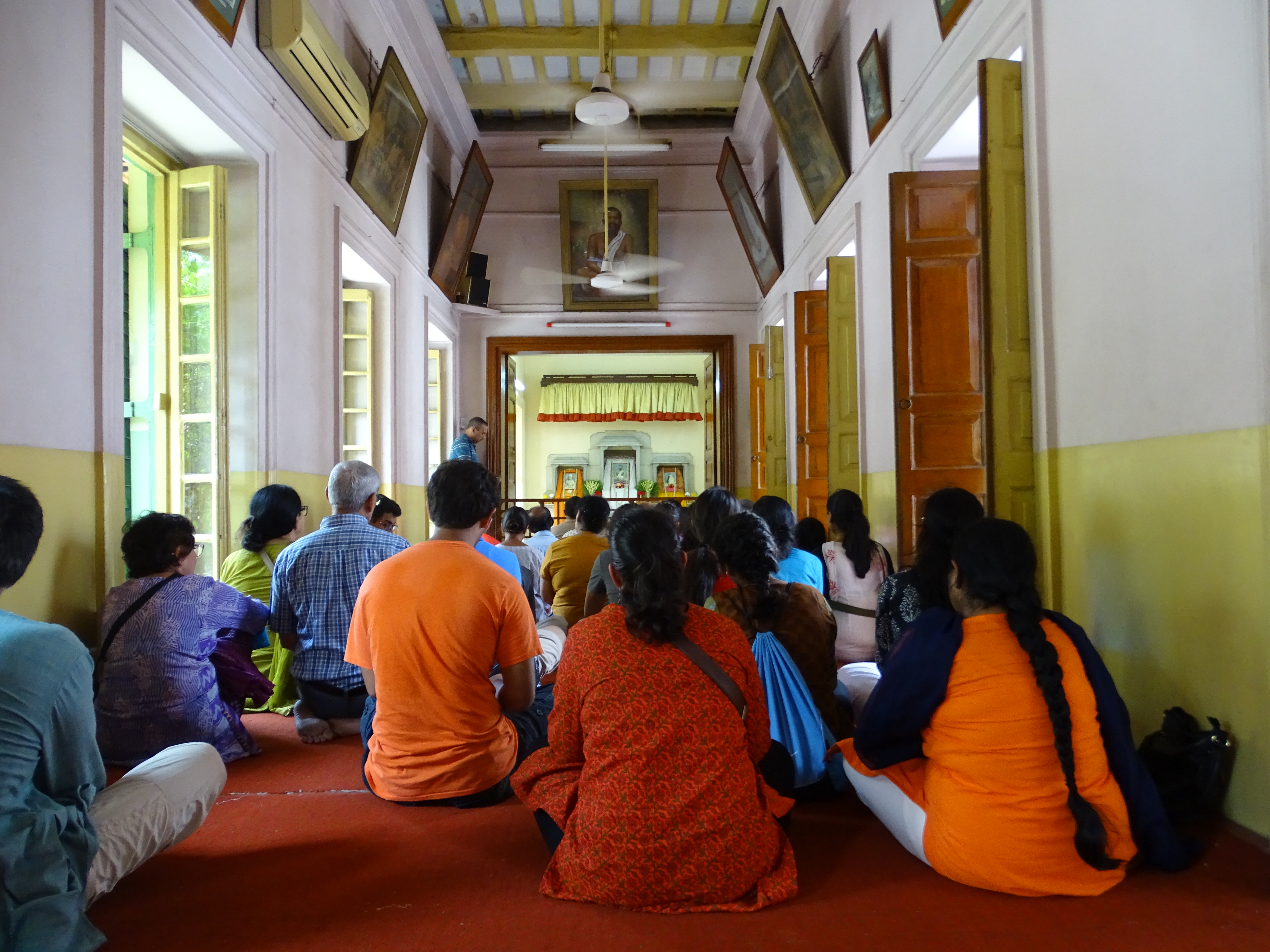
3d1 3f

They then asked the person in charge if they could offer few dhoons and bhajans to Sri Ramakrishna.  Since there was no one else in the shrine room, they received the permission.  All of them sang “Paramhansa Ramakrishna…,” “Jaya Jaya Ramakrishna…,” “Jaya Sri Sarade…,” and “Tumi Brahma Ramakrishna..”  They knew that this would be a great memory for them.  Whenever they will sing or listen to these dhoons-bhajans in the future, they will remember Balaram Mandir and the presence of Thakur, Maa, and Swamiji.

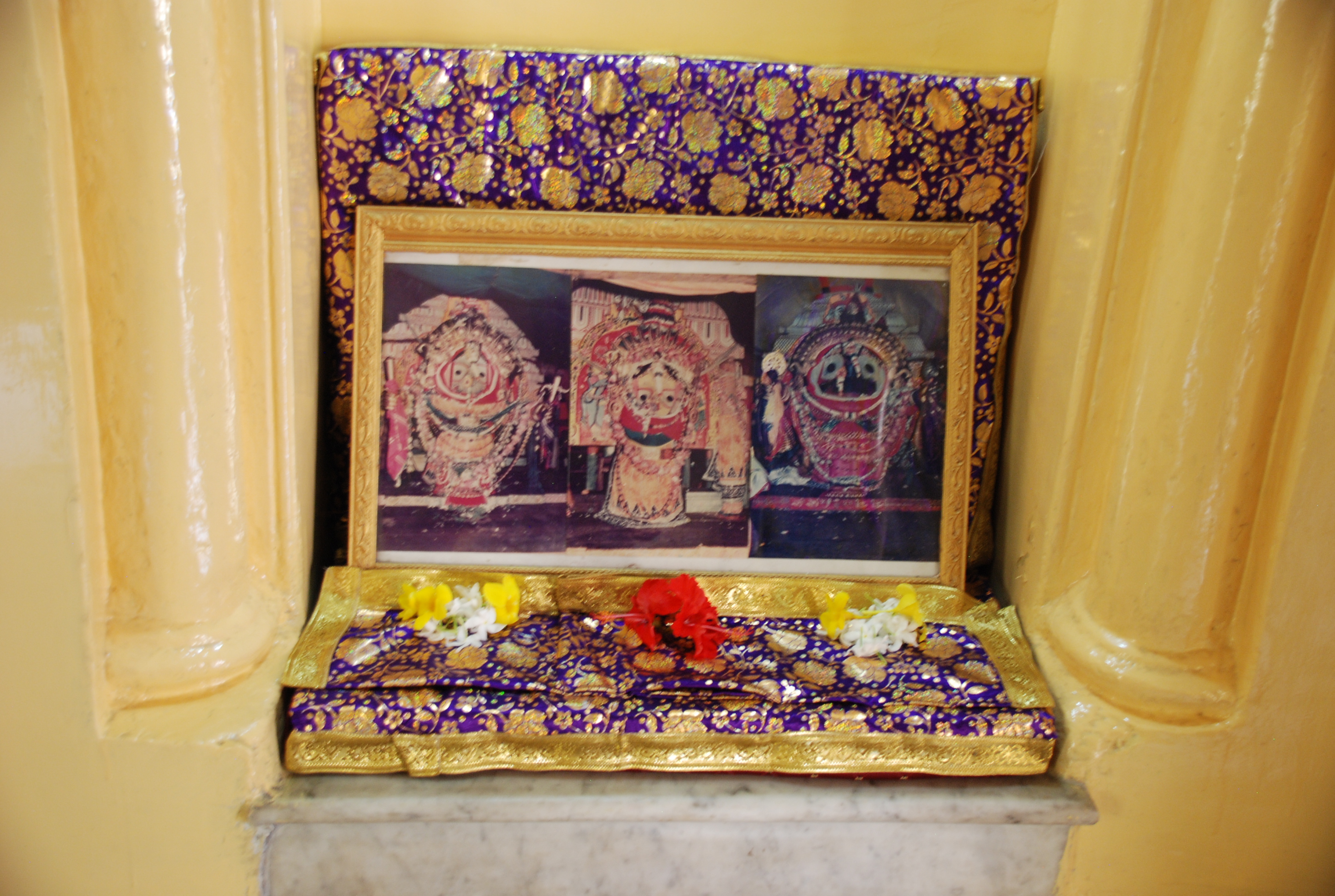
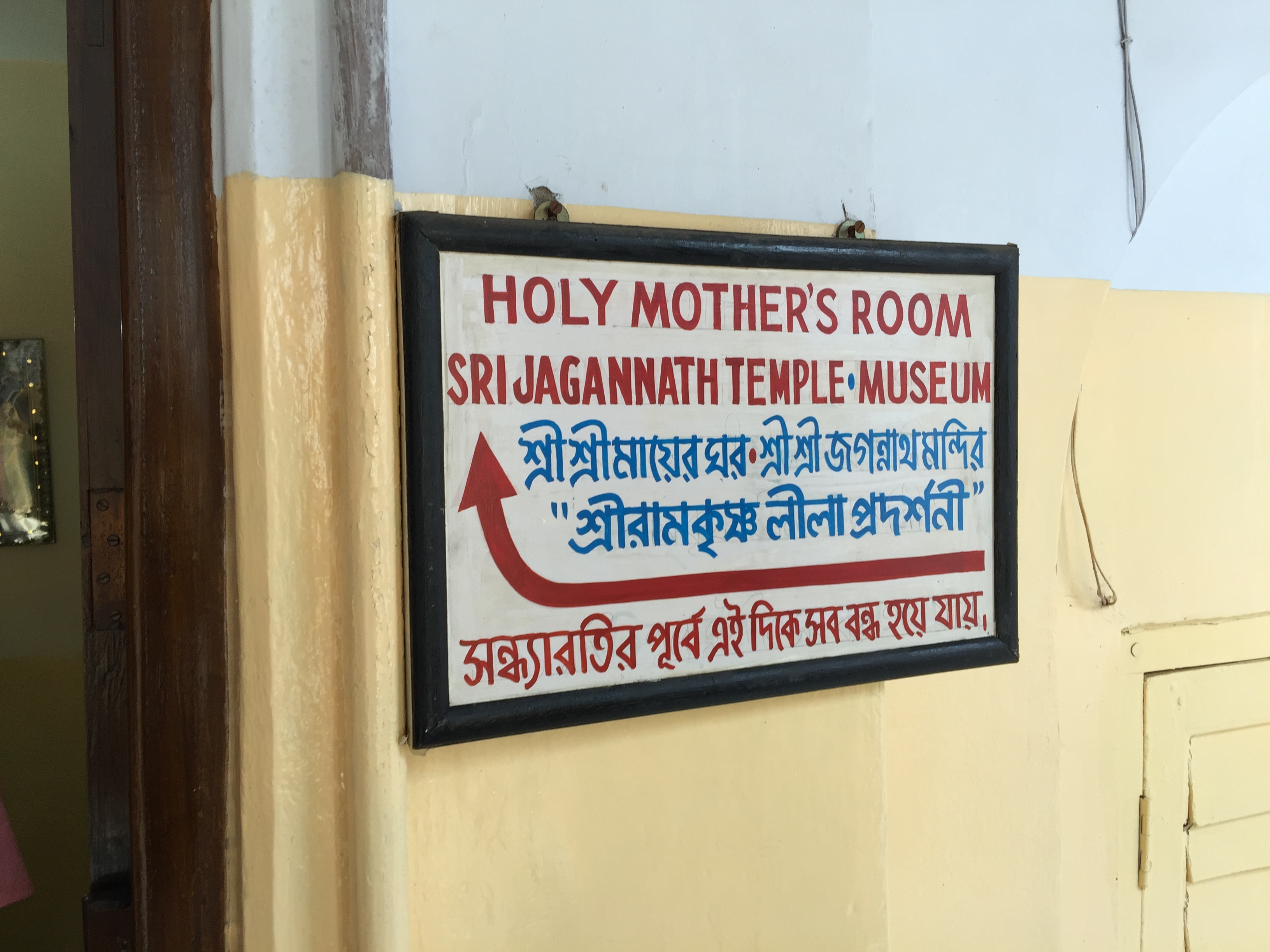
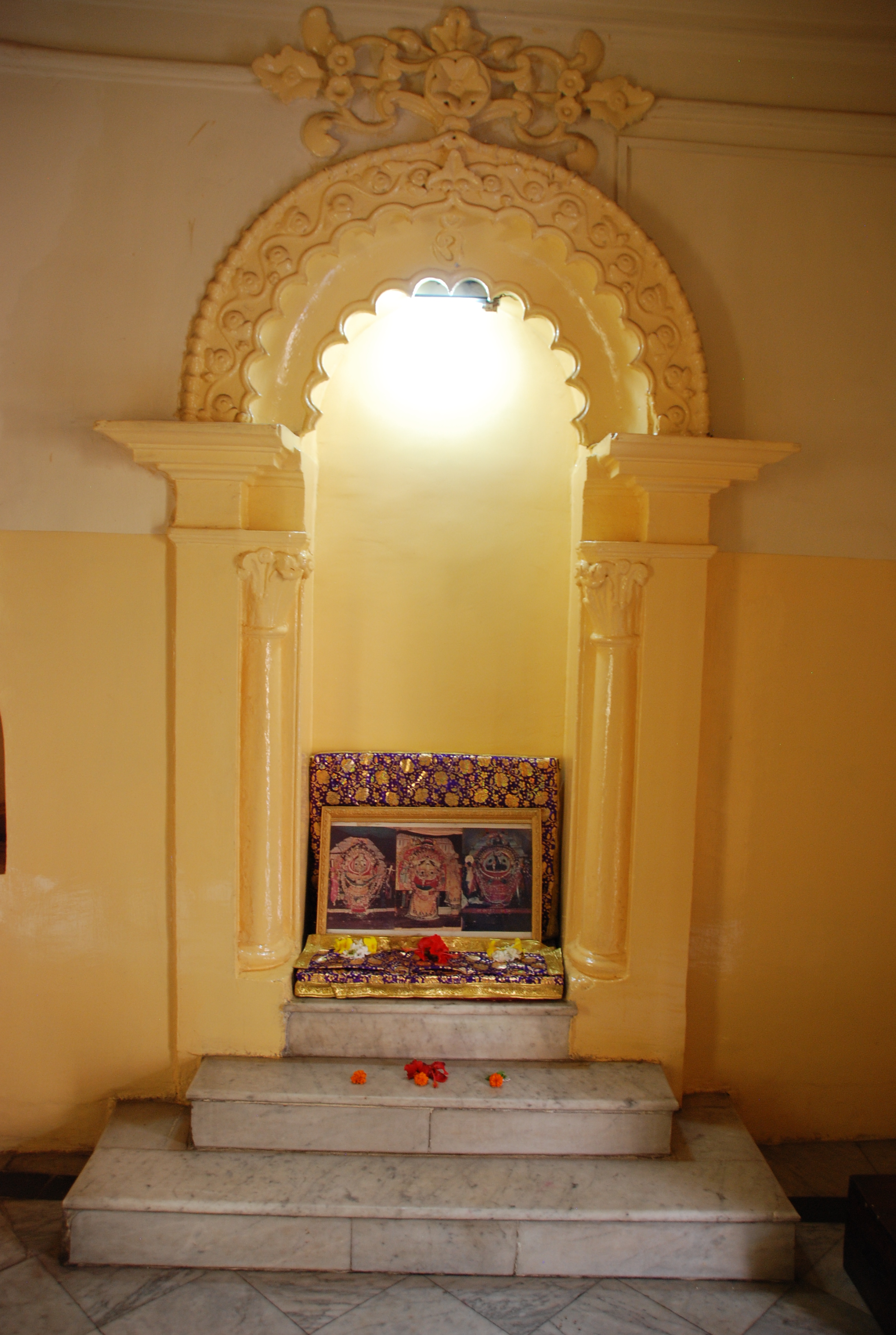
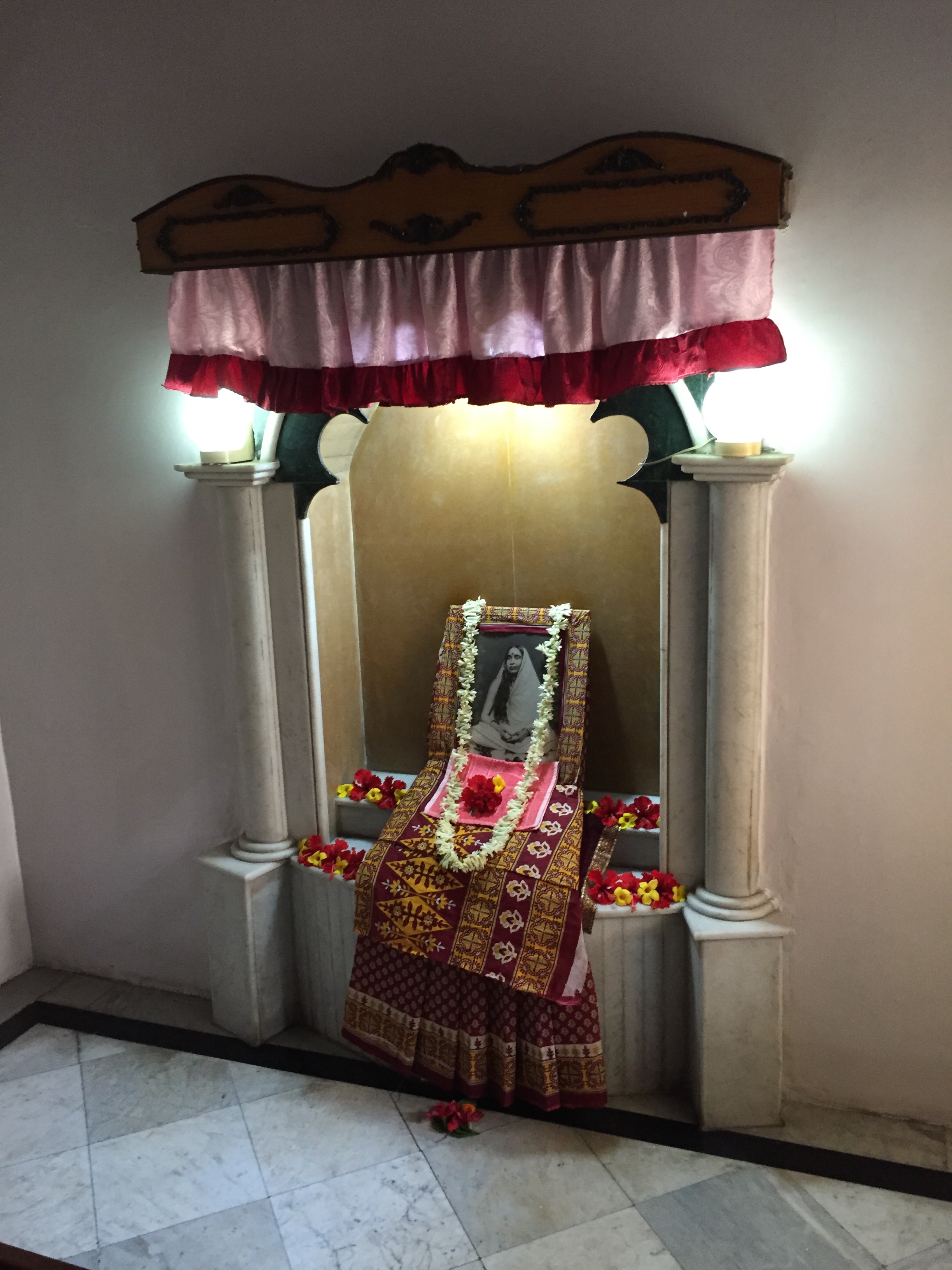
After doing japa in the shrine room, each group visited the other two shrines of the Balaram Mandir: one of Lord Jagannatha and the other of Holy Mother.
8 a1a

10 Jagannath1 10 Jagannath4

Lord Jagannath was the family deity of Balaram Bose.
Balaram Mandir Devotee-Guide 5Rath1

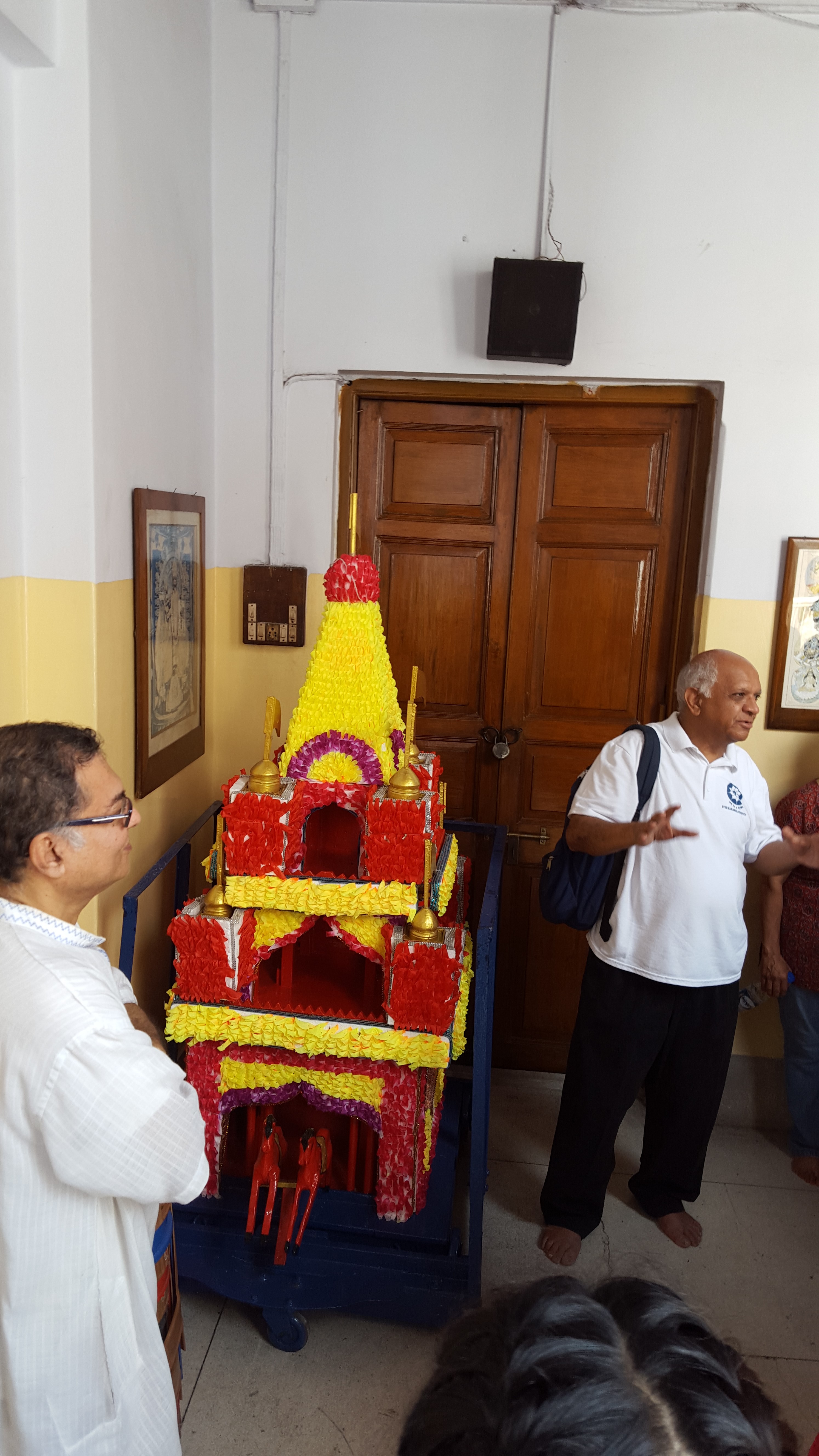
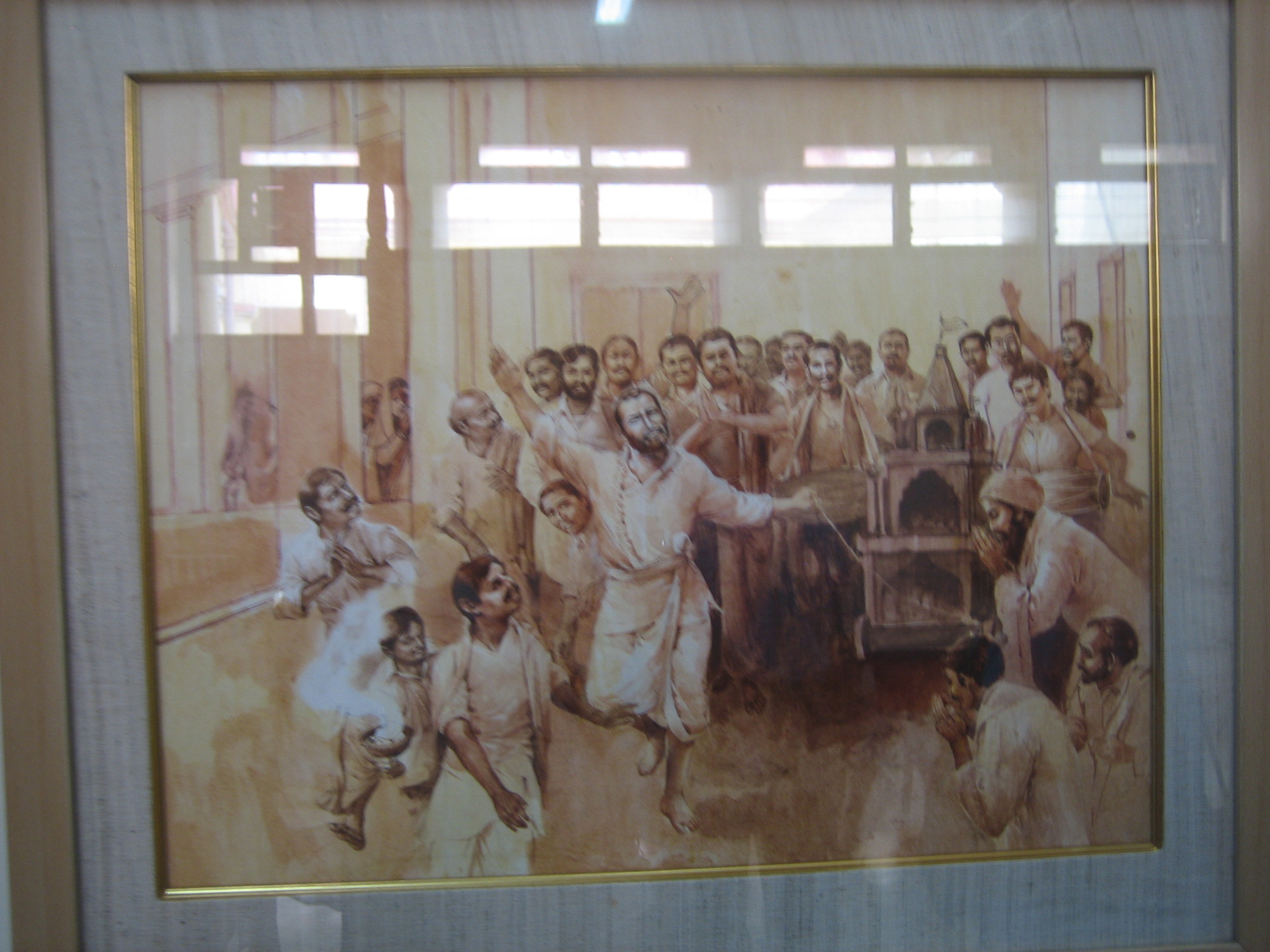
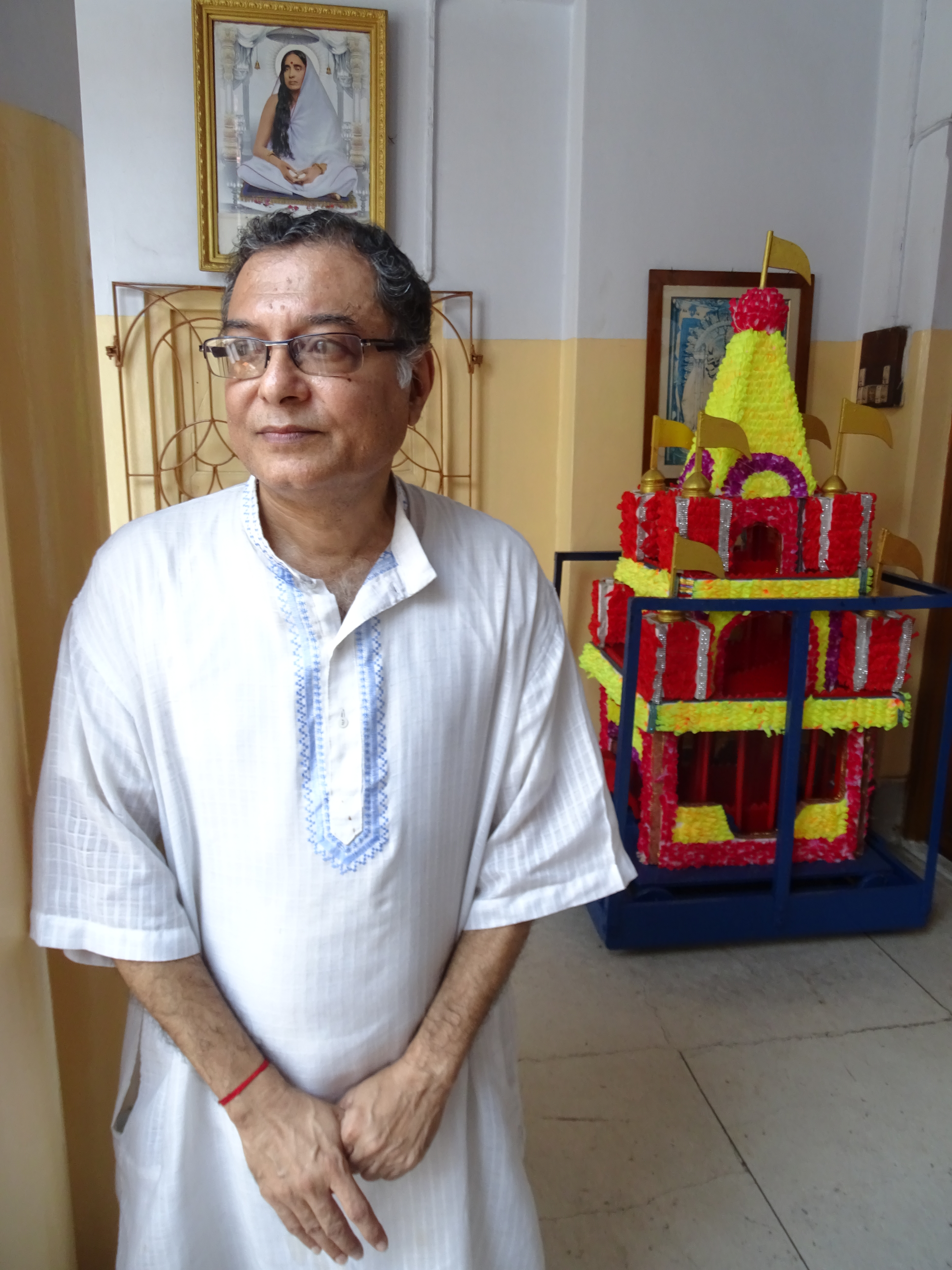
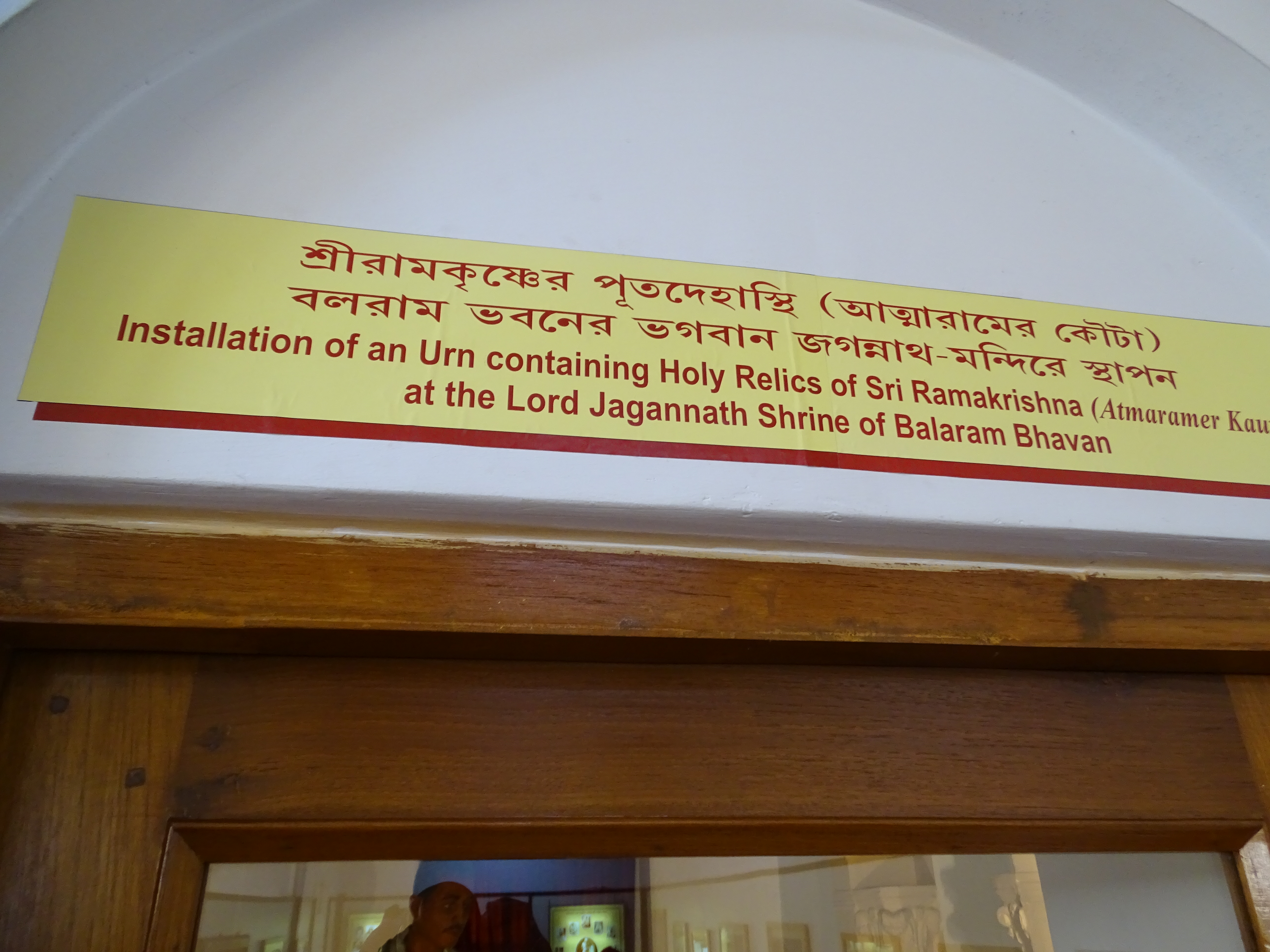
Every year Balaram Bose used to celebrate “Ratha Yatra” in his home.  The devotees used to decorate Lord Jagannath’s small wooden chariot with cloth, flowers, and flags. They would then place Lord Jagannath’s image and other images into the chariot and would pull the chariot singing the name of the Lord Jagannath and dancing in the lobby of the first floor.  Sri Ramakrishna had attended these celebrations and had actually pulled the chariot himself, singing and dancing to the Lord’s name in divine ecstasy while singing.  We all reverently saw the chariot and also Lord Jagannath’s image in the shrine.
8 8a

Holy Mother’s shrine is in the room where Holy Mother stayed whenever she visited Kolkata from Jayaram Bati or Kamarpukur after Sri Ramakrishna passed away.
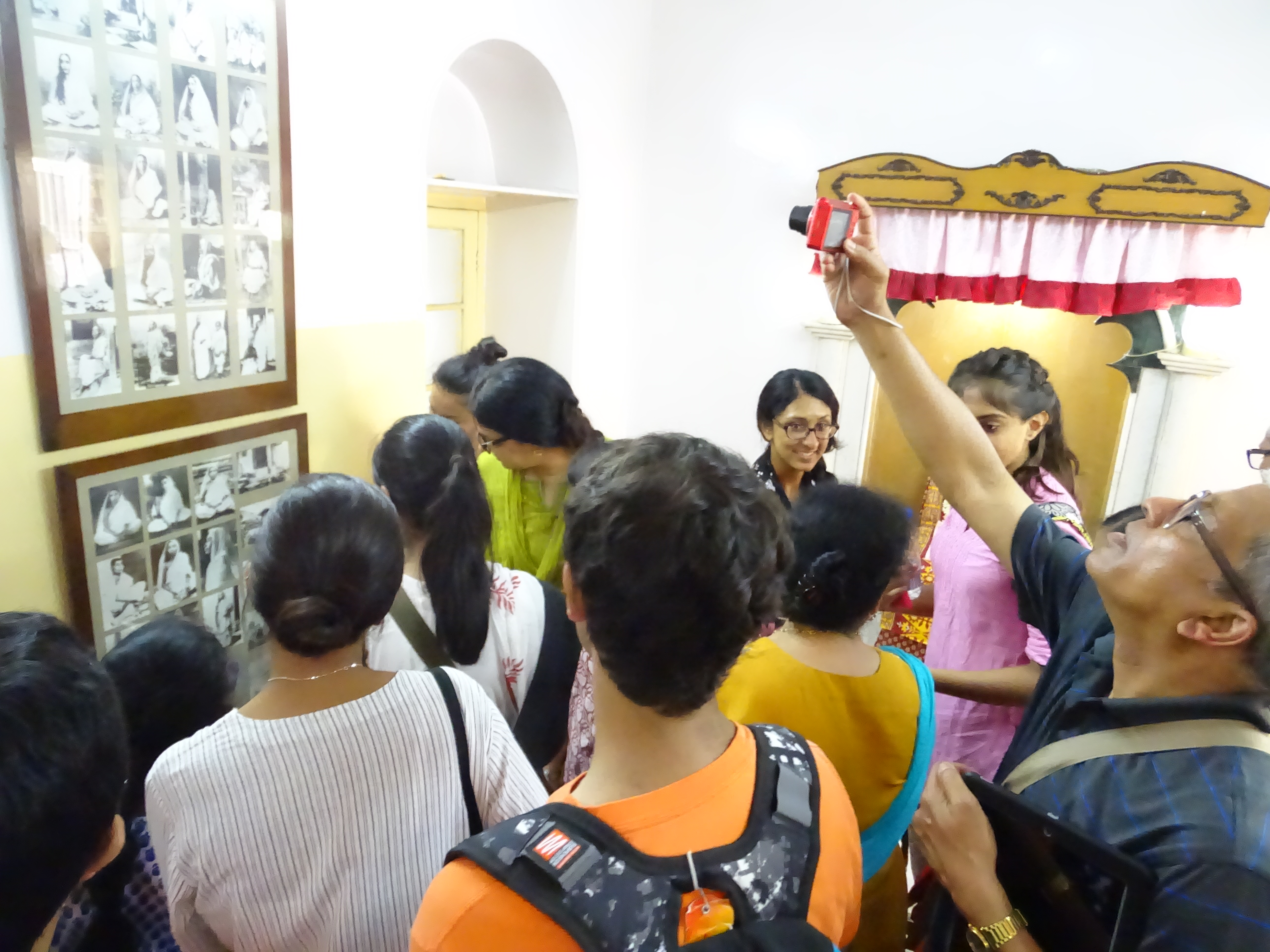
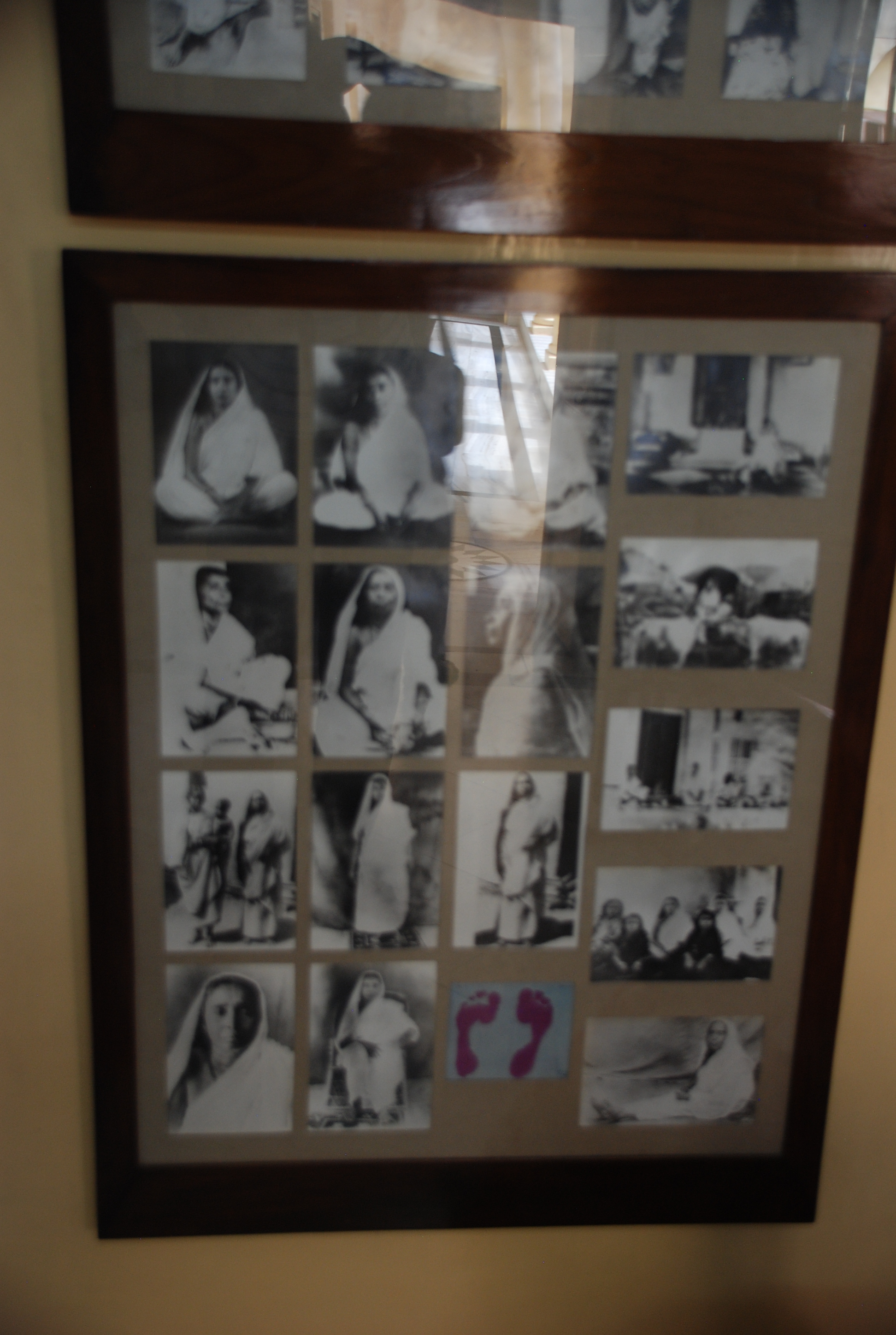
9 9a 4a 5b 5a 4f 4g 4h1 4k

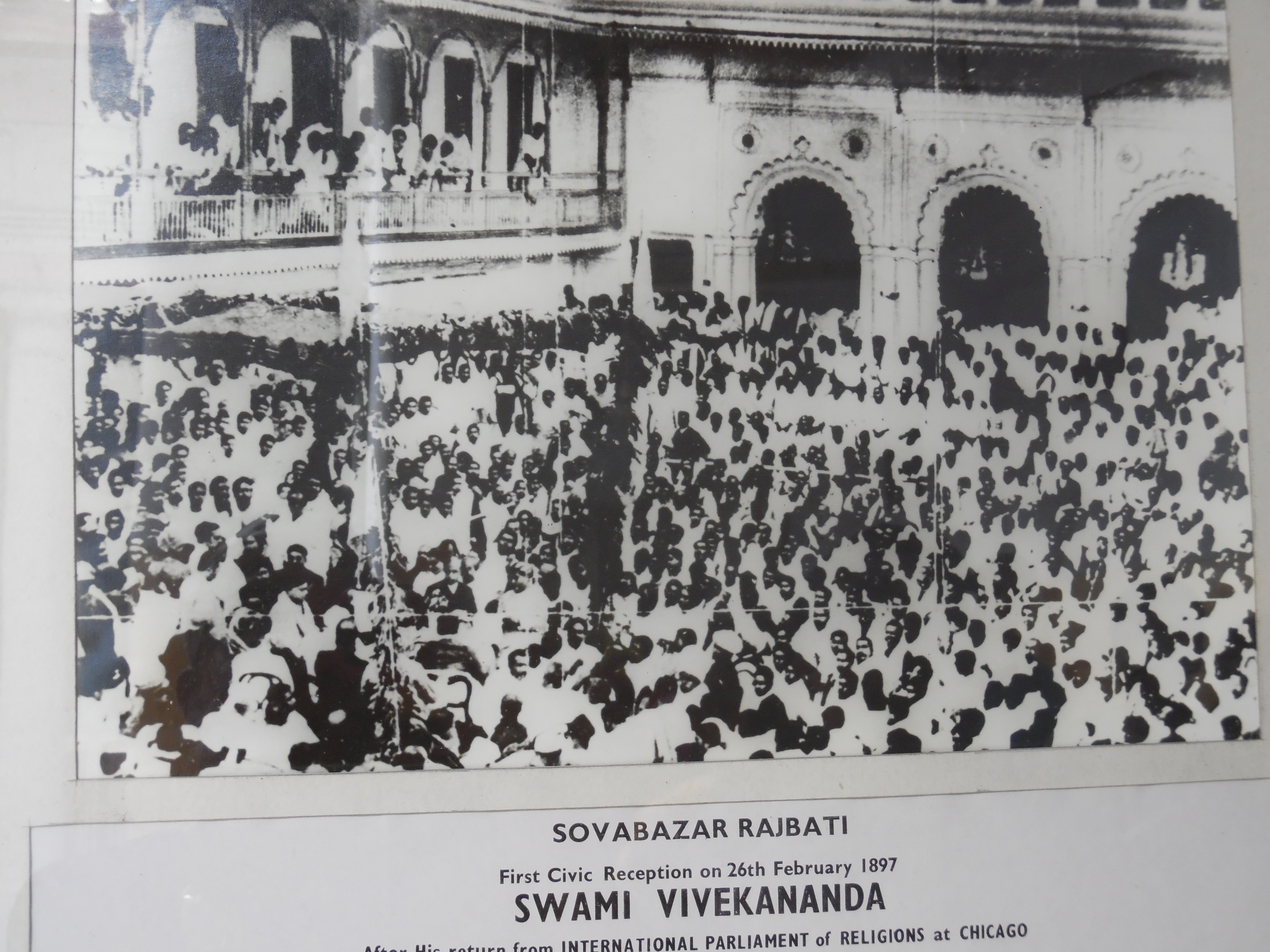
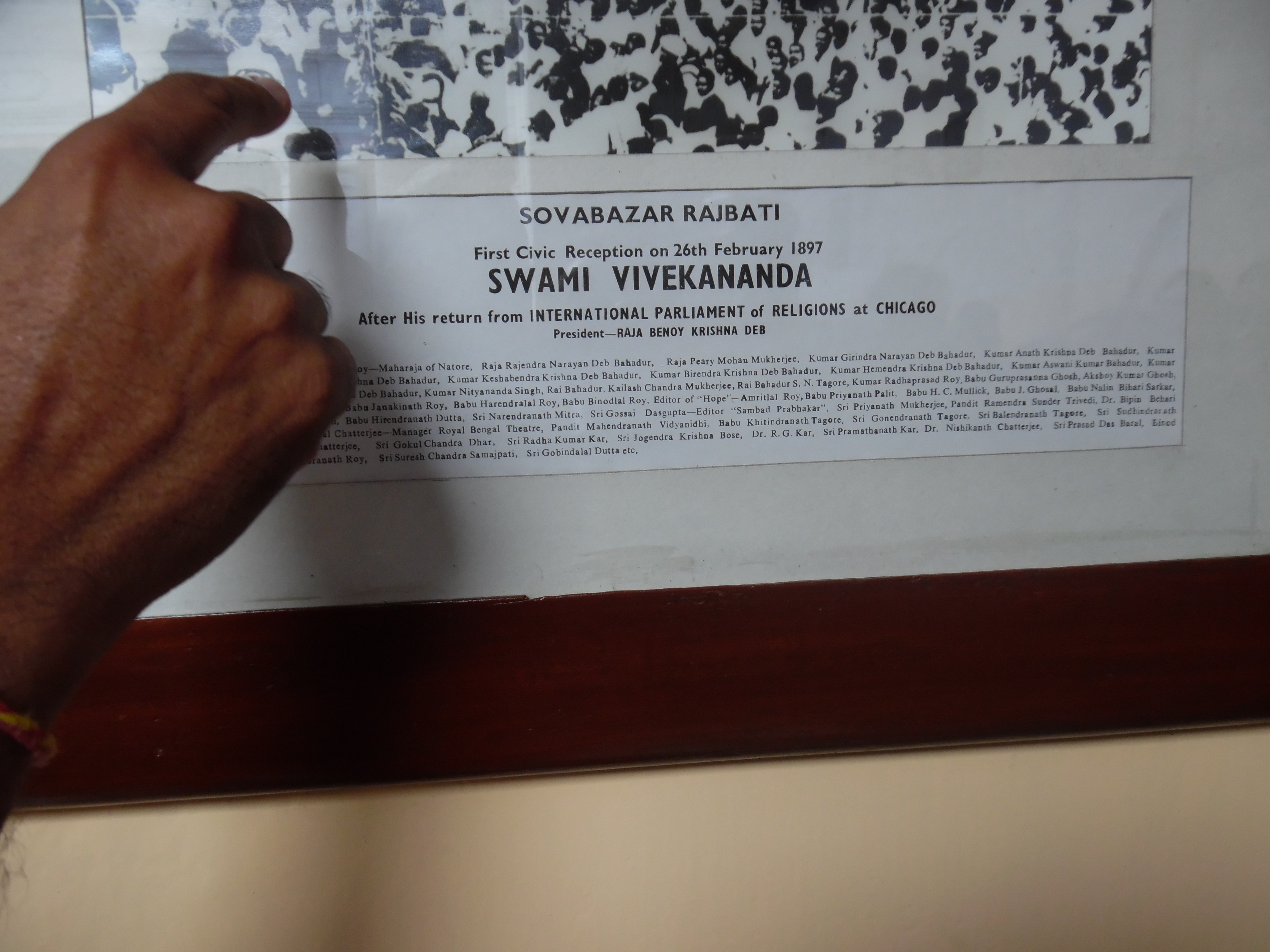
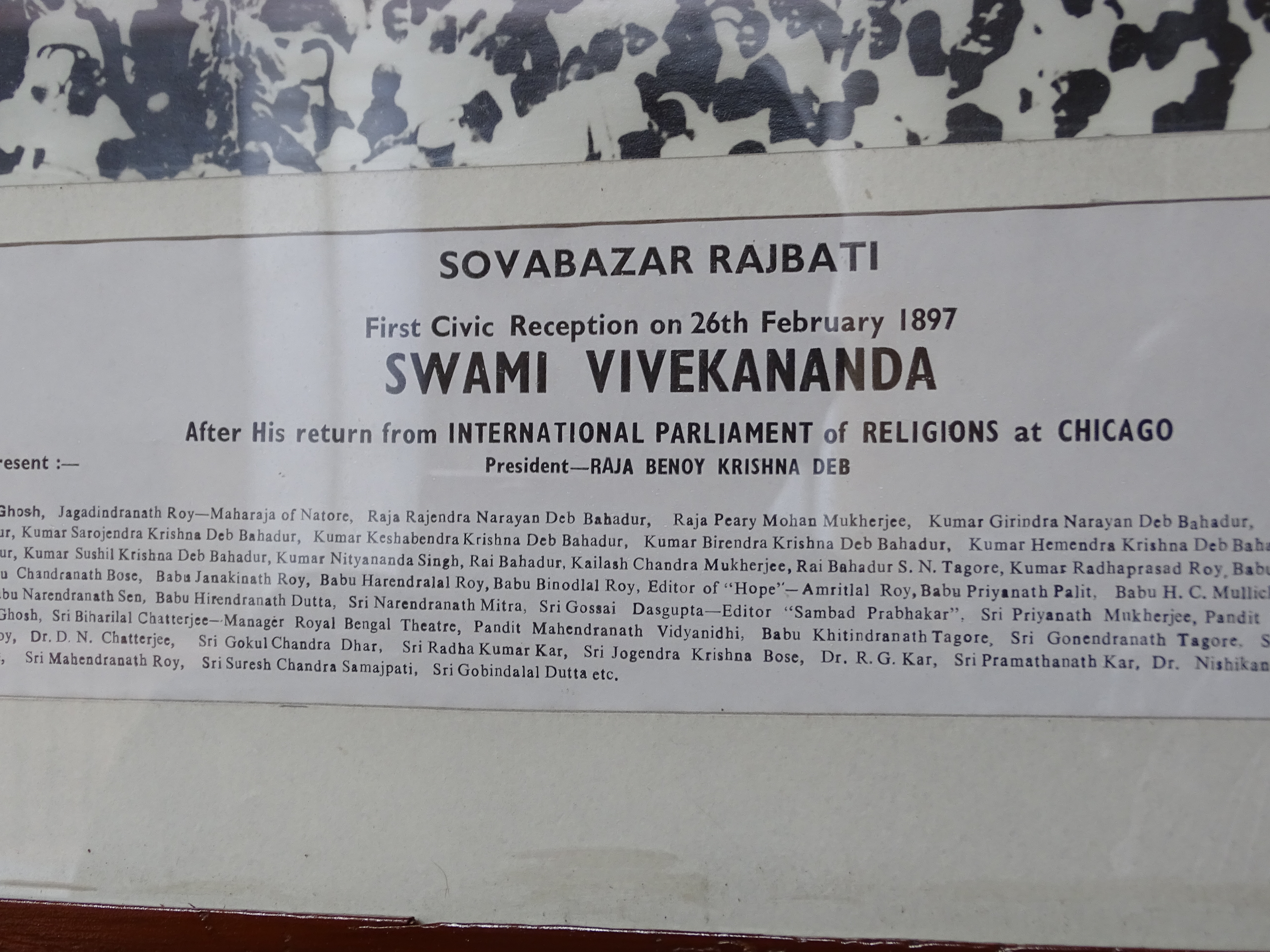
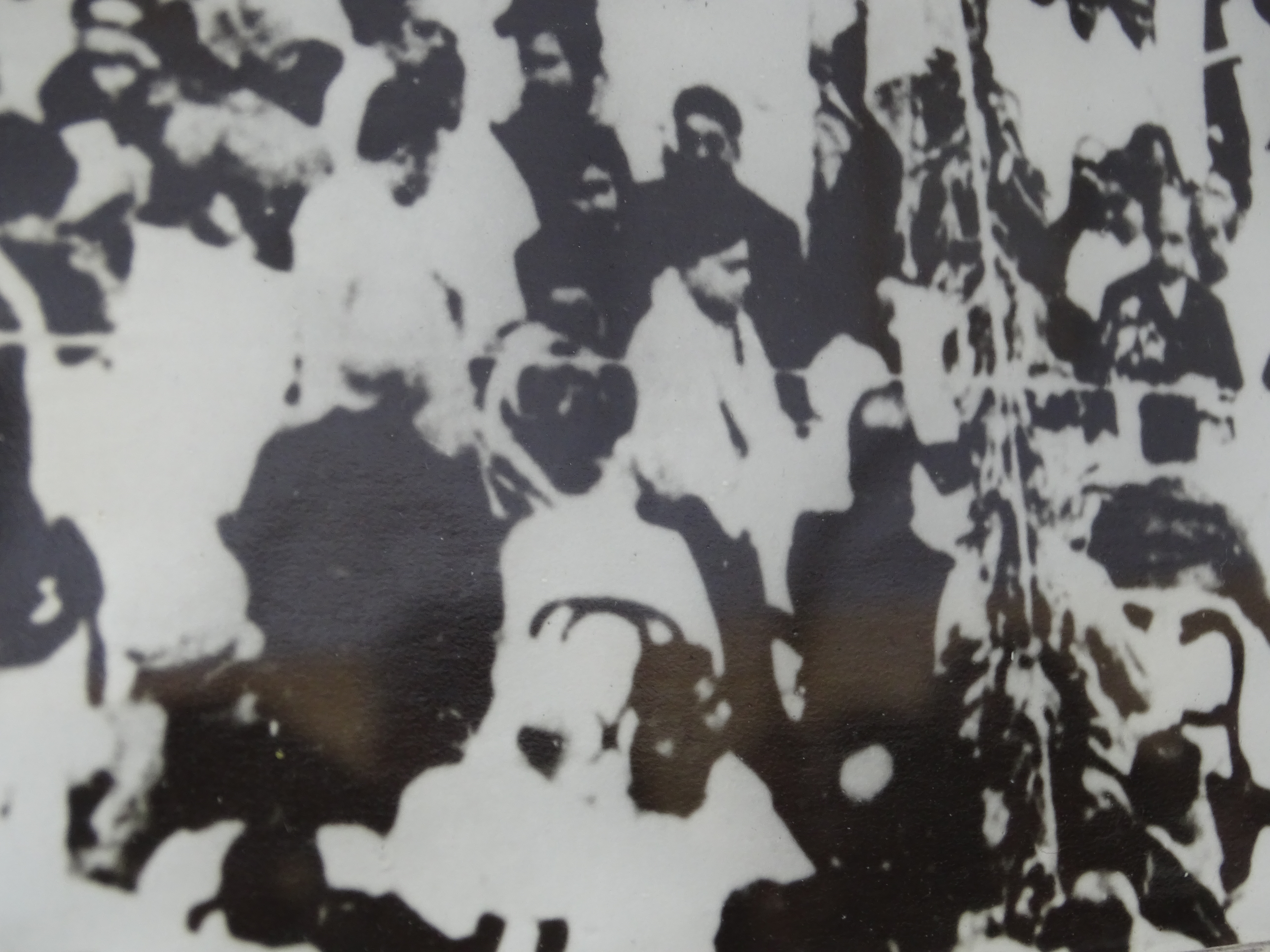
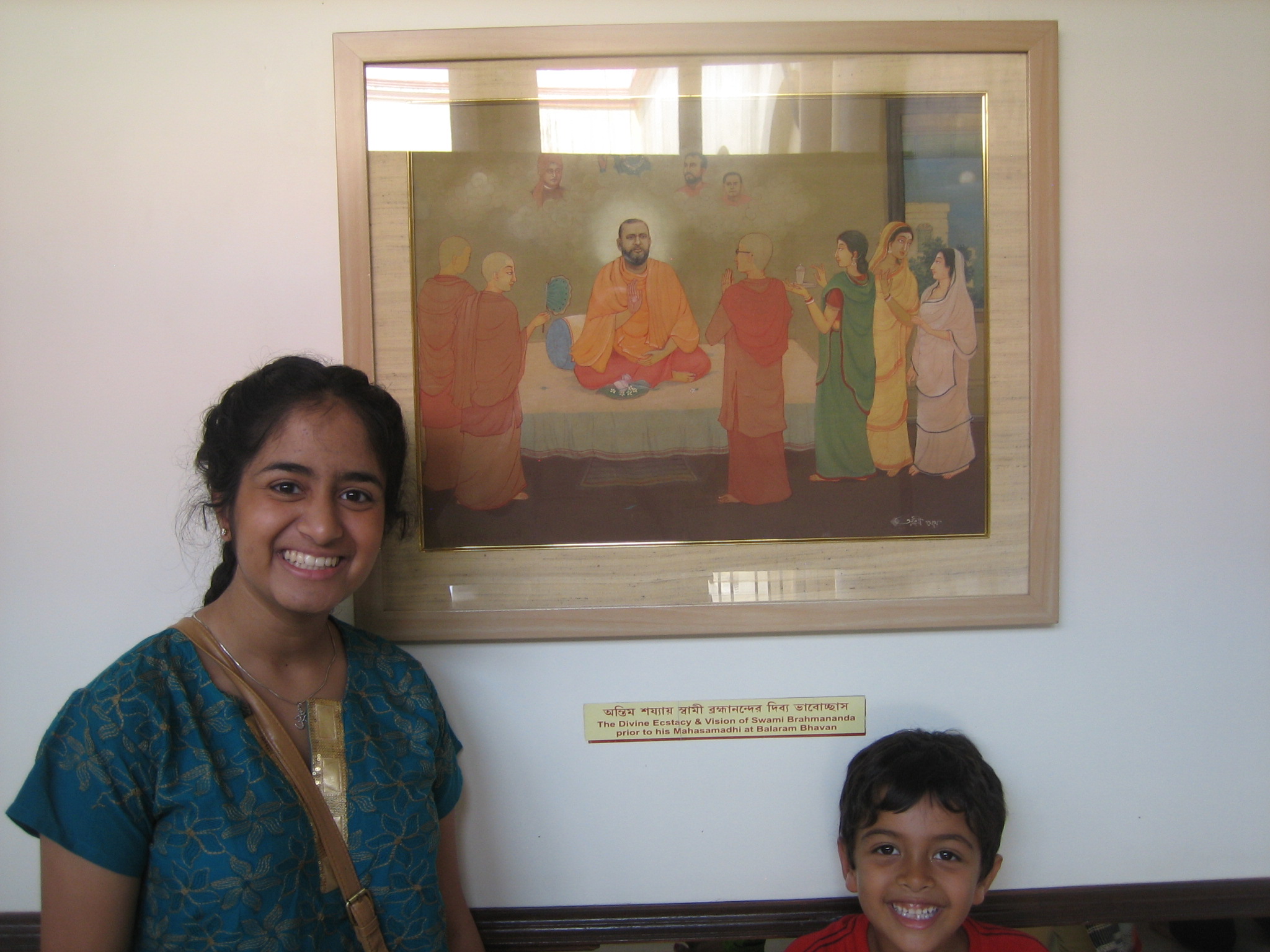
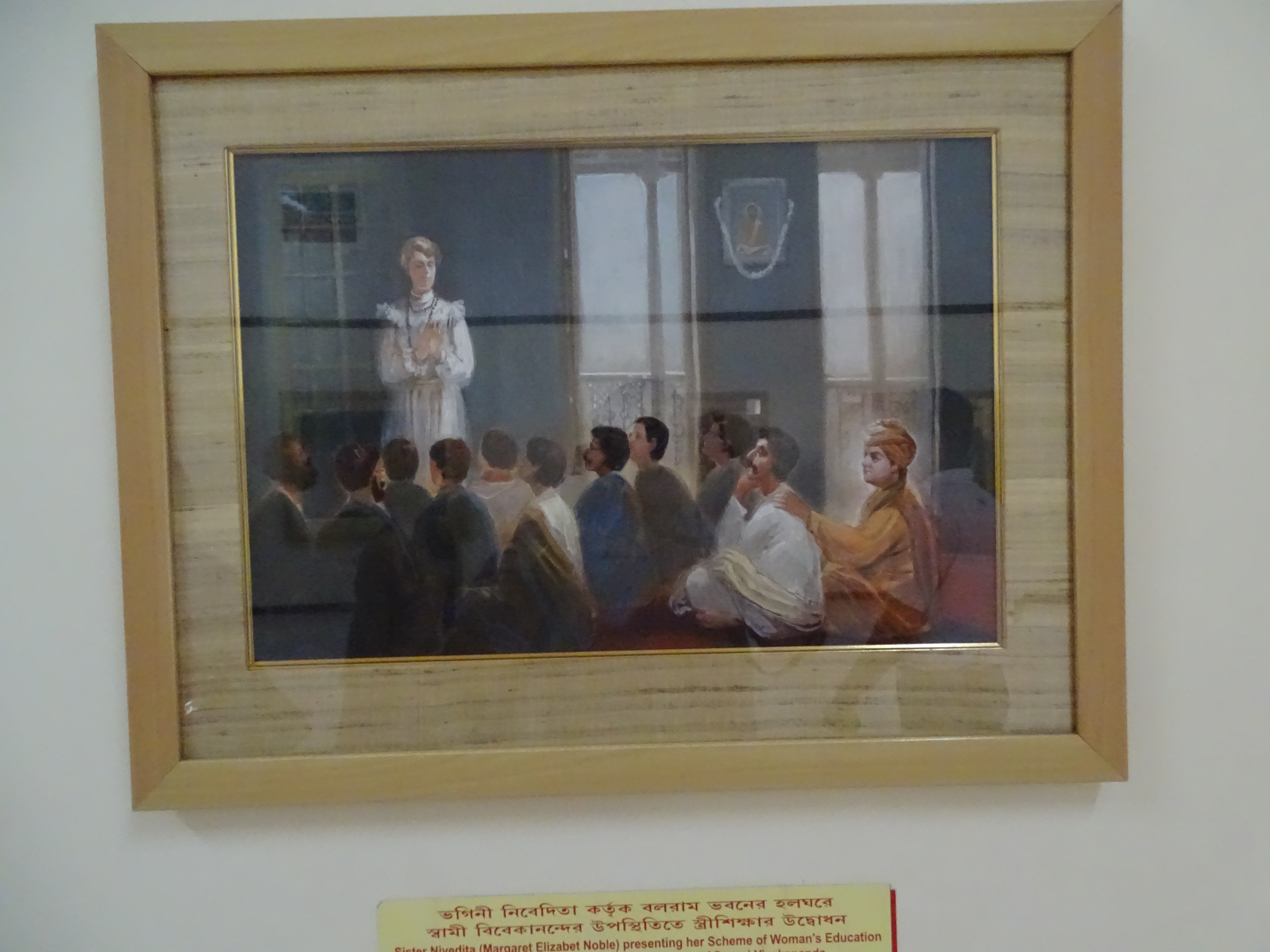
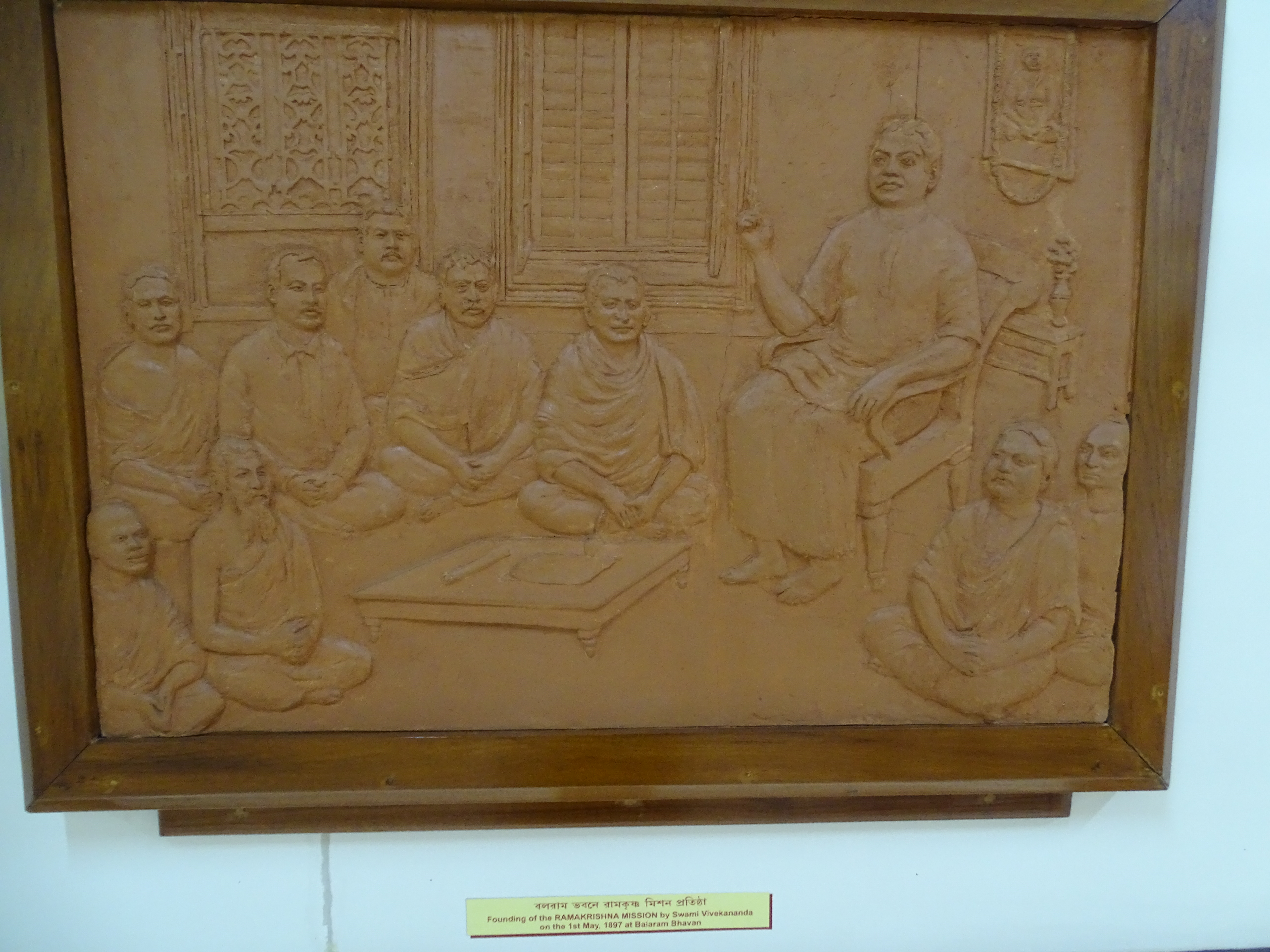
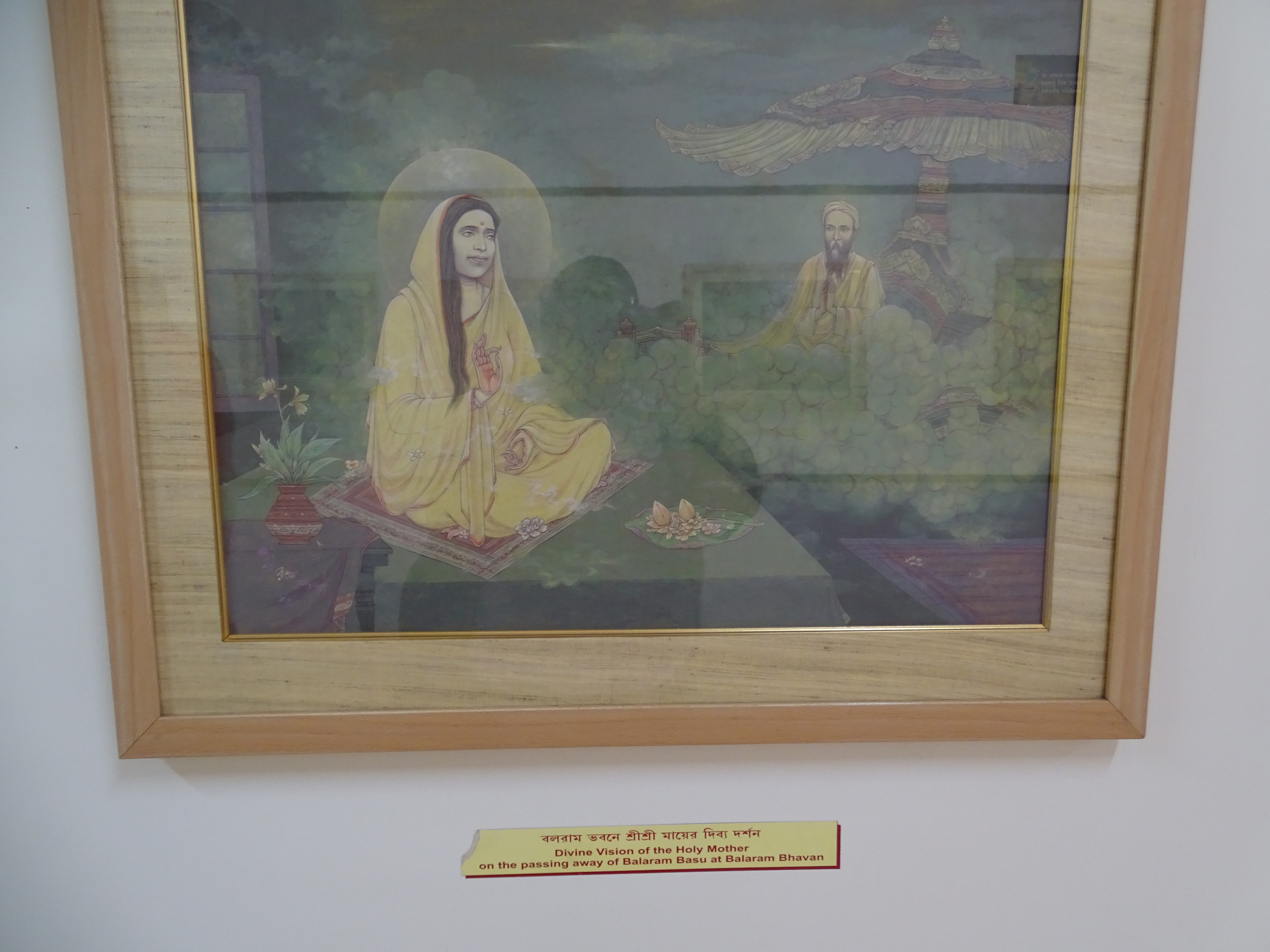
In the lobby, there were many important pictures. One which drew the attention of all was the picture of the first public reception of Swami Vivekananda in Kolkata after he came back from the Parliament of Religions in Chicago.
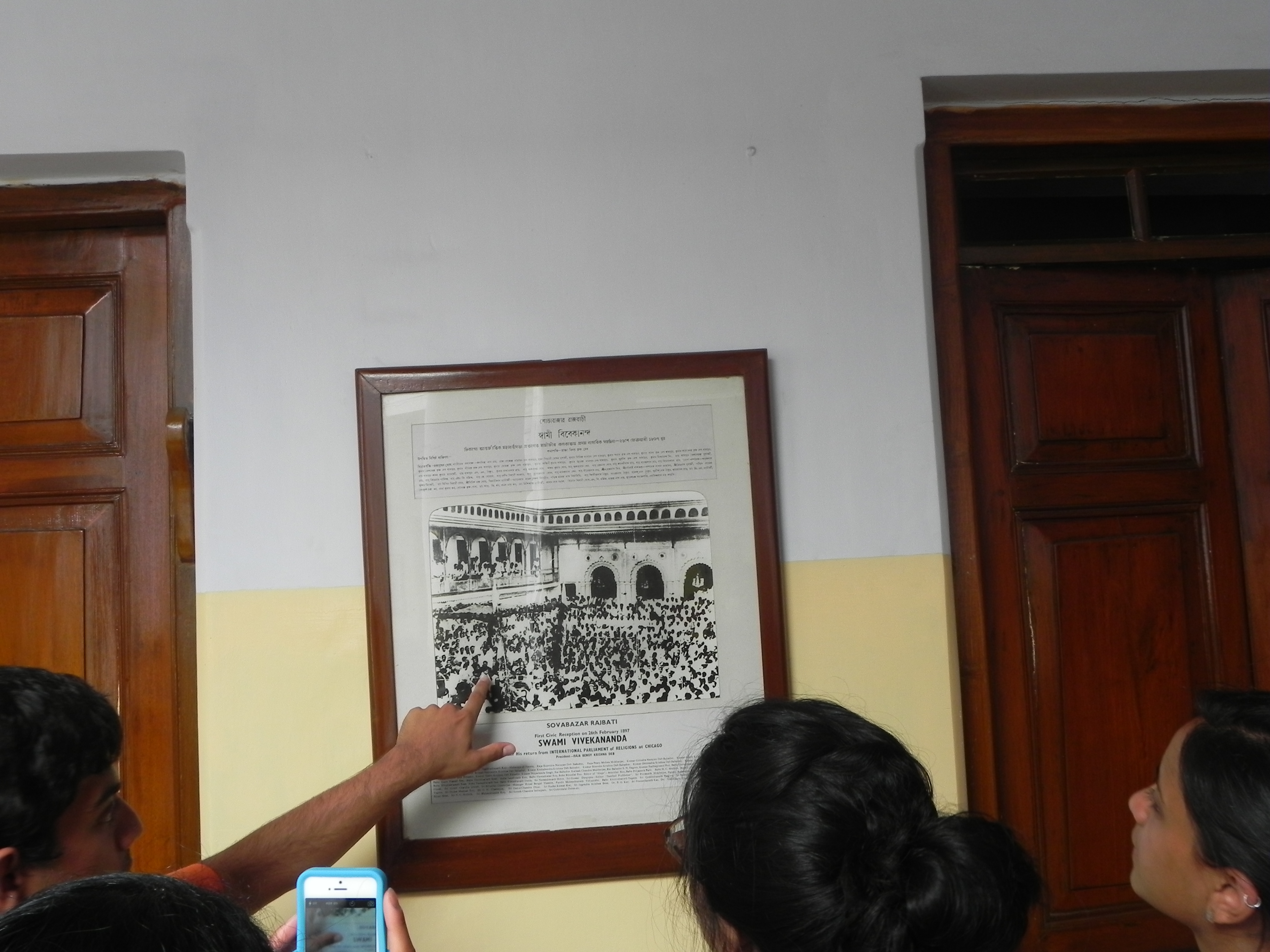
7 SV Reception2 7 SV Reception2a 7 SV Reception3 7 SV Reception4 7 SV Reception4b 7 SV Reception5a

We all enjoyed seeing the museum and all of the pictures. They captured several inspiring moments from the times when Sri Ramakrishna stayed at Balaram Bose’s house.
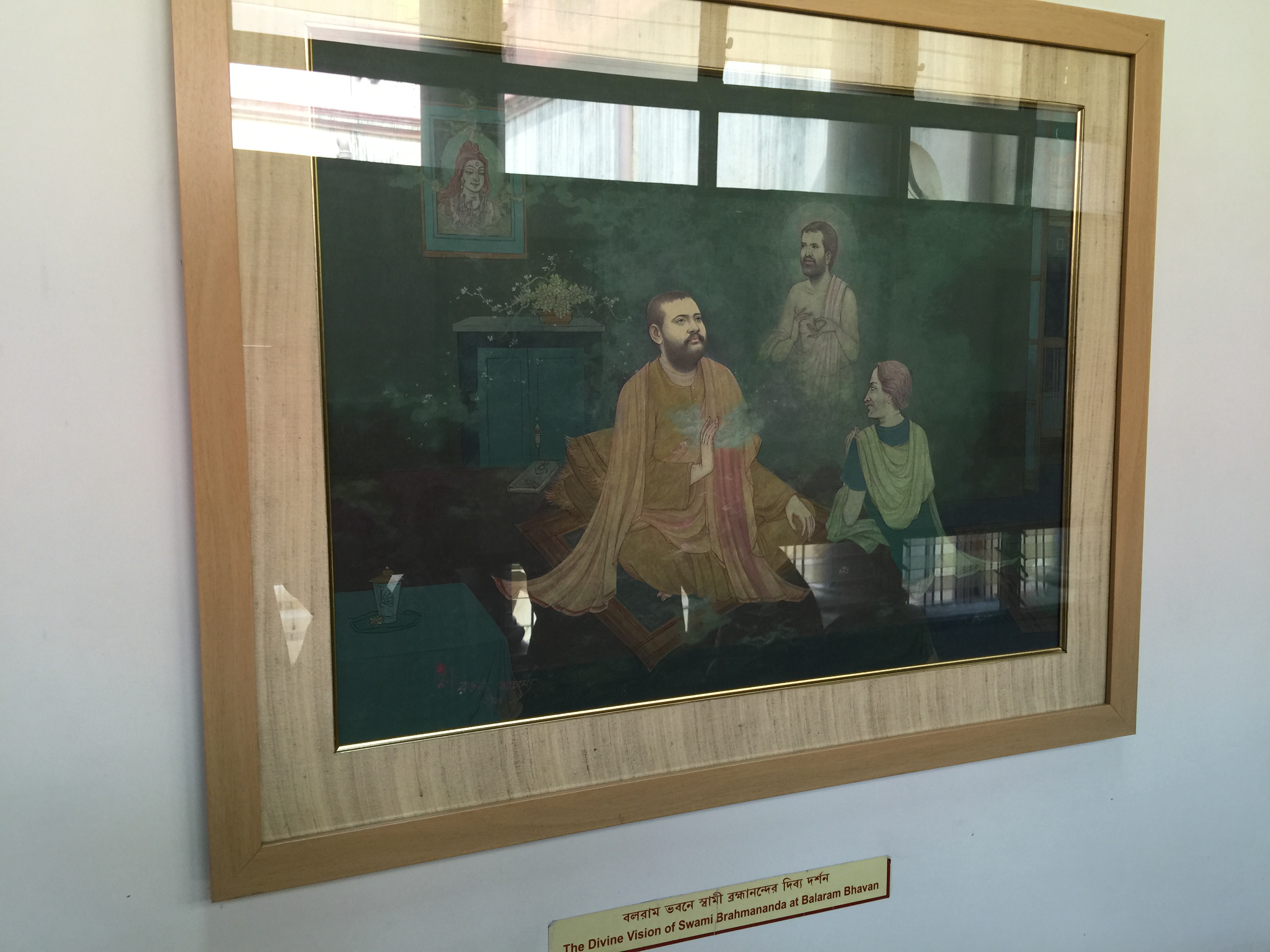
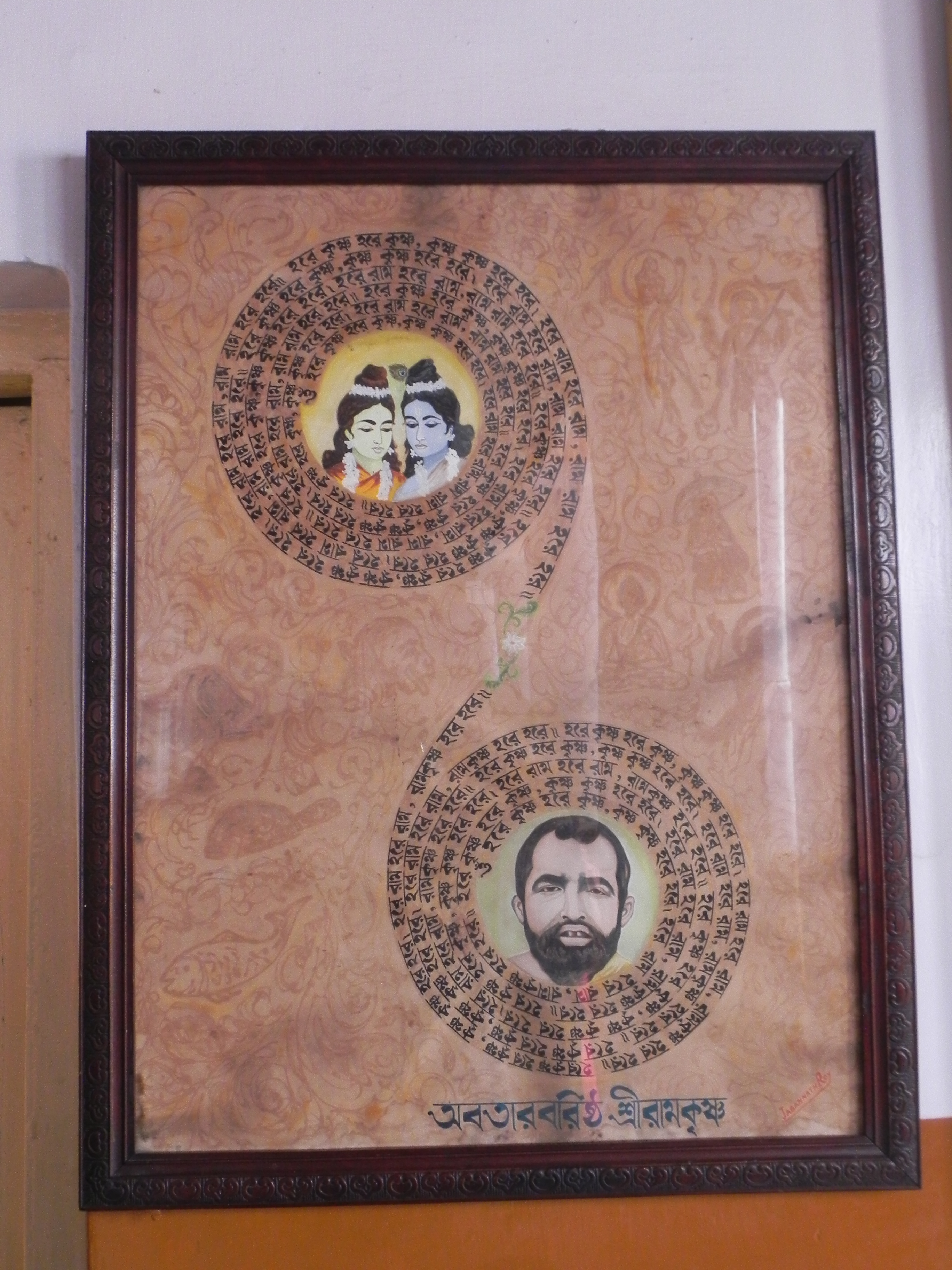
6v2 6v 6s 6o 6n 6m 6l 6k 6j 6i 6h 6g 6f 6e1

We felt the presence of Sri Ramakrishna, Holy Mother, Lord Jagannath and the direct disciples of Sri Ramakrishna in Balaram Mandir.
1k3

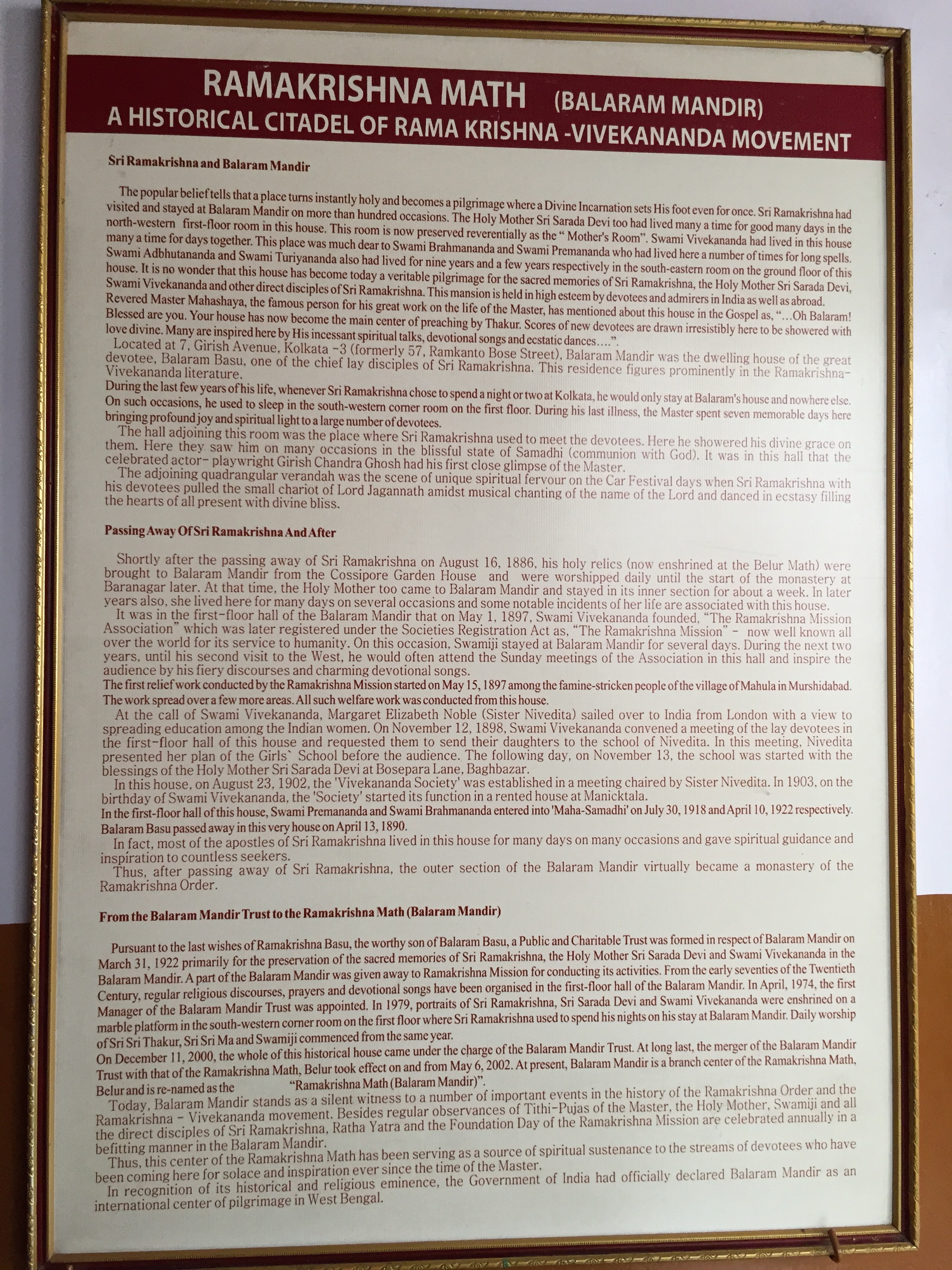
We also learned about the following important events:

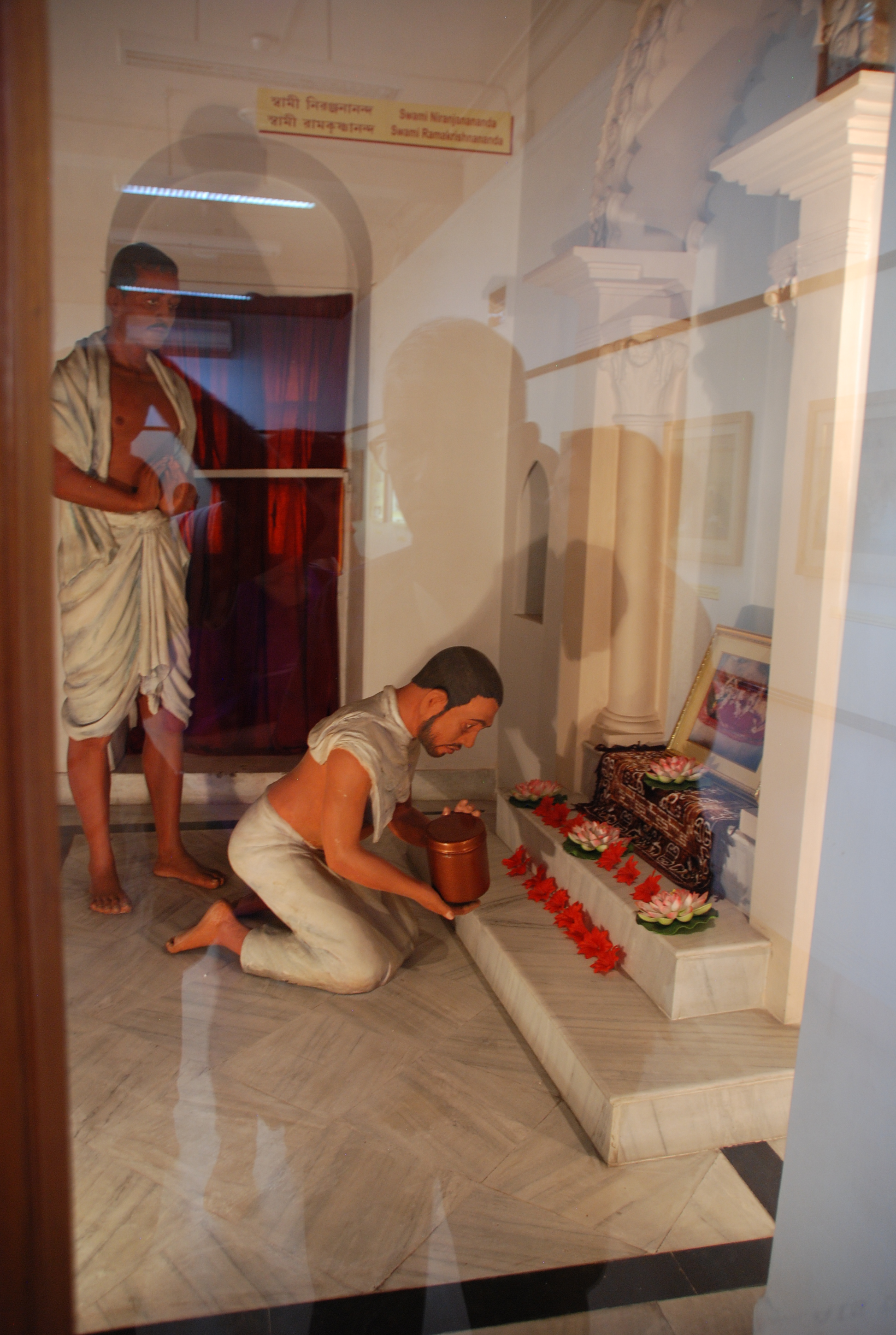
  • After Sri Ramakrishna passed away, his relics were brought here from the Cossipore Garden House and were worshipped daily until they were taken to the Baranagar Monestery.
10 Jagannath_1 10 Jagannath_1b

  • On May 1, 1897, Swami Vivekananda held an important meeting here and founded “The Ramakrishna Mission.”
  • On November 12, 1898, Swami Vivekananda held a meeting of the householder lady devotees and requested them to send their daughters to Sister Nivedita’s school. After Swamiji’s talk, Sister Nivedita presented her plan of the girls’ school she was planning to open.

On the next day, on November 13, 1898, Sister Nivedita started a girls’ school at Bosepara Lane, Baghbazar.

  • Swami Premananda and Swami Brahmananda spent the last days of their lives in Balaram Mandir and left their bodies on July 30, 1918 and April 10, 1922 respectively.

As it said on one board, “Today Balaram Mandir stands as a silent witness to a number of important events in the history of the Ramakrishna Order and the Ramakrishna-Vivekananda movement.”

Considering ourselves blessed with this experience, we left Balaram Mandir thinking about the time Thakur, Maa, Swamiji, and their direct disciples spent here.
DSC00195

(The original report was written by Ekalavya Patel)
Belur Math Pilgrimage – 2015, Day -2 Afternoon and Evening

August 4, 2015

Ramakrishna Mission Saradapitha:

                  After a reinvigorating lunch and a refreshing afternoon at Hyatt, we got back on our buses around 2:00 p.m and headed to the Ramakrishna Mission Saradapitha, near Belur Math.

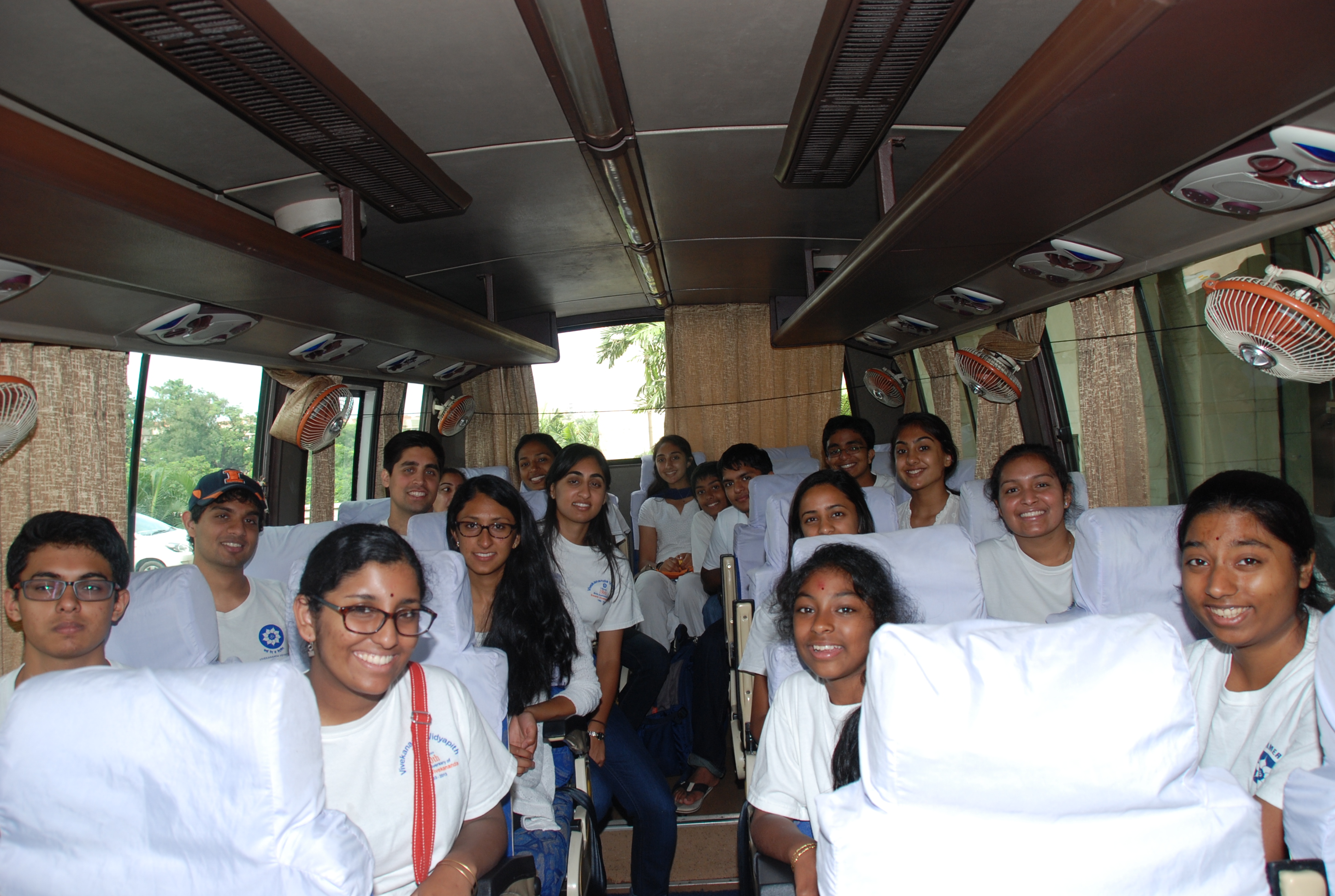
DSC_0344We were fortunate enough to be invited by Revered Swami Divyananda, Secretary of Ramakrishna Mission Saradapitha to visit this auspicious place. The drive was about an hour and a half. During the ride, we sang various dhoons and bhajans and a few of us caught up on sleep. Throughout the journey, our Club7 guides pointed out various important places in Kolkata and talked about their history.

We reached Saradapitha around 3:30 pm. We were surprised to see Rev. Swami Divyananda personally waiting for us. He asked the three buses to park across the gate of the Saradapitha. At first we were confused as to why he made this request, but when we stepped down we realized the streets behind us were completely flooded! Upon inquiry we found that due to the high tide in the Ganga, the water came on the street all the way to the Saradapitha.

1. Flooding 1 IMG_1190After we entered into the Saradapitha campus, Revered Swami Divyananda asked us to first visit Holy Mother’s temple.

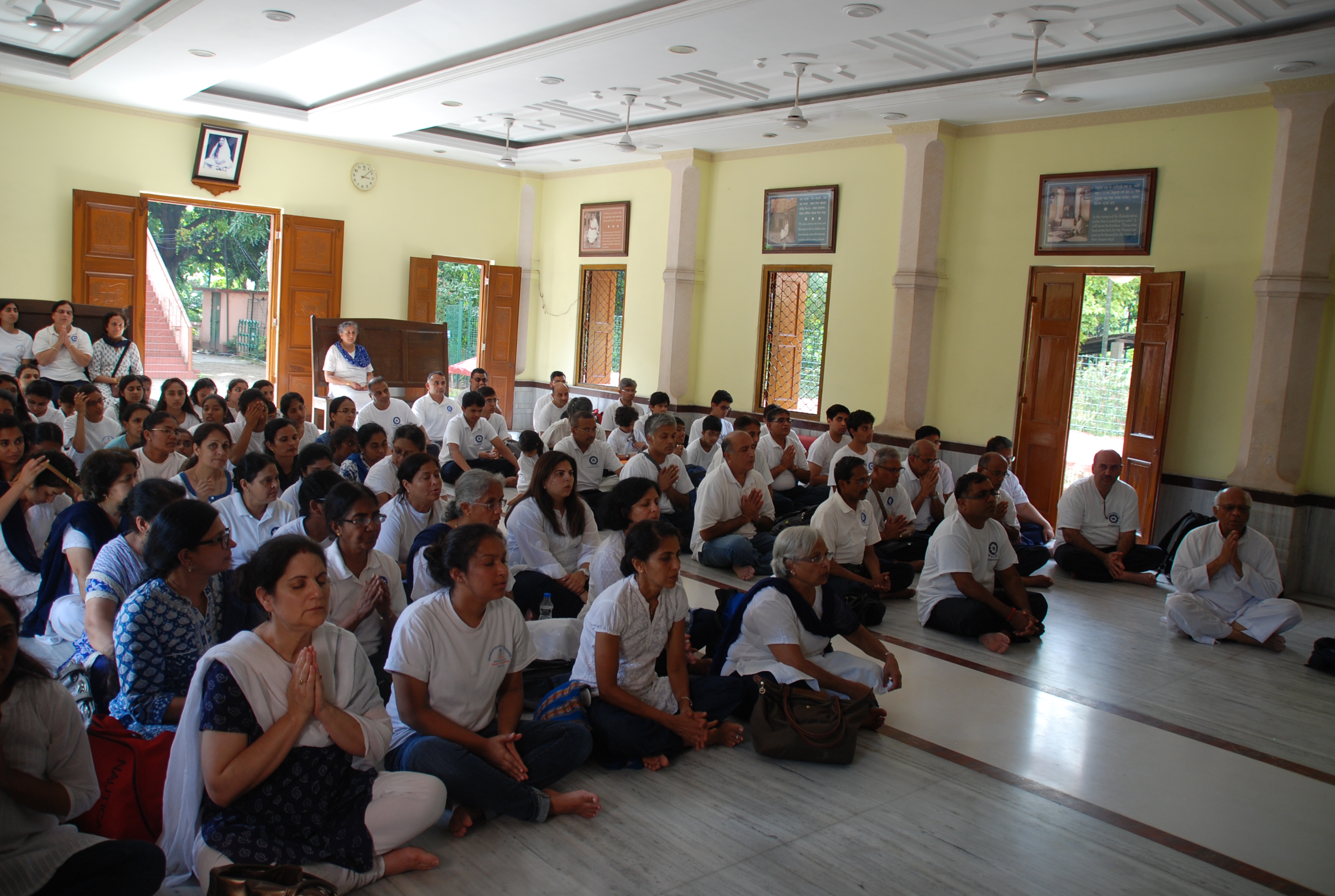
1. IMG_1189We all entered the temple and took a seat on the floor. As we do at Vidyapith, we sat in a quiet and orderly fashion. The boys and Uncles sat on the left hand side facing the altar and girls and Aunties sat on the right hand side facing the altar.   The temple environment was very serene. We all sat quietly and did some japa.

2. DSC_0345 2. DSC_0346 2. DSC_0348 2. DSC_0350

After japa, we sang pranam mantras, offering salutations to Sri Ramakrishna, Holy Mother Sri Sarada Devi and Swami Vivekananda. We also sang “Tvameva Mata ca Pita tvameva…” Later on, we realized that Rev. Swami Divyanandaji had also sat down with us in the back of the prayer room.

After our prayer at the temple, we walked to the Ramakrishna Mission Saradapitha office building. When we approached the building, we were reminded that the area was flooded not too long ago. There was a large amount of water in front of the steps leading to the building. Rev. Swami Divyanandaji suggested that we enter the office by walking on the curb, which was about six inches high and 3 inches wide. Revered Swamiji made sure that all are okay. We all applied our balancing skills and entered the office building while holding a railing.

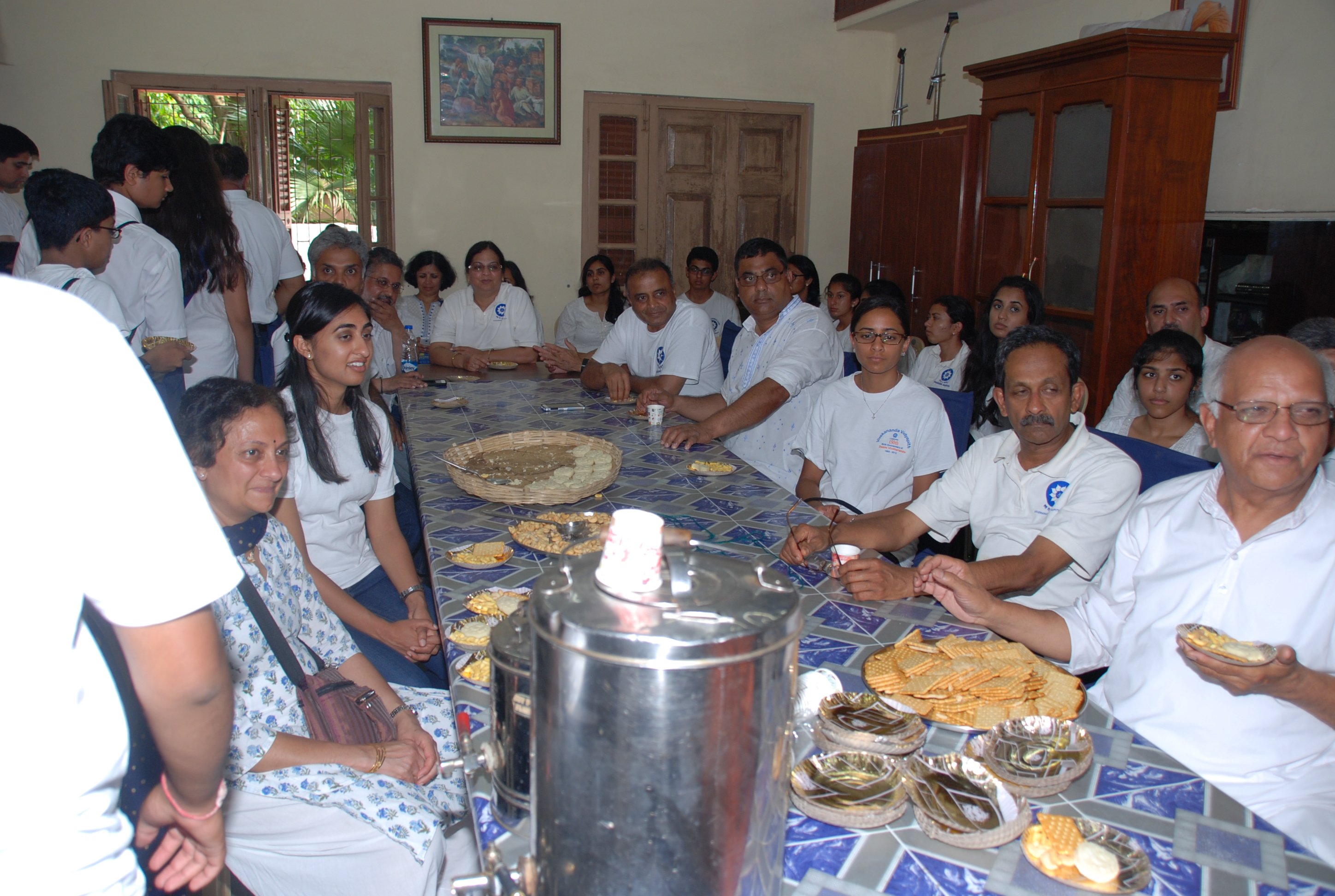
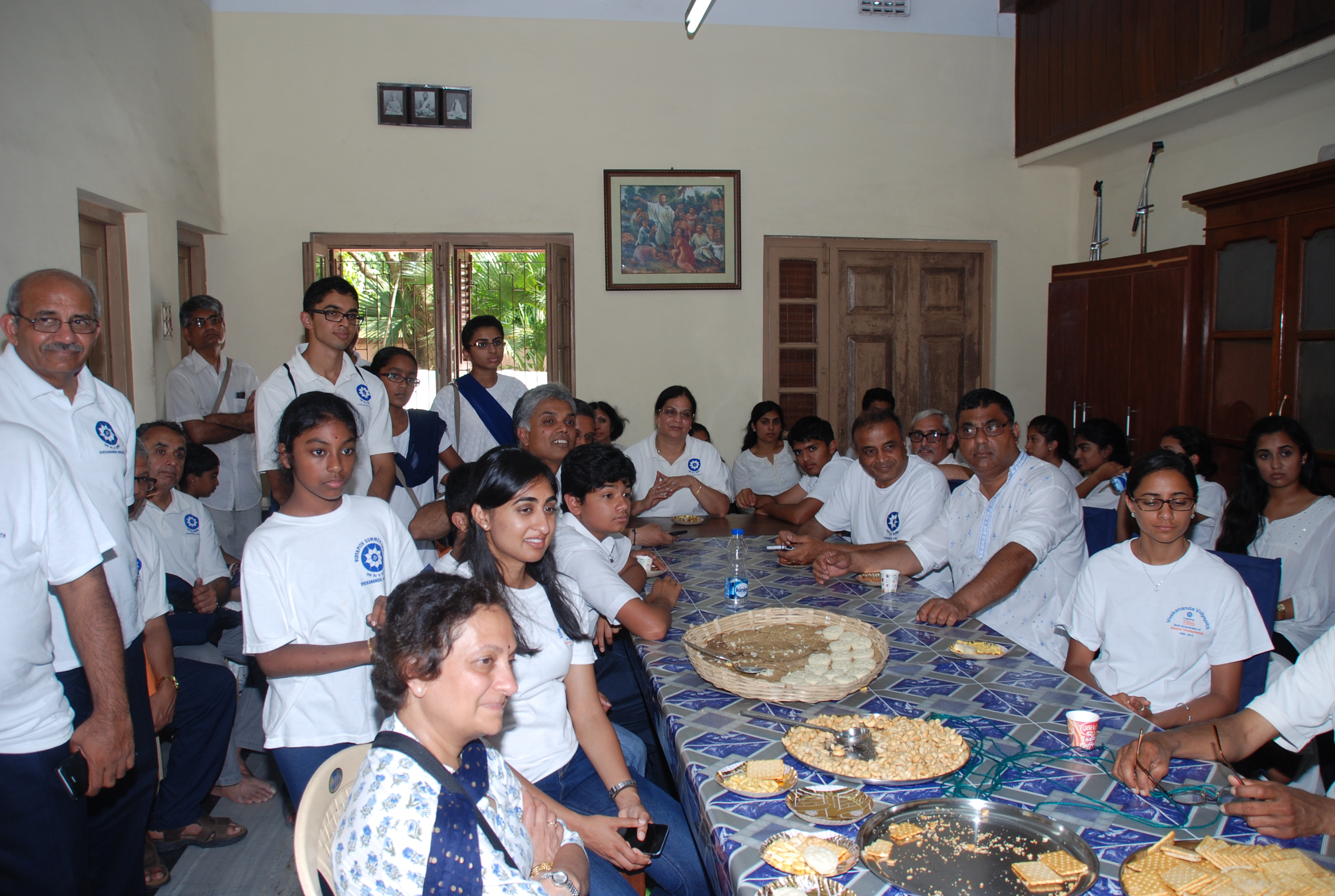
Inside the building, we found a large room and a large lobby. There were tables in the middle of the room and chairs around them. On the table they had arranged a variety of snacks, plastic plates, and a huge coffee pot with cups on the side. It was clear that Revered Swami Divyanandaji had made all of this ready for us.

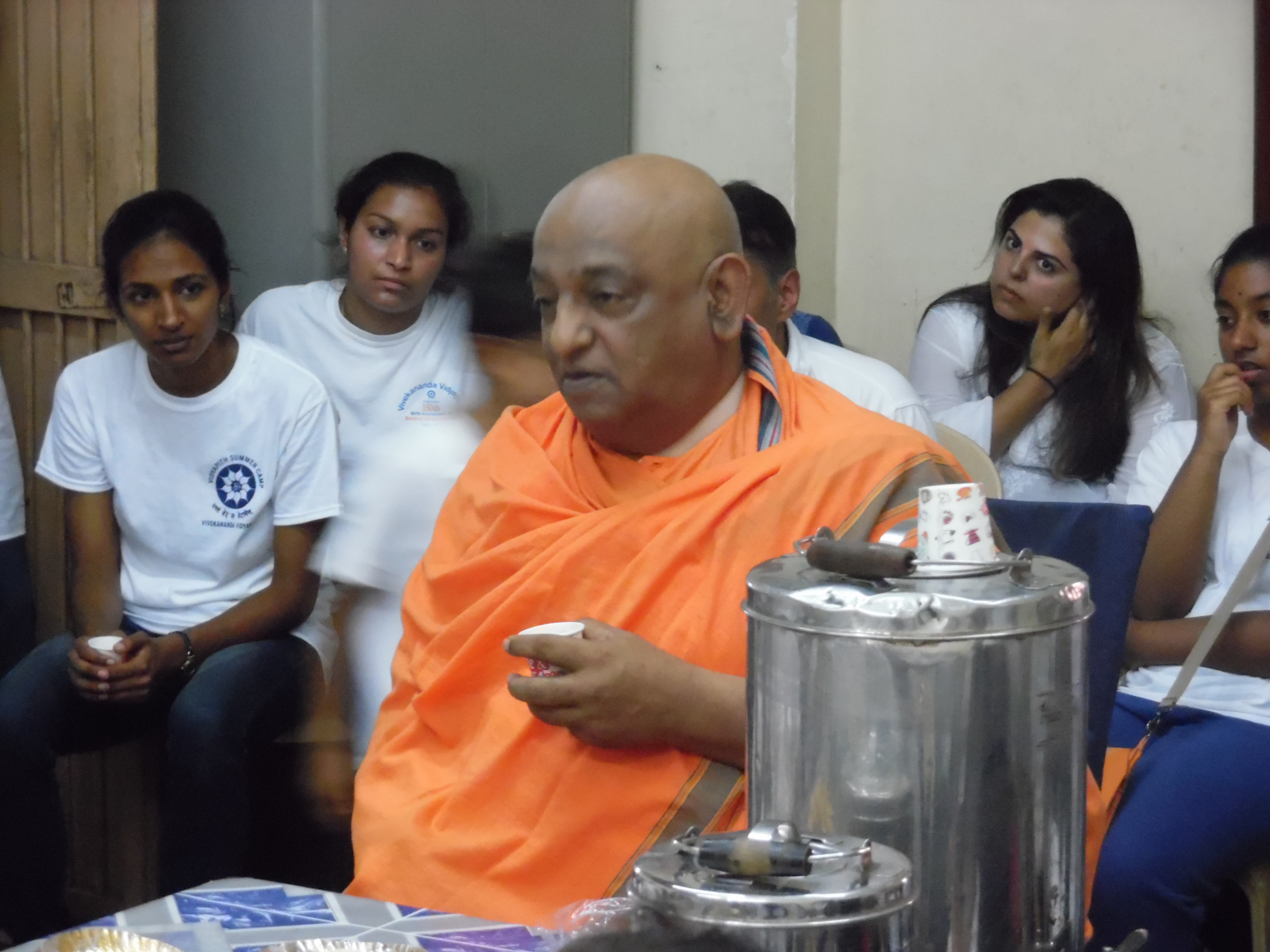
3. DSC_0353 3. DSC_0354 3. DSC_0356He asked us to take our seats and asked a few people to help with serving the snacks. We filled the room and a few of us went into the lobby. A couple of Vidyapith people started serving the coffee and snacks. Rev. Swami Divyanandaji was lovingly and joyfully watching us serve and enjoying the snacks and coffee. We requested him to sit with us and he joyfully agreed, “Yes, I will join you.” He was very non-assuming. He sat and asked, “Let me taste the coffee to see how it was made.” He took some coffee and started sharing his thoughts with us.

3. SAM_0088

Rev. Swami Divyanandaji:

Rev. Swami Divyanandaji has done work with prisoners in jails and has helped many of them change their lives. He gave examples of how many innocent people were convicted and how he helped them educate themselves while fighting for their innocence and release. Several of these innocent prisoners were lawfully released and then went on to acquire academic degrees and settle with good jobs. These touching stories drew the attention of all of us, young and old. Everyone started looking at him with great reverence.

After these stories, Rev. Swami Divyanandaji advised us to turn all of our negatives into positives. He told us how to do this with a few clever acronyms. The following are a few examples:

  • “If someone tells you NO, do not get upset. Think that NO means a New O It is an opportunity to think about your next step or next goal.”
  • “Do not worry about failure. Do you know what FAIL means? It means that was the ‘First Attempt In Learning!’”
  • “Watch your WATCH. Watch your Words, Actions, Thoughts, Character and Habit!”
  • “Do you know what STRUGGLE means? STRUGGLE means ‘Surrender To Ramakrishna and U (You) Get Genuine Love Easily’.”
  • “Whenever you see PEPSI, think of this: ‘Play well, Eat well, Pray well, Study well, and Integrate Well’.”
  • “If you had worked hard for something and you cannot achieve it, don’t think it is the END of everything. Think that END means ‘Efforts Never Dies’.”

With his deep and commanding voice, his sense of humor, and his cool way of presenting inspiring thoughts, Revered Swami Divyananda touched the hearts of us all. After the conversations, one person immediately asked, “Swamiji, will you please visit our Vivekananda Vidyapith when you come to the USA?” Swamiji without any hesitation responded, “Sure! When I will visit USA next, I will come to Vivekananda Vidyapith.” Rev. Swamiji, then asked us to visit Saradapitha’s educational institutions and the bookstore. He informed us that the bookstore in Saradapitha has the largest collection of Ramakrishna literature around here.

Educational Institutions and Bookstore of Saradapitha:

As we walked to the educational institutions, Rev. Swami Divyanandaji gave us literature depicting the various educational activities at Saradapitha. We learned that RKM (Ramakrishna Mission) Saradapitha runs the following educational institutions: (

1) RKM Shilpa-vidyalaya (a vocational training center for the under privileged)

5. (1) shilpavidyalaya

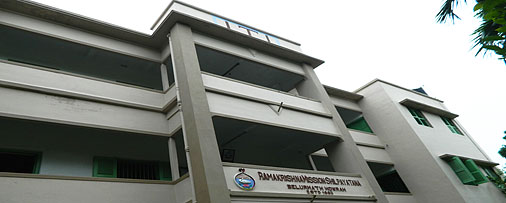
(2) RKM Shilpayatana (the Industrial Training Center),

5. (2)rkm_shilpayatana

(3) RKM Shilpa-mandir (Community Training and Computer Centers)

5. (3)shilpamandira

(4) RKM Jana-siksha-mandira (a center for school drop-outs and those students who had little formal opportunities for education)

5. (4)janasikshamandira

(5) RKM Samaj-sevak-sikshan-mandira (the Residential Training Center for Rural Youth)

5. (5)samaj_sevak_sikshan_mandir

(6) RKM Sikshana-mandira (the Residential Teachers Training College) and

5. (6)sikshanamandira

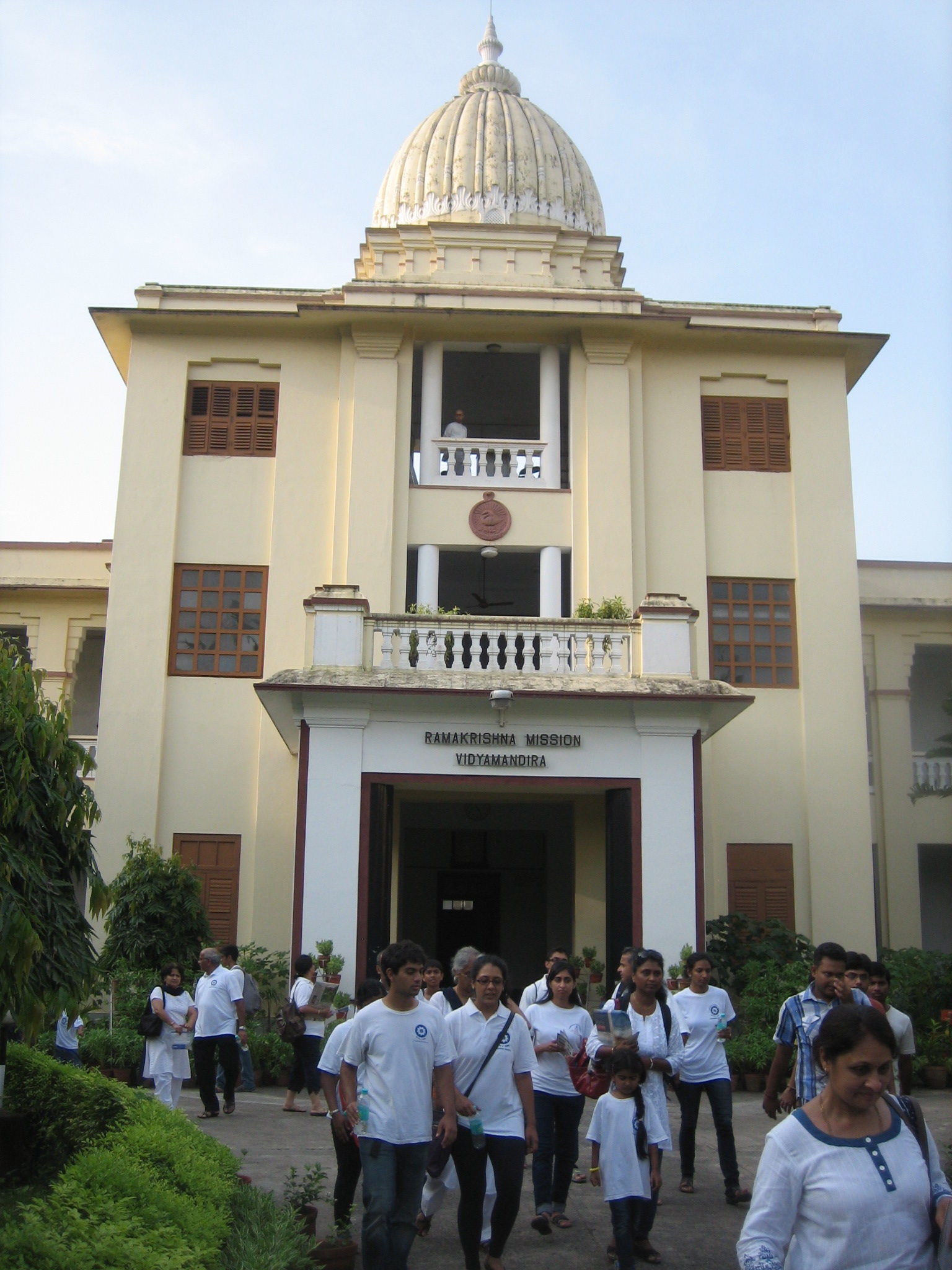
(7) RKM Vidya-mandira (the Residential College providing undergraduate and Graduate degrees).

4. IMG_1196We learned that several senior Swamis of Ramakrishna Math and Mission are and have been associated with this college and the other Saradapith Institutions. Some of these Swamis include Rev. Swamis Adiswarananda, Tathagatananda, Swahananda, Sarvadevananda, Girishananda, Divyananda, Vimuktananda, and Tejasananda.

4. IMG_0628 4. IMG_0629 4. IMG_1193 4. IMG_1194

The weather was very hot and humid as we walked to the educational institutions. Luckily, the Club7 members brought packages of water bottles inside the gate of the Saradapitha. Everyone grabbed a water bottle to quench his/her thirst. Then, with the help of Dr. Suvendu Majumdar, we visited several of the educational institutions described above. Many of Vivekananda Vidyapith’s devotees were associated with Rev. Adiswarananda for many years and they were thrilled to see the RKM Vidya-mandira and Swamiji’s association with it.

After visiting the institutions, we went into the bookstore. We had half an hour to buy books, pictures and other things from the store. Most of the pilgrims bought books and pictures of Sri Ramakrishna, Holy Mother Sarada Devi, Swami Vivekananda, and their disciples. Because our group was so large, several additional Saradapitha volunteers came to the bookstore to help us checkout. After our trip to the bookstore, we all put our things in the buses and headed towards the Belur Math Museum. To our surprise, we found that all of the water from the Saradapitha campus and the street outside was gone! It was dry again and we had no difficulty in walking.

4. IMG_1197

Sri Ramakrishna Museum:

We gathered at the entrance of the Belur Math Museum. The Club7 organizers had bought tickets for all of us. With the company of Dr. Suvendu Majumdar and the Club7 managers, we went inside the museum. We were all surprised to see a variety artifacts; each was meticulously collected, carefully protected, and thoughtfully presented. The following are a few of the items we saw at the museum:

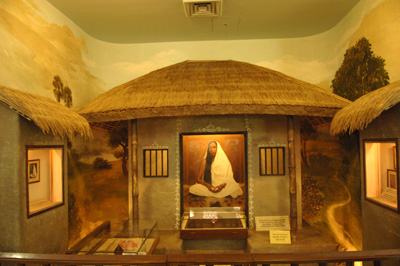
RKM Museum 1 RKM Museum 2

  • Beautiful replicas of Jayrambati and Kamarpukur.
  • Replicas of Thakur’s and Holy Mother’s homes with several artifacts they had actually used.
  • Jugis’ Shiva Temple where Sri Chandramani Devi had a vision that a light from Shiva entered into her. This is the story behind Sri Ramakrishna’s birth.
  • A beautiful painting of a flock of white cranes contrasting with the dark clouds in the background. This gave us a glimpse of the scene Sri Ramakrishna was captured by and impacted by as a child. That was his first Samadhi experience.
  • The Pynes’ Shiva Temple where Gadadhar acted as Shiva and went into Samadhi.
  • A life-size statue of Sri Ramakrishna, with his green jacket and original slippers.
  • Many articles of clothing used by Sri Ramakrishna, Holy Moher Sri Sarada Devi, Swami  Vivekananda and other disciples.
  • A sample of Sri Ramakrishna’s handwriting.
  • Holy Mother’s foot-prints and an impression of Holy Mother’s thump on a postal money-order.
  • Several items used by Holy Mother.
  • A life size image of Holy Mother. Her smile and loving eyes in the picture seemed to shower pure love for all of us.
  • A replica of Sri Ramakrishna’s room in Dakshineswar as it was while he was living there. Narendra’s original tanpura reminded us that he used to sing on this tanpura in that room and Sri Ramakrishna used to go into Samadhi. It gave also gave us a glimpse of the Dakshineswar temple. Everyone, especially the students, were recognizing and pointing to the things they had seen at Dakshineswar in the morning and were extremely happy.
  • We saw Shyampukur Bati, Cossipore Garden House, Udbodhan where Holy Mother stayed, and Balaram Mandir –all of which we were going to see in coming days.
  • The replica of the Art Institute of Chicago, a huge picture of the Pariament of Religions, and a life size image of Swami Vivekananda wearing a rob and a turban took us to September 11, 1893, reminding us his famous lecture and universal message of love, peace, and harmony of religions.
  • A replica of the Vivekananda cottage at Thousand Island Park, New York State which looked just like the original. Many of us had been there. We felt as if we were in the USA.
  • The experience of seeing robes and shoes of Swami Vivekananda was thrilling.
  • There were pictures of direct disciples and things they had used. There were also pictures of householder disciples of Sri Ramakrishna and the western disciples of Swami Vivekananda. We even saw things used by Sister Nivedita.

Several students said that after seeing all these they felt that what they had learned about Sri Ramakrishna, Holy Mother Sri Sarada Devi, Swami Vivekananda and other disciples were true and real, not mythology or stories.

The following is a link to the Museum Video Link. The video has been prepared by the Belur  Math:

As people finished seeing things in the museum, they came out and sat on the front steps of the museum. Soon all 91 Vidyapith people in their Vidyapith’s uniform were sitting on the steps. It was a spectacular view.

The Sun was setting, Ganga was flowing on one side, and people were gathering inside the main temple for the evening arati. We quickly went to our buses to remove our shoes and freshened up, and followed Dr. Suvendu Majumdar to the main temple of the Belur Math.

Belur Math Temple Shrine 2Aarti

We were so blessed that Rev. Swami Girishanandaji had made an arrangement for all the Vivekananda Vidyapith people to sit immediately behind the Ramakrishna Mission and Math Swamis and Brahmacharis. We all sat as we sit in the Vidyapith prayer hall, gents on the left side and ladies on the right side. Everyone sat in the prayer posture (crossed-legs) and started doing japa as we were waiting for the arati to start.

A few of us were observing how systematically all the preparation for the arati was done. Two young brahmacharis came and swiftly rolled down the carpets for the Sadhus and Brahmacharies. Slowly, the Sadhus and Brahmacharis started coming and taking their places. The tanpuras, mridangam, and other musical instruments came. Outside, in all directions a conch was blown to convey to all that the ararti is about to begin. The big prayer hall was packed with devotees. There were devotees sitting outside the doors. All eyes were focused on Sri Ramakrishna who was decorated with beautiful clothes and garlands. There was a serene environment.

One Swami played a tune to begin the arati. Inside, near the altar, a Swami stood with a big decorative lit arati to offer to Sri Ramakrishna. With melodious voice, a Swami started “Khandan Bhava Bandhan…” accompanied with the mridangam playing chautaal while a gong gave the main beats of the taal.

Everyone joined in singing the arati. The voices of hundreds of people, lead by the melodious voices of the Swamis and Brahmacharis singing the glories of Sri Ramakrishna, easily captured the minds and hearts of all. Swami Vivekananda’s every word of the Khandan Ararti had deep meaning and the music was appropriate for the words. The Vivekananda Vidyapith devotees did not need any papers as they knew all the words; they only had to carefully stay with the slow pace. The slow pace singing helped the mind dwell on each word and meditate on Sri Ramakrishna. After the slow paced singing, everyone sang the whole Khandan Bhava Bandhana… in a fast pace. This was followed by the Sri Ramakrishna hymn, “Om Hri Ritam…” again composed by Swami Vivekananda. The meaning of the hymn is: “O Sri Ramakrishna! The friend of people who are poor in virtues! For various reasons I surrender to you.   Your name is auspicious and gives peace. You are the only goal of my life.” It was followed by a hymn to Holy Mother Sri Sarada Devi, namely “Sarva mangal Mangalye…” The hymn was sung with great devotion using all the serenity and melody of the Bihaga Raga. Any heart would have melted upon hearing the singing of the hymn. One could feel the presence of Sri Ramakrishna, Holy Mother, and Swami Vivekananda, as the writer and composer, in the hall. The arati was concluded with “Jai Mahamayiki Jai” and “Jai Bhagavan Sri Rmakrishna Devaki Jai.”

The following is the arati link where we can listen to the whole arati prepared by the Belur Math Swamis and Brahmacharis.

http://www.belurmath.org/arati_belurmath.htm

Khandana – http://www.belurmath.org/arati/khandana.mp3

Om Hrim Ritam – http://www.belurmath.org/arati/om.mp3

Sarva Mangala – http://www.belurmath.org/arati/sarva.mp3

Everyone remained seated in silence as the Swamis and Brahacharies saluted and left. Then, the Vidyapith people were asked to go to the front to salute Sri Ramakrishna and then proceed outside through the door on the right side. As we were coming out from the door, Rev. Tapas Maharaj was waiting for us to take us to Rev. Swami Girishanandaji. We all came down the steps in a line and took the prasad of “Patasa” given by two Swamis and then went to the office of Rev. Swami Girishanandaji. He was very pleased to see us all again. We narrated to him what we had done between previous morning and today’s arati. Then, he wished us well for the rest of our pilgrimage and blessed us all.

Even though it was a long day, everyone’s mind and heart was filled with the joy of being able to do all of the things we had planned. All the activities were spiritually uplifting. With high spirits, we went to our air-conditioned buses to go back to our hotel. In the buses, people reminisced all the events of the day, sang a few dhoons and bhajans, and caught up with some rest.

At the Hyatt, a delicious dinner was waiting for us. Everyone enjoyed the dinner and soon went to bed to get ready for the next day. Everyone was thankful that by the grace of God, we had successfully completed two days of our pilgrimage with great weather and had been able to go through all the activities as planned without any problems.

(The original report was written by Abhishek and Avni Senjalia)

Belur Math Pilgrimage – 2015, Day -2 Morning

August 4, 2015

Dakshineswar

Miracle:

Welcome to Day 2 of our pilgrimage! By God’s grace, today was another beautiful, sunny day – a perfect day to resume our spiritual pilgrimage.

Breakfast and Bus-ride

Our morning began early at 5:30 a.m. We all met at our breakfast locataion in the hotel – “Guchhi.”  A variety of items were presented for breakfast by the Hotel Hyatt including Idlis and Dosas, which were made at the premises upon request.

Breakfast - 1 Breakfast - 2

Breakfast - 3 Bus going to Dakshineswar

After a delicious breakfast, we embarked on our journey.  Our bus-ride started with five “Jai’s” (victory) to Sri Guru Maharaj (Sri Ramakrishna), Mahamayi (Holy Mother Sri Sarada Devi), Swamiji Maharaj (Swami Vivekananda), Gangamayi (Mother Ganga) and Sab-santan (all saints).  It was followed by the Sri Ramakrishna Suprabhatam and our Vidyapith’s Morning Prayer.  This daily prayer made our early morning bus rides serene and holy.

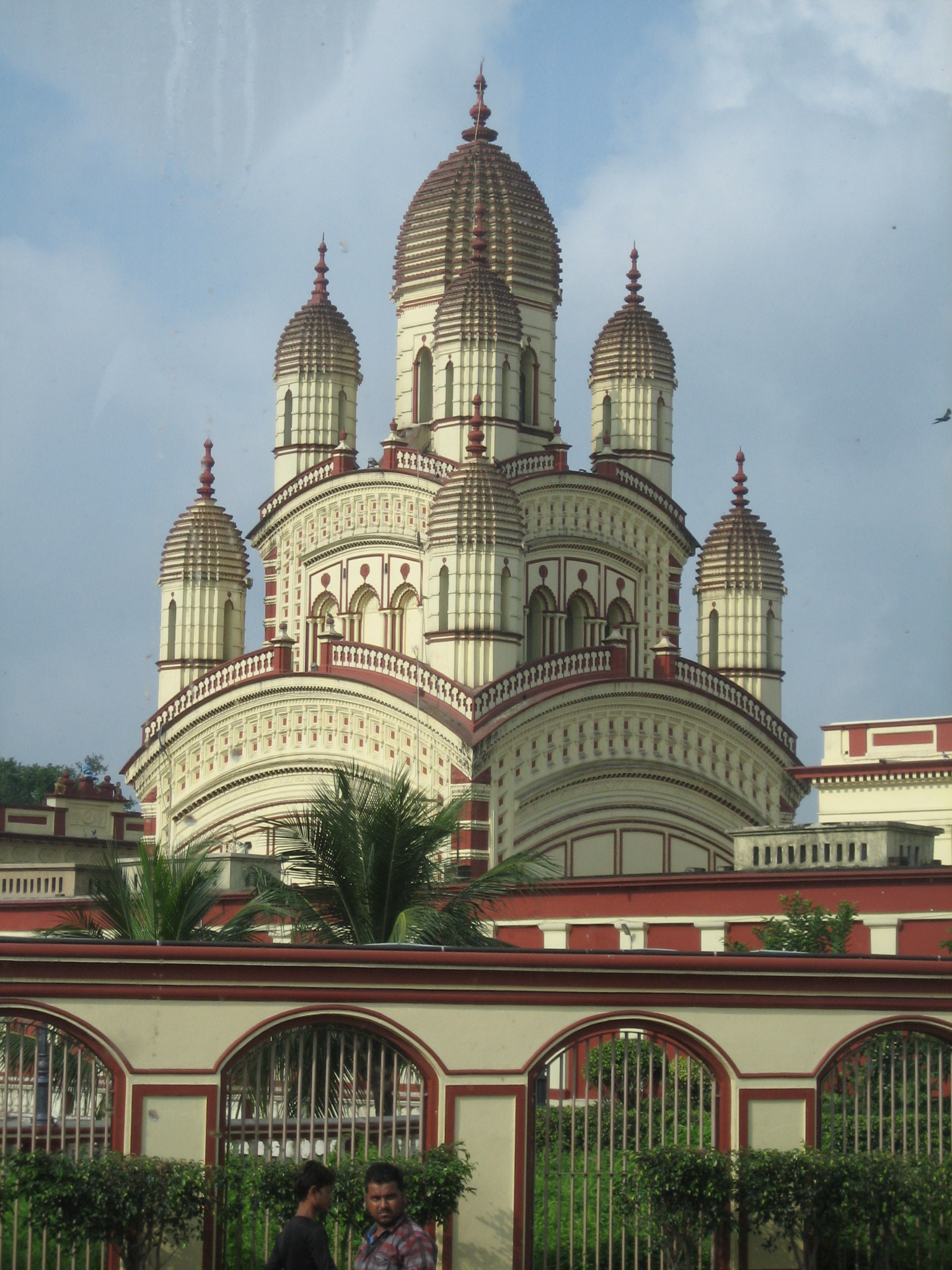
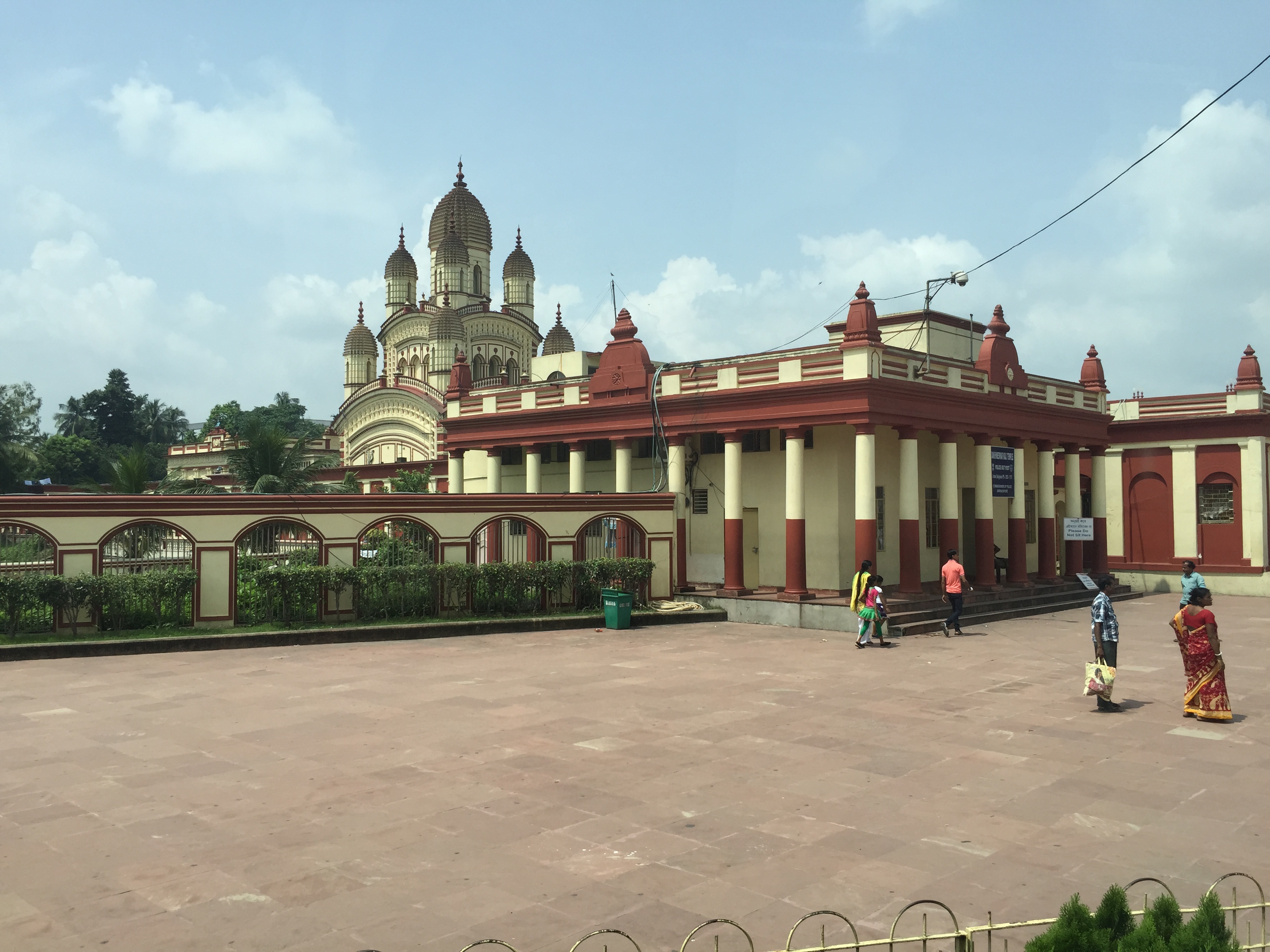
Our bus-ride was smooth and by 7:15 A.M., we were greeted by the breathtaking views of the Dakshineshwar Temple.

Picturesque Kali Temple - 2 Picturesque Kali Temple

We were all eager to visit this special place – “Dakshineswar.” In Vivekananda Vidyapith, we had read about Dakshineswar in books and we had heard about all the important events that had happened there, but now we were going to be in all of these places. Many pilgrims were visiting it for the first time.  They had an extra excitement.

Dakshineswar is a place where

– A village boy, Gadadhar of Kamarpukur, became Sri Ramakrishna Paramahansa.

–  Sri Ramakrishna was going to give up his life for a vision of Mother Kali.  Mother Kali granted his wish and he had her vision.

– Sri Ramakrishna did severe spiritual practices in areas including Panchavati, Panchamundi, Totapuri Hut and Kali Temple

– Mathurbabu saw Sri Ramakrishna as both Mother Kali and Lord Shiva

– Swami Vivekananda came as the young boy Narendra and asked Sri Ramakrishna, “Sir! Have you seen God?”  The answer of Sri Ramakrishna changed the life of Narendra for the good of humanity.

– M. (Sri Mahendranath Gupta) saw Sri Ramakrishna first time – a life-changing moment.  M. preserved the conversations of Sri Ramakrishna in the famous book “The Gospel of Sri Ramakrishna.”.

– Holy Mother lived for several years.  She did intense spiritual practices.  She took care of all the needs of Sri Ramakrishna.  She also lovingly fed all the young devotees of Sri Ramakrishna and bound them with her love.

– Rakhal, Tarak, Baburam, Latu, Sarad, Yogen, Shashi, and many other direct disciples of Sri Ramakrishna received their spiritual guidance.

These are only a few of the many significant events that occurred at Dakshineshwar.

At the Entrance:

Getting off the bus - going to Dakshineswar Getting off from bus - going to Dakshineswar - 2

Entrance of Dakshineswar - 3

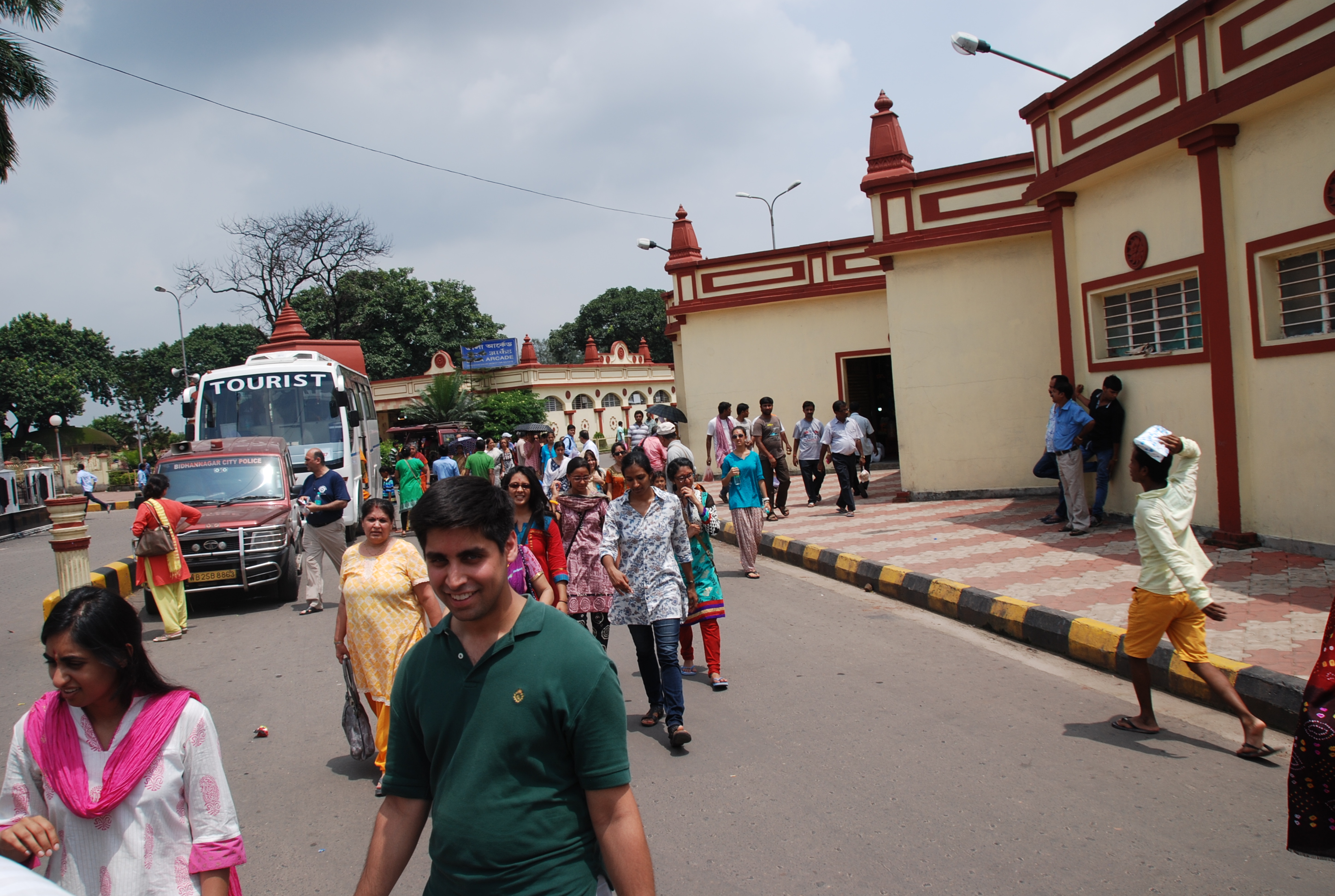
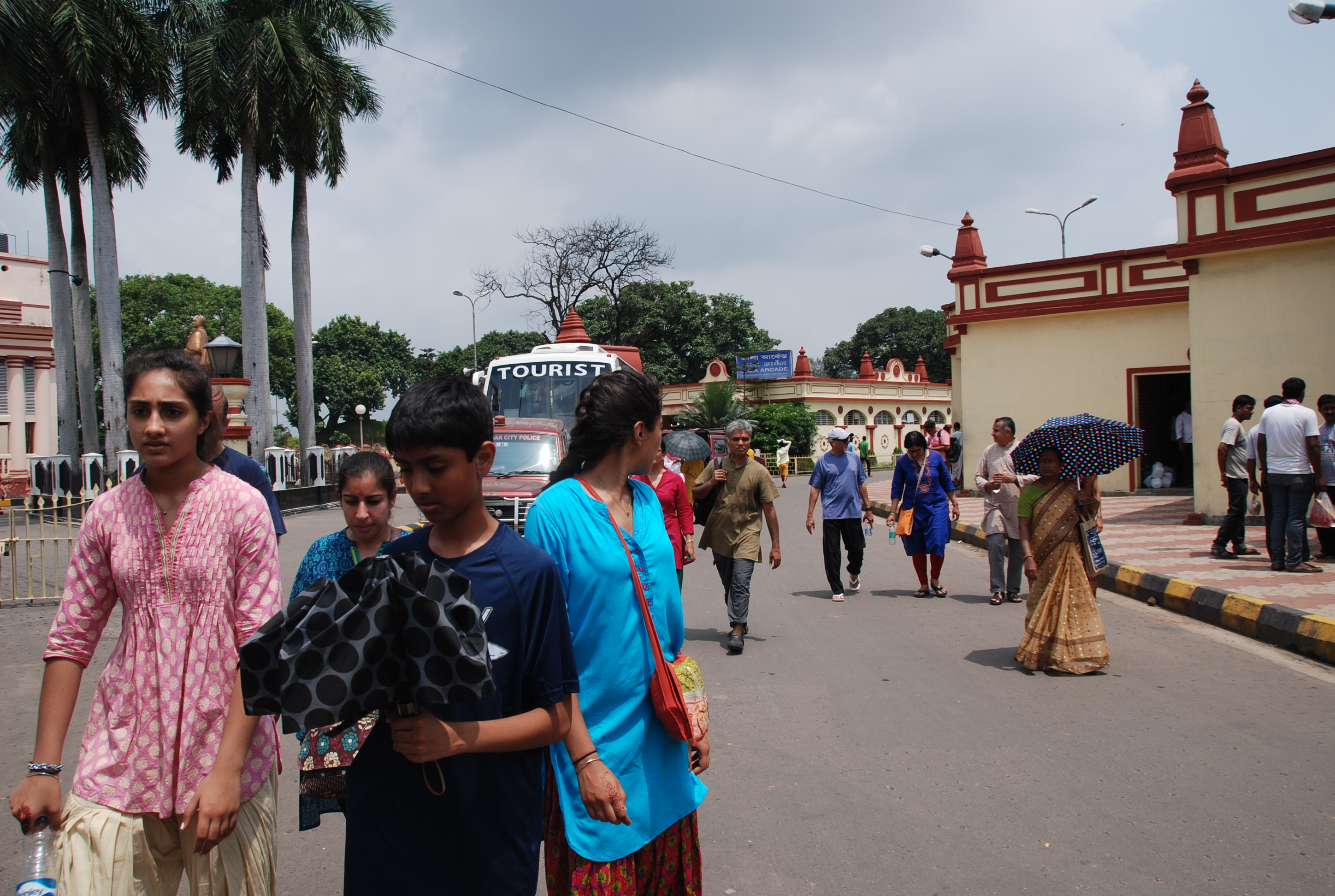
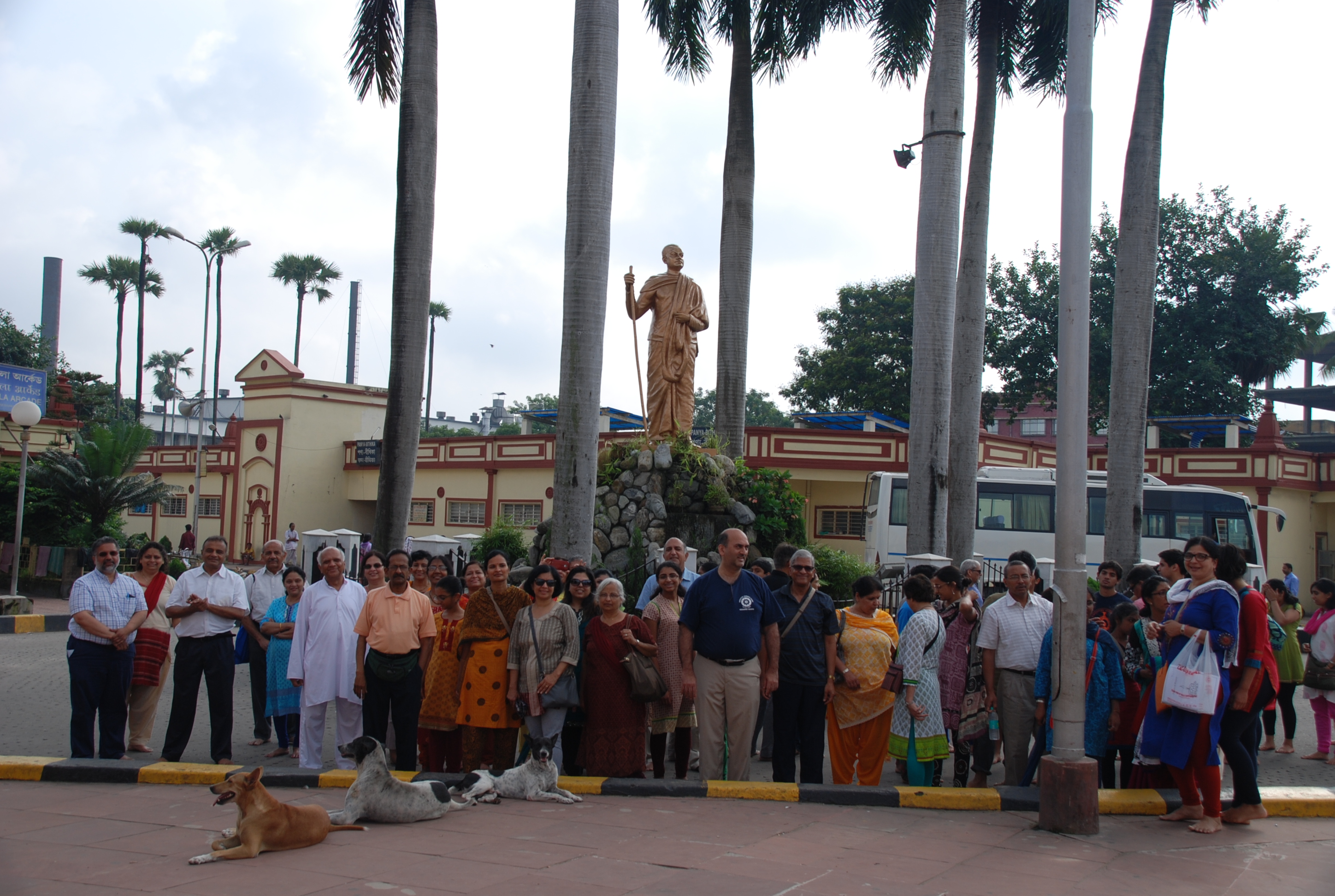
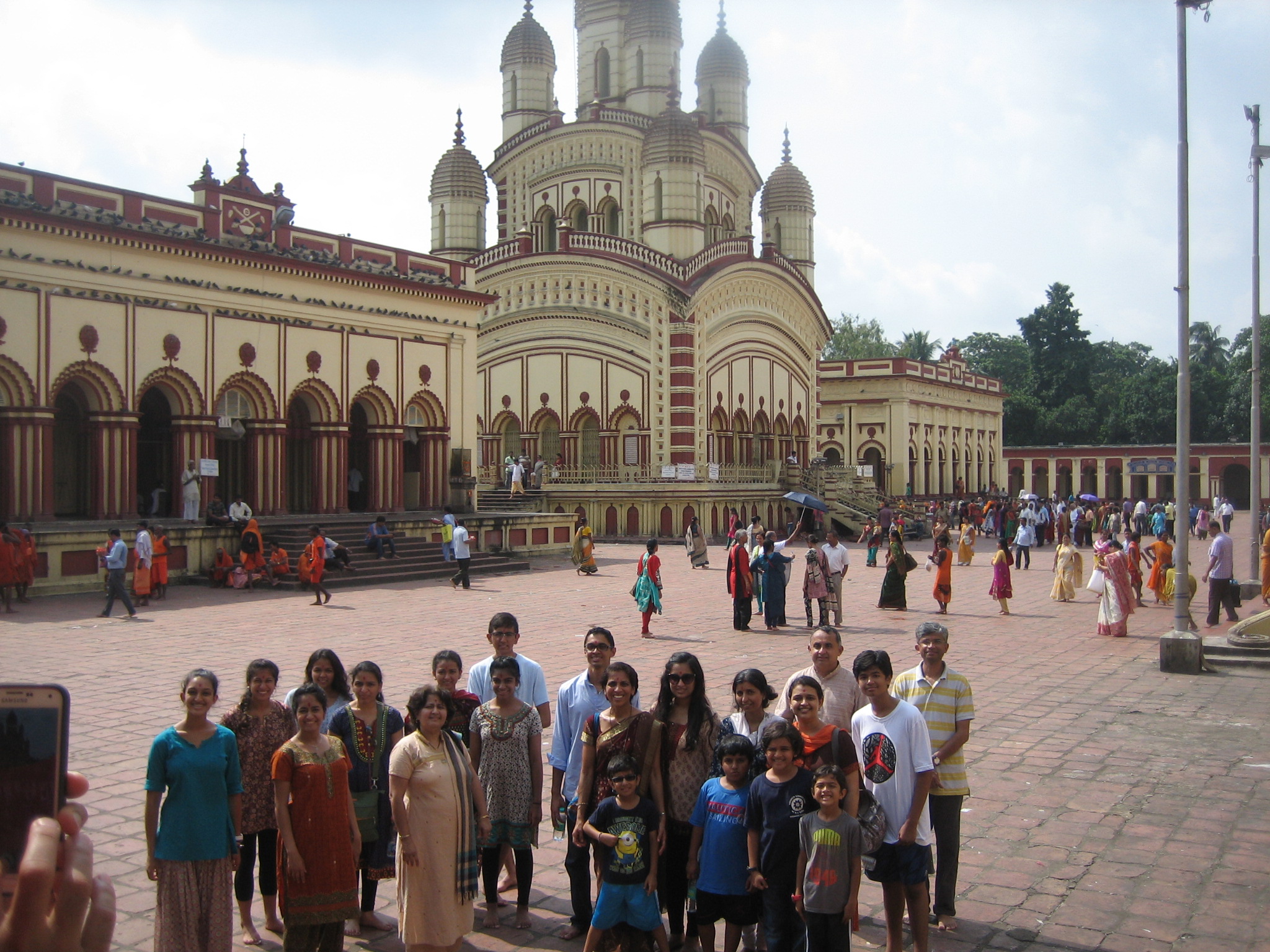
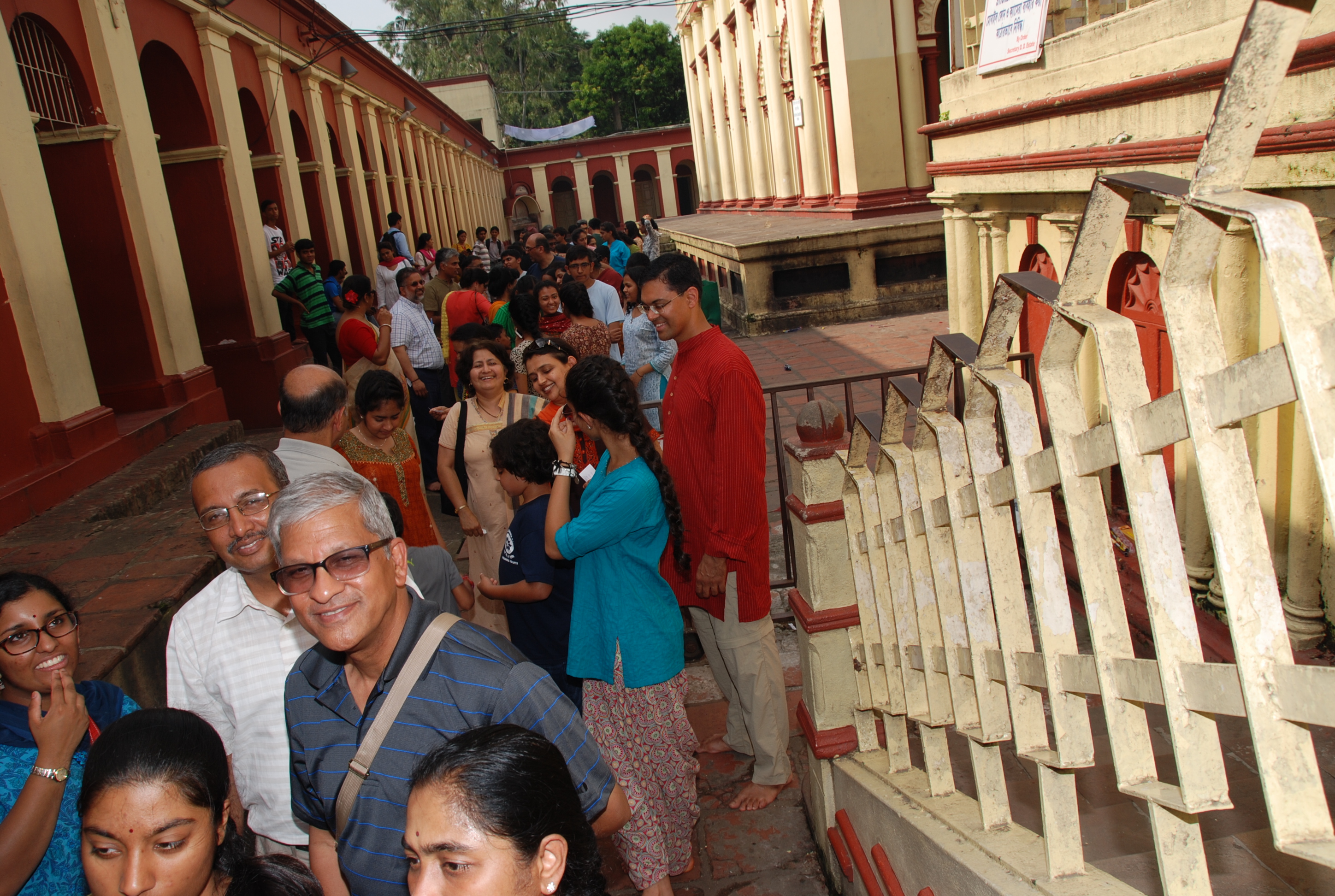
The buses dropped us near the Dakshineswar Kali temple and all of us walked out barefoot.  We gathered near a tall, prominent statue of Swami Vivekananda.  Here we gathered to take our group picture. A couple of dogs came and sat in the front – they must have wanted to join our group!

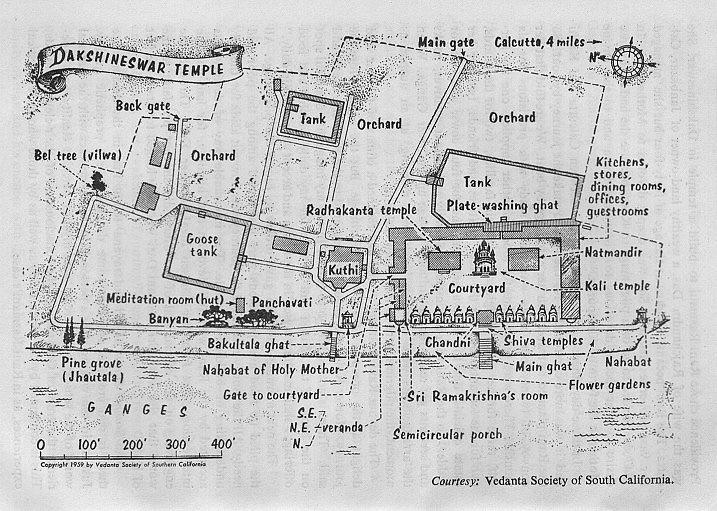
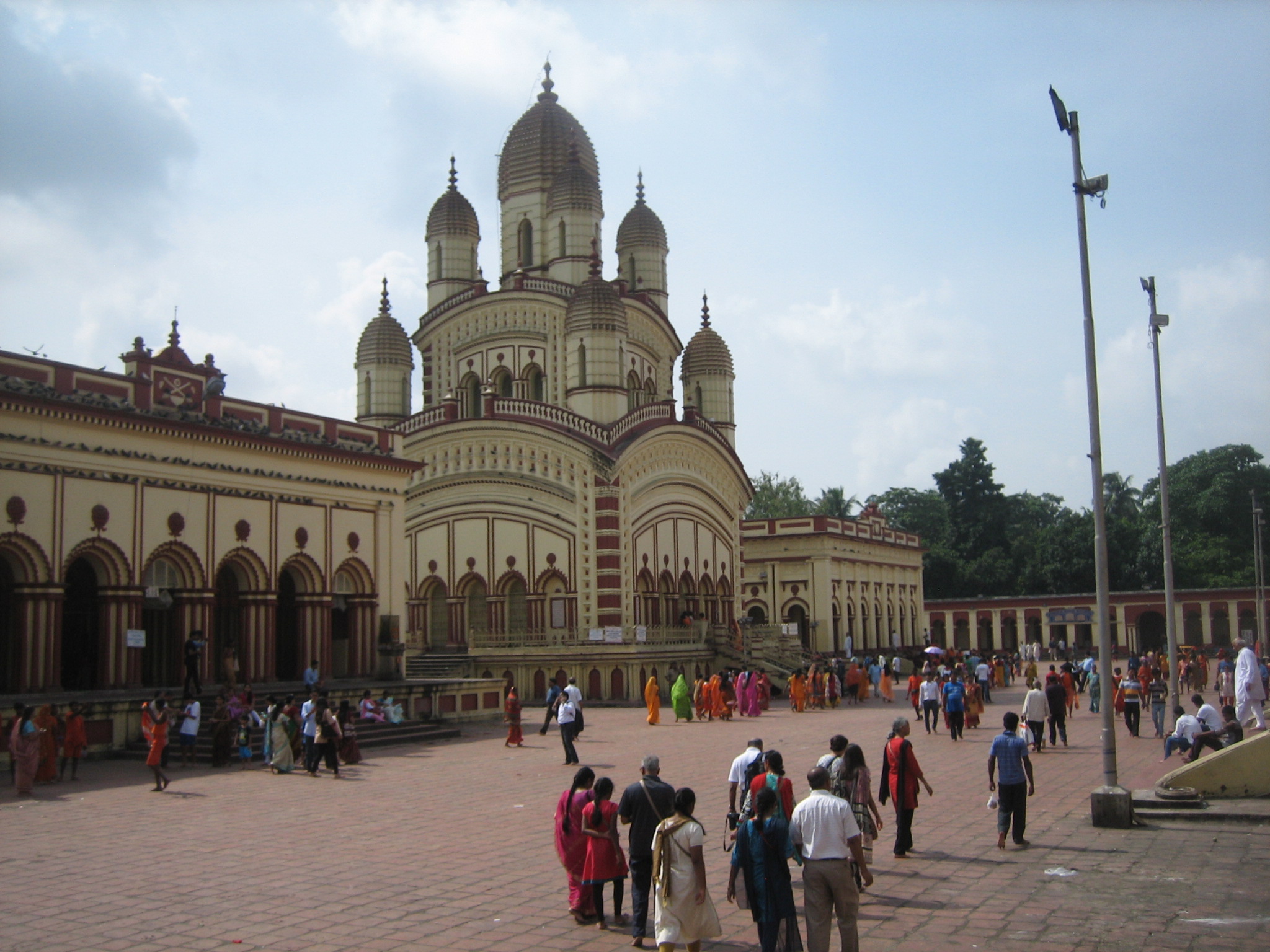
It was early in the morning so the temple was not crowded, and it was easy to go through the security at the entrance.  We then entered the courtyard of the Kali Temple.  The view was spectacular.  There was a big open courtyard with Shiva temples on the right, Radhakant Temple, Kali Temple, and Natmandir on the left.

1. Dakshineswar Temple Grounds Map IMG_0621 Kali Mandir Court Yard - 2

Blessed:

When Deba Saha Uncle’s mother found out about our pilgrimage, she suggested that he contact the Trustees of Dakshniswar Kalimandir Trust to see if we could get permission to enter the inner sanctum of the temple–the very room of the temple where Sri Ramakrishna worshipped Mother Kali.  With many efforts and many late night phone calls from the US, Deba Uncle received the permission just a day before our visit.  Deba Uncle also made special arrangements so that we would have sweets and flowers to offer to Mother Kali in the temple.  In fact, the flowers we were offering were delivered fresh – as we were standing in line!

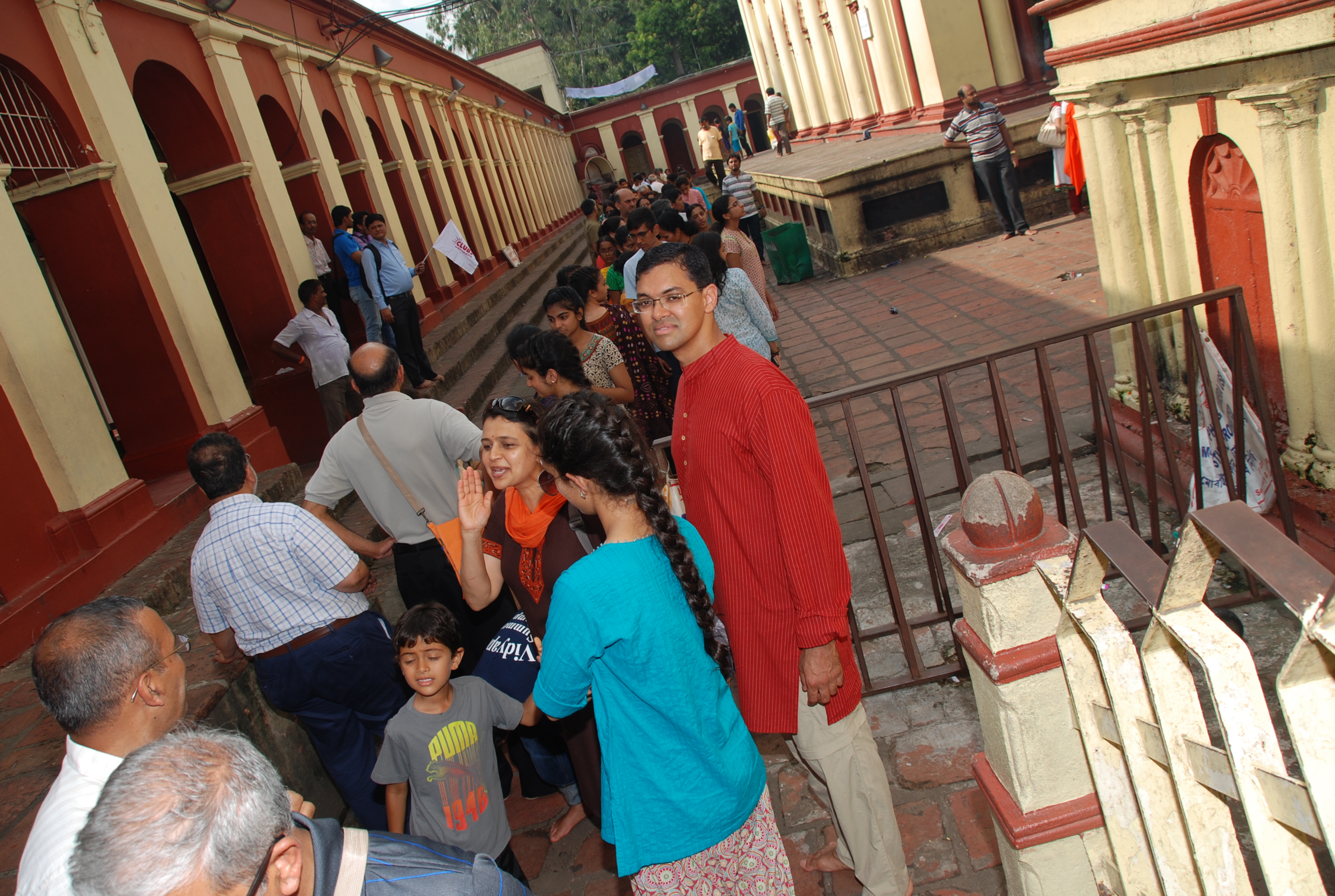
Line to go to Gharbha Griha - 2 Line to go to Gharbha Griha - 1

We formed a line in the back of the temple to go inside the temple called “Garbha Griha.” We were told that around 10 people could go inside the temple at a time, so families entered in their respective groups.

It was a thrilling experience to go inside the Kali Temple, to be face to face with Mother Kali and offer our salutations.  This was the very same Mother Kali which Sri Ramakrishna had a vision of! Here Sri Ramakrishna sat and worshiped the Mother, fanned her, and sang bhajans.  While looking at this Mother Kali and thinking about her glories, Narendra (Swami Vivekananda) forgot all about his family’s suffering; he could not ask for anything other than knowledge and devotion.

Mother Kali

We stood in full reverence and offered our salutations. With Mother Kali’s “Darshana,” we proceeded outside to the courtyard. Our foreheads were adorned with kumkum tilaks and we were carrying a few precious offered flowers and prasad.

Kali Mandir from Thakur's room In front of Shiva Temples- 3

We had been told that it was not easy to get a permission to enter inside this part of the temple. We all mentally thanked the Dakshineswar Kalimandir Trustee who gave us the permission.  Each one’s heart was filled with devotion, a love for Mother Kali, and a gratitude to have such a great opportunity.

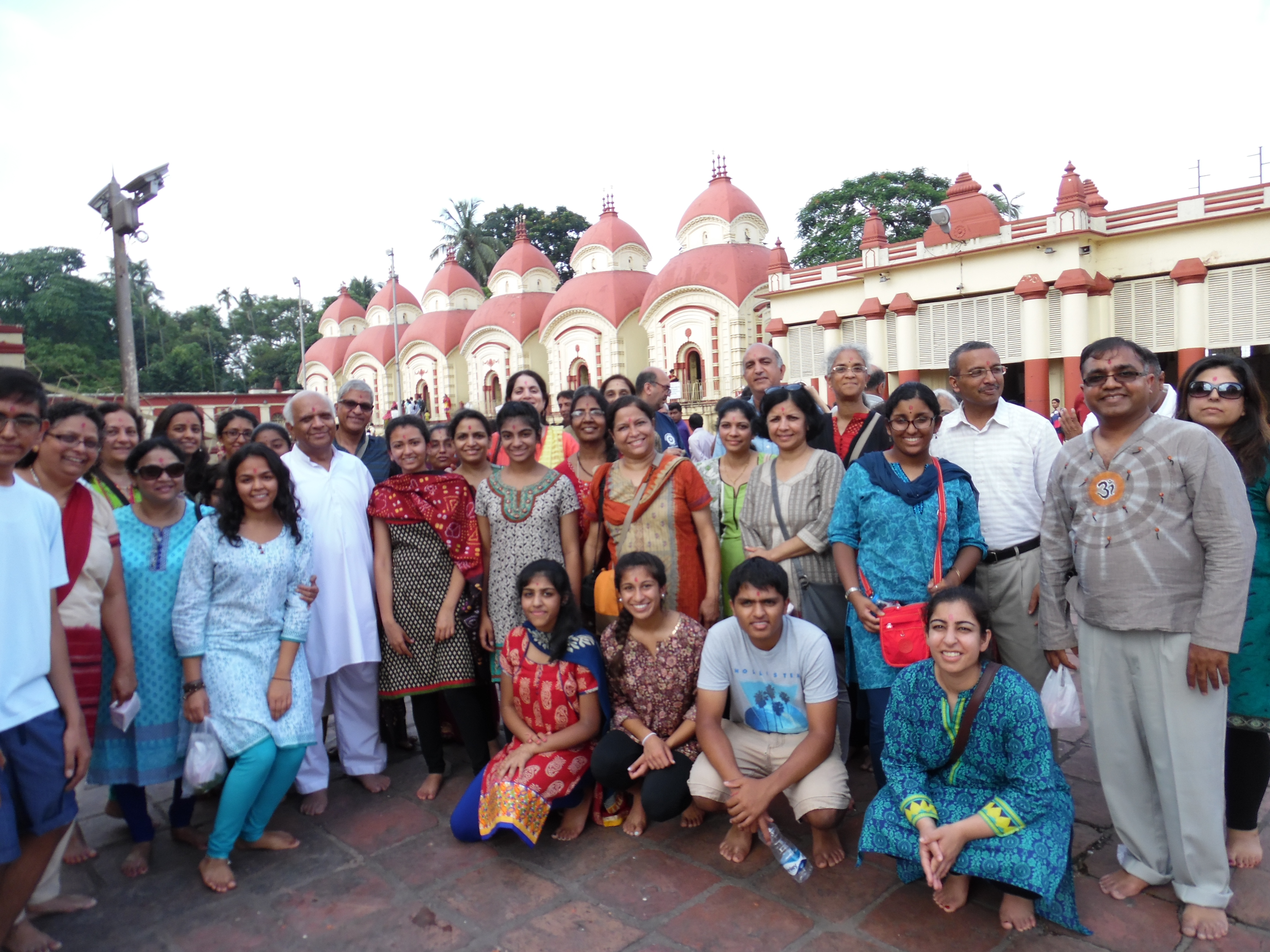
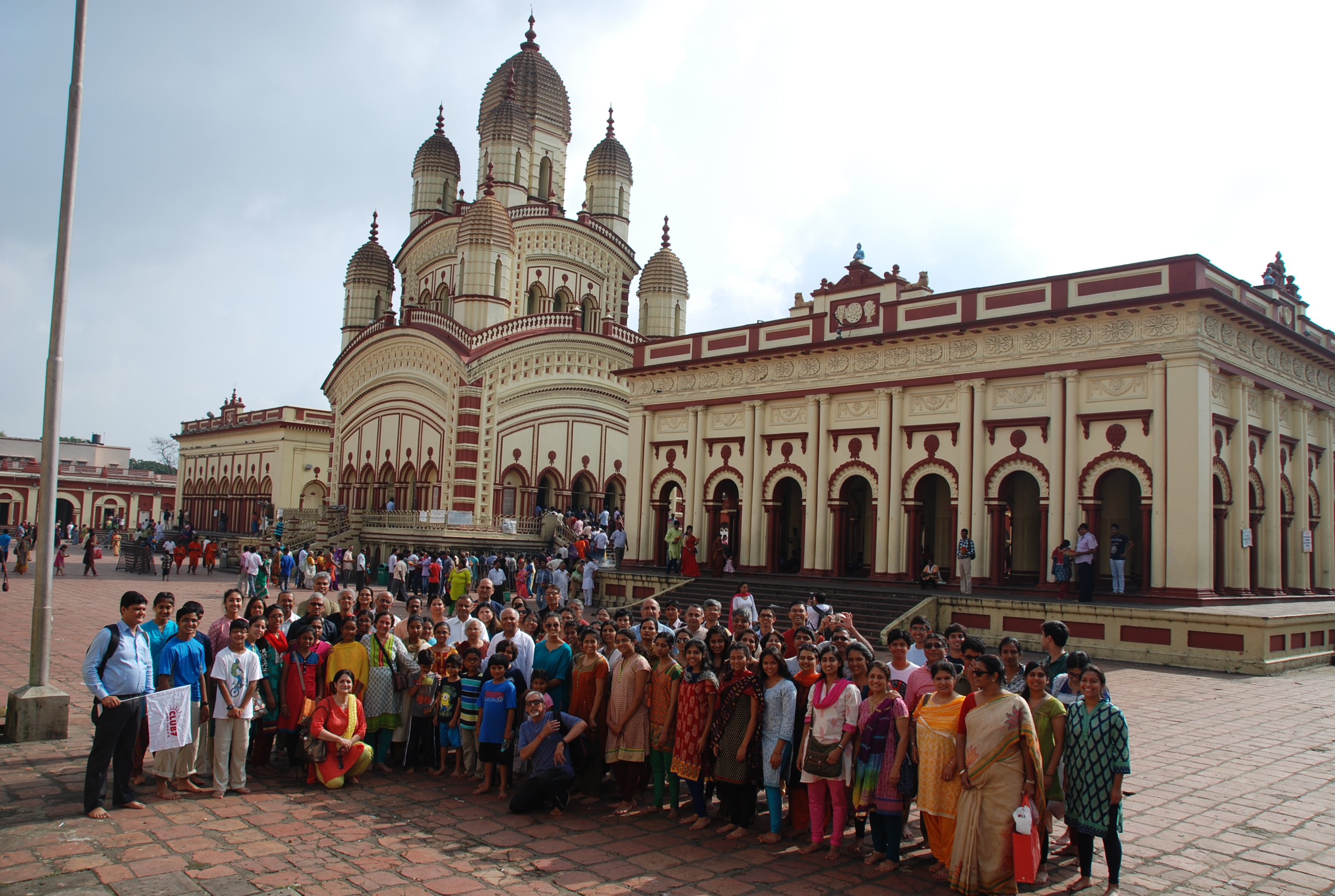
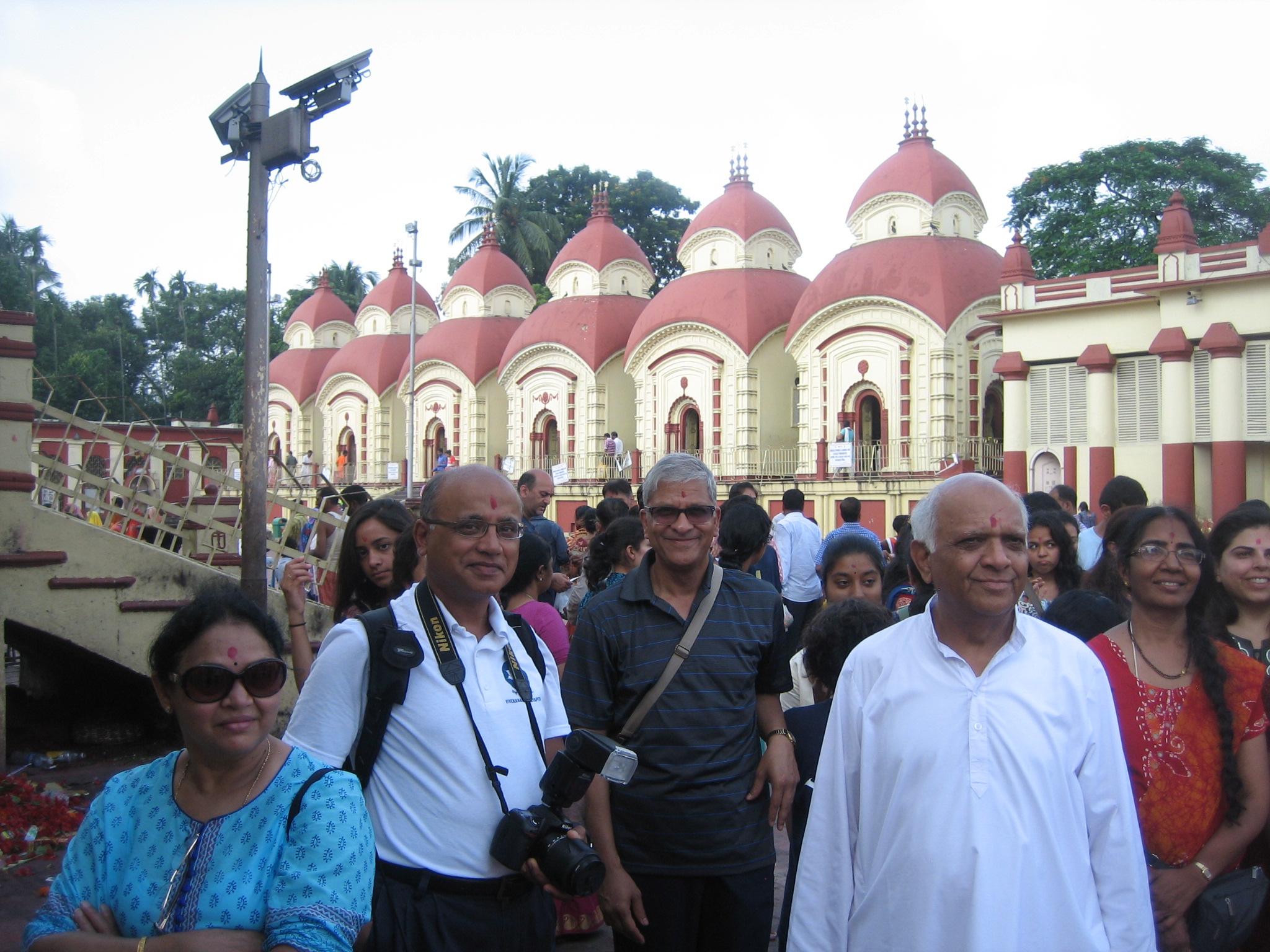
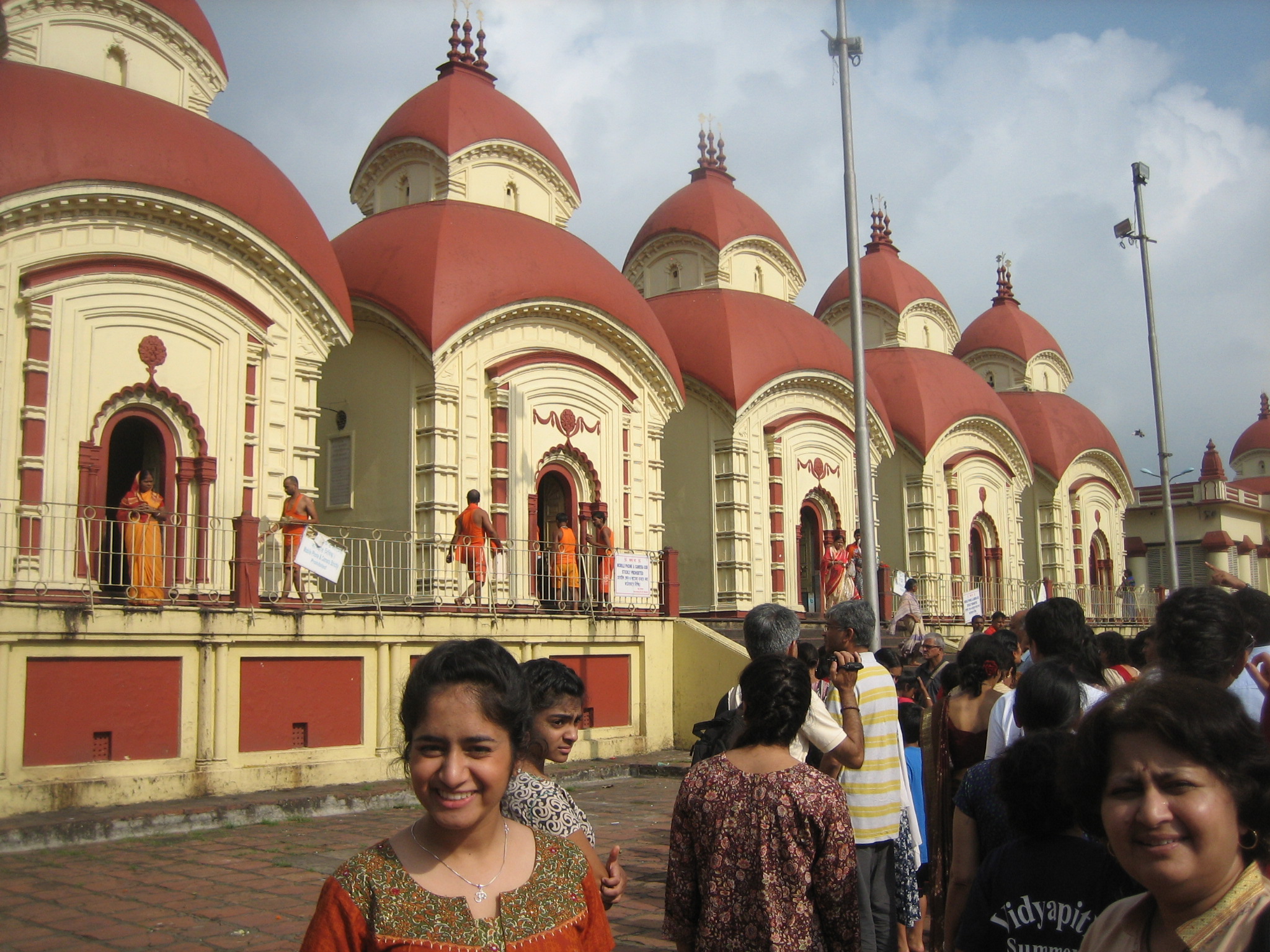
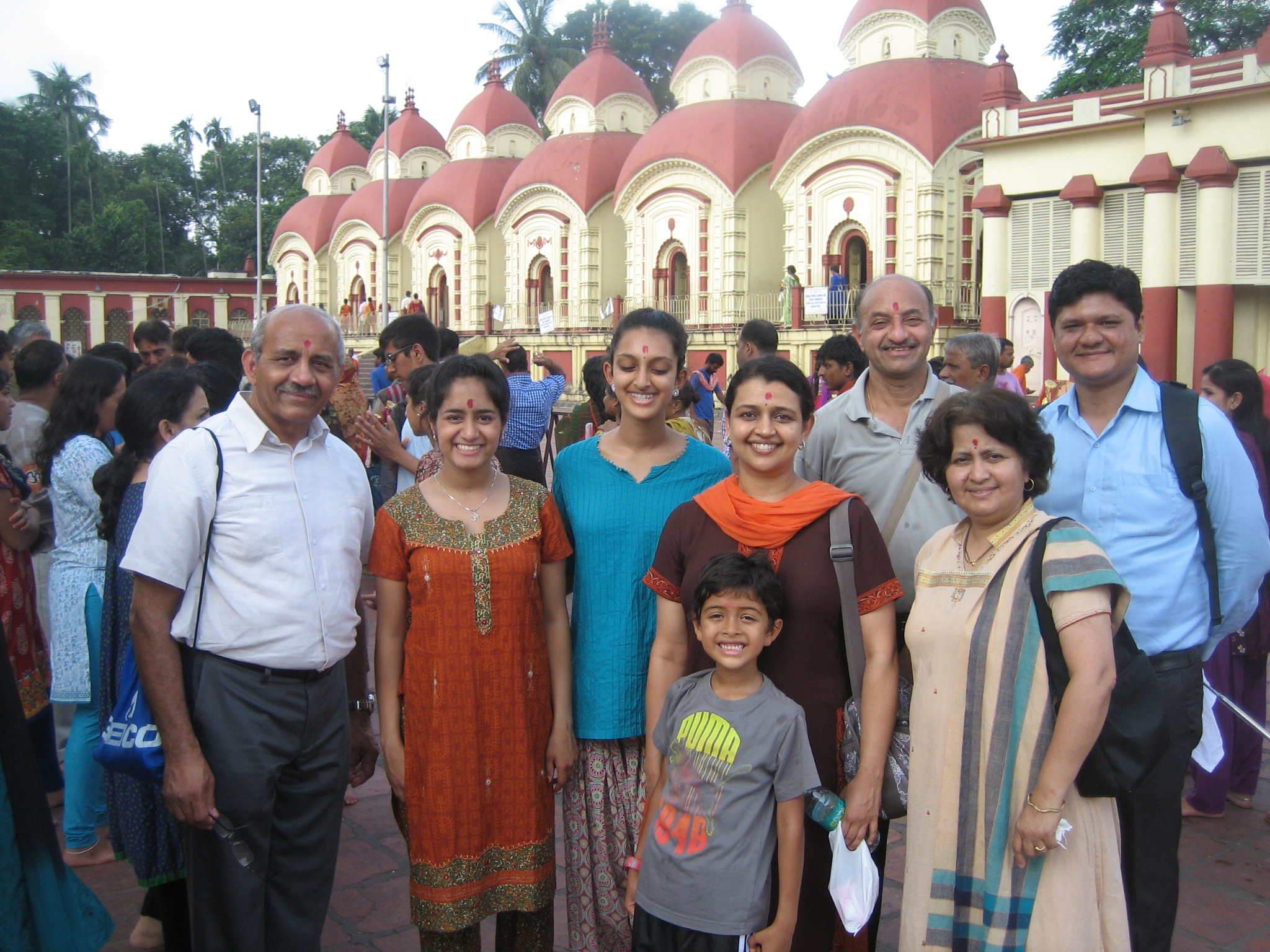
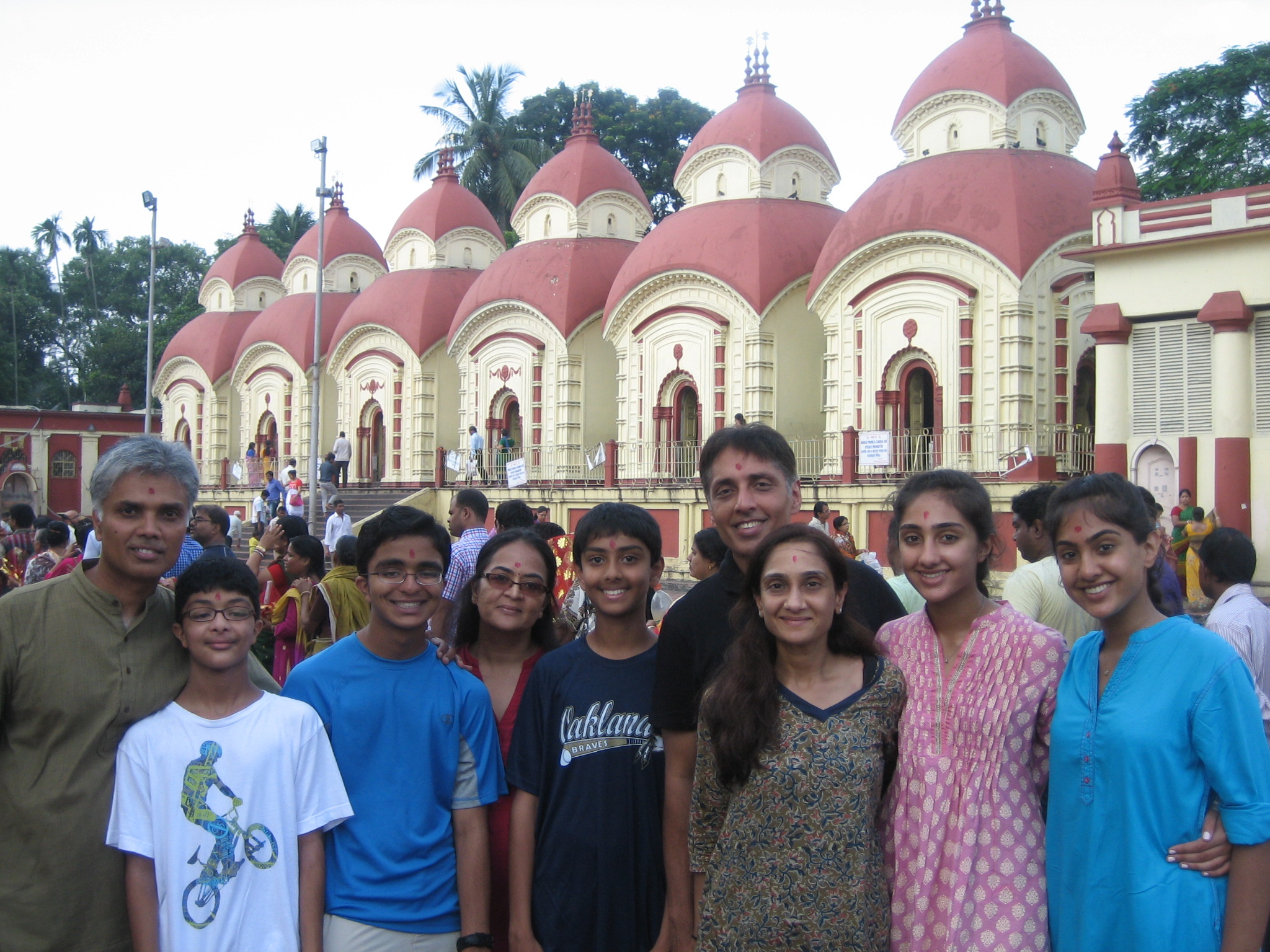
We also received special permission to take group pictures in front of the Kali Temple.

Vivekananda Vidyapith devotees in front of Kali Temple

After our picture, we divided into groups to visit the other temples in the complex.

Shiva Temples:

Shiva Temples - 7 Shiva Temples - 1 Shiva Temples - 4 Shiva Temples - 2 Shiva Temples - 5 Shiva Temples - 1-5

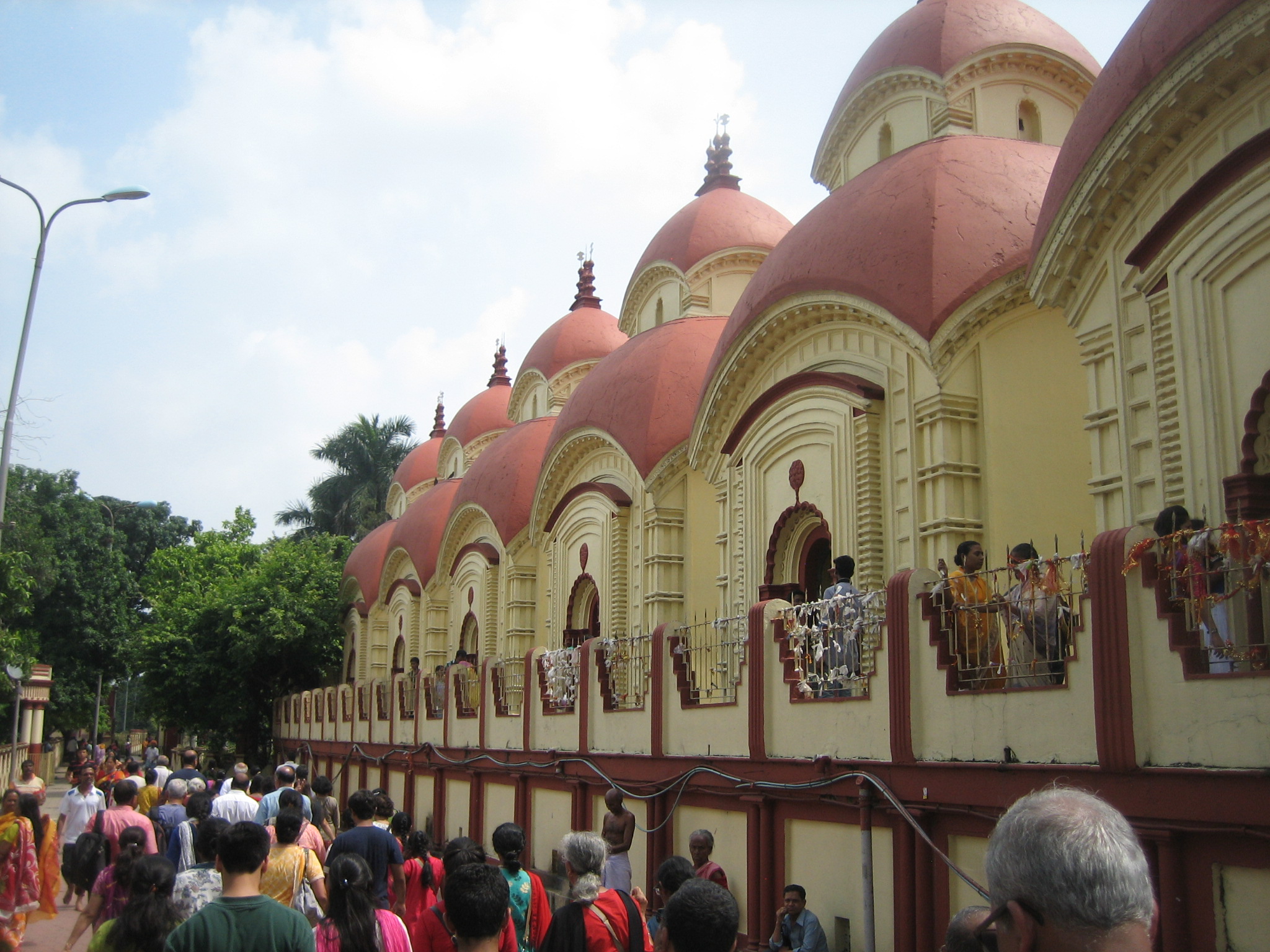
On the side of the complex adjacent to the Ganga was a line of 12 Shiva temples. We went to all 12 Shiva Temples to offer our salutations.  We were amazed by the architectural designs and the construction of the temples which were built between 1855 and 1860 – over 150 years ago! The people who built it must have had great knowledge of construction. The temples were organized with six on one side and six on the other.  Between them was a square area called “Chandani”. From here there are steps that go towards the Main Ghat (steps leading to the Ganga which were made so that people could bathe in the river).  Sri Ramakrishna used to go to this ghat to bathe in river Ganga.

Main Ghat

There are many references of Sri Ramakrishna going to the Shiva Temples to pray.  Once, he was reciting Shiva Mahimna hymn and when this famous shloka came: “even Goddess Saraswati (Goddess of Knowledge) cannot describe your glories…” Sri Ramakrishna held the Shivalingam with both hands and kept repeating this line.  Tears of joy and devotion rolled down his eyes.  People thought he had gone crazy.  Mathurbabu, however, knew his state of mind and asked no one to bother him.

We realized that it was a “Nag-panchapi,” a special day associated to Lord Shiva. Many devotees were offering Ganga water and flowers to Lord Shiva.

Radhakant and Krishna Temples

In the Gospel of Sri Ramakrishna, there is mention of the Radhakant Temple.  Here, we offered our salutations to Sri Radha and Lord Krishna.  Many times when Sri Ramakrishna sang songs that described the intense love of Sri Radha for Lord Krishna, he used to go into Bhava-samadhi.

Kali Mandir Court Yard - 2

On the left of the Radhakant Temple, there was a temple of Sri Krishna.  There we saw the statue of Sri Krishna. This statue has a story associated with it.  Once, a priest dropped this statue, causing the leg of the statue to break.  When all of the pundits came to know of this news, they said that the statue had to be put into Ganga and another one must be used for worship instead.  Mathurbabu was confused with this reasoning as he had attachment with the statue.  When Sri Ramakrishna came to know about this, he said, “If a son-in-law of Rani Rasamani breaks his leg, would she throw away the son-in-law and get another one or she would make arrangements for the treatment of his leg?” Then, Sri Ramakrishna fixed the leg in such a skillful way that many could not tell it was broken in the first place.

There is another event that we remembered regarding the Radhakant Temple.  Once, Bhavanath brought a cameraman to take a photograph of Sri Ramakrishna. However, Sri Ramakrishna refused to have his picture taken.  When he was pressed for the photograph, Sri Ramakrishna came out from his room and sat on the steps of Radhakant Temple.  Then, Narendra came.  He learned about the situation.  Narenda asked the cameraman to wait. He went to Sri Ramakrishna and started talking to him.  During the discussion, Sri Ramakrishna went into Samadhi. Narendra now asked the photographer to take the picture.  This same picture is the picture of Sri Ramakrishna that we see being worshipped in all temples and houses. Later, Sri Ramakrishna himself worshipped this picture and said, “This picture shows a very high state of Yoga.  Hereafter it will be worshipped from house to house.”  We could not believe that we were seeing these same steps.

Natmandir:

It was in Natmandir, Bhairavi Brahmani, the spiritual Guru of Sri Ramakrishna proved to the assembly of Pundits that Sri Ramakrishna is an Incarnation of God, meaning he has all the qualities of an Incarnation of God as described by the scriptures.  All of the pundits agreed to this and thanked Bhairavi Brahmani for recognizing it.

On the top of Natmandir, there is a Bhairava statue with two attendants of Lord Shiva, namely Nandi and Bringi.  Sri Ramakrishna used to salute them before entering the Kali Temple as if he was taking their permission to enter.

Sri Ramakrishna’s Room

Entrance to Thakur's room - Northrn Varanda - 1

On the right side of Shiva Temples is Sri Ramakrishna’s room.   This is the heart of the complex for all devotees of Sri Ramakrishna. There are many chapters in the Gospel of Sri Ramakrishna which describe various spiritual states of Sri Ramakrishna and his inspiring and uplifting conversations in this room.  Sri Ramakrishna lived in this room for 14 years, from 1871 to 1885.  This room also played a significant role in the life of Swami Vivekananda and the direct disciples of Sri Ramakrishna.

In small groups, we reverently entered the room.  There were two cots.  We have read in the Gospel of Sri Ramakrishna that Sri Ramakrishna used to sleep on the bigger cot and then he would come down and sit on the smaller cot to talk to people.  Sometimes he would even sit on the floor with young devotees and have many laughs.  Many memories from the Gospel of Sri Ramakrishna came to our minds when we sat in the room.  We felt goosebumps when we thought of Narendra sitting here and singing and Sri Ramakrishna going into Samadhi.  Various kinds of conversations took place here and these conversations shaped the lives of many people.  Each one of us sat in the room for a few minutes, did japa, and remembered Sri Ramakrishna.

Around the room, there are three verandahs (lobbies): the Northeastern, Northern, and Southeastern verandahs.  These verandahs had witnessed many important incidents in the lives of Sri Ramakrishna, Swami Vivekananda, and others.  One of the incidents that took place in the Northern verandah was Mathurbabu’s vision.  After Bhairavi Brahmani had proved to the Pundits that Sri Ramakrishna was an Incarnation of God, Mathurbabu, who had a great respect for Sri Ramakrishna as a saint, still was not convinced that Sri Ramakrishna was an Incarnation of God.   One day, Sri Ramakrishna was pacing up and down in this northern verandah.  Mathurbabu was sitting in the lobby of Kuthi Badi.  He looked at Sri Ramakrishna and, to his surprise, he saw Mother Kali walking.  As Sri Ramakrishna turned in another direction, he saw Lord Shiva walking.  These were Mathurbabu’s Ishta-devas (chosen deities).  He could not believe this.  He went to Sri Ramakrishna and fell at his feet.  Mathurbabu said, “Baba (Father), is it true what I saw?”  Sri Ramakrishna said, “Please do not tell anyone about it.”

Thakur's Room - Semi-circular porch - 1 Thakur's Room - Semi-circular porch - 2 View of Thakur's Room Thakur Room's semi-circular Porch - 3

To the west of the room is a semi-circular porch.  Sri Ramakrishna used to come here to see the Ganga.  Around the porch was a flower garden.  Sri Ramarkishna used to pluck flowers from this garden for his worship.  When Narendra came for the first time, he entered from this porch.

Nahabat:

After visiting Sri Ramakrishna’s room, we all got together and went to see the Main Ghat where Sri Ramakrishna used to take his bath.  We saw the Ghat, the semi-circular porch of Sri Ramakrishna’s room and then continued to Nahbat, another important place for the devotees.

Towards Nahbat  Nahbat - 1 Nahbat - Remembering Holy Mother Nahbat - 6 Nahbat - 6 (2)

Holy Mother Sri Sarada Devi lived in Nahbat from 1872 to 1885.  Uncle told everyone to look at how small the room is.  Holy Mother lived in this small room for years!  For her, that room was a living room, a bedroom, a storage room, and a guest room.  The door of the room was so low that many times Holy Mother hit her head while going out.  Even though she lived in such a small space and lived simply, Holy Mother led an exemplary and inspiring life.  She never complained about her room.  On the contrary, she said that at Dakshineswar her heart always remained filled with joy.  When men devotees were present, Holy Mother could not go to Sri Ramakrishna’s room.  But, to see what was going on there and to listen to the bhajans, she used to look through a hole in the mat that was placed on the door of her room.  Sri Ramakrishna used to jokingly say that each day this hole was getting bigger!

During her days in Dakshineswar, Holy Mother used to get up around 3:30 in the morning, take a bath in the Ganga, and then meditate for long hours.  Women devotees would see her completely absorbed in meditation.  She cooked under the staircase of the Nahbat for Sri Ramakrishna and his devotees, especially the younger devotees who stayed overnight for spiritual practices.

We offered our salutations; our eyes filled with tears of reverence and love for Holy Mother.

Bakultala Ghat:

 Next to Bakul Tala Ghat - 2

               A few feet away on the left of the Nahbat was the Bakultala Ghat.  Here, Holy Mother used to go to take her bath early in the morning.  One dark morning when she walked down for her bath, Holy Mother almost stepped on a crocodile that was lying on the steps of the ghat! Upon hearing this, Sri Ramakrishna was very concerned about her. He told her to go with a lantern.

Rani Rasmani’s Memorial: 

Rani Rasamani built the Dakshineswar Kali Temple between 1855 and 1860, following her divine call from Mother Kali and her commitment to fulfill her husband’s wish.   This Dakshineswar Kali Temple was the place where Sri Ramakrishna built the foundation for the huge spiritual upsurge which became the Vedanta Movement through the Ramakrishna Mission and Math.

Rani Rasamani was known for her charity, her love for poor people, and her fearlessness. In a time when the society would not allow women to go out in public alone, Rani Rasamani managed the huge estate of her husband who passed away at a young age.  Once, when the British Government unjustly imposed taxes on the fishermen of the Ganga, Rani Rasamani spent a huge sum to procure the lease of the concerned part of the Ganga and allowed the fishermen to fish freely without paying any tax.  She even enclosed the area so that British ships could not enter into the area.  Another time, when a Hindu procession was stopped because a Brit was disturbed at night by the noise, Rani Rasamani blocked the entire road from her palace to the Ganga, creating hardship for British vehicles. As a result of her actions, the British both removed the tax and allowed for the Hindu procession.

This fearless lady was a great devotee of Mother Kali and had a great reverence for Sri Ramakrishna.  She loved to listen to Sri Ramakrishna’s bhajans.

Kuthi Bari

Kuthi Badi - 1A Kuthi Badi - 1 Kuthi Badi - 2 Kuthi Badi - 2A Kuthi Badi - 6 (need water)

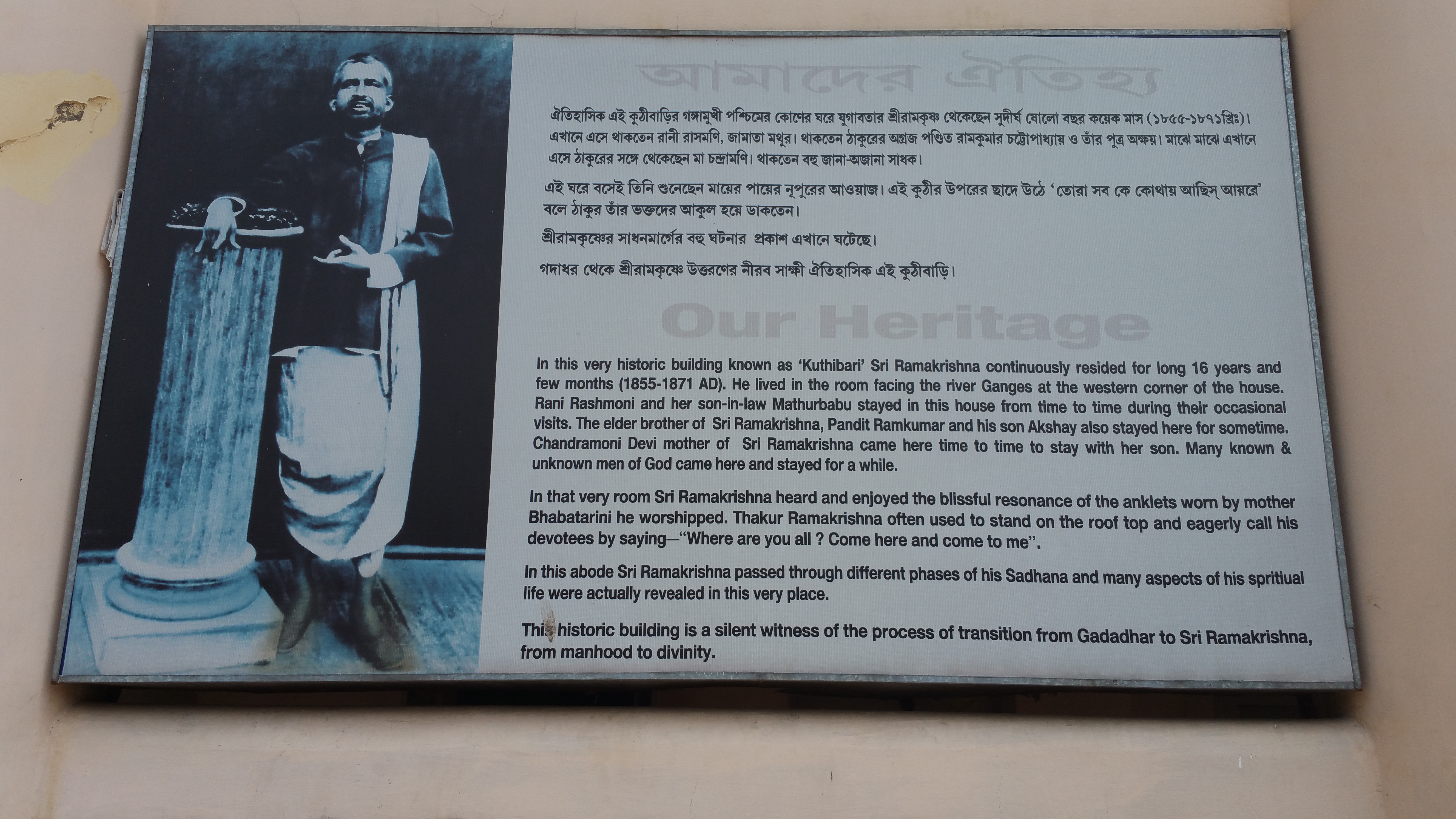
On the left of Rani Rasamani’s memorial is Kuthi Bari where Sri Ramakrishna lived, from 1855 to 1871, in a room facing Ganga.  This was the period of his intense spiritual practices and divine visions.  It was on the terrace of the Kuthi Bari that Sri Ranmakrishna went and cried out, “Where are you my children?  Do come, one and all.  I cannot rest anymore without seeing you.”  After this, one by one, all the known devotees of Sri Ramakrishna came to him for spiritual guidance.

Panchavati:

Pnachvati - 3 Panchavati - 9 Panchavati - 12 Panchavati - 8

Next we went to the Panchavati, a very important place where Sri Ramakrishna did intense spiritual practice and where he encouraged his devotees to do so as well.  Originally, the Panchavati was a thick jungle that people used to avoid going to.

“Pancha” means five.  During his lifetime, Sri Ramakrishna had planted five trees here and made it a special place for his spiritual practices.  The five trees according to the book “Belur Math Pilgrimage” were: Indian fig, Bel (Bilva), Amalaki, Banyan, and Ashoka.

The “Panchavati” and the “Ashoka Tree” have connections with the great epic Ramayana.  Sri Rama, Sri Sitaji and Sri Lakshman resided in the Panchavati forest during their exile.  Also, the “Ashoka tree” reminds us that Ravana kept Sri Sitaji in the Ashoka-vana meaning a jungle (or a place) with lots of Ashoka trees.   Sri Ramakrishna had a vision of Sri Sitaji in Panchavati.  In his vision Mother Sitaji came and entered into him.  After seeing bangles on the hands of Sri Sitaji in his vision, he made similar ones for Holy Mother Sri Sarada Devi.  Holy Mother wore these bangles all her life.  At one time, Sri Ramakrishna prayed to Mother Kali to have intense love for God like Sri Sitaji.  Sri Ramakrishna said that in Ashokavan Sri Sitaji became oblivious of herself and was constantly thinking of Sri Rama.  Just one thought was in her mind, “Where is Sri Rama?”

The Panchavati was covered all around by a fence.  Visitors were not allowed to go inside the Panchavati area. We saw it from outside.

Totapuri Hut in Panchavati:

Totapur Hut - 7 Totapuri Hut - 1

Inside the Panchavati, we saw from a distance a hut known as the Totapuri Hut.  We were told that this was the place where Totapuri took Sri Ramakrishna for Non-dualist (Advaita) spiritual practice.  He set up a fire and asked Sri Ramarkrishna to meditate on the infinite aspect of God, called Brahman.  Sri Ramakrishna said that he could not do it because Mother Kali’s blissful face kept coming to his mind. Frustrated, Totapuri took a piece of glass and touched it between Sri Ramakrishna’s eyebrows and asked him to meditate there.  Sri Ramakrishna later explained that it was then that, with the sword of knowledge, he destroyed the blissful form of Mother Kali and his mind soared beyond the relative plane merging with the infinite Brahman.  His mind remained there for three days.  Totapuri had a hard time bringing Sri Ramakrishna’s mind down to the relative plane.  He loudly repeated “Hari Om” to bring Sri Ramakrishna’s mind down.  Totapuri was amazed to witness that the state of mind he, himself, had achieved after 40 years of intense spiritual practices, Sri Ramakrishna achieved in one day!

Panchamundi:

Path to Totapuri's Hut - 1 Going to Pancha Mundi

Going to Panch Mundi In front of Pancha Mundi

Out last place of pilgrimage in Dakshineswar was “Panchamundi.”  The sun was getting hot and so was the ground.  Most of us opened the umbrellas given to us by Club7, and constantly sipped our drinking water from the water-bottles provided by them. The ground was very hot, so people were also trying to find shaded areas to cool down.

Duck's Pukur - 2 Ducks Pukur - 1

On our way we saw a very nice pukur (a lake) called “Goose Pond” and a huge banyan tree.  We were told that Sri Ramakrishna did japa and meditation under this tree.

Panch Mundi - 7 Pancha Mundi - 9 Panch Mundi - 6 Panch Mundi - 1

Walking through a narrow path we reached the place called “Panchamundi” where Sri Ramakrishna did his Tantric spiritual practices under the guidance of Bharavi Brahmani.   The original place is enclosed by a fence.  We could see a bilva tree which marked the original spot. Sri Ramakrishna practiced all the disciplines of the sixty-four principal Tantrik books and mastered them all in a short time.

Thus, remembering the lives of Sri Ramakrishna, Holy Mother Sri Sarada Devi, Swami Vviekananda, and the direct disciples of Sri Ramkrishna associated with Dakshineswar, we all started walking towards the gate to go to our buses.  We all felt that we were blessed to have such a spiritually uplifting morning.

Being fully satisfied - waiting for buses to leave Waiting for buses

Sickness:

For all of us, one of the major worries was not to get sick.  A couple of people had an upset stomach because of jet-lag, the tiredness after a long plane-journey and bus-travel.  One person was dehydrated and felt dizzy.  Yet, we had four skillful doctors Dr. Anandhi Johri, Dr. Sridhar Nambi, Dr. Apexa Shukla, and Dr. Nilesh Shukla who took care of us all.  The patients recovered within short time and the rest remained healthy.

(The original report was written by Abhishek and Avni Senjalia.)