It is simply amazing how 5000 years ago, teachers and students of the Upanishads tried to find the answers of fundamental questions of life and the universe through simple available means. It is more amazing that the answers they had found become more and more relevant with the advancement of science.
The following story from the sixth chapter of the Chhandogya Upanishad is one such example. Its teachings are profound but have been expressed them in a very simple and appealing way. This is not an English translation of the chapter. I tried simply to bring out its essential teachings.
The following books provide the original Sanskrit text of the chapter and its English translation by Swami Nikhilananda respectively.

Chhandogya Upanishad – Sanskrit

A great Rishi named Aruna had a son named Uddalaka who was also known as Aaruni. Uddalaka was also a great Rishi. (A rishi is one who has attained the highest knowledge of life a human being can attain.)
Rishi Uddalaka had a son named Swetaketu. When Swetaketu was twelve years old, his father, Uddalaka, told him that no one in the family had attained the highest knowledge without studying the scriptures. So, Uddalaka sent Swetaketu to an ashrama where students learned the scriptures.
After twelve years of study, Swetaketu returned home. Uddalaka found him arrogant, having a superiority complex and considering himself a great orator of and an expert on the scriptures.
Uddalaka asked Swetaketu,
“Did you acquire the knowledge by which one can hear what cannot be heard, think what is unthinkable, and know what is unknowable?
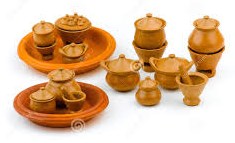
Did you acquire the knowledge that would allow you, by knowing a lump of clay, to know all things made out of clay and to know that the differences among things made from clay are only in their names and forms? And that these names and forms are but modifications of speech? Did you acquire the knowledge to understand that the clay is the only truth?
Did you acquire the knowledge that would allow you, by knowing a nugget of gold, to know all of things made out of gold and to know that the differences among things made from gold are only in their names and forms? And that these names and forms are but modifications of speech? Did you acquire the knowledge to understand that the gold is the only truth?

Did you acquire the knowledge that would allow you, by knowing a steel nail-clipper, to know all things made out of steel and to know that the differences among things made of steel are only in their names and forms which are but modifications of speech? Did you acquire the knowledge to understand that the steel is the only truth?”

Swetaketu answered, “Revered Father! My teacher definitely did not know about this. Otherwise, he would have taught me. Please teach me.”
Rishi Uddalaka said, “My son! In the beginning of the universe there was only one life force called “Sat” (Brahman). From Sat, the whole universe came.
A group of people think that there was nothing before the universe. But, how does ‘something’ come from ‘nothing’? It is not possible. Therefore, there was a unique life force called Sat before the universe.
That Sat thought that it should become many and create a universe. Sat therefore created light / fire (Teja). Light/fire then thought to become many and it created water (Aapa). We see that when a person feels warm, he/she perspires. Thus, we can conclude that the light/fire is the source of water. After water was created, it (Aapa) thought to become many and in turn created food (Anna – this includes everything related to food like land and earth). We see that when it rains a lot, lots of vegetation grows. This shows that rain is the source of food.
All beings can be born from one of three things: (i) from eggs, (ii) from species of their kind or (iii) from seeds.



Light/fire, water and food/earth, decided to enter into these beings in various proportions and thus created a world of names and forms.
In everything that we see, that which is reddish comes from light/fire, that which is white comes from water, and that which has darker colors comes from food/earth.


One can see these three colors in the sun, moon, and lightening. These three exist even in fire. If you separate the fire-part, water-part and the food/earth-part from the fire, then the qualities of fire disappear. (The same applies to water and food/earth.)
Let us see what roles light/fire, water, and food/earth have in human beings:
There are three parts of food: the gross part, the semi-gross part and the subtle part. When a person eats food, the gross part of the food comes out as feces (solid waste comes out from human body), the semi-subtle part of the food becomes the meat, and the subtle part of the food makes mind.
Similarly, when a person drinks water, the gross part comes out as urine, the semi-gross part makes the blood, and the subtle part produces the vital forces (prana), including breathing.
When a person eats especially nourishing food (teja), the gross part of it makes the bones, the semi-subtle part of it makes the bone marrow, and the subtle part of it makes the speech.
Thus, the mind is made out of food, vital forces and breath are made out of water, and speech is made out of teja.
How do we see that the subtle parts of food, water, and teja make up the mind, vital forces/breath and speech respectively?

When we churn buttermilk, the subtle part of the butter rises to the surface. Similarly, the subtle part of food makes the mind, the subtle part of water makes the vital forces/breath, and the subtle part of teja makes the speech.
Swetaketu said, “Father! Please explain further.” Uddalaka responded, “My son! Sure, I will explain further.”
How do we see that the mind is made out of food?
Rishi Uddalaka told Swetaketu, “Do not eat for fifteen days. You can drink water. Since you will be drinking water, you will remain alive. Come to me after fifteen days.”
Swetaketu responded, “Okay father!”
Swetaketu returned to his father after fifteen days. Uddalaka said, “You had learned the Vedas. Now recite something from the Vedas.” Swetaketu answered, “Father! My mind is not functioning. I cannot recite anything.” Uddalaka said, “Go and eat something.” Swetaketu had a good meal and came back. Uddalaka then asked him again to recite from the Vedas. Swetaketu recited many verses from the Vedas. Father Uddalaka said, “See Swetaketu, when a blazing fire is put off and only a little fire remains, it cannot cook anything. But, if we put dry branches of trees into the little fire, we can ignite it into a blazing fire and then cook anything in it. In the beginning, your mind could not function without food, but after you ate food, it functioned very well. Know that the mind is made out of food, that vital forces/breath are made out of water, and that speech is made out of teja.
How do you feel your true self?
Uddalaka told Swetaketu that when a person is in a dreamless sleep, his awareness of the world associated with his name and form go away. A little “prana” (vital force/breath) keeps one alive, but one is not aware of all the joys, sorrows, and problems associated with one’s body and mind. This is an indirect experience of the true self in which the awareness of one’s own external identity disappears.
(When we go to bed, first various thoughts come to our minds, then we enter a dream state, and then finally we come to the state of deep sleep without dreams. In that state we forget all about our gender, age, color, culture, plans, positions, problems, and everything related to our body and mind. At that time we are almost one with our true identity “Sat” or Atman. But, as soon as we wake up, within a fraction of a second, our body-form identity and everything related to it comes rushing back.
To experience our true identity “Sat” or Atman in our awakened state is realization of Truth or God.)
Searching our true identity:
By following the root of ourselves, we can find our true identity.
(i) Prana is the support of the mind: Our mind needs our body. Rishi Uddalaka told Swetaketu to imagine a person with an eagle as a pet. The owner ties a string to the bird and keeps the other end of the string in his/her hand. The bird will fly all around and then come back to the hands of the owner. Similarly, our mind will go around, but will eventually come back to the living body. Thus, the mind needs “prana” to keep the body alive. Food keeps the body alive.
(ii) Water leads to food: Uddlaka continued, “Swetaketu! How does a person get hungry? When a person eats food, the food mixes with water and becomes digested. All of the nourishment of the digested food goes in the body and the person becomes hungry again. Thus, water leads to a need for food.”
(iii) Teja leads to water: “How does a person become thirsty? When body heat evaporates the water inside the body, a person becomes thirsty. Thus, teja/fire leads to a need for water.
(iv) “Sat” (Brahman) leads teja: Teja/fire came from Sat. Thus, Sat leads teja/fire.
Search for the root or the cause:
When a person is dying, he/she stops talking. People first say, “Oh! He/she is not talking.” They then find that “he/she is not moving.” Finally, they find that “his/her body is cold.” Thus, when a person stops talking, the mind of the person merges into “prana” (vitality). When, a person stops moving, the “prana” merges into “teja/fire”. Finally, when the person’s body is cold, his/her teja merges into Sat (Brahman).
Rishi Uddalaka told Swetaketu, “My son! Search for the cause or root of each one (food, water, and teja) and you will realize your true identity. The cause of body is food, the cause of food is water, the cause of water is light/fire, and the cause of light/fire is the one life force Sat (Brahman) which created the whole universe and which is the whole universe.
That Sat is subtle and has manifested as the universe. That is the Truth (behind the universe of names and forms). That is Brahman. That is Atman, and Thou art That (Sat) (Tatvamasi-Tat Tvam Asi).
Thus, our true identity is divine. It is the support of our existence. We call this unique life force (Sat) God and worship It in various forms. The goal of human existence is to realize our true identity.
Swetaketu said, “Father! Please explain further.” Father said, “My son! Sure, I will explain further.”
Example of bees:
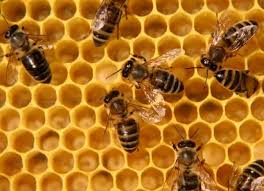

Rishi Uddalaka said, “O Swetaketu! Bees collect juices from various flowers and other sources and make honey. In the honey, one cannot separate the juices by their sources. Similarly, the individuality of all things of the universe will disappear when they merge with the original unique life force Sat.”
Example of Rivers:

“O Swetaketu! All rivers empty their water into the ocean. In the ocean one cannot separate the waters by their source rivers. Similarly, the individuality of all things of the universe will disappear when they merge with the original unique life force Sat.”
That Sat is subtle and has manifested as the universe. That is the Truth (behind the universe of names and forms). That is Brahman. That is Atman, and Thou art That (Sat) (Tatvamasi-Tat Tvam Asi).
Now, as in the dreamless sleep, a person momentarily loses his/her external identity of name and form and becomes one with the Sat. After waking up, however, the person immediately returns to his/her name-form identity. Similarly, all beings, because of their worldly desires, come back to their separate name-form identities even after being merged with Sat.
Swetaketu said, “Father! Please explain further.” Father said, “My son! Sure, I will explain further.”
“Sat” or Atman does not die:

Rishi Uddalaka said, “Swetaketu! If you struck a living tree at its roots, it would bleed. If struck it in the middle, it would bleed. If you struck it at the top, it would bleed. Similarly, when the life force is in the body, it spreads everywhere and is all pervading like the sap of the tree.

But, if the life force leaves a branch of the tree, then that branch falls off. If it leaves another branch, that will also fall off. If it leaves the whole tree, then the whole tree dries up and falls. Remember, the life force does not die. When the life force (Atman) leaves a body, then only does the body die.
That Sat is subtle and has manifested as the universe. That is the Truth (behind the universe of names and forms). That is Brahman. That is Atman, and Thou art That (Sat) (Tatvamasi-Tat Tvam Asi).
Swetaketu said, “Father! Please explain further.” Father said, “My son! Sure, I will explain further.”
Have faith in the existence of “Sat” (Atman):
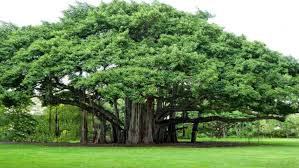
Rishi Uddalaka asked, “Swetaketu! Please bring me a fruit from this banyan tree.”
Swetaketu said, “O Father! Here is a fruit of the banyan tree.”
Rishi Uddalaka said, “Break this fruit.”
Swetaketu said, “I broke it.”

Rishi Uddalaka said, “What do you see in it?”
Swetaketu said, “I see very small seeds.”
Rishi Uddalaka said, “Break one seed.”
Swetaketu said, “I broke it, father.”
Rishi Uddlaka said, “What do you see inside?”
Swetaketu said, “Father! I don’t see anything inside.”
Rishi Uddalaka said, “You do not see anything inside this seed, but from such a seed this big banyana tree came. The subtle part of the seed has made this huge banyan tree. My son! Have faith. That Sat is subtle and has manifested as the universe. That is the Truth (behind the universe of names and forms). That is Brahman. That is Atman, and Thou art That (Sat) (Tatvamasi-Tat Tvam Asi).
Swetaketu said, “Father! Please explain further.” Father said, “My son! Sure, I will explain further.”
“Sat” (Brahman or Atman) is everywhere in the universe:

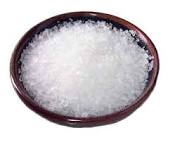
Rishi Uddalaka asked, “Swetaketu! Please bring a glass of water and some salt.”
Swetaketu said, “Father! Here is a glass of water and some salt.”
Rishi Uddalaka said, “Put salt into the water and stir.”
Swetaketu said, “I stirred it.”
Rishi Uddalaka said, “Now it is night. Go to bed and in the morning bring this glass to me.”
Swetaketu came in the morning with a glass.
Rishi Uddalaka said, “Please give me the salt which you put it in the glass of water.”
Swetaketu said, “I do not see any salt in the water.”
Rishi Uddalaka said, “Take a spoon and drink water from the top of the mixture. What do you taste?”
Swetaketu said, “I taste salt.”
Rishi Uddalaka said, “Now take a spoonful of mixture from the middle. What do you taste?”
Swetaketu said, “I taste salt.”
Rishi Uddalaka said, “Now take a spoonful of mixture from the bottom. What do you taste?”
Swetaketu said, “I taste salt, father.”
Rishi Uddalaka said, “My son! You do not see salt in the mixture, but you tasted the salt everywhere. Similarly, “Sat” (Brahman) is always there in the universe. You cannot see It, but It is there. That Sat is subtle and has manifested as the universe. That is the Truth (behind the universe of names and forms). That is Brahman. That is Atman, and Thou art That (Sat) (Tatvamasi-Tat Tvam Asi).”
Swetaketu said, “Father! Please explain further.” Father said, “My son! Sure, I will explain further.”
How does one realize “Sat” or “Brahman”?
Rishi Uddalaka said, “Suppose a thief blindfolds a person, ties his hands, takes him out of the city Gandhar and into the woods and leaves him there. The blindfolded person will scream, ‘I cannot see. I am blindfolded! Please untie my hands and remove my blindfold!’
Suppose a passerby has compassion for this victim. He frees the person’s hands and removes his blindfold. The free person says to the passerby ‘I am from the City Gandhar. Please tell me how to go to the city.’
The passerby points out the direction of Gandhar. Then, the free person, asking people from village to village, reaches the city of Gandhar. Like the passerby, there are wise people who know “Sat” (Brahman). Through their guidance we can be free from our ignorance. Following their directions, we can realize the “Sat” (Brahman) from which we had come.
The “Sat” that we are seeking is subtle and has manifested as the universe. That is the Truth (behind the universe of names and forms). That is Brahman. That is Atman, and Thou art That (Sat) (Tatvamasi-Tat Tvam Asi).”
Swetaketu said, “Father! Please explain further.” Father said, “My son! Sure, I will explain further.”
Who attains freedom?
Rishi Uddalaka said, “Suppose a king’s guards bring a suspect to the king and say, ‘O King! This person has stolen money.’ The king will ask the servants to bring a hot axe, which serves as a lie-detector test.

The suspect will have to hold the hot axe. If he is a liar, then he will get burned and die. If he is not a liar, nothing will happen to him and the king will relieve him immediately.
Thus, a wise person who has realized the “Sat” (Brahman), the Ultimate Reality, will become free from all bondage and sufferings, but an ignorant person will, like the liar, suffer in the universe.
Therefore, realize “Sat” (Brahman), the Ultimate Reality and be free from all bondage and sufferings of the world.
Realize That Sat is subtle and has manifested as the universe. That is the Truth (behind the universe of names and forms). That is Brahman. That is Atman, and Thou art That (Sat) (Tatvamasi-Tat Tvam Asi).”
Swetaketu said, “Now, I understand. Now, I understand. Thank you father!”
Om Peace! Peace be unto us! Peace be unto all beings!
(Thanks to Ronak and Nisha Parikh for editing this post.)

 mahendrajani